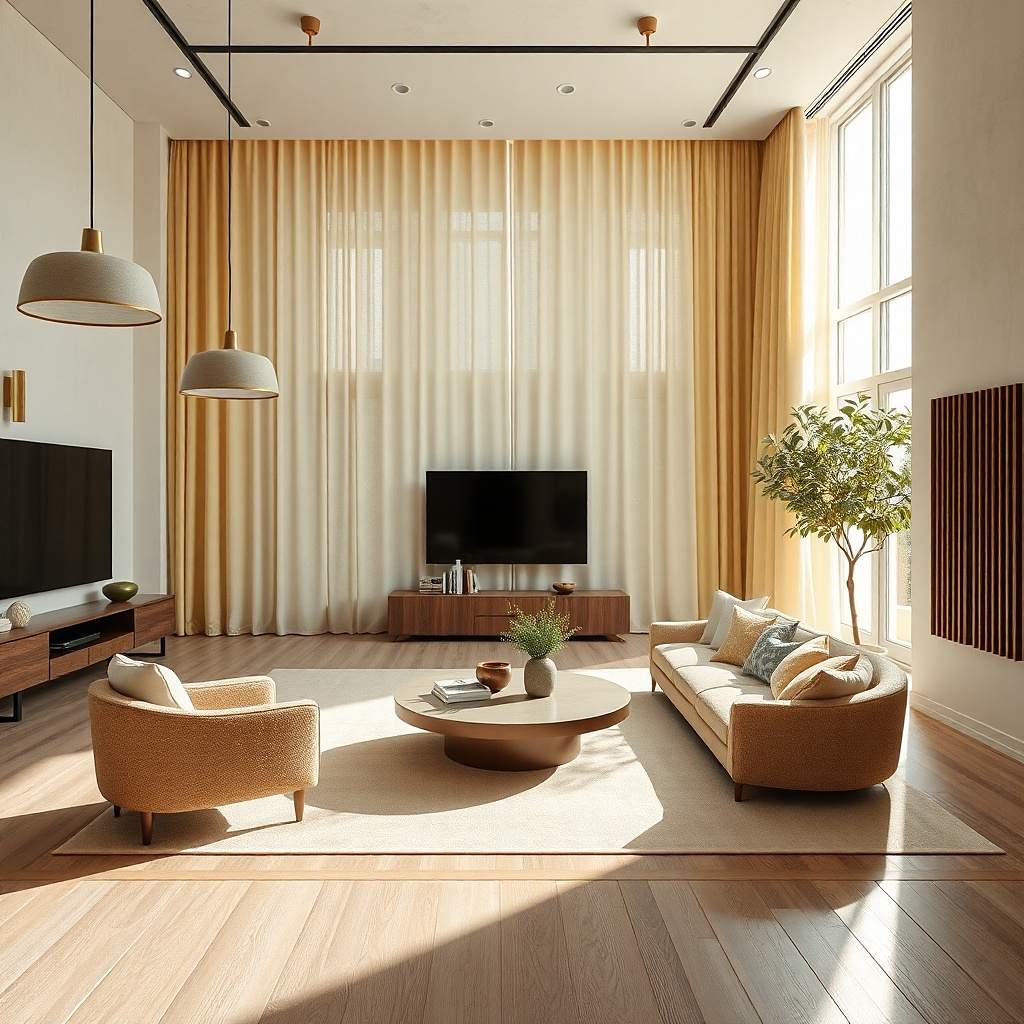
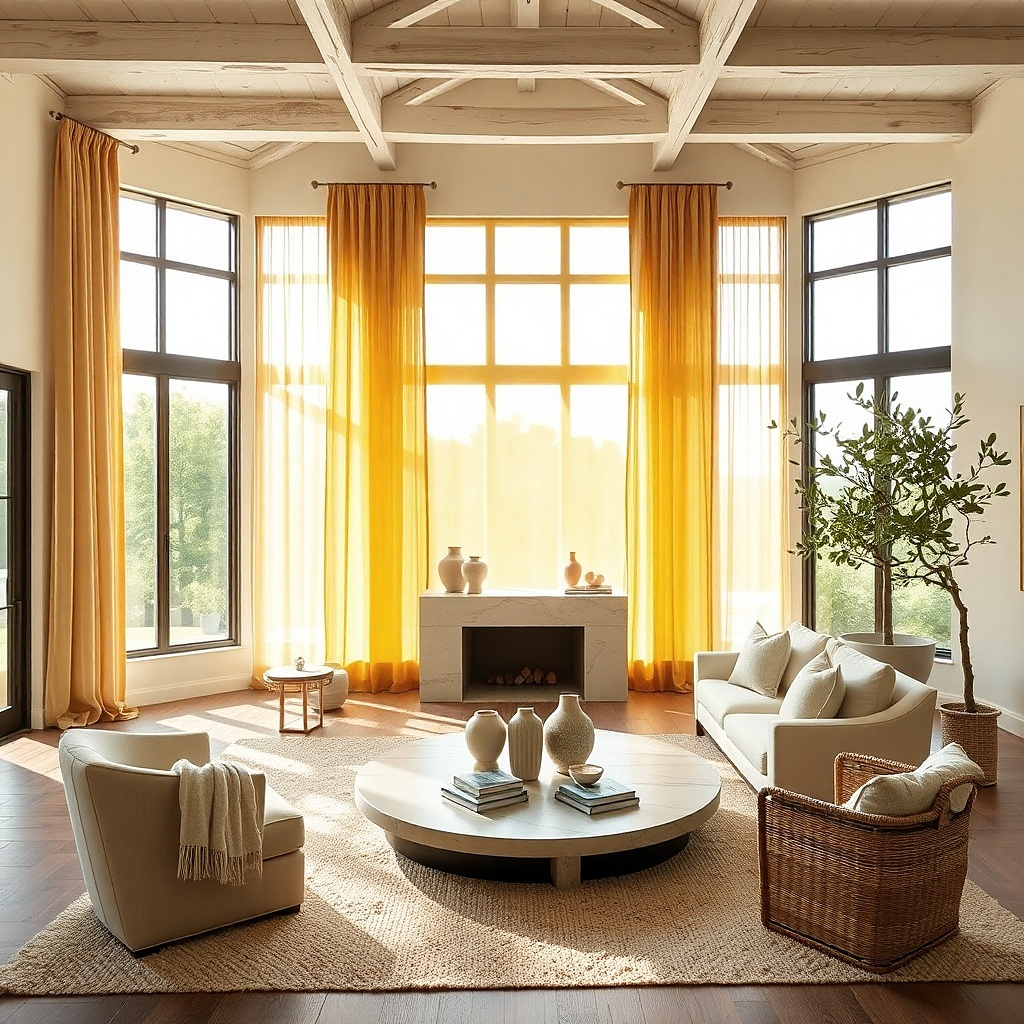
1. Butter yellow linen-look panels with a black rod
This is the easiest budget version to get right. A pale butter yellow in a matte linen-look fabric brightens a living room without shouting for attention, and the black rod gives the color a clean edge. The contrast matters. Without it, pale yellow can drift into a washed-out blur against cream walls. This look suits rental apartments, builder-grade living rooms, and any room with beige carpet, light oak, or greige paint because it adds warmth without fighting those fixed finishes.
Start by measuring the full width of the window and buy panels that add up to about twice that width. Choose ready-made linen-look polyester panels in the 84, 96, or 108 inch length that lets you mount the rod 6 to 8 inches above the frame and still skim the floor by half an inch. Then install a simple black metal rod that extends 8 to 10 inches past the window on each side so the glass stays open when the curtains are pulled back. If the panels arrive wrinkled, steam them before hanging because creases make cheap fabric look cheaper. Expect this setup to land around $35 to $80 for two panels plus a basic rod.
Try thisUse black picture frames or one black floor lamp elsewhere in the room so the rod does not look random.
Common mistakeDo not pair pale yellow curtains with a shiny nickel rod and glossy fabric unless you want the room to read cold and slightly dated.
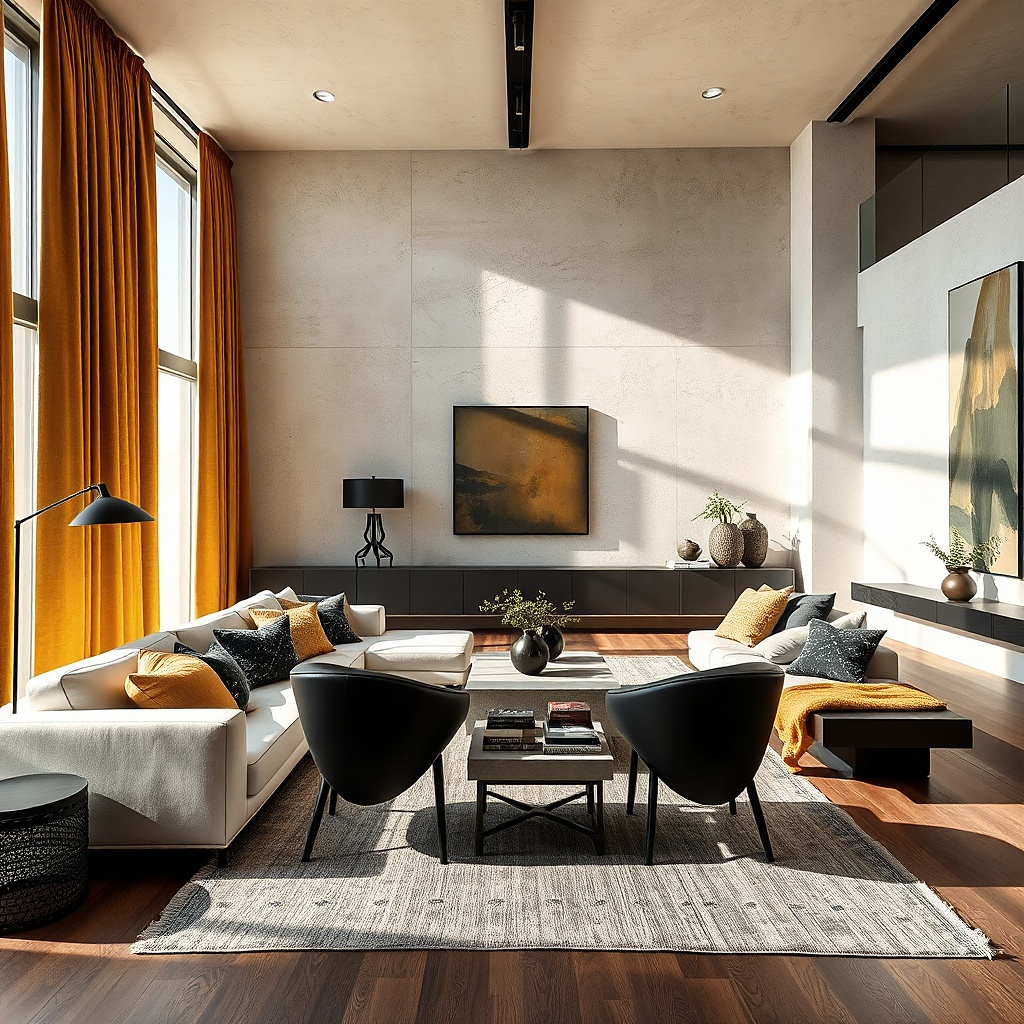
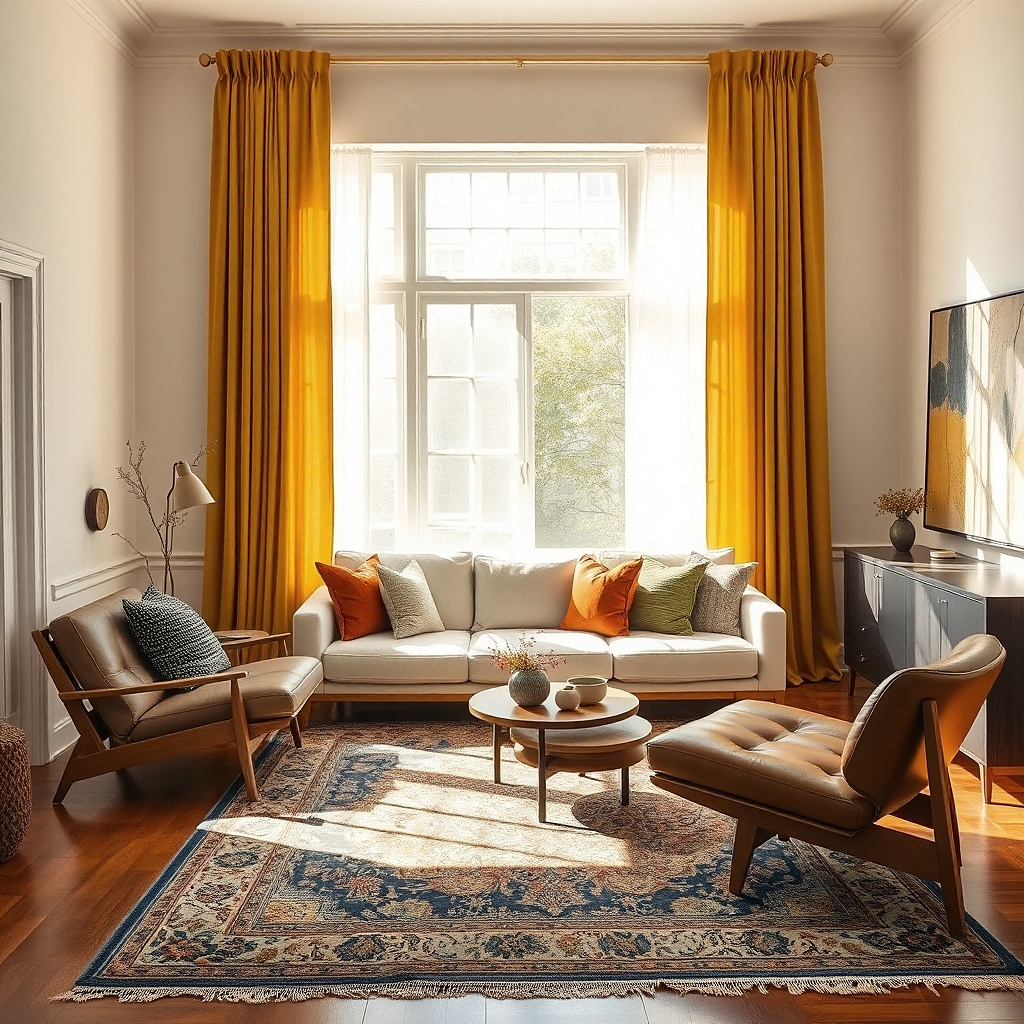
2. Muted mustard cotton panels against white walls
Muted mustard has more depth than pastel yellow, but it stays calm if the walls are white and the fabric is matte. This is a strong choice for living rooms that feel flat or overly sterile because the color adds warmth fast. The key is keeping the mustard dusty rather than saturated. Think curry powder, not traffic sign. It photographs beautifully with walnut wood, tan leather, and cream upholstery, and it gives a plain room a finished, edited look without a full makeover.
Start with flat white or soft warm-white walls so the curtain color has breathing room. Pick cotton or cotton-blend panels with a dry, matte finish, then hang them high and wide on an aged brass or black rod. Next, repeat the mustard in one small place only — a lumbar pillow, book spine, or ceramic vase is enough. A pair of ready-made cotton panels in this shade usually costs $40 to $90, and the room will look far more expensive than that if the fabric has weight and the hem hits the floor cleanly.
Try thisChoose mustard with a brown base, not an orange base, if the room already has red wood or terracotta nearby.
Common mistakeSkip bright mustard with cool gray walls because the contrast turns sharp and slightly sour.
3. Pale yellow sheers layered under oatmeal drapes
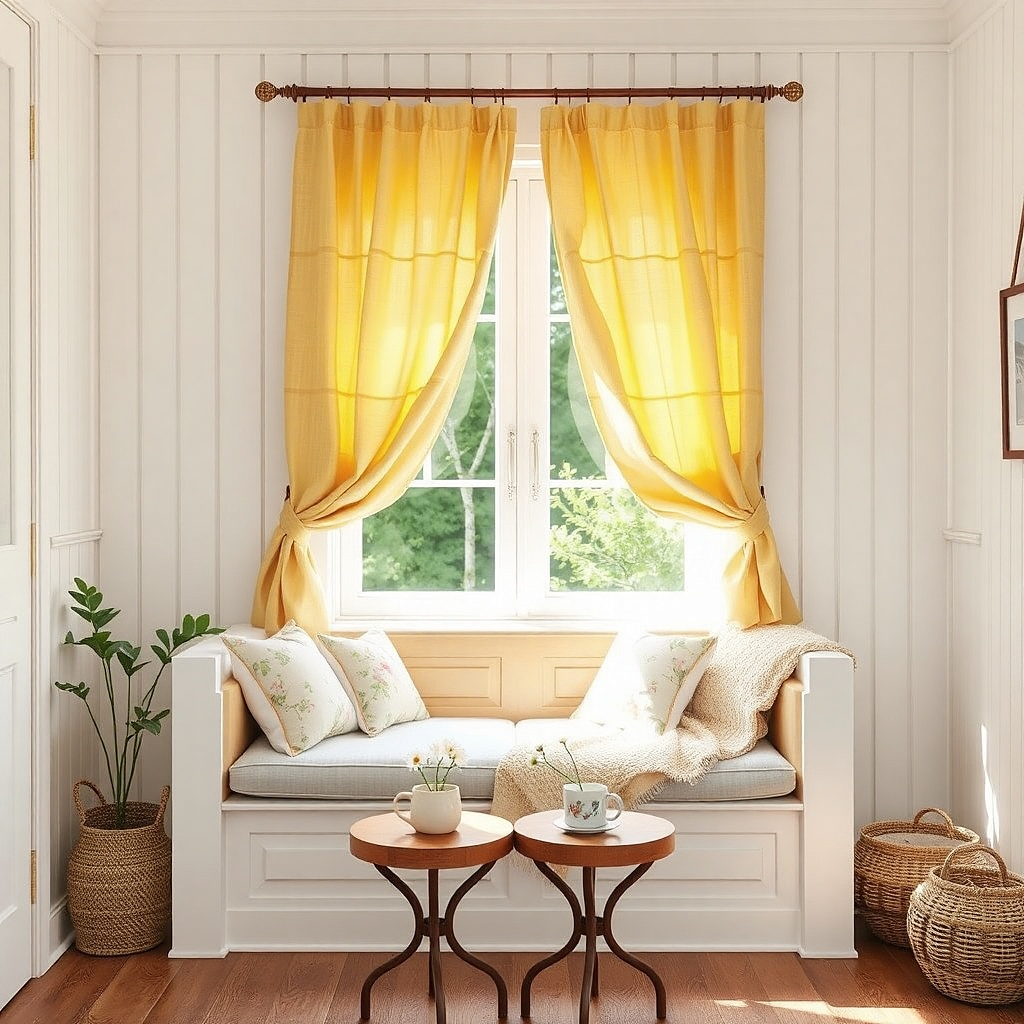
Layering is the smart move if you want yellow present but quiet. A pale yellow sheer behind oatmeal or flax-colored drapes gives the room a golden wash in daylight, yet the stronger neutral panel keeps the window grounded. The effect is soft, not sugary. This works especially well in living rooms with large windows where a full yellow curtain wall would feel like too much color. It also helps if you need privacy during the day but want the room to stay bright.
Start with a double rod or a track-and-rod combination. Put the yellow sheer on the back rod and a heavier oatmeal panel on the front, with both layers mounted 8 inches above the frame for height. Then keep the front drapes mostly open so the yellow sheer does the visual work during the day and the oatmeal layer takes over at night. Budget-wise, a pair of sheers plus a pair of neutral drapes can still stay in the $50 to $110 range if you buy ready-made panels and a simple double rod.
Pick a sheer with a slight slub or grain in the weave so it glows softly instead of looking slick.
Do not combine yellow sheers with bright white blackout panels because the jump between the two looks harsh.
4. Yellow cafe curtains for a small living room window
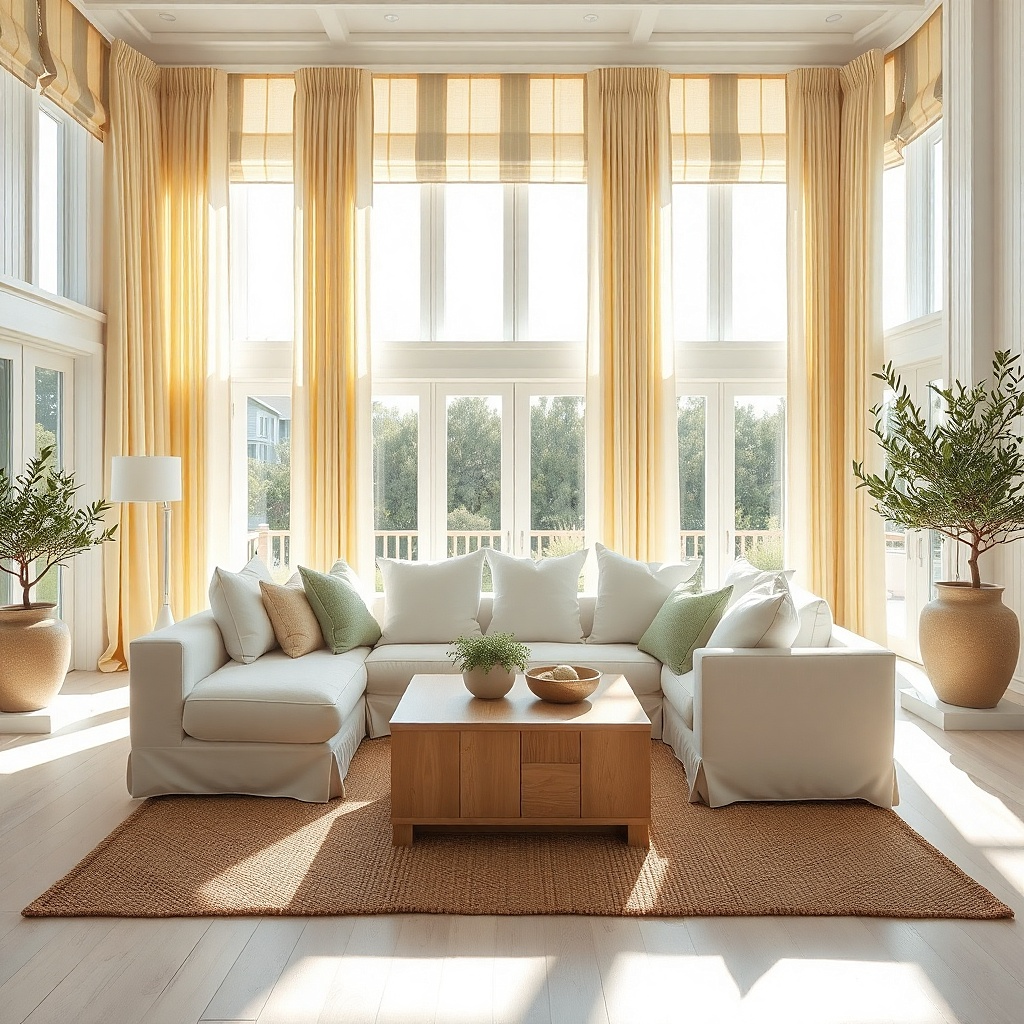
Cafe curtains are underrated in living rooms with one awkward small window, especially in older homes and apartments. A half-height yellow curtain gives you color and privacy without swallowing the wall. This keeps the room lighter than full panels would, and it stops a tiny window from looking overdressed. Choose a faded yellow cotton or cotton-linen blend and the result feels charming, clean, and a little European instead of cute in a forced way.
Start by measuring from the midpoint of the window to the sill or just below it. Buy two short panels or make simple rod-pocket panels from budget fabric, then install a slim rod at the middle rail of the window. Next, keep the top half of the glass bare so daylight still pours in. This is one of the cheapest options on the list — about $20 to $45 if you use a basic tension rod or a narrow metal rod and ready-made short panels.
Try thisPress a crisp 2-inch bottom hem into cafe curtains because that neat line keeps them from looking homemade in the wrong way.
Common mistakeSkip ruffles, tie tops, and tiny floral prints unless the whole room already leans cottage.
5. Yellow and white vertical stripe panels
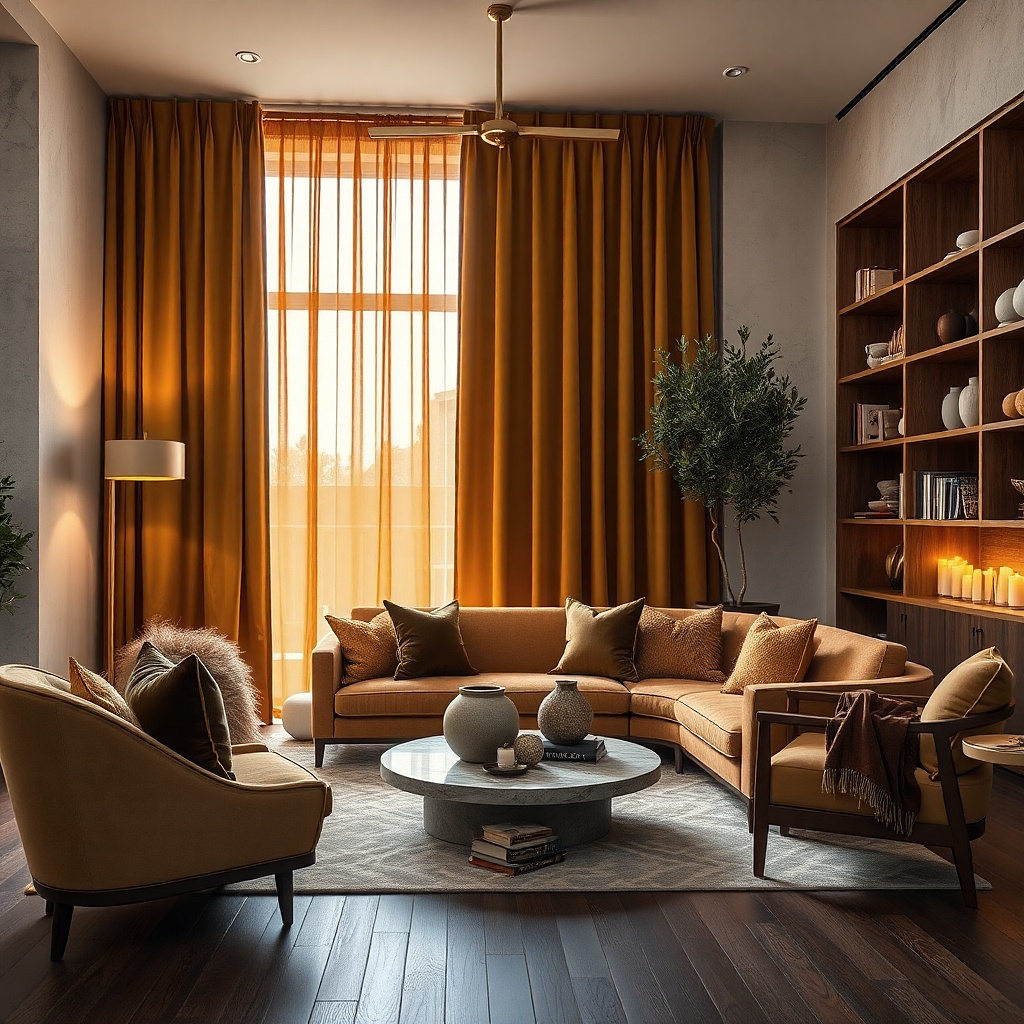
A vertical stripe breaks up the color, which is exactly why this works for people who like yellow but fear a solid wall of it. Yellow and white stripes look crisp, airy, and lighter than a full block of mustard or butter. They also help low ceilings because the eye reads the vertical movement first. This style suits casual living rooms with slipcovered sofas, woven baskets, light wood, and simple art. It feels cheerful without trying too hard.
Start with a stripe width between 1 and 3 inches. Thinner stripes can look busy from across the room, while very wide stripes start reading bold and coastal in a way that takes over. Then hang the panels on rings rather than a rod pocket so the folds fall in clean columns and the stripe stays visible. Budget striped panels are easy to find in polyester-cotton blends, usually around $30 to $70 a pair, and they look best when the rod sits high enough to give you long uninterrupted lines.
Try thisMatch the white in the stripe to the trim or the sofa fabric so the pattern looks tied into the room.
Common mistakeDo not mix striped curtains with a loud geometric rug unless one of the two has very low contrast.
6. Soft marigold velvet-look panels for evening warmth
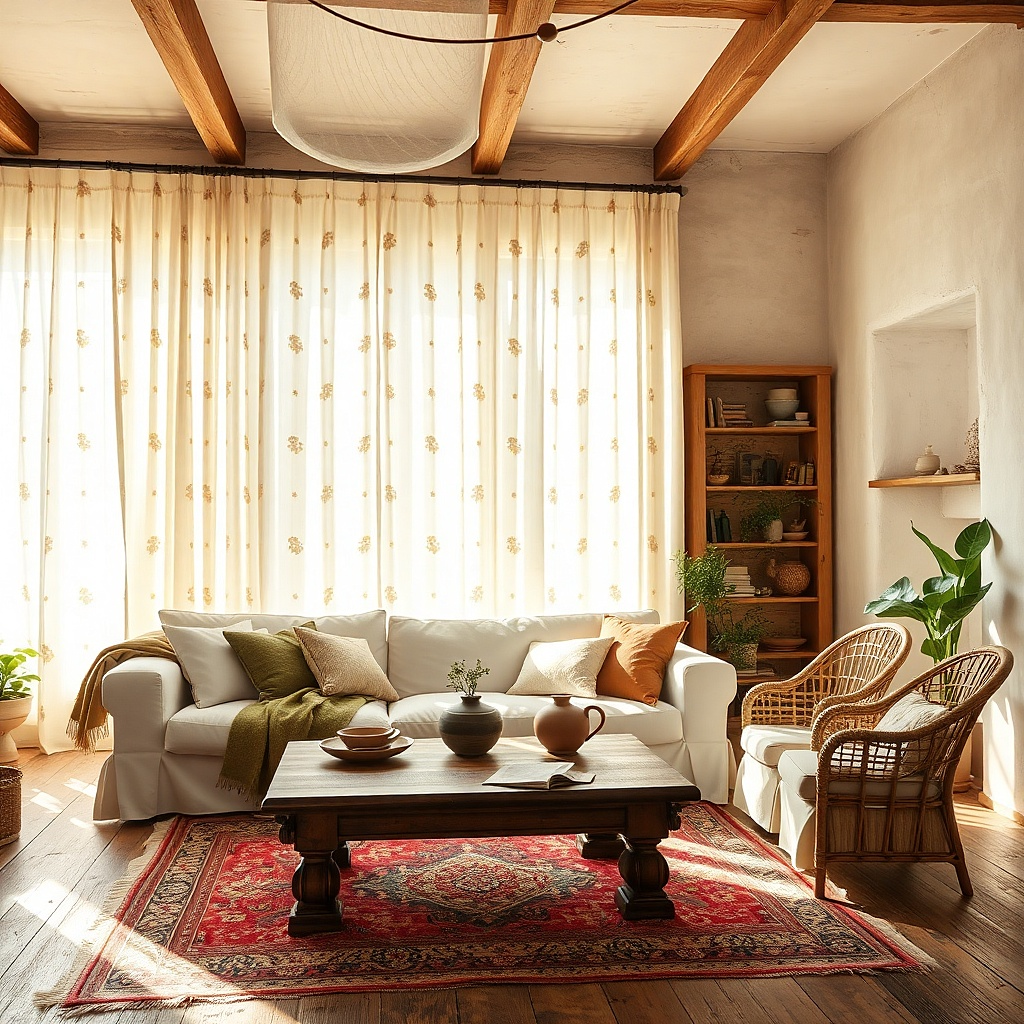
If your living room feels dull after sunset, this is the yellow to pick. A soft marigold velvet-look panel catches lamplight in a way flat cotton cannot, and that gives the room warmth at night without needing bright wall color. The trick is restraint. Keep the marigold dusty, with more ochre than orange, and use it in a room with cream, camel, brown, or dark olive nearby. This look works best in larger living rooms or rooms with taller ceilings because the heavier fabric has visual weight.
Start by choosing a matte velvet-look polyester rather than a shiny crushed velvet. Hang the panels from rings so the fabric falls in deep folds, and let the hem just kiss the floor because puddling makes budget velvet look messy fast. Then place one warm lamp near the window wall so the curtain catches a low glow at night. Expect to spend about $45 to $95 for a pair of ready-made panels, with another $20 to $35 for a sturdy rod if needed.
Use a lining or blackout panel only if the front fabric still looks soft from the room side. Thick stiff backing can ruin the drape.
Skip this look in a very small living room with dark walls because the fabric weight can crowd the space.
7. Block-print yellow curtains with lots of cream space
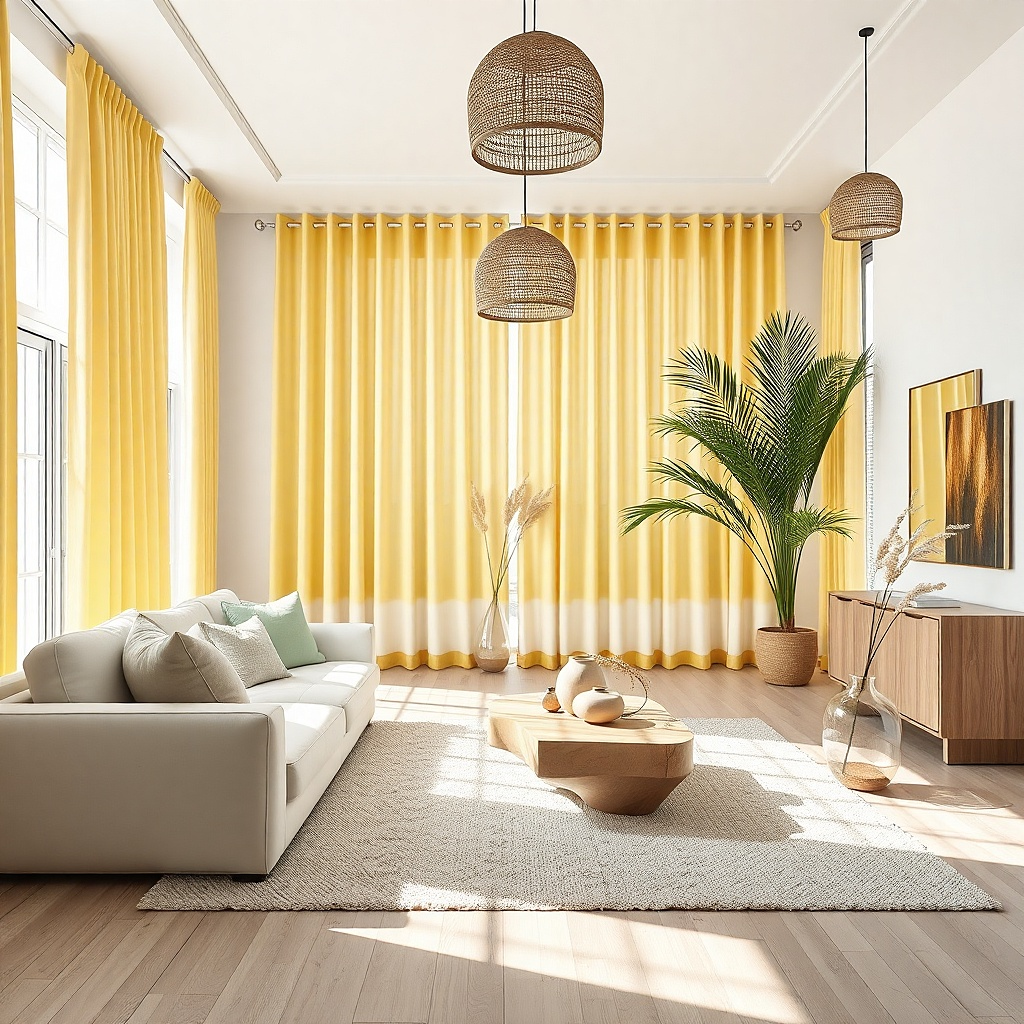
Pattern is useful when solid yellow feels too plain but full-color curtains feel too loud. A cream base with a small ochre or wheat-yellow block print keeps the room bright while softening the impact of the color. This is one of the best choices for boho, collected, or vintage-leaning living rooms because the print adds movement and texture. The yellow reads as part of a pattern instead of one large statement. That makes it easier to live with every day.
Start with a print that has plenty of cream background and a simple repeat, such as a small floral stamp, dot, or vine. Hang the panels wide so the pattern has room to show instead of bunching into visual noise. Then repeat one color from the print elsewhere in the room — camel, olive, rust, or black all work depending on the pattern. Ready-made printed panels range from $35 to $85, and fabric shower curtains in a good print can also be repurposed into window panels for less.
Try thisKeep the rug quieter than the curtain if you choose a print, especially in a small living room.
Common mistakeDo not choose a print with bright yellow plus bright blue plus bright red unless you want the curtains to dominate the whole room.
8. Dip-dyed yellow ombre panels
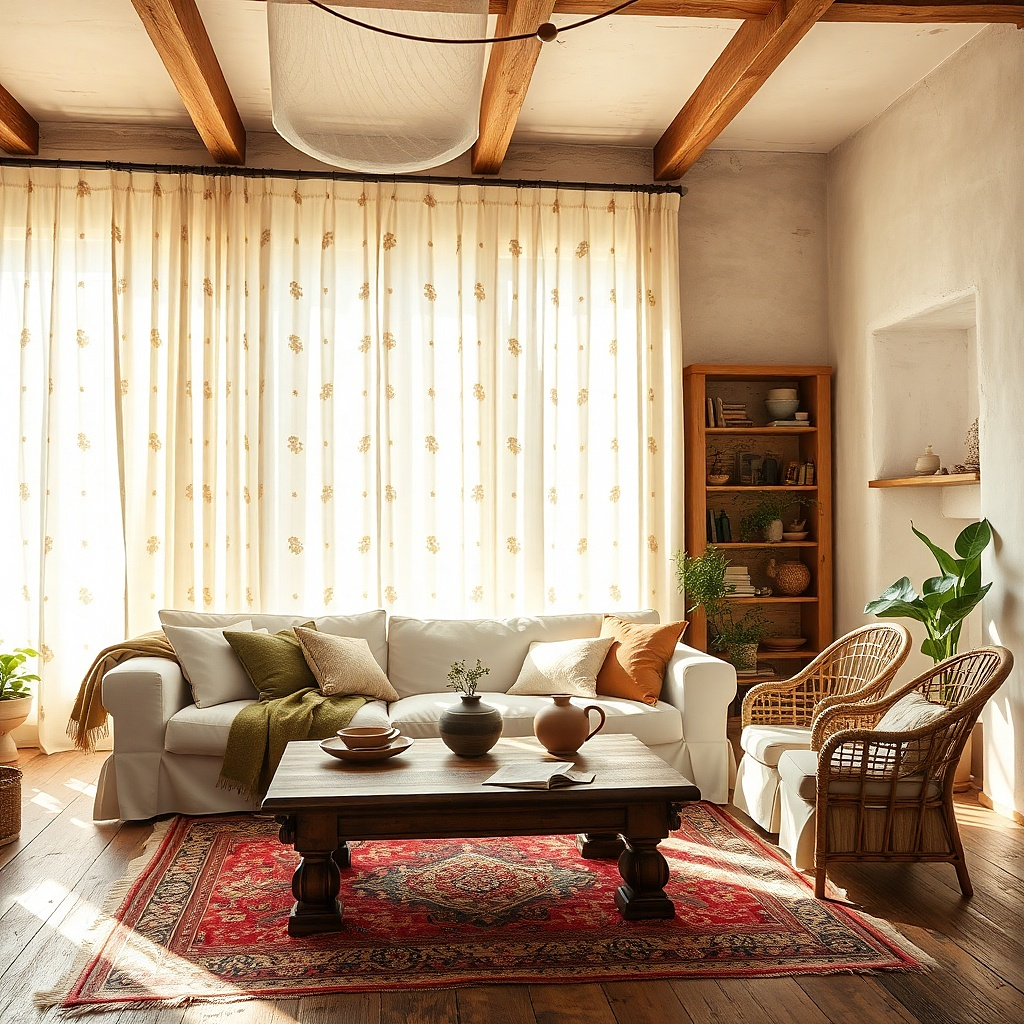
Ombre solves a specific problem. You want yellow, but you do not want a hard block of color from rod to floor. A white-to-yellow fade keeps the top of the window light and airy while bringing warmth lower down, where it connects with wood floors, baskets, and furniture. The result feels softer than solid yellow and more modern than floral prints. It suits bright living rooms, especially ones with simple furniture and very little wall art.
Start with white cotton or linen-look panels and fabric dye in a pale marigold or straw shade if you want a budget DIY route. Dip only the lower third to half of each panel, then rinse and dry them fully before hemming if needed. If DIY is not your thing, buy ready-made ombre panels and focus on hanging them high so the white section does not get swallowed by the trim line. DIY dye projects can stay under $35 plus the panel cost, while ready-made ombre sets usually land around $40 to $75.
Try thisKeep the fade soft and uneven rather than a sharp stripe. A hard line looks crafty instead of polished.
Common mistakeSkip saturated yellow dye on synthetic fabric because polyester takes color unevenly and the result looks patchy.
9. Golden yellow Roman shades with side panels
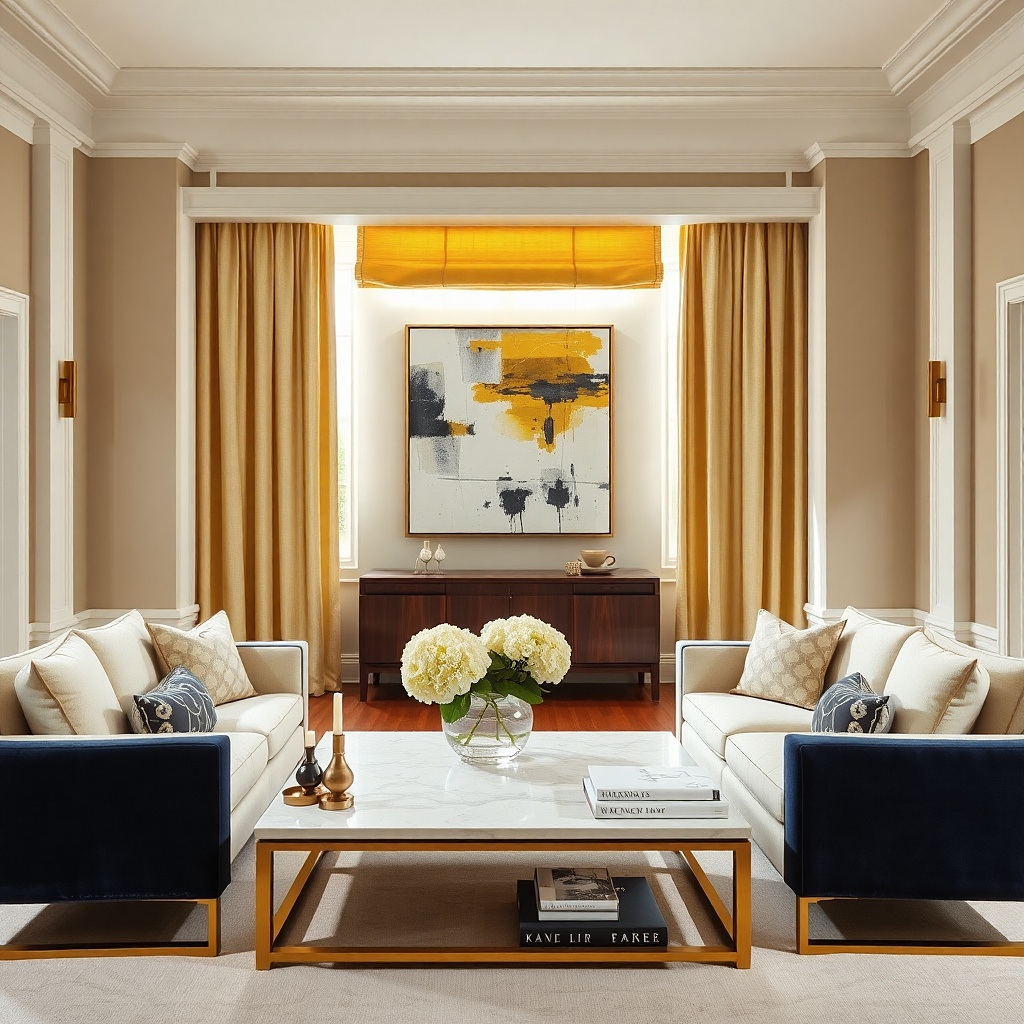
This combination is smart for a formal-leaning living room or a room with windows close to furniture where full curtains alone feel bulky. A golden yellow Roman shade gives you the color in a neat, tailored shape, and cream side panels soften the edges. The yellow reads as a controlled accent instead of a full fabric wall. This keeps the room bright and polished without veering loud. It also works well on windows behind a sofa where floor-length fabric has less space to breathe.
Start with an inside-mount or slightly outside-mount Roman shade in a flat cotton or linen-look fabric. Add narrow cream side panels on a simple rod placed high above the frame so the whole setup still gives vertical lift. Then keep the side panels mostly decorative — about 18 to 24 inches wide each is enough for the look if privacy comes from the shade. Budget Roman shades in yellow start around $35 to $80 per window, and simple side panels can add another $25 to $50.
Choose a shade with stitched horizontal battens or clean folds so it stacks neatly instead of ballooning.
Do not use yellow Roman shades with yellow side panels unless the room is very large and very plain.
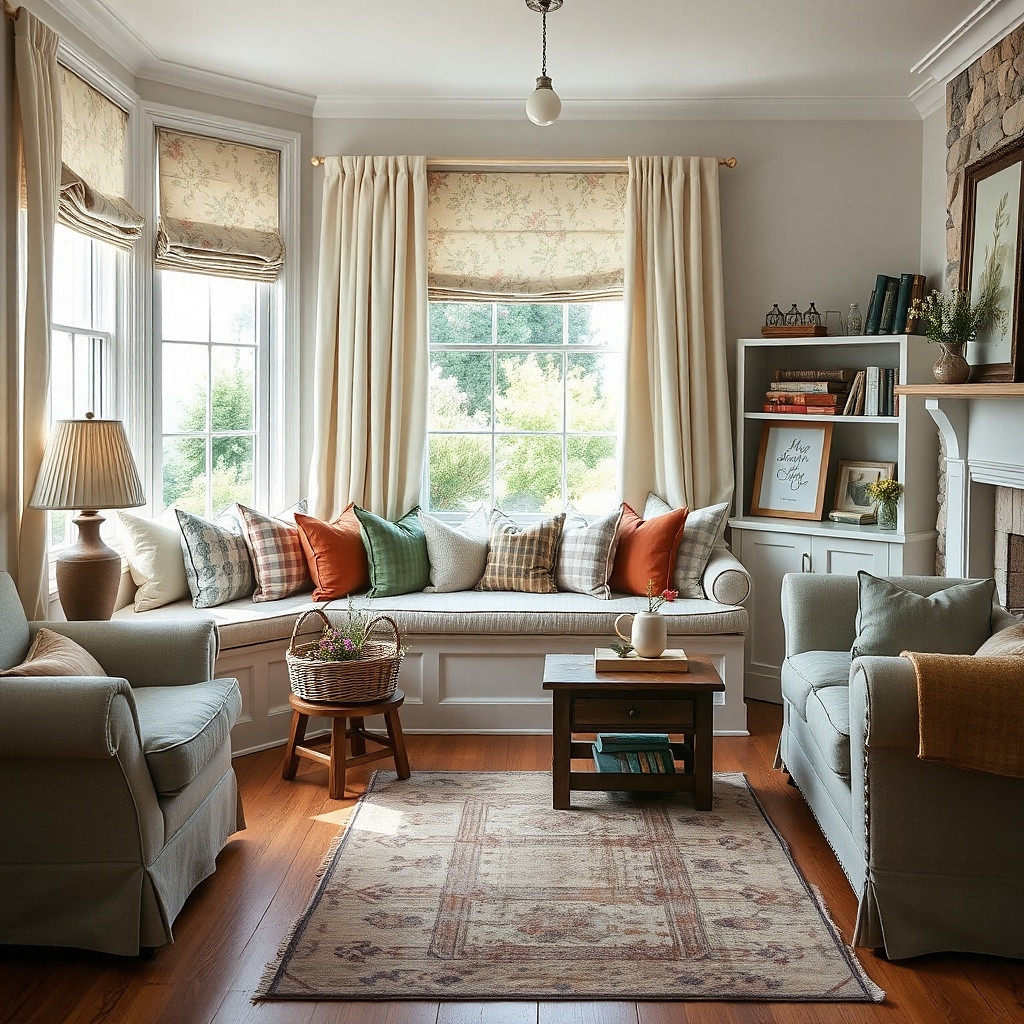
10. Gingham yellow curtains in a casual cottage living room
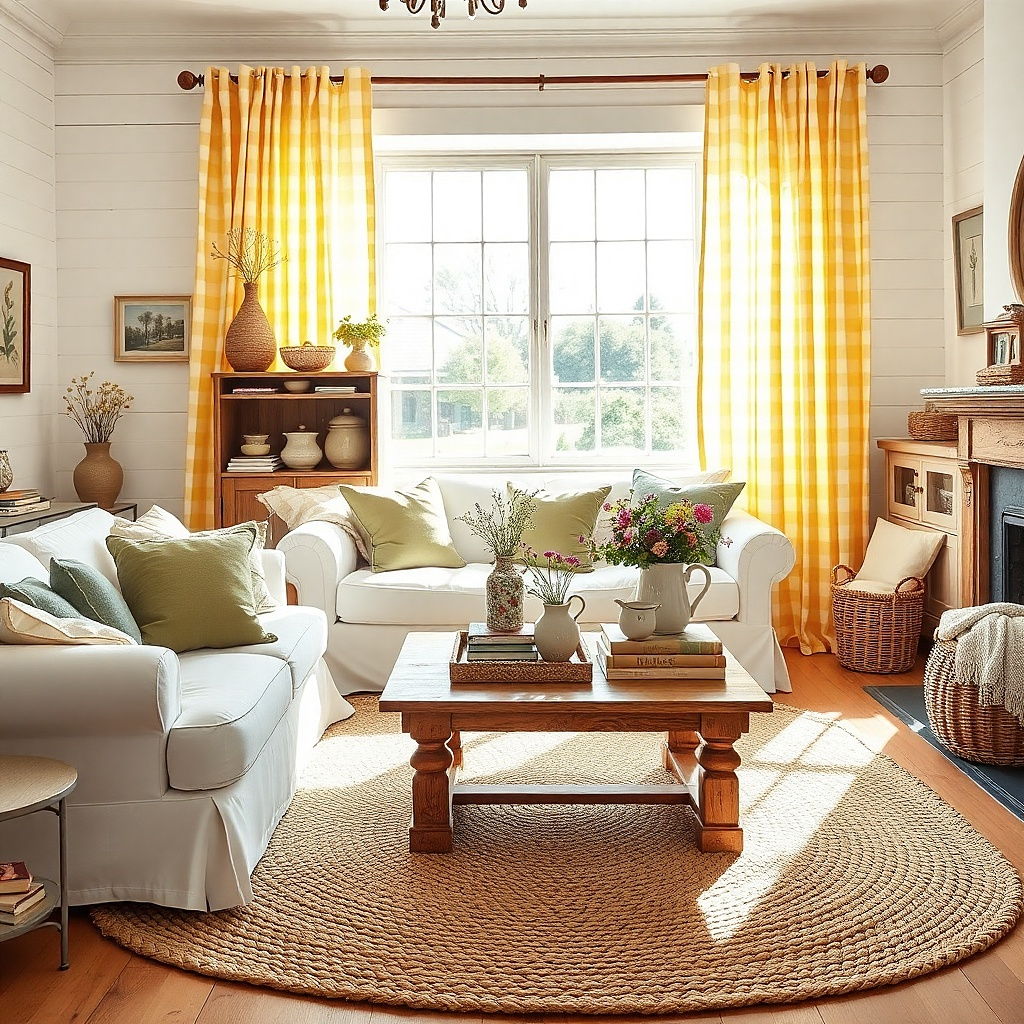
Yellow gingham works when you want the room to feel sunny and relaxed rather than sleek. The check pattern breaks the color into smaller pieces, which keeps it friendly and less intense than a solid panel. Stick to a small or medium check in butter yellow and white. Large checks get loud fast. This look suits white slipcovers, painted wood furniture, open shelving, and old-house living rooms that already have a little softness in them.
Start with a check size around half an inch to one inch. Hang the panels from clip rings or a simple rod so the fabric falls straight and the pattern stays readable. Then ground the sweetness with a few tougher materials nearby — black metal, medium oak, or a jute rug stop the room from leaning childish. Gingham cotton panels or DIY fabric panels can come in around $30 to $65, which makes this one of the easier pattern options on a budget.
Use plain solid pillows if you choose gingham curtains. The room already has enough pattern at the window.
Skip bright sunflower yellow gingham unless the room has a very restrained color palette everywhere else.
11. Washed saffron panels with walnut and cream
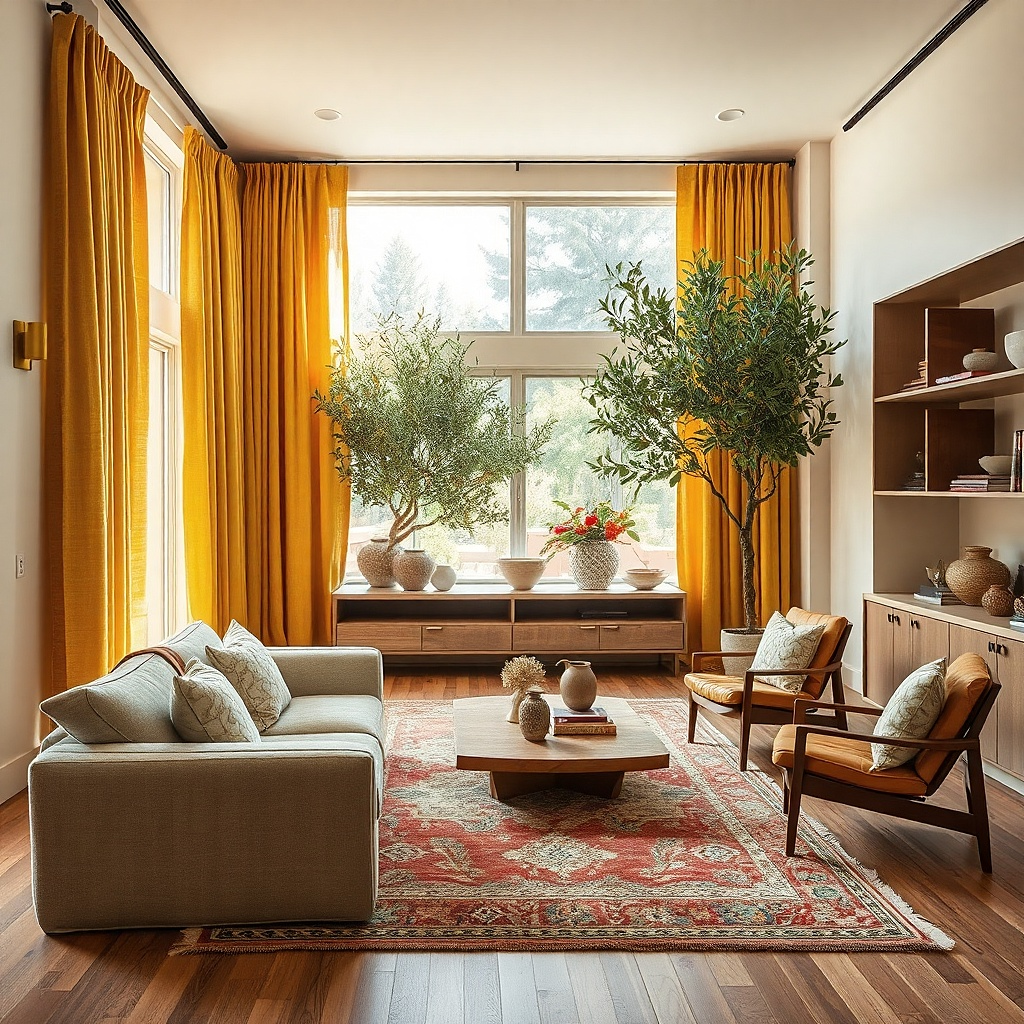
Washed saffron sits between mustard and gold, and it has a worn-in softness that looks far more expensive than its price. Against walnut furniture and cream upholstery, it reads warm, grounded, and a little moody in a good way. This is the yellow for people who dislike pastels. It still brightens the room, but it has enough earth in it to feel adult and calm. It suits mid-century, collected, and slightly rustic living rooms especially well.
Start with a washed or garment-dyed look rather than a flat, solid color. Mount the rod in aged brass or dark bronze, then let the panels barely touch the floor for a heavier, more settled look than hovering hems. Next, echo the saffron with one small warm note nearby — a book cover, throw, or lampshade trim is enough. Ready-made panels in this color family run about $40 to $90, and they hide wrinkles better than pale yellow because the depth of tone softens shadows.
Try thisPair washed saffron with cream walls, not stark white, if you want the room to feel mellow instead of high-contrast.
Common mistakeDo not mix washed saffron with orange-toned oak and cherry wood in the same room. The undertones start fighting.
12. Yellow border trim on plain white curtains
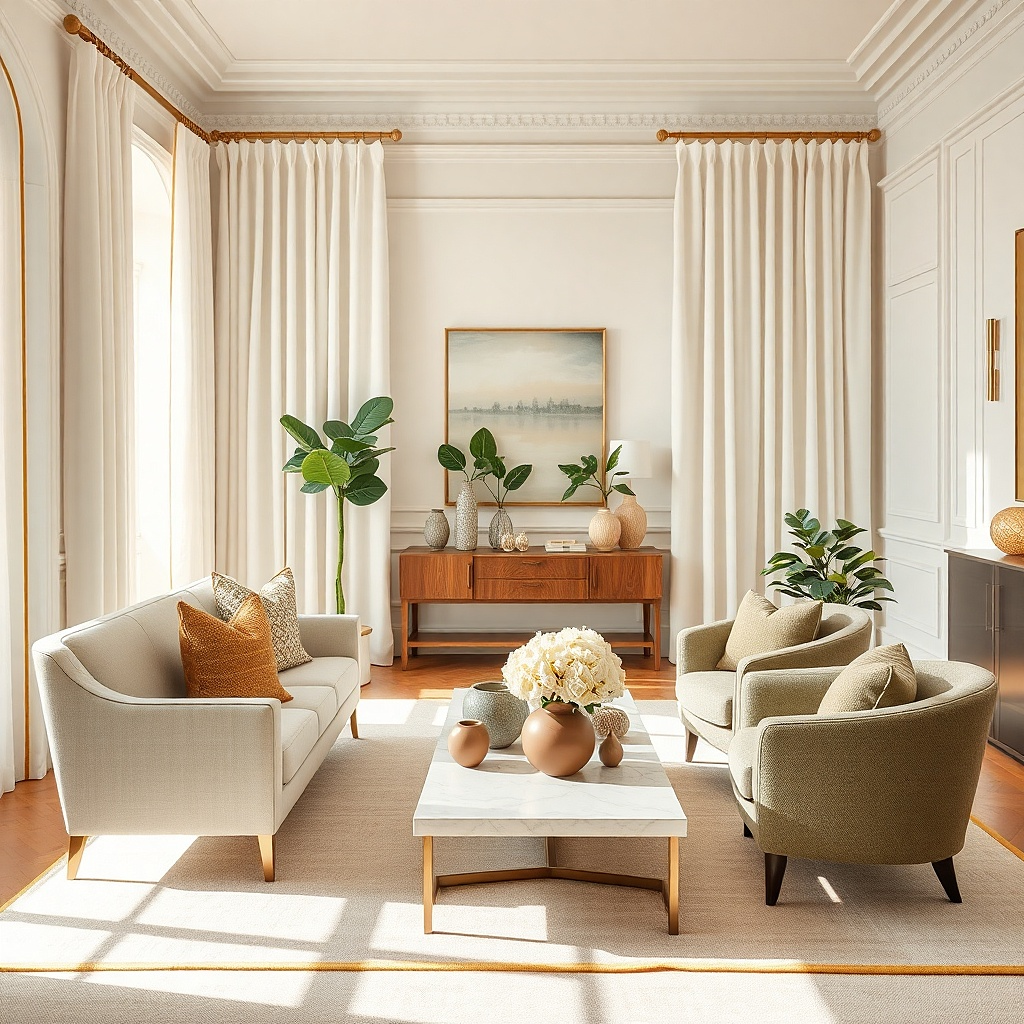
If full yellow feels risky, add yellow only at the edges. White curtains with a yellow border trim or tape look crisp, custom, and far more restrained than solid panels. The eye catches the color in a narrow frame, which brightens the window wall without taking over the room. This works very well in minimalist or transitional living rooms where you want a clean shape and a little personality. It also gives cheap plain curtains a tailored finish.
Start with basic white cotton or linen-look panels and buy grosgrain, embroidered tape, or contrast trim in butter, straw, or mustard. Attach the trim down the leading edge and across the bottom hem with fabric glue made for textiles or a sewing machine if you have one. Then hang the panels on a rod with rings so the trim stays visible even when the curtains are open. Plain curtains plus trim can cost as little as $25 to $55 total, which is hard to beat for the custom look.
Try thisA 1 to 1.5 inch trim width looks intentional. Very skinny trim disappears, and very thick trim starts to look themed.
Common mistakeSkip neon yellow ribbon or shiny satin trim because it cheapens the whole idea.
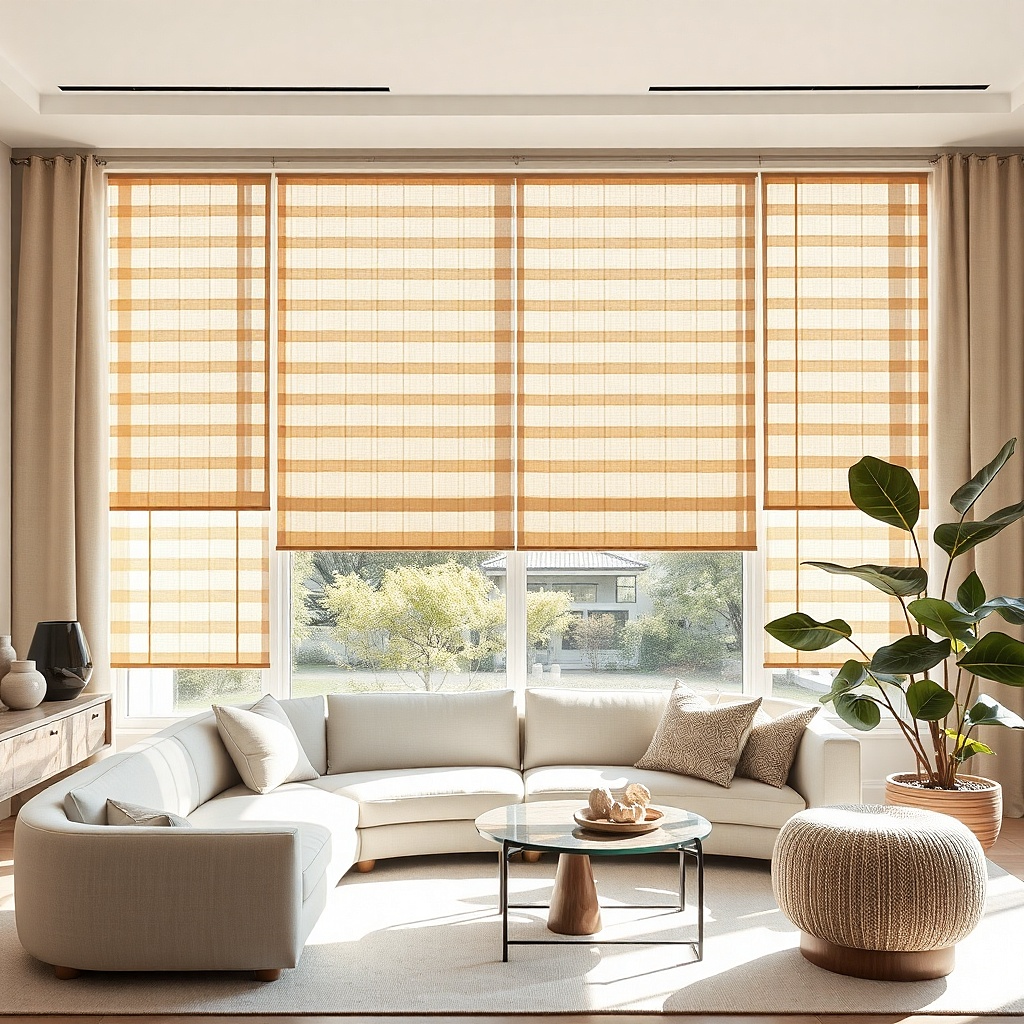
13. Pale straw curtains with bamboo shades behind them
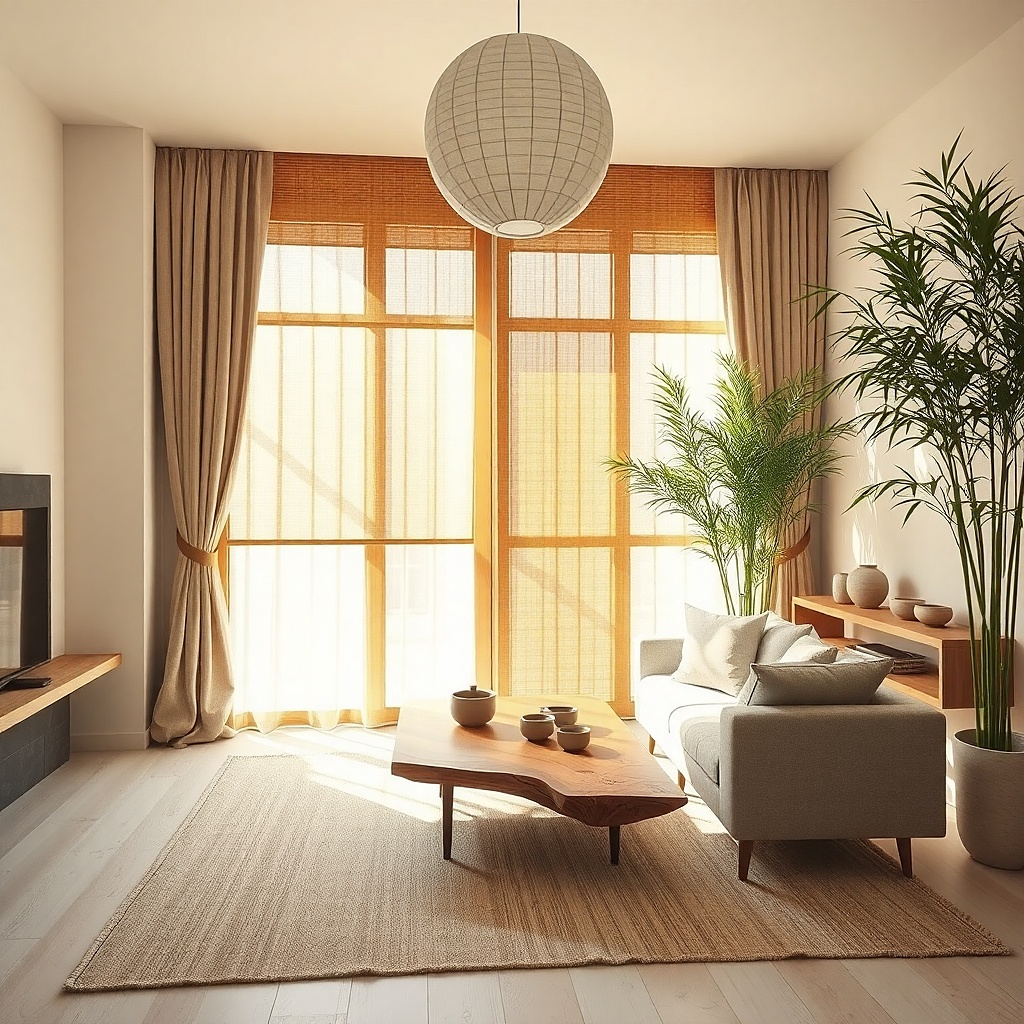
This pairing gives you two kinds of warmth at once — color from the curtain and texture from the shade. Pale straw curtains keep the room bright, while bamboo shades add a dry, natural note that stops the yellow from feeling sweet. The result looks relaxed, airy, and very photogenic in daylight. It suits living rooms with plants, woven baskets, oak floors, and neutral sofas. It is especially good in rooms that need softness but already have enough color elsewhere.
Start with inside-mount bamboo shades in a medium natural tone, not orange honey stain. Add pale straw curtain panels on a rod mounted high and wide outside the frame so the shades stay visible when the curtains are open. Then keep the rest of the palette quiet — cream, sand, olive, and black work best with this setup. Budget bamboo shades and simple panels together usually fall around $70 to $140 depending on window size, but the layered look reads far above that.
Try thisChoose bamboo shades with a privacy liner if the room faces the street. Open-weave shades alone leave little to the imagination at night.
Common mistakeDo not pair straw-yellow curtains with red-toned bamboo shades. The undertones clash immediately.
14. Soft yellow blackout curtains in a media-friendly living room
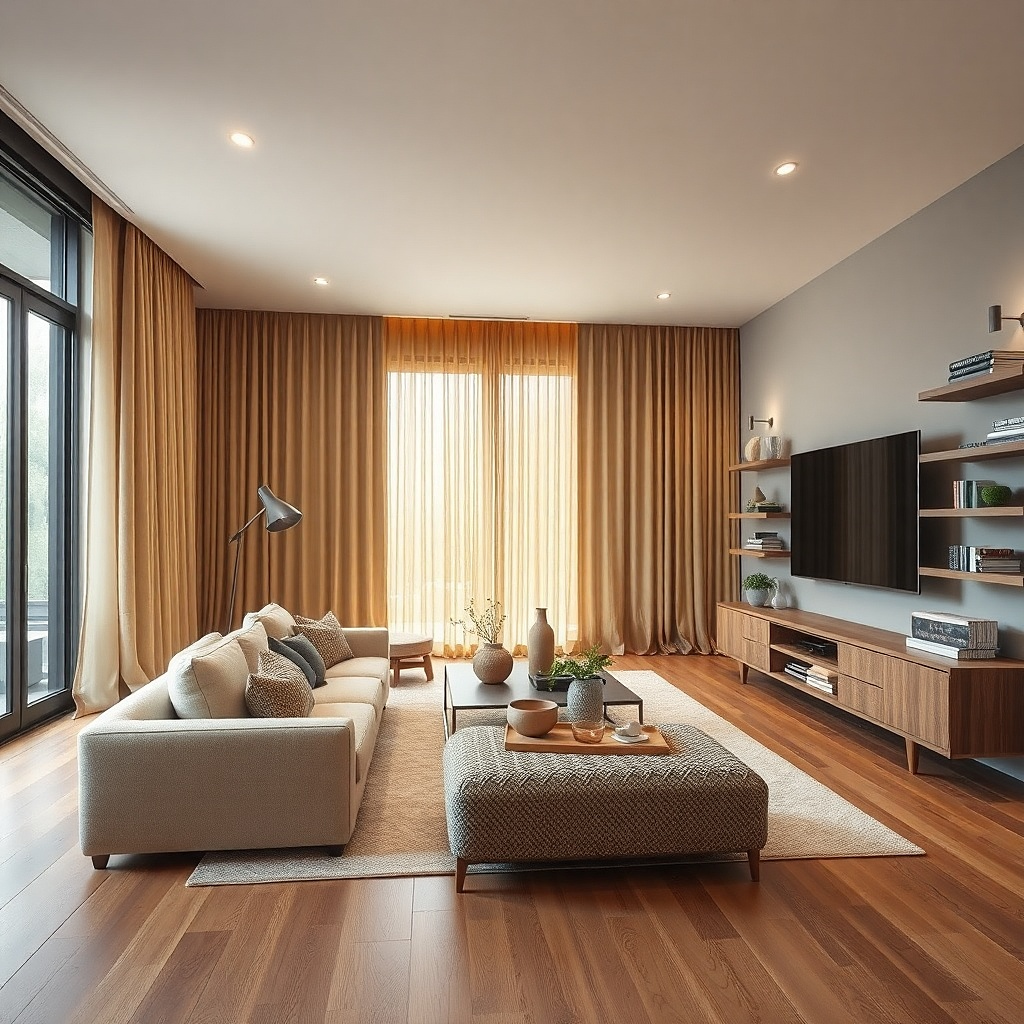
Blackout curtains do not have to be charcoal or navy. A soft yellow blackout panel keeps the room cheerful during the day and still handles glare for TV time in the afternoon. The key is choosing a muted front fabric with a proper drape, not a stiff foam-backed panel that hangs like cardboard. This is a practical choice for family living rooms, apartments facing a bright street, or any room where the window light hits the screen directly. Yellow keeps the room from feeling cave-like once the curtains are closed.
Start by checking the product photos for side folds and hem weight. Those details tell you whether the blackout panel will drape or stand out awkwardly. Mount the rod 8 to 10 inches wider than the frame so the stack-back clears more glass when open, then use enough width for full coverage when closed. Good budget blackout panels in muted yellow sit around $45 to $85 a pair, and they are worth paying a little more for than the flimsiest version because stiffness ruins the look fast.
Try thisPick a panel with a white or light backing if the window gets hard sun. Dark backing can overheat and read heavy from outside.
Common mistakeSkip bright lemon blackout curtains. The color is too aggressive in a thick fabric.
15. Golden floral vintage-style panels with plain furniture
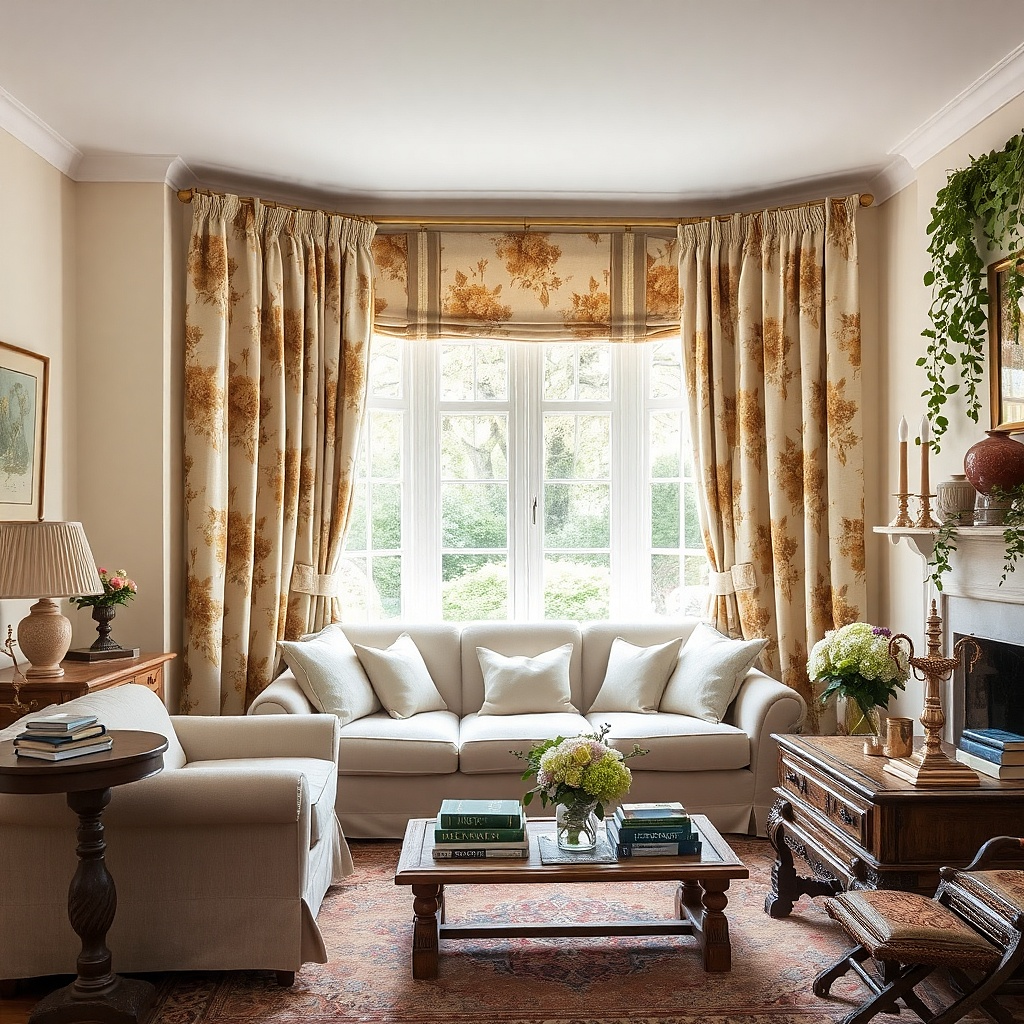
A vintage-style floral in faded gold and cream gives yellow a softer voice because the color arrives mixed with pattern, age, and a little shadow. This is the answer for living rooms that already feel plain and need visual interest at the windows, especially if the sofa and rug are solid. The floral should look slightly worn-in, not sharp and digital. That difference matters. A faded print feels collected. A slick print feels cheap.
Start with a floral that has cream or flax as the background and gold as one of several tones, not the only one. Hang the curtains full so the folds let bits of the pattern disappear and reappear instead of presenting the print flat like a poster. Then keep nearby furniture simple — plain upholstery, one wood tone, and restrained accessories make the curtain the decorative layer. Budget floral panels vary a lot, but strong options still exist around $40 to $85 a pair if you avoid novelty prints.
Try thisPull one quiet accent color from the floral, such as olive or brown, and repeat it once in the room for a more settled look.
Common mistakeDo not add floral curtains to a room that already has a busy floral rug. One floral statement is enough.
16. Two-tone curtains with cream on top and yellow below
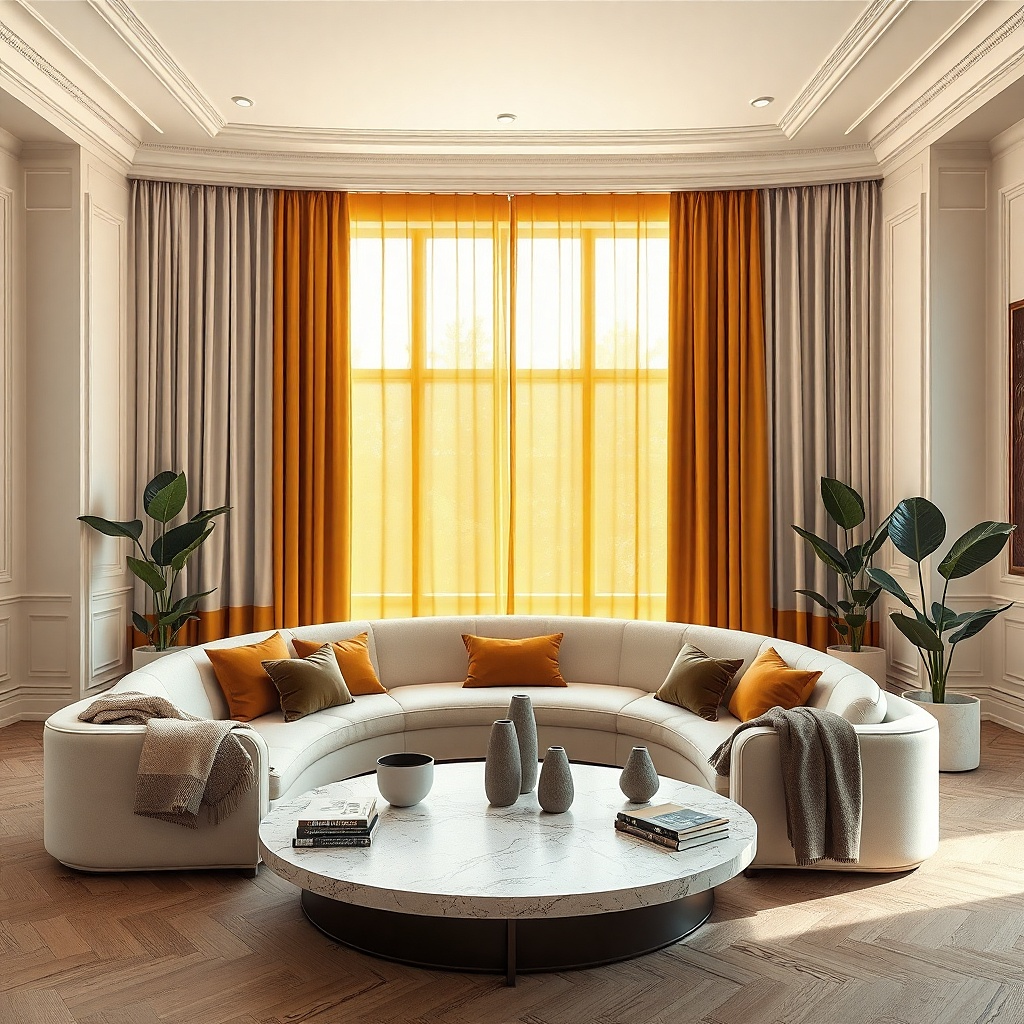
This color-block layout solves a common fear with yellow curtains. You want brightness, but you do not want the upper half of the room to feel loud. Keeping cream on top and yellow below leaves the area near the rod and ceiling light, while the lower section brings in warmth where the eye rests on furniture level. It feels balanced and modern. This is especially good in living rooms with standard 8-foot ceilings because the cream upper section keeps the room from feeling visually lowered.
Start with panels that split around the lower third or halfway mark, with cream above and muted yellow below. Buy ready-made color-block curtains or join two fabrics with iron-on hem tape if you want a cheaper DIY route. Then hang them high so the cream section stretches upward and the yellow starts lower than the top of the window frame. Expect around $35 to $75 for ready-made panels, or less if you sew or tape your own from discount fabric.
Use the same cream tone as the wall trim or sofa to make the top section disappear into the room.
Skip a 50-50 split placed exactly at the window midpoint if the room already has a lot of horizontal lines from shelves and a long media unit.
17. Yellow checked linen-look panels with dark green accents
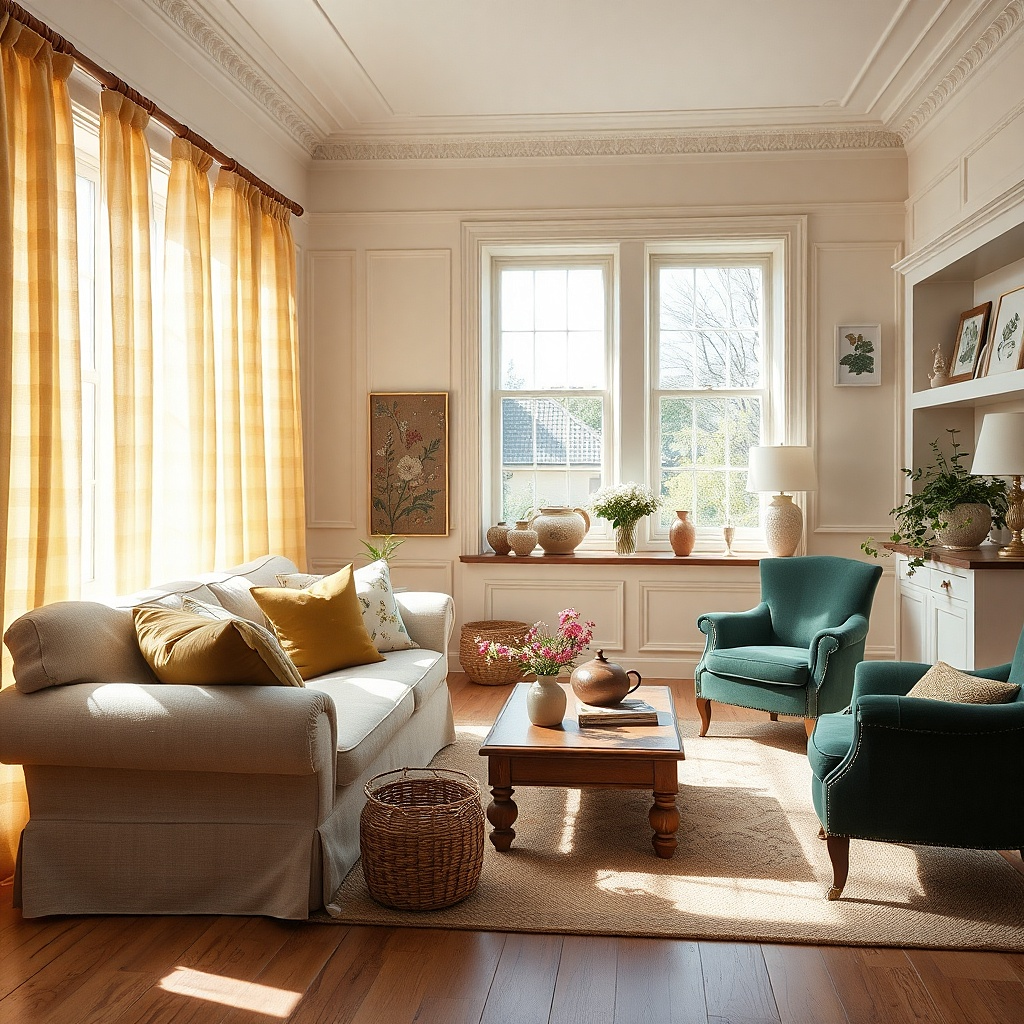
A muted yellow check paired with dark green accents has a fresh, grounded look that feels current without being loud. The green cools the yellow down, and the check pattern keeps the color from reading flat. This is a strong choice for living rooms with plants, vintage wood, or cream walls that need more life but not more clutter. The room ends up cheerful with a little edge. It looks especially good in natural light because the green and yellow sharpen each other softly.
Start with a small-scale check in butter or straw yellow on a linen-look base. Hang the curtains on a dark rod, then add one or two dark green accents nearby such as velvet pillows, a painted side table, or framed botanical art. Finally, keep the rest of the room restrained so the color pairing has room to breathe. Budget checked panels usually cost $35 to $70 a pair, and this look does not need many extra accessories to feel complete.
Try thisUse olive or forest green, not emerald. Emerald pushes the room toward holiday colors fast.
Common mistakeDo not add bright blue accents to this mix unless you want the room to feel much busier.