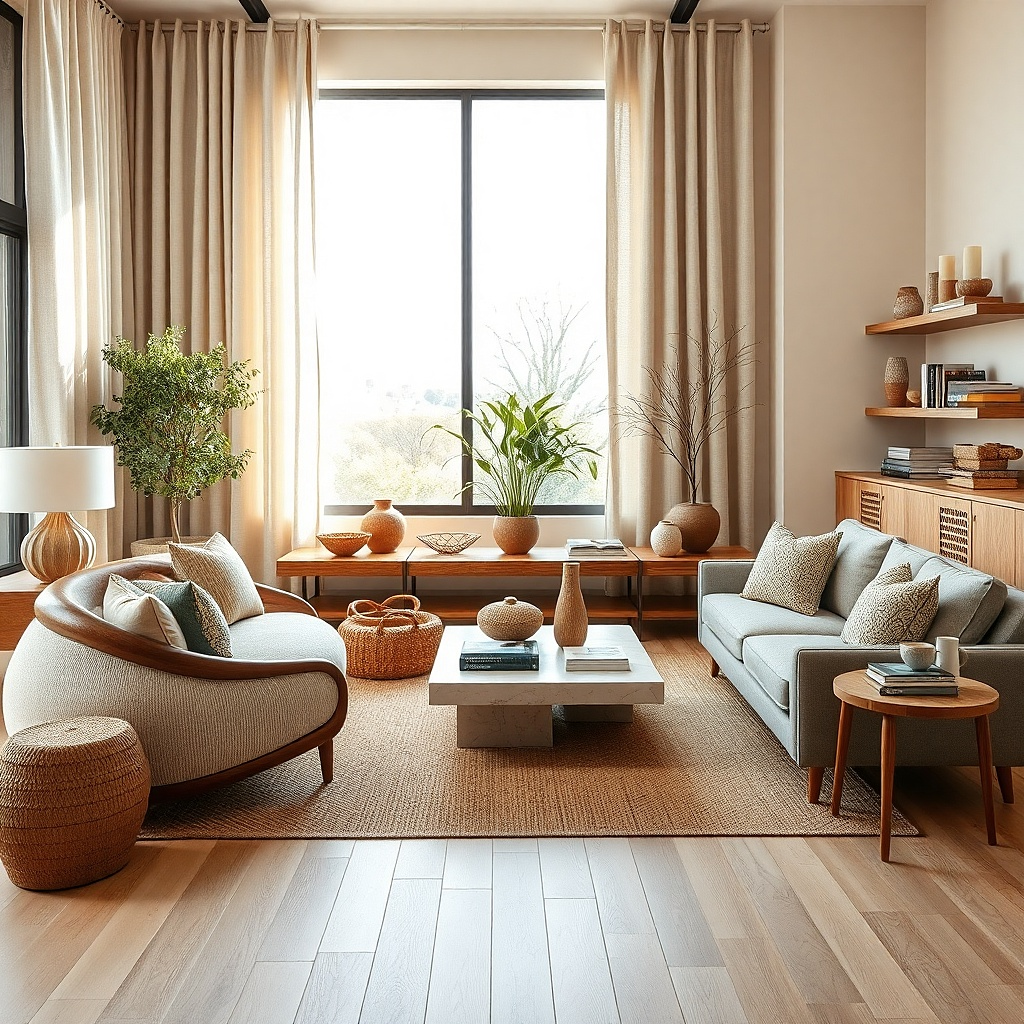
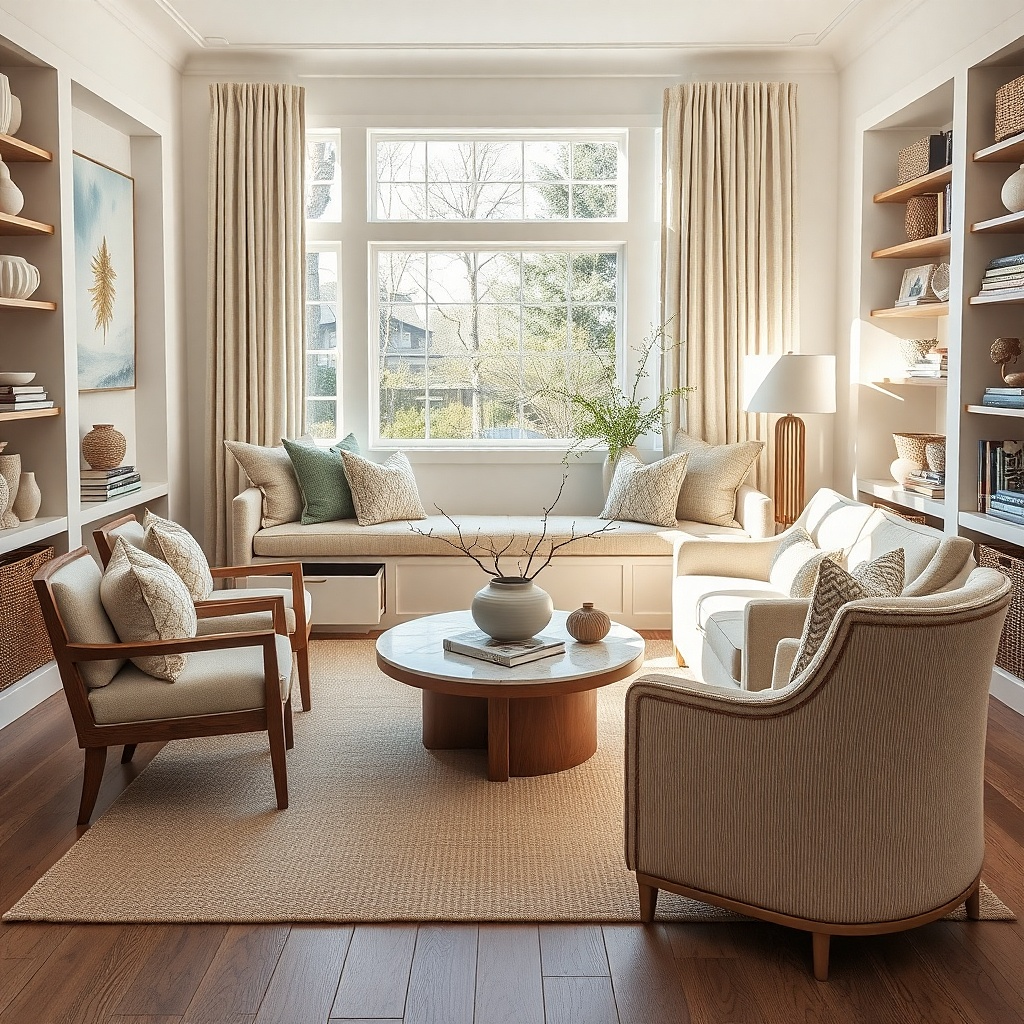
1. Ceiling-high sheers with an extra-wide rod
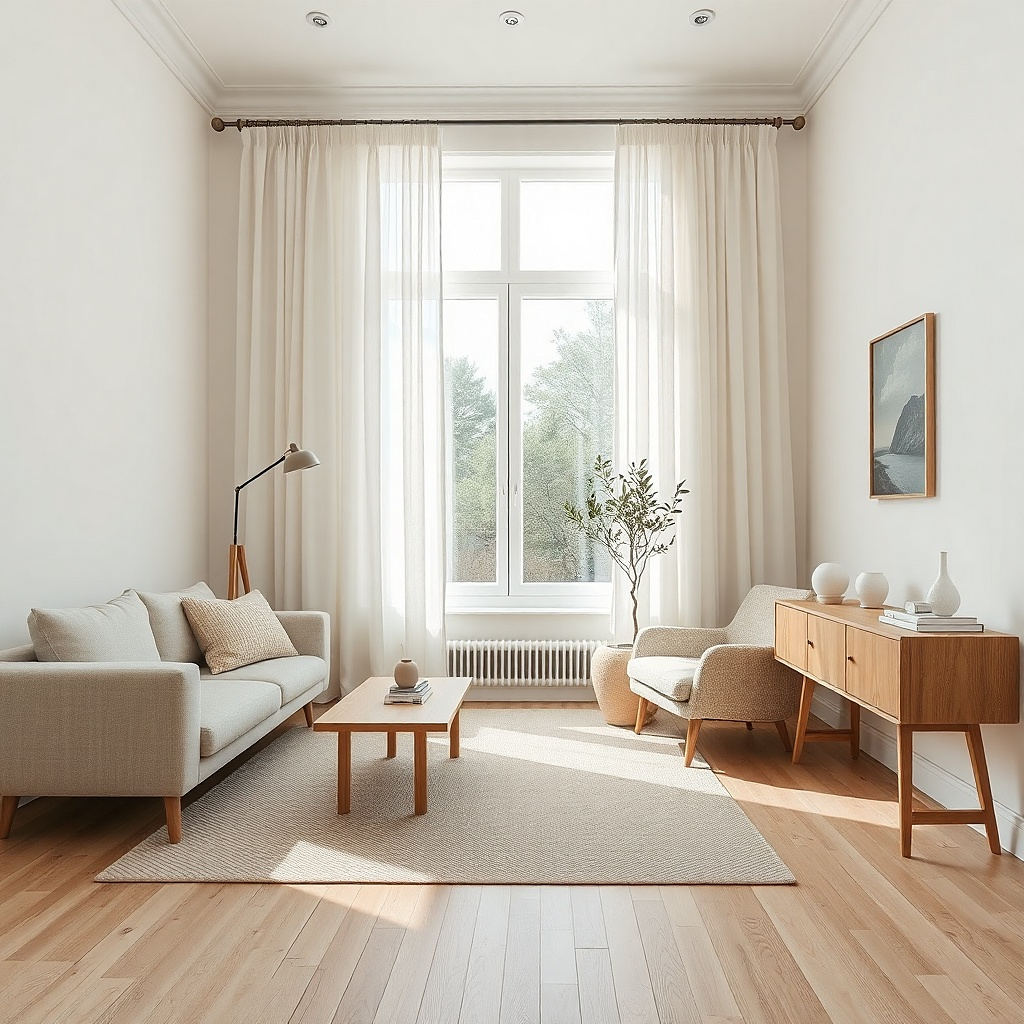
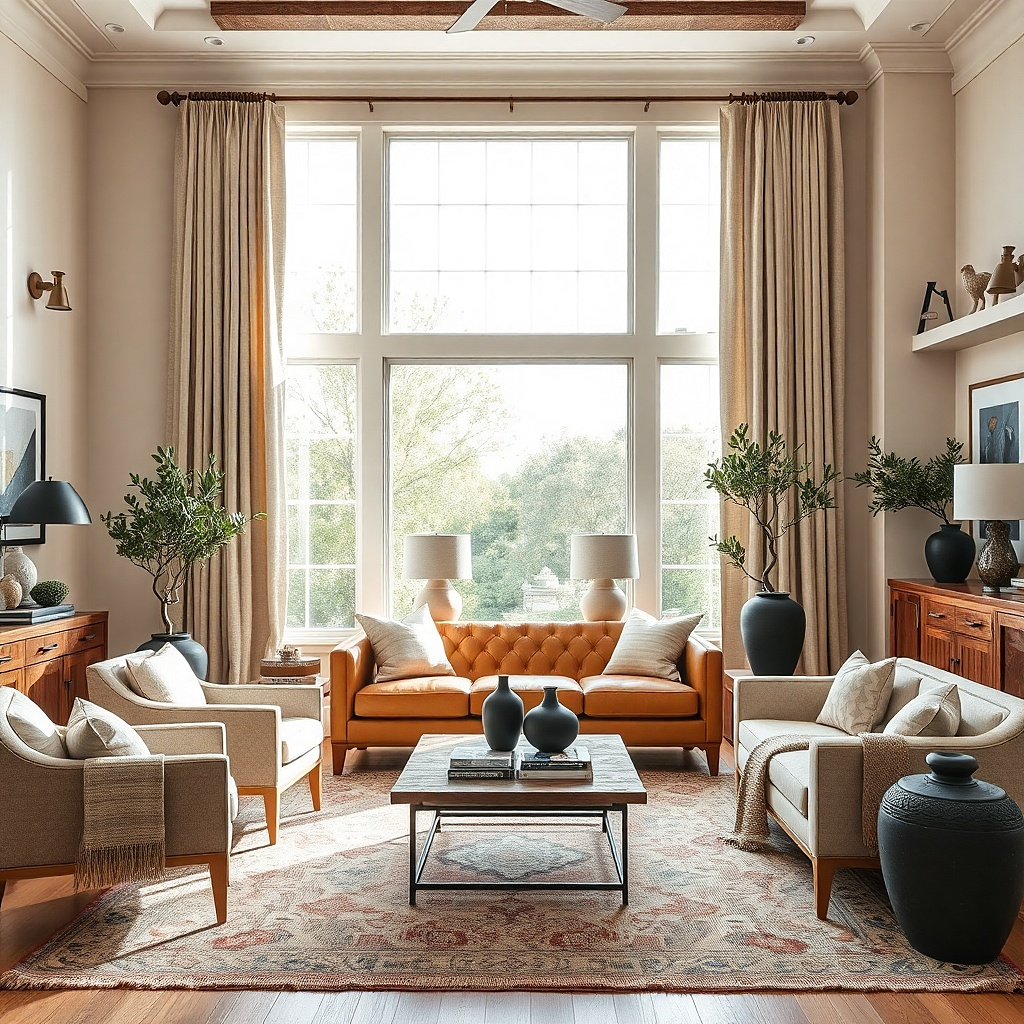
This is the first move I would make in a one-window rental because it fixes two problems at once — the window looks bigger, and more glass stays visible during the day. Use sheer panels in soft white, warm ivory, or pale flax, and hang them close to the ceiling rather than right above the trim. The long vertical line pulls the eye up, which makes a low apartment ceiling feel less squat. The extra-wide rod matters just as much. When the curtains stack mostly on the wall instead of over the glass, the room gets more actual daylight, not just the illusion of it.
Start by measuring the window frame width, then add 8 to 12 inches on each side for the rod. Mount a no-drill or damage-limited rod 4 to 8 inches below the ceiling, or at least 6 inches above the top trim if the ceiling is low. Choose panels that are 2 to 2.5 times the width of the window so they look full and soft instead of flat, and hem them so they just kiss the floor. Expect to spend about $35 to $120 depending on rod type and fabric quality.
Try thisIf the wall color is warm, pick ivory instead of stark bright white. The fabric will glow rather than look icy.
Common mistakeDo not hang short skinny panels right on the trim because they make the only window look smaller.
2. A slim mirror placed to catch the window at an angle
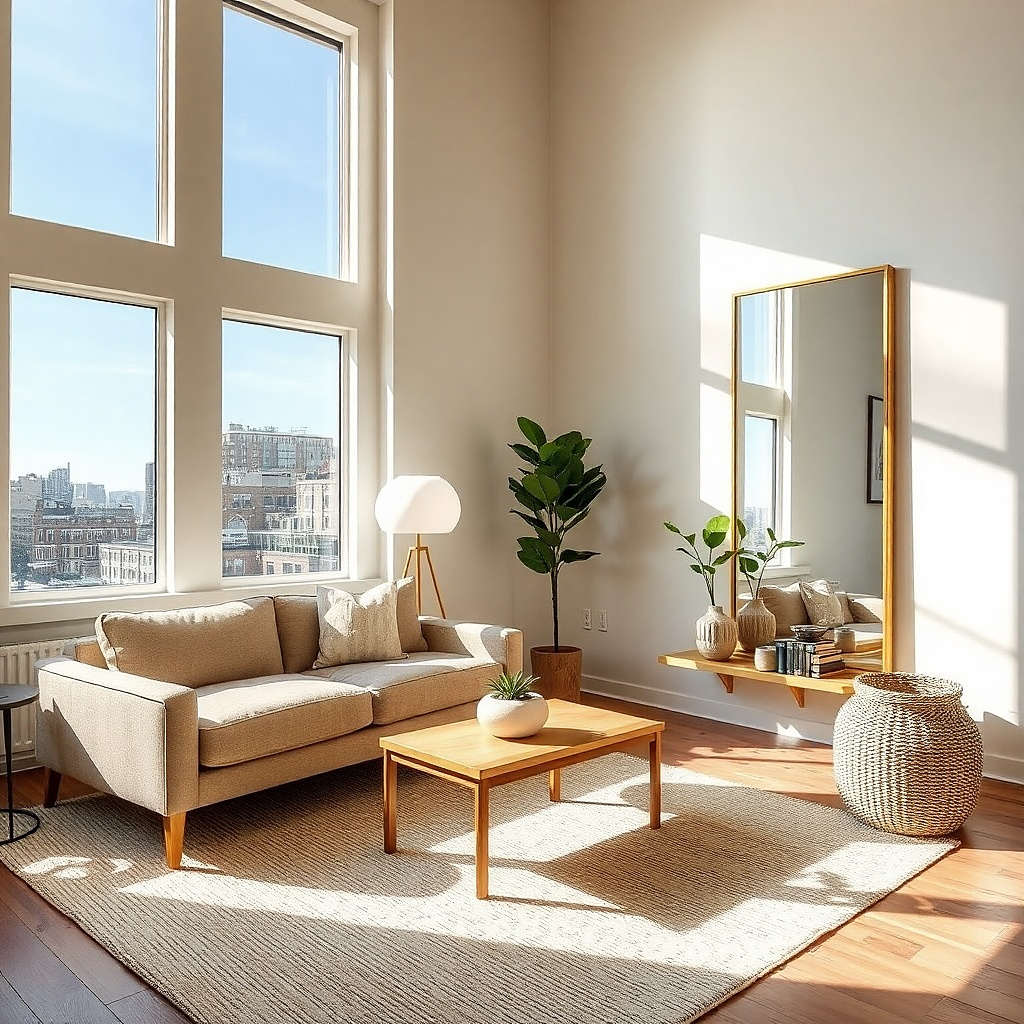
One good mirror will brighten a one-window room more than a gallery wall full of small frames. The best placement is opposite the window or on the wall diagonal from it, where it catches the daylight and throws it into the dim half of the room. Pick a mirror at least 24 by 60 inches, with a thin brass, black, or oak frame so the reflection stays dominant. A tall leaner has a relaxed look that works well in rentals, while a clean rectangular wall mirror reads sharper and more tailored. This idea earns its keep visually because it doubles the brightest part of the room.
Start by standing where the darker side of the room begins and check what the mirror will reflect. You want sky, trees, or the bright curtain area — not the back of a TV. Then place a leaning mirror with anti-tip straps, or hang a lightweight mirror with removable picture-hanging hardware rated for the load. Leave 8 to 12 inches between the mirror edge and nearby furniture so it does not look wedged in. A good rental-friendly mirror setup lands around $70 to $250.
A mirror with a little age in the frame looks better than a flashy beveled edge in small living rooms. Keep the shape simple.
Skip mirrored furniture near the window because it throws glare and starts to look busy fast.
3. A pale area rug that spreads the light across the floor
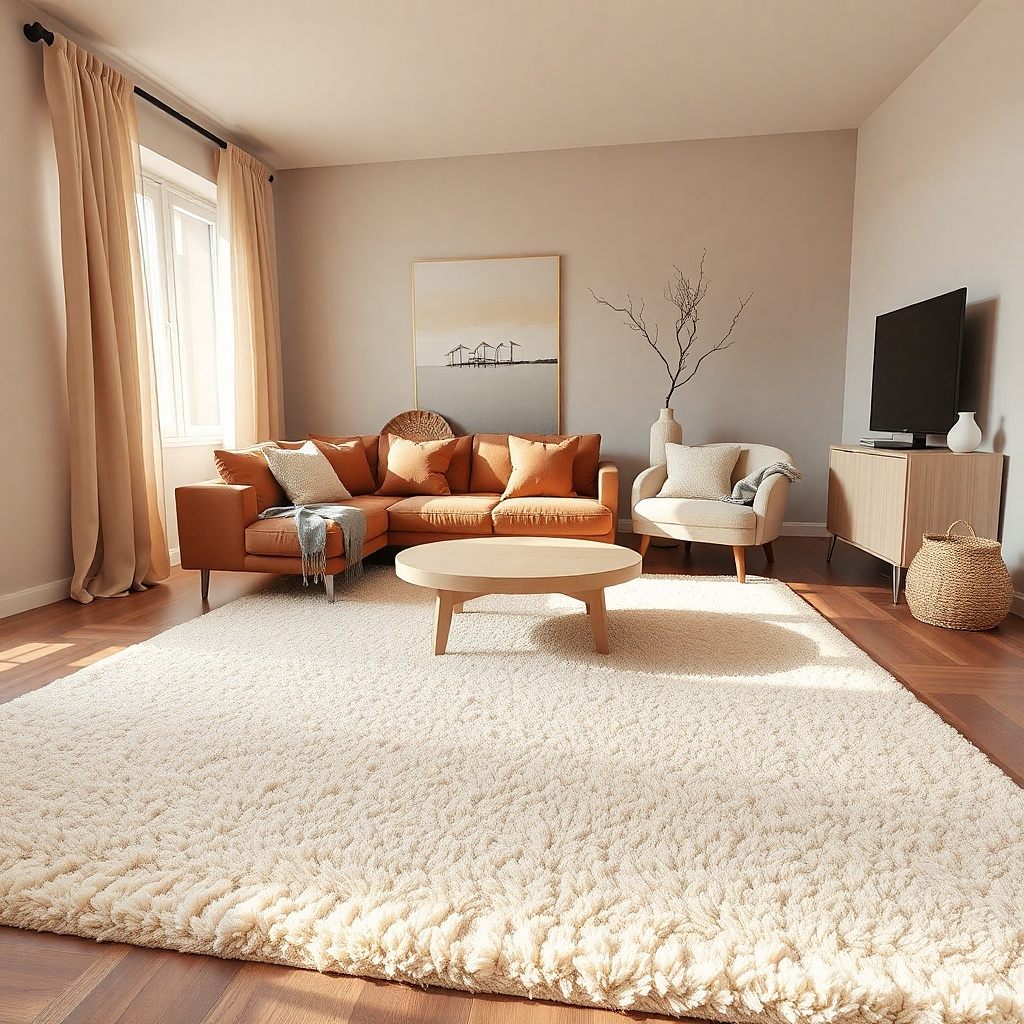
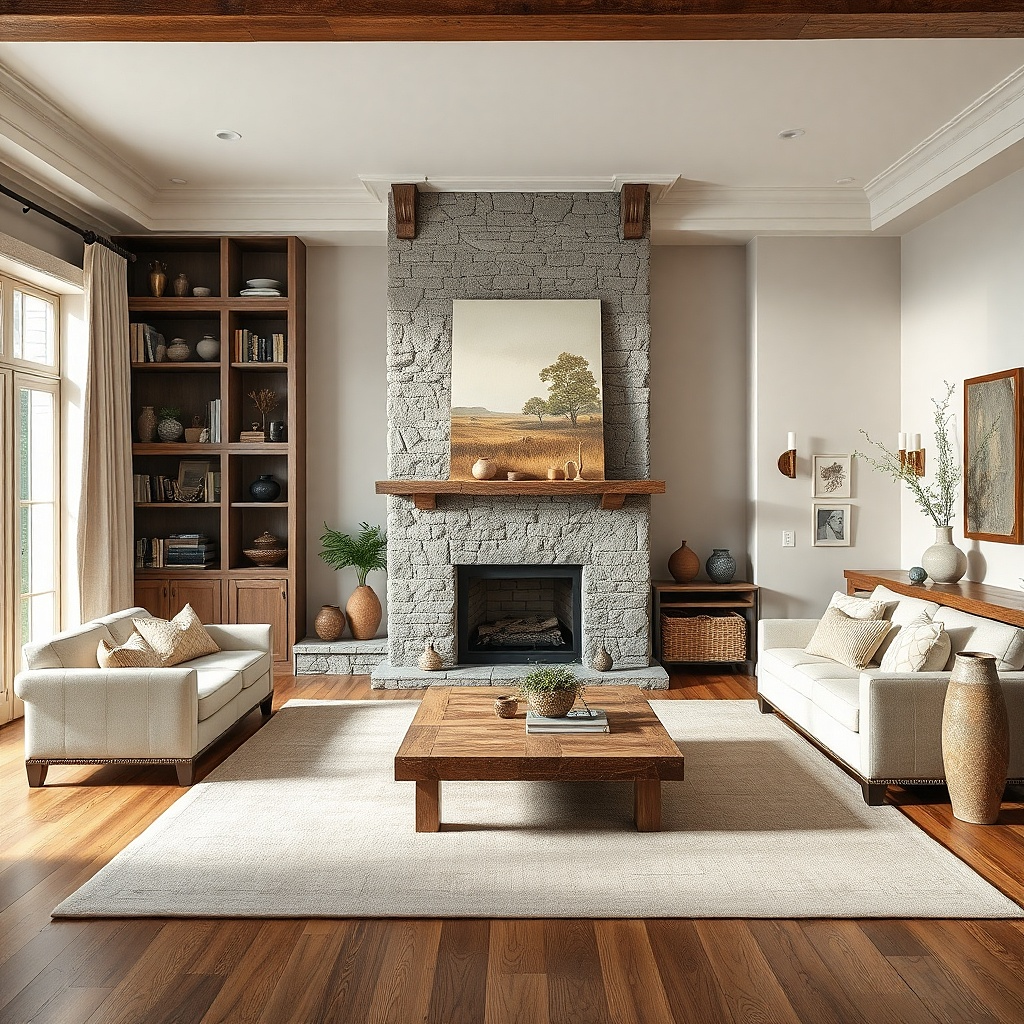
Floors eat light. In a room with one window, a pale rug works almost like a reflector because it lifts the darkest large surface in the space. Cream, oatmeal, light sand, faded taupe, and soft gray all work, especially in low-pile wool, flatweave cotton, or a washable low-sheen synthetic. The point is not a loud pattern. The point is a broad light field under the seating area that keeps the room from looking heavy below the waistline. This is one of the easiest ways to make a narrow rental living room feel less cave-like in photos and in real life.
Start with size, not color. In most living rooms, an 8x10 rug is the minimum if you want the front legs of the sofa and chairs on the rug; a 9x12 looks better if the room can take it. Then choose a pattern with low contrast — faded stripe, broken grid, or tiny geometric — so dust and foot traffic do not show while the room still reads bright. Add a rug pad to keep the surface flat and to avoid curled corners that catch shadows. Budget about $120 to $400 for a solid-looking rental-friendly option.
Try thisA rug with a little warm beige in it is easier to live with than pure white. It still brightens the room but hides lint and shoe marks better.
Common mistakeDo not pick a small dark rug that floats in the middle of the room because it makes the floor look chopped up.
4. A low sofa profile that stays below the window line
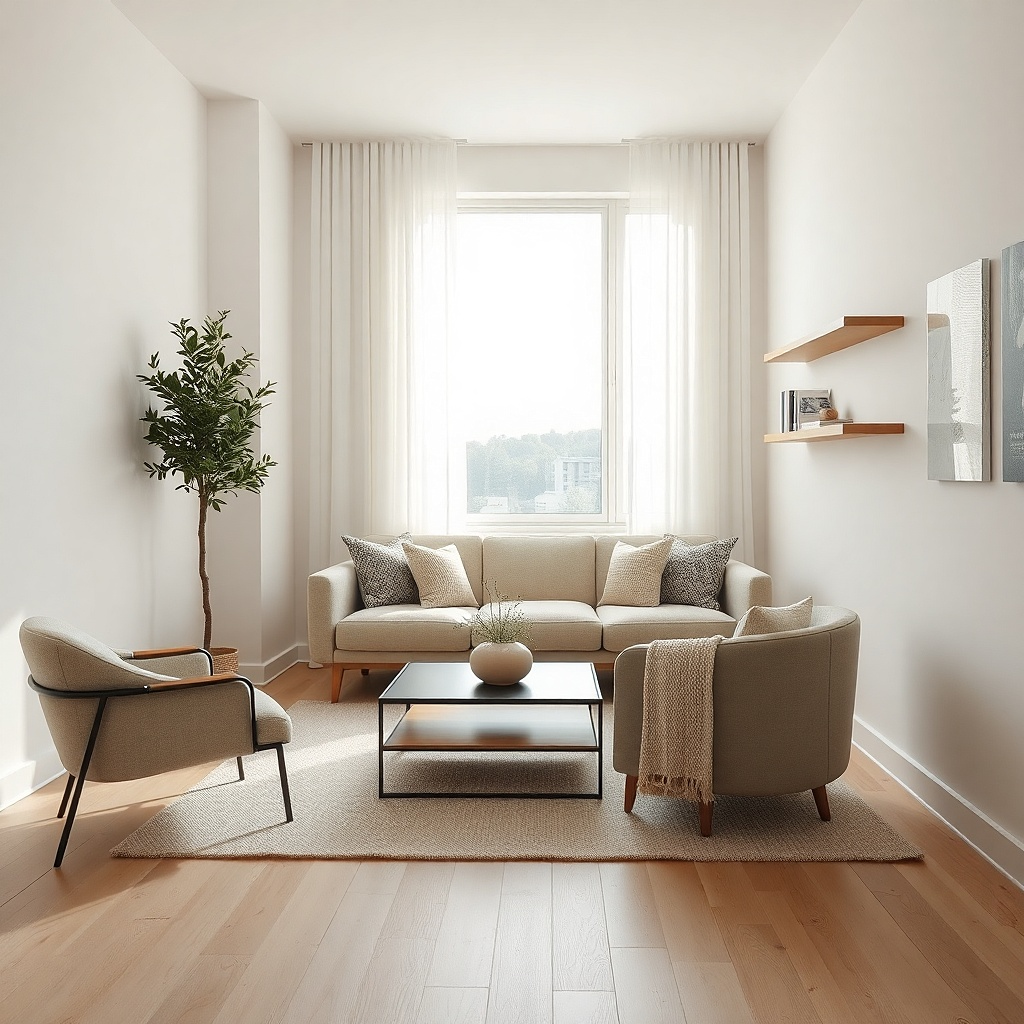
Furniture height matters more than people think in a one-window room. A sofa with a back around 30 to 34 inches keeps the daylight moving, while a tall overstuffed back acts like a wall. If the window is on the shorter wall, placing a low sofa beneath it can work beautifully as long as the frame does not block the trim or crush the curtains. Choose light upholstery — oatmeal, stone, mushroom, or warm gray — with legs that show a little air underneath. The room feels lighter because you can see more floor, more wall, and more of the window itself.
Start by measuring from the floor to the bottom of the window trim and keep the sofa back at least 2 inches lower. Then leave 4 to 6 inches between the sofa and the wall so curtain panels can fall cleanly behind or beside it. If buying new is not on the table, swap bulky dark pillows for lighter covers and remove any heavy throw draped across the back. Rearranging costs nothing; a new slipcover or pillow set may run $40 to $120.
Exposed wood or black metal legs help more than skirted sofas in dim rooms because they open up the floor visually.
Avoid a tall sectional pushed tight against the only window wall unless you want the room to feel boxed in.
5. Roman shade plus airy side panels
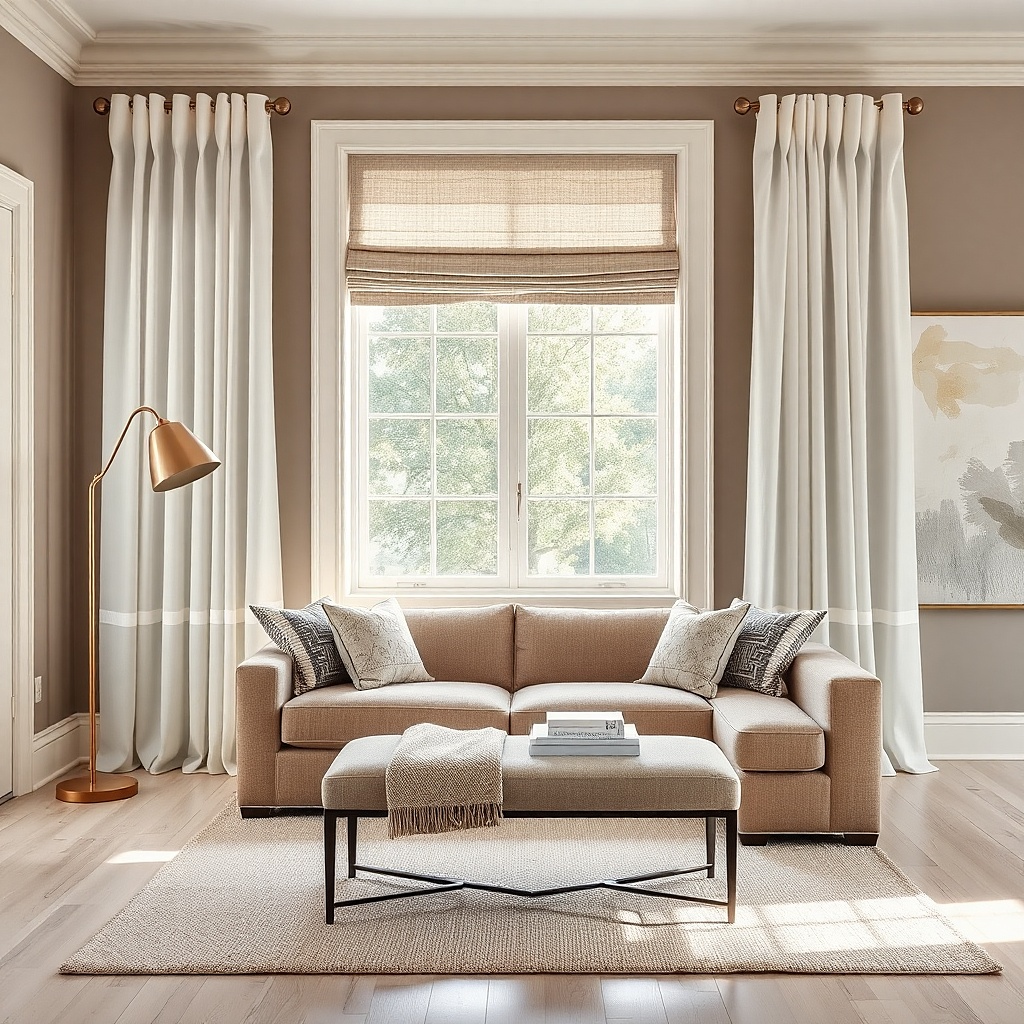
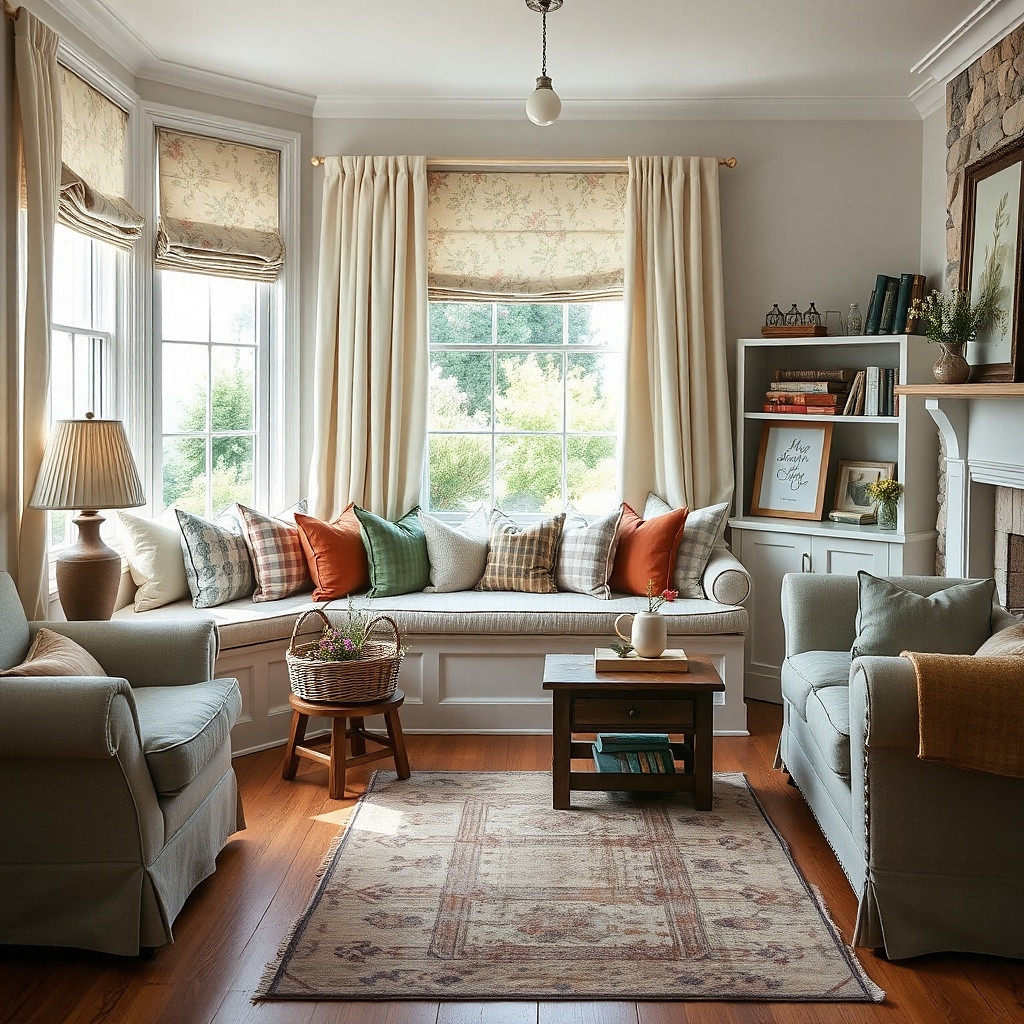
This layered setup looks finished without turning the window into a thick block of fabric. Use a flat or relaxed Roman shade in light-filtering linen blend or woven polyester, then add sheer side panels for softness and height. The shade gives privacy and a neat daytime line. The panels add movement and make the wall look taller and wider. This combination is especially strong in living rooms where plain sheers alone feel too bare but blackout curtains would kill the light.
Start with an inside-mount shade if the trim is deep enough, since that keeps the window architecture visible. If the trim is shallow, use an outside mount and place it 4 to 6 inches above the frame to fake height. Then install a rod wider than the window so the sheer panels sit mostly on the wall when open. A decent no-drill shade and curtain combo runs about $60 to $180.
Try thisChoose a Roman shade with no strong horizontal contrast. Thick dark banding cuts the window into stripes and shrinks it.
Common mistakeDo not pair a textured woven wood shade with equally heavy linen drapes in a dark color because the stack becomes too dense.
6. Glass and acrylic tables instead of chunky wood blocks
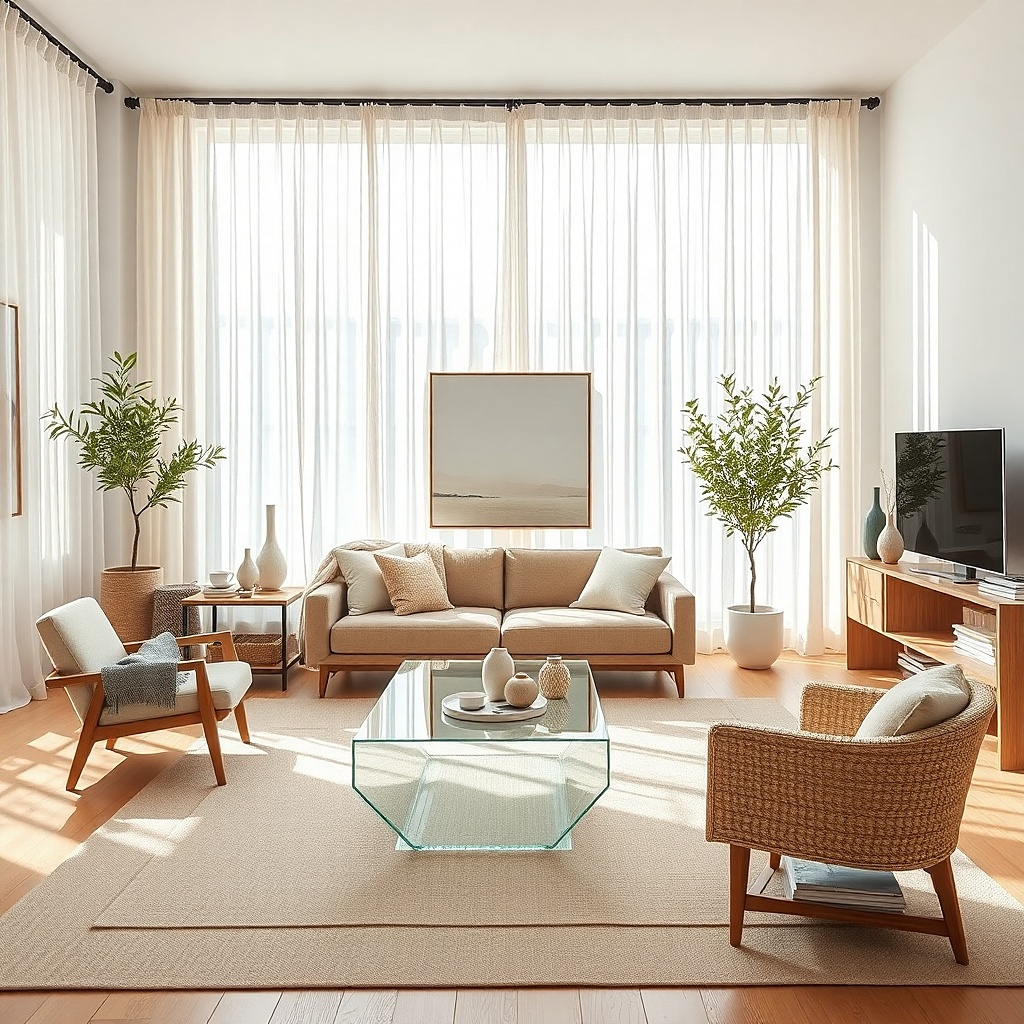
If your room has one decent light source, stop placing visual barriers in the middle of it. A glass coffee table, acrylic side table, or narrow metal console lets the eye travel across the room instead of stopping at a solid dark shape. That makes the space feel brighter even before you change the curtains. The effect is strongest in small rentals where a bulky square coffee table sits right in the path between the window and the back wall. Clear surfaces also photograph well because they keep the floor and rug visible.
Start by swapping the biggest blocker first, which is almost always the coffee table. Look for a table 36 to 48 inches long with rounded corners if the room is tight, and keep the gap between sofa and table around 16 to 18 inches for easy movement. Then replace one wood side table with acrylic or a slim pedestal base rather than changing every piece at once. Secondhand glass tables are common, so this update can cost as little as $50 or as much as $250.
A smoked glass top is darker than it looks online. Clear glass does more work in a one-window room.
Skip thick farmhouse tables with heavy aprons and chunky legs near the center of the room.
7. A light wall behind the window instead of a dark accent wall
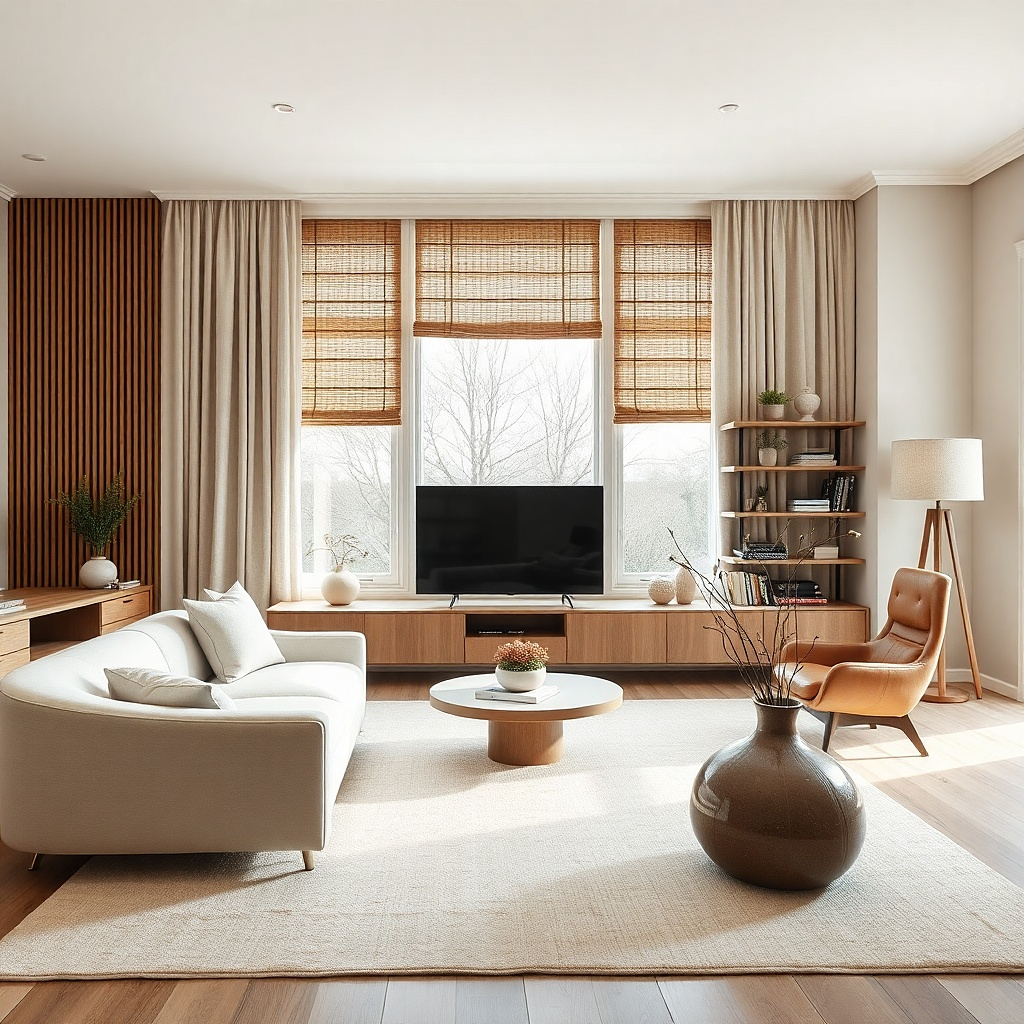
Dark paint around the only window is one of the fastest ways to make a rental living room feel dim. The wall that holds the window should be the lightest large surface in the room so it throws daylight back instead of absorbing it. Soft warm white, pale greige, muted putty, or a whisper of warm beige all work better than charcoal, navy, or saturated green in this specific setup. If painting is allowed, this change has a big payoff. If it is not, removable wallpaper in a pale tone with a tiny repeat can pull off a similar trick.
Start by checking the undertone of the daylight. North-facing rooms look better with warmer whites; south-facing rooms can handle a cleaner white without looking cold. Then paint just the window wall and the wall across from it if you want the most bounce for the least effort, or apply peel-and-stick wallpaper with a matte finish so glare stays soft. Keep trim the same color or one shade lighter for a calm look. Paint and supplies can stay under $80; removable wallpaper for one wall often lands between $90 and $200.
Try thisFlat or matte paint looks softer in daylight than shiny eggshell on a problem wall with uneven texture.
Common mistakeDo not put a dark accent wall around the only window because it frames the light source with shadow.
8. Plug-in sconces that wash the dark corners after sunset
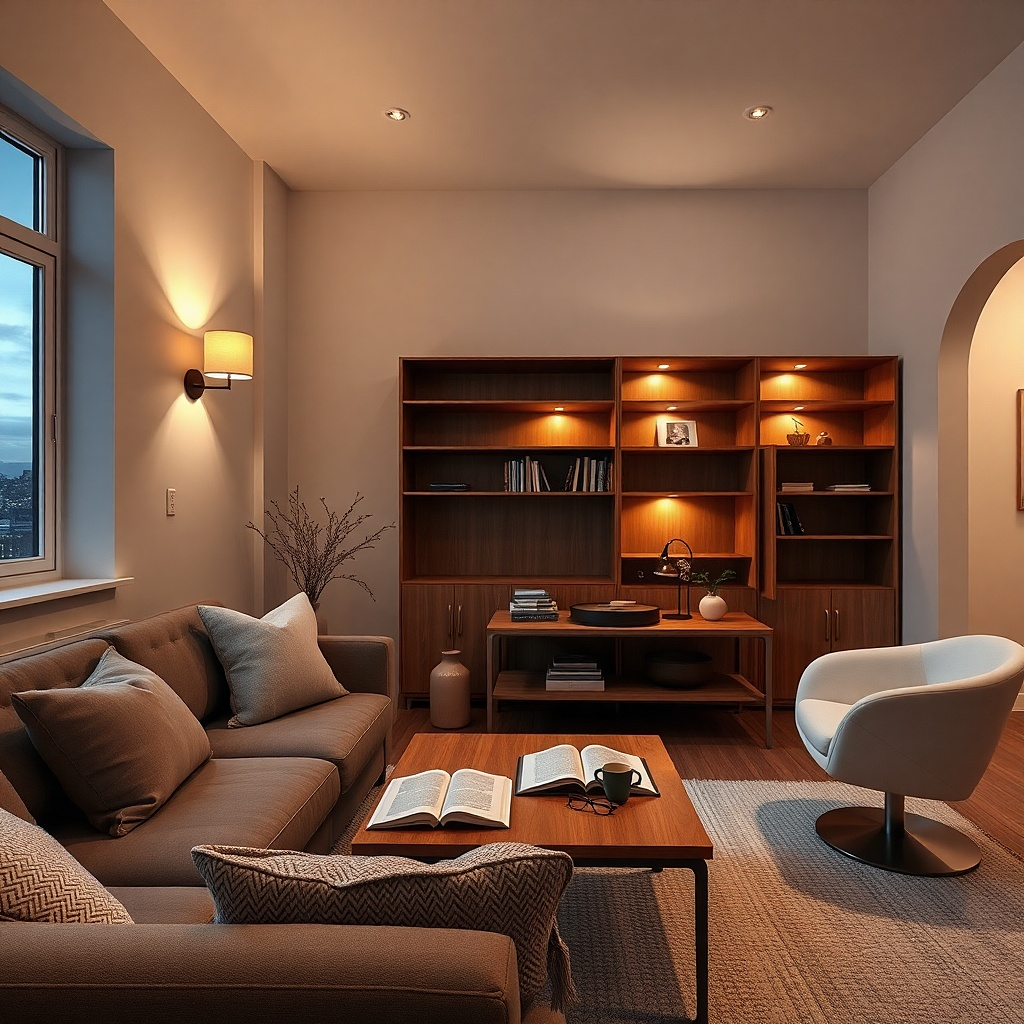
A room that relies on one window falls apart at night if all the light comes from one ceiling fixture. Plug-in sconces fix that without hardwiring and without eating precious table space. Put them in the darker half of the room so the brightness feels balanced from wall to wall. Choose shades in white linen, pleated cream, or opal glass, and use warm white bulbs at 2700K to 3000K. The room keeps the soft bright mood after sunset instead of turning into a cave with one harsh overhead bulb.
Start by identifying the two darkest corners once daylight fades. Mount one sconce 60 to 66 inches from the floor near a chair, console, or art grouping, and hide the cord with a paintable cord cover or run it neatly down a corner. Then add LED bulbs around 800 lumens each if the shades are opaque, or lower if the shades are translucent. A pair of good plug-in sconces with bulbs and cord covers usually costs $80 to $220.
Try thisFabric shades throw a softer glow than bare metal shades. In a one-window room, softer wins.
Common mistakeAvoid cool white bulbs above 3500K because they make pale walls look flat and slightly blue.
9. A narrow bench or console under the window, not a deep media unit
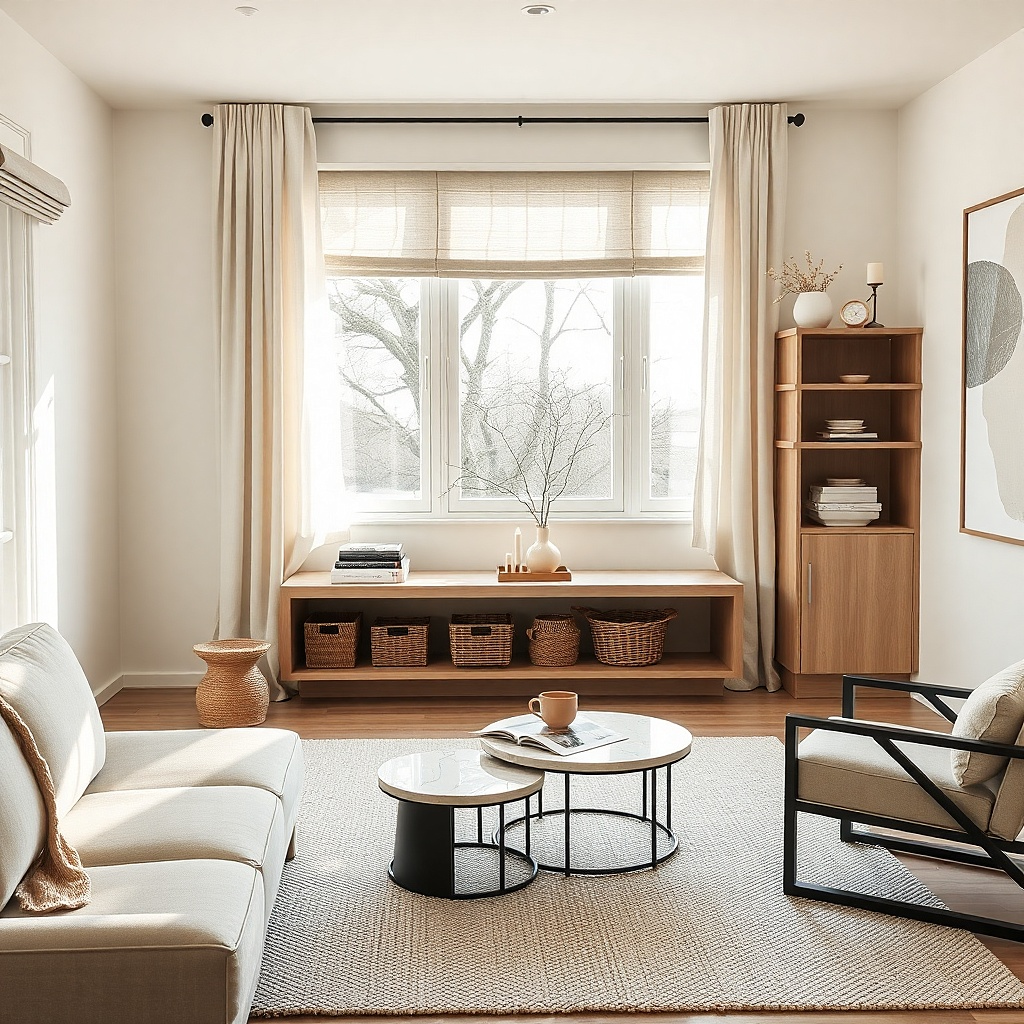
The area under the only window should stay visually light. A narrow bench, shallow console, or open-frame shelf keeps the lower half of the window useful without blocking the daylight. Aim for something 10 to 14 inches deep rather than a chunky 18- to 24-inch storage unit. Oak, ash, light walnut, white, or a slim black metal frame all read cleaner than a bulky dark cabinet. This works especially well in small apartments where every wall wants to become storage and the window wall starts to feel clogged.
Start by measuring the sill height and leave at least 3 to 5 inches of breathing room below it. Then choose a piece that is narrower than the window width by 6 to 12 inches so the setup looks intentional rather than jammed in. Style it with one stack of books, one ceramic lamp if there is an outlet nearby, or one trailing plant — not a dense row of objects. Expect to spend $60 to $180 for a bench or slim console that does the job.
Try thisAn open shelf bench looks lighter than a closed drawer unit, even when they take up the same footprint.
Common mistakeDo not slide a deep TV stand under the window unless there is truly nowhere else for it to go.
10. A tonal palette that repeats the window light
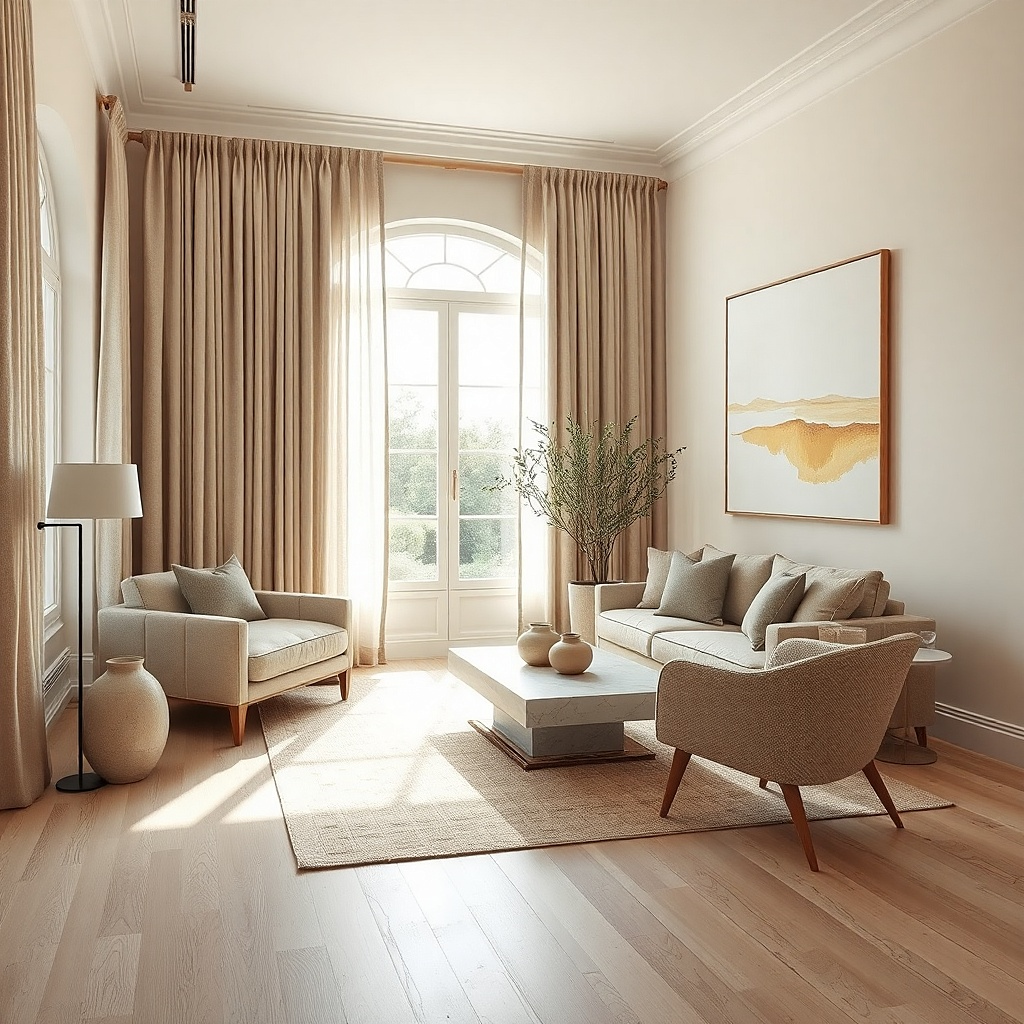
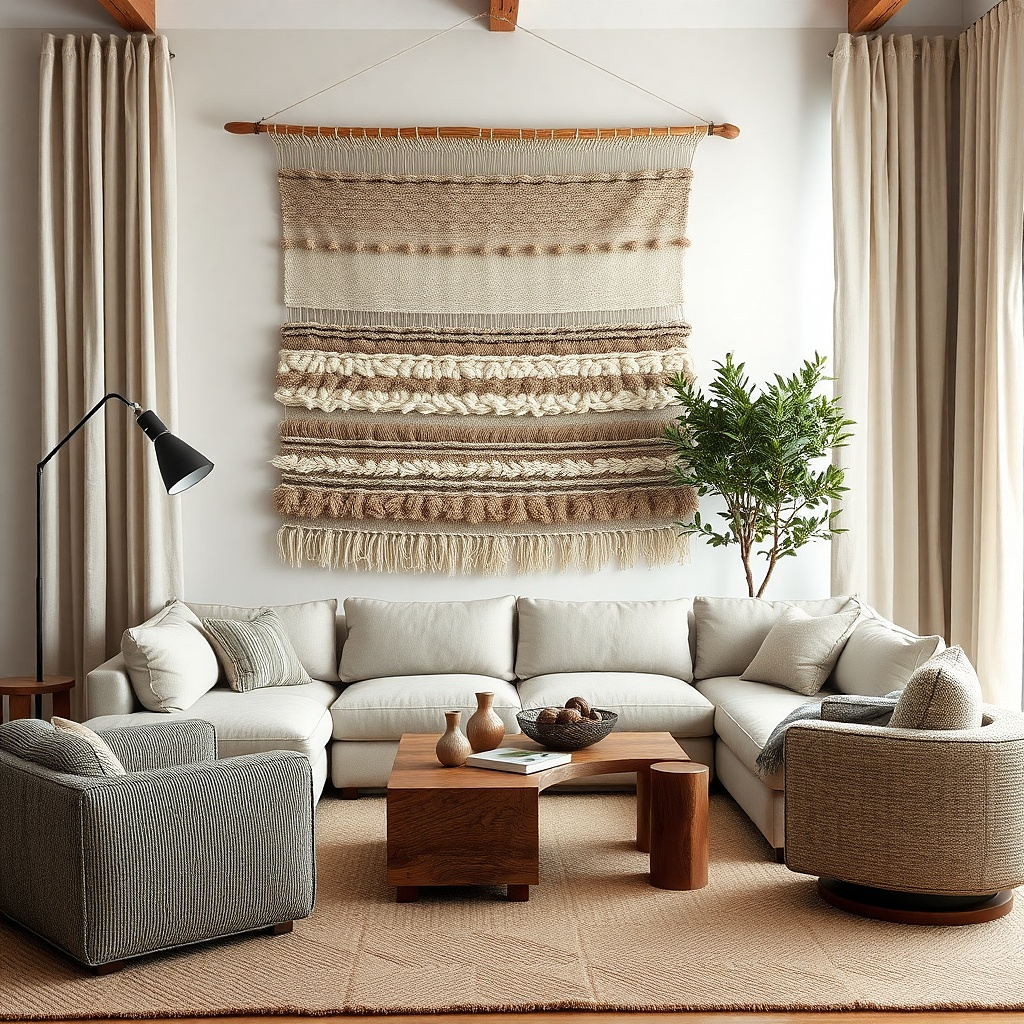
Color contrast is dramatic, but in a one-window living room it can also make the dim areas feel harsher. A tonal palette works better if your goal is bright and calm. Think cream curtains, an oat rug, a mushroom sofa, pale wood, and a few darker accents in small doses like a black frame or walnut tray. The room feels more open because there are fewer hard visual stops. This is also one of the easiest ways to get an expensive-looking photo without buying much.
Start with the three biggest surfaces — walls, rug, and sofa — and keep them within a narrow light range. Then add contrast only in thin lines or small objects, such as lamp bases, art frames, or one dark chair leg. Finally repeat one warm note, like sand or camel, in two or three spots so the room does not turn flat. If you are shopping piece by piece, pillow covers, a throw, and a lamp shade can shift the palette for under $100.
Use texture to keep a tonal room from looking bland. Boucle, washed linen, ribbed ceramic, and light wood all catch light differently.
Skip high-contrast black-and-white everything because it chops up a small dim room.
11. One oversized art piece on the darkest wall
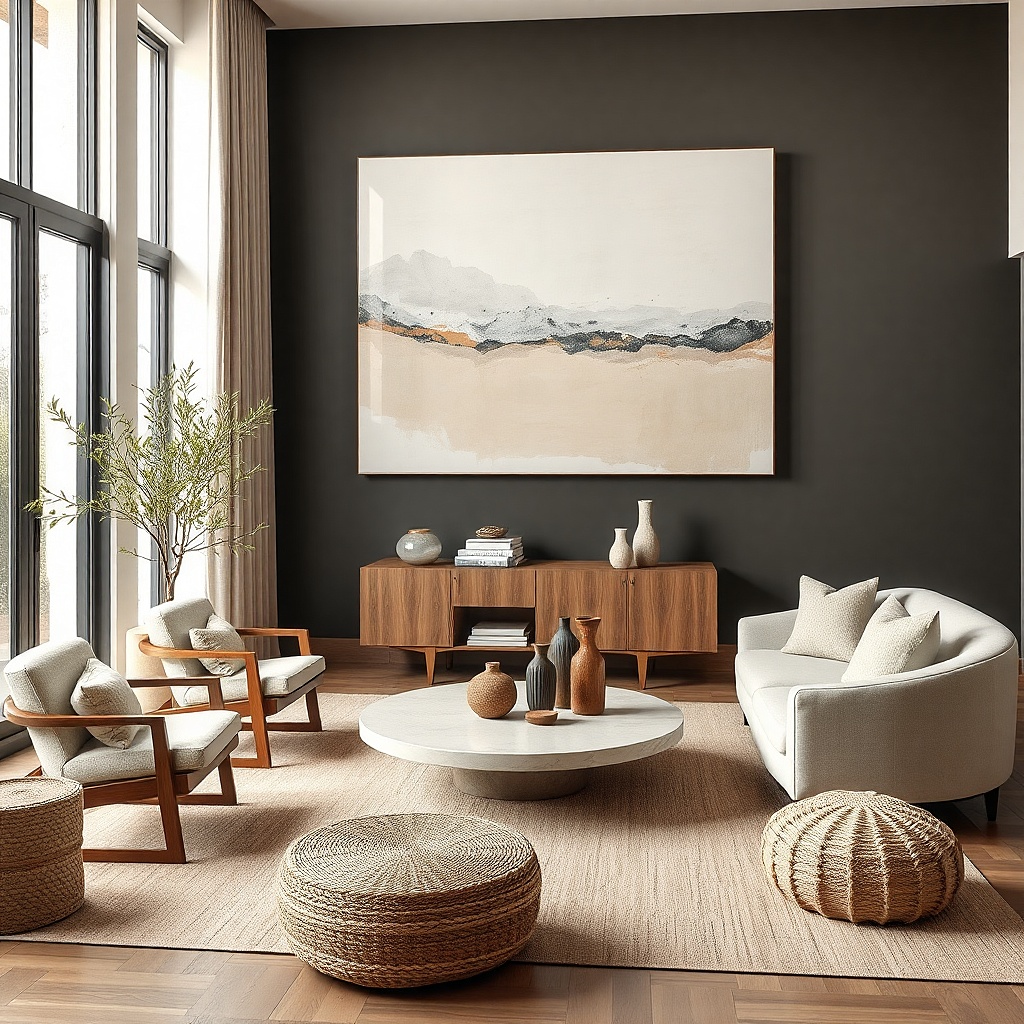
A single large art piece can brighten the back half of a one-window living room if the colors are right. Choose a canvas or framed print with pale ground — warm white, sand, fog gray, muted blush, or washed blue — rather than a dark moody scene. The large scale matters because it creates one calm field that reflects a little light and keeps the wall from receding into shadow. Small scattered frames do the opposite. They create tiny dark gaps and visual noise where the room needs openness.
Start by measuring the blank wall and aim for art that covers about two-thirds of the width of the furniture below it. Hang the center around 57 to 60 inches from the floor, or slightly lower above a sofa so the grouping feels connected. Use removable hanging strips only if the piece is light enough; larger framed work may need proper anchors if your lease allows them. A printable oversized piece, stretched canvas, or budget frame setup can run from $40 to $200.
Try thisMatte glass or no glass looks better than shiny glass across from a window because it cuts glare.
Common mistakeDo not build a busy gallery wall on the darkest wall if your goal is brightness.
12. A plant setup that stays airy instead of leafy and dense
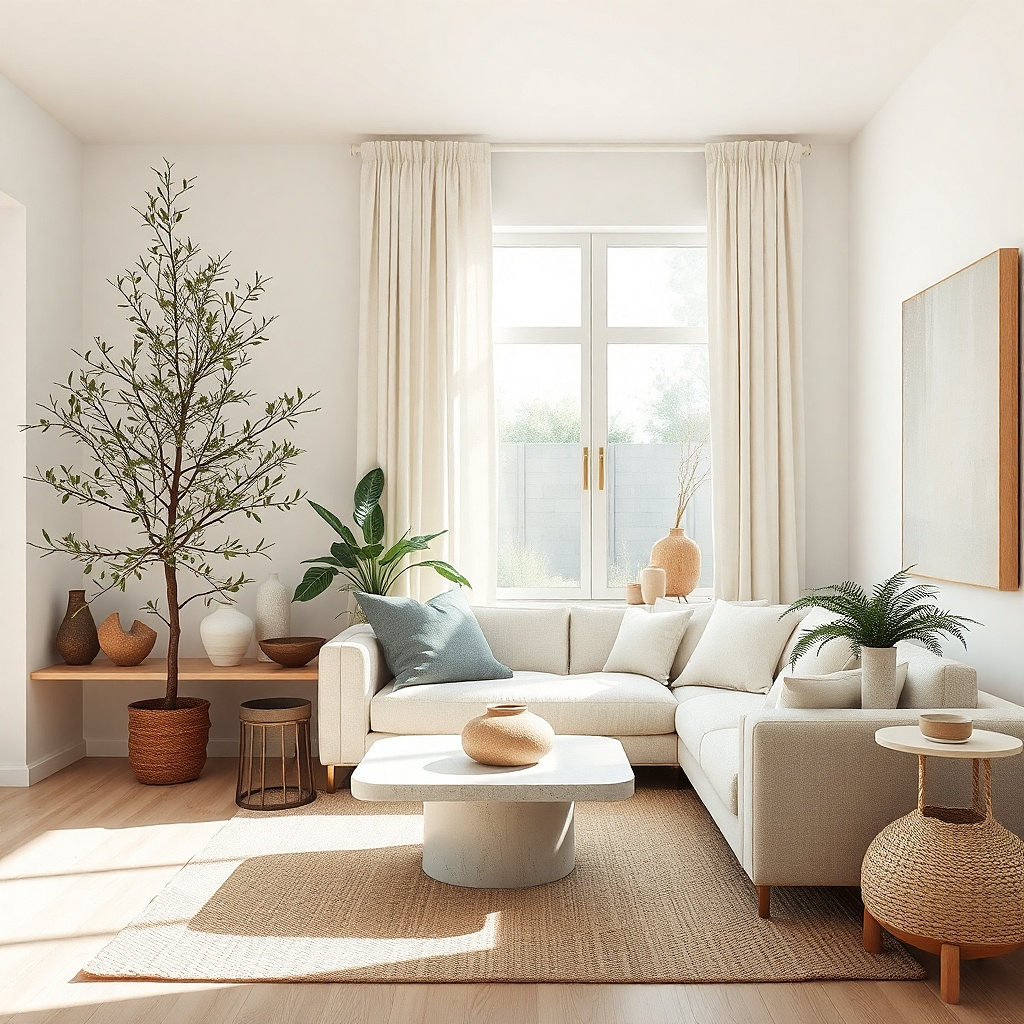
Plants help a room feel alive, but the wrong plant by the only window can block a lot of light. Choose airy shapes like an olive tree, a slim ficus audrey, or a sparse pothos on a stand instead of a huge dense rubber tree parked right in front of the glass. Keep the planter pale or natural — chalky white, stone, terracotta, or light basket weave. The effect is softer and brighter. You still get the organic look without turning the window corner into a green wall.
Start by placing the tallest plant 12 to 24 inches to the side of the window rather than centered in front of it. Then use a stand that lifts trailing plants without spreading leaves across the glass, or choose one floor plant with a clear trunk line so light passes through. Add a saucer and keep the grouping to one or two plants near the window wall. A simple setup can cost $25 to $120 depending on plant size and planter material.
The planter matters almost as much as the plant. A pale matte pot reflects more light than a glossy black one.
Avoid a cluster of five small plants packed on the sill because they turn into visual clutter fast.
13. Sheer privacy film for windows that need coverage all day
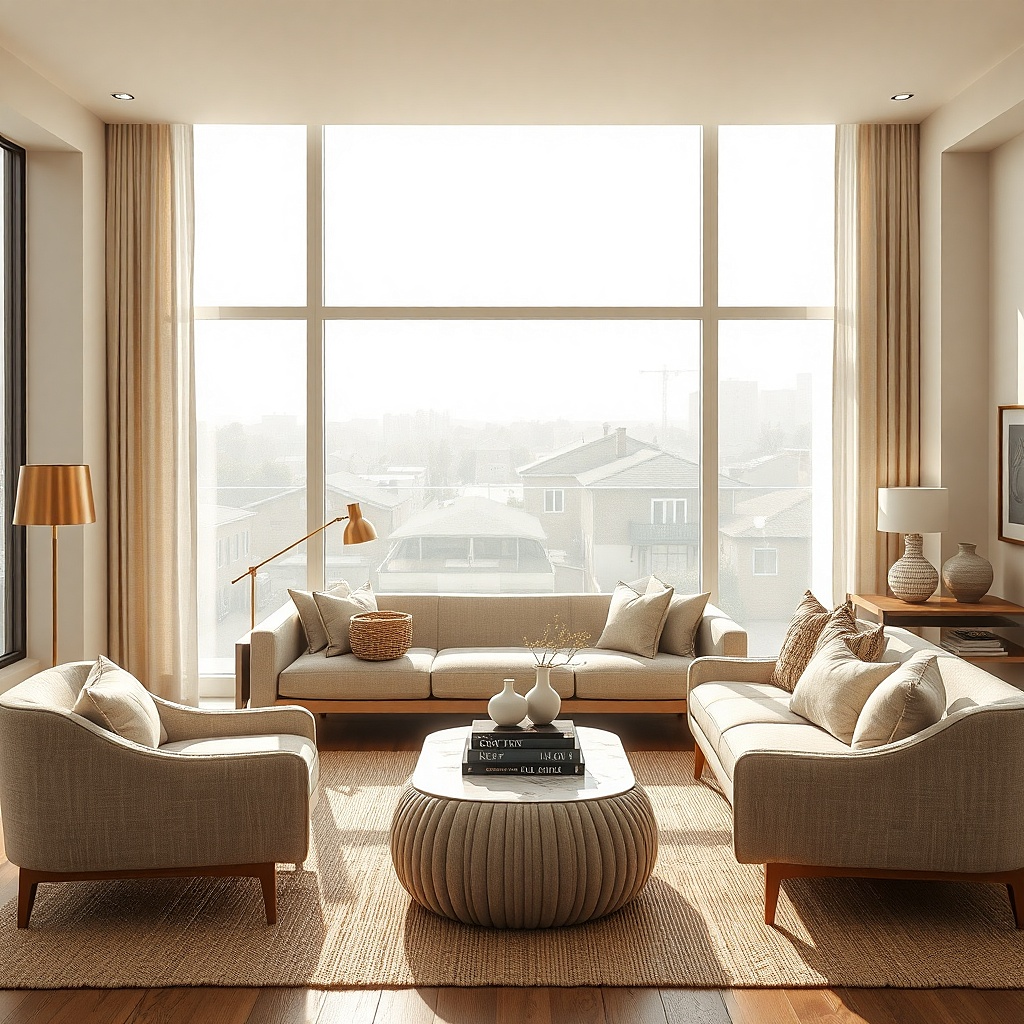
Ground-floor renters have a different problem. You need privacy, but heavy curtains all day will darken the room. A matte or lightly frosted privacy film solves that by softening the view while still letting daylight through. It looks clean, especially with simple sheers or no side panels at all, and it works well on windows that face a walkway or neighboring building. The room stays bright because the glass still pulls in light from edge to edge.
Start by cleaning the glass thoroughly and measuring each pane if the window has muntins. Cut the film slightly oversize, spray the glass with water plus a drop of dish soap, then smooth the film on with a plastic squeegee and trim the edges with a sharp utility knife. Pair it with a slim rod and airy curtains if you want softness around the frame. Most privacy film projects cost about $20 to $50 and take under an hour.
Choose a plain frosted or rice-paper look. Fake stained glass and bold geometric film date a room quickly.
Do not use mirrored privacy film in a living room if you want a soft bright look inside.
14. A lamp trio placed in depth, not all on one side
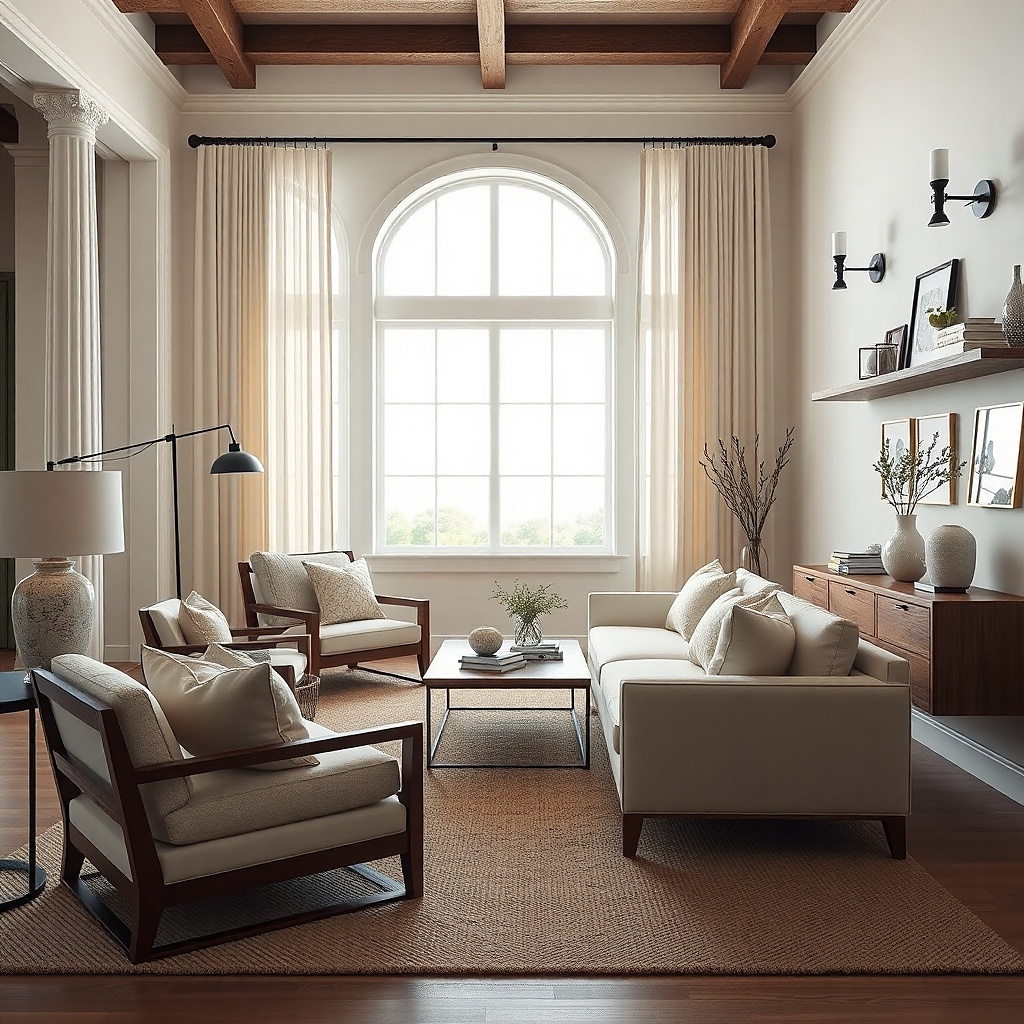
One window leaves obvious dead zones once the sun moves. The smartest fix is layered lighting placed at different depths in the room. Use one floor lamp near the seating area, one table lamp on a side table or console, and one wall light or second table lamp farther from the window. Keep shades pale and bases visually light — ceramic, glass, brushed brass, or wood. This layout makes the room feel evenly lit instead of bright on one side and gloomy on the other.
Start with the darkest corner and put the tallest light there, usually a floor lamp around 58 to 64 inches high. Then place a table lamp halfway between the window and the back wall to bridge the light drop-off. Finish with one more source near the opposite side of the room, all on warm bulbs and ideally on plug-in dimmers. A good-looking three-lamp setup can be built for $90 to $300 if you mix budget bases with better shades.
Try thisLamp shades should sit at eye level when seated or slightly below. Too-high exposed bulbs create glare and flatten the room.
Common mistakeAvoid relying on one overhead fixture because it leaves the corners muddy and the window wall disconnected at night.
15. Curtain color matched close to the wall for a soft glowing frame
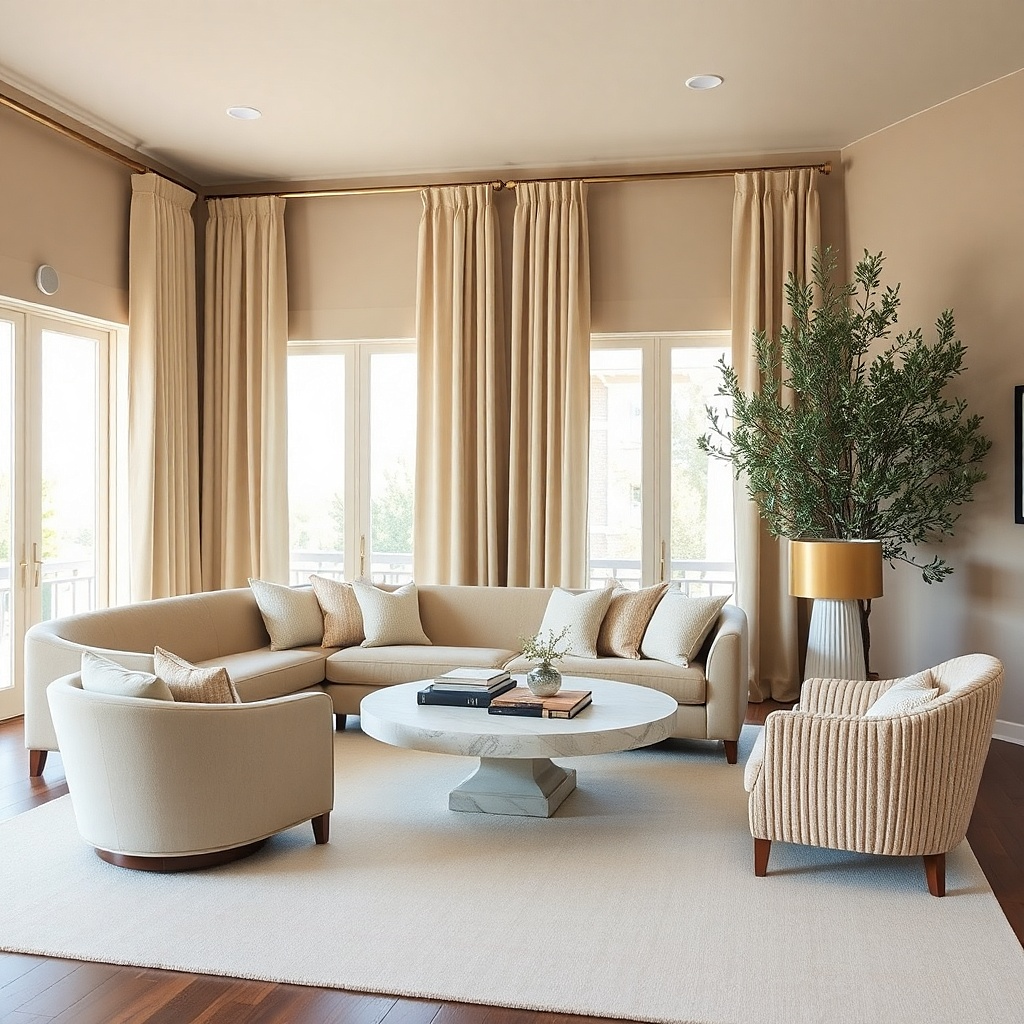
High contrast curtains draw a hard border around a small window. In a one-window room, that border makes the opening feel even more isolated. Matching the curtain color close to the wall color softens the frame so the light reads as a wider wash across the wall. The best combinations are warm white walls with ivory curtains, pale greige walls with oatmeal curtains, or soft beige walls with flax panels. The result is quiet, bright, and far more expensive-looking than stark contrast.
Start by holding fabric swatches against the wall in daylight and at night with lamps on. Pick a curtain color that is one shade lighter or darker than the wall, not a dramatic jump. Then choose a matte fabric with a soft drape so the folds catch a little shadow without looking heavy. A pair of color-matched panels usually costs $30 to $100, depending on length and fabric.
If the wall paint has a yellow undertone, avoid blue-white curtains. They will look cold and slightly dingy next to the paint.
Do not hang dark contrast panels around a small single window unless you want the window to look boxed in.
16. A reading corner beside the window, not in front of it
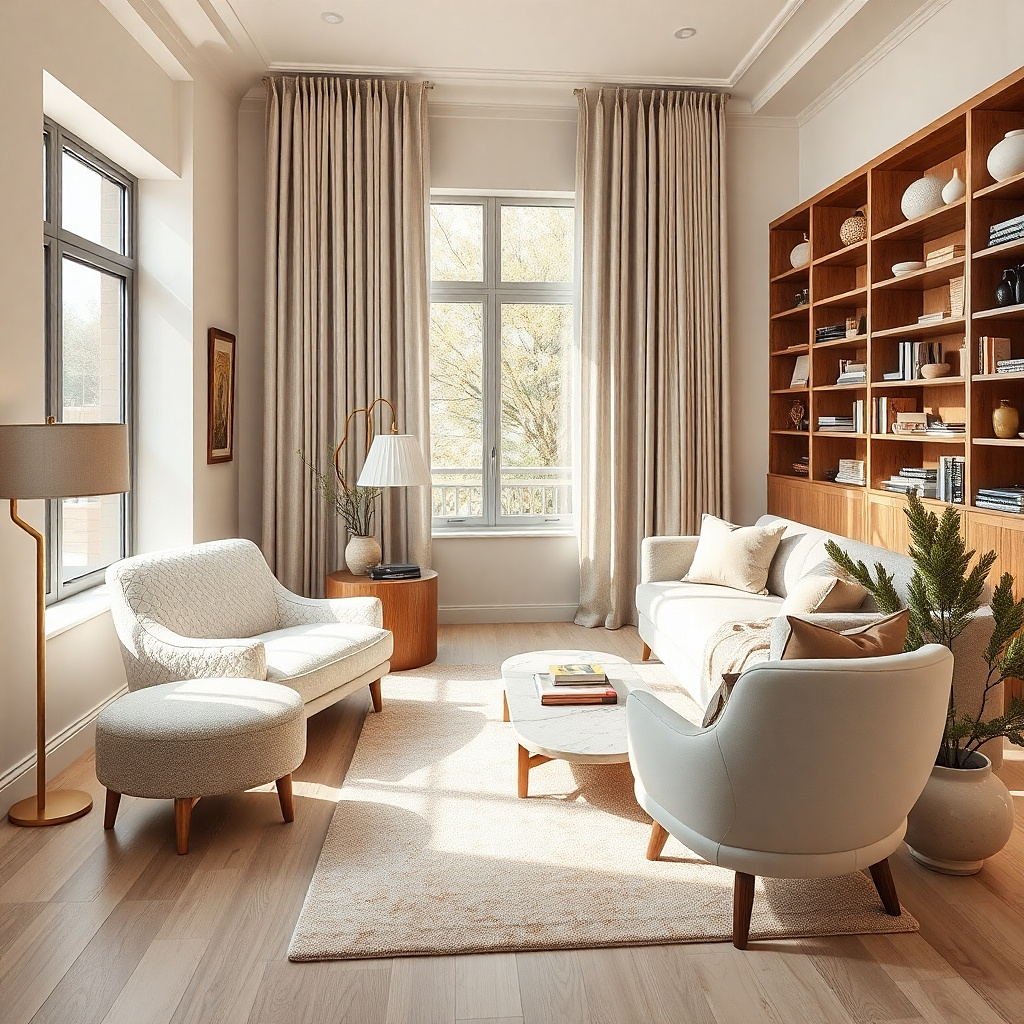
The only window should stay open, but that does not mean the area around it has to stay empty. A reading chair beside the window uses the best natural light without blocking it. Choose a chair with open arms, slim legs, and a light seat fabric so the corner stays airy. Add a tiny drink table and a floor lamp for evening. This arrangement makes the window feel purposeful and pretty, which helps the whole room look more considered in photos.
Start by placing the chair 12 to 18 inches to one side of the window, angled slightly toward the room instead of square to the wall. Then add a table no wider than 12 to 16 inches and keep the floor lamp base tucked behind or beside the chair so the walkway stays clear. Finish with one lumbar pillow in a tone pulled from the rug or art. If you already own the chair, this update may only cost $30 to $80 for the table or pillow.
Try thisA chair with visible space under it reads much lighter than an oversized barrel chair in a one-window room.
Common mistakeDo not center a bulky accent chair directly in front of the window because it blocks the light path.