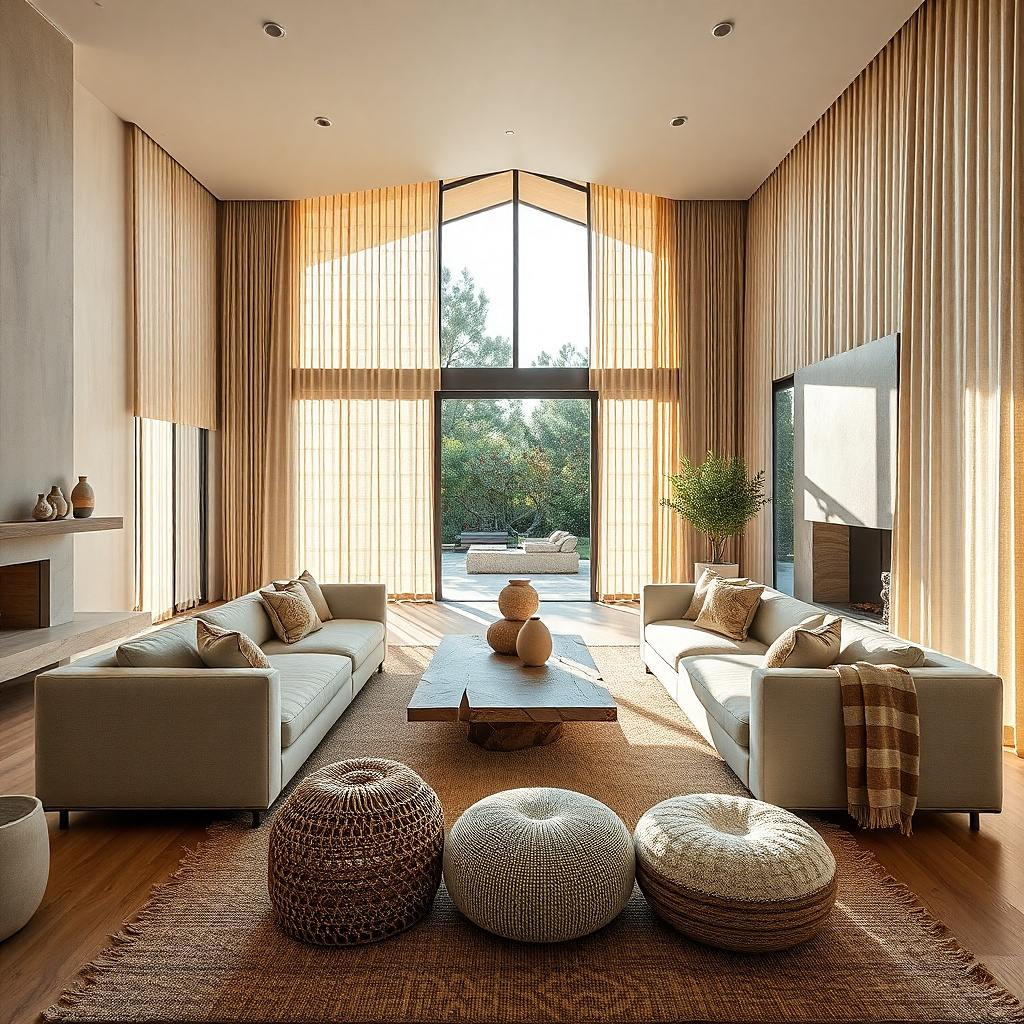
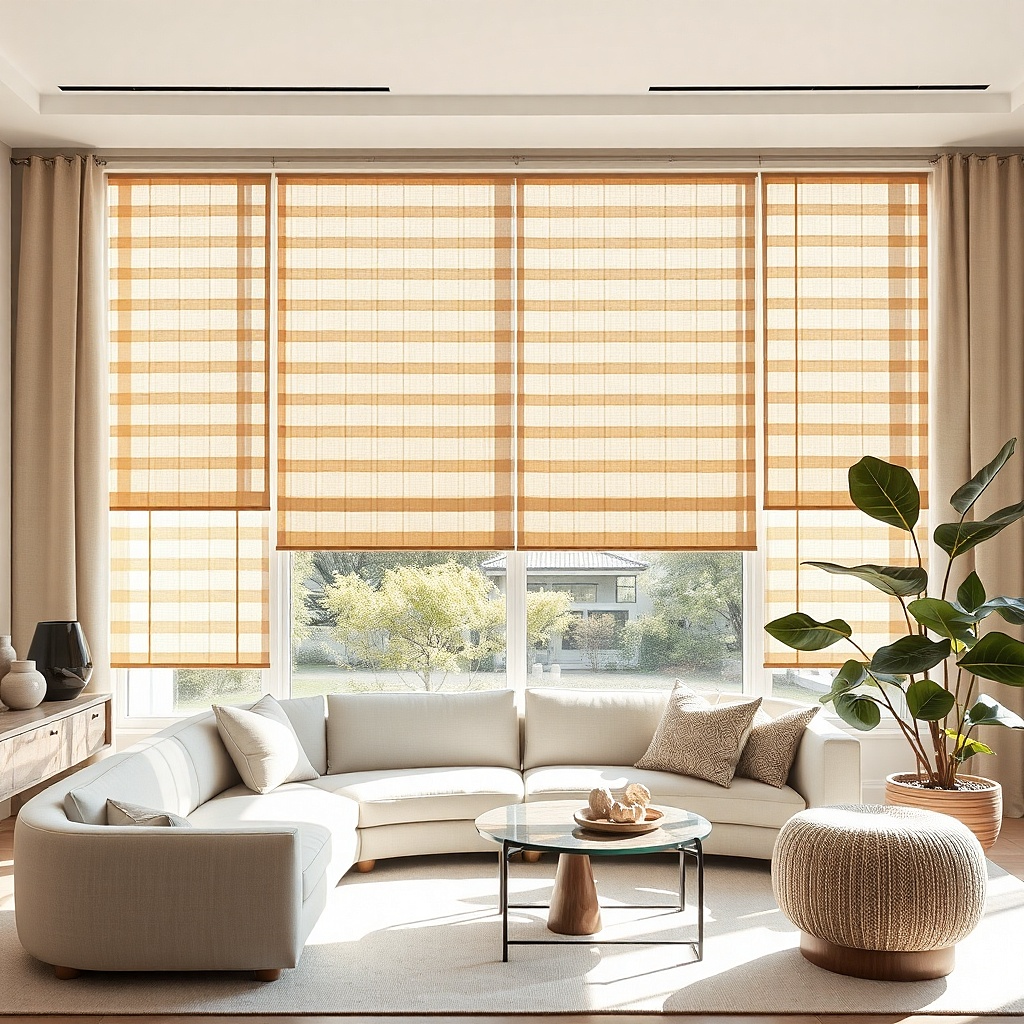
1. Flax Roman shade hung high
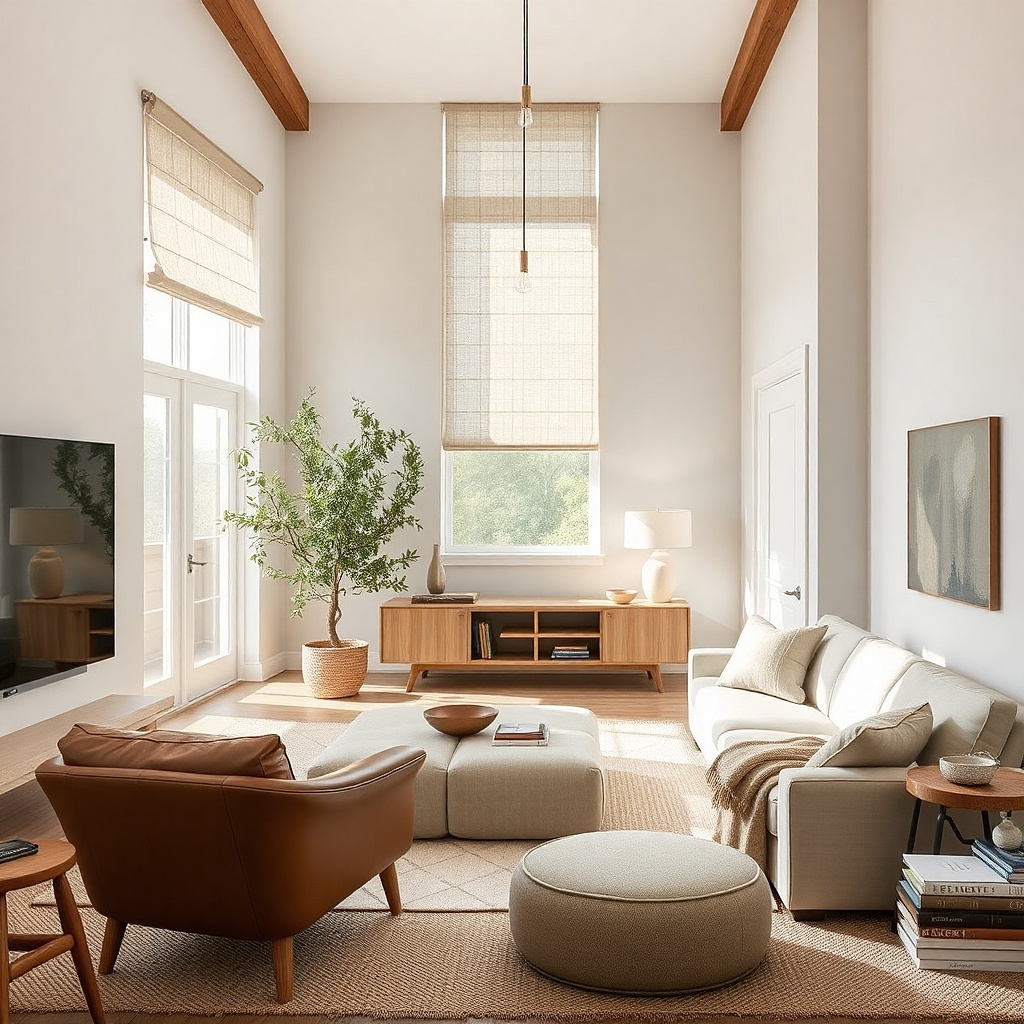
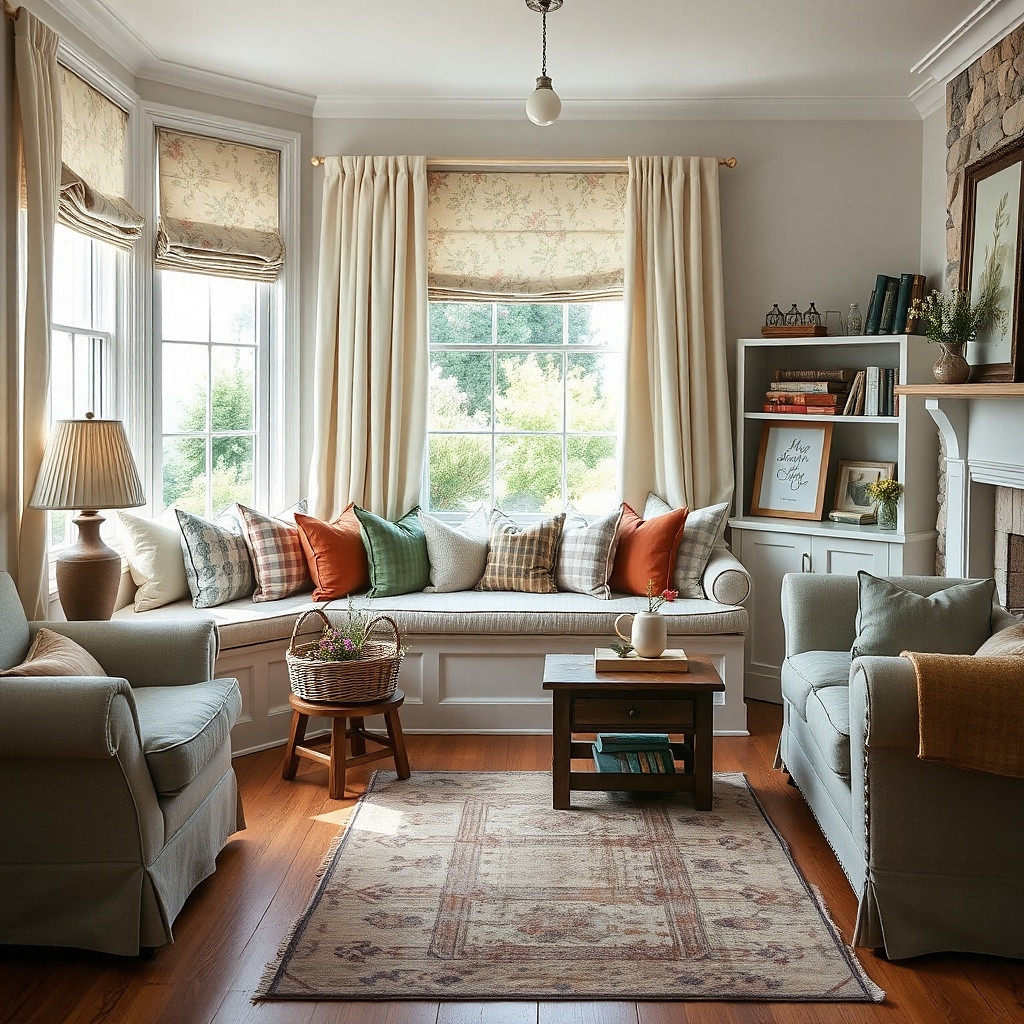
This is the easiest way to make a small living room window look taller and more finished. A flat or soft-fold Roman shade in flax-colored linen blend gives you privacy, soft filtered light, and a tailored shape that reads warmer than a roller shade. The color matters. Go for oatmeal, flax, or putty instead of bright white, which can look stark against wall paint and throw cold light back into the room. This idea suits front rooms, apartment living rooms, and any spot where you want the blind to look decorative even when it is halfway down.
Start by mounting the shade 4 to 6 inches above the window trim and extend the hardware 2 inches past each side of the frame so the glass looks wider. Then choose a light-filtering linen blend with a white privacy backing if the room faces the street, and keep the fold style simple — flat front for a cleaner look, soft fold for a gentler one. Finally, order the width carefully: inside mount if your trim is attractive and at least 2 inches deep, outside mount if you need the room to feel taller. Expect custom fabric Roman shades to start around $150 for a small window, while ready-made versions sit lower but need more patience on fit.
Try thisUse a fabric with a slight slub or crosshatch. That tiny bit of texture catches daylight and keeps the shade from looking flat on overcast days.
Common mistakeSkip thick blackout Roman shades in a small living room unless the room doubles as a media room, because the bulky stack eats too much visual height.
2. Matte white roller shade with a hidden cassette
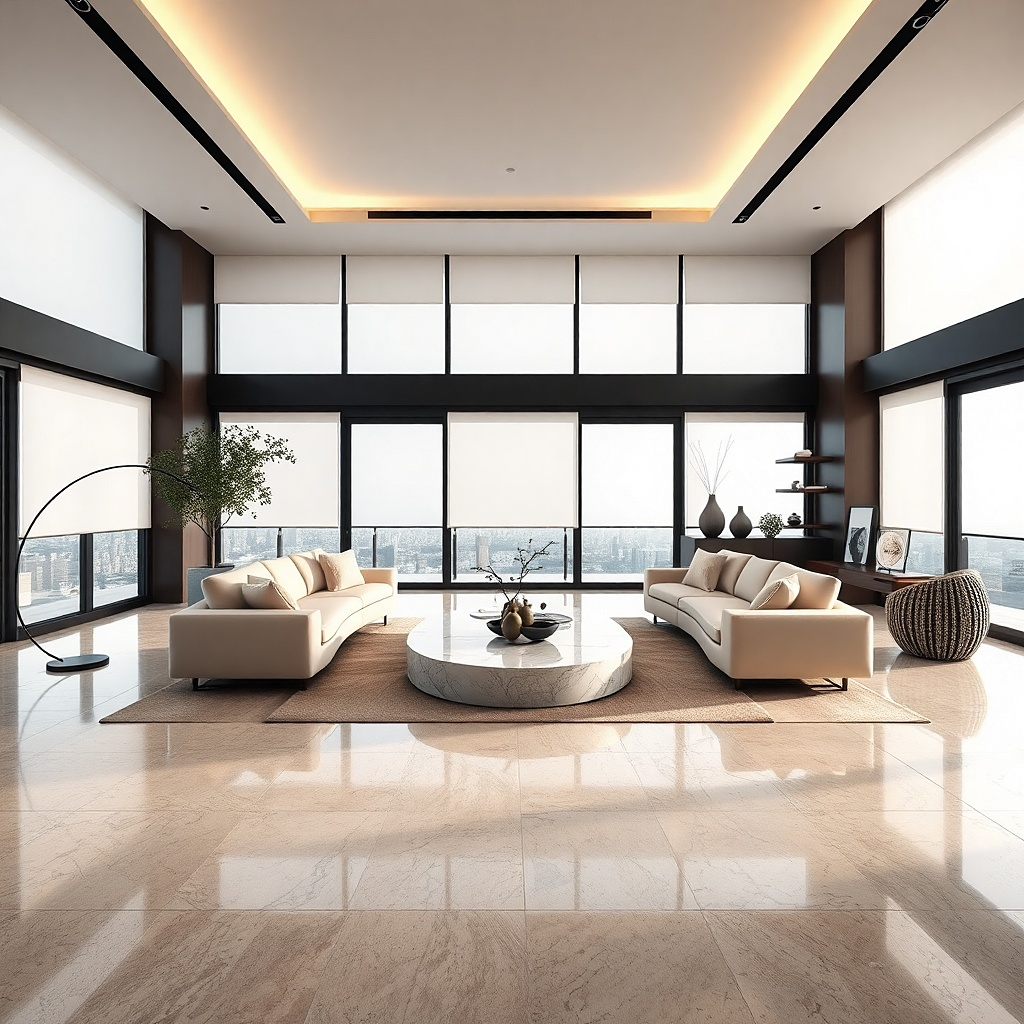
For a clean, almost invisible treatment, a matte white roller shade is hard to beat. The key is the finish — matte, not shiny vinyl — and a slim cassette or fascia that hides the roll at the top. This keeps the window line crisp and quiet, which helps a small room feel less chopped up. Pick a light-filtering fabric instead of full blackout so daylight still bounces around the room. This works especially well in modern living rooms, rentals, and rooms with low ceilings where any extra bulk looks clumsy.
Start with an inside mount if the window recess is at least 2 1/2 inches deep, because that gives the neatest line. Then choose a solar or light-filtering fabric in warm white with about 3 to 5 percent openness if glare is the problem, or a denser privacy fabric if the room faces close neighbors. Finally, install the cassette level and as tight to the top of the frame as possible so the shade reads like part of the architecture. A decent ready-made roller shade for a small window starts near $40, while a custom cassette model lands higher but looks far better.
Pair this with a narrow 1-inch return on nearby curtain panels if you want softness at the edges without covering much wall.
Do not buy glossy white vinyl rollers unless you want the room to look like a waiting area.
3. Pale oak faux wood blinds with narrow slats
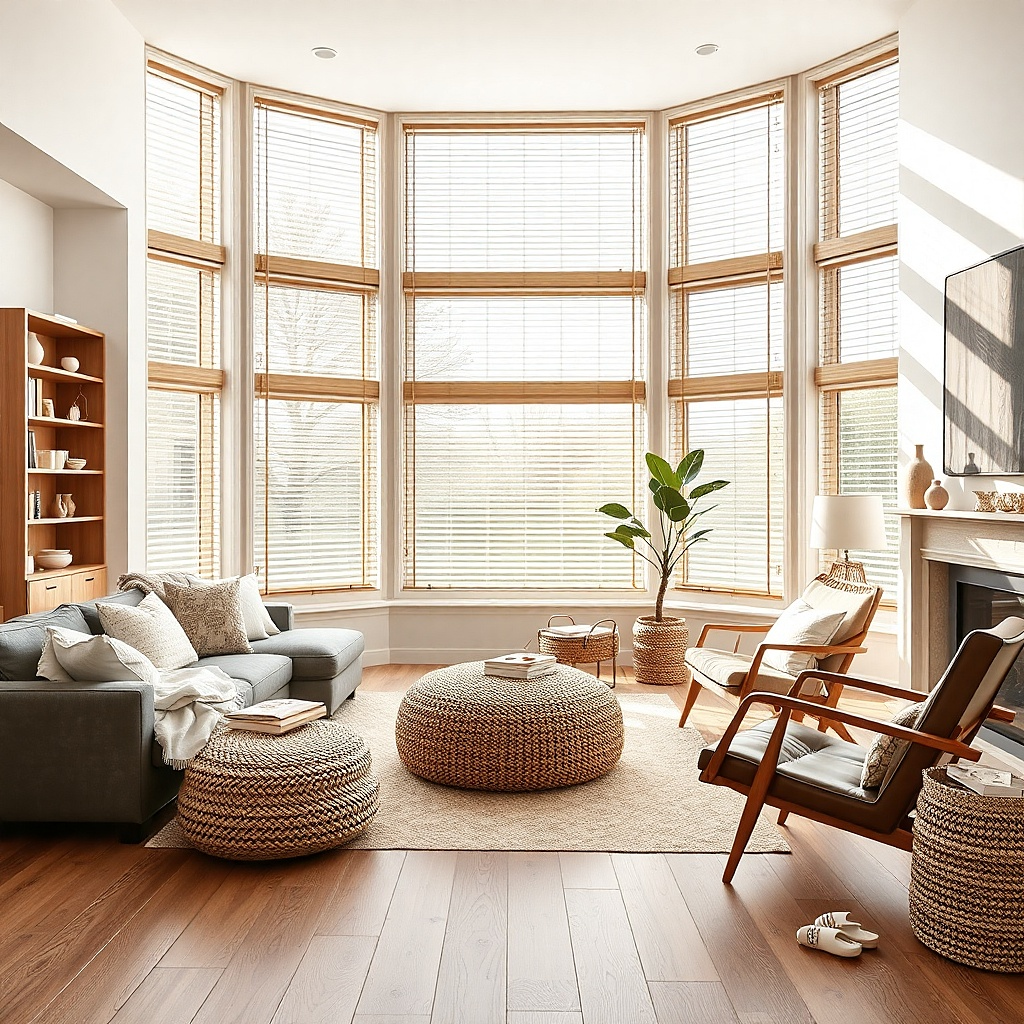
Wood-look blinds work in small living rooms if the slats stay narrow and the finish stays pale. A 2-inch slat in washed oak, bleached ash, or light mushroom gives the room texture and warmth without the dark horizontal bands that heavier stained blinds create. Faux wood is the practical pick if the window gets heat or humidity, and the better versions now have a convincing matte grain instead of that plastic sheen people still remember from older blinds. These are strong in casual rooms with wood furniture, jute rugs, or cream walls where a plain roller shade would feel too flat.
Start by choosing a light tone with low contrast grain and an inside mount if your trim depth allows it. Then measure carefully because blinds need enough recess to sit cleanly; if the frame is shallow, use an outside mount and keep the headrail simple with no oversized valance. Finally, tilt the slats upward during the day rather than fully closing them downward — that gives privacy from the street while still pulling light onto the ceiling. Good faux wood blinds for a small window often land in the $50 to $120 range depending on cut size and cordless hardware.
Paint the trim and wall in close tones if you use these. The calmer contrast keeps the slats from chopping up the wall.
Avoid dark walnut or reddish oak stains in a tight living room unless the whole room is built around deep wood tones.
4. Natural woven wood shade with privacy liner
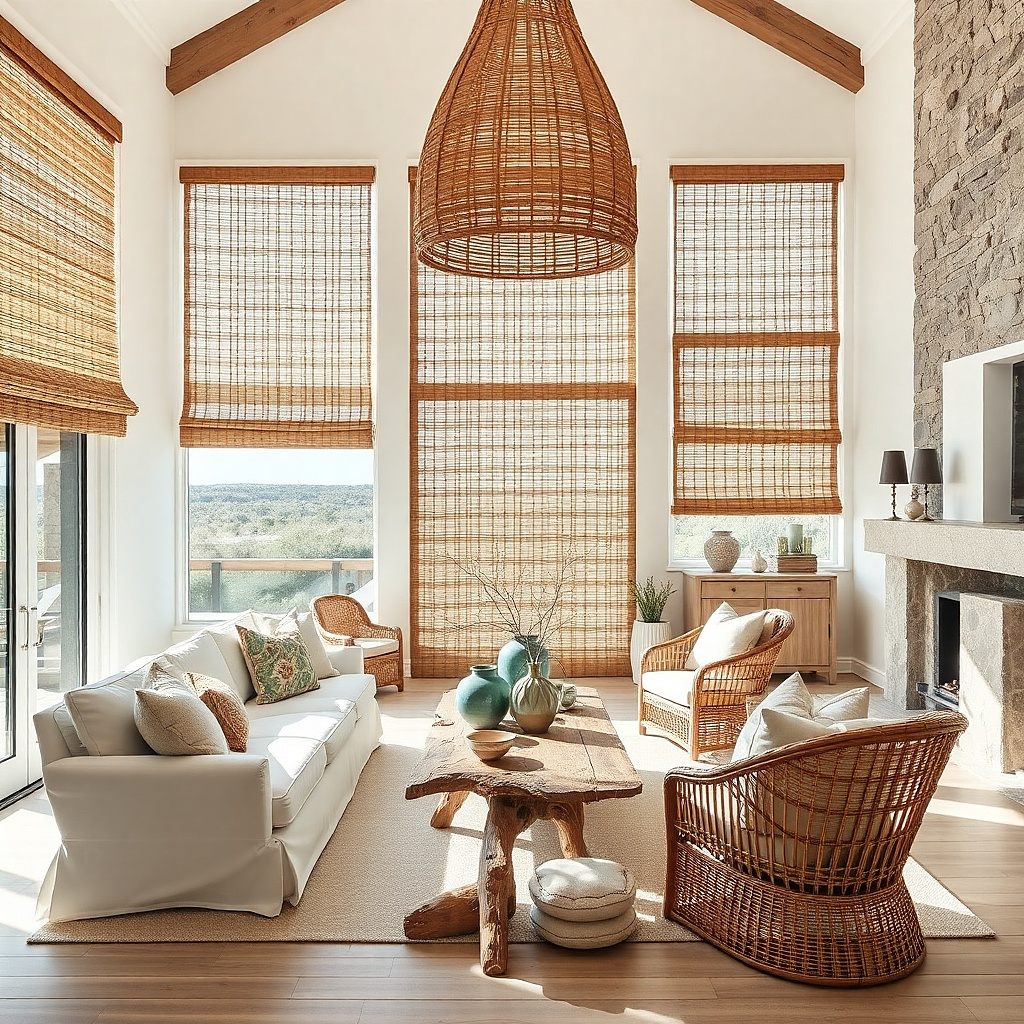
A woven wood shade gives a small living room the texture plain fabric cannot. The best look is a tight weave in natural straw, light reed, or soft tobacco with a privacy liner behind it, so you keep the hand-made texture without exposing the room at night. This style throws a warm, dappled light across white walls and makes basic furniture look more considered. It is especially good in rooms that need warmth fast — builder-grade apartments, boxy condos, and living rooms with one lonely window.
Start by picking a weave that is tight enough to read refined from across the room. Big chunky reeds look heavy in a small space. Then add a light-filtering or privacy liner depending on how close your neighbors are, and mount the shade 4 inches above the trim if you need more height. Finally, keep nearby decor quiet — one wood tone, one metal finish, and simple upholstery — because woven shades already carry plenty of visual texture. Expect around $90 to $250 for a small window depending on material and liner.
Try thisChoose a shade with edge binding in matching tan or off-white if you want the silhouette to look sharper and less rustic.
Common mistakeSkip orange-toned bamboo with shiny strands, which reads dated fast and clashes with most flooring.
5. Top-down bottom-up cellular shades in warm ivory
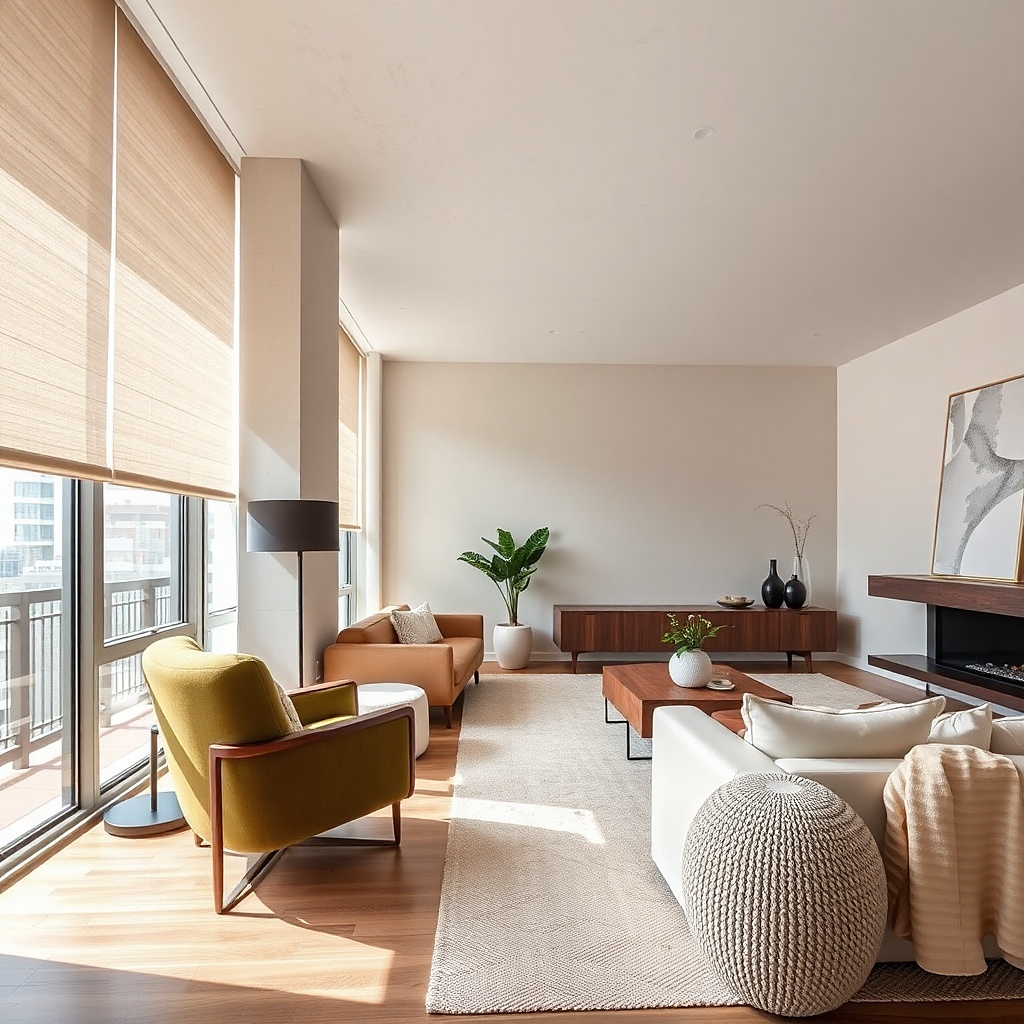
This is the smartest option for a living room on a street or facing another building. Top-down bottom-up cellular shades let you drop the upper portion for daylight while keeping the lower half closed for privacy. In a small room, that matters because you get brightness without the exposed fishbowl feeling that makes people keep blinds shut all day. Choose warm ivory or soft greige, not bright white, and go with a single cell structure for a slimmer profile. The honeycomb shape also softens sound a bit, which helps in apartments.
Start by measuring the inside frame depth because cellular shades look best recessed cleanly into the window. Then order cordless top-down bottom-up operation and a light-filtering fabric unless the room gets harsh west sun, where a slightly denser fabric is worth it. Finally, set the lower rail around sofa-back height during the day so you block direct views in while still showing the upper glass. Small custom cellular shades often start near $80 and climb with specialty controls, but the privacy payoff is real.
Try thisKeep the top opening modest instead of dropping the shade halfway. A 10 to 16 inch opening gives plenty of light and looks neater.
Common mistakeDo not choose double-cell blackout fabric for a tiny living room unless heat control is the top issue, because it can make daytime feel dull.
6. Soft gray solar shades for glare control
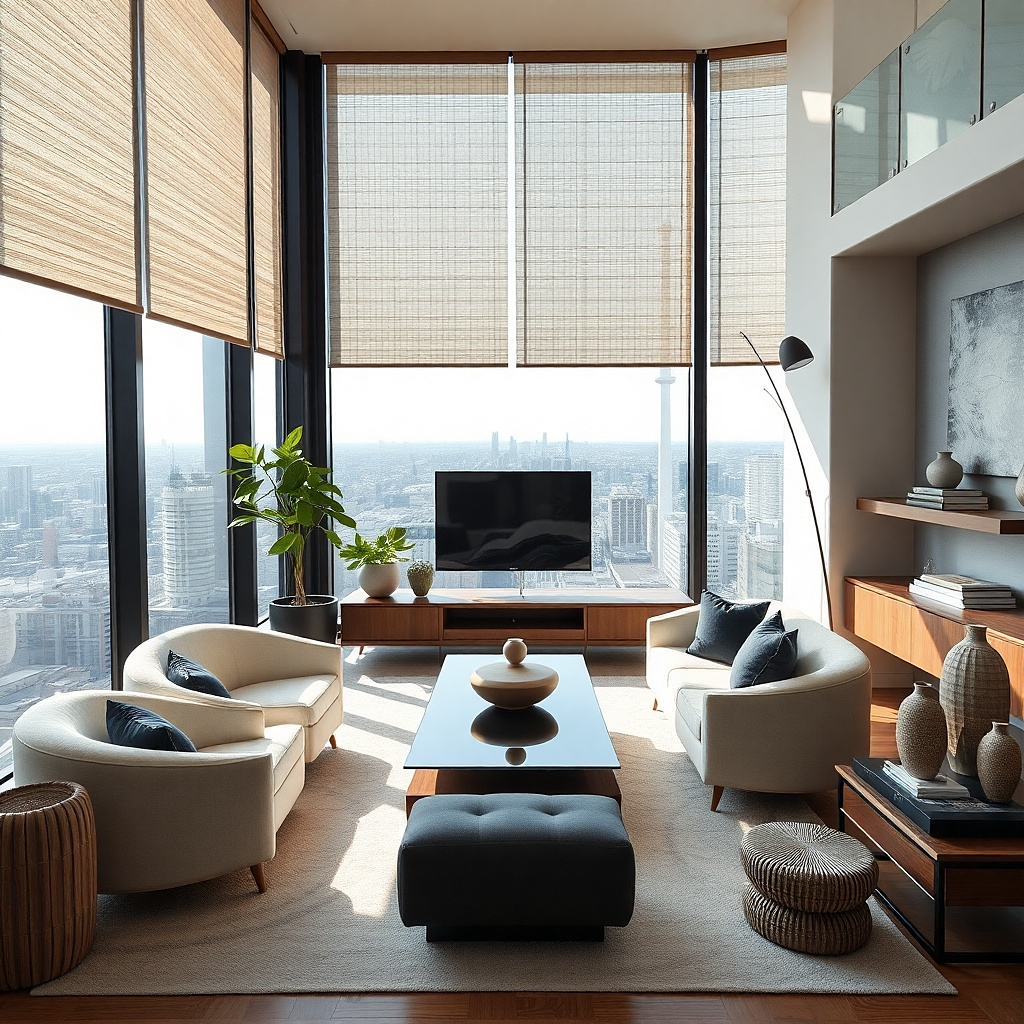
If your living room gets blasted with sun and your TV sits opposite the window, solar shades solve a real problem without making the room cave-like. A 3 percent openness fabric in soft gray or warm taupe cuts glare, keeps the outside view, and gives the glass a sleek, even tone from both inside and out. Gray works better than black in most small rooms because it feels lighter and less severe against pale walls. This is a strong choice for modern apartments, south-facing rooms, and homes with nice views worth keeping.
Start by checking the room at midday and late afternoon so you know how aggressive the glare really is. Then choose 3 percent openness for stronger glare control or 5 percent if preserving more daylight matters more, and mount the shade either inside the frame or just above it with the smallest possible header. Finally, keep the rest of the window treatment simple — no busy drapery, no ornate rod — because the appeal here is the clean filtered plane of fabric. Small solar shades usually start around $60 and go up with custom widths and motorization.
Match the shade color to the window frame depth, not the wall. That keeps the whole opening looking intentional.
Avoid very dark charcoal solar shades in a tiny room with limited daylight, because they can flatten the space by noon.
7. Inside-mount bamboo matchstick blinds under ceiling-height curtains
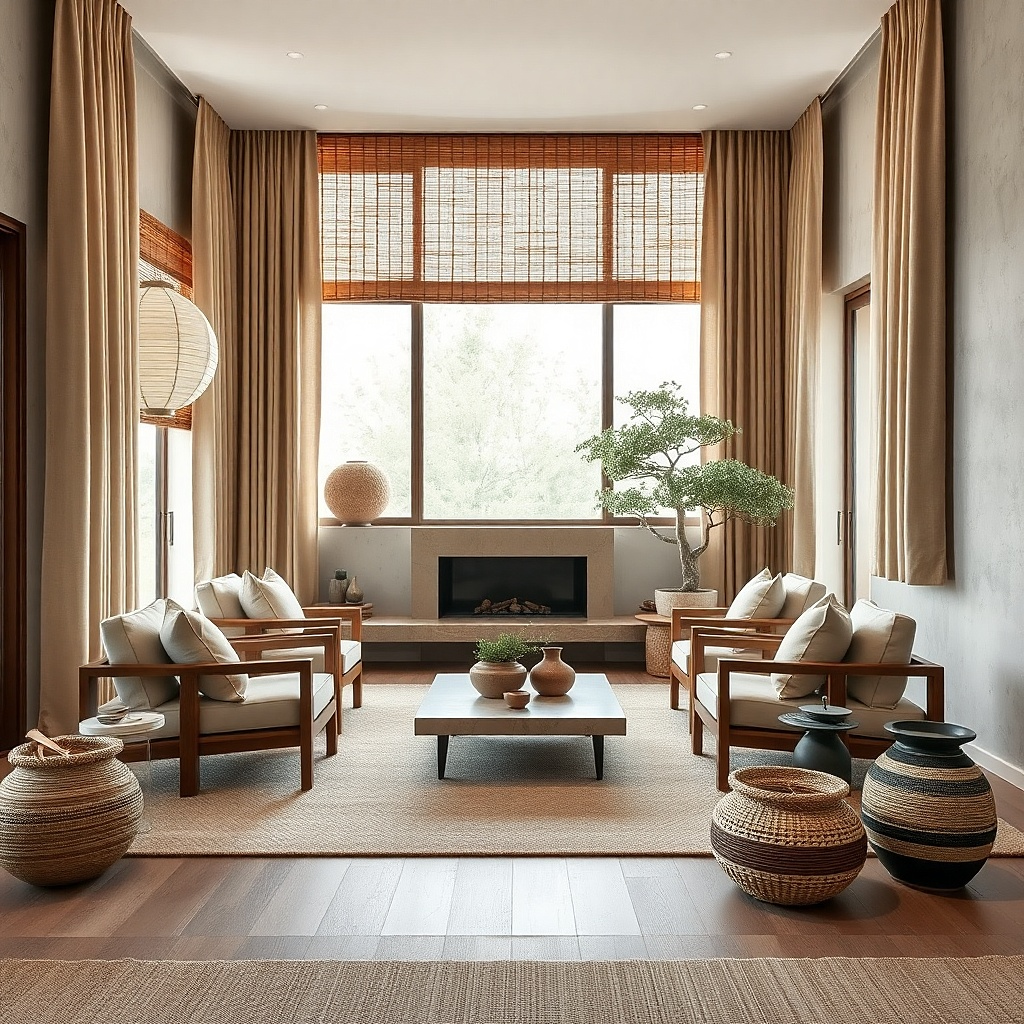
This layered look gives you softness and texture without a heavy blind dominating the room. The matchstick blind handles daytime filtering, while plain full-length curtains on a high rod add height and finish the wall. In a small living room, the trick is scale — the blind stays slim inside the frame and the curtain panels sit mostly on the wall, not across the glass. The result looks styled and photogenic, especially in rooms with neutral upholstery and warm wood accents.
Start with an inside-mount matchstick blind in a light natural tone, then install a curtain rod 6 inches above the trim or just below the ceiling. Next, use two narrow curtain panels in ivory, sand, or light beige and place the brackets wide enough that the panels barely cover the window when open. Finally, hem the curtains to kiss the floor, not puddle, because extra fabric looks messy fast in a small room. This pairing can be done on a modest budget if you use ready-made curtains and a simple blind.
Try thisKeep the curtain fabric smooth and plain. Linen-look is good, but a loud weave next to bamboo becomes too busy.
Common mistakeDo not use chunky dark rods with decorative finials, which pull attention away from the window and shrink the wall.
8. Greige flat-panel Roman shade for a tonal room
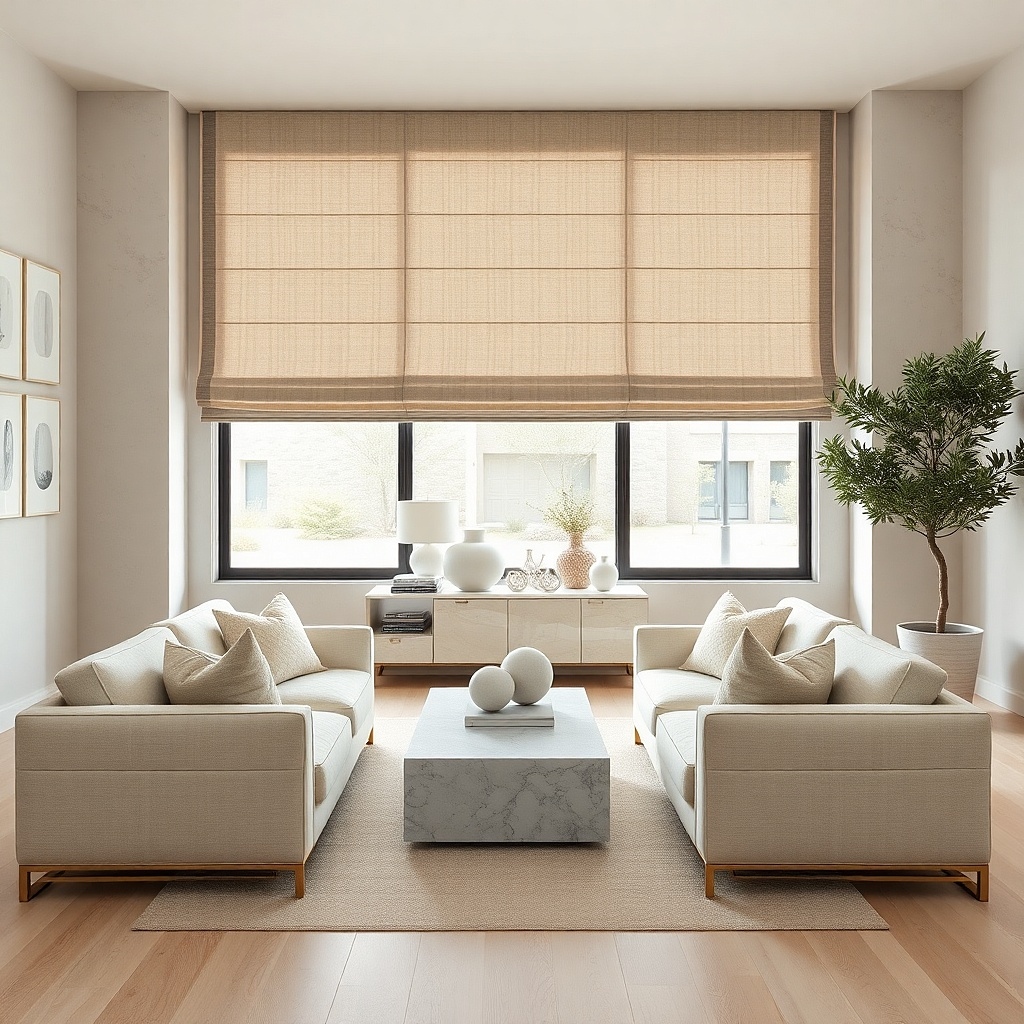
A flat-panel Roman shade in greige is the quiet luxury move for a small living room that already has a soft, tonal palette. Because the front panel stays smooth, the shade reads almost like upholstered wall detail instead of a fussy window treatment. Greige works better than plain beige because it carries a little gray, which keeps the room from turning yellow in afternoon light. This idea suits rooms with plaster tones, boucle chairs, oak tables, and low-contrast paint where every surface needs to feel calm.
Start by pulling a mid-tone from the room — rug, sofa, or wall paint — and match the shade one step lighter or darker. Then choose a flat Roman with a thin internal structure so the front stays crisp and the stack remains compact. Finally, use an outside mount if the window trim is basic and you want a more custom built-in look. Expect to spend more on this style than on a simple roller, but the visual payoff is much stronger in a design-forward room.
Add a thin contrast band in the same color family if the room feels too washed out. A 1-inch edge trim is enough.
Avoid high-contrast border tape in black or navy unless the room has other strong graphic lines to support it.
9. Off-white sheer privacy shades for a soft glow
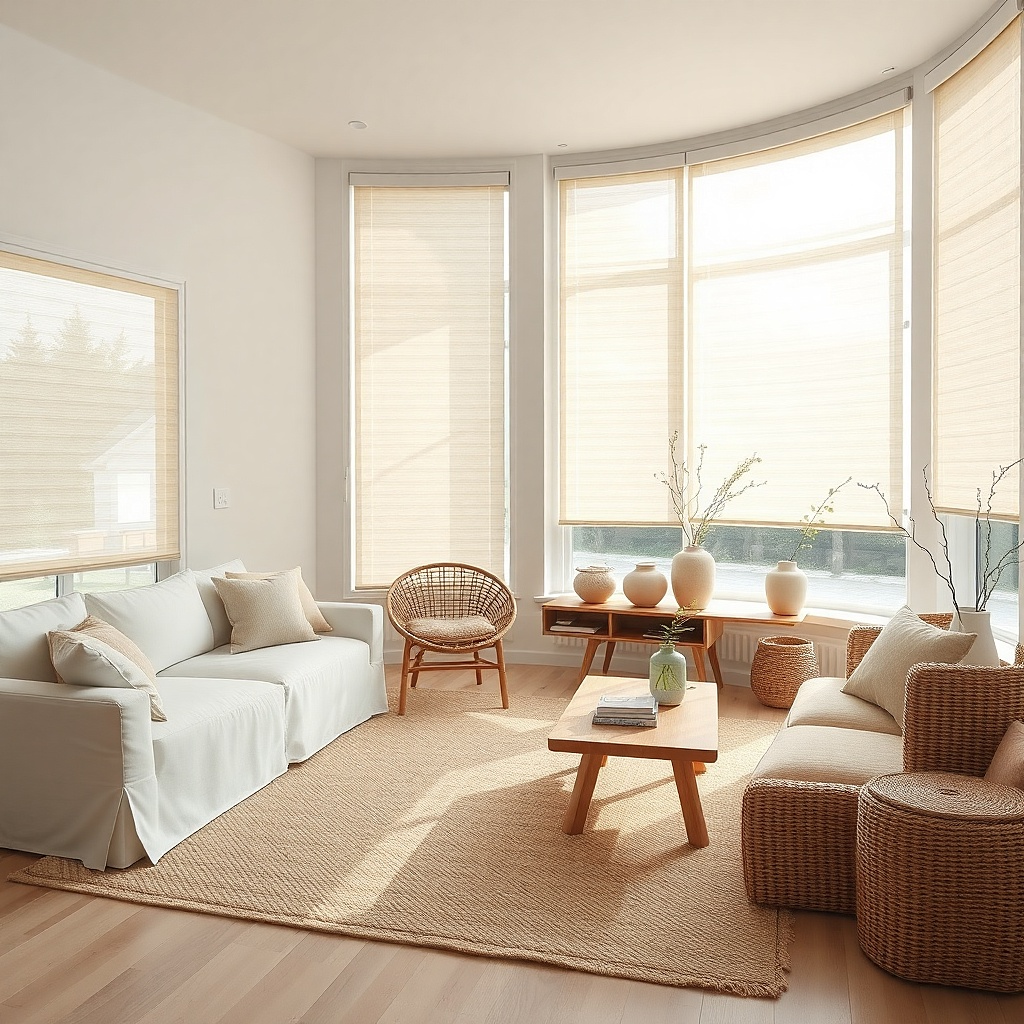
Sheer privacy shades sit between a blind and a sheer curtain, and they are excellent in small living rooms that need daylight more than darkness. Their fabric vanes float between sheer layers, so the window glows instead of glaring. In off-white or light sand, they make the whole room feel airier and a little more expensive than standard blinds. This is a good fit for north-facing rooms, narrow living rooms, and spaces where heavy treatments would kill the light completely.
Start by choosing a soft neutral that matches the wall undertone — creamy if the paint is warm, cleaner off-white if the room leans cooler. Then mount the shade just above the trim or inside the frame and keep the surrounding decor restrained, because this treatment already has movement and texture. Finally, use it in rooms where you want filtered daytime privacy rather than full darkness, since that is where it looks best. These shades cost more than basic rollers, but they give a softer effect that plain blinds cannot match.
Try thisUse a cordless lift if possible. The uninterrupted fabric reads cleaner from across the room.
Common mistakeDo not pair these with busy patterned rugs and loud throw pillows, or the room starts to feel visually fuzzy.
10. Black-framed roller shade for contrast in a tiny modern room
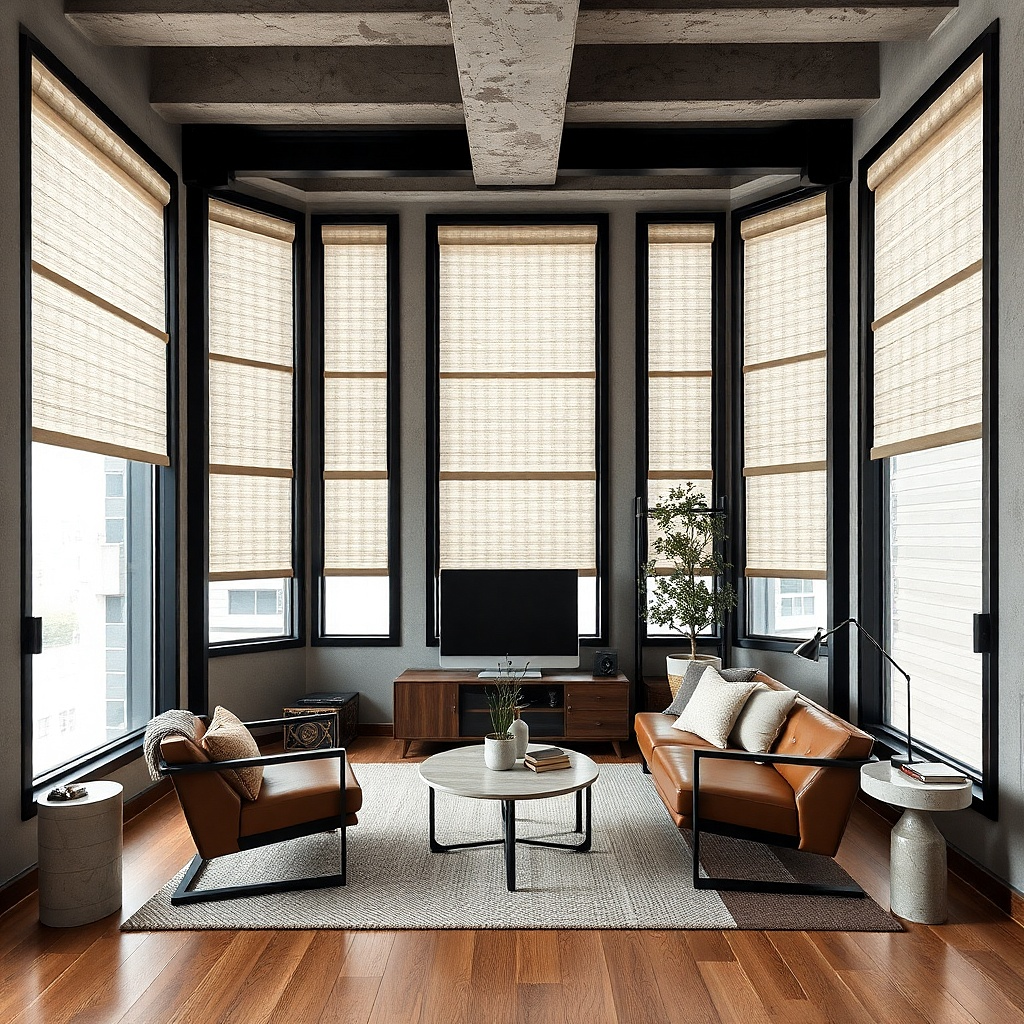
A black window frame changes the blind choice. Instead of matching it with a dark shade, use a warm white roller inside the frame so the contrast looks sharp and architectural. In a tiny modern living room, that clean border around pale fabric makes the window stand out in a good way and keeps the treatment from disappearing into a dull gray blur. This idea is strongest in rooms with black picture frames, a metal floor lamp, or one other black accent to echo the window.
Start with an inside mount so the black frame stays fully visible and the shade sits like an insert. Then choose a matte warm white fabric with enough opacity for privacy after dark, and make sure the bracket hardware is hidden or color-matched so the top line stays clean. Finally, repeat black elsewhere in small doses — one lamp base, one side table, one frame — so the window does not look isolated. Cost depends on width and mechanism, but the look works even with a mid-priced custom roller.
Try thisKeep the wall color soft and quiet around this setup. Cream, pale taupe, or light greige makes the black frame look intentional.
Common mistakeAvoid pairing black frames with icy white shades and blue-gray walls unless you want the room to feel colder.
11. Taupe woven roller shade for a rental-friendly upgrade
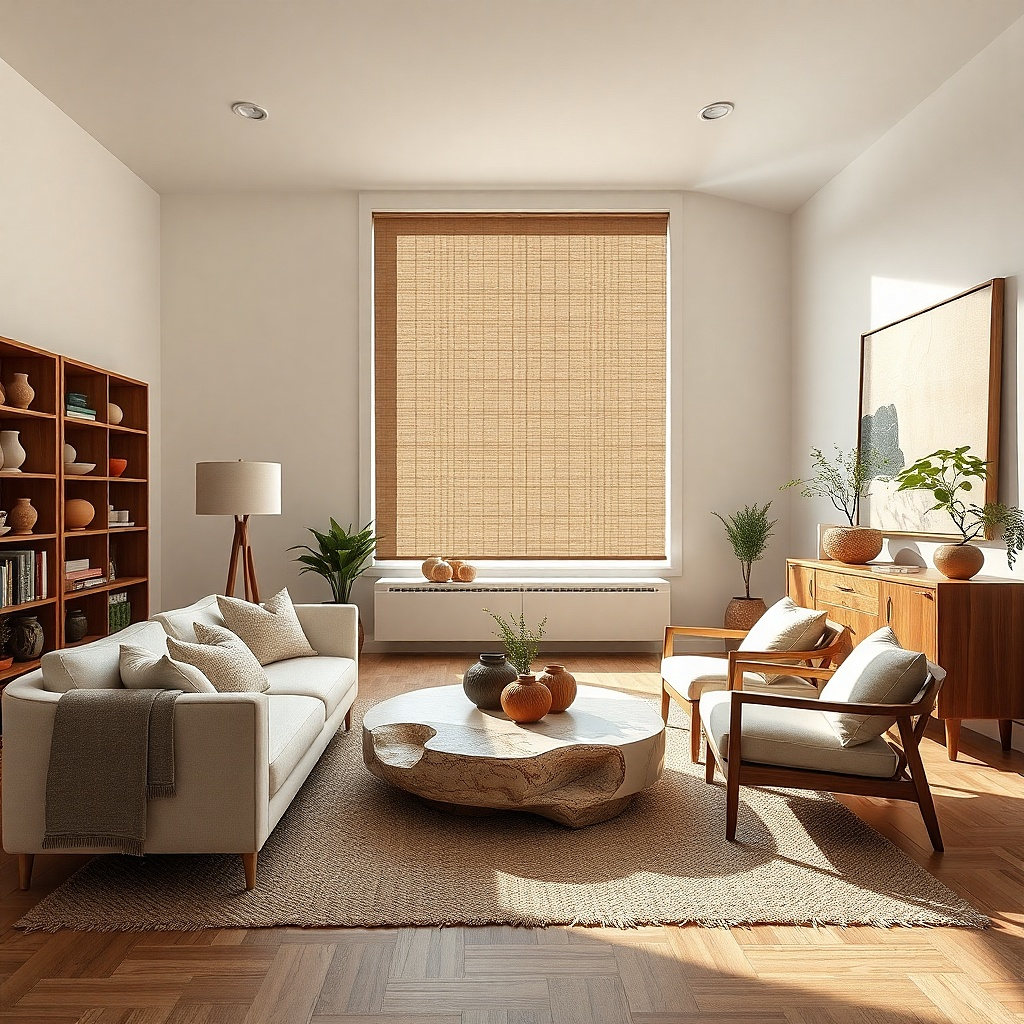
A woven roller shade is the answer for renters stuck with plain windows and little room for bulky treatments. It has the compact profile of a roller but more surface interest, so the room looks thought through without major installation drama. Taupe, mushroom, or sand works best because those shades hide dust, soften daylight, and sit well with most rental paint colors. This blind gives a small living room a warmer face right away, especially if the room has basic laminate floors or standard white trim.
Start by checking whether your lease allows bracket installation; if yes, use a standard inside or outside mount, and if no, look for a tension or no-drill system sized for your frame. Then choose a woven-look polyester or linen-textured fabric rather than a flat vinyl roller. Finally, keep the width tight and the hardware simple so the shade reads tailored instead of temporary. This is one of the easier upgrades to install in under an hour with a drill, level, and tape measure.
Pick a bottom bar wrapped in matching fabric if available. Exposed white plastic at the hem cheapens the whole window.
Skip busy basketweave prints that imitate texture too aggressively and look fake in daylight.
12. Relaxed Austrian-free look with a faux Roman shade
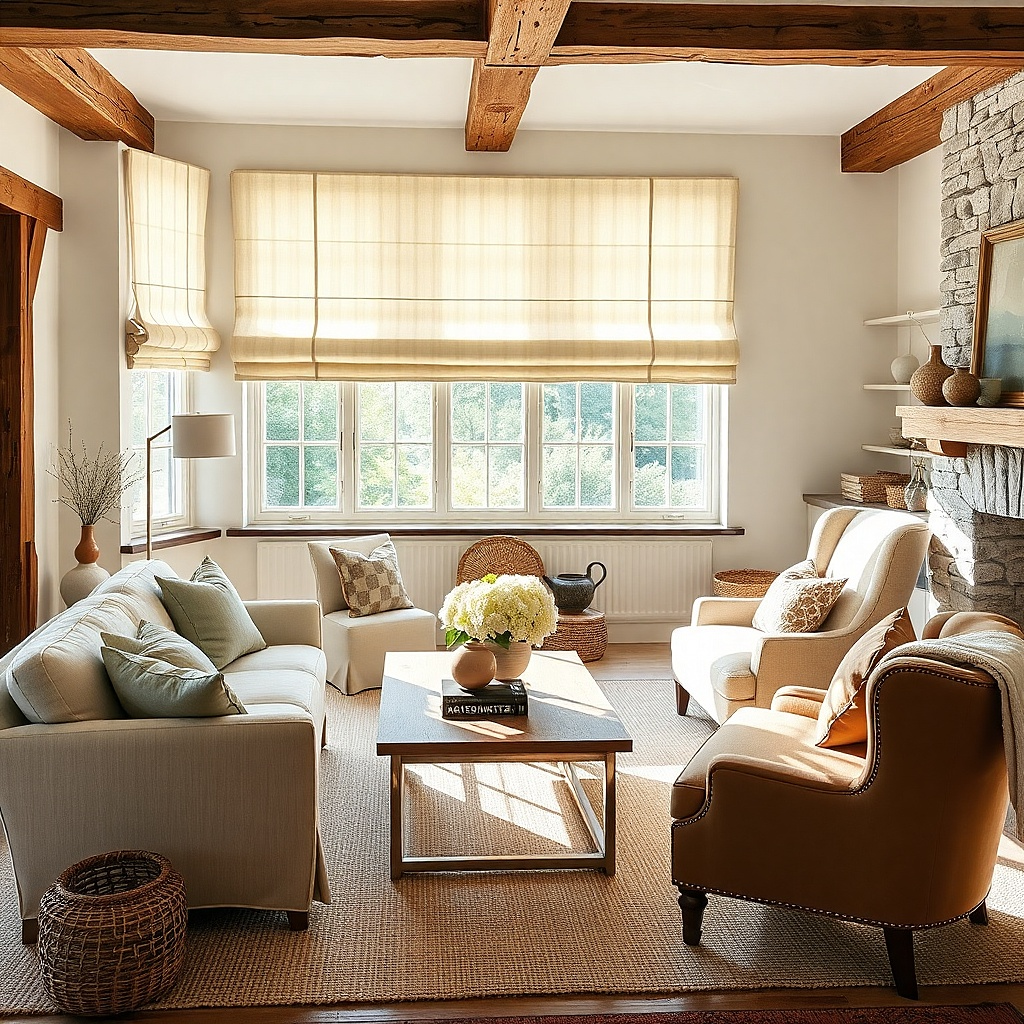
If the window does not need daily operation because privacy comes from distance or existing film, a faux Roman shade gives you the prettiest look for the least visual fuss. It is a stationary fabric valance shaped like a Roman shade, so you get softness and proportion without cords, stack, or moving parts. In a small living room, that can be the right call for a high window, a side window near shelving, or a window partly blocked by furniture. Choose a linen blend in bone, pebble, or pale mushroom for a quiet, tailored finish.
Start by measuring the visible glass and decide how much of the top you can cover without hurting daylight — 10 to 14 inches works in many small rooms. Then mount the faux shade 4 to 6 inches above the frame so it stretches the wall visually, and keep the folds shallow rather than puffy. Finally, use this only where function is limited or handled another way, because it is decorative first. It costs less than a full custom operating Roman if you have one made locally or buy a ready-made faux valance.
Line the fabric even for a stationary shade. Unlined fabric can look limp once light hits from behind.
Do not use this on the main street-facing window if you still need real privacy control at night.
13. Layered cellular shade and side panels in one color family
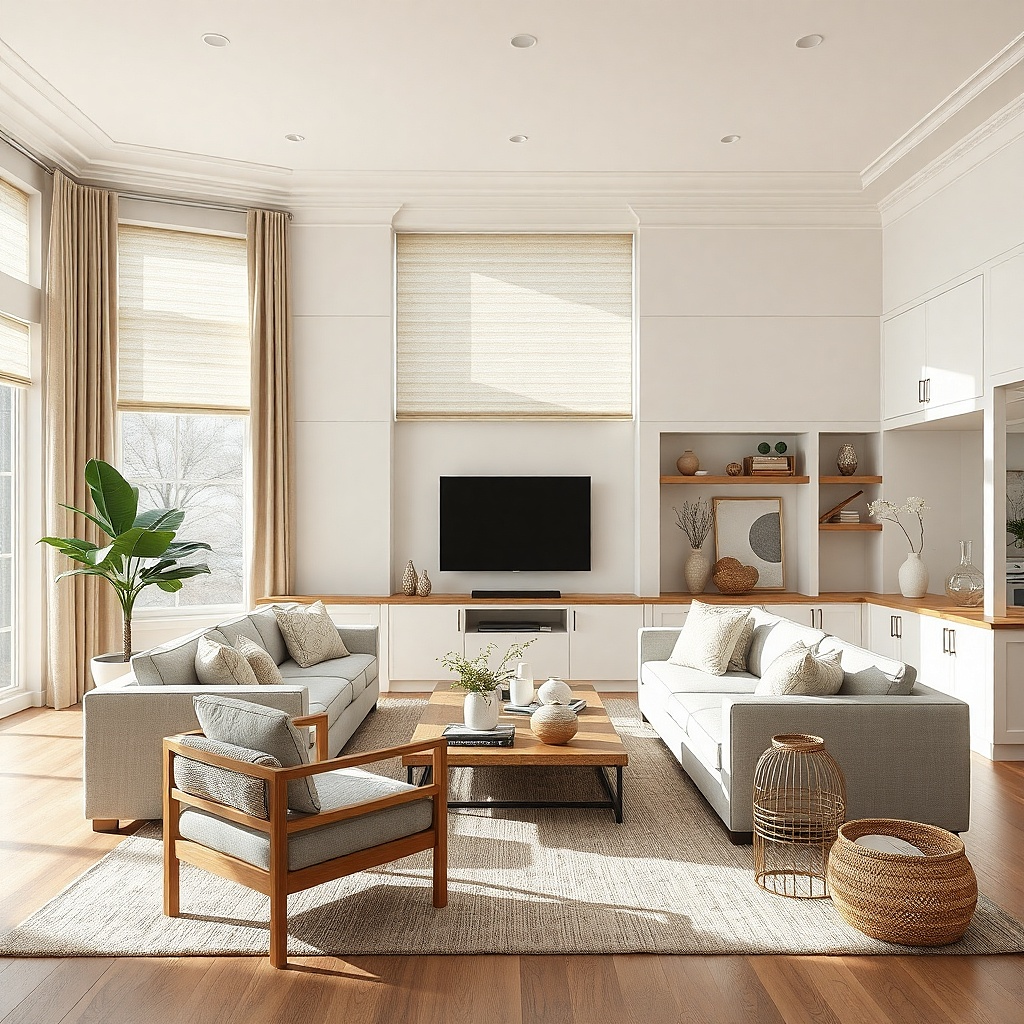
This is the fix for a living room that feels plain with blinds alone but crowded with full drapery. Use a slim cellular shade for privacy and insulation, then add narrow side panels in nearly the same color so the wall looks taller and softer without fighting itself. Matching the color family is what keeps it refined. Ivory shade with oatmeal panels, or pale greige shade with stone panels, reads calm and expensive in a small space.
Start with an inside-mount cellular shade in light-filtering fabric. Then hang a simple rod high and wide with two narrow panels that stay mostly decorative rather than closing across the glass every night. Finally, keep the fabric weights light so the panels fall straight and do not bunch at the sides. This setup takes more measuring than a single blind, but it solves privacy, softness, and scale all at once.
Try thisUse panels 1 to 1.25 times the width of each side, not the super-full drapery ratio used in larger formal rooms.
Common mistakeAvoid mixing a bright white shade with beige panels, which makes one of them look dirty.
14. Slim aluminum blinds in brushed champagne
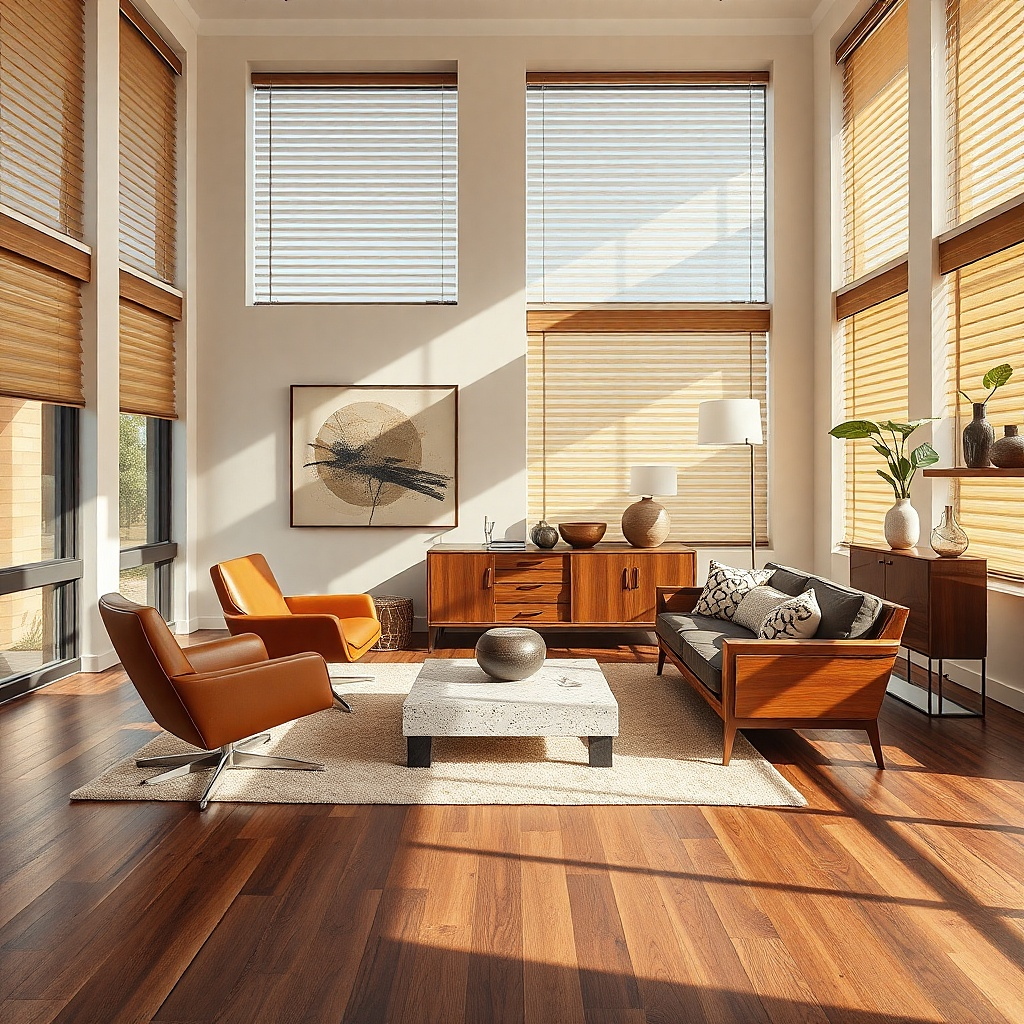
Mini blinds are not dead. Cheap white ones are the problem. A slim aluminum blind in brushed champagne, soft pewter, or muted bronze can look crisp and intentional in a small living room, especially one with mid-century furniture or a slightly retro edge. The narrow slats keep the profile lean, and the metal catches light with a soft sheen instead of a plastic glare. This is a practical pick for windows that need frequent adjustment because the slats tilt fast and stack tightly.
Start by looking for 1-inch slats in a matte or brushed finish and a cordless lift if the size allows it. Then install them inside the frame so the lines stay disciplined, and pair them with walls that are warm white, pale gray-beige, or soft clay rather than stark gallery white. Finally, style the rest of the room with restraint — one wood tone, one metal finish close to the blind color, and simple upholstery. These blinds are one of the more affordable choices and still look sharp if the finish is right.
Tilt the slats slightly open instead of fully horizontal. That small angle softens the metallic look and gives a better play of light.
Do not buy bright silver mini blinds unless you want an office look.
15. Cream roller shade with rounded bottom hem for softer lines
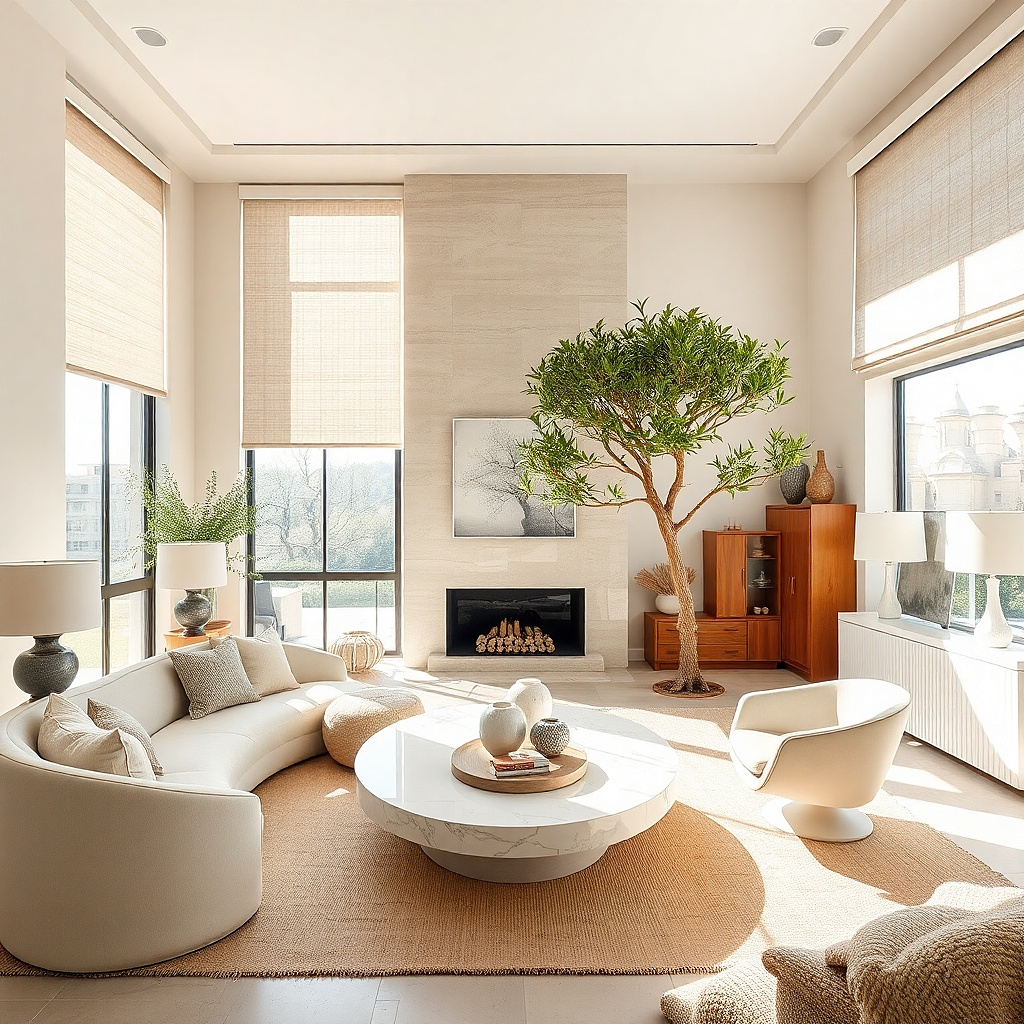
Most roller shades end with a hard straight bar, and in some small living rooms that line feels too severe. A cream roller shade with a rounded or fabric-wrapped bottom hem softens the shape just enough while keeping the compact function of a roller. It suits rooms with curved lamps, rounded coffee tables, or arched decor where a standard blind would feel too rigid. The cream tone keeps the light warm and flattering through the day.
Start with a custom or semi-custom roller that gives you a wrapped hem option, then choose a fabric with a slight weave so the surface has depth at close range. Next, mount the shade either inside the frame for a neat modern line or just above it if the window needs more height. Finally, repeat one or two soft curves elsewhere in the room so the rounded hem feels like part of the design language. This is a small detail, but it changes the mood more than people expect.
Try thisKeep the shade just one shade darker than the trim if you want the window to look framed without obvious contrast.
Common mistakeAvoid stark white fabric on this style, because the softened hem loses its charm when the material looks clinical.