1. Ceiling-Sky Paint: Soft Off-White on Walls, Same Color on Trim
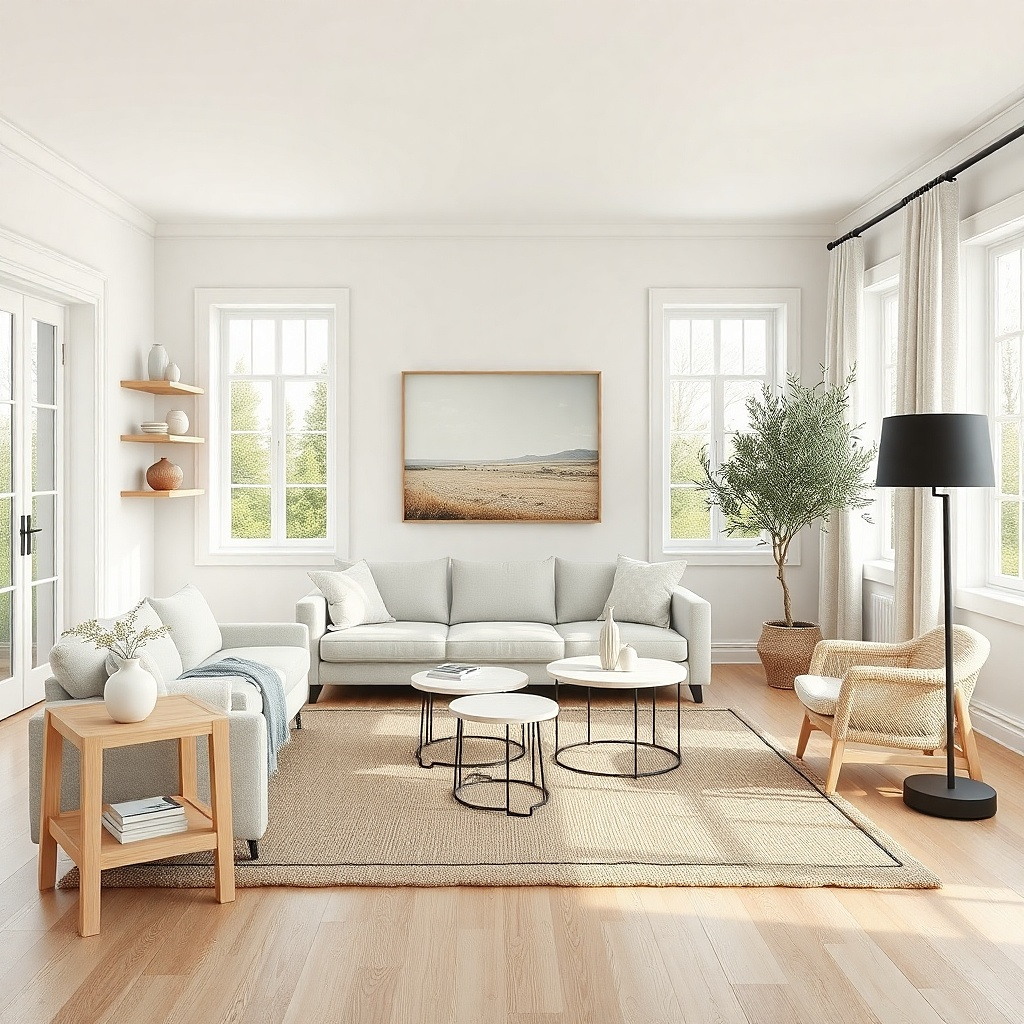
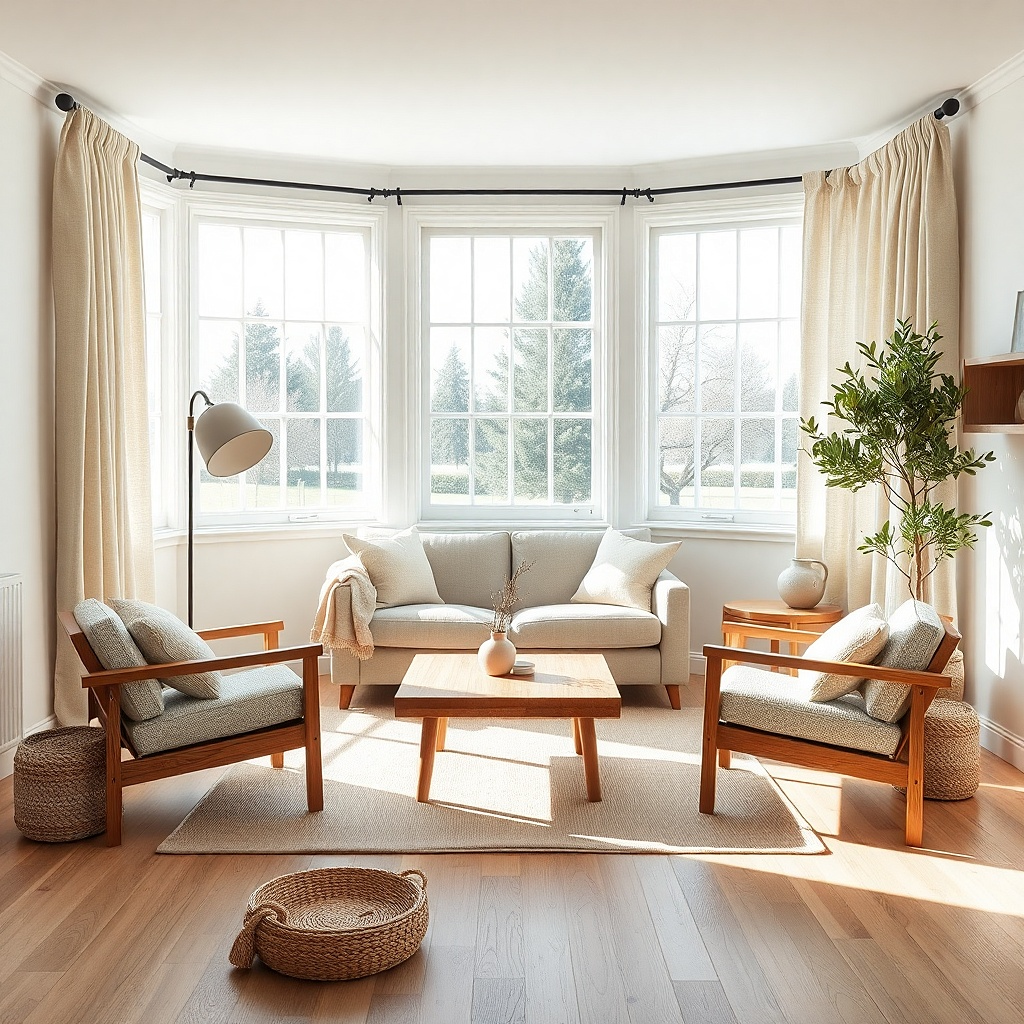
Paint is the fastest way to make a small living room feel bigger because it controls the room’s contrast. I’d choose a soft off-white for the walls and keep the trim the same color, so you remove the hard dividing line that makes rooms look boxed in. Go with eggshell or satin for the walls so it reflects light without showing every smudge. This works especially well when your room has limited windows or darker flooring, because the light stays in the space longer. Keep the baseboards clean and crisp; the smoother the edges, the more the room reads as one continuous volume.
Start by washing the walls and letting them dry fully, then tape a clean line at the ceiling if you want a perfect edge. Roll two coats of your chosen off-white in eggshell, allowing full dry time between coats. If your trim is currently a darker white, repaint it the same color so the wall-to-trim boundary disappears. Finally, replace bulbs with 2700K warm white and check the room at night; if it looks too gray, swap to a warmer off-white next time.
Try thisIf you’re unsure of undertone, paint a 1x1 ft test square and view it at night under your current bulbs.
Common mistakeAvoid bright white walls with darker trim; the contrast makes the room feel smaller.
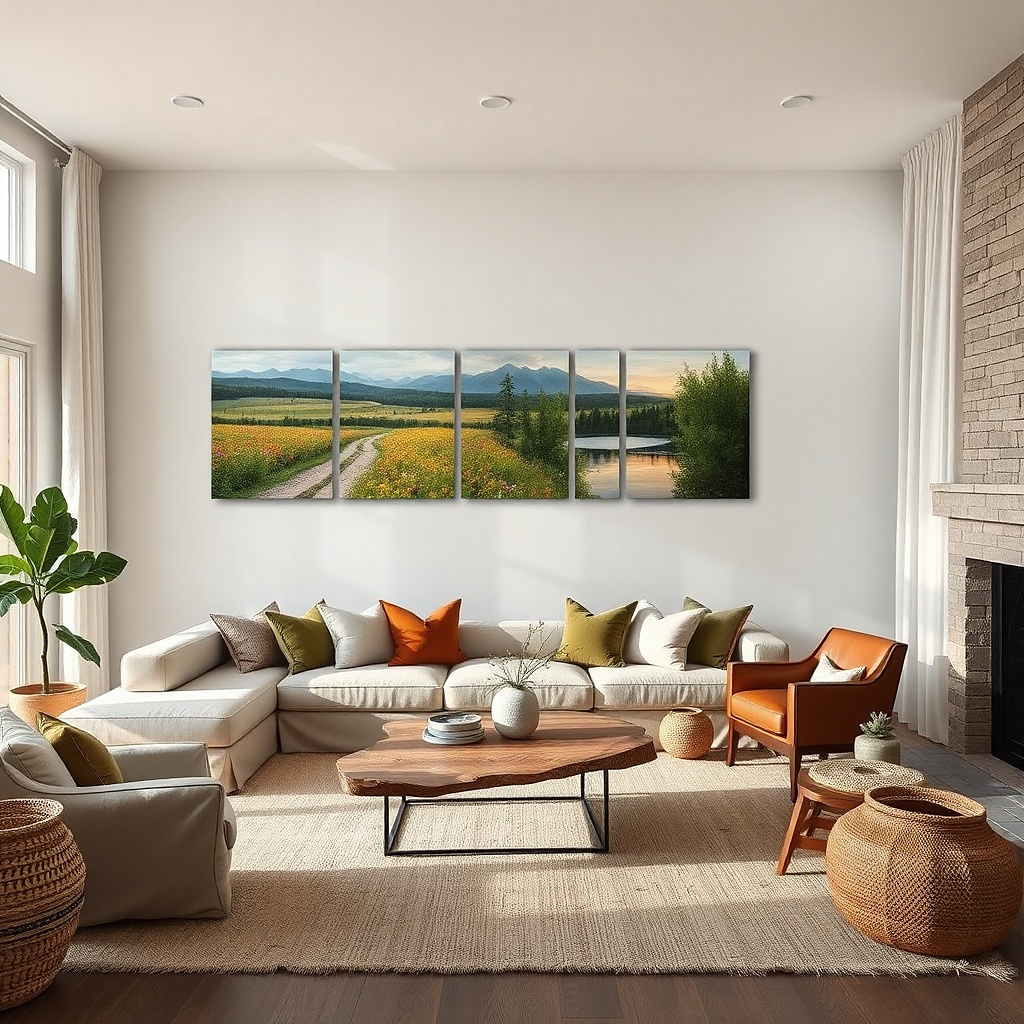
2. Two-Frame Rule: Higher Art Over the Sofa with a Wide Horizontal Pair
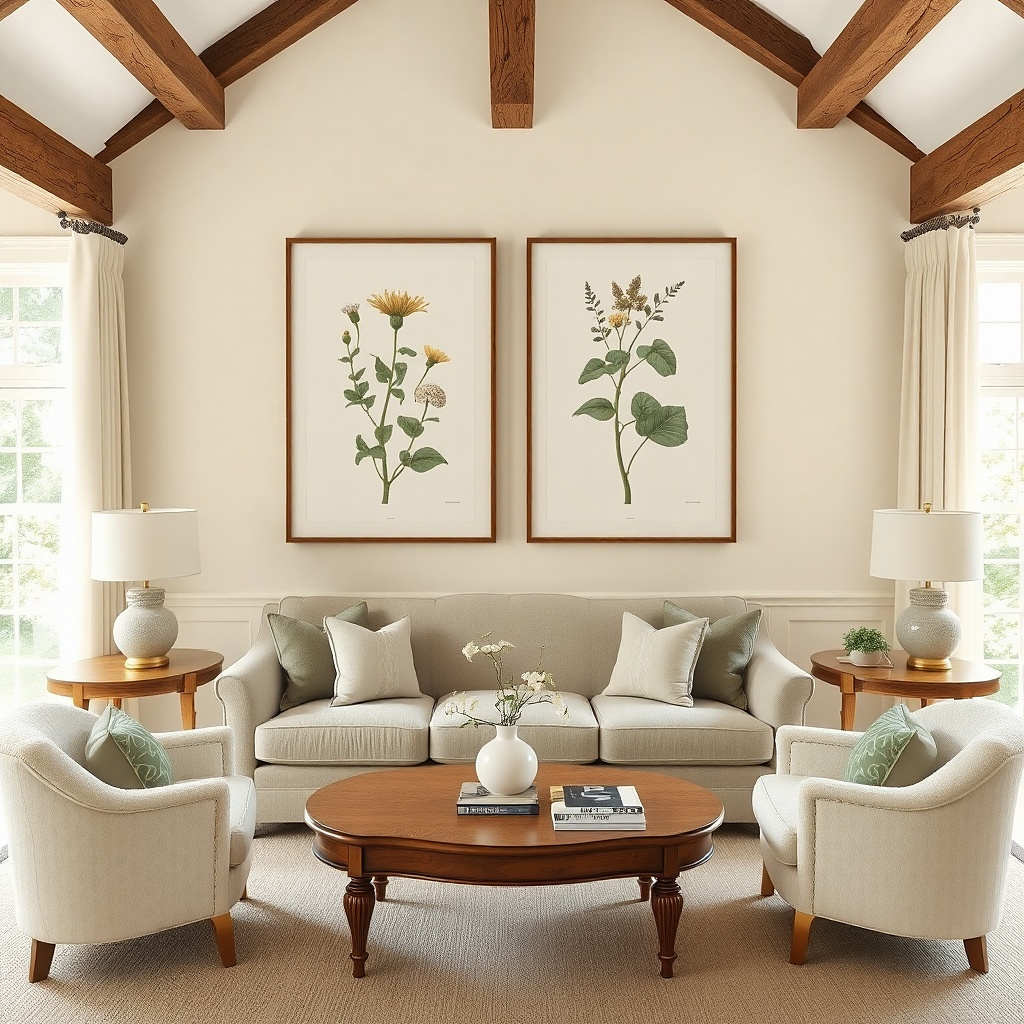
In a small living room, art placement changes how tall the walls feel. A wide horizontal pair (two frames, same height, spaced evenly) draws your eyes across the wall, while hanging it higher adds vertical lift. Choose frames in a thin black, warm brass, or light wood — anything that doesn’t look heavy. The prints should have calm negative space so the wall doesn’t get visually “busy.” This idea works best above a sofa, where people expect art to sit too low and accidentally shorten the room’s height.
Measure the wall above the sofa and pick a total art width that spans about 60-75% of the sofa width. Hang the center of the art so it sits roughly 6-8 inches above the sofa back height, not at eye level. Use a level and mark two hanging points, then step back and confirm the top edge isn’t too close to the ceiling. Keep matting simple and light; thick dark mats make the art feel heavier.
Try thisMatch the frame finish to one other metal in the room — like lamp bases or picture light hardware.
Common mistakeAvoid a single small print hung low; it creates a tight “box” over the sofa.
3. Mirror on the Side Wall: Thin-Frame Rectangle at a 45-Degree Angle
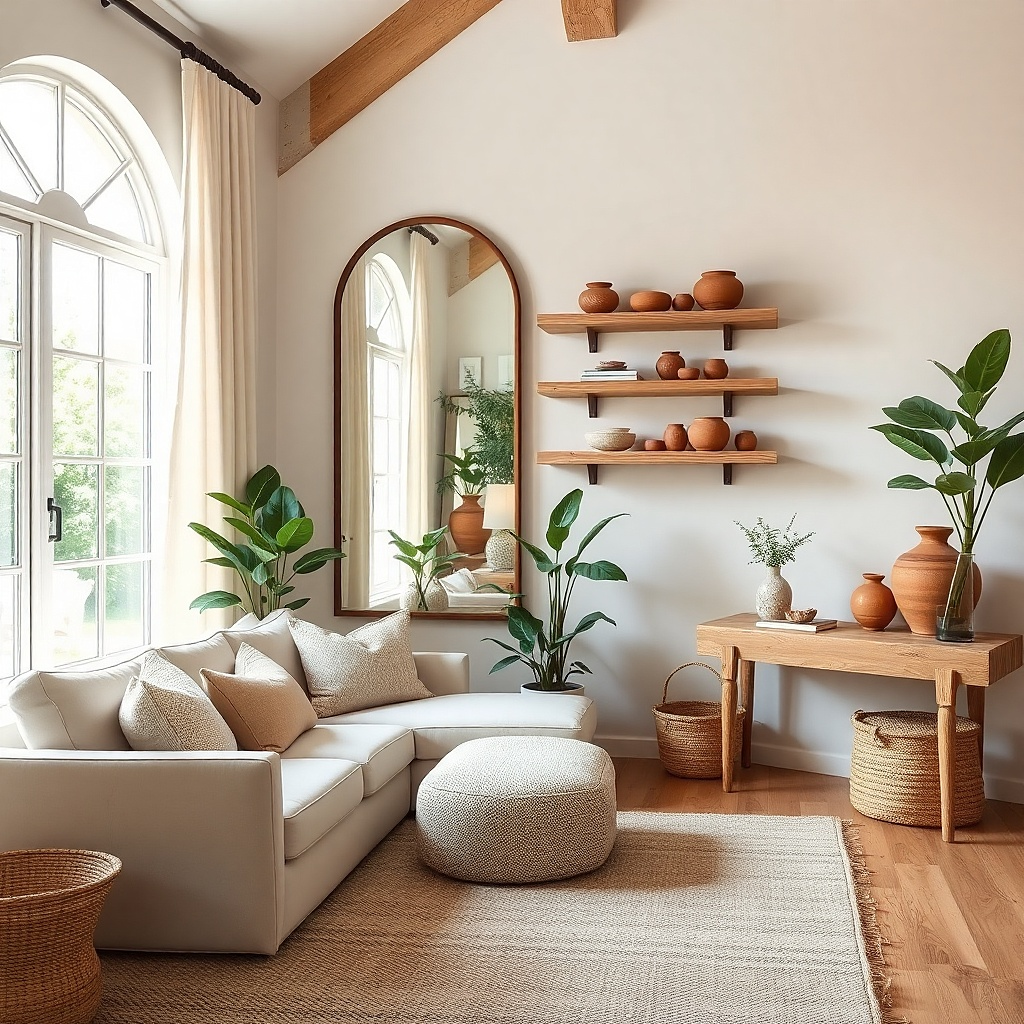
A mirror makes a small living room feel bigger because it adds depth and multiplies light sources. Use a thin-frame rectangular mirror, then angle it slightly (about 10-20 degrees) so it reflects a window or a bright lamp, not the clutter behind you. Thin frames look lighter and less “decorative,” which matters in a compact space. Position it on a side wall where the reflection can show open floor or a lighter wall, so the room doesn’t feel like it ends immediately at the mirror. This is one of the fastest ways to make the room feel brighter without adding more furniture.
Pick a mirror height that lands roughly 4-6 inches above the tallest furniture in that corner, often the back of a chair or console. Place it on the side wall opposite your brightest light source, then test the angle by holding the mirror in place before mounting. Mark the wall for the hardware and install with proper wall anchors if you’re not hitting studs. Finally, turn on the light you want reflected and confirm the reflection hits the floor or wall area, not a dark corner.
Try thisUse a mirror with a clean edge and minimal bevel; heavy decorative mirrors can look bulky in small rooms.
Common mistakeAvoid placing the mirror facing a messy area; you’ll double the clutter.
4. Glass Coffee Table Top with a Wood Base
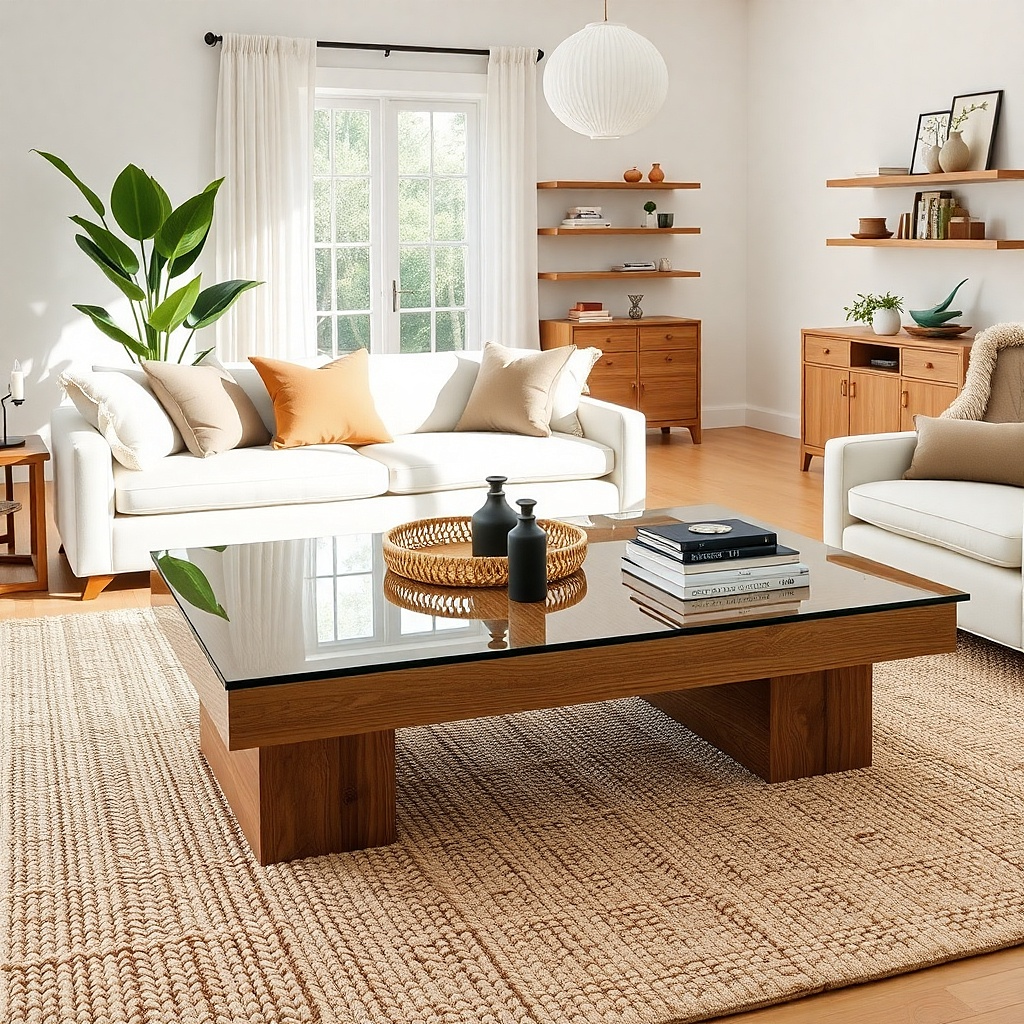
A glass coffee table keeps visual weight low because the tabletop doesn’t block the floor line. That matters in small rooms where floor visibility makes the space feel open. Choose a clear glass top with a light wood base or a metal base with thin legs so the table reads airy. Pair it with a rug that has a slightly lighter tone than your walls, so the glass reflects both the rug color and the light. This idea is ideal when your current coffee table looks too chunky or dark and you want the room to feel less “stopped up.”
Measure the distance from your sofa to where the coffee table would sit; aim for 16-18 inches for comfortable reach. Choose a table width around 2/3 the length of your sofa, so it feels proportional. Place it centered on the rug, or if you don’t have a rug yet, position it so the front legs of seating can sit close without crowding. Put a shallow tray on top for remote and coasters; glass looks best when it’s visually organized.
Use a tray that matches your room’s wood tone to keep the table from looking random.
Avoid fully dark, opaque tables when you want light and openness.
5. Rug That Actually Fits: Front-Feet-Only Rule
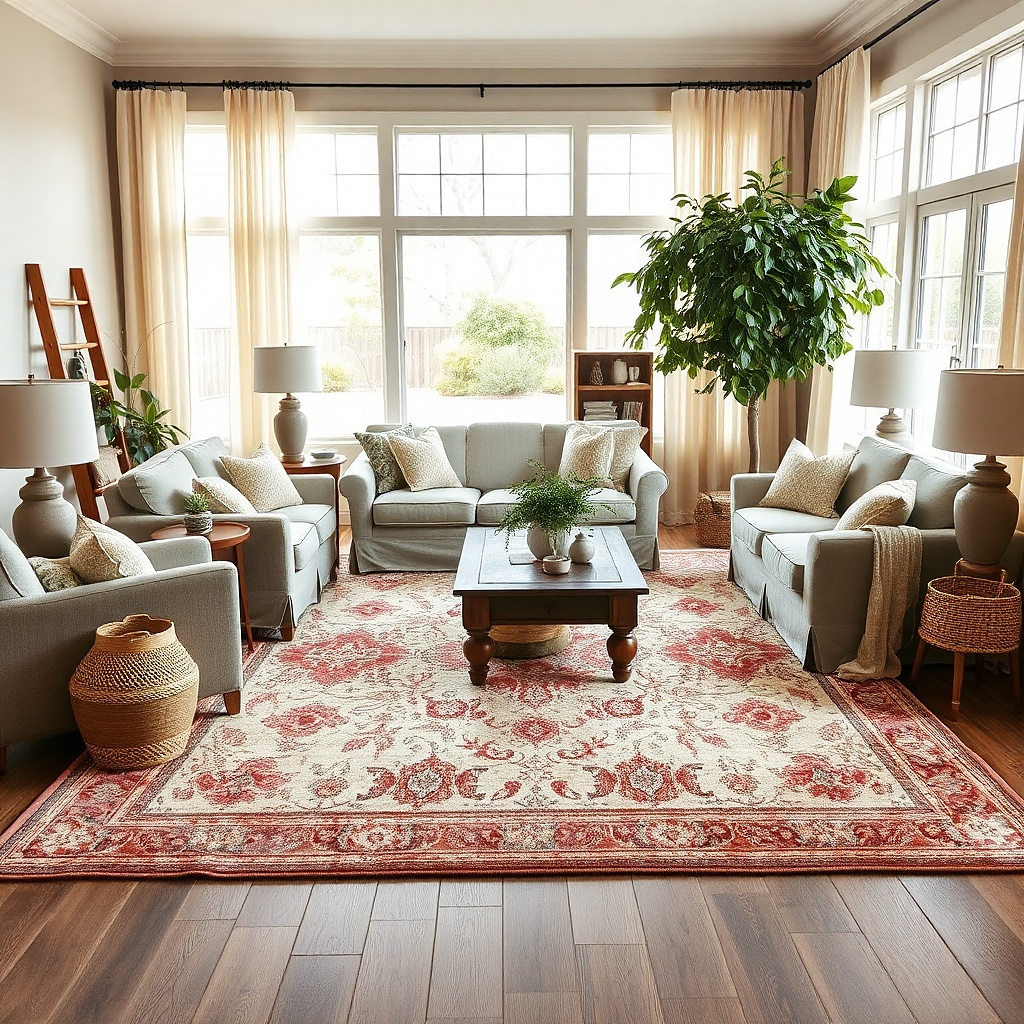
A small living room can feel cramped when the rug is too small. The room’s edges become visible too early, which makes the floor look “cut off.” Use the front-feet-only rule: place the sofa so the front legs sit fully on the rug, while the back legs can remain off. This creates a bigger unified zone without needing a giant rug that overwhelms the space. Choose a rug with a light background or subtle tonal pattern so it reflects the room’s brightness. In photos, this effect is dramatic because it gives the room a clear frame.
Measure your seating arrangement and decide which pieces you want on the rug. For a typical sofa, aim for a rug size where the sofa front legs land on it — often around 5x8 or 6x9 depending on your sofa length. Add a rug pad for comfort and to prevent sliding. Lay the rug first, then place your coffee table and side table so they sit within the rug boundary.
Try thisIf you want a brighter room, go one shade lighter than you think — a small jump makes a big visual difference.
Common mistakeAvoid rugs that stop under the middle of the sofa; that reads like a patch instead of a foundation.
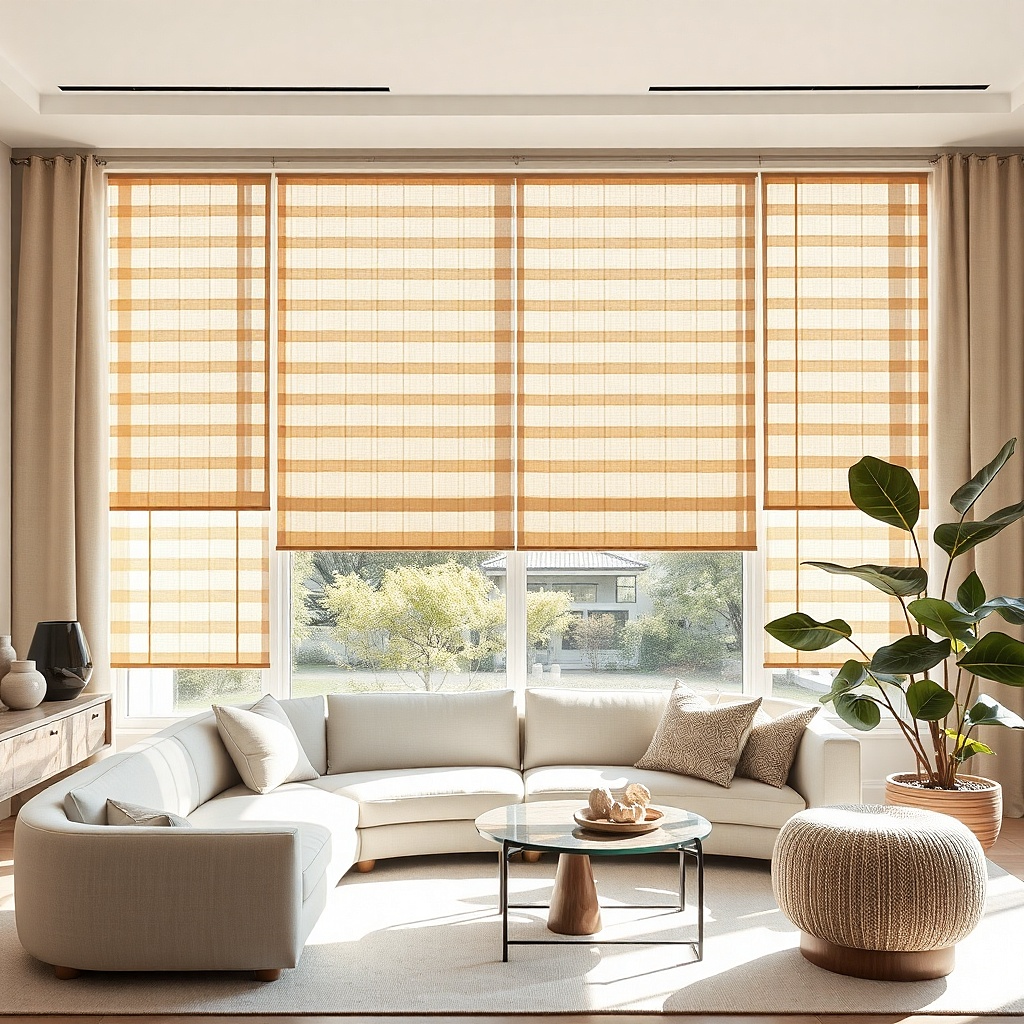
6. Curtains to the Ceiling: Full-Length Panels on a High Rod
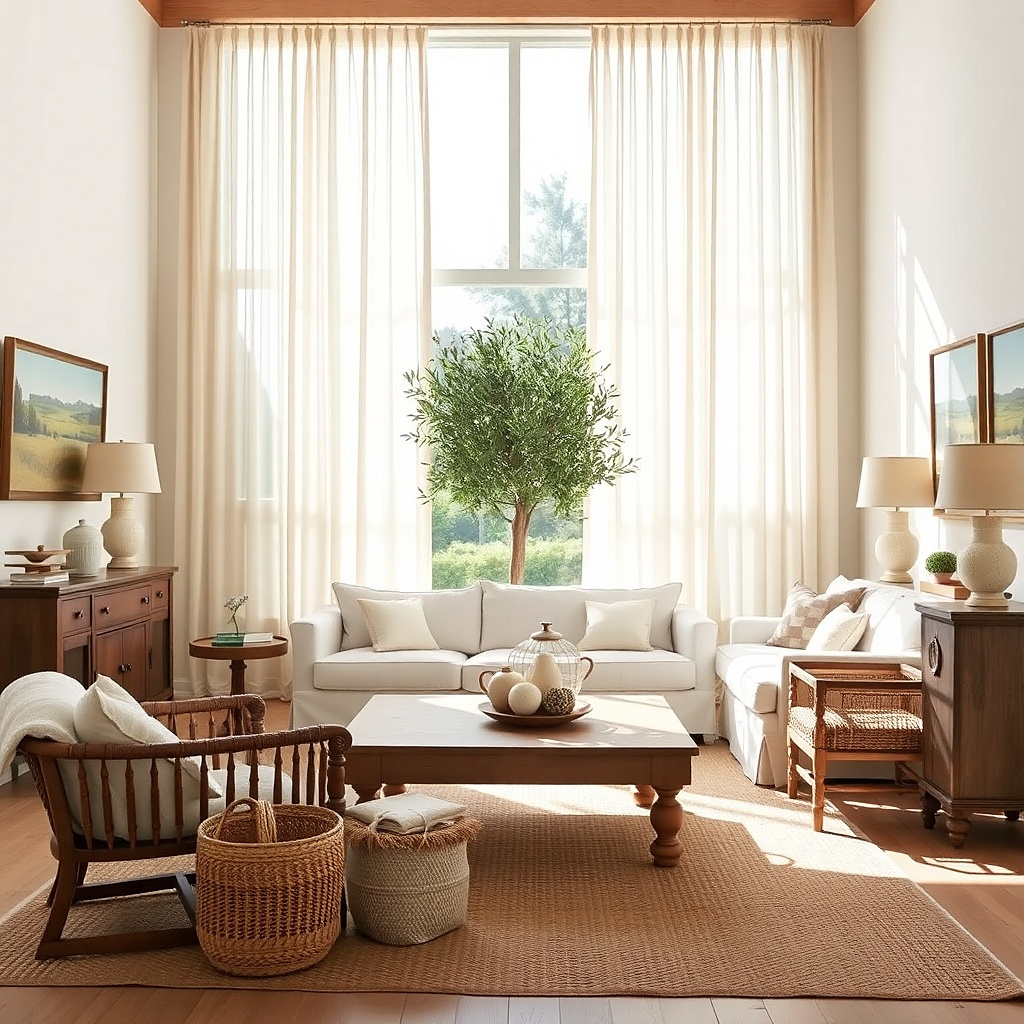
Curtains are one of the most effective “make it taller” moves because they visually stretch the wall. Hang the rod near the ceiling, then use full-length panels so the fabric reaches the floor. The trick is width: panels should stack enough when open that they don’t look tight and skimpy. Choose a light neutral or soft pattern, and pick a fabric with weight so it falls straight instead of crumpling. This works best in small rooms with standard windows where the wall height feels limited.
Measure from your ceiling to the floor and add enough length so panels kiss the floor or hover 1/2 inch above it. Install the rod 4-8 inches above the window trim and extend it 6-12 inches beyond each side of the window. Use two panels minimum, often 50-60 inches total width per panel set depending on fabric thickness. Steam the panels before hanging so folds look intentional.
Try thisChoose a track or rod with rings that glide easily; open curtains look better and bounce more light.
Common mistakeAvoid hanging curtains at window height; it shortens the wall every time.
7. Sofa in Light Color with Straight Arms
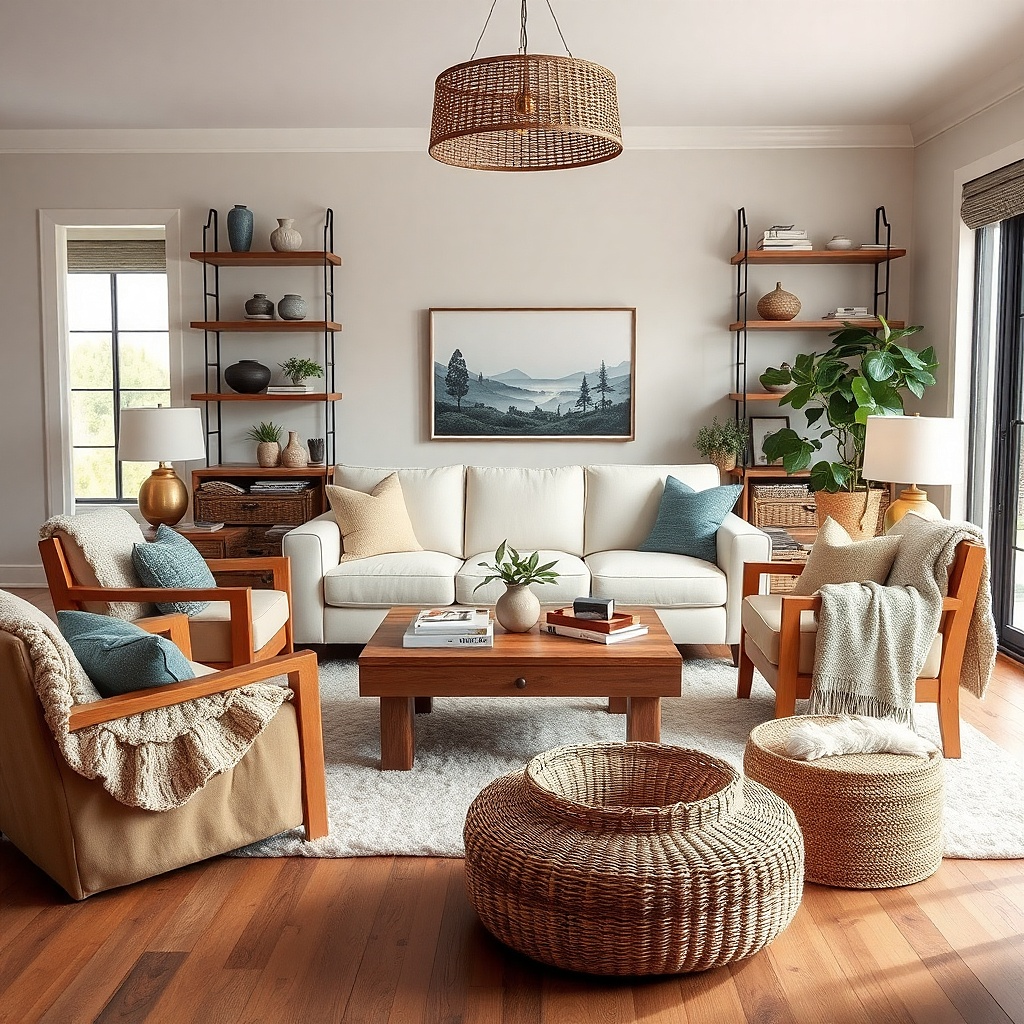
Furniture color controls how much light the room keeps. A light sofa in a warm neutral gives you a built-in brightness layer, especially if your walls are already light. Straight arms read cleaner and take up less visual space than rolled arms, which can look dated and heavy in tight rooms. Look for a fabric with a tight weave — linen blends or performance cotton — so it holds shape and doesn’t sag. This idea is best when you want the whole room to feel fresher without changing every decor item.
Measure your seating footprint and leave 18-24 inches of walkway space where you need to pass. Choose a sofa depth that doesn’t swallow the room; for many small rooms, 32-38 inches deep is manageable. Select a fabric that’s easy to clean and not glossy; slight matte looks modern and hides wear. Pair the sofa with two medium throw pillows instead of many small ones to keep the visual rhythm calm.
If you’re worried about stains, choose a darker accent pillow pair rather than a dark sofa base.
Avoid very dark upholstery in a room that already has limited natural light.
8. Low-Profile Sideboard Instead of a Tall Media Console
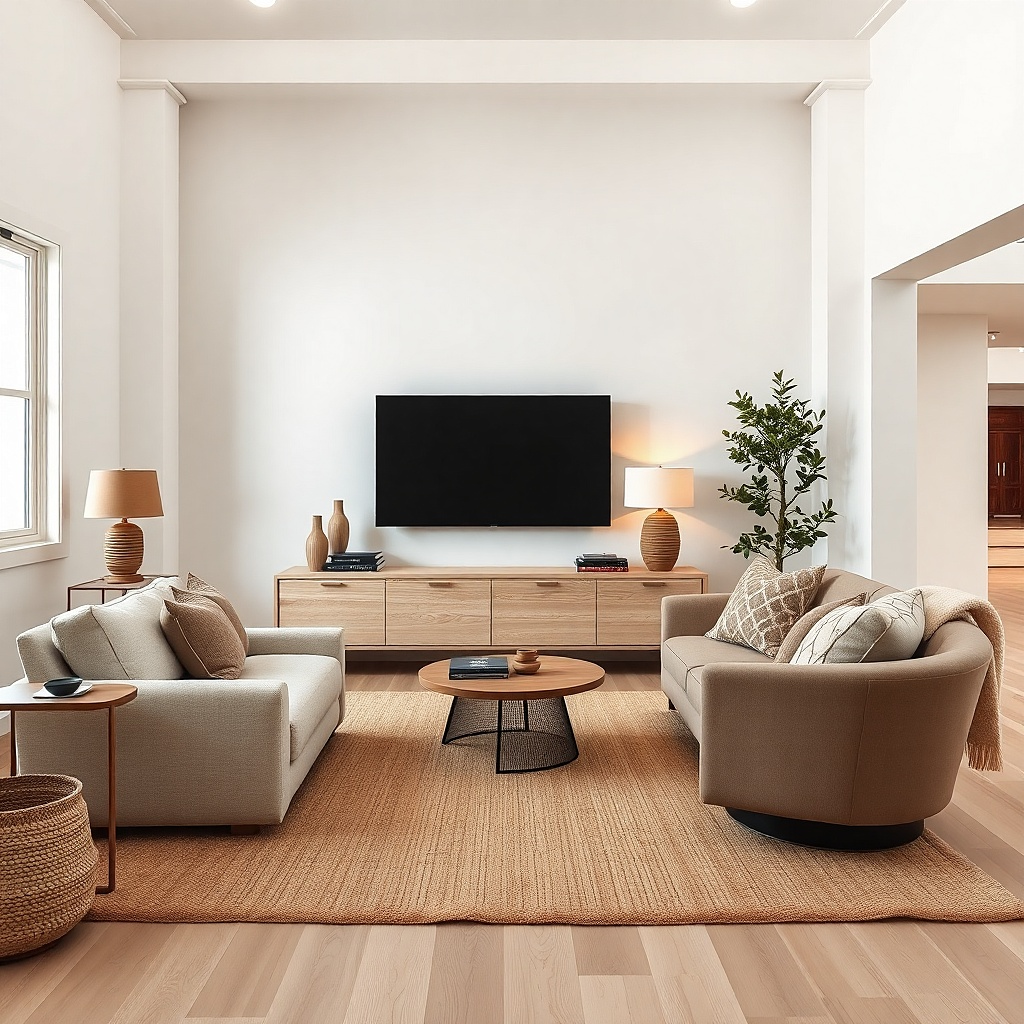
Tall storage makes a small living room feel top-heavy and cuts sightlines. A low-profile sideboard or media console keeps the visual horizon near the floor, which makes the room feel wider and more open. Choose a piece with slim doors or open cubbies so the interior doesn’t look like a solid block. Wood fronts in light oak, ash, or warm walnut keep the room grounded without adding darkness. Put your TV or media items centered, then leave some empty space on top so it doesn’t look crowded.
Measure your wall and confirm the console width is about the same range as your sofa width, then keep it 2-6 inches away from nearby trim or doors. Aim for a height around 18-24 inches for a low look. Place the heaviest items inside the console and keep decor to 2-3 objects on top. If you mount a TV, keep cables hidden in a simple raceway behind the unit for a clean line.
Use one vertical element on the console — like a tall vase — but keep it centered so it doesn’t stretch the room unevenly.
Avoid tall cabinets that reach close to the ceiling; they crowd the vertical space.
9. Floating Shelves with a 60-Second Styling System
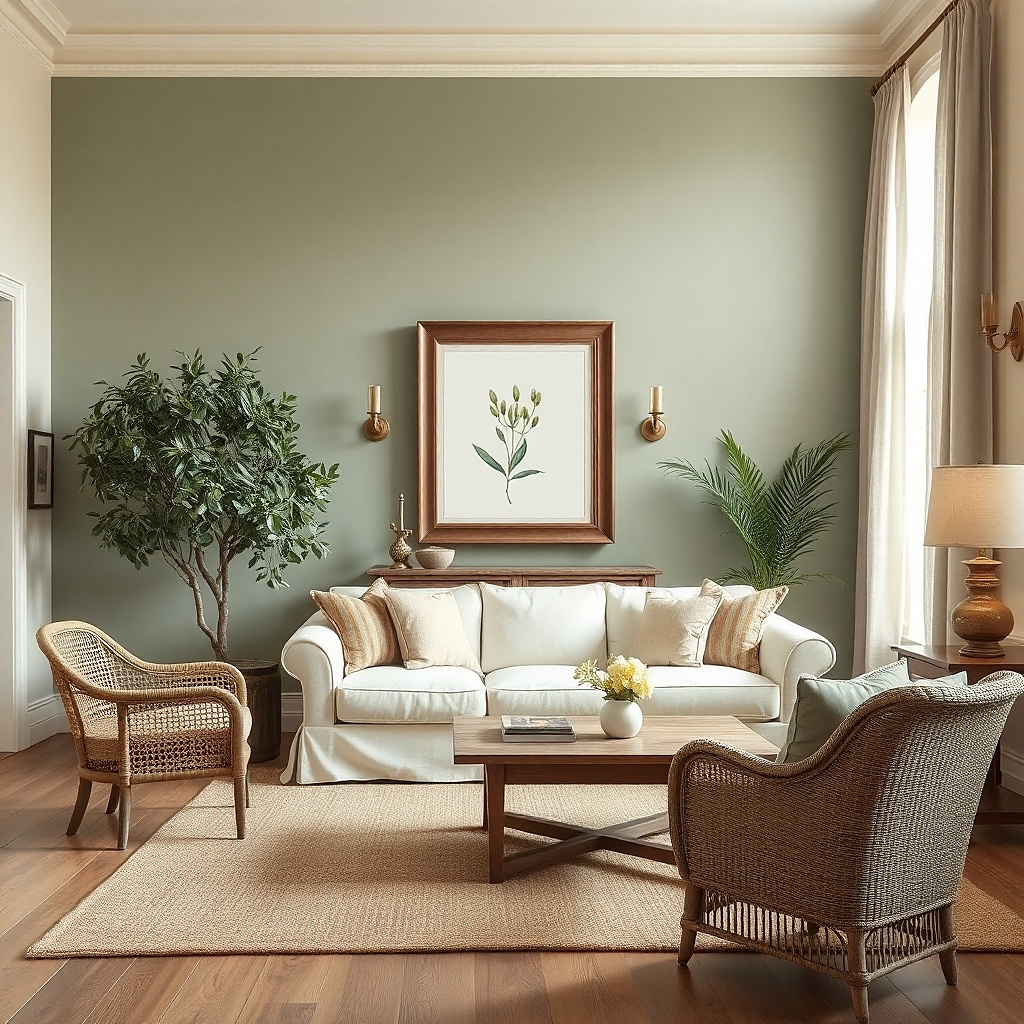
Open wall storage can make a small living room feel designed instead of stuffed, but only if it’s edited. Floating shelves with a light wood or matte white finish keep the wall visually open while giving you a place to display a few bright items. The aesthetic works because it creates a horizontal line without heavy furniture in the middle of the room. Use books with neutral spines and one accent color, plus a couple of ceramic pieces that reflect light. This is perfect for rooms where you want storage but you don’t want a big bookcase dominating the space.
Install shelves so the bottom shelf sits about 12-16 inches above the highest surface below, like a console top. Use shelf brackets rated for your loaded weight and anchor into studs. Style with 2 book stacks, one taller object, and a small bowl or vase — keep the total to 6-8 items per shelf. Step back and remove anything that breaks the color rhythm; shelves look best when they breathe.
Try thisChoose ceramic in white, cream, or soft gray so it catches light without adding visual noise.
Common mistakeAvoid filling shelves edge-to-edge; gaps are part of the look.
10. Accent Wall in One Tone, Not a Pattern
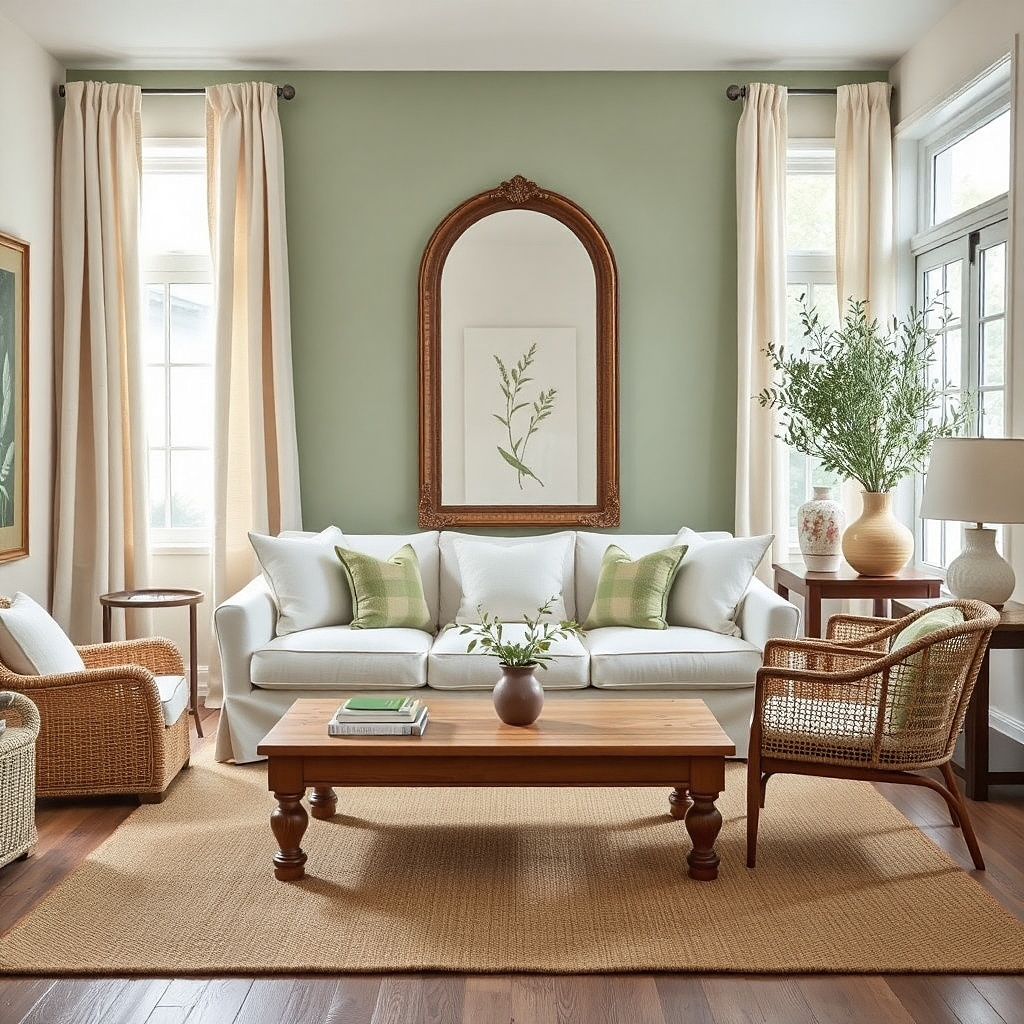
A pattern accent wall can look gorgeous, but it often makes a small room feel busier and smaller. Instead, paint one wall a slightly deeper version of your main wall color — same undertone, just 1-2 shades darker. The room gains depth without adding visual clutter. Keep the rest of the walls the lighter off-white so light still bounces around. This setup is especially effective behind a sofa or where your main art sits, because it frames the focal point and makes it look intentional.
Test paint samples on the wall where you’ll do the accent, then view them in daylight and at night. Tape off the accent wall and use a foam roller for a smooth finish. Paint two coats and let them cure fully before moving furniture against the wall. Update your art frames and accessories so they match the accent undertone — warm gold or light wood looks best with warm grays and off-whites.
If your accent wall looks too dark in the afternoon, go one shade lighter rather than adding more decor.
Avoid high-contrast stripes or large busy prints on an accent wall in a small living room.
11. Lighting Plan: One Floor Lamp, One Table Lamp, No Overhead Glow
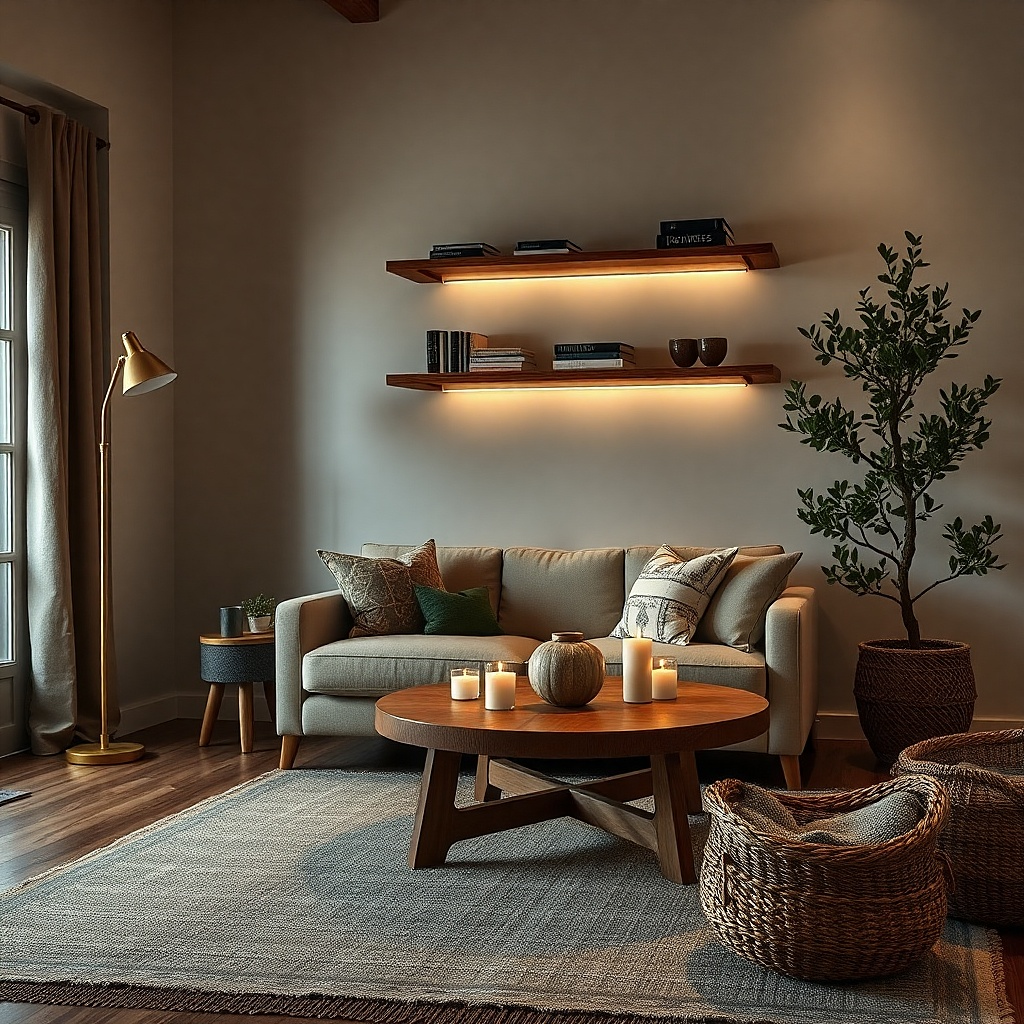
Small rooms feel bigger when light is layered and directional, not when everything comes from one overhead fixture. Use a floor lamp near a reading spot and a table lamp near the sofa to create two light zones. Choose warm bulbs around 2700K and shades in linen or off-white fabric so the light spreads softly. This matters for “brighter” because it reduces harsh shadow pockets that make corners feel deep and dark. When you get soft shadows, the room looks more dimensional and inviting.
Place the floor lamp so it lights a side of your seating area, not straight at your face. Position the table lamp on a side table that’s about the same height as the sofa arm or slightly lower. Use dimmable bulbs if you can, then start with the lowest brightness and adjust upward until the room feels even. Keep lamp cords tidy with a cord cover along the wall edge.
Try thisPick shades that are wider at the bottom than the top; they throw light onto the coffee table and wall area.
Common mistakeAvoid bright white bulbs (5000K+); they flatten the room and make it feel clinical.
12. Slim-Leg Furniture to Keep the Floor Line Visible
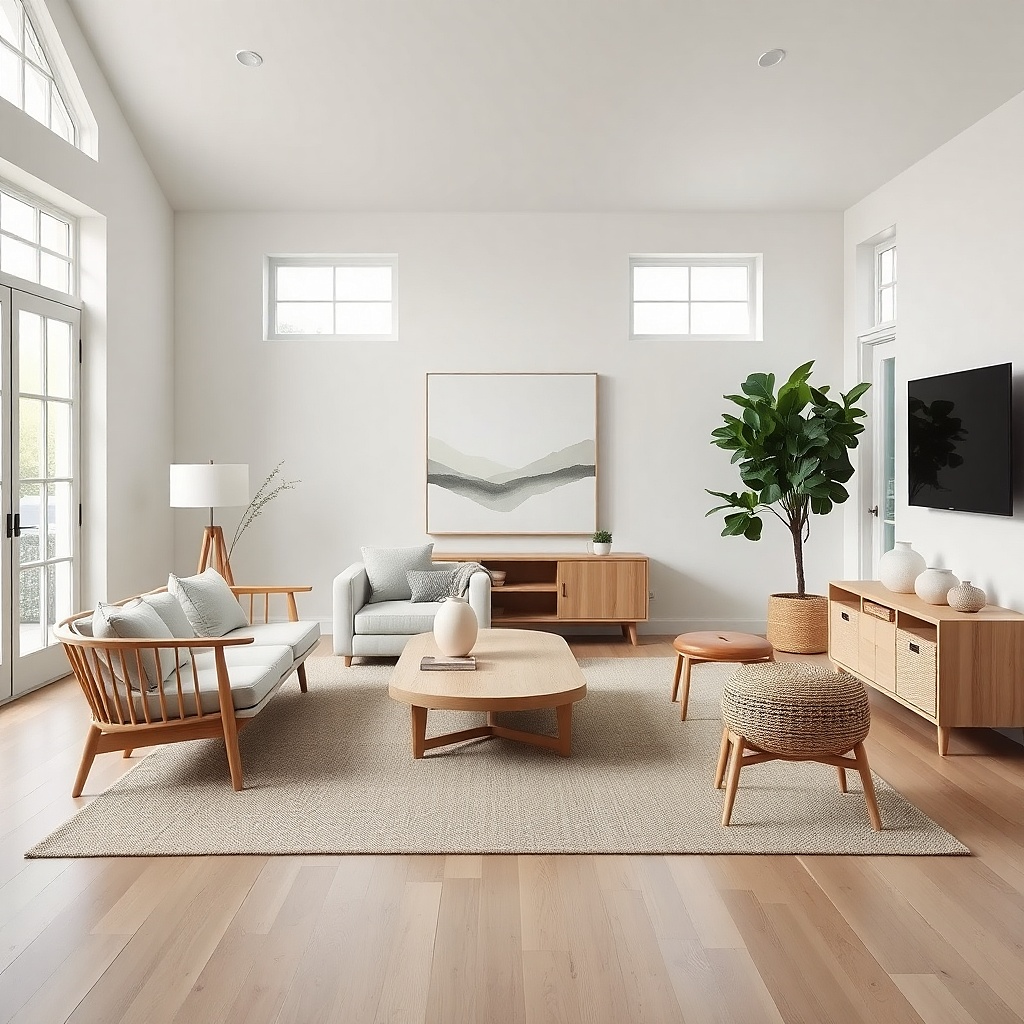
Visible legs make a room feel larger because the floor line stays uninterrupted. In small living rooms, heavy bases and skirted furniture create a visual wall that makes the room feel shorter and tighter. Choose sofas and chairs with slim tapered legs in wood or metal, and keep the upholstery light to medium. This looks best with a rug that’s large enough to frame the furniture, so the floor area stays open. It also makes cleaning easier under the furniture, which is practical in tight spaces.
When shopping, measure the clearance under the sofa and confirm you can fit a vacuum head underneath. Choose furniture with legs that are at least 2.5-3 inches off the floor for a noticeable effect. Place the furniture so the legs land on the rug where possible, using the same front-feet-only rule. Keep side tables slim and avoid thick bases so the floor line stays visible.
If you already own skirted furniture, add a lighter throw blanket on top and a lighter rug to reduce the “block” effect.
Avoid bulky ottomans with solid bases that cover most of the floor in front of your seating.
13. Built-In Look with Curtains and a Narrow Console
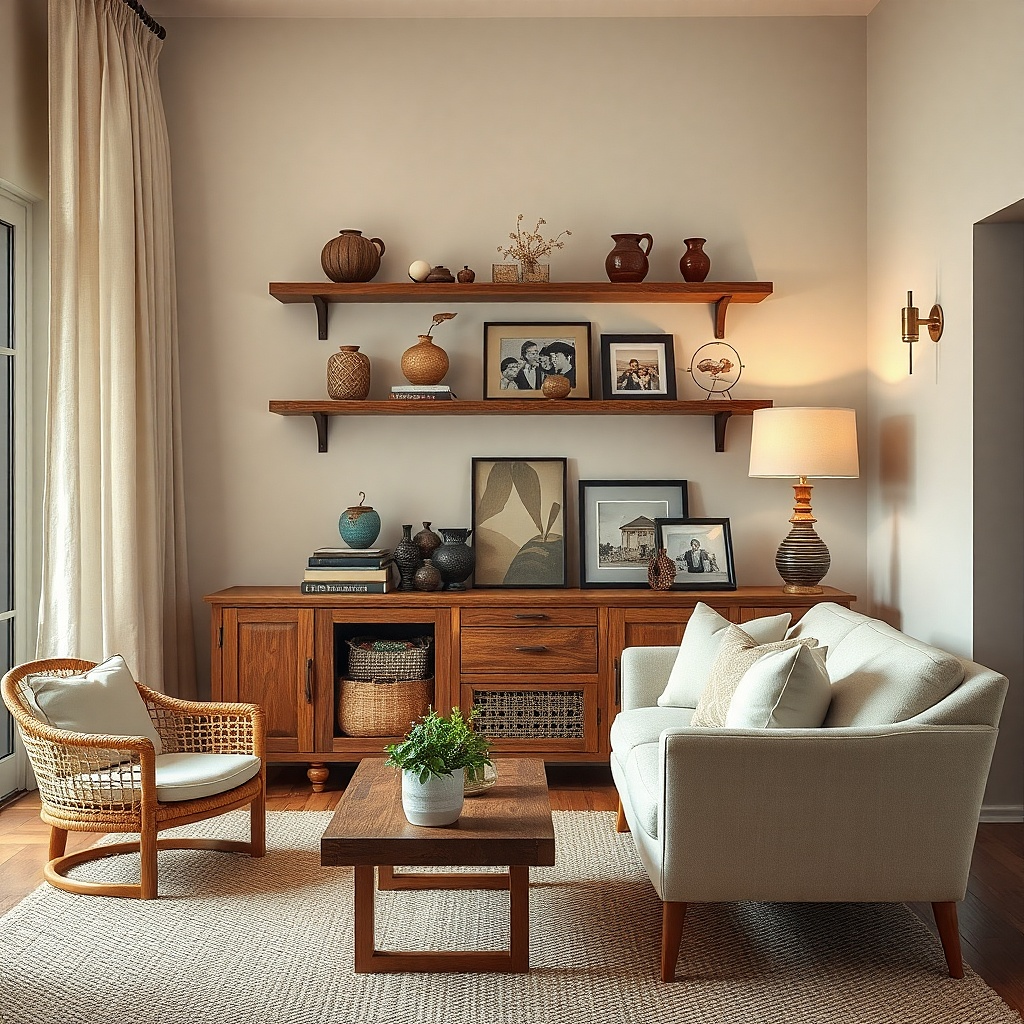
A narrow console with curtains can create a built-in look, which makes small rooms feel more structured and less cluttered. The key is to keep the console width narrow and the curtain panels flowing, so you get a tall, continuous vertical line. Place the console under a window or along a wall where you want storage without taking over. Choose a light wood console with drawers and a simple top surface for a clean reflection of light. This works well when your room has awkward corners or you need a spot for keys and everyday items.
Pick a console depth around 10-14 inches so it doesn’t stick into walkways. Mount the curtain rod high and extend it beyond the console edges, then hang long panels that reach the floor. Style the console with only 3-4 items: a tray, a lamp or candle, and one small plant or vase. If you need more function, use baskets inside drawers or a lower cabinet so the top stays calm.
Use matching hardware finishes (brass or black) across console pulls and lamp bases for a clean, intentional look.
Avoid a console that’s too wide; it erases the open floor and ruins the built-in illusion.
14. Sectional Orientation: Float It 6 Inches from the Wall
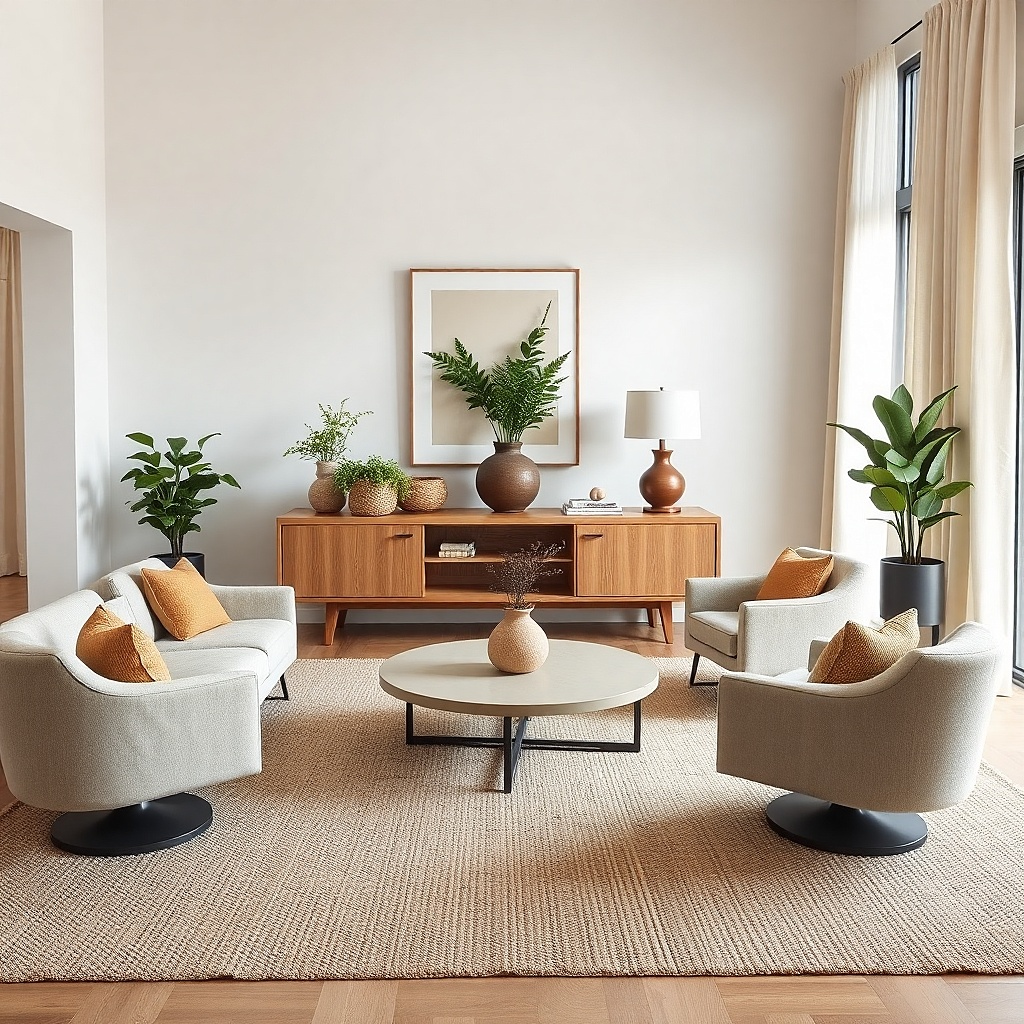
In small rooms, pushing a sofa tight against the wall can make it feel like it’s trapped. Pull your sectional or sofa about 6 inches off the wall to create a thin “breathing” zone behind it. That gap catches light and creates a subtle sense of depth, especially if you keep the wall light and add a floor lamp nearby. This also makes the room feel less cramped visually and gives you space for a slim console or a floor plant. The look reads modern and intentional in photos.
Measure your walkway and confirm you still have at least 24 inches clearance where you move around the seating. Pull the sofa out 4-8 inches, then place your rug so the front legs sit on it. If you have a TV, keep the viewing distance comfortable and don’t compromise the angle. Add a floor lamp near that gap and use a shade with warm light to make the space behind the sofa feel bright rather than empty.
Try thisIf the gap feels too bare, add one slim floor basket or a plant pot in a matching neutral color.
Common mistakeAvoid pulling the sofa out so far that the room becomes hard to navigate.
15. Corner Strategy: One Tall Plant + One Low Table
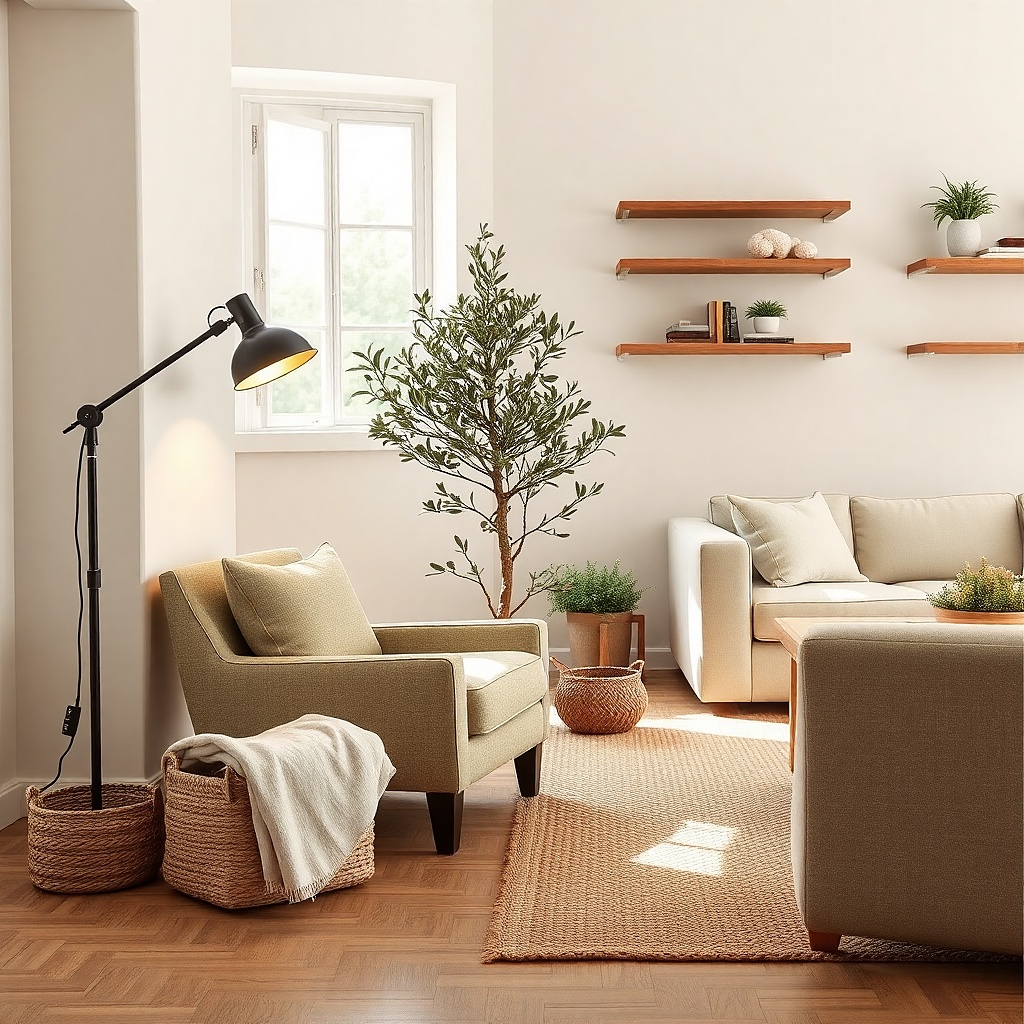
Corners are where small living rooms lose light and feel cluttered. The fix is to use one vertical element and one low element so the corner looks purposeful instead of messy. A tall plant in a light pot adds height without taking up floor width, and a small low table keeps the corner functional. Choose a plant with thin leaves or upright growth so it doesn’t look like a big bush. Pair the pot color with your palette: cream, soft gray, or matte black. This works best in reading corners, beside sofas, or near the entry into the room.
Pick a plant that matches the corner height; a floor plant around 4-5 feet works in most small rooms. Place it in a light pot and position the plant so it’s slightly forward of the corner, not pressed into the wall. Add a low table beside it with a top surface for a book stack or a small lamp base. Keep the table color lighter than the wall trim if possible to reflect light.
Rotate the plant once a week so it stays symmetrical and doesn’t lean visually.
Avoid multiple small decor items in a corner; it looks like clutter at a glance.
16. Color-Blocked Pillows: Two Shades of One Accent
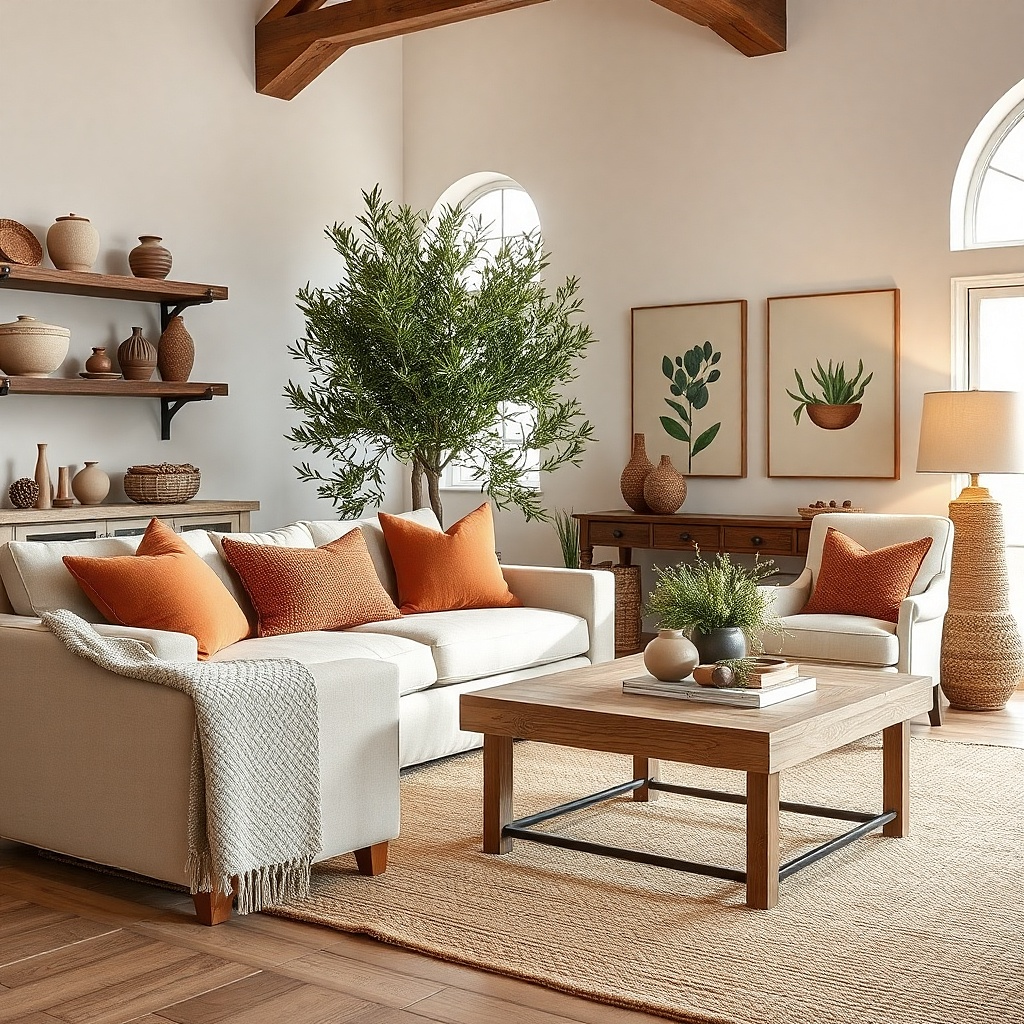
Small living rooms look brighter when the decor is cohesive and doesn’t scatter attention. Use pillows to repeat one accent color in two shades, like terracotta and warm clay, or slate blue and soft chambray. This creates a calm color block against a light sofa and makes the room feel styled without adding visual noise. Choose covers with different textures — one smooth, one woven — so it looks rich in close-up but still clean from across the room. Stick to two or three pillow shapes max so the couch doesn’t become crowded.
Start with a light base: two large pillows in your accent color, sized around 20x20 or 22x22. Add one smaller pillow in a second shade or subtle pattern that shares the same colors as the larger ones. Arrange them symmetrically on the sofa and keep the edges aligned. If you want extra brightness, choose a cover in a warmer tone because it reads like light, not shadow.
Try thisIf your room feels dull, swap one pillow cover to a lighter shade before you buy anything else.
Common mistakeAvoid mixing multiple unrelated accent colors across pillows; it makes the room look chaotic.
17. Sconce-Style Wall Lights: Soft Up-Lighting on the Wall
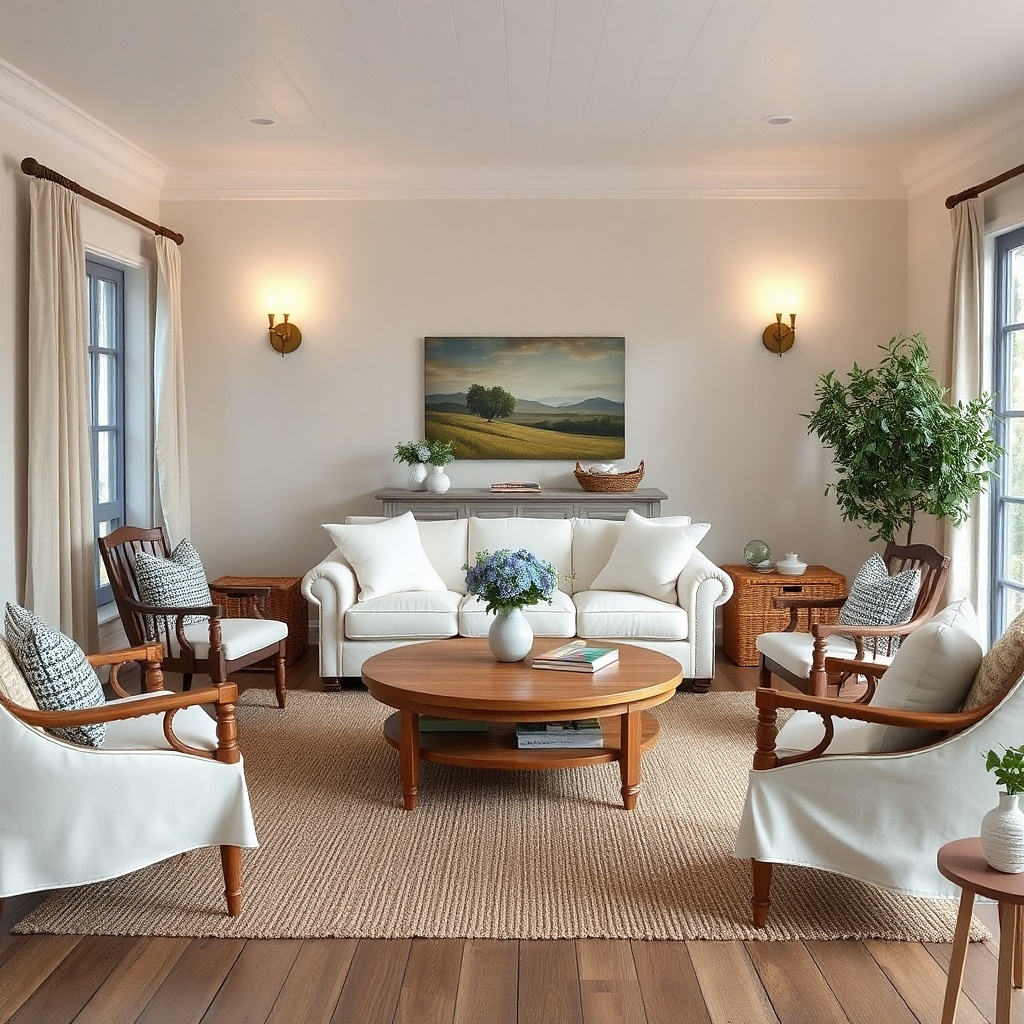
Wall lights brighten a small living room by spreading light onto walls, not just onto furniture. Sconce-style fixtures with shades that throw glow upward create a halo effect that makes the room feel taller and more even. This is especially helpful if you have limited floor space for lamps or you want a cleaner look. Choose warm bulbs and shades in off-white fabric or frosted glass so the light isn’t harsh. The aesthetic looks intentional in photos because the glow creates soft gradients rather than bright points.
Install fixtures at least 70-72 inches from the floor to the center of the light for a flattering height. Aim the light so it washes a section of the wall above your sofa or near your art, not directly at seating eyes. If you’re wiring, use a licensed electrician or follow local rules for electrical work. Pair with a dimmer so you can adjust brightness for different times of day.
Try thisPick a fixture finish that matches your frames or hardware so the wall looks cohesive.
Common mistakeAvoid bare bulbs or narrow spotlights; they create glare and hot spots.
18. Low-Contrast Curtains and Rug in the Same Family
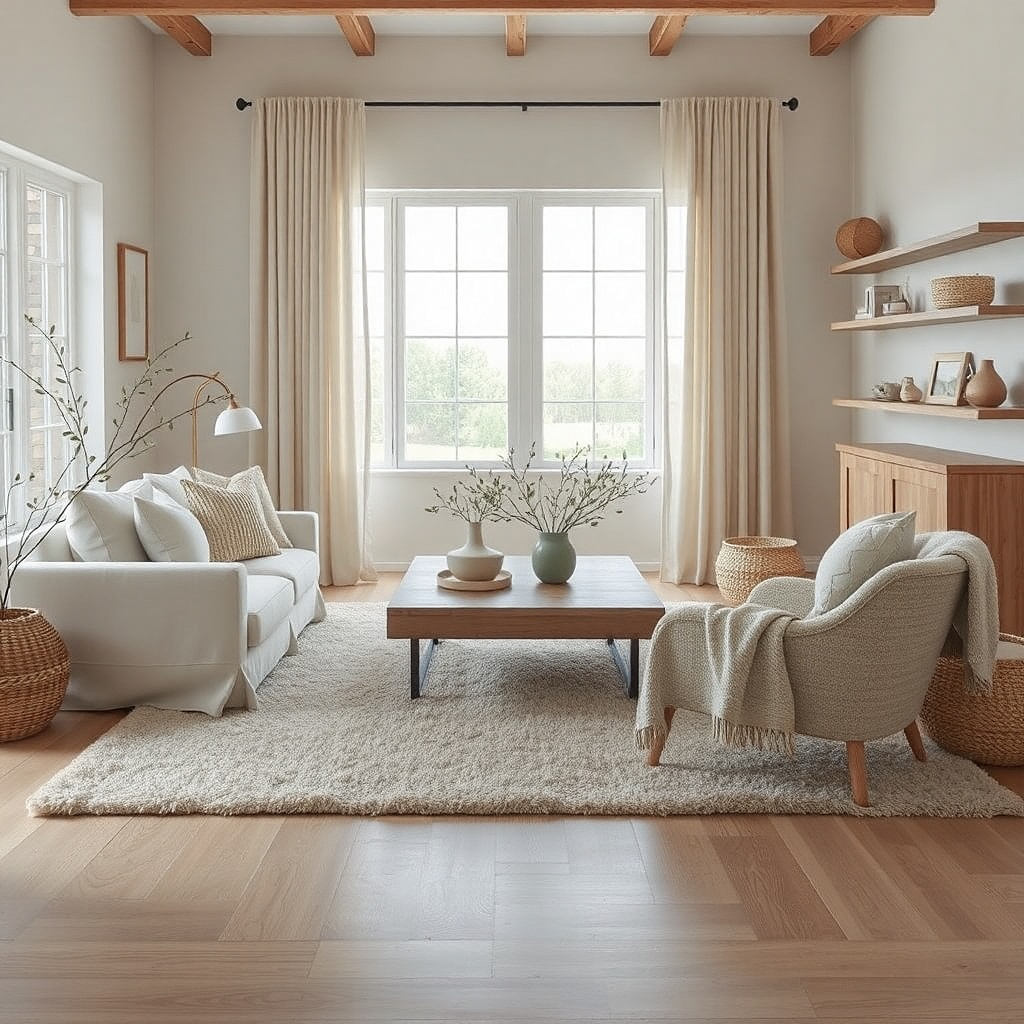
When curtains and rugs clash in tone, the room feels visually chopped up. Match them in the same color family — for example, both in warm greige, both in light oatmeal, or both in a soft sand — so the room reads as one flowing surface. This makes the walls and floor feel like a single backdrop, which is how rooms look bigger in real photos. Keep patterns subtle: a rug with a faint tonal pattern and curtains in a solid or micro-weave fabric works well. This idea is great when you want the room to feel bright but you don’t want to repaint everything.
Choose a rug first, then pick curtains that match either the rug’s base tone or its warmest undertone. Buy curtain panels in full-length and hang high so the vertical line stays strong. Ensure both items are light enough that the room doesn’t get heavy — aim for a base that reads clearly in daylight. Steam the rug and curtains into place after installing so the tones look even.
If your rug has a cool undertone, avoid warm orange accents elsewhere; switch to neutral cool accents for harmony.
Avoid high-contrast black curtains with a light rug; the contrast makes the space feel smaller.
19. Statement Pendant Over a Small Seating Zone
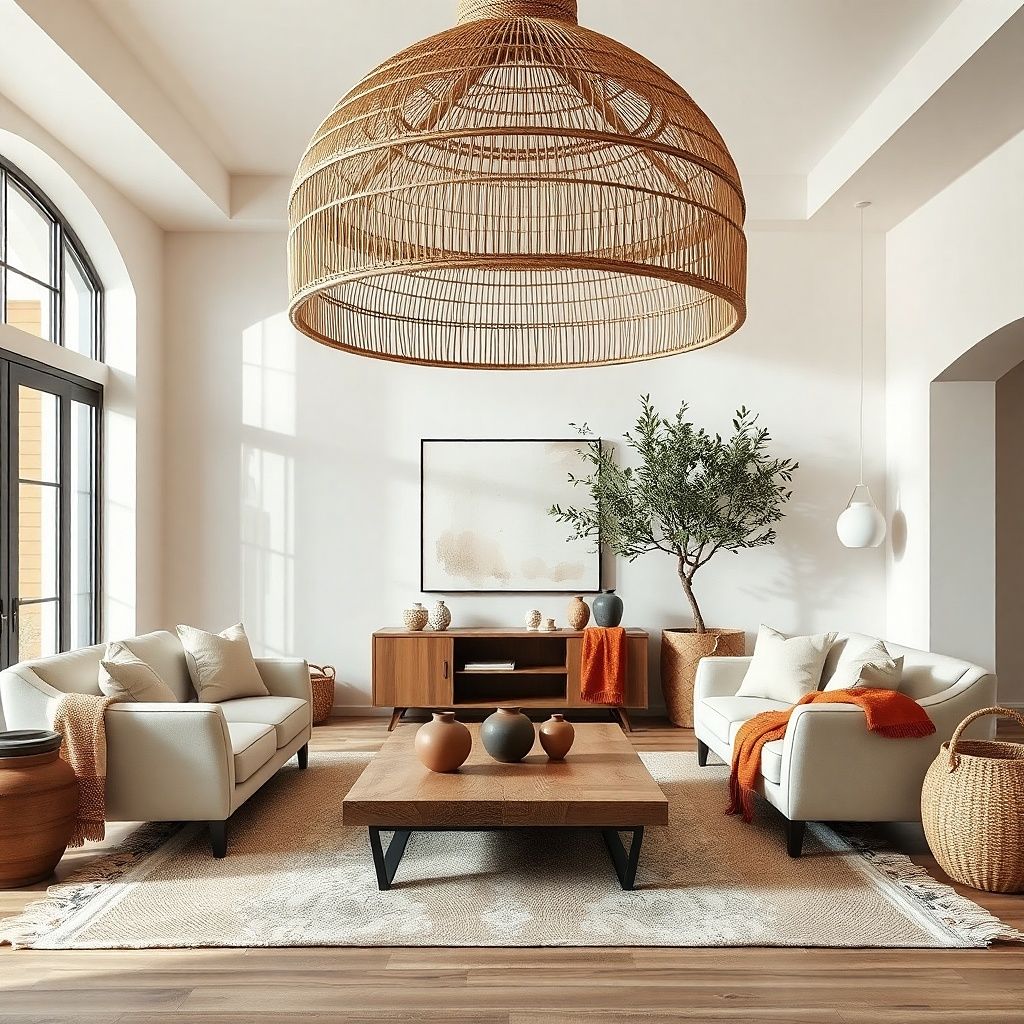
A pendant can make a small living room feel designed when you place it correctly. The goal is to create a clear “zone” over the center of the seating area, then keep everything else light and simple. Choose a pendant with a shade that diffuses light, like a glass or fabric shade in off-white or warm gray. The pendant draws the eye upward and helps the room feel taller, especially when your ceiling is not very high. This idea works best when your ceiling overhead light is harsh and you want a more flattering glow.
Center the pendant above the coffee table or the rug’s center, not above the room’s center if that’s off from seating. Measure the ceiling height and keep the bottom of the shade about 30-36 inches above the tabletop for comfort. Use a warm bulb around 2700K and check glare from different seating spots. If you have a low ceiling, choose a flatter shade that doesn’t hang too far down.
Try thisKeep the cord length neat; a straight drop looks more intentional than a messy loop.
Common mistakeAvoid a pendant that’s too large in diameter; it can visually crowd a small room.
20. TV Wall with Open Shelving and a Thin Frame
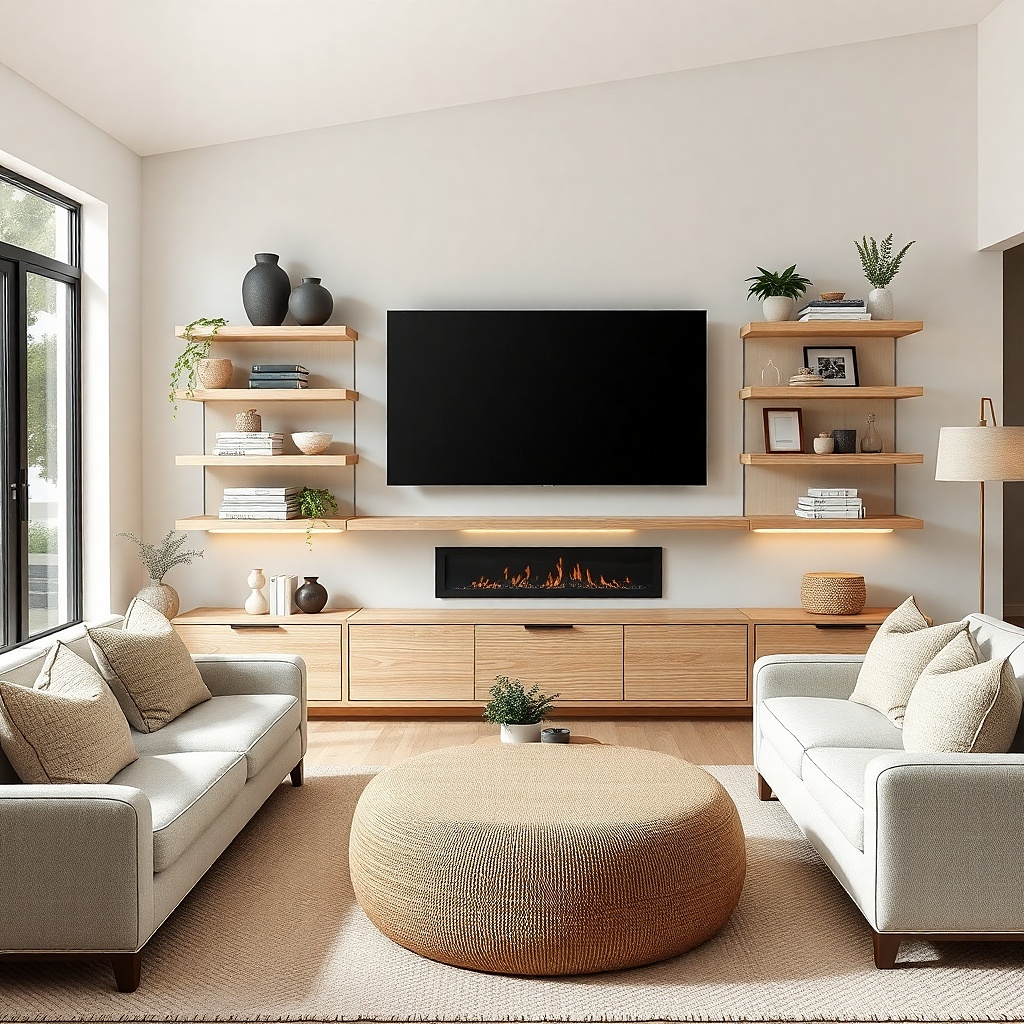
A TV wall can make a small living room feel bulky if the media setup is boxy and dark. Instead, use a TV wall treatment with thin open shelving on the sides and a light backdrop color or paint panel. Thin shelves look lighter, and open space makes the room feel less blocked. Choose a wall color close to your main walls for a soft blend, then use a slim, light media stand under the TV. Keep decor to a few items with light colors so the wall doesn’t become a clutter magnet. This works best in rooms where the TV is the focal point and you want the room to still feel bright.
Plan the TV placement first so it sits at a comfortable viewing height, usually centered around seated eye level. Add shelves on both sides, keeping each shelf depth around 6-9 inches so they don’t stick out visually. Use two or three light decor items per shelf and leave gaps. If you’re routing cables, use a raceway and paint it the wall color for invisibility.
Try thisUse one taller object per side shelf and keep everything else low so the wall stays balanced.
Common mistakeAvoid stacking lots of small decor around the TV; it reads as visual clutter.