1. Low oak storage bench with one long cushion
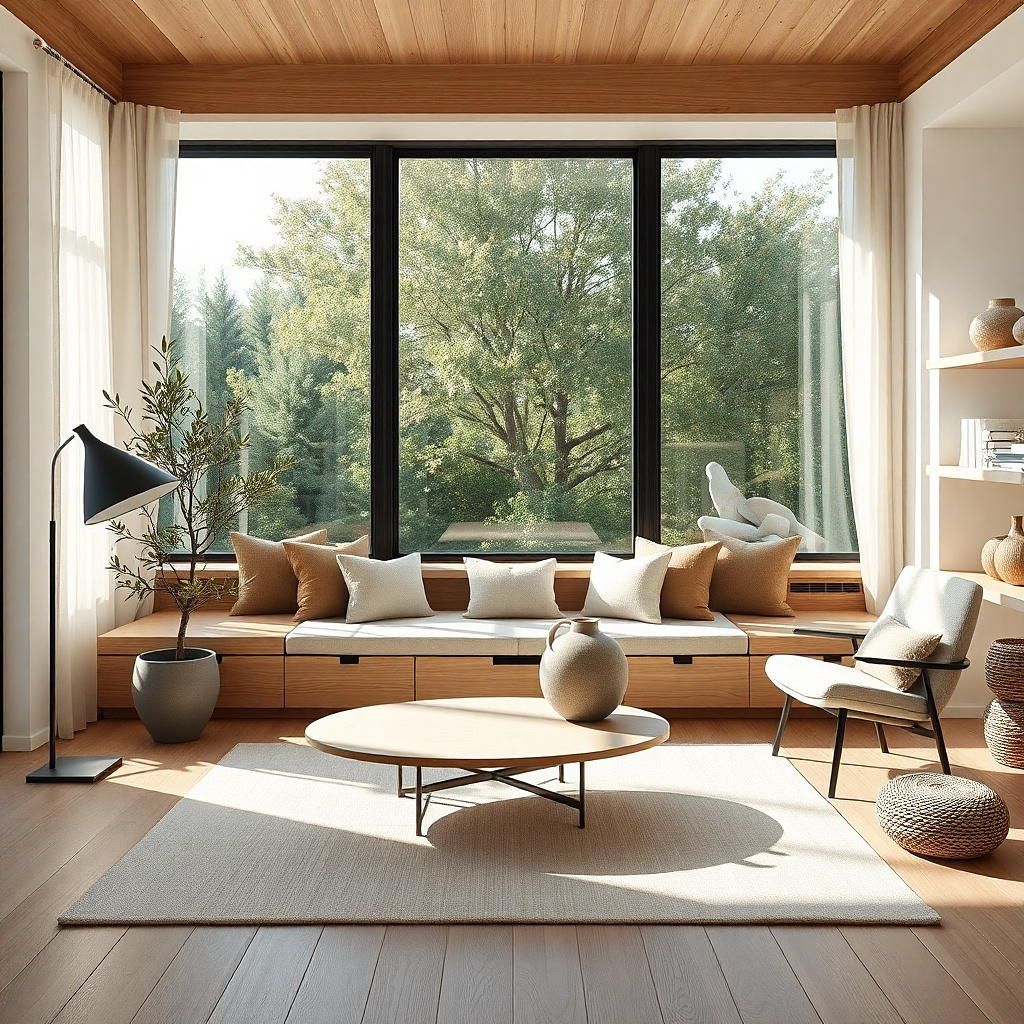
This is the strongest option for a small bay that needs to earn its footprint. A built-in bench around 16 to 18 inches high and 18 to 20 inches deep turns awkward angles into usable seating without pushing too far into the room. White oak or oak-look veneer keeps the look warm but still crisp, especially with slab fronts and no visible hardware. One long seat cushion in oatmeal, stone, or camel reads cleaner than three little pads. The result looks architectural, not improvised, and it gives the living room a place to sit, stash throws, and frame the window all at once.
Start by measuring each face of the bay and sketching a simple front elevation so the bench follows the angles exactly. Then build a plywood or MDF carcass with lift-up lids or push-latch doors, keeping the finished depth near 18 inches and the seat height near 18 inches after the cushion goes on. Add oak veneer, edge banding, and a 2 to 3 inch foam cushion wrapped in a tight cover with a zipper. For a simple custom build, expect roughly $350 to $900 in materials depending on wood choice and whether you paint or veneer the base.
Try thisRun the bench wall to wall instead of stopping short at each side. Full width makes the bay look intentional and slightly larger.
Common mistakeSkip skinny decorative legs under a bay bench because they waste storage and make the piece look like an afterthought.
2. Floating desk ledge for a compact work perch
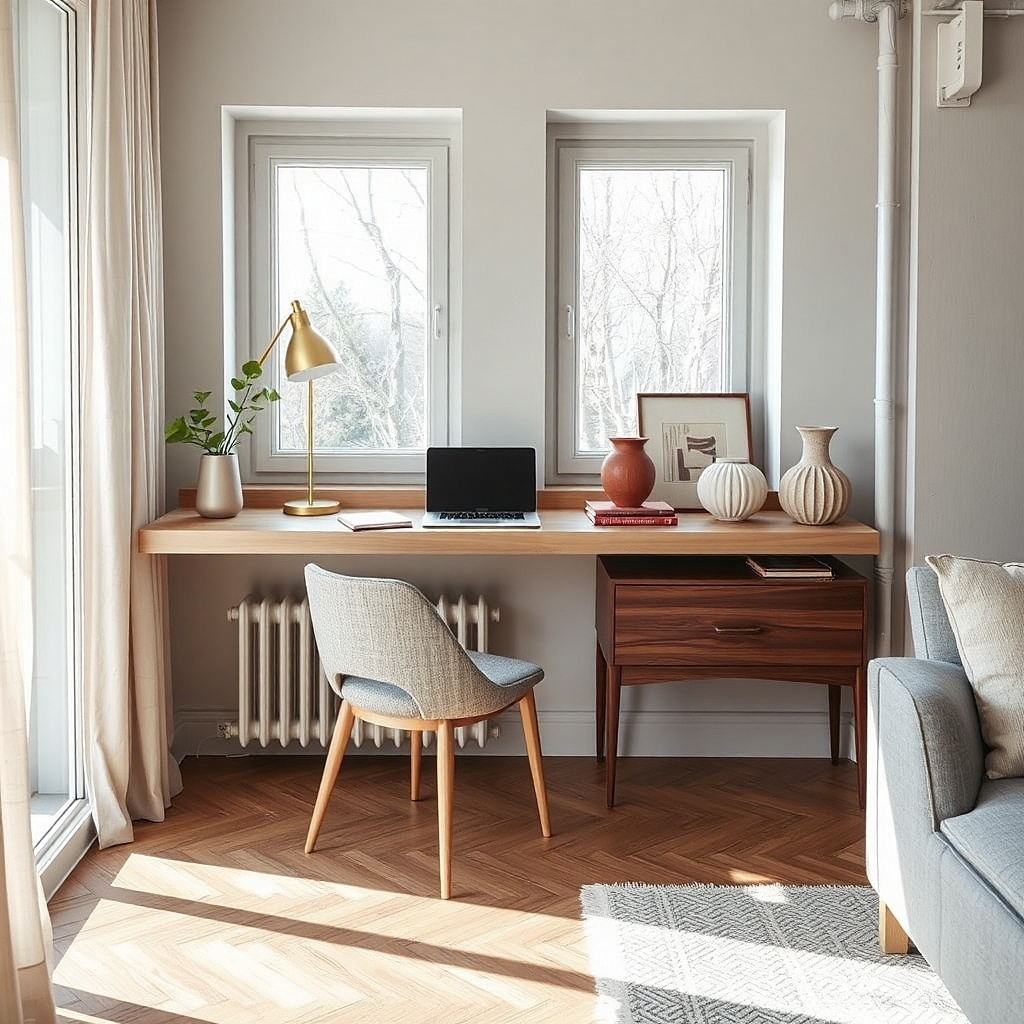
A shallow desk ledge is the smart move if the living room has no spare corner for admin, laptop work, or bill sorting. In a small bay, a top just 14 to 18 inches deep is enough for a laptop, a notebook, and a small lamp. The window keeps the setup from feeling boxed in, and the open floor below keeps the room lighter than a full desk would. Choose a top in white oak, walnut-look laminate, or painted MDF in the same color as the trim. One compact chair with a narrow back keeps the bay useful without turning it into a home office takeover.
Start by checking the sill height. You want the finished desk surface around 29 to 30 inches high, so if the sill is lower than that, this idea is out. Mount a continuous ledger board into studs on the side walls, then fix a cut-to-shape top over brackets or concealed supports. Finish with a cable grommet at one rear corner and a small plug-in wall light or a low-profile table lamp. A DIY version lands around $120 to $350 plus the chair.
Try thisUse a chair that tucks fully under the ledge and stays under 20 inches wide. That one choice keeps the bay from reading as crowded.
Common mistakeDo not add upper shelves across the glass line because they kill the airy look that makes this setup work.
3. Two slipper chairs and a drink table
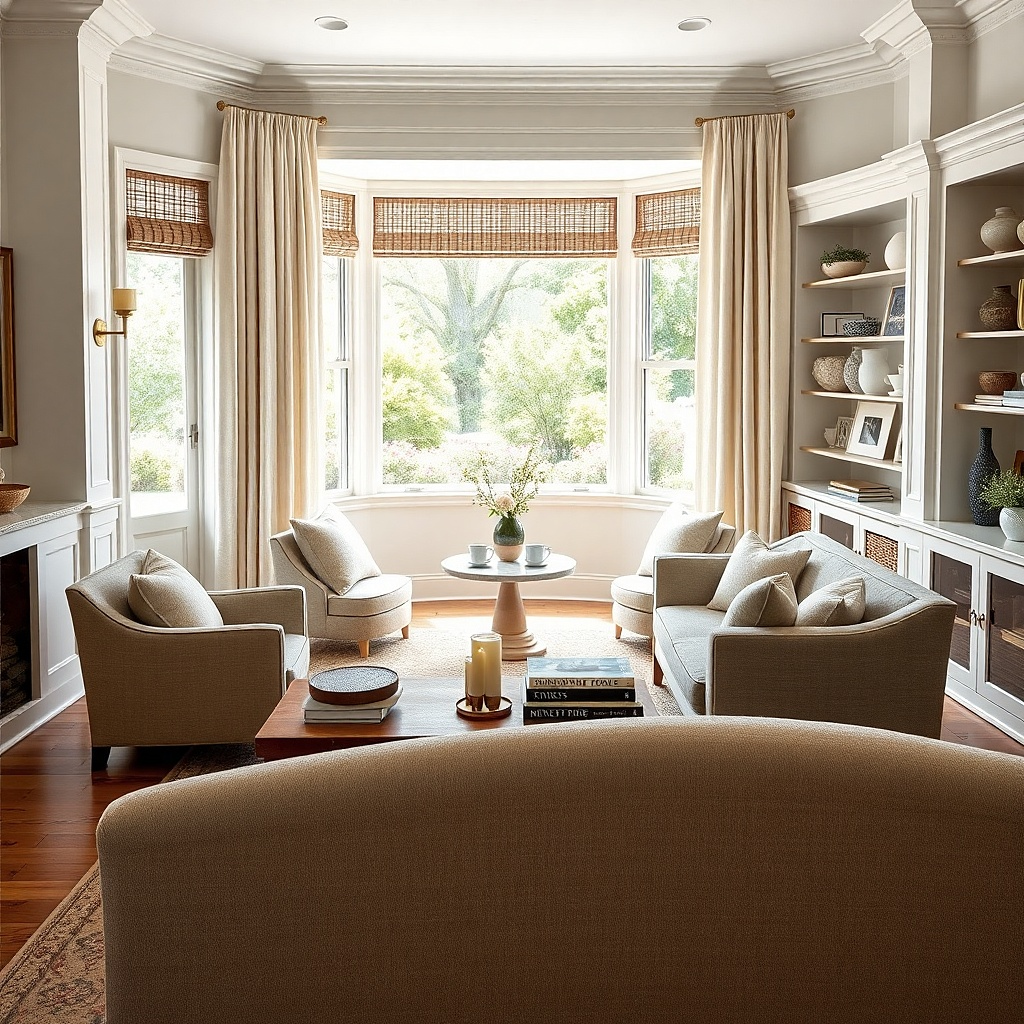
If the bay is at least 48 inches wide, two small armless chairs create a polished conversation spot without the bulk of accent chairs with wings or rolled arms. Slipper chairs sit low, leave more glass visible, and fit the geometry of a small bay better than oversized lounge seating. Put a tiny round drink table between them in blackened steel, dark wood, or honed stone. The setup looks balanced from across the room and gives the bay a social purpose instead of leaving it as circulation space. This works especially well in living rooms where the main sofa already faces a TV and the bay can become a second zone.
Start with chairs no wider than 24 inches each and keep the seat depth around 22 inches so the room still has breathing space. Place them angled slightly inward with 8 to 10 inches between arms or seat edges, then center a table 10 to 12 inches wide. Add one floor-length curtain panel stack on each outer edge of the bay to soften the lines behind the chairs. Budget about $500 to $1,400 total depending on upholstery and table material.
Try thisChoose chairs with exposed legs so you can see floor under them. That little gap keeps the bay from feeling plugged up.
Common mistakeAvoid barrel chairs here unless the bay is deeper than 30 inches because the curved backs eat space fast.
4. Wall-to-wall curtain track with soft linen panels
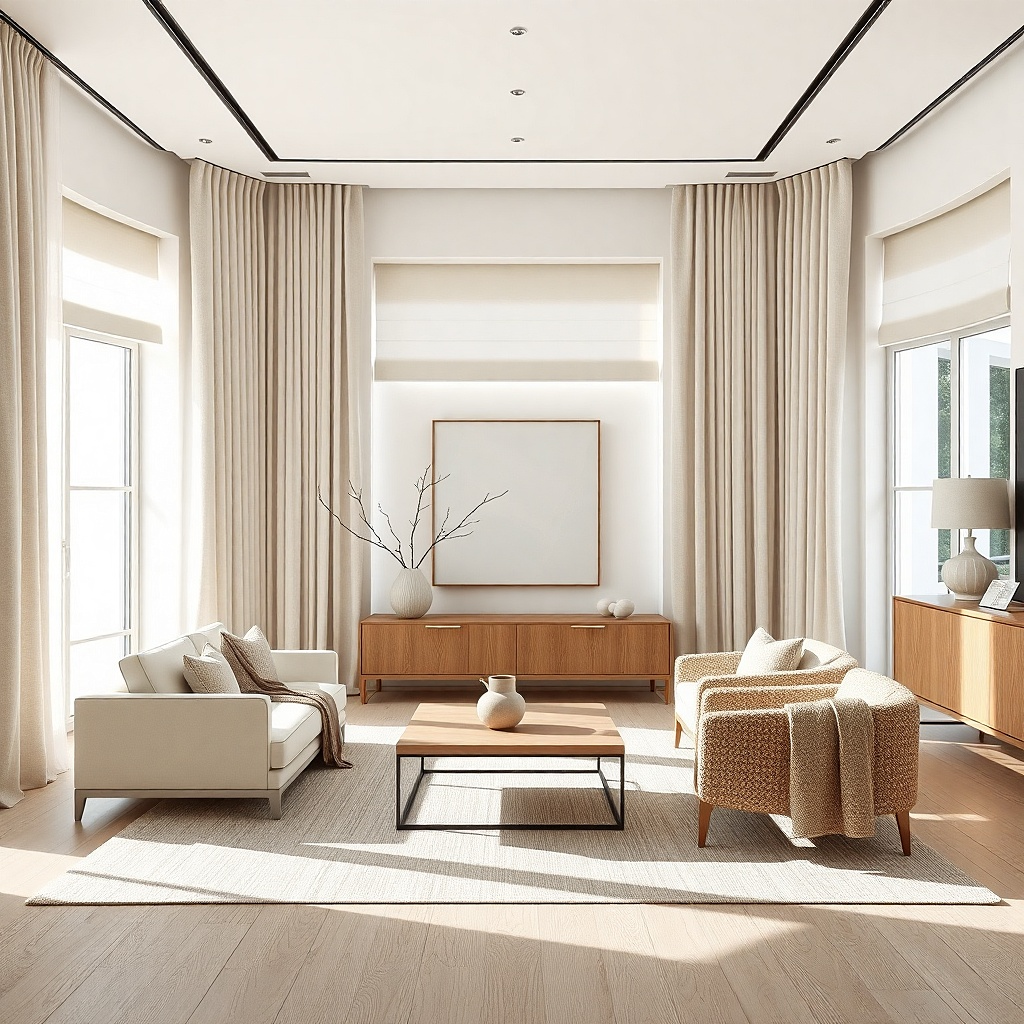
This idea changes the whole room even if you add no furniture at all. A ceiling-mounted track that spans the full width of the bay and a little beyond makes the architecture look taller, straighter, and more expensive. In a small living room, off-white, flax, mushroom, or pale greige linen-blend panels soften hard window angles and hide visual clutter from the street. The bay feels bigger because the eye reads one broad draped wall instead of several chopped-up window sections. It is one of the fastest fixes for a small bay that looks busy or dated.
Start by mounting a bendable or segmented ceiling track 3 to 6 inches out from the window line so the curtains clear handles and sills. Use panels that just kiss the floor and aim for fabric width equal to about 1.8 to 2 times the total track width so the folds look full instead of skimpy. If privacy matters, add a simple roller shade inside each window frame and keep the drapery purely decorative. A good track-and-panel setup costs about $180 to $700 depending on width and fabric.
Try thisPaint the track the same color as the ceiling if it does not already match. The hardware should disappear.
Common mistakeSkip short curtains that stop at the sill because they make a bay look stunted.
5. Picture ledge wraparound for art and objects
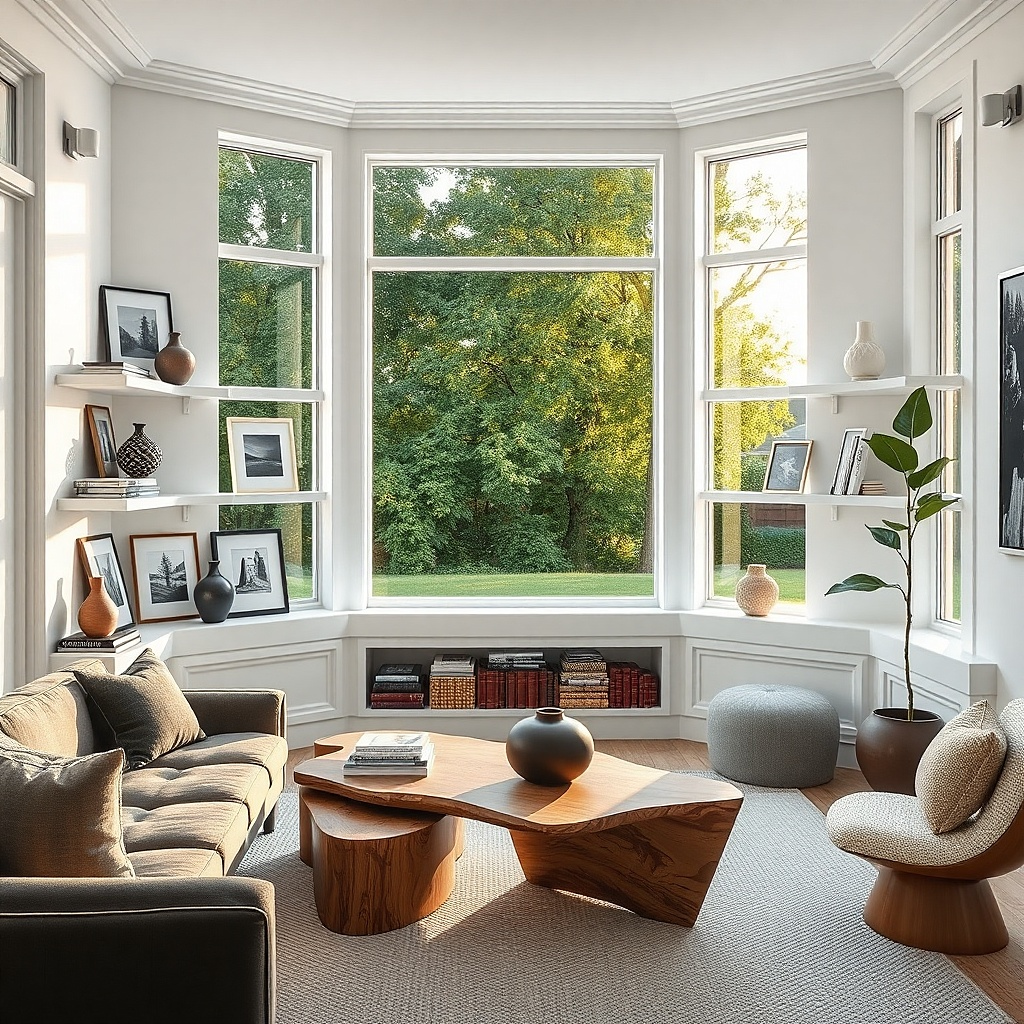
A wraparound picture ledge turns a shallow bay into display space without the heaviness of cabinets or shelves. The key is restraint. One or two slim ledges, 3.5 to 5 inches deep, are enough for small framed art, a smoked glass vase, or a pair of matte ceramic pieces. In a modern living room, the ledges look best in the same paint color as the trim or in a wood tone that repeats elsewhere in the room. This setup gives the bay a finished look while keeping the floor open.
Start by deciding whether the ledge sits at sill height or a bit below it. Cut the ledges to follow each bay angle, then screw them into studs or use heavy-duty anchors if the load stays light. Keep the objects sparse and vary height, but keep the color palette tight — black frames, warm white mats, sand ceramics, smoked amber glass. Materials are inexpensive here, around $60 to $180 if you paint MDF or buy ready-made ledges and trim them to fit.
Lean one larger frame at the center pane and place smaller pieces toward the angled sides. That layout looks calmer than equal-size frames all the way across.
Do not crowd the ledges with tiny souvenirs because the bay will read as clutter from every seat in the room.
6. Radiator cover bench with slatted front
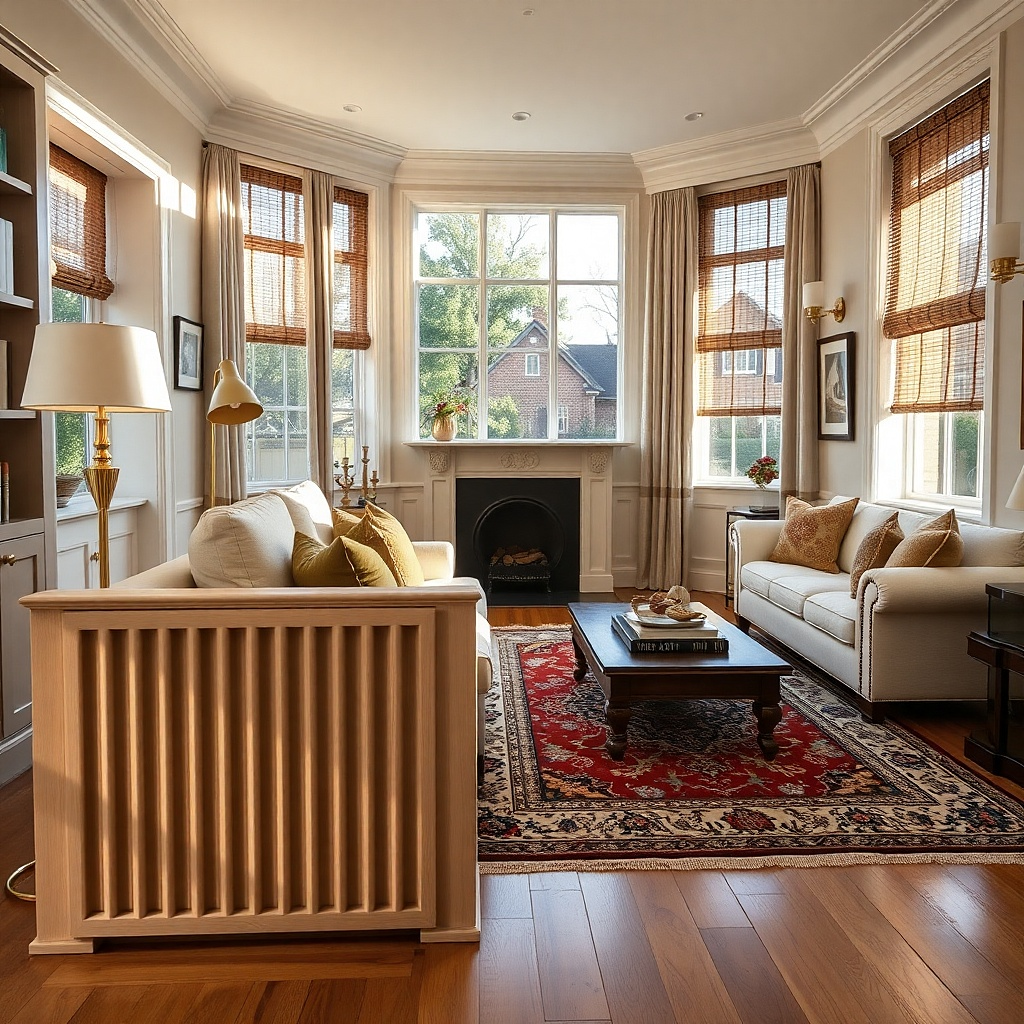
A radiator in the bay does not have to ruin the layout. A custom cover with a vented slatted front and a solid top gives you a bench, a cleaner look, and a safer surface for books or a tray. Vertical wood slats painted to match the wall look sharper than punched metal grilles in most modern living rooms. The piece hides a fussy utility element and turns it into something useful. This is one of the best fixes for older homes where the bay has charm but the radiator steals the whole view.
Start by measuring the radiator and leave at least 2 to 3 inches of clearance around the sides and top for airflow. Build a removable frame in MDF or plywood, then add a slatted front with consistent spacing of about half an inch to three-quarters of an inch between slats. Cap it with a top 8 to 12 inches deep if the bay is shallow, or 14 to 16 inches if the bay has enough room to sit. Expect material costs around $150 to $450 depending on size and whether you use paint-grade wood or oak.
Use magnetic catches or hidden clips on one panel so you can remove it for valve access and cleaning.
Never wrap a radiator in a solid box with no venting because you lose heat and risk warping the top.
7. Single sculptural lounge chair on the center pane
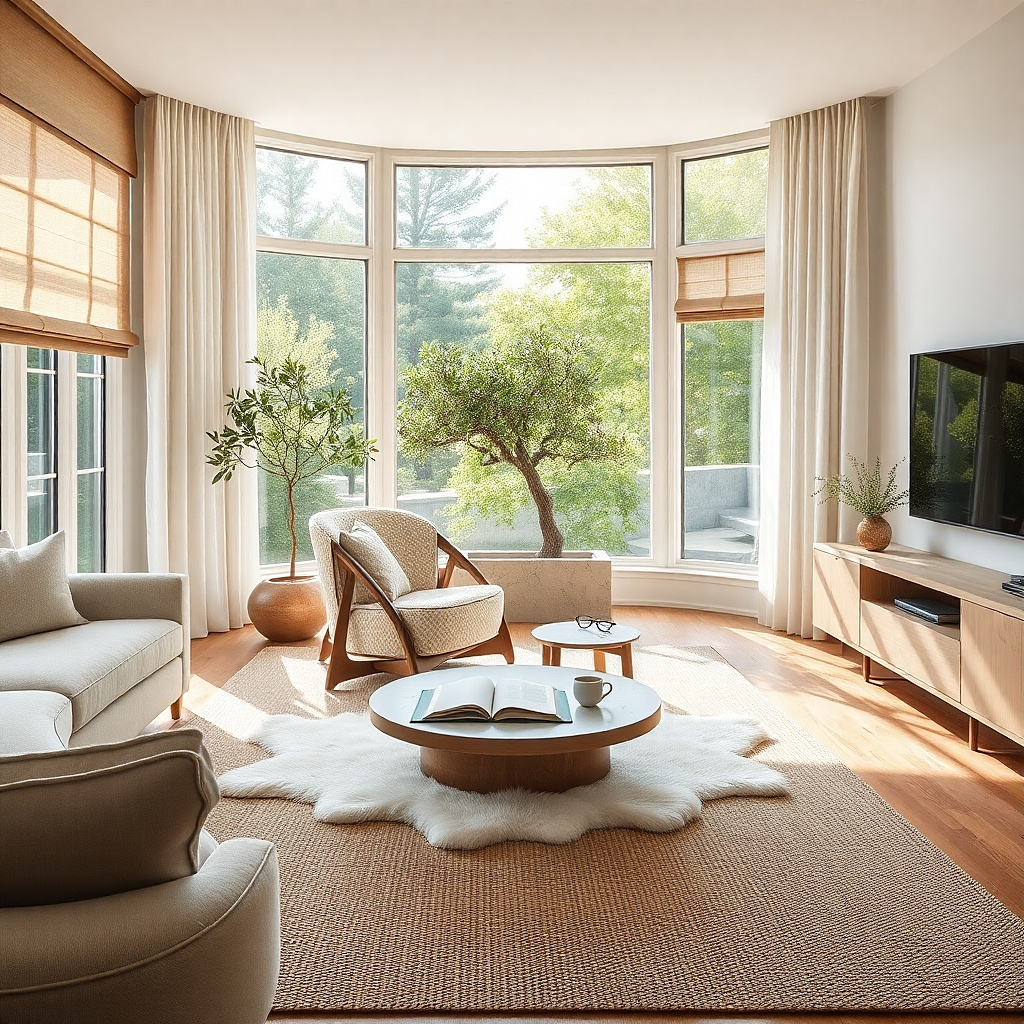
One chair is better than two if the bay is narrow and you want the room to feel styled, not stuffed. Pick a chair with a clean silhouette — a wood frame sling chair, a low upholstered tub chair with a tight back, or a compact swivel under 30 inches wide. The empty space around it is part of the look. Add one small side table and stop there. This setup gives the bay a strong focal point and a usable reading seat without blocking light or circulation.
Start by centering the chair on the largest middle section of the bay and pull it 4 to 8 inches off the window so curtains or shades still move freely. Add a side table no more than 12 to 14 inches across and keep the top below the arm height of the chair. If you want a lamp, use a plug-in wall sconce on the side wall rather than a floor lamp base in the bay. This is easy to pull off in an afternoon, with costs from about $250 to $1,200 depending on the chair.
Try thisGround the chair with a small sheepskin, flatwoven rug, or a 3 by 5 rug that overlaps the main living room rug by a few inches.
Common mistakeAvoid a recliner or oversized reading chair with broad padded arms because it swallows the bay.
8. Monochrome plant shelf with hidden saucers
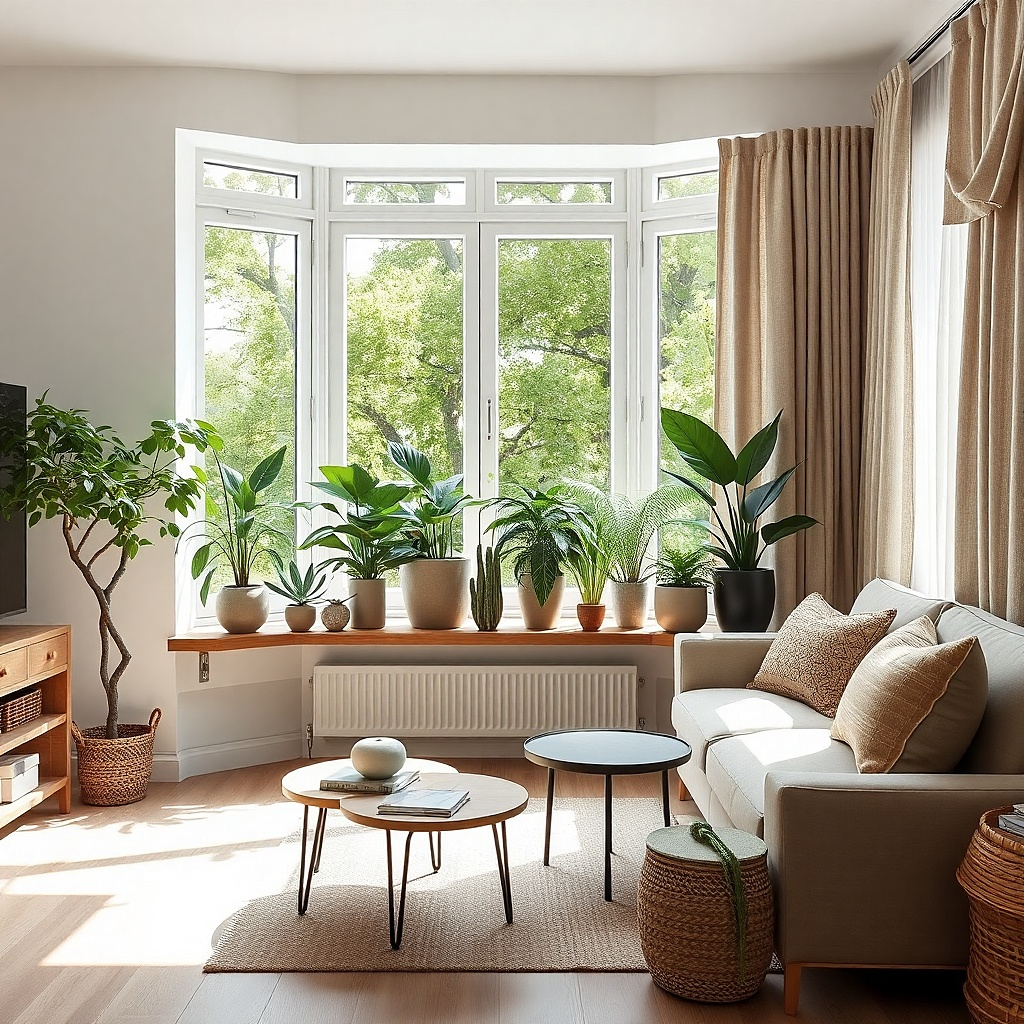
If you want the bay to look alive without adding furniture, a slim plant shelf works beautifully. The trick is to keep the containers disciplined. Use all black, all warm white, or all stone-colored pots so the leaves become the star. One continuous shelf below the sill gives trailing plants a place to spill slightly into the glass line while upright plants add height at the side panes. This works best in living rooms that already have enough seating and need softness more than storage.
Start with a shelf 6 to 8 inches deep, anchored securely across the bay at a height that still lets you reach the latch hardware. Add waterproof trays or hidden saucers under every pot before you style the shelf. Group plants by shape rather than random size — one trailing pothos, one upright snake plant, one medium rubber plant, then leave blank space. You can build this for $50 to $160 plus plants and pots.
Try thisUse one grow bulb in a nearby lamp if the bay gets weak winter light. It keeps the shelf from turning into a graveyard by February.
Common mistakeSkip lots of tiny pots lined up edge to edge because they look fussy and collect dust fast.
9. Hidden toy storage bench for a family living room
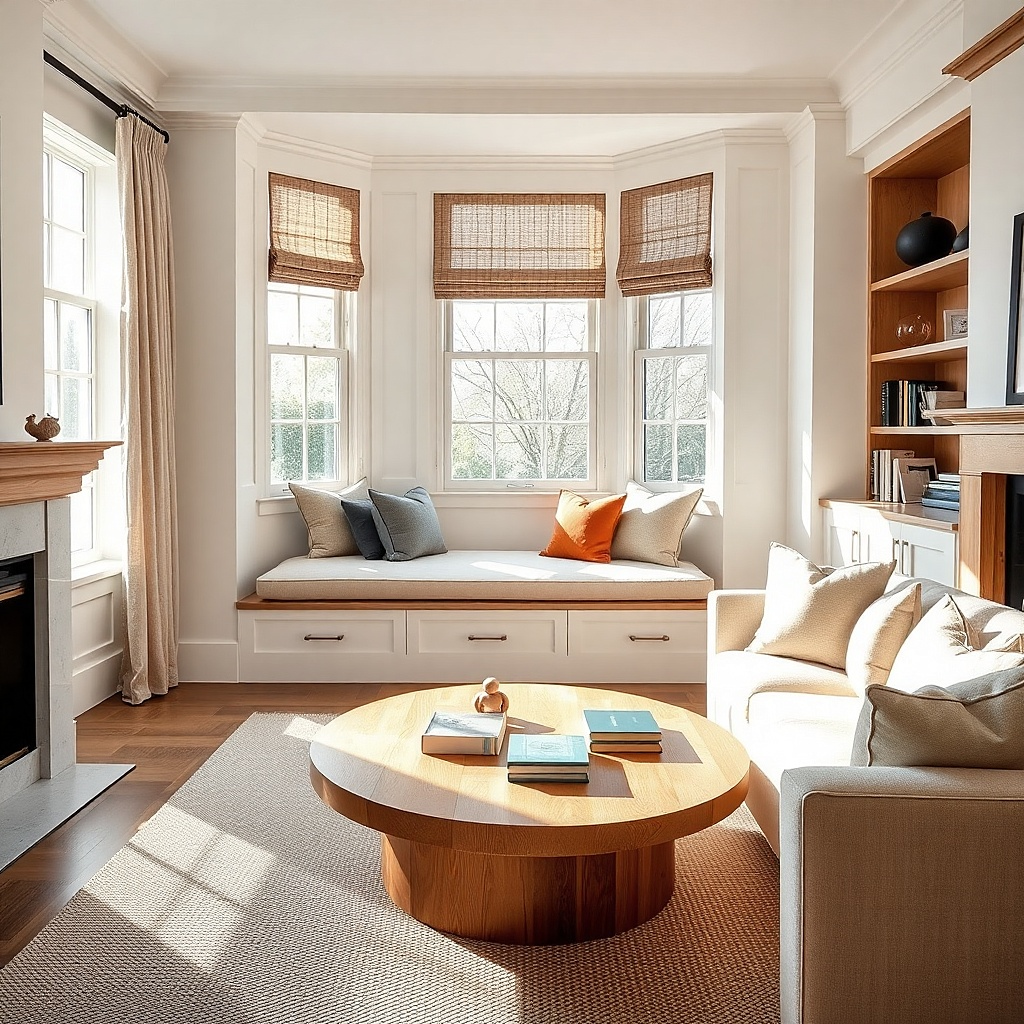
A small bay in a family living room should solve mess, not add another styling problem. A storage bench with deep lift-up compartments hides board books, toys, chargers, and spare throws while still looking calm from the sofa. Keep the front simple — flat panels, finger pulls, or push latches. Add one bench cushion and two larger pillows instead of six small ones. The bay stays pretty in photos and still handles the daily churn of a real room.
Start by dividing the bench interior into two or three compartments so contents do not slide into one giant heap. Use soft-close lid stays or toy-box hinges so the tops do not slam on fingers. Choose a performance fabric cushion in a tight weave, such as basketweave polyester or solution-dyed acrylic, in sand, pebble, or warm gray. Material cost lands around $400 to $1,000 depending on size and cushion quality.
Try thisLabel the inside edge of each compartment with a small printed tag. The outside stays clean, but everyone knows where things go.
Common mistakeDo not use open cubbies in the bay if the goal is a calm modern look because visible toy bins read busy immediately.
10. Bay banquette with a pedestal table for coffee or cards
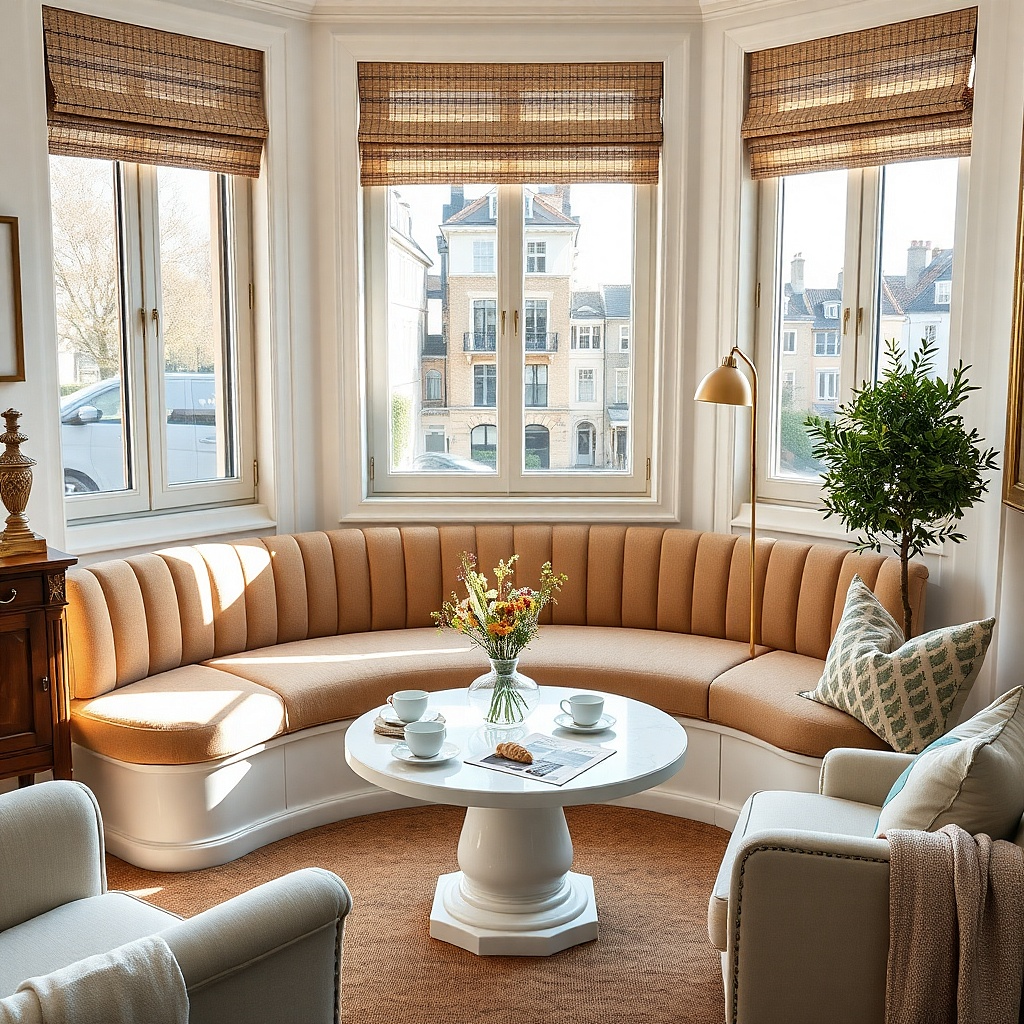
This setup works for living rooms that need a second function without looking like a dining room accident. A low banquette hugging the bay and a small pedestal table create a compact spot for morning coffee, puzzles, or a laptop. The pedestal base matters because four table legs fight the tight footprint. Upholster the seat in a textured neutral and choose a table top in marble-look laminate, oak, or painted wood with a matte finish. The whole area looks polished and intentional, especially in apartments where every square foot has to do more than one job.
Start with a bench depth around 17 to 19 inches and keep the table diameter between 24 and 30 inches so knees still have room. Position the table so the edge sits about 10 to 12 inches from the seat front. Add one loose back cushion on the center pane if you want longer sitting comfort, but keep the side sections cleaner. A custom banquette and compact table can run from about $500 on the low end to $1,800 with upholstery and a better pedestal base.
Try thisPick a pedestal base with enough visual weight to anchor the bay. Spindly cafe bases look lost here.
Common mistakeAvoid a table larger than 30 inches across in a small bay because circulation gets awkward fast.
11. Window seat daybed in warm white and camel
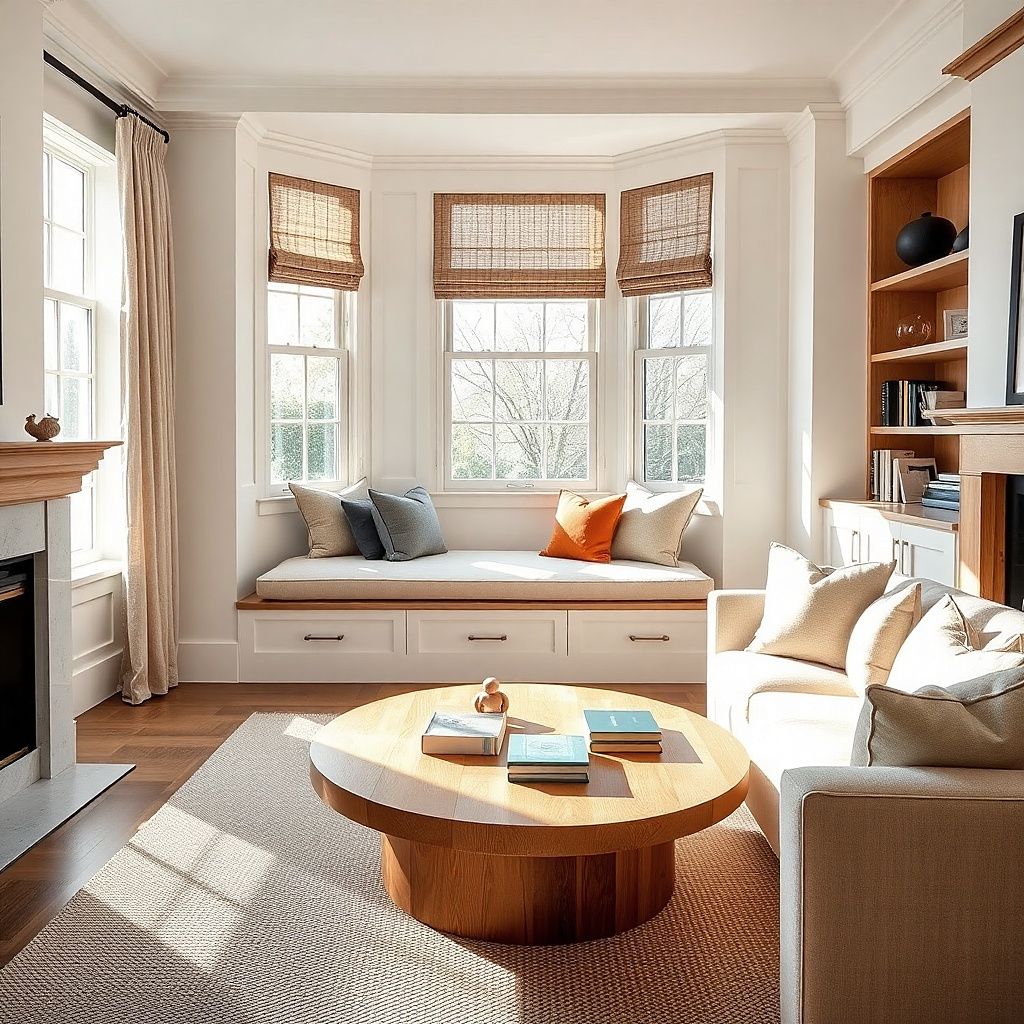
A daybed-style seat gives the bay a soft, loungey look that suits living rooms with a calm modern palette. Instead of a standard bench cushion, use a thicker mattress-style pad, around 4 inches deep, with a boxed edge. Warm white on the base and camel, tobacco, or rust accent pillows give the space shape without loud contrast. This setup looks beautiful in photos because the planes stay simple and the texture does the work. It is best for bays deep enough to actually perch sideways with a book or stretch your legs slightly.
Start by building a solid platform across the bay at about 16 to 17 inches high so the thicker cushion does not push the final seat too tall. Order a custom foam cushion cut to the bay angles and wrap it in a washable slipcover with piping only if the room needs a sharper line. Add two or three pillows max, one lumbar and one square at most, to keep the profile controlled. Budget about $450 to $1,200 depending on whether the base is built-in and how custom the cushion is.
Try thisChoose a slightly nubby fabric like cotton-linen or a performance bouclé alternative with a tight loop. It catches light nicely without looking flat.
Common mistakeSkip bright patterned cushions because they make the bay feel busy and smaller.
12. Black-framed library sconces over a reading bench
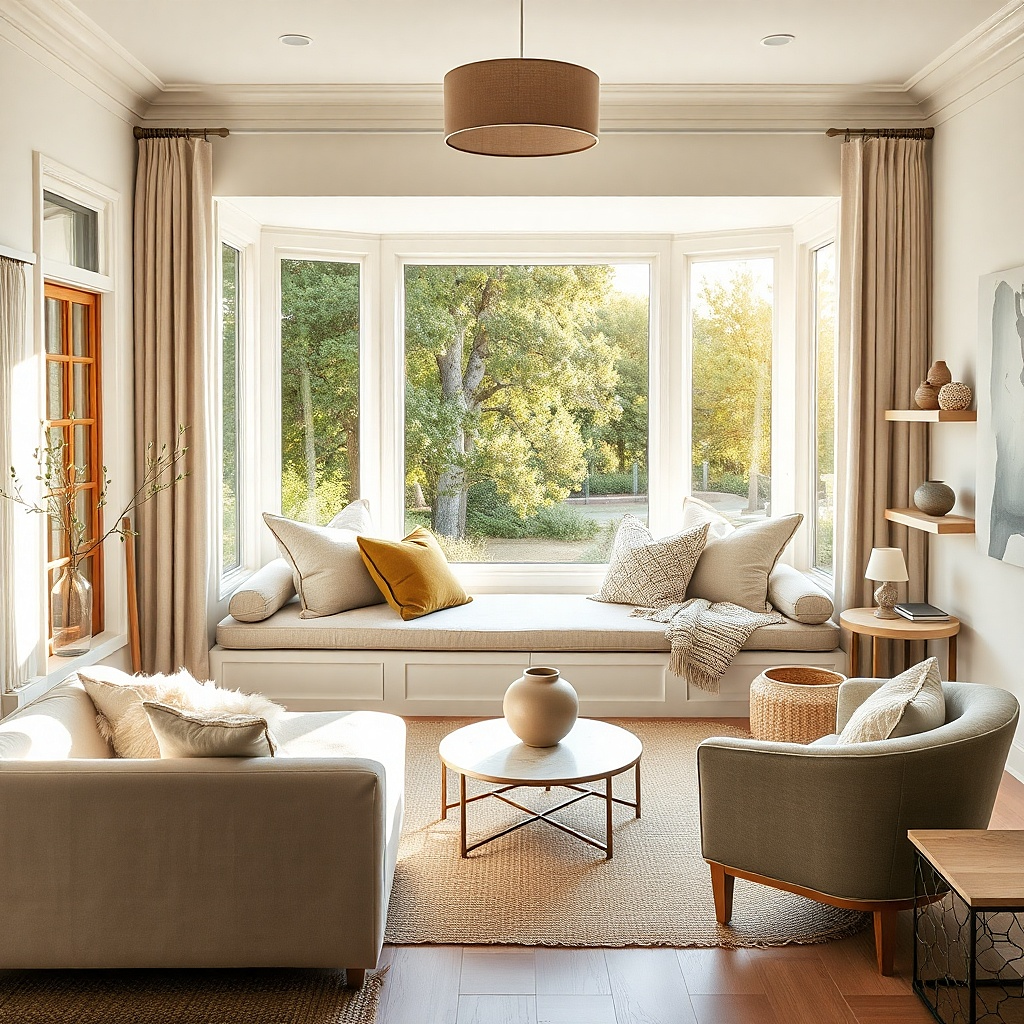
Lighting is what turns a bay from daytime pretty to actually useful at night. Two hardwired or plug-in sconces mounted on the side walls of the bay frame the window and make a simple bench feel finished. Black, bronze, or aged brass with a compact shade gives enough contrast to define the area without adding floor clutter. The light lands where you sit, not up in the ceiling where it does nothing for reading. Visually, the bay gains structure and a stronger outline after dark.
Start by placing the sconces 48 to 60 inches above the bench seat, depending on the fixture height and whether the shades are opaque or open. Keep them symmetrical and choose a projection shallow enough that nobody bumps them while sitting down. If hardwiring is not realistic, use plug-in sconces with paintable cord covers and route the cords tightly along trim lines. Expect about $120 to $500 for a pair plus installation if needed.
Try thisUse warm 2700K bulbs and avoid anything cool or blue. Bay windows look harsh under cold light.
Common mistakeDo not rely on one overhead ceiling light if the bay has seating because it leaves faces in shadow and the nook feels unfinished.
13. Tone-on-tone roman shades with a bare bench
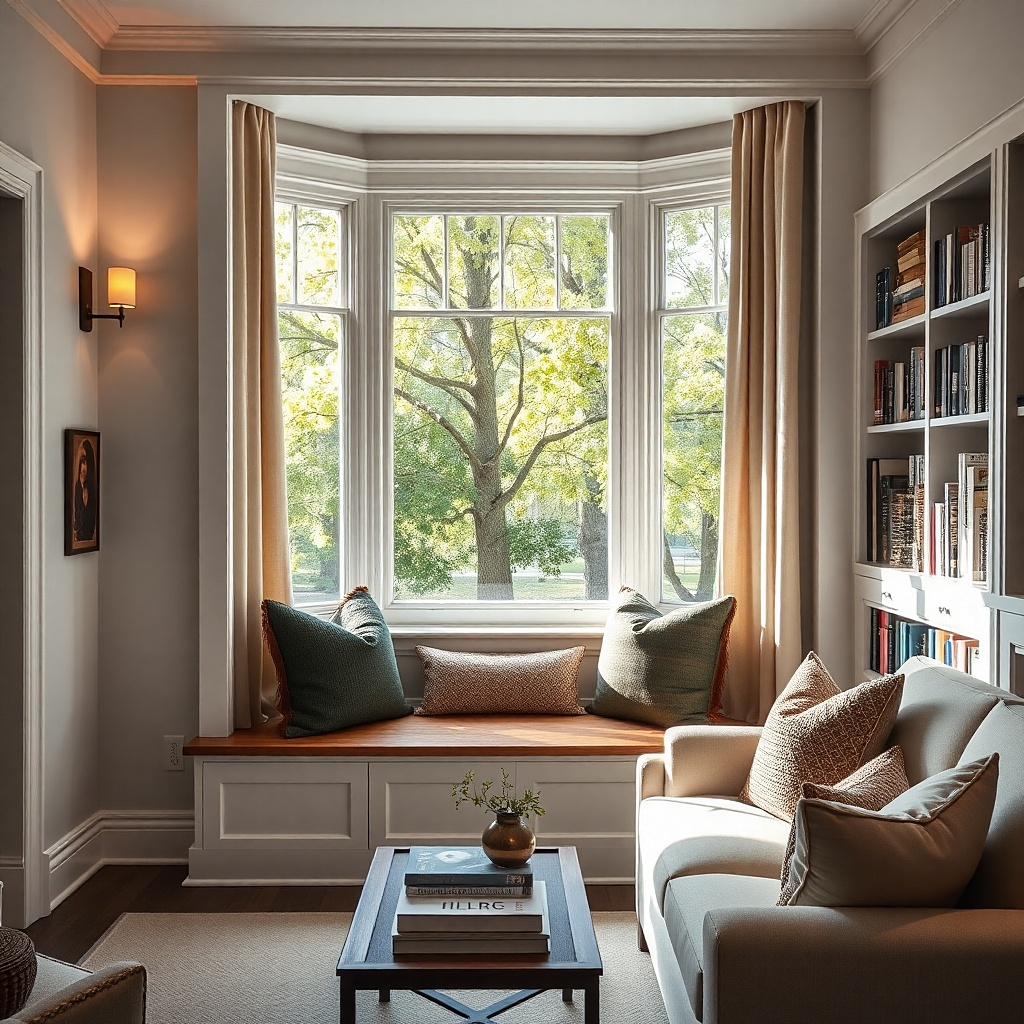
For a cleaner, more tailored look than curtains, roman shades keep the bay crisp and architectural. Flat or relaxed romans in the same color family as the wall — think soft taupe, putty, warm white, or pale olive-gray — calm the angles and keep the room from feeling busy. Pair them with a plain bench or no furniture at all. This is a strong choice in living rooms with low ceilings where drapery would feel heavy. The bay still has softness, but the lines stay neat.
Start by deciding inside mount or outside mount. Inside mount looks sharper if the frames are square and deep enough, while outside mount hides uneven trim and blocks more light. Choose a fabric with some body so the folds stack cleanly, then keep any trim or banding subtle or skip it. Custom shades can run from about $250 to $900 for a small bay set, depending on fabric and mechanism.
Match the shade lining color across all panes so the exterior view from the street looks ordered, not patchy.
Avoid high-contrast patterned romans in a small bay because they chop the window into pieces.
14. Stone-top console ledge for books and a lamp
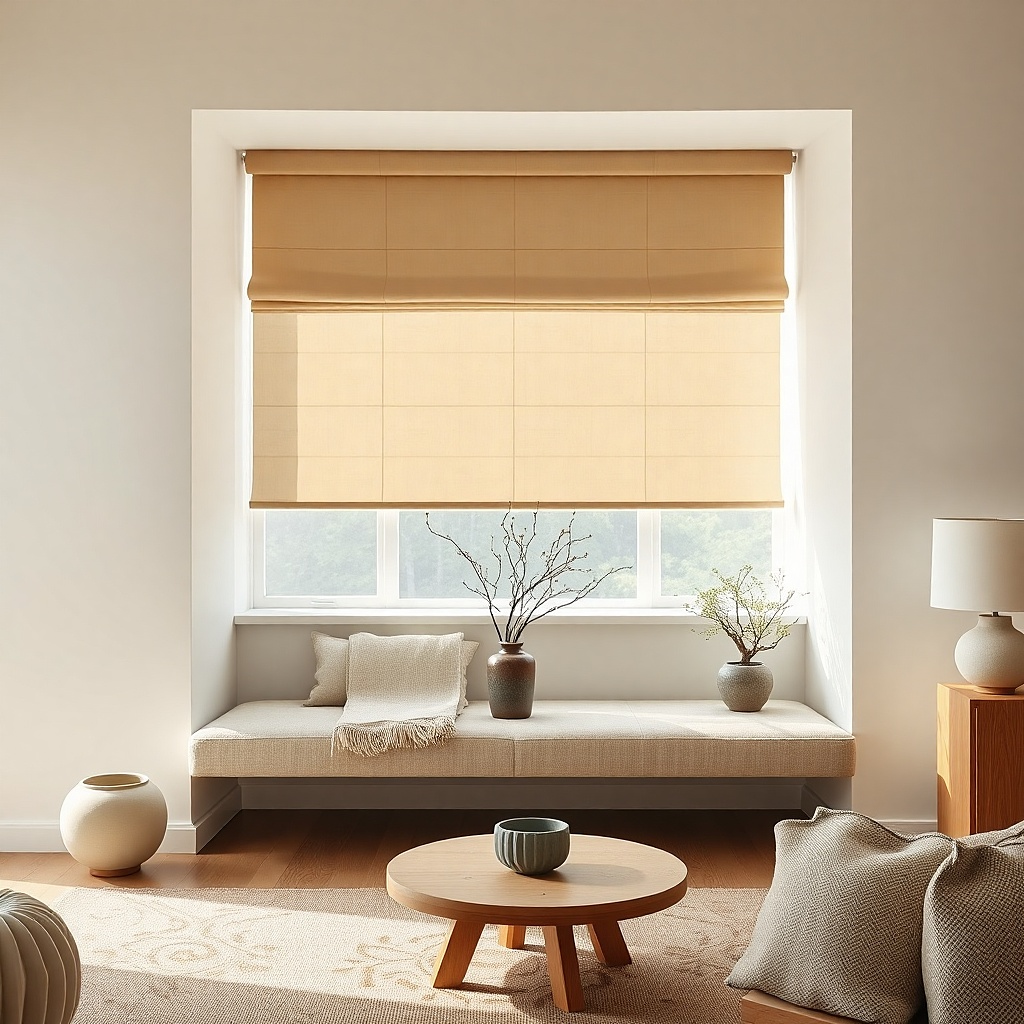
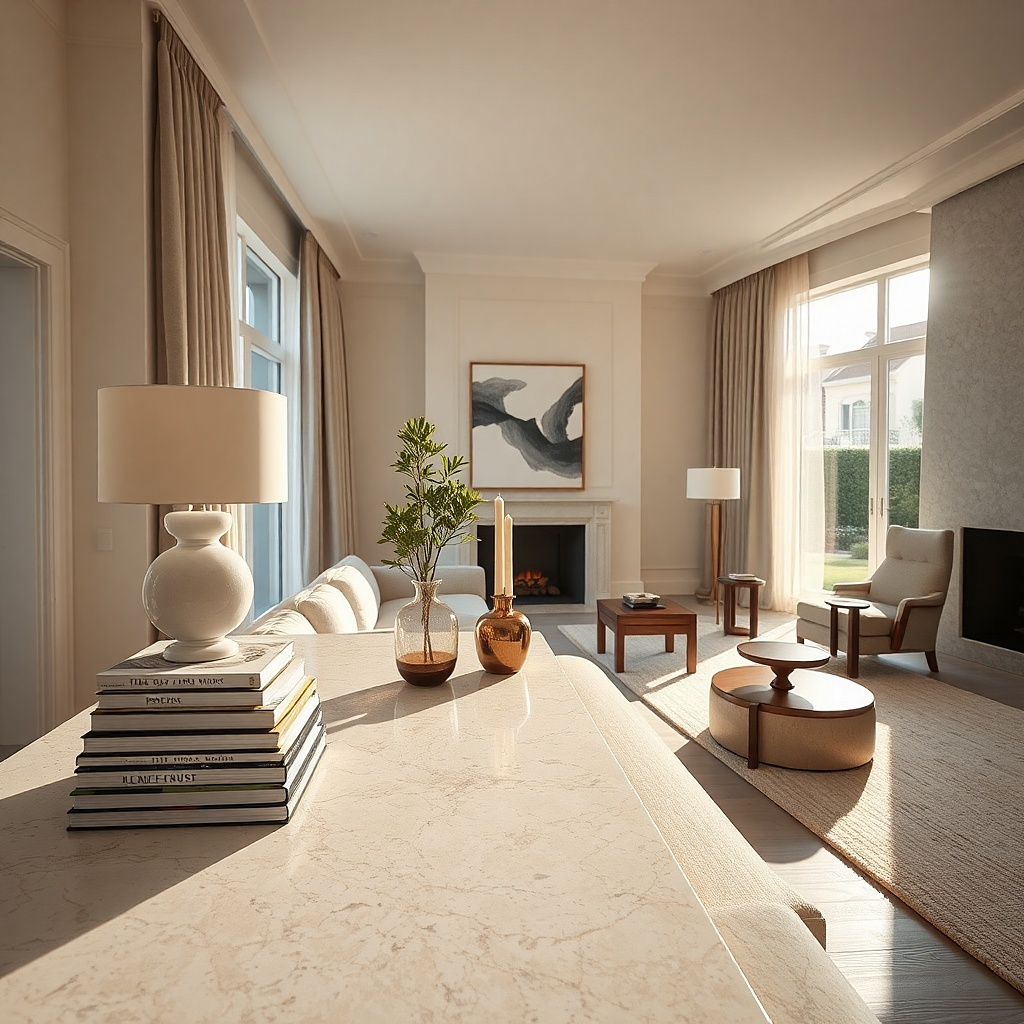
A fixed console ledge is ideal for a bay too shallow for seating but too prominent to ignore. A top in quartz remnant, engineered stone, or even stone-look porcelain gives the bay a clean horizontal line and a bit of weight. Add a low lamp, two stacked books, and one object. That is enough. The stone catches light differently from wood and paint, so the bay reads as a designed moment rather than leftover trim.
Start by measuring the narrowest side of the bay and keep the ledge depth within that limit, usually 8 to 10 inches. Install a painted support frame below, then set the stone top with a slight overhang of about half an inch. Style it with one lamp under 20 inches tall so it does not block too much glass, and keep cords tucked behind the support frame. A remnant top and simple support can cost about $180 to $600 depending on the stone source.
Try thisChoose a lamp with a wide shade and a slim base. You want visual softness without a bulky footprint.
Common mistakeDo not fill the ledge end to end with books because the whole point is to keep the bay light.
15. Full-height bookcases flanking the bay
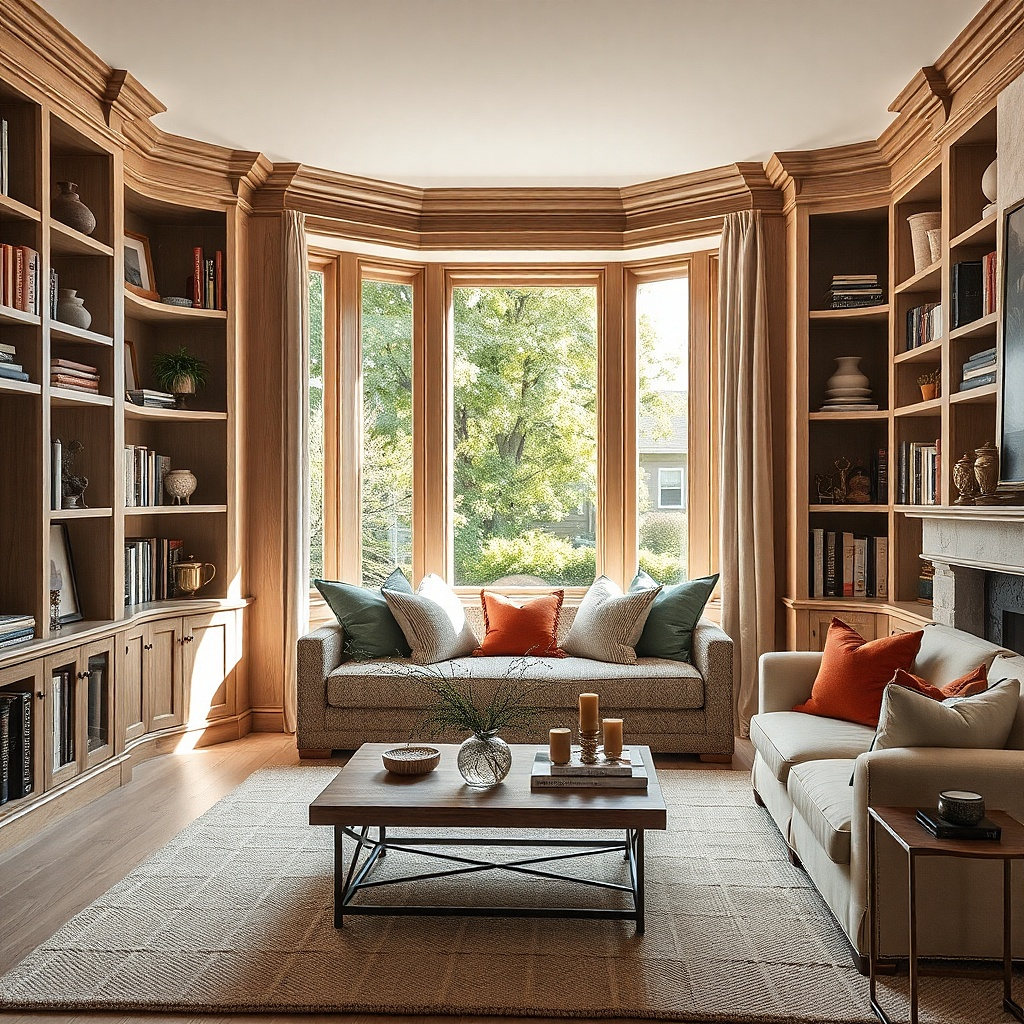
Sometimes the bay itself is fine and the real problem is the dead wall space beside it. Tall bookcases or shallow built-ins on both sides frame the bay and make it look purposeful. In a modern living room, keep them 10 to 12 inches deep, run them close to the ceiling, and paint them the wall color for a quieter effect. The bay becomes the center of a full composition instead of a lonely bump-out. You gain storage where the room can spare it, not where it cannot.
Start by checking door swings, vent locations, and curtain stack space before you commit to width. Build or buy shallow cases, anchor them securely, then add a simple filler strip at the top and sides so they look built in. Style with books, a few larger objects, and blank space instead of stuffing every shelf. Costs vary a lot, but a budget built-in look with ready-made shelves and trim can start around $300 to $900.
Leave the shelves nearest the window less full than the outer shelves. It keeps the bay from feeling visually pinched.
Avoid deep standard bookcases beside a small bay because they pull too much attention and eat floor space.
16. Soft curved rug and round table to counter the angles
Bay windows have a lot of hard geometry. A round table, curved chair, or rug with a softer outline balances that and keeps the room from feeling sharp at every turn. This idea works especially well if the bay has multiple narrow panes and angular trim. A small round pedestal table, a curved slipper chair, or even a scallop-edged wool rug introduces a shape the bay lacks. The contrast makes the window look more intentional because the room is no longer all corners.
Start by choosing one curved element only. In a small living room, one is enough. Place it in the bay and check that the walkway around it stays at least 24 inches clear, then repeat the curve once elsewhere in the room with a lamp shade or coffee table edge. This is more of a styling move than a build, and it can cost as little as $80 for a small rug or a few hundred for a compact round table.
Try thisIf your sofa and media unit are both boxy, the bay is the right place to introduce the first rounded shape.
Common mistakeDo not mix several cute curved pieces in one small bay because the area starts to look themed.