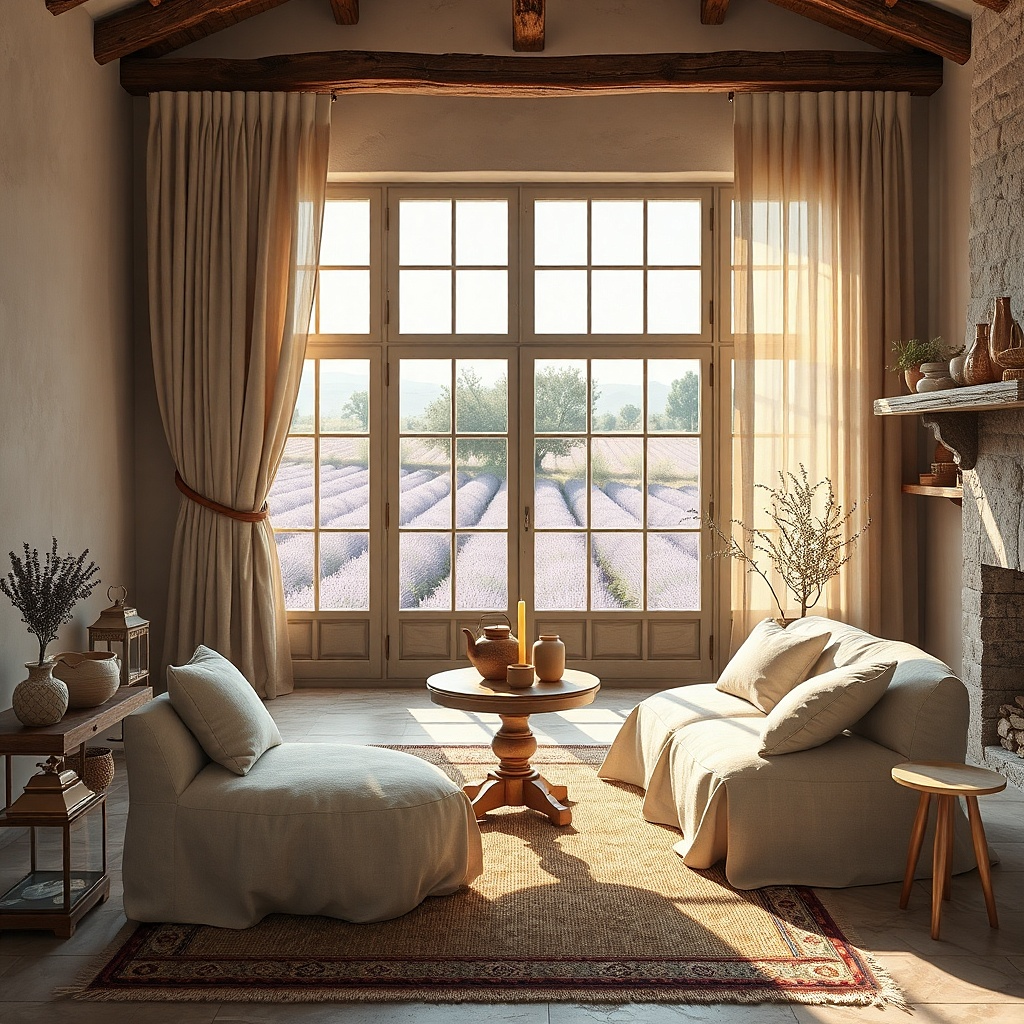
1. Flax linen pinch pleats with antique brass rods
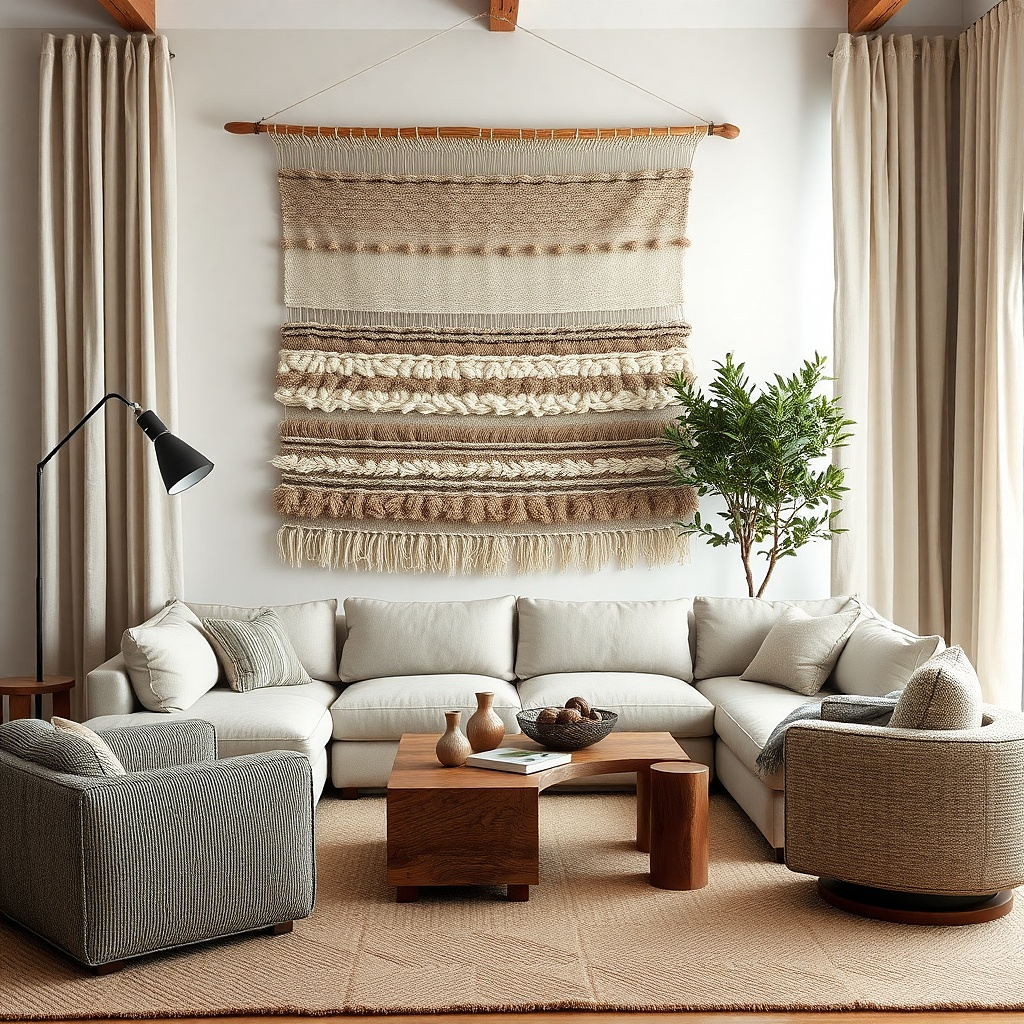
This is the safest strong choice for a luxury farmhouse living room because it gets the tone exactly right. Use lined flax or flax-look linen in a warm oatmeal shade, not gray-beige and not bright cream. The pinch pleats give the top edge structure, so the fabric falls in long columns instead of bunching into a casual mess. Antique brass hardware adds warmth that black rods do not. This pairing suits living rooms with white walls, pale oak tables, natural jute, and one or two darker wood pieces that need softening.
Try thisPick a lining in warm ivory, not bright white. It keeps the curtain color from turning cold when daylight hits from behind.
Start by mounting a 1 inch diameter antique brass rod 8 inches above the window frame and 10 inches past each side. Then order lined pinch-pleat panels long enough to either kiss the floor or break by 1 inch, with each panel 50 to 54 inches wide for a standard double window. Finally, steam the folds, train the pleats with loose ribbon for two or three days, and add simple brass rings if the panels are made for hooks. Expect to spend about $150 to $350 for the full setup if you choose mid-range lined panels and solid metal hardware.
Common mistakeSkip thin unlined linen because it wrinkles hard and reads unfinished in a main living room.
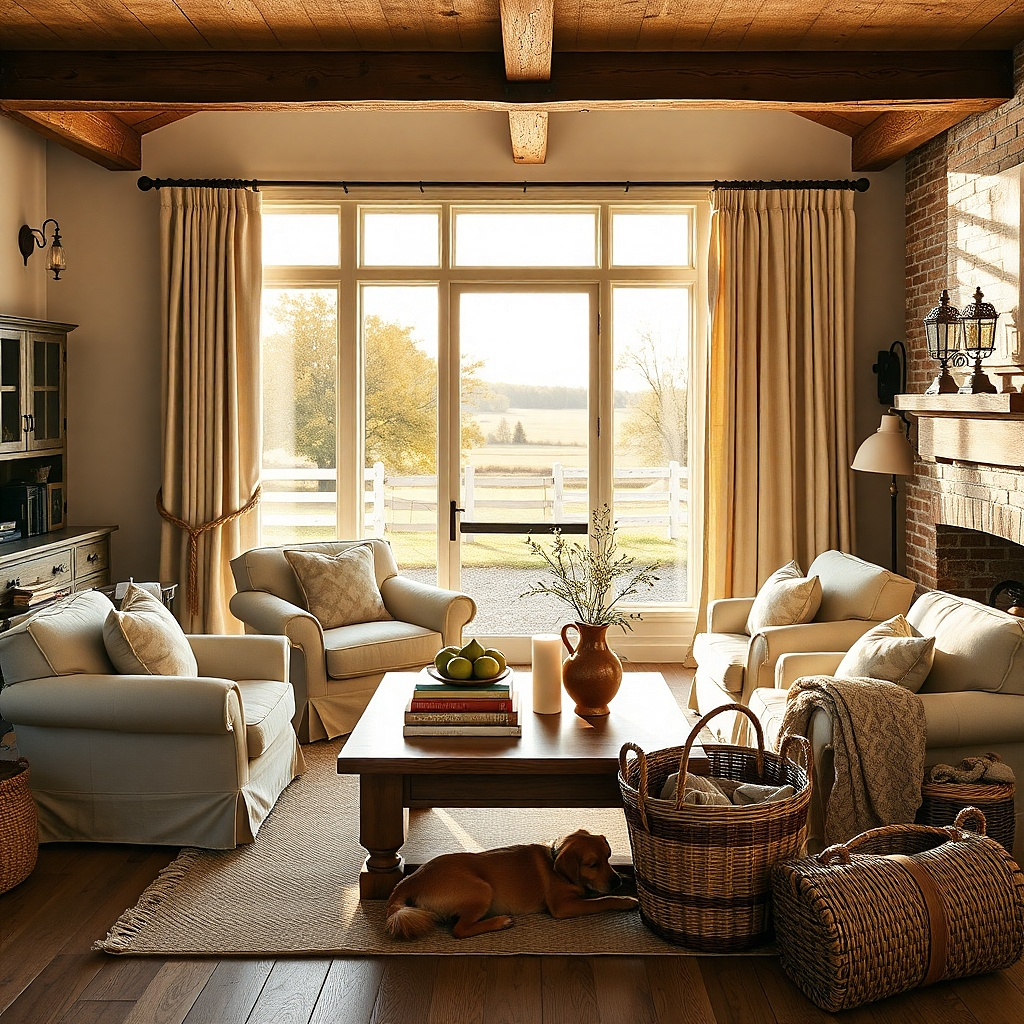
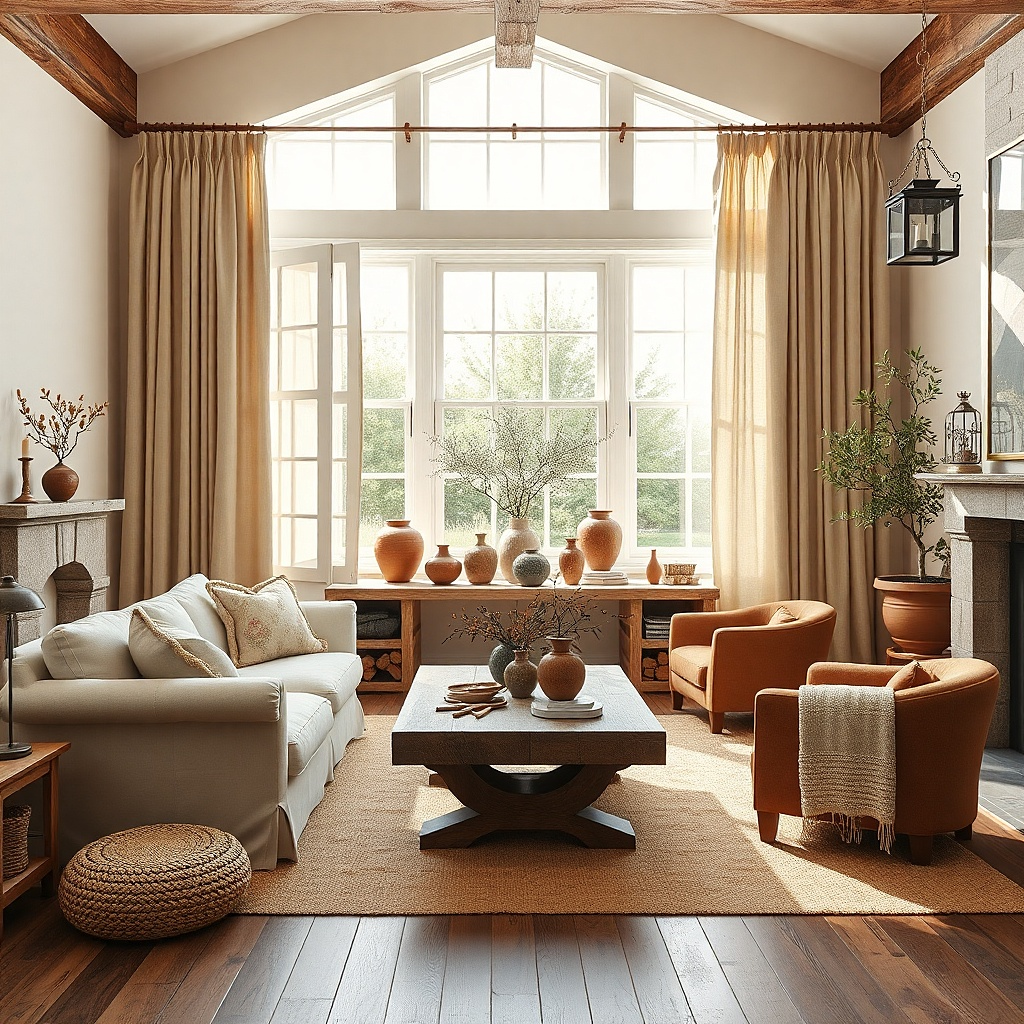
2. Warm ivory cotton velvet for a softer farmhouse edge
Velvet is the answer if the room feels flat, echoey, or too stark. In a farmhouse setting, the trick is using washed cotton velvet in warm ivory or light putty rather than jewel tones or glossy hotel-style fabric. The nap catches evening lamplight and gives the room a mellow glow that plain cotton cannot match. It also balances rougher finishes like reclaimed wood, brick, and stone hearths. This works best in larger living rooms, especially ones with higher ceilings or oversized windows that need visual weight.
Try thisKeep velvet off dusty floors by aiming for a clean kiss length if you have pets or a high-traffic seating area.
Start with a substantial rod because velvet is heavy — 1 inch to 1.25 inch metal with center support brackets for wide spans. Then choose lined cotton velvet panels with either Euro pleats or ring-top drapery hooks, and size them so the stack still clears at least two-thirds of the glass when open. Finally, use a handheld steamer to release packing lines and brush the pile downward so both panels catch light the same way. A good-looking set with sturdy hardware lands around $220 to $500 depending on width.
Common mistakeDo not pair ivory velvet with bright chrome rods because the contrast looks cold and wrong for farmhouse.
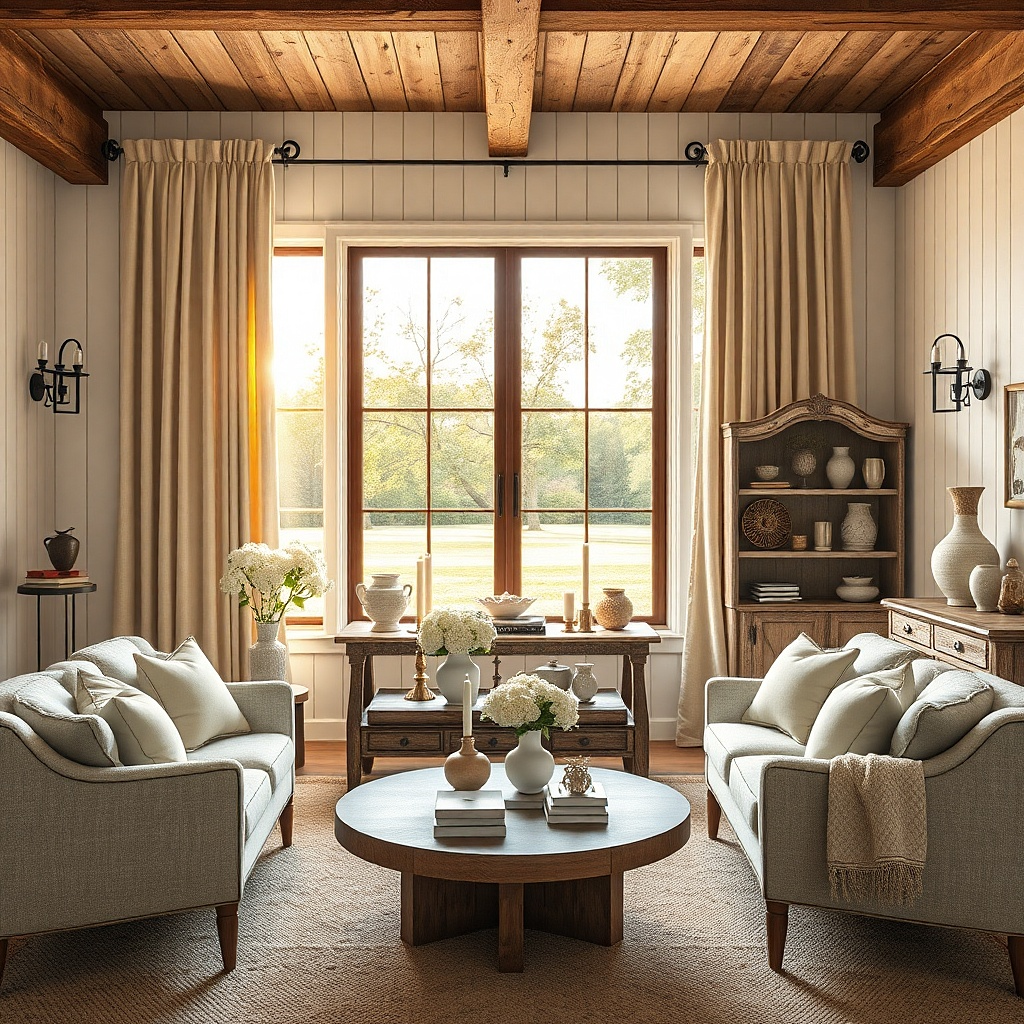
3. Mushroom striped panels with a quiet grain-sack feel
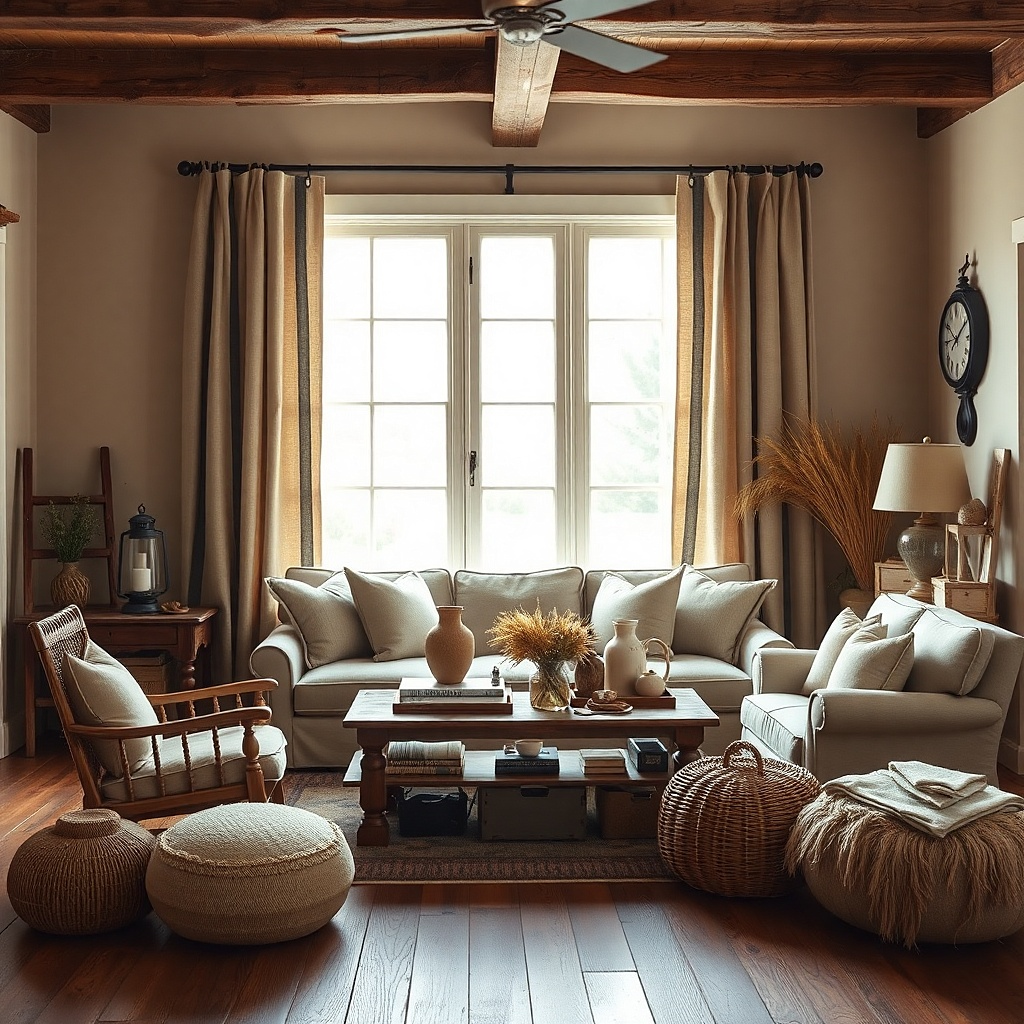
A subtle vertical stripe gives farmhouse character without shouting for attention. The best version uses a warm mushroom ground with narrow charcoal, taupe, or faded tobacco stripes spaced far apart, more like old grain-sack fabric than cottage cafe curtains. Vertical striping also helps low ceilings because the eye reads height first. Keep the stripe soft and slightly irregular so the room still feels relaxed. This idea suits neutral living rooms that need pattern but already have enough texture from baskets, wood, and woven shades.
Try thisChoose stripes with a warm background. A cool white ground turns the whole room sharper and less inviting.
Start by checking scale. For a standard living room window, stripes around 0.25 to 0.5 inch wide look calm, while wider ticking stripes start feeling too country. Then hang the panels from a dark bronze or antique brass rod using back tabs or hidden hooks so the top line stays clean. Finally, repeat the stripe somewhere small — one lumbar pillow or a bound edge on a throw — and stop there. Budget about $120 to $280 for quality striped panels plus hardware.
Common mistakeSkip bold navy ticking stripes unless the room is very edited, because they push the space toward theme decor fast.
4. Double rods with airy sheers behind heavier front panels
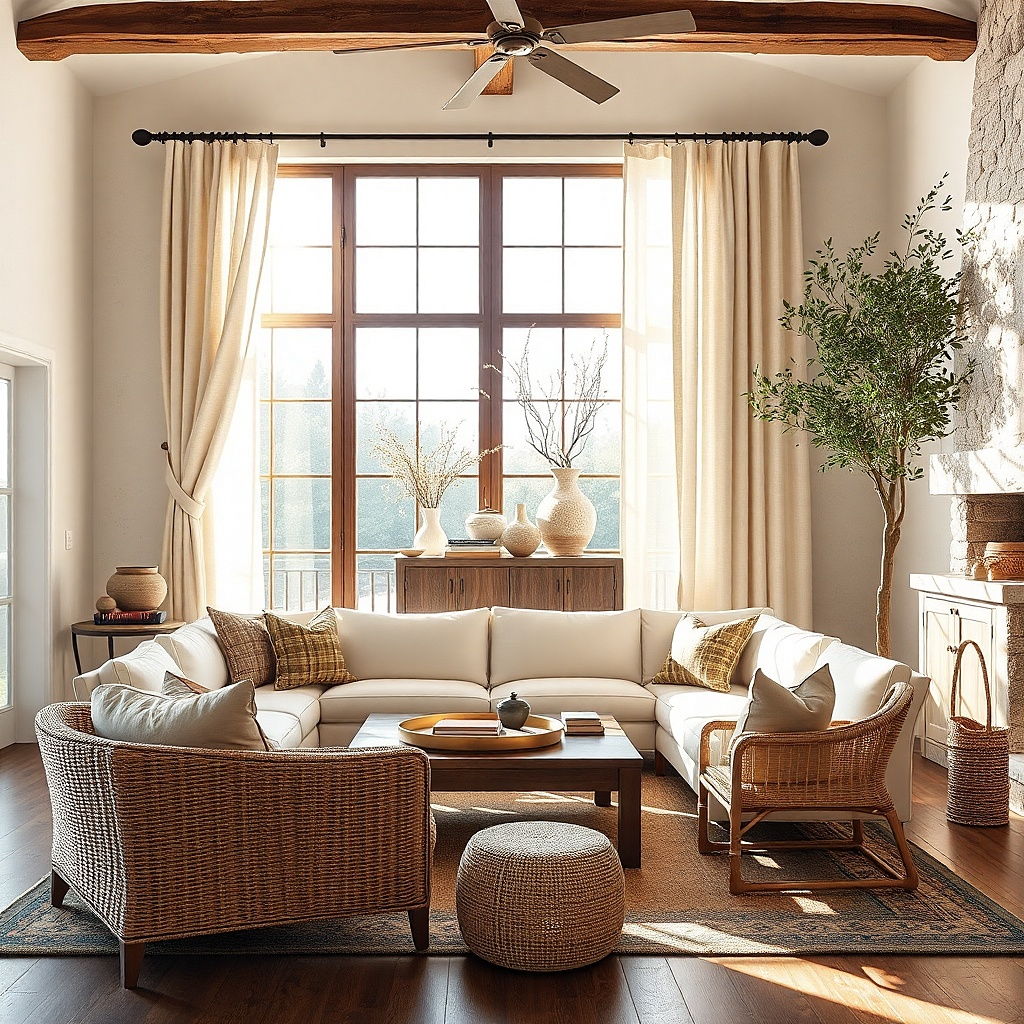
Layering is the cleanest way to get softness during the day and weight at night. Put a warm white sheer on the back rod and a textured linen-blend panel in oat, putty, or sand on the front rod. The sheer diffuses harsh afternoon light and makes the room feel finished even when the main curtains are open. The front panels bring depth and a stronger frame around the window. This works especially well in living rooms with large front-facing windows where privacy and glare control matter.
Try thisUse off-white sheers instead of icy white. The warmer tone blends better with wood floors, sisal, and cream upholstery.
Start with a double rod set that projects at least 5.5 to 6.5 inches from the wall so the layers do not crush together. Then hang the sheers first, floor length and lightly puddle-free, followed by fuller front panels with pleats or rings. Finally, keep the sheer width generous — about 2 times the window width — so it still looks full when drawn closed. A decent double-layer setup usually costs $160 to $380 depending on panel quality.
Common mistakeDo not use shiny voile sheers because they reflect too much light and cheapen the whole window wall.
5. Stone beige drapes with black iron rods for contrast
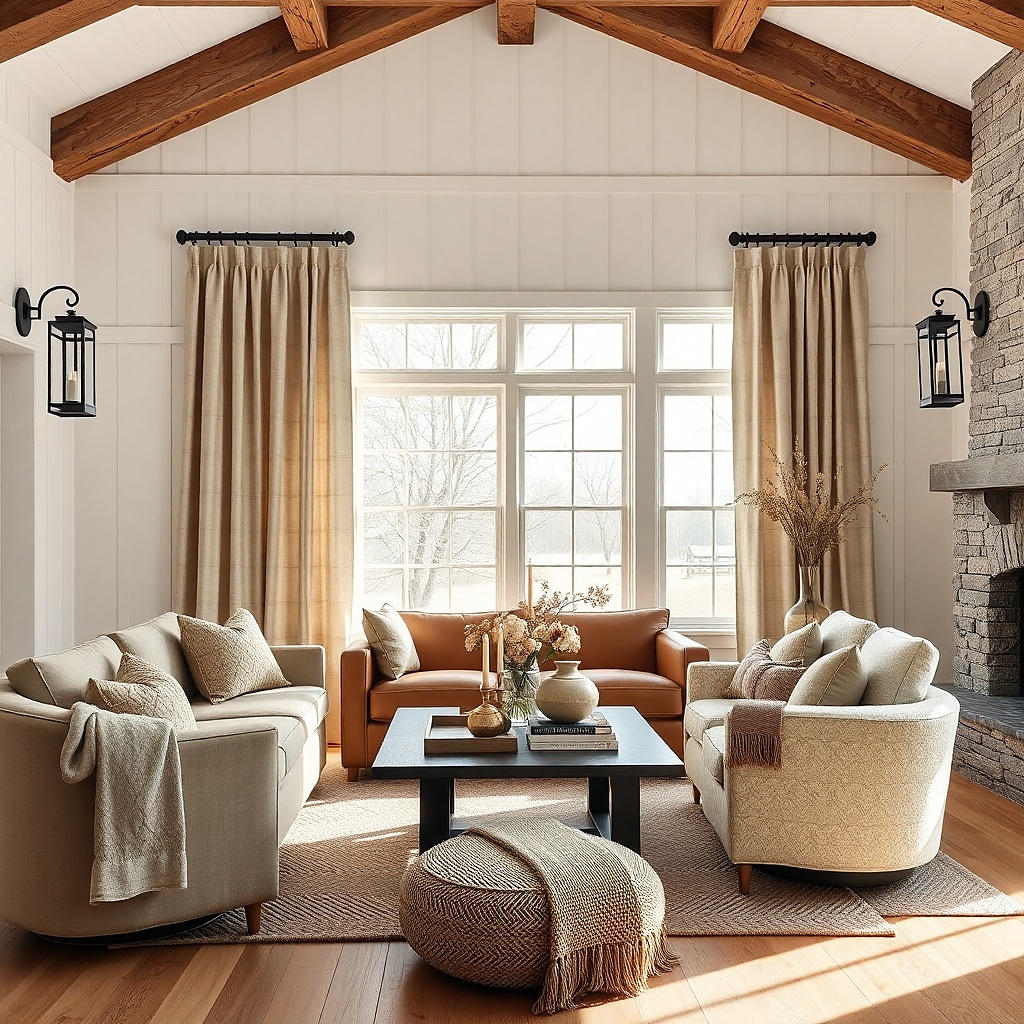
If the room already has black windows, iron sconces, or a dark coffee table, black rods make sense. The expensive version softens that contrast with stone beige drapes instead of white. Stone has enough gray-brown in it to feel grounded, and it sits beautifully against white trim and black hardware. The result is sharper than classic beige but still warm. This is a strong fit for modern farmhouse rooms with cleaner lines and less decorative clutter.
Start with matte black rods that are plain and slightly chunky, around 1 inch in diameter, with simple round finials. Then choose lined drapes in stone beige with a tailored header such as Euro pleat or flat panel with drapery hooks. Finally, keep the curtain stack neat by using holdbacks only if the room needs them for traffic or radiator clearance. Expect around $140 to $320 for this look with solid hardware and lined panels.
Match the rod finish to other black elements in the room. Matte black next to glossy black looks accidental.
Avoid distressed black rods with fake rust speckles because they read gimmicky next to clean drapery.
6. Natural slub cotton panels that soften a wall of white
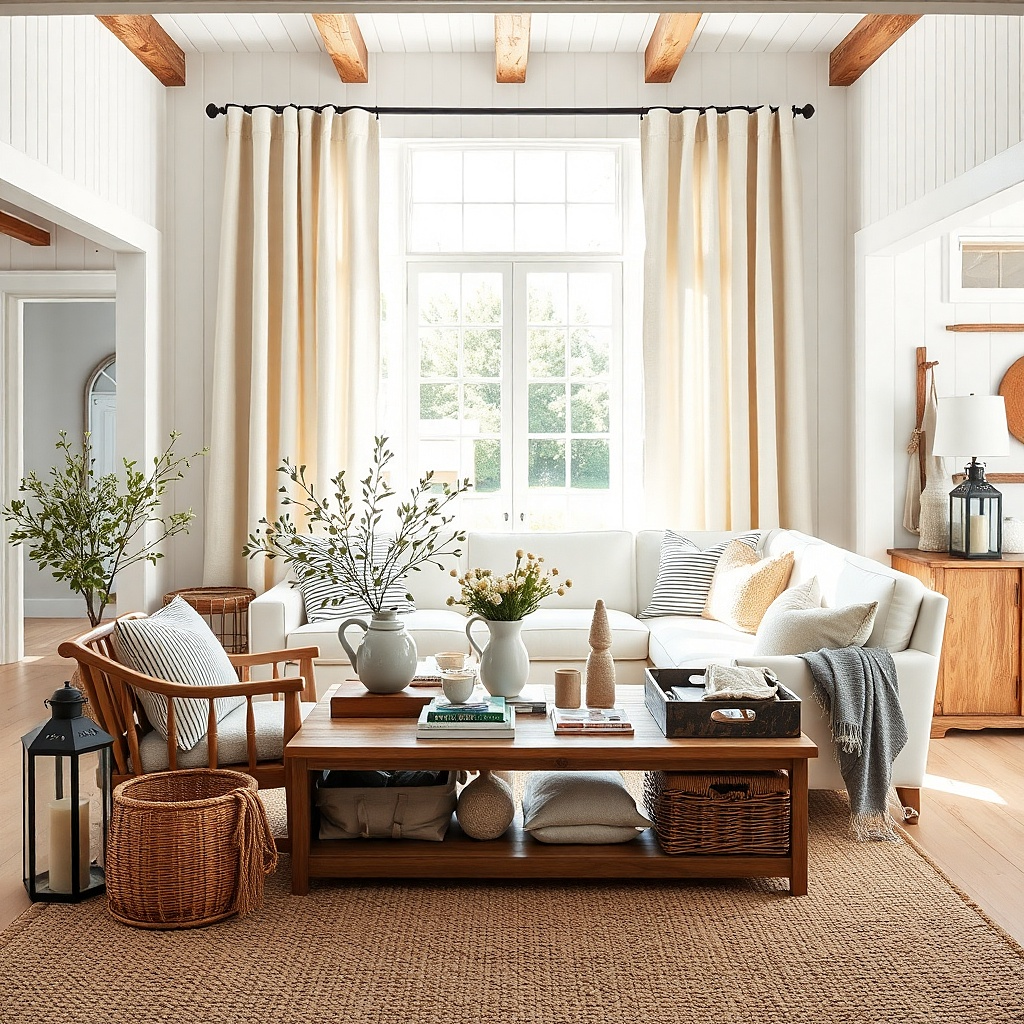
A white farmhouse living room can look sterile if every surface is crisp and flat. Natural slub cotton panels add faint nubs and uneven weave that break up all that smooth paint and painted trim. Choose a color between unbleached cotton and pale oat. It is warmer than white but lighter than beige, so the room still feels airy. This idea is best for smaller living rooms where heavy fabric would feel too dense but plain white curtains would disappear.
Try thisIf the walls are bright white, choose curtains with a touch of cream. Exact white-on-white looks flat unless the room has strong architectural detail.
Start with lined or cotton-backed slub panels because the texture needs a little weight to hang straight. Then mount the rod high and wide, and keep the hem exactly at floor level to avoid a sloppy casual effect. Finally, repeat the natural cotton tone in one or two other places such as a lamp shade or woven basket so the curtains feel tied in. This is one of the more budget-friendly looks at about $90 to $220 all in.
Common mistakeDo not buy slub fabric with obvious synthetic shine because the texture turns fake under daylight.
7. Soft taupe Euro pleats for rooms with oak and leather
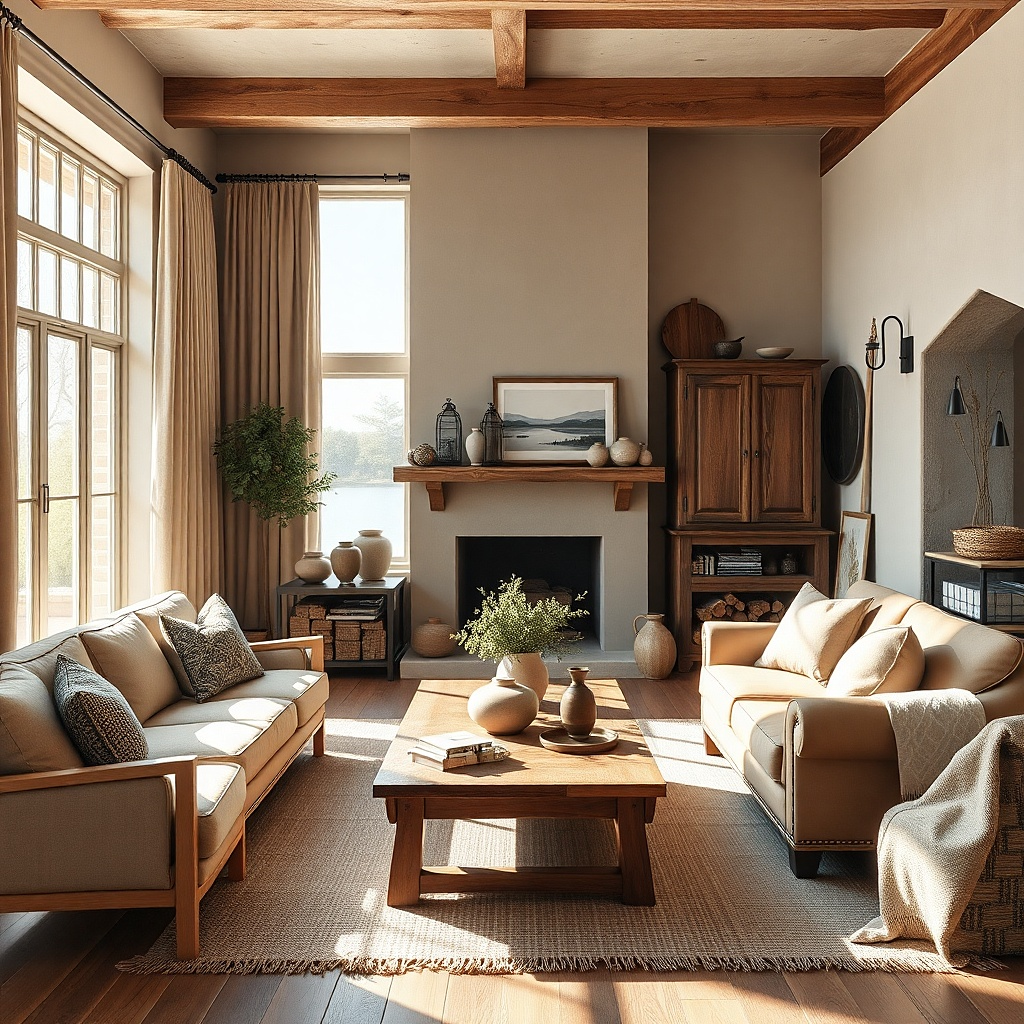
Taupe is underrated in farmhouse rooms. It links tan leather, medium oak, cream upholstery, and black accents without pulling yellow or pink. Euro pleats keep that earthy color from feeling heavy because the top line stays crisp and architectural. The drape falls in smooth wide folds, which reads expensive from across the room. Pick this if your living room has mixed wood tones and you need the curtains to settle everything down.
Try thisA taupe with a slight brown cast works better than a gray taupe in farmhouse rooms with warm wood.
Start by sampling two or three taupe tones against the sofa and floor at different times of day. Then order Euro-pleat panels with blackout lining only if the room gets punishing sun; otherwise choose privacy lining for a softer hang. Finally, use drapery pins so each pleat lands evenly, and steam from the back side to protect the face fabric. Plan on roughly $180 to $400 for lined custom-look panels and hardware.
Common mistakeSkip tiny busy patterns in taupe fabric because they muddy the room instead of calming it.
8. Checked linen blend in a large scale, not picnic gingham
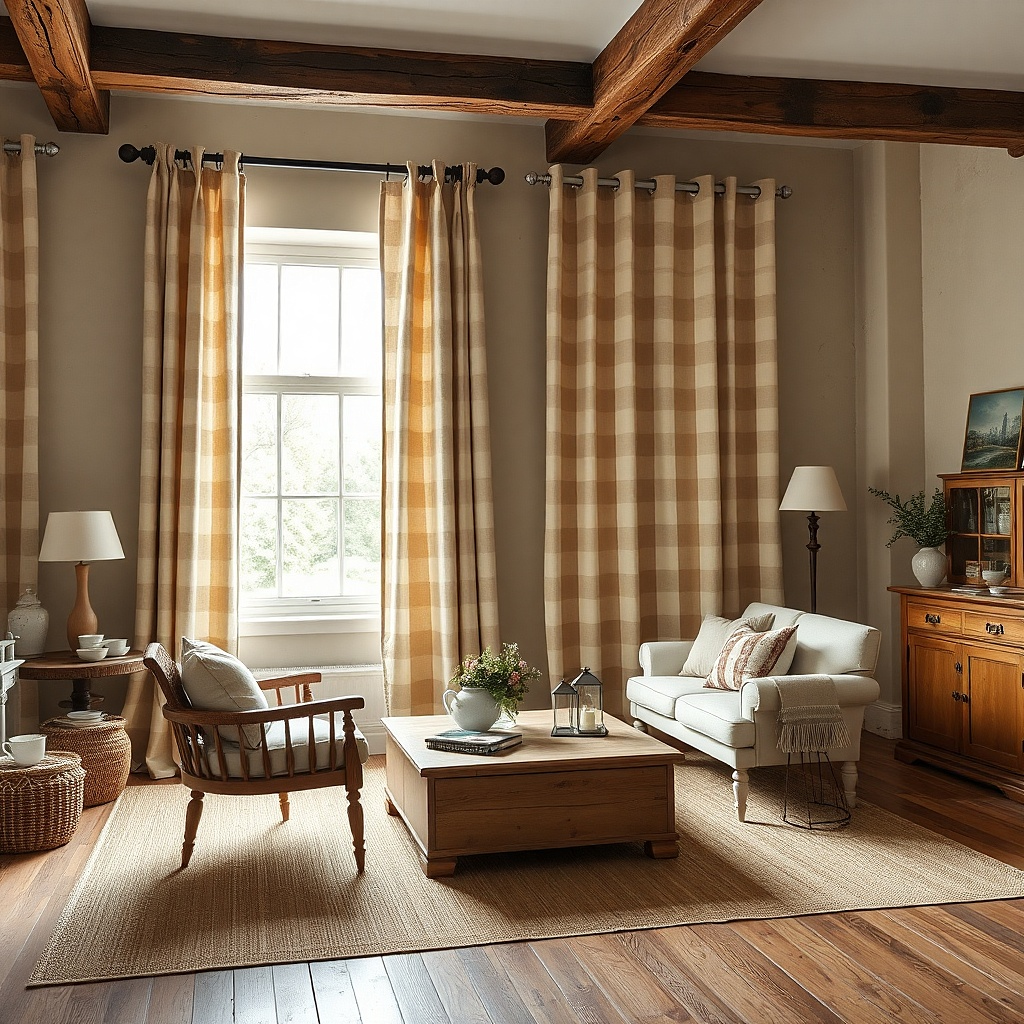
Checks can work in a luxury farmhouse room, but scale decides everything. A large soft check in flax and cream feels tailored and old-house in the best way, while small gingham reads kitchen curtain. The fabric should have a dry hand and a muted pattern edge, not a crisp printed line. This brings pattern into a plain room without the visual buzz of florals or busy plaids. It suits living rooms with simple furniture, plaster walls, and very little competing print.
Try thisA faded check on a natural ground looks better than a high-contrast black-and-white check for this style.
Start with one window or one pair of French doors because checks have more visual presence than solids. Then choose a check repeat around 4 to 8 inches and hang the panels with simple pleats so the pattern stays legible. Finally, keep nearby textiles plain — solid pillows, a quiet rug, no extra checked ottoman or checked throw. Expect to spend $140 to $300 depending on fabric and whether the panels are lined.
Common mistakeDo not mix large checked curtains with buffalo plaid pillows unless you want the room to lean novelty farmhouse.
9. Greige linen with subtle puddling in a formal farmhouse room
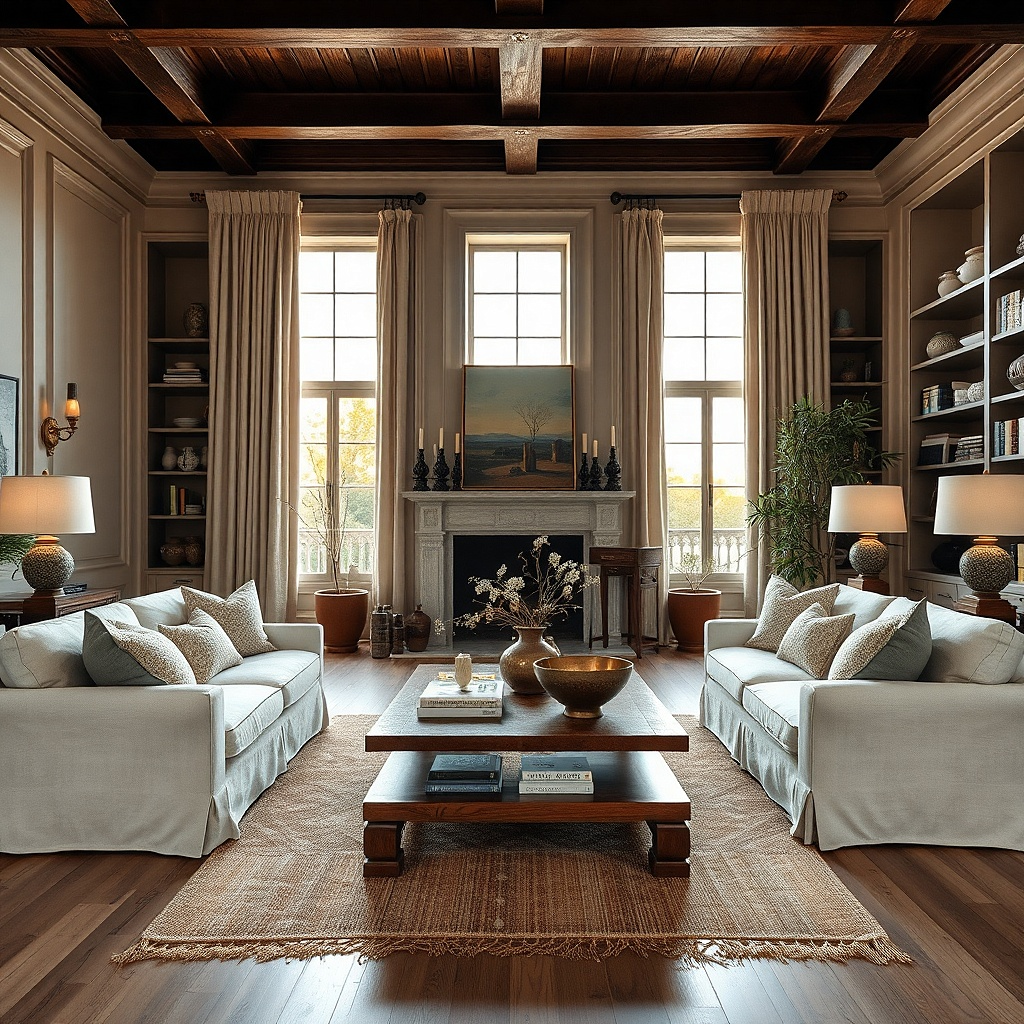
A slight puddle gives farmhouse curtains a more dressed-up feel, but only in the right room. Use this in a formal living room that stays neat, not in a family room where kids and pets drag through the fabric. Greige linen works well because it has enough depth to show folds on the floor without looking dirty. Keep the puddle restrained — 2 to 3 inches of extra length, not a dramatic pool. The result feels softer and older without crossing into fussy territory.
Start by measuring from rod to floor, then add 2 to 3 inches to the finished length. Then choose lined linen-blend panels with pinch pleats so the upper half stays controlled while the hem relaxes at the bottom. Finally, hand-arrange the puddle into two or three loose folds after steaming, and keep a lint roller nearby if the room has shedding pets. This look costs about the same as other lined linen options, around $160 to $360.
Use puddling only on smooth wood or low-pile rugs. Thick shag eats the hem and makes the drape look clumsy.
Skip long puddles in busy family rooms because they collect dust and lose their shape fast.
10. Cream panels with a narrow woven band at the leading edge
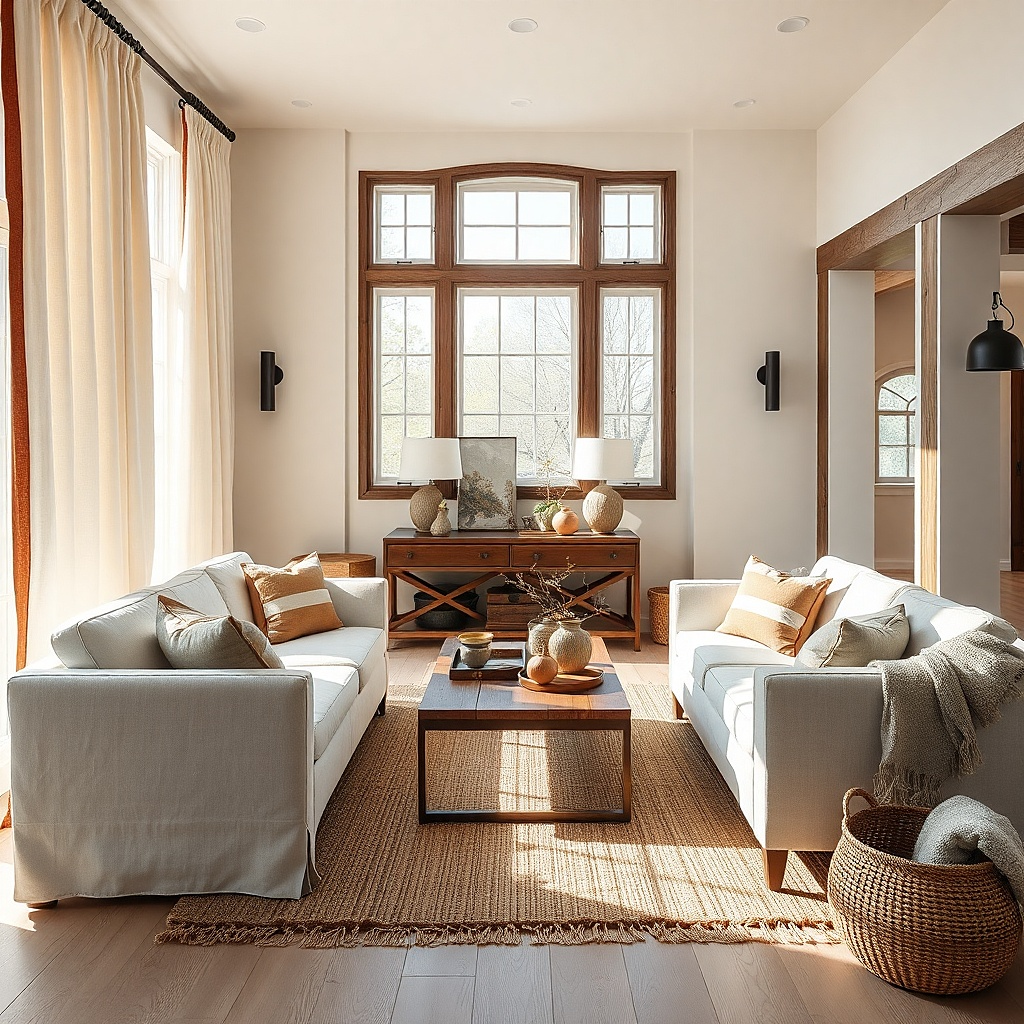
If plain cream curtains feel too safe, add one quiet detail instead of switching to a louder fabric. A narrow woven band, around 1 to 1.5 inches wide, stitched along the leading edge gives definition and a custom workroom look. Choose tobacco, faded olive, charcoal, or muted flax trim on a warm cream panel. From across the room, it frames the drape and sharpens the folds without making the window busy. This suits living rooms that need a polished finish but already have enough texture elsewhere.
Try thisMatch the trim to one dark note already in the room, like a leather chair or bronze lamp base.
Start with solid lined cream panels and buy tape trim with a matte woven texture, not shiny ribbon. Then have the trim sewn on the inner leading edge of each panel so it shows when the curtains are open and closed. Finally, keep the hardware simple because the trim is already the accent. If you use ready-made panels plus added trim, this can come in around $120 to $260.
Common mistakeDo not add tassel fringe or thick contrast borders because they push the curtains into formal traditional territory.
11. Oatmeal back-tab drapes for a cleaner casual look
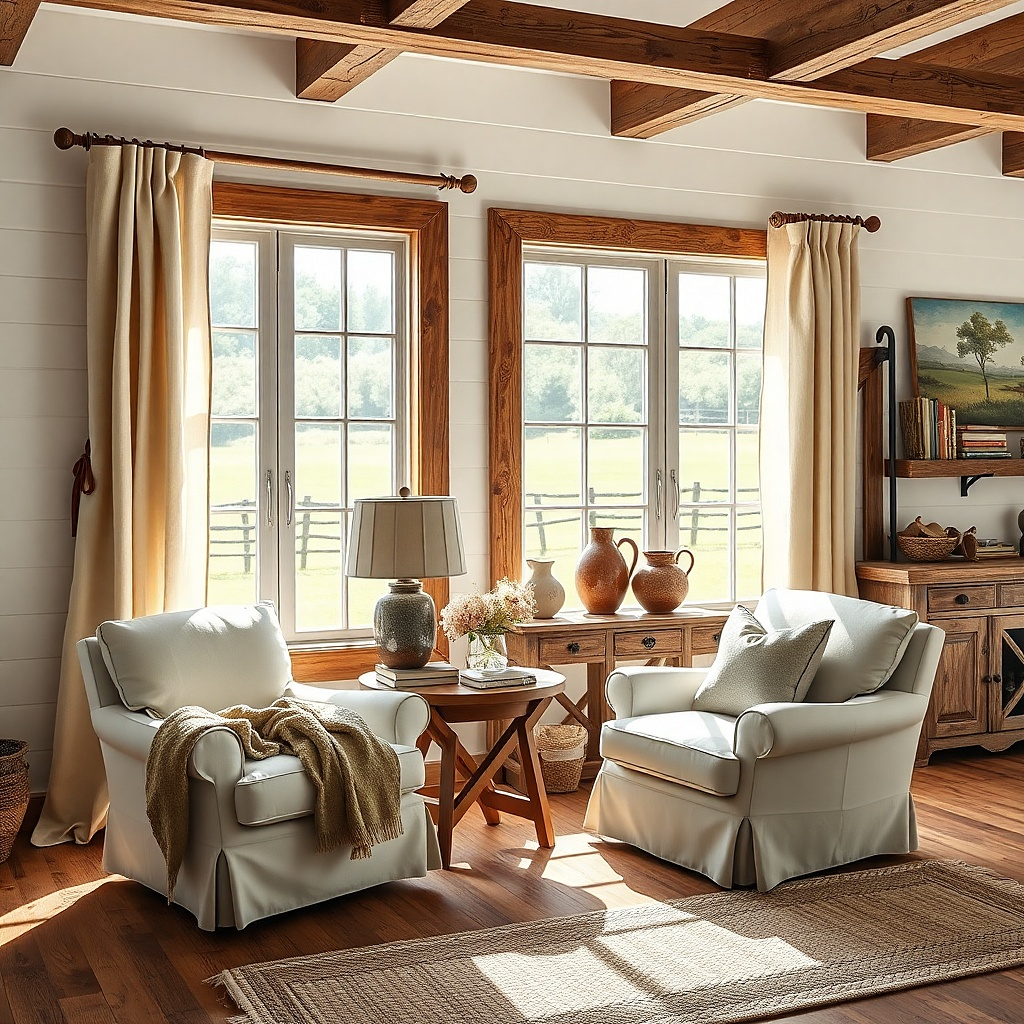
Back-tab panels are the sweet spot between relaxed and tidy. The hidden tabs create soft even folds without the visible hardware of grommets or clip rings, so the top line stays calmer. In an oatmeal linen blend, the look feels casual enough for farmhouse but still pulled together. This is a smart choice for small to medium living rooms where full custom drapery feels too formal. It also works well if you want a softer window but do not want pleat training and drapery pins.
Try thisBack tabs look best on fabric with a little body. Limp fabric collapses between tabs and loses the clean rhythm.
Start with a wood or metal rod that is slim but sturdy, around 0.75 to 1 inch thick. Then choose back-tab panels with lining and enough width for fullness, and slide them onto the rod before mounting to avoid wrestling heavy fabric overhead. Finally, adjust each fold by hand after hanging so the spaces between folds stay even. This is an easy weekend project and usually costs $80 to $200.
Common mistakeSkip grommet curtains if you want this look. The metal rings read more suburban big-box than luxury farmhouse.
12. Pale olive linen for a farmhouse room with lots of wood
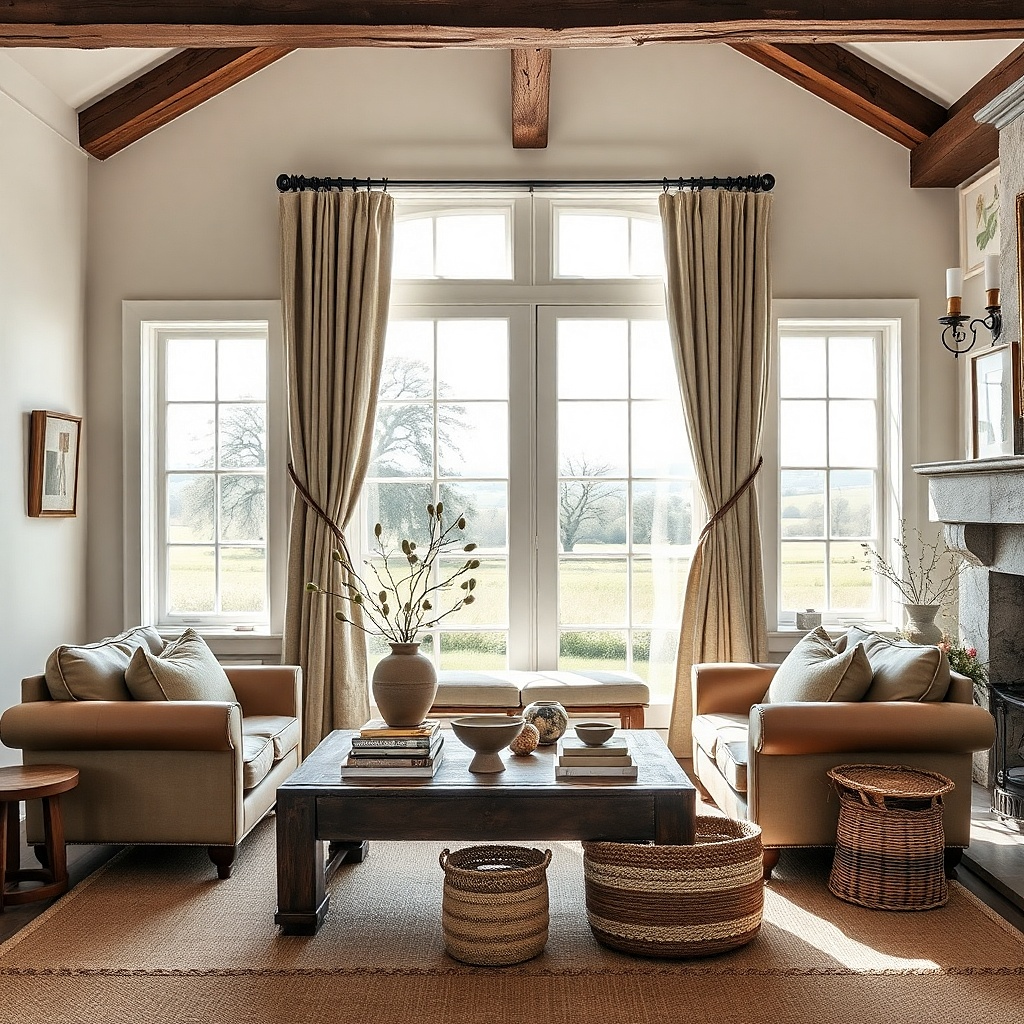
Farmhouse rooms packed with wood can skew orange or heavy. Pale olive linen fixes that by cooling the wood slightly while still feeling earthy and warm. Keep the green dusty and muted, closer to dried sage than fresh leaf. On a window wall, that color reads as a neutral from a distance, but it gives the room more personality than beige. This is especially good in living rooms with pine ceilings, reclaimed beams, or a lot of medium brown cabinetry nearby.
Try thisChoose olive only if the rest of the palette stays quiet. It needs breathing room around it.
Start by testing the color against the floor and any brick or stone in the room because olive shifts under warm light. Then use simple pleated panels with a privacy lining rather than blackout, which can make the green look flat and dense. Finally, repeat the color once in a plant pot, pillow edge, or art mat and leave it there. Expect a mid-range budget of $150 to $320.
Common mistakeDo not pair pale olive curtains with cool gray walls because the combination turns muddy fast.
13. Natural woven shades under full-length drapes
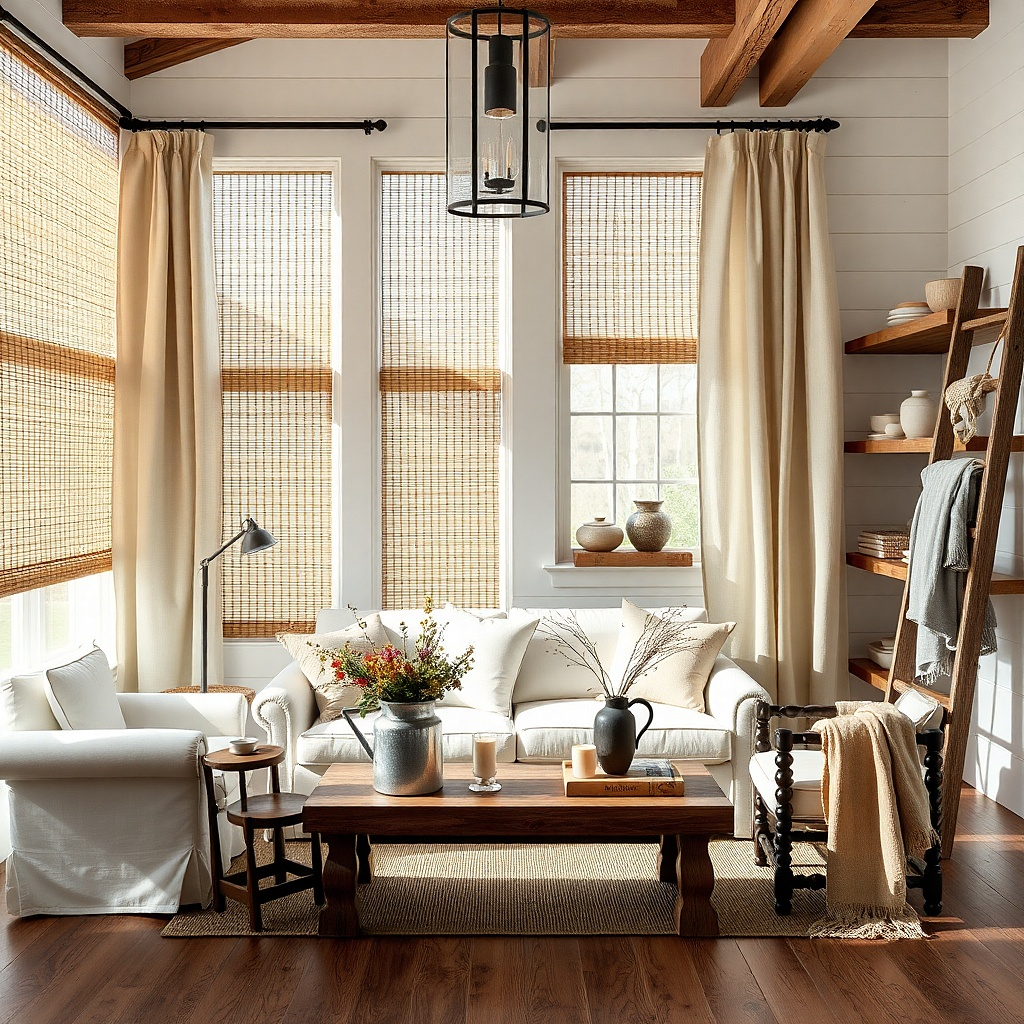
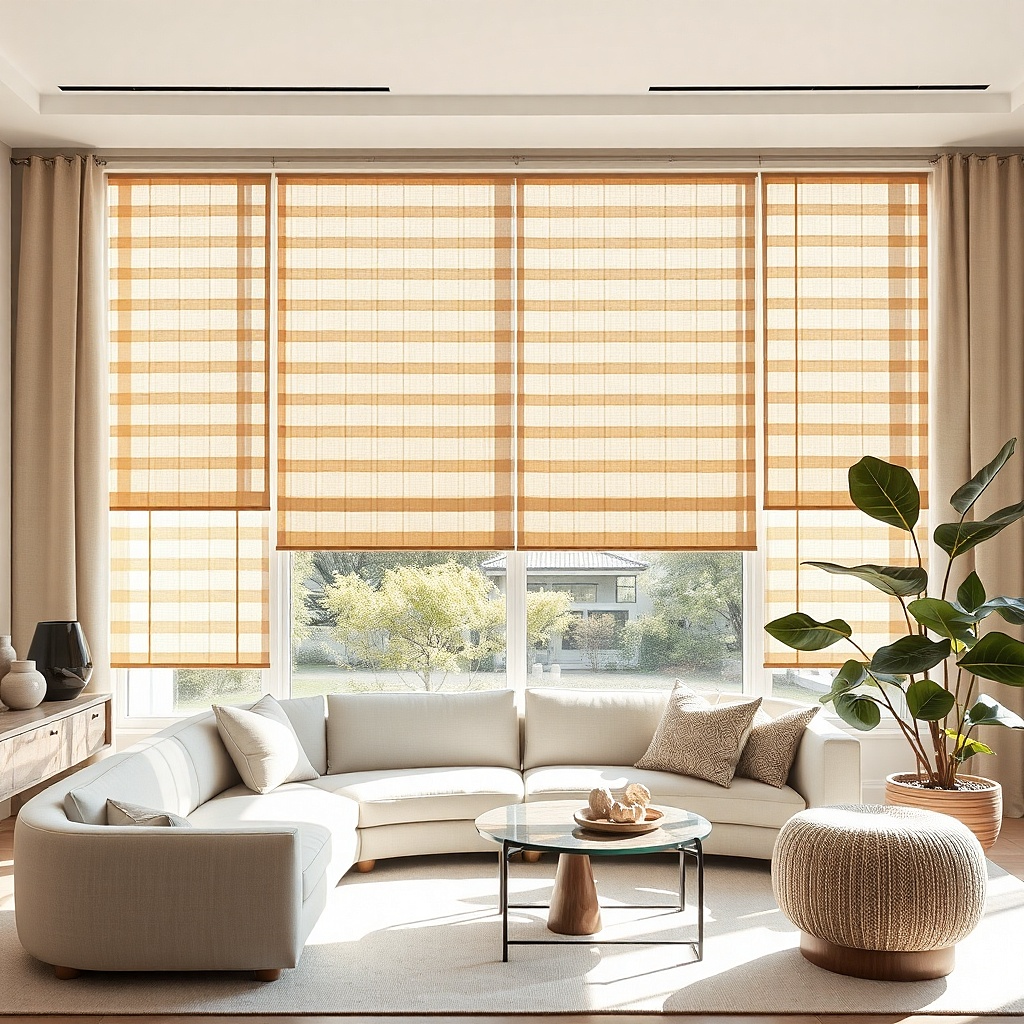
This is one of the best-looking combinations for farmhouse living rooms because it layers two different textures without clutter. Use a natural woven shade in a soft tan or light toast color, then frame it with full-length drapes in flax, cream, or putty. The shade brings a crisp horizontal line and daytime privacy. The drapes add softness and scale so the window still feels dressed. This setup is excellent for street-facing living rooms or any room with wide windows that need structure.
Try thisPick woven shades with similar undertones to the floor. Red-toned shades next to pale neutral oak look off immediately.
Start by mounting the woven shade inside the window frame if the depth allows, which keeps the whole treatment cleaner. Then hang the drapery rod high and wide outside the frame so the fabric clears the shade when open. Finally, choose shades with privacy lining if the weave is too open for your room at night. The full layered look usually lands around $220 to $600 depending on shade size and drapery quality.
Common mistakeSkip very dark espresso woven shades unless the room already has enough dark contrast to support them.
14. Soft white linen with wood rods in a lighter farmhouse scheme
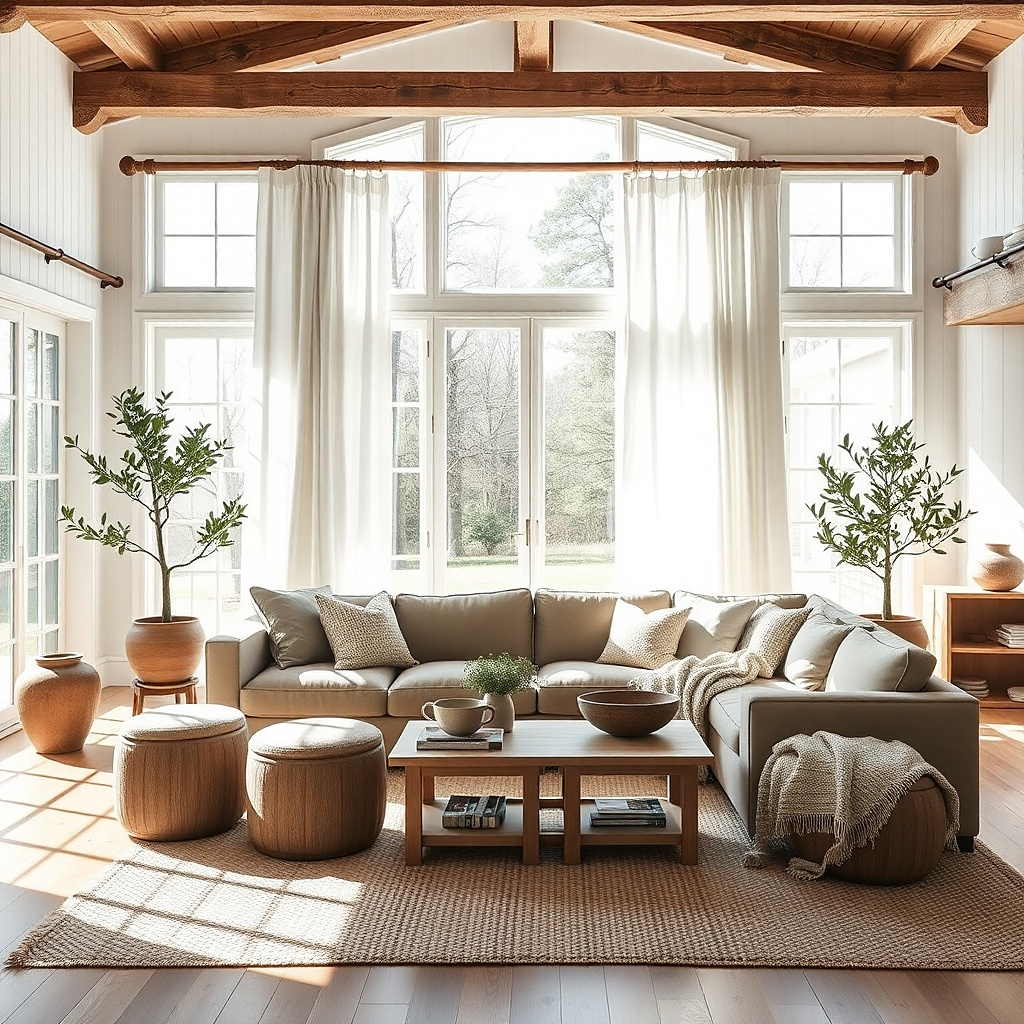
Wood rods are underrated in farmhouse rooms that lean light and quiet. A pale to medium wood rod paired with soft white linen keeps the window treatment from feeling too stark or too industrial. The wood line near the ceiling also ties in with oak frames, woven chairs, and other natural materials in the room. Choose soft white, not optic white, so the fabric still has warmth. This look suits airy living rooms with pale floors, cream upholstery, and very little black metal.
Try thisUse wood rods only if the room already has at least one other visible wood tone nearby so they feel intentional.
Start with a solid wood rod in oak, maple, or a stained birch tone, and make sure the brackets are substantial enough for lined panels. Then hang soft white linen-blend curtains with hidden hooks or ring clips that are covered by the header so the wood remains the visual focus. Finally, keep the finials simple and rounded rather than carved or ornate. Budget about $130 to $280 for a convincing version of this look.
Common mistakeDo not mix yellow-orange wood rods with cool ash flooring because the mismatch stands out more than people expect.
15. Sand-colored drapes that blend into plaster-toned walls
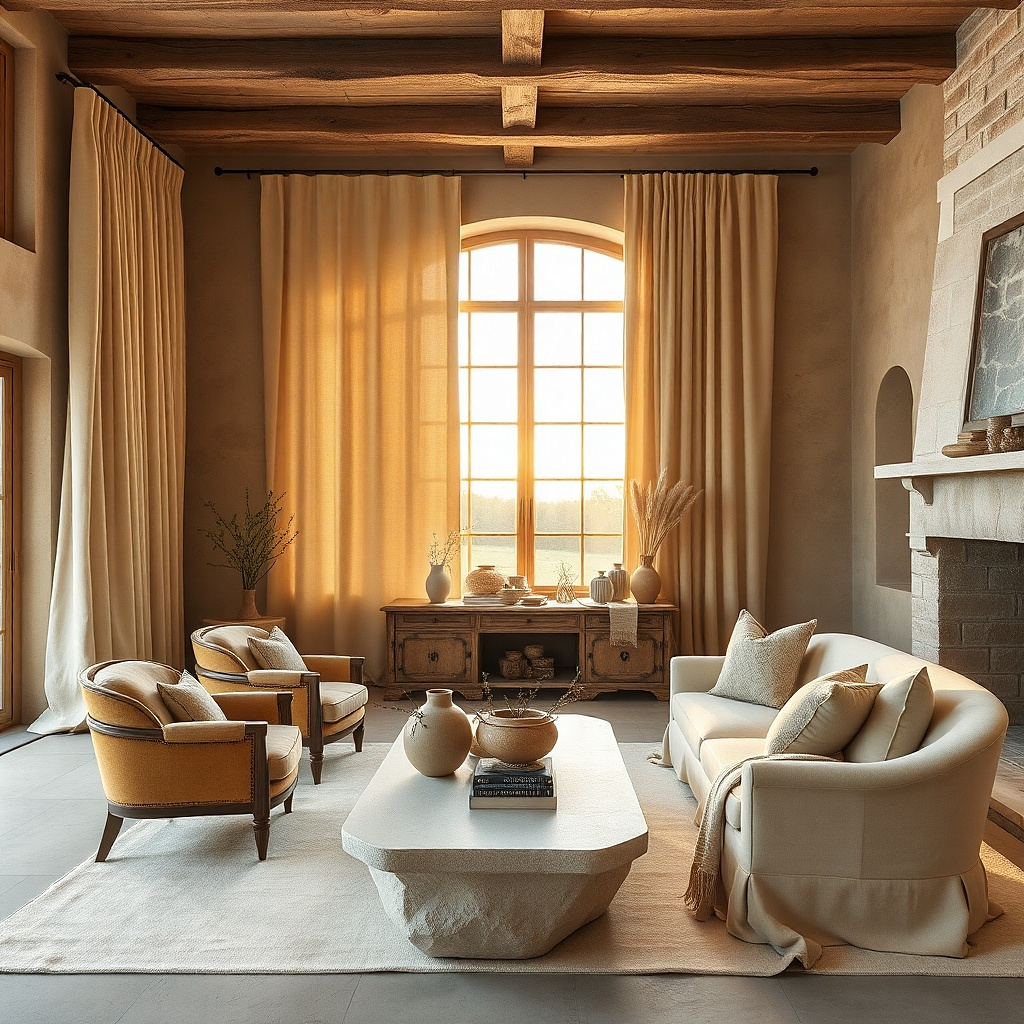
For a very calm luxury farmhouse room, match the curtains close to the wall color instead of contrasting them. Sand-colored drapes against plaster-toned beige or limewash-style walls create a quiet envelope effect that feels expensive because nothing is shouting for attention. The folds still show through light and shadow, but the color shift stays minimal. This approach also makes a small living room feel less chopped up. It is the right move if the room already has one statement piece such as a stone fireplace or oversized art.
Start by pulling the wall paint sample and choosing a curtain color one shade lighter or darker, not identical. Then use lined panels with enough weight to keep the folds defined, since color contrast will not do that work for you. Finally, bring in contrast elsewhere with wood, iron, or a darker rug so the room does not go flat. This style ranges from $140 to $340 depending on fabric and width.
A tiny difference in undertone matters here. Pink-beige curtains against yellow-beige walls look wrong even if the depth seems close.
Skip this approach if your walls are cool gray. Tone-on-tone gray farmhouse living rooms feel drained of warmth.