1. Matte black linen blend with white walls
This is the cleanest starting point for black curtains because the white wall does half the balancing for you. A matte black linen-blend panel has soft texture, so the color reads dry and architectural instead of slick and heavy. The folds cast gentle shadows, which gives the window depth without turning it into a black block. This look suits living rooms with plain drywall, simple trim, and light oak or ash furniture. It is especially strong in rooms that feel bland and need sharper contrast without adding more decor.
Start by choosing panels in a linen-blend or slub-weave polyester, around 50 to 52 inches wide per panel, in a true black rather than charcoal. Then mount a slim black or dark bronze rod 8 inches above the trim and 10 inches past the frame on both sides so the stack-back sits off the glass. Finally, hem the panels to just kiss the floor and steam the folds once so they drop straight. Expect an easy afternoon project with a midrange budget around $80 to $180 for two panels and a rod.
Try thisPair this setup with a warm white wall, not a blue white. Creamy whites soften black far better than icy paint.
Common mistakeDo not pair matte black curtains with bright white sheer voile underneath unless you want a stark hotel look.
2. Black curtains with an oak rod and oak furniture
Black gets friendlier fast when warm wood cuts through it. A pale oak rod or oak rings pull the curtain color into the rest of the room, so the window looks connected to the furniture instead of dropped in from nowhere. This works best with mid-tone or pale oak coffee tables, media units, and frames because the wood keeps the contrast warm rather than severe. The result is modern but not cold. If your living room has white walls and too many black accents already, this is the fix.
Start with black back-tab or ring-top panels in cotton canvas or a linen-blend. Then install a wood rod around 1.25 inches thick so it has enough visual weight to stand up to the black fabric. Keep the curtains full but not bulky — two standard panels work for windows up to about 72 inches wide, and wider spans need four panels. Budget roughly $120 to $250 if you buy a solid wood rod instead of a hollow faux-wood set.
Try thisRepeat the oak tone at least twice in the room — a lamp base and coffee table are enough to make the curtain rod look intentional.
Common mistakeSkip orange-toned wood with cool black fabric if the room already has gray flooring; that mix turns muddy fast.
3. Ceiling-mounted black ripplefold for a clean wall
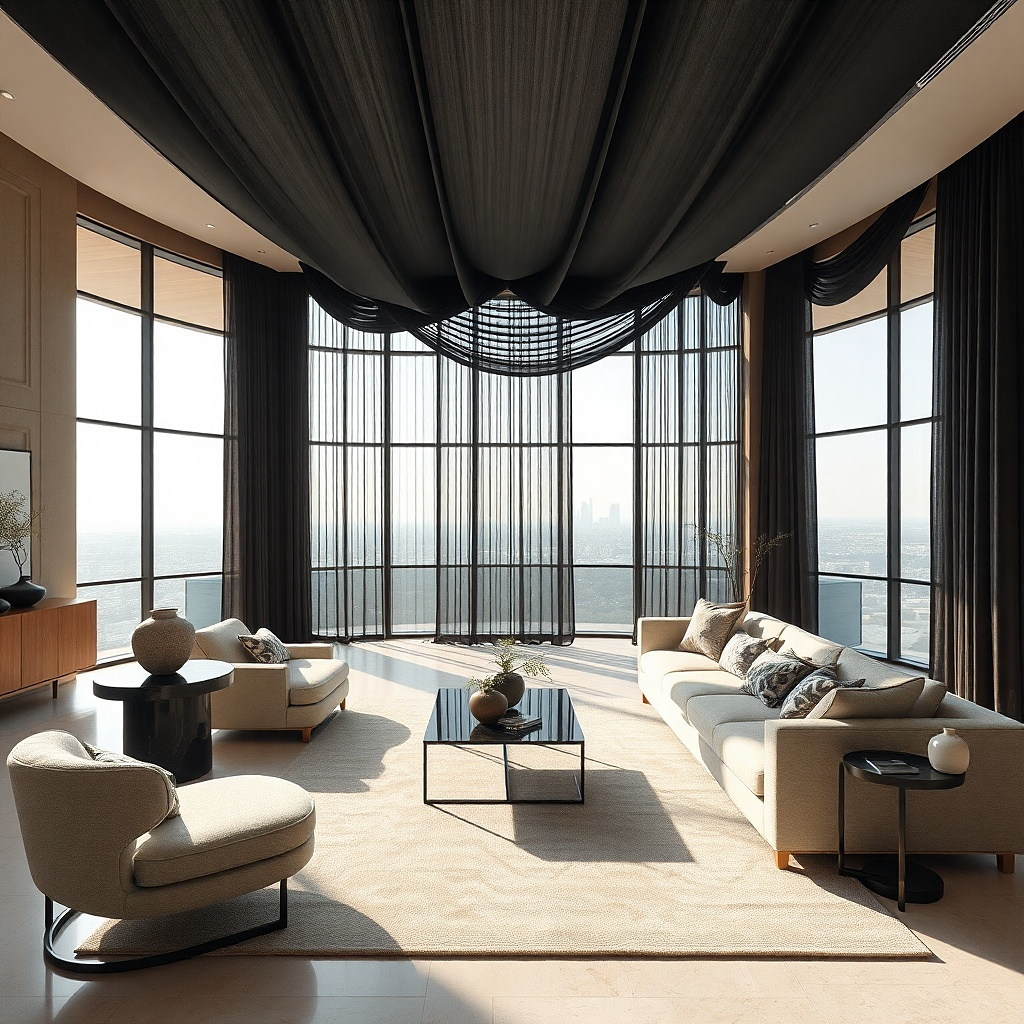
If you want black curtains to look sleek instead of bulky, a ceiling track with ripplefold panels is one of the best moves. The top line disappears, the folds stay even, and the fabric reads like one calm vertical plane. In a low-ceiling living room, this adds height because the eye runs straight from ceiling to floor. It also cuts dust-catching visual fuss at the top of the window. Use it in modern rooms, small apartments, or any space where a chunky rod would feel busy.
Start by measuring from the ceiling to 1/2 inch above the floor and order ripplefold panels with a matte woven face. Then mount a white or black ceiling track 3 to 5 inches out from the wall so the curtain clears the trim and any radiator or blind. Finally, choose a stack direction that keeps the opening on the brighter side of the room, which leaves more visible glass in daily use. This costs more than off-the-shelf panels — about $200 to $500 for one large window wall — but the look is far cleaner.
Try thisUse blackout lining only if the room gets harsh afternoon glare. Unlined or privacy-lined ripplefold hangs flatter and lighter.
Common mistakeDo not use this look with short 84-inch panels in a room with 9-foot ceilings; the gap at the floor ruins the whole effect.
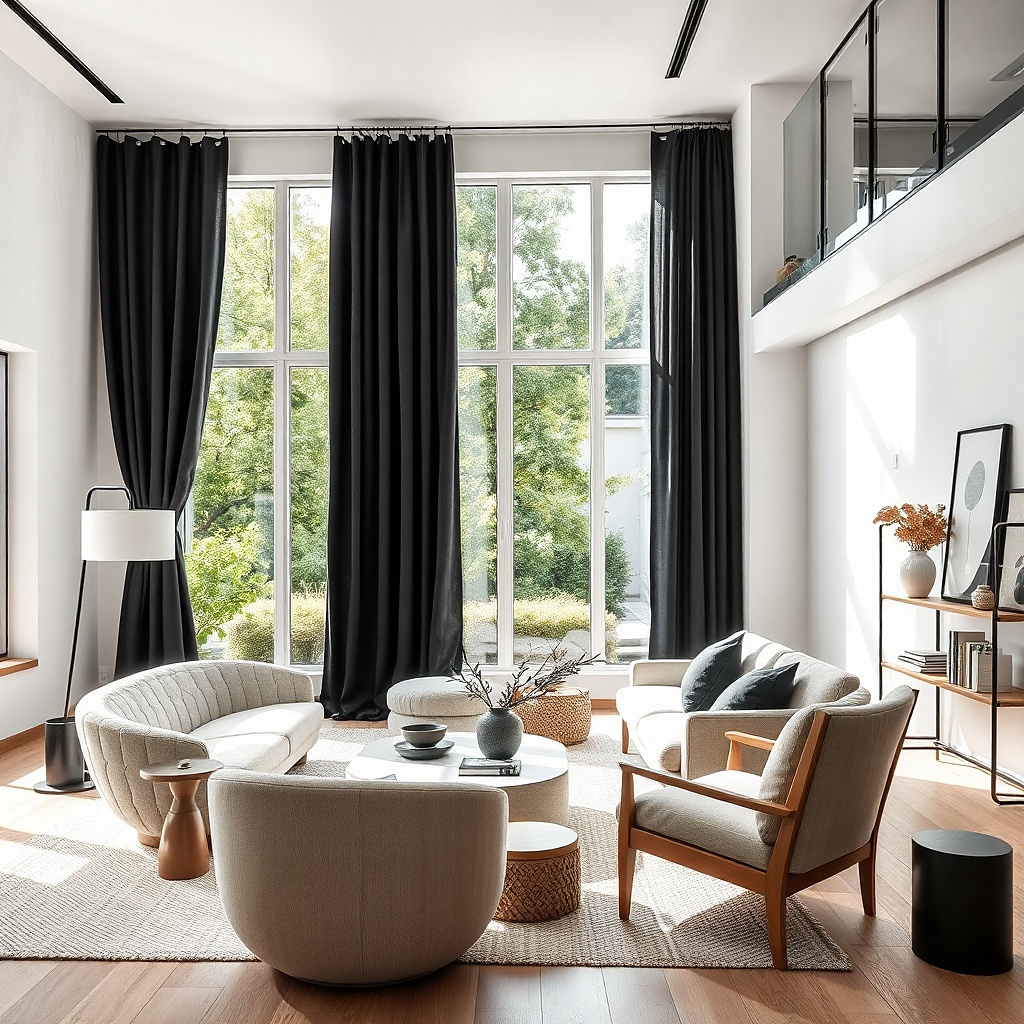
4. Black panels framing big windows with no sheers
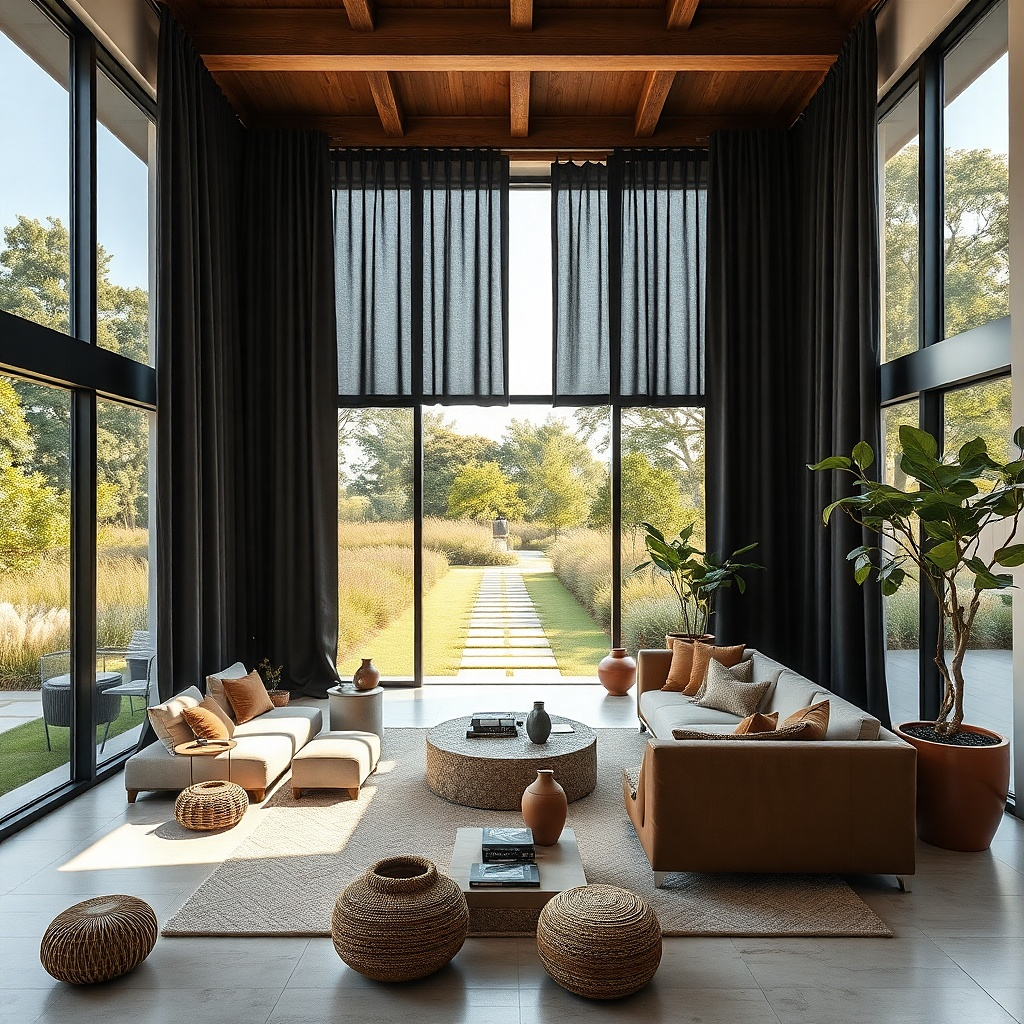
On large windows, black curtains look best when they stay mostly open and work as a frame. Leaving out sheers keeps the window from turning into a layered fabric sandwich. The black side panels create a sharp border, which makes outdoor greenery and daylight look brighter by comparison. This is a strong choice for living rooms with a yard view, a balcony, or wide sliders where the glass is the main visual asset. It is also low effort because there is one layer to wash, one layer to straighten, and no fussy tiebacks.
Start with a rod that extends at least 12 inches past the window or slider frame on each side so the open panels clear the glass. Then use wide panels or extra pairs to reach real fullness without needing center overlap unless privacy demands it. Keep the hem off the floor by 1/2 inch if the panels sit near a door track or high-traffic walkway. This setup is easy to maintain and lands around $100 to $220 with ready-made woven blackout panels.
A black rod disappears into the curtains here, which keeps the frame effect crisp and uncluttered.
Skip narrow stingy panels on a big window; they look accidental and make black feel harsher.
5. Soft black velvet in a room with pale plaster and brass
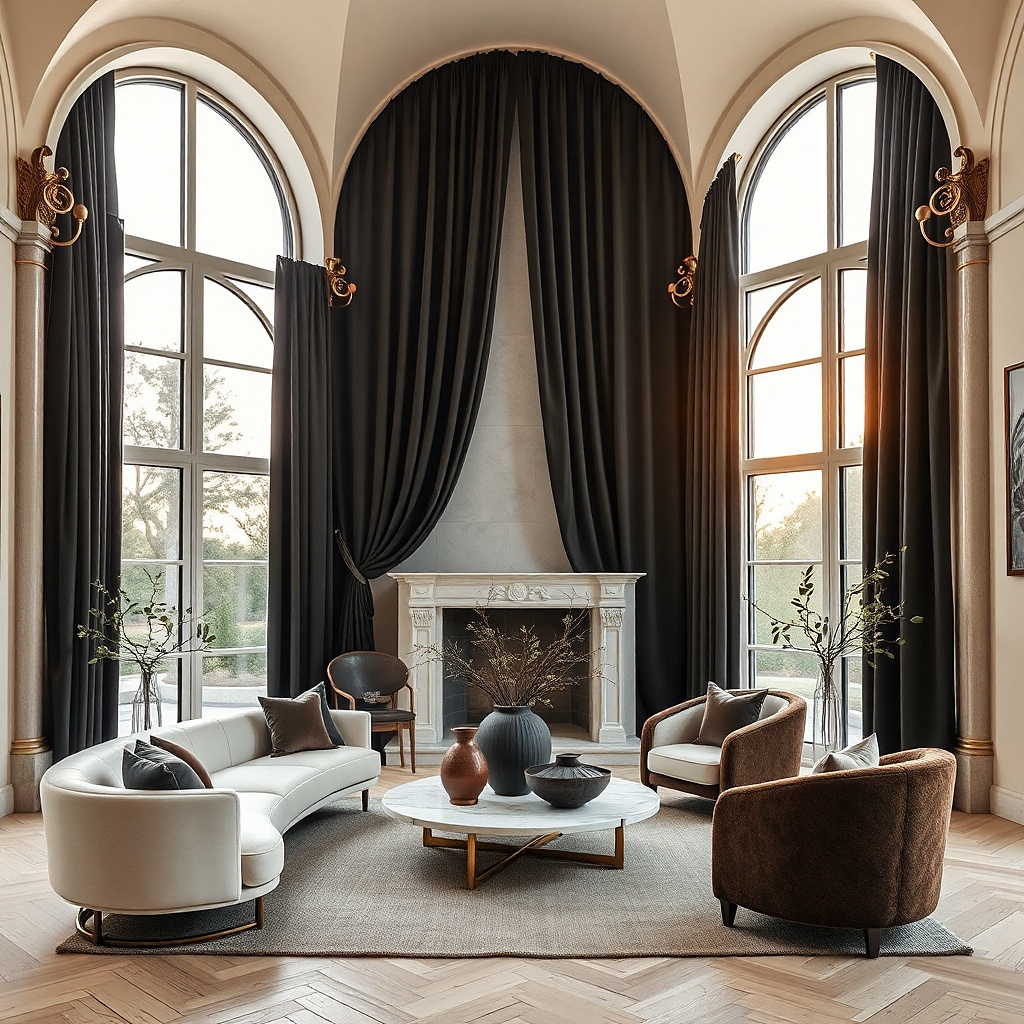
Velvet can go heavy fast, but in the right room it looks lush and controlled rather than theatrical. The trick is using a short-pile, matte velvet in a room with pale plaster walls, warm brass, and enough daylight. That mix catches light on the curtain folds, so the black shifts slightly instead of reading flat. It suits older homes with high ceilings, wall sconces, and a fireplace where you want a bit more drama without adding pattern. The brass keeps the black from feeling stern.
Start with short-pile velvet panels, not crushed velvet and not high-shine stage velvet. Then hang them high on a slim antique brass or aged brass rod and stop the hem exactly at floor level — no puddle in a busy living room. Add one more brass note nearby, such as a floor lamp or picture frame, so the metal does not look random. Expect a slightly higher care level than canvas, but still manageable if you choose machine-washable velvet or a washable polyester velvet blend in the $120 to $300 range.
Try thisBrush the pile in one direction after steaming so both panels reflect light the same way.
Common mistakeDo not mix black velvet with cool chrome and bright gray walls unless you want the room to feel hard and flat.
6. Black and cream striped rug under plain black curtains
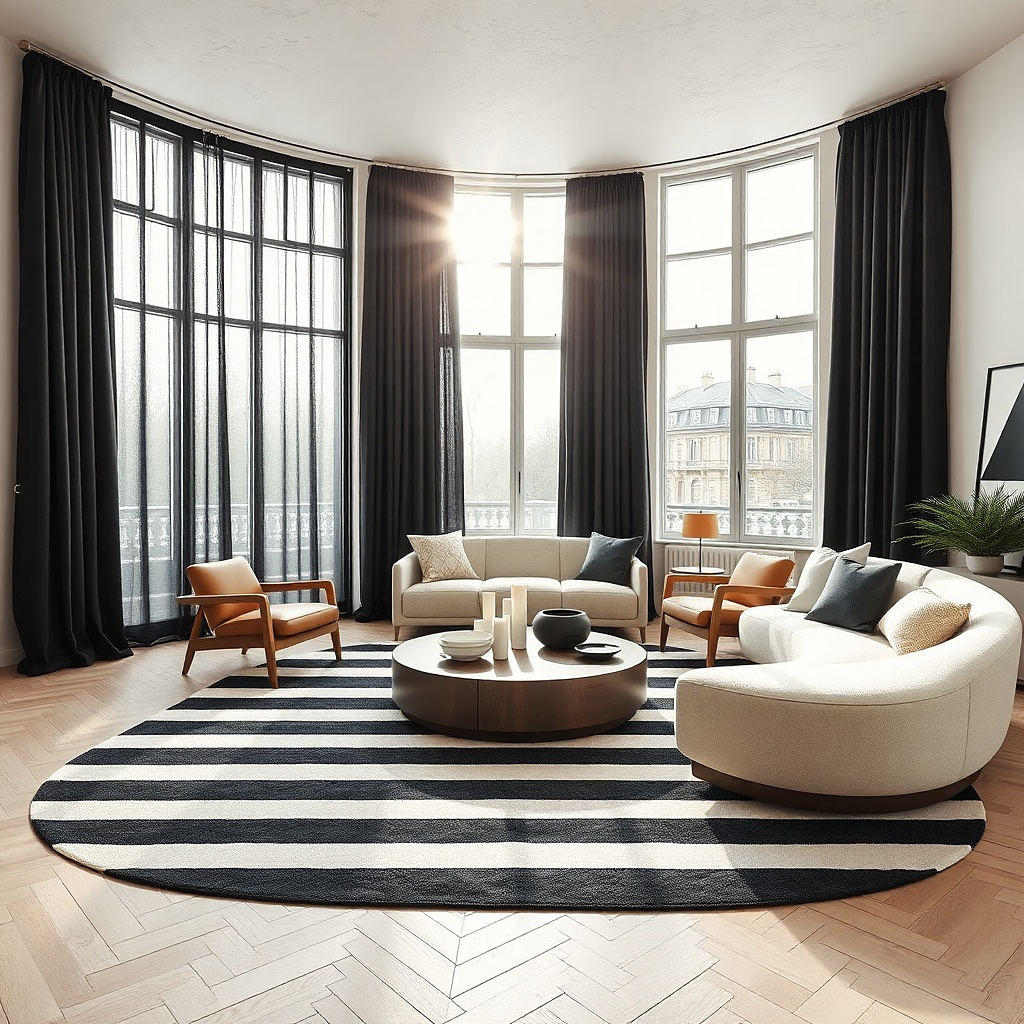
A striped rug is one of the fastest ways to keep black curtains from feeling like the only dark object in the room. The rug repeats the black in a lower, lighter-weight way, which spreads the color across the space and makes the curtains feel grounded. Keep the curtains plain and let the stripe do the pattern work. This setup is photogenic because the vertical curtain lines and horizontal or broken rug stripes play off each other. It suits boxy living rooms that need stronger shape and a little graphic punch.
Start with solid black panels and a cream-based rug with black stripes, checks, or a narrow grid. Then place the front legs of the sofa and chairs on the rug so the black repeats near the seating zone instead of floating alone at the window. Keep the rest of the room quiet — one wood tone, one metal finish, and cushions in cream, camel, or olive. This is one of the easier updates because you can keep standard ready-made panels and put more of the budget into the rug.
Try thisChoose a rug with some cream showing between the black lines. A mostly black rug drags the room too dark.
Common mistakeAvoid patterned curtains with a striped rug unless the room is very large; the window area gets busy fast.
7. Black blackout panels in a TV-first living room
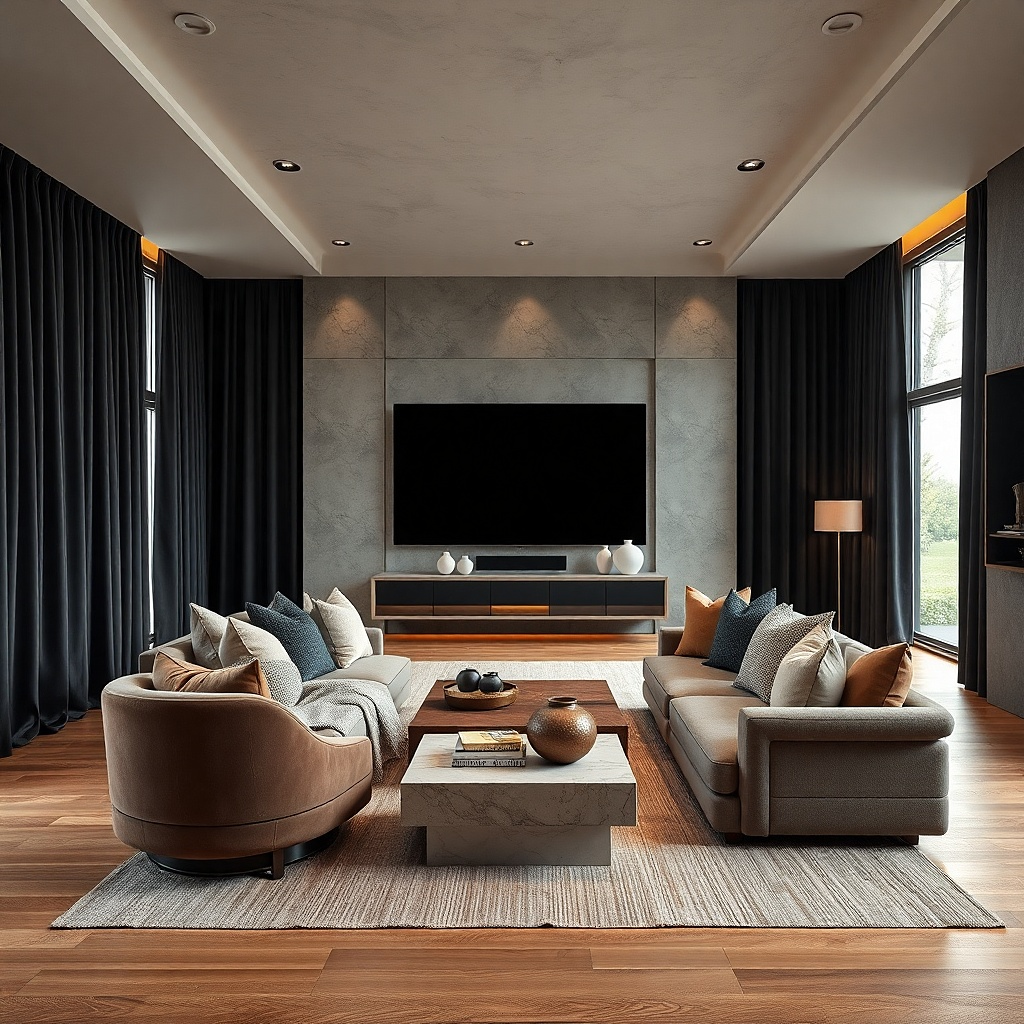
If the living room doubles as your movie room, black blackout panels make practical sense and can still look sharp. They cut screen glare, hide light leaks, and visually tie in with a black TV screen so the electronics feel less intrusive. The key is choosing blackout panels with a woven matte face, not the plasticky kind that shine under lamps. This works especially well in open-plan homes where the television wall needs stronger definition. The room feels more intentional because the dark window treatment matches the media zone.
Start by checking the direction of daylight and put the blackout curtains on the windows that throw glare onto the TV first. Then mount the rod high and wide so the curtains block light when closed but stack neatly when open. Keep the panel length exact and use holdbacks only if the room has a lot of foot traffic near the window. Good ready-made blackout panels cost about $60 to $160 a pair and save a lot of frustration in west-facing rooms.
Try thisUse warm bulbs around 2700K in this room. Cool white light against black blackout fabric feels stark and office-like.
Common mistakeDo not buy blackout curtains with a silver backing if any edge will show from outside the folds.
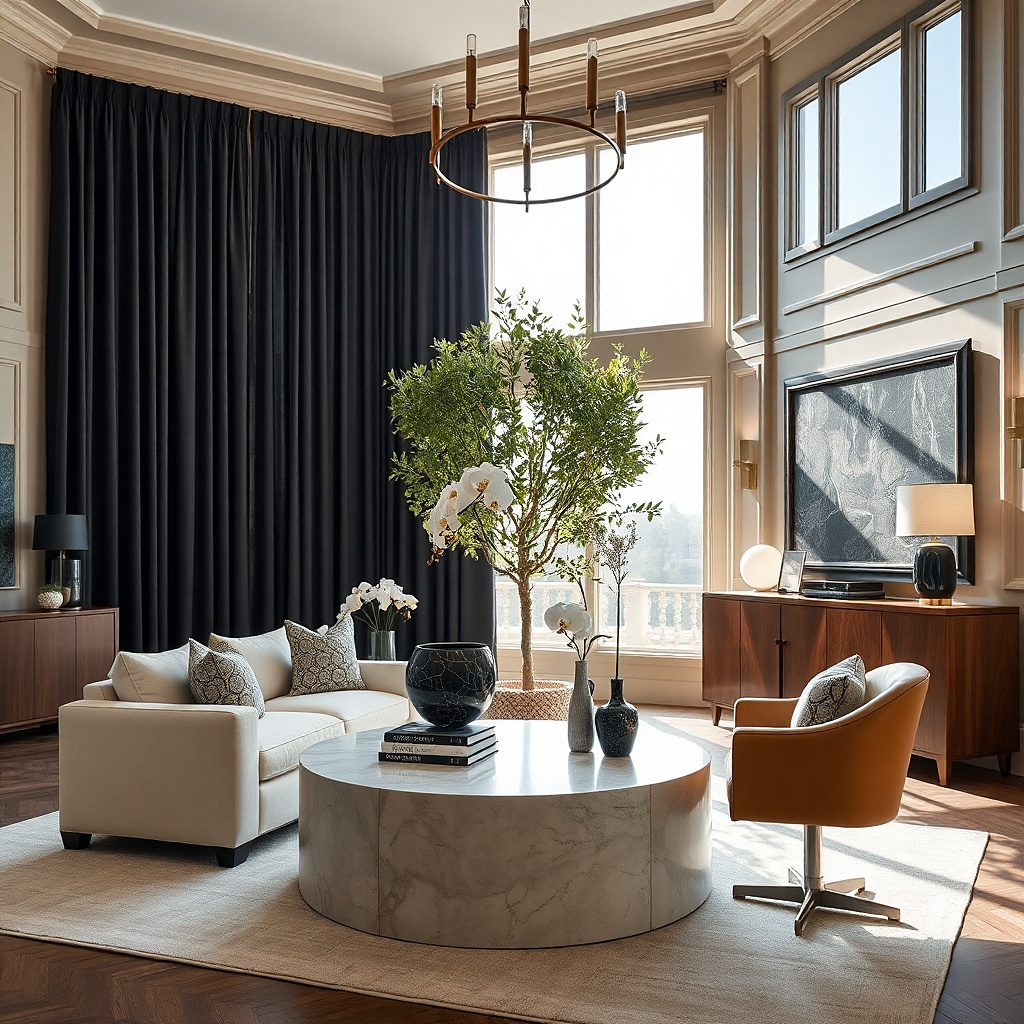
8. Black curtains with cream trim and a thick white baseboard
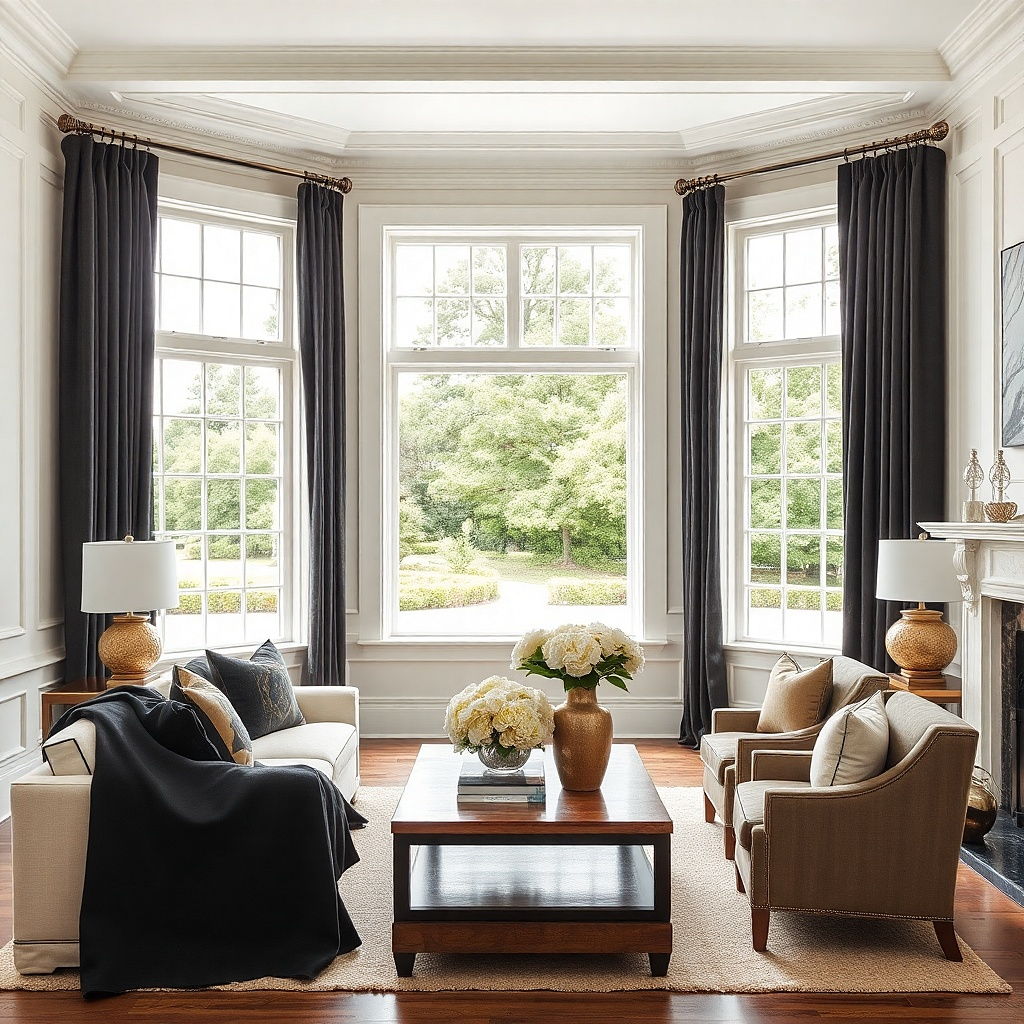
Trim is your friend here. Black curtains look far lighter when they sit next to crisp cream trim and a substantial white baseboard because those painted edges break up the dark mass. The contrast reads tailored, almost like black piping on upholstery. This is a strong answer for traditional or transitional living rooms where plain black fabric might otherwise feel too blunt. It also helps in rooms with smaller windows because the trim keeps the opening legible.
Start by painting tired trim a clean cream or soft white before you hang the curtains. Then choose simple black panels with a little body — cotton twill or lined linen-blend works well — and stop them right at floor level to keep the trim visible below. If the baseboard is skimpy, use a rod mounted slightly wider than usual so more wall shows between the panel edge and the room corner. Paint plus panels is still a manageable project over a weekend.
A 4-inch or taller baseboard gives black curtains a stronger visual landing point than thin builder-grade trim.
Skip bright stark white trim with yellow-beige walls; the mismatch makes the black look harsher.
9. Black café-length side panels over a radiator window
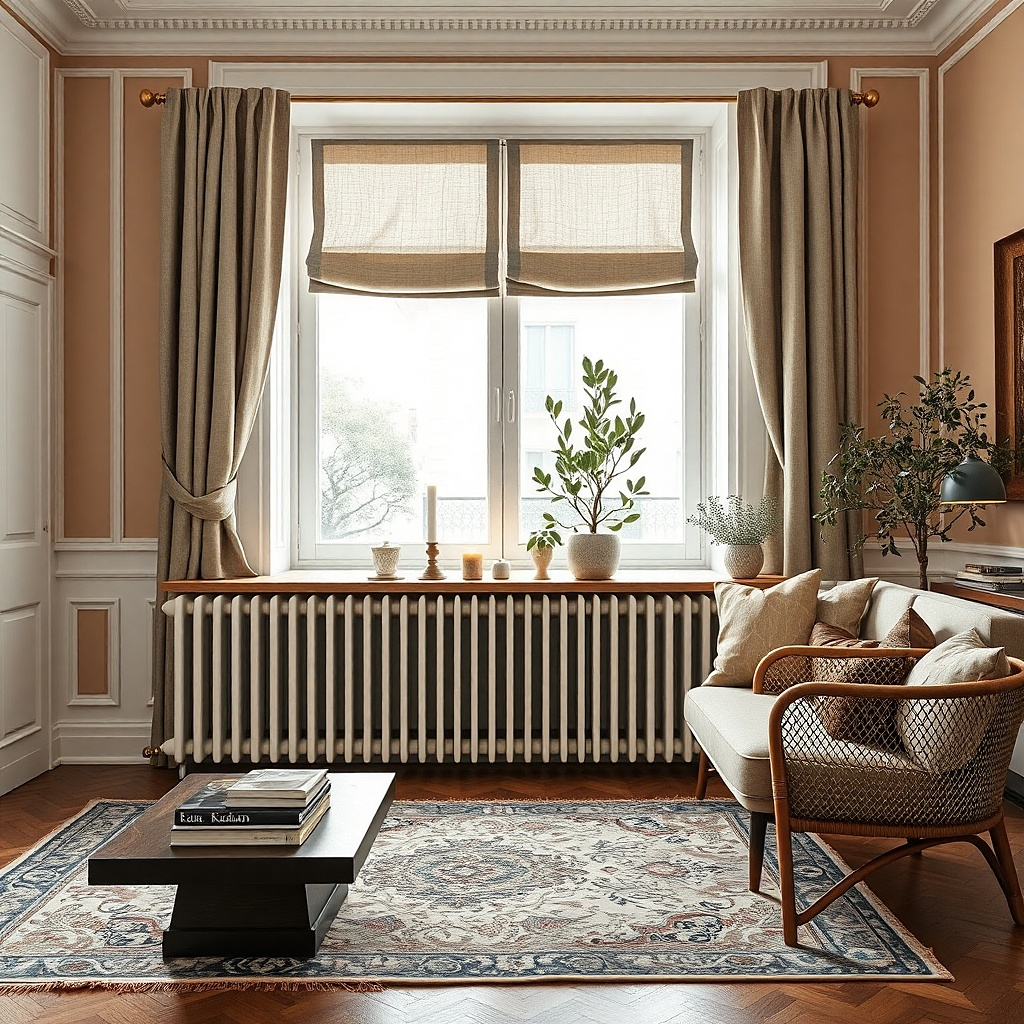
Full-length curtains are not the answer for every window. If your living room window sits over a radiator, bench, or deep ledge, short black side panels keep the look neat and avoid fabric bunching where it should not. The point is to frame the window and bring in black contrast without dropping heavy cloth into a problem spot. Done right, this looks deliberate, especially in older apartments and narrow city living rooms. The shorter length also means less dust and easier washing.
Start by measuring from the rod to either the sill, just below the sill, or the top of the radiator cover, depending on the cleanest stopping point. Then use narrow black panels with good fullness and mount the rod high so the short length still feels vertical. Keep the hem straight and crisp — this look falls apart if the panels sag or twist. It is one of the cheapest options here because shorter panels need less fabric and less tailoring.
Try thisUse a structured fabric like cotton twill for short panels. Flimsy cloth looks unfinished at café length.
Common mistakeDo not force floor-length curtains over a working radiator; the heat and dust make them a constant nuisance.
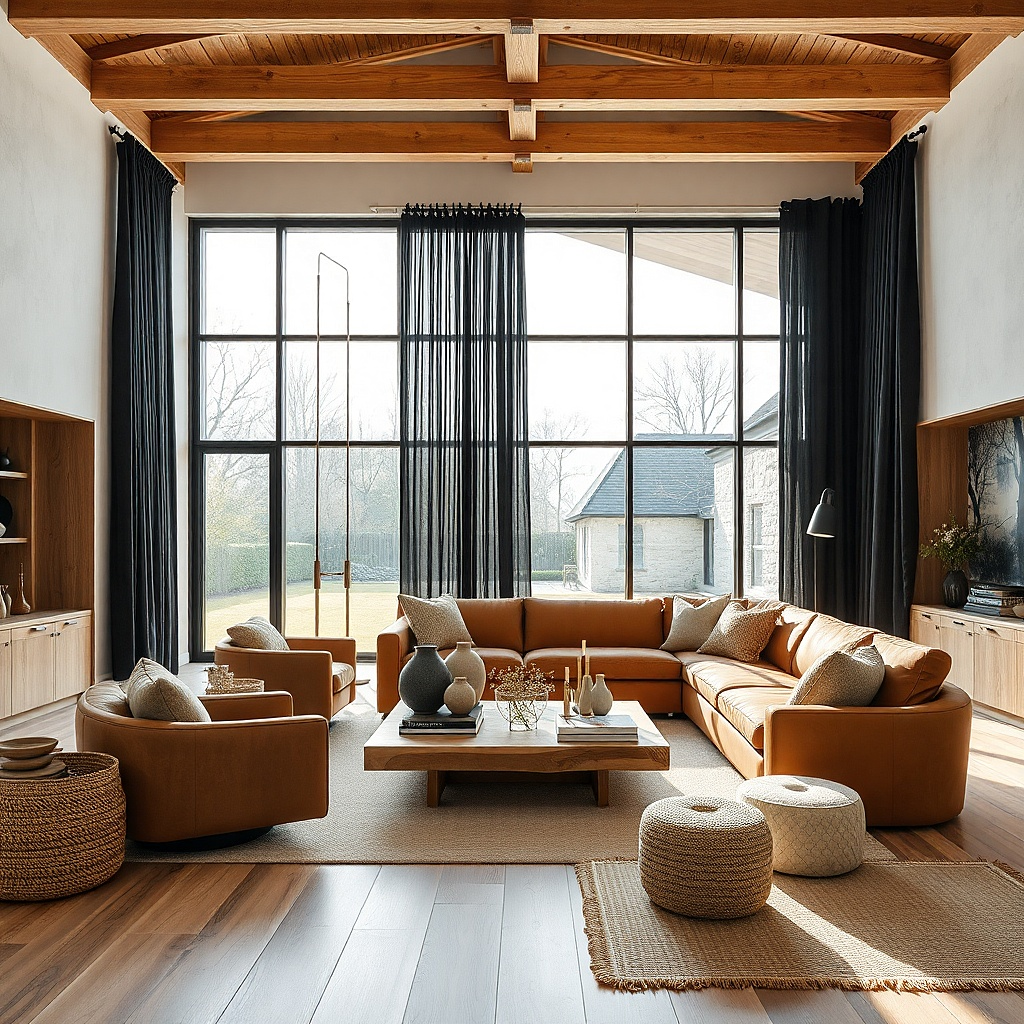
10. Black curtains against greige walls with camel leather
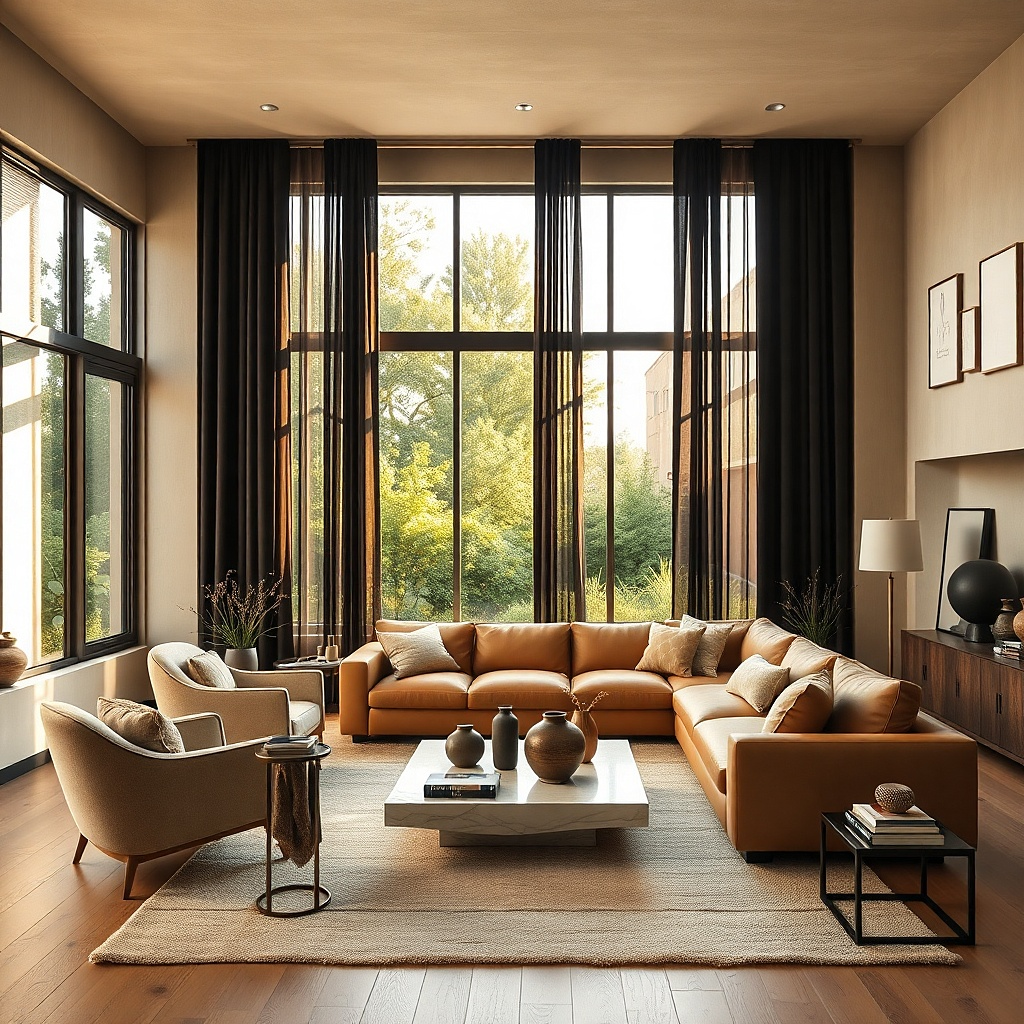
Greige walls can look washed out on their own, and black curtains give them the contrast they need. Add a camel leather chair or sofa and the room lands in a warm, grounded place instead of drifting into gray-on-gray. This color trio works because the black sharpens the edges, the greige softens the backdrop, and the camel adds warmth in the middle. It is a strong fit for suburban living rooms with standard windows and builder-grade finishes. The look is polished without feeling precious.
Start with a true greige wall that leans warm, not a cool putty with a violet cast. Then hang matte black panels and repeat the black in one or two smaller pieces such as a frame, sconce, or side table. Bring in camel through leather, faux leather, or even a cognac-toned woven ottoman if a new sofa is not on the list. This is more about color balance than construction, so the effort stays low.
Try thisA nubby ivory throw or off-white boucle pillow keeps the camel and black from feeling too dense together.
Common mistakeAvoid pairing black curtains with cool gray walls and orange-brown leather; the undertones fight each other.
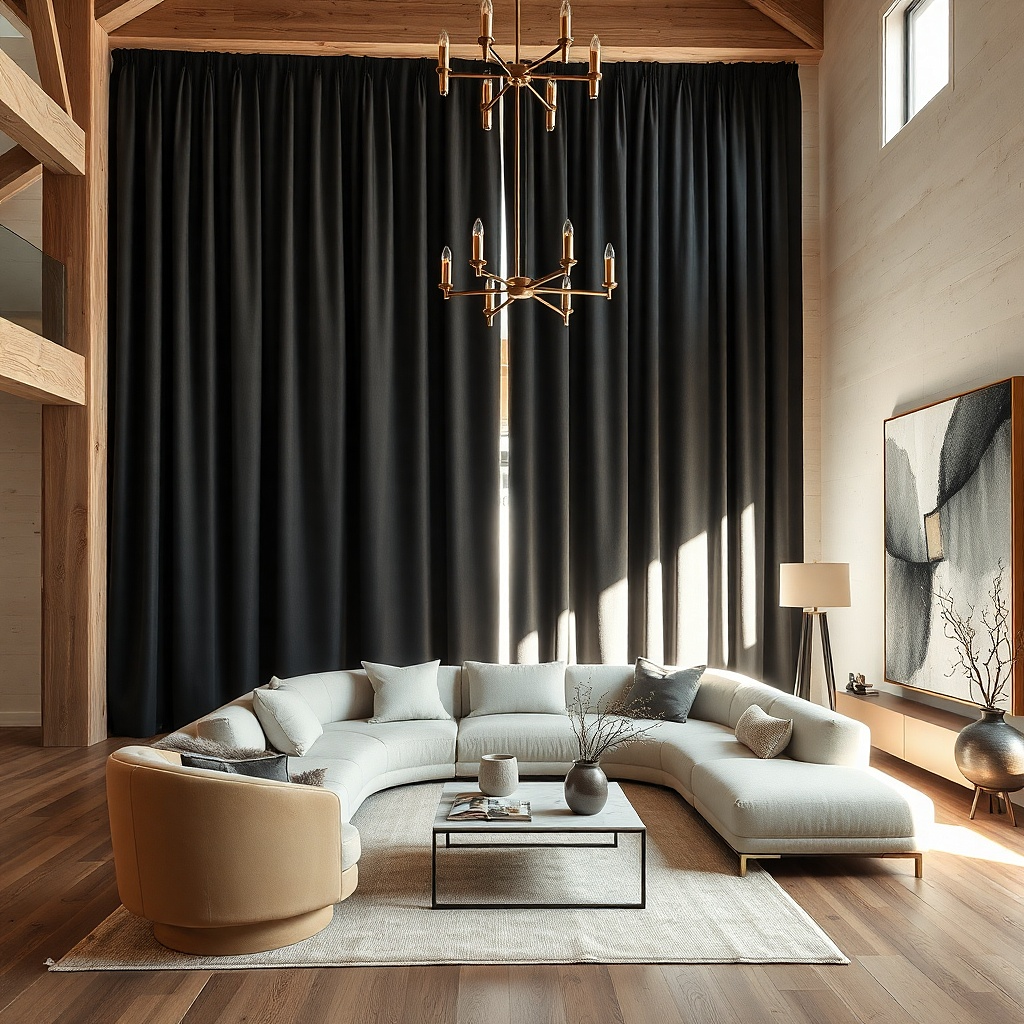
11. Two-story black panels in a bright room with large art
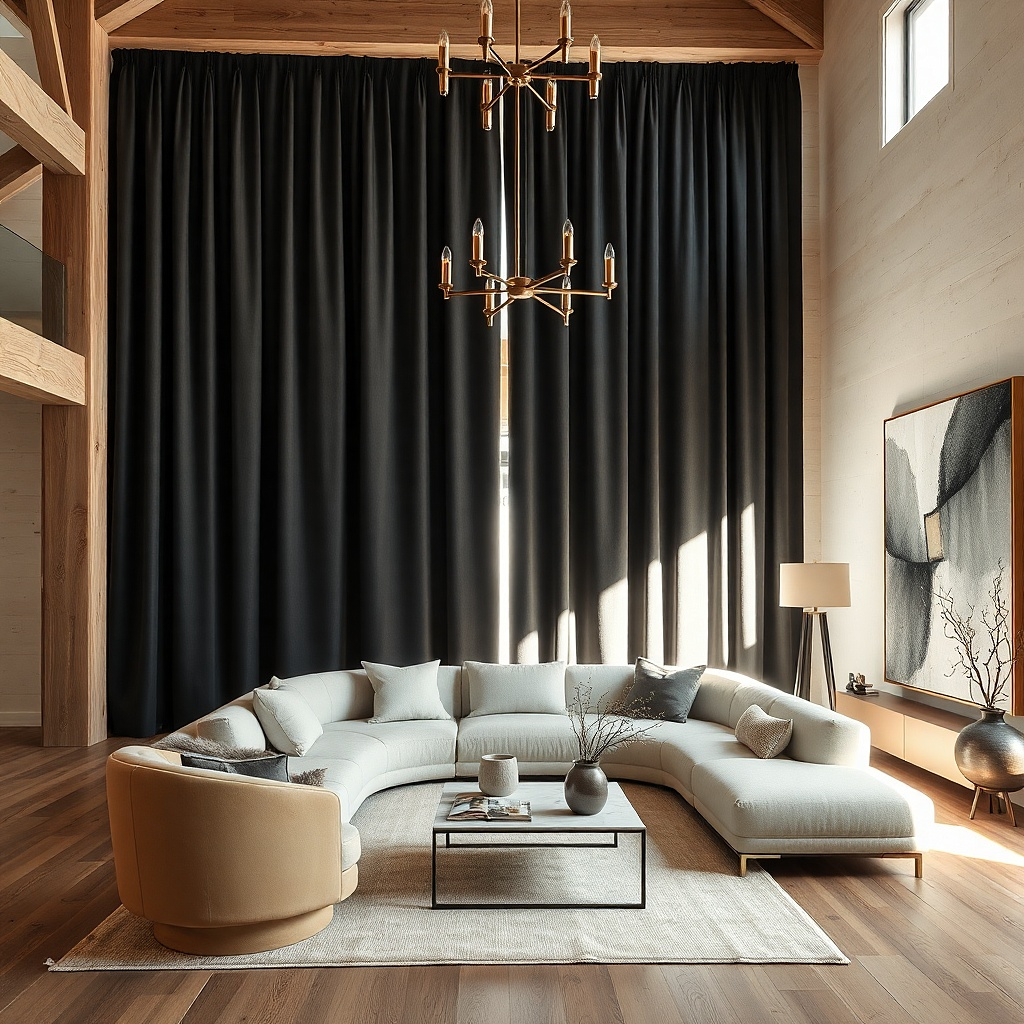
In a double-height or very tall living room, black curtains can look amazing because the scale finally matches the color weight. The trick is making sure the rest of the room has enough size to stand beside them. Large art, a substantial light rug, and a sofa with a strong silhouette keep the curtains from becoming the whole story. This setup makes the room feel anchored and dramatic in a clean way. It suits lofts, newer homes with two-story windows, and open rooms that need visual structure.
Start by using extra-long panels or custom lengths so the fabric runs in one uninterrupted drop. Then mount the rod or track as high as the architecture allows and use enough width for broad, even folds — skimpy fabric looks much worse at this scale. Keep nearby decor oversize too: think one large canvas instead of a gallery wall, and one big coffee table instead of several small pieces. This is one of the pricier looks because of fabric yardage, but it pays off in rooms that otherwise feel empty.
Try thisChoose black with a soft hand, not stiff blackout cloth, for very tall windows. The folds need to fall cleanly over that long drop.
Common mistakeDo not fill a double-height wall with lots of tiny decor next to black curtains; it makes the room feel scattered.
12. Black panels layered over woven bamboo shades
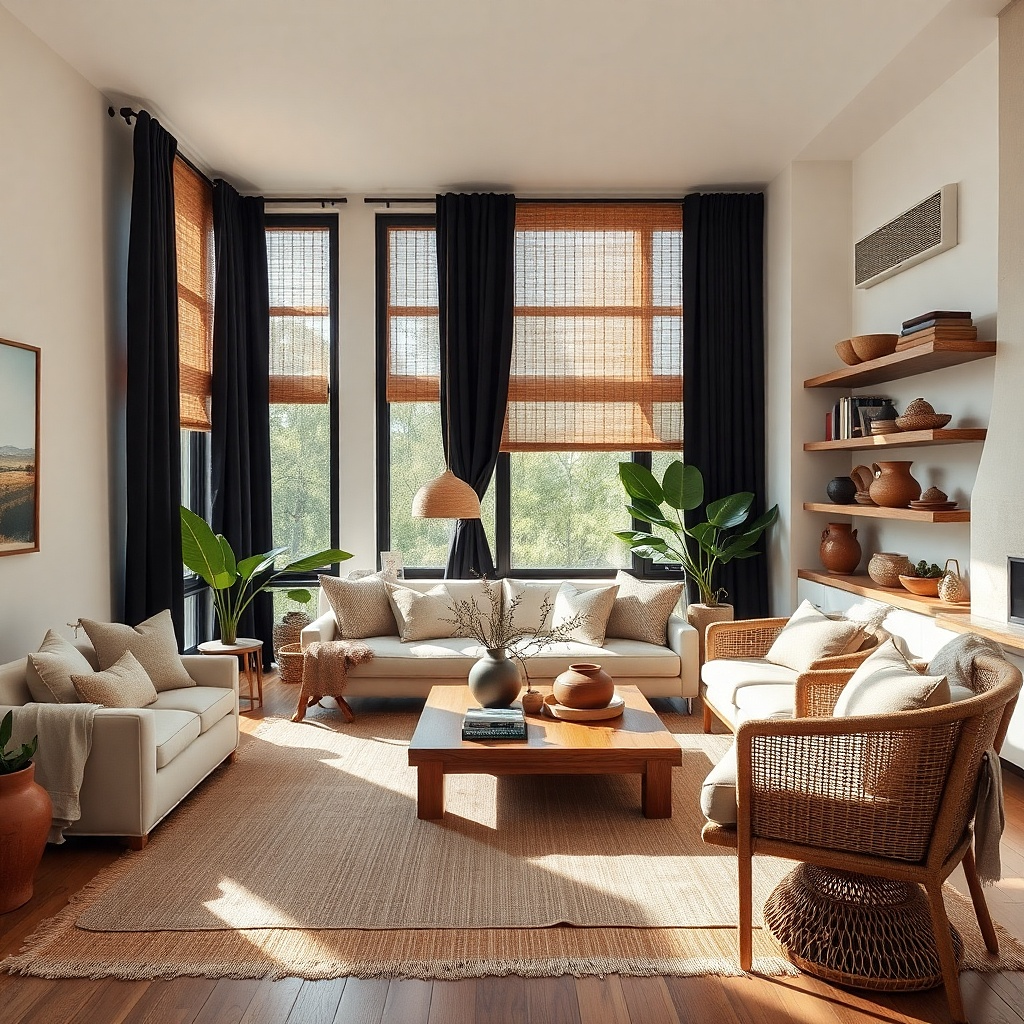
This is one of the smartest ways to lighten the feel of black curtains without changing the curtain color at all. Woven bamboo shades add a dry, natural texture in a warm tan tone, which breaks up the darkness and keeps the window from reading flat. The black panels become the outer frame while the shade handles daytime privacy. That split job is practical and attractive. It works especially well in living rooms with plants, oak floors, jute rugs, or any relaxed modern look.
Start by mounting an inside-fit woven shade close to the glass, then install the curtain rod 6 to 8 inches above the trim and wide enough that the black panels sit mostly off the window. Choose a medium honey or light teak bamboo shade rather than a very dark espresso weave. Keep the panels simple and matte so the shade texture gets room to show. Budget around $150 to $350 depending on window size and whether the shades are custom cut.
Try thisMatch the shade tone loosely to the floor or wood furniture. Near-matching wood tones look calmer than random ones.
Common mistakeSkip very busy patterned bamboo weaves with black curtains; the window starts to look chopped up.
13. Black curtains with a black window frame and light furniture
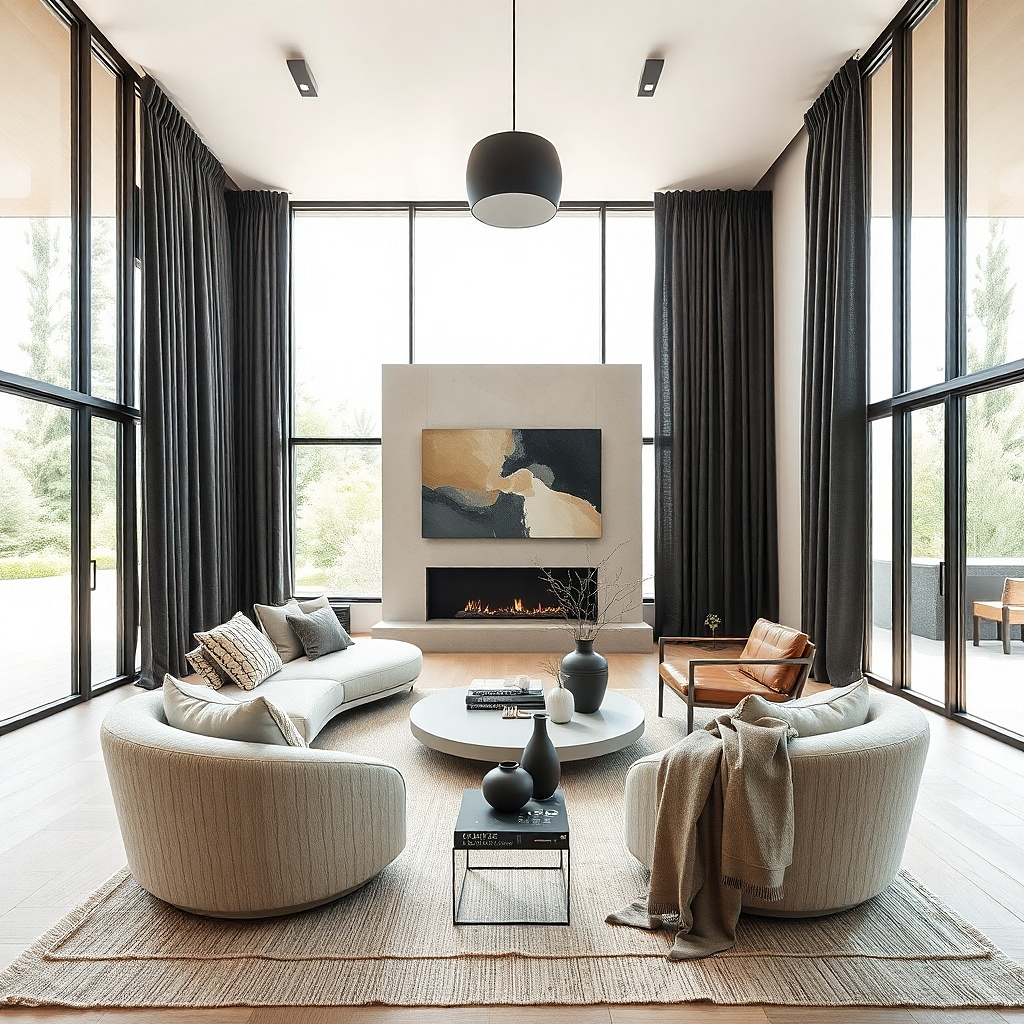
If your windows already have black frames, black curtains make complete visual sense. The frame and fabric merge into one graphic outline, which looks sharp against cream seating and pale flooring. This is one of the few setups where black on black at the window does not feel heavy because the glass still reads bright in the middle. It is especially photogenic in modern homes with steel-style windows or painted black sash. The room looks deliberate instead of pieced together.
Start by checking the undertone of the frame paint — some black frames lean soft charcoal, others read ink black. Then choose curtain fabric close enough in depth that the difference looks intentional, not off by accident. Keep furniture around the window light in color and medium in scale so the dark perimeter has breathing room. This is a low-maintenance setup because dust on black frames and black curtains reads less obvious than on dark wood blinds.
A cream sofa within sight of the window is enough to balance this look. You do not need to turn the whole room white.
Do not add black curtain tiebacks here; they clutter a window that already has strong lines.
14. Black tab-top panels in a casual room with limewashed walls
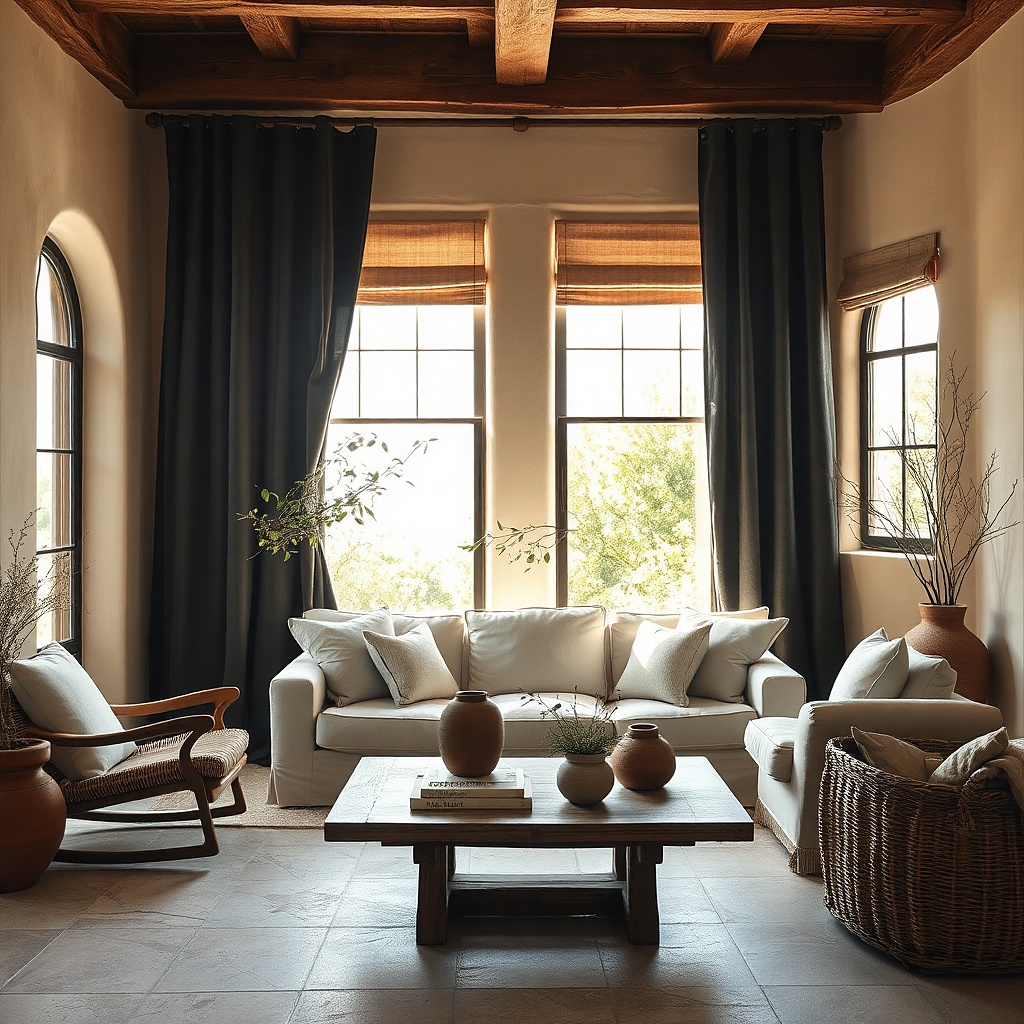
For a softer, less formal version of black curtains, tab-top panels against limewashed or chalky walls work beautifully. The wall texture keeps the room from feeling sharp-edged, and the visible tabs make the curtains feel relaxed rather than dressy. Black still gives you that strong outline around the window, but the finish of the room stays easy and lived-in. This suits bohemian, rustic modern, and Mediterranean-leaning spaces with plaster, wood, and handmade-looking pieces. It is a good answer if standard black curtains feel too severe in your room.
Start with walls in a chalky off-white, mushroom, or warm stone tone and choose black cotton or washed linen tab-top panels. Then use a simple rod in blackened steel or dark bronze and let the tabs sit evenly spaced instead of crammed together. Keep the length exact and the furniture low-slung so the room keeps its relaxed proportion. This look does not need expensive fabric to work because the charm comes from texture and finish.
Steam each tab flat before hanging. Twisted tabs make casual look sloppy instead of relaxed.
Avoid glossy paint on the walls with this setup; the contrast kills the soft plaster effect.
15. Black curtains in a small living room with one wall mirror
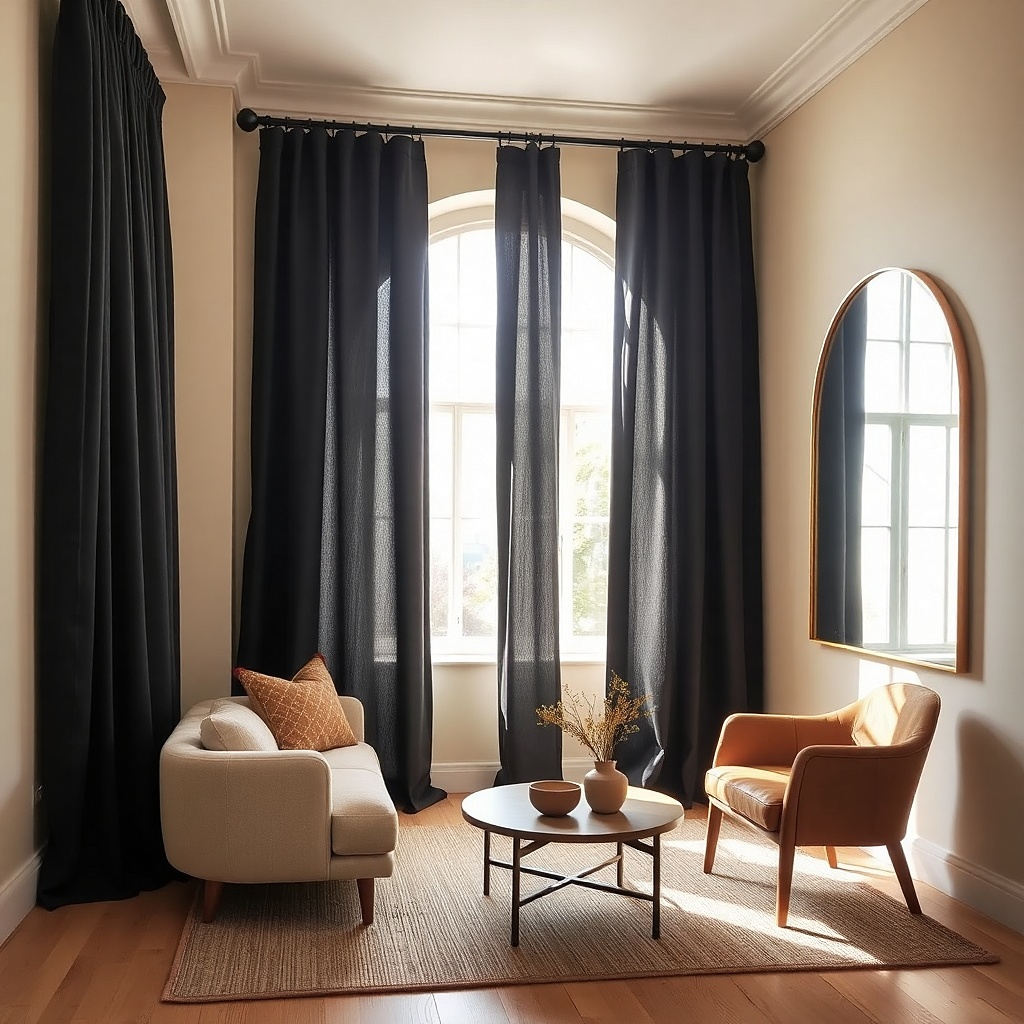
A small living room can handle black curtains if you bounce light back into the space somewhere else. One large mirror on the side wall or over a mantel is enough to keep the room from feeling boxed in. The black curtains add shape and seriousness, while the mirror returns daylight and doubles the sense of width. This combination looks smarter than trying to solve everything with pale curtains that disappear. Use it in apartments, narrow terraces, and compact sitting rooms with one main window.
Start by hanging the black panels high and wide so the exposed glass area is as large as possible during the day. Then place a mirror where it catches the window light at an angle, not directly opposite if the reflection will show clutter. Keep the mirror frame slim — black, brass, or oak all work — and avoid adding several smaller mirrors around it. This is a practical fix with strong visual payoff and very little installation work beyond the curtain rod.
Try thisChoose a mirror at least 30 by 40 inches in a small room. Tiny mirrors do not pull enough light to matter.
Common mistakeDo not pair black curtains with heavy dark furniture on every wall in a small room; the room loses air fast.
16. Black curtains with off-white boucle and a stone fireplace
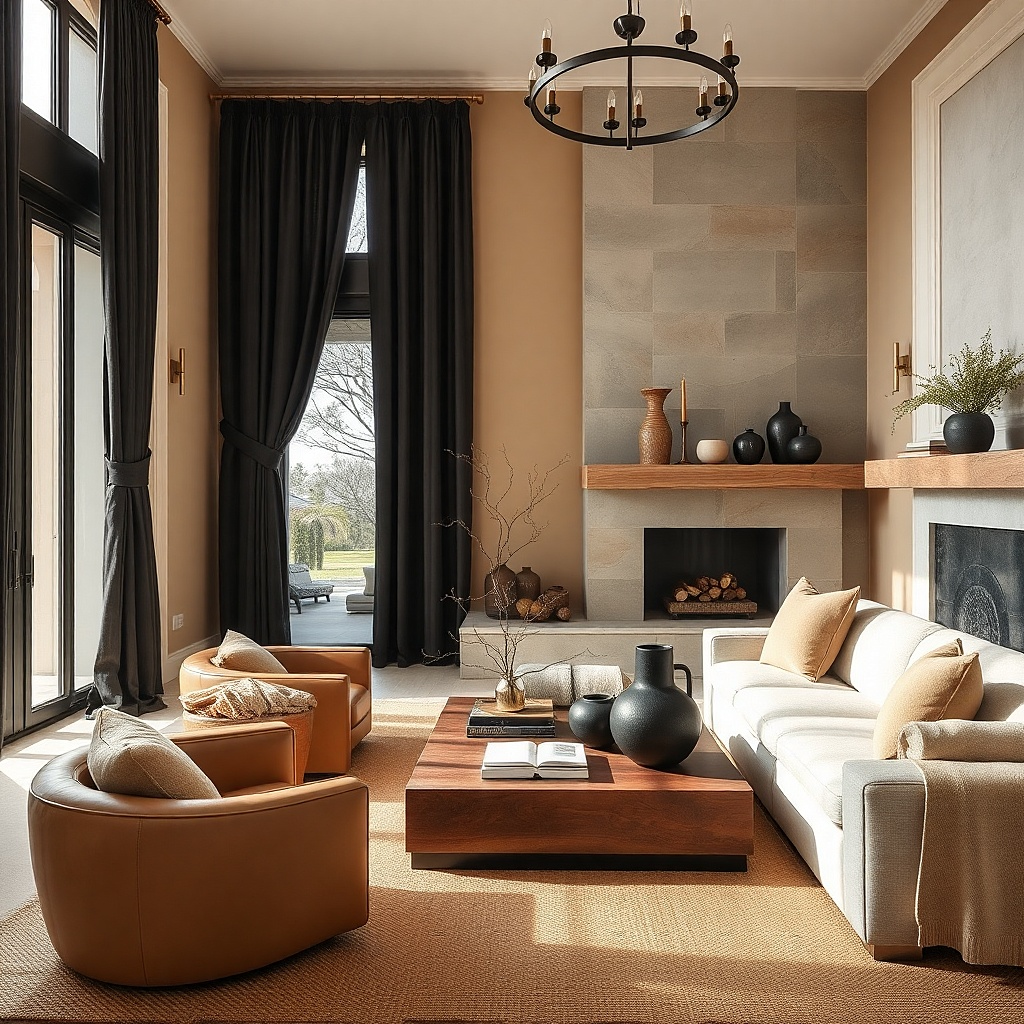
This mix works because every element has a clear job. The black curtains bring strong vertical lines, the boucle gives soft texture, and the stone fireplace adds weight in a lighter, mottled tone. Black stops the room from drifting into beige mush, which happens a lot in neutral living rooms. At the same time, the stone and boucle keep the black from reading flat or severe. This setup looks expensive in photos because the textures are doing real work, not because it relies on trendy clutter.
Start with simple black panels in a matte weave and place them near a fireplace wall that already has stone, limewash, or another textured surface. Then add one or two off-white boucle chairs or pillows so there is a soft, tactile counterpoint close to the curtains. Keep the coffee table and side tables simple — oak, travertine-look, or black metal all fit. The styling effort stays low because the texture mix carries the room.
Try thisIf your stone has cool gray in it, pick off-white boucle instead of creamy ivory so the palette stays coherent.
Common mistakeSkip shiny black fabric with boucle and stone; the gloss looks cheap next to textured materials.