1. Oatmeal linen panels hung near the ceiling
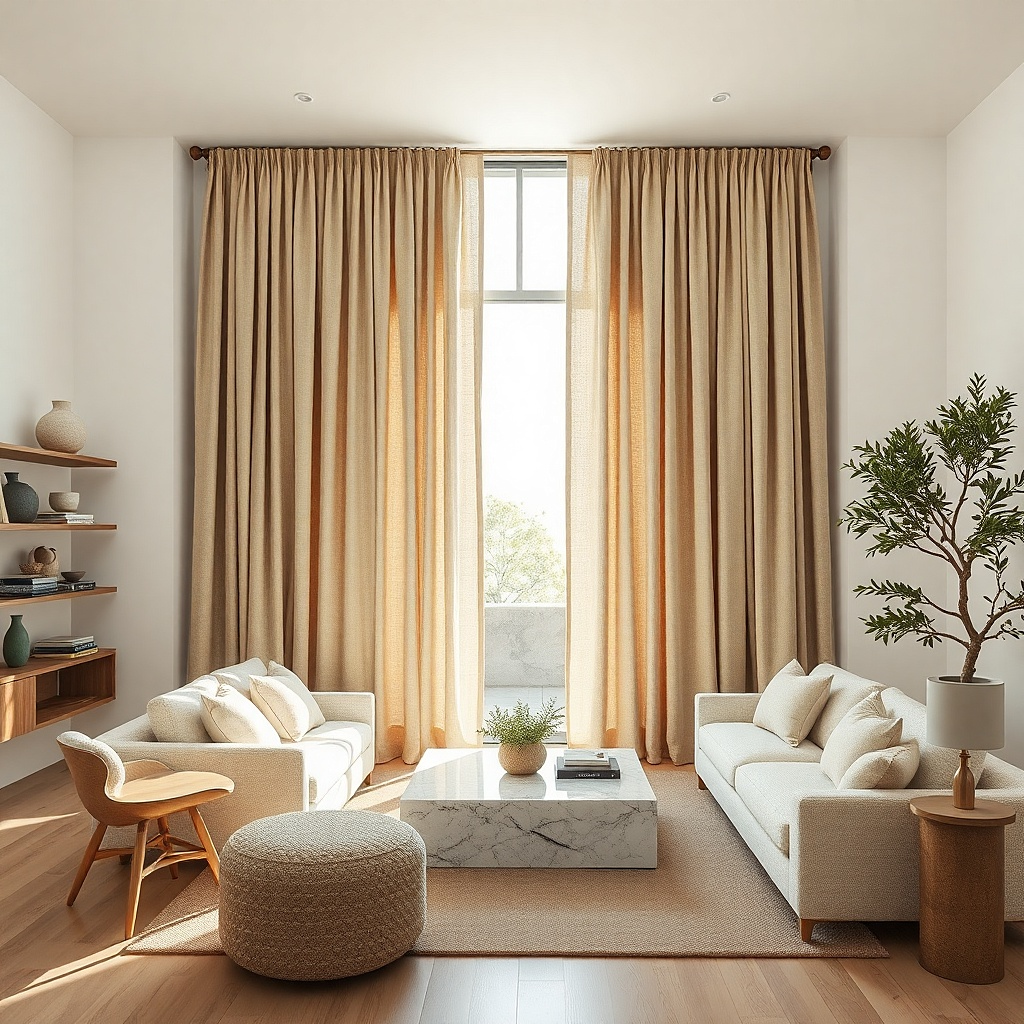
Start by measuring from 2 inches below the ceiling to just skim the floor, then buy panels that are 2 to 4 inches longer than that measurement so you can hem for a precise break. Then install a slim rod 6 to 8 inches wider than the window frame on each side and use panels with a combined width about twice the glass width for proper folds. Finally, steam the linen well and train the pleats by hand for a day or two so the fabric falls in long vertical lines. Expect to spend about $60 to $140 for a pair in a decent linen blend.
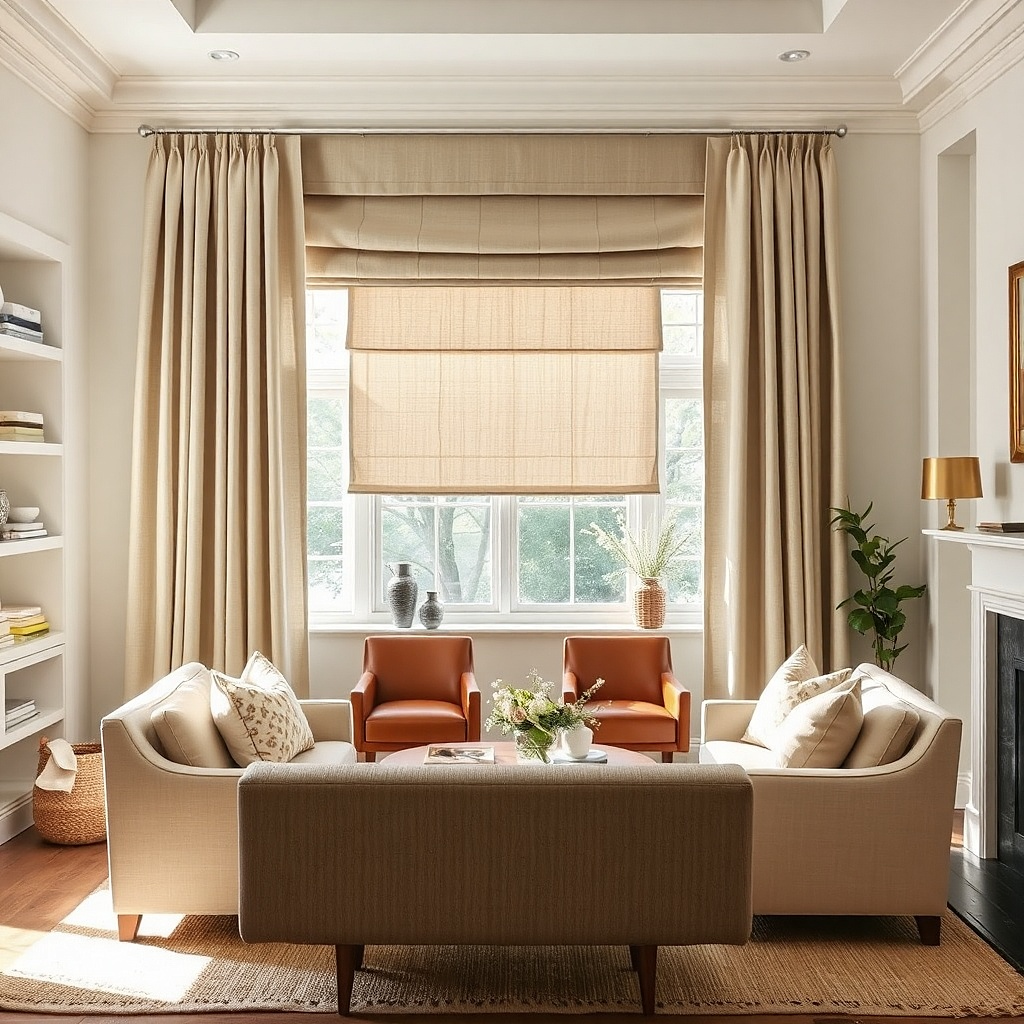
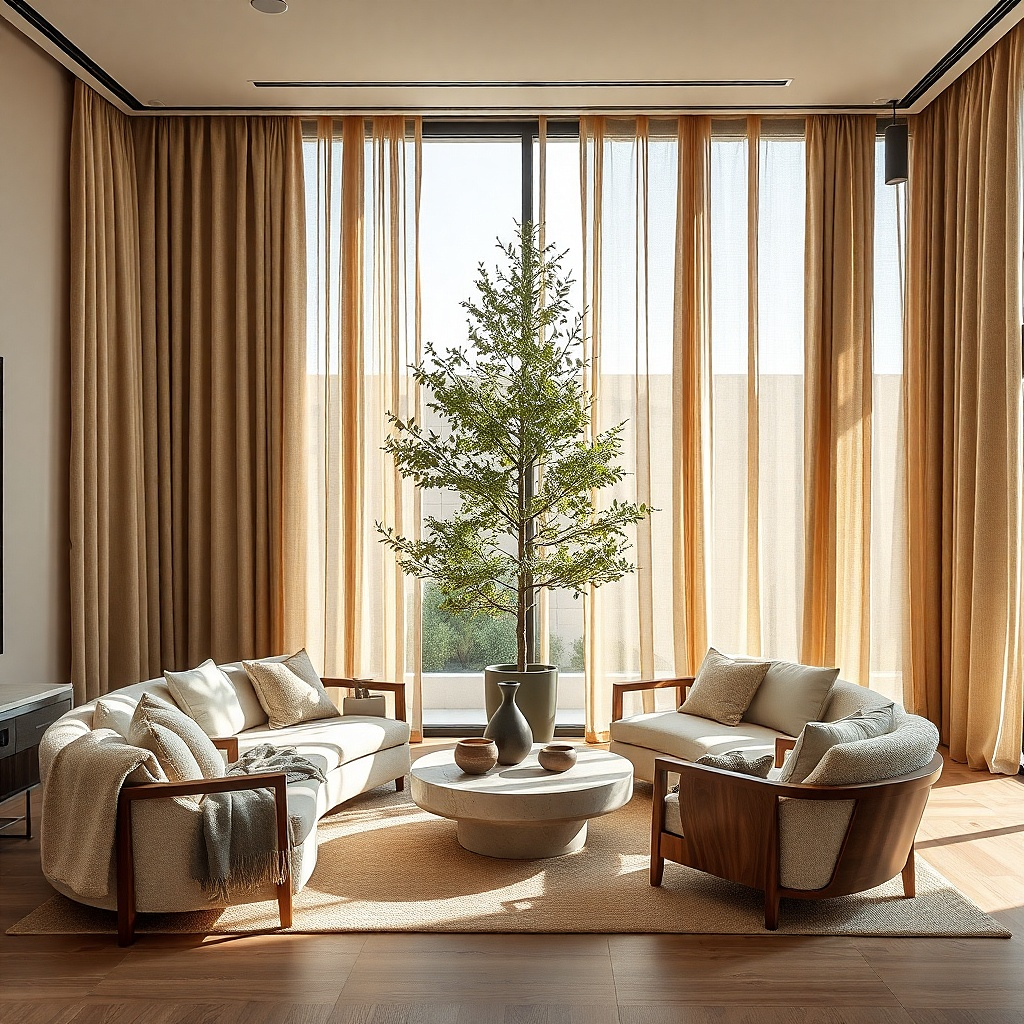
This is the cleanest beige curtain move for a small apartment. Choose an oatmeal linen or linen-blend panel with a visible slub so the fabric catches light in tiny highs and lows instead of reading like one blank block of tan. Hung close to the ceiling, the panels pull the eye up and make short walls feel taller. The warm oat tone softens white walls, pale oak furniture, and cream upholstery without turning the room yellow. It suits living rooms that already have a light, calm palette and need softness more than drama.
Common mistakeDo not hang oatmeal linen directly at the top of the window trim unless your ceilings are already high.
Try thisPick a rod in brushed brass or soft black. Both give pale beige curtains a sharper outline against light walls.
2. Double-layer beige sheers and sand drapes
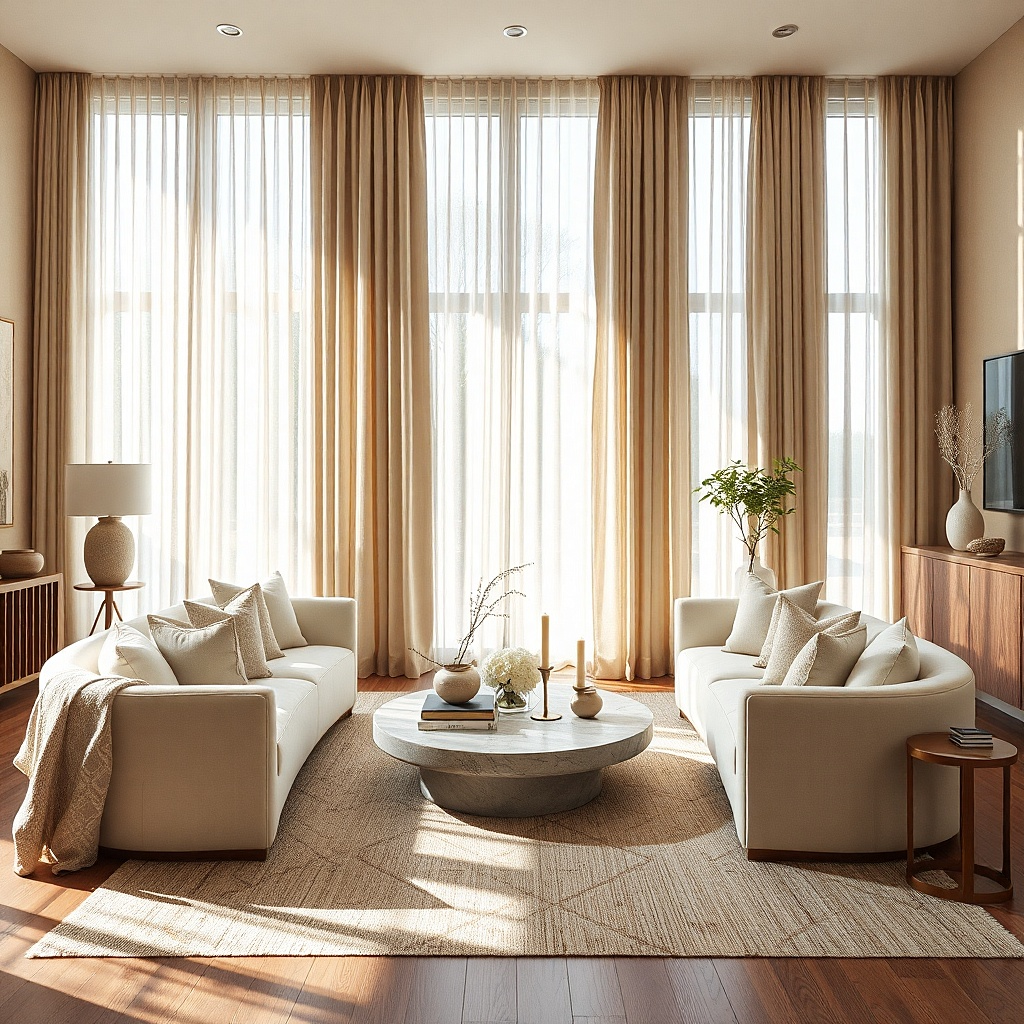
Start with a double rod set that projects at least 4 inches from the wall so the two layers do not crush each other. Then hang the sheer layer first in a light almond or pale flax voile, and add fuller outer panels in sand or biscuit with a width ratio of about 2.25 times the window width. Finally, keep the outer panels tied back lightly or pushed to the edges during the day so the sheer does most of the light work. A full setup lands around $90 to $220 depending on fabric quality and rod finish.
If the goal is soft, bright, and layered, this is the strongest option in the whole list. Put a pale beige sheer on the inner rod and a slightly darker sand panel on the outer rod so the window has depth even when both layers are open. The sheer blurs harsh daylight and apartment views, while the outer drape frames the window and adds body. Using two beige tones keeps the look calm but still dimensional. This works especially well in living rooms with one main window that needs to look bigger and more dressed.
Common mistakeSkip bulky blackout panels on the outer layer if the living room already lacks daylight.
Try thisKeep the two beige shades within two steps of each other. A big jump from ivory to dark taupe looks choppy in a small room.
3. Greige beige pinch-pleat curtains for cool-toned rooms
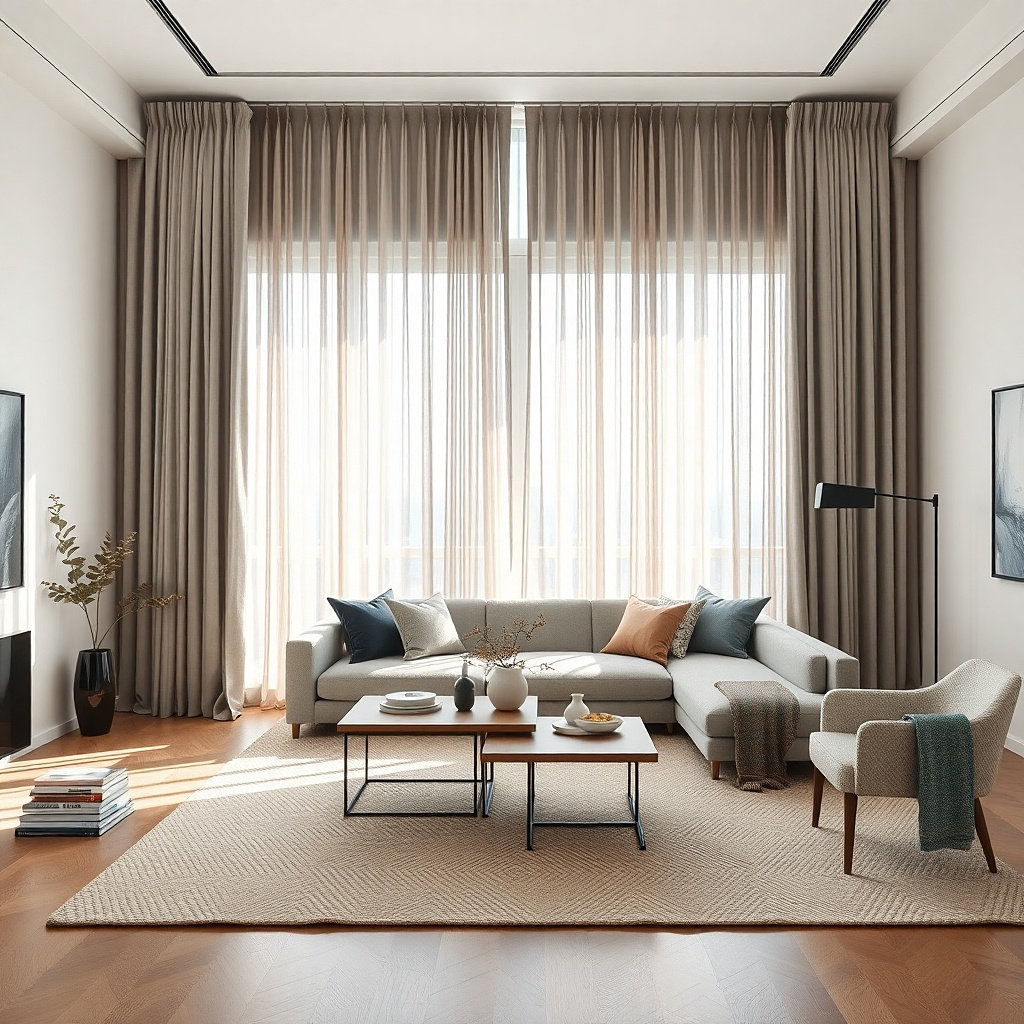
Start by choosing a fabric with a matte finish, such as cotton-linen blend or polyester-linen blend in putty, mushroom, or greige beige. Then use drapery hooks and rings or a track system so the pleats stay evenly spaced instead of bunching unpredictably. Finally, let the hem either kiss the floor or float a quarter inch above it if the room gets dusty fast. Plan on about $80 to $180 for ready-made pinch-pleat panels and basic hardware.
Warm beige can look wrong fast in an apartment with gray floors, chrome lamps, or crisp white walls. A greige beige curtain fixes that. The gray-beige undertone keeps the room soft without fighting cooler finishes, and a pinch-pleat top gives the fabric structure that reads more tailored than grommets. Those repeated pleats create shadow lines, which is what gives beige depth in photos and in real life. This look suits modern living rooms with clean furniture and a slightly cooler palette.
Common mistakeDo not pair cool greige curtains with very yellow cream walls unless you want the curtains to look dull.
Try thisUse a white or color-matched ceiling track if you want the curtain line to disappear and the fabric to look taller.
4. Ivory-beige voile that pools one inch on the floor
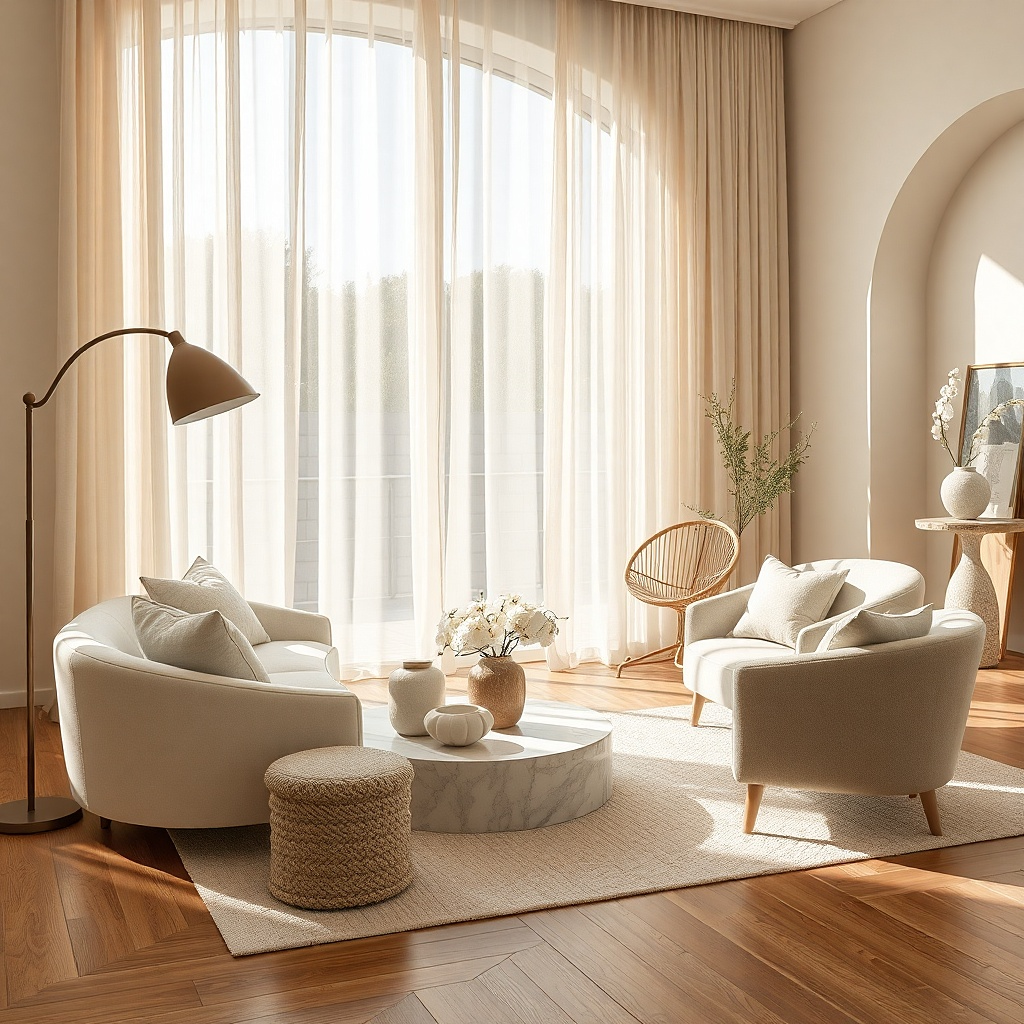
A tiny floor puddle changes the mood of a small living room more than people expect. With sheer ivory-beige voile, that extra inch on the floor creates a gentle, relaxed drape that looks softer than a hard stop at the hem. The fabric still keeps the room bright because light passes through it, but the pooled edge adds a layered, styled feel. This is best in low-traffic corners, apartment sitting rooms, or windows behind a sofa where the hem will not get kicked around. It looks especially good with pale wood, boucle, and rounded furniture.
Start by measuring for a finished length that is 1 inch longer than floor length, not 3 or 4 inches, because a small room does not need a dramatic puddle. Then choose a washable voile or polyester sheer in a warm ivory-beige so maintenance stays realistic. Finally, steam the bottom edge and arrange the fabric by hand into two or three loose folds instead of one messy heap. This is one of the cheaper looks here at roughly $35 to $90 for a pair.
Use thin curtain weights in the hem if the voile twists or lifts from radiator air or open windows.
Skip floor pooling if the window sits beside the entry path or near a pet bed.
5. Flax beige cotton-linen with a black rod
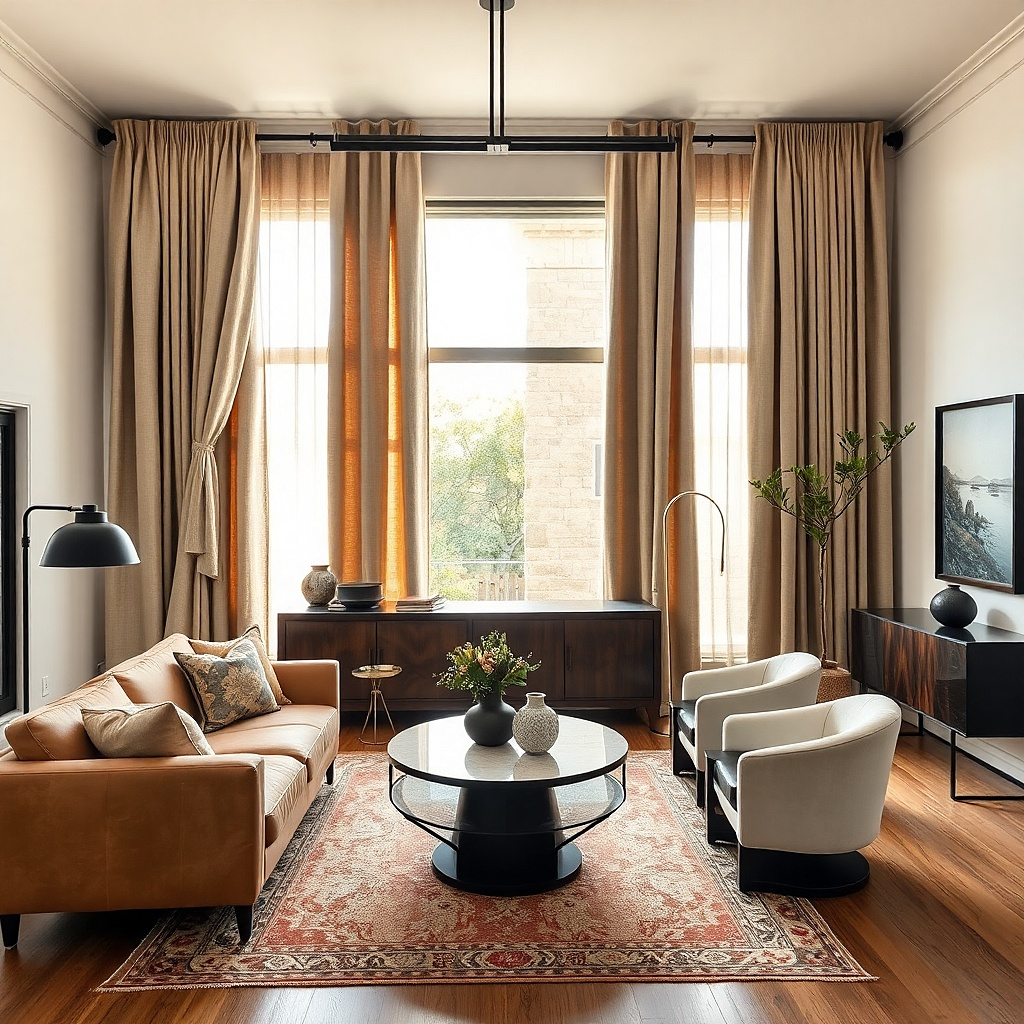
Start by choosing a rod with a slim profile, around 3/4 inch to 1 inch thick, so the line looks clean instead of heavy. Then hang flax beige panels with back tabs or rings for soft folds and place the rod 5 to 7 inches above the trim and 8 inches wider than the frame. Finally, repeat the black finish in one or two other room details so the rod does not look random. Budget about $70 to $160 all in.
Beige can disappear into a pale room unless something frames it. A black rod fixes that in one move. Flax beige cotton-linen has enough warmth and texture to keep the room soft, while the black hardware gives the window a crisp border that photographs well and helps the folds stand out. The contrast looks especially good in apartments with black picture frames, a black floor lamp, or a dark coffee table. It suits renters who want a stronger, more intentional look without using patterned curtains.
Common mistakeDo not use chunky farmhouse-style finials in a tight apartment living room.
Try thisA matte black rod looks calmer than glossy black against beige fabric.
6. Soft taupe-beige velvet for one drafty window
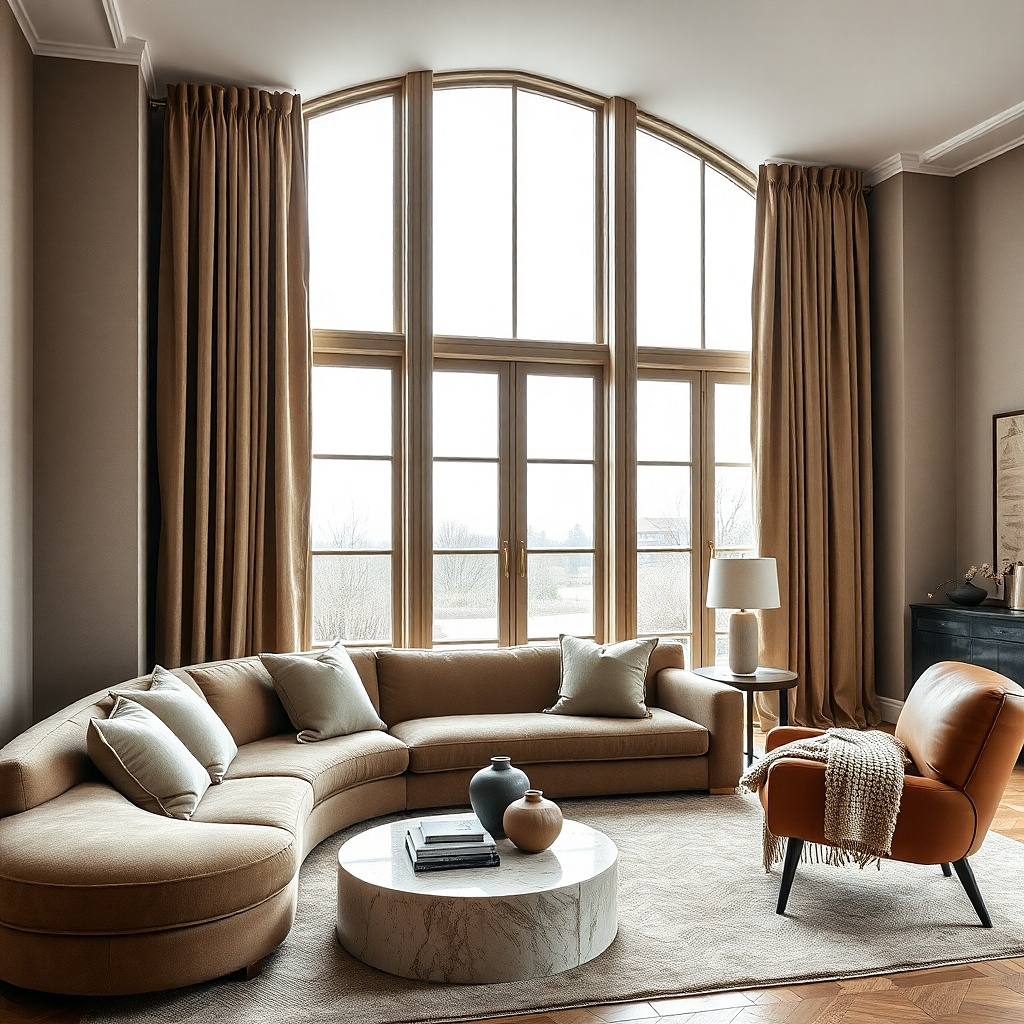
If your small apartment living room has one drafty window, thin curtains will look pretty and do very little. Soft taupe-beige velvet brings warmth, thicker folds, and a cushioned look that still stays light enough for a small room if the color sits closer to beige than brown. Velvet catches light in darker and lighter passes across each fold, which gives the layered effect without needing a second panel. This works best in older buildings, north-facing rooms, or living rooms with plain walls that need more visual depth. Choose a low-pile velvet, not shiny stage velvet.
Start with lined velvet panels in a pale taupe-beige and keep the rod mounted high and wide so the fabric stacks mostly off the glass when open. Then limit fullness to about 2 times the window width instead of 2.5, because velvet is thicker and stacks wider. Finally, use sturdy wall anchors and a stronger rod since velvet weighs more than linen or voile. Expect a price range of about $120 to $280 for a pair plus hardware.
If the room is dark, choose velvet with a cotton look or matte polyester finish so it absorbs less light.
Skip deep camel or chocolate-beige velvet in a tiny living room with one weak window.
7. Biscuit beige café curtains under full-length side panels
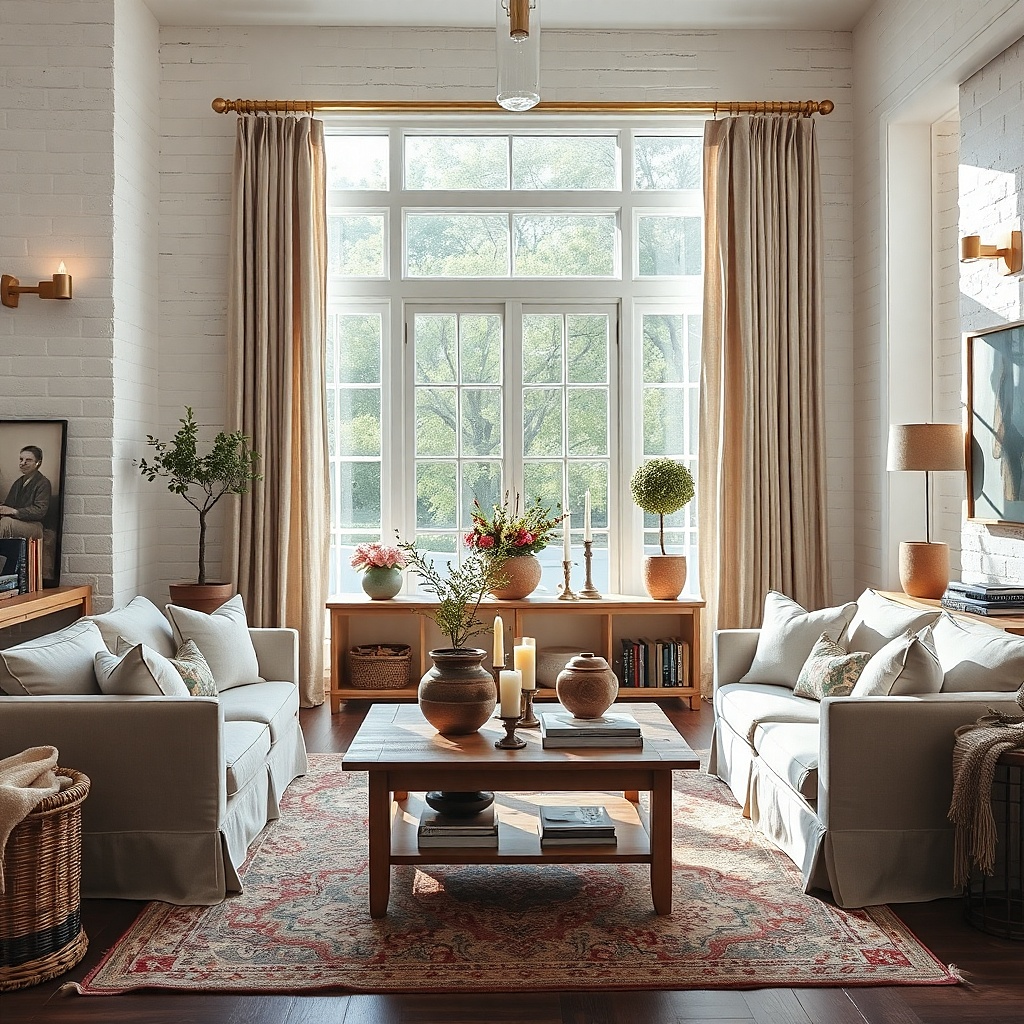
Start by mounting a slim tension rod or small café rod at the halfway point of the lower sash, then use light-filtering fabric that still lets light through. Then install the full-length beige side panels on a separate rod near the ceiling and keep them mostly decorative, just framing the window edges. Finally, match the undertones closely — biscuit with biscuit, almond with almond — so the two layers read as one plan. This setup can stay under $100 if you use simple ready-made pieces.
This is a smart fix for a first-floor apartment where privacy matters all day. A biscuit beige café curtain covers the lower half of the window, while full-length side panels keep the room dressed and taller-looking. The split treatment lets daylight pour through the upper glass, so the room stays bright instead of boxed in. Visually, you get horizontal softness at the bottom and long vertical lines at the sides. It works best on street-facing windows or any living room where blinds alone look bare.
Common mistakeDo not mix bright white café curtains with warm beige side panels unless the room already has a sharp black-and-white scheme.
Try thisPleat the café curtain lightly rather than gathering it densely. Too much bunching blocks more light than you want.
8. Beige stripe sheers for a little pattern without heaviness
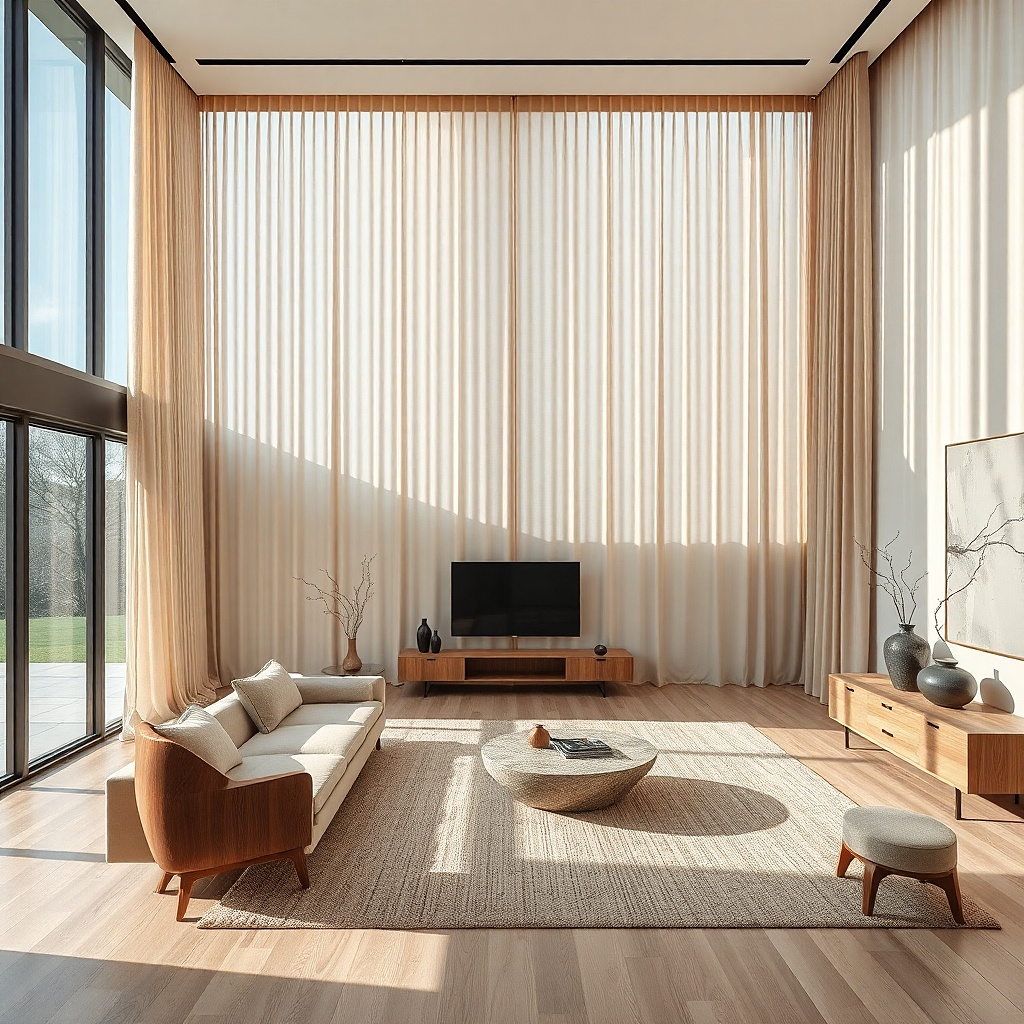
Start by choosing stripes that are narrow, around 1/4 inch to 1/2 inch, with enough spacing that the panel still reads mostly solid from across the room. Then hang the sheers on rings or a hidden tab top so they fall straight and keep the stripe vertical. Finally, pair them with a simple roller shade if you need night privacy instead of adding another bulky curtain layer. Good ready-made striped sheers usually run about $40 to $90 a pair.
Plain beige is not the only way to keep things soft. A sheer with a woven vertical stripe in beige adds pattern so quietly that the room still feels calm. The stripe gives the eye something to follow, which helps the window feel taller, and the translucency keeps daylight moving through the room. This is a good pick for living rooms with solid-color sofas and plain walls that need a little life without a loud print. Stick to stripes woven into the fabric, not printed on top.
Common mistakeSkip wide cabana-style stripes because they take over a small apartment living room.
Try thisUse this in rooms with low ceilings. The vertical line does quiet visual work all day.
9. Almond beige ripple-fold curtains on a ceiling track
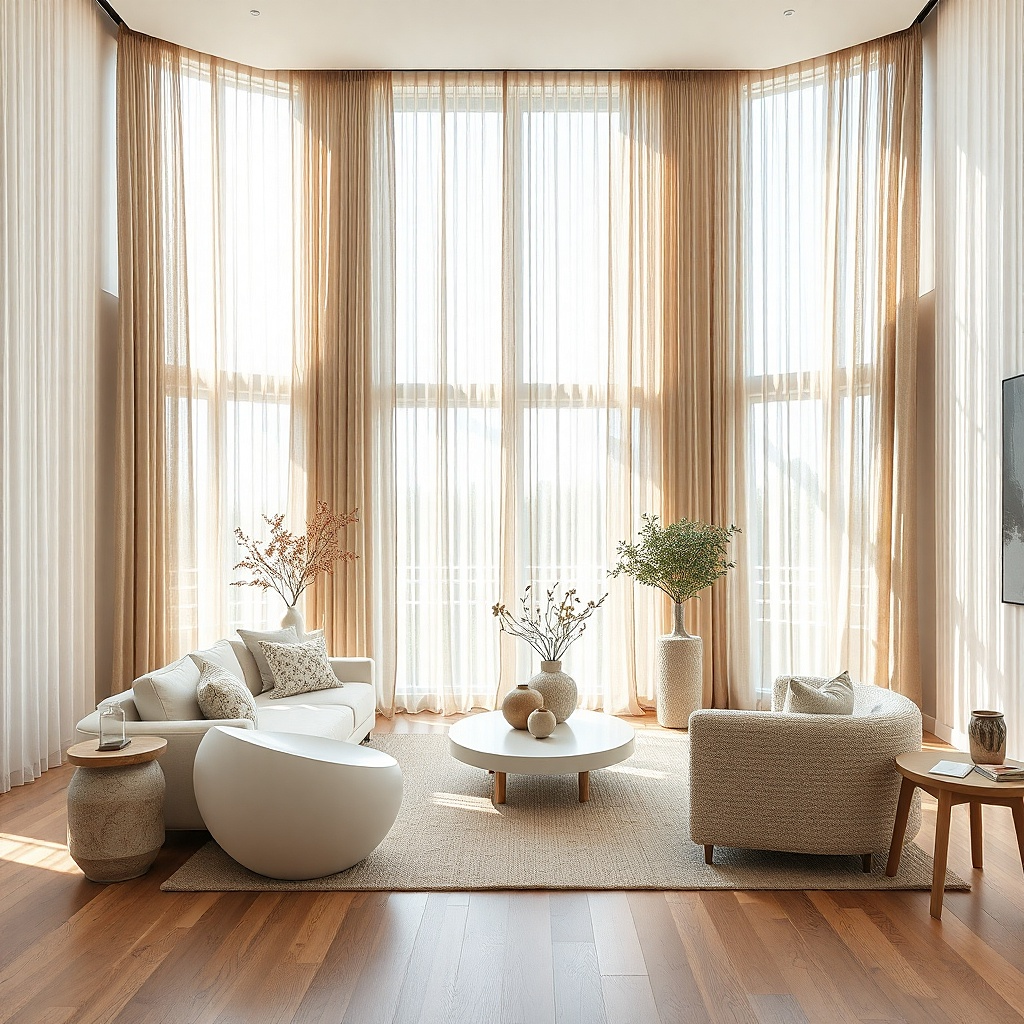
Start by mounting a ceiling track 2 to 3 inches out from the wall so the curtain clears trim and any radiator below. Then order ripple-fold panels to the exact finished width of the track system, because this style relies on the carrier spacing for its shape. Finally, choose a medium-weight fabric with some body so the waves hold instead of collapsing. This is a pricier route, often around $150 to $350 depending on track length and panel fabric.
Ripple-fold curtains give one of the neatest, most architectural drapes you can get in a small apartment. The folds repeat at the same depth all the way across, which keeps beige looking clean and intentional instead of limp. In almond beige, the effect is soft enough for a living room but still polished. A ceiling track also erases visual clutter from brackets and finials, so the fabric line reads taller and calmer. This suits modern apartments, studio layouts, and windows that share a wall with shelving or a sofa.
Common mistakeDo not fake a ripple-fold look with random clip rings. It never hangs the same way.
Try thisMatch the track color to the ceiling for the cleanest line.
10. Natural beige bamboo shade with soft side drapes
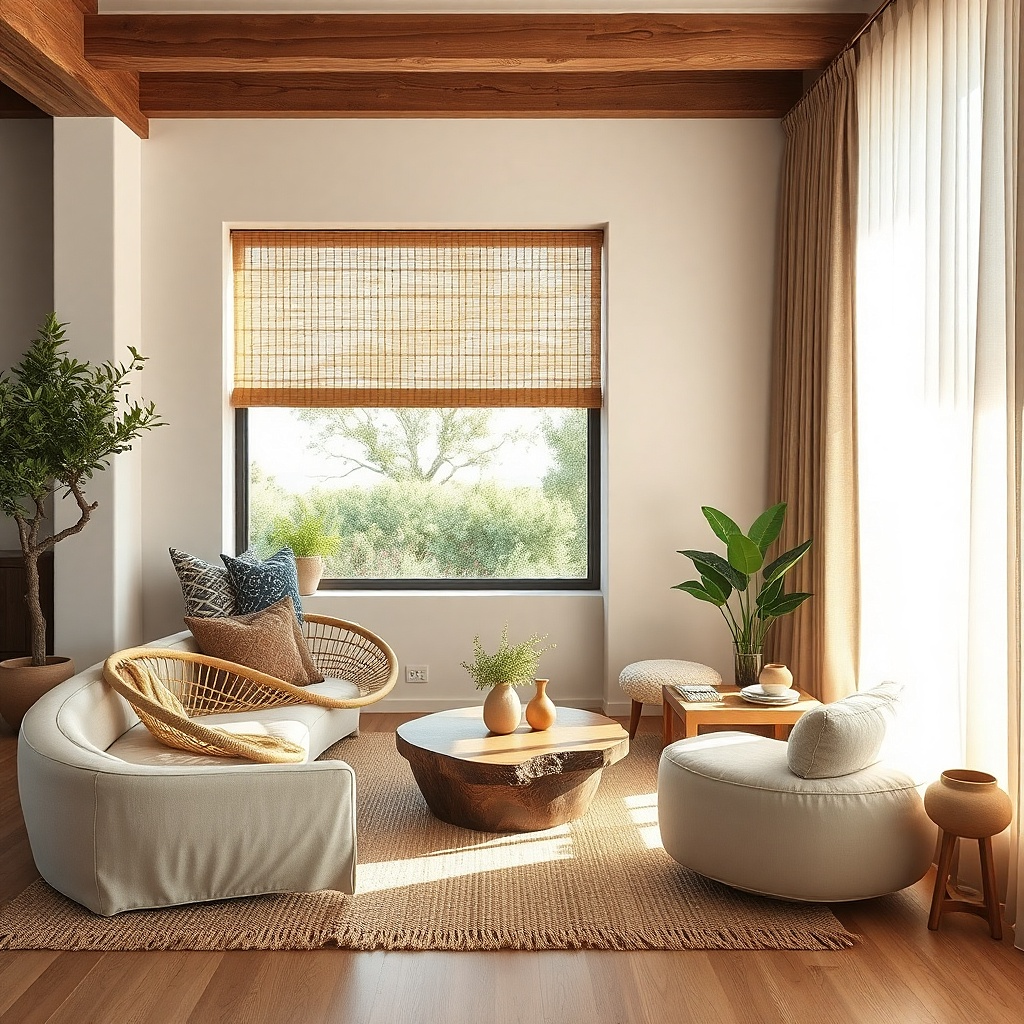
Start with an inside-mounted woven wood shade in a light natural tone so the window frame stays visible and the room feels less crowded. Then add full-length beige drapes outside the frame, mounted high and wide, using a fabric one step lighter than the shade for contrast. Finally, check the shade liner before buying — privacy liner if the window faces neighbors, unlined if you want maximum glow. A decent woven shade plus simple drapes can total about $140 to $300.
This pairing gives texture fast. A natural beige bamboo or woven wood shade adds a dry, organic surface at the window, and soft side drapes keep the room from feeling hard or beachy. The contrast between structured shade and fluid fabric creates the layered look in a much more interesting way than two fabric panels alone. Beige works well here because it links the two materials without matching them exactly. This is a strong choice for apartments with cane furniture, jute rugs, oak floors, or plants near the window.
Common mistakeSkip orange-toned woven shades if your beige curtains lean cool or gray.
Try thisChoose bamboo with fine reeds, not chunky slats. Fine texture looks better scaled to a small room.
11. Monochrome beige wall and curtain pairing
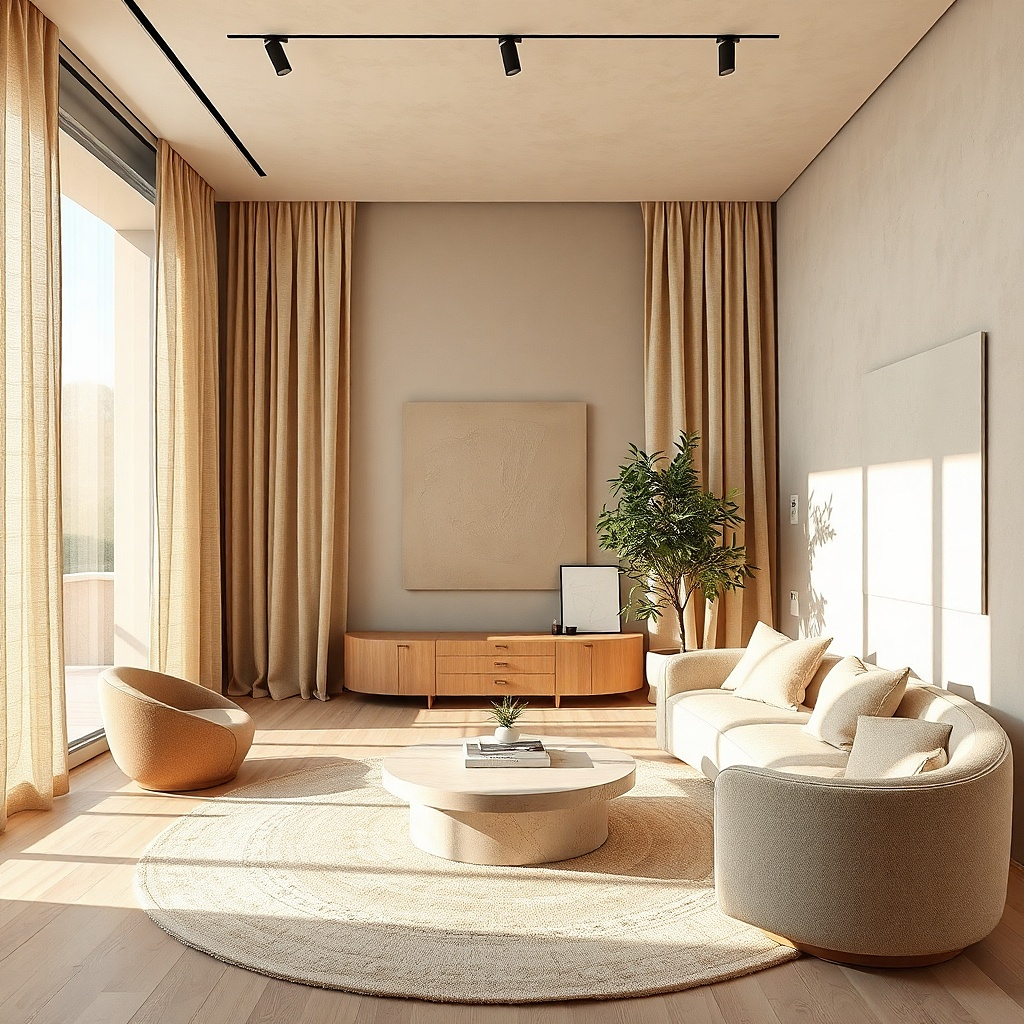
Start by taking a paint chip or fabric swatch to the window in daylight and compare it directly against the wall color at noon and late afternoon. Then choose a curtain with texture — slub linen, basketweave cotton, or a soft matte weave — so the fabric still has presence even though the color is close. Finally, use hardware in the same color family as the wall or trim so the line stays quiet. Costs vary by fabric, but this look does not need expensive material to work.
Curtains close to the wall color make a small room feel calmer because the eye hits fewer hard breaks. The trick is not exact matching. Pick curtains either one shade lighter or one shade darker than the wall so there is still enough separation to see the folds. On beige walls, that creates a cocoon effect that still stays bright if the fabric is light-filtering. This works especially well in apartments with awkward window placement because the window treatment blends into the room instead of chopping the wall into pieces.
Common mistakeDo not match wall and curtain so perfectly that the window disappears into a flat beige slab.
Try thisIf the wall is warm beige, choose a curtain with slightly paler threads woven through it for a softer glow.
12. Cream-beige blackout lining behind airy front panels
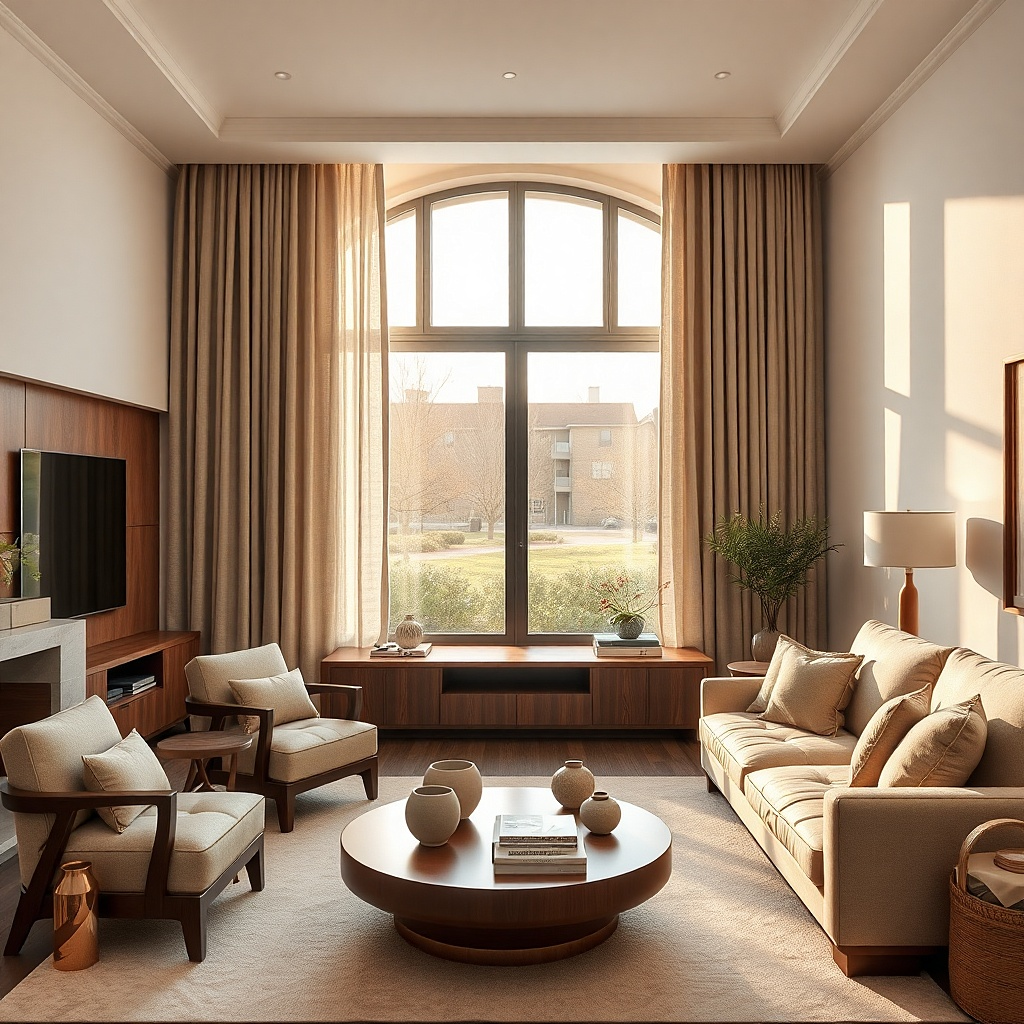
Start by looking for lined panels where the front fabric still has texture and movement, not stiff hotel-style blackout drapes. Then hang them with enough fullness that the face fabric forms proper folds, because flat blackout panels look cheap fast. Finally, keep the color pale on the room side and let the lining stay off-white or ivory behind it. Expect around $90 to $200 for lined ready-made panels.
Some apartment living rooms need glare control for TV viewing, but heavy blackout curtains kill the light and look too thick. The better move is a soft front fabric in cream-beige with a hidden blackout lining stitched behind it. From the room side, you still see an airy woven beige surface. At night or during direct sun, the lining does the practical work. This gives you softness and brightness in appearance, with real function built in.
Common mistakeSkip bright white blackout backing if your front curtain is a warm beige and your window is visible from outdoors.
Try thisA sateen lining blocks light well, but a brushed lining looks less stiff from the side.
13. Short wall-to-wall beige curtains behind a sofa
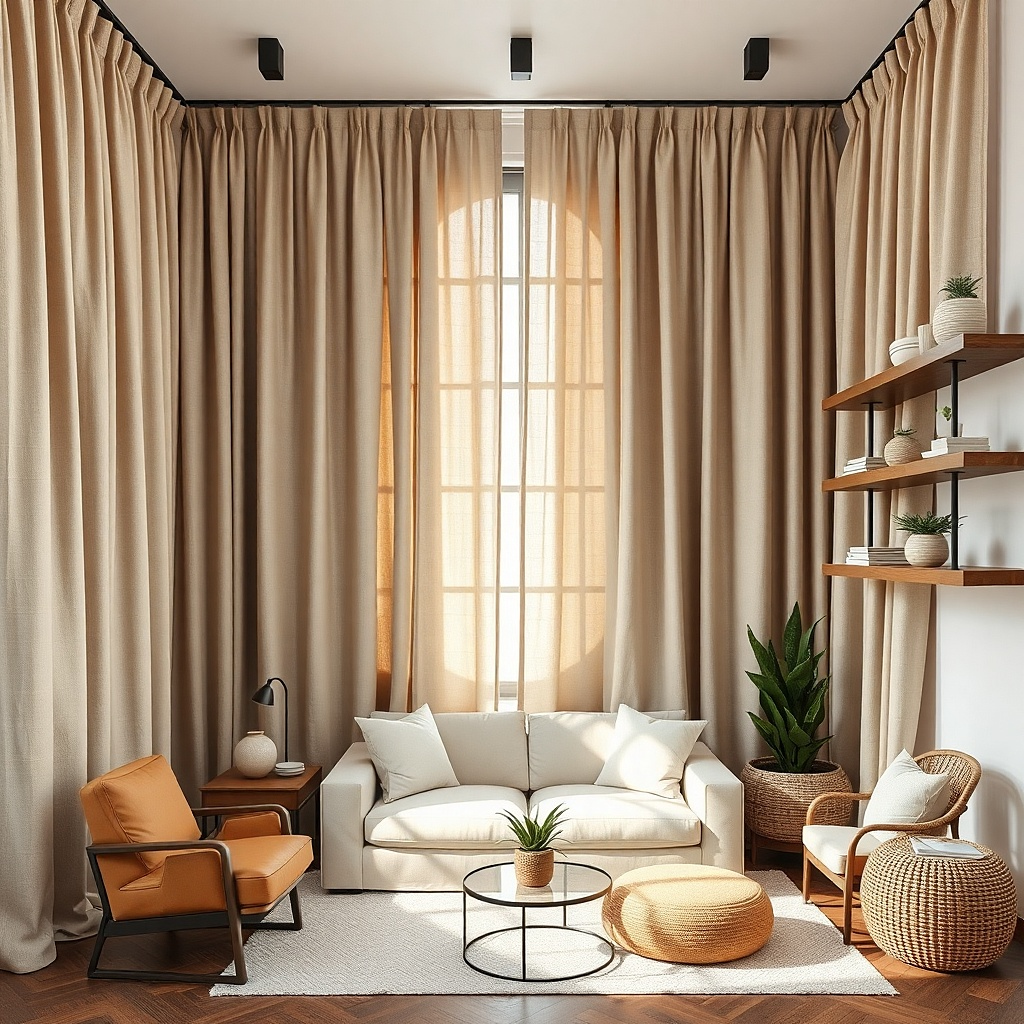
Start by measuring the full wall width and subtract 4 to 8 inches total so the stack does not crash into adjacent corners or shelves. Then mount the rod high and use enough panel width to cover most of the wall in soft folds, even if the actual window is much smaller. Finally, keep the hem just brushing the floor behind the sofa so cleaning stays manageable. Material cost depends on wall width, but the visual payoff is huge.
If the window sits directly behind the sofa, narrow curtain placement makes the whole setup feel cramped. Running beige curtains nearly wall to wall solves that. The fabric creates a soft backdrop for the sofa, the window looks wider than it is, and the room gains a hotel-like layer without much floor space. Beige is especially good here because it does not fight the sofa silhouette or artwork. This setup is photogenic from every angle in a small living room.
Common mistakeDo not stop the rod only 2 inches past the window if the sofa already fills the wall.
Try thisUse this trick on ugly off-center windows. The wider curtain span hides the awkward placement.
14. Sand beige tab-top curtains for a relaxed soft fold
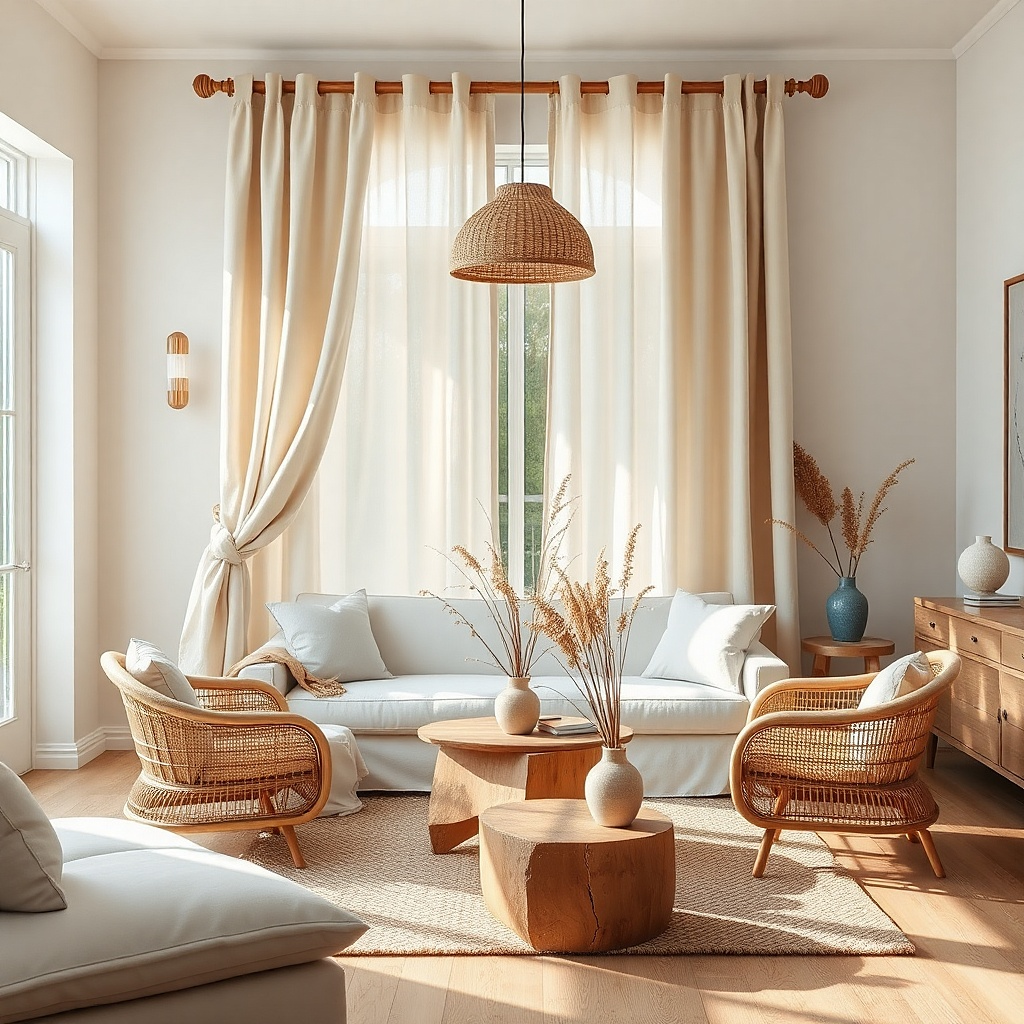
Tab-top curtains have a casual drape that suits small apartments with softer, less formal furniture. In sand beige, they look easy and warm without reading fussy. The tabs break up the top edge in a gentle way, and the folds below them are looser than pinch pleats or grommets. This style works best in laid-back living rooms with slipcovered chairs, cotton rugs, and light wood. It is not the sharpest look, but it is one of the softest.
Start with a fabric that has some drape, such as washed cotton or cotton-linen blend, because stiff fabric makes tab tops stick out awkwardly. Then use a rod that looks good exposed since the tabs leave much of it visible — wood, brass, or matte black all work. Finally, keep the tabs narrow and evenly spaced so the top line does not look clunky. This is an easy ready-made option at about $40 to $110 a pair.
Steam each tab flat before hanging. Twisted tabs make the whole curtain look cheaper.
Skip tab tops in very formal rooms or on thick blackout fabric.
15. Mushroom-beige panels with a tonal border band
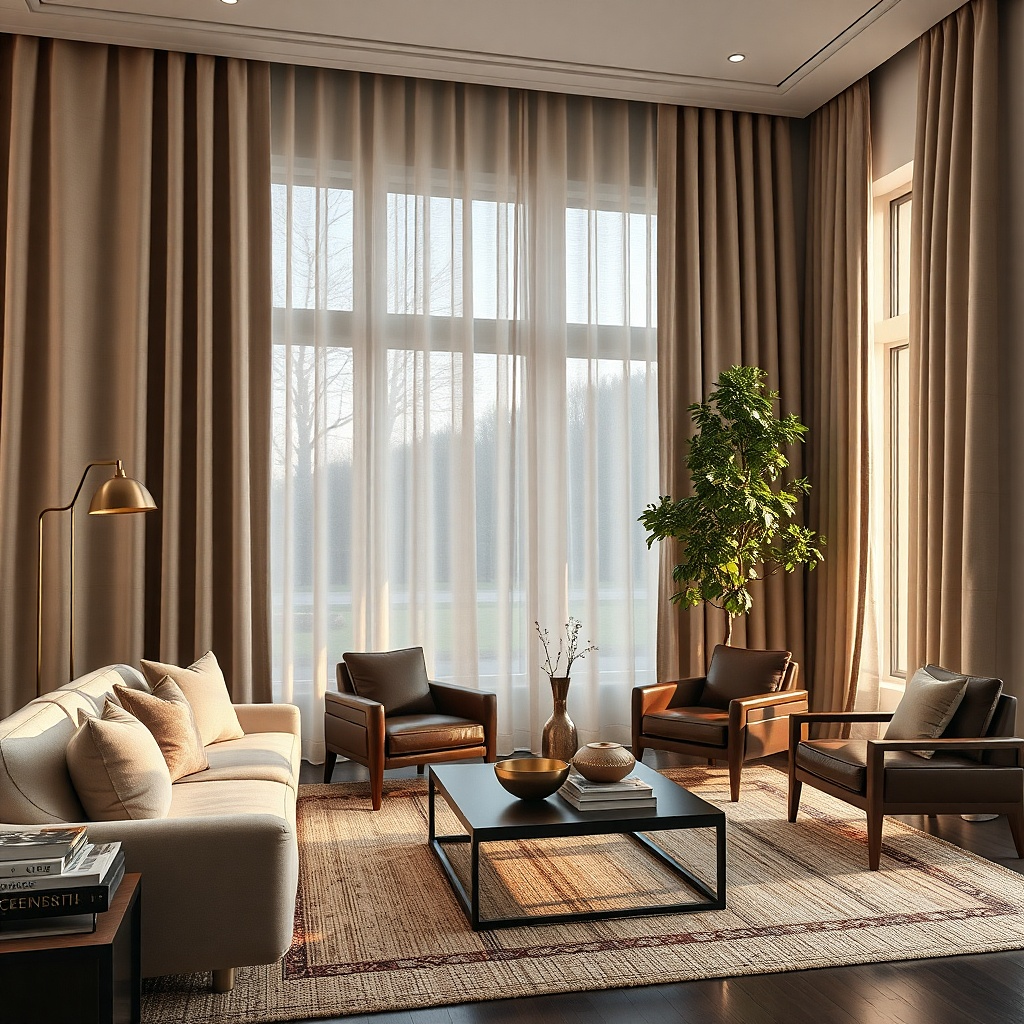
Start with plain beige panels and either buy them with a woven border or have a trim band sewn on by a local alterations shop. Then keep the border narrow and tonal so it reads as detail, not decoration. Finally, use simple hardware and let the edge face inward where the two panels meet so the trim frames the glass. Customizing ready-made curtains this way usually costs less than ordering fully custom drapes.
A tonal border band gives beige curtains shape without using a loud contrast trim. Think mushroom-beige panels with a 2-inch to 3-inch band in deeper taupe-beige along the leading edge or hem. That slight change in tone sharpens the curtain outline and makes the folds more visible, which helps the room feel layered. It is a strong choice if your living room is very plain and needs definition but still needs to stay light. The effect is polished without feeling formal.
Common mistakeDo not choose a dark espresso or black border if the goal is soft and bright.
Try thisA vertical border on the inner edge makes the window look taller than a heavy horizontal band at the bottom.