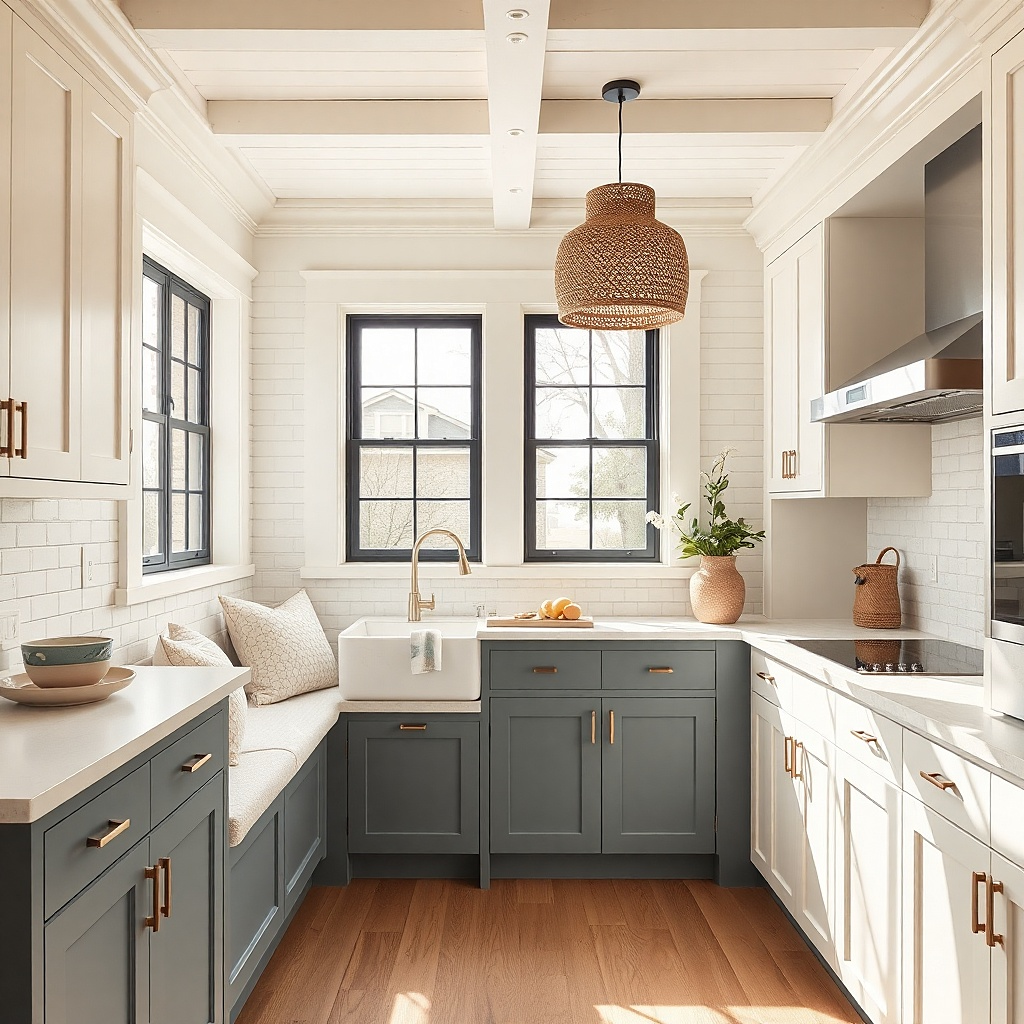
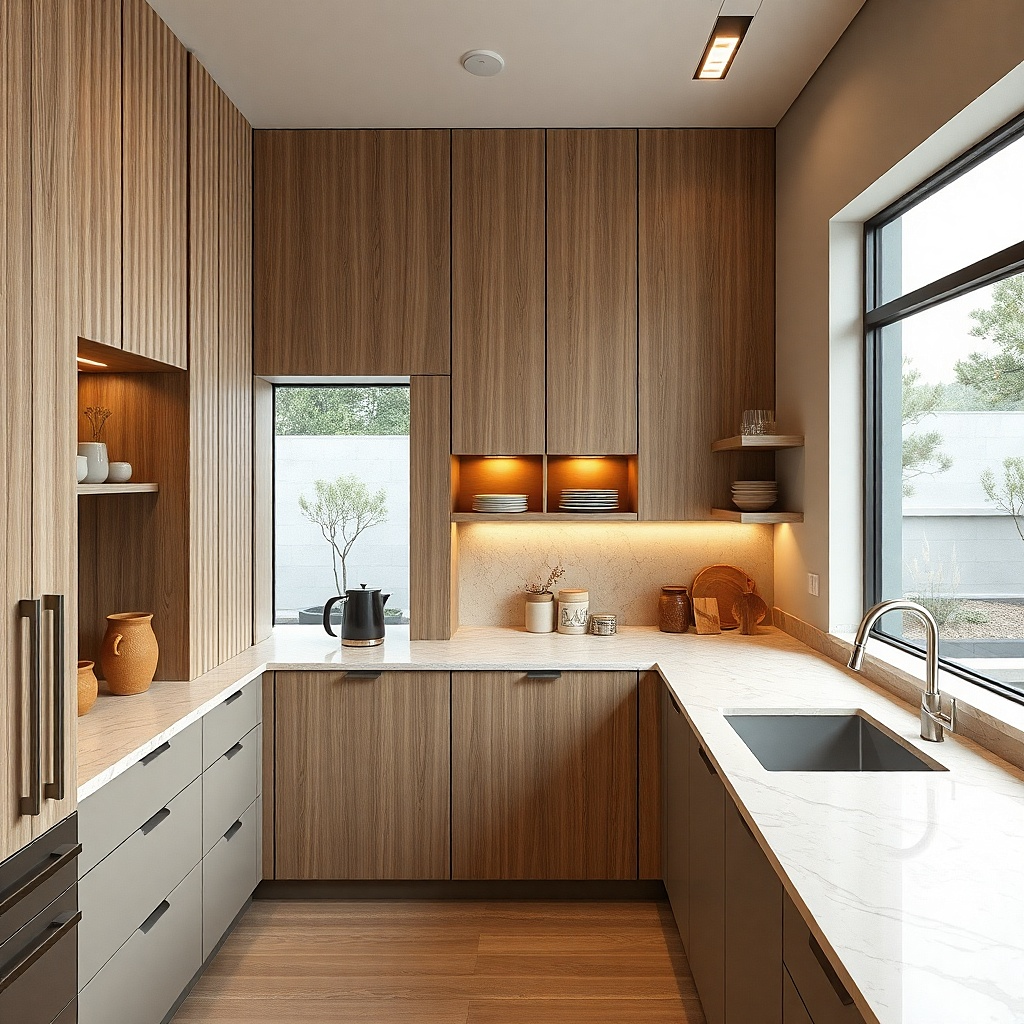
1. Sage Runner + White Ceramic Tray on the Main Counter
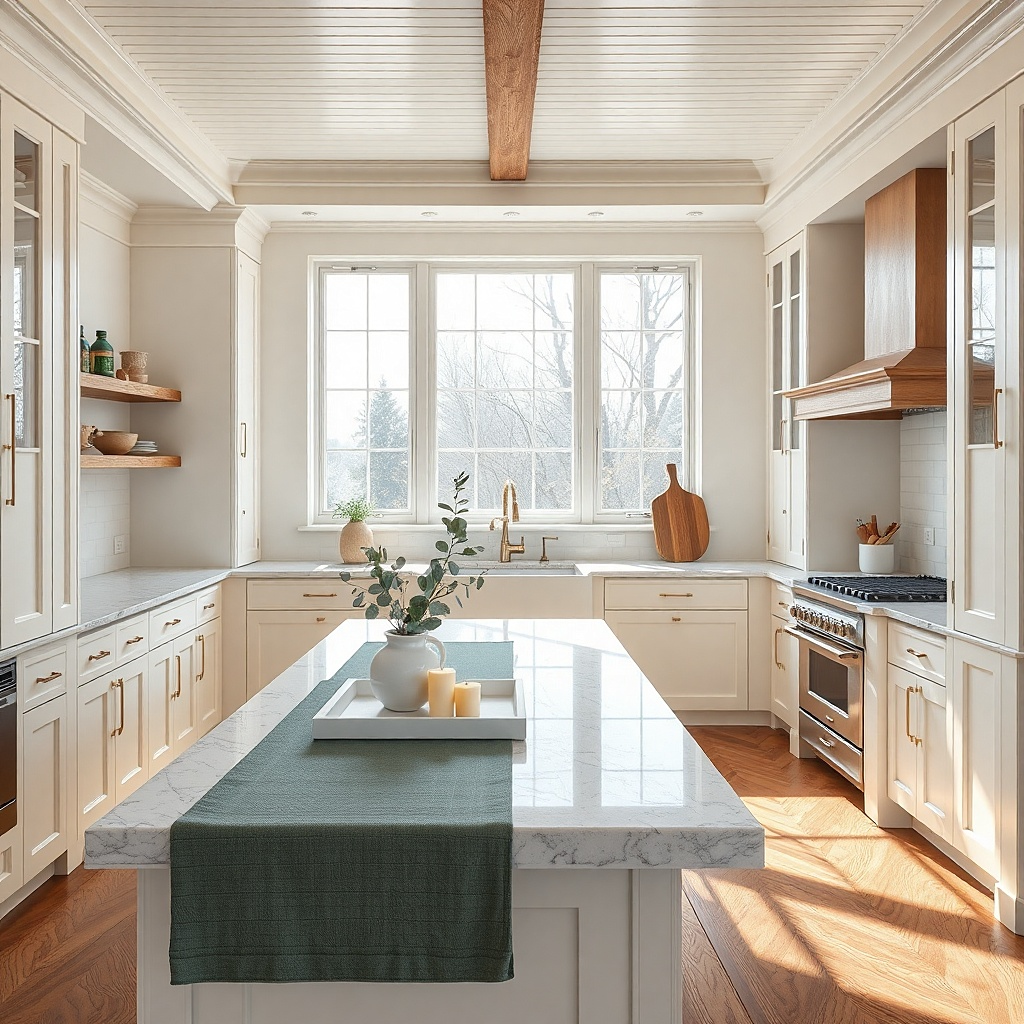
In a small U-shaped kitchen, your eyes land on the longest horizontal line first — the main counter. A sage runner creates a calm “line” that reads wider because the color sits in the middle rather than breaking up the edges. I like pairing it with white ceramic because it reflects light and keeps the green from looking heavy. This setup flatters most kitchens because it works with both warm oak tones and cooler greige cabinets. If your walls are cream or warm white, sage makes them feel cleaner; if your walls are gray, sage keeps the kitchen from feeling sterile.
Start by measuring your main counter length and choose a runner that leaves 2-4 inches of bare counter at each end. Place the runner centered, then set a low white ceramic tray on top — keep it about one-third the runner length. Add a small clear vase with eucalyptus (or a faux bundle with bendable stems) so the height stays under the bottom edge of upper cabinets. Finally, put two pillar candles on the tray edges and keep the wicks trimmed so they read tidy from the doorway.
Try thisSwap candle color with the season: white for spring, soft terracotta for fall, and deep green for winter.
Common mistakeDon’t use a runner that touches the cabinet doors and spills into the corner — it makes the U feel crowded.
2. Double-Tier Shelf Styling with Pine Green Cookbooks
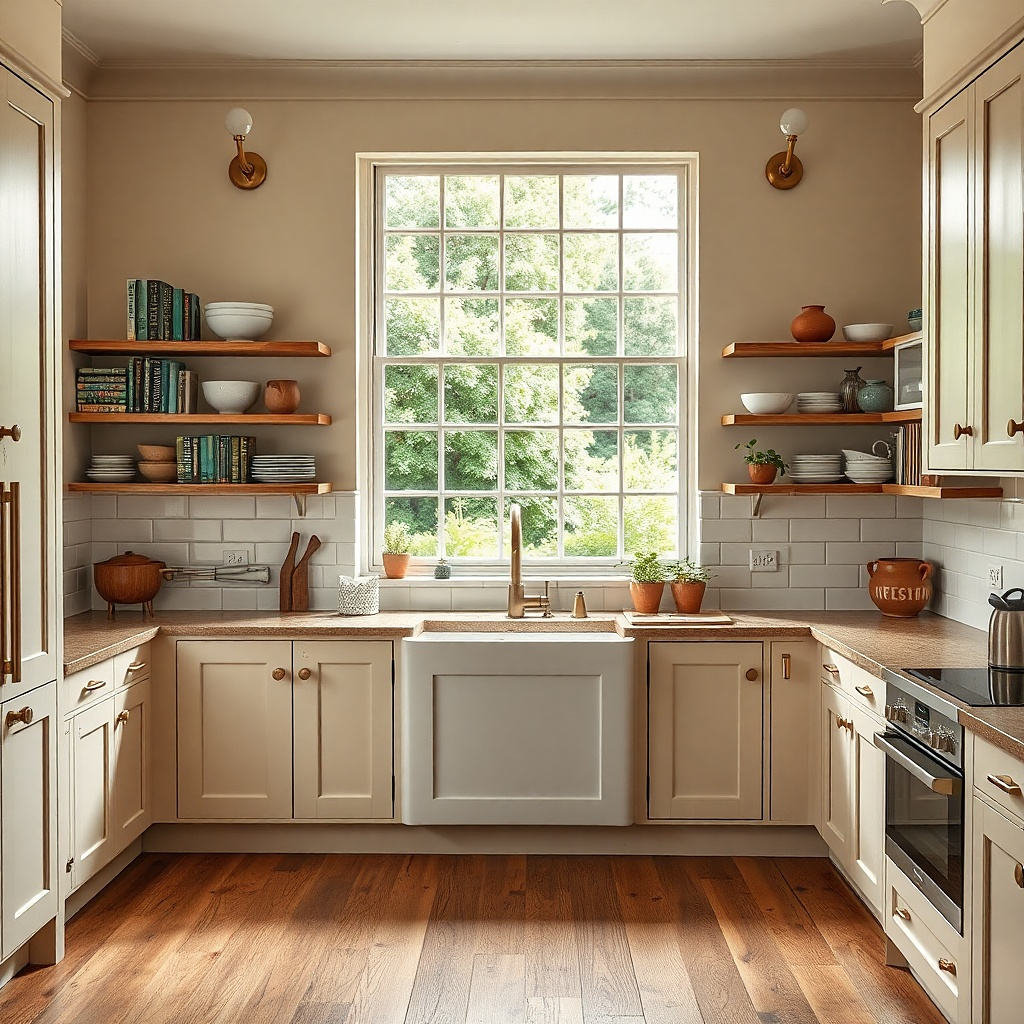
U-shaped kitchens often have blank wall space above the counter that feels unfinished. Styling shelves gives you a vertical home for seasonal decor so the counters stay clear. Pine green books are a sneaky win because they add color without adding new objects that clutter. Brass and cream tones soften the green and keep it from looking like a holiday display. This works best when your backsplash is busy or patterned — the shelves pull the eye up and away from the busy surface.
Start by choosing two shelves that match your hardware finish — if your faucet is chrome, use chrome; if it’s matte black, choose matte black brackets. Place the bottom shelf at about 58-60 inches from the floor so it’s easy to reach and doesn’t block sightlines. Arrange the cookbooks vertically with spines facing out; keep the row to an even number of books so the look feels balanced. On the top shelf, add one grounded item (ceramic bowl or small planter) and one “breather” item (botanical print) with a gap of at least 2 inches between them.
Try thisUse book covers as your seasonal swap: find one evergreen spine color and rotate the titles each season.
Common mistakeSkip tiny decor scattered across shelves — it looks messy in a U because everything is seen from multiple angles.
3. Matte Black Rail with Evergreen Tea Towels
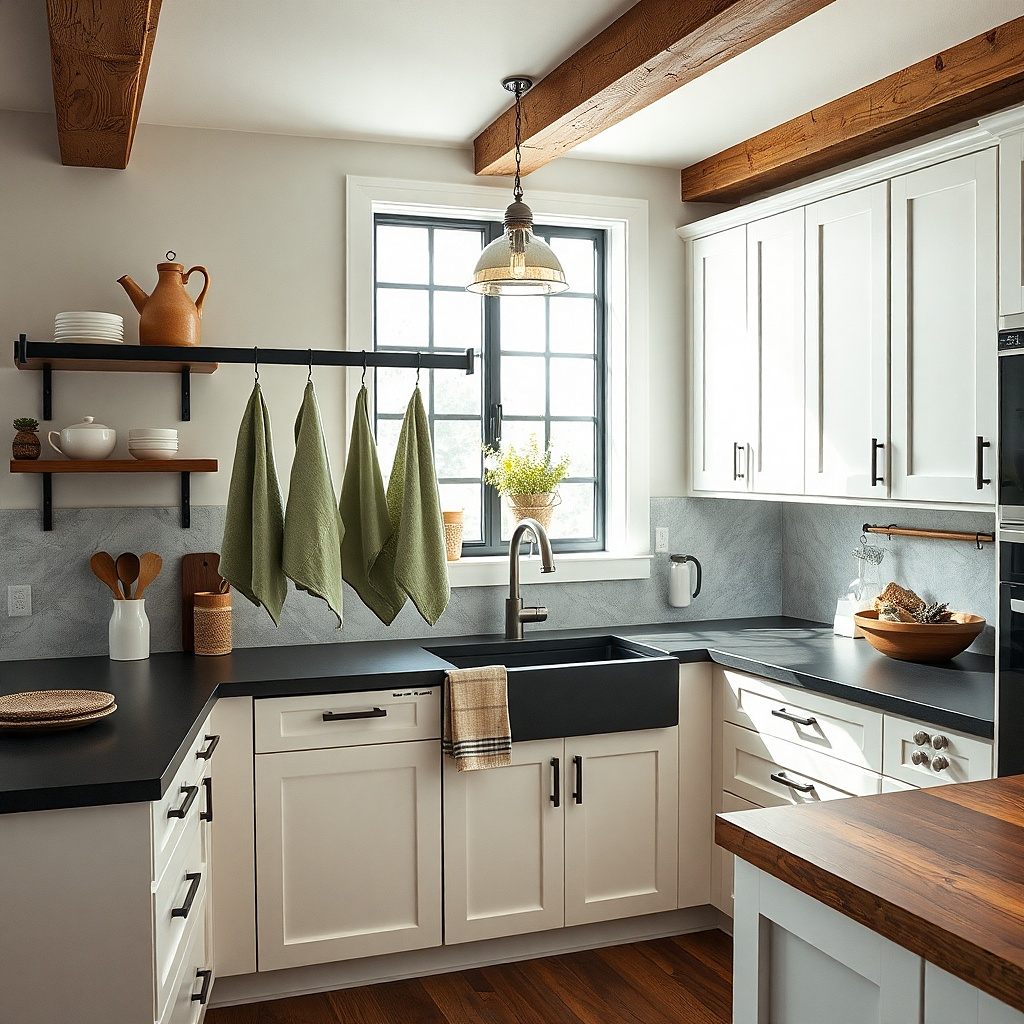
Rails turn a U-shaped kitchen into a functional display. Hanging tea towels on a rail keeps them visible and seasonal without taking counter space. The matte black finish ties together hardware and makes the towels look intentional instead of random. Evergreen tones look best when you mix two greens: one deep (forest) and one light (sage). This is flattering for kitchens with light cabinets because the black creates contrast; for dark cabinets, it still works if you keep towels lighter overall.
Start by installing a rail that runs along the most visible cabinet run — usually the “inner” wall of the U. Hang towels with the top fold aligned so they all hit the same height. Alternate deep forest and sage to create a rhythm, and use one plain cream towel at the end to prevent the green from getting too heavy. Add one small plant pot or enamel mug on the rail to anchor the styling, keeping the plant under 8 inches tall.
Try thisTuck a folded towel edge behind a mug handle so it looks layered, not just hanging flat.
Common mistakeDon’t use shiny satin towels — they catch light and make the rail look cluttered.
4. Evergreen Magnet Board on the Refrigerator Side
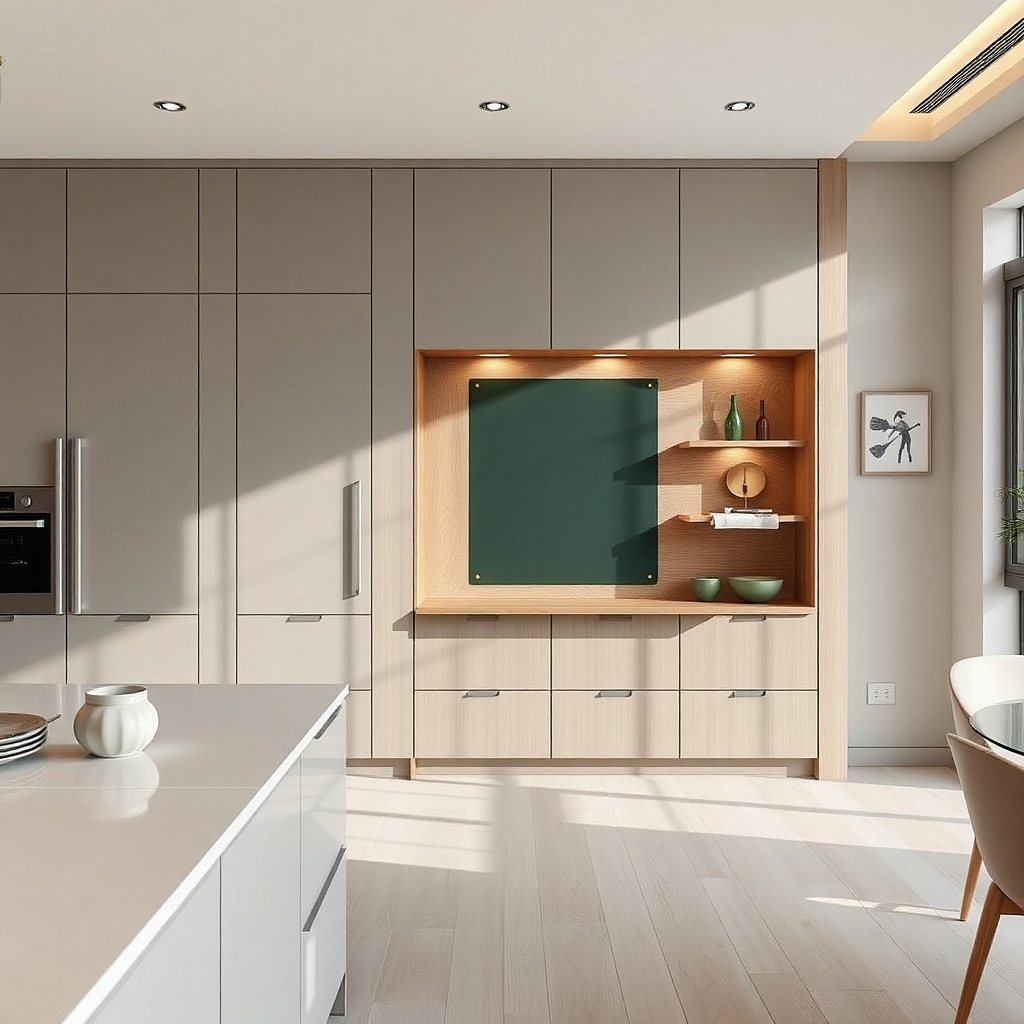
In a small U-shaped kitchen, the refrigerator side can visually interrupt the flow. A magnet board gives you a controlled focal spot that still feels seasonal, especially if you use evergreen botanical magnets in a limited palette. I’ve used this when counters are already packed because it moves decoration to a vertical plane. The material matters: cork or textured fabric looks warm and hides fingerprints better than glossy boards. This idea works for kitchens with stainless steel fridges because the warm board texture balances the metal.
Start by wiping the wall area and attaching a cork or fabric-wrapped board sized to about the width of your fridge handle. Layer magnets in a small cluster — keep them within a 6x8 inch area so it doesn’t look like a “random magnet dump.” Place two mini jars on a narrow ledge below if you have one; fill them with white or green-tinted dried herbs, rice, or candy for texture. Finish by adding one small evergreen print card that stays visible all year.
Try thisPick magnets with the same finish (all brass-tone or all matte) so the board looks curated without feeling staged.
Common mistakeSkip a giant board crowded with photos — it crowds the side of the U and makes the room feel tighter.
5. Green Glass Jar Cluster with One Wood Cutting Board
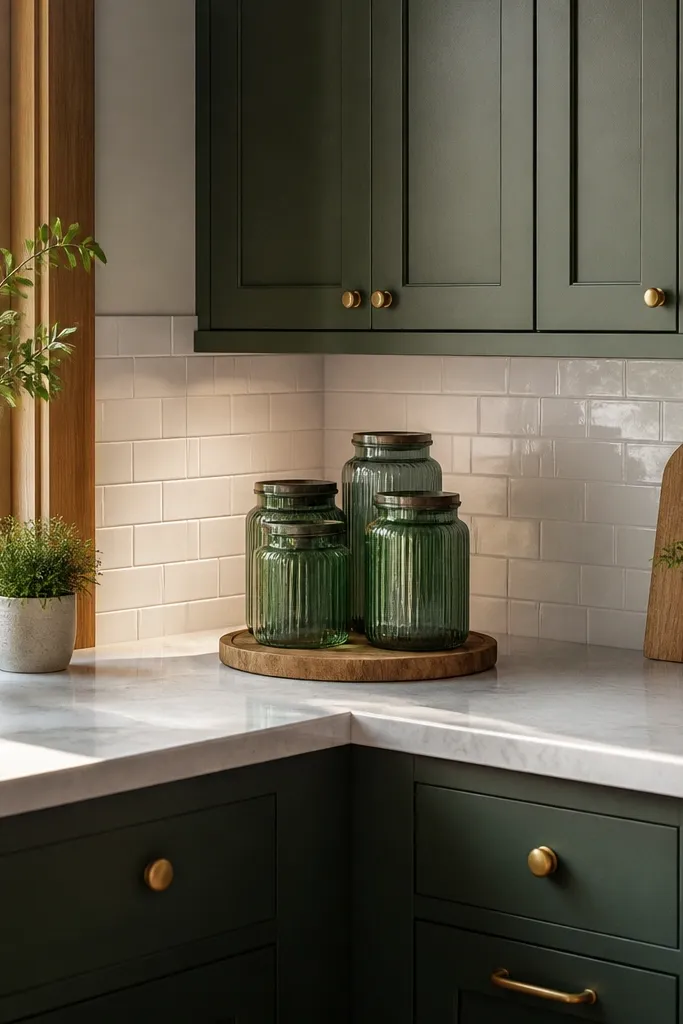
Counter corners can look neglected in U-shaped layouts because they’re seen from both legs of the U. A tight jar cluster creates a “visual anchor” that reads organized. Green glass ties into the seasonal evergreen theme while still letting your kitchen function — you’re not adding separate decorative objects that go unused. Pairing jars with one wood cutting board adds warmth and keeps the look from going cold. This works for almost any cabinet color, but it’s especially good with white cabinets because the green glass becomes the focal point.
Start by clearing the corner and placing the cutting board first — keep it centered so it doesn’t look shoved into the corner. Add one jar for tall utensils (wood spoons) and set it slightly behind the others. Place two smaller jars in front, one on each side of the cutting board edge. Finish with a tiny evergreen sprig arrangement (real or faux) in the smallest jar or a mini vase, keeping the height below 6 inches so it doesn’t block sightlines.
Try thisUse jar lids in one finish only — all brass or all black — or the cluster looks accidental.
Common mistakeDon’t scatter jars across the entire counter — corners only, or it starts to look cluttered.
6. Far-End Focal Wall: Evergreen Wreath in a Matte Frame
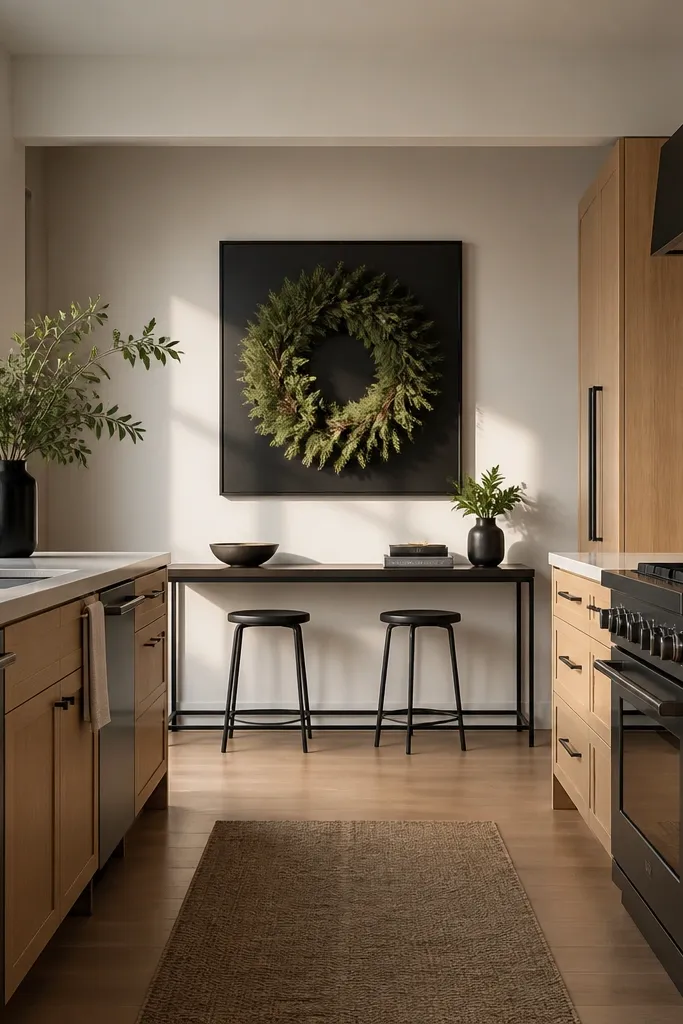
Every U-shaped kitchen has a “view end” — the spot you see when you stand in the doorway. Putting your evergreen focal piece there makes the whole room feel intentional instead of decorated in fragments. A wreath in a matte frame keeps it from looking like a craft-store object, and matte black ties to modern hardware. The single cream ribbon is the seasonal bridge: it looks soft in spring and richer in winter. This idea flatters compact kitchens because it draws attention upward and outward, not at counter level where you need space.
Start by measuring the wall space at the far end and choose a frame that leaves at least 6 inches of empty wall around it. Hang the wreath centered at about eye level (roughly 60 inches from the floor). Under it, place a small shelf or ledge with one botanical print — keep the shelf items to one line so they don’t compete with the wreath. Add a small ribbon bow only on the wreath; skip extra dangling ornaments that swing when you open doors.
Use a ribbon with a subtle texture like grosgrain so it doesn’t look shiny under overhead lights.
Don’t hang a wreath too low — it hits your shoulder line and makes the U feel like it’s shrinking.
7. Backsplash Curtain Panel for the Sink Nook
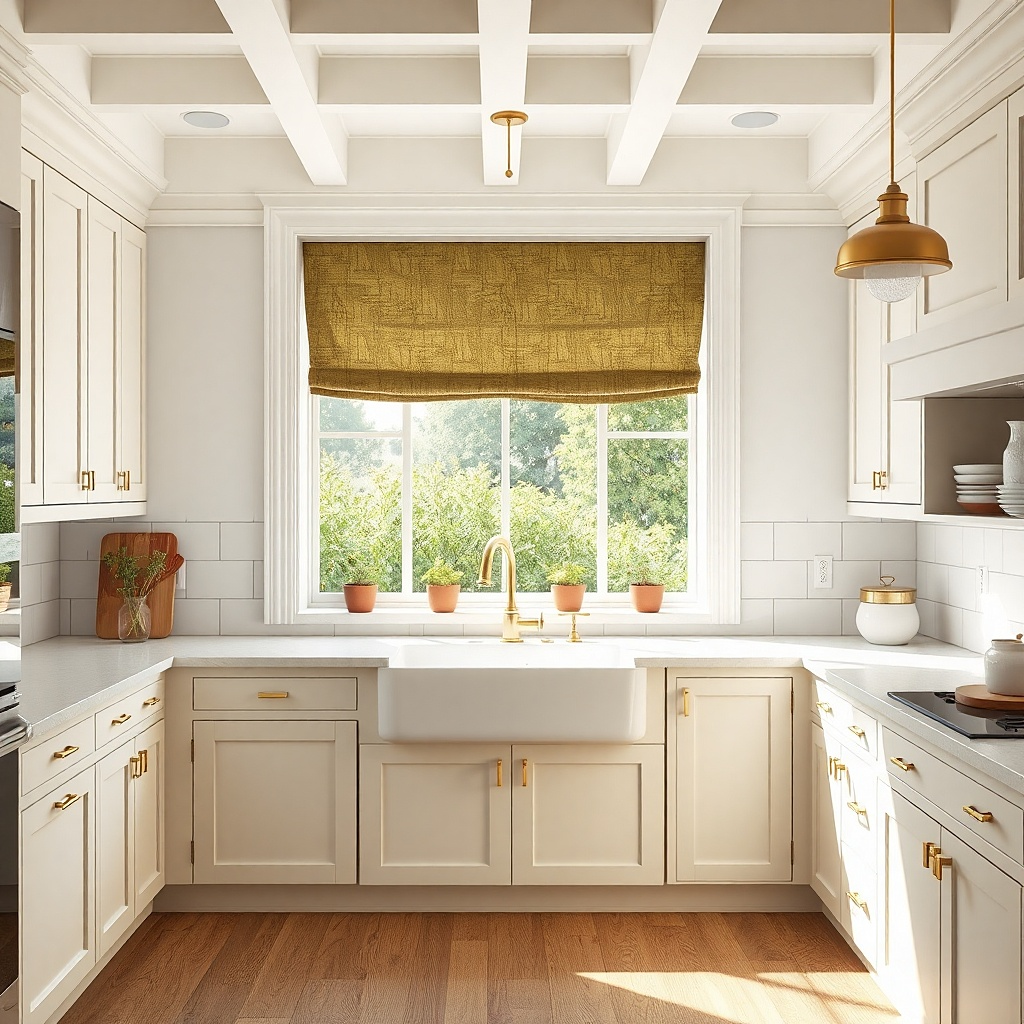
If your U has a sink under a window, the area can feel unfinished when the counter is bare. A short curtain panel adds color and softness without taking space. Deep olive reads evergreen but doesn’t scream “holiday,” so it works year-round. Linen texture matters because it looks warm in daylight and flattering under warm bulbs. This setup suits kitchens with stainless sinks and white walls; the olive makes stainless look less stark.
Start by choosing a panel that ends about 4-6 inches above the sill so you don’t block the window view. Hang it from a rod with simple rings or clips so it stays smooth. Place one ceramic pot with a small evergreen plant or faux sprig on the sill; keep the plant under 10 inches tall. Clear the sink counter and let the curtain become the seasonal element instead of adding multiple objects.
Try thisIron the linen flat before hanging. Wrinkled linen looks charming in living rooms but sloppy above a sink.
Common mistakeSkip long curtains that pool onto the counter — you’ll bump them constantly and the look turns messy.
8. Chalky White Wall Clock with Green Numbers
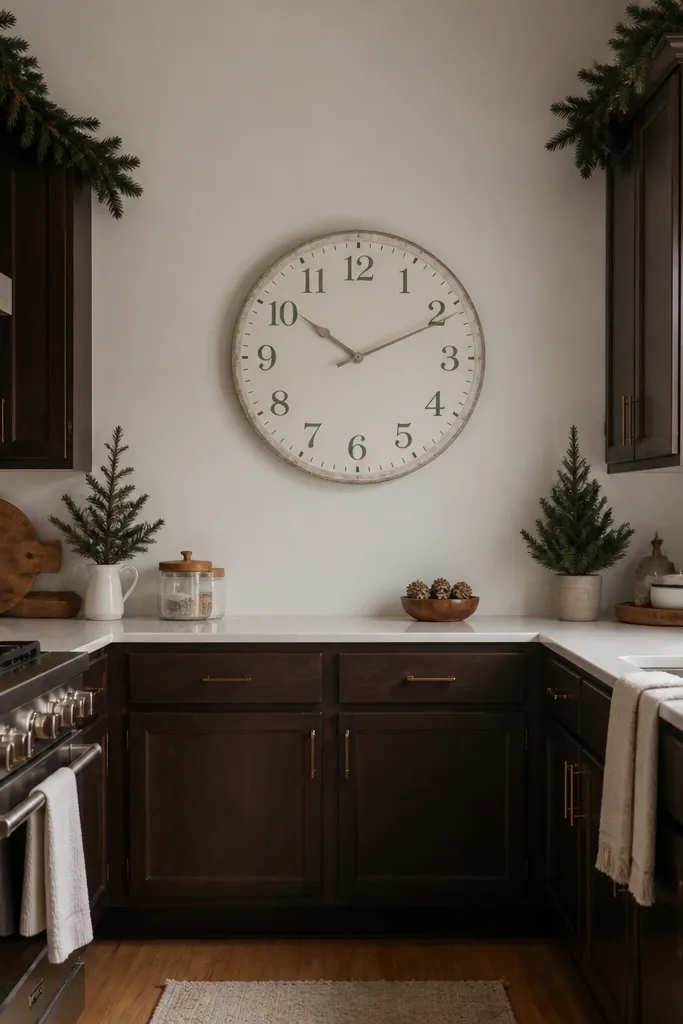
A clock sounds like a basic utility item, but in a small U-shaped kitchen it controls the “busy” feeling. When you choose a clock face with a muted green palette, it becomes your evergreen anchor without adding clutter. Chalky white frames the room and keeps the green muted — perfect for kitchens with darker cabinets. This works especially well when you can’t add more shelves because your walls already have vents or outlets. It also gives you an instant focal point at eye level that doesn’t crowd counters.
Start by placing the clock on the wall leg that has the most open sightline — usually the side you see when you open the front door. Keep it centered above a small ledge or between cabinet runs so it looks built-in. Add one small evergreen sprig in a ceramic dish below, and keep the dish no wider than 6 inches. If the clock has green accents, repeat green once more in a towel or jar so the room reads cohesive.
Pick a clock with a silent sweep movement if you’re sensitive to ticking.
Don’t pick a clock with loud red numbers — it fights the evergreen theme.
9. Sage Open Shelving with Matching Canisters
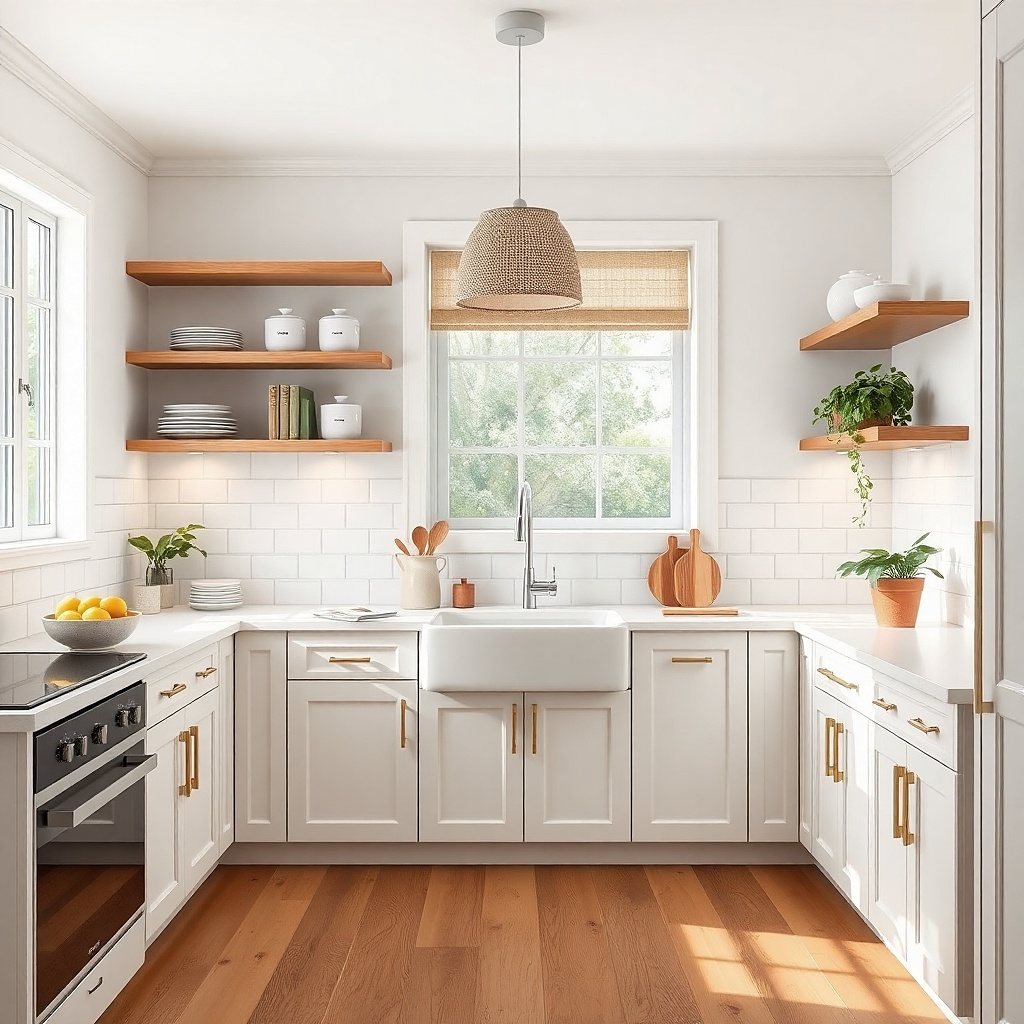
Open shelving is where small U-shaped kitchens can either look airy or chaotic. Matching canisters make it look intentional because the visual noise drops. Sage-painted shelves give you evergreen color that isn’t seasonal-only — it’s a base layer that changes with what you put inside. White ceramic canisters keep the shelf light and make your kitchen feel cleaner even when you have everyday staples. This idea flatters kitchens with patterned floors or busy backsplashes because it gives the eye a calm spot to rest.
Start by limiting yourself to one shelf run for the open shelving look. Paint or choose sage shelves that match your chosen evergreen tone, then use canisters that are the same height or close to it. Fill canisters with matching contents (pasta, rice, flour) so the labels don’t become the focal point. Place a small candle tray on the top shelf and keep it to one candle plus one small plant. Finish by adding two books at the shelf ends only, not across the middle.
Try thisUse clear or white labels with the same font across all canisters so the shelf reads tidy from across the U.
Common mistakeAvoid mixing five different canister shapes — the shelves look like storage, not decor.
10. Evergreen Candle Trio on a Low Wall-Ledge
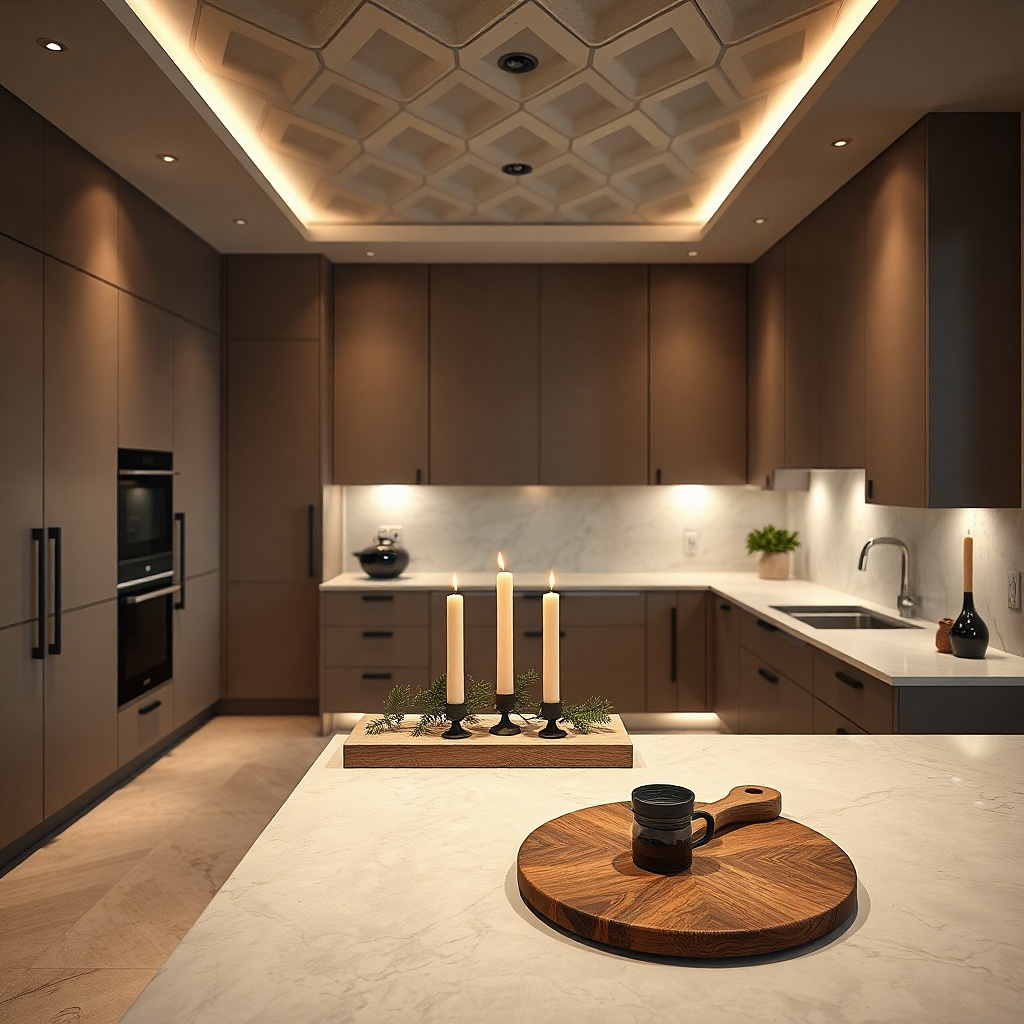
If your counter space is tight, use a low wall ledge so decor sits at a comfortable height. A candle trio works because it creates scale and depth without needing lots of objects. Matte finishes keep it from looking like plastic holiday decor. The graduated heights guide your eye — shorter candle on each side, tallest in the center. This setup is flattering for kitchens with small windows or limited natural light because candles add warm tones even during the day.
Start by choosing a ledge that is at least 10 inches long and can hold items without overhang. Place the tallest candle in the center first, then add the two shorter candles at equal spacing on either side. Add a framed botanical piece behind the candles so the trio has a background, not an empty wall. Keep the rest of the ledge empty — one frame and three candles is enough for the U to look styled.
Use flameless candles for daily use and keep real candles for guests. The look stays consistent without soot.
Don’t add more than one extra object on the ledge. Any fourth item usually makes the U feel cluttered.
11. Matte Ceramic Planters with a Single Tall Stem
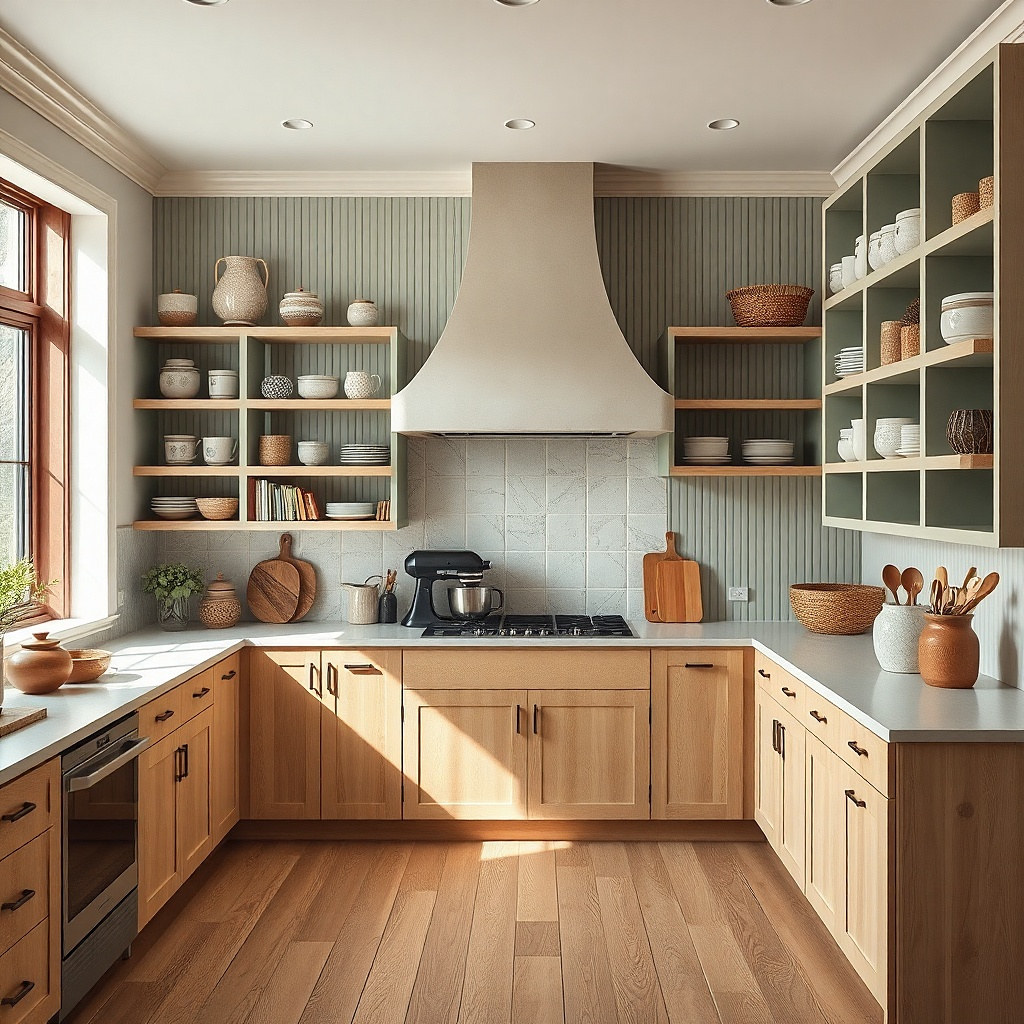
This is my go-to when the U has a long uninterrupted counter and you need structure. Two matching planters create symmetry, which makes small rooms feel more orderly and bigger. The tall stem in the middle gives you height without crowding the aisle. Warm white ceramic keeps the palette gentle, while the evergreen branches keep it seasonal year-round. This idea works well for kitchens with neutral backsplashes and floors because it adds shape and texture where the room is otherwise flat.
Start by placing the two planters at the counter ends, leaving at least 2 inches from the cabinet edge so they don’t look shoved. Choose one clear vase that fits between them and is tall enough to reach about the height of the upper cabinet trim, not above it. Arrange evergreen branches around the vase so the silhouette stays narrow. Add one cream bloom or dried flower for contrast and keep it single — too many blooms makes it look like a bouquet taking over the counter.
Try thisDust the planters and wipe the vase daily for the first week. Small kitchens show smudges fast.
Common mistakeSkip multiple tall stems across the counter. It makes the U look busy and blocks sightlines.
12. Evergreen Dishware Accent Behind Glass Cabinet
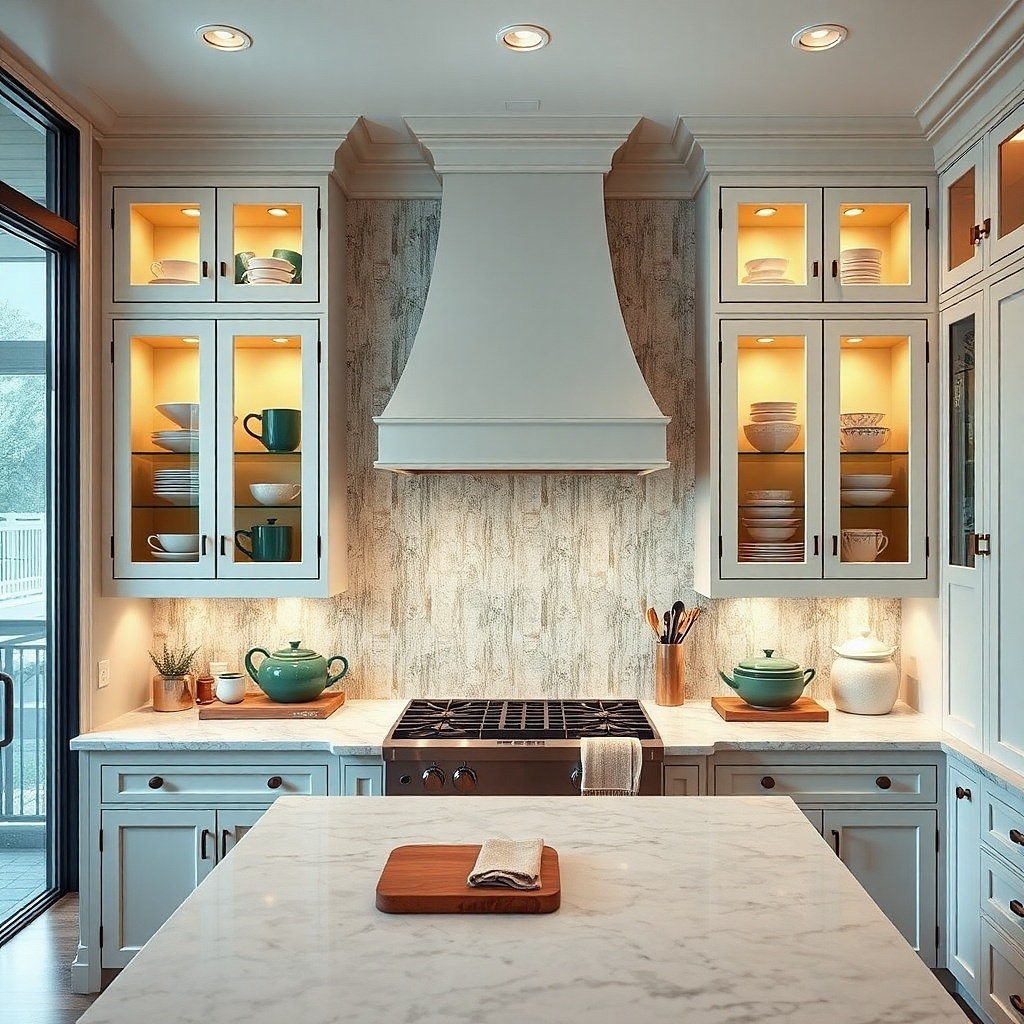
Glass-front cabinets are the easiest place to hide seasonal decor that doesn’t require counter space. Deep green mugs and accents give you evergreen color that changes with your daily use because you’re always reaching for them anyway. The look stays neat because the cabinet doors frame the display. I’ve done this in small kitchens where the backsplash is already loud — using dish color inside the cabinet keeps the walls from getting busy. It also flatters kitchens with white or light wood cabinets because the dark green pops cleanly.
Start by selecting the cabinet that you can see most from the doorway or the sink. Place your deepest green mugs on the middle shelf so they show through the glass. Stack plates behind them, keeping the stack aligned so the cabinet looks organized. Tuck a thin evergreen garland along the inside top edge only, using minimal length so it doesn’t sag. Add one small decorative bowl on the bottom shelf for a grounded anchor.
Try thisUse the same mug finish across the set. Even two finishes — glossy and matte — can make the cabinet look messy.
Common mistakeDon’t add extra ornaments inside the cabinet if you already have lots of dishes. Display space is limited in a U.
13. Seasonal Placecards as Everyday Counter Markers
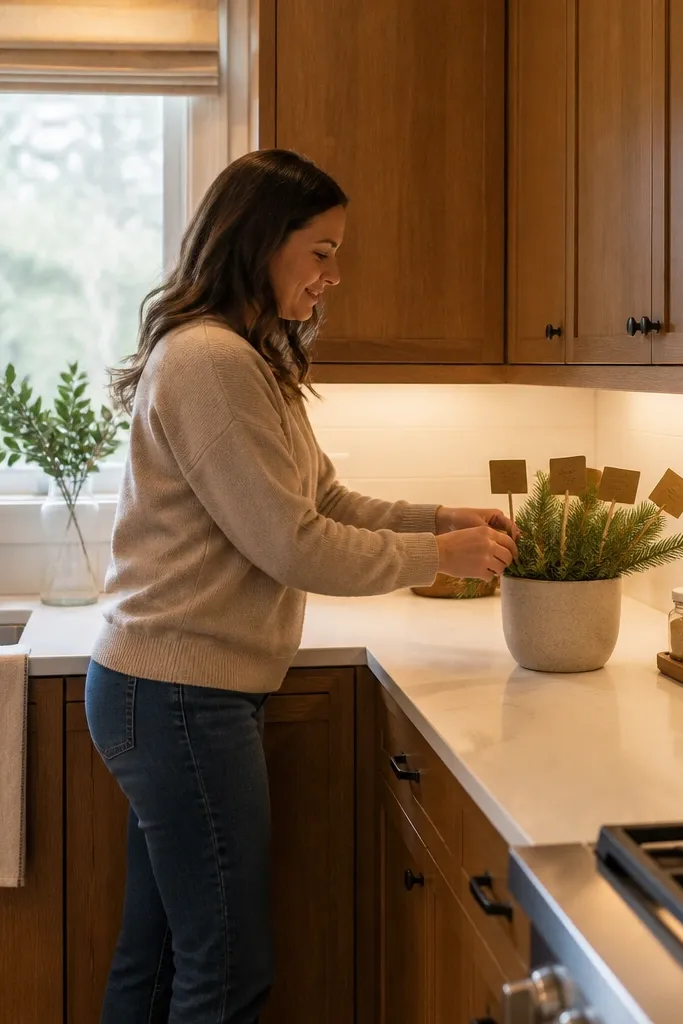
Placecards sound like a dining-only item, but they work surprisingly well in a small kitchen because they create order. Instead of random notes on the fridge, you get a neat evergreen “station” that looks styled every day. I’ve used this when families keep forgetting which spice jar is which; the card labels make the counter feel purposeful. Evergreen graphics keep it seasonal without requiring a big holiday setup. This idea flatters long counters because the row of cards creates a clean line that draws the eye across the U.
Start by choosing a shallow tray that fits your counter space — about 12-16 inches long. Place four placecards in a row, one for salt, pepper, sugar, or a frequently used spice. Add a green ceramic utensil holder beside the tray, not behind it, so the tray stays the focal point. Keep the rest of the counter clear and store extra items in drawers. Swap the card artwork each season while keeping the tray and labels consistent.
Try thisUse thick cardstock and a matte finish so the cards look crisp under overhead light.
Common mistakeDon’t use flimsy paper that curls. Curled edges make the whole counter look unkept.
14. Evergreen Window Sill Tray with Faux Pine Tips
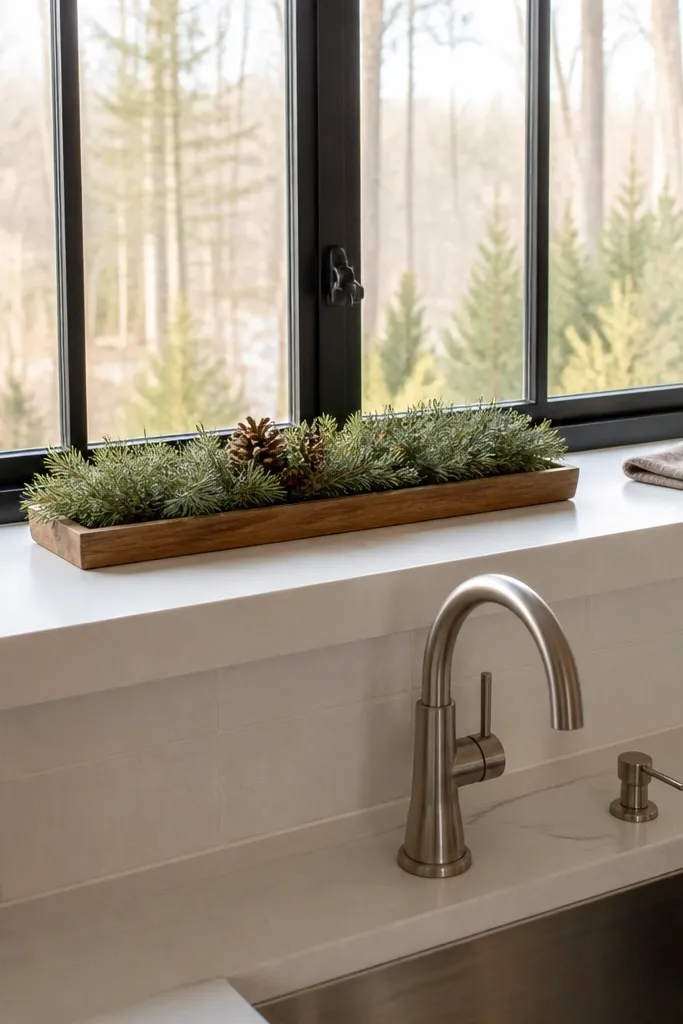
Window sills in U-shaped kitchens are often the first place clutter shows up. A tray solves that by containing everything in one shape. Faux pine tips look good year-round if you choose a realistic texture and keep the color family consistent. Pinecones add scale and a little winter energy without changing the whole kitchen. A glass cloche keeps the candle from looking exposed and makes the seasonal moment feel intentional. This idea is strongest in kitchens with natural light because the pine texture catches daylight.
Start by measuring your sill depth and choose a tray that leaves 1 inch of space on each side. Fill the tray with pine tips, then tuck a few pinecones in different heights so it doesn’t look flat. Place a small glass cloche on one side with a short cream candle inside. Keep the arrangement centered under the window so it frames the sink area. Swap out the candle color with the season while keeping the pine base the same.
Try thisDust your faux pine with a microfiber cloth every two weeks so it stays dark green instead of gray.
Common mistakeDon’t fill the tray to the edges. Leave breathing space around the cloche so it reads like decor, not stuffing.
15. Under-Cabinet LED Glow with Warm White + Green Accents
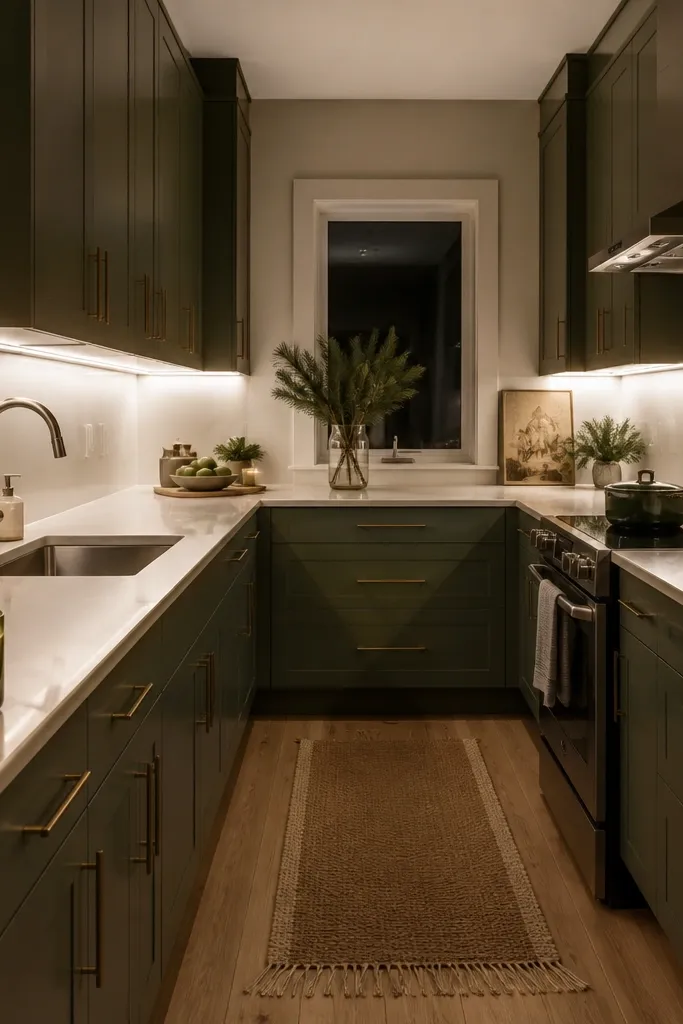
In small U-shaped kitchens, the space feels tighter when the under-cabinet area is dim. Warm white LED lighting makes counters look cleaner and widens the visual space because shadows soften. Pairing that glow with evergreen accents like a green cutting board or candle keeps the seasonal theme consistent. I like this idea when your kitchen has overhead lighting that’s too cool or creates glare on the backsplash. Warm light also flatters skin tones when you’re cooking at the counter, which sounds silly until you see it in photos.
Start by installing or upgrading under-cabinet LEDs to a warm white around 2700K-3000K. Position the strip so it lights the counter surface, not the cabinet face, and test brightness before securing. Place one green accent near the backsplash edge — a cutting board, trivet, or jar candle — and keep it to one item per counter zone. Add a matching green towel hanging on a rail or hook so the color repeats. Turn on the LEDs and check from the entrance — if the far end still looks dark, add one small light source on the wall.
Try thisUse a dimmer if you can. Cooking needs brighter light; evenings look best with softer glow.
Common mistakeDon’t pick blue-white LEDs. They make green decor look sickly and shrink the room.
16. Evergreen Trivet Stack in a Narrow Corner
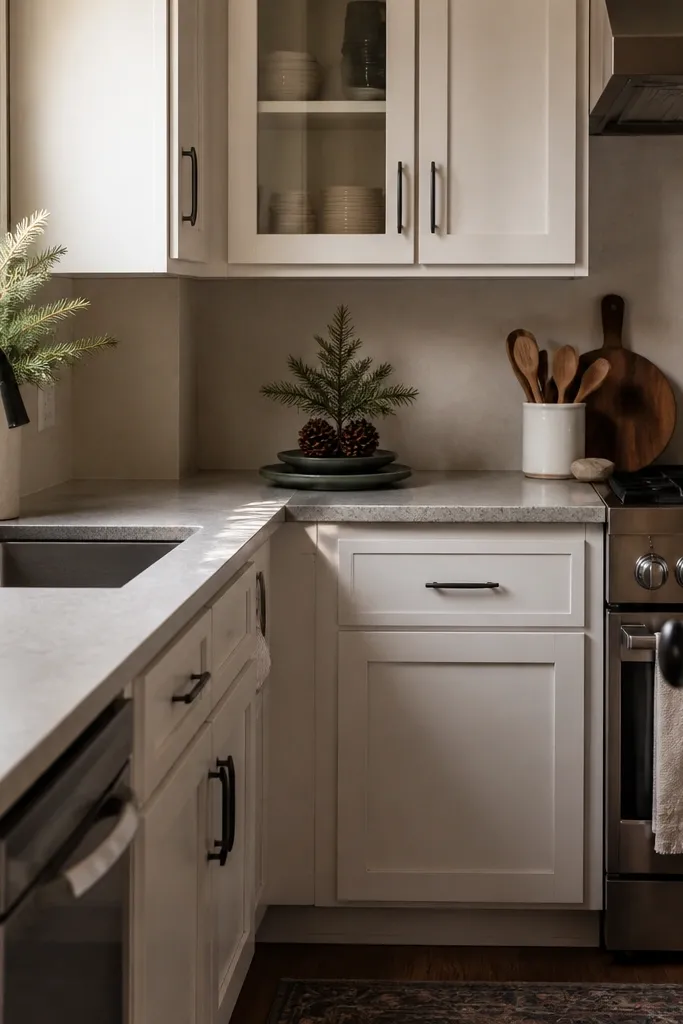
Corners in a U-shaped kitchen are hard because they’re seen from multiple angles and they gather random items. A stacked trivet setup gives you a structured, functional decor moment. Trivets are also seasonal-friendly because you can swap colors and textures without buying a whole new display. Using sage and deep forest keeps it evergreen while still looking like everyday kitchen gear. This works for small kitchens where you need something you can use daily without feeling like you’re constantly tidying decor.
Start by placing a folded towel on a wall hook right above the corner so your eye has a vertical line. In the corner itself, set one deep forest trivet down, then stack a sage trivet on top with a small offset so the colors show. Place a ceramic spoon rest next to the trivets — keep it within the same footprint so it doesn’t spread. Add only one more item, like a small jar with utensils, and keep it behind the trivets for depth. When you change seasons, swap the top trivet color first.
Choose trivets with felt or cork backing so they don’t slide on smooth countertops.
Skip a tall stack. Two layers looks intentional; three starts to look like you forgot storage.
17. Evergreen Tabletop Runner for a Compact Bistro Set
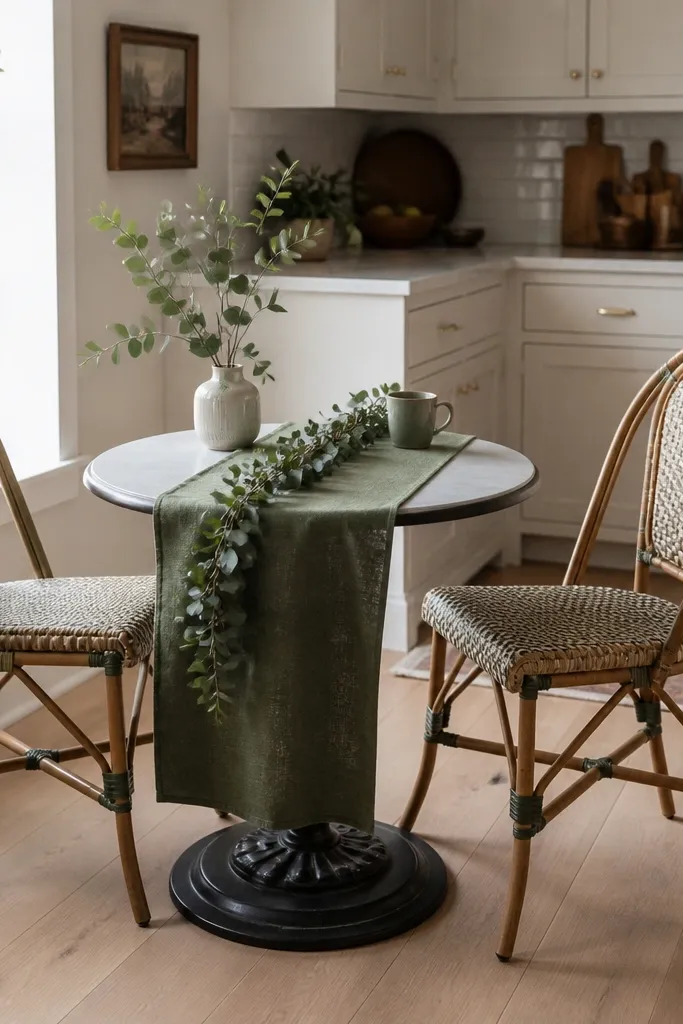
If your U-shaped kitchen has a breakfast nook or a small bistro table, seasonal decor must work in a tight footprint. A narrow tabletop runner gives you the evergreen look without blocking movement between chairs and the kitchen legs. Textured fabric — like cotton-linen blend — reads cozy instead of holiday. The eucalyptus and simple place settings make the table feel ready for real use, not just staged. This works for people who eat in the kitchen because you get a daily seasonal reset without extra effort.
Start by measuring your table top and choose a runner that leaves 4-6 inches of bare tabletop on each side. Center the runner and place a low vase in the exact middle. Add two placemats or small chargers at the table edges so the runner doesn’t look lonely. Keep table decor low enough that chair backs don’t hit it when you sit. Swap runner texture by season: linen-cotton for spring and summer, heavier woven fabric for fall and winter.
Try thisUse a runner with a hem that holds shape. Sloppy edges make the whole table look cheap.
Common mistakeDon’t use a long runner that reaches the floor. In a U-shaped nook it drags visually and makes the space feel tighter.
18. Green Ceramic Utensil Crock with a Matching Lid Tray
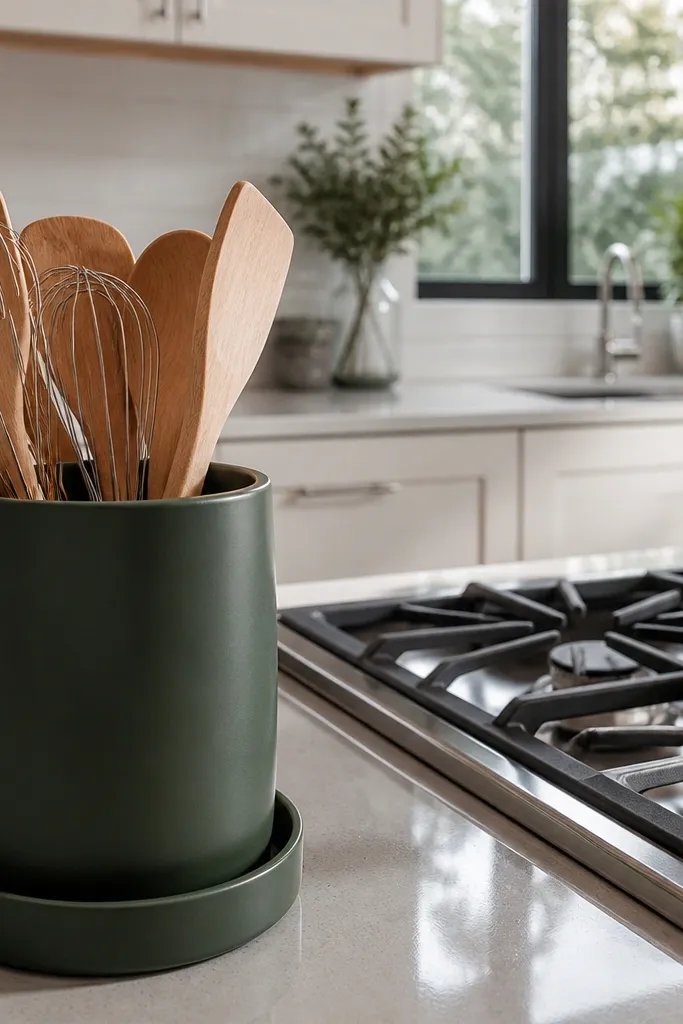
When your utensil crock is the most used item on the counter, it becomes your decor backbone. A deep green crock gives you evergreen color in a way that still feels practical. The matching lid tray is the part that makes it look designed — it catches drips and keeps utensils from looking scattered. Matte finishes look right in small kitchens because they hide fingerprints and keep the palette calm. This setup flatters countertops with light stone or laminate because the green becomes a warm contrast.
Start by clearing your current utensil area and placing the crock where it won’t block your cutting spot. Set the matching lid tray under or behind the crock so it visually groups utensils. Put wooden spoons in the tray and keep the whisk or spatula handles angled the same direction. Place two matte white candles behind, leaving a small gap between candle bases and the crock. Keep the rest of the counter clear so the evergreen crock reads as the main seasonal element.
If you have hard water, wipe the crock rim daily. Lime marks show up fast on green glaze.
Don’t stack utensils to the top. A full crock looks like clutter in a U.
19. Evergreen Spice Jar Labels with Matching Color Tape
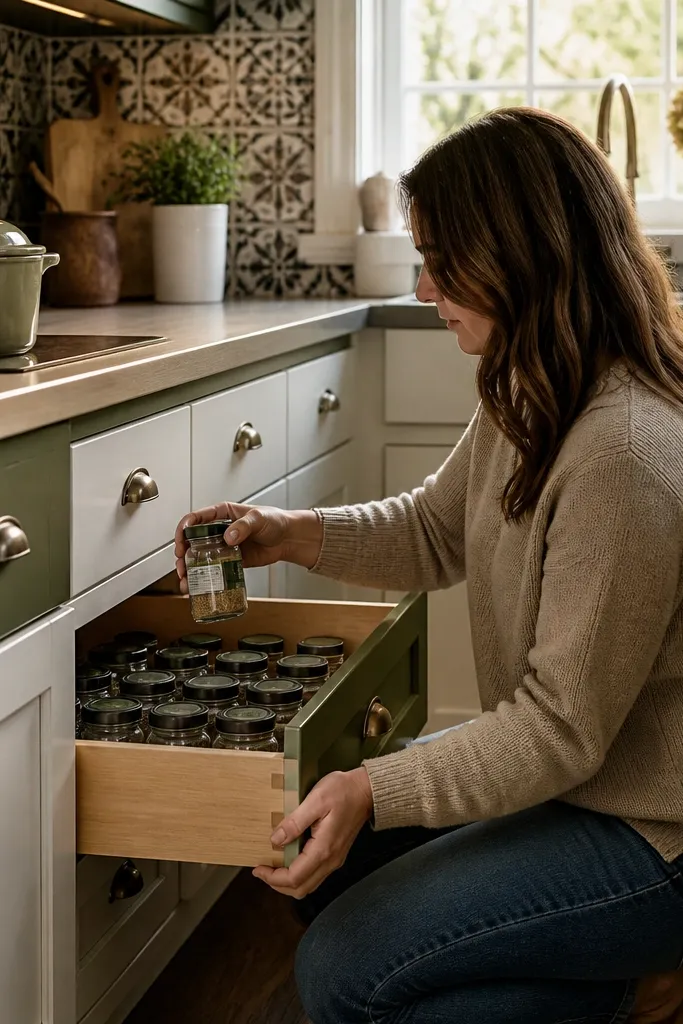
This is the most underrated trick for small kitchens: make your daily items look seasonal by standardizing labels. Evergreen color tape gives you that seasonal cue every time you open the cabinet, without adding extra decor on the counter. I’ve done this in kitchens where the backsplash is already busy — the spice shelf becomes the clean focal point instead of fighting the wall. It also helps you cook faster because you find what you need instantly. This works for both renters and homeowners because you can remove tape cleanly.
Start by pulling your spice jars and choosing one evergreen color tape for the header strip. Clean the jar lids and use white tape for the label base, then write spice names in black marker. Keep label text consistent: same font size and same placement on each jar. Arrange jars by use frequency on the shelf closest to the stove. Leave one jar for seasonal swap — like cinnamon in winter with a deeper green header — and keep the rest consistent.
Use a label maker for the spice name and add the evergreen tape strip manually so it looks hand-finished, not printed-only.
Don’t use different handwriting styles or random sticker fonts. The shelf stops looking intentional.