1. Quartz for the no-fuss family kitchen
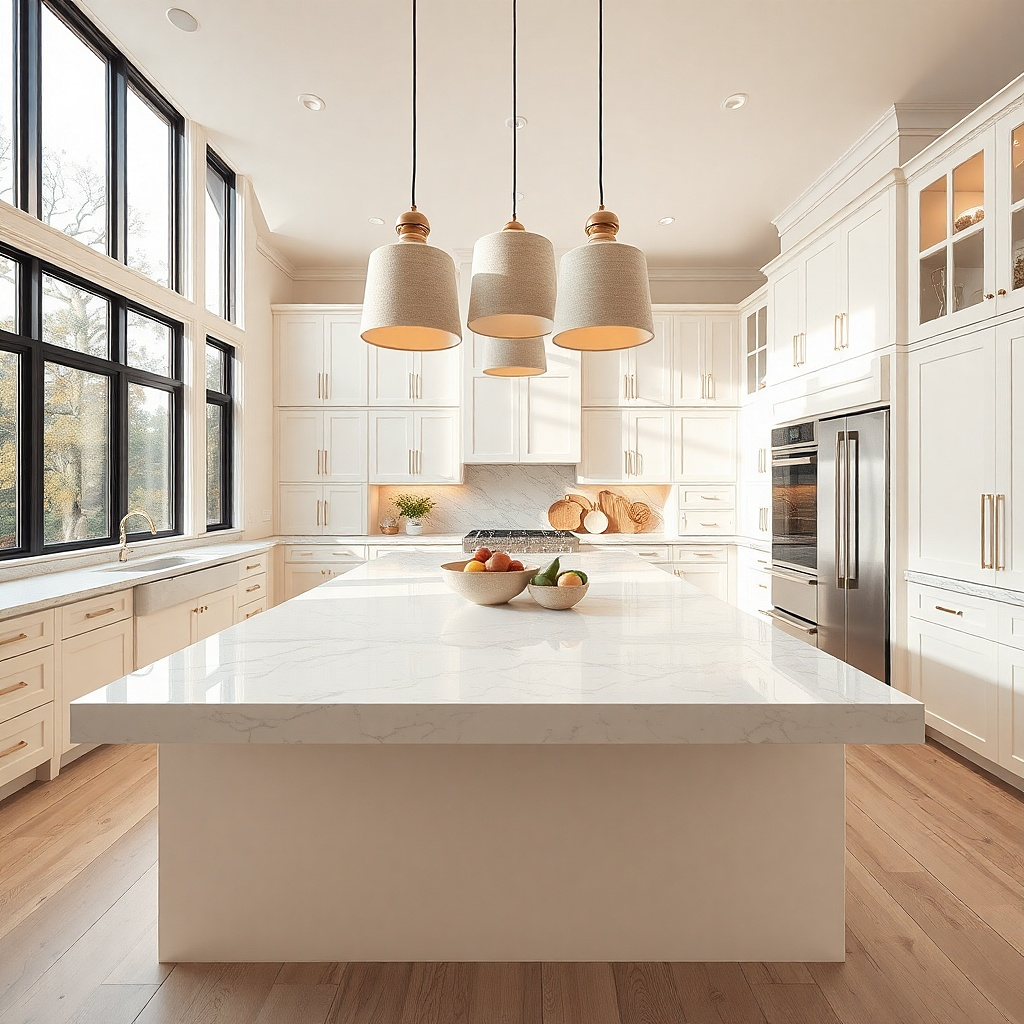
If the real question is which countertop works better under pressure, quartz wins. The nonporous surface does not need sealing, and it resists juice, oil, coffee, and pasta sauce better than granite. That matters in kitchens where someone is always setting down a sticky cup or wiping the counter with whatever cloth is nearby. A soft white or light greige quartz with fine veining looks current without shouting for attention. It also keeps the room brighter than most dark granite slabs, which helps smaller kitchens feel less crowded.
Start by asking for 2 cm or 3 cm quartz pricing on the same color, because thickness changes the number fast. Then choose a slab with low to medium movement rather than dramatic fake marble veining if this is your main work zone — quieter patterns hide crumbs and wipe marks better. Finally, budget about $50 to $120 per square foot installed, plus cutout charges for sink and cooktop openings. For a 30-square-foot kitchen, that puts most quartz jobs around $1,500 to $3,600 before backsplash work.
Pick a polished finish for easiest cleanup. Matte quartz looks good on a sample board but shows greasy handprints sooner.
Skip placing hot sheet pans or cast iron directly on quartz because the resin binder can discolor.
2. Entry-level granite if price comes first
Granite is cheaper at the low end, and that is the strongest case for it. If you need real stone and your budget is tight, entry-level granite can undercut quartz by $10 to $20 per square foot. The catch is visual. A lot of lower-cost granite has heavy black, gold, and burgundy flecking that reads early-2000s the second it hits white cabinets. If you go this route, stay with charcoal, black, or soft gray slabs that have smaller mineral movement and less warm speckling.
Start in the remnant and level-1 yard before you even look at premium slabs. Then inspect the full slab under neutral light, not just a showroom chip, and reject anything with orange rust patches or dense contrast speckles if you want a modern kitchen. Finally, plan on about $40 to $70 per square foot installed and add a penetrating sealer after installation. The sealing job is simple and takes under an hour in most kitchens.
Try thisA square eased edge keeps low-cost granite from looking ornate. Fancy ogee edges make budget stone look older.
Common mistakeDo not choose granite from a 4-inch sample alone because the full slab can look far busier than the sample suggests.
3. Modern black granite for cooks who use heat hard
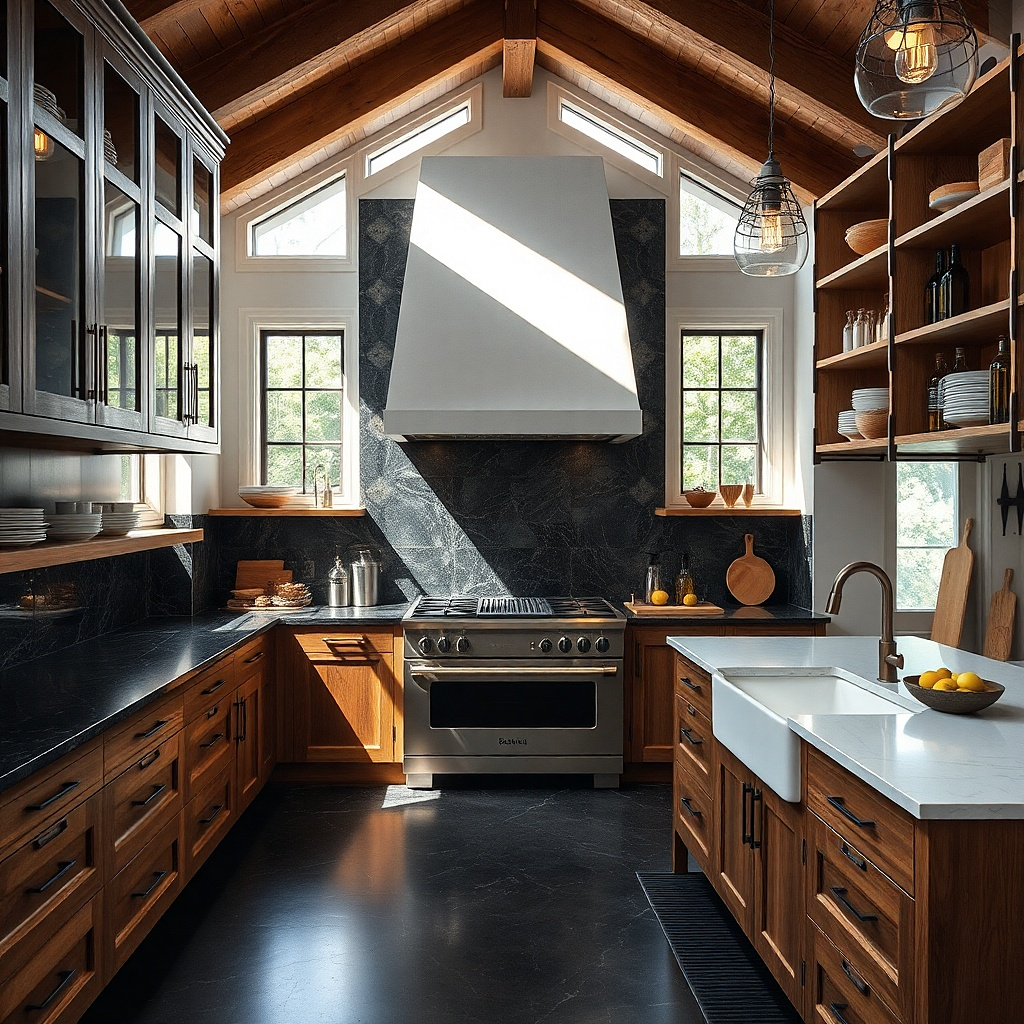
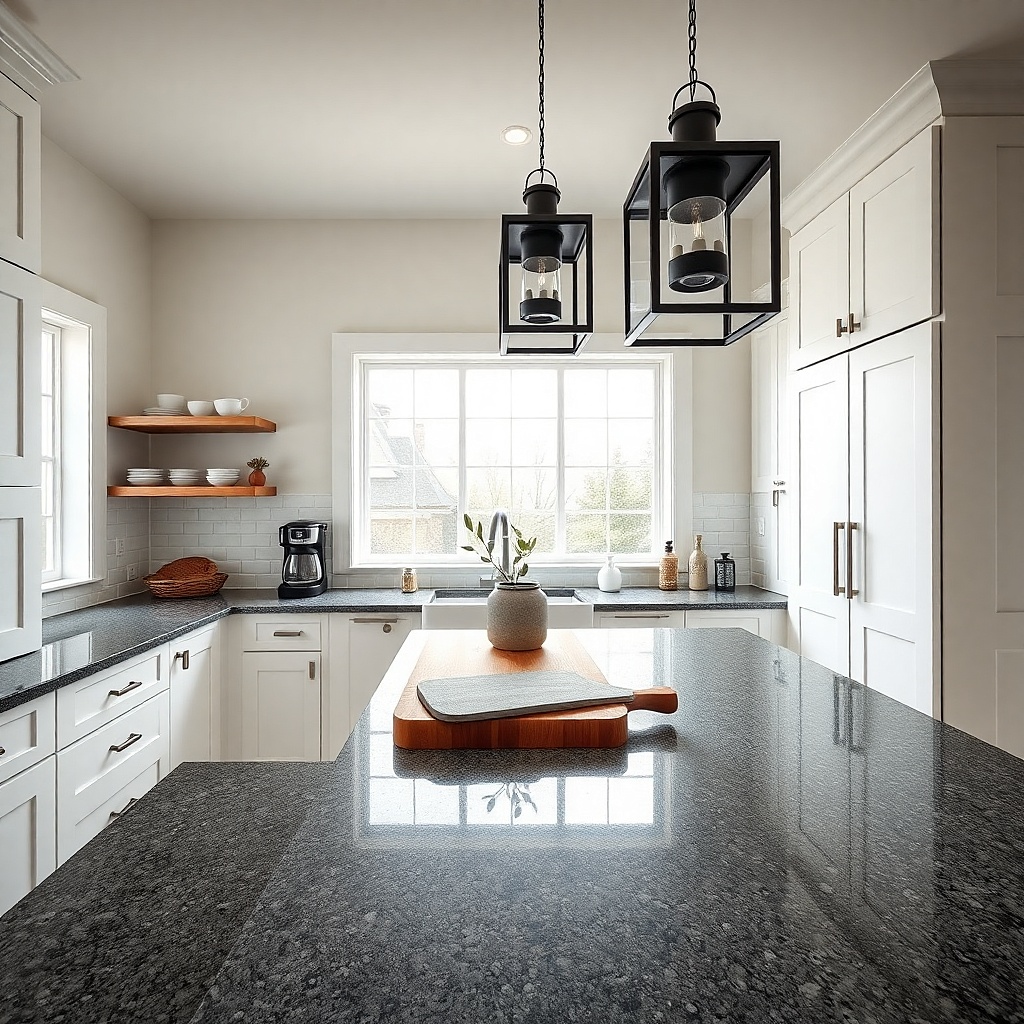
For serious cooking, black granite is the strongest argument against quartz. It handles heat better, so a hot pan landing near the range is less risky. Done right, it also looks clean and current rather than heavy. Look for Absolute Black, Virginia Mist, or similar dark slabs in a honed or leathered finish instead of a mirror-shiny polish. The softer finish cuts glare, hides smudges better, and keeps the kitchen from feeling like a black hole.
Start with a slab yard visit and compare polished, honed, and leathered versions side by side. Then pair the stone with warm white cabinets, flat-panel oak, or muted mushroom paint so the room still has contrast and light. Finally, expect about $50 to $95 per square foot installed depending on finish and region, and keep a trivet near the cooktop anyway because no stone likes thermal shock. Seal it after installation and test once a year with a few drops of water.
Try thisLeathered black granite hides fingerprints far better than polished black quartz.
Common mistakeSkip black granite with strong white lightning veins if your kitchen is small because the slab can dominate the room.
4. Bright white quartz for smaller kitchens
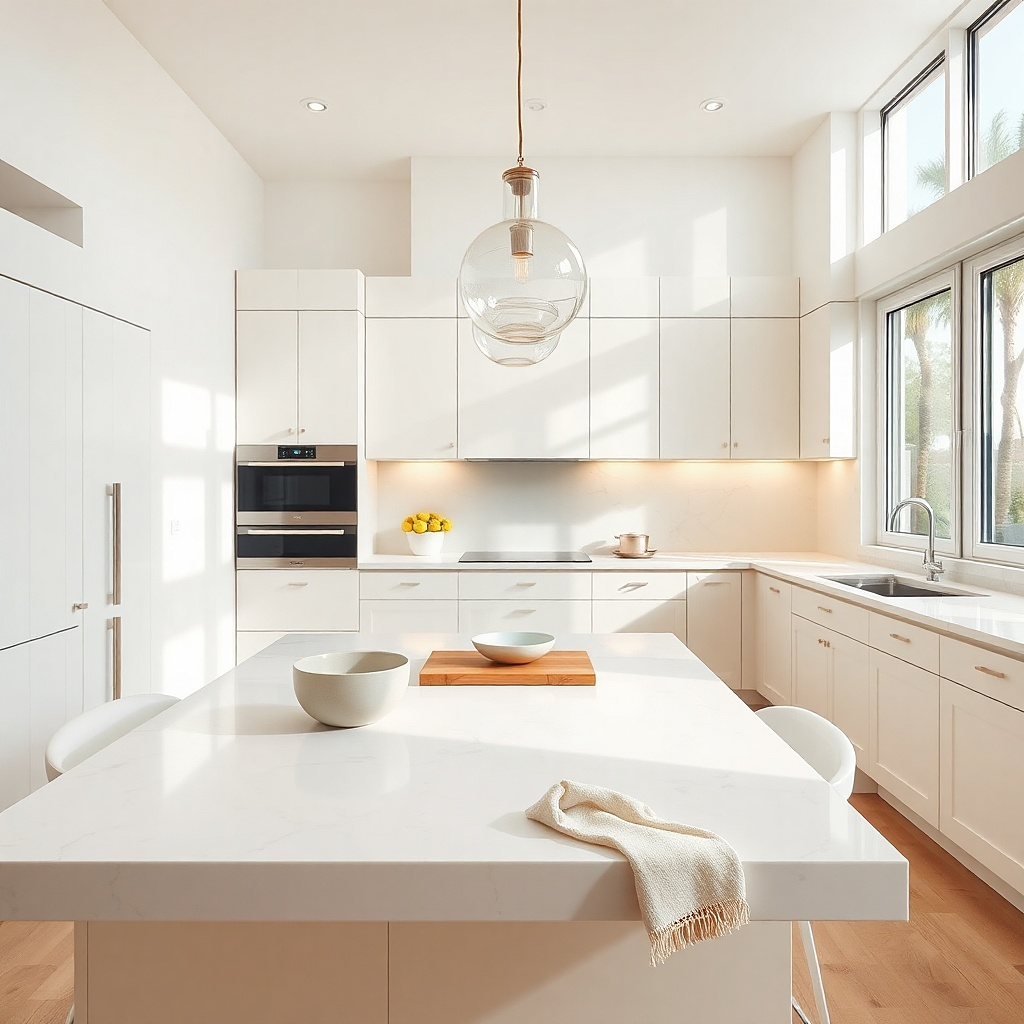
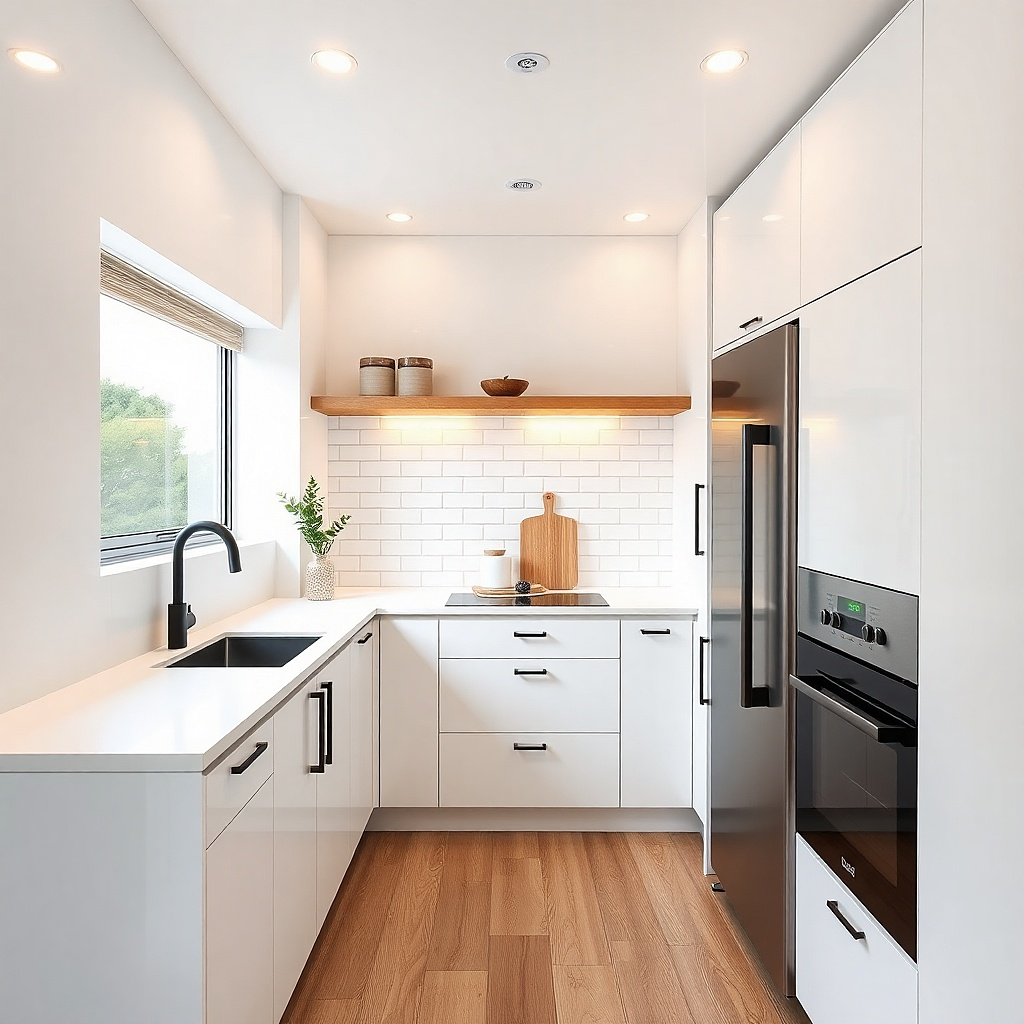
Small kitchens need visual quiet, and bright white quartz does that better than most granite. It reflects more light, keeps upper cabinets from feeling top-heavy, and gives you one continuous pale surface instead of a broken-up pattern. For a busy kitchen, this is practical too. You can spot a spill fast and wipe it clean without worrying about sealing. Choose a white with a little warmth — think soft paper white instead of icy blue-white — so the room does not turn clinical under LED lighting.
Start with a large sample and place it flat in your kitchen at 9 a.m., 2 p.m., and after dark with the under-cabinet lights on. Then compare pure white against warm white because cabinet paint, backsplash tile, and bulb temperature shift the result more than buyers expect. Finally, use a simple 1 1/2-inch eased edge and a matching low-splash or no splash if your wall tile runs full height. Most white quartz lands in the $60 to $120 per square foot range installed.
Try thisA faint gray or beige thread in the slab hides crumbs better than a flat, stark white surface.
Common mistakeDo not pair bright white quartz with cool blue LEDs unless you want the kitchen to feel harsh.
5. Quiet gray granite if you want stone without the visual noise
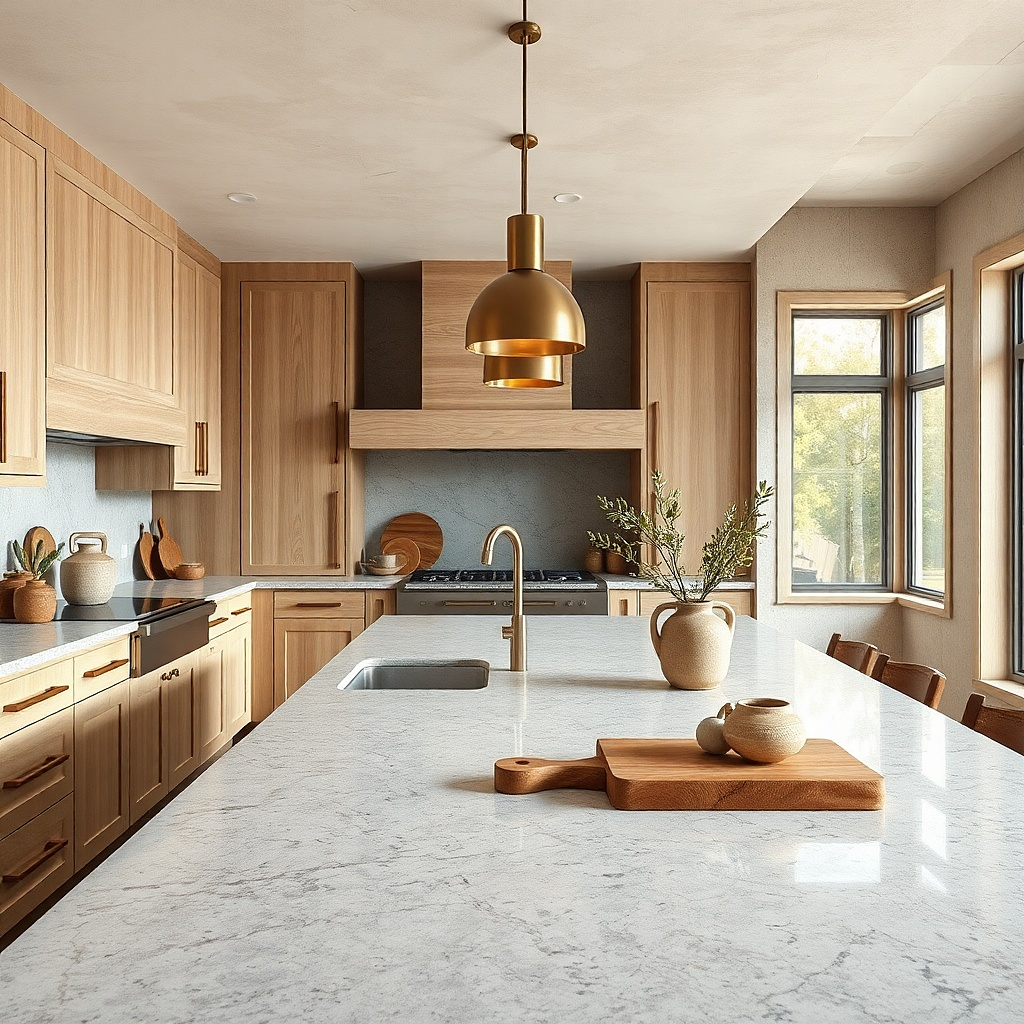
A lot of people reject granite because they picture loud speckles. That is not the full story. Quiet gray granite with soft mineral movement gives you natural stone without the busy pattern that fights every cabinet line. It suits shaker kitchens, slab-front kitchens, and mixed-material kitchens where wood and paint already carry enough texture. This is the smart granite choice if you want a modern look and stronger heat tolerance than quartz.
Start by asking yards for gray slabs with low contrast and broad movement rather than tight granular speckling. Then stand back 8 to 10 feet from the slab because granite that looks calm up close can still read busy across a room. Finally, pair it with a plain backsplash tile — 2x8, 3x12, or full-height slab splash — so the counter remains the main pattern. Expect pricing around $70 to $100 per square foot installed for better-looking modern granite.
Try thisBring your cabinet door sample to the slab yard. Gray granite shifts from warm to cold fast depending on the minerals in it.
Common mistakeSkip a heavily patterned mosaic backsplash with gray granite because the two patterns compete immediately.
6. Warm beige quartz for kitchens that need less glare
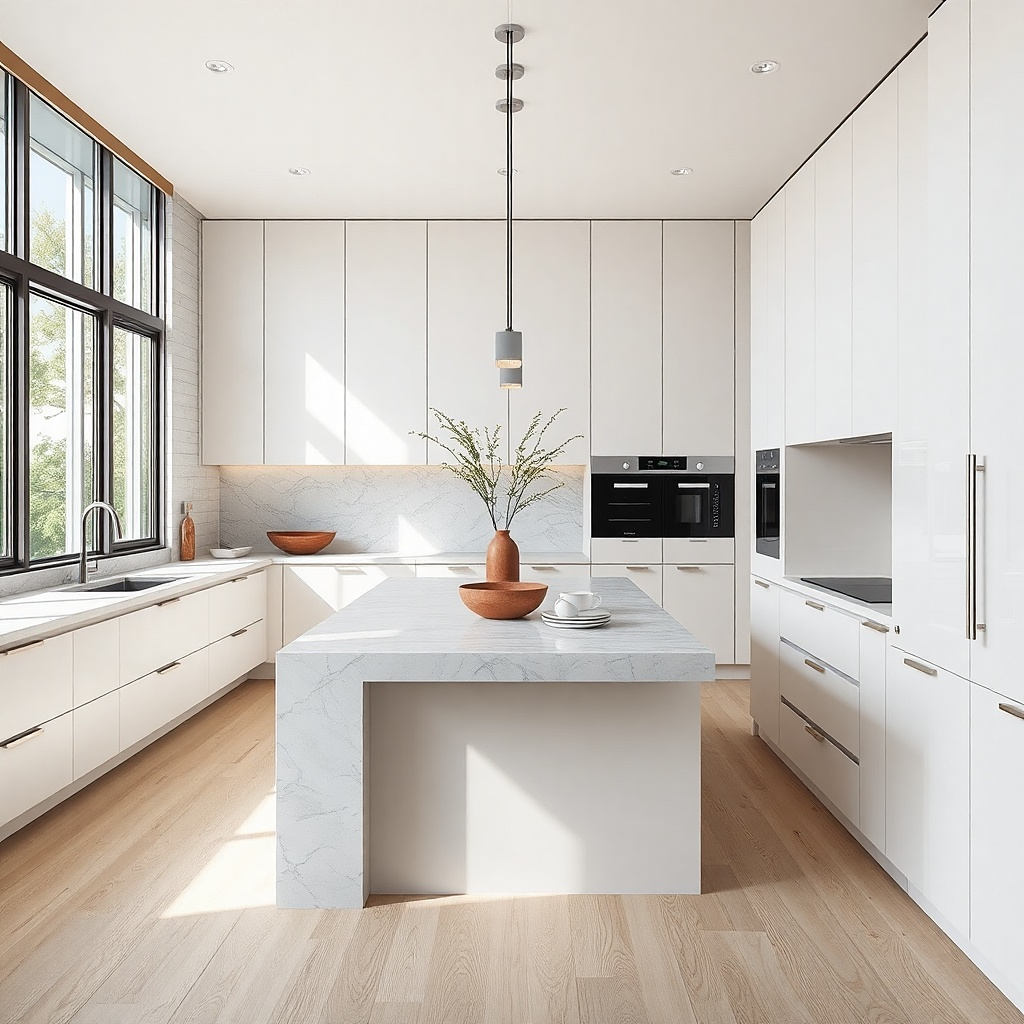
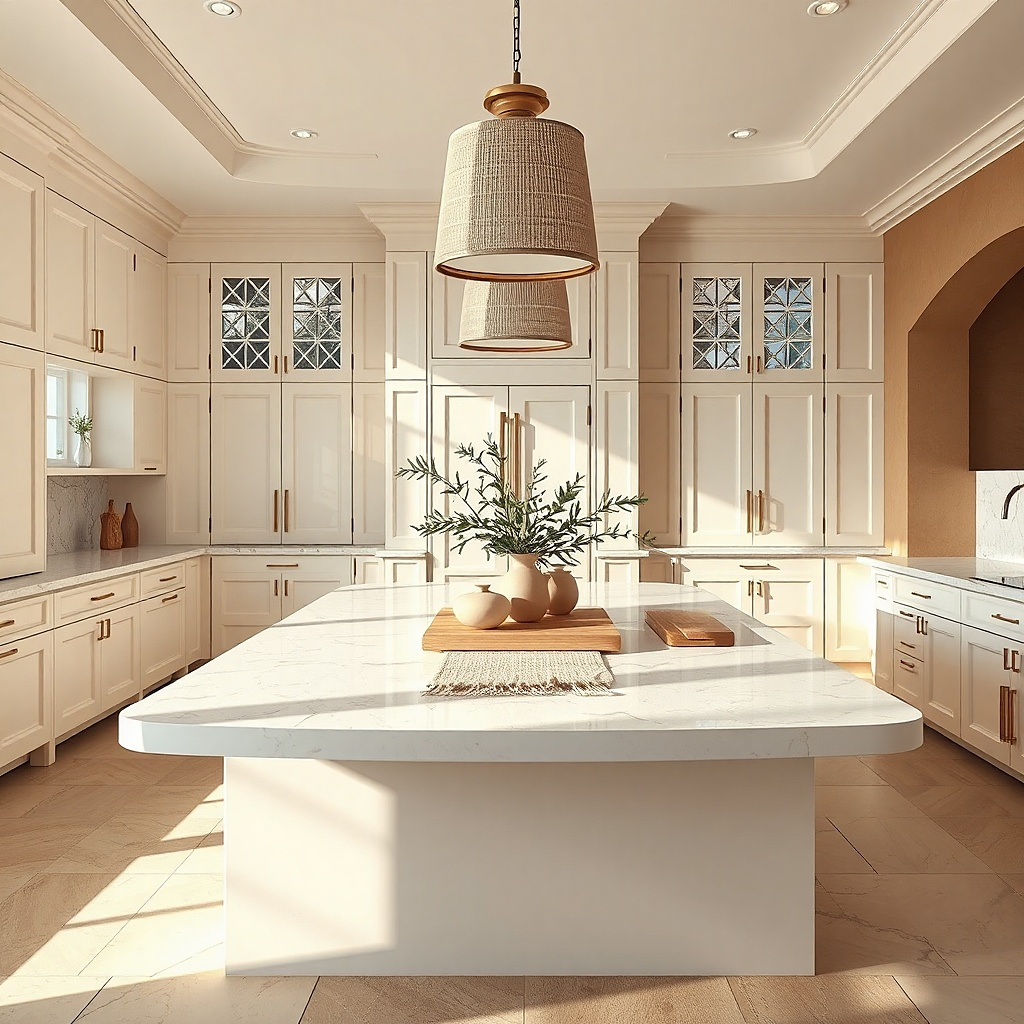
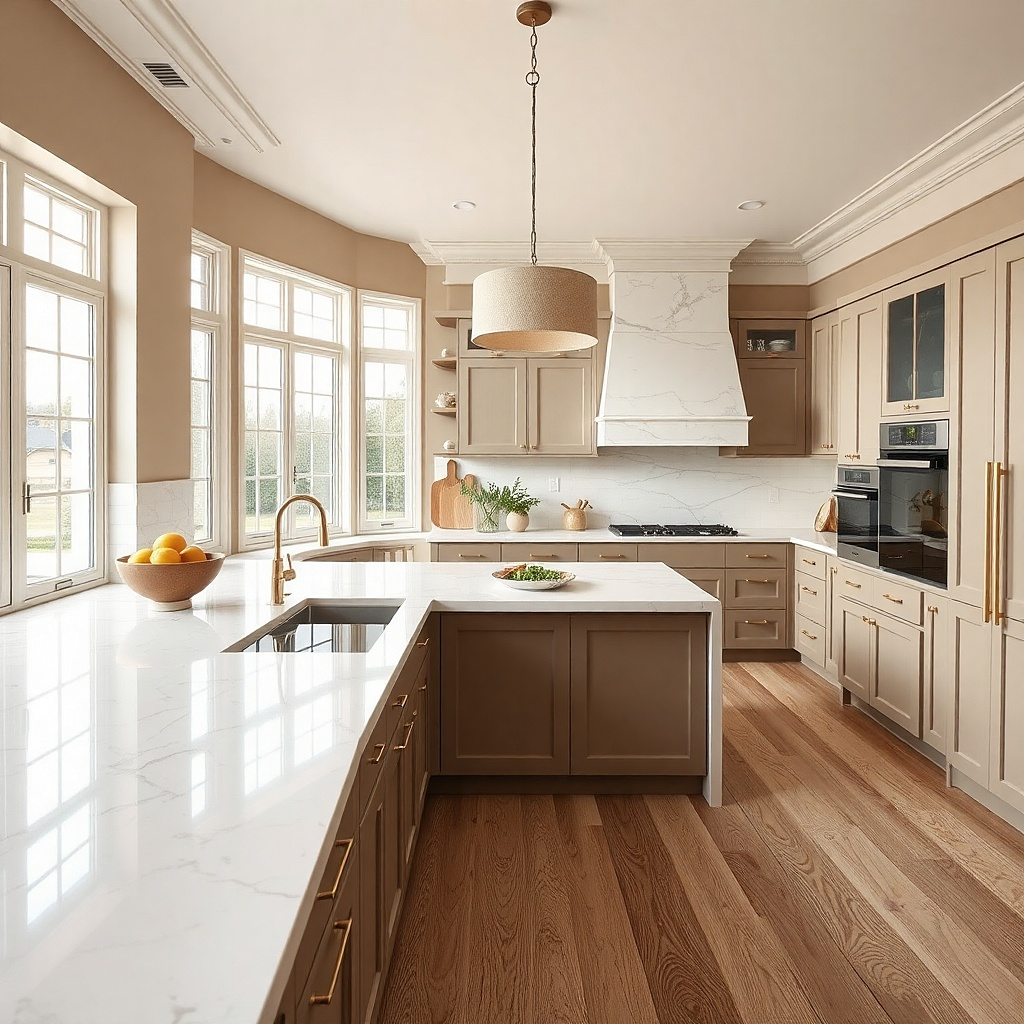
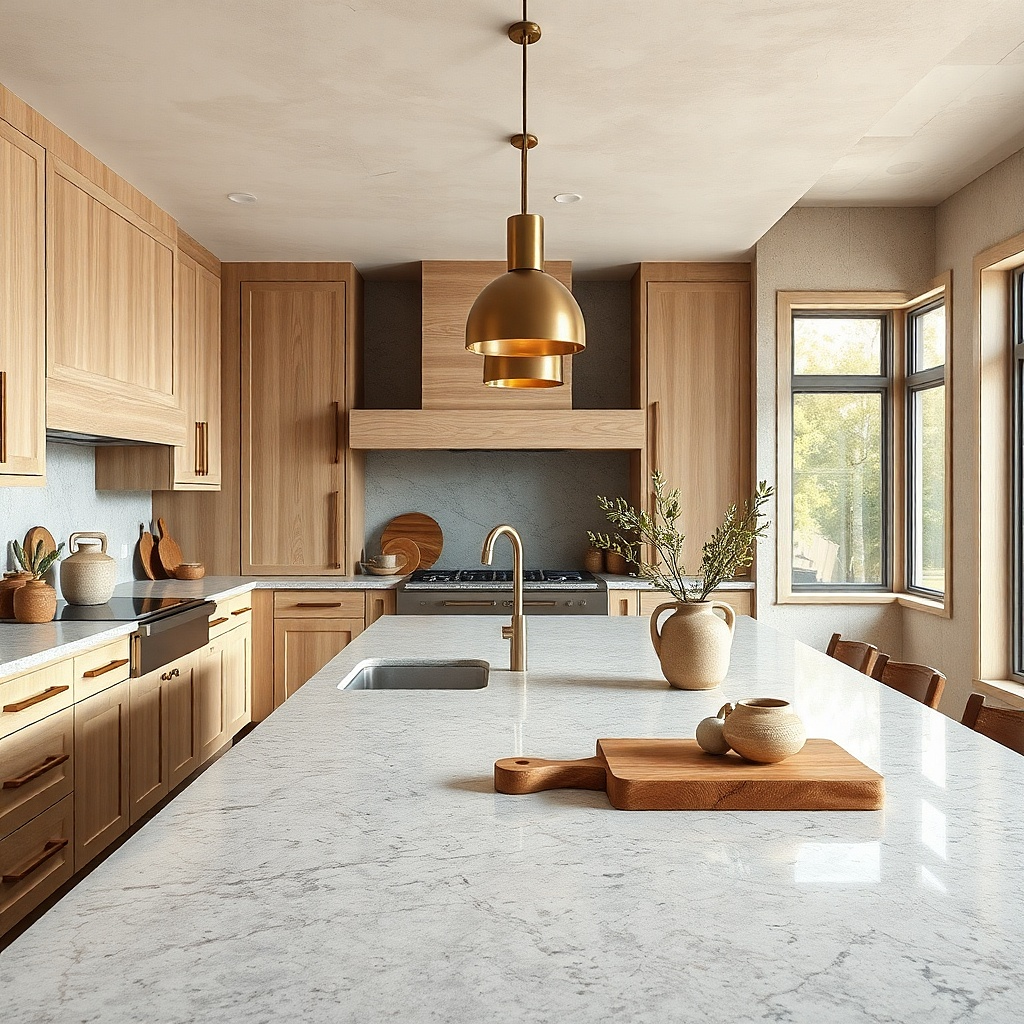
White quartz gets all the attention, but warm beige quartz is easier to live with in a hard-working kitchen. It hides flour dust, toast crumbs, and water marks better than bright white, and it softens the room under strong ceiling lights. This works especially well with white oak cabinets, brass hardware, and off-white walls. The look is current without trying too hard. It also avoids the cold showroom effect that pushes some people back toward granite.
Start with tones close to oatmeal, mushroom, or pale putty rather than yellow-beige. Then choose a slab with light particulate depth or a very soft vein so the color reads natural and not flat. Finally, pair it with a satin nickel or unlacquered brass faucet and a creamy backsplash tile for a warmer palette that still feels clean. Installed cost sits in the same quartz band, about $55 to $110 per square foot in many markets.
Try thisWarm quartz is one of the easiest ways to calm a kitchen with stainless appliances and cool gray flooring.
Common mistakeDo not pick beige quartz with obvious gold sparkles because it dates the kitchen fast.
7. Quartz with a simple edge for the best cost-to-cleanup ratio
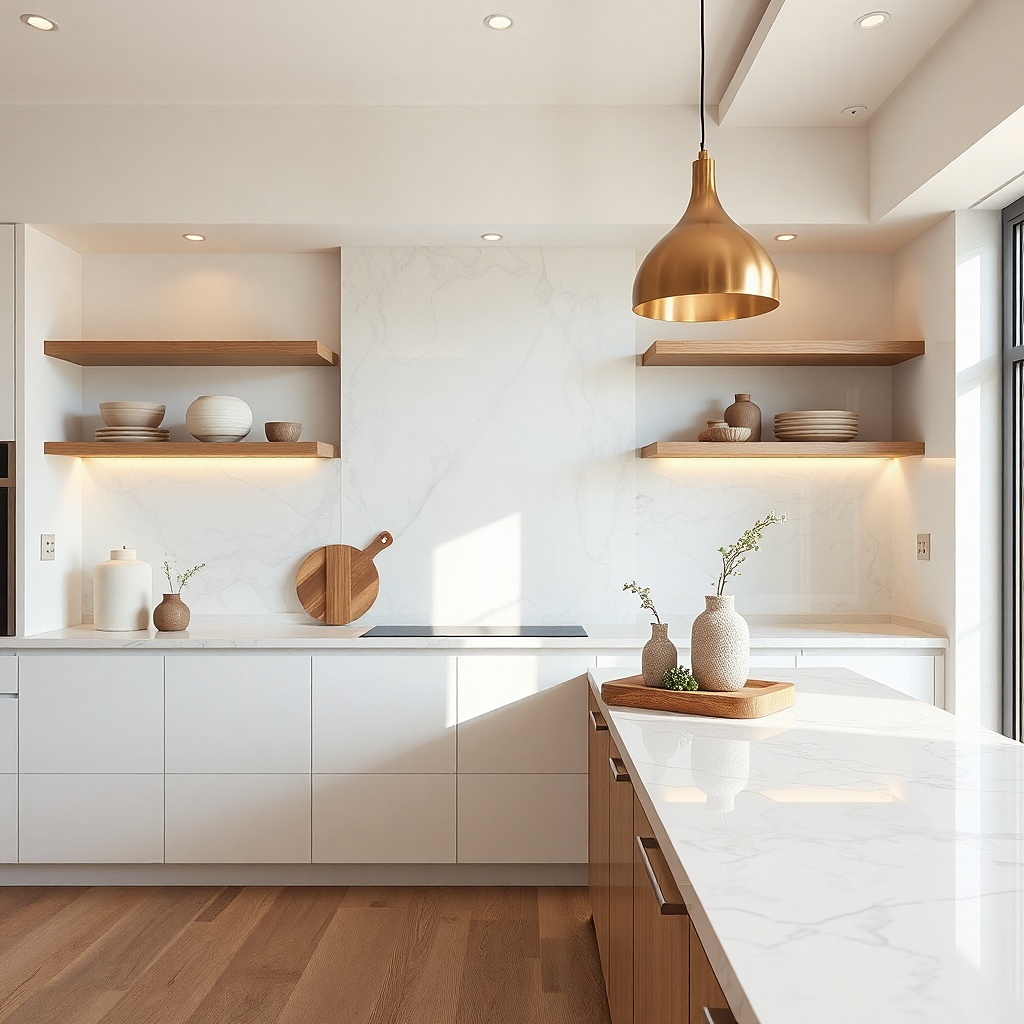
Material choice is only half the bill. Edge profile changes labor cost and changes how easy the top is to wipe down. For quartz, a straight eased edge or small pencil round is the best value because it keeps fabrication simpler and leaves fewer grooves for grime. In a busy kitchen, ornate edges are a bad trade. They cost more, collect grease near prep zones, and rarely suit a modern room anyway.
Start by getting your quote with a standard eased edge before asking about upgrades. Then compare that quote against mitered waterfall-style edges or stacked-thickness details if you want a chunkier look, because those jump the labor bill. Finally, keep overhangs modest — about 1 inch on perimeter counters — so the profile stays clean and less likely to chip at corners. This choice can save a few hundred dollars on a mid-size kitchen.
Try thisRounded inside corners at sink cutouts reduce stress points and lower the risk of cracking during installation.
Common mistakeSkip ornate ogee or double-radius edges on quartz in a modern kitchen.
8. Granite on the perimeter, quartz on the island if you refuse to choose
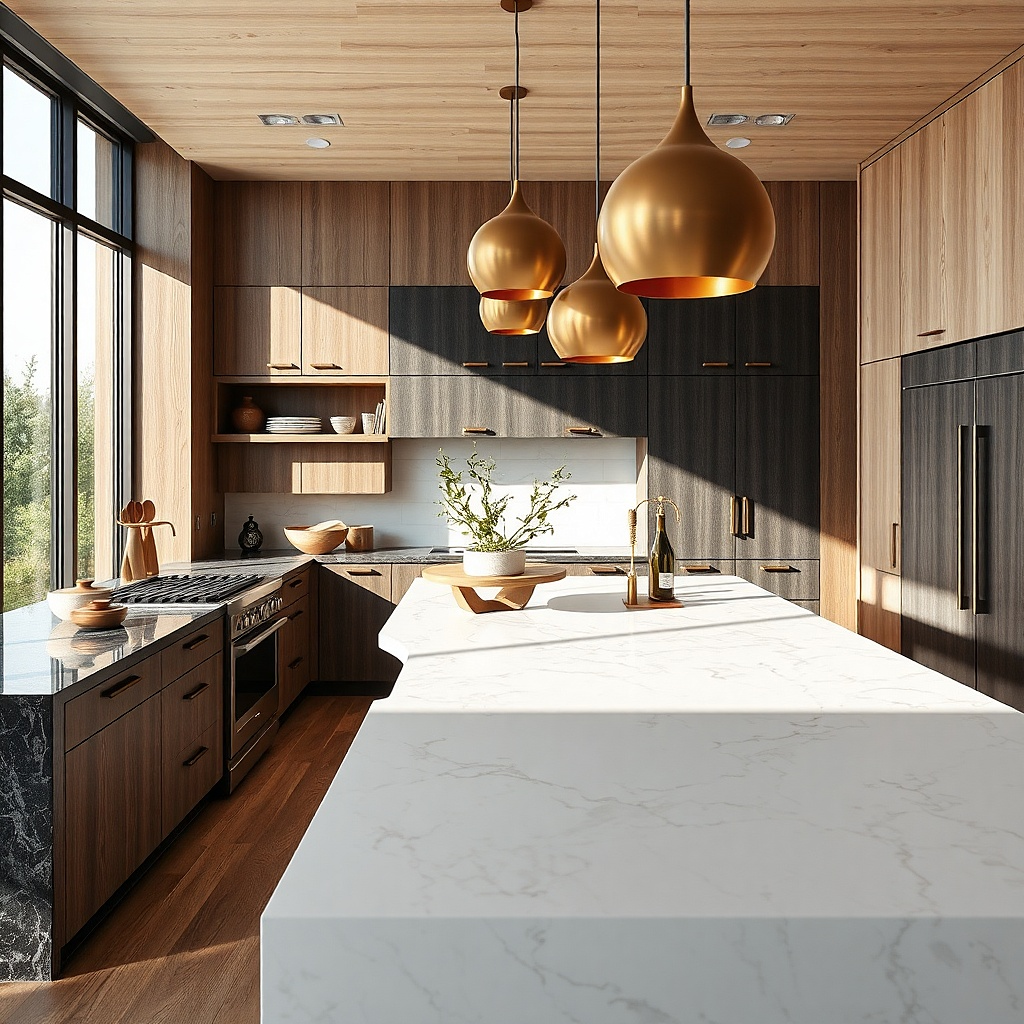
Mixing materials solves a real problem if your kitchen has two work zones with different jobs. Put granite near the range where heat matters more, and use quartz on the island where snacks, homework, baking, and spills happen all day. This split setup also controls cost if you use a remnant or lower-tier granite on the perimeter and spend more on one quartz island slab. The trick is restraint. The two surfaces need to share an undertone so the kitchen looks planned instead of patched together.
Start by choosing one dominant material for about 70 to 80 percent of the visible counter area. Then pick the second material in a quieter pattern and a related tone — for example, black leathered granite on the perimeter with warm white quartz on the island. Finally, repeat one linking finish elsewhere, such as black stools, black pendants, or cabinet hardware, so the palette feels intentional. Fabrication gets more complex, so expect separate slab minimums or extra delivery charges.
Try thisKeep one of the two counters plain. Two dramatic slabs in one kitchen is too much.
Common mistakeDo not mix a cool white quartz with a brown-gold granite unless you want the kitchen to look split in half.
9. Full-height quartz backsplash if cleanup is the top priority
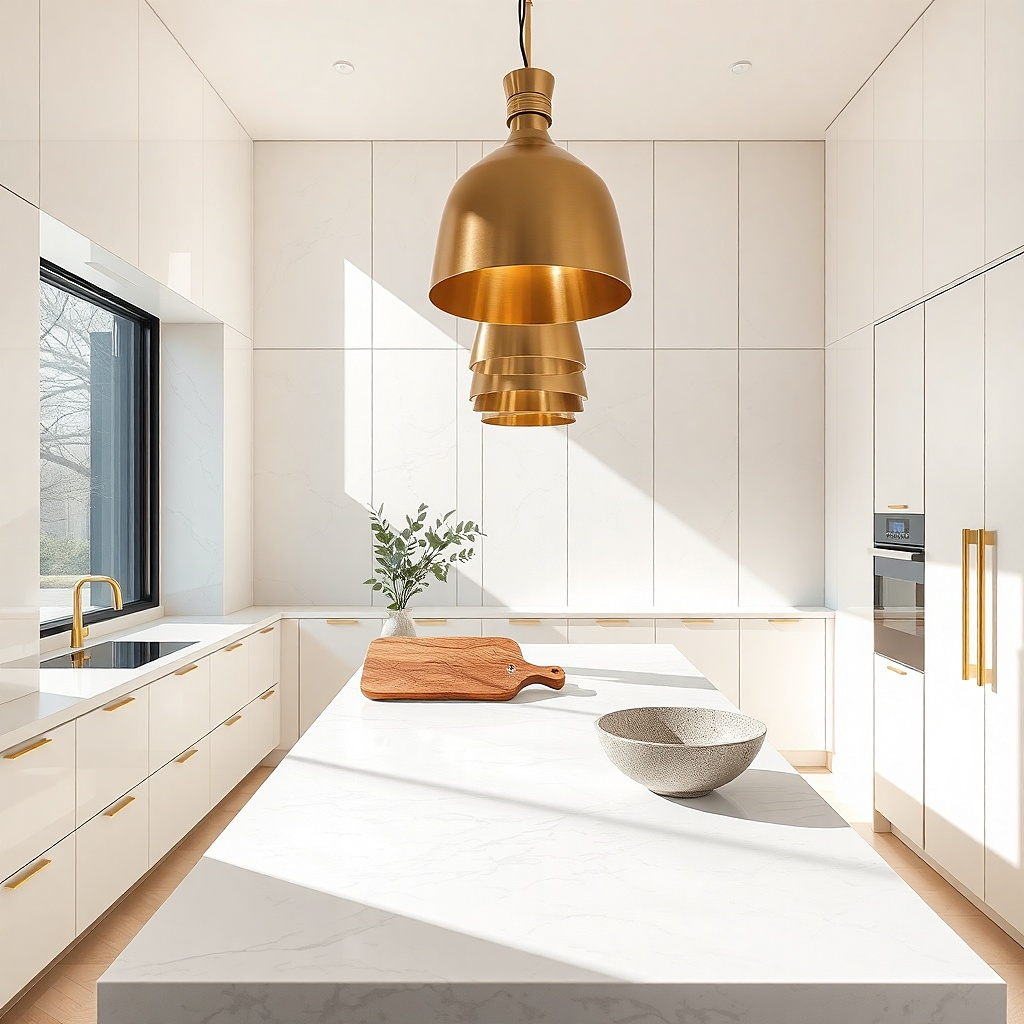
If your question is really about which surface makes the kitchen easier to maintain, the backsplash matters too. A matching quartz backsplash removes grout lines behind the range and sink, which are the two messiest spots in the room. This setup looks sharper than a 4-inch backstop and feels more current than busy tile. It also makes a modest quartz slab look more expensive because the material runs as one clean plane from counter to upper cabinet or hood.
Start by asking the fabricator to quote the backsplash from the same slab or from a companion slab with a close match. Then run it full height in the highest-splash zones at minimum — behind the cooktop and sink — even if you tile the rest of the walls. Finally, keep outlets lined up in a straight band before fabrication starts because cutouts in stone cost more than cutouts in drywall. This upgrade adds cost, but it saves scrubbing time every week.
Use the same finish on counter and splash. Mixing polished and matte on the same wall looks accidental.
Skip a short 4-inch quartz backstop with wall tile above it unless you are working with a strict builder package.
10. Leathered granite if fingerprints drive you crazy
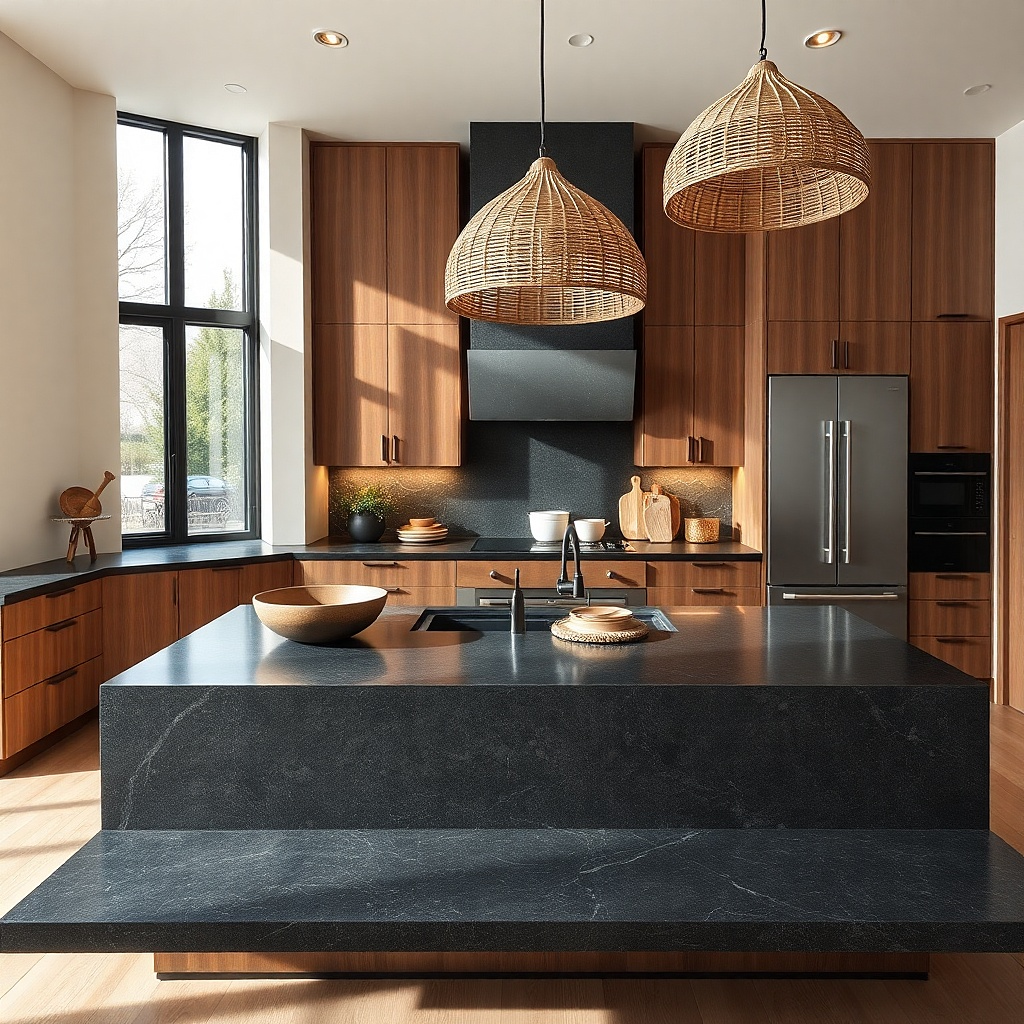
Leathered granite deserves more attention in busy kitchens. The finish has a soft texture and low sheen, so it hides fingerprints, water spots, and streaks better than polished granite and better than many dark quartz colors. It also feels less slippery and less formal. In homes with kids, pets, or constant cooking, that lower-maintenance appearance matters just as much as actual stain resistance. This is one of the best modern granite choices if polished stone feels too shiny or too fussy.
Start by checking the slab with your hand, not just your eyes, because leathered finishes vary from barely textured to strongly pebbled. Then ask whether the specific stone has resin fill in any pits, since some darker granites do and that changes the surface feel. Finally, pair leathered granite with flat-front cabinets or simple shaker doors so the texture stays controlled. Expect a slight upcharge over polished in some shops because the finish is less common.
Use under-cabinet lighting with a warm 2700K to 3000K bulb. Leathered stone looks better in warm light than in cold white light.
Do not choose a heavily pitted leathered slab for a baking zone where you roll dough directly on the counter.