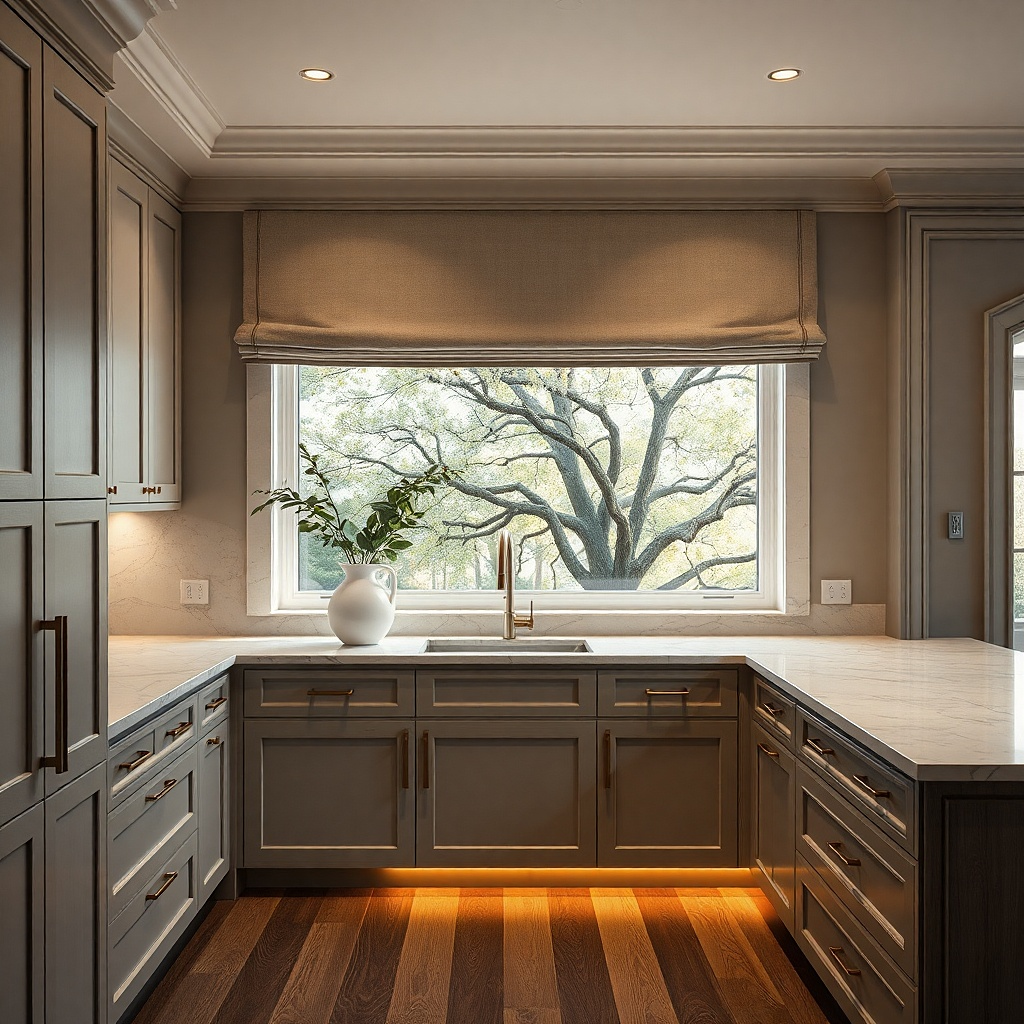
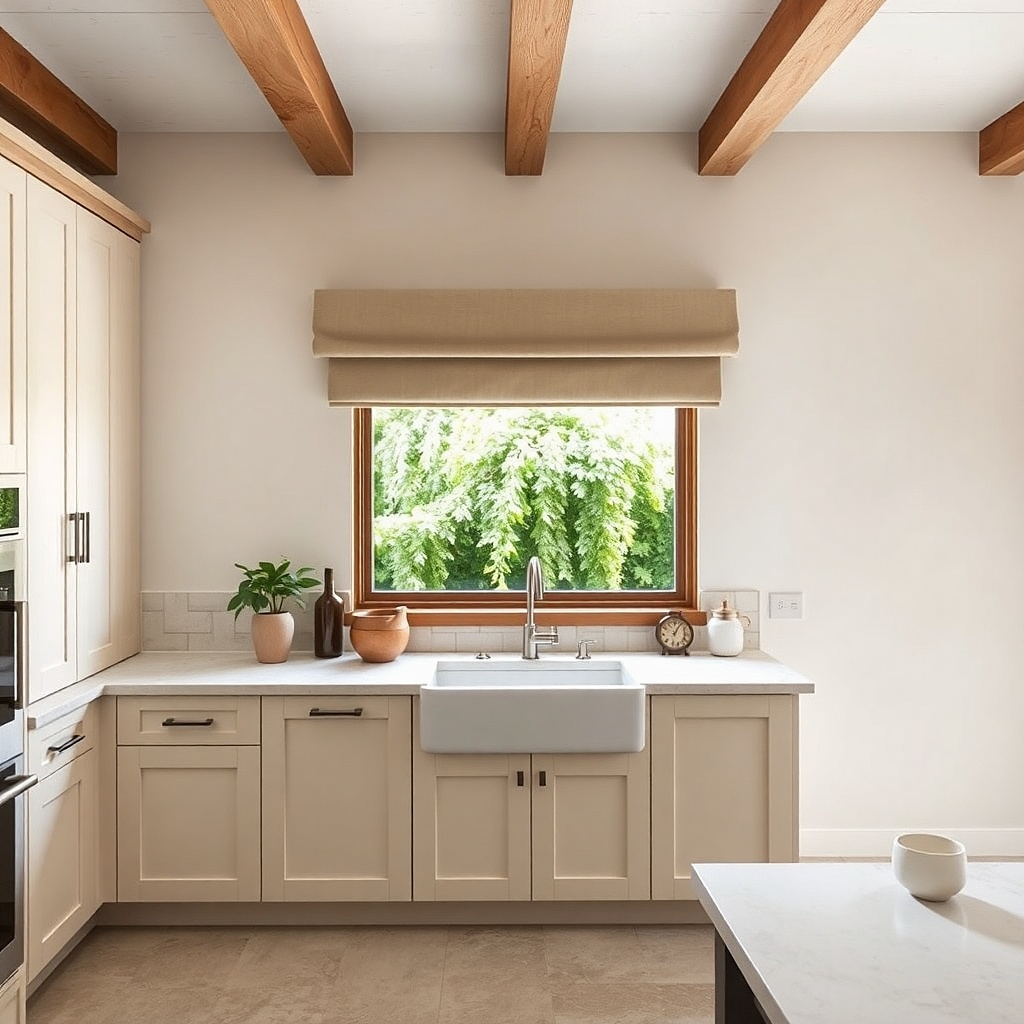
1. Tailored straight band valance in washed linen
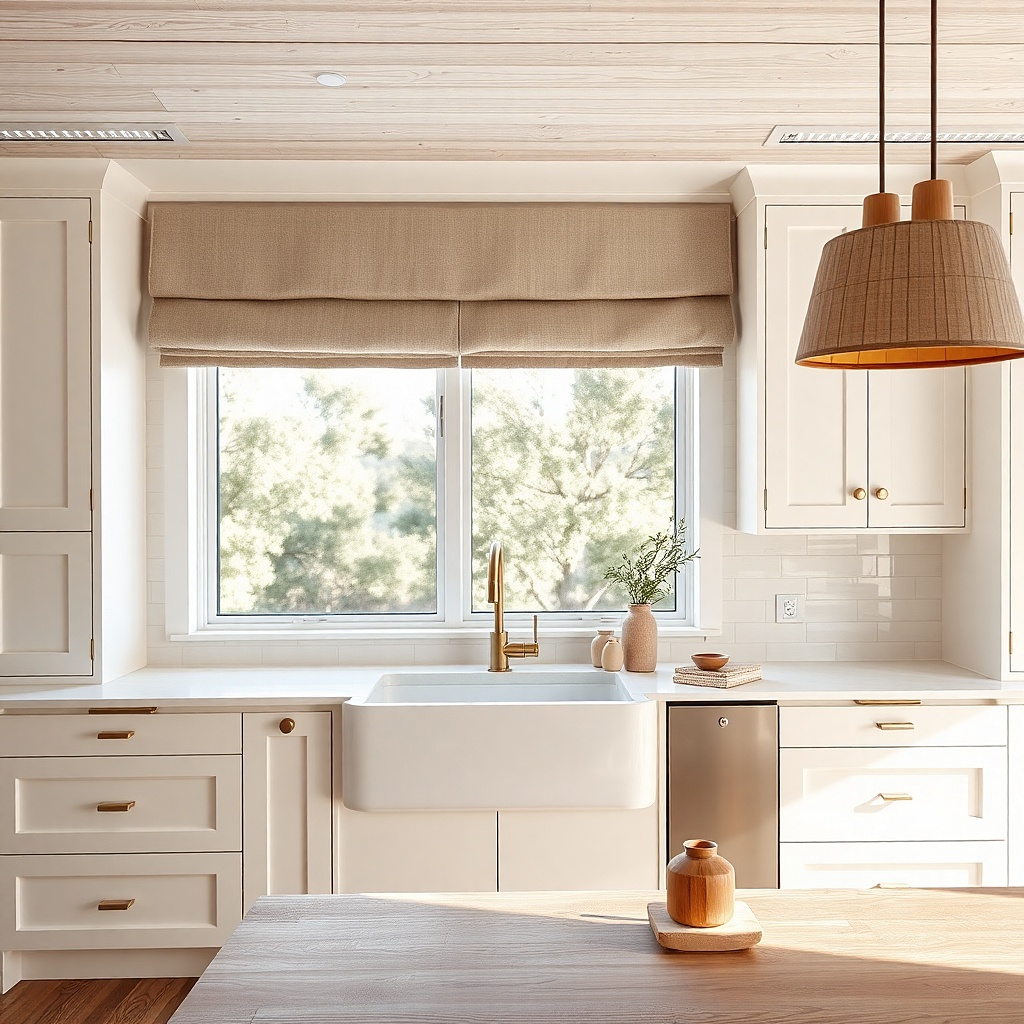
This is the cleanest route to a high-end kitchen window valance idea because it looks made for the opening. Use a washed linen or linen-blend in off-white, warm cream, or pale greige so the fabric has texture without heavy shine. Mount it so it sits 2 to 3 inches below the top of the trim, and keep the height around 10 to 12 inches. The straight band hides the rod and creates that tailored, architectural line while still softening the space. It’s especially good over a sink or counter where full curtains would get in the way or collect splatters.
Try thisMatch the valance color to your cabinet undertone, not the brightest white in the room.
Start by measuring the window width plus 4 to 8 inches total for side clearance. Choose a finished length of 10 to 12 inches tall, then add a little extra if you want a fuller drape at the edges. Install a concealed rod or tension track under the trim, centered and level, and sew a simple back channel or use a clip-on header to attach the band. Finally, steam the linen flat and press the top edge so it hangs straight — that crisp edge is the whole point.
Common mistakeAvoid thin fabric that collapses into wrinkles — you want body so the band stays flat.
2. Crisp pinch-pleat valance with a flat header
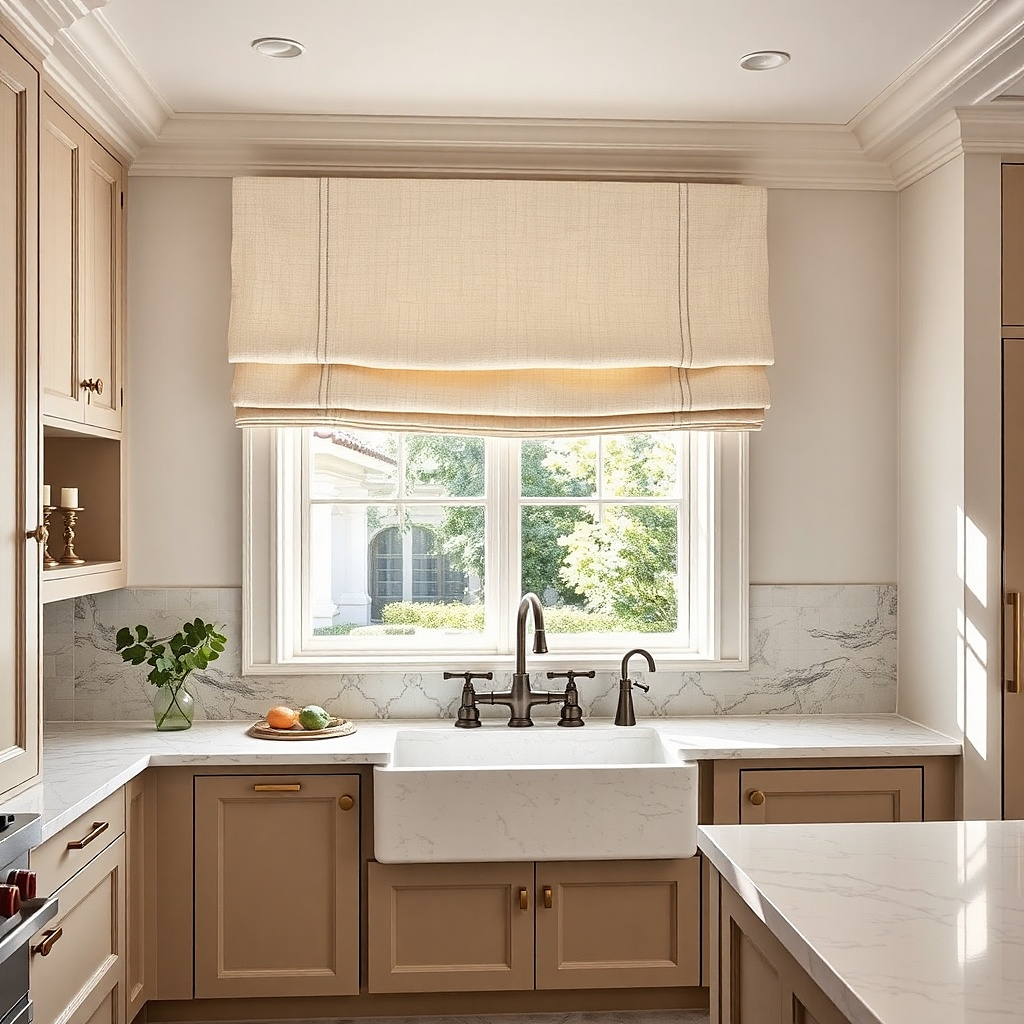
Pinch-pleats look expensive because the fabric is controlled it gathers with intention instead of pooling. For kitchens, pick a cotton sateen, cotton-linen blend, or a mid-weight polyester that holds pleats without turning plasticky. Keep the valance about 12 inches tall, and build the header so it sits flat against a hidden track or a narrow decorative board. This gives you soft texture while still letting light pass through the pleats. It’s a great choice for dining kitchens that feel a little too plain, especially when you have clean-lined cabinets and want the window to match that polish.
Try thisUse a flat, narrow header board in the same color as your trim for a higher-end finish.
Order or sew a panel wide enough for 1.5 to 2 times the window width so the pleats look full without looking bulky. Install a pleat-ready track or a narrow mounting board under the trim, then attach pleats evenly across the width. Set the valance height to 10 to 12 inches, then check it from the main seating angle so the pleats don’t hit too low. Steam the pleats after hanging and adjust any uneven spacing by moving the pleat clips slightly.
Common mistakeDon’t hang pinch-pleats too long — if the valance drops past 14 inches, it starts looking like full curtains.
3. Classic scalloped valance with a lined face
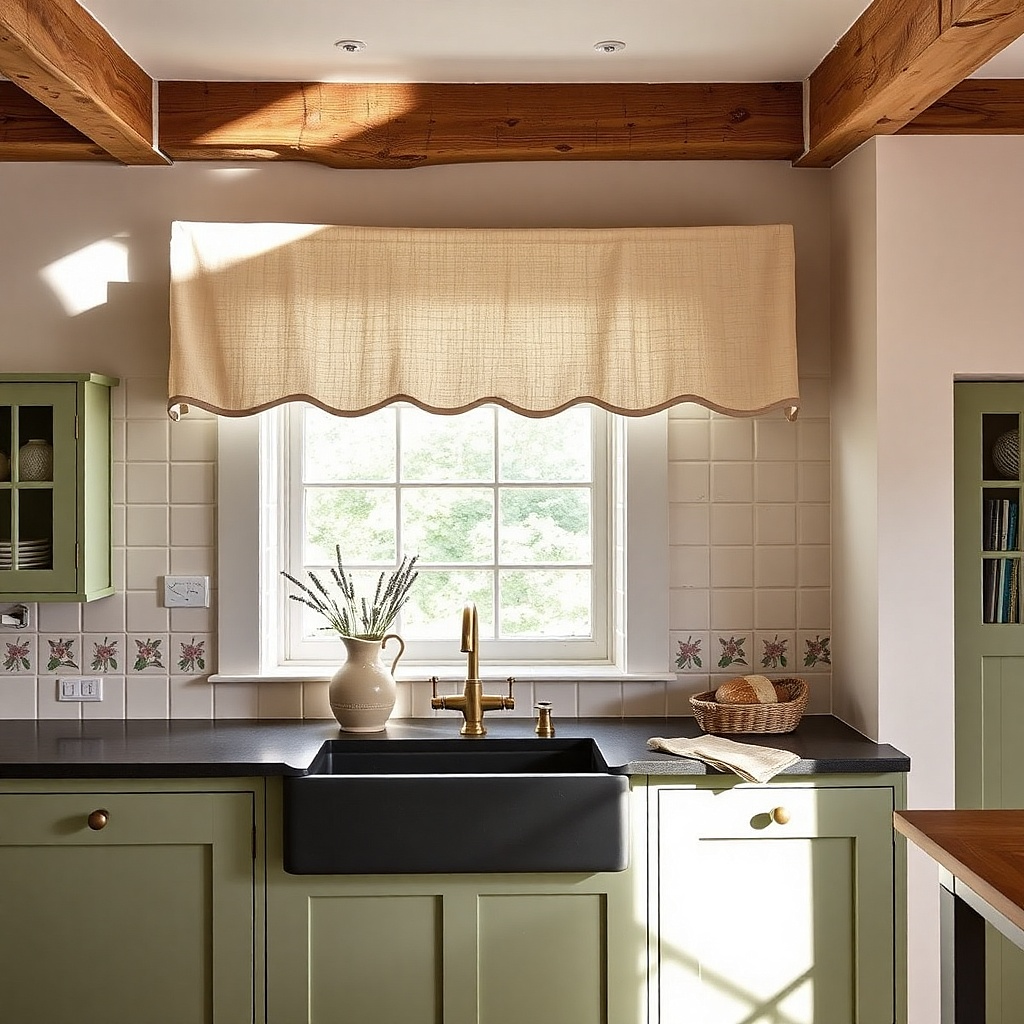
Scallops create softness without needing full curtains, and a lined face keeps the arches crisp instead of drooping. Choose a medium-weight fabric like cotton-linen or a woven polyester that holds shape through humidity. An ivory or warm white works best in kitchens because it adds warmth and hides minor shadows from window hardware. Aim for scallops that repeat evenly across the width, with the lowest points landing around 10 to 13 inches from the mounting line. This idea looks great in kitchens with curved details arched cabinet glass, rounded pulls, or a rounded dining corner.
Measure the window width and decide how many scallops you want; a good starting point is 7 to 11 scallops across a standard single window. Cut or buy a scalloped valance with a lined construction so the arches keep their outline. Mount it using a concealed rod or a small valance board, keeping the top edge perfectly level. Steam the scalloped sections and press the line where the scallops meet the header so the arches look sharp.
Pick lining in the same color family, not a bright contrast, so the scallops read elegant rather than costume-like.
Avoid unlined scallops in bright sun — thin fabric turns uneven and the scallops lose their shape.
4. Soft tailored tab-top valance in a light semi-opaque weave
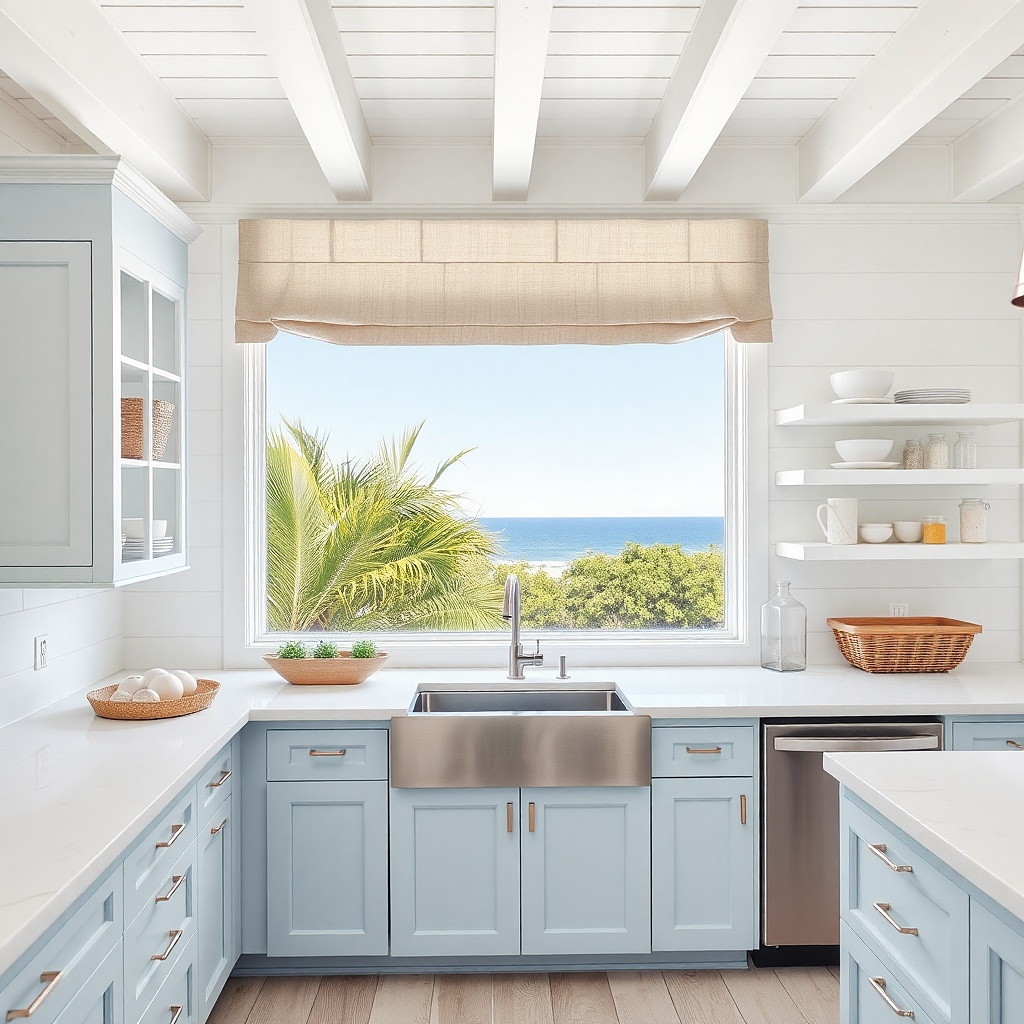
Tab-top valances look airy and intentional, and they’re perfect when you want soft style but not full curtains. Use a light semi-opaque weave like linen-blend voile or a textured cotton voile. The tabs create a neat spacing between top and fabric, which keeps the valance from collapsing into a flat sheet. Keep the height around 8 to 10 inches so it frames the window without swallowing daylight. This works well in kitchens that already have privacy from blinds or frosted glass, where the valance is purely decorative and color-softening.
Try thisUse a rod color that matches your cabinet hardware — brushed nickel with nickel, oil-rubbed bronze with bronze.
Choose a valance panel height of 8 to 10 inches and enough width for 1.2 to 1.5 times the window width so it drapes with gentle fullness. Install a simple rod and space the tabs so they land every 5 to 7 inches across the width. Hang the rod so the valance clears trim by about 1 inch on each side. Steam lightly to remove creases and keep the tabs evenly spaced.
Common mistakeDon’t pick fabric so sheer it becomes a glare screen; if you can see your sink fixtures through it in midday light, it’s too thin.
5. Understated gathered valance with a hidden rod pocket
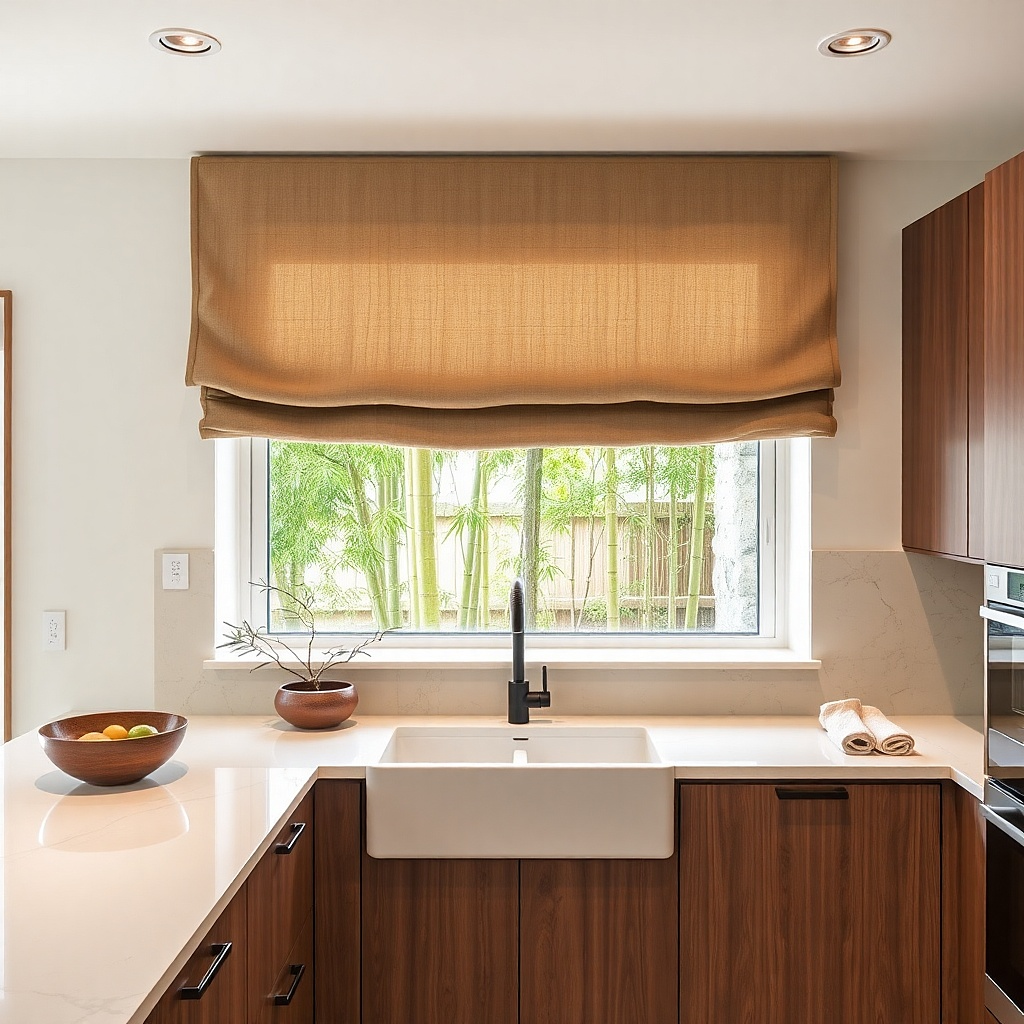
This is the one gathered option that still looks high-end in a kitchen because the top is clean. Use a cotton-linen blend or a structured medium-weight polyester in cream, sand, or pale greige. The hidden rod pocket keeps hardware out of view, while the gathers create a soft scalloped effect along the bottom edge. Keep it around 10 to 13 inches tall and attach it so it sits close to the trim — too much gap looks sloppy. This valance is ideal when your kitchen has busy backsplash tile and you want the window to be a calmer, framed layer.
Try thisAdd a subtle contrasting stitch line on the hem in a matching thread color to make the finish look architectural.
Calculate width at 1.8 to 2.2 times the window width for a controlled gathered look. Cut or buy a fabric panel tall enough for a 10 to 13 inch finished valance, then add a rod pocket and a clean hem. Sew the rod pocket so it holds the top line straight, then gather the bottom evenly using long basting stitches before finishing. Hang on a hidden rod or a slim valance track, then steam the bottom edge so gathers look intentional, not wrinkled.
Common mistakeAvoid uneven gathers — if one side has bigger folds, it reads messy in kitchens where everything is close up.
6. Swag valance with a single center drop and tiebacks
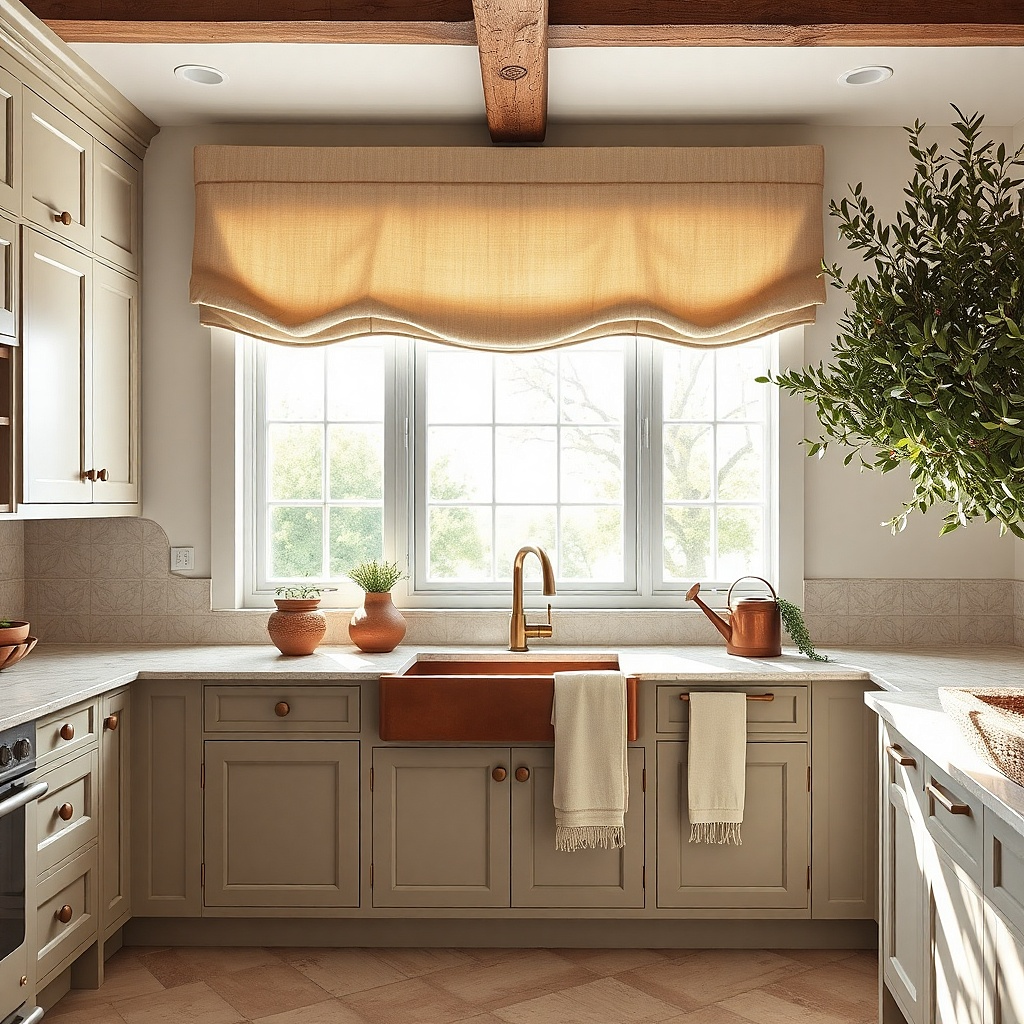
Swags bring classic softness, but the kitchen-friendly version is simple: one center drop, two relaxed side drapes, and tiebacks that keep fabric off the counter line. Choose a medium-weight fabric with drape — silk-look polyester, polished cotton-linen, or a soft woven damask that doesn’t look stiff. Keep the valance height around 12 to 14 inches so the center drop adds charm without blocking light. This looks especially good in breakfast nooks or dining corners where you want the window to feel styled even when blinds are closed.
Try thisUse tiebacks in the same finish as your faucet or hardware so the swags look finished, not temporary.
Start with a valance width of 2.5 to 3 times the window width so the swag has movement without looking thin. Install two small tieback hooks on the sides of the window frame at about the height where you want the drapes to lift. Mount the swag on a top rod or decorative cornice, then pin and distribute the folds so the center drop hangs 2 to 4 inches lower than the side curves. Steam and adjust the drape angles until the folds look symmetrical from the room.
Common mistakeAvoid extra-long swags — if it reaches into the counter zone, it starts to feel dated and impractical.
7. Lined Austrian-style balloon valance above a window seat
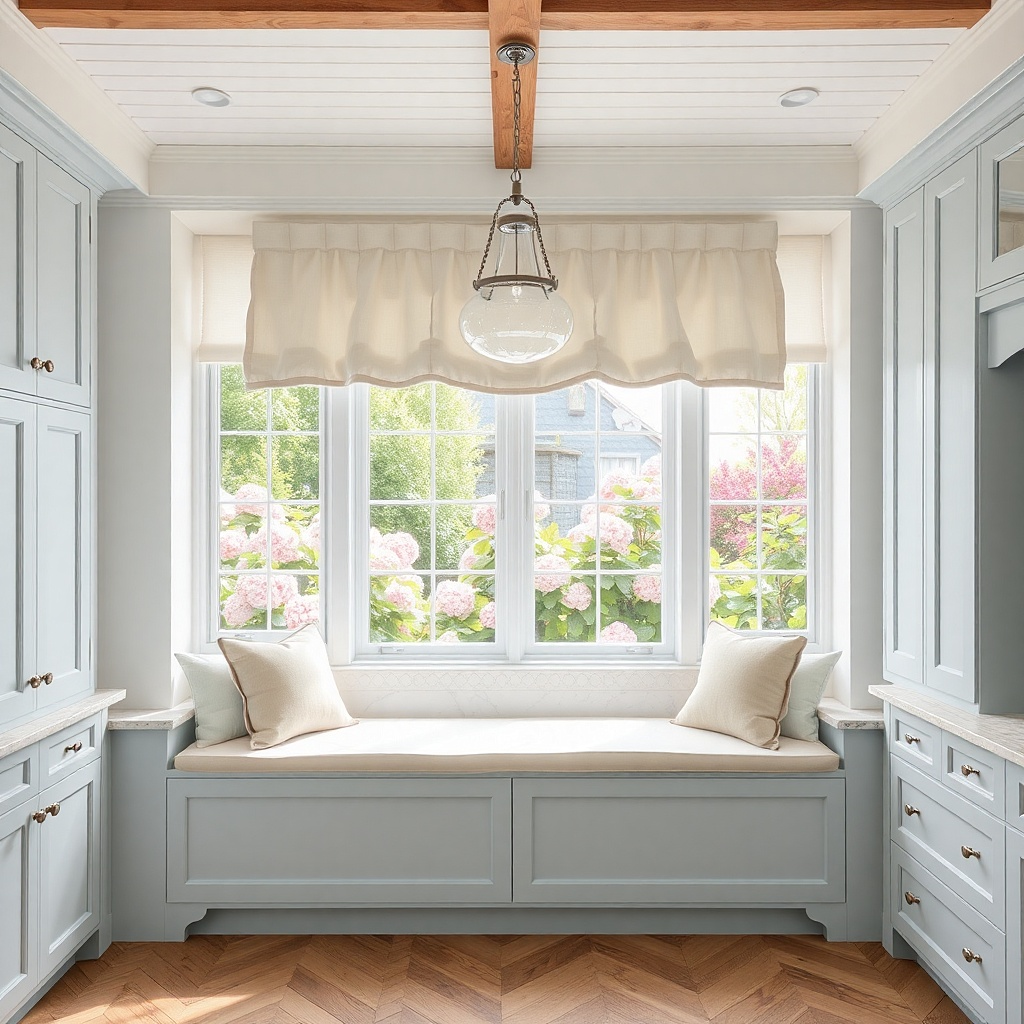
Austrian-style balloons add soft volume without acting like full curtains, and lining keeps them from looking limp. The look is small, controlled puffs across the width with a tailored top edge. Use a medium-weight fabric like cotton-linen with a slight sheen or a thicker polyester that holds pleats. Keep the balloon valance around 14 inches tall so it reads plush but still stays above most kitchen clutter zones. This is a great match for a window seat, a breakfast nook, or any kitchen with bench seating where you want the window to feel cozy.
Try thisPick a fabric with slight texture; smooth sheers make balloon gathers look flat in kitchen light.
Choose a valance kit or pattern that creates discrete puff sections; aim for puffs every 6 to 8 inches across the width. Line the valance if you want shape — use the same color for both layers to avoid shadowing. Mount on a header board or a track, then attach the puff points evenly so the top stays level. Steam from the back side and adjust puff fullness by tucking excess into each section.
Common mistakeAvoid unlined balloons — they sag as soon as air moves through the window area.
8. Roman shade-inspired valance with fabric ties
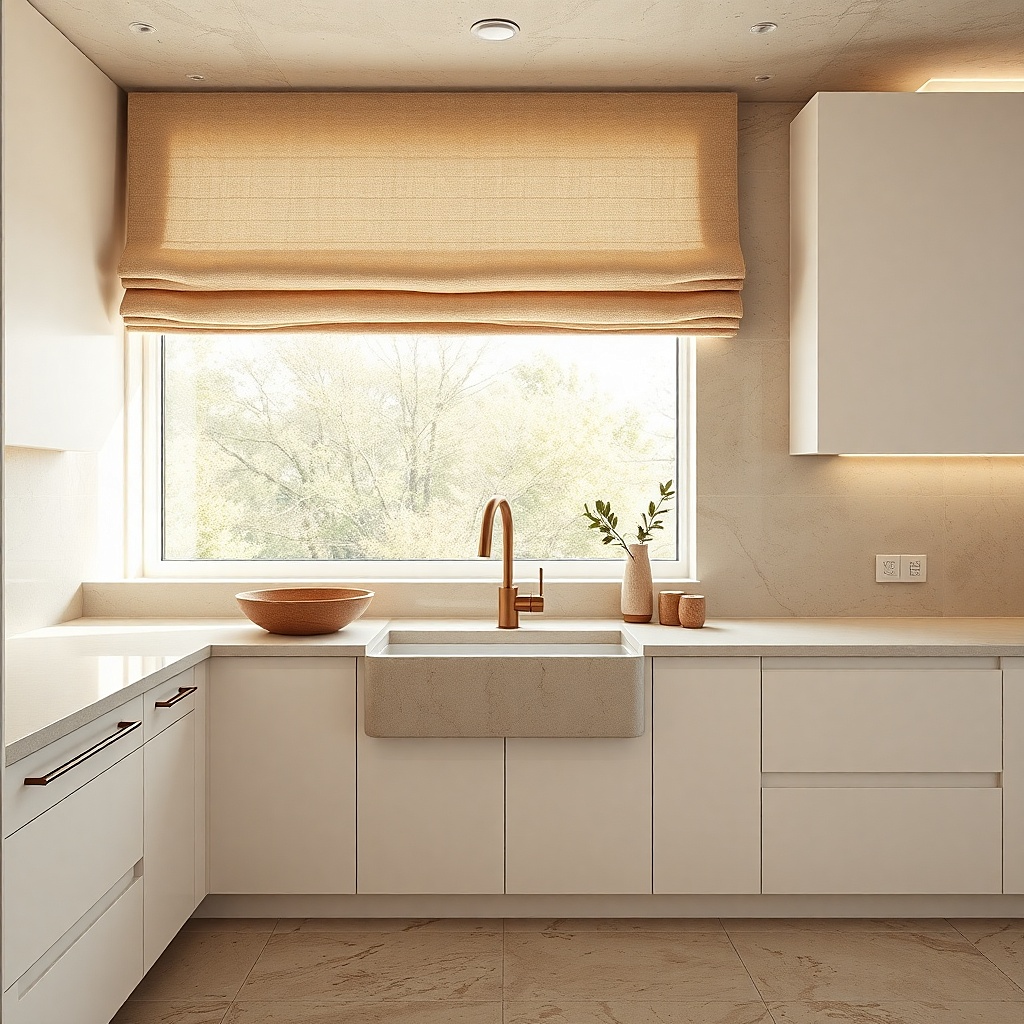
This idea borrows the structure of a Roman shade but keeps it lighter than a full shade setup. You get tailored folds that read expensive, while the fabric stays close to the window area. Use a medium-weight fabric with a smooth face — cotton sateen, linen-blend twill, or a woven polyester that doesn’t fray. Keep it 10 to 12 inches tall, and make the folds using fabric ties so you can adjust the look when the sun hits. It’s a smart choice for kitchens where you want privacy at different times but don’t want a full curtain system.
Measure the window width and decide fold spacing; start with folds every 8 to 10 inches across the width. Sew or buy a valance panel with reinforced fold points, then add fabric ties at those points on the back side. Mount the top line under the trim, then pull the fabric into folds and tie off so the valance creates gentle peaks and valleys. Steam and retie until the folds look even from the dining table.
Use narrow matching ribbon ties in a slightly darker shade for a subtle high-end contrast.
Avoid bulky ties — thick knots create lumps that show through kitchen lighting.
9. Layered sheer + solid valance for glow without blocking light
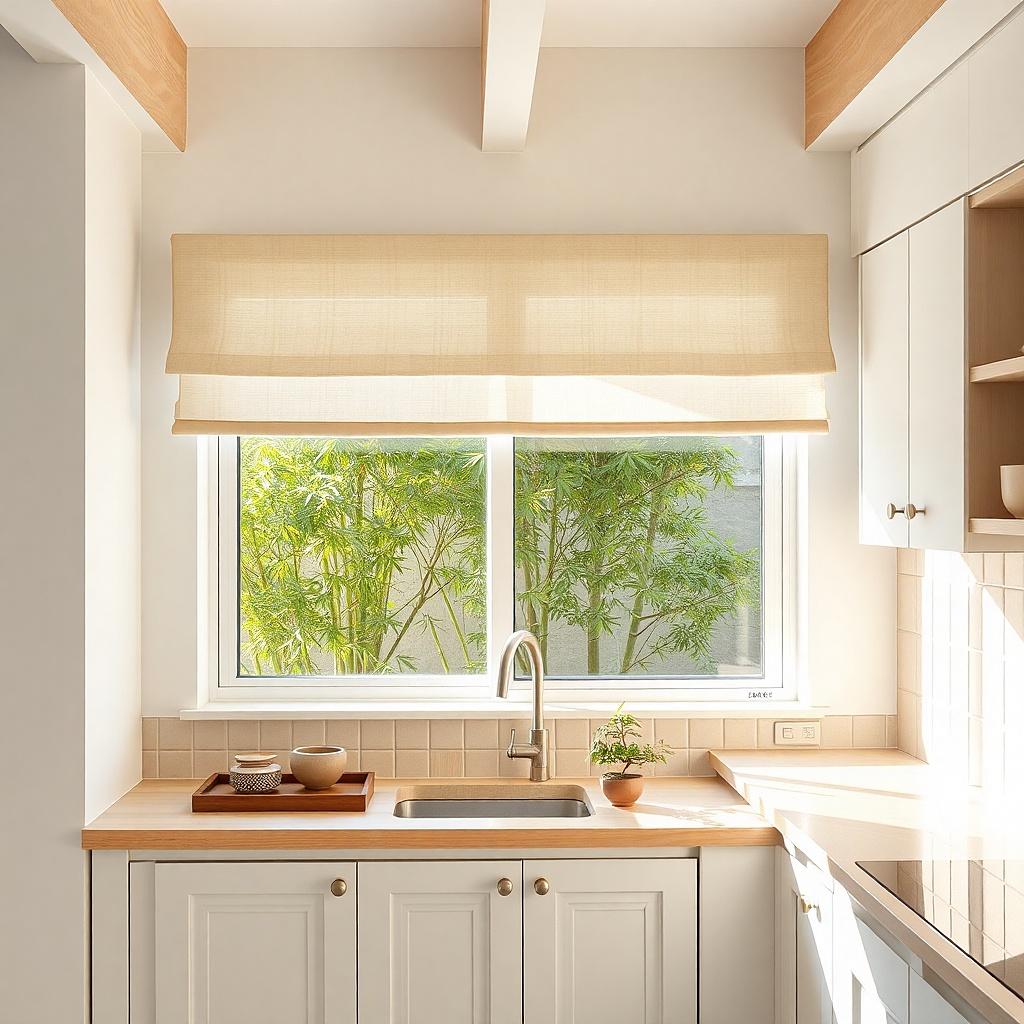
If you want a high-end glow, layering does it and it still counts as a valance because the fabric stays short. Use a sheer linen voile or airy cotton on top and a solid underlayer in the same color family for structure. The sheer layer softens the light and adds movement, while the solid layer prevents the window from looking flat when the sun is strong. Keep the total height 12 to 14 inches, with the underlayer hem just slightly lower than the sheer. This looks gorgeous in kitchens with warm lighting, honey oak, or brass hardware.
Pick two fabrics that match in tone, not just color name. Cut the top sheer layer to a finished height of about 8 to 10 inches, and cut the solid underlayer to about 12 to 14 inches. Sew them together at the top header only, leaving the bottom edges free to drape. Mount on a concealed rod or a slim track, then steam both layers so the sheer falls smoothly over the solid without twisting.
Use the same undertone across both layers warm cream with warm cream, cool white with cool white.
Avoid mixing a glossy sheer with a matte solid; the shine mismatch looks cheap in kitchens.
10. Dark trim-matching valance with a light hem edge
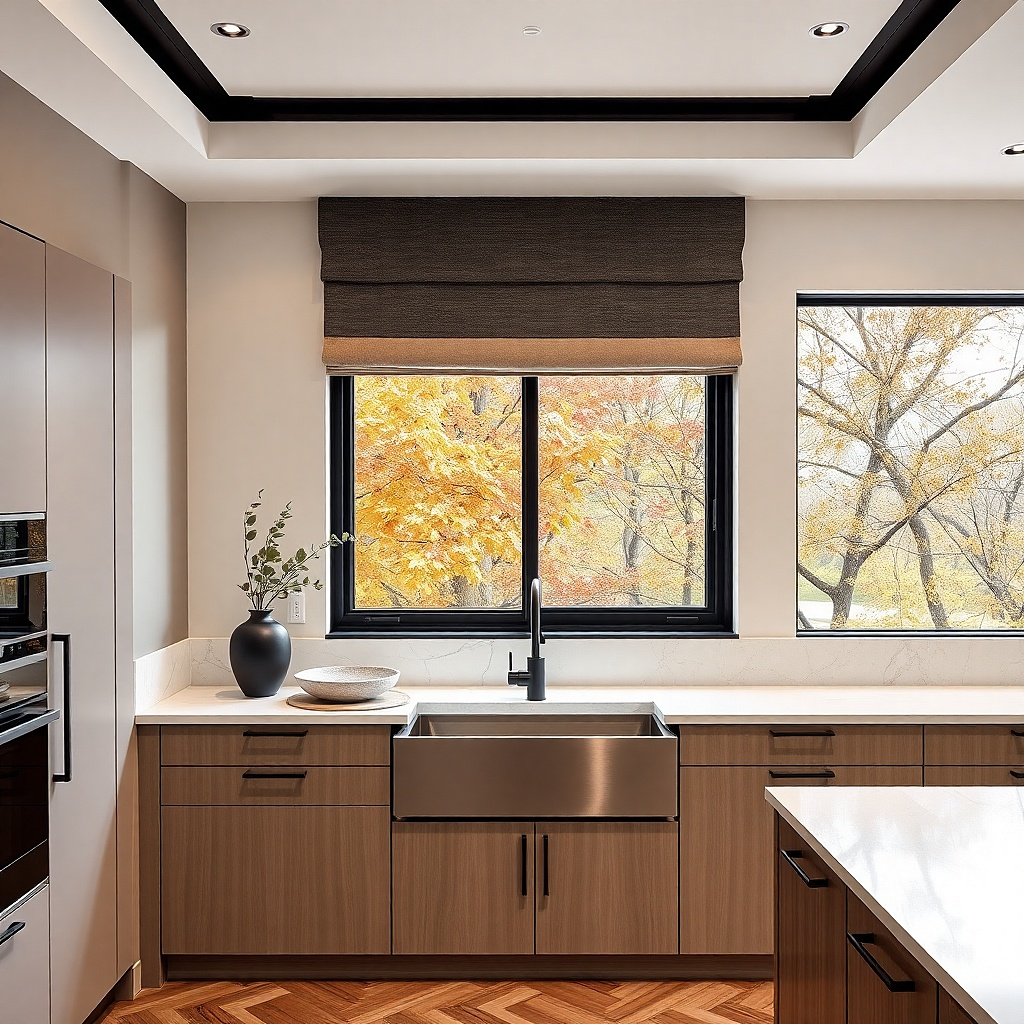
Dark valances can look expensive when you control contrast. Choose a moody color like charcoal, deep olive, or espresso and add a lighter hem edge or underbinding in warm white or cream. That hem edge gives the fabric a clean finish and makes the valance read intentional instead of heavy. Keep height around 10 to 12 inches so the dark color frames the window without turning the kitchen gloomy. This works best when your kitchen has white cabinets, light counters, or bright backsplash tile the dark valance adds sophistication while the light hem keeps it from feeling closed-in.
Try thisUse a slightly textured dark fabric like twill or brushed cotton so the light hem edge shows clearly.
Measure the window width and add 2 to 4 inches of extra fabric on each side for a smooth drape. Cut the main valance fabric to a finished height of 10 to 12 inches, then add a 1 to 2 inch hem for the lighter edge. Sew a clean double hem, then underbind the bottom edge with the contrasting fabric for a crisp line. Mount on a rod or board that matches the window trim or hardware so the dark fabric looks anchored.
Common mistakeAvoid flat, shiny dark fabric; it highlights wrinkles and makes kitchen lighting look harsh.