How to Clean Grease Off Kitchen Windows and Window Frames
By Editor·8 min read·Updated Jul 25, 2026
One thing we’ve learned from cleaning kitchen windows is that grease rarely stays where you can see it. It starts as a light film from cooking oils and steam, then gradually traps dust, leaving the glass cloudy, the window frame sticky, and the corners surprisingly dirty.
That’s why many people spray more glass cleaner, wipe harder, and still end up looking at streaks when the sunlight hits the window. The real fix isn’t using a stronger product it’s cleaning in the right order. Once the grease is broken down first, everything else becomes much easier to remove. In this guide, we’ll walk through how to clean grease off kitchen windows and window frames, including the glass, frame edges, sliding tracks, and hidden seams that are often missed, so the whole window feels clean instead of only looking clean from a distance.
Grease on kitchen windows is rarely “just dirt.” It’s a thin mix of cooking oils, steam residue, and airborne particles that bonds to glass and collects around the frame where air moves. If you start with a glass spray and wipe right away, you often smear the film into a cloudy haze that won’t fully disappear. The beginner-friendly approach is to break the grease first, then remove residue, then polish for a streak-free finish.
Before you pick products, look at two things: the frame material and the type of grease. Vinyl and painted wood frames handle mild detergents well, while raw wood or damaged paint needs gentler handling and less soaking. If the grease looks thick near the stove line or the window track, treat it like a spot job first — concentrate your degreaser on the problem band instead of wetting everything at once.
Use a “top-to-bottom” workflow. Start on the glass surface, then move to the corners and edges where grease hides, and finish with the tracks and sill so you aren’t re-depositing grime. For speed, work in small sections and keep the surface damp during scrubbing so you’re lifting grease, not grinding it. Aim for one short sitting: 10-20 minutes for a single window, depending on how greasy the frame is.
Step by step
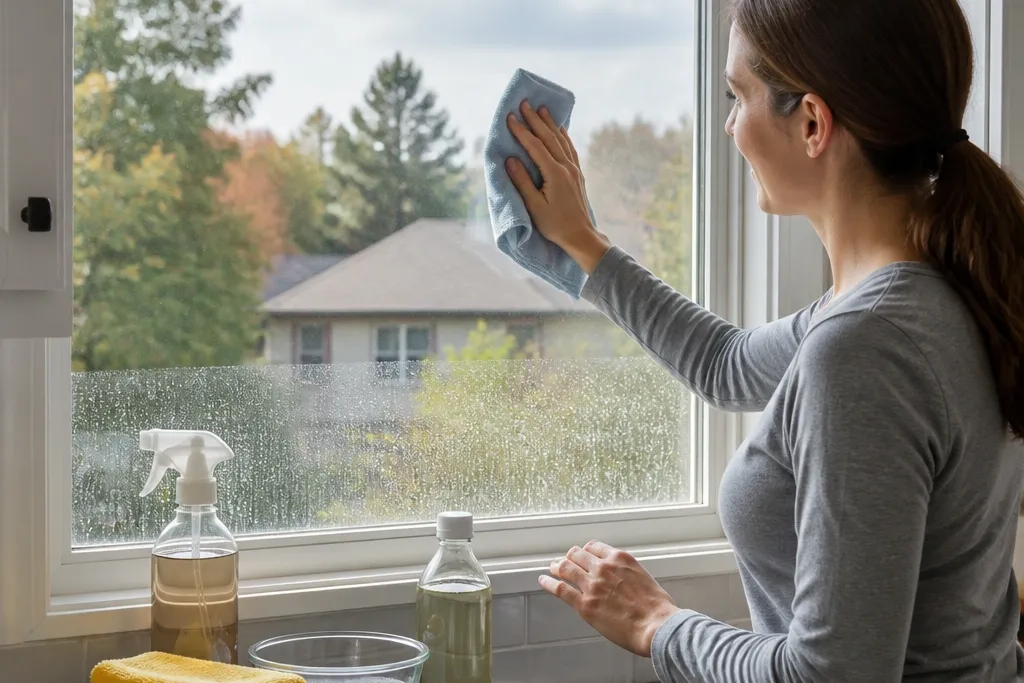
Protect the area and prep the surface. Lay down a towel under the window to catch drips. Mix warm water with a few drops of dish soap in a bowl or spray bottle so you can keep the glass damp while you scrub.
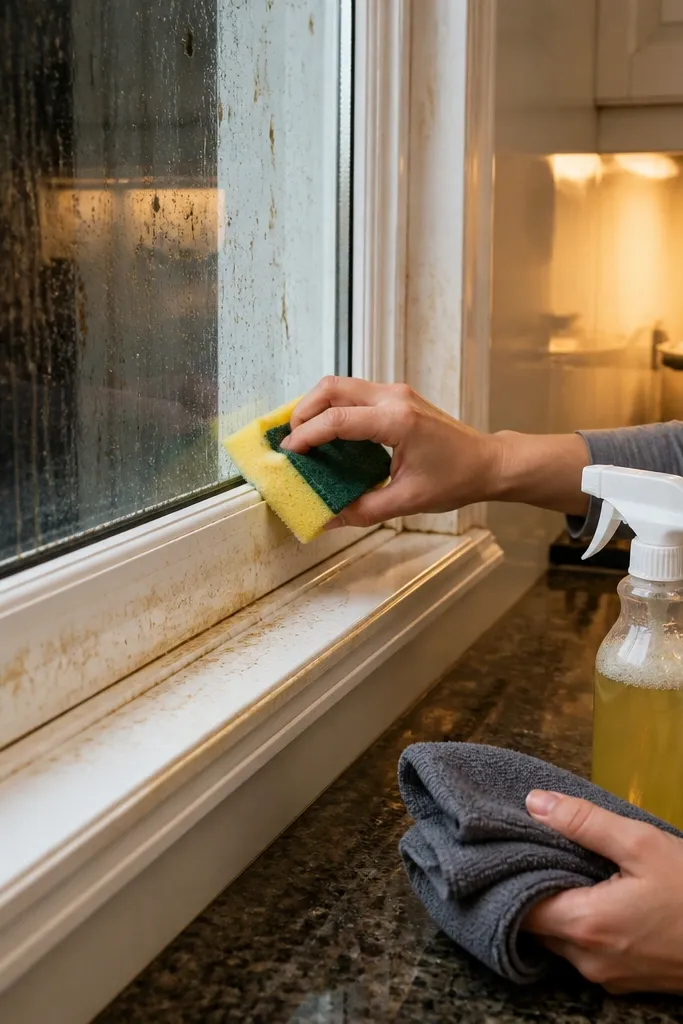
Degrease the glass first. Spray or wipe the soapy solution onto the greasy areas and let it sit 2-3 minutes. Scrub with a non-scratch sponge or microfiber pad using gentle pressure, then wipe away the loosened film.
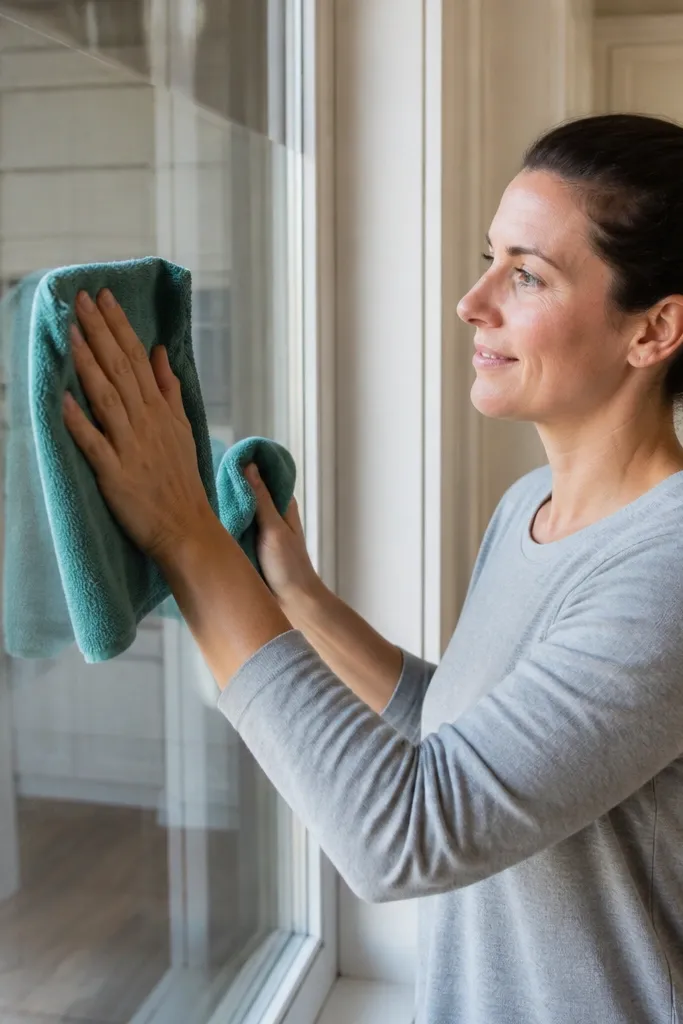
Rinse and switch cloths. Wipe the glass with a clean damp microfiber cloth to remove soap residue. If grease is still visible, repeat the degrease step on just the affected spots.
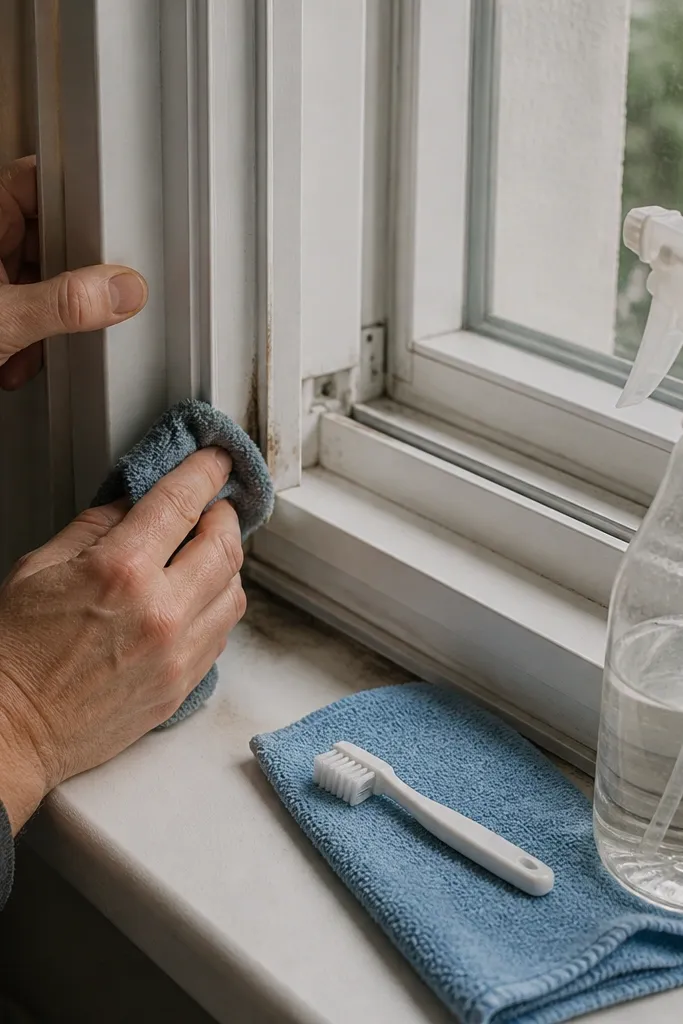
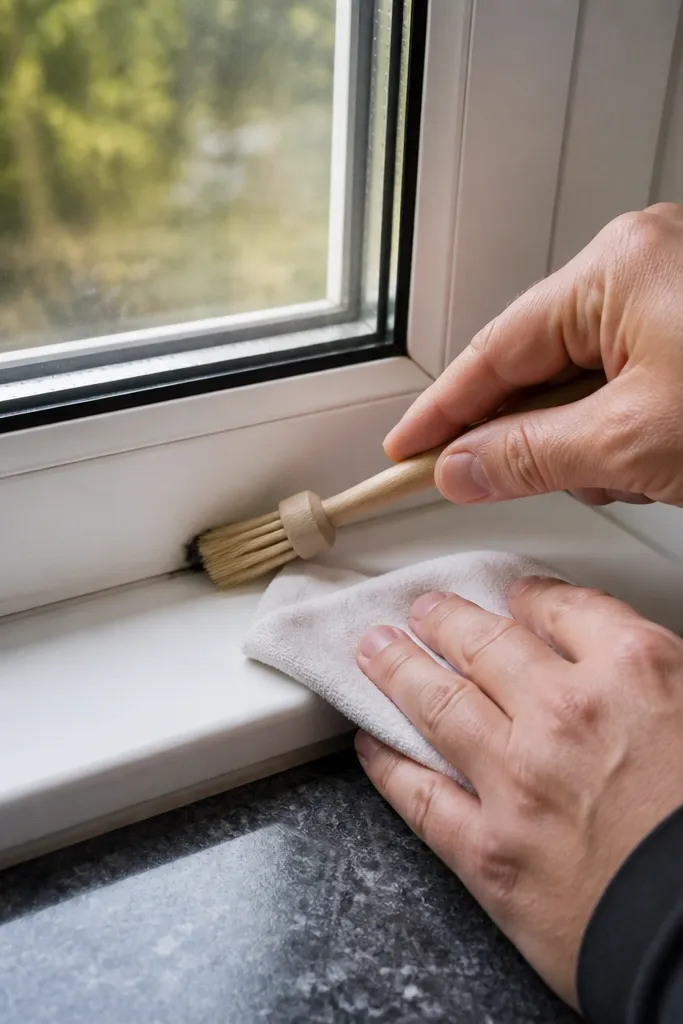
Clean the window edges and corners. Use a soft scrub brush or old toothbrush dipped in the soapy solution to clean the seam where glass meets the frame. Wipe immediately with a damp cloth so residue doesn’t dry into a sticky line.
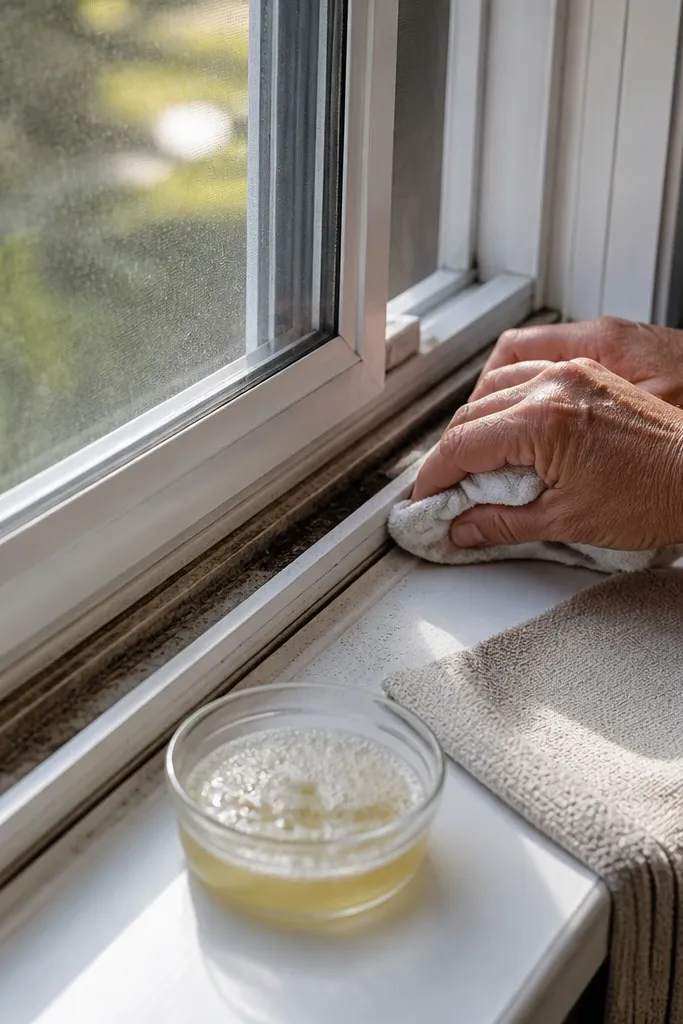
Tackle tracks and the sill. Run the brush along the window track and sill, then wipe with a cloth. If there’s built-up gunk, dampen it first, scrub in short strokes, then wipe until the cloth comes away clean.
Polish for a streak-free finish. Mix vinegar with water at a 1:1 ratio and wipe the glass in long strokes. Finish with a dry microfiber cloth (or alcohol on a cloth for stubborn streaks) so the final film doesn’t dry wet and cloudy.
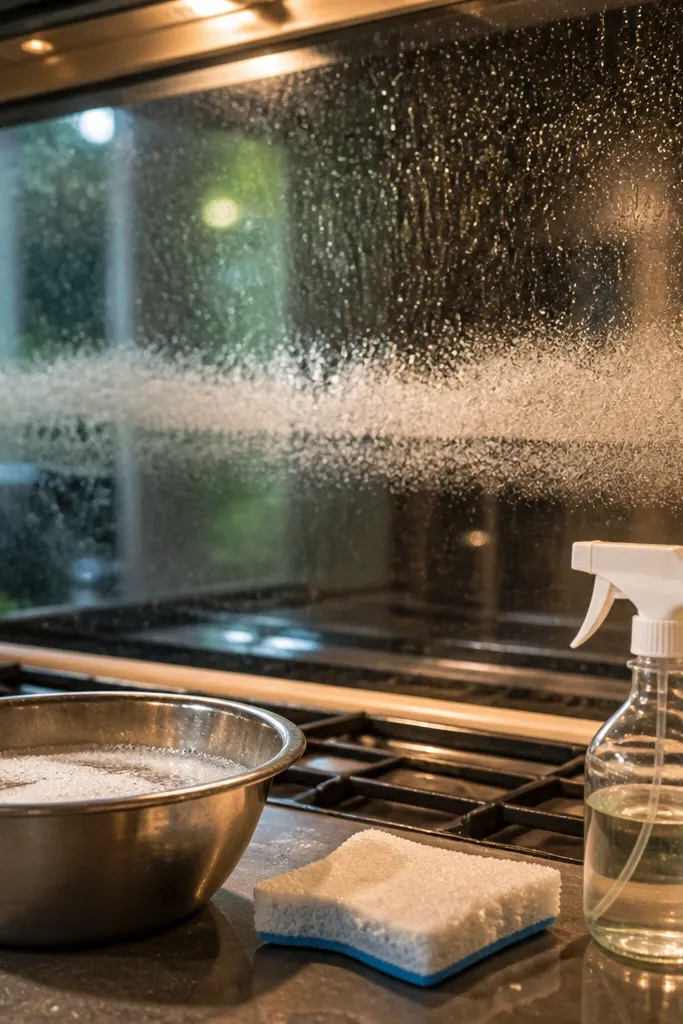
If your kitchen window sits near the stove, the cloudy film isn’t usually dirt it’s layers of cooking grease mixed with dust and moisture. That’s why spraying glass cleaner directly onto it often leaves smears instead of a clear finish.
Start with warm water and a grease-cutting dish detergent. Dampen a microfiber cloth and wipe the glass from the stove side outward so you don’t spread the heaviest grease across the entire window. Once the greasy film is gone, you can finish with your preferred glass cleaner for a streak-free shine.
Step 1: Spray or wipe the soapy solution on the hazy strip and wait 2-3 minutes. Step 2: Scrub with a non-scratch pad in small sections, then wipe off with a microfiber cloth. Step 3: Rinse with a clean damp cloth, then polish with a 1:1 vinegar-water mix and a dry microfiber.
Hold a flashlight or use daylight from an angle after your first wipe. Grease is much easier to see from the side than straight on, making it easier to spot areas that still need another pass.
Vinyl frames collect grease along their edges because airborne cooking oils stick to textured surfaces more easily than smooth glass. The temptation is to soak the frame with cleaner, but excess moisture can settle into joints and tracks where it attracts more dirt.
Instead, lightly dampen your cloth and clean one section at a time, paying extra attention to the corners and inside edges where residue builds up.
Step 1: Dip a soft brush into warm soapy water and scrub just the seam and corners. Step 2: Wipe immediately with a damp cloth, then dry with a towel. Step 3: Polish the frame with a lightly damp microfiber and let it air-dry for a clean, matte finish.
Try thisWrap your microfiber cloth around a plastic card or your finger to reach narrow frame channels without forcing large amounts of liquid into the joints.
3. Painted wood frame treated like a delicate surface
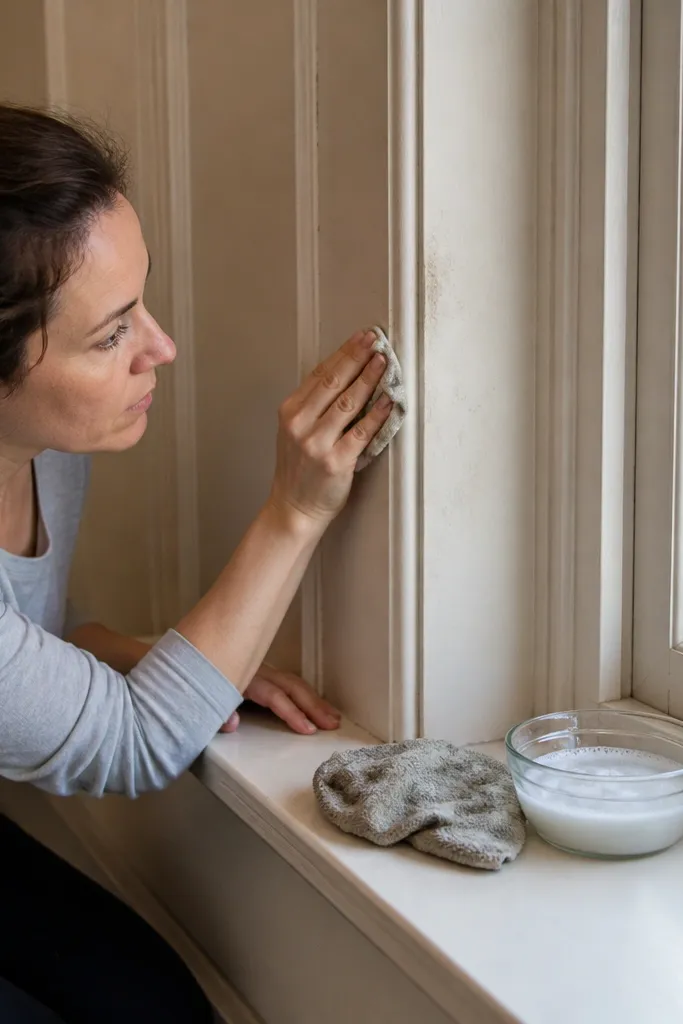
Painted wood needs a gentler approach than glass. Strong degreasers or heavy scrubbing can gradually dull paint or soften older finishes, especially around window trim that’s exposed to years of sunlight.
Use a mild dish soap solution with a soft microfiber cloth, wiping gently rather than scrubbing. Dry the frame as soon as you’ve removed the grease so moisture doesn’t sit against the painted surface.
Step 1: Lightly dampen a microfiber cloth with soapy water and wipe the greasy areas. Step 2: Use a toothbrush for corners, then wipe again with a damp cloth to remove residue. Step 3: Dry right away with a clean towel and finish with a vinegar-water wipe on the glass only.
Try thisIf the paint feels slightly tacky or worn, avoid leaving any cleaner on the surface. Wipe with a clean damp cloth, then dry immediately to protect the finish.
Window tracks often trap a mix of grease, dust, crumbs, and moisture, creating a sticky residue that keeps coming back if it’s only wiped across the surface.
Loosen the buildup first with a damp cloth or soft brush, then wipe it away before adding fresh cleaner. Working in short sections helps prevent dirty water from settling back into the track.
Step 1: Dampen the track with warm soapy water and let it sit 3 minutes. Step 2: Scrub with a soft brush or old toothbrush, pushing gunk toward the accessible edges. Step 3: Wipe with a cloth, then dry the track fully before sliding the sash back and forth.
Try thisAfter cleaning, run a dry microfiber cloth through the track once more. Removing leftover moisture helps slow down the next buildup of grease and dust.
5. Microfiber technique for streak-free glass polishing
Even the right cleaner can leave streaks if you’re using a cloth that’s already damp with grease or detergent residue. A clean microfiber cloth lifts oils away from the surface instead of simply moving them around.
Use one cloth for washing and a separate dry microfiber for the final polish. Wipe in steady overlapping strokes so you can easily see where you’ve already cleaned.
Step 1: After rinsing, spray or wipe the vinegar-water mix onto the glass. Step 2: Wipe with a dry microfiber in long strokes, flipping the cloth when it gets damp. Step 3: If you still see streaks, wipe once more with a cloth lightly dampened with alcohol.
Try thisIf streaks only appear after the glass dries, the cloth is usually saturated. Switch to a fresh, dry microfiber instead of adding more cleaner.
The corners where the glass meets the frame often hold the oldest grease because they’re difficult to reach during everyday cleaning. If these seams are skipped, grease can gradually spread back onto the glass each time condensation or cleaning solution runs through them.
Fold your microfiber cloth into a narrow edge or use a soft detailing brush to clean along each seam before giving the window one final wipe.
Step 1: Apply soapy water to the seam and let it sit 2 minutes. Step 2: Scrub with a toothbrush in tight circles, then wipe with a damp microfiber. Step 3: Follow with a final glass polish using vinegar-water only on the glass.
Try thisRun your fingertip gently along the seam after cleaning. If it still feels slightly sticky, there’s usually more grease hiding there even if it looks clean.
Frequently asked questions
Can I use paper towels to clean grease off kitchen windows?
Paper towels can leave lint and can smear the grease film around, especially along the edges. Use microfiber for scrubbing and rinsing, then a dry microfiber for polishing so you get a clear finish without fuzz.
What if the grease is still visible after one pass?
Focus the next round only on the hazy spots and let the soapy solution sit for 3-5 minutes before scrubbing. If it’s still there, wipe with alcohol on a cloth for the glass after rinsing, then polish again with vinegar-water.
Is vinegar safe for all window frames?
Vinegar is fine for glass, but be careful on painted or damaged frame finishes. Use vinegar only on the glass and stick to warm soapy water for frames, then wipe and dry immediately.
How long does it take to clean one greasy kitchen window?
Plan on about 10-20 minutes for one window if the grease is mostly on the glass and edges. Sliding tracks and heavy buildup can add another 10-15 minutes.