1. A marble tray with paperwhites and brass bells
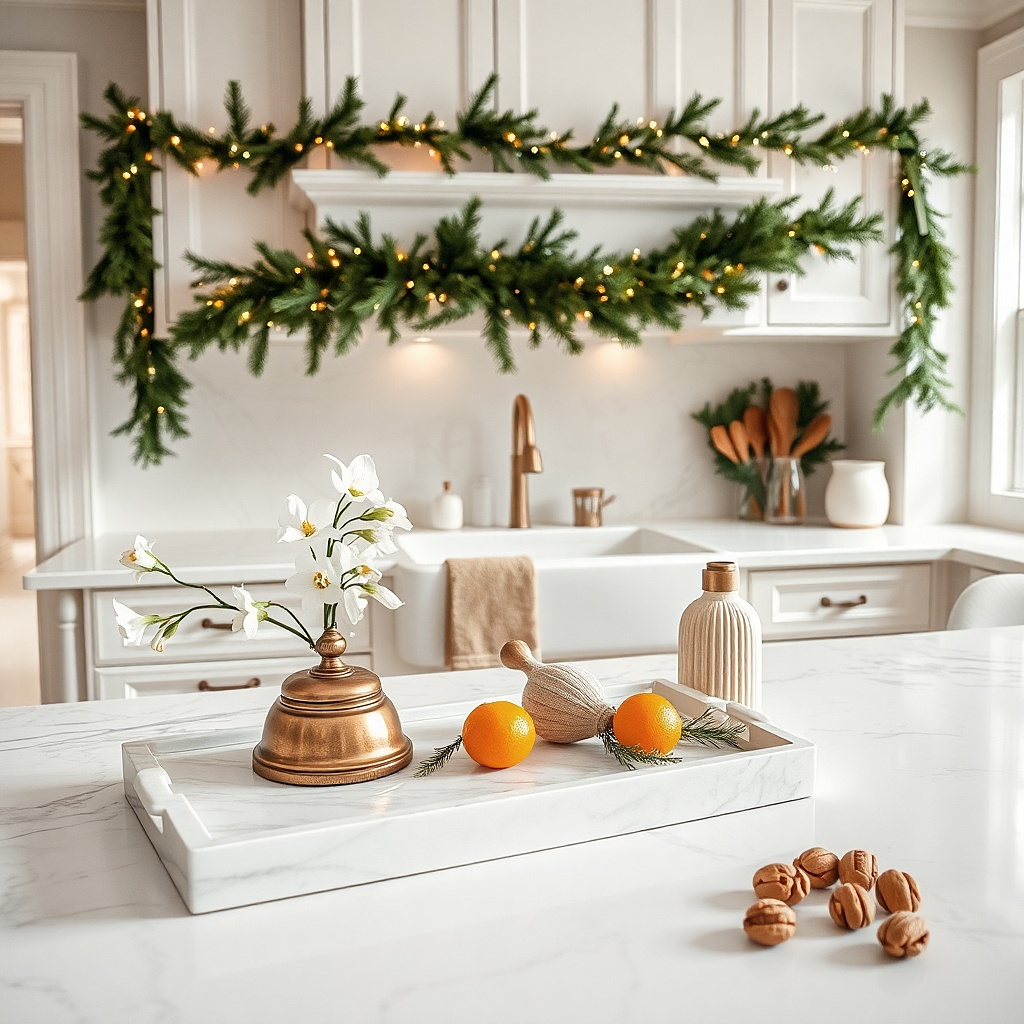
This is the cleanest option for a bright kitchen with white counters, marble-look quartz, or polished nickel hardware. A small marble or faux marble tray gives the arrangement a hard edge, which stops the flowers and bells from drifting into clutter. Paperwhites bring height without bulk because the stems stay thin and upright, and their white blooms catch window light beautifully. Two or three brass bells add a warm metallic note that reads Christmas fast. Put this near a corner outlet or beside a cookbook stand where it fills dead space without touching your main prep area.
Try thisIf the tray starts looking too formal, add one cut clementine with the peel partly removed. The orange wakes up the white and brass immediately.
Start with a tray around 12 by 8 inches and place a white ceramic pot of paperwhites at the back, about 10 to 14 inches tall once the stems open. Then set two loose brass bells or one short bell garland at the front edge, and tuck a folded oatmeal linen napkin under one side so the whole thing does not feel flat. Finally, keep the color tight — white, brass, and green only. Faux paperwhites work if you want zero upkeep, but real bulbs in a simple nursery pot slipped into a ceramic cachepot look better for about $20 to $35 total.
Common mistakeSkip glittered bells or frosted fake snow, which cheapen the crisp look fast.
2. A walnut board with mini rosemary trees and coarse salt
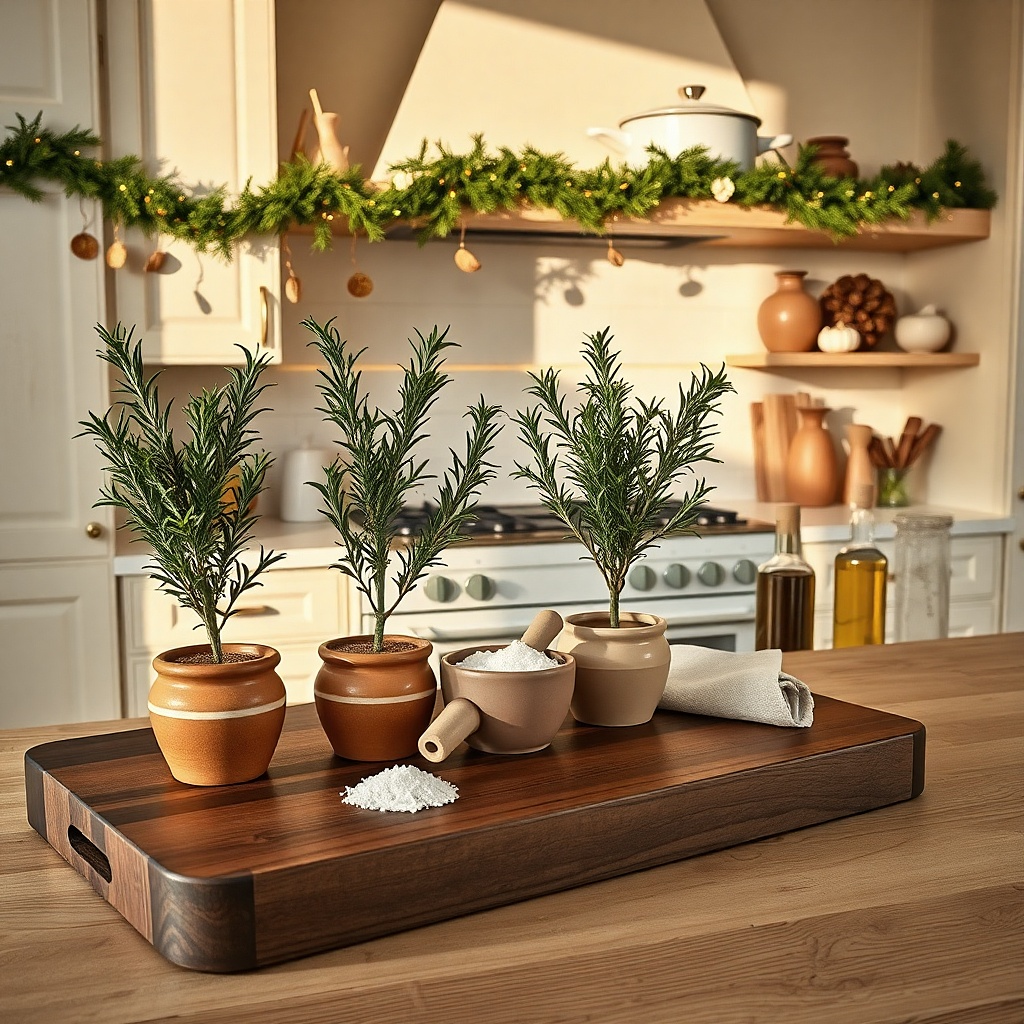
This one suits warm kitchens — oak cabinets, butcher block, cream tile, unlacquered brass, black hardware. A dark walnut board grounds the setup and makes the green rosemary look sharper and more fragrant by contrast. Mini rosemary trees have the right Christmas shape without screaming seasonal decor, and a small pinch bowl of flaky salt keeps the whole thing tied to the kitchen instead of the living room. It looks especially good near the range on a side stretch of counter where you want something pretty but still practical. The scent does part of the work here.
Try thisTrim the rosemary lightly so each tree has a clean cone shape. Ragged sides make the whole arrangement look accidental.
Start with a rectangular board 14 to 18 inches long and lean it flat, not upright, so it reads as a base instead of a cutting board waiting to be used. Then place two rosemary topiaries in plain terra-cotta or matte white pots toward the back, with a 3 to 4 inch gap between them, and set a small stoneware bowl of Maldon or another coarse salt in front. Finally, add one loop of natural jute twine around each pot if they need a little finish. This setup is easy to build for about $25 to $45 if you buy grocery-store rosemary plants and repot them.
Common mistakeDo not crowd the board with wooden spoons, cookie cutters, and extra jars. The rosemary needs breathing room.
3. An ironstone cake stand with pears, cedar, and one candle
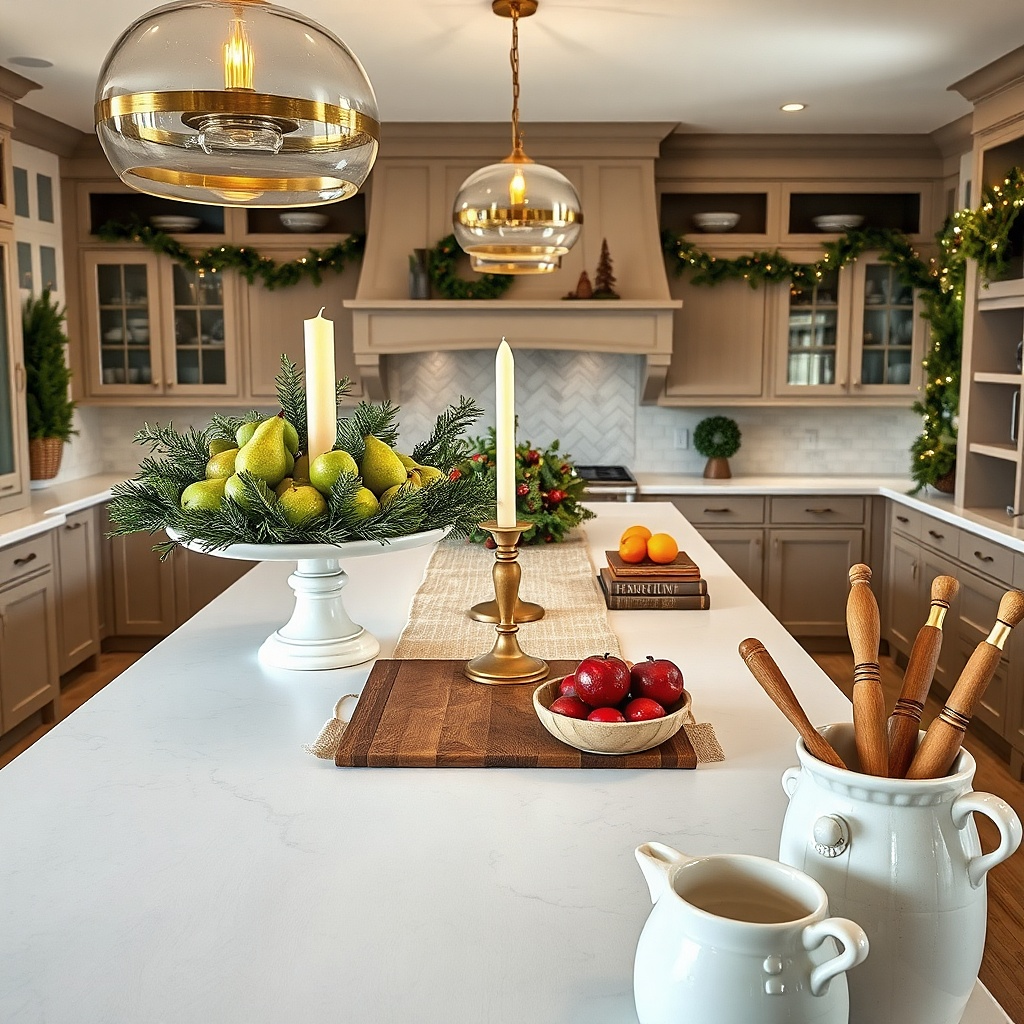
A cake stand solves the small-counter problem by stacking visual weight upward instead of outward. On a white ironstone stand, green pears and flat cedar sprigs look lush and wintery without taking more than a 10-inch circle of space. One short cream pillar candle in the center gives the arrangement a focal point and keeps it from reading like a fruit bowl. This works best on an island or on the end of a peninsula where people see it from several angles. The rounded shape softens kitchens full of square tile and straight cabinet lines.
Start with a cake stand 9 to 11 inches wide and place a 3 by 4 inch unscented pillar candle in the middle. Then cluster five or six green pears around it and tuck short cedar clippings under the fruit so the greens peek out but do not spill over the edge. Finally, rotate the stand until the best side faces the room, with one pear standing upright for height variation. If you already own the stand, the rest is a grocery-store arrangement that lands around $15 to $25.
Use Bosc pears if your kitchen has warmer wood tones and green pears if your kitchen leans white, gray, or black.
Avoid a tall taper here. It throws the proportions off and blocks sightlines across the island.
4. A narrow antique breadboard with a cloche and gingerbread houses
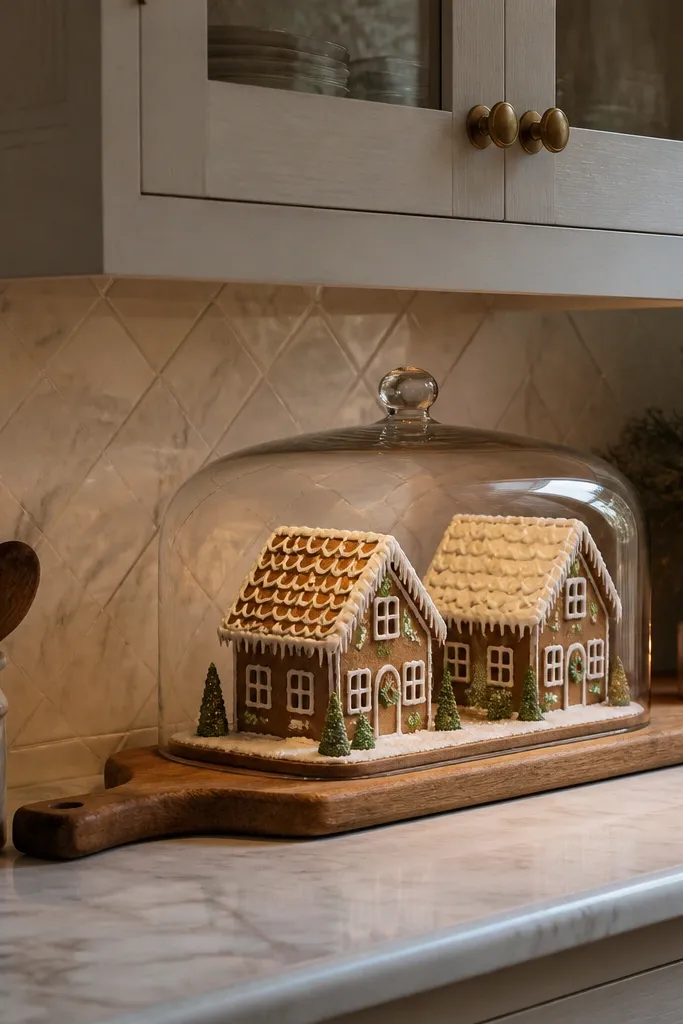
This is the right move for a long, shallow strip of counter under upper cabinets. A narrow breadboard gives you a warm base with almost no depth, and a glass cloche turns even simple gingerbread houses into a proper focal point. The cloche adds height in a contained footprint, which matters in a kitchen where every inch of working surface counts. Keep the houses small and neutral — iced in white, with no candy-color overload — so the look stays calm. It reads festive, photogenic, and slightly old-world without becoming precious.
Start with a board 18 to 24 inches long and 6 to 8 inches deep, then center a cloche with a base around 7 inches wide on one end. Place one or two small gingerbread houses under the glass, then set a folded striped tea towel and one wooden rolling pin or cookie stamp on the open side of the board. Finally, scatter a pinch of sanding sugar inside the cloche base only if you want a snowy effect. Expect to spend $30 to $60 if you need the cloche, less if you already have one.
A smoked or lightly bubbled glass cloche looks better than ultra-clear modern glass if your kitchen has any vintage or farmhouse lean.
Do not line up four tiny houses in a row. It starts looking like a store display.
5. A stoneware crock with cedar, eucalyptus, and a striped ribbon
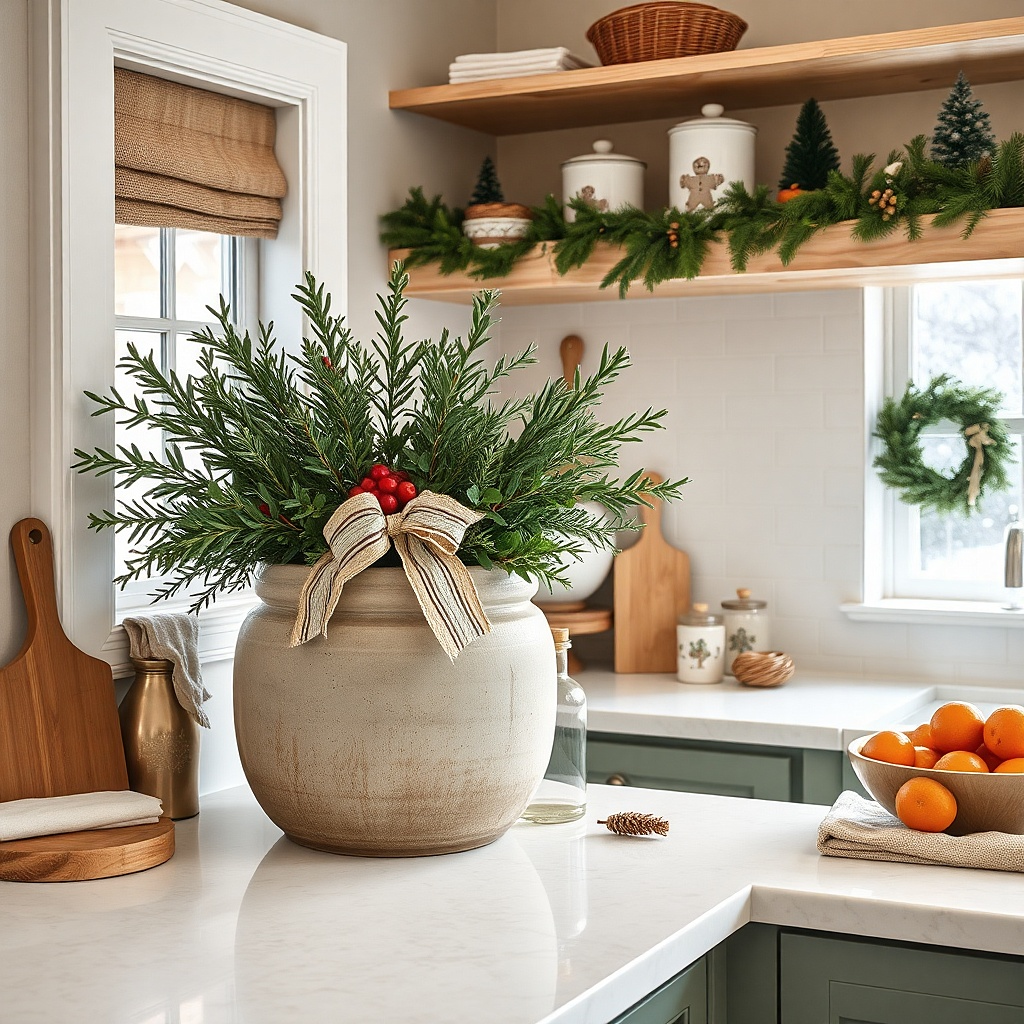
If your kitchen already has crocks for utensils, this idea fits in naturally. A heavy stoneware crock in cream, tan, or gray holds a loose bunch of cedar and seeded eucalyptus with enough body to feel full but not fussy. The blue-green eucalyptus cools down the darker cedar and keeps the arrangement from reading flat against a backsplash. One striped ribbon — red grain sack, black ticking, or olive and cream — gives it a clear Christmas signal without requiring ornaments. Put it in the far corner by the fridge wall, on an empty stretch beside a hutch, or near a window ledge.
Try thisUse odd numbers of stem clusters inside the crock. Three main groupings look looser and better than a packed cylinder of greens.
Start with a crock 6 to 8 inches tall and fill the bottom with a jar or florist foam so the stems stand upright. Then cut cedar and eucalyptus to about 12 to 16 inches high, with a few pieces arcing outward and most staying vertical, and tie the ribbon low around the crock instead of around the stems. Finally, step back and remove anything too bushy. Grocery-store greens plus one thrifted crock keep this around $20 to $40.
Common mistakeSkip faux red berries mixed all through the greens. They make the arrangement look busy and less kitchen-friendly.
6. A black tray coffee station with a tiny wreath on the syrup bottle
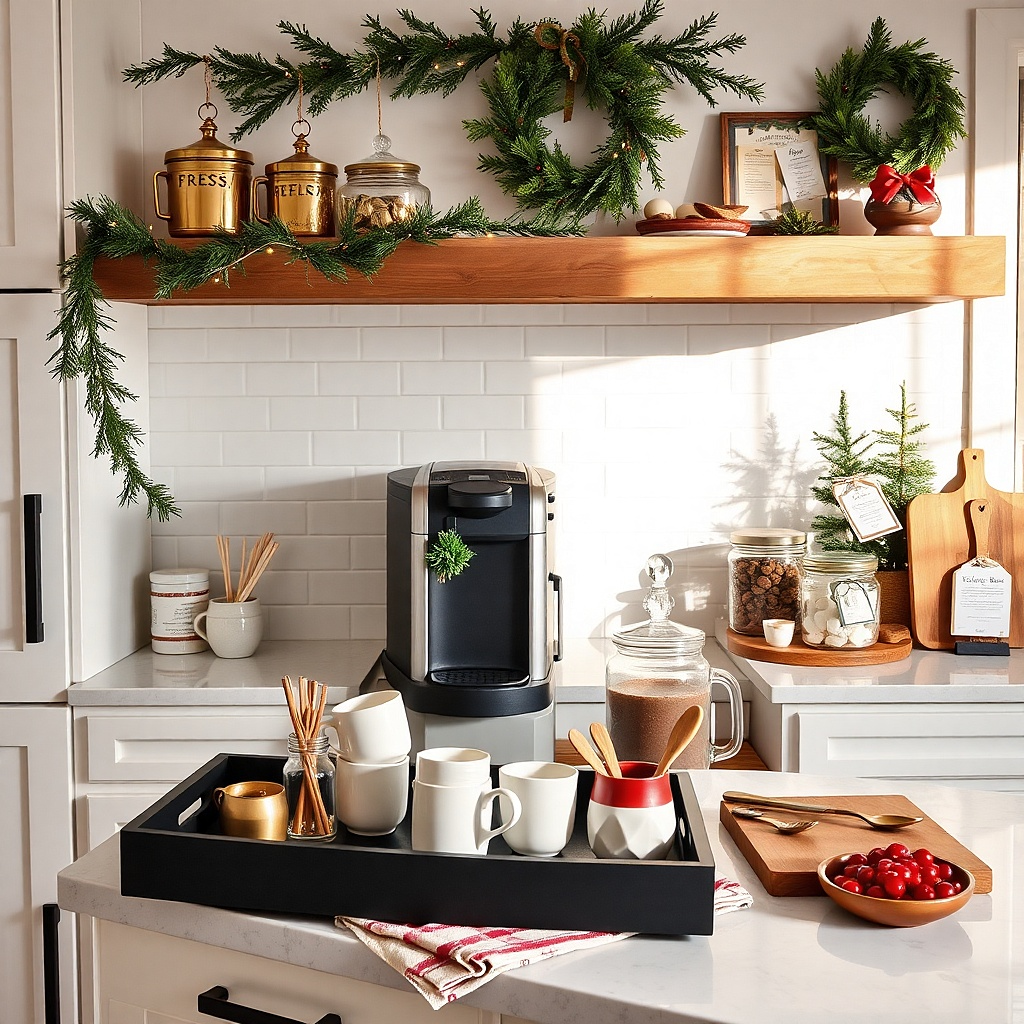
A coffee station already has visual weight, so the smart move is to decorate the station itself instead of adding another holiday vignette beside it. A matte black tray keeps mugs, syrup, sugar, and spoons contained, and one tiny faux wreath tied around a glass syrup bottle gives the setup a Christmas note without stealing space. This works especially well in small kitchens where the coffee corner is the only free counter area. The wreath creates a focal point at eye level while the tray keeps the lower half neat. It looks polished in photos because the decor is integrated into a daily-use zone.
Try thisSwap dish soap labels and coffee syrup labels into plain black or white text if they sit nearby. Loud packaging ruins a pretty counter fast.
Start by pulling every coffee item onto a tray around 14 by 10 inches so the station reads as one block instead of scattered pieces. Then decant syrup into a clear bottle with a narrow neck, tie on a 3 to 4 inch faux cedar wreath with velvet ribbon, and keep mugs in one color family such as cream, black, or dark green. Finally, add one small lidded jar for sugar and stop there. You can pull this together for $15 to $35 if you already own the mugs and tray.
Common mistakeDo not add mini signs with holiday sayings to the tray. They read cheap next to real kitchen tools.
7. A bowl of clementines with fresh bay leaves and star anise
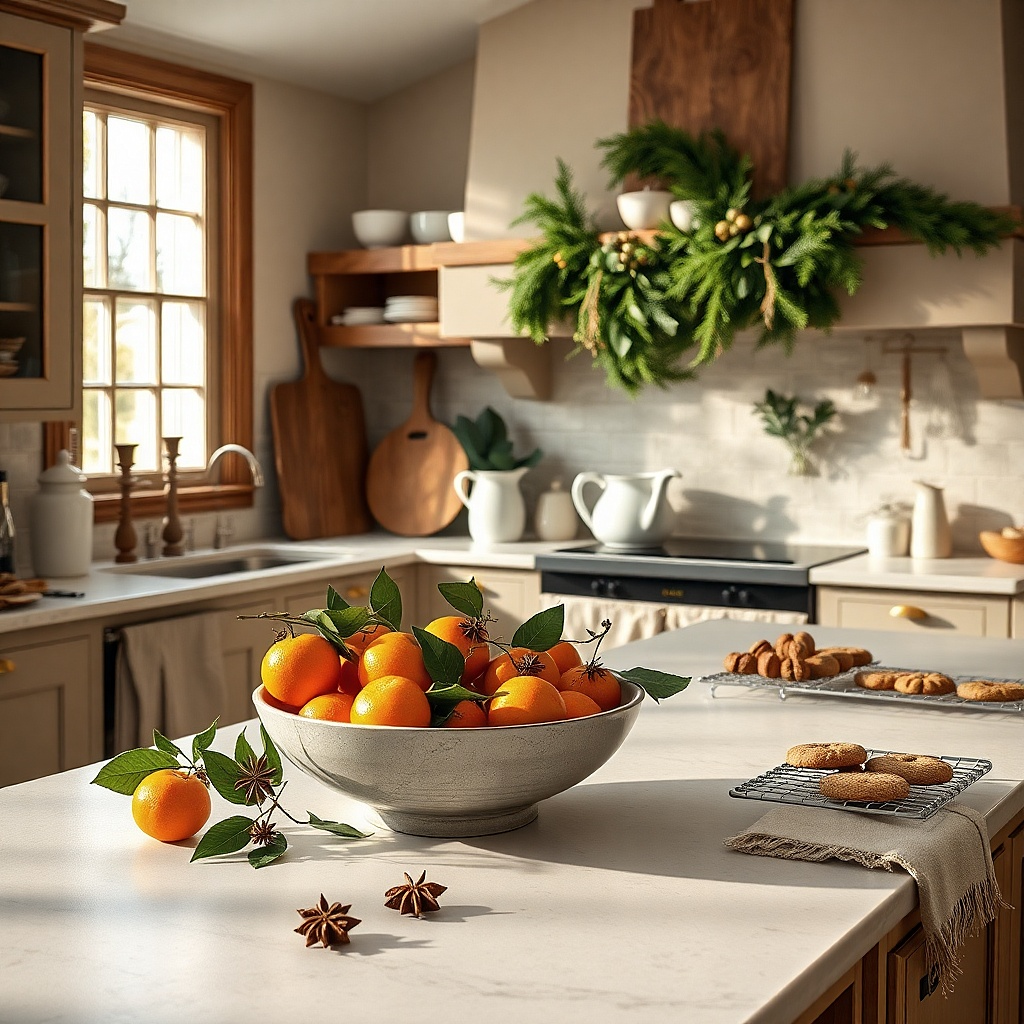
This is the easiest festive counter idea that still looks intentional. A shallow bowl of clementines has strong color, a low profile, and a kitchen-specific feel that fake decor cannot match. Bay leaves add a deep green matte texture, and a few star anise pods give the arrangement a darker, spiced note that reads holiday without any red-and-green cliche. Put it on an island, beside a fruit drawer, or near a window where the orange skins catch natural light. The whole thing looks alive and seasonal, not staged.
Start with a bowl 10 to 13 inches wide in ceramic, wood, or honed stone, and mound in 12 to 18 clementines so the pile rises slightly above the rim. Then tuck in bay leaves around the edges and place six to eight star anise pods where they will actually show instead of disappearing under the fruit. Finally, remove any bruised citrus as soon as it appears. This one is inexpensive at about $12 to $25 and takes ten minutes.
A matte charcoal or creamy off-white bowl makes the orange peel look stronger than clear glass does.
Skip fake oranges. Their waxy finish looks wrong next to real food and stone counters.
8. A pair of ribbed glass hurricanes with floating cranberries
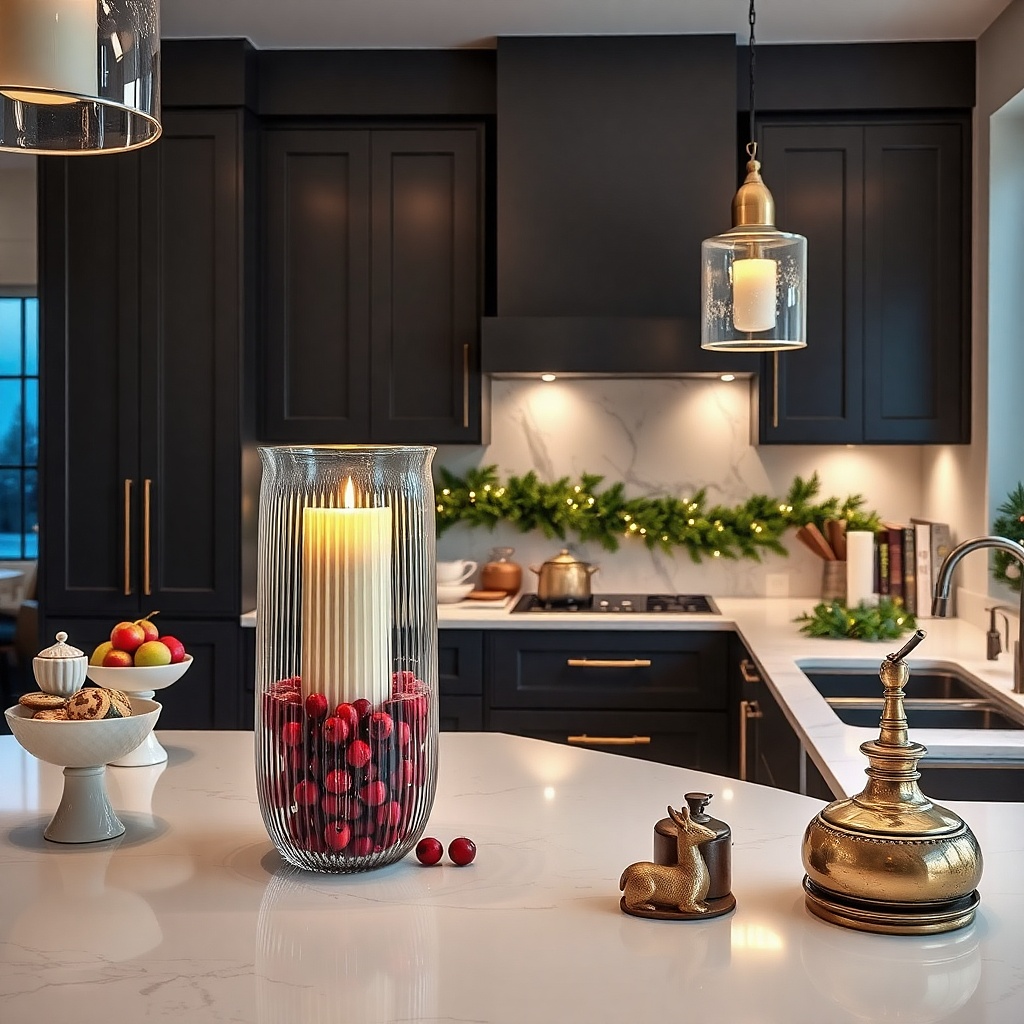
For a kitchen that needs sparkle, this is the cleanest answer. Ribbed glass hurricanes catch pendant light and window light in a softer way than mirrored or glittered decor, and floating cranberries add color without bulk. Use two vessels, not three, so the arrangement stays compact and balanced on a narrow counter run. A cream floating candle in each hurricane keeps the look calm and grown-up. This suits darker kitchens especially well because the glass and water bounce light back into the room.
Start with two hurricanes around 6 and 8 inches tall, each 4 to 5 inches wide, and place them on a small stone or metal tray so any drips stay contained. Then fill them two-thirds with water, add a single layer of cranberries, and set one floating candle in each. Finally, place the taller hurricane at the back and the shorter one slightly forward for depth. A pair usually costs $25 to $50 if you need the vessels and candles.
Use fresh cranberries only one day before guests arrive. They sink and soften after several days in water.
Do not surround the tray with loose cranberries or fake snow. The beauty here is the strict, spare shape.
9. A linen runner strip with a low pine swag and wooden beads
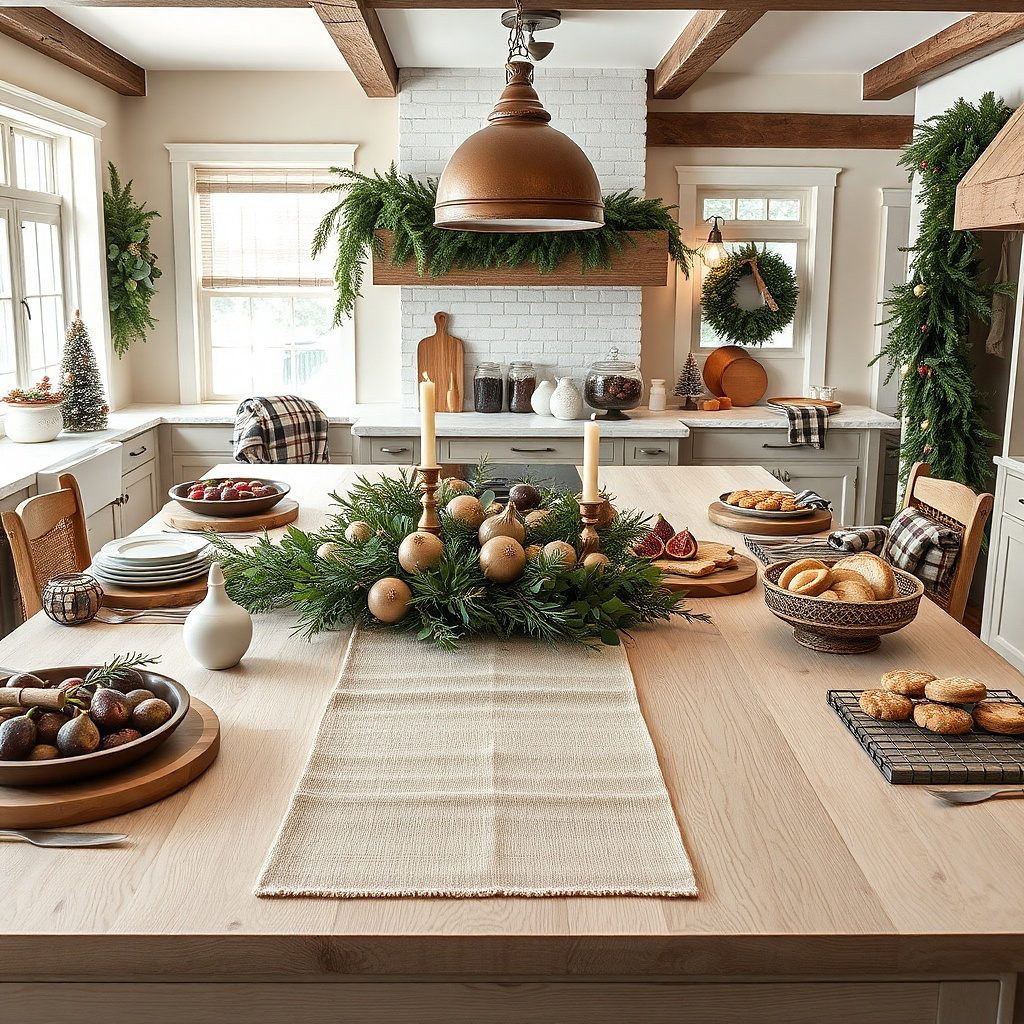
An island needs decor that stays low. A short strip of natural linen with a loose pine swag laid flat across it gives you a festive center line without blocking conversation or sightlines. One strand of oversized wooden beads softens the greenery and gives the arrangement shape, especially on large quartz islands that can look cold in winter. This works best on islands at least 30 inches deep where you still have room for a fruit bowl or serving board at one end. The look is calm, textural, and better than a giant centerpiece nobody can see over.
Start with a runner remnant or folded linen strip about 14 by 36 inches and place it lengthwise down the center third of the island, not across the full length. Then lay a pine swag 24 to 30 inches long on top and drape one strand of 16 to 20 mm wood beads in a soft curve over the greenery. Finally, pinch off any side branches that jut upward more than 4 inches. If you use fresh pine from a grocery store or tree lot, this setup lands around $20 to $35.
A wrinkled linen strip looks fine here. Pressing it flat makes the arrangement feel stiff.
Avoid a full garland across the whole island. It eats serving space and starts to feel like a dining table mistake.
10. A white pitcher with magnolia leaves and dried orange slices
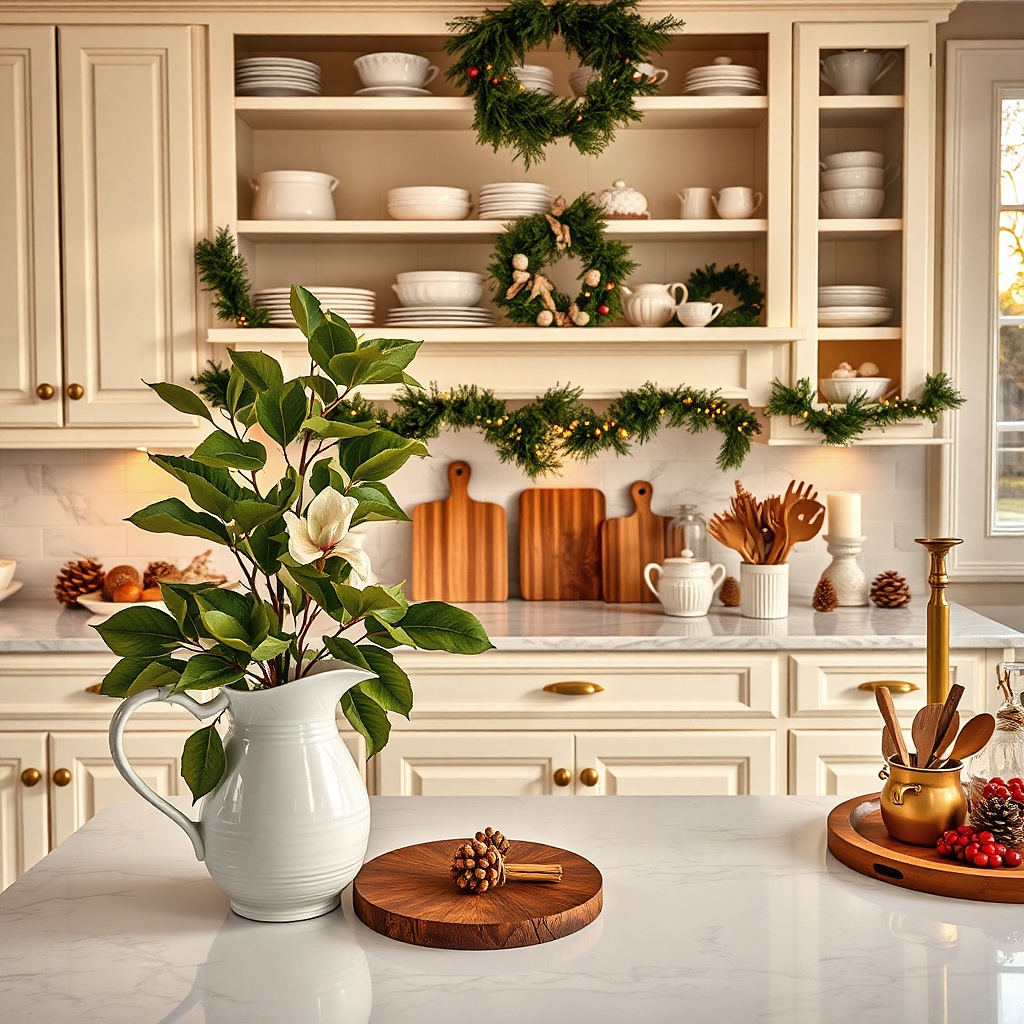
Magnolia leaves have one of the best color combinations for Christmas kitchen decor — deep green on one side, warm brown suede on the other. In a simple white pitcher, they look full with very few stems, which is exactly what a crowded kitchen counter needs. Dried orange slices tucked between the leaves catch light and add a stained-glass effect near a window or under cabinet lighting. This idea suits traditional kitchens, English-country kitchens, and any space with cream cabinets or warm brass. It feels festive without relying on red berries or novelty pieces.
Start with a ceramic pitcher 8 to 10 inches tall and add a jar of water inside if you are using fresh cut stems. Then insert five to seven magnolia branches with a mix of green and brown sides facing out, and tuck in three or four dried orange slices on floral picks or short wire stems. Finally, turn the pitcher so the handle faces slightly outward instead of straight sideways. Expect about $18 to $40 depending on whether you use clipped branches, faux stems, or store-bought greens.
Flip at least two magnolia leaves to show the brown undersides. That color contrast is the whole point.
Do not jam in eucalyptus, berries, pine, and magnolia all together. Magnolia needs a cleaner stage.
11. A cutting board layer with a tiny framed recipe and cookie cutters
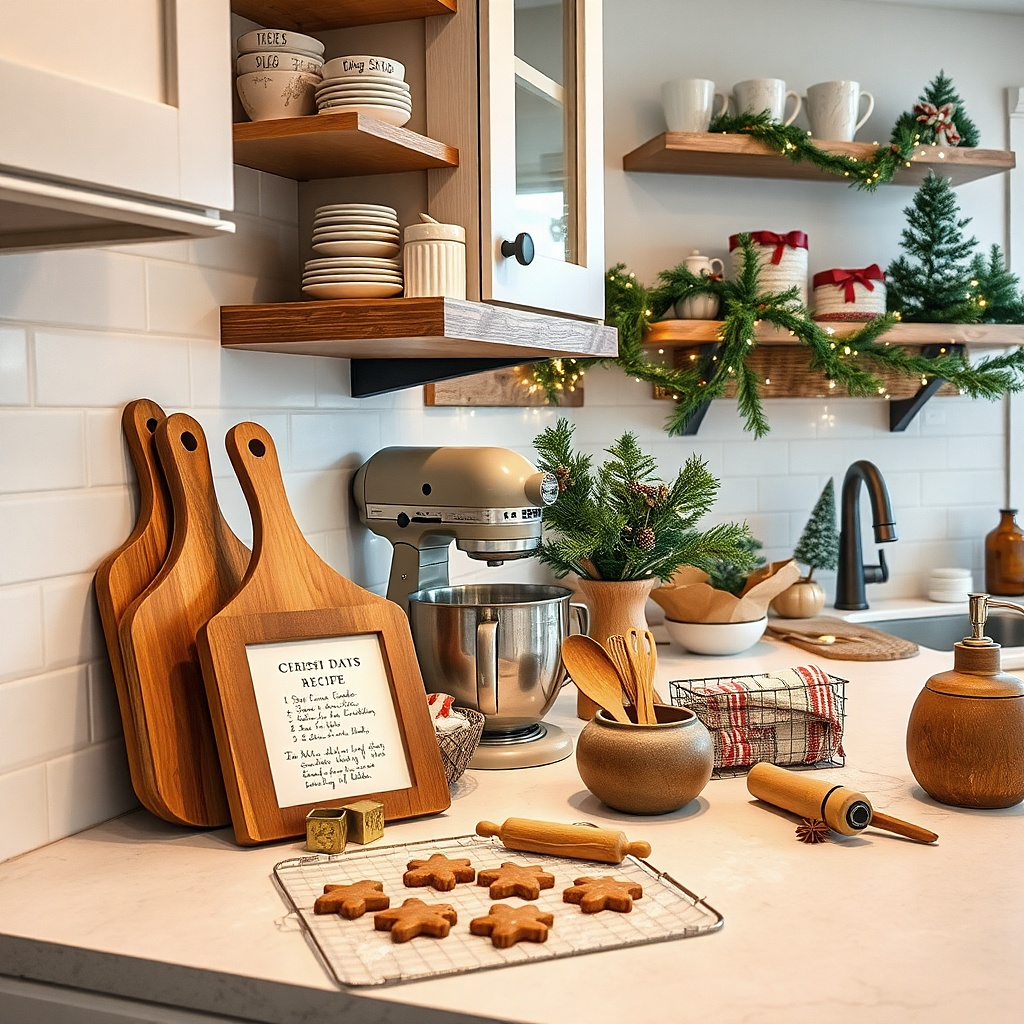
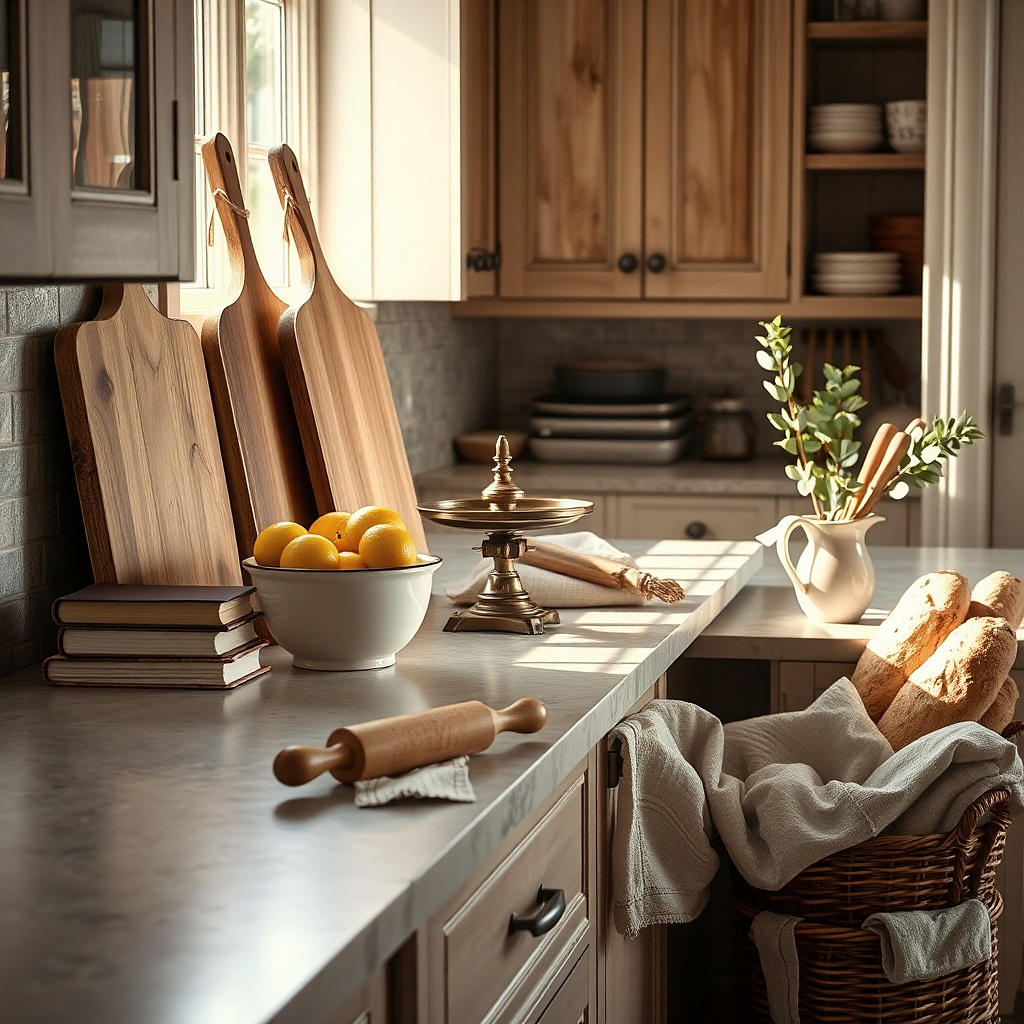
This one works for people who want Christmas decor to feel personal without covering the counter in signs. Layer two cutting boards against the backsplash, then add one small framed vintage-style recipe card and two brass cookie cutters. The boards create height with almost zero footprint because they stand vertically, and the recipe card gives the eye a single detail to land on. It is especially good on a baking counter near a stand mixer or canister set. The look is nostalgic, but still restrained.
Start by leaning one medium board and one smaller board against the backsplash with a 2 to 3 inch overlap so the edges stay visible. Then place a frame no larger than 5 by 7 inches in front, slightly off-center, and lean one or two brass cookie cutters against it rather than hanging them. Finally, keep the recipe card black and white or softly aged cream instead of bright red. This setup can cost under $20 if you print the card yourself and use boards you already own.
Choose a recipe with a dense handwritten look or old serif type. The paper texture matters more than the recipe itself.
Skip chunky seasonal block words like JOY or NOEL. They fight with the quiet board-and-paper look.
12. A ceramic bowl of walnuts with velvet ribbon and one taper pair
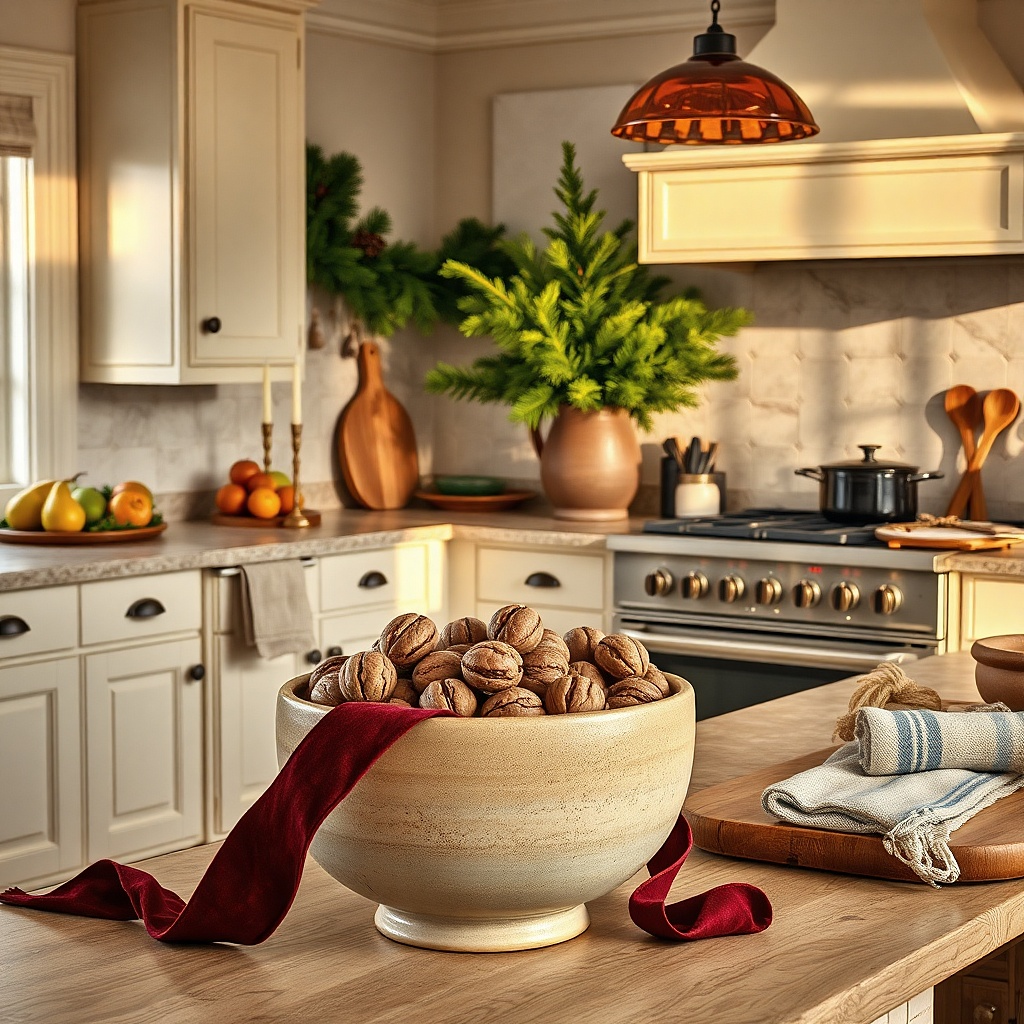
Walnuts are underrated Christmas decor in kitchens. Their matte brown shells look right at home with wood cabinets, linen towels, and stone counters, and they add texture without visual clutter. Pair a bowl of walnuts with two short brass taper holders tied together at the base with dark green velvet ribbon, and you get a warm, old-house holiday look in a very small footprint. This setup suits a breakfast nook counter, a butler’s pantry ledge, or the end of a main counter run. It feels festive in a quieter way than bright ornaments do.
Start with a bowl 7 to 9 inches wide and fill it with unshelled walnuts right to the rim so it looks abundant. Then place two brass taper holders beside it, one about 6 inches tall and one about 8 inches, and use cream or beeswax tapers cut to a modest height if needed. Finally, tie a 1-inch velvet ribbon around the holder stems or around the bowl base, not both. The whole arrangement usually sits in the $20 to $45 range.
Use a bowl with some weight — stoneware, marble, thick ceramic. Light bowls look flimsy next to brass candlesticks.
Do not use bright red velvet ribbon here. It pushes the arrangement into a harsher, less refined look.