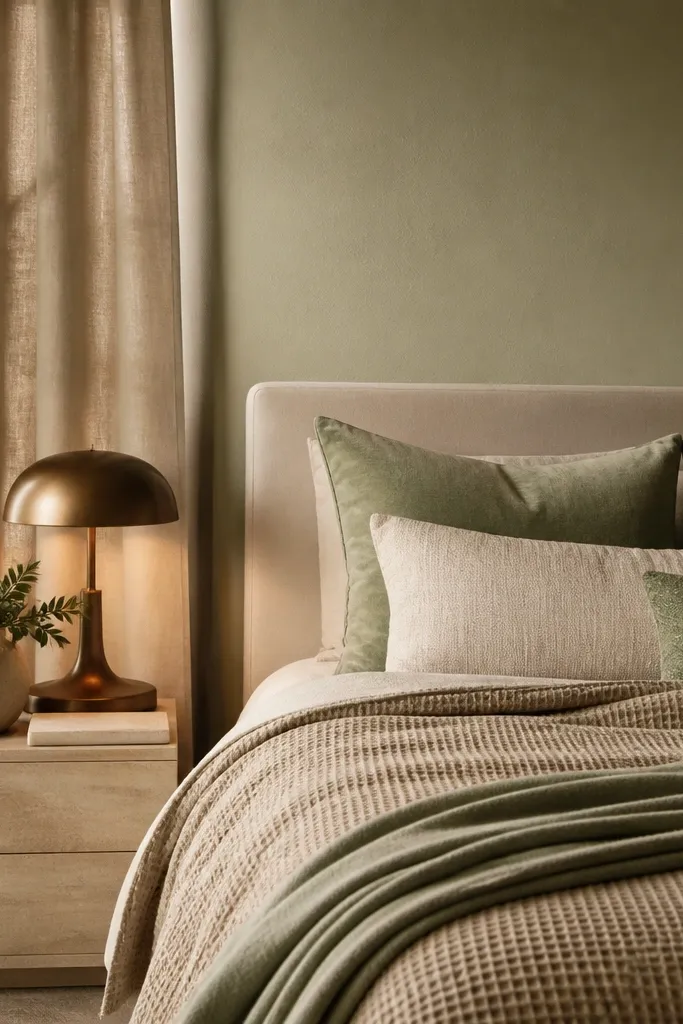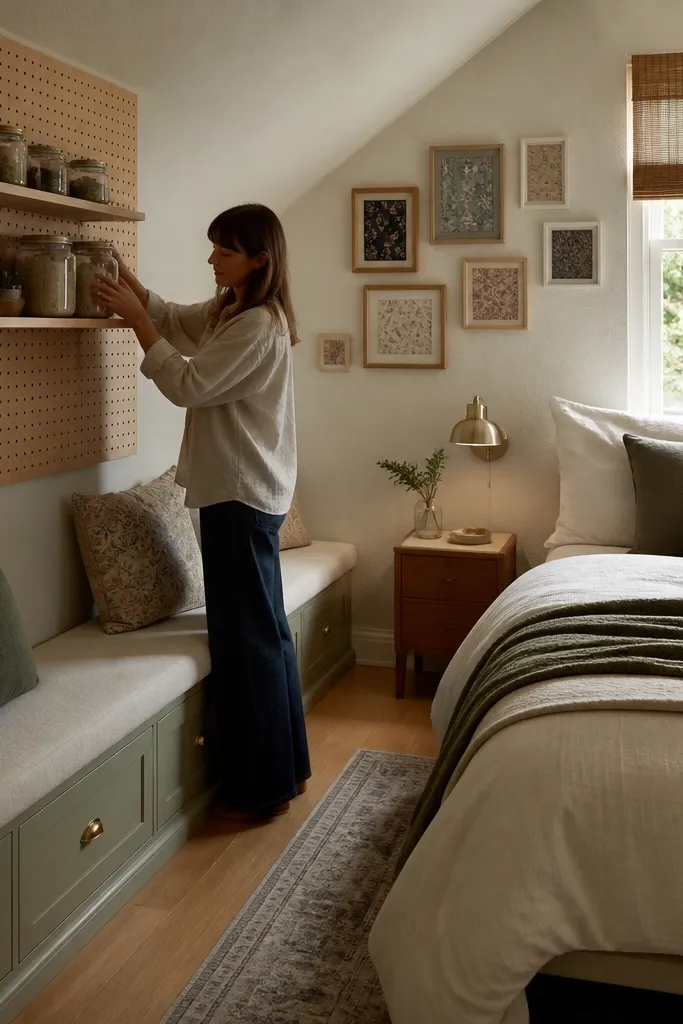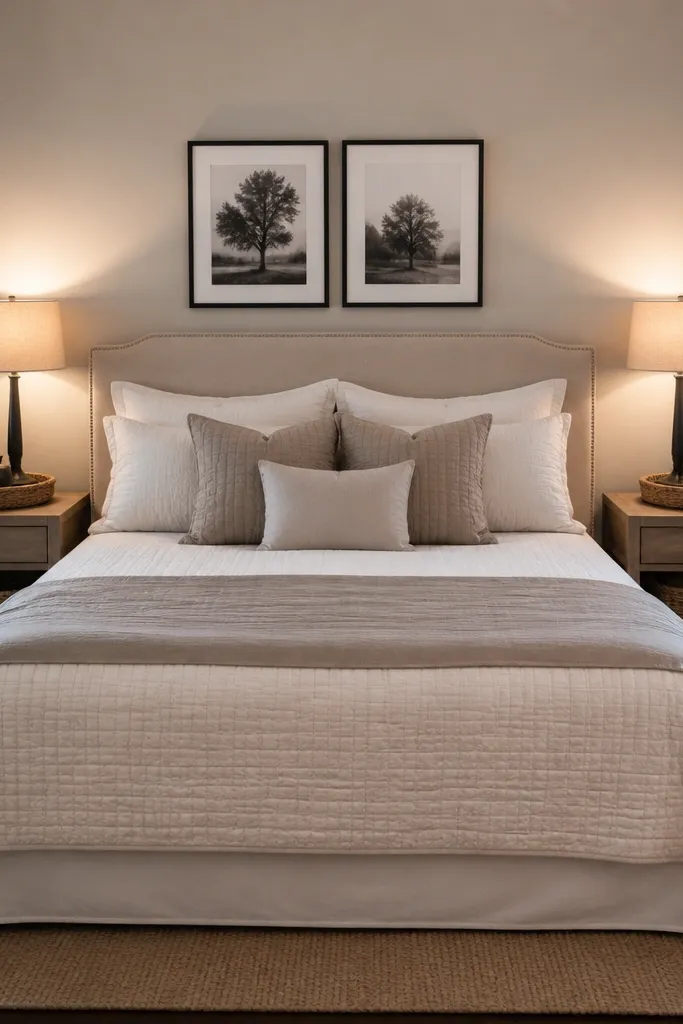
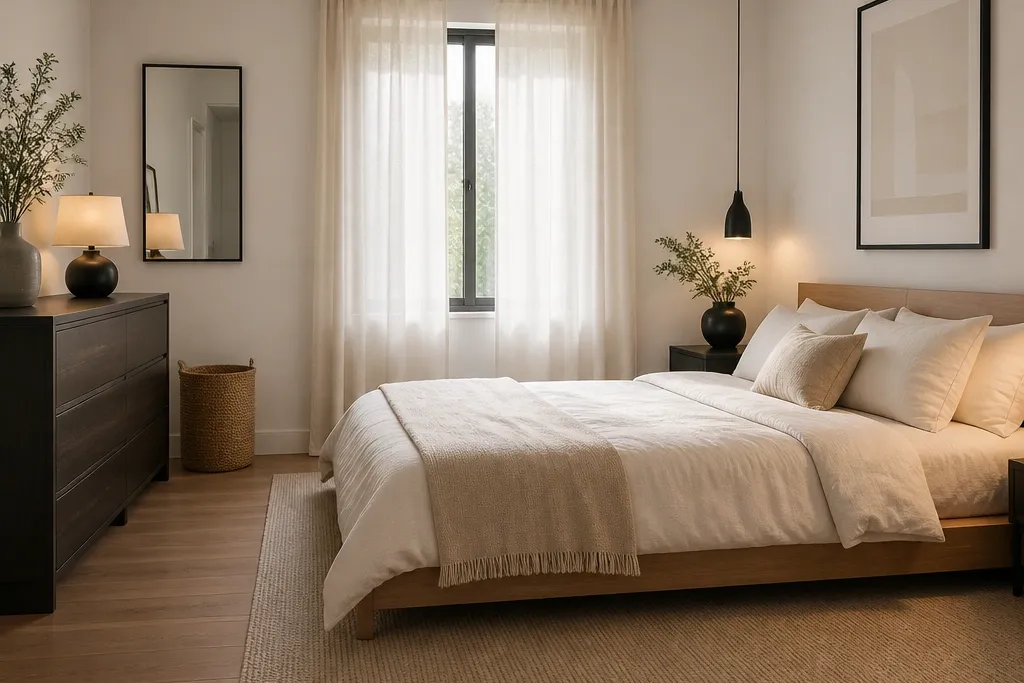
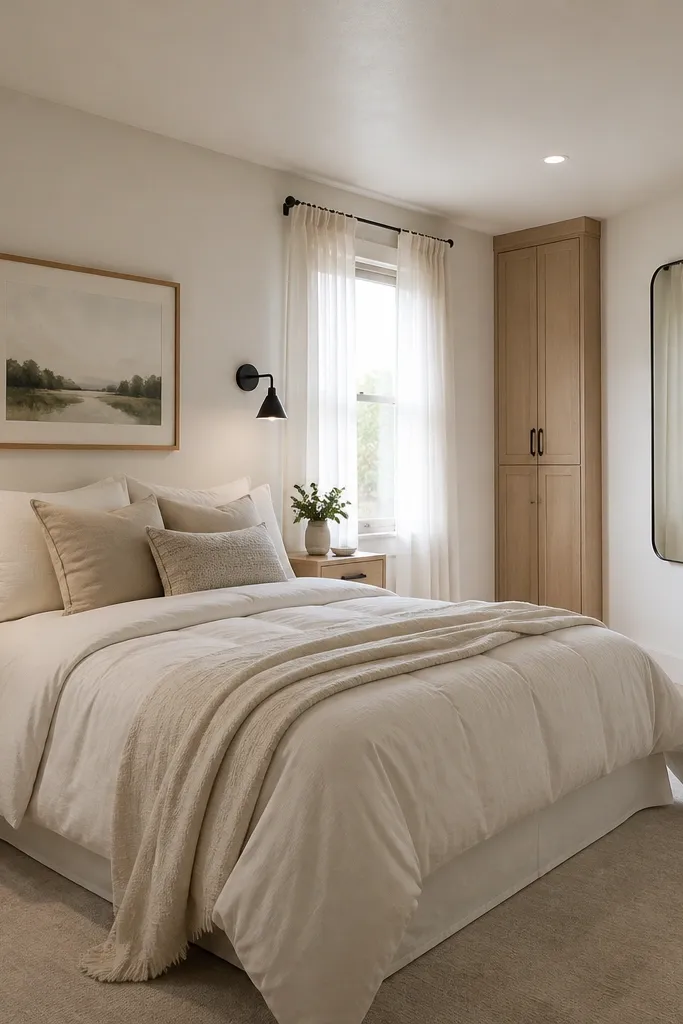
1. Lift-the-Bed With a Low, Slatted Frame
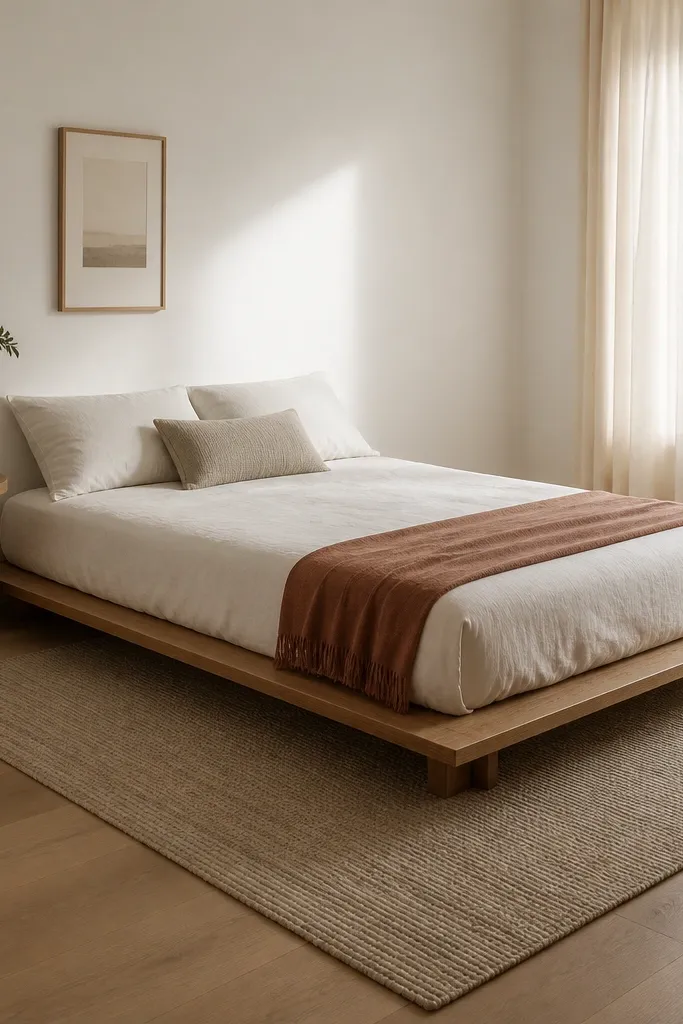
A small bedroom looks bigger when the floor is visible under the bed. Choose a low slatted or platform frame in light wood or matte black metal — both read lighter than thick, padded panels. Keep the bedding in a single light base color like warm white, oat, or very pale greige, then add one accent throw in a muted tone. This reduces the “mass” in the center of the room and makes the eye move downward instead of hitting a bulky rectangle.
Start by measuring your room width and confirm you can leave at least 24-30 inches of walking space on one side of the bed. Then replace a tall, heavy frame with a low slatted frame or platform that leaves 3-6 inches of visible floor. Finally, keep pillow count simple: 2 standard + 2 king/large if needed, and use one throw folded at the foot so the bed reads styled but not crowded.
Try thisIf you can’t change the frame, use bed risers only if the height stays low — you want visible floor, not a “floating” look.
Common mistakeAvoid a tall upholstered headboard if your room already feels tight from the doorway.
2. Sheer-Over-Rod Curtains That Hit Near the Floor
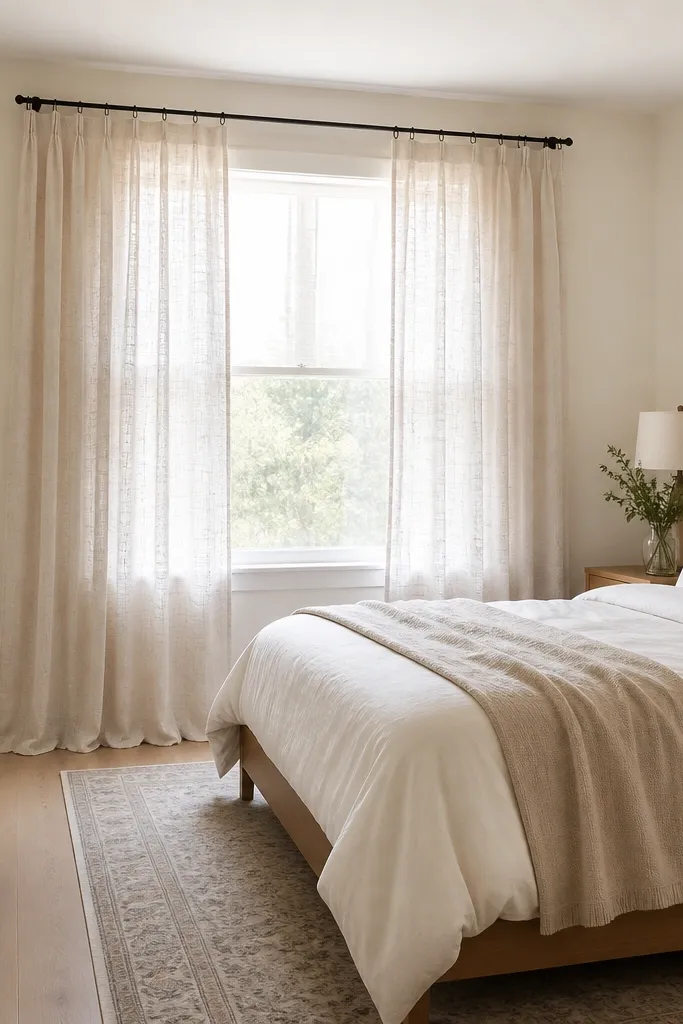
In a small room, curtains can either widen the space or shrink it. Go for sheer panels in linen-look or lightweight cotton, and mount the rod 4-6 inches above the window trim. Let the fabric hang to just skim the floor — a little break looks designer and hides uneven flooring. Sheers add softness without creating a heavy vertical block, and the extra height makes the ceiling feel taller.
Measure from your window trim to the floor and decide on a hem that lands about 1/2 inch above the floor for a clean line. Install the rod so it extends 6-10 inches past the window frame on both sides, then hang two full-width panels so they stack neatly. Finally, use a simple tieback or just keep them open during the day — the room looks bigger when the window is fully readable.
Try thisChoose a sheer that has a slight texture. Flat, glossy sheers catch light and can look cheap in photos.
Common mistakeSkip blackout-thick drapes in a small room unless you genuinely need them for light control.
3. One-Color Bedding With a Single Textural Accent
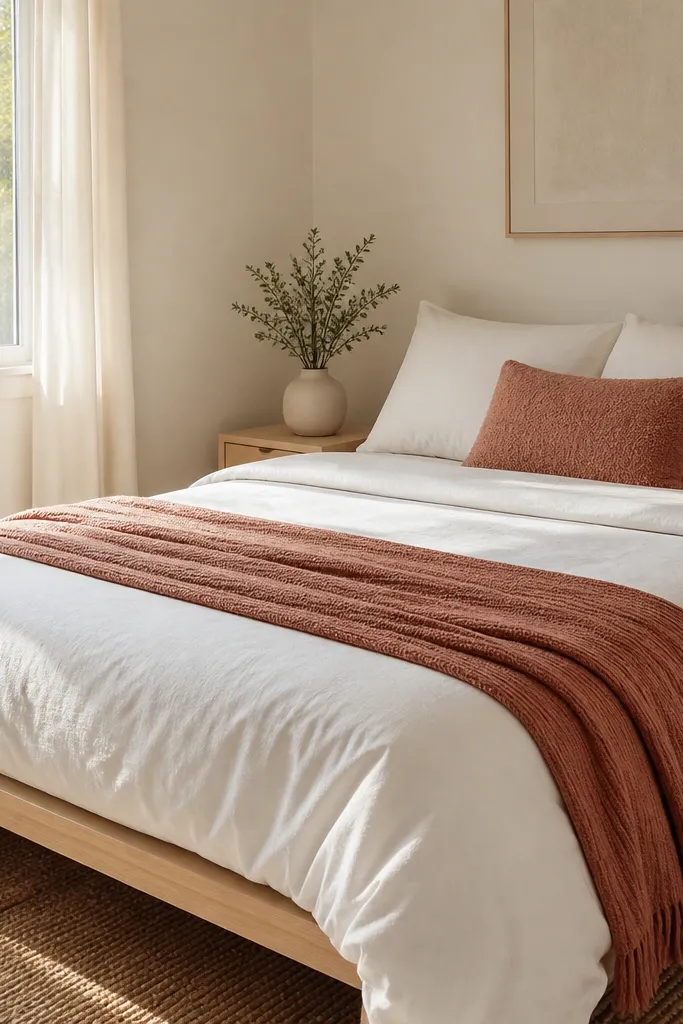
Busy patterns fight small spaces because they add “visual noise” across the largest surface in the room. A one-color duvet in warm white, sand, or oatmeal makes the bed read calm and intentional. Add one accent element that changes texture, not pattern — think a ribbed knit throw or a boucle pillow in a muted clay or taupe. This gives depth without overwhelming the room’s scale.
Pick a base color that matches your wall undertone: if your walls are creamy, choose warm white; if they’re cool, go for soft ivory. Then layer one texture: a ribbed throw at the foot and keep pillow covers solid. Finish by using a duvet insert that fits tight to the sides so it doesn’t billow and create extra bulk.
If you want a pattern, limit it to one pillow cover. Everything else stays solid so the bed still looks light.
Don’t use three different patterns (duvet, shams, throw) in a small bedroom.
4. Rug Under-Front-Legs Rule for Instant Cohesion
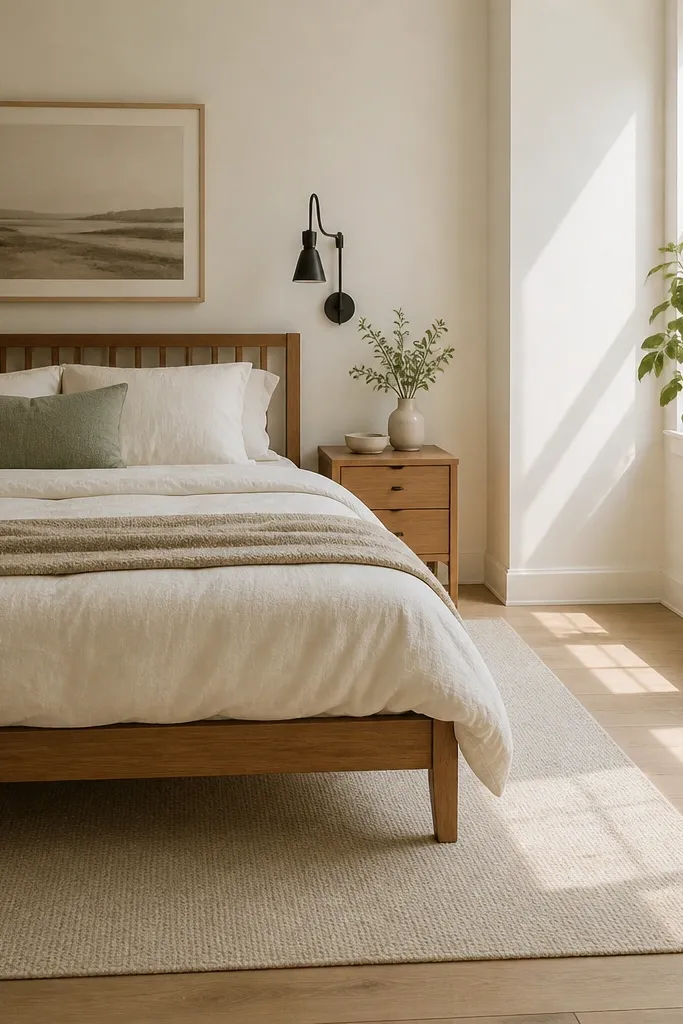
A rug that stops at the bed’s edge makes the room feel cut into pieces. For small bedrooms, the best look is the under-front-legs rule: the rug anchors the bed and connects the walking zone. Choose a flatweave or low-pile rug in a light neutral, then add subtle pattern if you need it (a barely-there stripe or geometric). This makes the room feel assembled instead of temporary.
Start by getting a tape measure out: aim for a rug size where the front legs of the bed sit on it, not just the center. For a queen bed, that often lands around 5x8 feet, but measure your exact side clearance. Then center the rug so it’s symmetrical under the bed, and keep the edges 6-12 inches beyond the sides of the bed if space allows.
If your rug is darker, keep the bedding lighter to prevent a heavy floor block.
Avoid rugs that are too small. They create visual “floating” and make the room feel smaller.
5. Gallery Wall That Starts Above Eye Level
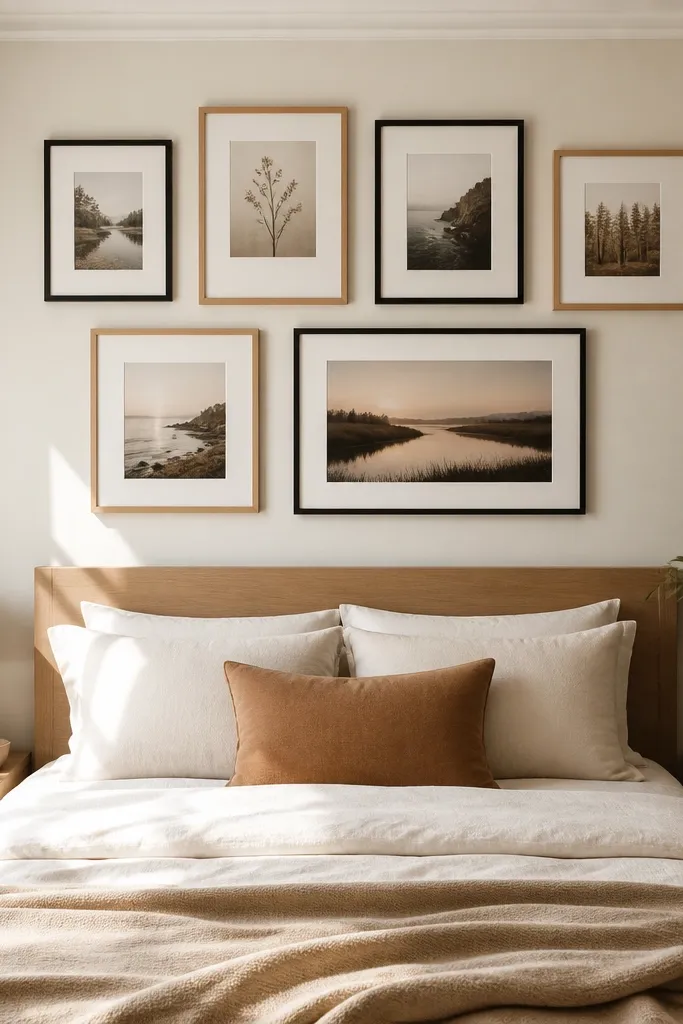
A gallery wall is beautiful, but in small rooms it can crowd the bed. Instead, keep the layout tight and start it higher than you think — around 60-70 inches from the floor to the top edge of the arrangement. Use frames that match in finish (matte black, light oak, or white) and keep matting consistent. This gives you personality without making the bed area feel boxed in.
Lay out your frames on the floor first and measure the total width. Then find the placement point: mark the center of the bed wall, and set the top edge of the gallery so it’s high enough to lift the visual line. Finally, use picture-hanging wire or a level + template, and keep spacing even — 2-3 inches between frames looks sharp in small rooms.
Try thisPick one theme color from your bedding (like clay or taupe) and let it repeat in one print for cohesion.
Common mistakeSkip random vertical staggering. It looks busy when the room is already small.
6. Tall, Narrow Linen Cabinet for the Storage Wall
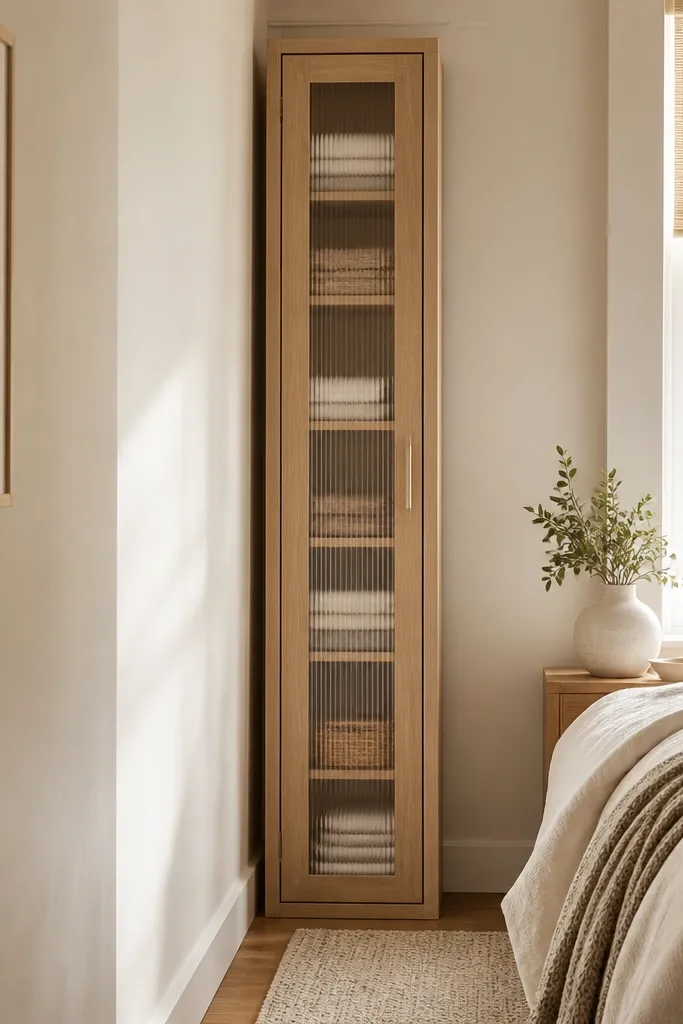
Storage steals space when it’s low and wide. A tall, narrow linen cabinet keeps the floor clear and gives you vertical organization — folded towels, extra sheets, and seasonal items. Choose a cabinet with doors or baskets so open shelving doesn’t collect visual clutter. In a small bedroom, this is one of the fastest ways to make the room look designed because it reduces scattered items that ruin photos.
Measure the wall space and aim for a cabinet width of about 12-18 inches with a depth around 10-14 inches. Place it where you can still open drawers or doors without bumping. Then organize by category: top shelf for rarely used items, middle for everyday linens, bottom for bulky extras in labeled baskets.
Choose a matte finish (painted wood or matte laminate). Gloss reflects light and can make small corners look busy.
Avoid open shelves with random objects. Use baskets or doors to keep the wall quiet.
7. Floating Nightstands With One Drawer Each
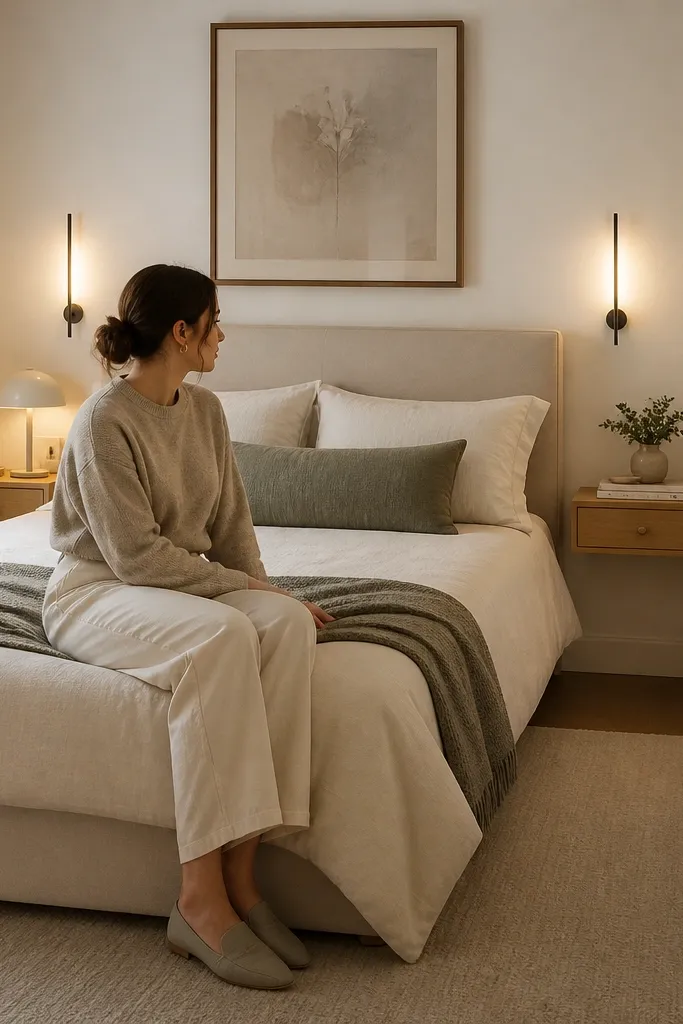
Nightstands look better when they don’t block the floor. Floating nightstands, or wall-mounted shelves, create a cleaner line and make the room feel less obstructed. Keep the shape slim and low — roughly 10-14 inches deep — so it doesn’t eat into walkway space. Style with a single lamp, a small tray, and one book stack so the surface reads intentional.
Start by measuring your mattress height and pick a nightstand height that lands the tabletop about level with the top of the mattress or slightly lower. Use a stud finder and mount into studs with proper brackets — don’t rely on drywall anchors. Then repeat the same layout on both sides for balance: lamp, tray, and one small decor item.
If you’re using a floating shelf, add a thin lip or use a tray. Small items slide and ruin the look fast.
Avoid oversized nightstands. They create a visual “box” around the bed.
8. Mirror Placement That Doubles the Light Path
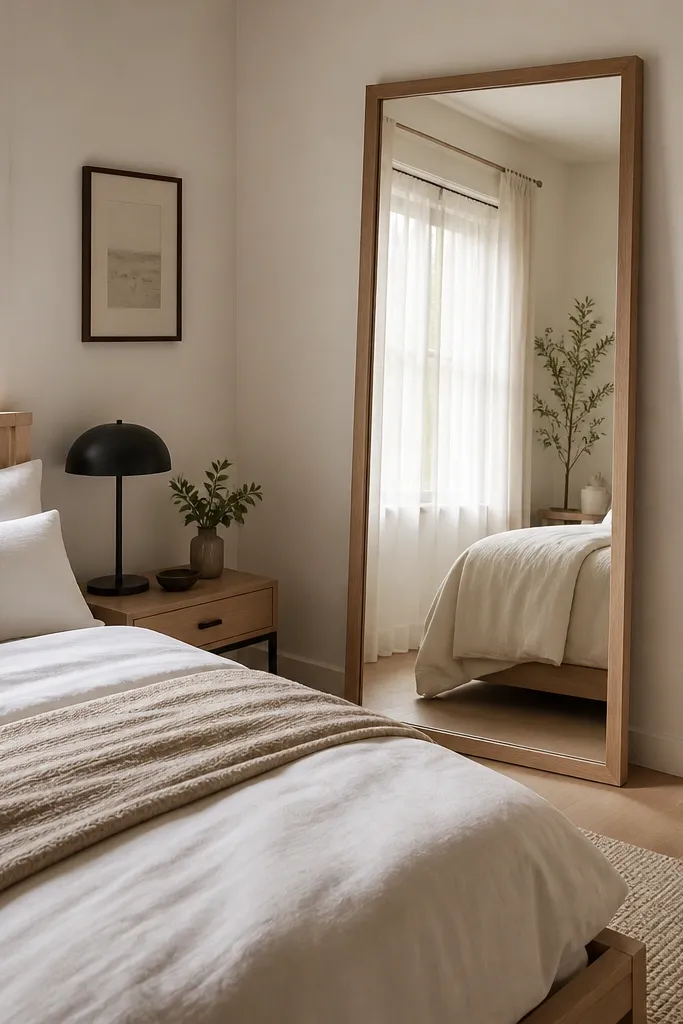
A mirror can make a small bedroom feel bigger, but only when it reflects light, not clutter. Place a tall mirror across from the window or so it catches the window light as it enters. Choose a frame in a warm finish like light wood or brushed brass, and keep the mirror size tall enough to extend upward visually. This creates depth and makes the room feel like it has a second light source.
Pick the wall opposite your main light source and tape-mark the mirror position at about 55-65 inches from the floor to the mirror center. Then secure it with proper wall anchors if it’s heavy — mounting matters more than the frame style. Finally, remove visual noise from the mirrored area: keep a blank wall section and avoid reflecting piles of laundry.
Try thisUse a mirror with a matte frame if you have shiny hardware. It looks more cohesive in small rooms.
Common mistakeDon’t place a mirror where it reflects the bed messy side or a cluttered dresser.
9. Bedside Wall Sconce Instead of Table Lamps
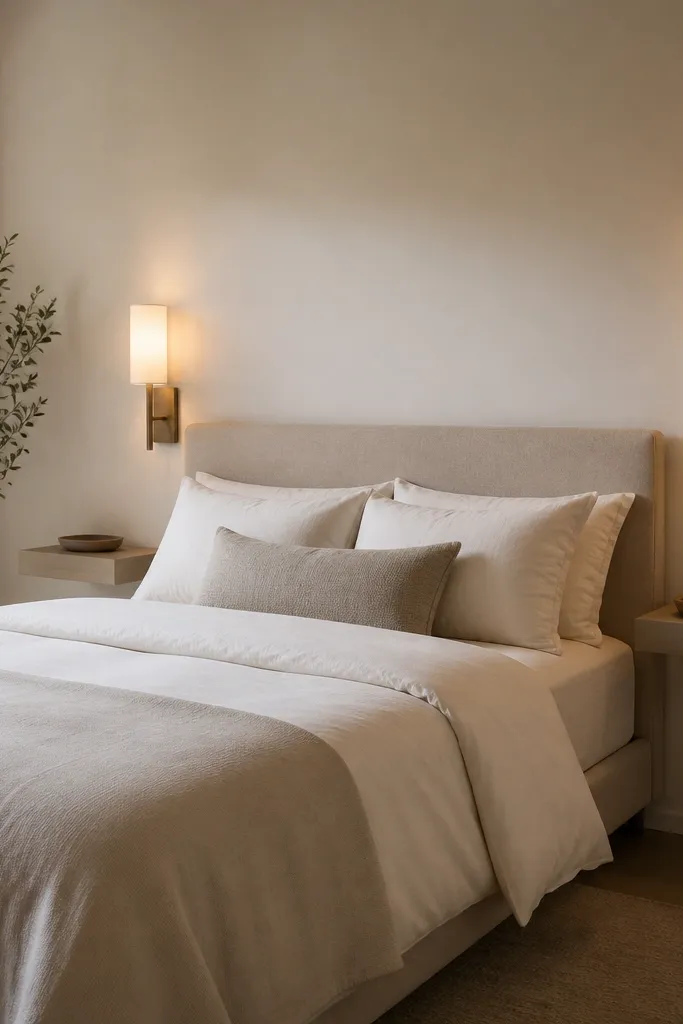
Table lamps take up surfaces and create clutter in small rooms. Wall sconces free the nightstand, which lets you keep the bed area clean and photo-ready. Choose plug-in sconces or hardwired ones, but keep the shade size small — around 6-8 inches wide. Warm bulbs at 2700K also make the room look inviting without adding visual bulk.
Measure the space beside the bed and mount the sconce so the center of the light is about 54-60 inches from the floor. Match the height on both sides for symmetry. Then choose a shade finish that works with your bedding colors — linen shade in oatmeal is forgiving and looks expensive in photos.
Try thisIf you keep the nightstand minimal, add one slim tray for essentials. The room looks styled, not abandoned.
Common mistakeAvoid oversized drum shades. They look heavy next to a small bed.
10. Paint the Wall Behind the Bed One Soft Shade Lighter
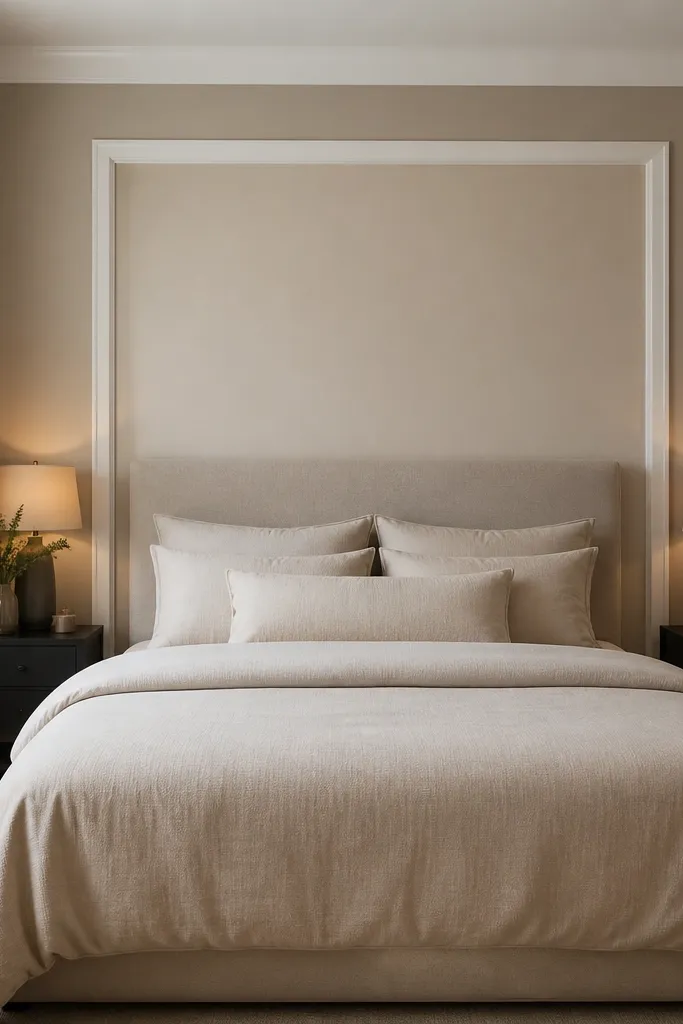
In small bedrooms, a full dark accent wall can shrink the room. Instead, paint the wall behind the bed one soft shade lighter than your other walls, or only slightly deeper with a warm undertone. The subtle difference frames the bed without creating a heavy block. Pair it with crisp white trim and simple bedding so the whole wall reads clean and intentional.
Test paint samples on the wall section behind the bed and compare at morning and evening light. If your other walls are creamy, go one step lighter or use a warm greige with less gray. Then paint only that wall, keep trim bright white, and use painter’s tape for sharp edges.
Try thisChoose a matte or eggshell finish. Flat walls reduce glare and look more high-end in photos.
Common mistakeDon’t use glossy paint behind the bed. It reflects light and shows wall imperfections.
11. Vertical Stripes Only on One Pillow or Throw
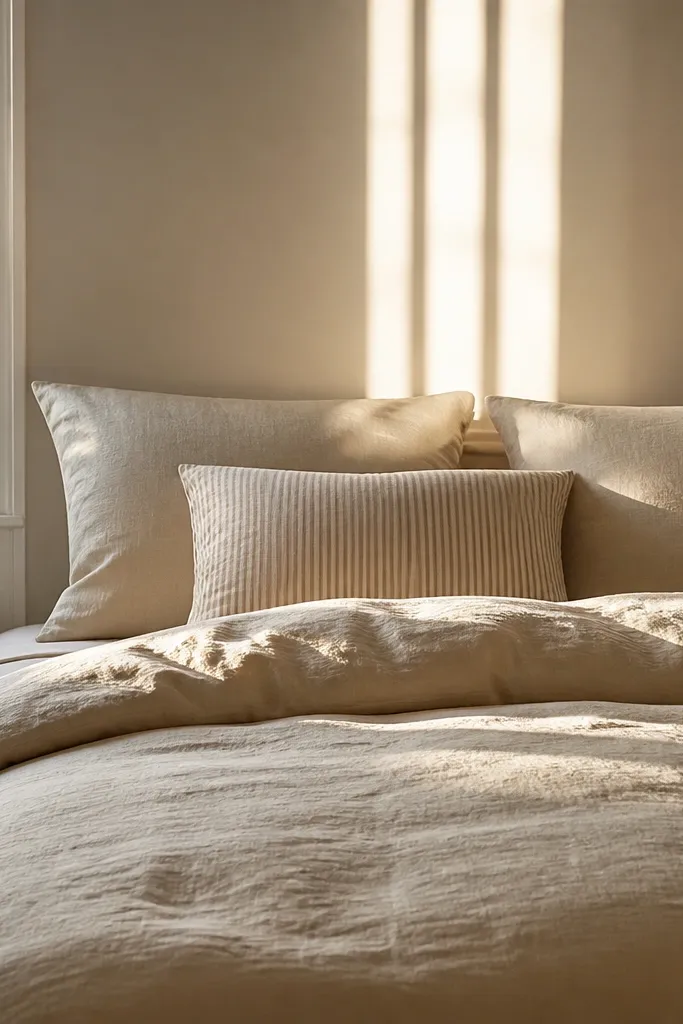
Vertical stripes create height, which helps small rooms feel taller. The mistake is putting stripes everywhere — that makes the bed area busy. Use stripes as a controlled accent: one pillow, one throw, or one small panel. Keep the base color neutral and let the stripes be thin and subtle so they look designer rather than loud.
Pick a striped textile with thin lines (about 1/4 to 1/2 inch) in two calm tones like oat and warm taupe. Place it in the center of the bed styling: one striped pillow in the front layer or drape the throw at the foot. Keep all other pillows solid so the stripe is the only pattern.
Match the stripe color to a detail elsewhere — like the frame finish or the lamp base — for cohesion.
Avoid bold thick stripes on the duvet. It overwhelms a small bedroom fast.
12. Ribbed Knit Throw With a Folded Edge at the Foot
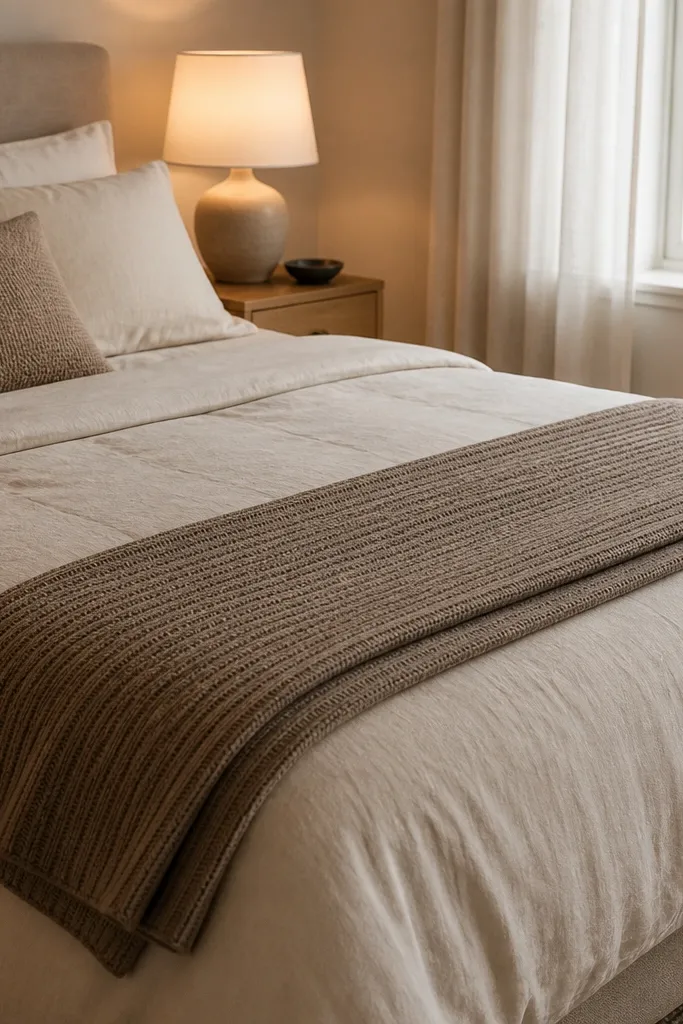
Texture is what makes beginner-friendly styling look expensive. A ribbed knit throw catches light in a way that feels cozy without adding visual clutter. Place it at the foot with a clean fold so it reads intentional. Choose a muted tone that sits between your bedding and accent color — like clay, mushroom, or warm gray-brown.
Drape the throw over the foot so the fold line lands centered on the bed width. Fold once so the edge sits about 10-14 inches above the bottom of the duvet. Then smooth the knit so the ribs lie flat — wrinkles look messy in small rooms. Use one throw only; if you add more blankets, the bed looks crowded.
Try thisIf your throw is thick, use a shorter fold. Too much bulk visually widens the bed.
Common mistakeSkip chunky faux fur throws. They can look heavy and dated in small spaces.
13. Curtain Rod High + Wide to Create a Taller Window Wall
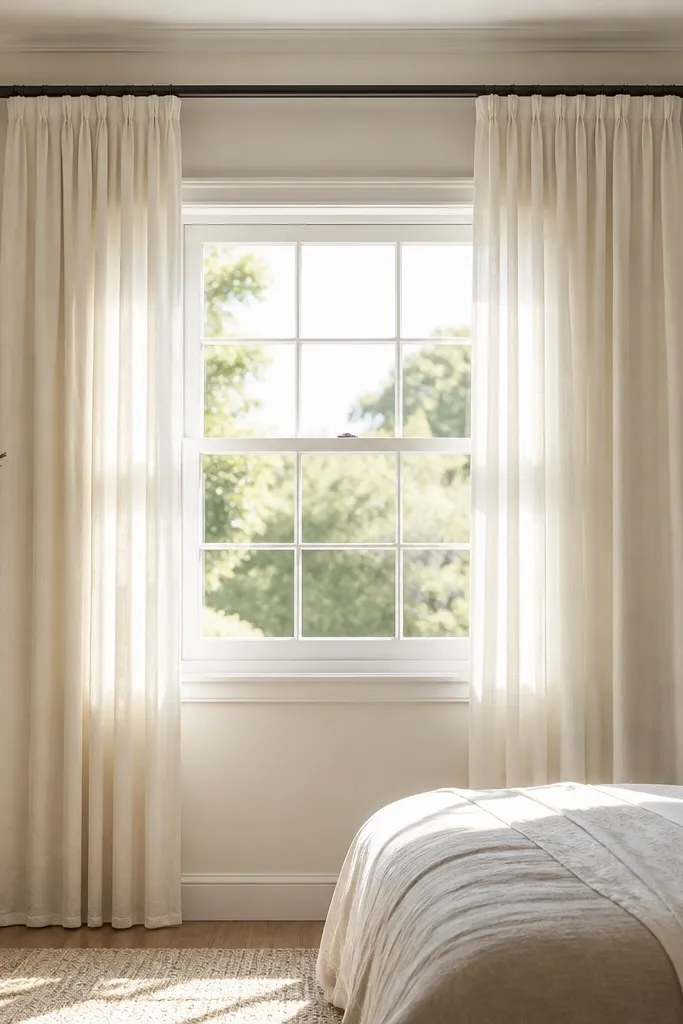
This is the easiest small-bedroom upgrade that looks designer in daylight. Mount the rod higher than the window trim and extend it beyond the frame. The fabric then creates a taller rectangle that your brain reads as more ceiling. Use light neutral curtains so the window wall doesn’t become a dark block.
Measure your window width and add 12-20 inches total for rod length (6-10 inches on each side). Install the rod 4-6 inches above the trim. Hang two panels per side if you want fuller drape; then pull them open so the window reads unobstructed when you’re not sleeping.
Try thisMatch curtain color to your bedding undertone. Warm bedding + cool gray curtains looks off quickly.
Common mistakeAvoid rods that sit flush with the trim. It makes the window look smaller.
14. Vertical Wall Storage With a Narrow Ladder Shelf
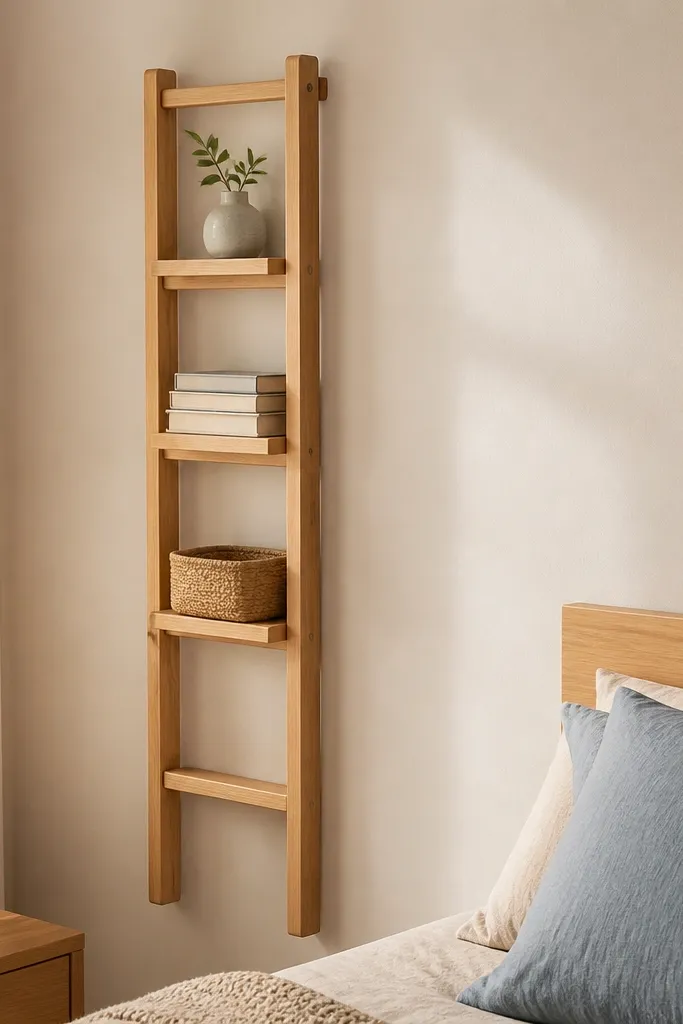
When floor space is tight, wall storage needs to look light. A narrow ladder shelf gives you vertical organization without a bulky cabinet silhouette. Use it for books, baskets, and a few decor pieces — keep the styling tight so shelves don’t look like storage. This is a great fix if you need a place for bedtime books, chargers, and extra blankets without adding clutter.
Choose a ladder shelf depth around 8-12 inches so it doesn’t project into walkways. Mount it high enough that the lowest rung stays above shoulder level or at least above where you walk — common placement is 60-70 inches from the floor to the top rung. Then use baskets in matching tones for anything that looks messy and keep only 3-5 items visible per level.
Use book spines as color control. Pick one or two calm colors and let the rest stay neutral.
Avoid filling every rung. Empty space on shelves looks intentional in small rooms.
15. Low-Contrast Bedside Styling With a Matching Tray
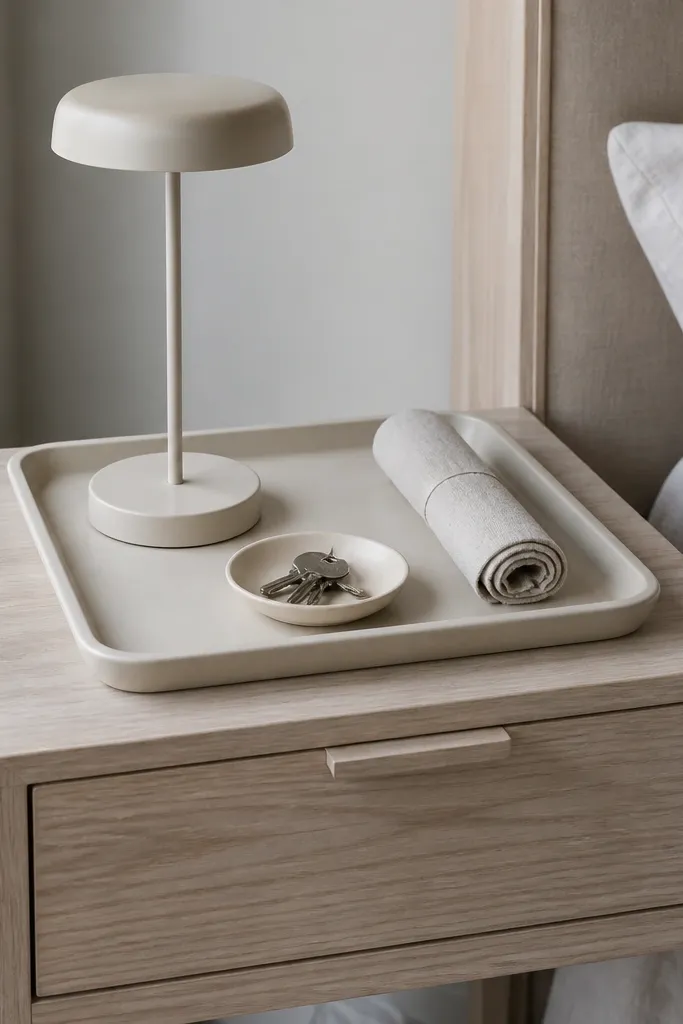
Small bedrooms look best when surfaces repeat a simple system. Put all bedtime items on a single tray in a neutral material like matte ceramic, light wood, or woven rattan. This makes the nightstand look styled even when you’re using it daily. Keep the tray low-contrast against the furniture so it blends, then add one small metallic detail like a brass pen holder or thin frame.
Pick a tray size that covers about half the nightstand surface width, usually 10-14 inches. Place the lamp on one side of the tray and keep chargers, a book, and a small dish on the other. Then remove anything that doesn’t belong in the tray — every extra item adds visual clutter. Repeat the same tray style on both sides for a designer look.
Use a small stack of two books with the same spine color palette. It reads curated without being fussy.
Avoid random decor plus a pile of daily items. The pile always wins visually.
16. Two-Tone Dresser Top With a Single Color Theme
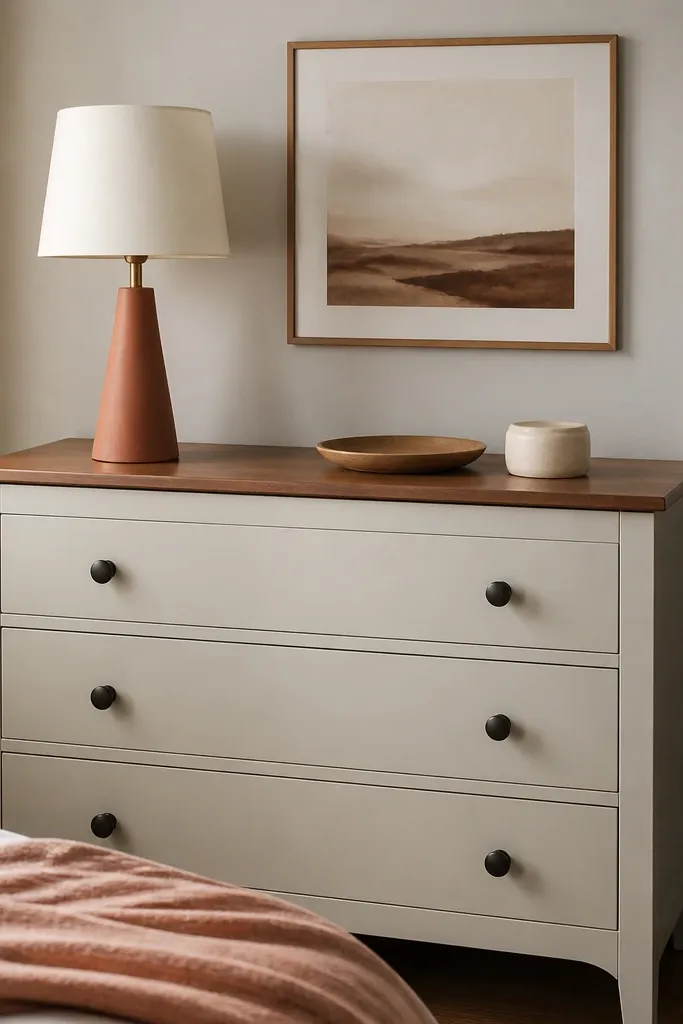
A dresser can either look like a landing zone for clutter or a clean design element. For small bedrooms, keep the top styling minimal and use height on one side. Choose a lamp with a slim base, then add one framed print or mirror on the wall above instead of multiple objects. Stick to one color theme across the accessories — warm neutrals look best with wood tones.
Start by clearing the dresser completely and dusting it. Then place the tallest item first (lamp), followed by a single framed item or mirror on the wall above. Keep the remaining items to one small tray or two small objects, and keep their heights within 3-4 inches of each other. If you need storage, add baskets inside drawers and keep the top clean.
Try thisUse a lamp with a shade color close to your bedding. It ties the room together fast.
Common mistakeAvoid a dresser top with more than one tall object. It breaks the line in small rooms.
17. Headboard Wall Art Pairing With a Narrow Rail
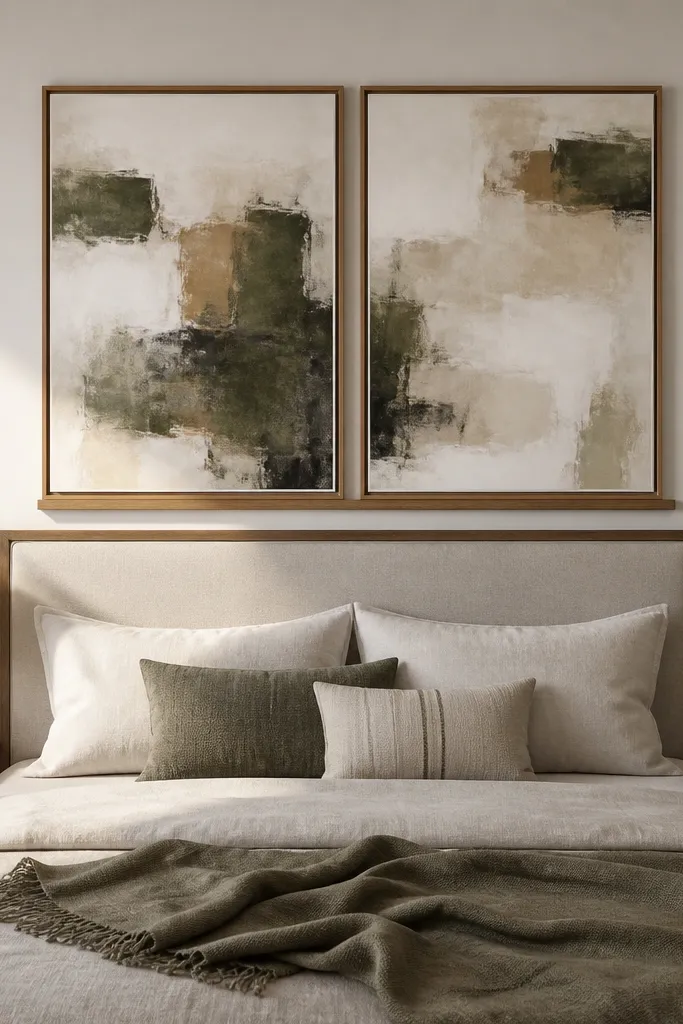
If you don’t want a full gallery wall, a simple pairing looks polished and keeps the bed area calm. Use two frames of the same width placed side-by-side with a narrow gap. Hang them so the bottom edge sits about 4-6 inches above the top of the headboard. This creates a balanced focal point that feels intentional without taking up too much wall.
Choose frames that match in finish and mat color. Measure the headboard width and aim for the combined frame width to be about 60-80% of that total, leaving breathing room. Then mark the wall with a level and hang using the same height for both frames. Add one small decor item on each nightstand to repeat the frame colors.
Pick art with a light background. It keeps the wall from feeling heavy behind the bed.
Skip mixed frame sizes. It reads messy in small spaces.
18. Under-Bed Storage That Looks Like Furniture
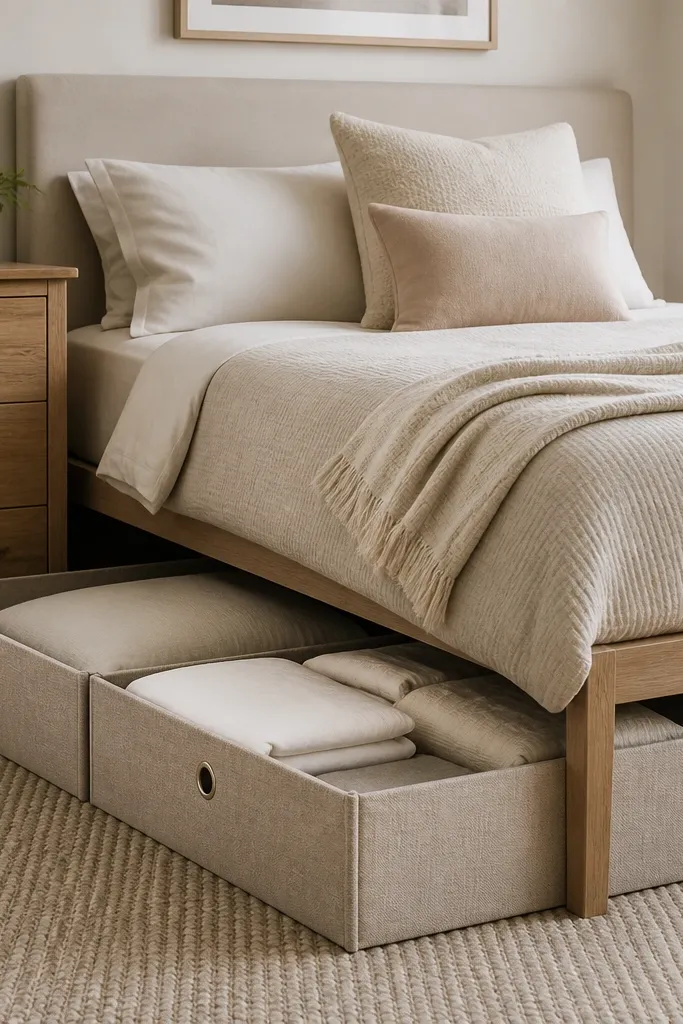
Under-bed space is the quiet hero of small bedrooms. The trick is choosing storage that looks cohesive, not random. Use matching fabric bins in a soft neutral, or install under-bed drawers with a clean front. Keep items grouped by category — extra sheets, off-season clothing, and spare pillows — and avoid overfilling so the bed still looks light.
Measure the clearance between the bed frame and the floor so bins slide in without forcing. Choose bins that match each other in height and color, and keep labels simple or hidden. Slide them in, then store only folded items that fit flat. After that, keep a daily-use zone on top of the dresser or in one drawer so you don’t dig through bins every day.
Use a compression bag only for off-season items. It keeps the bins from bulging.
Avoid clear plastic bins with messy contents. They turn storage into visual clutter.
19. Bedside Bench at the Foot With a Single Throw Color
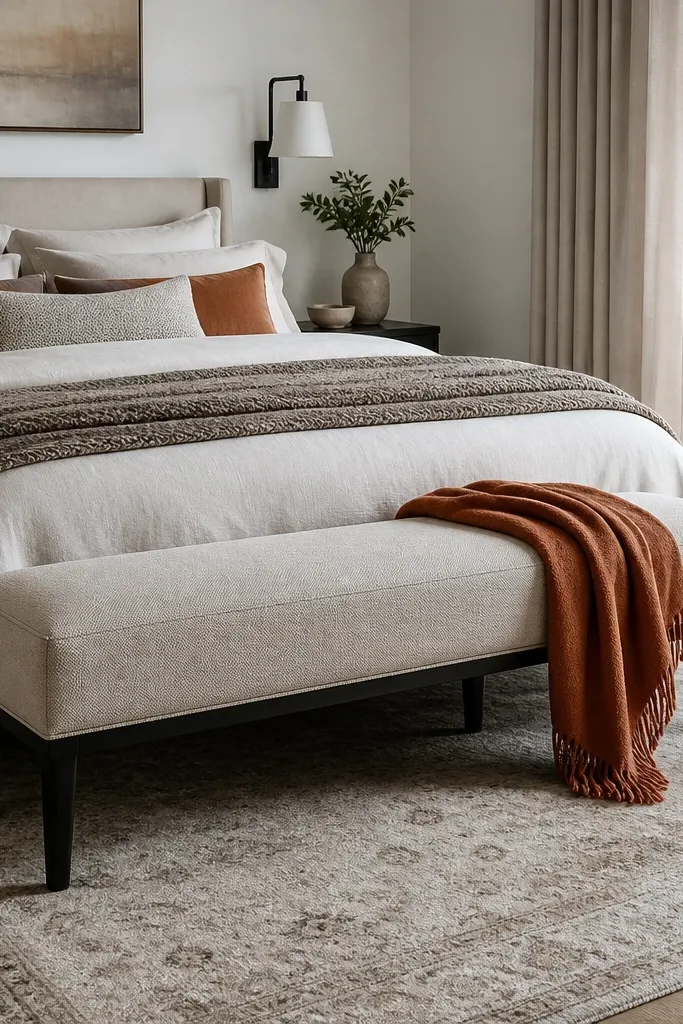
A bench at the foot adds a designer hotel feel while still being practical. In a small bedroom, choose a narrow bench (about 40-48 inches wide) with a low profile. Upholster in a neutral fabric like linen or performance weave, then keep the throw color consistent with your bedding accent. The bench creates a visual “grounding” line and gives you a spot to fold a throw or place a bag without cluttering the bed.
Measure the bed width and leave at least 24 inches from the bench to the nearest wall or door path. Place the bench centered at the foot, not off to one side. Then style it with one folded throw and one small tray or cushion if there’s space. Keep the bench legs slim so it doesn’t feel bulky.
Try thisIf the room is tight, use a bench with simple straight legs rather than bulky tufted upholstery.
Common mistakeAvoid a deep, wide bench. It eats walkway space and makes the room feel smaller.
20. Warm White Walls + Matte Black Hardware for Clean Contrast
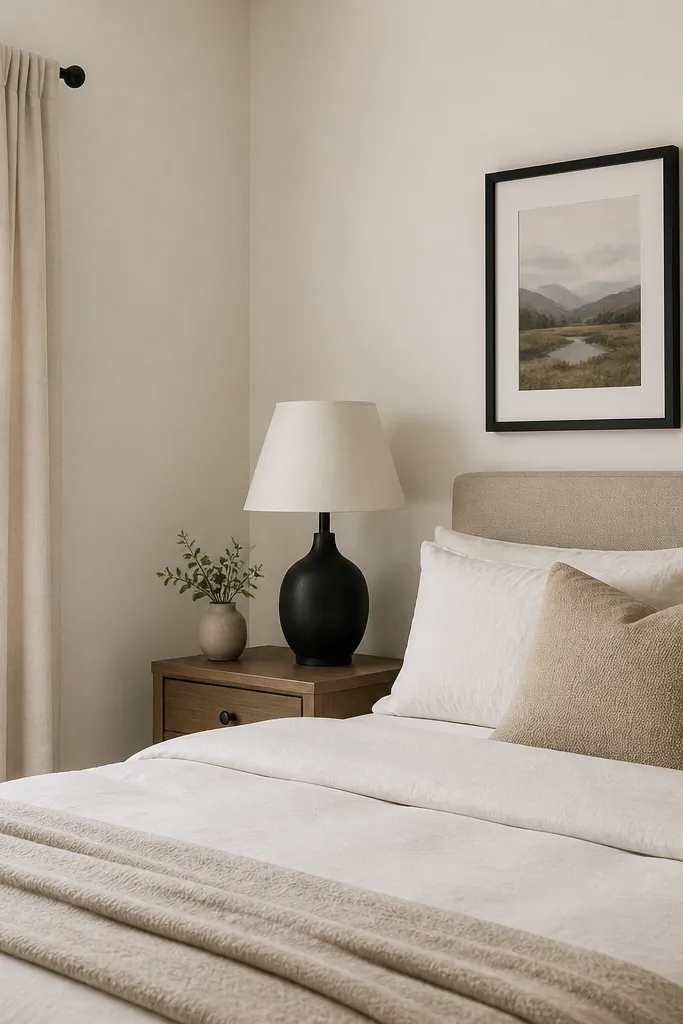
A small bedroom looks sharper when finishes repeat. Warm white walls keep light moving, while matte black adds crisp contrast without looking heavy like glossy black. Tie it together with two or three matte black elements: a lamp base, a picture frame, and one small hardware detail like a curtain rod finial. This makes the room look designed even when decor is minimal.
If you’re painting, choose warm white with a neutral undertone and a matte or eggshell finish. Then swap one or two finishes at a time — matte black is easiest to add through frames, lamps, and curtain hardware. Keep metal finishes consistent across the room so you don’t get a mix of brass + chrome that looks chaotic in small spaces.
Use warm bulbs (2700K) to keep the black from looking harsh.
Avoid mixing chrome, brushed nickel, and brass all in one small bedroom.