1. Wide headboard in chalky sage + crisp white bedding
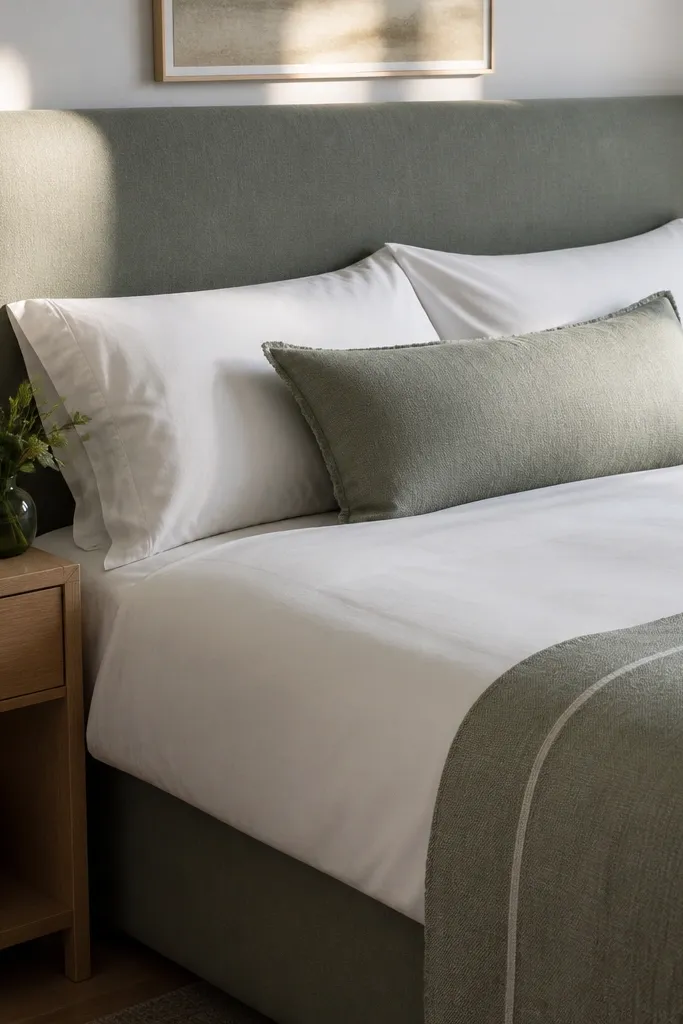
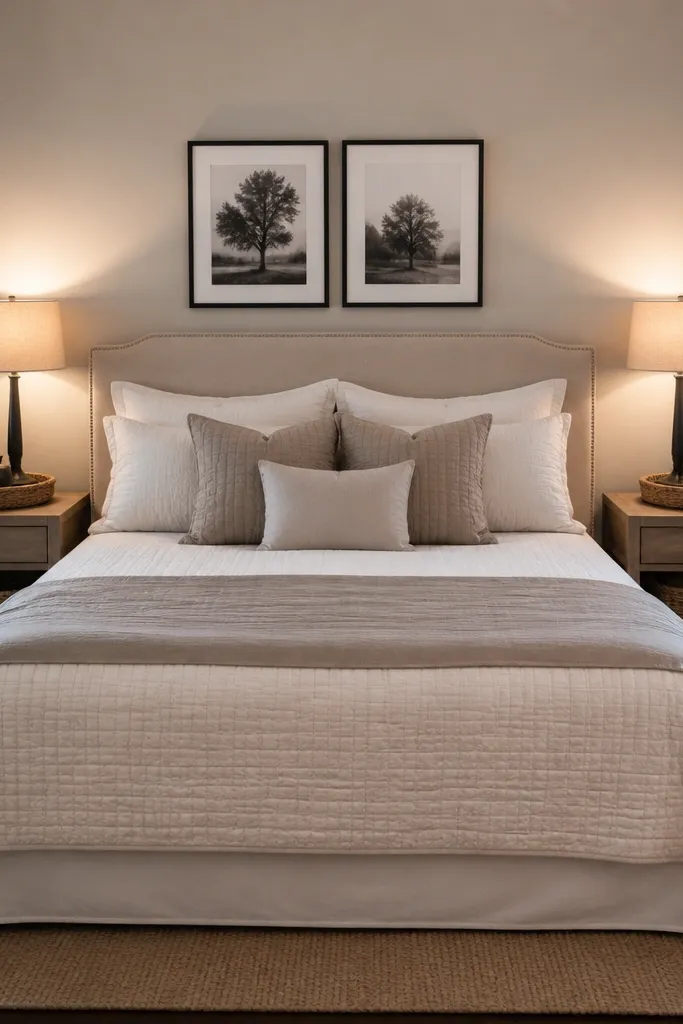
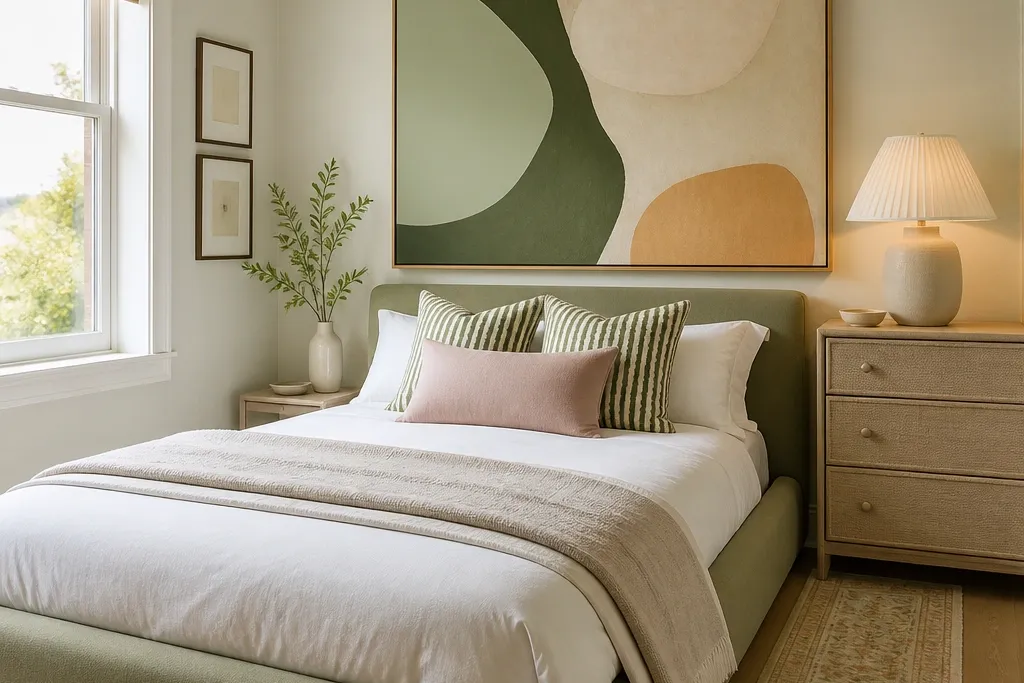
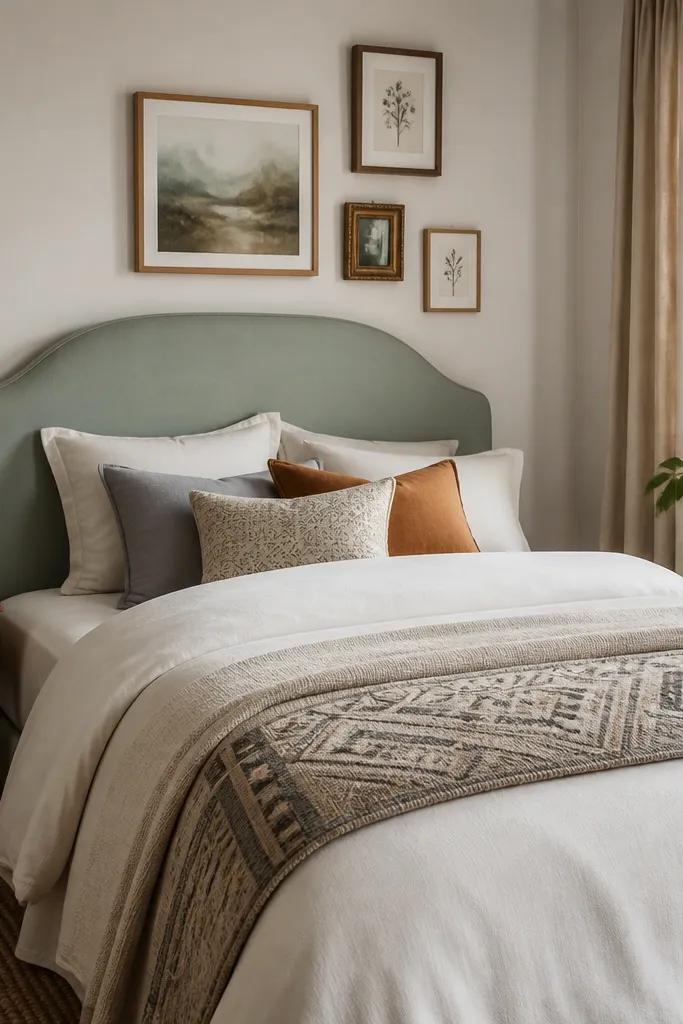
A wide headboard makes a small bed feel intentional instead of cramped. Choose chalky sage upholstery or a sage fabric panel with a clean top edge so it reads modern, not sweet-shop. Pair it with crisp white bedding in percale or a matte cotton weave so it looks fresh in summer and calm in winter. Add one thin stripe or mini-check accent pillow in a muted tone to keep the mood playful without turning the whole room into pattern overload. This works best where the bed is pushed against a wall and you need the visual “frame” to pull the room together.
Try thisUse a white duvet with a matte finish and avoid shiny satin — it looks cool in photos but cheap in small rooms.
Start by measuring your mattress width and aim for a headboard that spans 2-6 inches wider than the bed on each side. Install or place the headboard so the top edge lands around 44-48 inches from the floor, then style the bed with a white duvet or quilt and pillowcases in the same fabric family. Finish with one sage pillow and one accent pillow in a small-scale pattern; keep the rest white or light cream so the sage stays the hero. Expect a DIY-friendly cost if you buy fabric and foam, or a ready-made upholstered headboard if you want a faster upgrade.
Common mistakeDon’t add three different colors of bedding at once; sage needs white to look grown-up.
2. Oversized gallery rail above the bed with 3 harmonizing prints
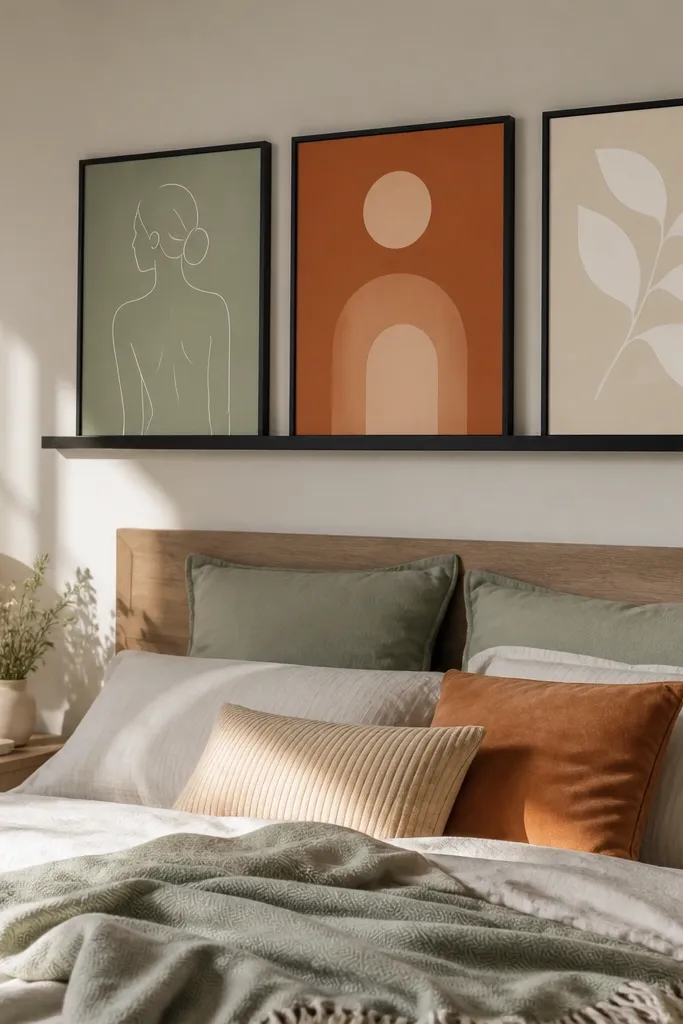
Small bedrooms need wall scale that feels bigger than the room. A gallery rail above the bed gives you a clean, structured look while still feeling playful through art. Choose three prints that share a theme and palette — for example, sage line art, warm terracotta typography, and cream botanical shapes. Use frames in the same finish (brushed brass or matte black) so the setup reads curated rather than random. This is a strong move for rooms where the wall space is narrow but you still want personality.
Try thisKeep the bottom edges of frames around 56-60 inches from the floor for a balanced photo-ready height.
Choose a rail that runs roughly the width of your bed plus 6-10 inches total. Hang it so the centerline of the art sits about 62-64 inches from the floor, then place the three prints with even spacing. Use frames that are at least 16x20 inches each so the wall doesn’t swallow them. Plan on 1-2 hours for measuring and leveling; cost depends on frame size, but the look is worth it because the wall becomes the focal point.
Common mistakeDon’t hang small prints one at a time at random heights; they read like clutter.
3. Curtains that touch the floor with a wide 4-inch rod overhang
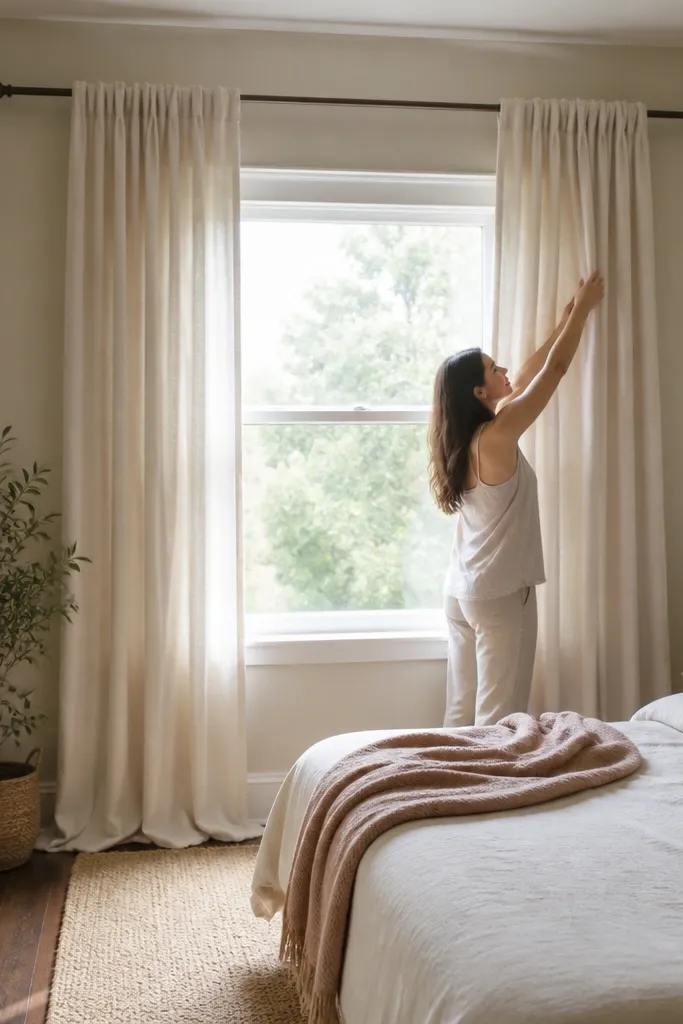
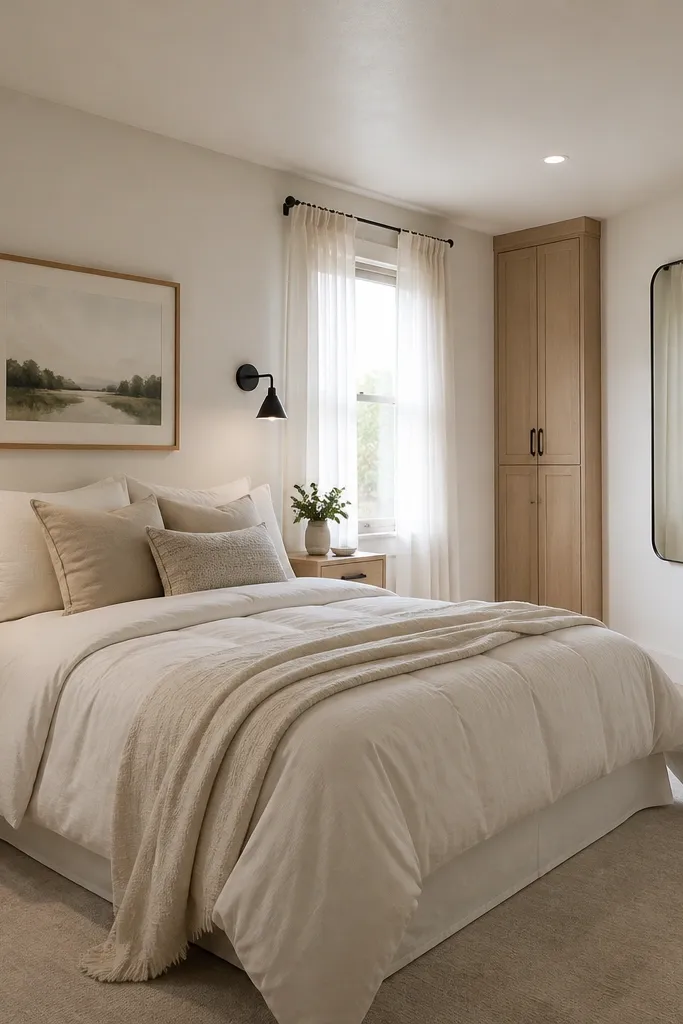
Curtains are the fastest way to make a small bedroom feel taller and more playful. Go for floor-touching panels in linen-blend or textured cotton, not sheer-only fabric. Mount the rod 4-6 inches above the window casing and extend it 4-6 inches wider on each side so light spills around the frame. Pick a warm neutral like cream, oatmeal, or light sand; then add playful color through a tieback ribbon or one patterned pillow. This strategy works year-round because the fabric texture reads cozy in winter and airy in summer.
Try thisIf you want playful energy, use a single patterned tieback in muted colors rather than patterned curtains everywhere.
Measure window width and choose panels that total 1.5 to 2 times the window width for fullness. Install the rod so the curtains break 1-2 inches above the floor or lightly puddle, then steam or press the folds for crisp vertical lines. Add tiebacks in a matching fabric or a subtle stripe to introduce play without adding visual clutter. Budget for new curtains and a wider rod; the hardware upgrade is cheap compared to the impact.
Common mistakeDon’t use short curtains that stop mid-window; they make the room feel smaller.
4. Layered rug effect: jute base + small patterned runner by the bed
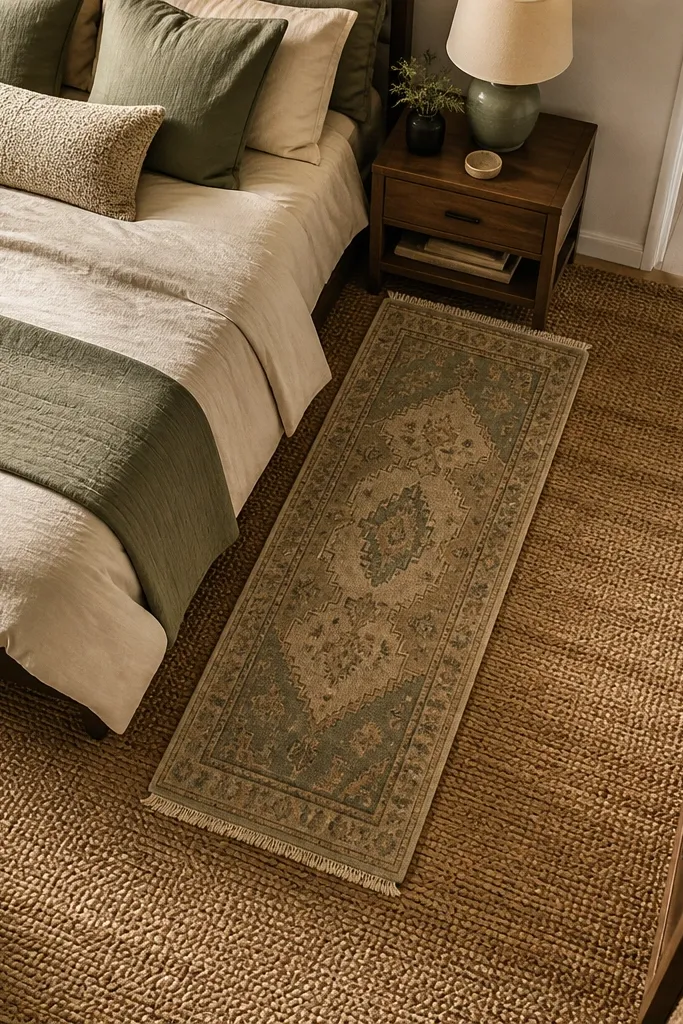
Layering rugs gives a small bedroom a styled, playful “set” without adding clutter. Start with a jute or flat woven base rug to bring warmth and texture, then add a small patterned runner beside the bed to create a color moment. Pick a runner pattern that feels grown-up: muted geometric, thin stripes, or small diamond motifs in terracotta and cream. The jute keeps the floor grounded so the pattern reads intentional. This works especially well in narrow rooms where a single large rug would dominate or be hard to fit.
Try thisChoose a runner with a flat weave so it doesn’t bunch when you open and close the door.
Measure the footprint around your bed and leave at least 8-12 inches of walking space where the runner will sit. Place the jute rug first so it extends under the front edge of the bed by a few inches. Add the runner so it sits lengthwise along one side of the bed, centered under the nightstand area. Expect a moderate cost: jute is affordable, and runner sizes are smaller so you can spend more on the pattern without blowing the budget.
Common mistakeDon’t layer two thick high-pile rugs; the room looks smaller and feels messy.
5. Floating bedside shelf with a single statement lamp
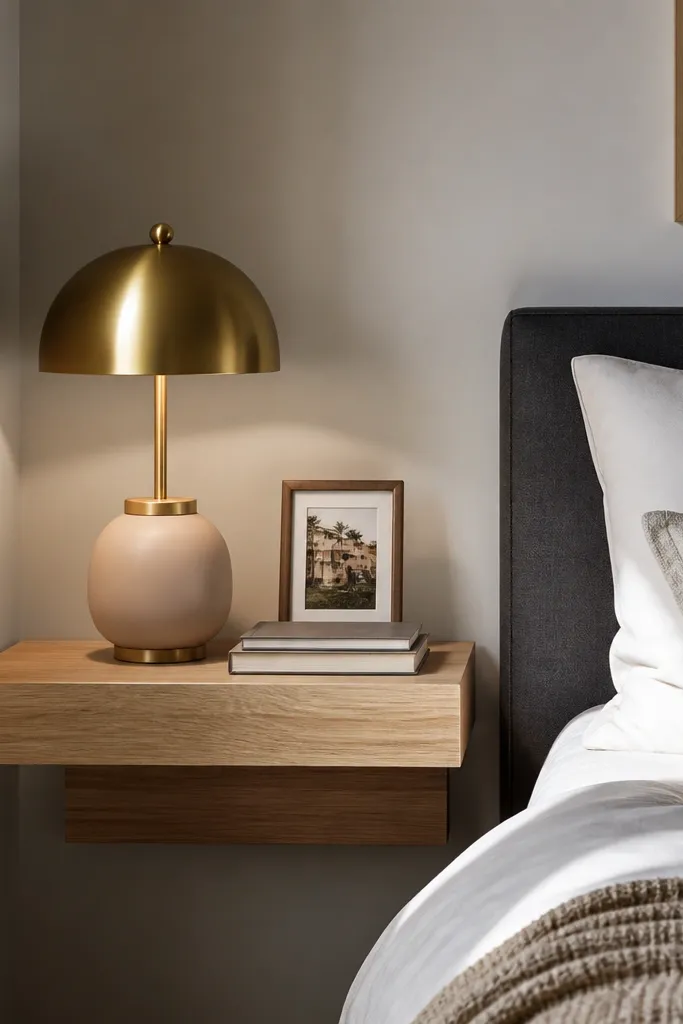
If floor space is tight, a floating shelf gives you the “bedside moment” without bulky furniture. Keep the shelf simple light oak or painted white and use it to create a tidy, playful vignette. Pair it with one statement lamp in a warm finish like brushed brass or matte ceramic in a soft pastel. Add a small framed photo or a single decorative tray so the shelf looks styled in photos. This is ideal for small rooms where traditional nightstands squeeze the walkway.
Pick a shelf width that matches the lamp base (usually 12-16 inches deep) and mount it so the top is around 24-26 inches from the floor. Place the lamp first, then add a book and one small decor object; keep the total items to 3-4 so it looks intentional. Use wall anchors rated for your wall type and install level. Cost is usually low: shelves and a lamp are cheaper than replacing both nightstands.
Use a lamp with a fabric shade; the light looks softer and more playful than hard LED glare.
Don’t overload the shelf with small decor; it defeats the space-saving benefit.
6. Color-blocked throw blanket on the foot of the bed
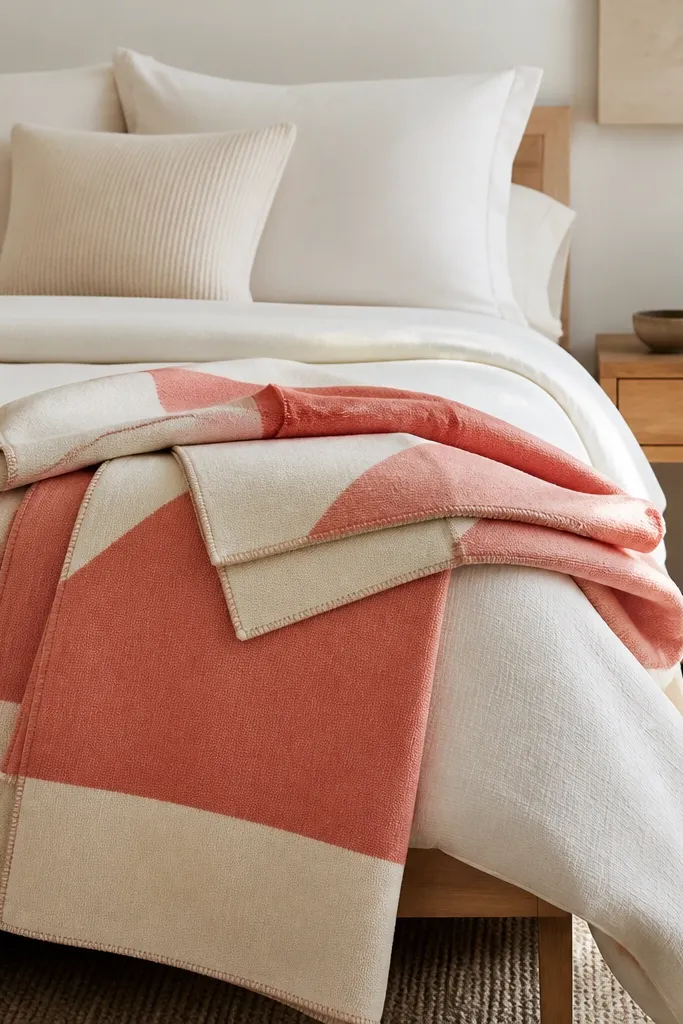
A throw at the foot makes the bed look styled even when you don’t want to change everything season to season. Choose a color-block blanket with two tones that match your room palette — like cream with muted coral, or light gray with sage. The geometry reads playful, but because it’s a single large pattern, it avoids childish chaos. Drape it with a clean fold line so it looks deliberate in photos. This works year-round because you can swap the throw thickness without changing the bedding base.
Start with a neutral duvet or quilt as your base. Fold the throw into thirds and place it centered at the foot of the bed so it reaches about 10-14 inches up the sides. Add one patterned pillow that echoes a color from the throw (same coral or same sage), then keep the remaining pillows solid. Expect a manageable cost since throws are smaller than full bedding sets.
Match the throw color to something you already have — like a curtain tieback or rug stripe — so the whole room feels connected.
Don’t use a busy character-themed throw; it dominates the bed and reads younger than you want.
7. Two-tone bedding: cream duvet with a single sage fitted sheet edge
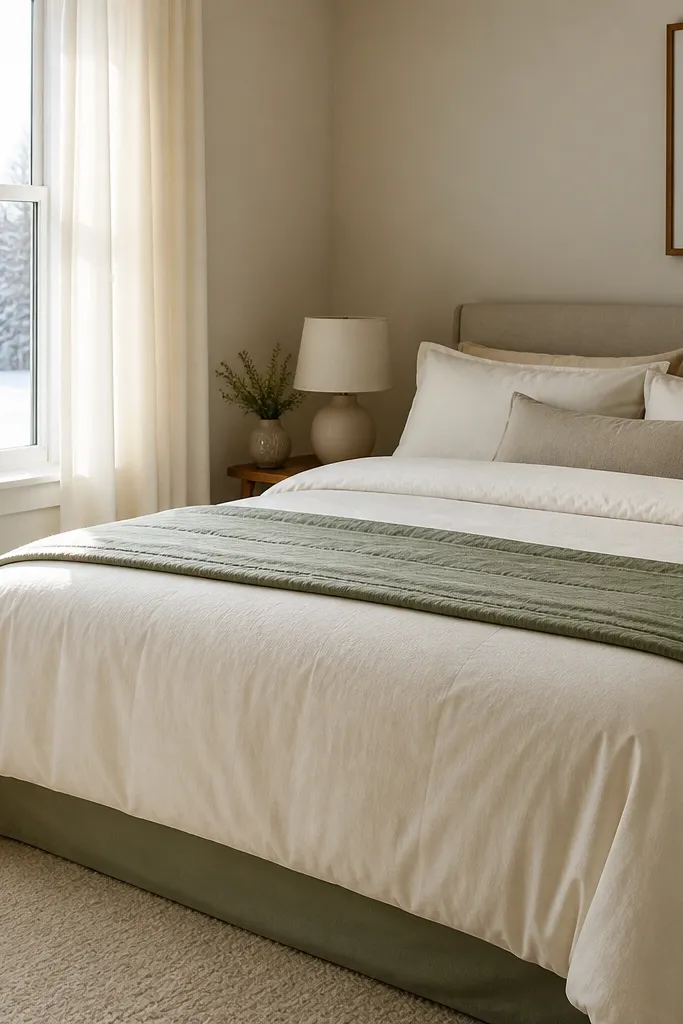
You get a playful color hit without painting the room. Keep the duvet cream or warm white, then add a fitted sheet or flat sheet in sage so a thin edge shows at the sides when the duvet is tucked. The result looks like intentional styling, not a mismatched set. This also makes small rooms feel less flat because the bed has depth. It works especially well in rooms with white walls and light wood floors, where one muted color can add warmth instantly.
Try thisUse a matte duvet cover and keep the sheet edge narrow (about 1-2 inches) for a clean look.
Choose a cream duvet and a sage fitted sheet that matches the tone of your other accents (curtains, pillow, or lamp). Tuck the duvet tightly and pull the fitted sheet edge so it shows evenly along both sides. Use two pillows: one cream solid and one sage or sage-patterned in a small scale. Cost is low if you already have a duvet; you mainly need the sheet and pillow covers.
Common mistakeDon’t let the sheet edge bunch; uneven edges look sloppy in photos.
8. Playful but grown-up wallpaper stripe on one wall behind the bed
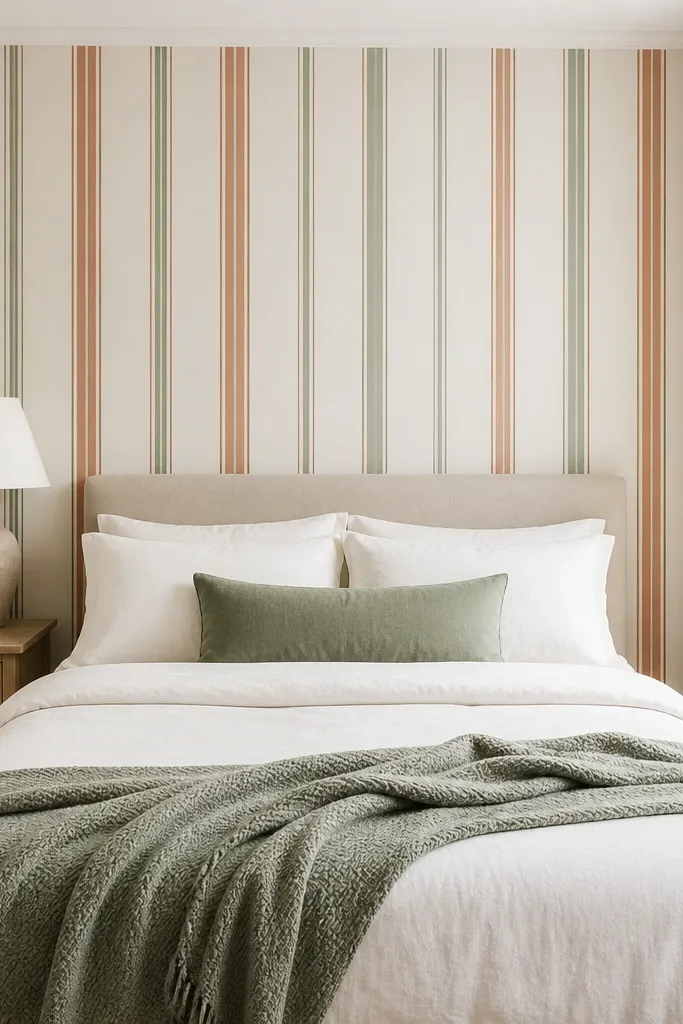
Wallpaper can feel childish in small rooms when it’s busy all over. Use it strategically: one wall behind the bed with a muted stripe direction that enhances height. Horizontal stripes can widen; vertical stripes can stretch. Pick a palette like cream with sage or terracotta lines so it reads soft and playful rather than loud. Keep everything else neutral: white curtains, light wood, and minimal art so the stripe wall becomes the star. This is the clearest way to make a small bedroom feel designed in a single step.
Try thisUse a stripe width that’s medium (not super thin) so it reads clearly from a few feet away.
Measure the wall width behind the bed and choose peel-and-stick or paste wallpaper panels that cover with about 10% extra. Apply so the stripe lines line up cleanly with the bed center, then trim around outlets if needed. Paint or keep the adjacent walls a warm white so the stripe wall doesn’t clash. Cost varies by the wallpaper price, but one wall is manageable and the visual impact is huge.
Common mistakeDon’t wallpaper multiple walls in a small room; the pattern multiplies the visual noise.
9. Bedside wall sconces with fabric shades
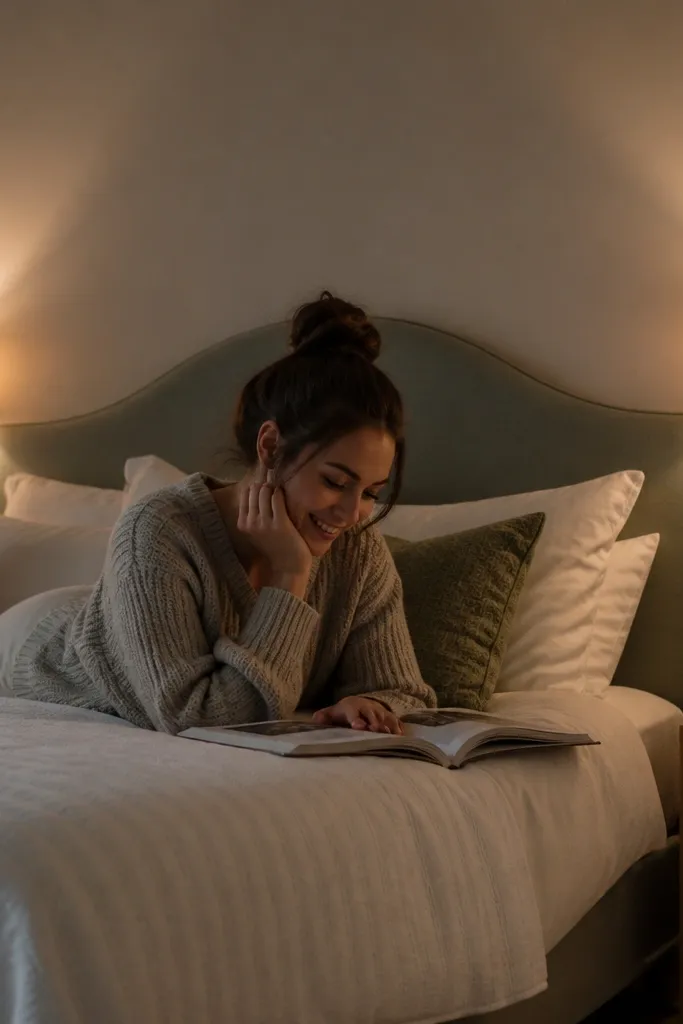
Wall lighting keeps the room airy and makes the bed feel like a hotel-style setup. Sconces with fabric shades soften the light and add a playful warmth that isn’t harsh. Mount them so the bottom of the shade lines up around eye level when seated, usually about 52-60 inches from the floor depending on your mattress height. Pair with a simple headboard and one or two wall accents so the sconces look intentional, not decorative clutter. This is ideal when you want nightstands but don’t have the space for full tables.
Decide whether you have existing wiring or you need plug-in sconces. Mount the sconces roughly 12-18 inches apart from the bed centerline, then adjust height so the light hits the bedside pillow area rather than the ceiling. Choose fabric shades in cream, oatmeal, or a muted pastel that matches your bedding palette. Cost depends on whether you do electrical work; plug-in versions are the fastest path.
Add a dimmer if you can. Warm dim light makes muted colors feel playful instead of flat.
Don’t mount sconces too high; overhead light makes the small room feel smaller and harsher.
10. Mirrored cabinet front for a playful light bounce
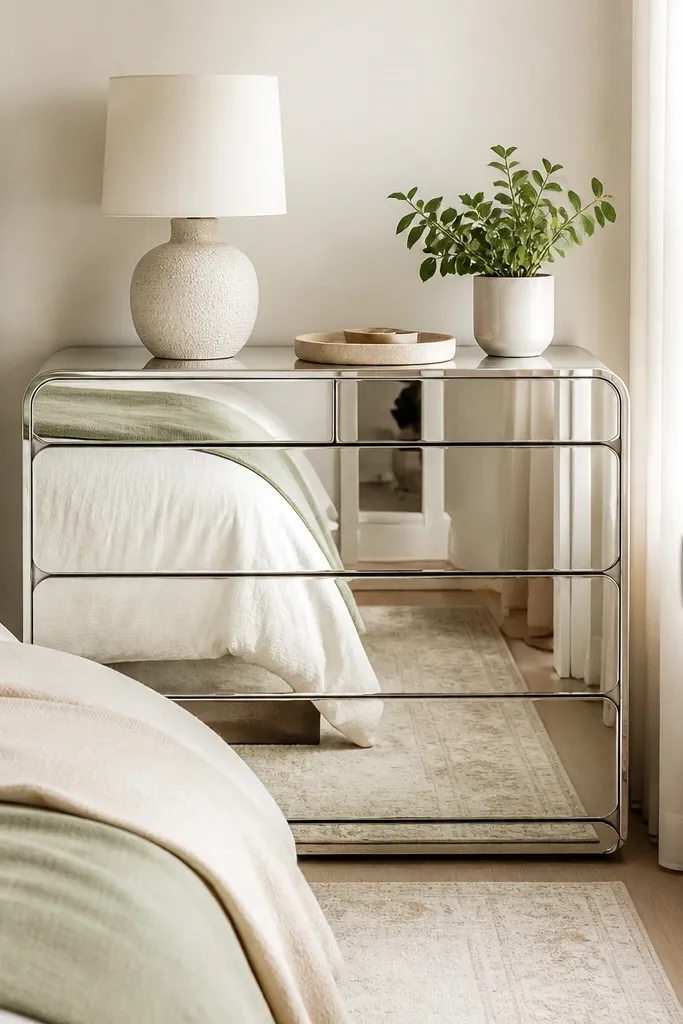
A small mirrored piece adds brightness without adding more objects. Choose a cabinet or dresser front with a subtle bevel or a rounded edge so it feels soft and playful. Keep the top surface minimal: one tray, one lamp, and one small plant or vase. The mirror bounces light around the room and helps neutral colors look warmer year-round. This works well in bedrooms that feel dim due to north-facing windows or tall buildings nearby.
Try thisUse warm bulbs (2700K) inside the lamp so the mirror reflects a cozy tone, not blue light.
Pick a piece that’s about 20-28 inches wide so it doesn’t dominate. Place it where it catches daylight, usually opposite a window or angled slightly toward the bed. Style with one tray (8-12 inches deep) and keep cords hidden. Expect a mid-range cost; secondhand mirrored furniture can be cheaper if the mirror is clean and not fogged.
Common mistakeDon’t place a mirrored piece directly behind the bed where it reflects your head at night.
11. Round mirror above a slim dresser with a color-pop frame
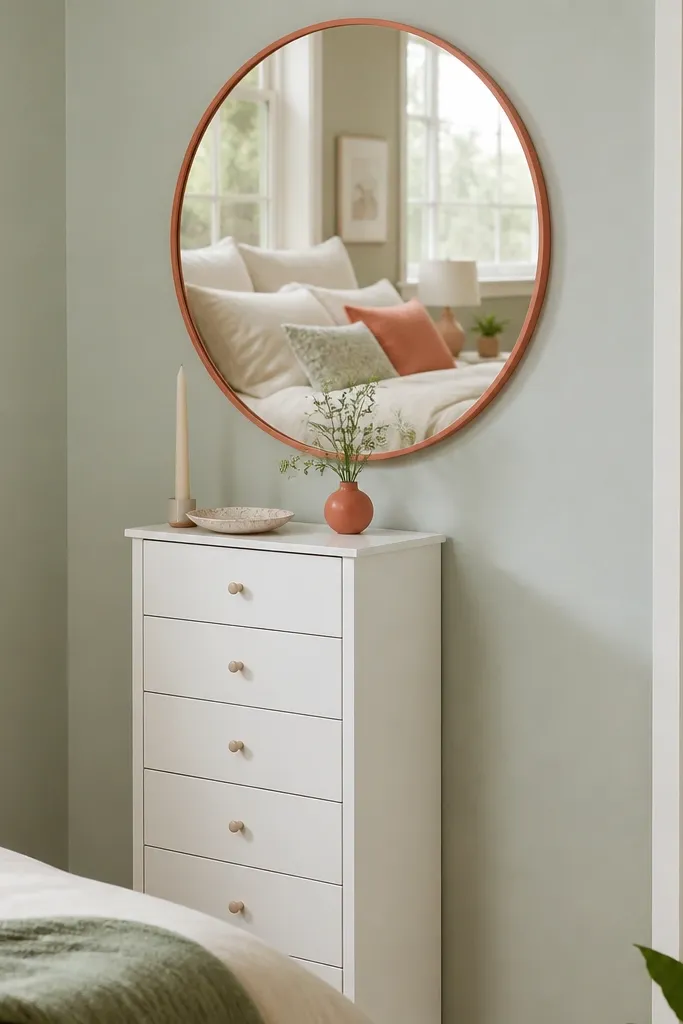
Round mirrors soften the sharp lines that make small rooms feel tight. Put one above a slim dresser so it reflects the bed or window and adds depth. Choose a frame color that repeats elsewhere — muted coral, sage, or soft terracotta — so the mirror reads playful, not random. Keep the dresser surface calm with a single long tray and a ceramic vase. This is a strong option for rooms where the bed already has enough visual weight from headboard and bedding.
Try thisWipe the mirror edges before styling; fingerprints show more on small reflective surfaces in photos.
Choose a mirror diameter around 24-30 inches for a small wall. Hang it so the center is about 60-64 inches from the floor, then measure the dresser width so the mirror doesn’t run wider than the furniture. Style the dresser with one tray and one object that matches the mirror frame color. Cost is manageable because you only need one statement piece.
Common mistakeDon’t hang it too low; a low mirror crowds the space visually.
12. Woven baskets under the bed with a fabric label loop
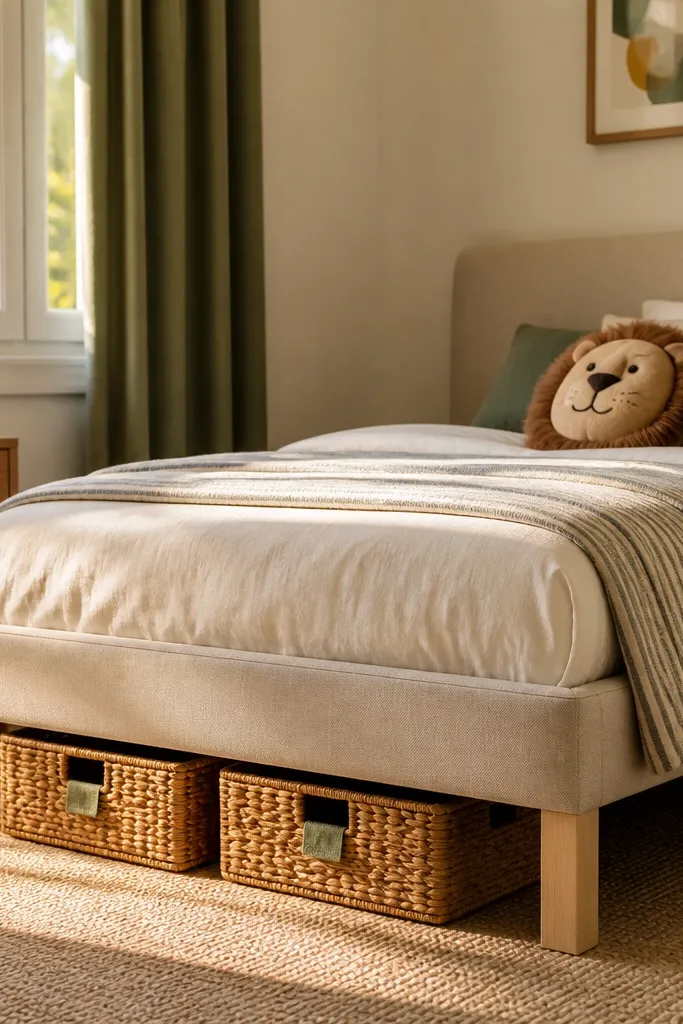
Playful rooms stay cute when clutter is controlled. Under-bed storage gives you hidden organization without buying bulky cabinets. Use woven baskets in natural tan or light gray, then add a small fabric loop label in one accent color like sage or terracotta. The label adds charm without looking childish because it’s small and tidy. This also helps year-round because you can rotate blankets, extra pillow covers, and seasonal items quickly.
Try thisStore only soft items under the bed — blankets, linens, and spare pillow covers — so the look stays neat.
Measure the clearance under the bed and choose baskets that slide in with about 1 inch of wiggle room. Use a fabric loop label that you sew or attach with a small adhesive tab; place it on the basket front so it’s visible when pulled out. Keep basket contents uniform in height so the bed stays flush. Cost is low, and it usually takes 30-60 minutes to set up.
Common mistakeDon’t stack odd shapes; lumpy storage makes the room look messy even if it’s “hidden.”
13. Chunky knit throw + bouclé pillow for winter warmth that still looks cute
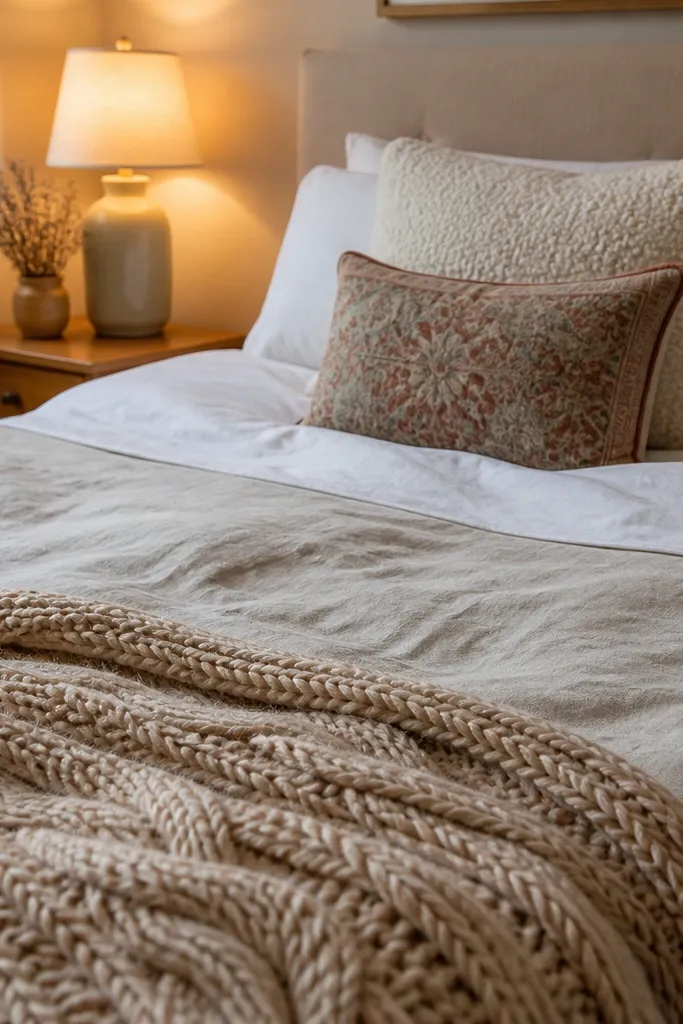
Texture is what makes small bedrooms feel good in winter without losing the playful vibe. Add a chunky knit throw in cream or oat and one bouclé pillow with a soft, rounded look. Keep the base bedding neutral and let the texture do the decorating. For the playful touch, include one small patterned pillow cover that matches your color palette — like sage mini-check or terracotta micro-stripe. This combo photographs well because the knit catches light and looks dimensional, even in low daylight.
Try thisShake the knit throw before placing it. It looks more intentional when the fibers sit evenly.
Use a fitted sheet and duvet in solid cream or warm white as your base. Drape the chunky knit throw at the foot of the bed and let it hang 6-10 inches down the side. Add the bouclé pillow in the center of your pillow stack, then finish with one patterned accent pillow. Cost is moderate but you’re buying fewer items; each texture piece reads as a hero.
Common mistakeDon’t mix three different textures that clash (like glossy satin plus rough knit). Keep it to knit + bouclé + one smooth base.
14. Patterned wallpaper peel on the inside of a closet door
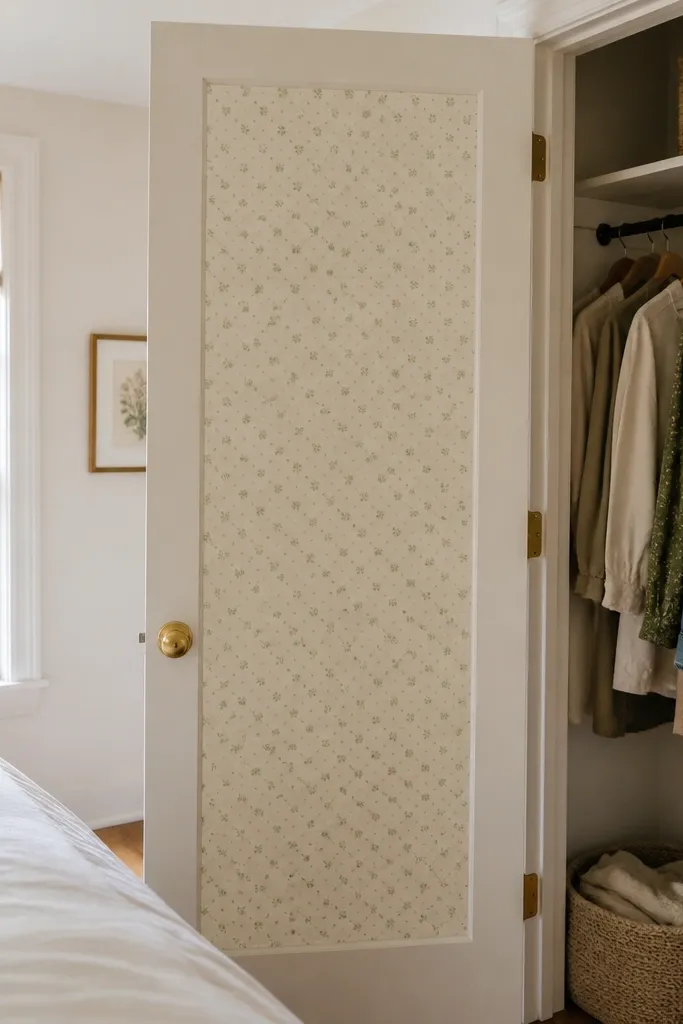
This is a clever way to add play without covering the whole room. Put a small-scale peel-and-stick pattern on the inside of your closet door so it only shows when you open it. Choose a pattern that reads mature in small scale: tiny florals, subtle polka dots, or thin stripes in cream and sage. The rest of the bedroom stays neutral, so the room looks grown-up while still feeling fun when you use the closet. It’s also year-round because the surprise stays the same no matter your bedding.
Try thisMatch the pattern colors to your pillow or throw so the closet detail feels connected, not random.
Open the closet and clean the door surface with a gentle degreaser so the adhesive sticks. Cut the wallpaper to the inside panel size, adding 1 inch extra for trimming. Apply slowly from the top, smoothing with a plastic tool to avoid bubbles, then trim edges with a craft knife. Cost is low because it’s a small area, and the install is usually under two hours.
Common mistakeDon’t choose a large bold pattern; inside-door viewing is close, so big motifs can feel too loud.
15. Small side desk as a vanity with a curved mirror and tray
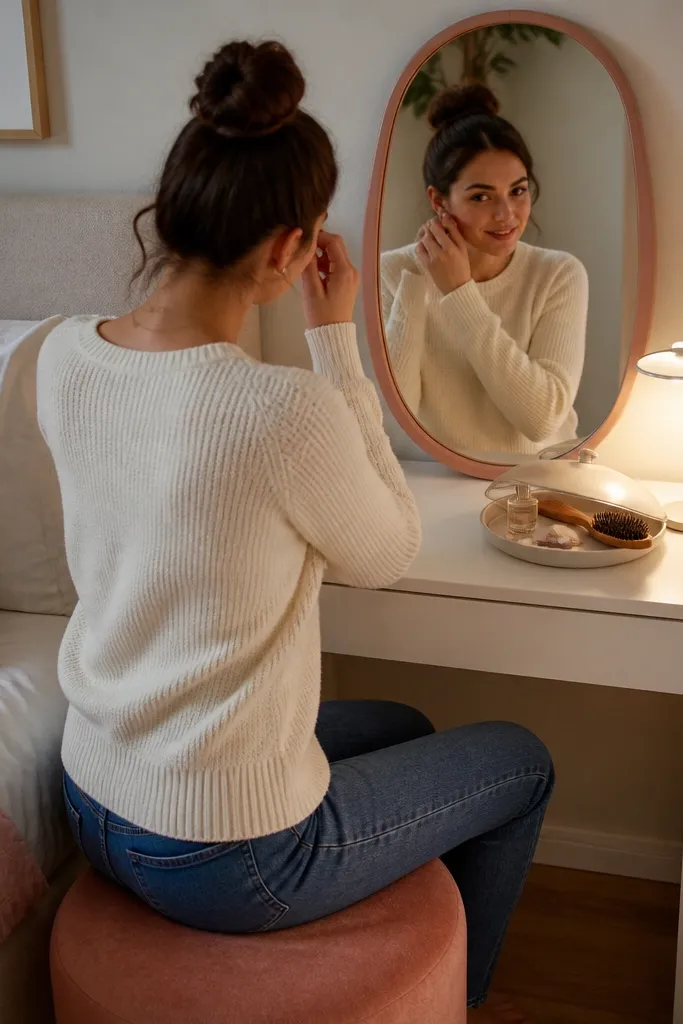
If your bedroom also works as a getting-ready space, a small vanity setup can look playful without being messy. Use a narrow desk (around 24-30 inches wide) and pair it with a curved or oval mirror frame in a soft color. Keep items off the surface with a lidded tray so the desk looks styled even when you’re not using it. Add one accent — a small ceramic dish or a pastel pen cup — that repeats a color from your bedding. This works for small rooms because the desk replaces the need for extra decor.
Try thisUse one metal finish across the mirror, lamp, and hardware so the desk reads designed.
Choose a desk height that matches your comfort level, usually around 28-30 inches tall. Place it near the bed where natural light hits, then mount the mirror so the bottom edge sits around 58-60 inches from the floor. Add a tray that covers most of the desk surface, then style with 3-5 items max. Cost is moderate; the mirror and tray do most of the heavy lifting visually.
Common mistakeDon’t leave a pile of products out; a small desk makes clutter obvious.
16. Playful bed canopy using sheer voile + tension rod
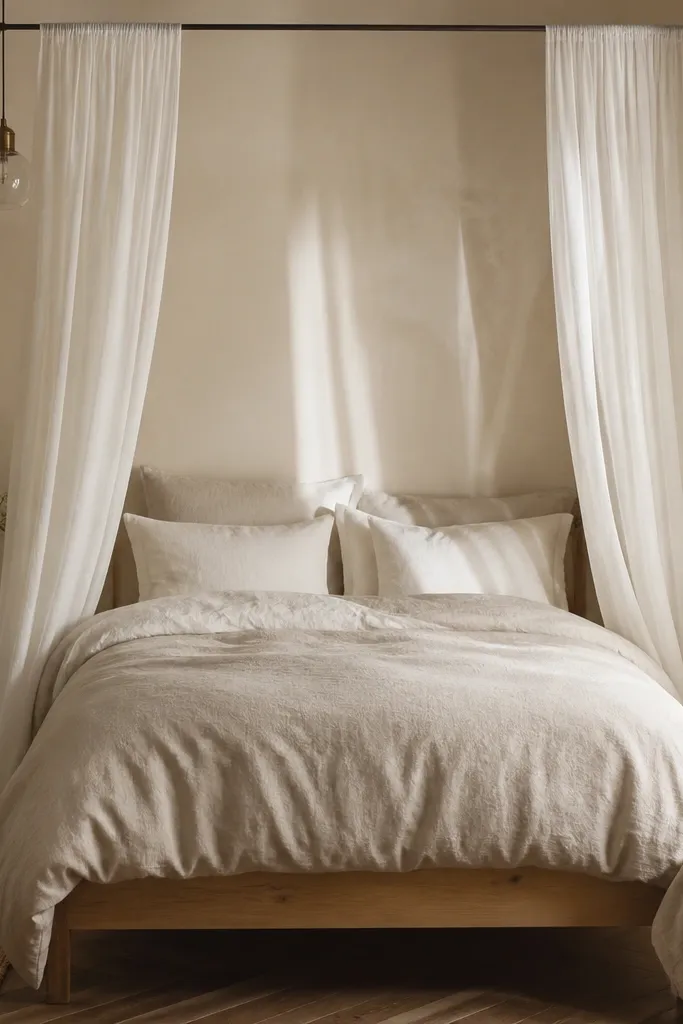
A sheer canopy instantly makes a small bedroom feel whimsical without looking like a kid’s room. Use a tension rod mounted above the bed frame and hang lightweight voile panels so they drape softly on both sides. Pick a warm white or pale pastel — keep it subtle, not rainbow. The canopy adds vertical movement and makes the bed feel like a special zone, which is exactly what small rooms need. This is also practical: the sheer fabric doesn’t block light the way heavy curtains do.
Try thisChoose a fabric with a little weight. Very thin sheers blow around and look messy.
Measure the bed width and install a tension rod that spans the mattress width plus a few inches. Hang two voile panels so they fall to about the top of the nightstand height or slightly above the bed frame. Secure the ends with small tiebacks or clips so the fabric doesn’t twist. Cost is low because you’re using lightweight fabric and hardware, and setup usually takes less than an hour.
Common mistakeDon’t use a thick patterned canopy fabric; it blocks light and shrinks the room.
17. Color-matched nightstand drawers with simple round pulls
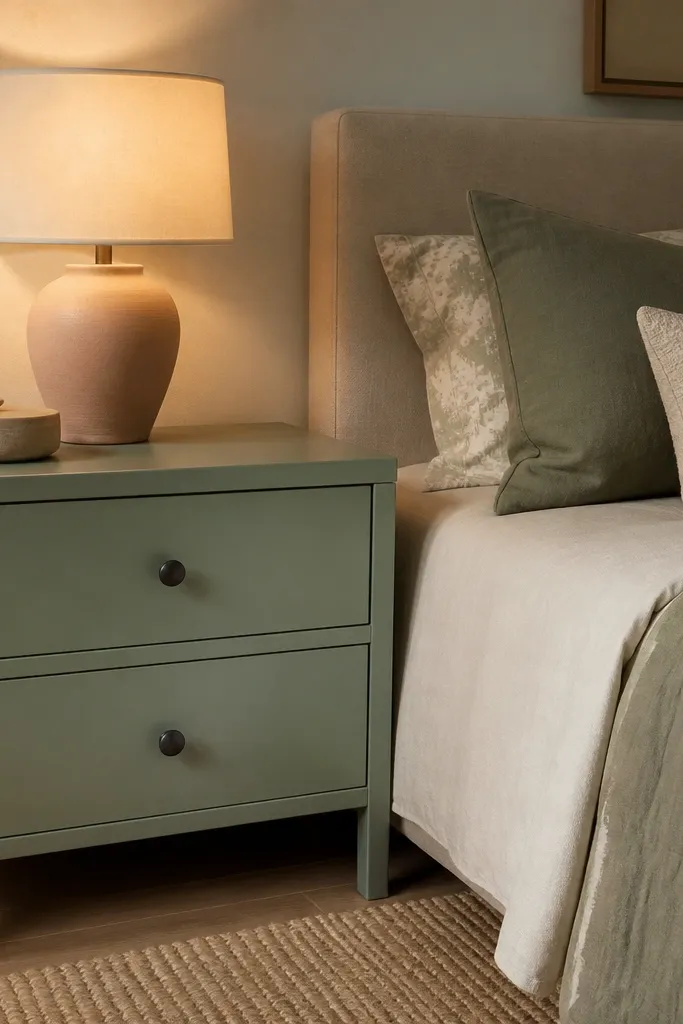
Changing nightstand details is a grown-up way to add play. Paint or choose nightstands in a soft tone that matches your accent color, then swap hardware for simple round pulls in brass or matte black. The color makes the bed area feel styled, while the hardware keeps it modern. Add a single tray on top and a lamp with a fabric shade. This works best when your room has neutral walls and you want a “cute” bedroom vibe without adding more patterns.
Try thisUse matte paint, not glossy. Matte reads softer and feels more calming in small rooms.
Pick a nightstand size that leaves at least 18 inches of walkway space around the bed. Paint the drawers or choose pre-finished furniture in a chalky finish; let it cure fully before reassembling. Replace pulls with round knobs sized to the drawer thickness and align them using a template. Expect moderate cost if you buy new furniture, or low cost if you refinish existing pieces and only replace hardware.
Common mistakeDon’t mix two hardware finishes; it makes the nightstand look unfinished.
18. Floating wall ledge for books with a single plant and framed quote card
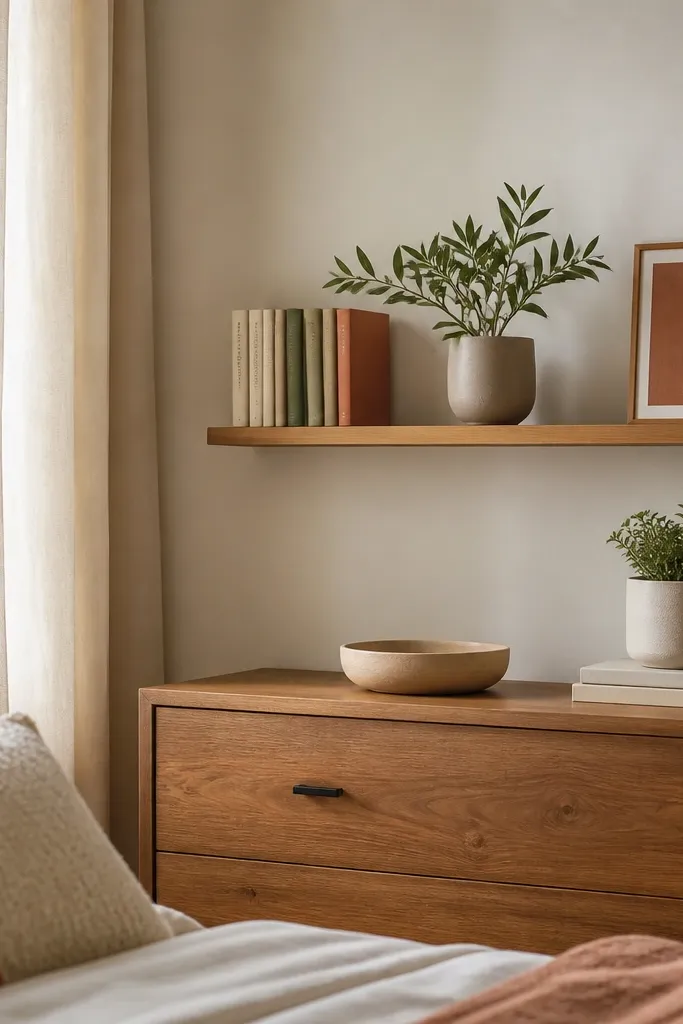
A floating ledge gives you a vertical decor moment without taking up floor space. Keep it narrow and style it like a vignette: a few books stacked, one small plant, and one framed card in your accent color. The play comes from color coordination and the tidy arrangement, not from piling on objects. Choose a ledge finish that matches your wood tones and keep the card typography simple. This is a great solution for small bedrooms where the wall above the bed feels blank but you don’t want another large frame.
Try thisUse book spines with muted colors. Bright covers can tip the room into childish territory.
Install a ledge about 10-12 inches deep and mount it so its top aligns with the center of your bed art or slightly above. Arrange 3-5 books in a gradient of heights, then add one plant in a small ceramic pot. Place a small framed card in the same palette as your pillows or throw, keeping the frame finish consistent with other metal accents. Cost is low to moderate and installation is quick.
Common mistakeDon’t put more than one plant; it makes the ledge look like a craft shelf.
19. Bed skirt in a soft pleated fabric for a playful, tailored look
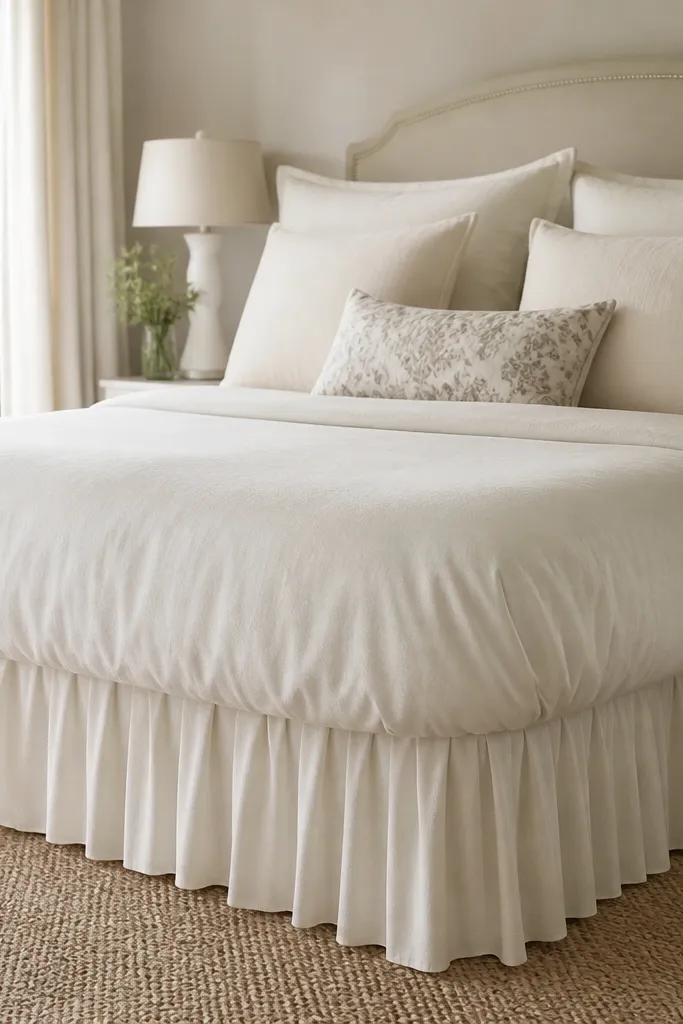
A bed skirt turns a simple bed into a styled setup, and it’s one of the easiest ways to add “cute” without adding childish decor. Choose a soft pleated fabric in cream, warm white, or a muted sage tone. The pleats add gentle movement and hide under-bed visual clutter, which matters a lot in small rooms. Pair it with a clean headboard and minimal patterns so the skirt reads tailored, not frilly. This option is especially good when your bed frame looks plain or when storage boxes peek out underneath.
Try thisPress the skirt pleats lightly before styling. Crisp pleats look intentional in photos.
Measure from the underside of the mattress to the floor and choose a skirt length that ends just above the floor so it doesn’t drag. Attach the skirt using a fitted mechanism or ties if it’s a custom sew; keep the pleats even across the width. Style bedding with one or two pillows and avoid extra bulky throws so the skirt remains the focus. Cost depends on whether you buy ready-made or have it tailored, but it’s usually a reasonable upgrade.
Common mistakeDon’t choose a bed skirt that’s too stiff; stiff fabric bunches and looks awkward in small spaces.