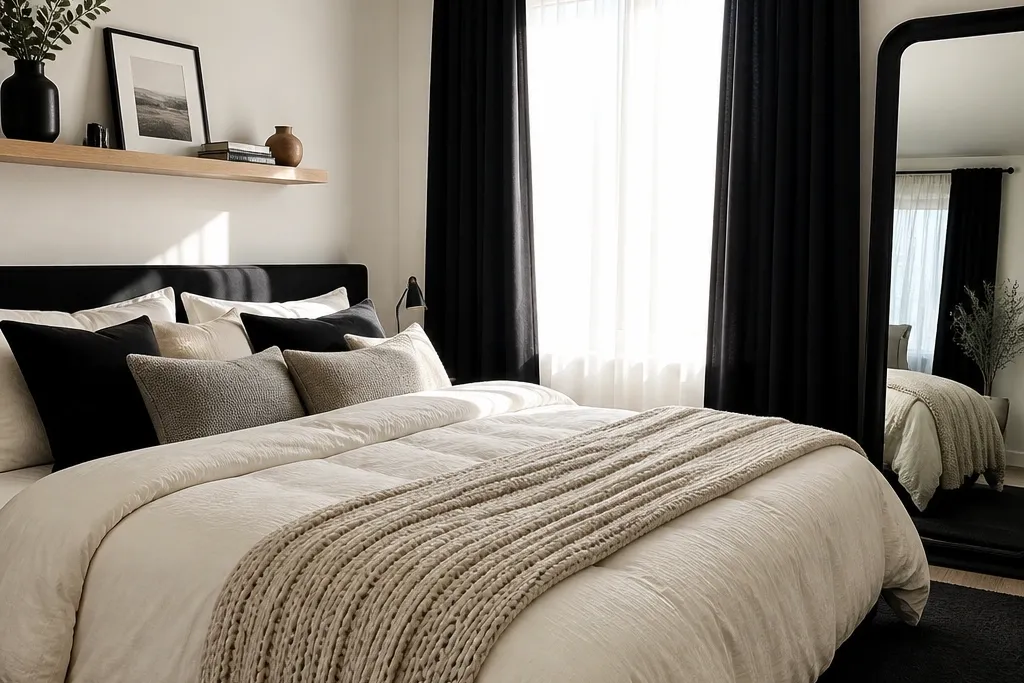
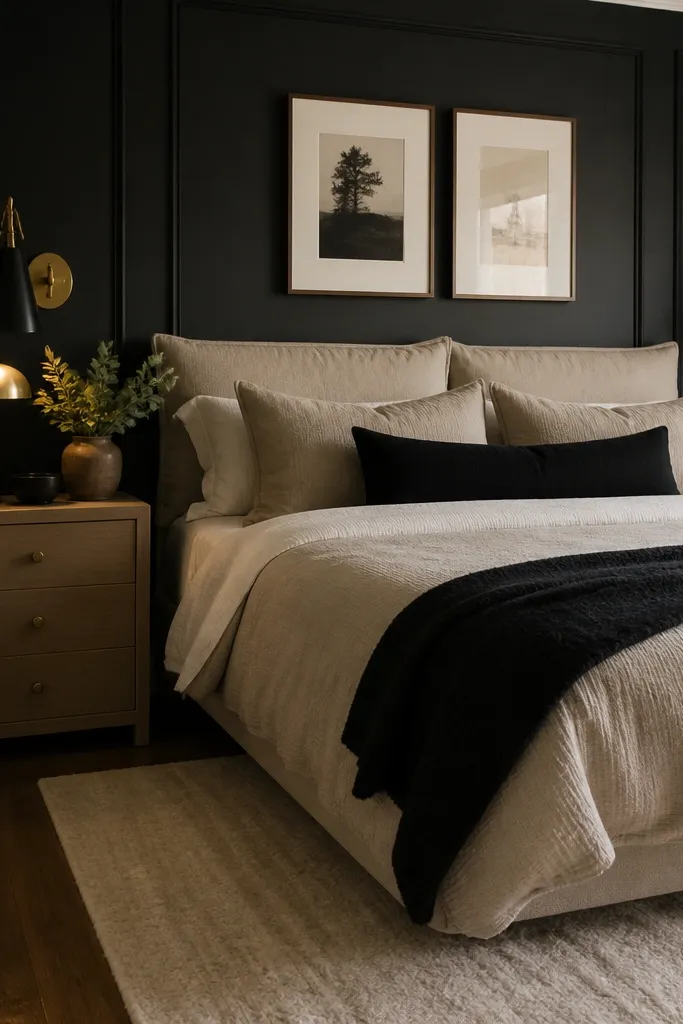
1. Peel-and-stick black grid wall behind the bed
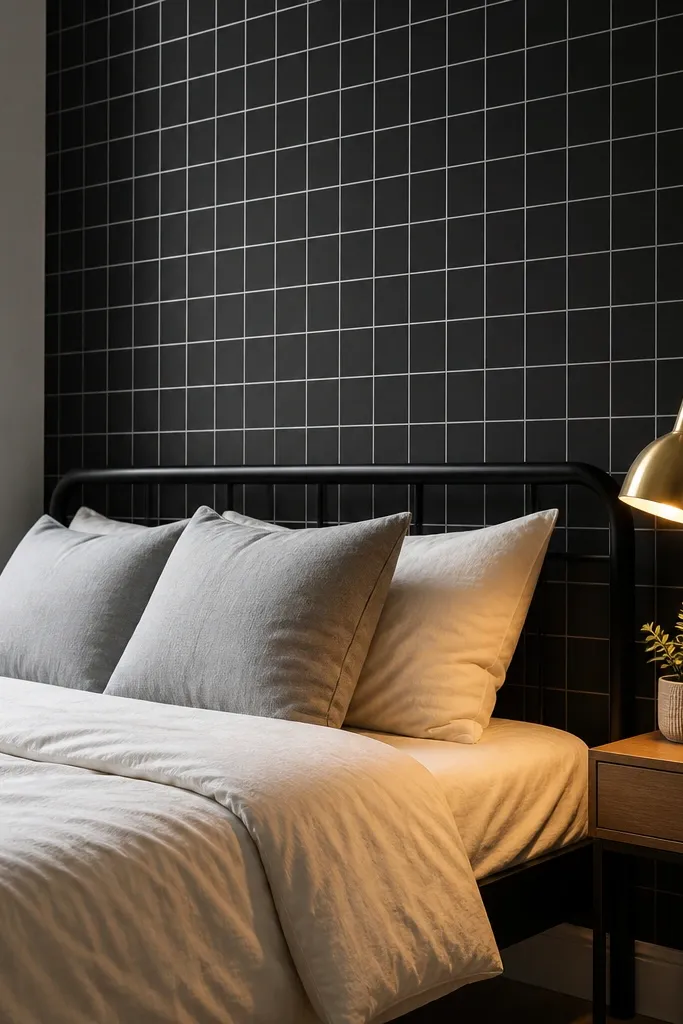
Go bold at the exact spot your eyes land first behind the bed and keep everything else lighter. Use a black grid pattern to create structure without painting, then keep the bed linens off-white or cream so the black reads graphic instead of oppressive. This works because the grid creates edges and rhythm, which makes black feel designed rather than heavy. Add warm wood nightstands or a light-toned dresser to keep the room bright, especially in apartments with flat overhead lighting.
Start by measuring the wall section behind the bed from mattress top height to about 8-12 inches above your headboard. Apply peel-and-stick black grid panels in horizontal rows, pressing firmly with a plastic smoothing tool so the pattern lines up cleanly. Then style the bed with cream sheets, a black or charcoal duvet cover, and one light throw pillow to break up the contrast. If the wall has outlet covers, cut around them with a craft knife for a tight fit. Cost is usually $25-80 for the panels depending on size and brand.
Use a medium-height headboard or a tall pillow stack so the black grid frames your bed instead of floating behind it.
Don’t put the grid across the whole room — one wall area is enough.
2. Black slat headboard look using a removable room divider panel
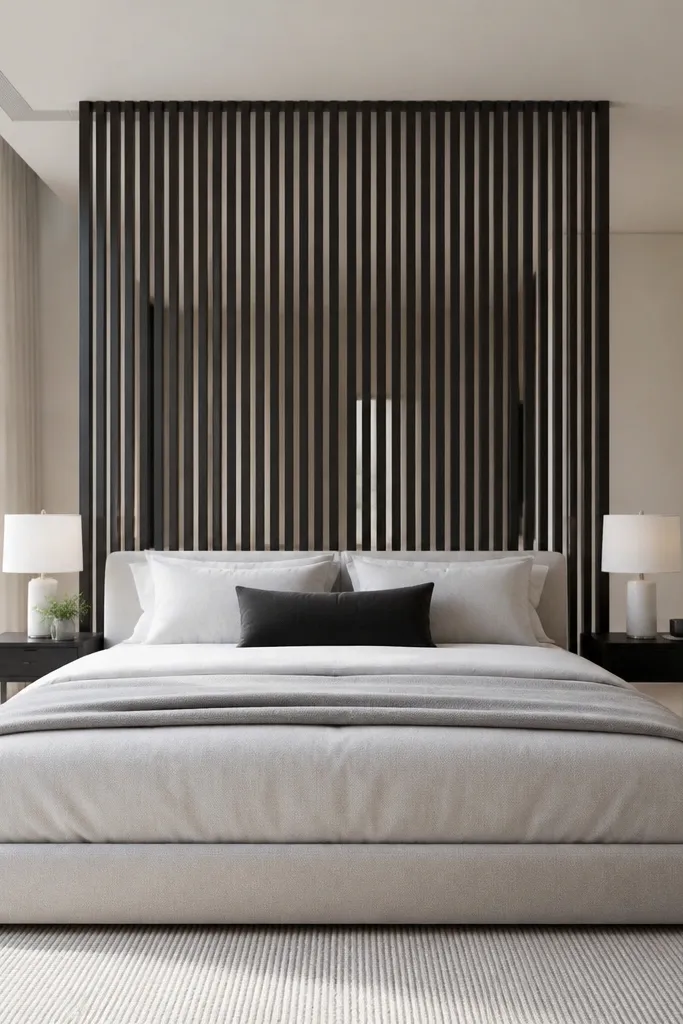
If you want the headboard impact without drilling, a black slat-style room divider panel gives you that clean, architectural look. The slats create vertical lines that make ceilings feel taller, which offsets black’s tendency to shrink visual space. Pair it with crisp white or light gray bedding so the black looks intentional and modern. This setup is great for renters because it changes the focal point while keeping walls untouched.
Choose a black slat divider panel that’s about the width of your bed plus 6-10 inches total for overhang on both sides. Place it behind the bed so the slats sit slightly above the top of your pillows, then anchor it using heavy furniture anchors or a tension method that doesn’t damage paint. Layer white sheets and a black duvet or black comforter, then add two white pillows and one textured dark pillow for depth. Finish with a light rug under the bed so black stays focused on the back panel. Expect about $60-180 depending on size and material.
Add a warm table lamp on one side with a light shade — it keeps black looking crisp instead of flat.
Don’t center the panel too low; it should frame the pillow area, not sit behind only the mattress.
3. Black velvet duvet + off-white textured throw for contrast
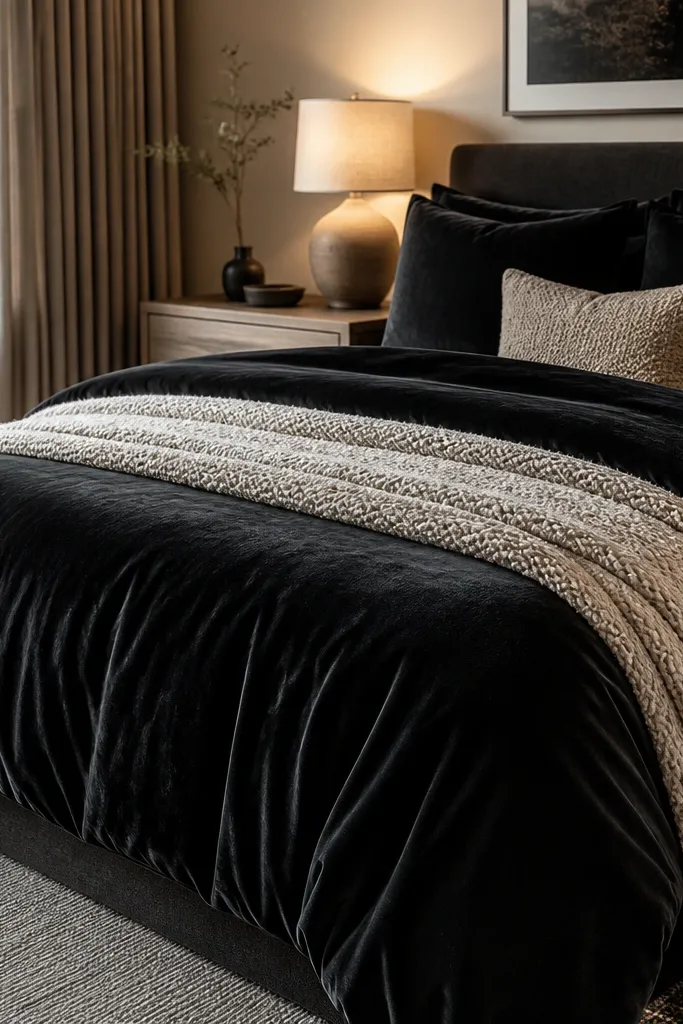
Buy or swap to a black duvet cover in velvet or velour with a matte sheen, then add a solid cream sheet set underneath for brightness at the edges. Drape an off-white throw across the foot of the bed so it covers at least the bottom third visually. Add two cream pillows and one dark pillow with a different texture (like faux fur or knit) to keep the look layered. Keep the pillow arrangement consistent: two large, two medium, and one accent. Cost is usually $70-200 depending on size and fabric.
A black velvet duvet is the fastest way to make a bedroom feel bold, but it can look muddy if you don’t add a bright texture partner. Use off-white or cream bedding alongside it, and add a chunky throw in oatmeal, bouclé, or a thick knit so the room gets tactile contrast. Velvet catches light in a soft way, which is exactly what you want to avoid a flat, dark look. This idea works especially well in bedrooms with limited natural light because the bedding does the styling work without needing wall changes.
Common mistakeDon’t use all-black pillows too; you need at least one light pillow to keep the bed from reading like a block.
Try thisChoose a duvet cover with a slightly lighter black tone (charcoal-black) to reduce the 'ink blot' effect under warm bulbs.
4. Matte black curtains with a light sheer layer behind
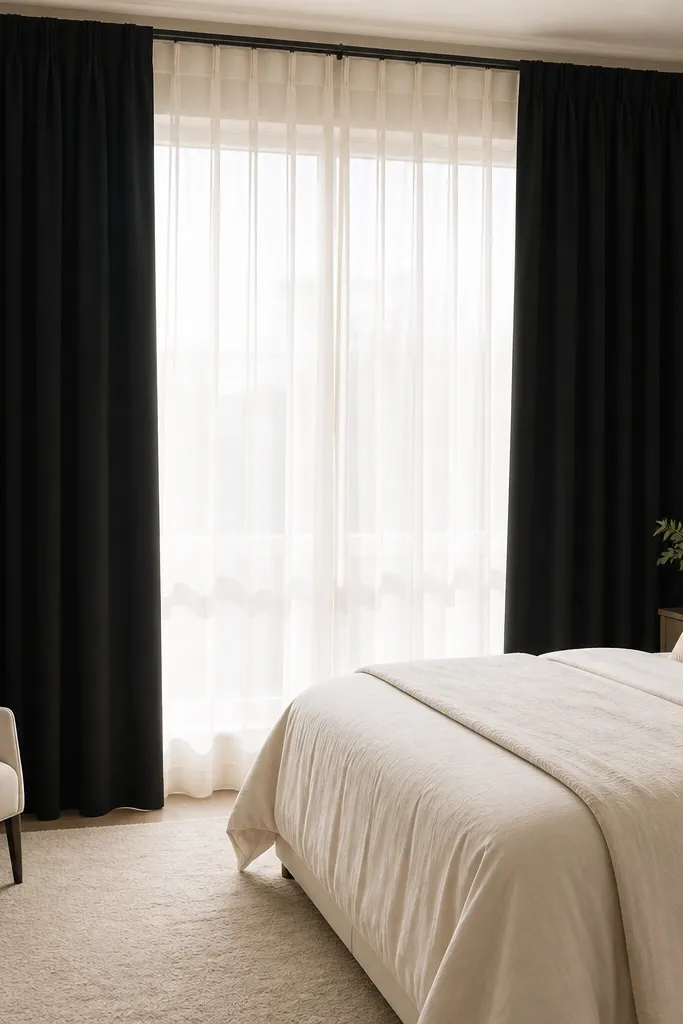
Measure the window width and add 1.5-2x fullness so the curtains stack nicely when open. Install an adjustable tension rod for the sheer first, then mount or tension the black curtains on a second rod slightly in front. Use curtain clips or rings that slide smoothly so you can pull both layers without fighting fabric. Aim for length that hits just above the floor or lightly puddles — a full puddle can drag the room down. Budget about $40-140 for two curtain panels and a sheer layer.
Black curtains can look fantastic without making the room dark if you layer them. Hang matte black blackout curtains as the outer layer, then keep a sheer in off-white or warm white behind them so daylight still diffuses through. This gives you the moody look when lights are off, but keeps daytime brightness when you open the sheer.
Common mistakeDon’t hang black curtains with no sheer layer if your room gets weak daylight.
Try thisUse warm-white bulbs (2700K) so the black reads rich, not greenish.
5. Black-and-cream striped rug to keep the floor bright
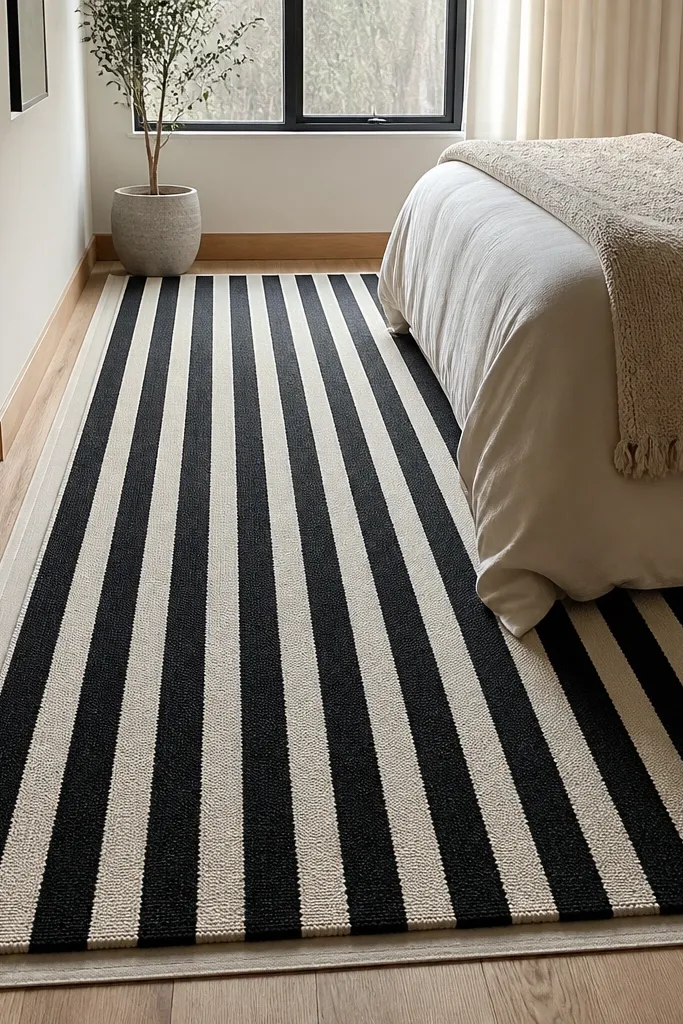
A rug is where you control the floor’s vibe, and that’s where black can either shrink the room or make it look bigger. A black-and-cream striped rug keeps the pattern crisp while the cream lines reflect light and visually extend the space. The stripes also guide the eye toward the bed, which makes the whole room feel more organized. Choose a low-pile rug if you have furniture with wheels or if the room feels clutter-prone.
Pick a rug size that places at least 8-12 inches of rug visible on both sides of the bed, not just under the mattress. Choose stripes that are thinner rather than super wide for a more modern look in small rooms. Lay the rug centered on the bed, then add a light dresser or nightstand with wood or white finishes to keep the contrast balanced. If your floor is slippery, add a non-slip rug pad that won’t damage finishes. Typical cost is $120-450 depending on size and material.
Match one accent color in the rug (cream) with bedding so the pattern doesn’t fight your sheets.
Don’t go with all-black rug in a small bedroom — the floor becomes a dark block.
6. Oversized black mirror with warm brass frame
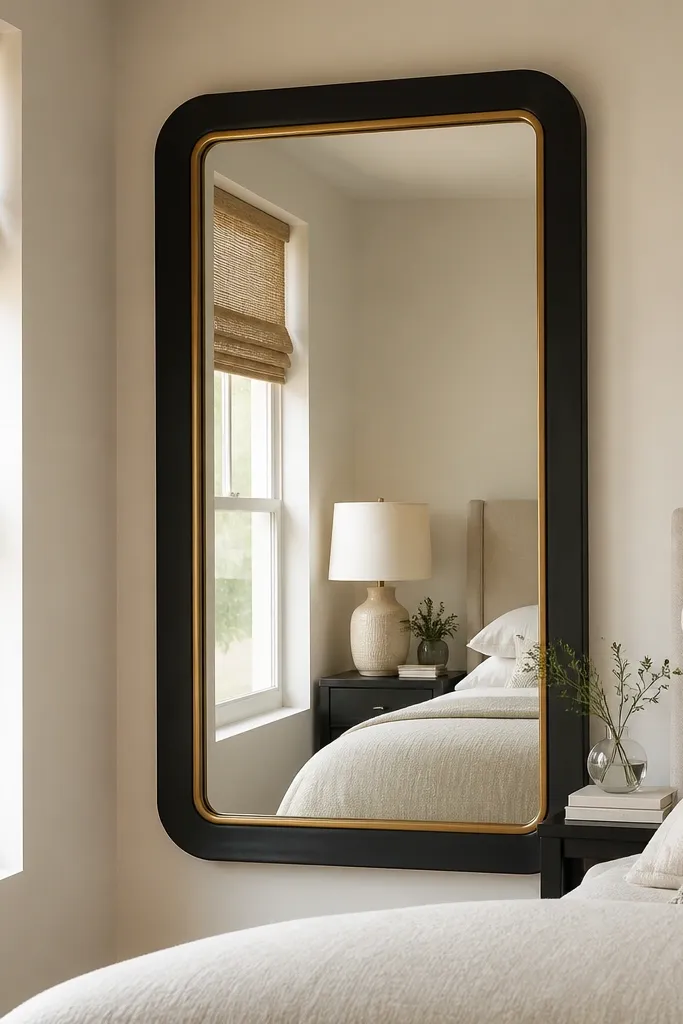
Select a mirror that’s at least the height of your headboard or roughly 24-36 inches wide for a standard bedroom. Use a proper wall-safe mounting method: either picture-hanging strips rated for the mirror’s weight or a secure bracket if you can place it in a stud. Position it so it reflects either the bed’s light bedding or a clean wall area, not your laundry basket. Style the shelf or surface nearby with one black tray or a single stack of books to keep the reflection tidy. Expect $80-300 depending on frame and size.
Choose an oversized mirror with a black frame and a warm brass edge detail so it reflects light and adds warmth. Place it where it catches window light or bounces light from a lamp, not where it reflects a cluttered corner. This makes the room feel larger and stops black accents from absorbing all brightness. It also photographs well because the mirror creates depth behind the bed.
Common mistakeDon’t hang the mirror too high or too low; it should sit at eye level when you stand next to the bed.
Try thisUse a lamp with a light shade near the mirror for a 'soft spotlight' effect at night.
7. Black metal bed frame + light duvet and pillows
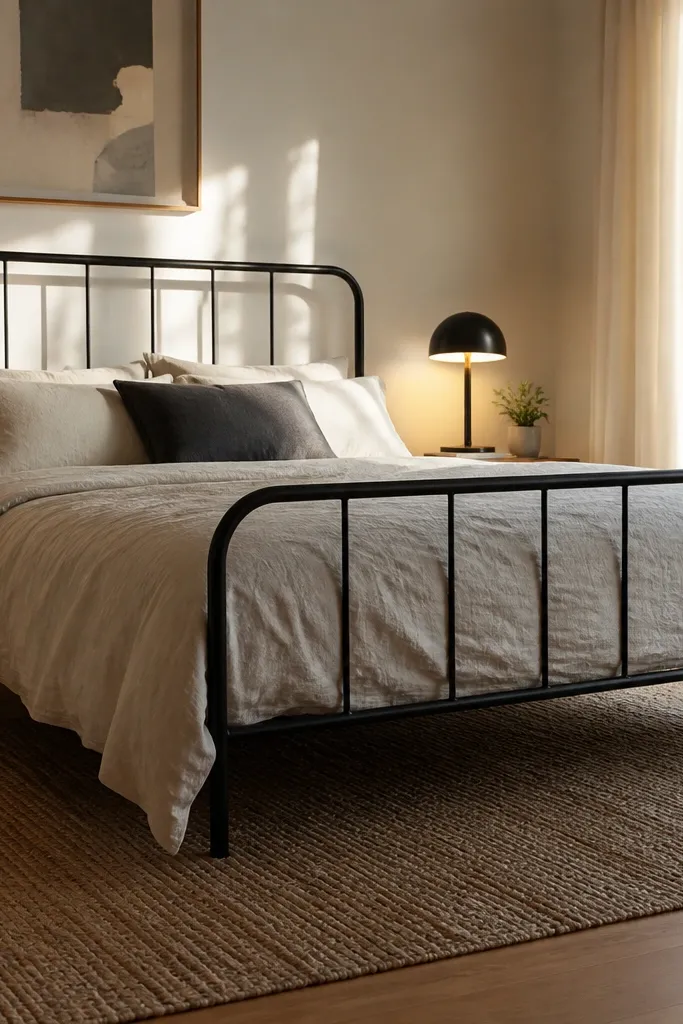
Choose a bed frame with a matte black finish and a simple design — thin bars look sharper than thick chunky scrollwork. Match the frame width to your mattress, then center it so the bars are symmetrical against the wall. Style with a light duvet cover (white, cream, or pale gray) and two light pillowcases, then add one black accent pillow with a different texture like a woven cover. Keep the bed skirt minimal or skip it so black stays airy. Cost is usually $200-700 depending on size and build.
A black metal bed frame is clean and graphic, and it’s less visually heavy than a dark upholstered headboard. The key is to keep the bedding light and airy so the frame reads as structure rather than a dark mass. Use a light duvet cover and add one charcoal or black accent pillow for contrast. This is a strong renter-friendly choice because you can buy a frame that fits your mattress and swap it later without committing to wall changes.
Common mistakeDon’t pair a black frame with dark bedding — the room will read heavier than you want.
Try thisAdd a light-colored bedside rug or runner so the black frame has a bright landing point.
8. Black gallery wall using removable poster frames
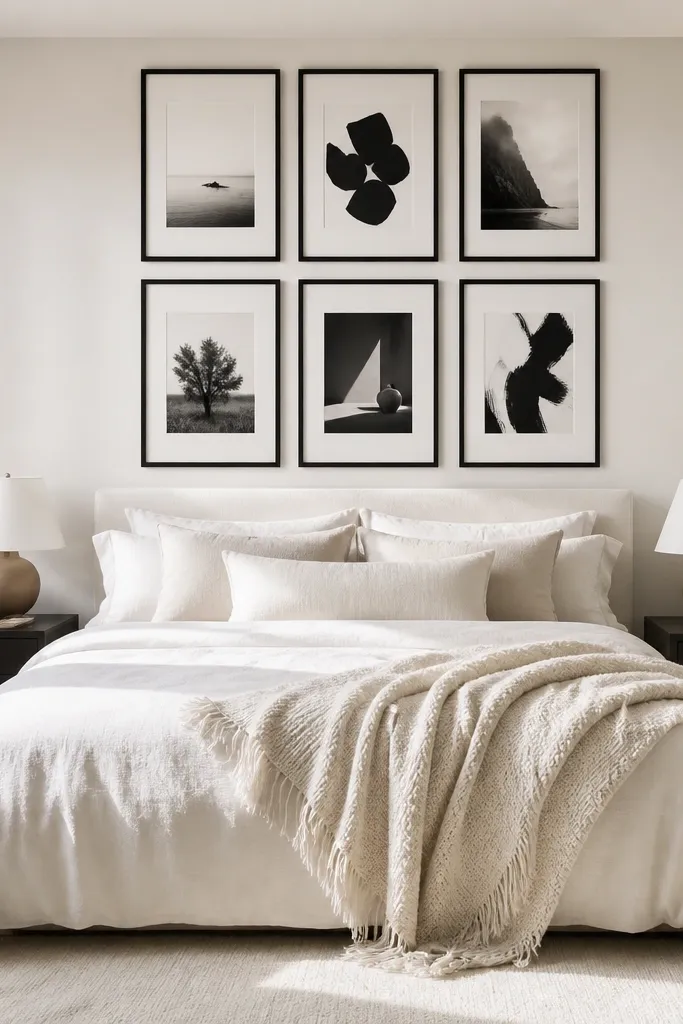
Measure the wall above the bed and pick a grid size that covers about 60-75% of the headboard width. Use removable poster frames or frame hooks with adhesive backing rated for the frame weight. Arrange the frames on the floor first to lock in spacing, then transfer the layout with a light pencil guide. Stick with a consistent mat color (off-white or warm white) and vary only the print size. Budget about $25-120 per frame depending on whether you go for ready-made prints or framed art.
A black gallery wall gives you bold impact without painting, and it’s easy to adjust as your taste changes. Use black frames with off-white mats so the artwork doesn’t disappear into the wall color. Keep the layout tight: either a symmetrical grid over the headboard area or a slightly offset salon arrangement. This works well for men’s bedrooms because you can pick typography, monochrome photography, or geometric prints that look sharp in black and white.
Common mistakeDon’t mix too many mat colors; it kills the clean black-and-white look.
Try thisUse one print with a lot of negative space — it keeps the wall from feeling like a busy black block.
9. Black bedside styling with a light wood floating shelf
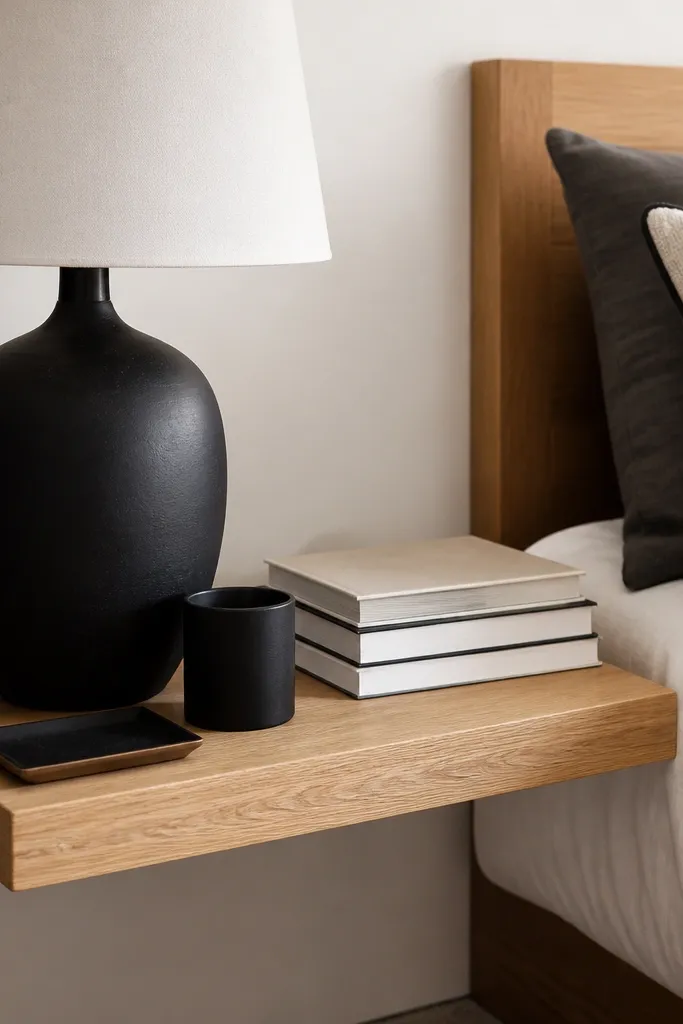
Pick a shelf length around 18-30 inches depending on your nightstand space, then place it above where you’d normally set a lamp. Choose an adhesive or drill-on option based on your wall type, but keep the shelf weight rating in mind. Style each side with one taller item (lamp or vase), one flat tray, and one small accent so the symmetry looks intentional. Keep black objects matte to reduce glare, and use warm wood or cream textiles nearby for balance. Cost ranges from $40-200 for shelves plus decor.
Instead of darkening the whole room, style the surfaces around the bed. A light wood floating shelf with black decor items gives you a high-contrast look that still feels bright. Keep the shelf items minimal: a black lamp base or matte black candle holder, a tray, and one stack of books. The wood warms the black, while the clean shelf lines make the room feel organized. This is renter-friendly if you use shelves designed for easy mounting or adhesive shelf systems rated for weight.
Common mistakeDon’t overload with small items; the shelf should read as a clean vignette.
Try thisAdd a small black picture frame or a black clock to tie the shelf to the rest of the room’s black accents.
10. Black bedding with a white duvet cover border trick
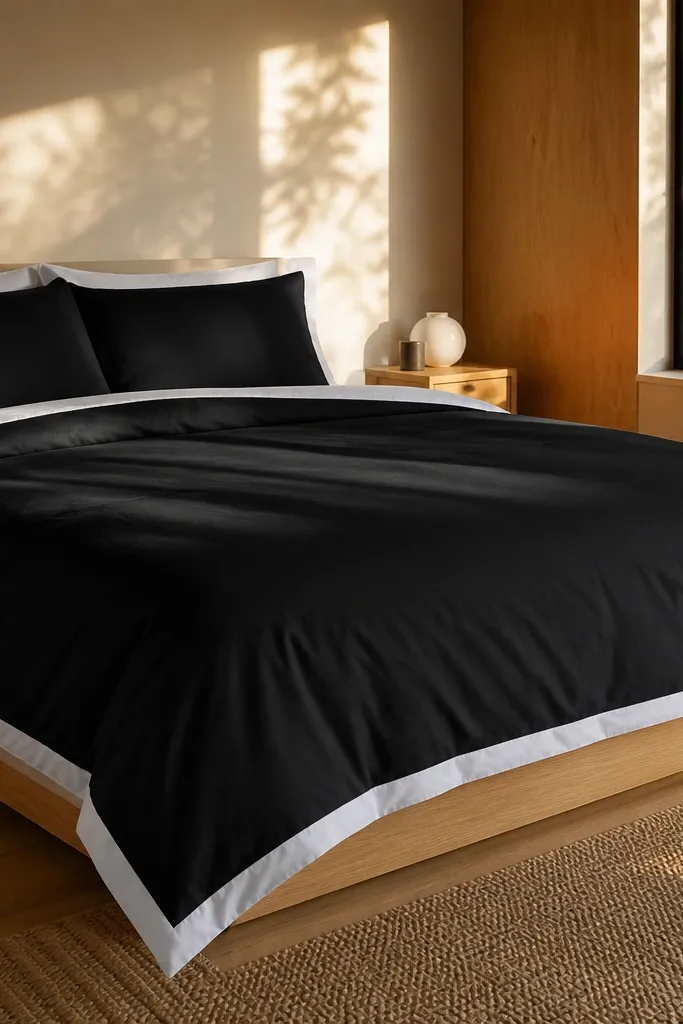
You can keep the bold black look while avoiding the dark, swallowed feeling by using a white border effect. The trick is to choose a black duvet cover that has a white edge band, or layer a white duvet insert under a black cover so a clean white strip shows around the top and sides. That border makes the bed look taller and brighter, and it frames the black in a way that looks styled rather than heavy. Pair with cream pillows and a light throw for a crisp finish.
Look for a duvet cover labeled with an edge band or contrast trim in white, or buy a white duvet insert and cover it with a black duvet cover that opens enough to show trim. After making the bed, tug the duvet so the white border is even on all sides and visible from the doorway. Add two cream pillowcases and one black pillow with a different fabric texture like cotton twill or rib knit. Finish with a light throw folded at the foot so it shows at least 12 inches. Plan $80-250 for bedding depending on material and size.
Press the duvet seams flat with your hands before styling — the border needs clean lines to read bright.
Don’t let the white border shrink unevenly on one side; that makes the bed look sloppy.
11. Black and white accordion pleat room divider for privacy + light
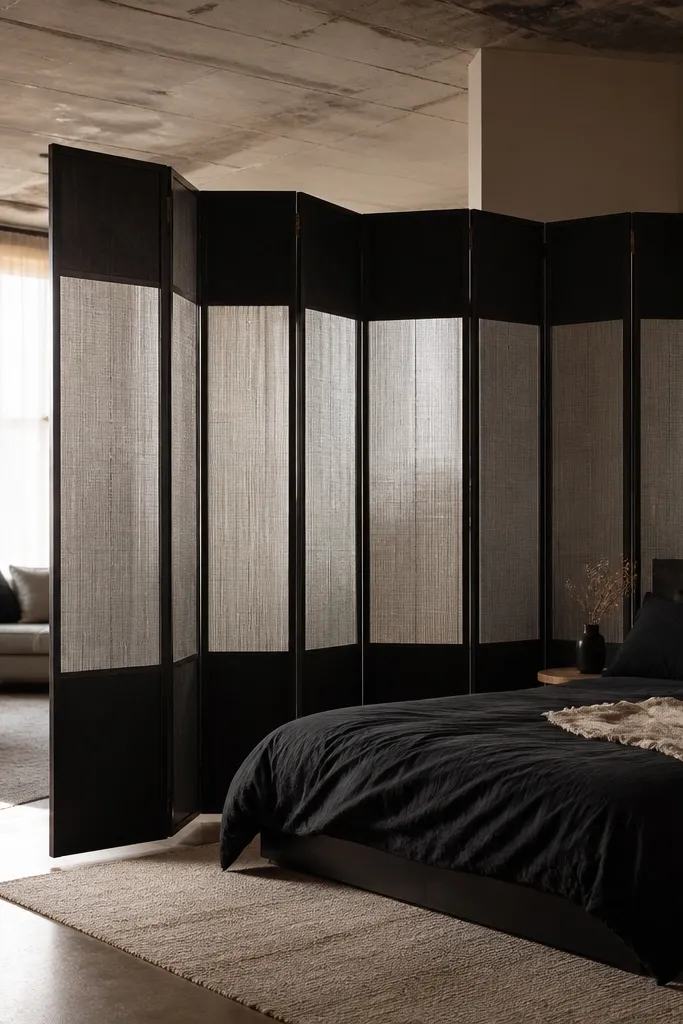
Pick a divider width close to the space you want to define, usually 48-72 inches depending on room size. Stand it near the bed so it covers the visual gap between the bed and a doorway or a mirrored closet area. Secure it with anti-slip pads on the floor so it doesn’t slide when you move around. Style the bed with black accents but keep the main linens light — aim for at least 70% light bedding. Cost is usually $60-180.
If your bedroom layout is awkward or you share a space, use an accordion-style divider to add black structure while keeping the room light. Choose a divider that mixes black panels with lighter fabric or a translucent light panel so light still moves around it. Place it at an angle near the bed to create a visual boundary without closing the room in. This idea works well for renters because it’s movable and doesn’t require any wall changes, and it photographs well because it creates layered depth.
Common mistakeDon’t choose a fully black, opaque divider if your room has limited daylight.
Try thisChoose a divider with a matte finish so it doesn’t create harsh glare in photos.
12. Black upholstered bench at the foot with cream throw
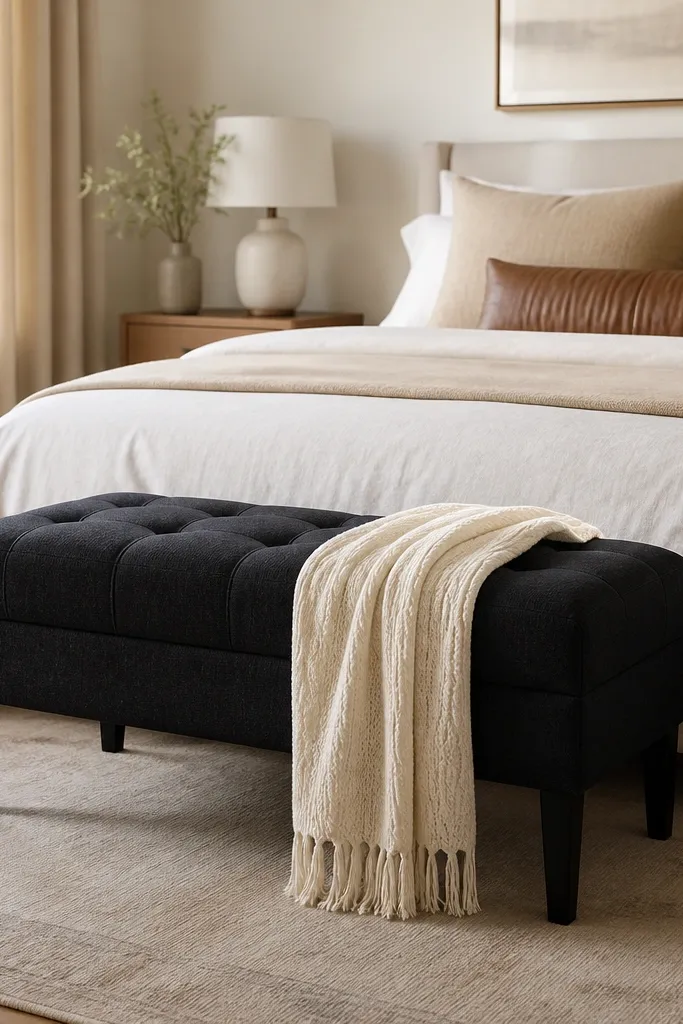
Choose a bench length around 35-45 inches for a queen bed, and place it centered at the foot with 2-4 inches clearance from the rug edge. Add a washable cream throw or a light knit blanket folded over the bench top so it reads in photos. Use one black accent pillow nearby or a black tray on a nightstand so the bench ties into the room’s black theme. If you’re renting, make sure the bench is stable and doesn’t scratch floors — use felt pads. Budget about $120-400 depending on fabric and brand.
A black upholstered bench adds bold style where it counts the foot of the bed without covering your walls or curtains. The upholstery softens black so it doesn’t feel like hard decor. Keep the bench compact and pair it with a cream throw and light rug so the room stays bright and grounded.
Common mistakeDon’t put a tall, bulky bench in a small room — it eats floor space and makes black feel heavier.
Try thisPick a bench fabric with a tight weave so it looks smooth instead of shiny under overhead lights.
13. Black nightstand with clear acrylic drawer pulls
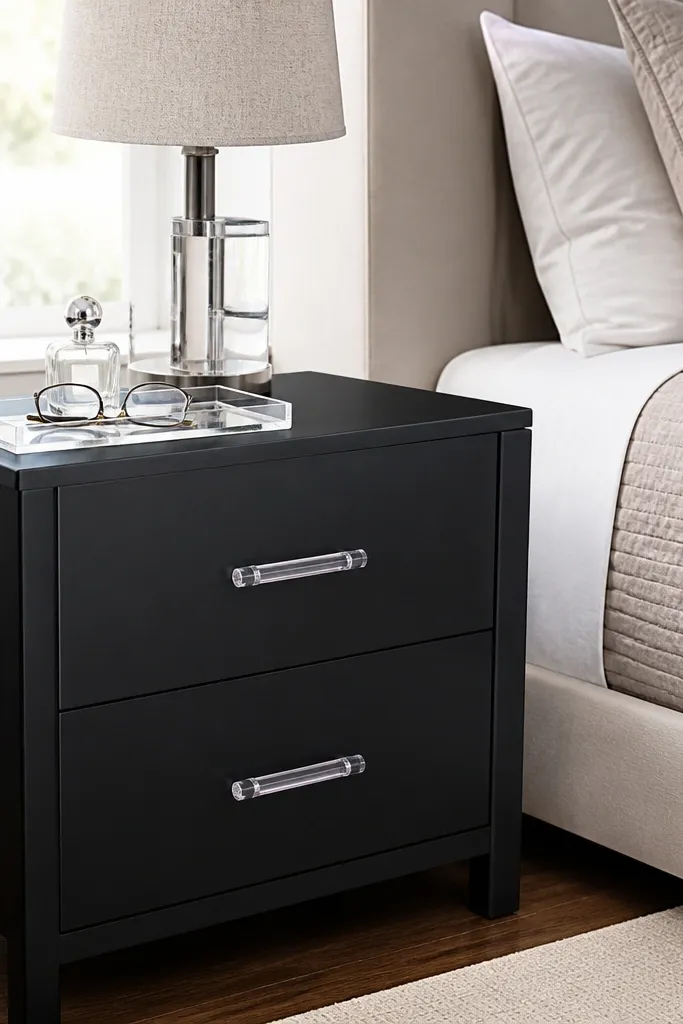
If you’re replacing hardware, measure the drawer pull hole spacing first, then buy acrylic pulls in the same size so they screw in cleanly. If you’re buying a nightstand, look for a matte black finish and a simple design with flat drawer fronts. Style the top with one clear tray, one black item (like a matte candle jar), and a light lamp. Place the nightstand so there’s at least 18 inches of walkway space next to the bed. Cost is $60-250 for hardware plus $150-600 for a nightstand.
You can make black feel lighter by mixing in clear elements. A black nightstand looks sharp, but the room can feel dense if everything is opaque. Swap or choose hardware with clear acrylic pulls, then add a light lamp shade and a small clear glass tray for your essentials. The clear hardware catches light and visually reduces weight, which keeps the bedroom from turning dark. This is perfect if you want black furniture without the heavy, closed-in look.
Common mistakeDon’t add too many black items on the nightstand — one black surface is enough.
Try thisUse a warm bulb and keep the lamp shade light; it makes the acrylic look intentional, not cheap.
14. Black-and-cream duvet cover with contrasting pillow cases only

This is a clean styling approach: keep the duvet black, then brighten the room using only pillow contrast and a lighter throw. It works because the bed is the largest object in the room, and pillows sit at eye level where light contrast matters most. Choose cream or off-white pillowcases and one black accent pillow to keep the look bold without turning the whole bed into a dark block. Add one small light pattern on the throw, not a busy mix, so the room still reads sleek.
Start with a black duvet cover in a fabric with a soft matte look (cotton twill, sateen, or brushed microfiber). Dress the bed with cream pillowcases first, then add one black accent pillow with a different texture like corduroy or rib knit. Fold a light throw at the foot so it shows a clean rectangle when viewed from the door. Keep the sheet color light so the bed edges look bright. Expect $70-200 for bedding depending on fabric and size.
Stick to two tones (black and cream) and one texture change so the contrast looks designed in photos.
Don’t add three or four different pillow patterns; it makes black feel chaotic.
15. Charcoal blackout shade plus light roller blind behind it
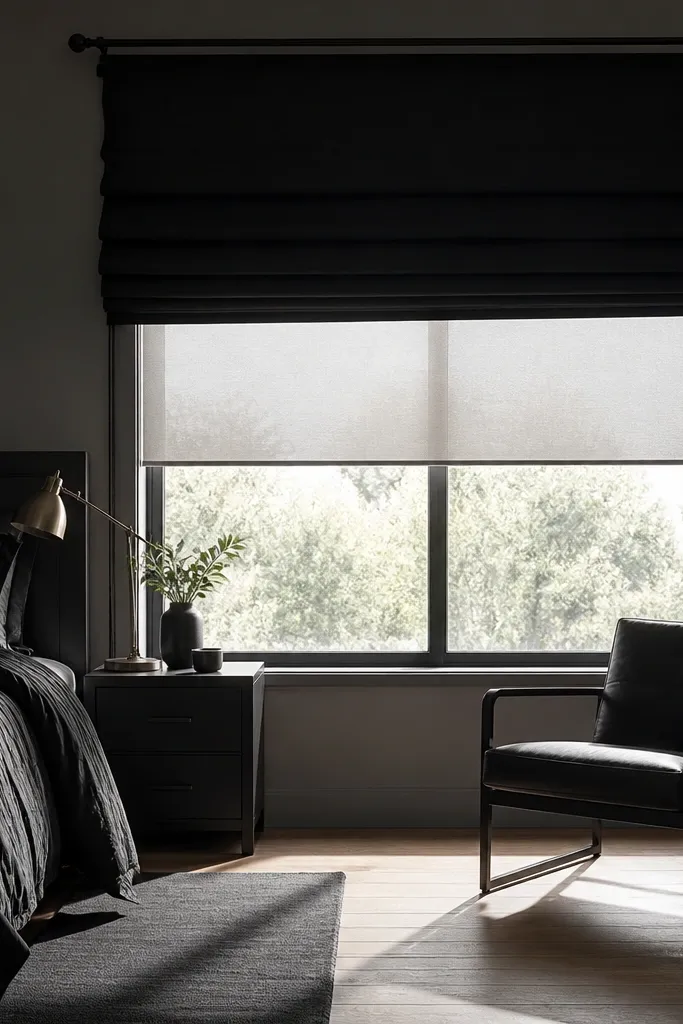
For renters who want darkness for sleeping but brightness during the day, use layered window coverings. Put a charcoal or black blackout shade on the main rod position and keep a light roller blind or sheer behind it. When you pull the blackout shade down, the room goes cozy. When you lift it, the light layer still filters daylight so the black doesn’t dominate. This setup looks sharp because the window becomes a framed focal point instead of a random curtain mess.
Measure the window inside casing and buy blackout shades sized to the glass area, not the wall. Install the blackout shade first, then add a second light roller blind using its own brackets or an inside-mount kit. Keep both layers aligned so the seam lines don’t look crooked. Use warm bulbs and a lamp on the opposite side of the window so the black layer reads flattering rather than heavy. Typical cost is $60-250 for shades depending on width.
Choose charcoal over pure black if your room has limited daylight; it keeps the look bold without looking like a cave.
Don’t stack layers that have busy patterns; the window will look visually noisy.
16. Black storage dresser styling with light linen drawer inserts
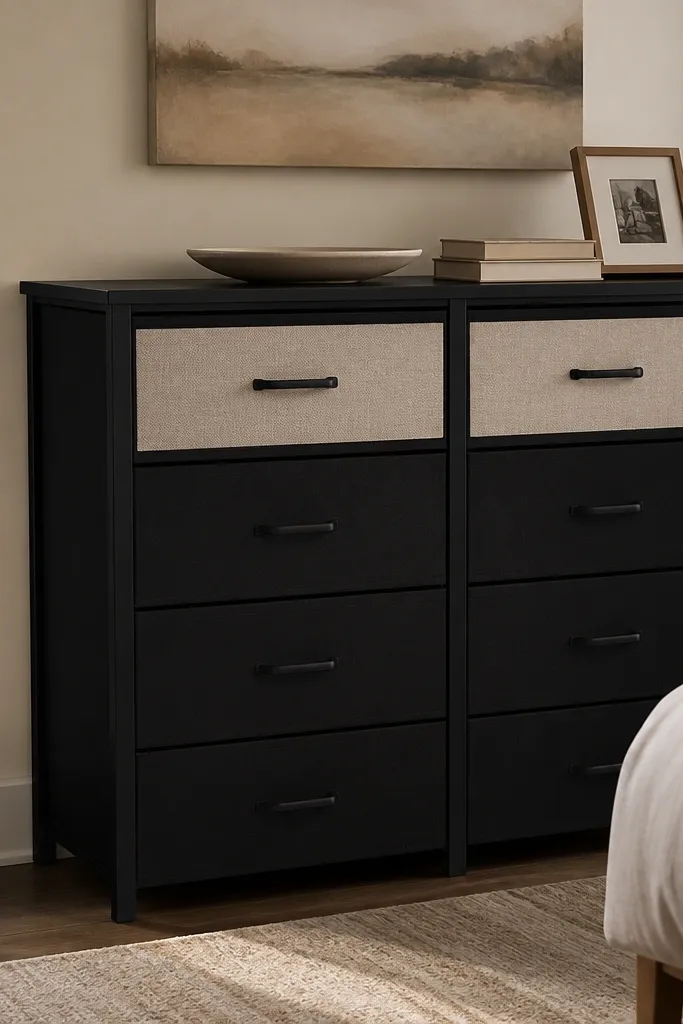
A black dresser can make a bedroom feel grounded, but it looks messy fast if the drawers are visible and cluttered. The renter-friendly fix is to use light linen drawer inserts and keep the top surface styled with a few intentional items. Linen in oatmeal or cream adds soft texture, and it brightens the visual field around the black furniture. This is a strong choice for men’s bedrooms because it supports real storage while keeping the aesthetic clean and photo-ready.
Measure your dresser drawer interior dimensions and buy linen drawer inserts that match the exact width and depth. Add inserts to every drawer that you can see from the doorway or bed angle. On top, place one black tray for daily items, a light lamp with a cream shade, and a small stack of books or a single framed print. Leave 30-40% of the top surface empty so the black dresser doesn’t look overstuffed. Cost is usually $30-120 for inserts plus $40-200 for styling items.
Use matching insert colors across drawers so the dresser looks designed, not accidental.
Don’t hide the dresser look with a heavy pile of folded clothes on top.