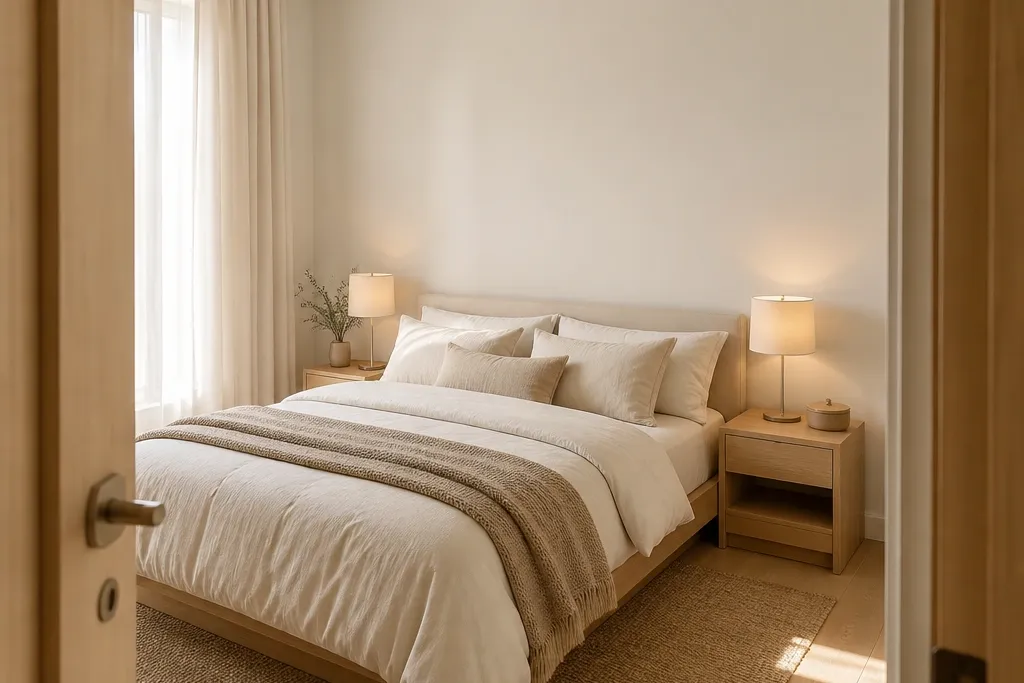
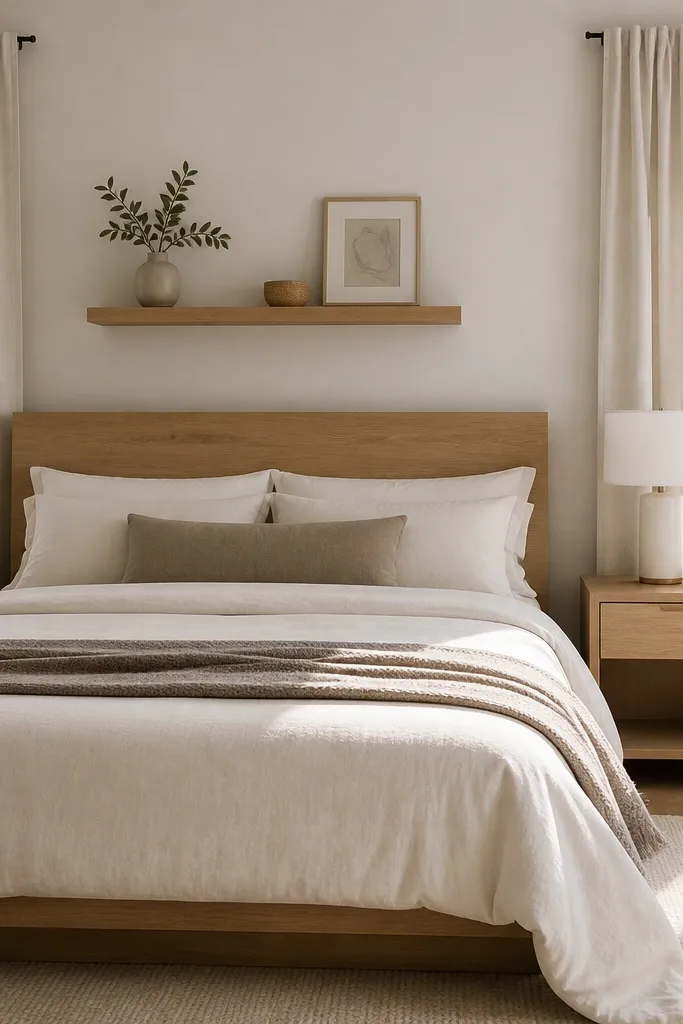
1. Cream linen-look duvet with a taupe throw at the foot
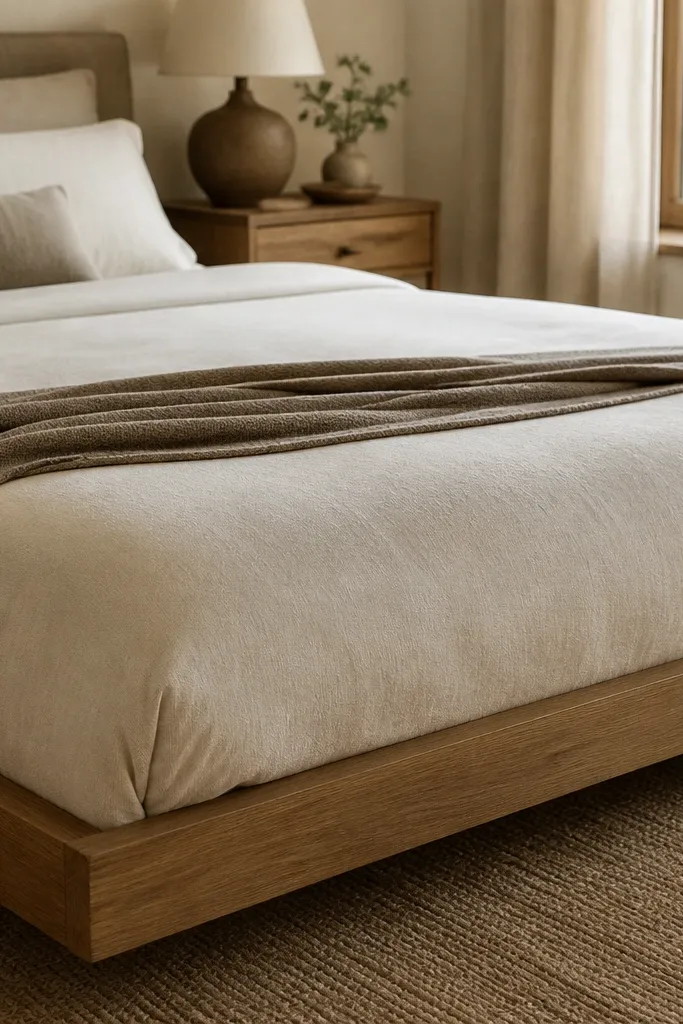
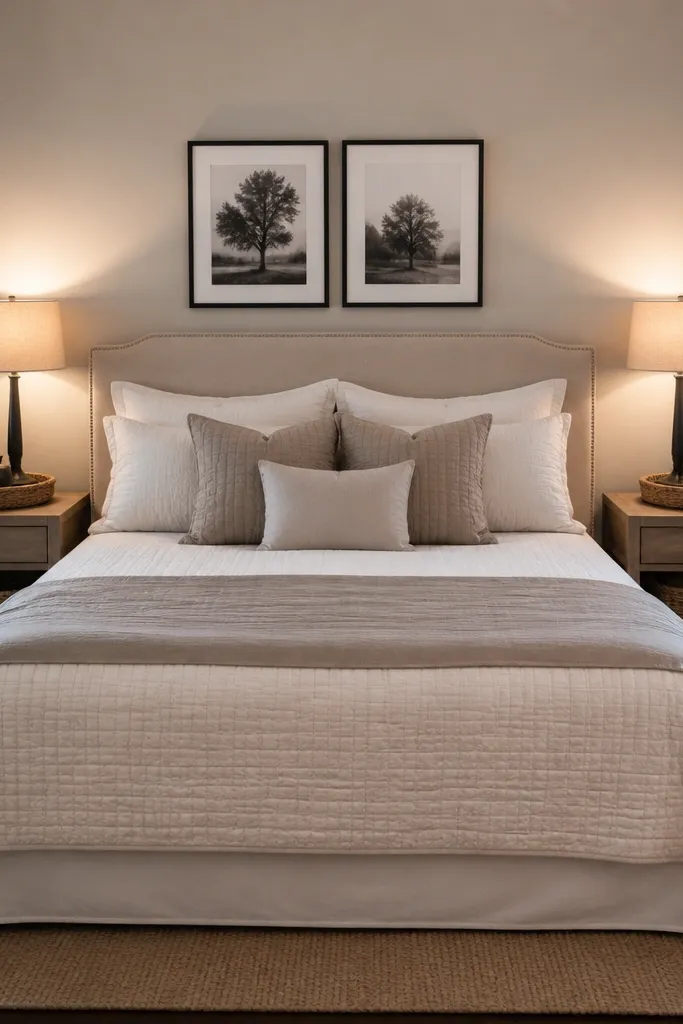
This look works because it gives you texture without adding pattern chaos. Light oak tends to look best with matte neutrals, so a cream linen-look duvet softens the wood and makes the room feel calmer. The taupe throw adds contrast in a controlled way — it reads warm and grounded, not “decorated for the sake of it.” Put the throw at the foot or across the bottom third so it shows from the doorway, which is where most bedrooms feel unfinished.
Start by choosing a duvet cover that is cream or light sand with a visible weave, not a shiny smooth fabric. Then place two pillow sizes — standard and a larger accent if you have a king bed — and keep pillowcases the same tone family. Finally, fold the throw so it covers about one-third of the bed width and drapes slightly over the bottom edge.
Try thisUse a duvet cover that fits tightly at the corners so it doesn’t billow crisp corners make minimalist styling look deliberate.
Common mistakeAvoid mixing three different neutrals at once (white, gray, and beige) — it creates a patchwork look.
2. Single statement mirror centered above the nightstand
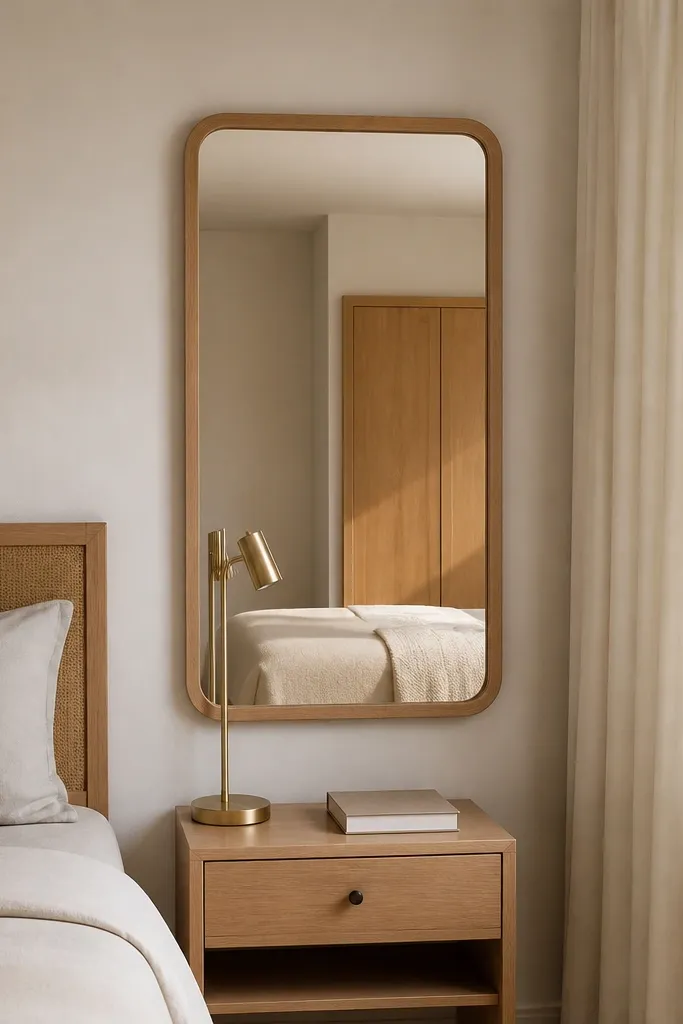
A mirror is the fastest way to make a light oak minimalist bedroom feel larger without adding furniture. The key is placement: if you center it near the bed line, it reflects the warm tones of oak and light textiles instead of reflecting clutter. Choose a matte frame in light oak, brushed brass, or blackened steel so it harmonizes with hardware and keeps the room visually quiet. This approach fixes the common problem of “empty wall” while still staying minimal.
Hang the mirror so its center is roughly at eye level when seated (about 55-60 inches from the floor). Keep it near the nightstand or opposite the window so it catches daylight. Use wall anchors rated for the mirror weight and mark level points before drilling.
Angle the mirror slightly so it reflects the window — you’ll see more light spread across the floor in the morning.
Skip ornate frames with heavy carvings — they pull attention away from the minimalist calm.
3. Off-white blackout curtains hung high and wide
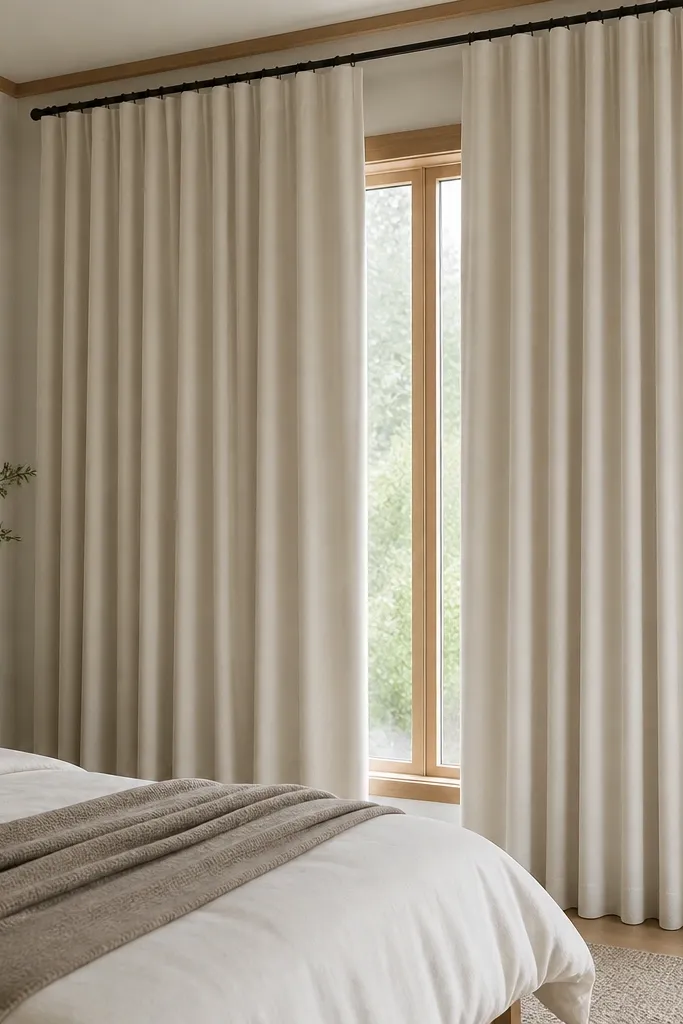
Curtains change the whole room because they control how light hits the oak and how the bed area frames the space. Off-white blackout panels give you a clean line and keep the room from looking washed out at night. Hanging high and wider than the window reduces the “boxy” feel and makes the ceiling look taller. This is a quick weekend fix that usually costs less than replacing furniture and still makes everything look finished.
Measure the window width and add 8-12 inches total coverage (4-6 inches per side) so the panels close without gaps. Mount the rod 4-6 inches above the trim and choose panels long enough to just skim the floor (about 1/2 inch above it). Steam or iron the panels flat, then open them fully so the fabric forms clean folds.
Try thisIf your rod is visible, pick a slim rod in matte black or brushed brass — it looks intentional next to oak.
Common mistakeAvoid curtain panels that stop above the sill — they shrink the window visually.
4. Low-contrast natural jute-look runner down the main path
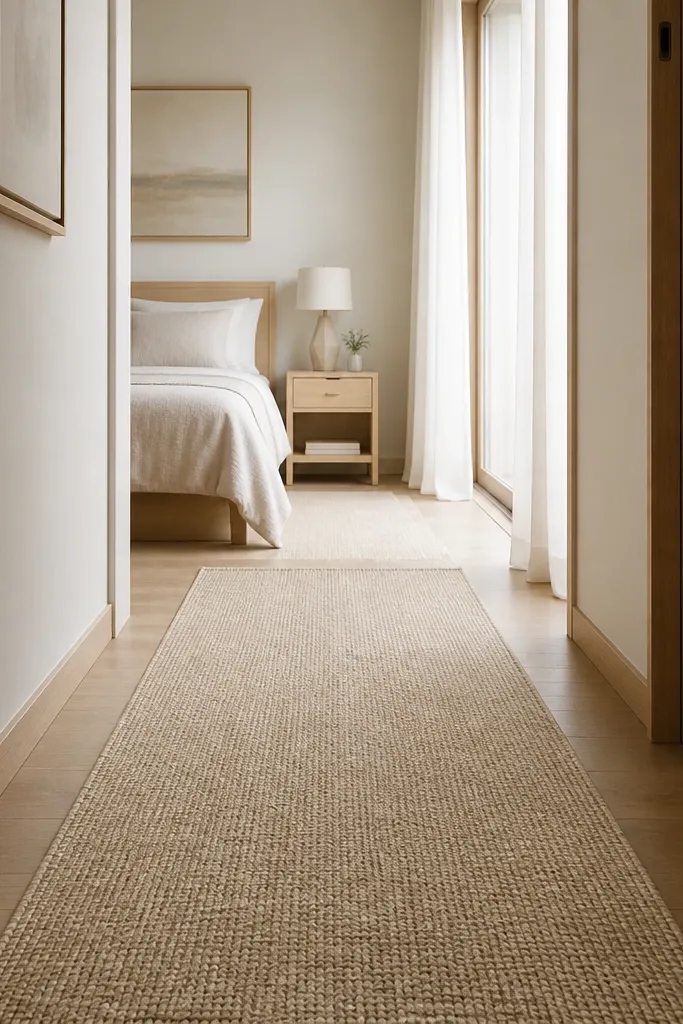
A runner is the easiest “fast finish” for bedrooms that feel unfinished between door and bed. Natural jute-look fibers add warmth that matches light oak, but if you keep the color close to cream/eggshell, it stays minimalist instead of rustic. This also makes the room feel more grounded and reduces the hard echo of bare floors. Put it in the main walking line so it improves day-to-day comfort and visual flow immediately.
Measure the distance from the bedroom doorway to the bed area and choose a runner that leaves 6-12 inches of clearance at both ends. Use a rug pad so it lies flat and doesn’t bunch. Center it on the path and adjust until the runner edges line up with the bed’s centerline.
Try thisChoose a runner with a low pile or woven texture that won’t snag — it looks cleaner after weeks of use.
Common mistakeDon’t use a high-contrast striped runner — it pulls focus and breaks the minimalist calm.
5. One large framed print above the bed in a matte wood frame
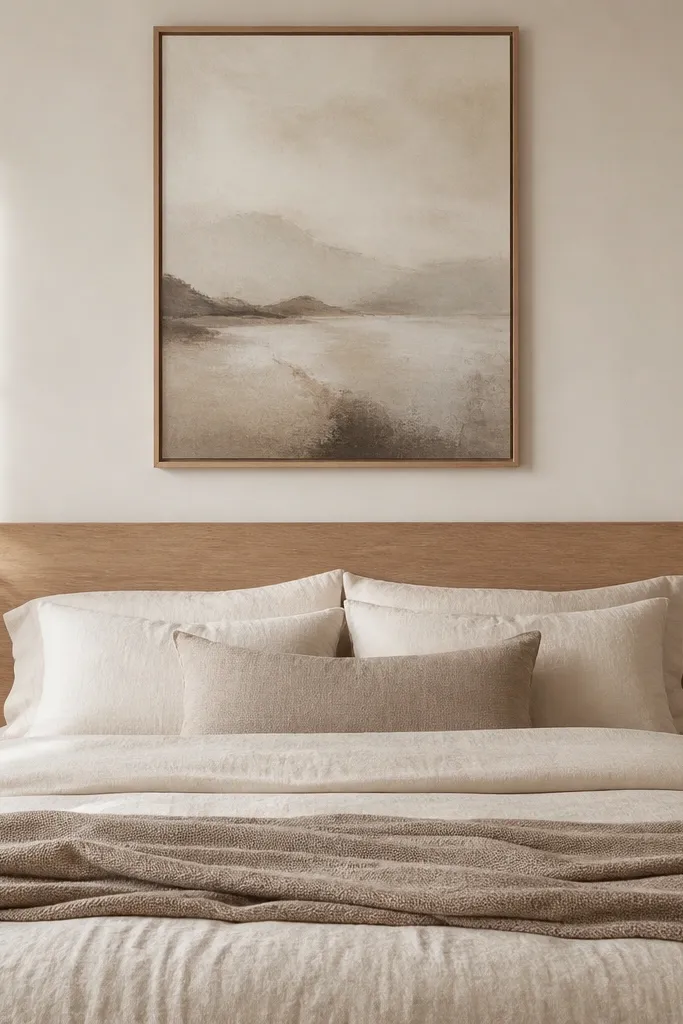
This look fixes the most common minimalist bedroom issue: the wall feels empty, but adding multiple small pieces makes it feel cluttered. One large print gives you scale and a single focal point. Matte wood frames blend with light oak and keep the wall from going cold. Pick art in muted tones — think warm creams, soft taupes, and gentle line work so it supports the bedding and doesn’t fight it.
Measure the bed width and choose art that spans about 60-75% of that width. Place the top of the frame so it lands about 10-12 inches above the headboard top. Level it carefully, then use picture hooks rated for the frame weight.
If your print has white space, let it match your duvet tone family for a cleaner look.
Avoid black-and-white high contrast art — it makes oak look more yellow and the room feels harsher.
6. Two slim nightstands with one tray for daily items
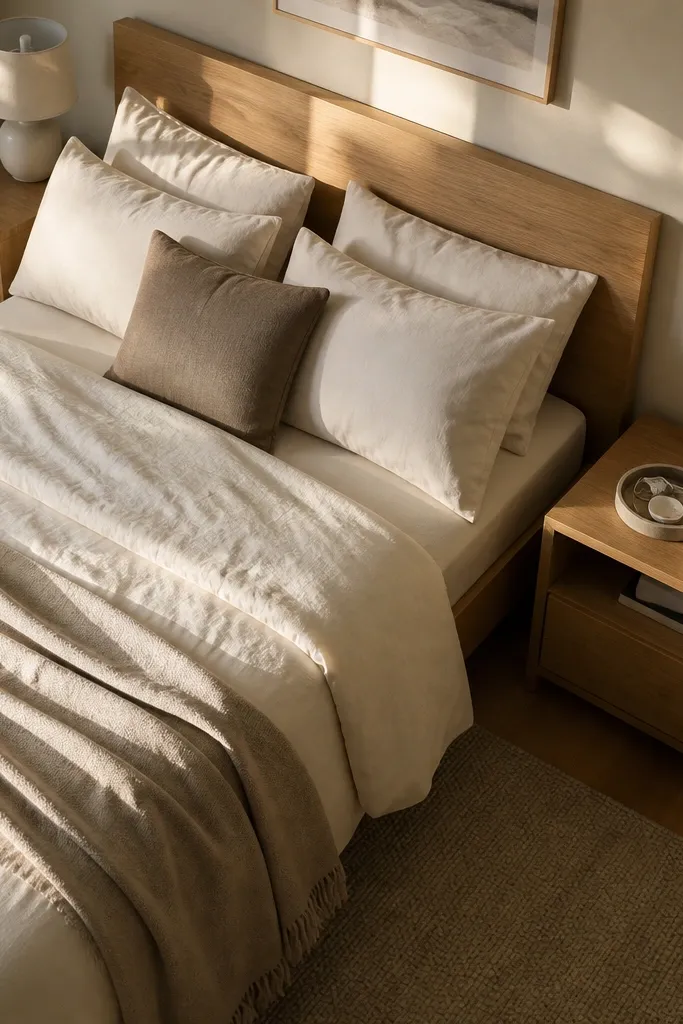
Minimalism breaks down when nightstands turn into storage islands. Slim nightstands keep the room light and make surfaces easy to maintain. A lidded tray is the difference between “decorated” and “messy” because it hides the everyday items that collect fast. Keep the visible items consistent: one lamp, one book stack, and a small tray — nothing random.
Choose nightstands with a depth under about 14 inches so they don’t crowd the floor plan. Add drawer organizers for chargers, lip balm, and small toiletries. Put a single lidded tray on top and keep it for daily items only — anything else goes in a drawer or closet.
Try thisMatch lamp bases across both sides so the eye reads symmetry, even if the lamps differ slightly in height.
Common mistakeAvoid leaving chargers loose on the surface — they ruin the minimalist look in days.
7. Brushed brass or blackened steel bedside lamps with 2700K bulbs
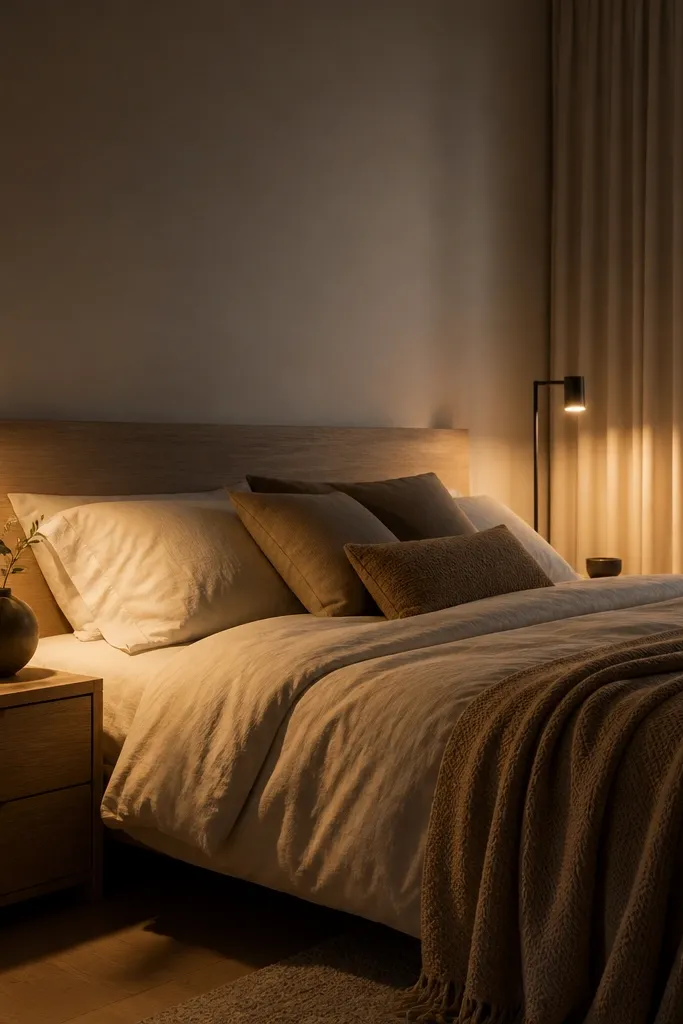
Lighting is how you make light oak look intentional instead of accidental. Warm white bulbs at 2700K remove the blue cast that can make oak look yellow or dull. A slim lamp with a matte shade gives you soft pools of light for bedtime, which makes the room feel calmer even when you haven’t changed anything else. This is a fast upgrade that also helps if your bedroom lighting is currently harsh or uneven.
Replace bulbs in the overhead and bedside fixtures with 2700K warm white. Choose lamp shades that are matte and not glossy so reflections don’t pop on the walls. Aim for a lamp height where the top of the shade is roughly level with your seated eye line.
Try thisUse a dimmer if you have overhead control — warm, lower light makes neutral bedding look richer without adding color.
Common mistakeAvoid cool white bulbs (4000K+) — they flatten the warmth of oak and make the room feel colder.
8. Accent wall in warm off-white with the bed centered on it
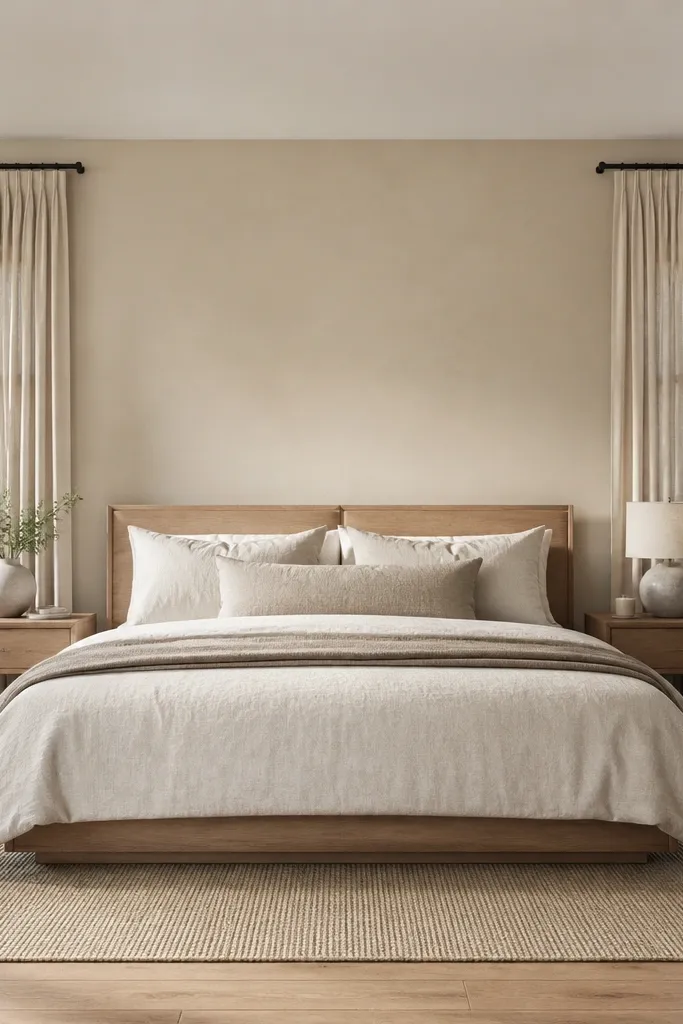
An accent wall gives you depth without adding patterns. With light oak, the best move is a warm off-white that is slightly deeper than your main white — it adds dimension while keeping the palette calm. This also helps if your bedroom feels washed out in daylight; the wall gives you contrast so the bed styling reads clearly. Keep everything else neutral no bold curtains or loud rug patterns.
Choose a warm off-white that is 1-2 shades deeper than the rest of the room. Paint one wall behind the bed, then keep trim and ceiling the same as the rest of the room for a clean edge. Let it cure per the paint label, then install or hang curtains and art after the wall is fully dry.
Try thisUse a roller with a smooth finish and cut in with a steady line messy edges show up fast on minimalist walls.
Common mistakeDon’t paint the whole room a different white — two whites can create an accidental stripe effect.