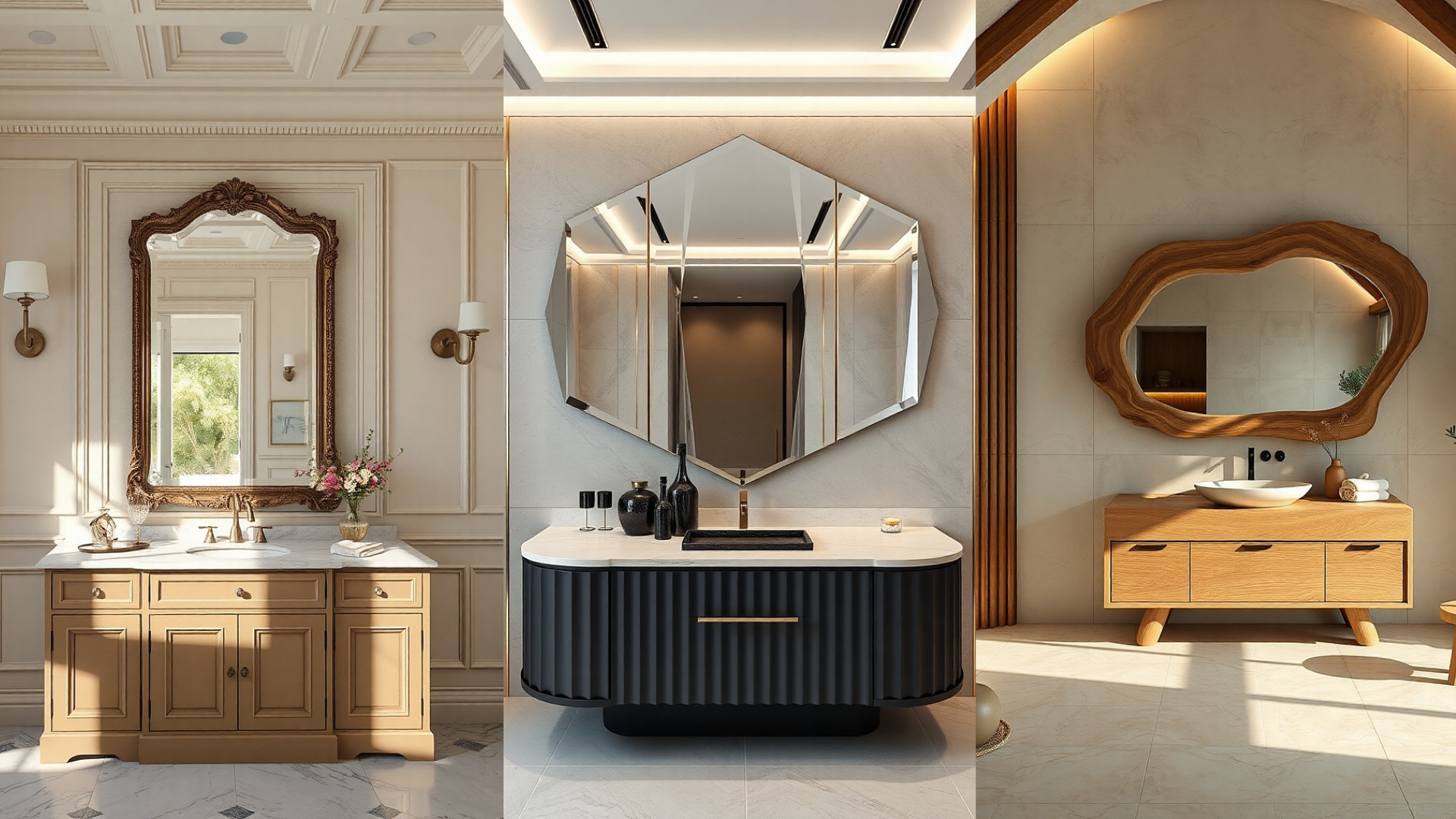
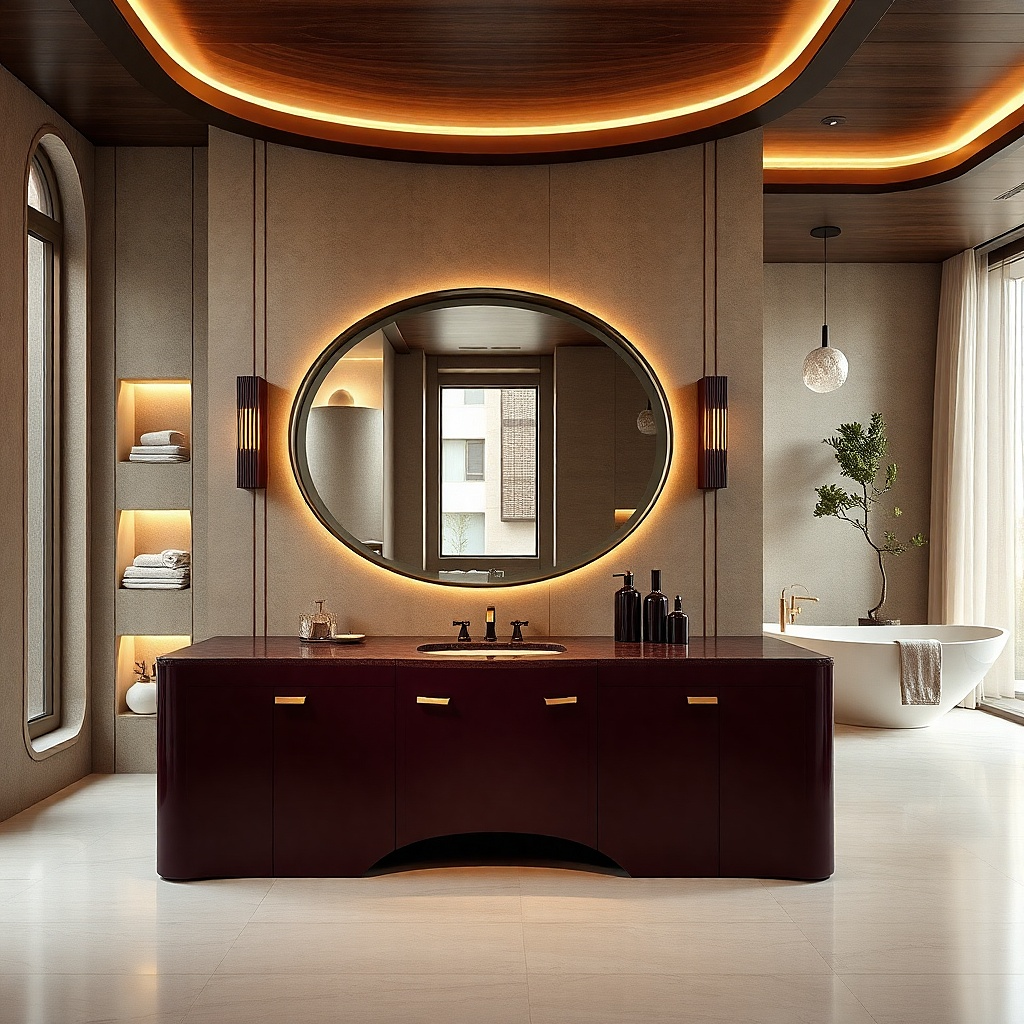
1. Polished Chrome Rectangle Mirror with Slim Frame
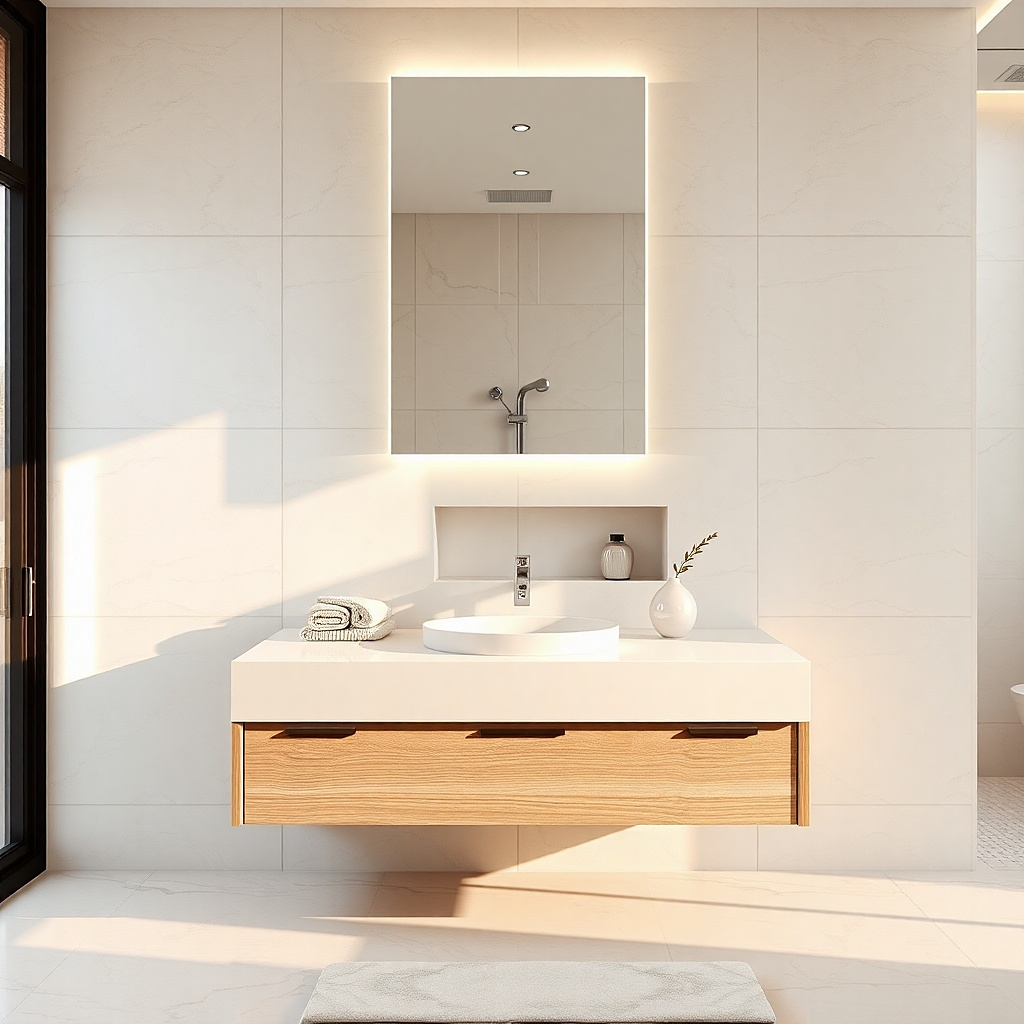
This look is for bathrooms that need clarity. A slim, polished chrome frame reflects light like jewelry, which makes the vanity area feel brighter without adding visual bulk. Keep it a true rectangle and centered — the clean geometry makes small spaces look more controlled. It also makes your faucets and hardware look more intentional because the metal finishes visually line up. For best results, pair it with warm-white bulbs so the chrome reads crisp, not blue.
Measure the vanity width first, then choose a mirror width about 2-4 inches narrower than the vanity on each side if you want a framed, tailored look. Mount the mirror so the bottom edge lands about 5-8 inches above the countertop. Use a level and mark two mounting points into studs or use a rated wall anchor kit. Choose a mirror with an anti-fog coating or install a dedicated anti-fog pad behind it.
Try thisIf your bathroom has a dim ceiling fixture, add two wall sconces at the sides of the mirror and keep bulbs around 2700K.
Common mistakeDon’t use a thick, ornate frame with chrome hardware — the contrast looks busy and cheap.
2. Matte Black Frame Mirror with Horizontal Bevel Edge
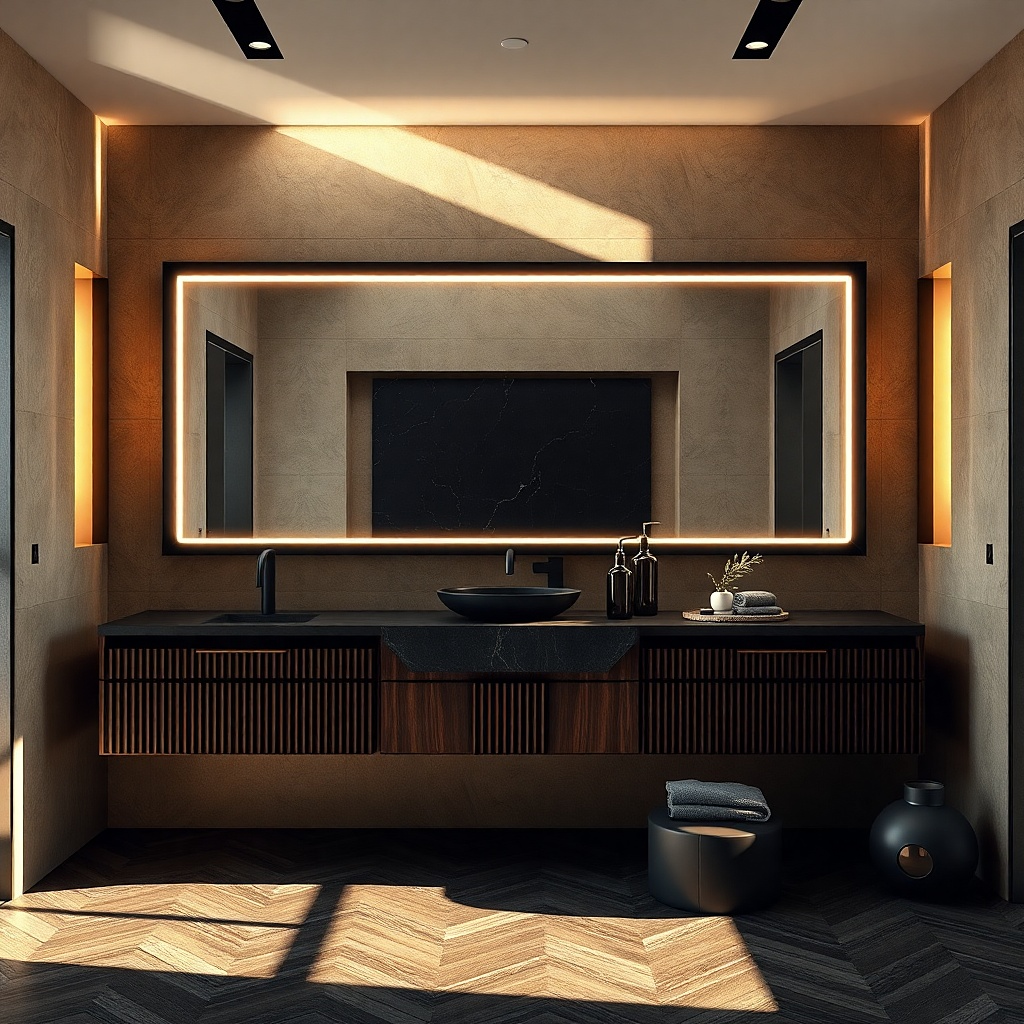
Matte black is the fastest way to make a plain bathroom look styled. The key is the bevel edge — it catches light at the mirror perimeter and creates a subtle highlight line that reads expensive in photos. This design works especially well if your vanity hardware is also black or you have black in the room through faucets, towel bars, or a light fixture. The matte finish hides smudges better than glossy frames, which matters because bathroom mirrors get touched constantly. Keep the mirror rectangular and slim for a modern, balanced look.
Pick a frame width around 1-1.5 inches so it shows up but doesn’t overpower the vanity. Hang it centered above the sink with the bottom edge 6-7 inches above the countertop. If you have a wall backsplash, leave a small visual gap so the mirror frame doesn’t look like it’s fused to the tile — usually 1-2 inches. For mounting, use the manufacturer hanging hardware or install French cleats for a level, no-wobble result.
Try thisMatch the mirror frame to at least one other black element within the same wall plane, like the faucet or sconce, for a clean visual rhythm.
Common mistakeAvoid oversized matte black mirrors in bathrooms with already-heavy dark tile — the frame will dominate.
3. Arched Mirror with Thin Gold Line Frame
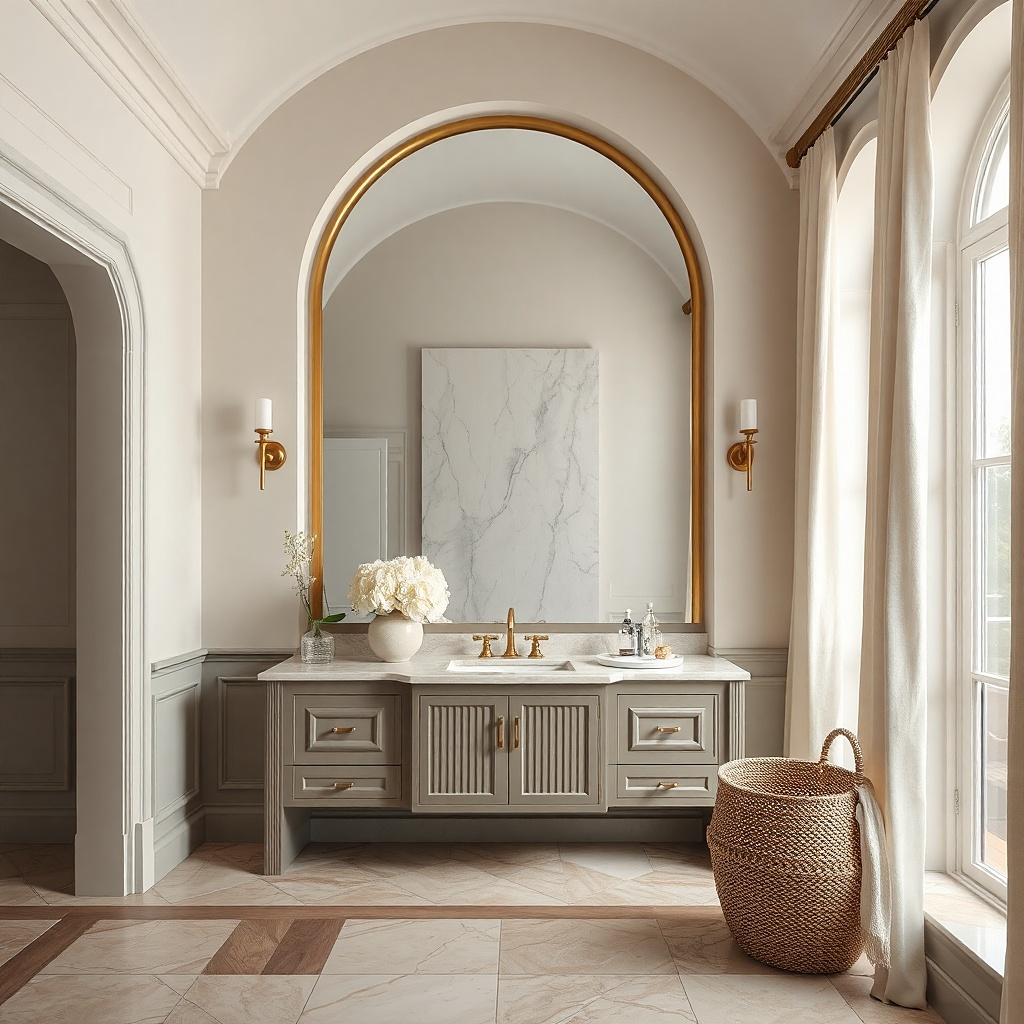
An arched mirror lifts the room visually. The shape pulls the eye upward and softens straight lines from countertops, cabinet doors, and tile grout — that’s why it looks transformative even when nothing else changes. Use a thin gold line frame, not a wide ornate one; wide frames can feel dated quickly. This idea shines in bathrooms with light stone, white walls, or pale wood because the gold reads warm rather than flashy. It also pairs well with single-hole faucets and clean vanity edges.
Choose an arch height that lands about 2-3 inches above where your vanity would normally end visually, keeping the top of the mirror below any upper cabinets. Center it over the sink and aim for a bottom edge about 6 inches above the countertop. Use a template to transfer mounting hole positions since arched mirrors can sit off-kilter if you measure by eye. Buy an arched mirror with a flat backing and wall-mount clips to avoid wobble.
Try thisTurn the sconce bulbs slightly inward so the light grazes the arch curve and creates a flattering highlight.
Common mistakeDon’t pick an arch that’s too tall — if it reaches near ceiling height, it looks like a picture frame stuck on the wall.
4. Large Oval Mirror with Soft Radius Frame
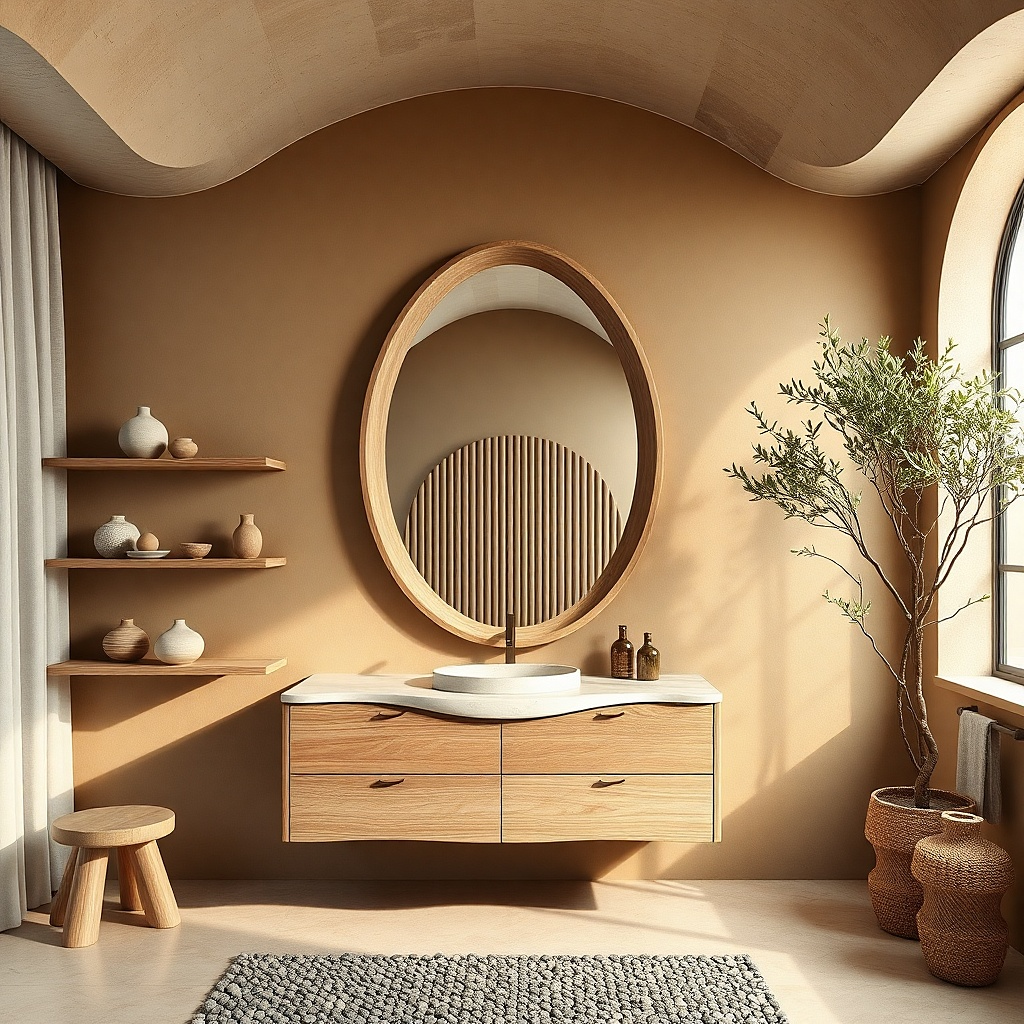
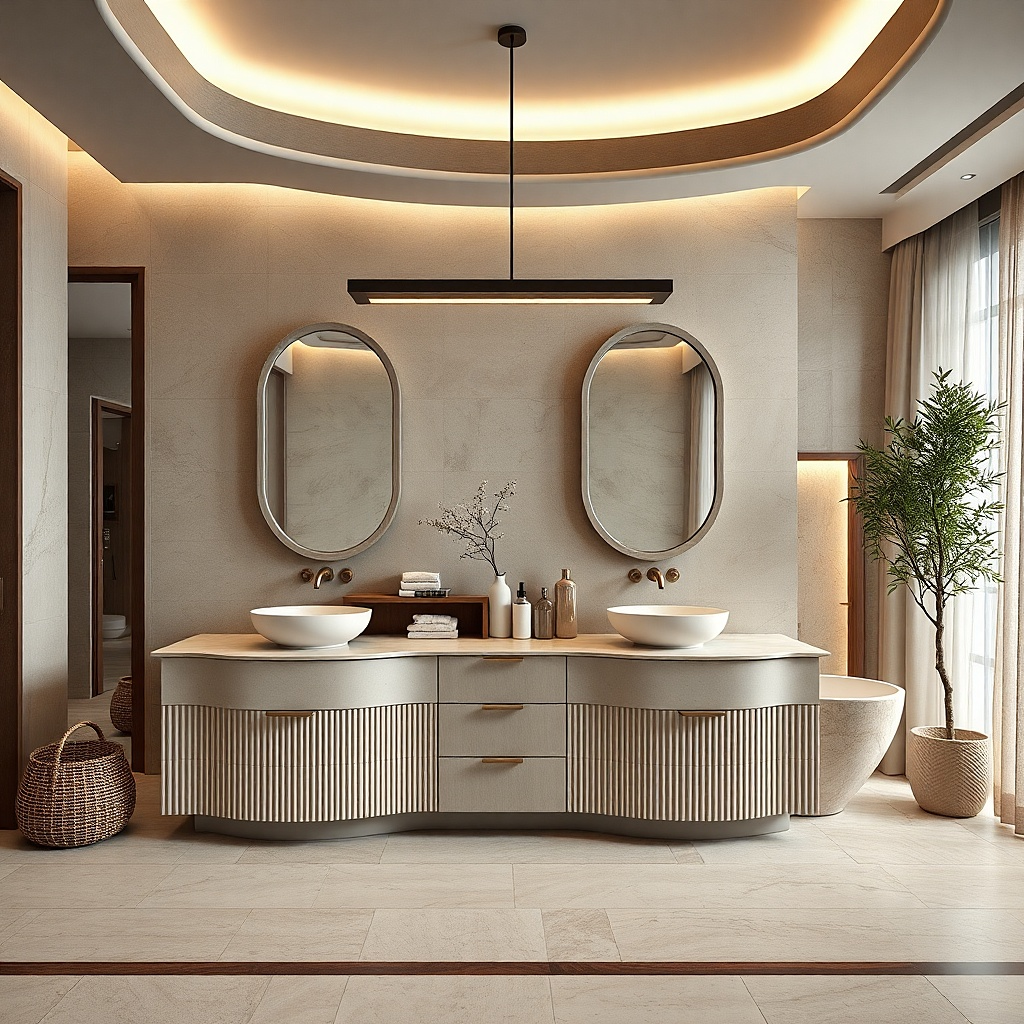
An oval mirror reads calm and upscale. The rounded shape mirrors the curves of many vessel sinks and softens the hard edges of square tiles, which makes the vanity area look more expensive without adding clutter. A soft radius frame in warm wood or light oak keeps the oval from feeling cold. This works great when your bathroom layout is narrow — the oval creates a gentle horizontal emphasis that makes the space feel less boxed in. Keep it centered and wide enough to cover the faucet area.
Select an oval mirror whose widest part is about the same width as the vanity top minus 2-3 inches total. Mount the bottom edge around 6-8 inches above the countertop so it doesn’t feel cramped. Use two mounting points and check with a level across the widest section, not the ends. If you’re drilling into tile, use a glass-and-tile bit and start with painter’s tape to prevent chipping.
Try thisUse warm wood tones to pick up any wood in your bathroom — even a small tray or vanity stool makes it look intentional.
Common mistakeAvoid tiny ovals in front of standard vanities — they look like an afterthought.
5. Two-Panel Mirror with Center Gap for a Built-In Look
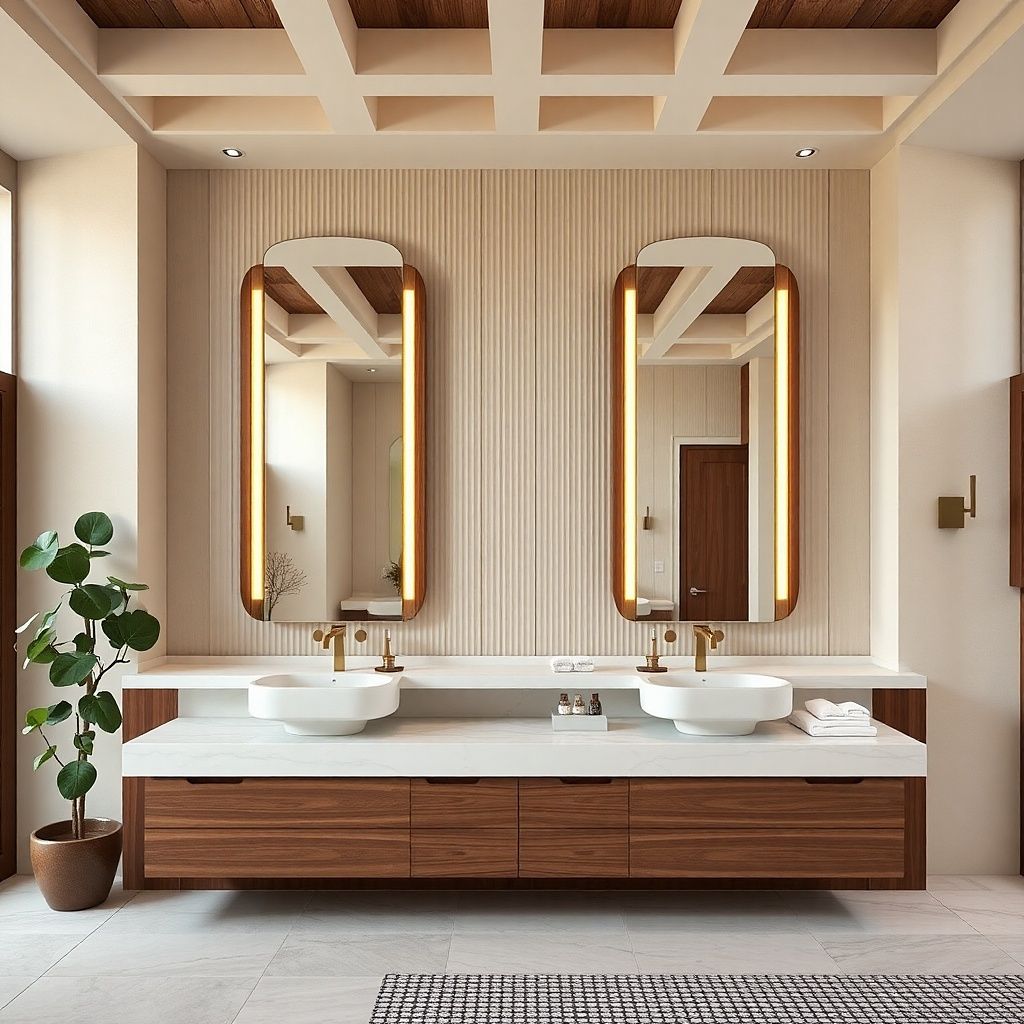
Two-panel mirrors create a built-in, architectural look. The center gap adds a deliberate vertical line that feels custom, especially when your vanity has a center seam or two sinks. This is a strong choice for wide countertops because it gives each side its own visual space while still reading as one statement. Keep the panels tall and proportionate — the goal is to make the wall above the vanity feel designed, not split for no reason. Use clear, frameless glass or thin black frames for a sleek finish.
Pick panel widths so the combined mirror width matches the vanity width minus 2-4 inches total. Mount them so the inner edges align with the vanity’s center line, keeping the gap narrow at about 1-1.5 inches. The bottom edge still targets 5-8 inches above the countertop. Install using a single template for both panels to keep the vertical alignment straight.
If you have double sinks, place two matching sconces — one for each panel side — and keep bulbs at the same height.
Don’t make the gap wide — if it’s more than 2 inches, it starts looking like a mistake.
6. Backlit LED Mirror with Clean Rectangle Edges
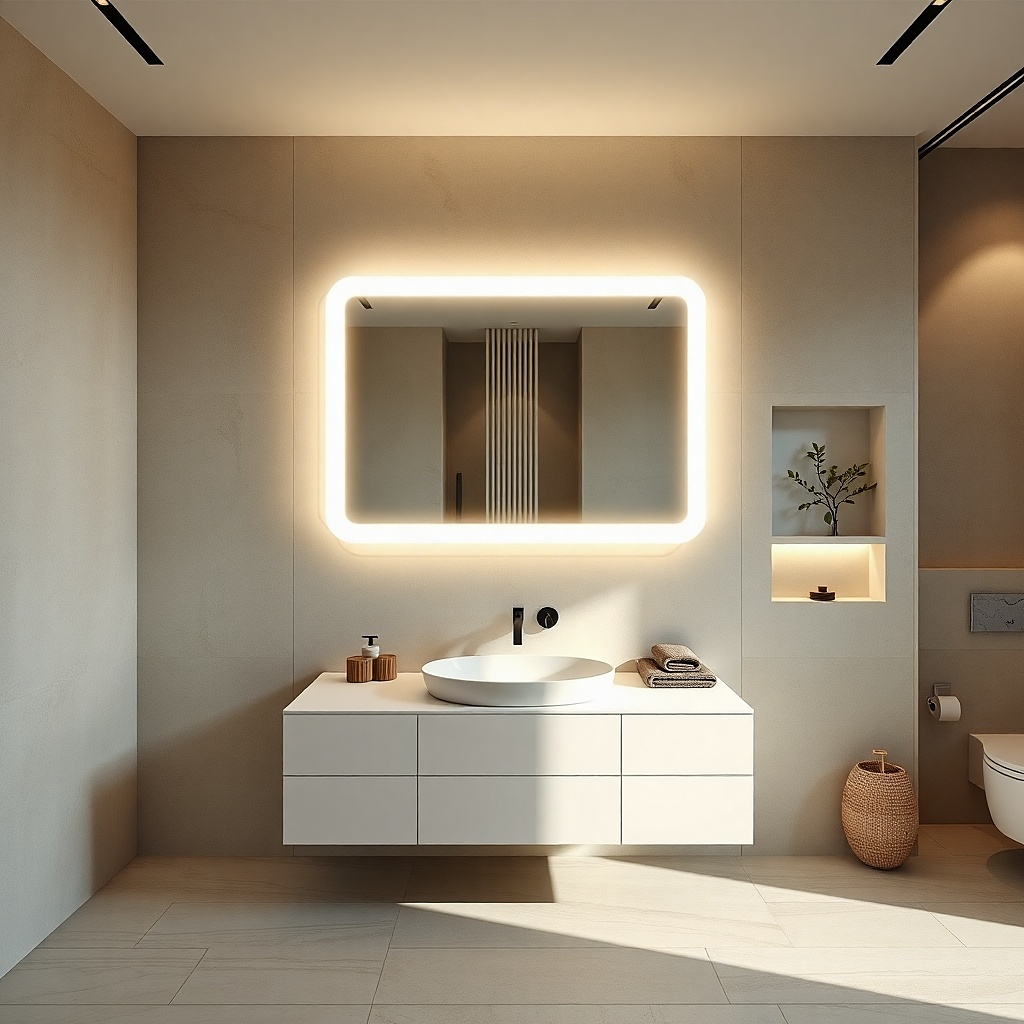
Backlit mirrors solve two problems at once: lighting and glare. The glow runs evenly behind the glass, so you get soft, flattering illumination on faces without harsh shadows from overhead fixtures. Choose clean rectangle edges and a frosted perimeter or diffused edge so it looks like one continuous light source. This look is especially effective in bathrooms with limited natural light because it brightens the entire vanity wall. It also hides clutter because the mirror surface stays visually smooth and bright.
Select a mirror that matches the vanity width — aim for mirror width within 1-2 inches of the vanity top. Mount so the bottom edge is 6-7 inches above the countertop. Check the power method: choose a plug-in option if you don’t want electrical work, or hire an electrician for hardwired. Install with the included bracket kit and ensure the mirror sits flush so the perimeter light doesn’t show uneven gaps.
Use a dimmable switch or smart dimmer so the glow can match morning vs evening lighting.
Avoid mirrors with exposed LED strips — they create uneven hot spots and look cheap.
7. Mirrored Glass Cabinet-Style Mirror with Doors
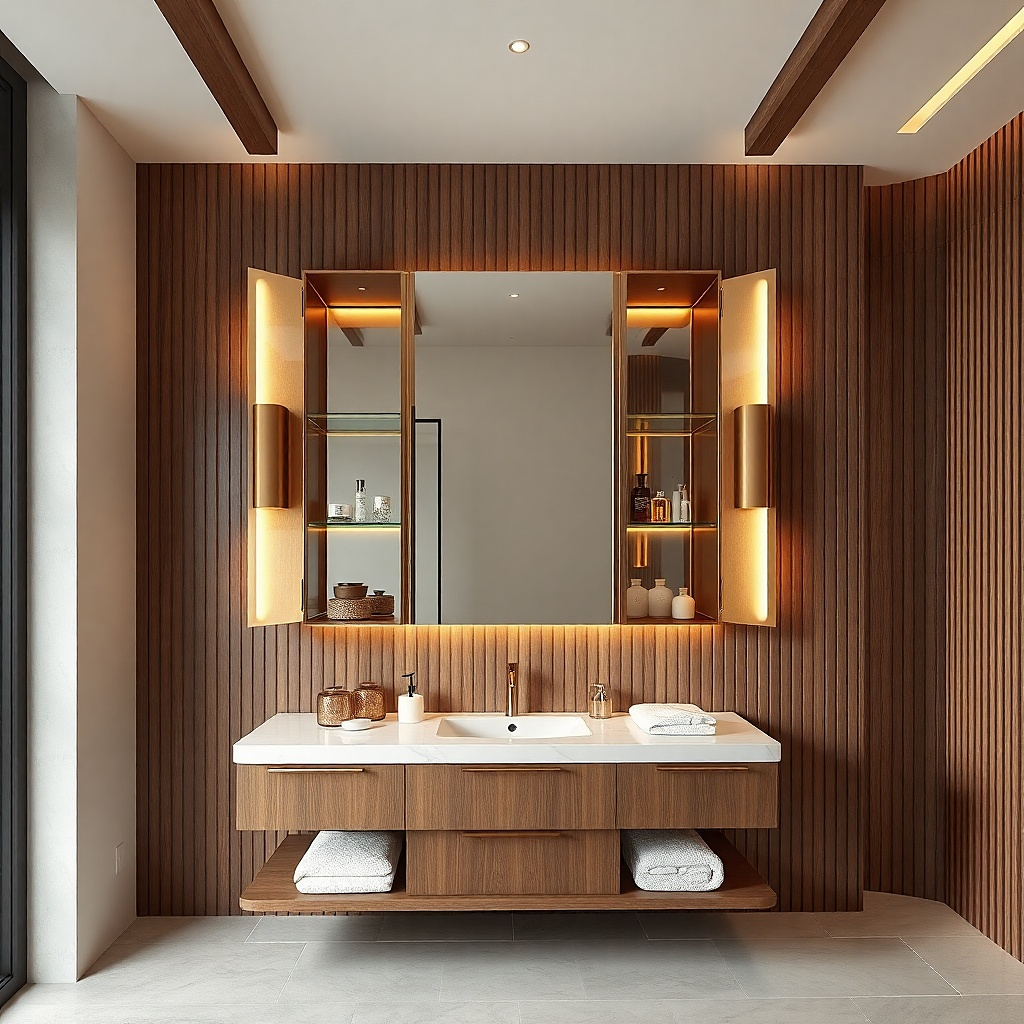
This is the mirror idea for bathrooms that look messy even when you clean. A mirrored cabinet mirror gives you a flat reflective surface while hiding daily clutter like cotton pads, hair clips, and spare toothpaste. The visual payoff is a cleaner, more intentional vanity wall because you’re not staring at bottles behind glass. Choose slim doors with minimal hardware so the mirror stays the star. This look is ideal in small bathrooms where counter space is limited and storage needs to live vertically.
Measure the wall space above the vanity and choose a cabinet mirror whose width matches the vanity top minus about 2 inches. Mount the bottom edge around 6-8 inches above the countertop so doors clear sink splash zones. Make sure the cabinet depth doesn’t bump into lights or plumbing — check the product spec for projection. Install with a stud-mounted bracket and test door swing before fully tightening.
Try thisPut the most-used items on the top shelf inside the cabinet so the mirror stays uncluttered.
Common mistakeAvoid bulky cabinet mirrors that stick out — they catch light and create shadows on the vanity.
8. Framed Mirror with Oversized Wooden Surround
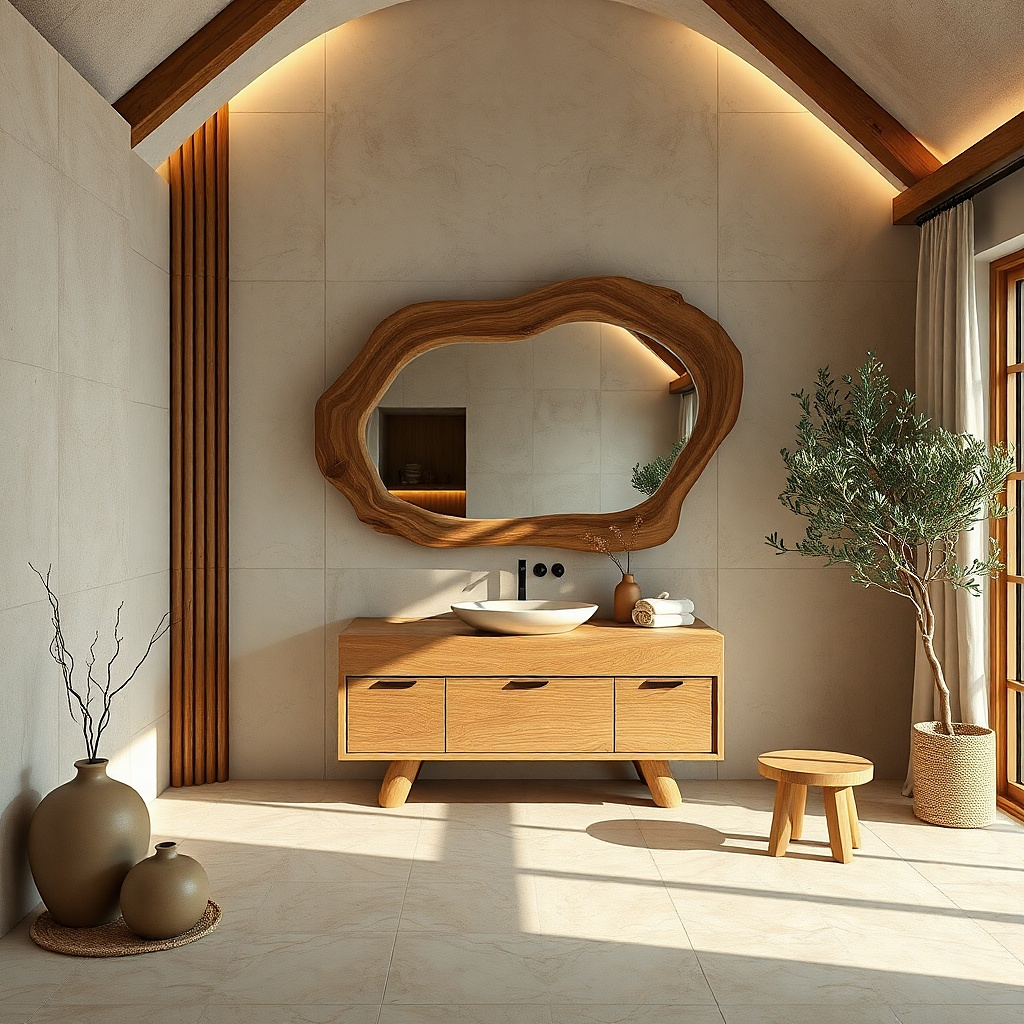
A thick wood surround changes the whole vibe because it adds texture without adding more objects. The mirror becomes a focal point, not a finishing touch, and that’s what makes it feel like the space got redesigned. This works best when your bathroom has wood accents — even a small vanity stool or open shelving. Keep the finish matte and natural or a warm stain; overly glossy wood reflects harsh highlights. Pair it with simple faucets so the frame texture stays the hero.
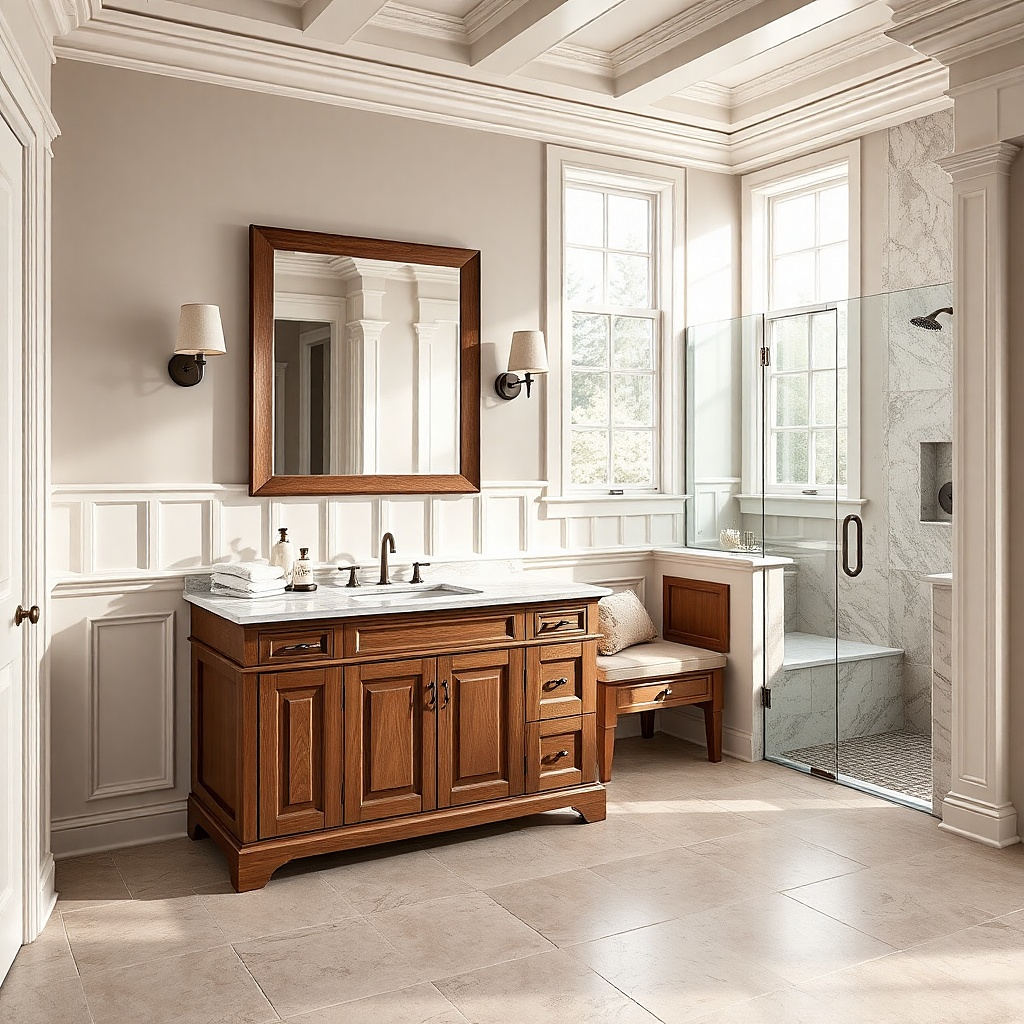
Choose a frame width around 2-3 inches for a noticeable effect. Center the mirror above the vanity and keep the bottom edge 5-7 inches above the countertop. If you have a backsplash, align the mirror frame with the backsplash grout line for a clean visual grid. Mount using a backing cleat or strong anchors into studs — heavy wood frames need real support.
Try thisUse a wood tone that matches your flooring or a nearby wood element, not a random shade — the match makes it look designed.
Common mistakeDon’t pick a thick frame with a high-contrast pattern when your tile already has strong movement.
9. Rattan-Framed Mirror for Light, Airy Texture
Rattan adds texture that reads warmer than metal and less formal than wood. A rattan-framed mirror makes the bathroom feel airy and intentional because it softens the hard lines of ceramic tile and glass shower doors. Choose a round or softly arched rattan frame and keep the vanity lighting warm so the fibers cast gentle shadows. This is a great pick for bathrooms with white walls, light stone, or neutral tile where you want texture without dark colors. The mirror shape should be large enough to anchor the vanity area.
Pick a mirror diameter that covers the faucet zone — usually 24-30 inches for standard vanities. Mount the bottom edge about 6-8 inches above the countertop, keeping the rattan frame clear of water spray. Use a mounting method that supports the frame weight without crushing the fibers — ideally wall brackets behind the frame. If the mirror is heavy, mount into studs and use at least two points.
Add a simple tray with a natural texture on the counter to echo the rattan and make the look feel cohesive.
Avoid rattan frames in bathrooms with heavy steam unless the mirror has good ventilation — moisture can warp fibers.
10. Stone-Inspired Framed Mirror in Travertine Look
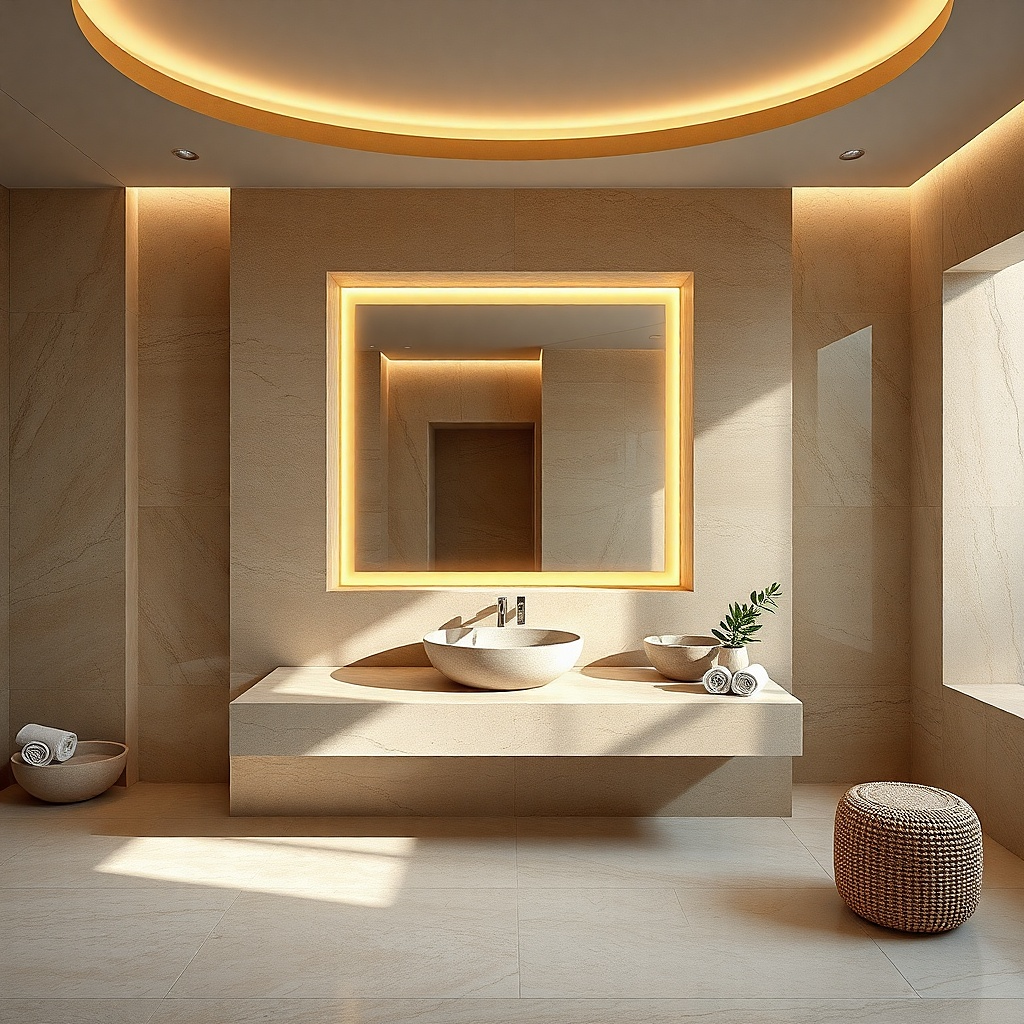
Stone-inspired frames make the mirror look like it belongs to the room’s materials, not the store shelf. A travertine look frame adds warm, mottled texture that catches light differently from smooth wood or metal. This makes the vanity wall feel layered, even if you keep the rest of the bathroom simple. It’s especially effective with beige, cream, and soft greige palettes and bathrooms with stone-look tile. Keep the mirror shape clean — rectangle or gentle arch — so the frame texture stays the focus.
Choose a frame finish that matches your stone or tile undertone — if your tile is more yellow, pick a warmer travertine tone. Mount centered and size the mirror so the frame edges stop 1-2 inches from the vanity’s sides. Hang with the bottom edge 6-7 inches above the countertop. Use a stud-mounted bracket because stone-finish frames tend to be heavier than they look.
Use warm-white bulbs and avoid cool 5000K lighting; stone frames read better with softer illumination.
Don’t pair stone-finish frames with busy, high-contrast patterned tile — the wall gets visually noisy.
11. Frameless Mirror with Polished Edge for Maximum Light
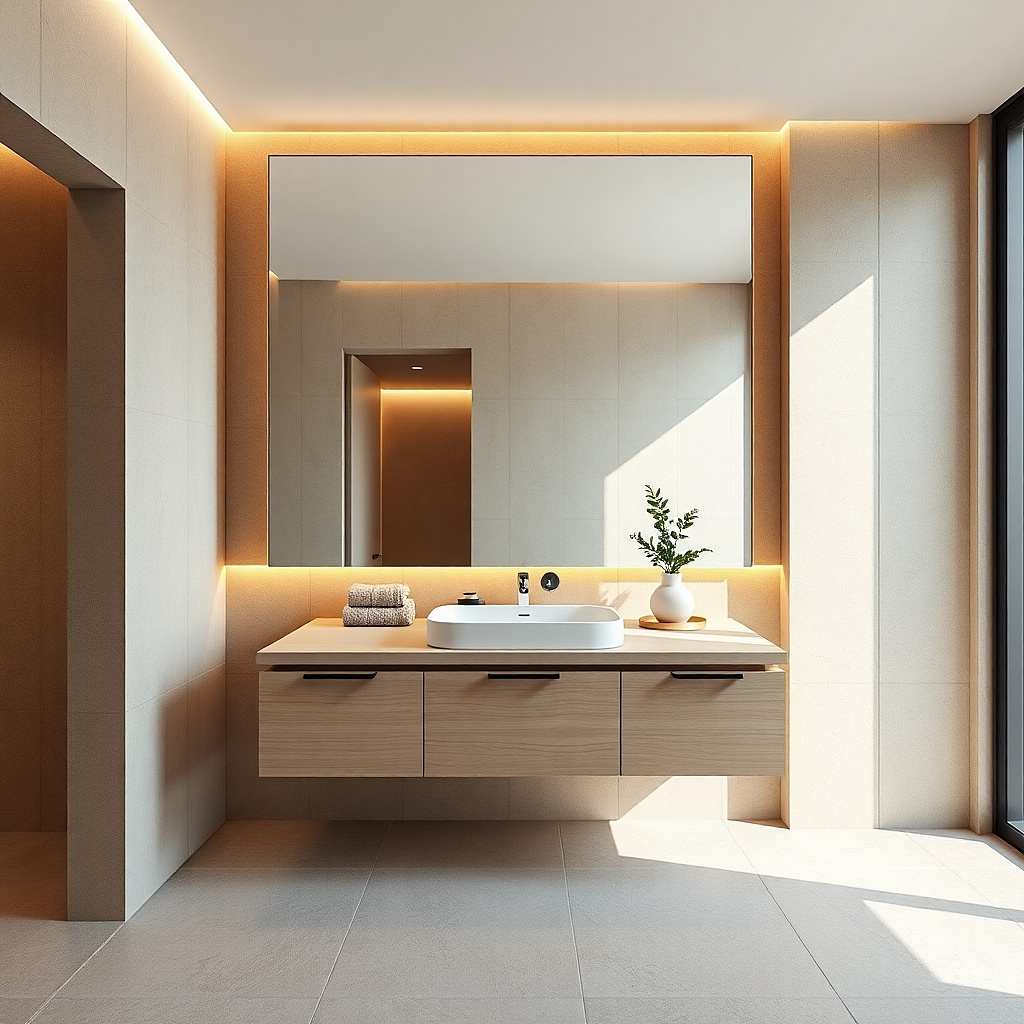
Frameless mirrors make the wall feel bigger because there’s no frame casting visual weight. A polished edge gives the glass a subtle highlight line, so it still looks intentional on camera. This is the choice when your vanity already has strong styling — like a sculpted countertop, patterned backsplash, or bold cabinet hardware. Frameless works best with clean, straight vanities and simple wall paint because the mirror doesn’t compete with details. If your bathroom is small, this look helps it feel airy.
Buy a mirror cut to match the vanity width closely — within 1-3 inches smaller than the top width. Mount the bottom edge 5-7 inches above the countertop and keep the top aligned with your desired visual height. Use proper mirror clips or adhesive designed for glass to prevent sagging. If you have tile walls, plan for the mounting method so clips press evenly.
Use a mirror with a high-quality anti-fog coating so the glass stays clear and doesn’t ruin the clean look.
Avoid frameless mirrors with thick, uneven edges — they look sloppy and cheap.
12. Mirror with Integrated Shelf-Ledgers for Counter Styling
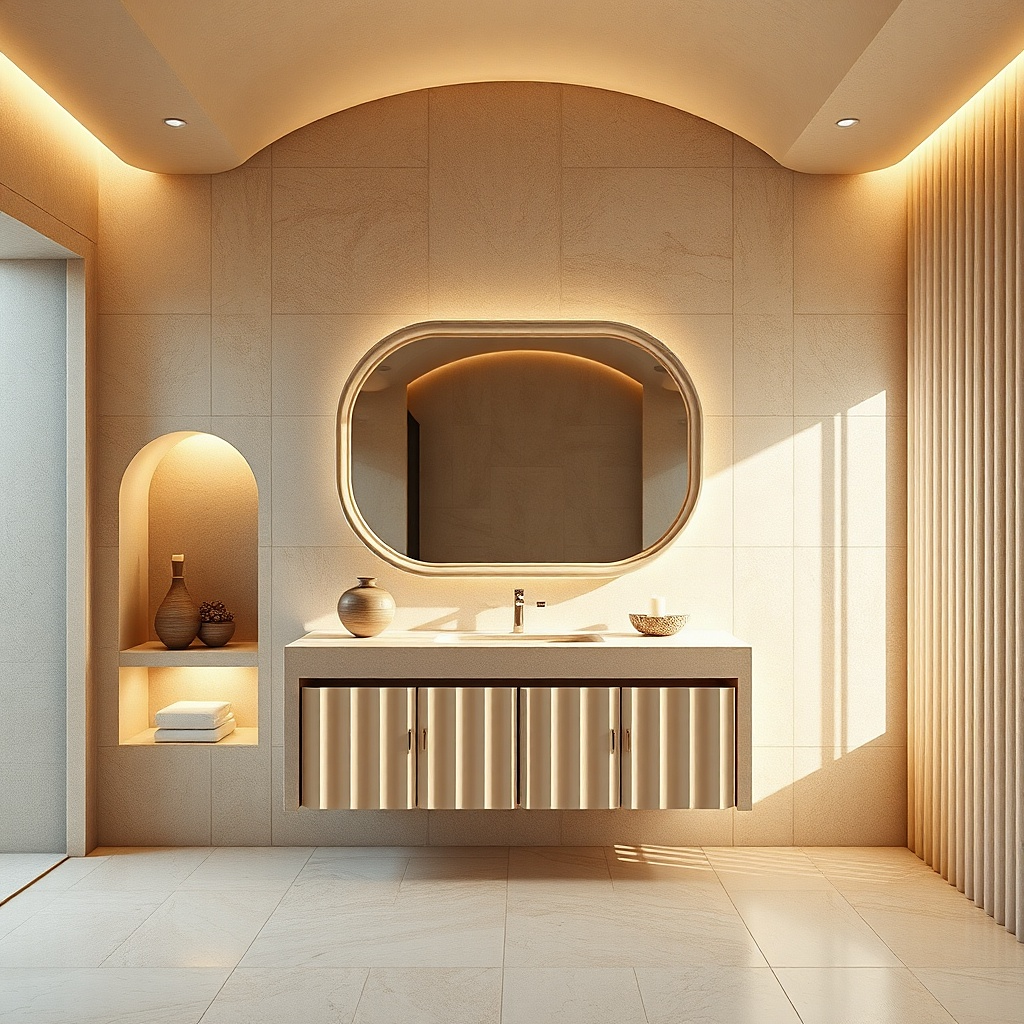
This mirror idea turns the mirror wall into a styling surface without cluttering the counter. A slim integrated shelf gives you a place for a small soap dispenser, a folded hand towel, or a reed diffuser — all within the mirror’s visual frame. Because the shelf is above eye level, it stays neat and looks curated in photos. This works especially well when you want the mirror to do more than reflect. Choose a shelf that’s narrow, not chunky, so the look stays modern.
Select a mirror unit where the shelf projection is small — around 2-4 inches — so it doesn’t intrude into the space above the sink. Mount it so the shelf sits roughly 2-3 inches above the top of your backsplash or faucet line. Set the bottom edge 6-8 inches above the countertop. Install with the included wall brackets and confirm the shelf stays level so items don’t slide.
Try thisUse one container and one plant or candle at most; a shelf looks best when it stays intentional, not stocked.
Common mistakeAvoid a shelf that’s too deep — it makes the vanity look crowded even when the counter is clear.
13. Oversized Round Mirror with Brass Hardware Details
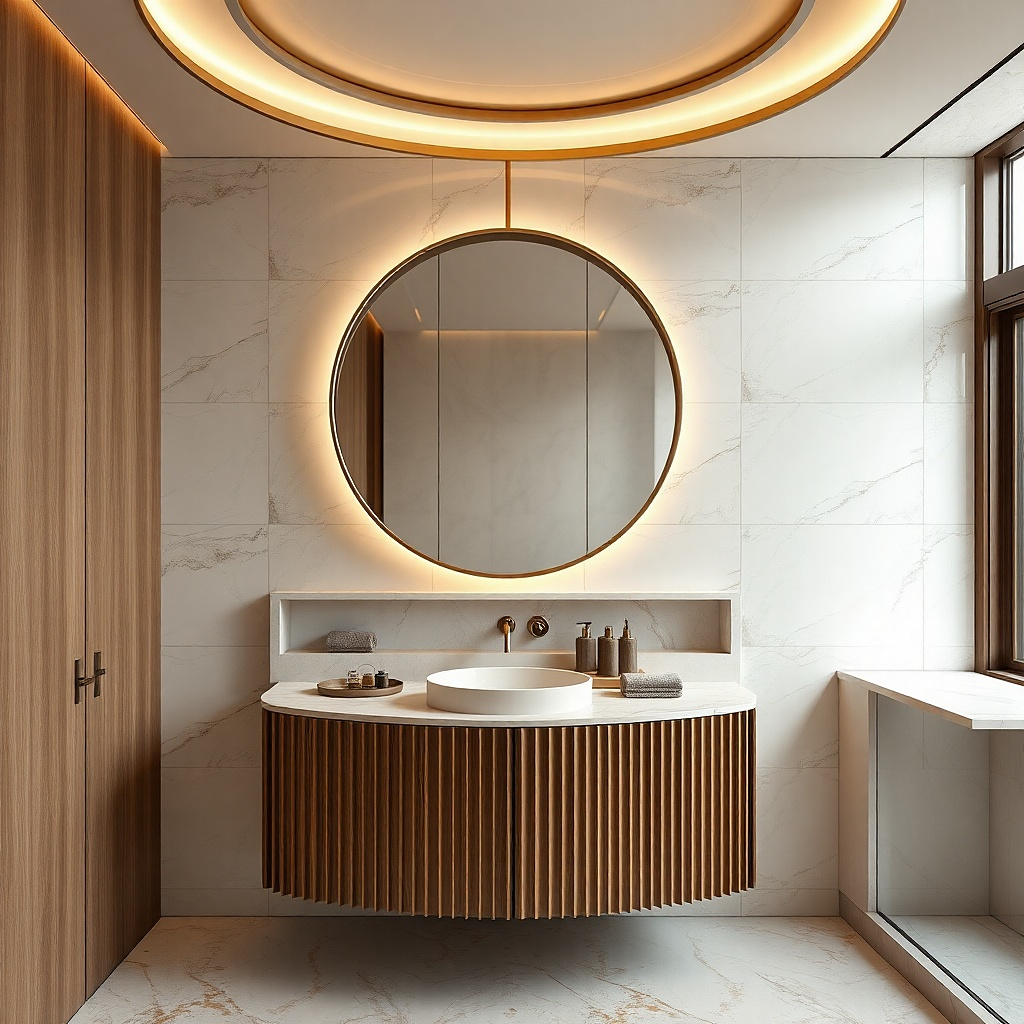
A large round mirror makes the vanity feel like a design moment. Round shapes soften the rectangular bathroom grid, and the scale matters — it should dominate the wall area above the sink, not sit like a small accessory. Brass hardware details keep it warm and match well with brass faucets, towel bars, and light fixtures. This look is strong in bathrooms with white walls and light countertops because the mirror becomes the main visual contrast. Pair with simple cabinetry so the round silhouette reads clearly.
Choose a round mirror diameter that’s about 24-36 inches depending on vanity width, aiming for the mirror to cover the faucet and countertop attention zone. Mount the bottom edge 7-9 inches above the countertop so the circle doesn’t feel low. Center it carefully — round mirrors show off-center mounting immediately. Use a stud-backed mount and check level across at least two axes.
Try thisKeep your sconce heights matched to the mirror centerline so the brass reads warm instead of shadowy.
Common mistakeDon’t hang a round mirror too low — it makes the vanity look cramped and can block sightlines.
14. Beveled Glass Mirror with Antique-Style Frame
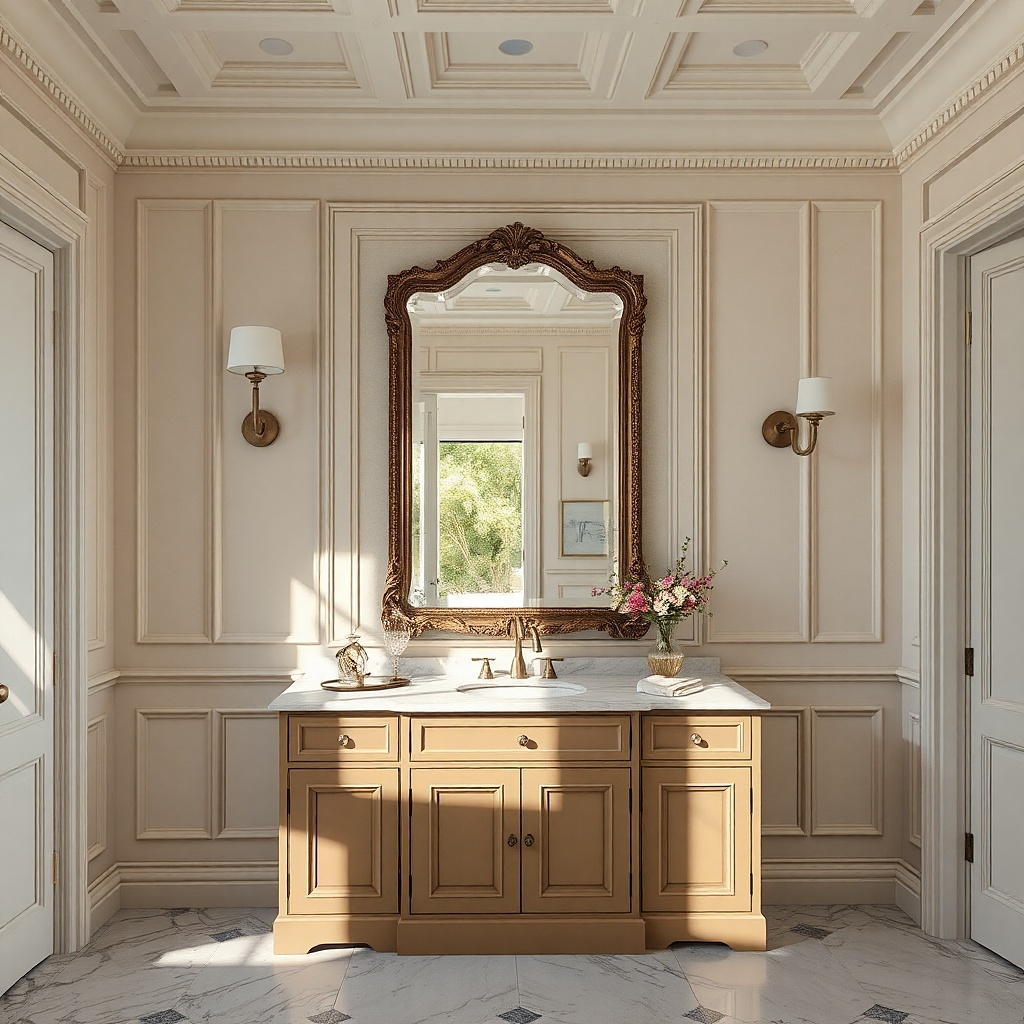
Beveled glass catches light in a way flat mirrors can’t. The tiny angled edges create micro-shadows that make the mirror look dimensional, which is why it photographs beautifully even in modest bathrooms. An antique-style frame works best when you keep the vanity hardware classic too — think aged brass or oil-rubbed bronze. This is a great pick if your bathroom has traditional elements or if you want contrast against sleek modern vanities. Keep the mirror size large enough to show the bevel effect across the whole surface.
Pick a mirror with a true bevel depth you can see in person — shallow bevels look flat. Choose a rectangle frame size so the mirror width matches the vanity top within 1-3 inches. Mount with the bottom edge 6-7 inches above the countertop. Use a wall anchor setup rated for the mirror’s weight, especially if the frame is ornate and heavier than expected.
Try thisUse warm bulbs and avoid overhead glare — bevels show best with light that comes from the sides.
Common mistakeAvoid pairing heavy ornate frames with cluttered counters; the bevel will magnify visual mess.
15. Slim Vertical Mirror Tower for Narrow Bathrooms
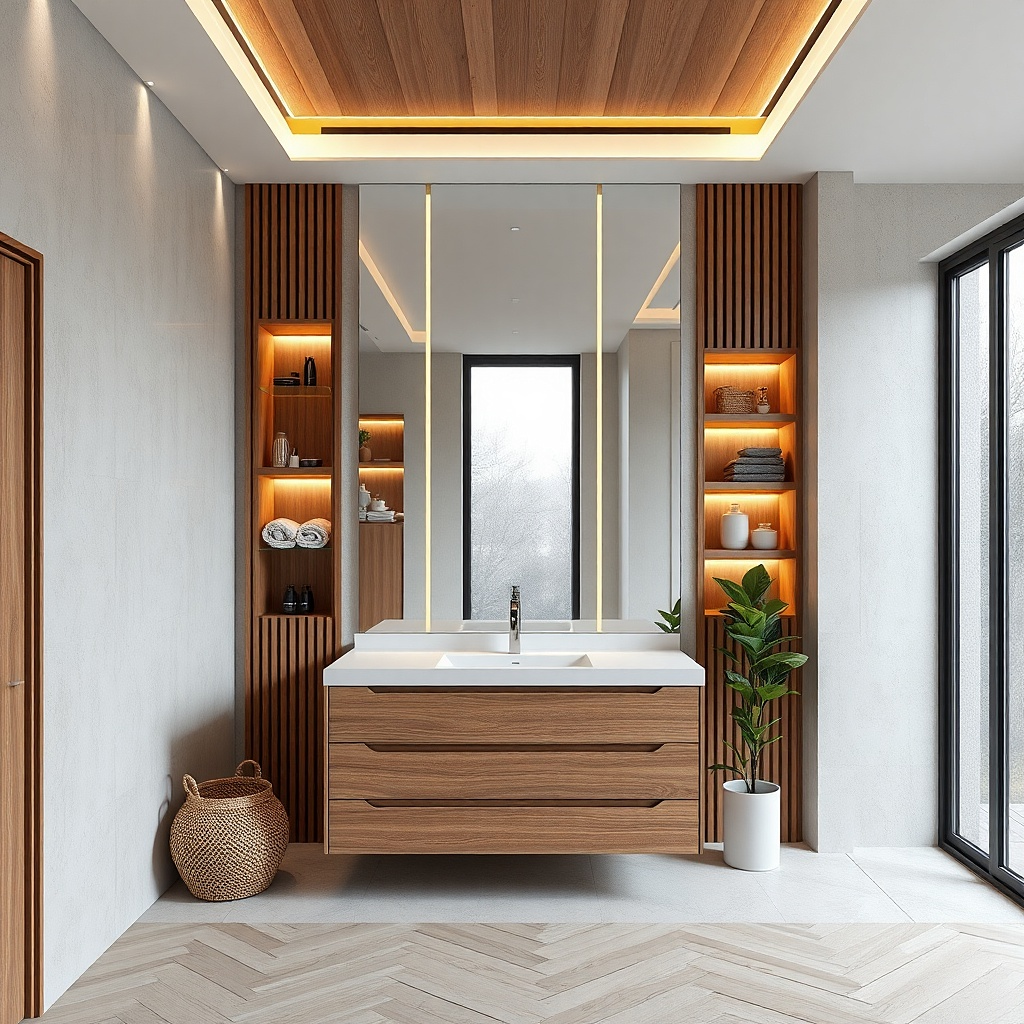
When the bathroom is narrow, you need a mirror that doesn’t widen the wall visually. A slim vertical mirror creates height instead of width, which helps the space feel taller and cleaner. This is also a smart option when you have a compact vanity and limited backsplash space. A thin frame finish — brushed nickel or matte black — keeps it modern. The mirror should still be wide enough to cover the faucet zone, but the vertical emphasis does the “transforming” work for tight layouts.
Measure the vertical wall space above the vanity and choose a mirror height that doesn’t collide with lights or any upper cabinet soffit. Target mirror width that sits between 10-16 inches for narrow vanities, then adjust up if you have a wider sink. Mount the centerline of the mirror to the vanity center. Set the bottom edge 5-7 inches above the countertop and ensure the mirror clears any faucet splash line.
Use a single vertical sconce on the same side as your main light source so the mirror catches light along its length.
Don’t choose a vertical mirror that’s too tall for the wall — it looks like it’s installed to the ceiling, not to the vanity.
16. Mirrored Mosaic Frame Mirror for Texture Without Pattern Overload
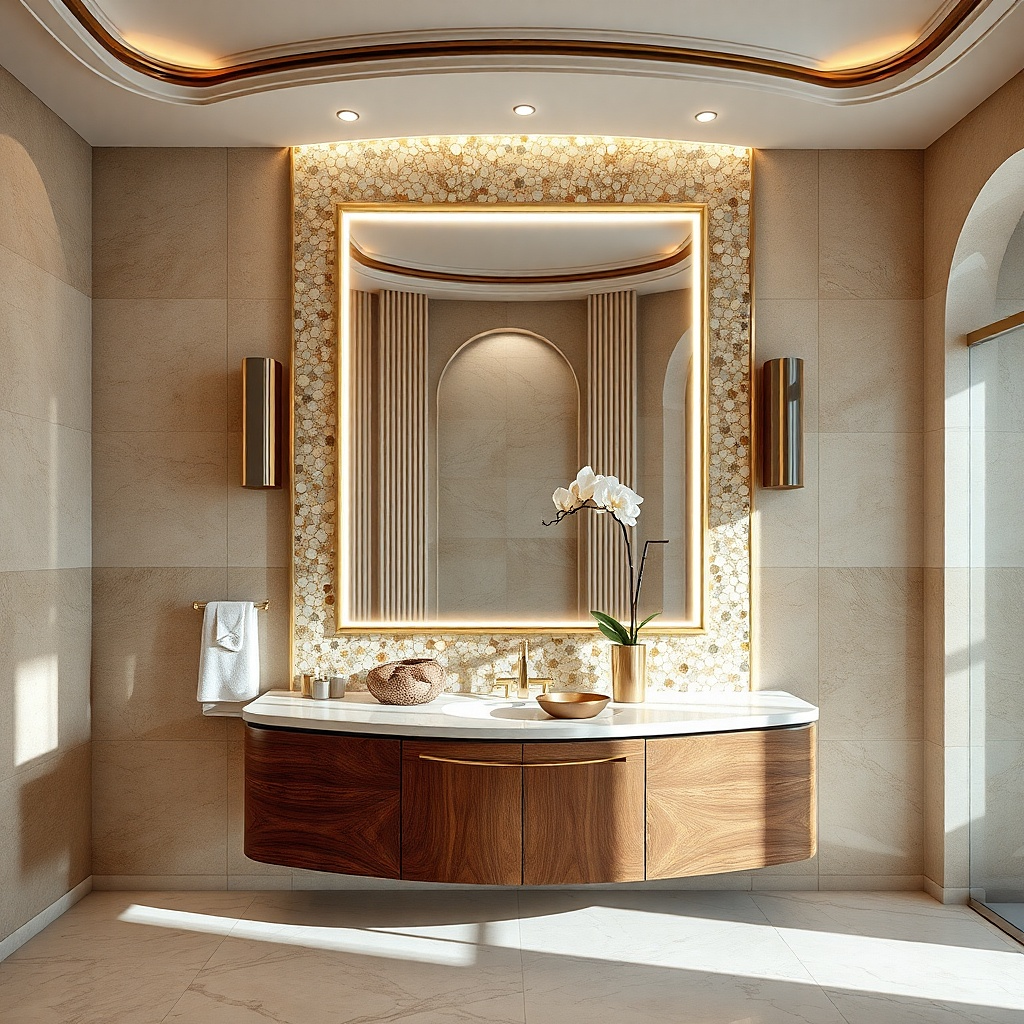
A mosaic-framed mirror adds sparkle and texture while keeping the center reflection clean. The trick is to keep the mosaic frame small and tight so it reads as a refined border, not a full wall of tile. This idea works when your bathroom walls are plain and you want one photogenic element that still feels cohesive. Choose mirror frames with subtle variation — mother-of-pearl tone, small champagne mosaics, or soft white glass — so it doesn’t clash with your grout color. The center mirror stays functional; the frame does the styling.
Pick a mirror with a mosaic border thickness around 1-1.5 inches, then size the overall mirror to match your vanity width. Mount it centered and keep the bottom edge about 6-8 inches above the countertop. Check clearance around lights since mosaic frames can project slightly more than flat frames. Use the included mounting points and avoid relying on adhesive alone for heavier mosaic borders.
Try thisTurn off overhead glare when taking photos by aiming bulbs slightly off-axis — mosaic frames look best with controlled light.
Common mistakeAvoid high-contrast mosaic frames if your tile backsplash already has strong patterns.
17. Double-Sided Mirror with One Side Magnification
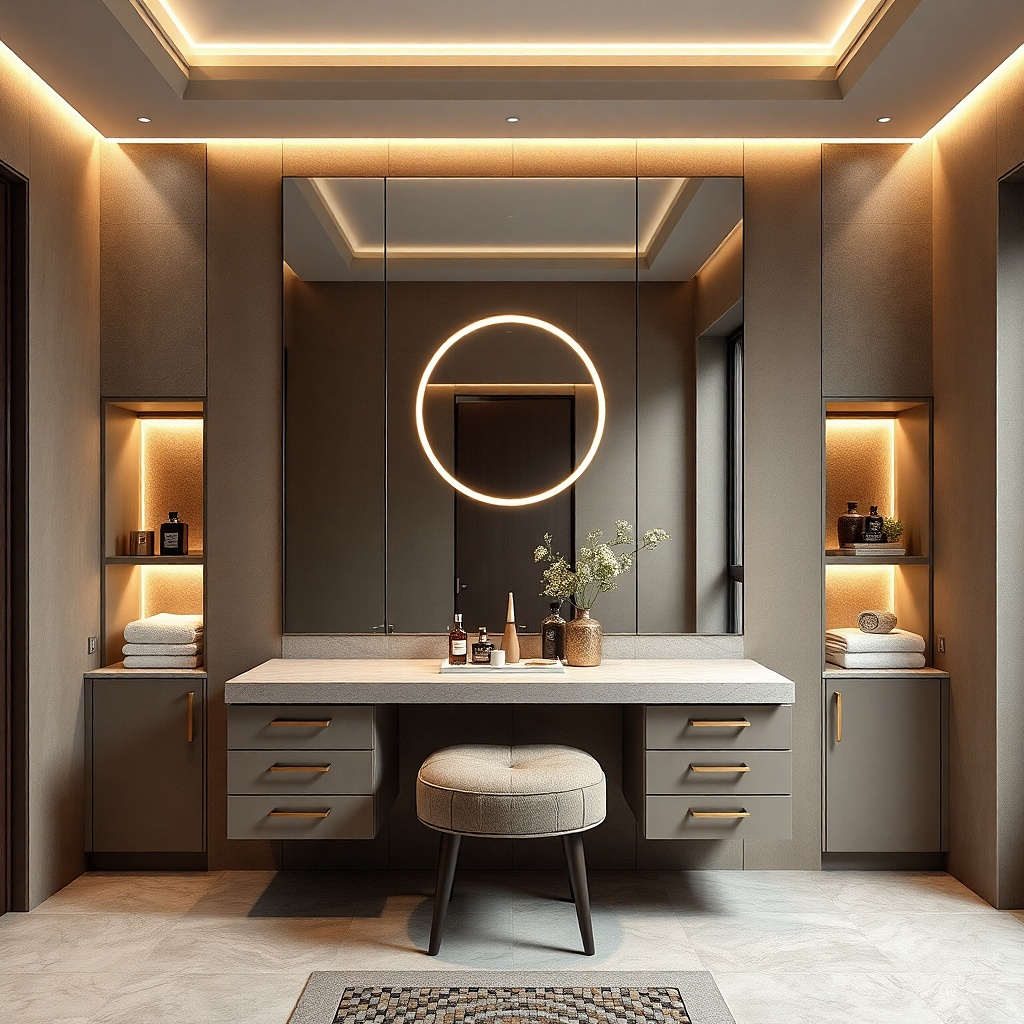
This is the practical mirror idea that still looks polished. A double-sided mirror with one magnified side gives you precision for grooming without turning your counter into a clutter zone. Choose a wall-mounted version or a thoughtfully integrated hinge mount so it looks like a built-in accessory. Visually, it works best when the magnification panel is framed to match the main mirror and doesn’t look like a separate gadget. In bathrooms where people do makeup or shaving daily, this mirror look improves the experience and keeps surfaces cleaner.
Choose a wall-mounted double-sided mirror with a fixed magnification level like 5x and a matching frame finish. Mount it so the main mirror aligns with your eye level when standing at the vanity — typically centerline around 58-62 inches from the floor. Keep the bottom edge in the 6-8 inch above countertop zone so it doesn’t feel low. Use the mounting template, drill into studs when possible, and confirm the magnified side swings without hitting lights or the faucet.
Try thisPair it with a small, neat organizer inside a drawer — the mirror handles precision, the drawer handles storage.
Common mistakeDon’t mount it too high or it becomes unusable; magnification mirrors fail when people have to reach.
18. Mirror with Soft-Arch Top and Straight Sides for a Modern Twist
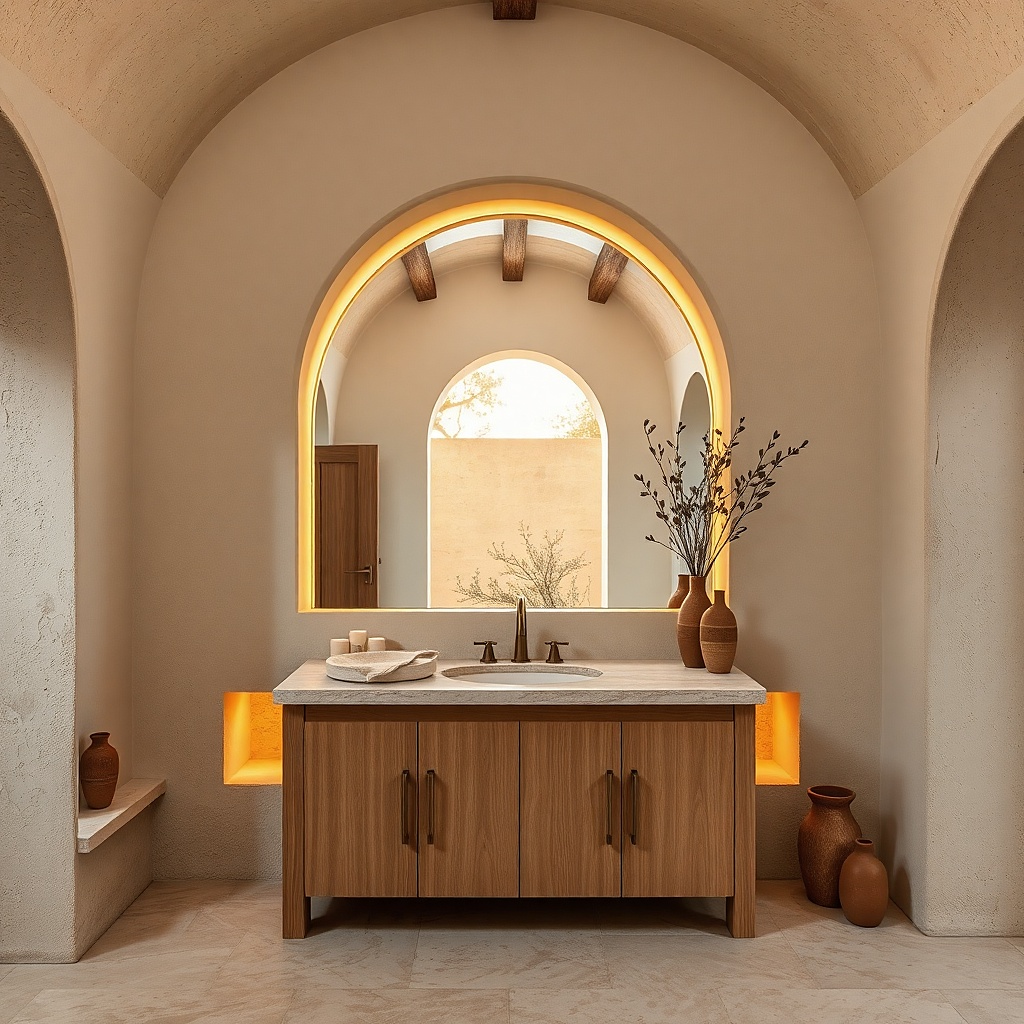
This hybrid shape gives you the elegance of an arch with the stability of a rectangle. The straight sides keep the mirror aligned with vanity lines, while the softened top curve lifts the visual weight. That combination makes the mirror look designer in both modern and transitional bathrooms. It also helps when a full arched mirror feels too formal for your space. Choose a thin metal frame in matte black or brushed brass so the curve looks intentional without heavy ornament.
Select a mirror where the top curve is subtle — you should still read it as a mostly-rectangular shape. Size it to the vanity width minus 2-4 inches total and center it above the sink. Mount with the bottom edge 6-7 inches above the countertop. Use a level and measure from the countertop to each mounting point so the arch doesn’t end up tilted.
Try thisKeep the vanity hardware finish consistent with the mirror frame so the curve feels like part of the design language.
Common mistakeAvoid extreme, dramatic arches on small vanities — the top curve can overwhelm the wall.
19. Tall Framed Mirror with Side Panels for Extra Coverage
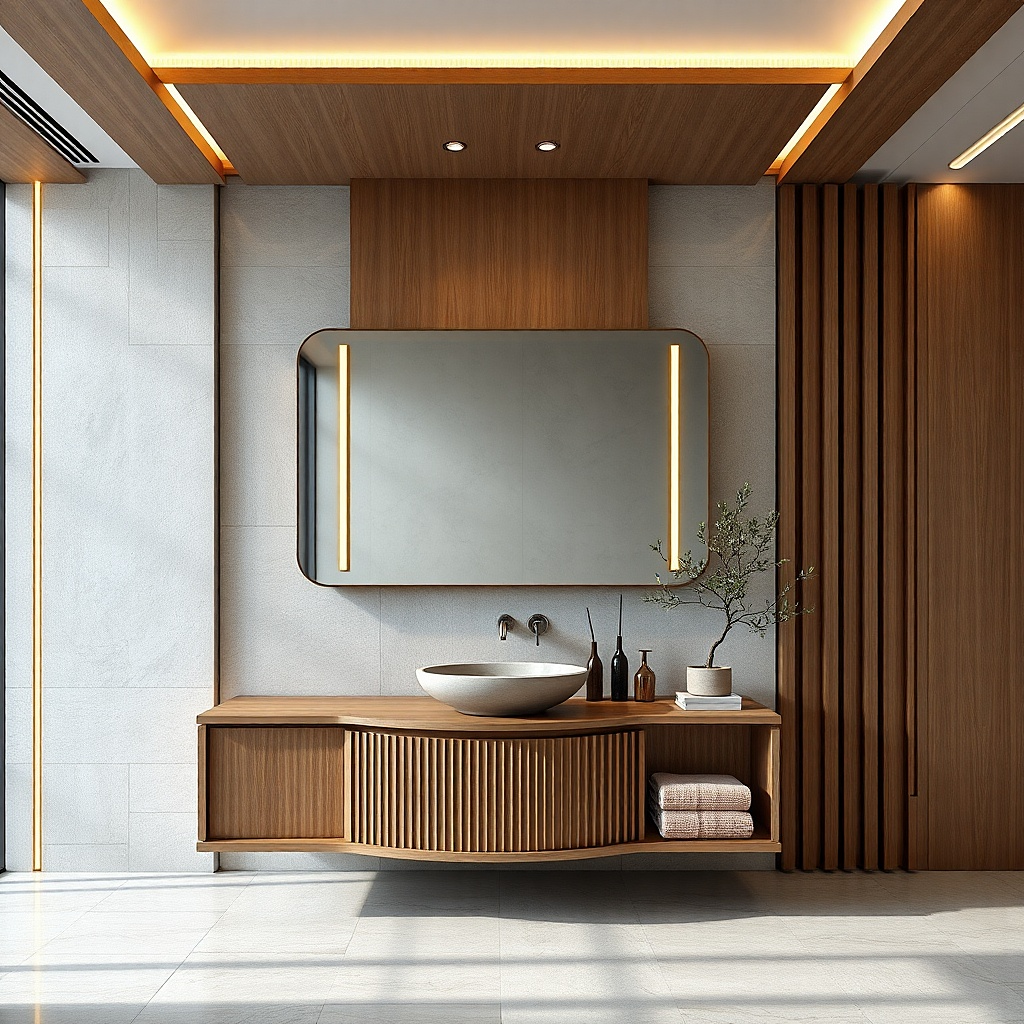
Extra vertical coverage makes a bathroom look brighter and more finished, especially if your sink sits under a higher backsplash. A tall framed mirror with subtle side panels adds width without making the mirror feel like it’s floating. It’s a great solution when you have a countertop with a lot of items and want the mirror to cover more wall area so the reflection looks cleaner. Choose a frame finish that matches your hardware and keep the side panels narrow for a sleek, tailored look. This idea is also helpful for longer vanities where a single rectangle feels too narrow.
Measure from the countertop to any lights or trim so you don’t force the mirror into a tight gap. Choose a tall mirror height that keeps at least 2-3 inches clearance from any ceiling fixture. Mount centered and set the bottom edge 5-8 inches above the countertop. If the mirror has side panels, align them with the vanity edges so the whole unit looks symmetrical and built-in.
Use anti-fog glass if your shower steam hits the mirror area — it keeps the tall surface looking crisp.
Don’t cut the mirror too short; if it ends just above eye level, it loses the brightening effect.