
1. Walnut Platform Bed with Charcoal Bedding and Linen Curtain Panels
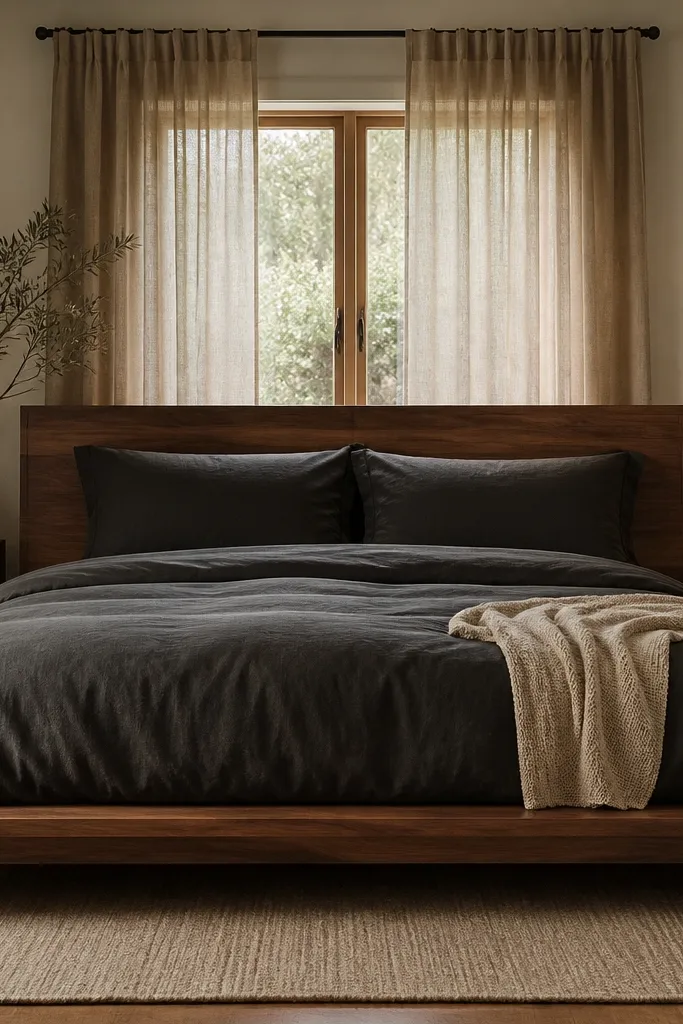
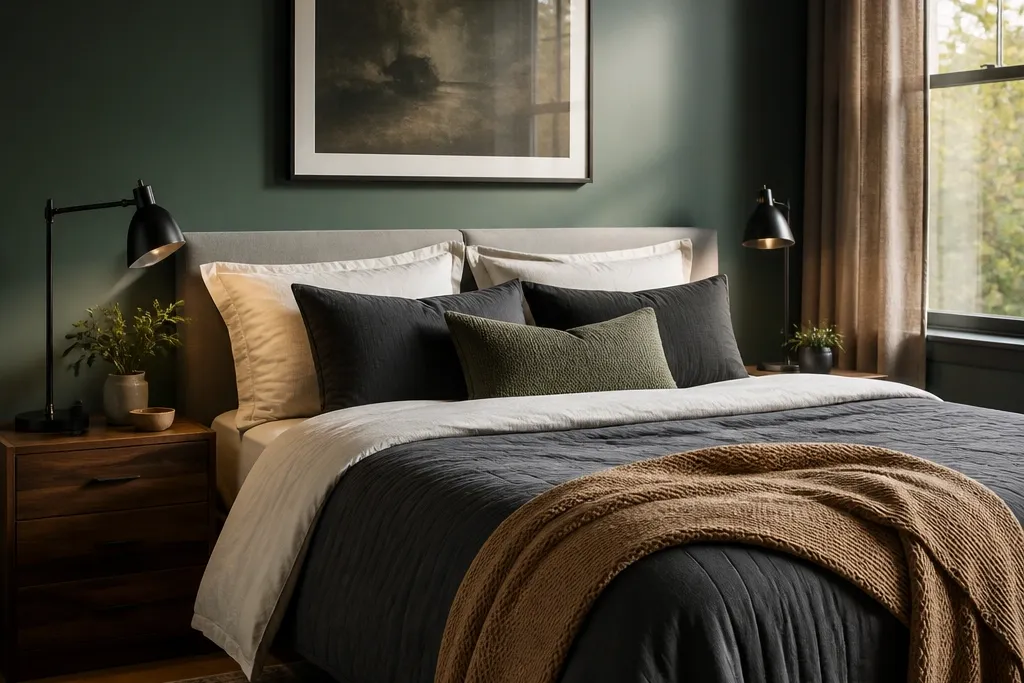
This look is clean, grounded, and easy to keep tidy. A walnut platform bed brings warmth without needing extra decor, and charcoal bedding makes the whole room feel sharper. Add a tan or oatmeal throw with a visible knit texture so the bed doesn’t look flat. Floor-length linen curtain panels soften the room and help it photograph well by smoothing the vertical lines around the window. It’s a strong option for men’s bedrooms that feel too bare or too cluttered — the bed stays the focus while curtains frame it.
Start with bedding that has one dark base and one lighter layer. Choose a charcoal duvet cover and add a tan knit throw folded at the foot; then put two standard shams plus one lumbar pillow in a neutral (oat or sand). Next, hang linen curtains so the rod sits 4-6 inches above the window frame and the panels touch the floor. Finally, place a rug under the bed so at least the front legs of your bed sit on it; if you’re using a platform bed, aim for the rug to extend 12-18 inches beyond the sides.
Use a matte black or dark bronze lamp base so the charcoal reads intentional instead of gloomy.
Don’t mix glossy bedding with flat curtains — the shine mismatch makes the room feel unfinished.
2. Soft-Gray Upholstered Headboard with White Bedding and Black Picture Rails
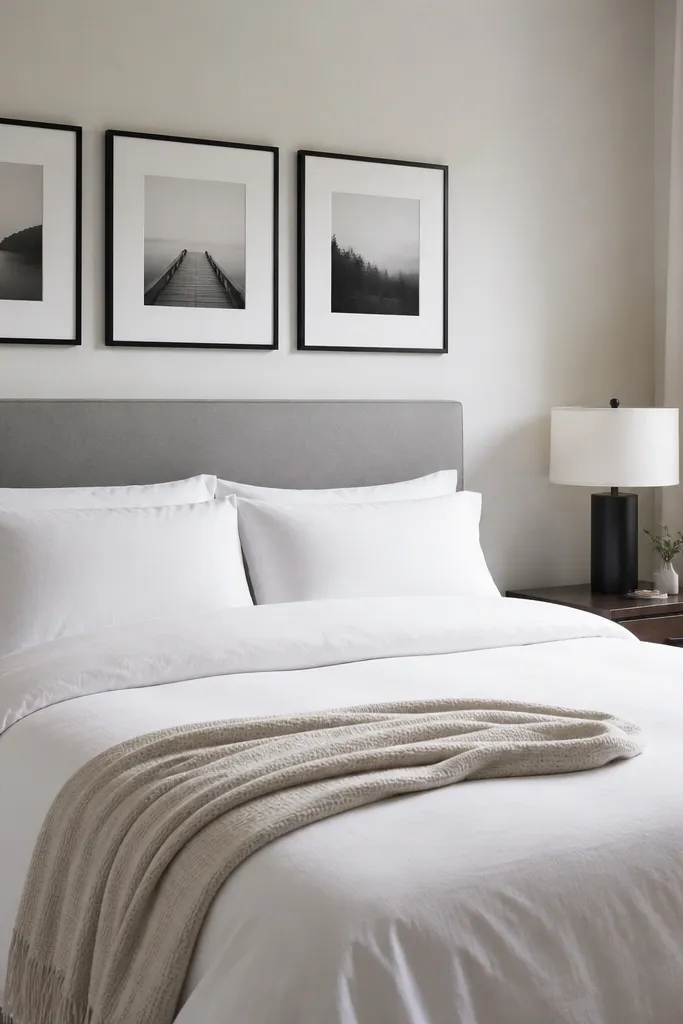
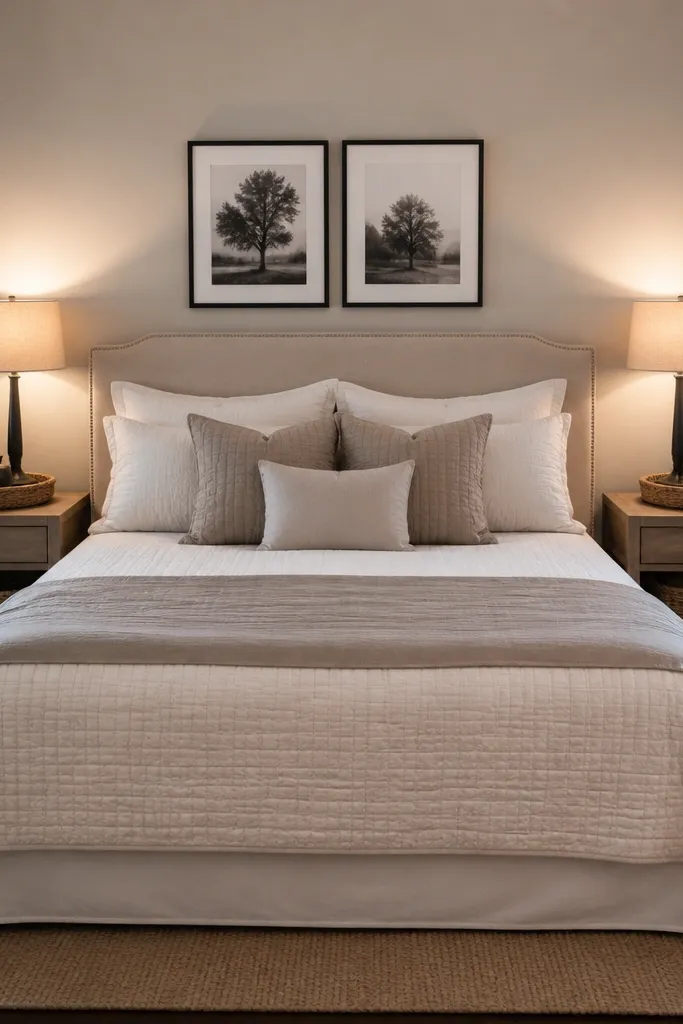
An upholstered headboard makes the room look finished even if you keep the rest minimal. White bedding brightens the sleep area and makes the headboard look more tailored. The trick is using wall structure that looks deliberate: a black picture rail or a straight row of frames above the bed. Keep frames in one finish (black) and use consistent mat thickness so the composition stays crisp. This direction is great when your bedroom has awkward corners or you want to hide visual clutter by creating a clear, linear focal point.
Pick a headboard in soft gray with a simple shape, then build the bed with a white duvet and two white shams. Add one gray or black accent pillow at the center so your eye lands in the right place. Mount a picture rail or hang frames so the bottom edge lands about 10-12 inches above the headboard top. Use a measuring tape: keep spacing between frames about 2-3 inches. For effort level, this is mostly bedding + wall hardware — expect 2-3 hours if you already have the bed and rug.
Choose frames that have a thin profile; chunky frames can overpower the headboard.
Don’t hang art too high — if it starts above your headboard, the bed loses its “anchored” look.
3. Black Iron Bed Frame with Cream Duvet and a Deep Green Accent Wall
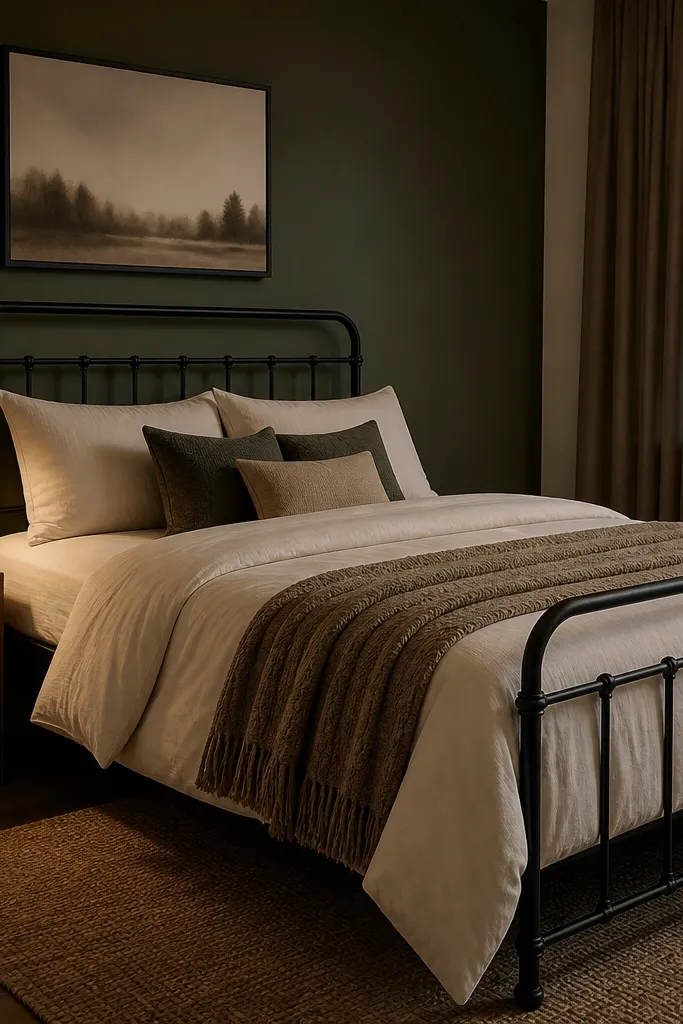
If you want a bedroom that looks styled in photos without looking busy, paint one wall deep green and keep everything else calm. Black iron lines look sharp against cream bedding, and the contrast reads modern instead of harsh when you add warm textures. Use a cream duvet and a low-contrast throw in oatmeal or camel. The deep green gives you depth behind the bed, so you don’t need a lot of decor to make it look intentional. This works best when your window is on the other side of the bed or you can control glare, because the wall color does the heavy lifting.
Paint only the wall behind the bed. Choose a deep green that leans slightly warm (think forest-leaning) and coat it evenly with two passes. Then dress the bed with a cream duvet cover and add one textured layer like a boucle or knit throw. Place a rug in a warm neutral (ivory or light taupe) so the green doesn’t dominate the floor. Keep nightstands in a single material — either light wood or matte black — and match lamp shades to a warm linen tone.
Try thisAdd a mirror or framed print on the opposite wall to bounce light and keep the room from feeling heavy.
Common mistakeDon’t use bright white bedding and cool blue accents — the green will look dull and gray instead of rich.
4. Beige Waffle-Knit Duvet with Cognac Leather Belt-Style Accent
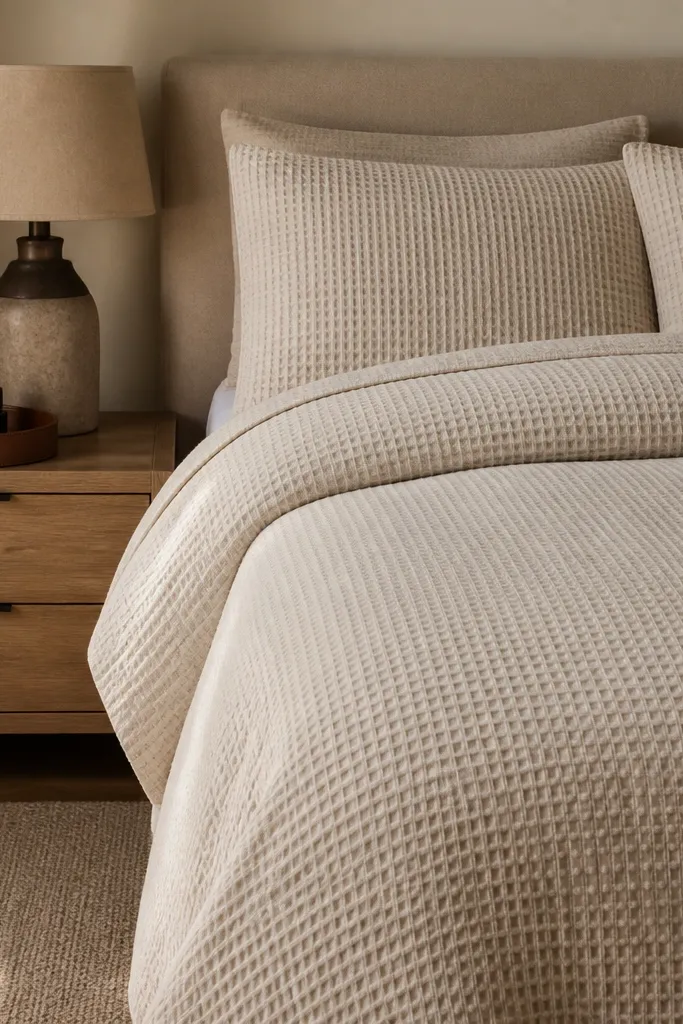
This is the “quiet luxury” look without going overboard. A beige waffle-knit duvet cover adds strong texture you can see from across the room, which makes the bed look styled even when accessories are minimal. Cognac leather details — like a leather throw blanket or a leather-trim bedside tray — add warmth and a masculine edge. Keep the rest neutral: light oak nightstand, off-white walls, and a rug in sand or natural jute. The vibe is clean and tactile, perfect for men who want a calm bedroom that still feels designed.
Start with bedding texture, not pattern. Choose a beige waffle-knit duvet or cover with visible stitch depth, then add one solid pillow in off-white. Use a cognac leather accent that’s functional — a bedside tray or a leather-wrapped lamp base — so it doesn’t feel decorative-only. Place the rug so it reaches under the bed front; if you’re short on space, use a runner centered under the bed. Finish with one lamp that has a warm shade and a simple base in wood or brushed brass.
Try thisStick to two neutrals max (beige plus one warm wood tone) so the leather reads as the accent.
Common mistakeAvoid adding multiple small knickknacks — texture does the work here.
5. Navy Bedding with Tan Leather Footstool and a Light Oak Dresser
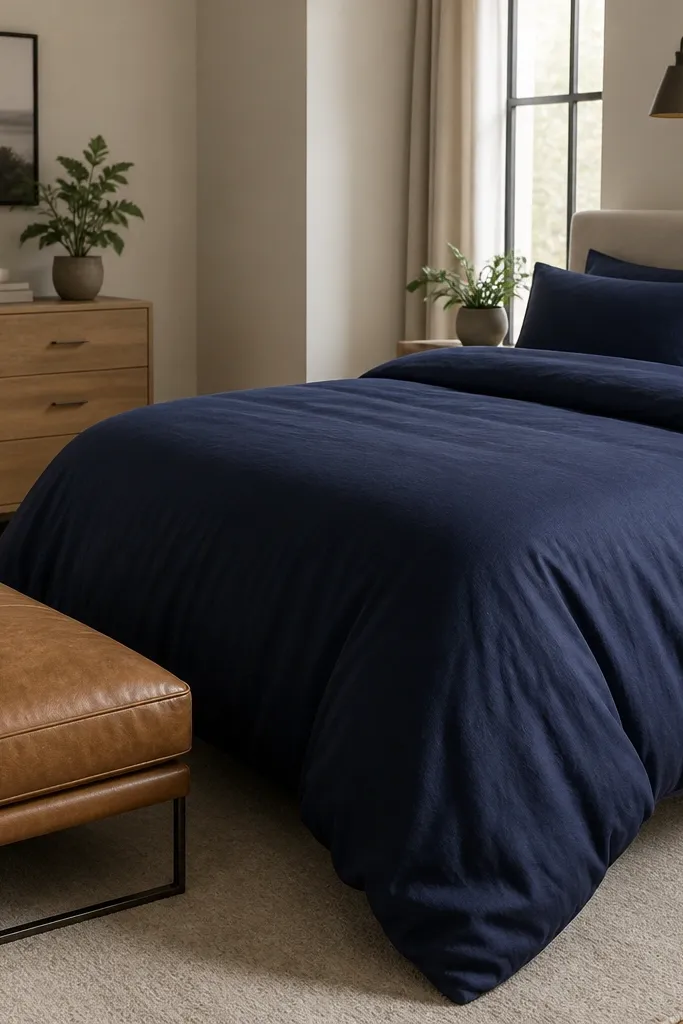
Navy is one of the easiest colors to make a men’s bedroom look intentional because it frames the room visually. Pair it with light oak furniture and tan leather accents for warmth. The tan footstool adds a second texture layer and gives you a place to sit or drop clothes without messing up the bed aesthetic. Keep wall art minimal: one large piece or a simple triptych in warm neutrals. This setup looks good even when you don’t have matching sets, because the color pairing and materials create cohesion.
Choose a navy duvet cover and keep shams in a lighter neutral like cream or light stone. Add a tan leather footstool at the end of the bed and center it; it should be about one-third to half the bed width. Match your nightstand and dresser in finish — light oak or white oak — and keep hardware consistent (brass or matte black). Place one large art piece above the dresser or slightly offset above the bed, with a frame that matches your lamp finish. Budget-wise, the biggest spend is bedding and the footstool; the rest is placement.
Use a tan throw with visible weave, not a smooth blanket — it looks more expensive in daylight.
Don’t pair navy with cool gray furniture finishes — it reads colder and less put together.
6. Low-Profile Platform Bed with Monochrome Taupe and a Patterned Rug Underfoot
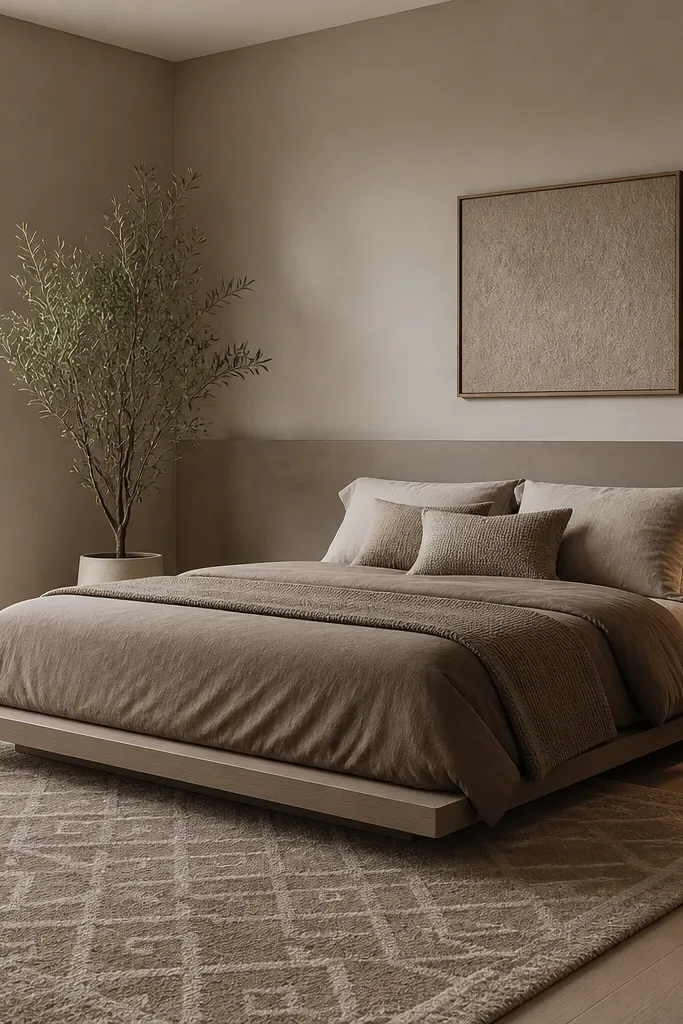
Monochrome taupe keeps the room calm, and the rug adds the only real visual movement. A low-profile bed makes the room feel modern and gives you more open floor, which helps smaller bedrooms look bigger. Use taupe bedding in different finishes — matte duvet, slightly textured throw, and a softer pillow fabric. Underfoot, pick a rug with a subtle pattern in taupe, cream, and a hint of charcoal so the bed doesn’t feel flat. This look is strong when your room has limited wall space for decor.
Dress the bed in layered taupe: choose a taupe duvet cover, then add a throw that’s one shade deeper or lighter. Keep pillow sizes consistent: two standard shams and one lumbar pillow. Select a rug large enough that it reaches under the front edge of the bed; if the room is tight, prioritize rug width over rug length. Add one patterned element only — the rug — and keep curtains solid in a light taupe or warm white. Finally, keep nightstand decor to one item: a lamp plus a tray or book stack.
Try thisMatch curtain fabric color to the rug’s lightest tone, not the darkest tone.
Common mistakeAvoid adding patterned bedding on top of a patterned rug — it turns the look busy fast.
7. Whitewashed Wood Bed with Black-and-White Striped Runner and Brass Lamps
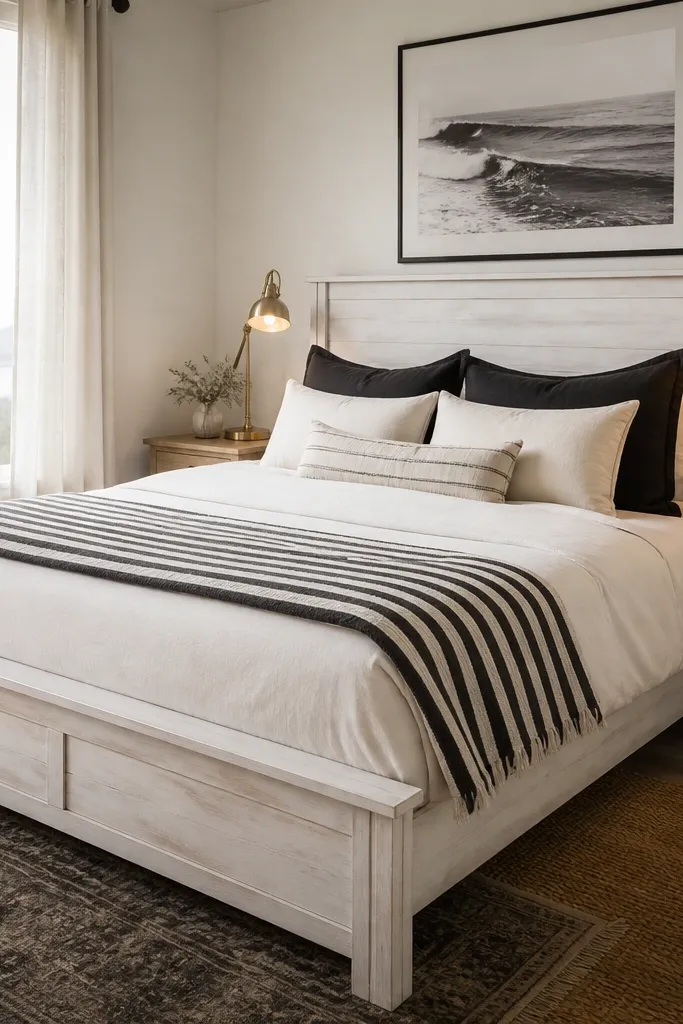
This is a crisp, coastal-leaning look that still reads masculine because of the black accents and brass hardware. Whitewashed wood makes the space feel airy, while a black-and-white striped runner at the foot of the bed adds a graphic line. Brass lamps bring warmth and highlight texture in the bedding. The key is to keep the palette tight: white, black, and one warm metal. It looks put together because the runner gives structure and the lamps match the metal theme.
Pick a whitewashed wood bed or a light wood frame with a similar finish. Use a white duvet cover and add black accent pillows or a simple black throw. Place a striped runner centered at the foot; it should be about 12-18 inches longer than the distance from the bed’s sides to create a balanced frame. Use matching brass lamp bases and consistent shade style. Keep the rug either solid light cream or a very subtle texture so the runner remains the pattern.
Use a dimmable warm bulb and keep lamp shades a half-inch to one inch larger than the base so they look tailored.
Don’t add black decor in random places — tie it to the runner and lamp metal.
8. Dark Charcoal Wall Behind Bed with Warm Beige Bedding and a Standing Lamp
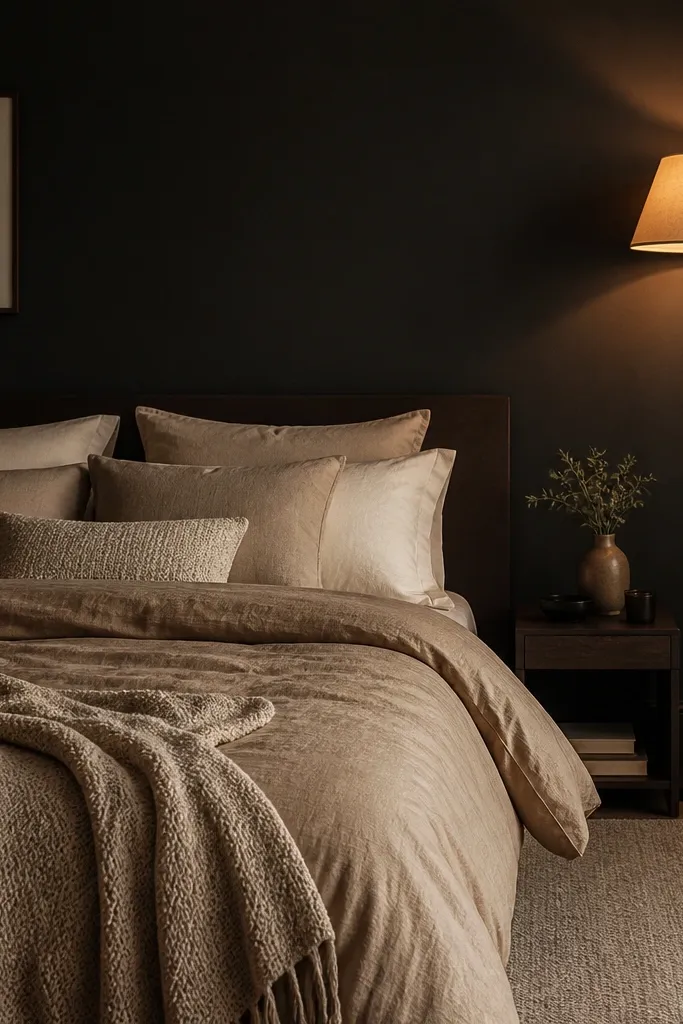
Painting the wall behind the bed charcoal makes your bedroom look designed without relying on lots of objects. Warm beige bedding keeps the room from feeling like a cave and adds softness against the dark background. A standing floor lamp on one side creates a layered lighting look, especially in the evenings. The aesthetic is moody but controlled because you’re limiting color to two main tones plus one metal finish. This direction works well for men’s bedrooms that need privacy and a calmer, more cinematic feel.
Paint only the wall behind the bed charcoal and let it dry fully before hanging anything. Dress the bed with a warm beige duvet and shams; add one textured throw in camel or light tan. Put a rug in light neutral to keep the floor from disappearing visually. Add a floor lamp with a warm linen shade near the reading side; position it so the light spills toward the bed but doesn’t glare at eye level. Use one side table and keep the top clear — one book or a small tray is enough.
Try thisIf you can, choose a floor lamp with a dimmer. The room looks instantly more intentional at night.
Common mistakeDon’t use cool white bedding on charcoal — it reads harsh instead of warm.
9. All-White Bed Setup with Linen Curtains and a Single Black Wall Sconce
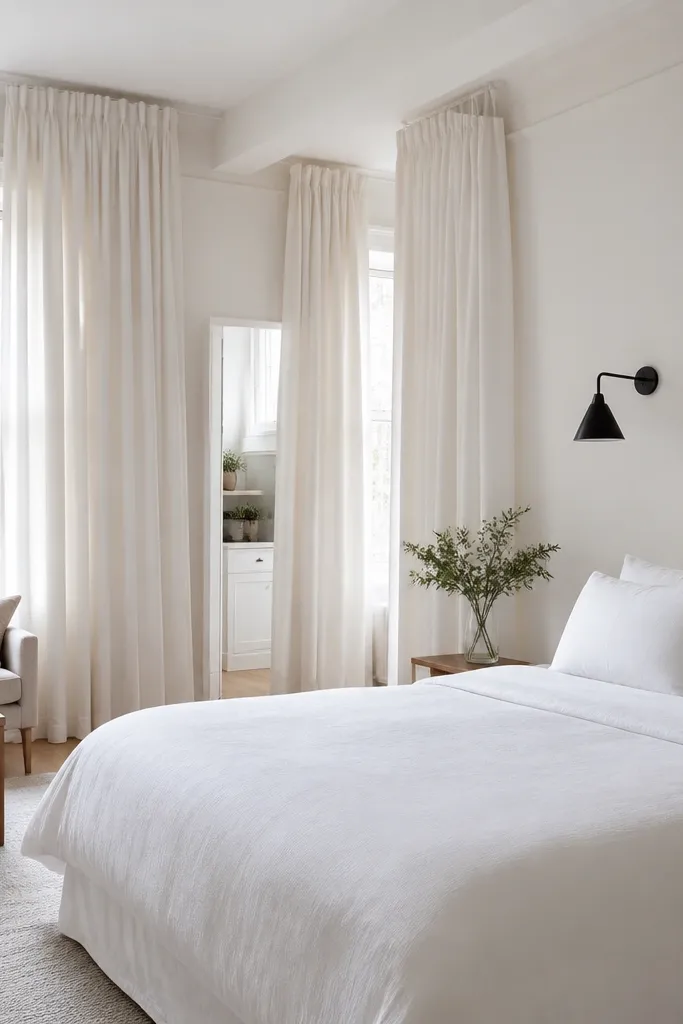
This is the clean studio look that still feels livable. All-white bedding makes the room feel brighter and more “put together” quickly, but it only works if you add texture and one crisp black element. Linen curtains soften and hide imperfections in window trim, which makes the whole room look smoother. A single black wall sconce above the bed gives you a strong aesthetic focal point without cluttering the nightstand. It’s a good choice when you want a minimal bedroom that still photographs well.
Choose white bedding with texture: a cotton-linen duvet or a white duvet with subtle weave. Add two white shams and one off-white or oatmeal pillow so the bed doesn’t look like a flat sheet. Install linen curtains and hang them high and wide — 4-6 inches above the window and 2-6 inches beyond each side. Mount a black wall sconce so the center of the light is roughly at head height when sitting. Use a simple nightstand with a warm lamp only if you don’t have other task lighting.
Try thisKeep your black accent limited to the sconce and one small item on the dresser so it stays sharp, not scattered.
Common mistakeAvoid pure glossy white linens — they look cheap and show wrinkles more.
10. Rust Brown Bedding with Cream Walls and a Woven Jute Rug
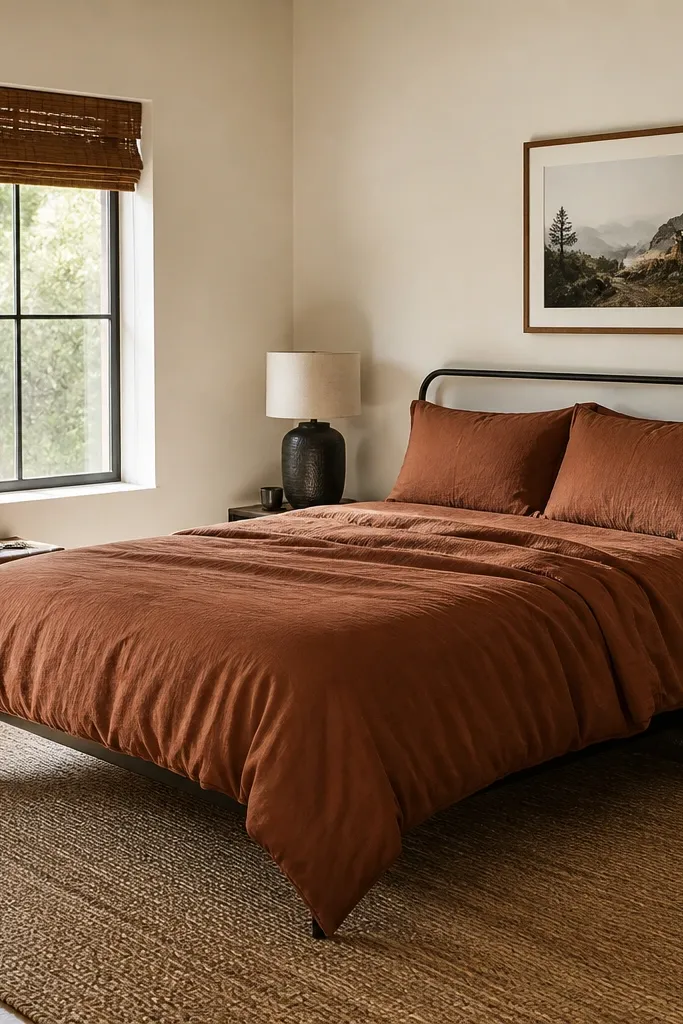
Rust brown warms up a bedroom fast, and it looks good with natural fibers. Cream walls keep the space bright, while a woven jute rug adds a tactile, earthy layer that photographs beautifully. This direction is especially good for men who want a “grown-up” color without going dark. Keep bedding in rust tones with a matte finish, and add one cream or oatmeal throw for contrast. The result feels composed because the natural textures do most of the styling work.
Paint or choose cream walls if you can — it makes the rust color look intentional. Select a rust duvet cover with a matte fabric and add a cream knit throw. Choose a jute rug that’s large enough for at least the front bed legs to sit on it; if your bed is queen or king, plan for a rug around 8x10. Put a simple wood nightstand on each side and keep decor minimal: one lamp and a small tray. Finish with curtains in a natural off-white linen.
Use warm bulbs at 2700K and avoid overly bright overhead light so the rust stays rich.
Don’t pair rust with icy grays — the color temperature clash makes it feel off.
11. Olive Green Duvet with Black Metal Frame Mirror and Floating Shelves

Olive green gives you a masculine, outdoorsy feel without turning into a theme. The black metal mirror adds a strong graphic line and reflects light, which makes the room look larger and sharper. Floating shelves help you display a few intentional items — watch, framed photo, or a small stack of books — while keeping the nightstands clean. This look works well if you have wall space and want vertical styling that doesn’t eat floor area. It’s also a practical setup if you need a home for daily carry items.
Choose an olive duvet and keep shams in cream or light stone. Add a black throw or pillow for contrast, but keep it limited so the olive stays the hero. Mount a black metal framed mirror on the wall opposite the bed or above a dresser so it reflects light. Install two floating shelves above and slightly to one side of the bed; keep shelf depth around 6-7 inches so items don’t look cramped. Space items evenly and leave some negative space — shelves look best when they breathe.
Try thisUse one consistent finish for small hardware on shelves (all black or all dark bronze).
Common mistakeDon’t crowd shelves with many small objects — it stops reading as intentional fast.
12. Pattern-Lite Chevron Rug with Solid Bedding and One Oversized Wall Print
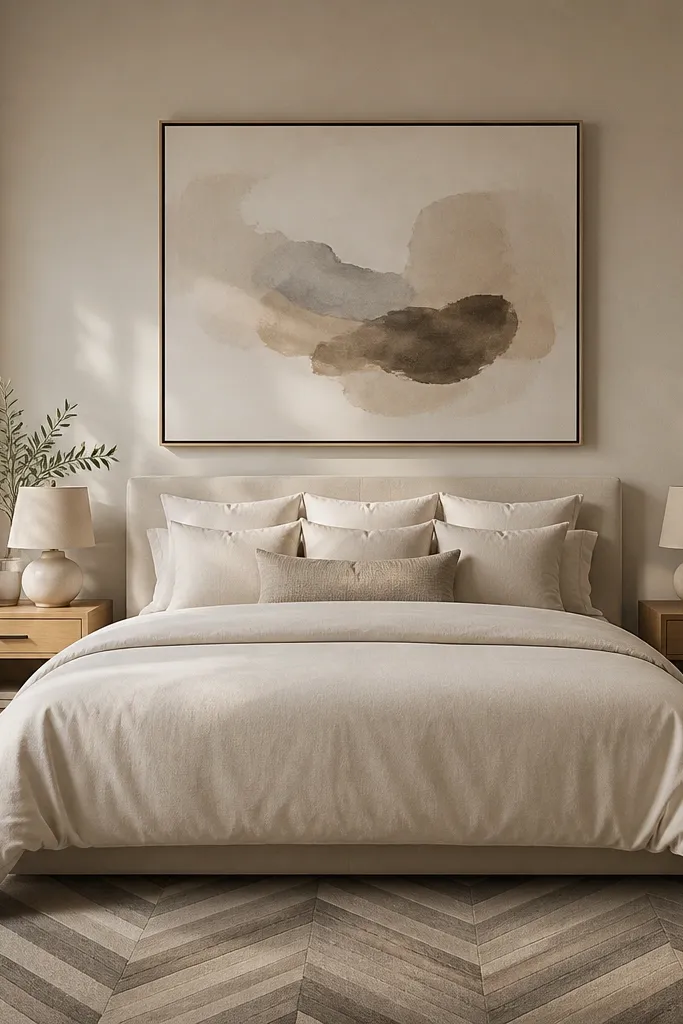
If you like pattern but don’t want the room to feel busy, put the pattern in one place. A chevron or subtle geometric rug gives movement underfoot, while solid bedding keeps the bed calm and photogenic. One oversized wall print above the bed creates impact without adding multiple frames. This setup is ideal when you want a strong design moment but your bedroom doesn’t have space for many decor pieces. It also helps if you have a neutral wall — the print becomes the anchor.
Select solid bedding in a neutral like light gray, cream, or stone. Add a textured throw in the same family so the bed looks layered, not flat. Choose a rug with a pattern that stays within two or three tones; place it so the front bed legs sit on it. Hang one large framed print centered above the bed; the bottom of the frame should sit about 10-14 inches above the headboard top. Keep nightstands simple: one lamp and one tray for charging cables.
Match the rug’s lightest tone to the wall art mat color for a clean visual link.
Avoid multiple patterns at once — chevron rug plus patterned curtains looks chaotic.
13. Textured Boucle Headboard with Oatmeal Bedding and a Round Rattan Pendant Light
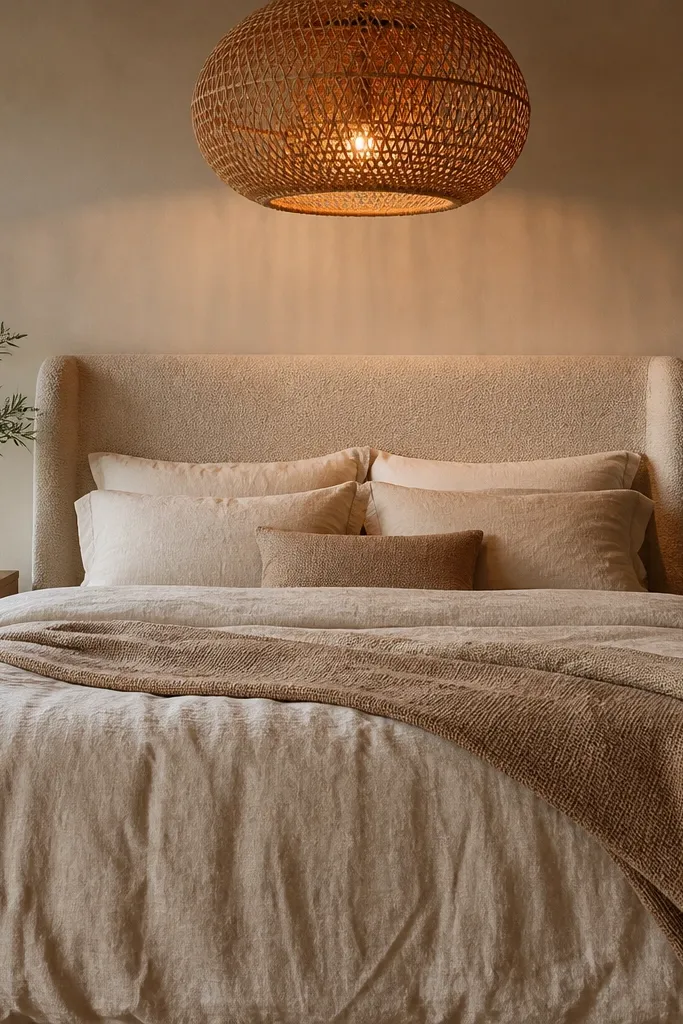
Boucle texture turns a bedroom into a visual story without adding clutter. Pair an oatmeal duvet and shams with a boucle or boucle-look headboard for a soft, tactile aesthetic. A round rattan pendant light adds warmth and a sculptural element — it looks good from both bed height and standing height. Keep the rest simple: light wood nightstands, a neutral rug, and one framed print. This design is great for men who want comfort-forward styling that still looks intentional and modern.
Choose a boucle headboard or a headboard cover with visible loop texture. Keep bedding in oatmeal or light tan and add one knit throw for extra contrast. Install a pendant light centered above the bed only if your ceiling wiring and clearance are correct; aim for the bottom of the shade to sit roughly 30-36 inches above the floor. Add a rug with a natural texture and keep it large enough for bed front legs to sit on it. Finally, use one lamp on the side table so you still have task lighting even when the pendant is off.
Try thisIf the pendant is rattan, use a warm bulb and a dimmer so the texture glows instead of looking harsh.
Common mistakeDon’t add heavy patterned curtains with boucle — the texture pile gets overwhelming.
14. Monochrome Black-and-White with Black Nightstands and a Light Rug
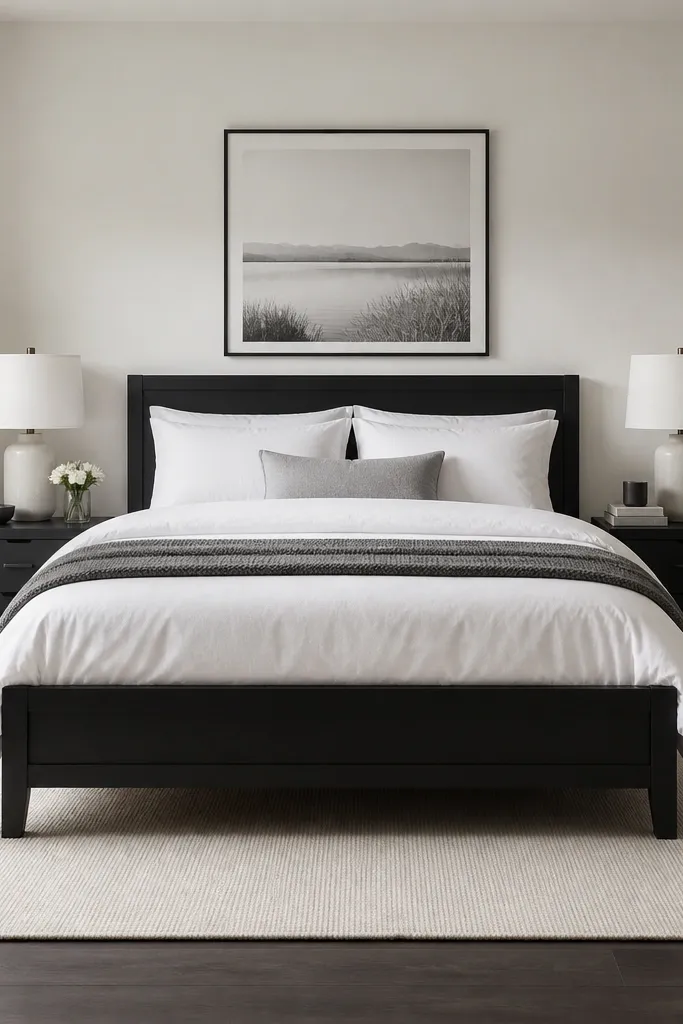
Monochrome black-and-white looks put together fast because the palette is strict. Black nightstands and a black bed frame (or black headboard) give you structure; a light rug keeps the room from shrinking. White bedding gives contrast, and you can add one gray element (like a knit throw) to stop it from feeling too stark. This direction is ideal for small rooms because the light rug and white bedding open up the floor area. It also works well if you have minimal wall space because the furniture contrast becomes the design.
Pick a bed in black or use a headboard that is clearly black. Dress in white duvet and shams, then add one gray accent pillow so the look has depth. Choose black nightstands matched in finish and hardware, and keep their tops to one item each. Select a light rug (cream or light gray) and size it so bed front legs sit on it. For wall decor, use one large black-and-white piece centered above the bed or on the main wall.
Use matte black finishes on metal — glossy black reads shinier and more cluttered under light.
Avoid mixing too many whites (bright white plus warm off-white) — it makes the palette feel accidental.
15. Light Gray Bedding with a Navy Throw Blanket and Matching Navy Curtains
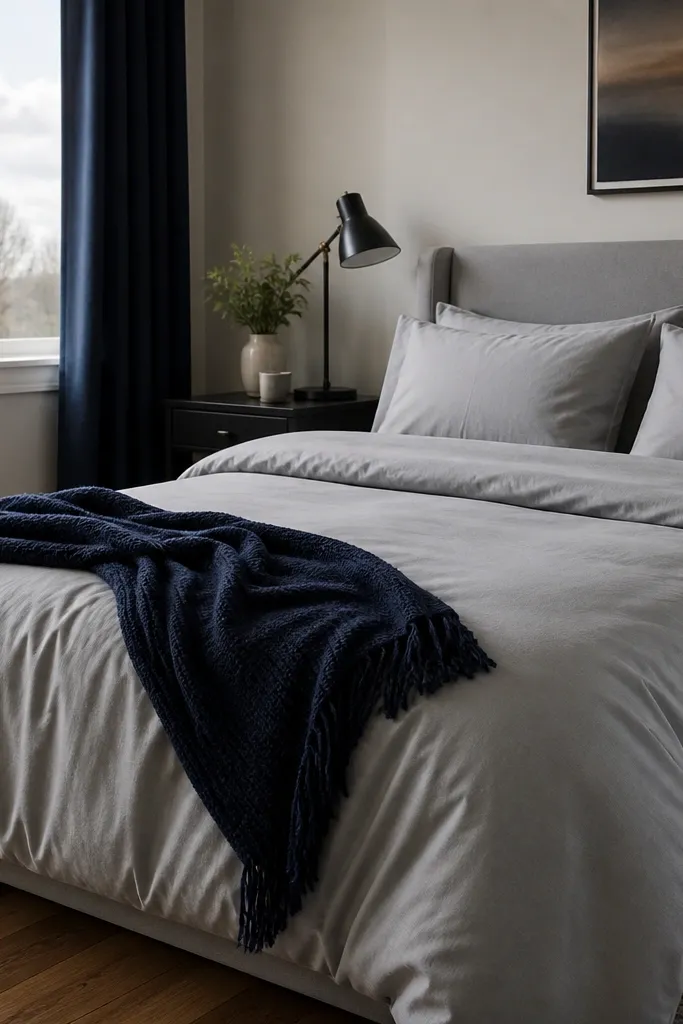
This is one of the easiest ways to look coordinated without buying a full matching set. Light gray bedding is a neutral base, and navy curtains add a bold but controlled color block. The navy throw ties the bed to the window so the room looks planned. The aesthetic reads classic and clean, especially when you keep the rug neutral and the lamps warm. It’s a strong option if you want color but you don’t want to commit to painting walls.
Choose a light gray duvet cover and shams in a matte fabric. Add a navy throw blanket folded at the foot and a single navy accent pillow so the color repeats. Hang navy curtains high and wide — 4-6 inches above the window and enough width to pool slightly when closed. Use a neutral rug in cream, light taupe, or soft gray with minimal pattern. Match lamp shades to your gray bedding tone and keep metal finishes consistent across lamp and curtain rod.
If the curtains are navy, choose a curtain rod in the same metal finish as your lamp base for a cleaner look.
Don’t pick navy that’s too purple — it will fight with gray and look off in daylight.
16. Wood Slat Accent Wall Behind Bed with Clean White Bedding

A wood slat accent wall gives you an instant design focal point. It’s photogenic because it creates horizontal lines that catch light gently, and it makes the bed area look styled even with minimal decor. Keep bedding clean and bright with white duvet and subtle texture so the slats look intentional instead of busy. Add black frames or a black sconce to create contrast against the wood. This look works especially well in bedrooms where the wall behind the bed feels plain and you don’t want to rely on lots of hanging art.
Install wood slats only on the wall behind the bed, centered and scaled to the bed width. Use consistent slat width and spacing; a common approach is 2-3 inches wide slats with narrow gaps. Stain or finish the slats in a medium tone so they don’t go too orange. Then dress the bed in white bedding with one textured throw in oatmeal or light beige. Hang one or two small black frames on either side of the bed or skip frames entirely if the slat wall already gives you the visual interest.
Run the slats slightly taller than the headboard — the top shadow line looks more expensive.
Don’t paint over the slats to “soften” them — the texture disappears and the look turns flat.
17. Rustic Oak Dresser Styling with a Mirror and a Two-Item Nightstand Rule
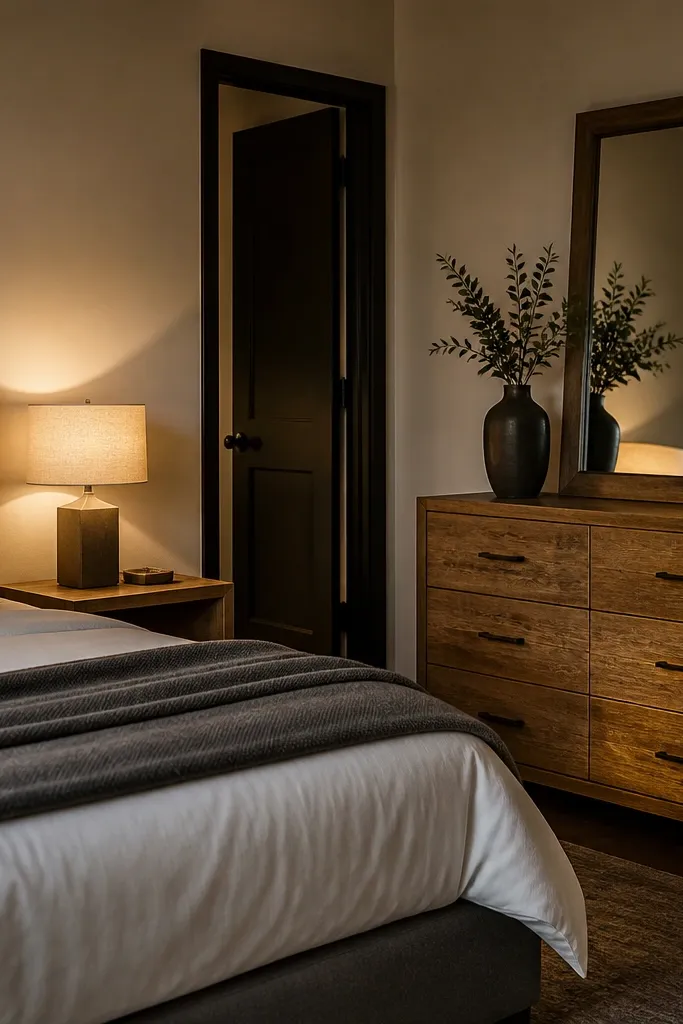
This is a practical, aesthetic method: limit each nightstand to two items and style the dresser as the secondary focal point. A rustic oak dresser adds warmth and keeps the room masculine, especially when you add a mirror with a simple frame. The two-item rule prevents the bedroom from turning into a catch-all. You get a clean look that still feels lived-in: lamp + tray on one side, lamp + book stack on the other. It’s ideal if you’re dealing with cords, chargers, and everyday clutter that normally ruins the “put together” look.
Pick a rustic oak dresser and a mirror that’s large enough to cover the visual gap above it. Style one nightstand with a lamp and a small tray that holds your daily items; keep the tray centered. Style the other nightstand with a lamp and a short book stack or one framed photo. Place the mirror so its center is roughly at eye level when standing — usually around 60-65 inches from the floor. On the bed, use solid bedding in a neutral so the dresser doesn’t compete for attention.
Use a tray with a lip so items don’t slide forward and look messy in daylight photos.
Avoid three or more items per nightstand — it turns styled into cluttered quickly.
18. Cream Duvet with a Black Bedside Reading Sconce and a Low Pile Rug
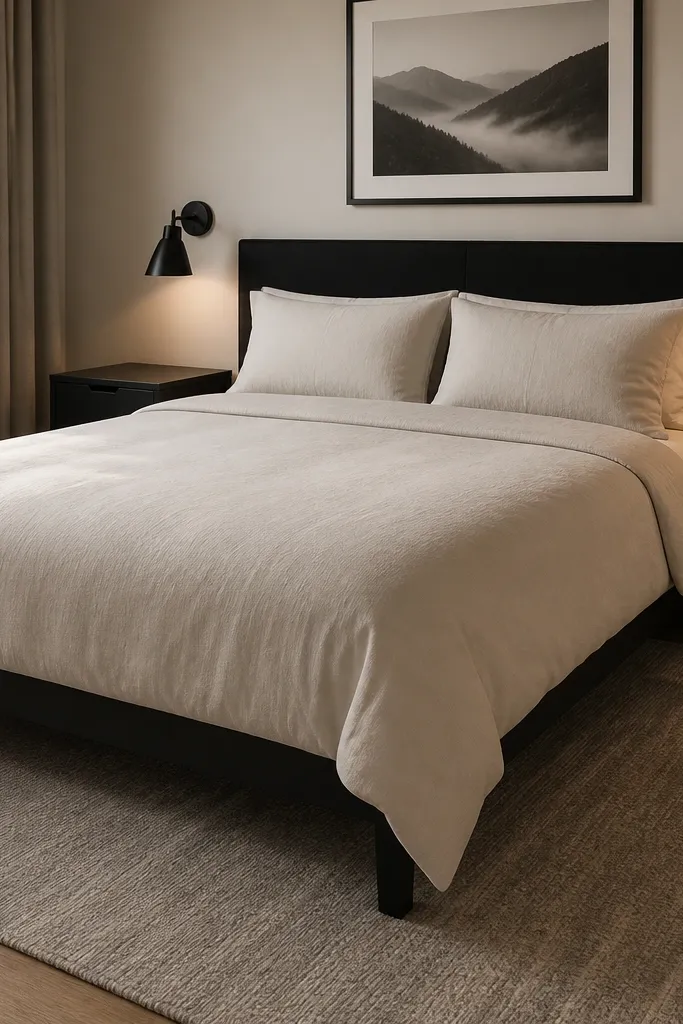
Wall sconces make the bedroom look designed because they remove the “lamp clutter” problem. A black reading sconce on each side (or one side if space is tight) gives strong symmetry and a clean surface on the nightstands. Cream bedding keeps the palette light and calm, while a low pile rug reads tidy and modern. This direction is especially good for men who like a minimal look but still want a place to read at night. It also helps if your nightstands are small and you can’t fit lamps without crowding.
Choose cream bedding in a matte cotton or cotton-linen blend and add one darker throw pillow in charcoal. Mount wall sconces at a reading-friendly height: typically around 48-60 inches from the floor to the light center, depending on your bed height. If you have two sconces, keep them identical and align them with the headboard edges. Use a low pile rug in cream or light gray so the floor looks smooth and easy to clean. Keep nightstands minimal: one tray on one side and nothing bulky on the other.
Use warm bulbs and point the sconces so the light lands toward the reading area, not across your face.
Don’t mount sconces too high — if you can’t aim light at your lap, the look stays pretty but the function fails.