1. Oversized wood-framed linen art in warm cream
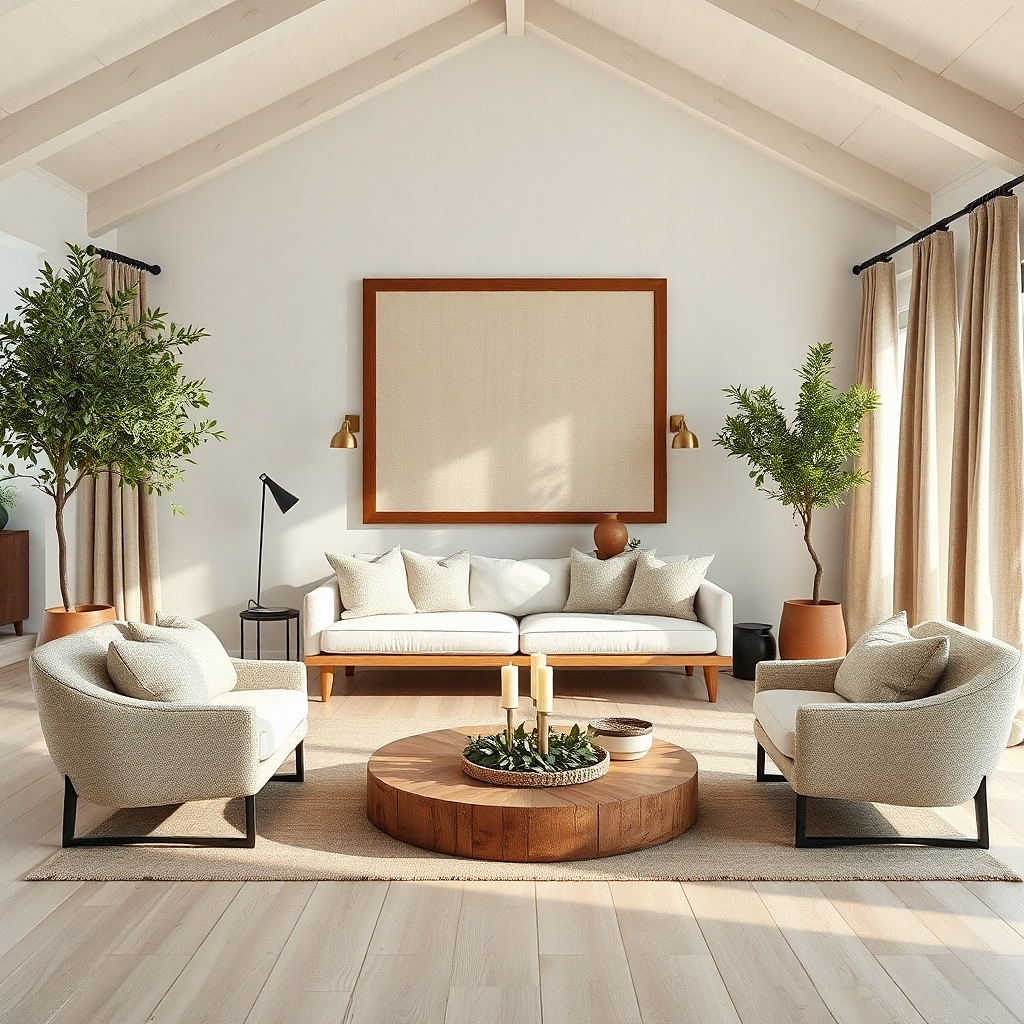
This is the opposite of seasonal wall decor. A large linen piece in warm cream gives you that farmhouse softness without printing a holiday message. The wide wood frame adds weight and shadow, so the wall looks “done” even if you swap pillows and throws later. Choose linen with a subtle weave and a light neutral wash; avoid anything with heavy black text or bright graphic shapes. Hang it centered above the sofa so the room reads balanced, not busy.
Step 1: Measure your couch width and target the art width at about 2/3 of that measurement. Step 2: Pick a frame in warm oak, honey oak, or distressed natural wood, and pair it with a linen-like print in cream, oat, or very light greige. Step 3: Hang with the center of the piece about 57-60 inches from the floor; use a level and two anchors if the frame is over 30 inches wide. Plan on $120-300 depending on frame size and whether you buy ready-made or custom.
Add one thin, matte wood tray on the coffee table in the same tone to make the wall feel connected to the room.
Avoid dark, high-contrast prints; they make farmhouse walls feel harsh instead of cozy.
2. Blackened metal and wood gallery ledge for small farmhouse pieces
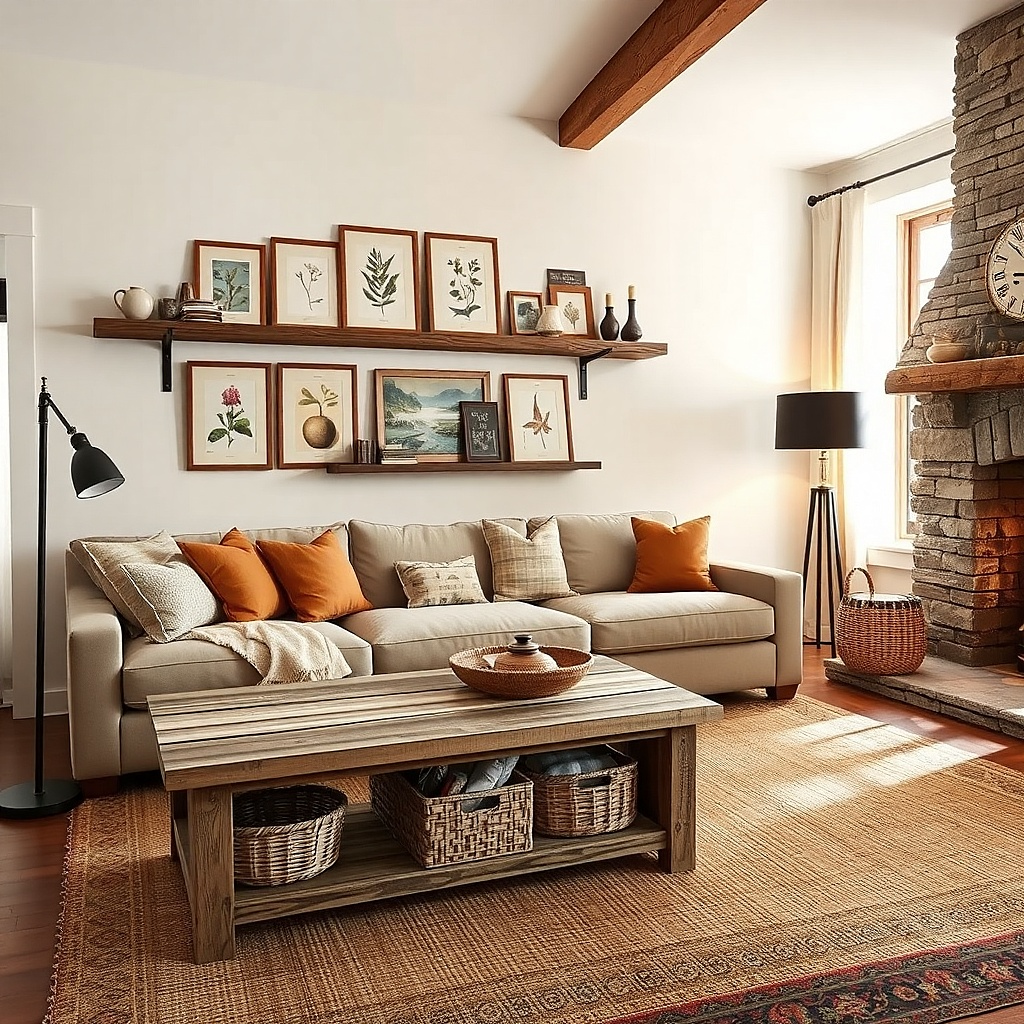
A gallery ledge lets you keep the farmhouse look without committing to one theme. The structure is the design: blackened metal gives that rustic edge, and the wood shelf keeps it warm. Use it with a mix of small, neutral items like a ceramic bud vase, a woven tray, and a single sculptural object. Because the shelf is modular, you can change what sits on it for the season without taking down the wall. This is ideal for living rooms where you want character but hate the clutter of too many separate wall pieces.
Step 1: Install a ledge with a length that matches your wall space, usually 24-36 inches, and place it so the shelf top sits around 62-66 inches from the floor. Step 2: Use wall anchors rated for your drywall type, then attach the ledge level. Step 3: Style in a tight composition: one taller item in the center, two lower items flanking it, and keep all ceramics in cream, sand, or muted sage. Expect $80-180 for a quality ledge plus $40-120 for items.
Try thisStick to three heights max on the shelf so it looks styled, not accidental.
Common mistakeSkip crowded stacks; shelves look farmhouse-cute until they start looking busy.
3. Layered mirror with a distressed wood frame
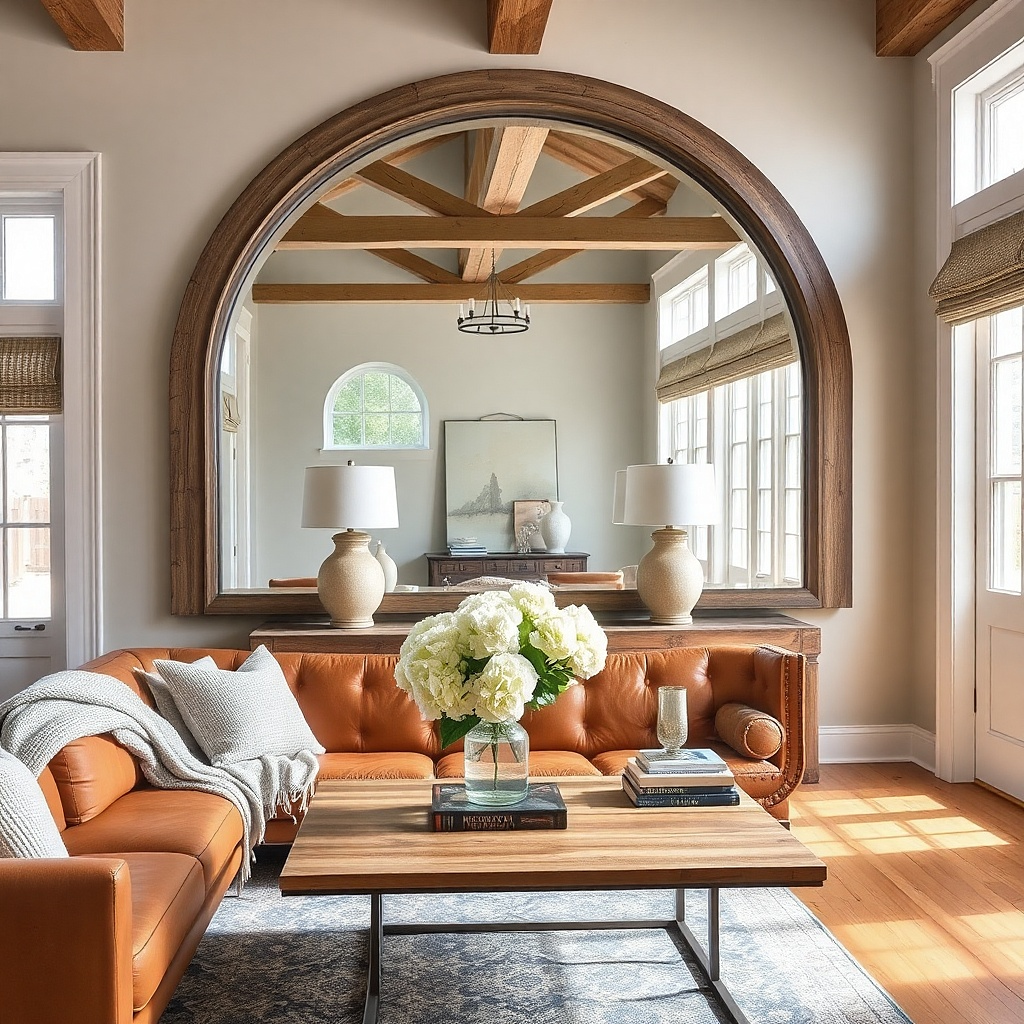
A distressed wood mirror adds farmhouse character and also makes the room feel brighter year-round. The mirror reflects your living room light and softens the look of solid walls, which is helpful in winter when daylight is weaker. Choose a frame with worn edges and a warm undertone, not a gray-washed frame that can read cold. Keep the mirror shape simple — a tall rectangle or softly arched top works best with farmhouse interiors. Place it above a console or between two lamp bases to anchor the wall visually.
Step 1: Measure the console width and choose a mirror that is about the same width or slightly narrower, leaving 6-10 inches of wall space on each side. Step 2: Mount it so the bottom edge sits roughly 6-10 inches above the console top; use a stud finder because mirror frames are heavier. Step 3: Style the surface with one tray and one small vase, keeping colors creamy and warm. Budget $150-450 for a good frame mirror.
Use a warm light bulb temperature (2700K) so the mirror frame reads golden, not yellow-green.
Don’t choose a mirror with a heavily ornate frame; farmhouse walls look better with rustic simplicity.
4. Woven wall basket cluster in natural tones
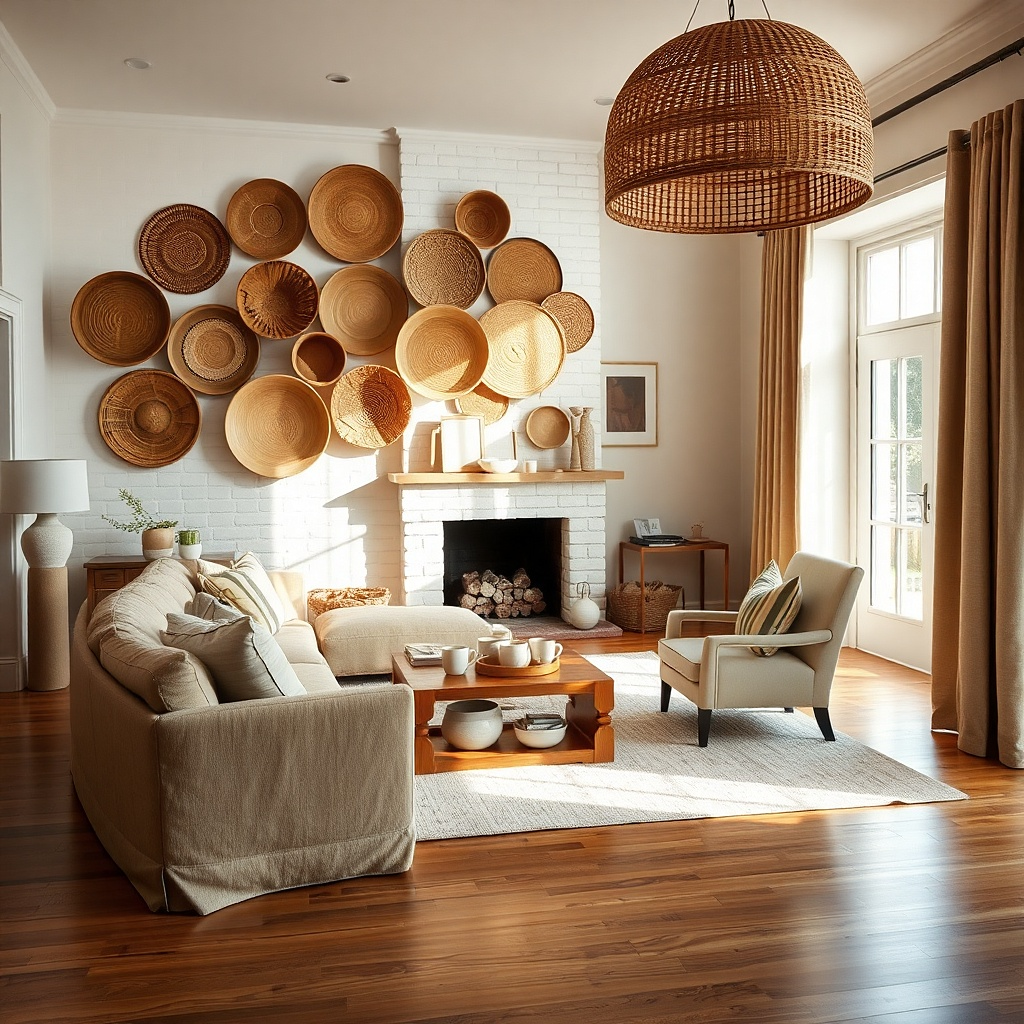
Woven baskets add farmhouse texture without looking like a seasonal prop. Natural fibers read warm and quiet, and the shadows from the weave make the wall interesting even from across the room. Use a cluster of three baskets in coordinated sizes: one larger center basket and two smaller ones flanking it. Keep the colors in a narrow range — natural tan, oatmeal, and light camel. This works especially well on blank walls near entryways or behind seating where you want softness instead of hard-edged art.
Step 1: Arrange the baskets on the floor first and aim for a cluster width of about 24-40 inches depending on wall size. Step 2: Use picture hooks rated for the basket weight and mount the center basket first; keep a small vertical gap between baskets so they don’t blend. Step 3: Hang the cluster so the center sits near 60 inches from the floor. Basket clusters usually cost $60-200 depending on size and material.
Match basket weave direction across pieces if you can — it makes the cluster look cohesive.
Avoid mixing glossy synthetic baskets with natural fiber ones; the sheen makes the farmhouse look feel cheap.
5. Wood slat wall panel with a simple centered art print
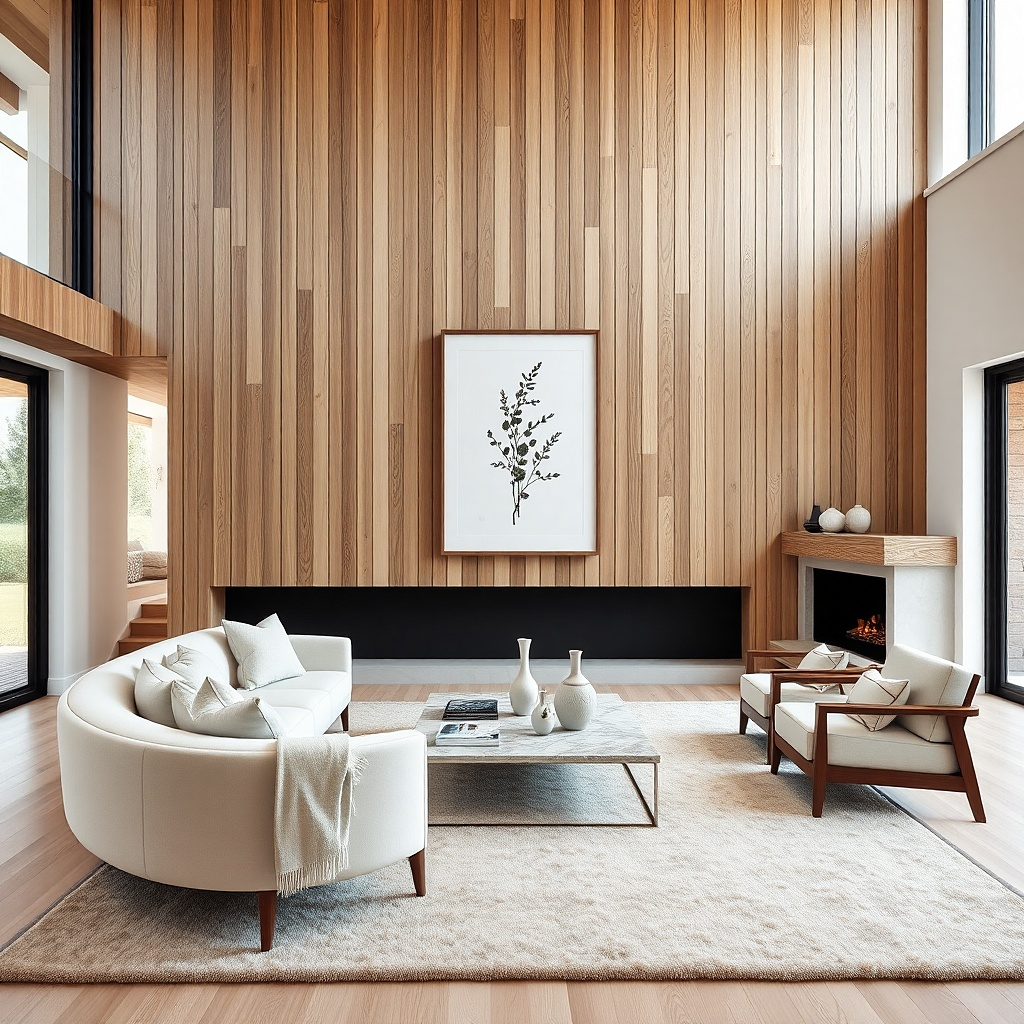
A wood slat panel gives you the farmhouse backbone that stays year-round. Instead of adding multiple decorative items, the slats create texture and depth, so the wall doesn’t go flat when you change seasonal decor. Pair the slats with a single centered framed print in cream — something minimal, like a botanical line drawing or a muted abstract wash. Choose warm oak or light walnut tones, and keep the slat spacing consistent. This is the best option when your wall is large and you want a strong look without a full gallery wall.
Step 1: Install slat paneling that is sized for your wall section, commonly 3-4 feet wide, and mount it directly to studs when possible. Step 2: Leave a clean gap of 3-6 inches around the panel edges so it looks intentional, then center your framed print on the slat panel. Step 3: Hang the frame so its center lands around 57-60 inches from the floor. Expect $200-700 depending on whether you use ready-to-install panels.
Try thisAdd one matte black hook or small sconce nearby only if the finish matches your frames elsewhere.
Common mistakeAvoid mixing white painted slats with warm oak frames; keep tones in the same family.
6. Three-piece frame set with linen matting
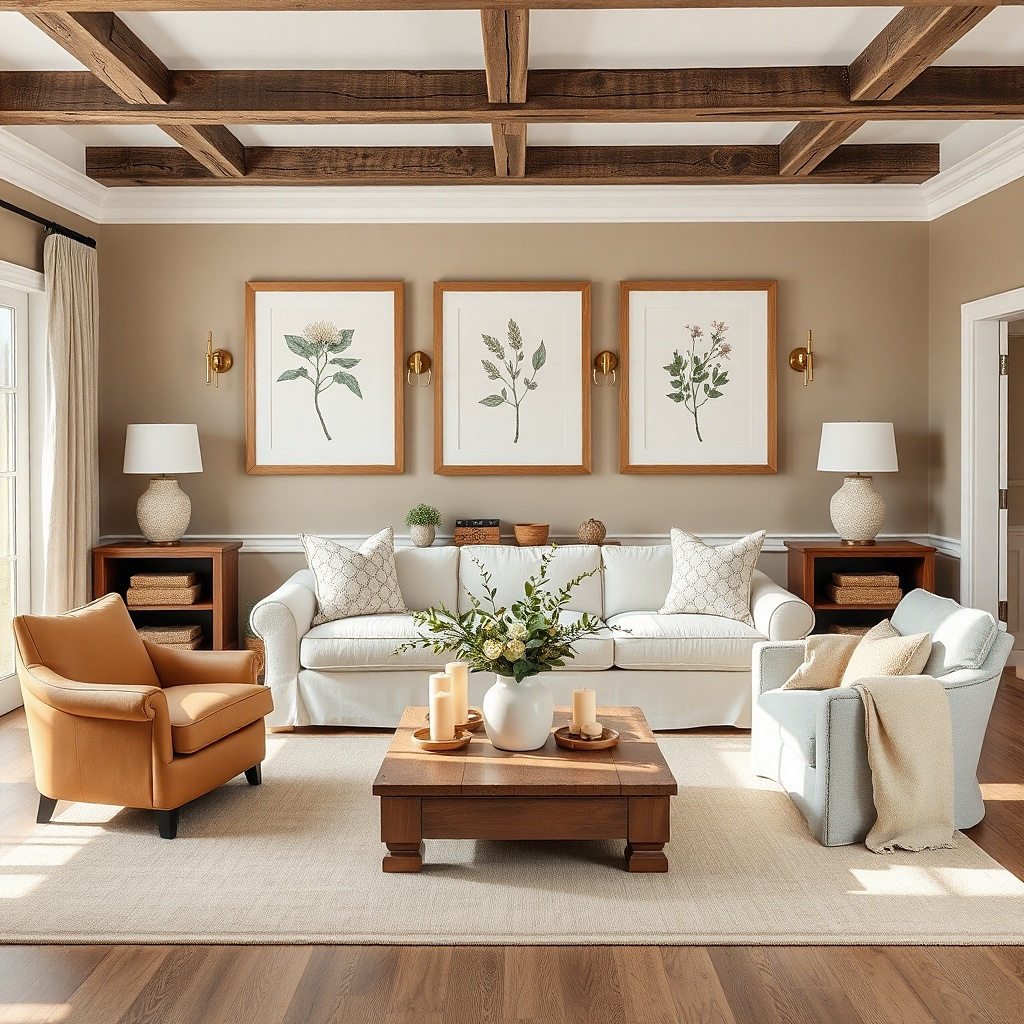
A three-piece frame set keeps farmhouse wall decor looking designed and not themed. Matching frames create a calm baseline, while linen matting adds that soft, lived-in feel farmhouse interiors are known for. Use prints with gentle subject matter — neutral florals, subtle farm-inspired linework, or abstract shapes in muted sage and clay. The beauty is in repetition: same frame color, same mat thickness, and a consistent spacing between pieces. This works well above a sofa, on a hallway wall, or behind a reading chair where you want a steady visual rhythm.
Step 1: Choose three frames with identical dimensions or a tight size range; aim for a total width that hits about 2/3 of the sofa length. Step 2: Use linen or linen-look mats in cream so the wall doesn’t look stark. Step 3: Mark positions on the wall with painter’s tape and keep equal gaps (about 2-3 inches) between frames; hang with the center of the middle frame at 58-60 inches. Cost is usually $150-400 depending on frame size and print quality.
Try thisIf you want year-round flexibility, pick prints with no seasonal imagery at all line drawings and muted colors are easier to live with.
Common mistakeSkip mixed frame finishes; mismatched metals make the set look like collected thrift finds.
7. Vintage-style wooden tray wall art with sculptural objects
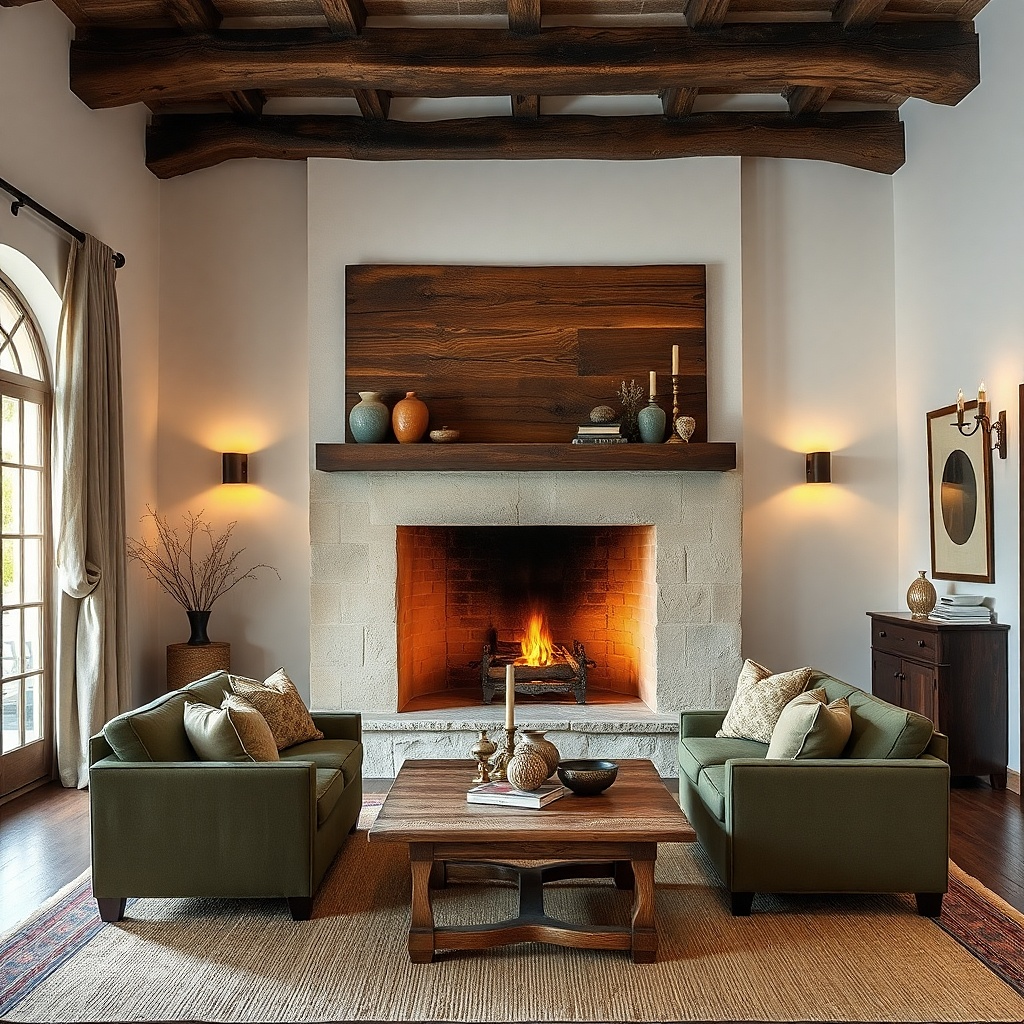
This idea makes your wall act like a surface, not a picture. A wall-mounted wooden tray gives you a farmhouse “still life” look that stays relevant all year because you’re styling objects, not seasonal symbols. Choose a tray in warm wood with a slightly worn finish. Style it with one ceramic piece, one small woven detail, and a neutral stem arrangement in a vase or jar. Keep colors to cream, sand, and muted green, and avoid bright reds or holiday oranges on the wall.
Step 1: Mount a wooden tray with a secure bracket so it sits level; for most living rooms, a tray width of 18-30 inches looks right. Step 2: Place it so the tray top sits around 64-68 inches from the floor, depending on furniture height. Step 3: Build a simple composition: one grounded item on the back edge, one mid-height object centered, and one small texture piece to one side. Budget $60-200 for the tray and $30-100 for styling items.
Try thisUse a small tray liner in cream linen so the background stays clean and the objects read clearly.
Common mistakeAvoid long, tangled dried stems that look messy; keep stems short and controlled.
8. Oversized farmhouse clock with neutral dial
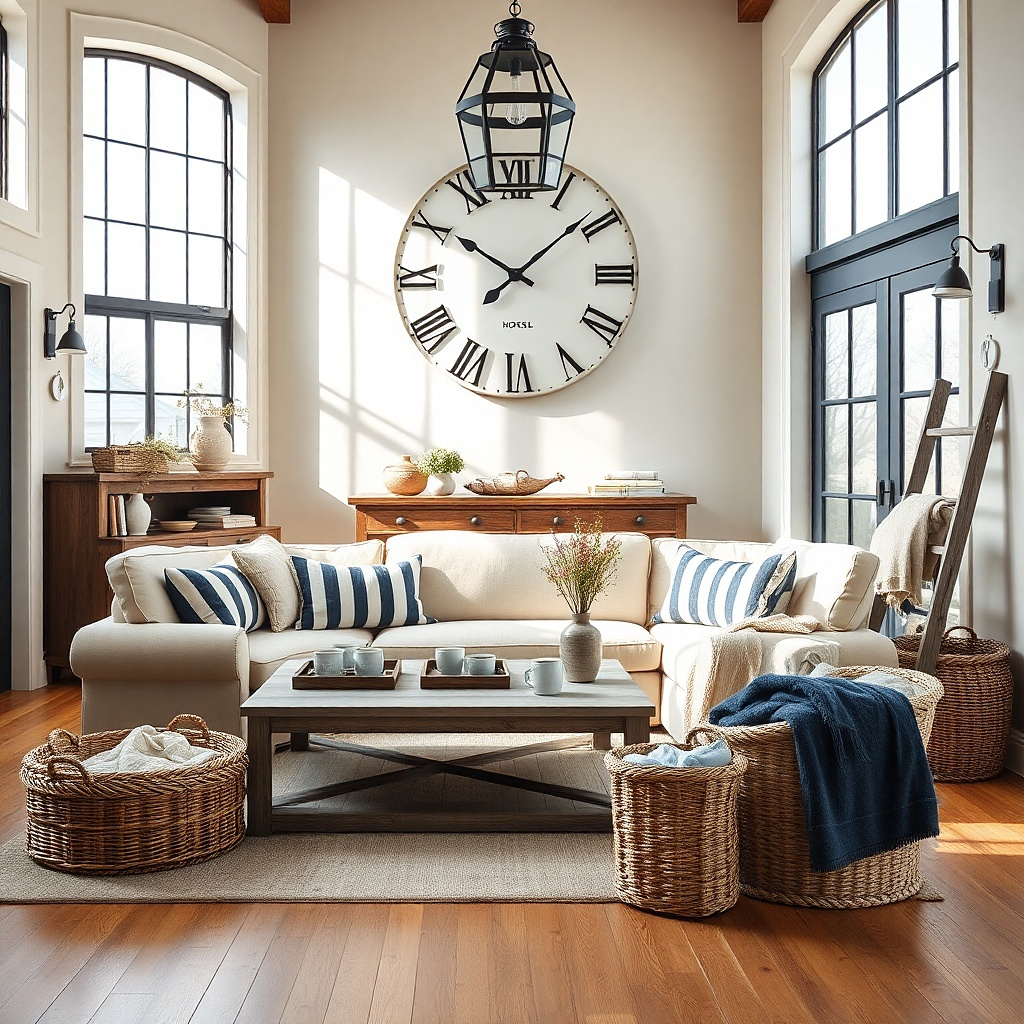
A large clock gives you character and function without requiring a theme. Farmhouse clocks look best with a neutral dial warm white, cream, or light beige — and wood or blackened metal details. The dial color matters because it keeps the wall soft and compatible with every season’s textiles. Mount it centered on a wall where you can see it from the seating area. This works especially well in living rooms that feel too empty on one side of the sofa.
Step 1: Choose a clock diameter that is at least 18 inches wide for living room walls; smaller clocks disappear. Step 2: Mount with a proper wall anchor and keep the center of the clock around 58-60 inches from the floor. Step 3: Coordinate decor around it by using wood and black accents elsewhere — for example, black frames or a dark metal lamp base. Expect $120-350 depending on size and finish.
If your wall is busy with other art, keep the clock face super simple no heavy numerals.
Skip glossy dials; reflections make clocks look less premium.
9. Rustic wood-framed chalkboard style sign in cream
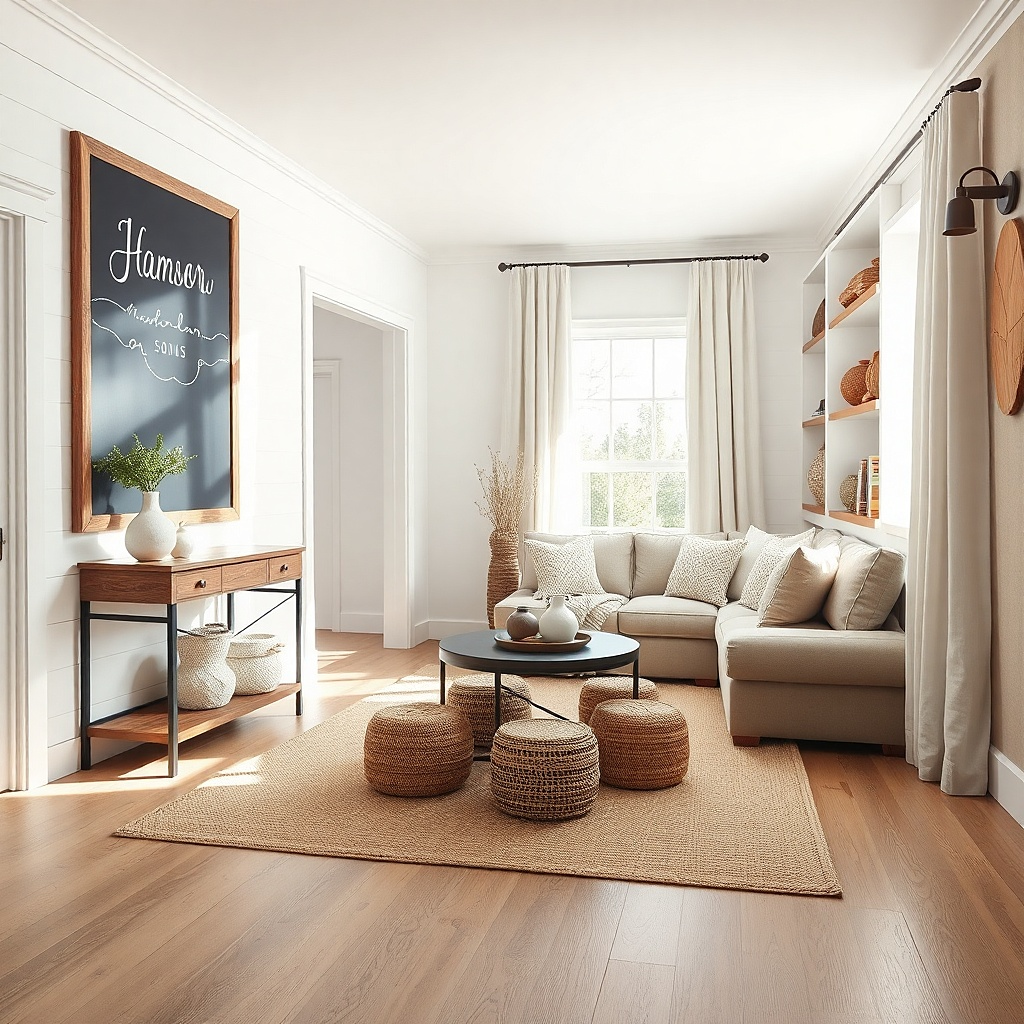
Chalkboard-style signs can look farmhouse in a good way when you avoid seasonal wording and keep the writing neutral. Use a chalkboard insert with a cream background or a very light, matte surface, then keep the message minimal — a short phrase in a simple script, or even a blank board with a small centered icon. The wood frame adds warmth, and the matte surface absorbs light, which helps the wall look calm. This is a smart choice if you like to change messaging through the year but don’t want to swap out the whole wall.
Step 1: Pick a frame size that matches your wall space — usually 24-36 inches wide above a sofa or 18-24 inches wide on a side wall. Step 2: Mount so the center lands around 58-60 inches from the floor. Step 3: Use a chalk marker or chalkboard paint compatible with your insert and keep the lettering small and centered; plan to update the message 2-4 times per year. Cost is commonly $80-250 for a quality frame and board.
Try thisUse one consistent font style and spacing so the board looks styled even when you change the text.
Common mistakeAvoid big seasonal words like “Merry Christmas” or “Happy Fall” — they date the wall.
10. Farmhouse wall sconce pair with linen shades
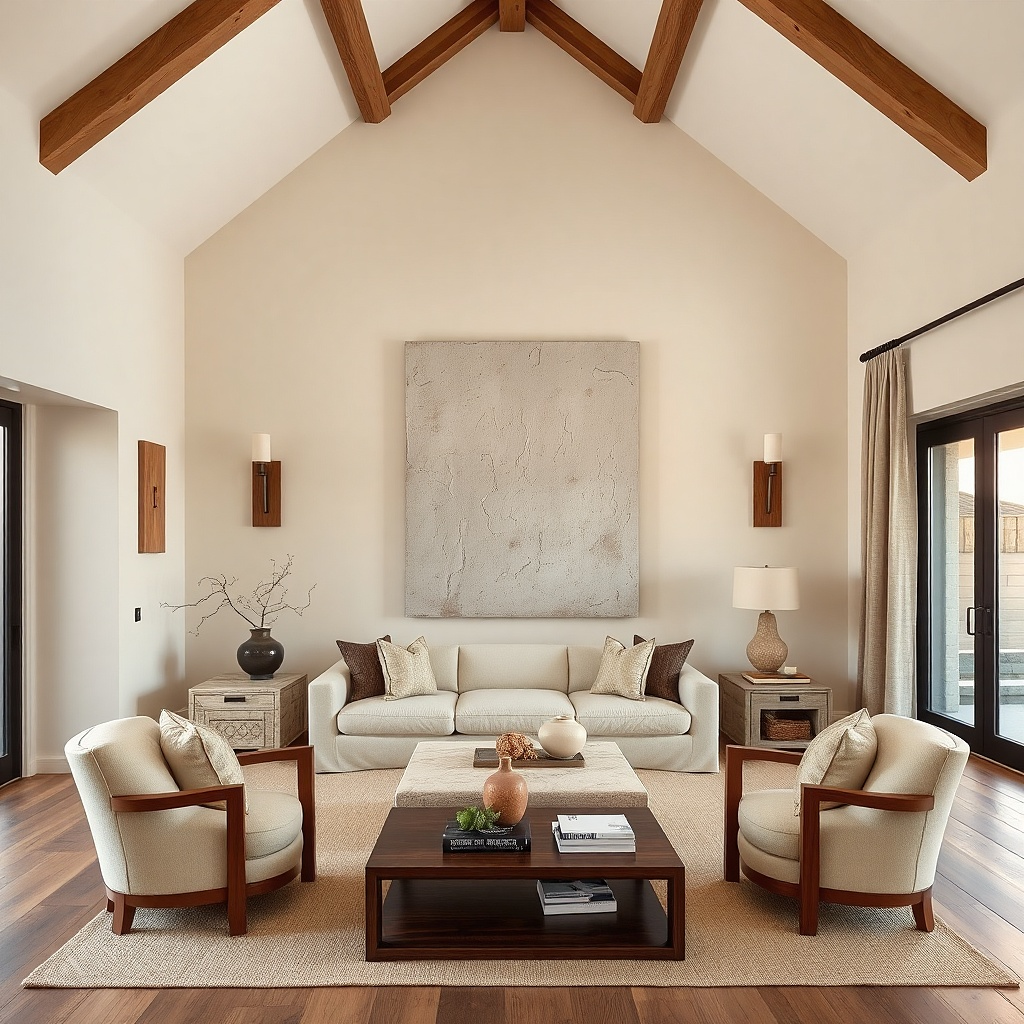
Lighting is wall decor you can’t outgrow, and wall sconces add farmhouse character without clutter. A pair of sconces with warm metal finishes and linen shades gives you soft light that flatters wood, framed art, and baskets. Choose shades in oatmeal or natural linen and keep the metal finish consistent — blackened bronze or aged iron reads best with farmhouse rooms. Place sconces symmetrically so the wall feels balanced. This is ideal for living rooms where you want warmth at night and a more finished look in the daytime.
Step 1: Choose sconces sized so the shade bottom sits around 60-66 inches from the floor; keep them roughly 24-36 inches apart depending on wall width. Step 2: Mount into studs and run wiring through an electrician if you’re not comfortable with electrical work. Step 3: Pair with a framed print centered between the sconces; keep the art width about the width of the space between shades. Budget $200-600 per pair plus installation if needed.
Use dimmable bulbs so the sconces can shift with seasons and mood.
Skip shiny metal finishes; bright hardware makes the farmhouse style look dated fast.
11. Rustic wall panel with nailhead trim and a neutral insert
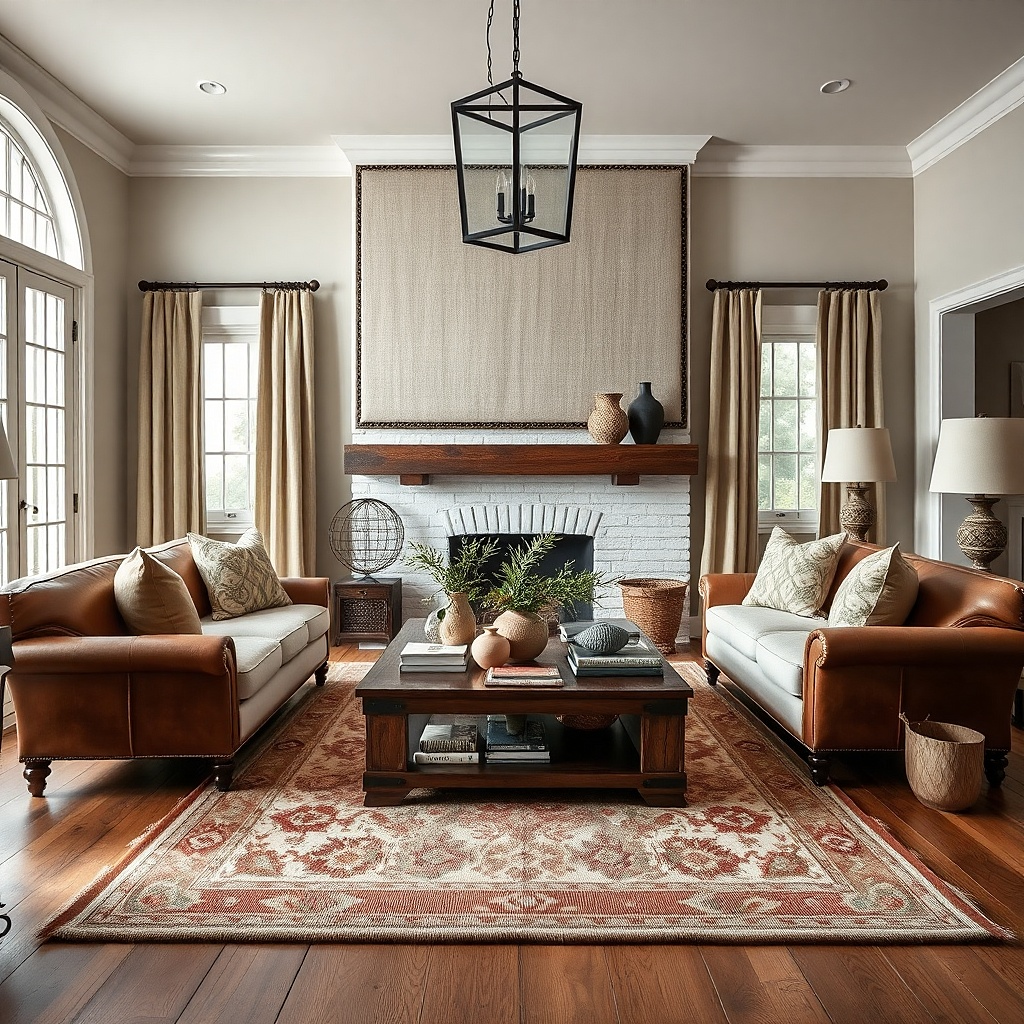
If your living room walls look too bare but you don’t want a gallery wall, a nailhead-trim panel solves it. Look for a fabric insert in neutral cream or oatmeal with a textured weave, then frame it with rustic wood or MDF in warm tones. Nailhead trim adds that farmhouse detail without needing prints or seasonal signs. The panel also gives you a soft surface that balances harder furniture. This works best behind a sofa or in a sitting area where you want a focal point that stays calm year-round.
Step 1: Select a panel size that matches your focal area, commonly 36-60 inches wide depending on wall space. Step 2: Mount securely using the manufacturer’s hardware and add wall anchors if the unit doesn’t hit studs. Step 3: Keep the fabric insert neutral and matte; hang the panel so its center sits around 58-60 inches from the floor. Cost usually lands around $250-800 depending on size and quality.
Match your panel trim color to your picture frames or lamp bases to keep the look cohesive.
Avoid bold plaid or loud prints in the panel; the goal is farmhouse texture, not pattern overload.
12. Small hanging baskets on a single wall rail
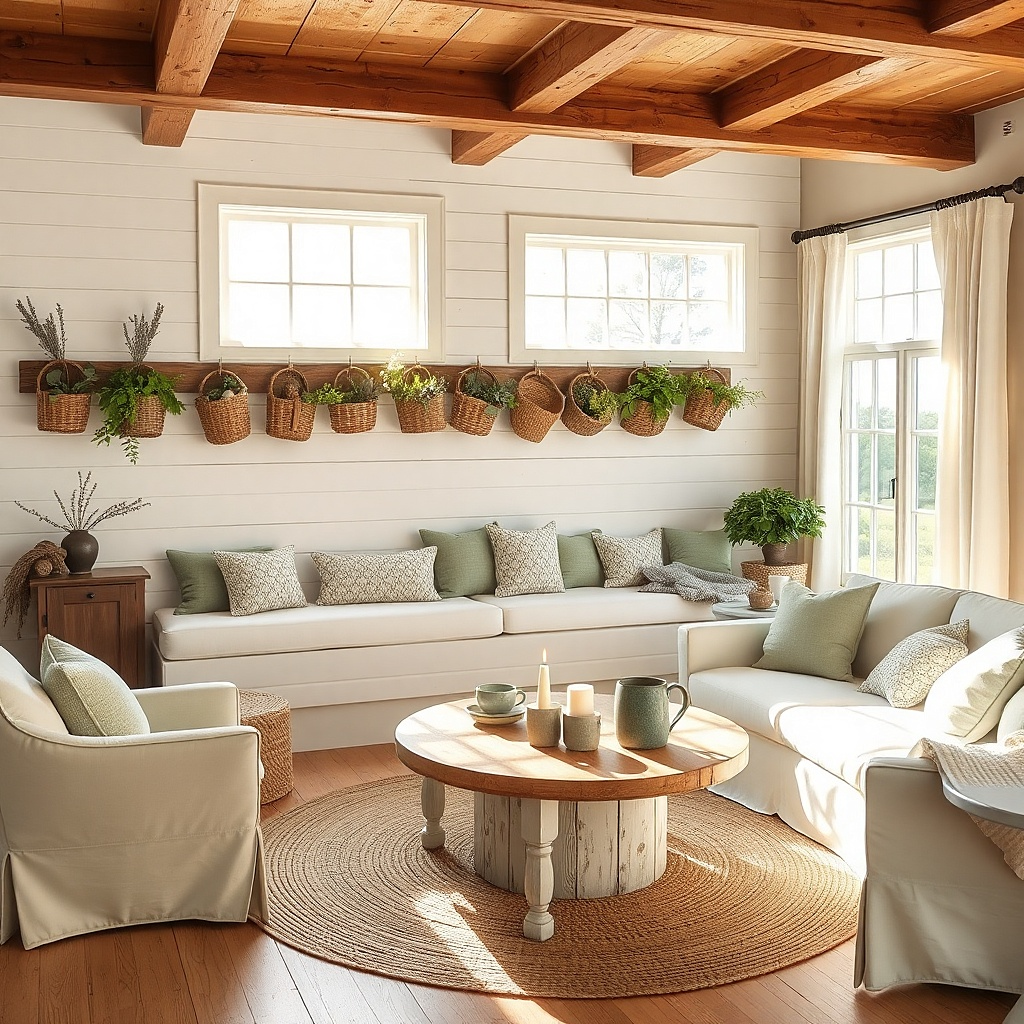
This is farmhouse wall decor that changes with the season but doesn’t become a theme. A single wall rail keeps everything aligned, and hanging baskets add movement and texture. Use baskets in natural fibers or light brown tones, then swap what’s inside: eucalyptus stems in winter, dried wheat in late summer, or simple greenery in spring. Because the baskets stay up, your wall reads consistent and styled. It’s a great option for renters or anyone who doesn’t want to drill multiple holes for a gallery wall.
Step 1: Install one horizontal rail with at least two anchor points; a 30-40 inch rail works well above a console or near a chair. Step 2: Hang three baskets at different heights, keeping the top basket around 68-72 inches from the floor and the lowest around 55-60 inches. Step 3: Choose basket hooks that match the rail finish, and keep the contents in neutral tones so swapping is easy. Budget $60-180 for the rail and baskets, plus $20-60 for seasonal stems.
Try thisUse the same container inside each basket (cream ceramic or a neutral liner) so the wall looks cohesive even when you change stems.
Common mistakeSkip random spacing; baskets that don’t align look like storage, not decor.
13. Farmhouse coat of arms style wall crest in neutral wood
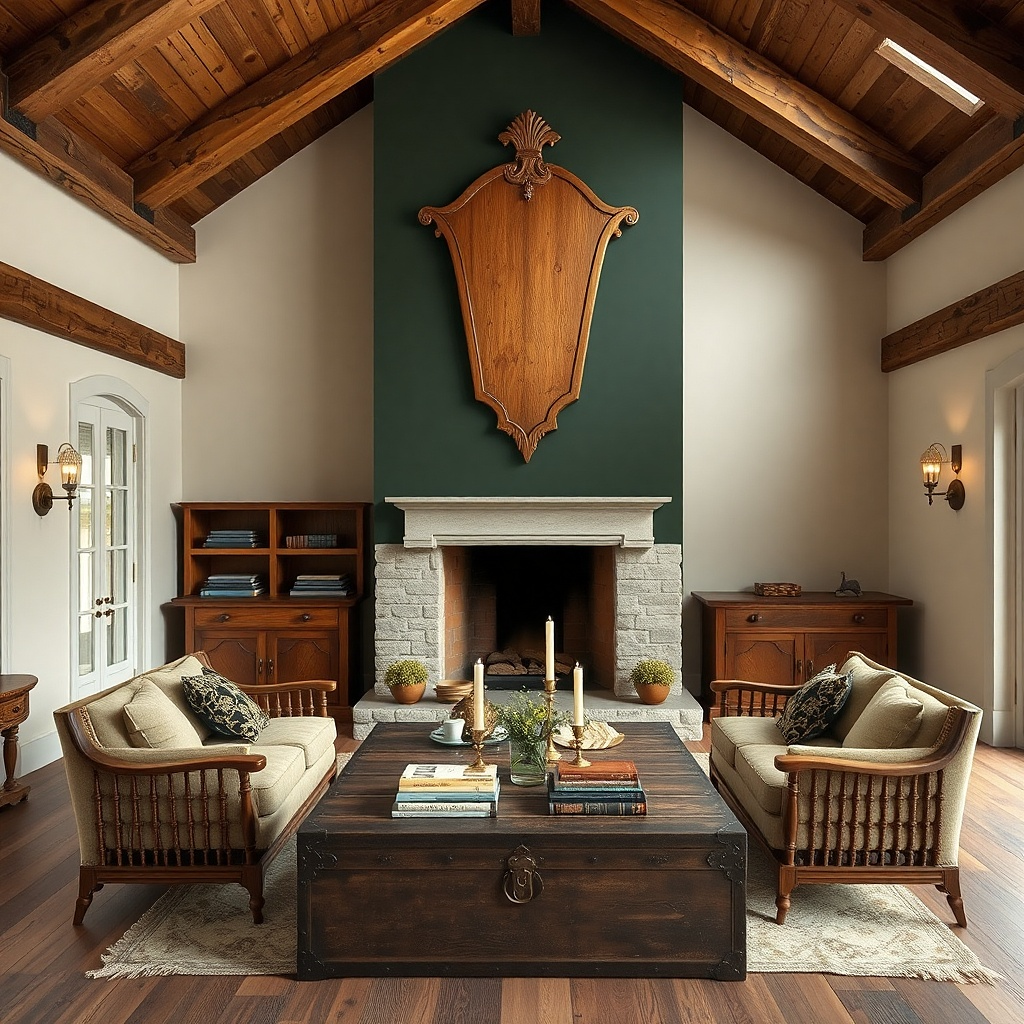
A crest gives farmhouse character without being a holiday sign. The trick is choosing a crest that is neutral and graphic, not filled with cartoon icons or busy wording. Go for a wood crest with a simple emblem in the center and a muted finish like light walnut, natural oak, or whitewash that still reads warm. Mount it centered and keep surrounding decor minimal so the crest becomes the focal point. This is best for larger living room walls where you want one statement piece that stays year-round.
Step 1: Pick a crest size around 18-26 inches wide so it reads clearly but doesn’t overwhelm. Step 2: Mount it centered on the wall using anchors for safety; keep the center around 58-60 inches from the floor. Step 3: Style the nearby surfaces with two matching materials, like wood and ceramic, and keep colors to cream and one muted accent. Cost is usually $80-250 depending on material and detail.
Try thisIf your room has black accents, choose a crest with black details for easy pairing.
Common mistakeAvoid crests with lots of tiny text or bright paint; those details look messy from normal viewing distance.
14. Large framed botanical prints with muted sage mat
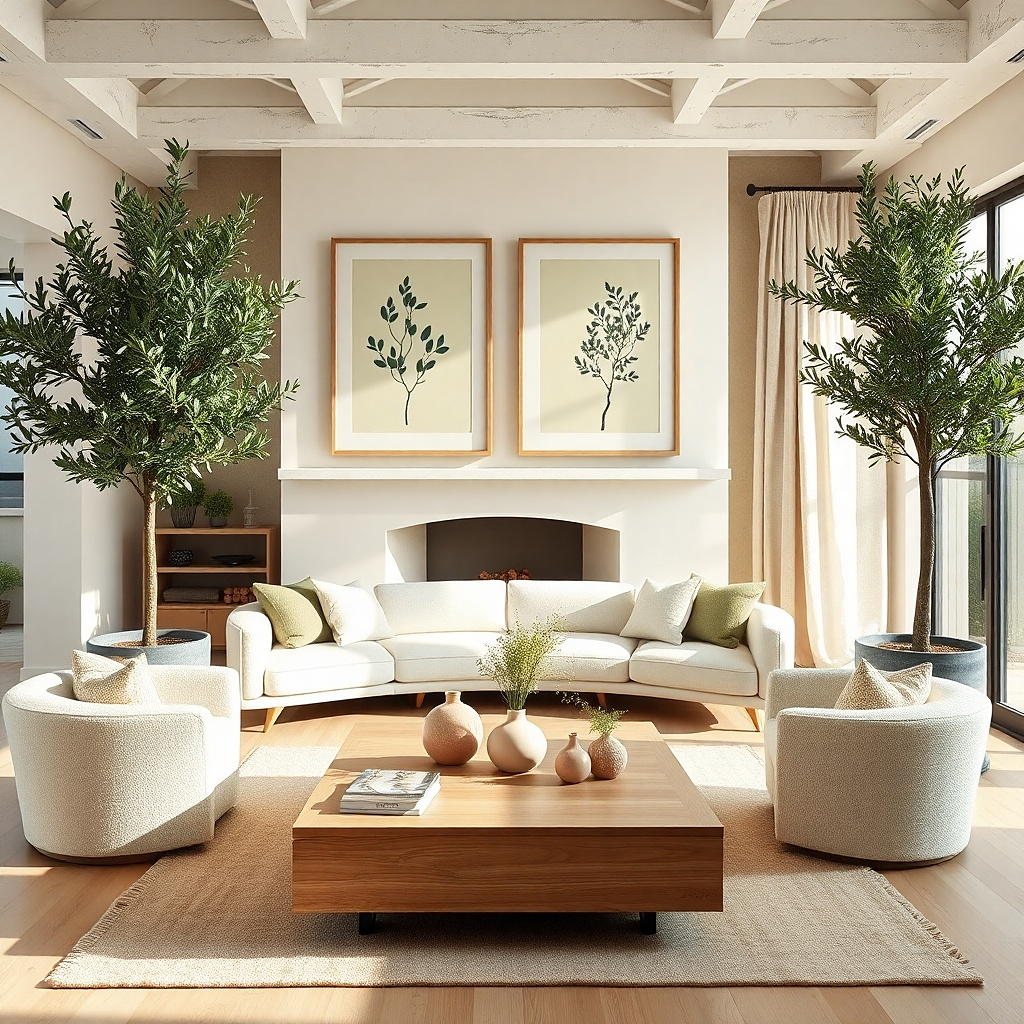
Botanical prints keep farmhouse walls feeling alive without going seasonal. The key is muted colors and matte paper a sage mat and soft green linework reads calm in winter and fresh in summer. Use one large print rather than multiple small ones if you want the room to feel grounded. A warm wood frame keeps the farmhouse tone, and the botanical subject stays relevant because it’s not tied to holidays. Place it above a dresser, behind a sofa, or on a wall opposite a window where light can soften the paper texture.
Step 1: Choose a frame width that hits about 1/2 to 2/3 of your sofa width if it’s above the couch; otherwise go for a size that covers a noticeable wall section. Step 2: Use a warm oak frame and a sage mat that is 1-2 inches thick for a layered look. Step 3: Hang so the center is around 57-60 inches from the floor; use spacers or a small foam backing if the frame glass reflects a lot. Budget $120-450 for a large framed print.
Try thisPick prints with fewer than five dominant colors so the room palette stays consistent.
Common mistakeSkip bright, neon greens; they make farmhouse walls look like a craft project.
15. Vertical shiplap-inspired wall art panels in neutral tones
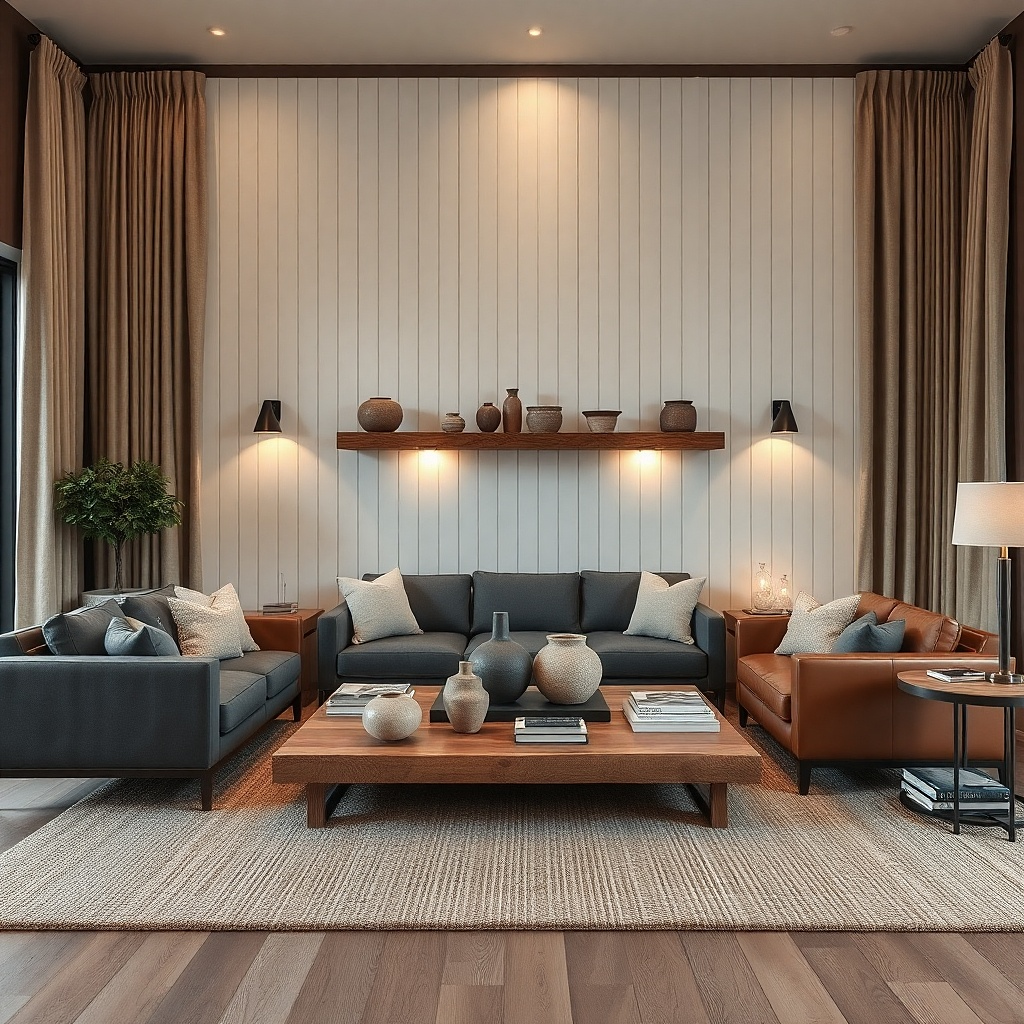
Vertical textured panels give you farmhouse depth without the clutter of small decor. Look for shiplap-inspired panels or faux wood slats arranged as wall art, finished in warm whites, cream, or light beige. The vertical orientation makes the wall feel taller, which helps in rooms with low ceilings. Pair the panels with minimal decor — a simple rug and clean-edged furniture — so the wall texture becomes the star. This is a strong choice for entry living rooms where you want instant character the moment you walk in.
Step 1: Choose two panels that together span about 60-80 inches wide, depending on your wall section. Step 2: Mount with brackets through studs when possible, keeping the gap between panels consistent (about 1-2 inches). Step 3: Place the bottom edge around 10-14 inches from the floor so it doesn’t feel too low. Cost is often $180-600 depending on panel size and finish.
Try thisUse the same paint tone on the panels as your trim or close to it; the wall will look intentional rather than pasted on.
Common mistakeAvoid high-gloss finishes; shine makes textured panels look fake.
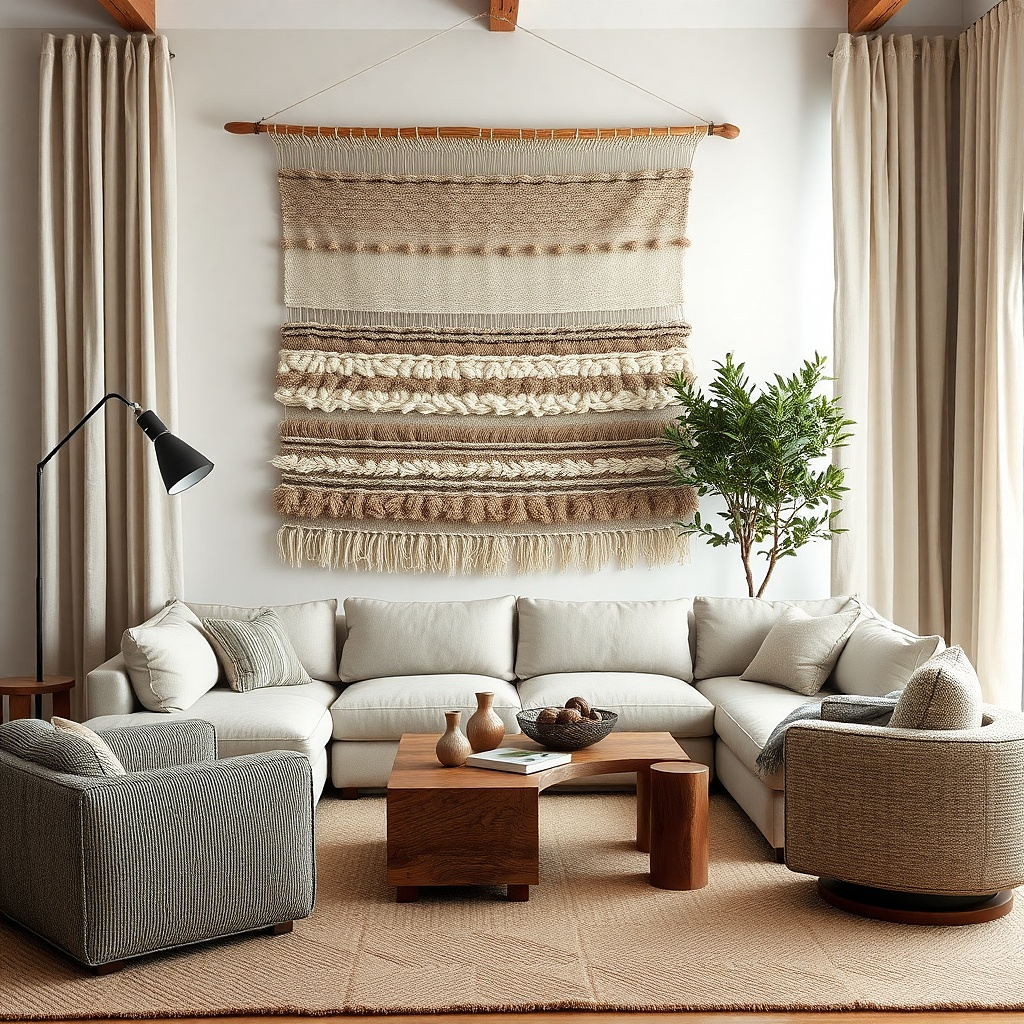
16. Woven wall hanging with neutral fringe and off-center placement
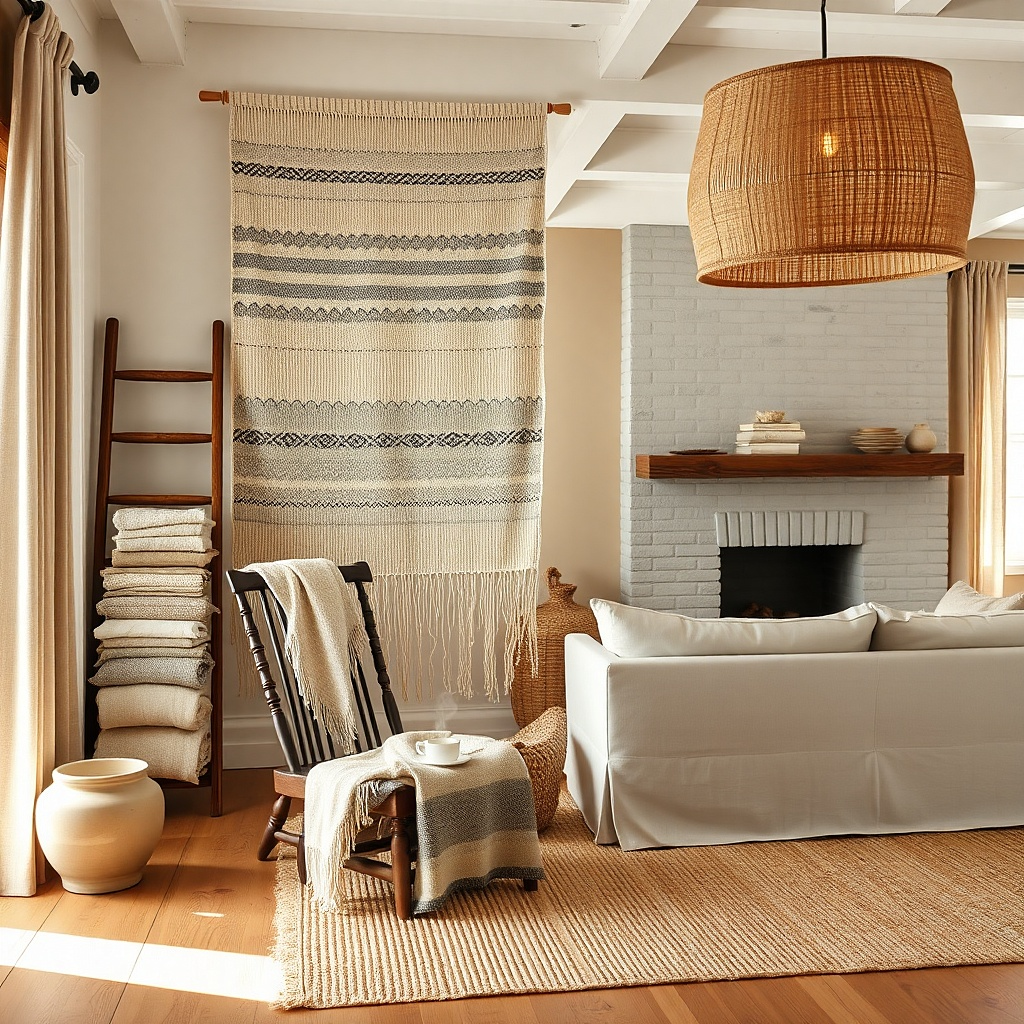
A woven wall hanging adds farmhouse texture and softness without pretending to be a themed poster. Choose neutral tones oatmeal, natural tan, or light gray-beige and a fringe that is short enough to look tidy. Off-center placement makes it feel editorial instead of symmetrical and stiff. The hanging works great above a chair or on a wall that needs a focal point without a big frame. Keep the rest of the decor simple so the fibers read clearly.
Step 1: Pick a hanging size that covers at least 20-30 inches wide; small wall hangings get lost near windows or shelves. Step 2: Hang with a rod or hidden clip system so it sits straight; if it’s off-center, keep it closer to the furniture anchor rather than the corner. Step 3: Place the top of the hanging around 72 inches from the floor and adjust so the fringe ends around 8-12 inches above the furniture back. Expect $70-250 depending on size and material.
Try thisPair it with one woven texture elsewhere, like a basket or jute rug, so it looks planned.
Common mistakeAvoid chunky, colorful weaves; the goal is farmhouse warmth, not bold pattern overload.
17. Farmhouse wall calendar display using a large frame and blank insert
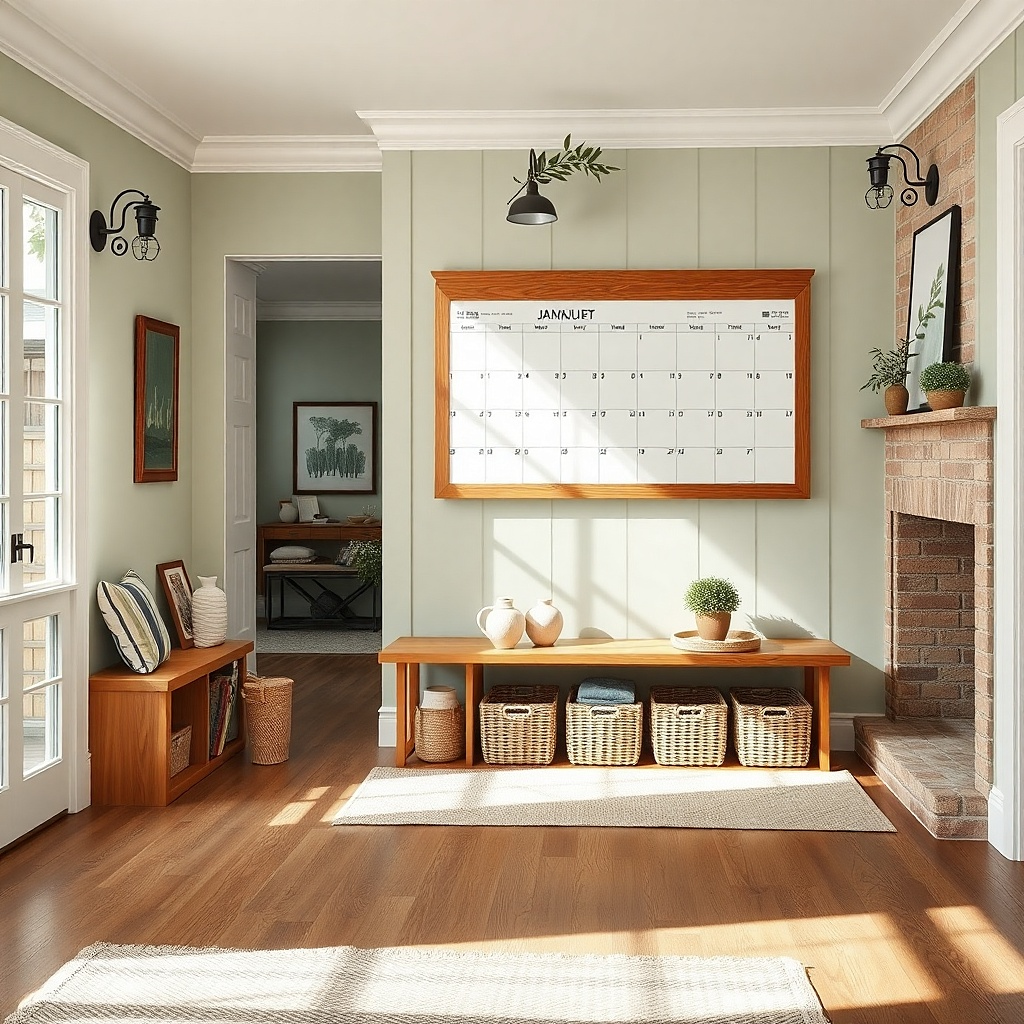
If you hate switching wall decor every season, a framed calendar display gives you a year-round wall feature. Choose a large wood frame with a neutral backing and insert a simple calendar grid or even blank cards that you swap monthly. The farmhouse look comes from the wood and the matte paper, not from seasonal graphics. This keeps the wall from turning into an outdated poster because you’re changing only the insert. Place it on a wall near the kitchen entry or in the living room where you can see it easily.
Step 1: Buy a frame that is 24-36 inches wide and has a deep enough backing to hold paper and a few small cards. Step 2: Use a matte cream insert and install a small clip bar or binder rings inside the frame to swap sheets without messing up the backing. Step 3: Mount it so the center is about 58-60 inches from the floor; keep the calendar text dark and simple. Budget $90-250 for the frame and $10-30 for inserts.
Try thisUse one neutral month card style (cream + black) so the wall looks consistent even when you change months.
Common mistakeSkip glossy lamination inside the frame; glare makes the display look messy.
18. Set of three wood-tone floating shelves with one art piece
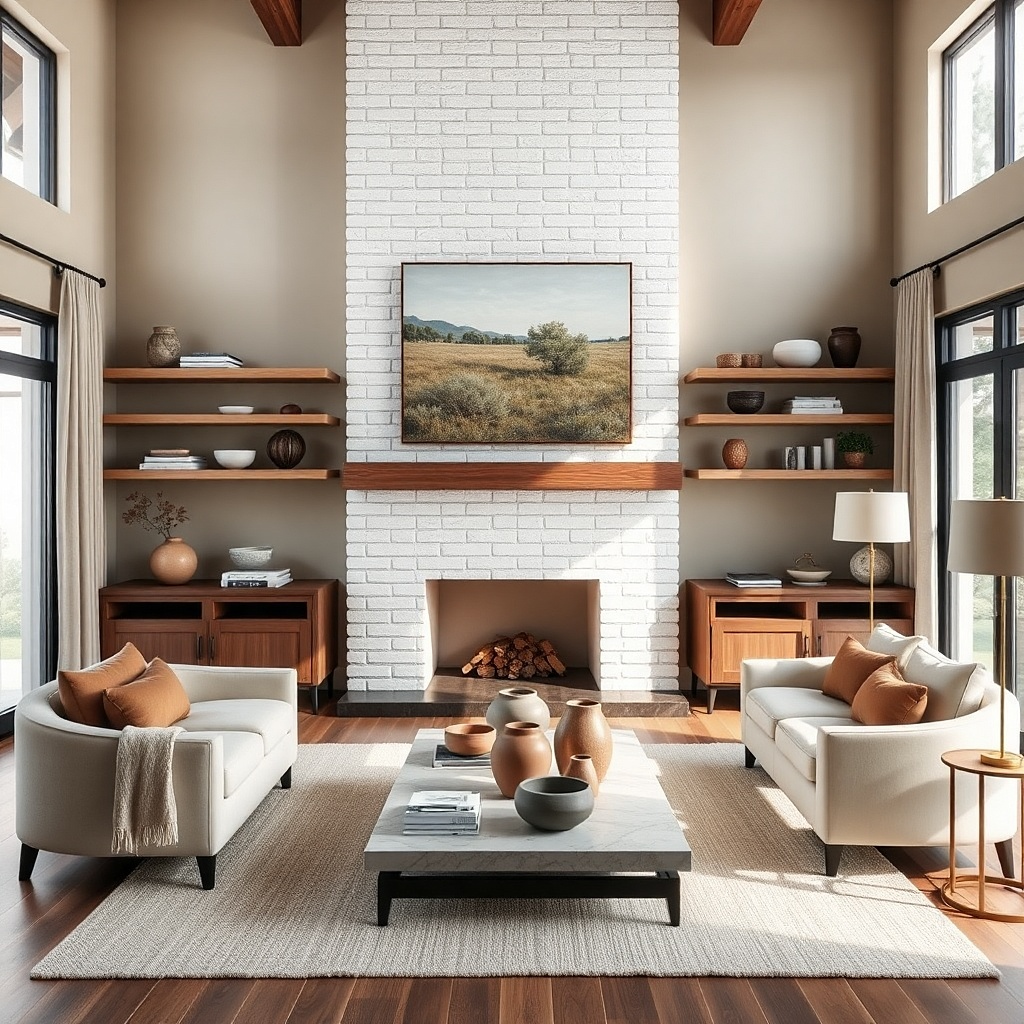
Floating shelves are farmhouse wall decor that can look clean instead of cluttered when you control spacing and keep the palette tight. Use three shelves in a warm wood tone, then let only one larger art piece sit in the middle or behind them. The shelves hold small neutral objects that change seasonally like a ceramic vase and a jar while the larger wall element stays constant. This gives you year-round character without turning the wall into a rotating seasonal billboard. It’s especially good for living rooms where you want storage-like styling but still want the wall to feel designed.
Step 1: Install three shelves with consistent depth, usually 6-8 inches deep, and keep shelf spacing around 10-12 inches vertical. Step 2: Mount into studs where possible; if you can’t, use appropriate anchors and keep objects light. Step 3: Style with one tall object on the center shelf, two smaller items on the side shelves, and a single textured piece like a woven coaster or small basket. Expect $150-400 for shelves plus $60-200 for decor.
Try thisKeep all ceramics in cream, sand, or muted green so seasonal swaps don’t change the overall look.
Common mistakeAvoid mixing too many small items; shelves need breathing room to look intentional.