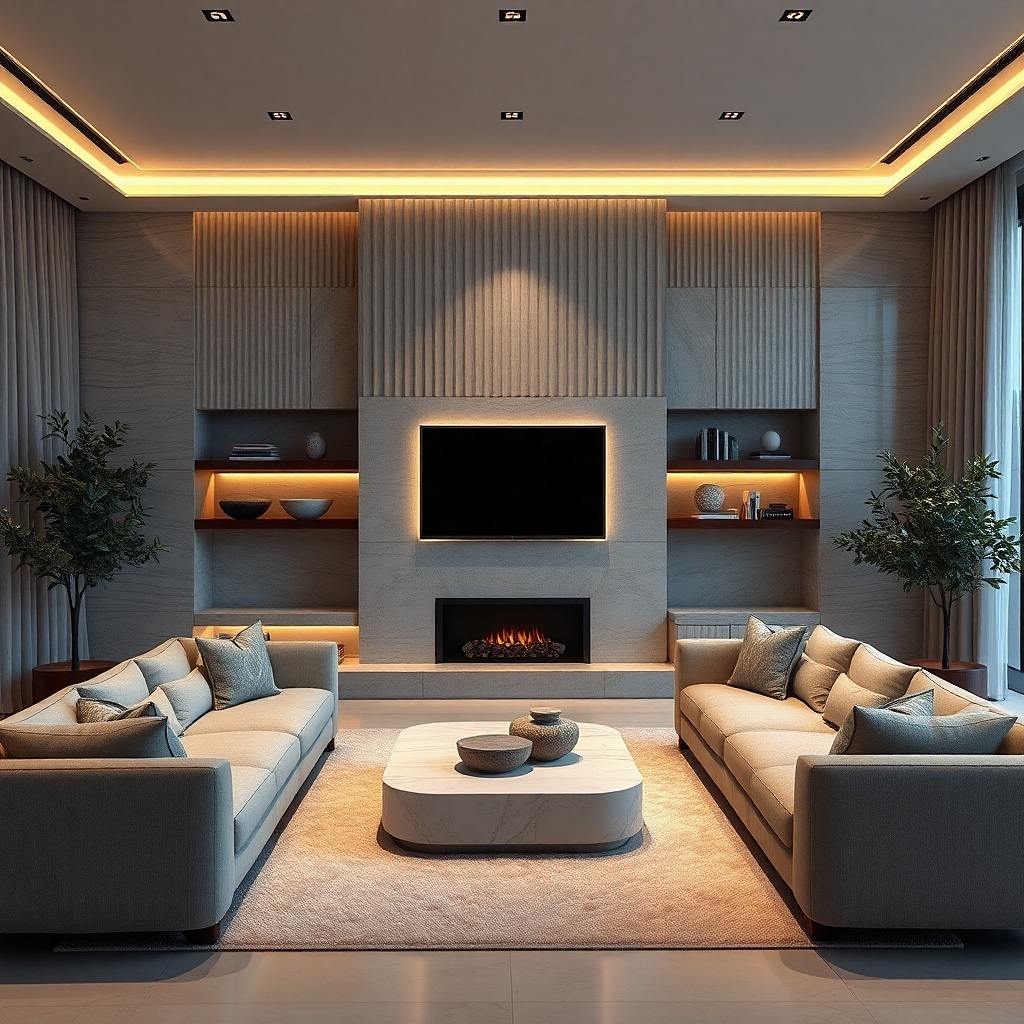
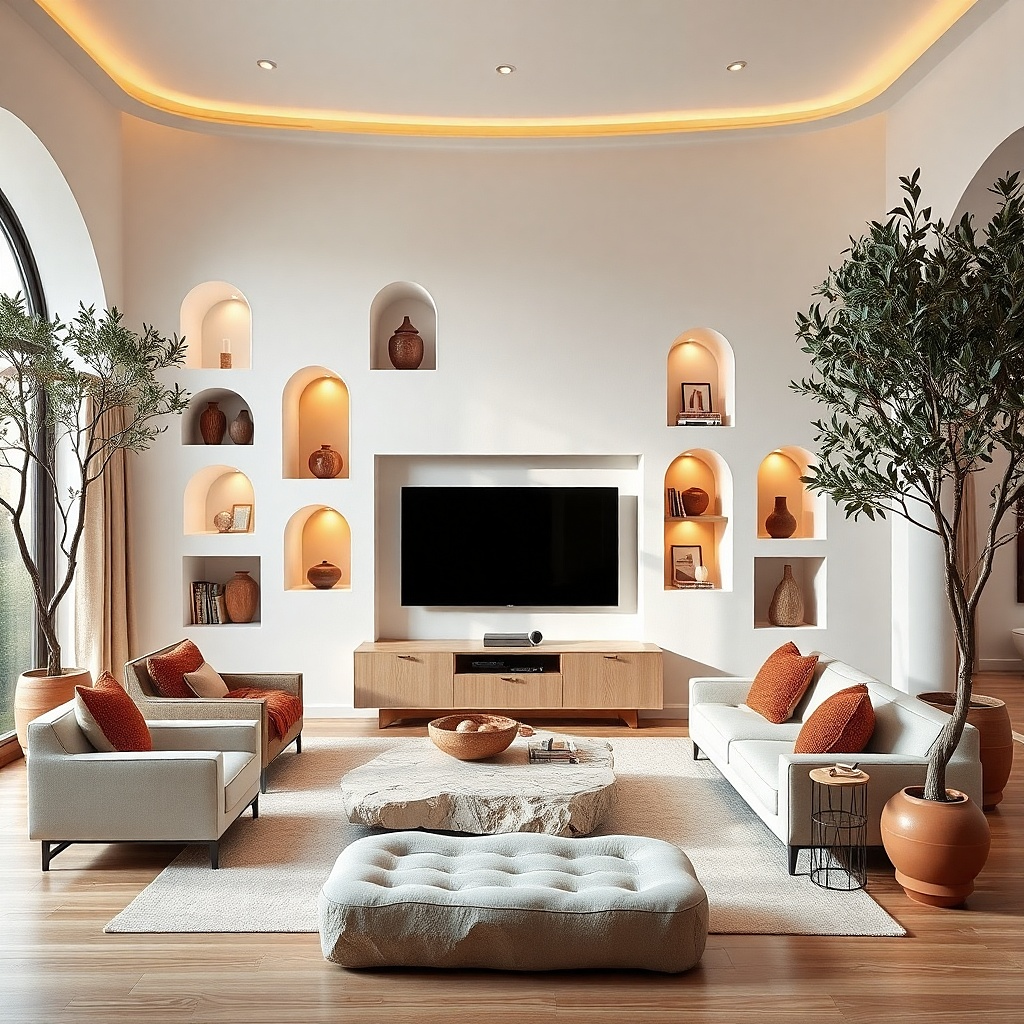
1. Oversized linen-texture wall panel behind the TV
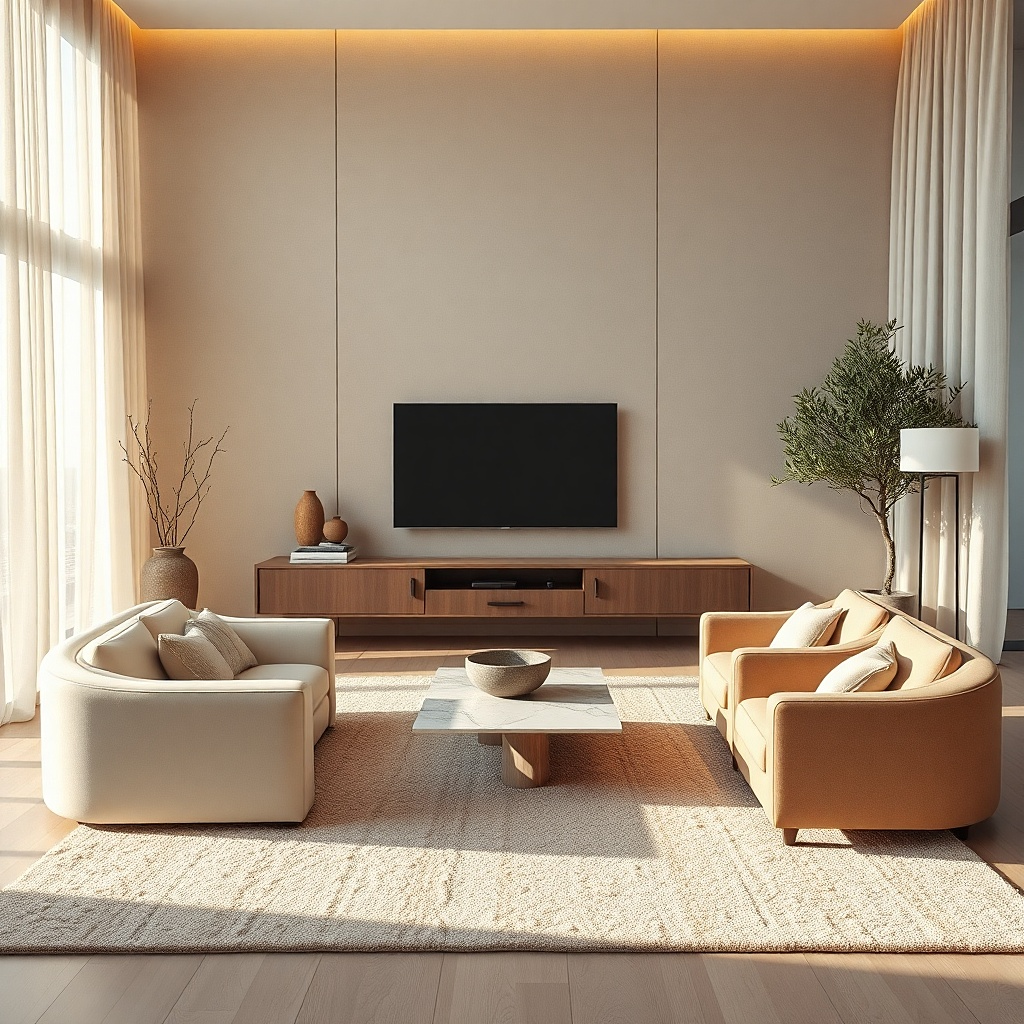
Start by measuring your TV width and adding 16-24 inches total to your backdrop width. Mount the TV first using the manufacturer’s bracket so you know the exact height and clearance, then install the panel so its center aligns with the TV center. If you’re using wallpaper, apply to the wall before mounting anything else and smooth seams carefully; if you’re using panels, use construction adhesive plus a few screws in studs. Finally, keep the TV cables hidden in a paintable raceway painted to match the panel color.
This layout works because it gives the TV a soft landing zone. A linen-texture panel (or linen-look wallpaper with a raised weave) turns the wall into a warm backdrop that doesn’t compete with the screen. Choose a creamy oat or sand tone so the TV’s dark bezel blends into the background. Keep the panel width at least as wide as the TV plus 8-12 inches on both sides, and let it run from a few inches above the TV to near the mantel shelf line or to 6-10 inches above the TV. The result is cozy because the surface has visual grain even when the TV is off.
Common mistakeAvoid glossy wallpaper or heavy metallic inks — glare makes the TV look harsher.
Try thisAdd one warm-toned art piece above the TV using the same background color family so the eye keeps moving up, not back to the screen.
2. Two wide floating shelves, one above and one level with the TV
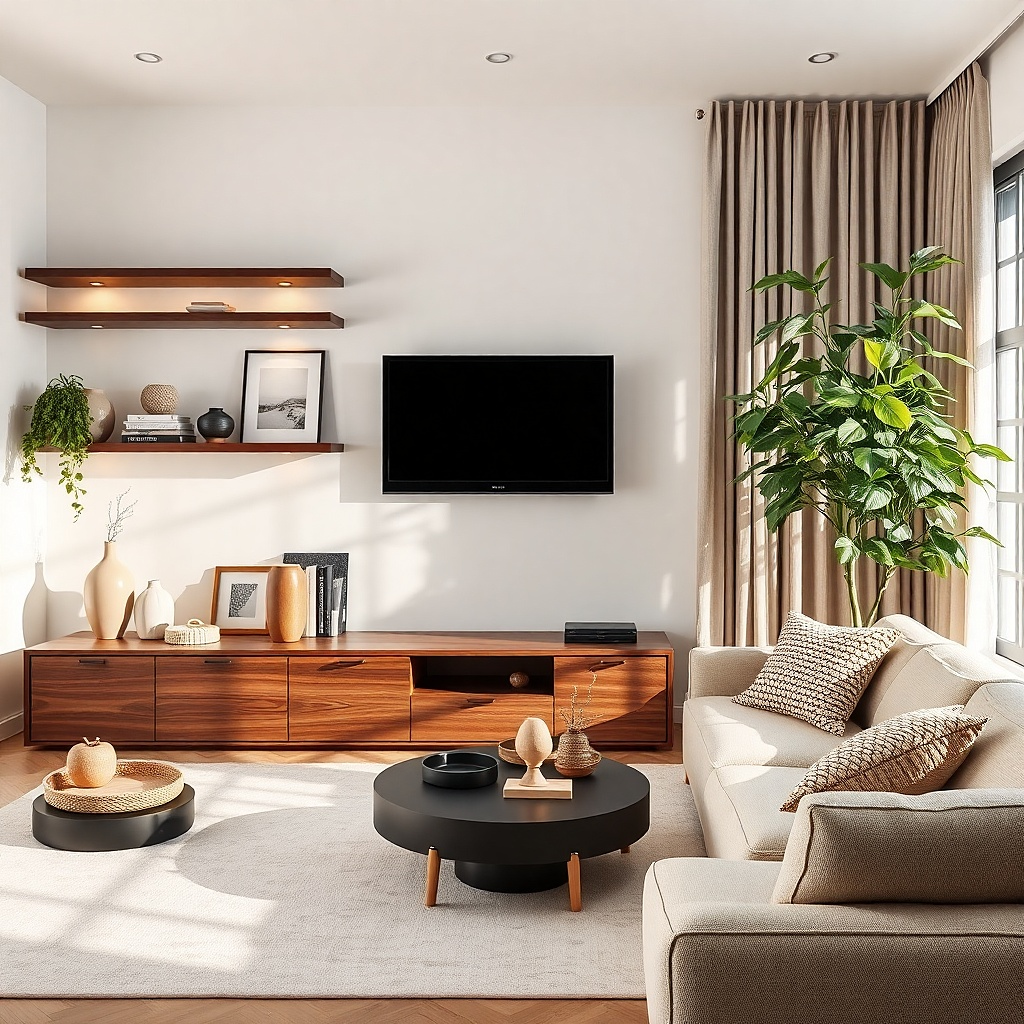
Shelves are the fastest way to make a TV wall feel styled instead of fixed. The key is width and spacing: wide shelves that run beyond the TV edges create a frame, while the decor adds cozy height. Use light-to-medium oak or walnut shelves with a matte finish, and style them with 70% books, 20% ceramic, and 10% greenery. Keep decor pieces low-profile so they don’t block the TV when you glance from the couch. This works especially well in living rooms where you want storage and don’t want a full gallery wall.
Pick shelf lengths that extend 6-12 inches past each side of the TV. Install the lower shelf first about 8-10 inches above the TV top edge, then mount the upper shelf 10-14 inches above it — adjust to keep the composition balanced with your ceiling height. Use a level and find studs, then drill pilot holes and mount into studs with the included brackets. Style after mounting: place books upright in groups, then add ceramics and a single plant to one side for a calm asymmetry.
Use two matching frames or trays on the shelves so the decor looks intentional, not random.
Don’t stack tall items directly in the middle — it draws attention to the TV’s rectangle.
3. Centered framed art with a TV below the midpoint
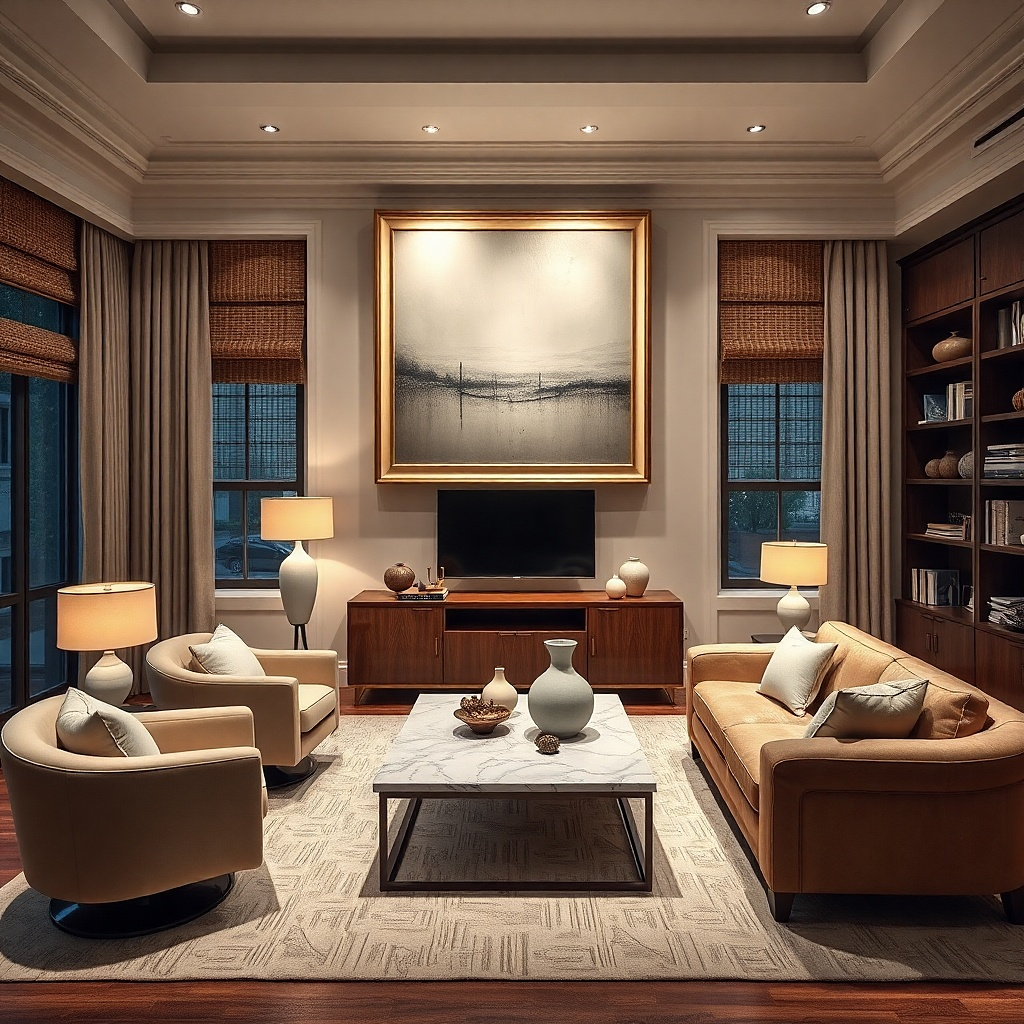
Measure the wall and choose your art first: aim for a piece about 30-36 inches wide for a 43-50 inch TV, then scale up if your TV is bigger. Mount the art so its center lands around 60 inches from the floor, then position the TV so the TV’s top edge sits about 10-14 inches below the bottom of the frame. Use a TV mount rated for your TV weight, and route cables through the wall if possible or through a slim paintable channel. Finish by adding two matching small frames or sconces on either side if you have enough wall width.
If you want the TV to stop being the center of attention, put the “center” into the art. This layout uses one large framed piece as the anchor, with the TV mounted below it so the wall reads like a gallery moment. Choose a large art print or painting with warm neutrals and soft contrast think muted landscapes, abstract shapes with linen-like texture, or botanical line art in charcoal and sage. The frame should be at least 2/3 the TV width, and the TV should sit low enough that the art dominates the visual field when you enter the room.
Common mistakeAvoid hanging art too high — if the art sits above eye level, the TV becomes the only comfortable focal point.
Try thisUse a frame color that matches your floor or wood trim (walnut or black-brown), not bright white.
4. Picture ledge style gallery around a TV
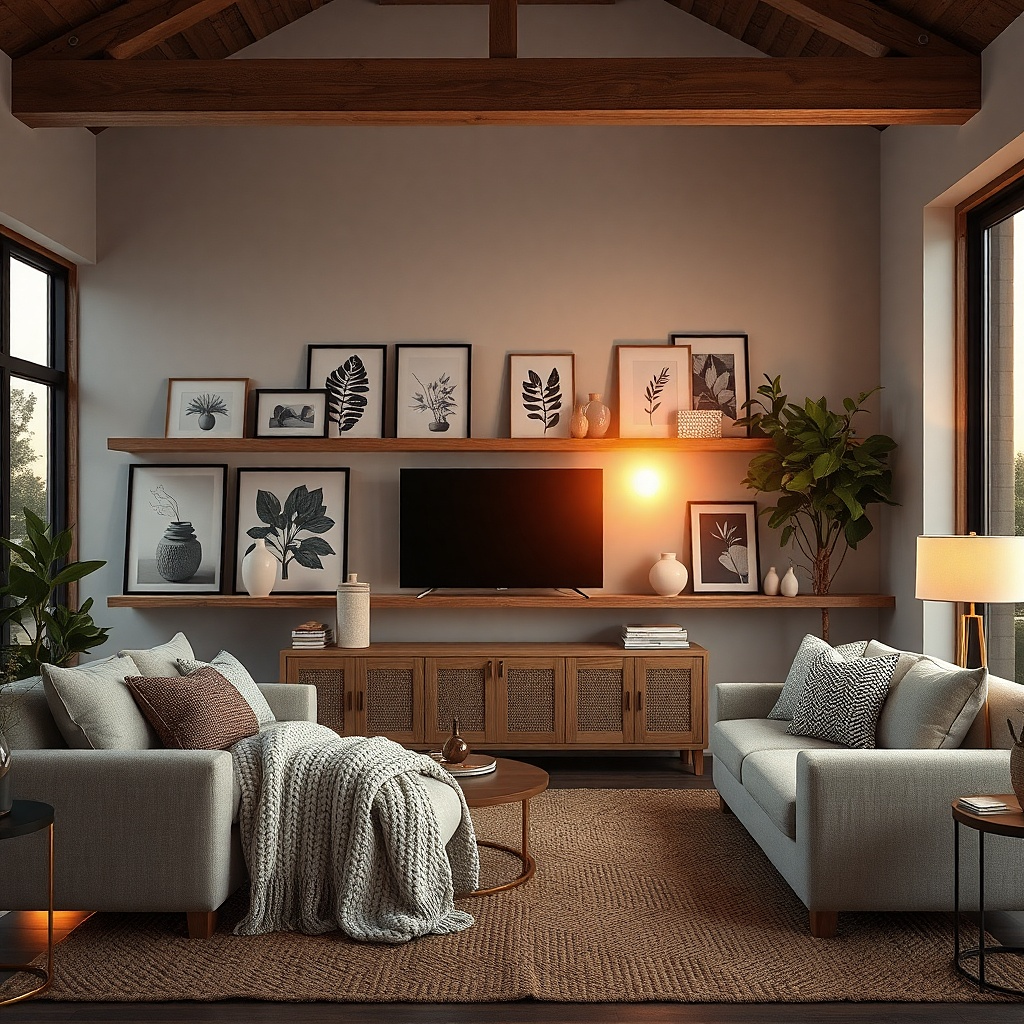
Install a picture ledge long enough to extend 4-8 inches beyond each side of the TV. Mount it so the ledge top sits around 6-10 inches above the TV top edge. Place 2-3 larger pieces first (one leaning, one centered, one slightly off-center), then fill gaps with smaller frames spaced about 2 inches apart. Use a simple grouping rule: keep most pieces on one side of the TV and mirror the balance lightly on the other side.
A picture ledge makes the TV wall feel like a rotating display, which instantly adds cozy energy. Instead of trying to balance decor on both sides at the same height, use a long ledge and let the pieces vary in size. Choose a matte black, warm oak, or espresso ledge and keep the frame colors consistent. Style with small framed prints, one larger botanical print leaning, and ceramics in cream and terracotta. This layout is great for living rooms with kids or frequent changes because you can swap pieces without redoing a gallery wall.
Common mistakeDon’t overfill the ledge — crowded shelves around a TV look busy fast.
Try thisStick to 1-2 frame finishes and 2-3 colors of mat board so the ledge looks curated without looking stiff.
5. Wood slat backdrop with warm gap lighting
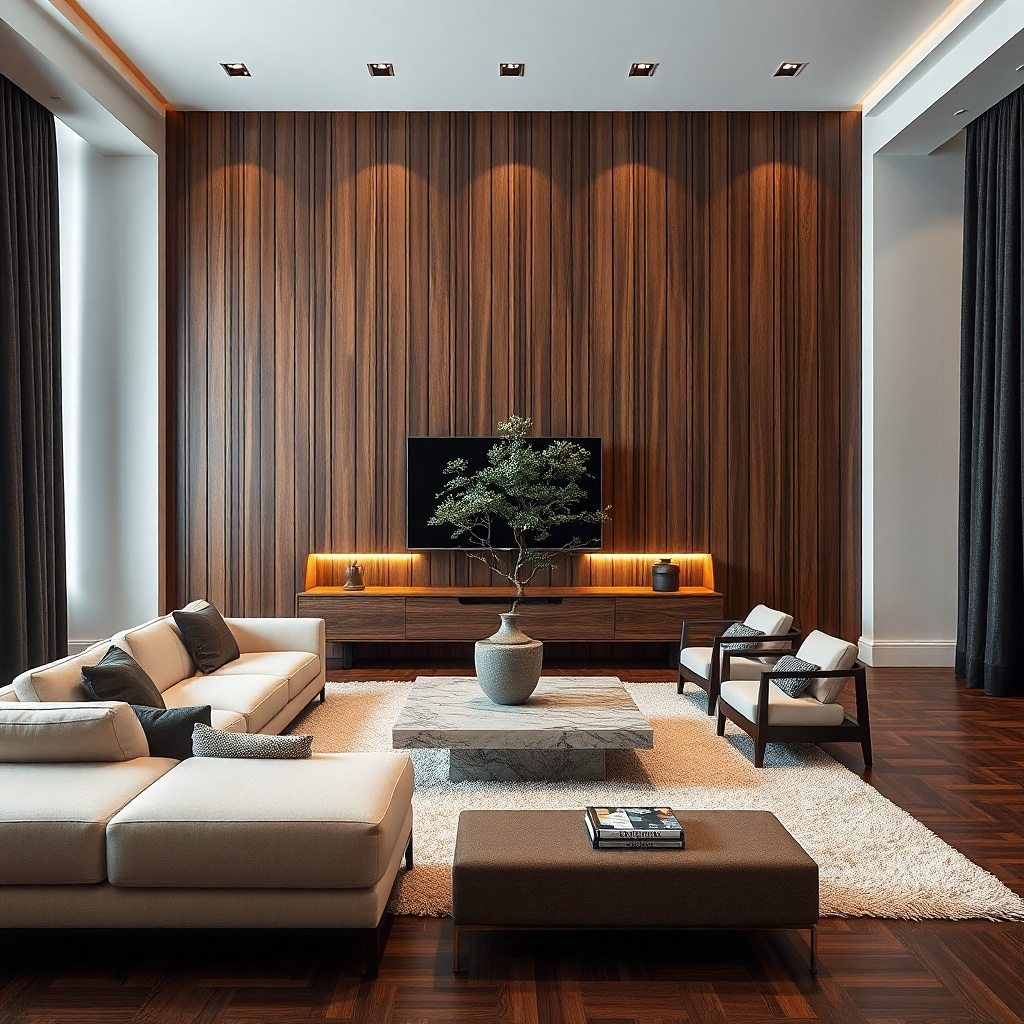
Measure the TV and design a slat panel area about 6 inches wider on each side than the TV. Install slats over a flat backing board or directly into studs with a level — keep spacing even. Add LED strip lighting in the gap behind the slats, using warm white (2700K) and a dimmer so it feels cozy rather than bright. Mount the TV after the slat structure is secure, then hide the power cable behind the panel edge or in the wall channel.
Wood slats create cozy depth because they add shadow lines, which soften the TV’s flatness. Warm gap lighting makes the wall feel like it has a gentle glow even when you dim the living room. Use walnut or smoked oak slats with a matte finish, and keep the slat spacing consistent for a clean look. The slat section should be wider than the TV by at least 12 inches total and tall enough to cover the wall area you’d otherwise decorate with art. This is one of the best options when you want a modern cozy look without a bunch of objects.
Common mistakeAvoid cool white LEDs (4000K) — they make wood look gray and the room feels colder.
Try thisChoose a dimmer and set the warm light so it looks like candlelight, not a kitchen under-cabinet bulb.
6. Bookshelf wall with TV centered between two vertical bookcases
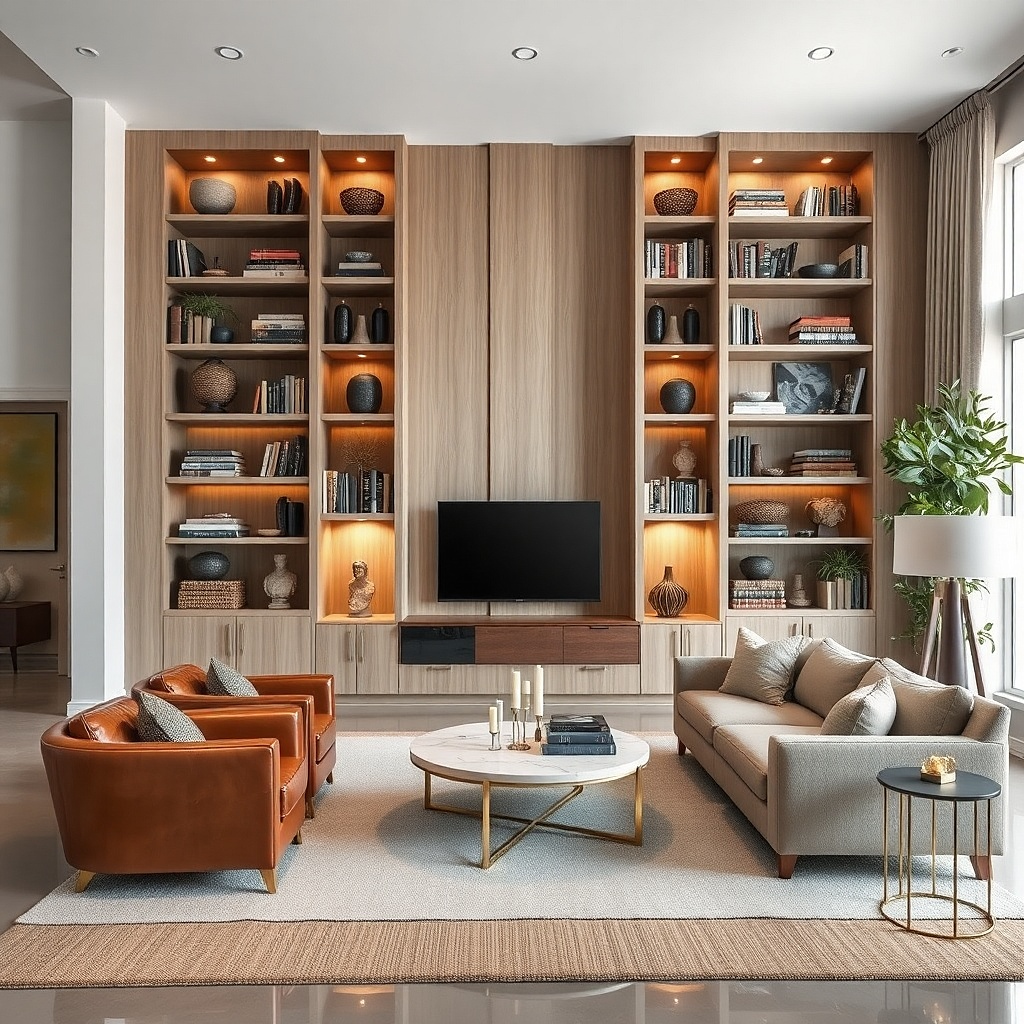
When the TV sits between bookcases, it stops looking like a gadget and starts looking like part of the architecture. This works best in living rooms with enough wall width to build two vertical stacks. Use open shelves with a mix of books and closed storage to keep the wall cozy and not visually loud. A warm wood finish and neutral back panels (like light oak or off-white) make the books read cohesive. The TV becomes one element inside a larger wall composition, which is exactly what you want.
Measure the wall width and plan two side bays so each bay is at least 18-24 inches wide for visual balance. Build or buy a bookshelf system, then mount the TV so it sits at the same height as the center shelf section, not too high. Use shelf backs in a light neutral to prevent the wall from feeling dark. Style with 2-3 book colors repeated across shelves, then add 1-2 baskets per side to hide clutter.
Keep the bottom shelf area lighter (white or cream baskets) so the wall feels airy around the TV.
Don’t mix too many wood tones — different browns make the TV wall look chaotic.
7. Double gallery frames flanking the TV at different heights
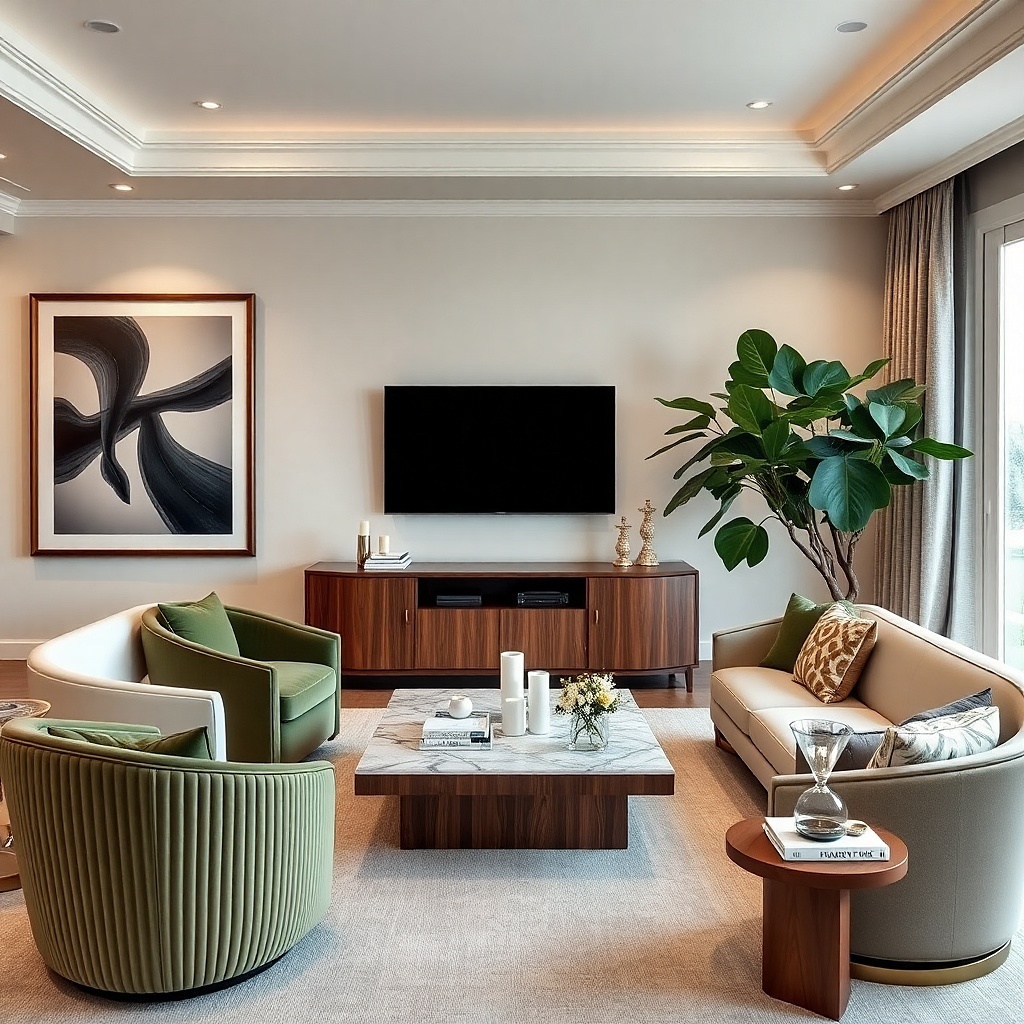
This layout pulls attention away from the TV by giving the wall a strong, intentional “frame within a frame.” Two large pieces on either side act like bookends, and offset heights keep it from feeling like a rigid showroom. Choose oversized frames in black-brown or warm walnut, and pick artwork with muted tones that echo your sofa fabric. Keep the TV centered under the midpoint between the two frames so it feels placed, not floating. This works well when you have a long wall and want symmetry without a heavy built-in look.
Select two art sizes that are at least 60% of the TV width each when measured across the frame. Mount the left frame so its center sits around 58-62 inches, and mount the right frame 2-4 inches higher or lower to create the intentional asymmetry. Place the TV so its top edge sits around 10-12 inches below the bottom edge of the lower frame. Use painter’s tape for alignment and step back to confirm spacing before drilling.
Match the mat color on both pieces a warm off-white mat makes the whole wall feel softer.
Avoid using thin wire frames or bright white frames — they read too stark next to the TV.
8. Oversized mirror above a TV with warm side sconces
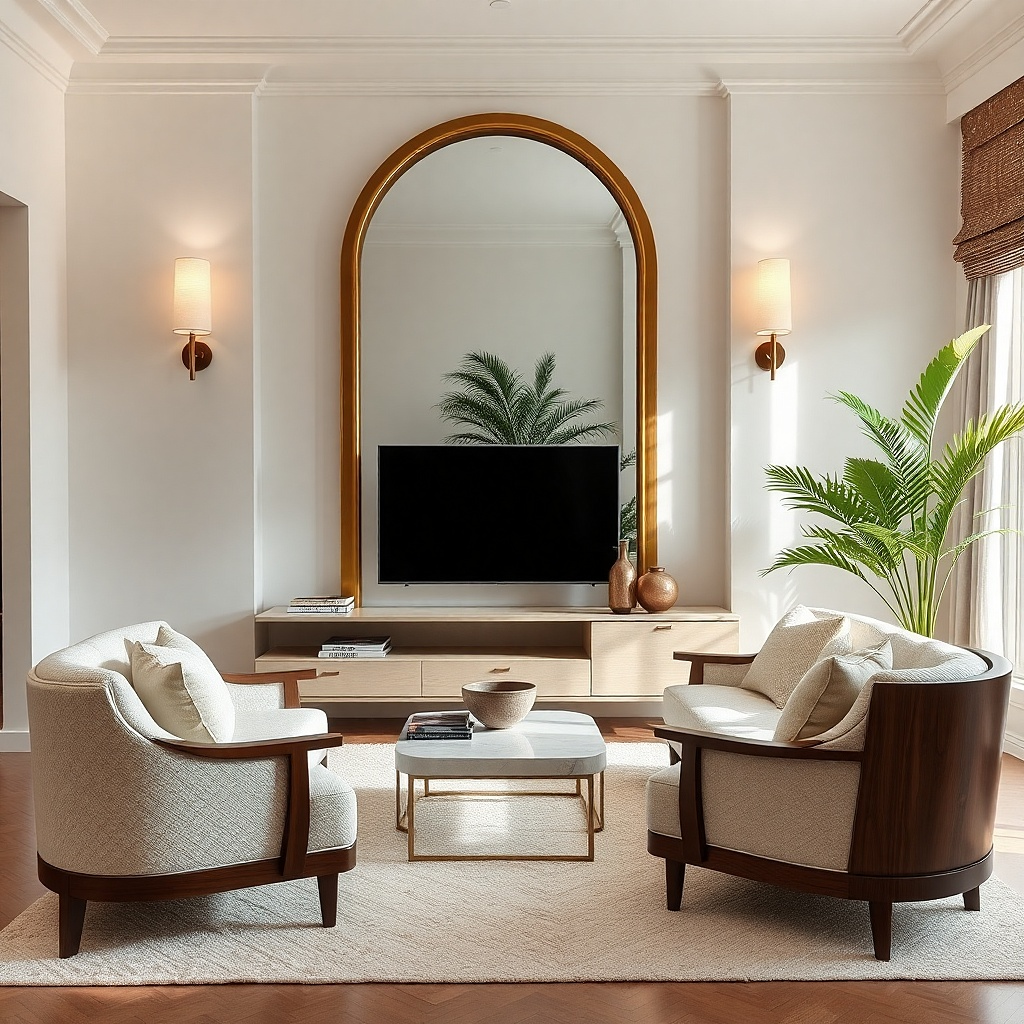
Mirrors are a cheat code for cozy wall decor because they add light and depth. Put an oversized mirror above the TV so the viewer’s eye lands on the reflective shape first, not the screen. Choose a round or arched mirror with a warm frame finish like aged brass, espresso wood, or matte black-brown. Add matching sconces on both sides to create a soft glow that looks good even when the TV is off. This layout is especially good in rooms that need brighter walls but you still want a styled look.
Pick a mirror width that is about 1.2 times your TV width, or at least 24-30 inches wide for most living rooms. Mount the mirror so its bottom edge sits about 6-10 inches above the TV top edge. Install two sconces at eye level for the light source — usually around 60-66 inches from the floor to the center of the fixture — and keep them symmetrical. Use warm bulbs around 2700K and dimmers if you can.
Use frosted or fabric-shade bulbs in the sconces so the light spreads instead of creating hard spots.
Avoid placing the mirror so it reflects glare from windows — angle and test at night.
9. TV set into a reclaimed wood frame
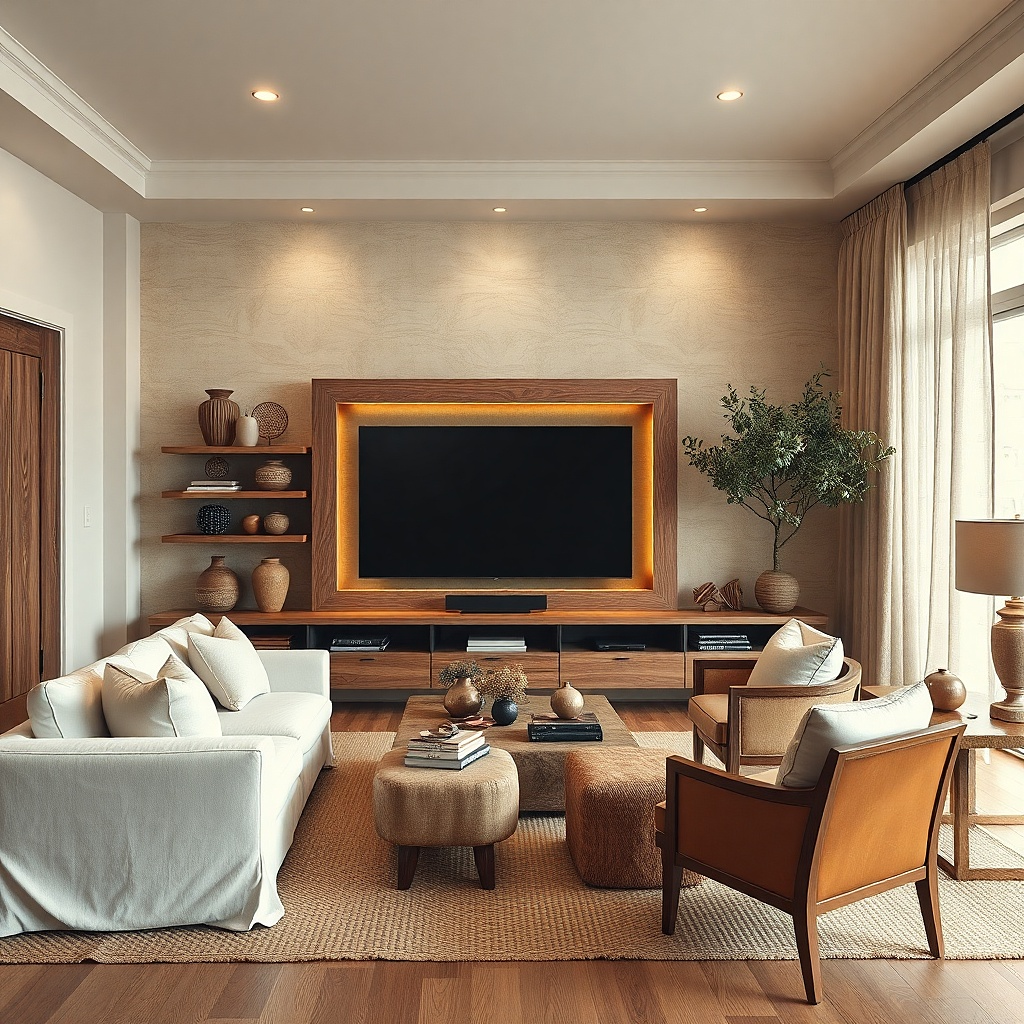
Measure the TV width and add 6-10 inches to the frame width on both sides. Build a rectangular frame from reclaimed planks with a consistent outer dimension, then mount it to the wall on studs. Set the TV bracket inside the frame opening so the screen sits centered and flush with the frame area. Paint or stain the backer board to a neutral tone so it doesn’t show through gaps. Finish by filling small seams with wood filler and sealing with a matte clear coat.
A reclaimed wood frame makes the TV look like it belongs to a mantel or a gallery installation. The uneven grain and warm tones add cozy texture, and the frame creates a clear boundary that reduces visual competition. Use a wood species that reads warm (oak, pine, or walnut-toned reclaimed) and keep the finish matte or lightly sealed, not glossy. The frame should be thick enough to cast a slight shadow line around the TV even 1 to 2 inches of depth helps. This is a strong option when you want rustic-cozy without turning the whole room into a cabin.
Common mistakeAvoid frames that are too thin — flat trim around a TV looks like an afterthought.
Try thisAdd one matching wood element elsewhere (a small tray or picture frame) to connect the wall to the room.
10. Fabric-draped wall panels with a hidden TV niche
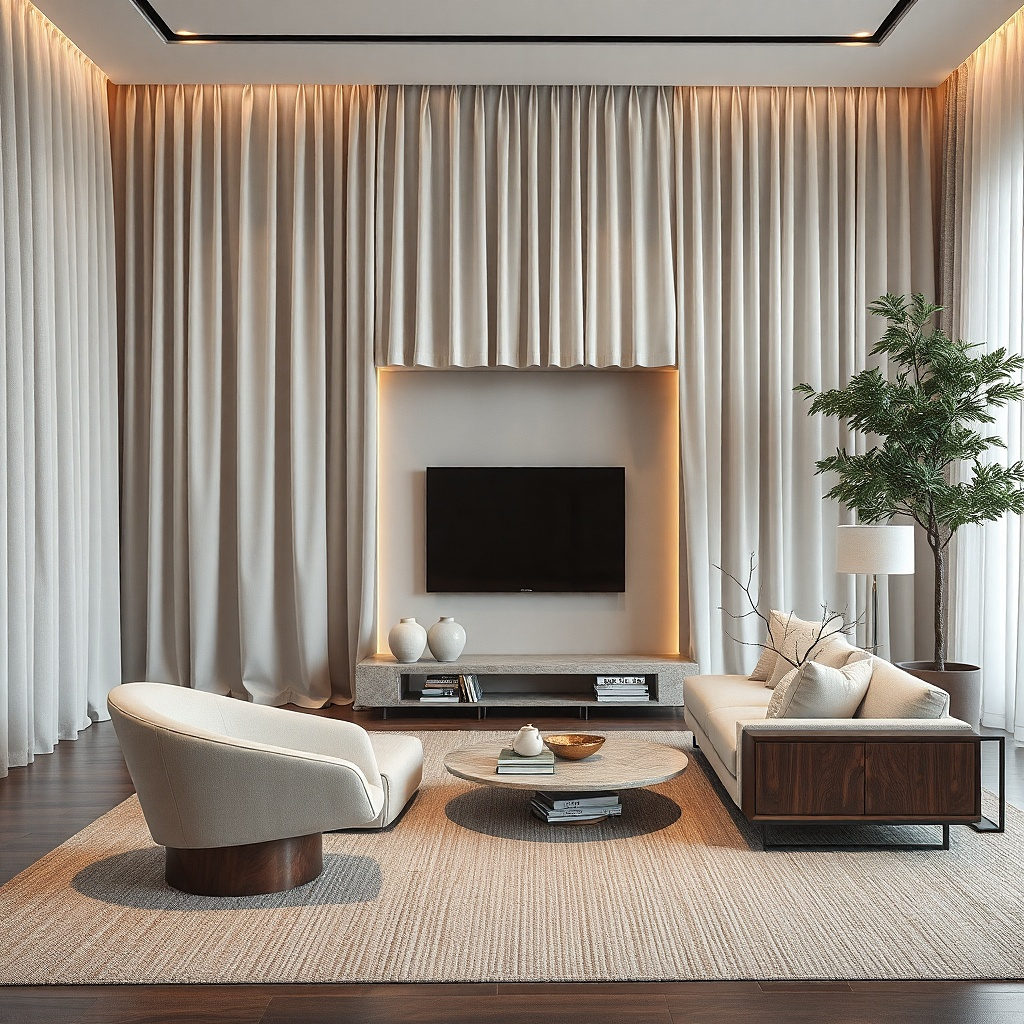
Decide whether you want the TV niche recessed or surface-mounted behind fabric. Build a niche frame or mount a flat backing panel, then cut an opening so the TV sits centered with 1-2 inches clearance around the sides. Attach fabric panels on a track or simple hooks so they can hang evenly and stay off the screen. Use a fabric tension rod or weighted hem approach so the drape falls straight. Mount the TV, then test fabric movement with the TV on to ensure no contact with heat sources.
Fabric makes a TV wall feel instantly cozy because it absorbs light and softens edges. A hidden TV niche with fabric panels means the TV disappears visually when you want the room to feel calm. Use heavy drapery fabric like linen blend or cotton twill in oatmeal, cream, or warm gray. Keep the niche opening slightly larger than the TV so the fabric doesn’t press against the screen area. The effect is warm and tactile — the wall reads like a room, not a media unit.
Common mistakeAvoid sheer fabrics — they make the TV still feel exposed instead of softened.
Try thisUse weighted hems or a small sewn-in chain so the drape looks intentional, not limp.
11. Accent wallpaper strip behind the TV with solid art anchors
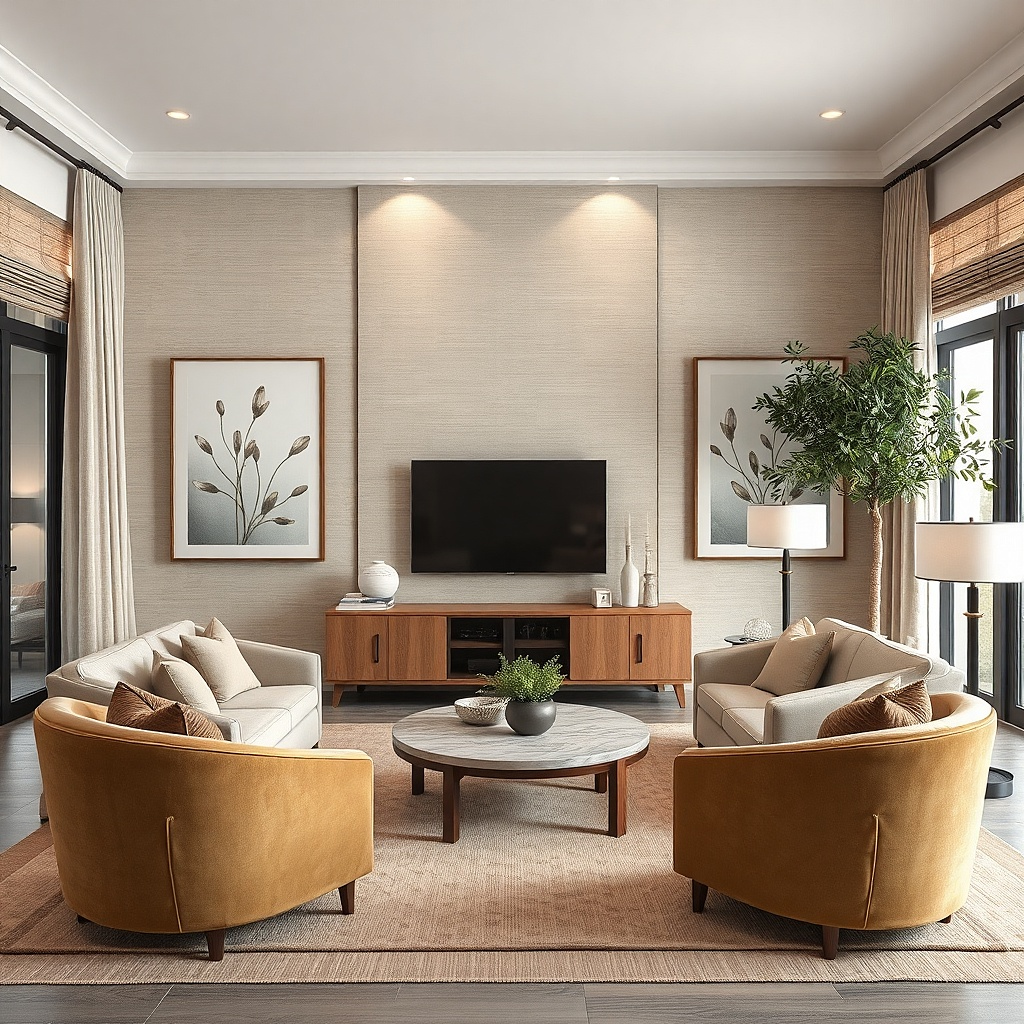
Measure the TV and create a wallpaper zone about 10-14 inches wider on each side than the screen. Mark the rectangle with painter’s tape and apply wallpaper carefully, smoothing seams and edges. Mount the TV over the wallpaper zone so the TV’s edges align with the designed borders. Add one framed piece above the TV at eye level, using a simple mat and frame color that matches a wallpaper tone. If your wallpaper is busy, keep the frame and decor minimal.
You don’t need wallpaper on the whole wall to get the cozy effect. Use a wallpaper strip or rectangle behind the TV so the screen sits inside a designed zone. Pick a pattern with subtle movement: small-scale botanical, muted geometric, or painterly brush strokes in warm tones. Then keep the rest of the wall simple with one large frame above or two smaller frames flanking. The wallpaper adds personality without turning the entire wall into noise, which makes the TV recede visually.
Common mistakeAvoid high-contrast black-and-white patterns — they make the TV look harsher.
Try thisChoose a wallpaper with a matte finish and keep your lighting warm to avoid glare.
12. Large ceramic wall plates arranged above a TV
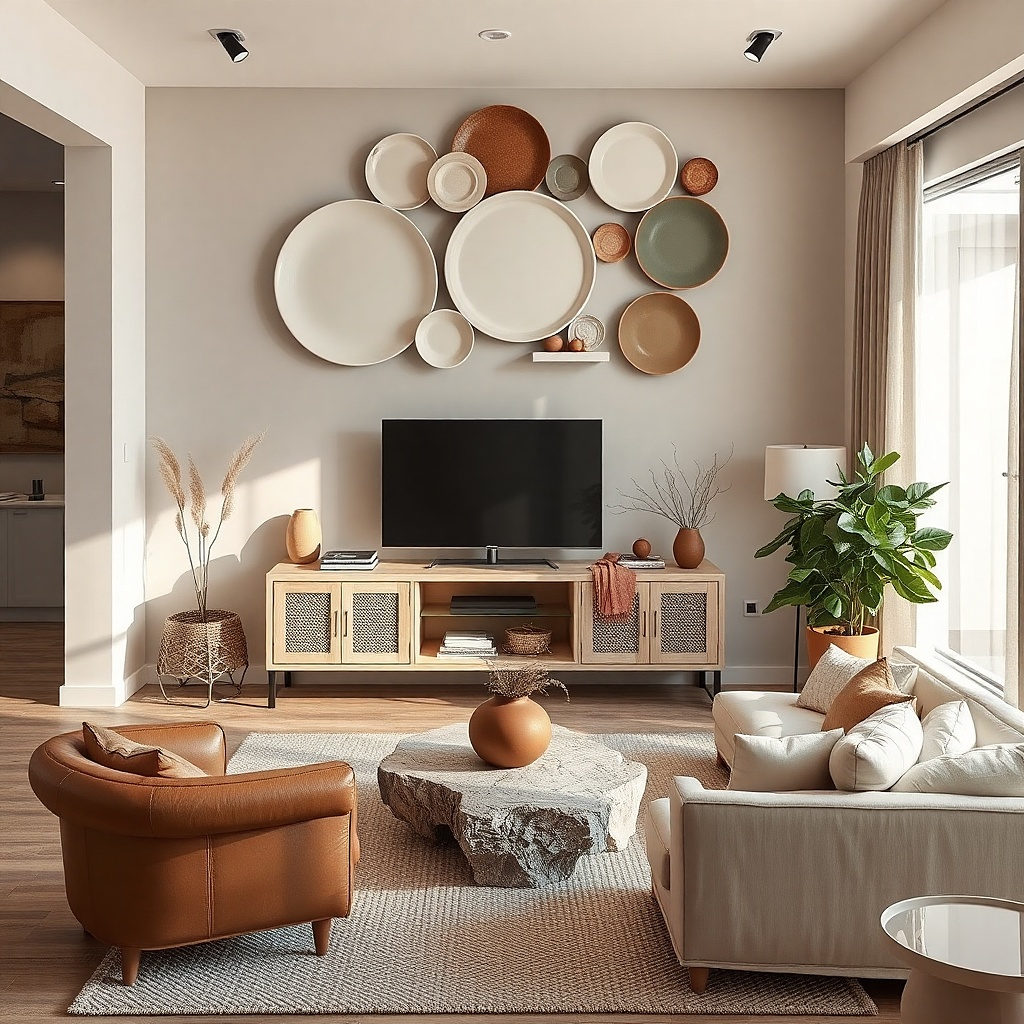
Pick plate sizes ranging from about 8 inches to 14 inches in diameter and plan a cluster width around 2/3 to 1x the TV width. Mount the TV first so you know the top clearance, then place the plate cluster so its bottom edge sits 8-12 inches above the TV top. Use plate hooks or adhesive plate hangers rated for weight, and level each plate with a small spacer. Keep the outer plates slightly lower than the center to create a gentle arc.
This is for people who want cozy without a gallery wall filled with prints. Ceramic plates add warmth because they’re handmade-looking and they catch soft light. Mount the plates above the TV so they become the main focal point, while the TV sits lower and more like a functional element. Use 6-10 plates in a tight palette: cream, warm gray, and a single muted accent like terracotta. Mix sizes for rhythm, but keep the spacing consistent so it reads like a planned installation.
Common mistakeAvoid mixing glossy glaze-heavy plates with matte furniture — it can look mismatched and glare-prone.
Try thisUse plate colors that match your throw pillows or rug tones so the wall decor looks connected, not added.
13. Lean-backboard with framed textiles behind the TV
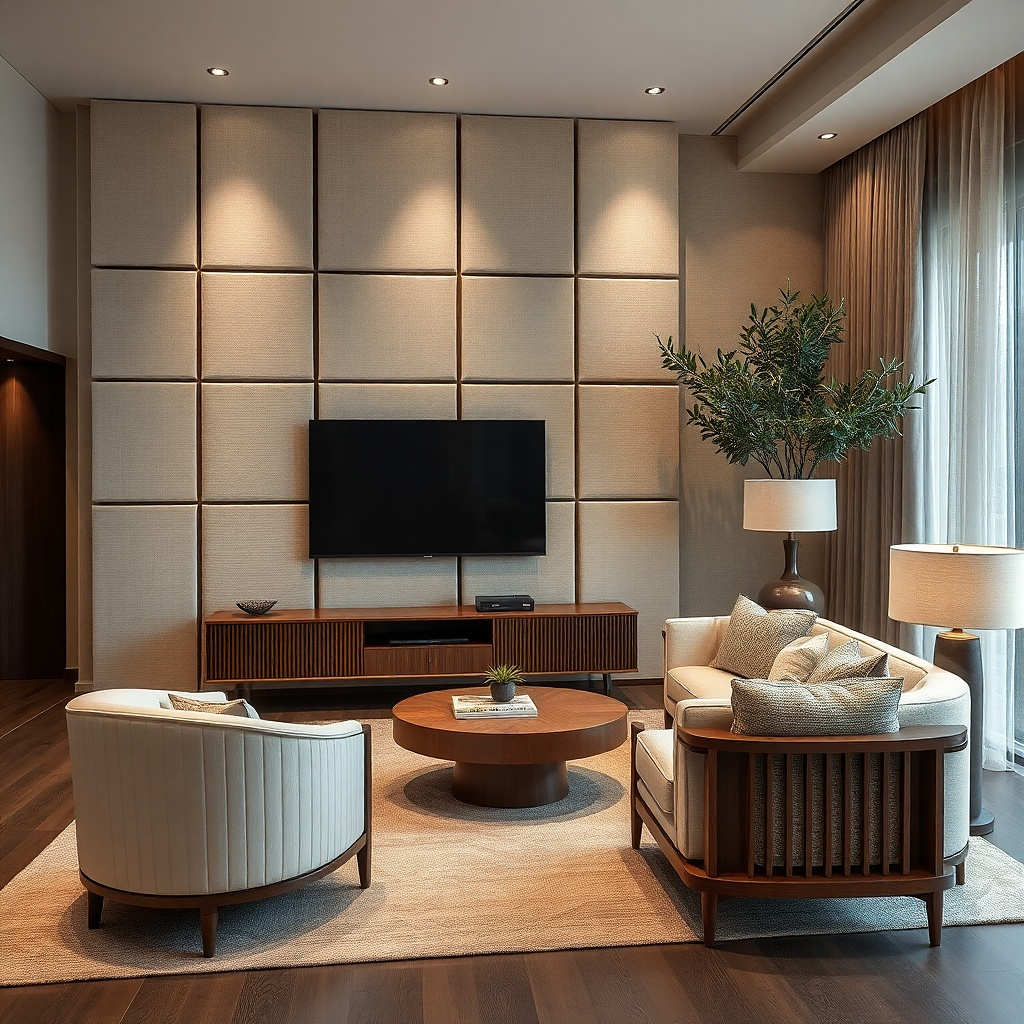
Mount a backing board to studs and paint or cover it with a neutral fabric base. Center the TV on the board and mark the mounting bracket holes, then mount the TV securely. Add framed textile pieces around the TV area, keeping at least 2-3 inches between frames and the TV edges. Use fabric frames with simple wooden borders in walnut or espresso. Finish by hiding wires in a flat raceway painted to match the textile background.
Textiles behind the TV give you warmth without clutter. This plan uses a large fabric board or backing panel mounted to the wall, then adds framed textile pieces or a single large textile panel behind the TV area. Choose thick cotton or linen with a subtle weave so it looks soft even in daylight. The TV sits on a mount at the center of this textile backdrop, and the framed elements keep the wall from feeling flat. It’s great for cozy living rooms where you want texture more than art prints.
Common mistakeAvoid thin, flimsy fabric that wrinkles — wrinkles look messy next to a screen.
Try thisUse one larger textile panel behind the TV instead of many small ones if you want a calmer look.
14. Corner-to-center mantel-style shelf across the TV
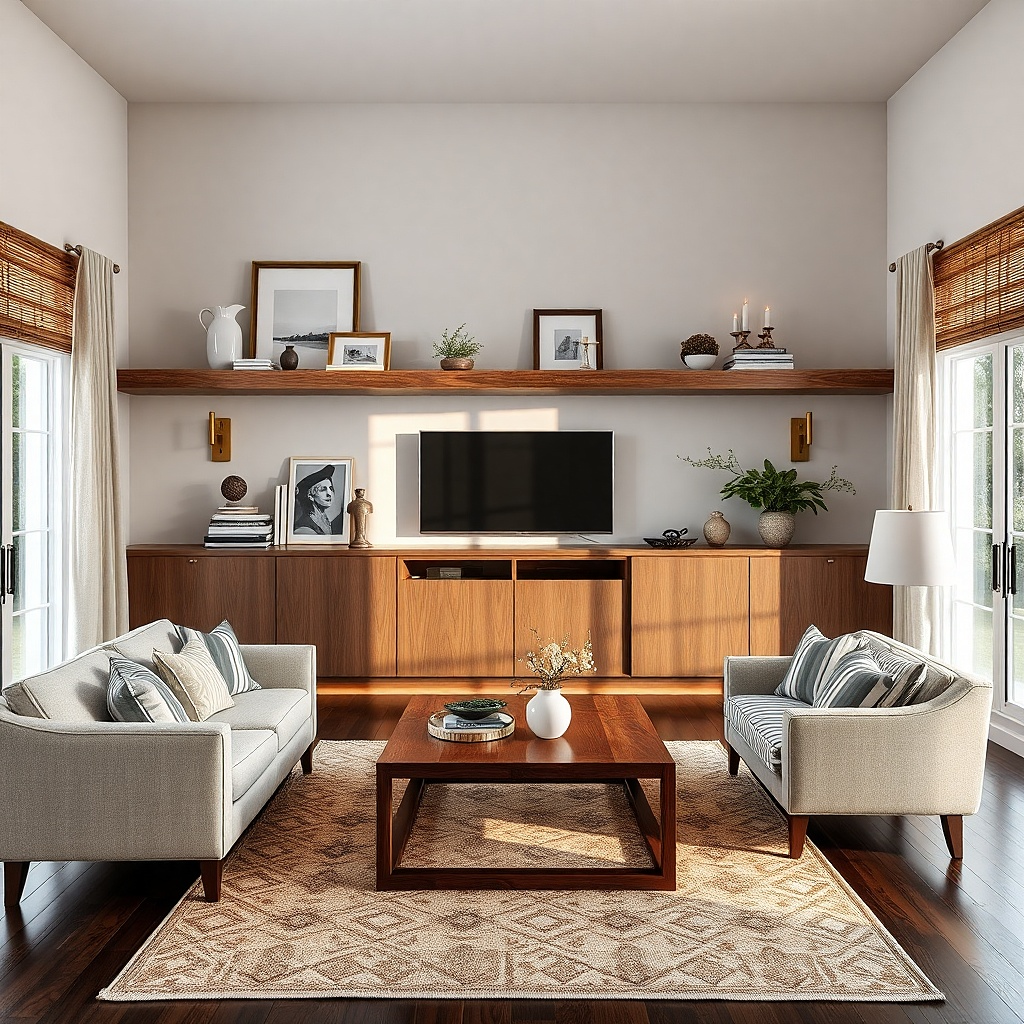
A mantel-style shelf makes the TV wall feel like it has a purpose beyond watching. The wide shelf spans the wall and gives you a place for candles, books, and a long ceramic vessel all of which read cozy. Choose a thick shelf with a visible underside, like a 10-12 inch deep beam shelf in walnut or oak. Keep the shelf décor low and grounded so it doesn’t feel like floating objects around the TV. This works especially well if your TV wall has a fireplace vibe or if you want a warm, traditional comfort look without building an entire media cabinet.
Measure your wall width and choose a shelf length that extends 6-10 inches past each side of the TV. Install the shelf into studs at a height that leaves 10-14 inches between the TV top edge and the shelf’s bottom. Style with a base layer: 2-3 books stacked horizontally, then add one tall candle holder or ceramic vessel near one side. Finish with one greenery stem or dried branch placed slightly off-center. Keep the heaviest items closer to the wall for stability.
Use candles in glass holders in warm amber or smoked tones they look good even when unlit.
Avoid placing decor directly above the TV screen — it makes the TV feel visually boxed in.
15. TV centered between two tall floor lamps with a soft curtain panel
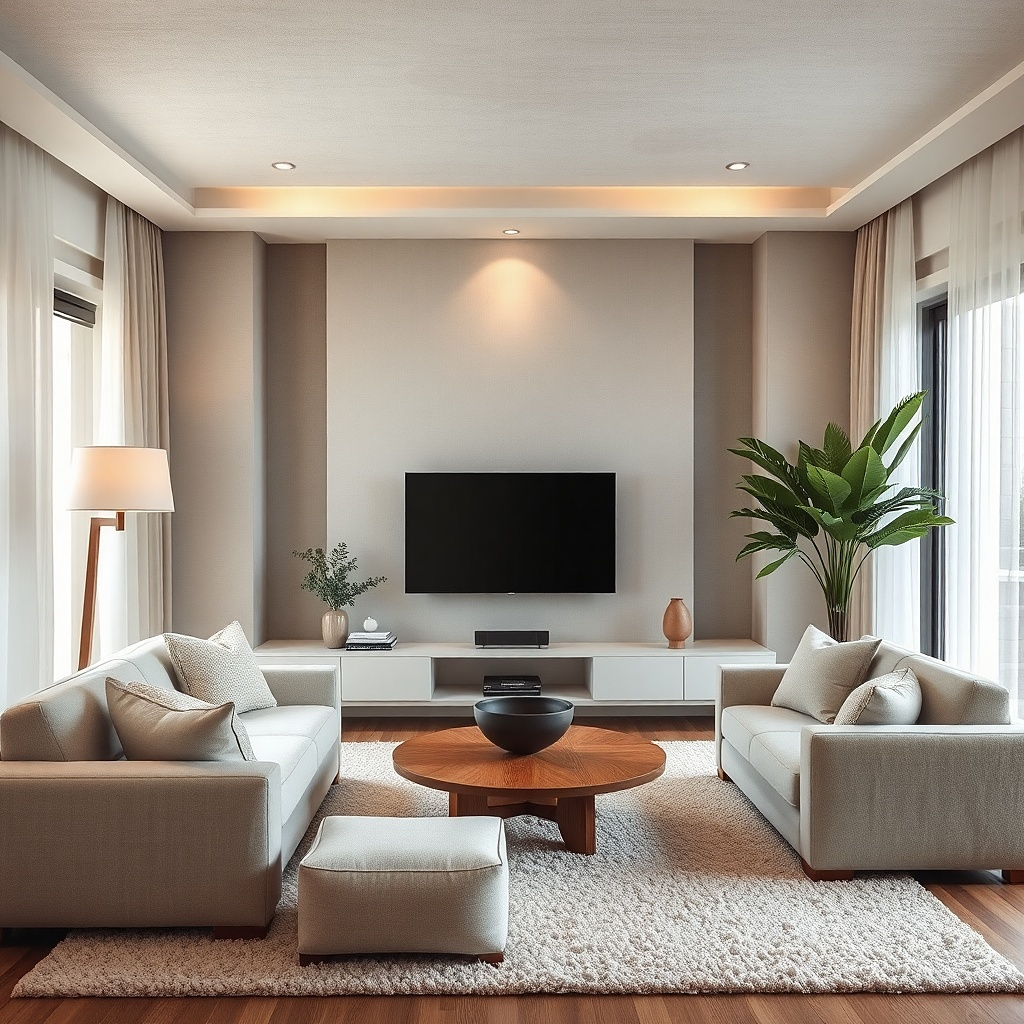
Lighting changes the TV wall more than people realize. This plan uses two tall floor lamps to frame the TV and a curtain panel to soften the hard geometry. Choose linen-look shades in cream and keep bulbs warm (2700K). The lamps create vertical warmth that competes with the TV’s rectangle, and the curtain adds texture and movement. This is a strong option for rental-friendly living rooms where you can’t mount built-ins or heavy shelves.
Place the TV centered on the wall, then position floor lamps so their light centers land near the TV’s top third. Keep the lamp shades about 6-10 inches away from the wall so they don’t block the view. Hang a curtain panel on a rod that spans from above the TV area to near floor height, using a single warm neutral fabric. Plug into smart dimmers if you want the cozy effect at night. Style the area around the TV with one low media console so the wall doesn’t feel empty.
Drape the curtain so it just brushes the floor — short curtains look less cozy and more “temporary.”
Avoid bright white drum shades — they make the room feel more showroom than home.
16. Gallery wall with a TV-sized negative space grid
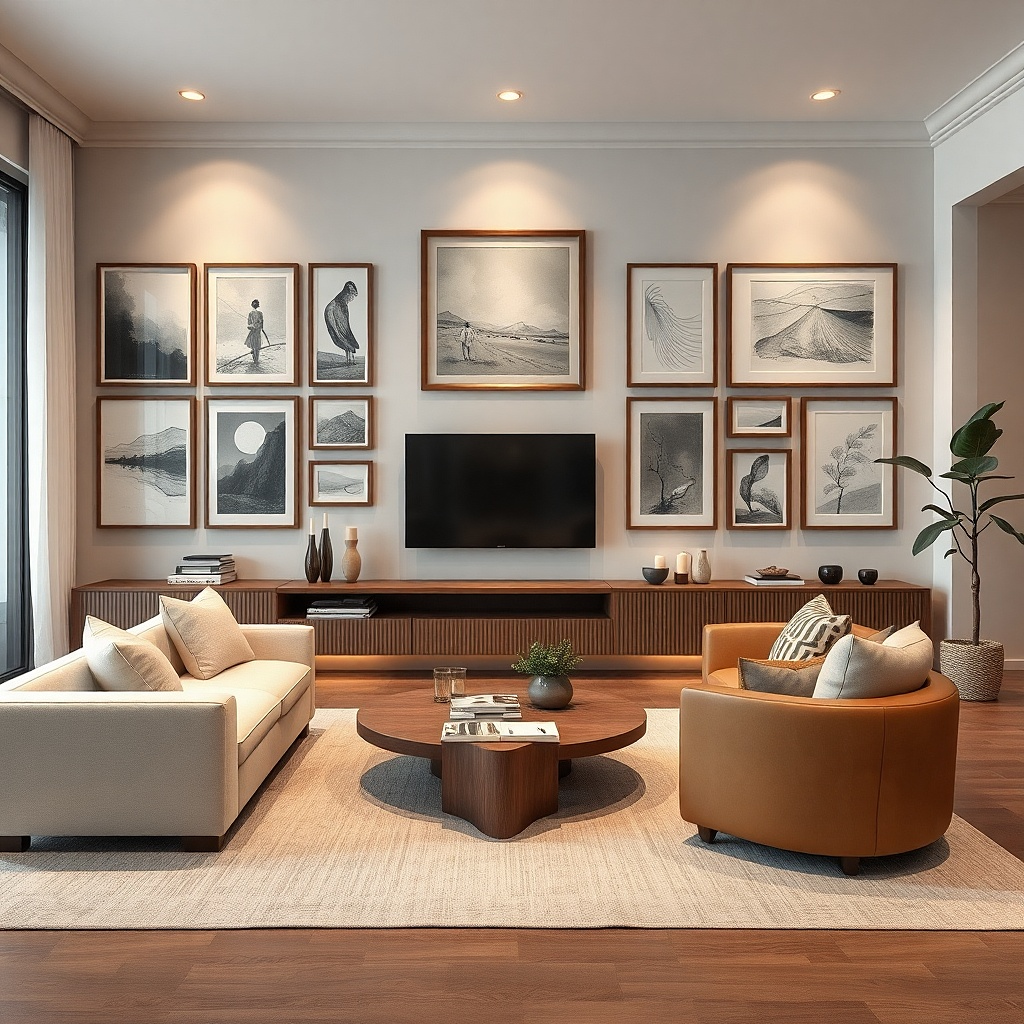
This is the cleanest way to do a gallery wall when the TV must live there. The trick is leaving a TV-sized negative space grid so frames don’t crowd the screen area. Use a consistent grid with frame sizes that repeat (for example, all 11x14 or all 16x20) and keep the spacing uniform. Choose matte frames in walnut or black-brown and use warm off-white mats. The TV sits centered, and the gallery reads like a planned wall design instead of decor stuck around electronics.
Pick 8-14 frames and standardize sizes so the gallery looks like a system. Mark a TV rectangle on the wall with painter’s tape and build the grid around it, leaving at least 6 inches of clearance on each side of the TV. Hang the top row first using a laser level or a long straight board, then work down. Use picture wire hooks with a consistent hanging height so mats align across the wall. After hanging, step back and check that the gallery doesn’t climb too high — aim for a total gallery height of about 60-72 inches.
Use one artwork type same style or same color palette so the gallery looks cohesive next to the TV.
Avoid mixing random frame sizes — it makes the TV wall look cluttered instead of cozy.
17. Rattan or cane screen behind the TV for soft texture
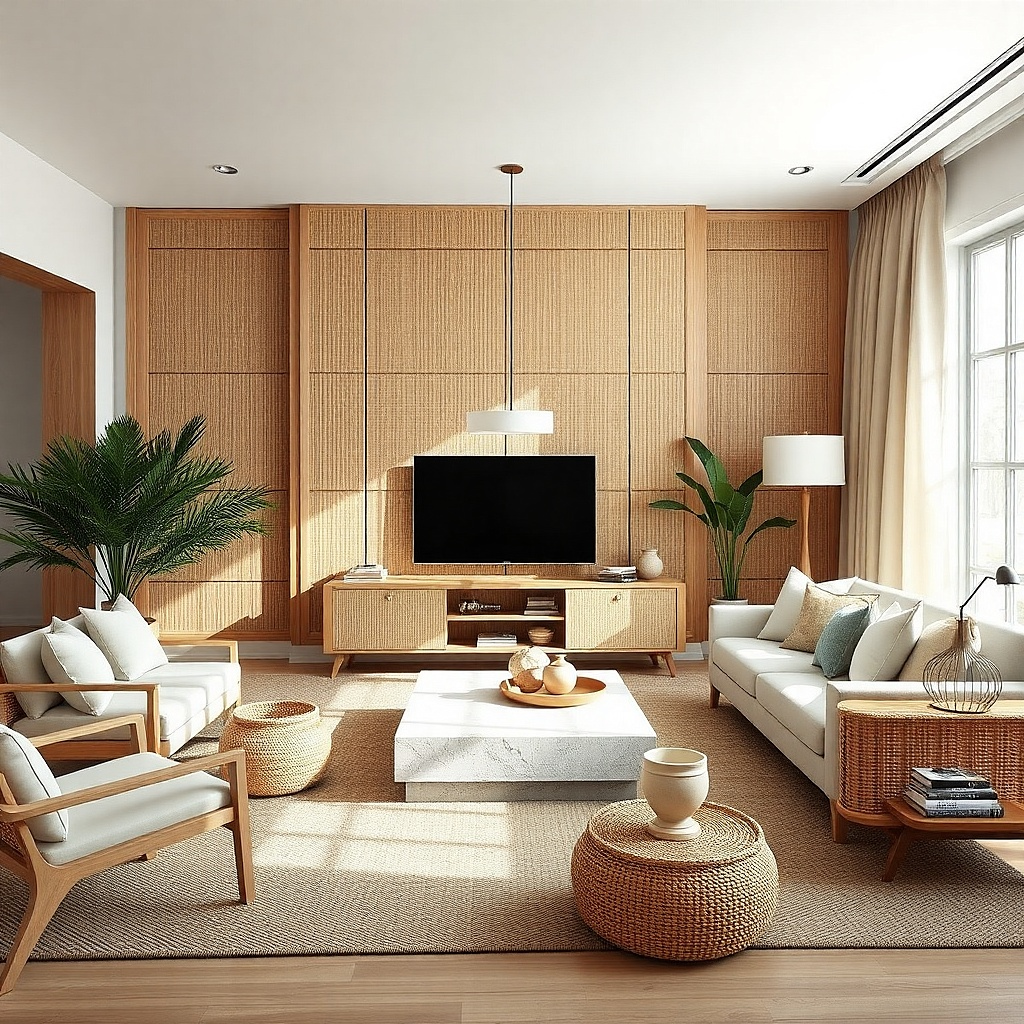
A woven cane or rattan screen adds instant warmth and breaks up the TV’s hard lines. Mount or lean it behind the TV area so the screen has a visible woven pattern that reads cozy even at night. Choose a screen with a matte finish and warm honey or light tan color, not bright white. This works well in living rooms with natural textures like jute rugs, linen throws, or light wood furniture. The woven pattern also hides minor wall imperfections, which is a practical bonus.
Measure the TV and choose a cane screen width that extends 6-10 inches on both sides. Mount the TV normally, then install the screen behind it using brackets to studs or a freestanding setup placed close enough to feel intentional. Keep the screen about 1-2 inches away from the wall so it doesn’t look pasted on. If you’re using a freestanding screen, anchor it at the top with a discreet wall strap to prevent wobble. Style the surrounding wall with one simple framed print to keep the look grounded.
Use warm wood and cream decor nearby so the woven texture looks like part of the room, not a separate prop.
Avoid screens that are too dark and heavy — they can make the TV wall feel cramped.
18. Large framed shadowbox with dried florals above the TV
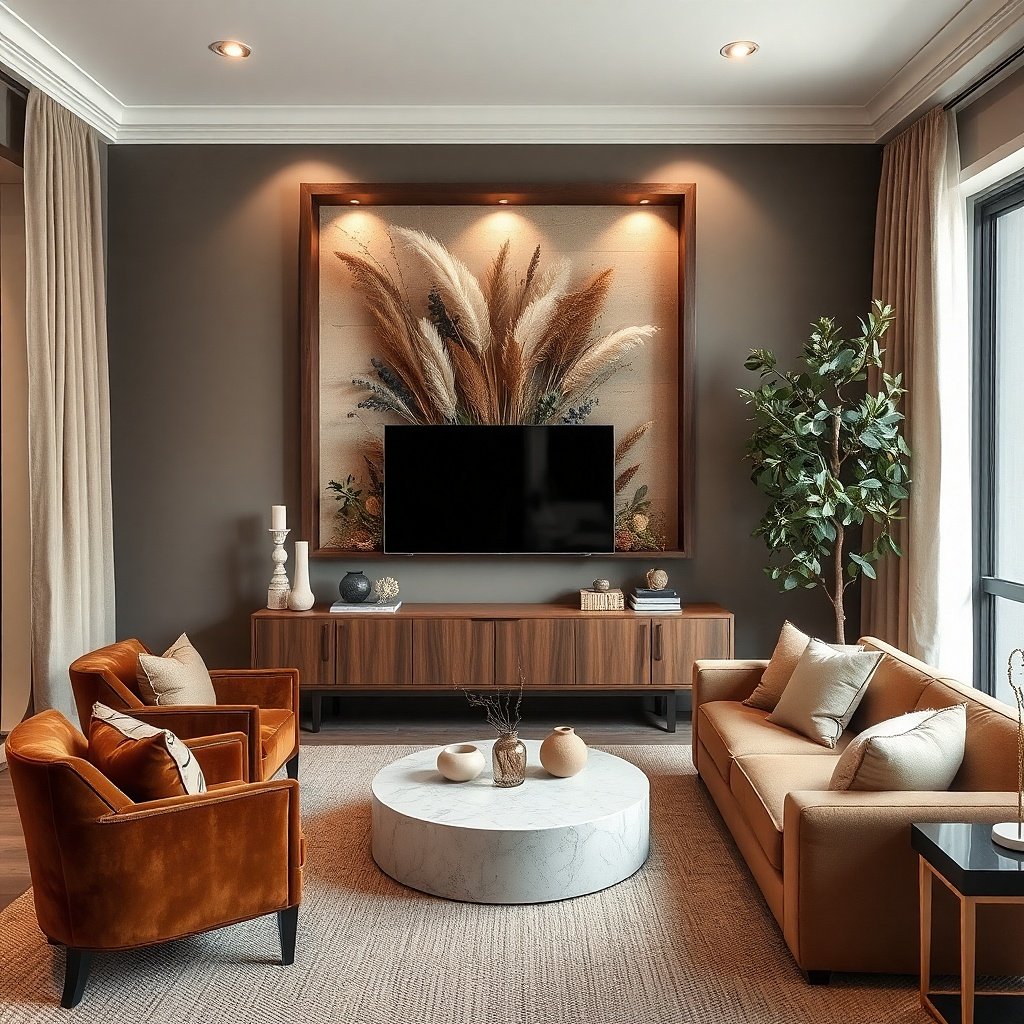
A shadowbox reads cozy because it has depth and a natural, lived-in texture. Place it above the TV so it becomes the main visual anchor when you sit down. Choose a shadowbox in warm wood or matte black-brown and use dried florals in neutral tones wheat, oat, soft blush, and muted sage. The dried materials also look good in daylight and evening lighting, and they don’t need changing like fresh flowers. This is a great option when you want organic warmth without a gallery of small frames.
Select a shadowbox size that is at least 24 inches wide for a 43-55 inch TV, scaling up for larger screens. Mount it so its center sits around 60 inches from the floor, then position the TV so the TV top edge sits about 10-12 inches below the shadowbox bottom. Use wall anchors into studs for the shadowbox weight. Keep the dried arrangement neutral so it doesn’t fight your sofa colors. Finish with warm-toned decor on the media console like one ceramic vase and a single candle holder.
Seal dried florals with a matte fixative if you live in a dusty area so the box stays clean.
Avoid bright saturated florals — they compete with the TV’s contrast.
19. Two-tone paint backdrop: warm wall color with a lighter TV band
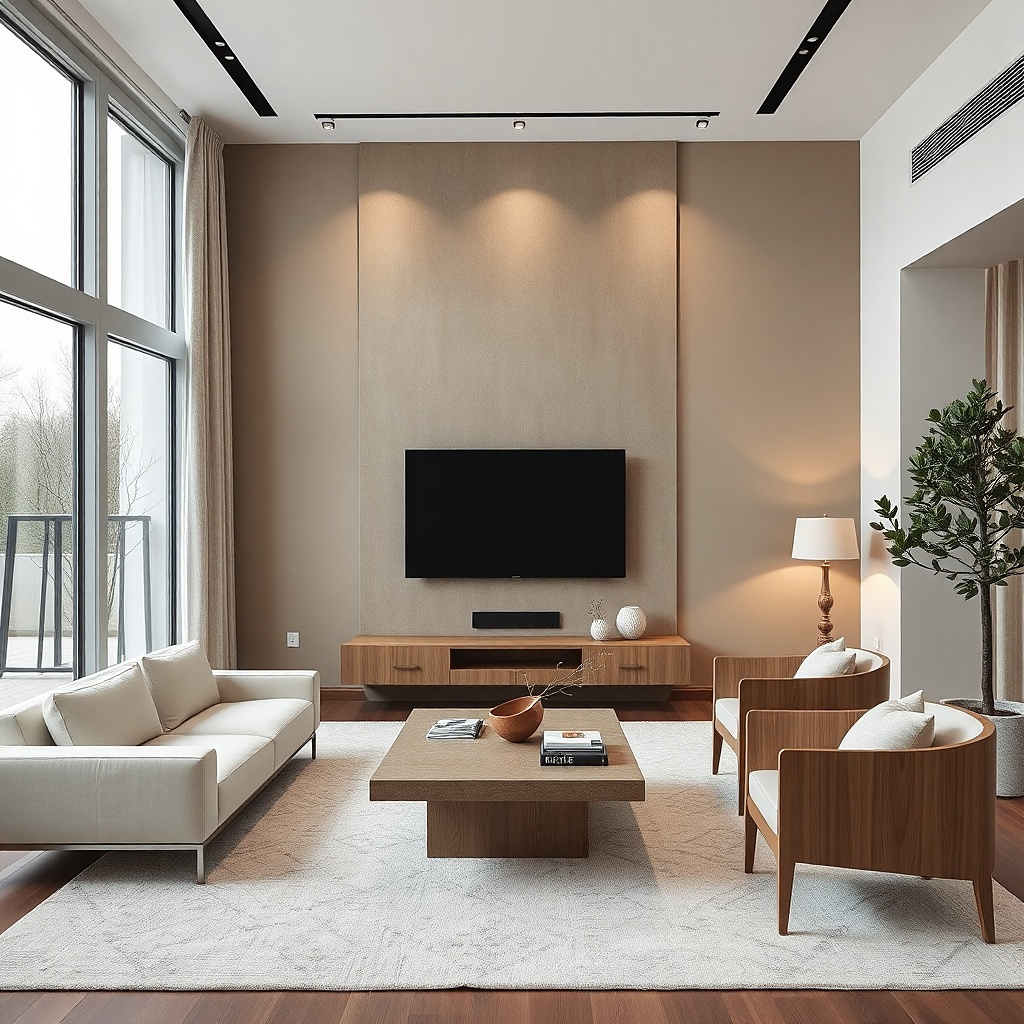
Choose two paint colors in the same undertone family. Paint the main wall color first, then tape the TV band using painter’s tape so the band is about 8-12 inches wider than the TV on each side. Keep the band height around the TV height plus 10-16 inches total, so it feels like a designed zone. After painting and drying, mount the TV and cover any cable raceways with the same main wall color. Let the paint cure fully before adding heavy decor so tape edges stay crisp.
Paint is the most controllable way to make a TV wall feel cozy. Use two-tone paint: a warm main color on the wall and a lighter band behind the TV to create a soft frame. Pick warm tones like greige-warm, clay, or sand, and choose the lighter band in the same family so it doesn’t look like a harsh rectangle. This solution is especially good if you want a minimal look but still want the TV to feel integrated. The lighter band reduces contrast between the TV and wall, so the screen doesn’t feel like it’s floating in a cold space.
Common mistakeAvoid switching undertones (cool gray wall with warm cream band) — it looks off next to the TV.
Try thisUse a satin or eggshell sheen, not flat it holds up to cleaning and looks warmer in living rooms.
20. Symmetrical sconces with a long art strip under them
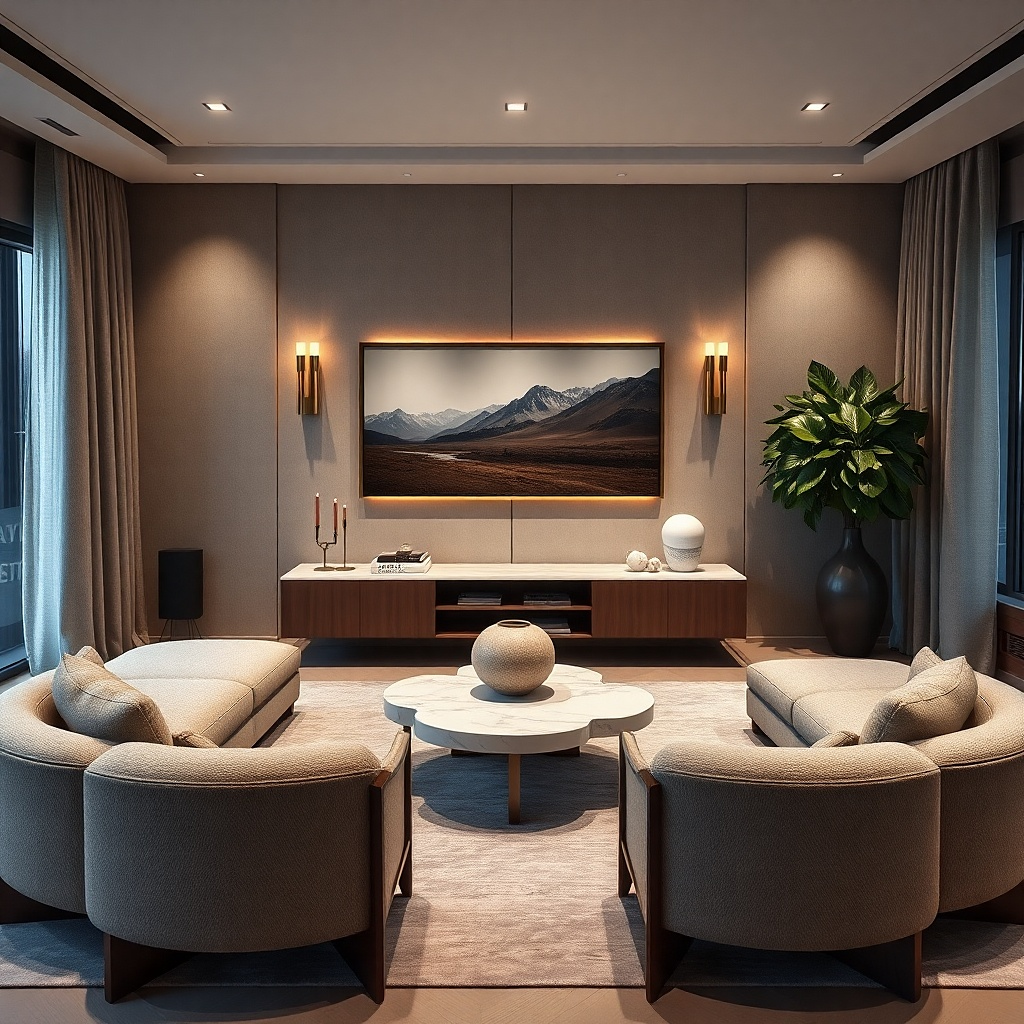
Sconces make the TV wall feel layered because you’re adding light at the edges, not around the screen. Pair two matching sconces with a long, horizontal art strip above the TV or between the sconces. This pulls attention upward and makes the wall look designed for conversation, not just movies. Choose sconces in matte black-brown or aged brass and use warm bulbs. The long art strip should be wide enough to connect both sides visually, which makes the whole wall feel cohesive.
Install sconces symmetrically at the same height, with the center of the fixture around 62-66 inches from the floor. Mount the TV so its center sits around your preferred viewing height, then position the long art strip so its center aligns with the TV center. Make the art strip about 60-75% of the wall width between sconces, and use a frame with a matte finish. Use a dimmer so the light level matches the cozy mood. Route wiring through the wall if possible; otherwise use a clean cord cover painted to match the wall.
Pick art with warm earth tones to match the bulb warmth and keep the wall feeling soft.
Avoid oversized sconces that hit the TV corners — they should frame, not collide.
21. Framed architectural panel with a TV centered inside
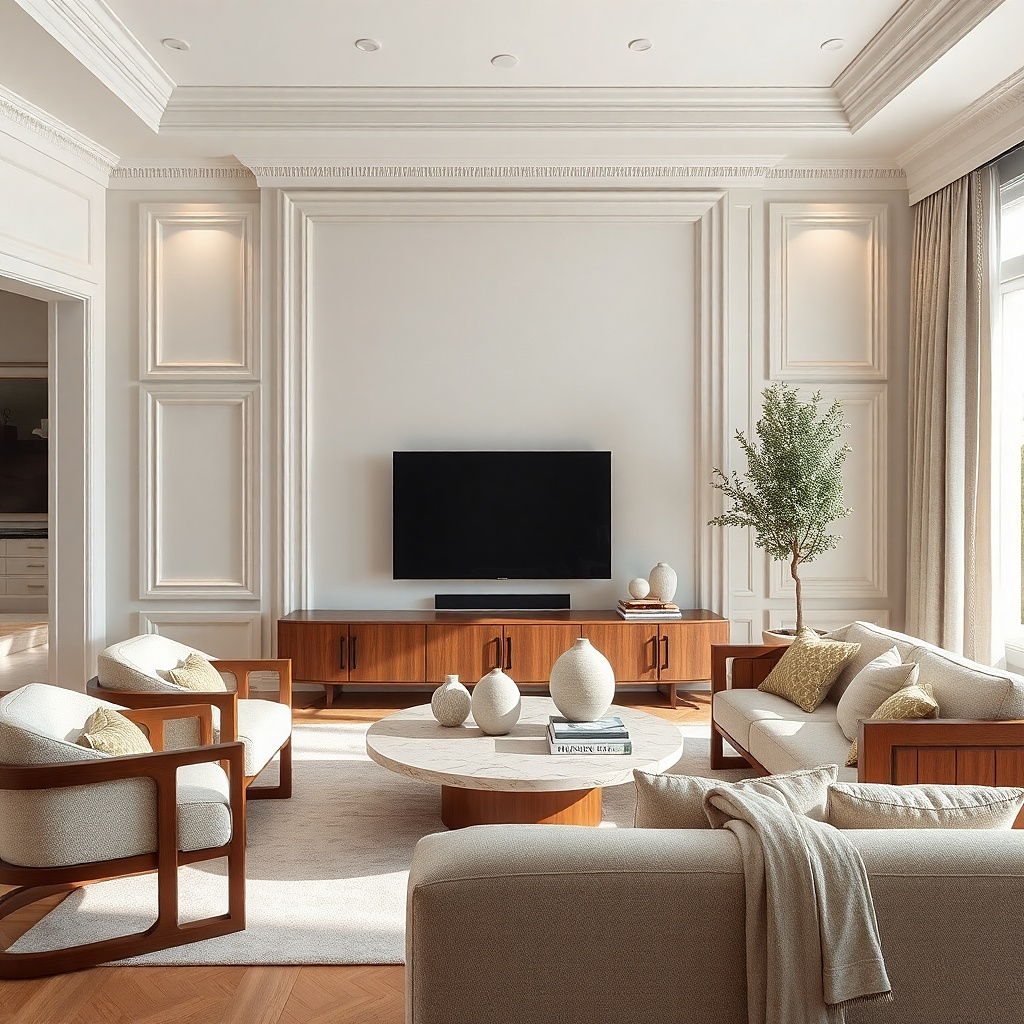
Pick a plaster-look panel or 3D wall molding system and measure an area 10-14 inches wider than the TV on each side. Install the panel on studs and keep the trim level with a consistent reveal line. Mount the TV so it sits centered within the panel area, then caulk and paint edges for a seamless look. Add one small decor element on each side of the TV only if the wall feels too empty, like a single tall candle holder or a small frame — keep it minimal. Finish by painting any visible mounting hardware to match the panel color.
A plaster-look architectural panel creates a calm, cozy backdrop without adding clutter. It also gives you crisp structure so the TV looks placed inside a design element. Choose a warm off-white or soft ivory for the panel so it reads cozy rather than sterile. Add a simple frame border or trim around the panel to make it feel intentional. This layout works well in modern living rooms where you want softness but still like clean lines.
Common mistakeAvoid stark bright-white trim with dark TV — it makes the screen look harsher.
Try thisUse a warm white panel color, not bright white — it looks better next to skin tones and wood furniture.
22. Ledge plus curtain valance for a soft, layered TV wall
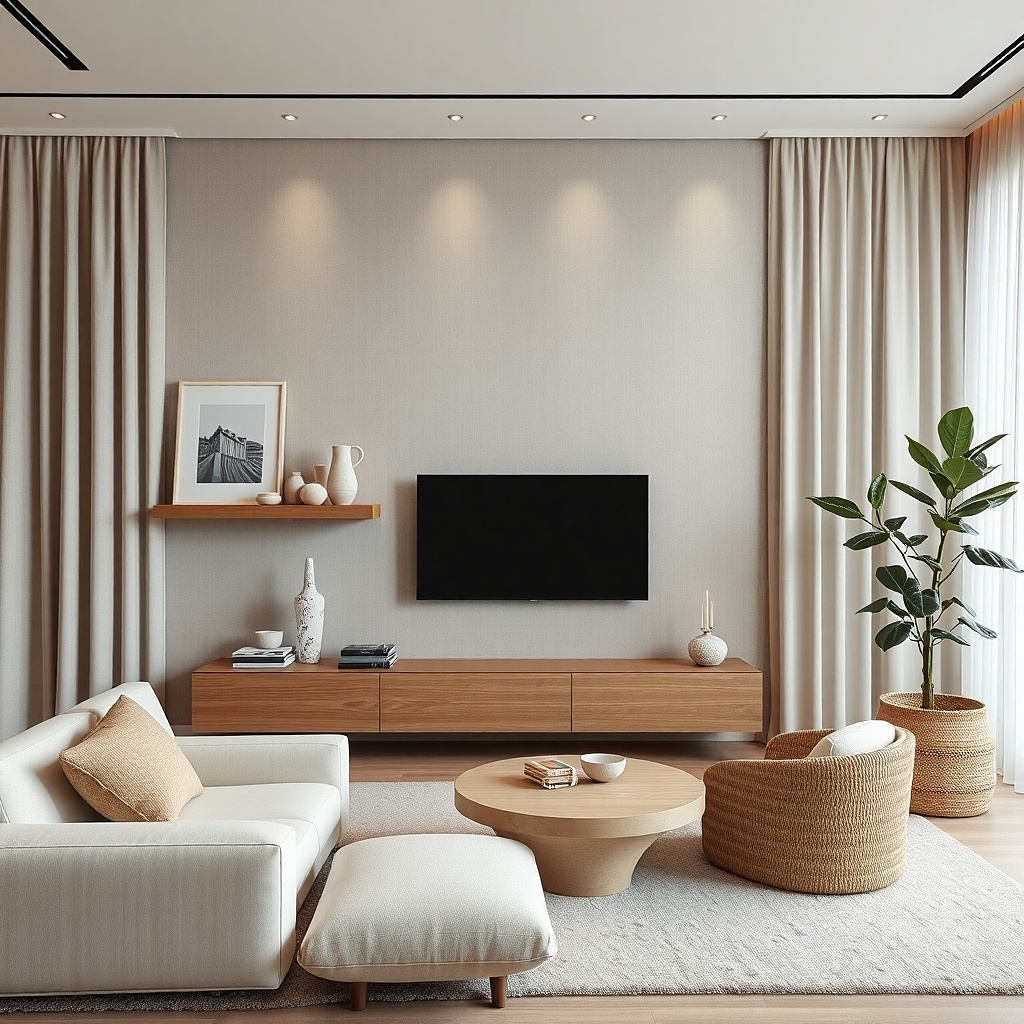
Mount a small picture ledge at about 8-10 inches below the TV bottom edge or aligned with your preferred decor height. Add a curtain rod above the TV zone so the valance hangs just above the top edge of the TV, usually 6-10 inches higher. Keep the valance width about 1.5 times the TV width so it looks full. Style the ledge with two clusters: one on the left with books and one on the right with ceramics. Use warm bulbs in any nearby lamps so the fabric looks cozy at night.
A ledge plus a curtain valance turns a TV wall into a “dressed” wall. The ledge gives you a place for cozy objects like ceramics and a small stack of books, while the valance adds softness above the TV so your eye doesn’t lock onto the screen border. Use a valance made from linen blend or cotton in oatmeal or warm taupe. This is a good solution when your TV is mounted above a console and the wall feels too bare above the furniture line.
Common mistakeAvoid sheer valances — they don’t add enough warmth and they make the TV feel more exposed.
Try thisChoose a valance with a slight texture and a straight hem so it reads tailored, not casual-ragged.
23. Large round wall clock as the anchor above the TV
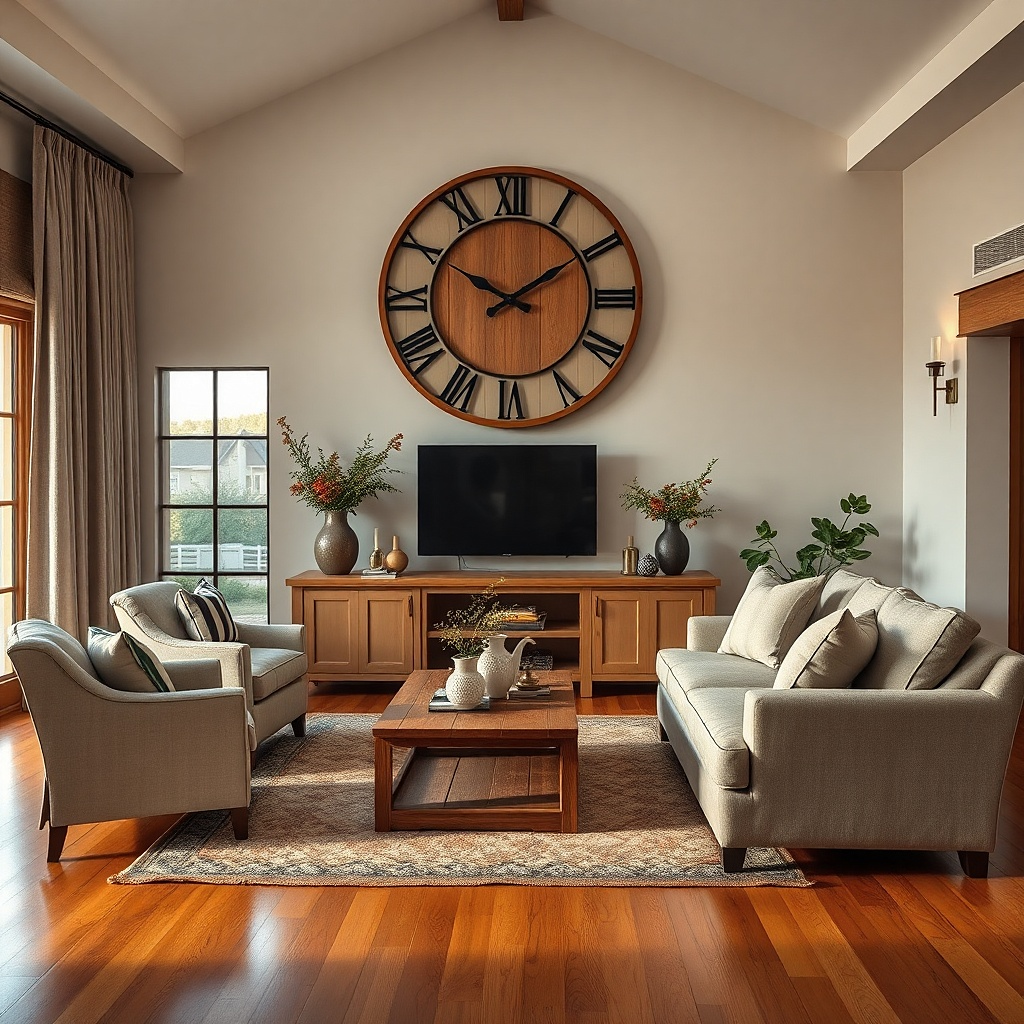
A big wall clock can be a style anchor when you want the TV to stop feeling like the only focal object. The trick is scale and placement: put a large round clock centered above the TV so it becomes the first thing you notice. Choose a warm wood frame or matte black-brown frame and a dial with low glare. Keep the clock size big enough to read from the couch — around 18-24 inches for most living rooms. Add one small matching decor element on each side of the clock or keep the rest minimal so the wall looks intentional.
Choose a clock diameter about 1/2 to 2/3 of your TV width. Mount the TV first, then position the clock so its bottom edge sits 8-12 inches above the TV top. Use a stud finder for the clock mount if it’s heavy, and keep the clock centered with painter’s tape before drilling. If you add decor, keep it to one small item on each side at the same height to maintain balance. Finish by using a warm lamp nearby so the dial looks soft at night.
Use a clock with easy-to-read hands in a warm tone, not high-contrast chrome.
Avoid tiny clocks — they make the TV look bigger by comparison.