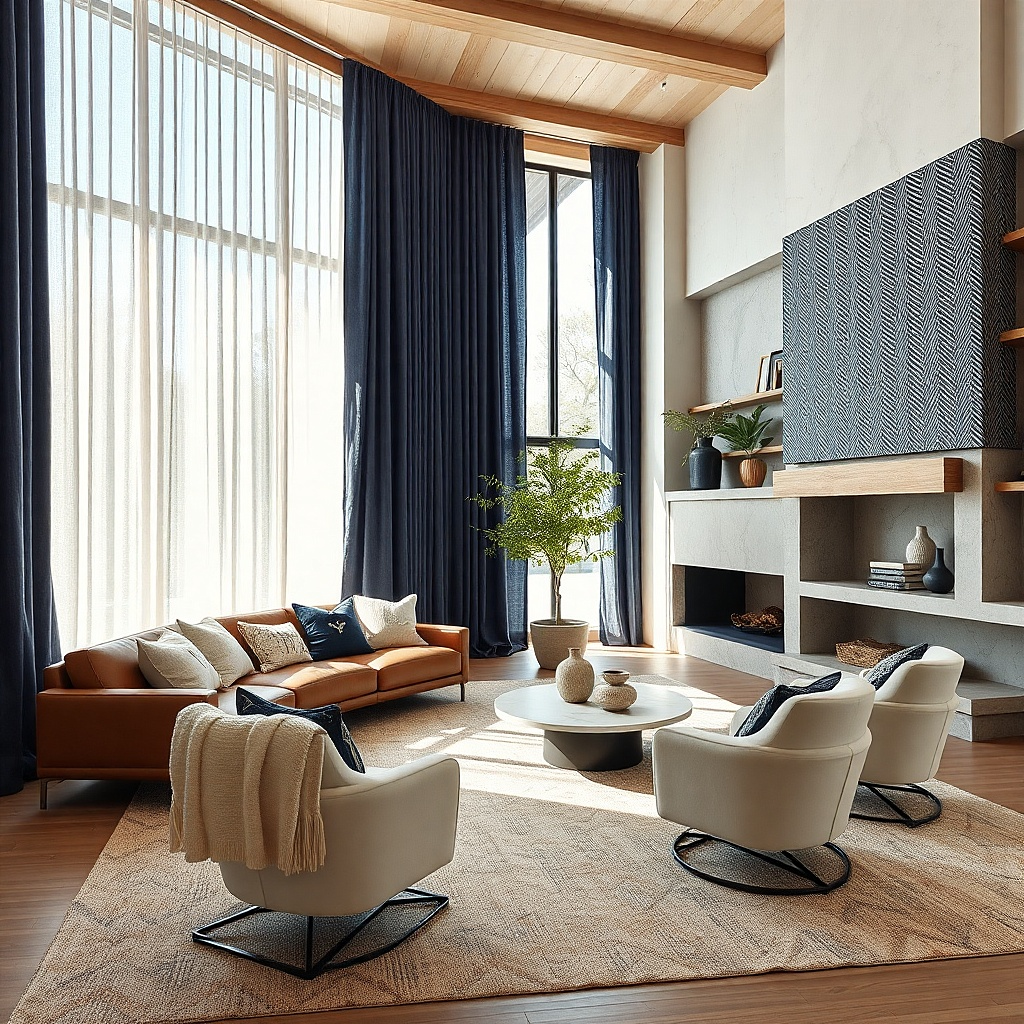
1. Airy navy linen with warm white walls
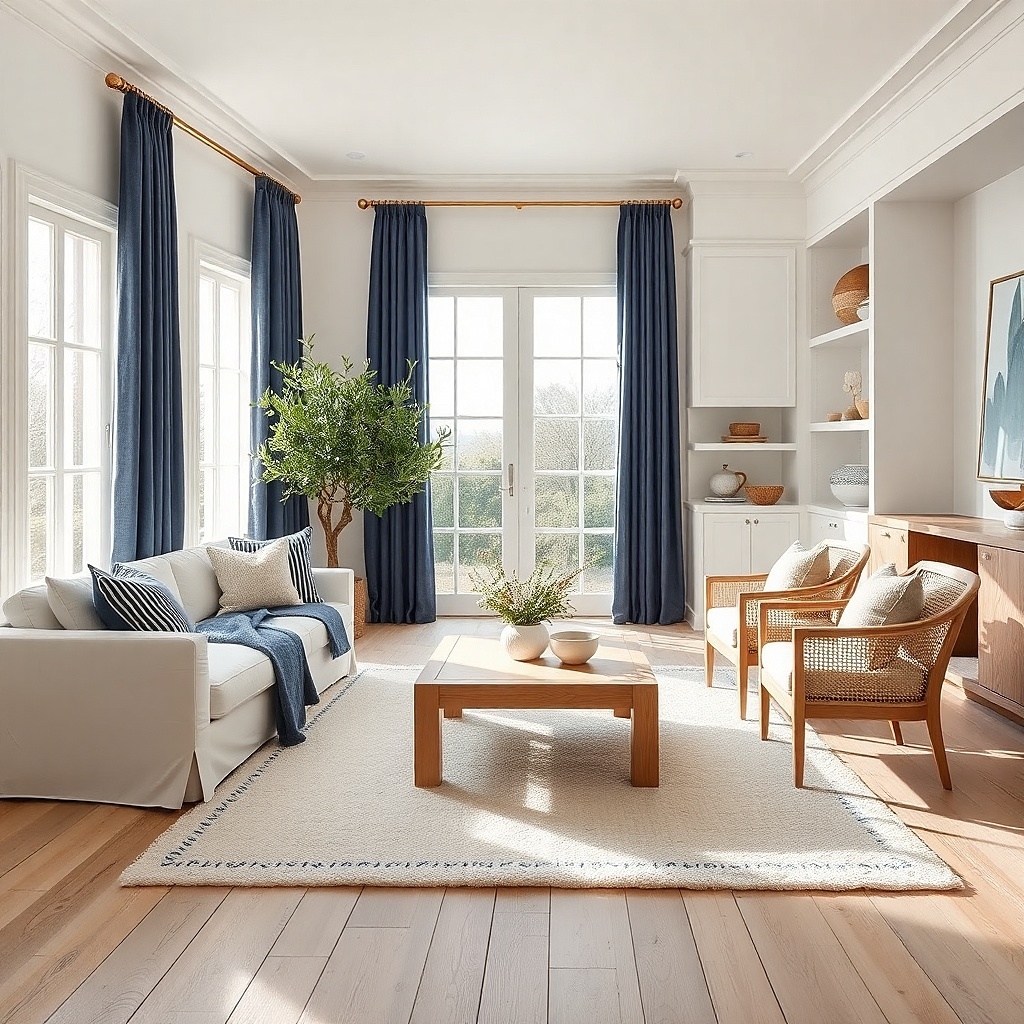
This is the safest good-looking option for most living rooms. Choose navy curtains in a linen blend with visible slub and a light-filtering lining, then hang them against warm white walls like ivory, cream-white, or soft chalk. The open weave breaks up the dark color, so the fabric looks textured and alive instead of flat. In daylight, the curtain edges look inky while the body reads softer blue, which keeps the room from closing in. This works especially well in living rooms with oak floors, white sofas, and any brass or aged bronze accent.
Start by measuring from rod to floor and order panels that finish 1/4 inch above the floor or just touch it. Then mount a slim brass rod 8 inches above the frame and 10 inches beyond each side so the stack-back sits mostly on the wall, not over the glass. Finally, use two panels that total 2 to 2.25 times the window width for proper fullness. Expect about $80 to $180 per window for decent linen-blend panels plus another $40 to $90 for hardware.
Pick a navy with a touch of gray rather than a purple cast. Gray-based navy looks calmer next to white paint and daylight.
Skip bright optic-white walls with cool blue undertones if your navy leans cold, or the room will feel sharp instead of balanced.
2. Navy velvet framed by oat sheers
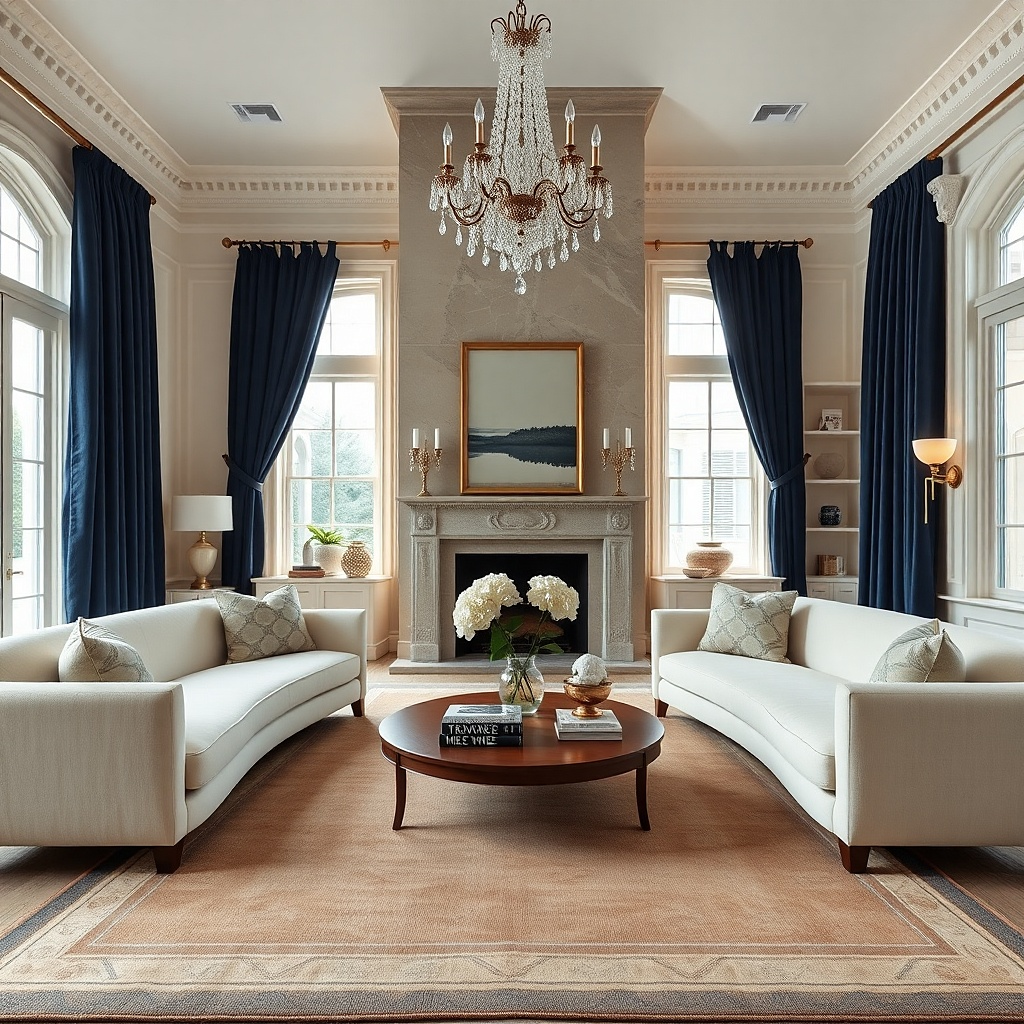
Velvet is dramatic, but it needs help if you want depth without gloom. The smart move is using navy velvet only as the outer frame and hanging oat or flax-toned sheers on the inner rod. The velvet gives the window crisp edges and evening mood, while the sheers keep the center pale during the day. That contrast is what makes the setup photogenic. It suits larger living rooms, taller windows, and spaces with a fireplace, paneled wall, or heavier furniture that can handle visual weight.
Start with a double rod or a ceiling track plus a front rod. Put the sheers closest to the glass and use velvet panels at the outer edges, wide enough that they can close at night but stay parked back in daytime. Then keep the velvet hem kissing the floor and let the sheers break slightly by 1/2 inch for a softer center line. Budget around $180 to $450 per window if you choose lined velvet and decent sheers.
Use oat sheers instead of stark white. Oat warms the navy and looks far better with wood, leather, and cream upholstery.
Do not use blackout velvet across the full width of a small dim window unless you want the whole wall to read heavy.
3. Pinch-pleat navy cotton on black rods
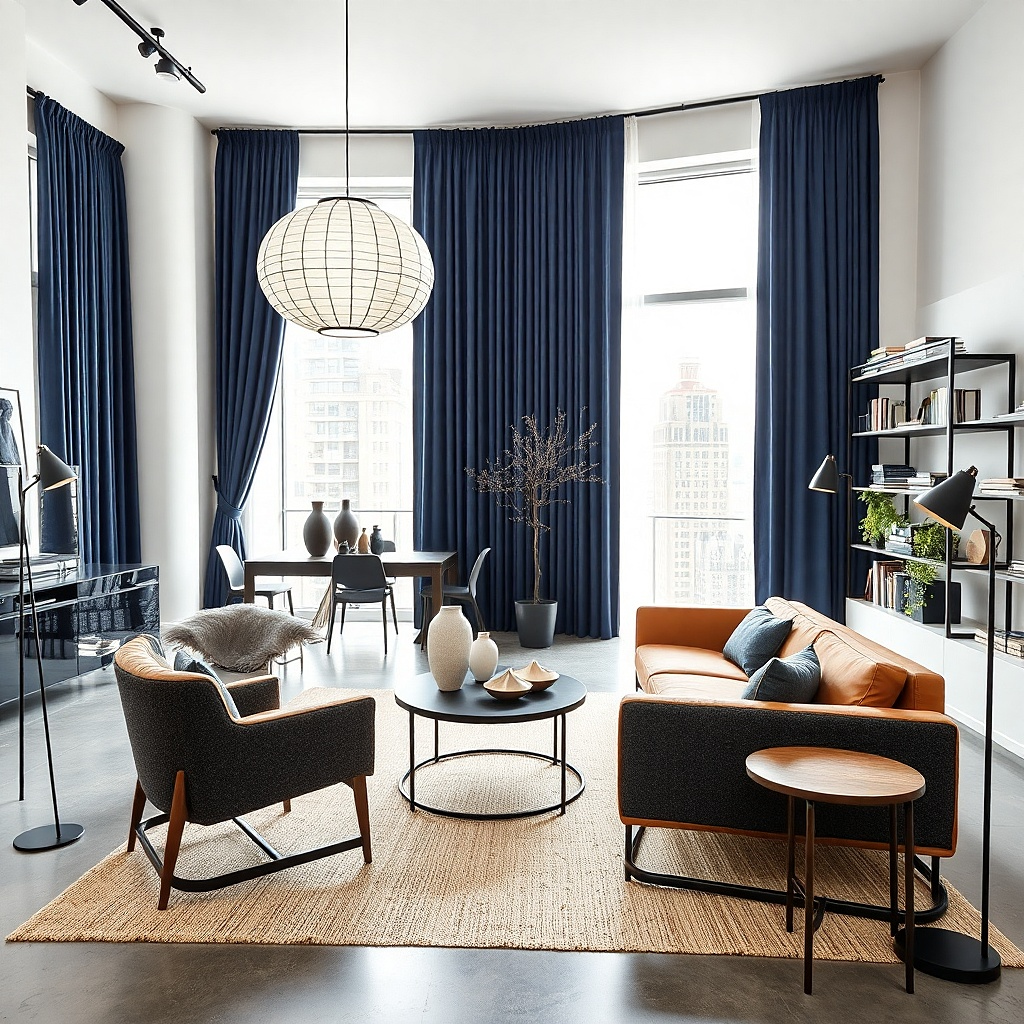
If your room already has black accents — picture frames, a coffee table base, iron sconces — navy curtains on black rods look sharp and intentional. Pick a cotton or cotton-linen panel with tailored pinch pleats so the folds stay vertical and neat. Those clean columns pull the eye up and stop the navy from spreading like a dark sheet across the wall. The look is crisp, urban, and slightly dressier than rod-pocket panels. It works best in living rooms with white walls, camel leather, walnut, or pale rugs that keep the floor area bright.
Start by using a traverse rod or rings with pleat hooks so the folds stay evenly spaced. Then mount the rod high and keep it slim — around 3/4 inch to 1 inch diameter — so the hardware does not compete with the pleats. Finally, steam the panels after hanging and train each pleat with loose ribbon ties for 48 hours. Good ready-made pleated panels and black hardware land around $140 to $300 per window.
Try thisChoose matte black, not glossy black. Matte disappears better against the curtain and keeps the top line cleaner.
Common mistakeAvoid thick grommet tops with this look because the chunky metal holes fight the tailored pleats.
4. Navy and ivory stripe panels for narrow rooms
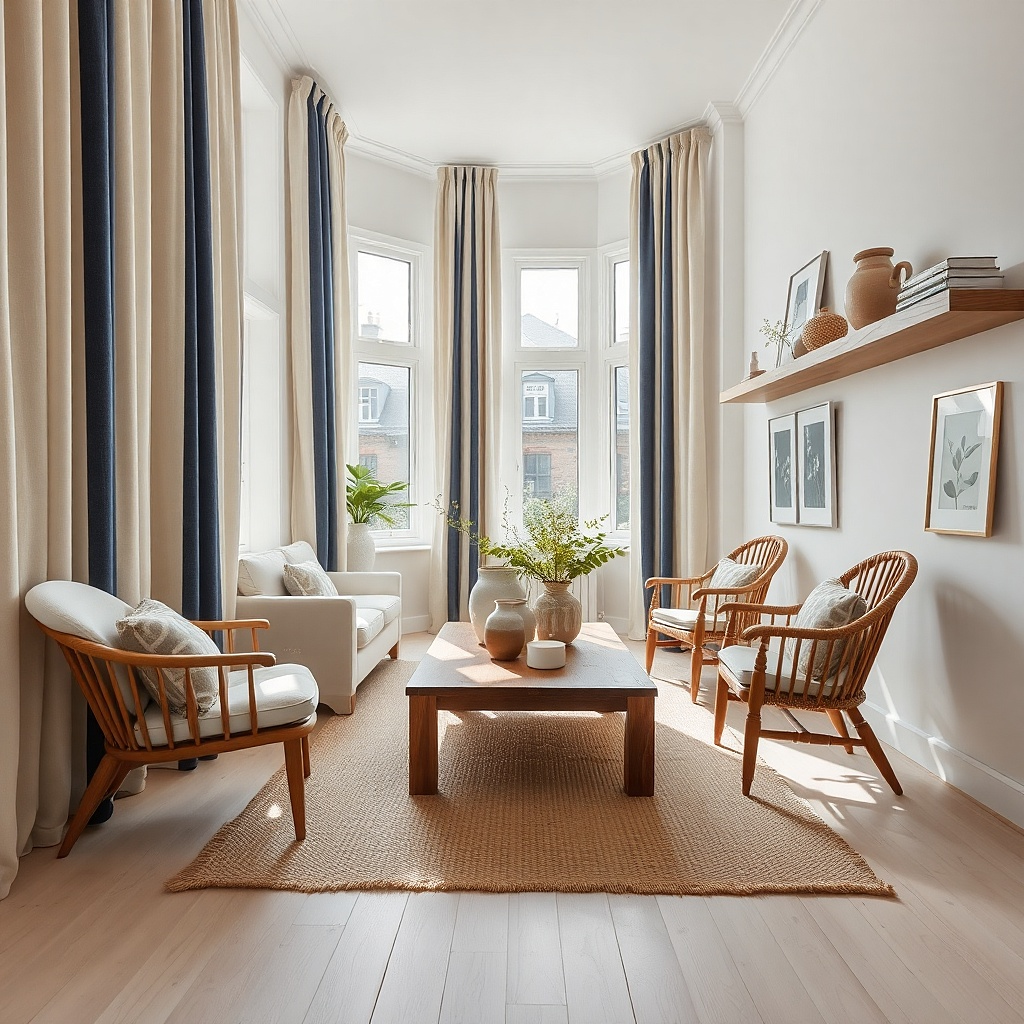
A navy curtain does not need to be solid to give depth. Vertical navy and ivory stripes lighten the overall read while still bringing in dark contrast, and the up-and-down pattern adds height to a low room. The ivory sections bounce more light than a full navy panel, so the window wall feels less dense from across the room. This is one of the best picks for small living rooms, townhouses, and spaces with 8-foot ceilings. It also hides everyday wrinkling better than a flat solid panel.
Start with stripes that are 2 to 4 inches wide. Anything thinner starts to look busy from a sofa distance. Then hang the panels wide of the frame and pair them with a simple white or natural woven shade if you need privacy after dark. Finally, keep the rest of the room quiet — solid rug, plain sofa, one or two patterned pillows at most. Expect $60 to $160 per window for ready-made striped panels.
Try thisPick an ivory stripe with a warm cast, not paper white. It blends better with lampshades, trim, and natural wood.
Common mistakeSkip horizontal stripes. They widen the wall visually and make low ceilings feel lower.
5. Navy cuff trim on pale flax curtains
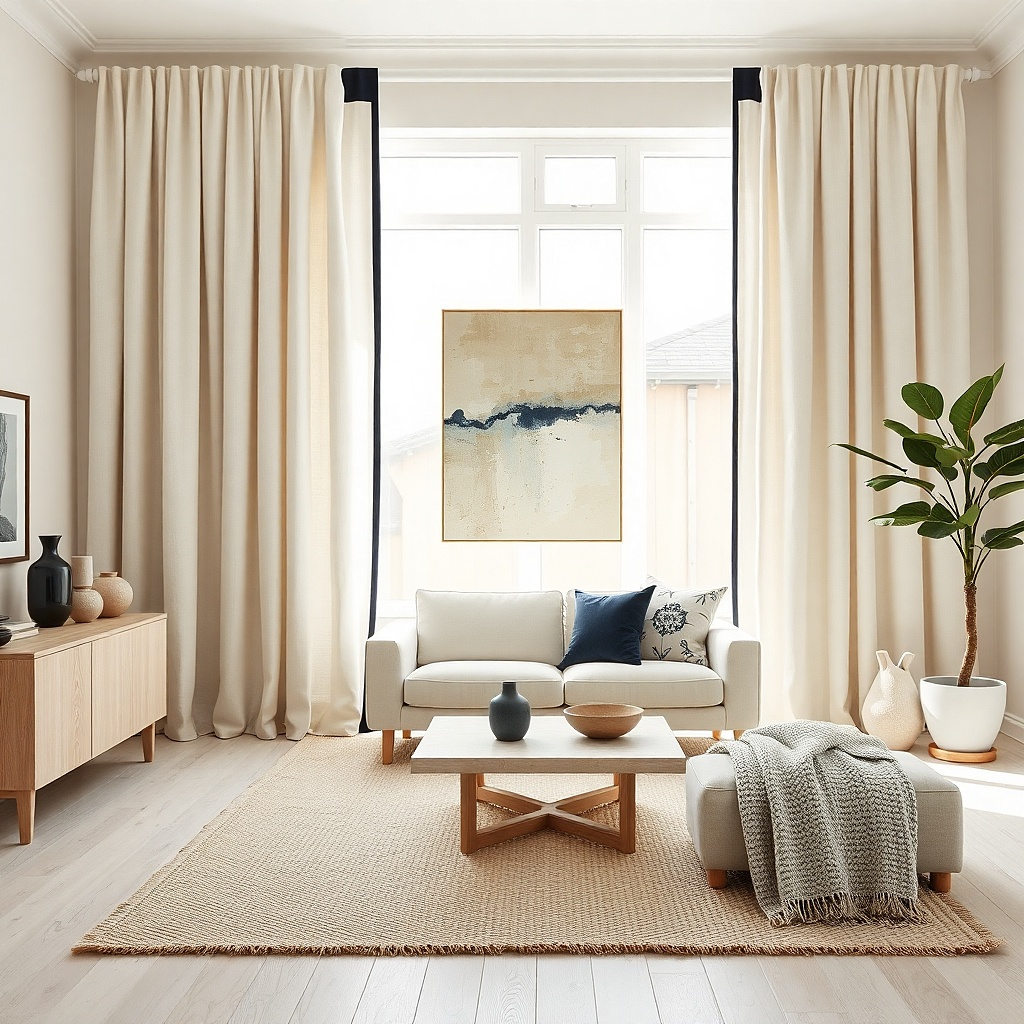
This idea gives you the navy look without committing the whole panel to a dark color. Use pale flax or sandy beige curtains with a 3 to 5 inch navy band on the leading edge or along the bottom hem. The eye still reads navy at the window, but most of the fabric stays light and reflective. It is a strong choice for north-facing living rooms where every bit of brightness matters. Visually, it feels custom and far more expensive than standard solid panels.
Start with plain flax-toned panels in cotton-linen or linen blend. Then have a workroom or local tailor add navy tape, a contrast border, or a sewn-on cuff in cotton twill or linen. Mount the curtains so the navy edge sits toward the center opening where it is easiest to see. Customizing simple panels this way usually costs less than buying full custom drapery — roughly $100 to $220 per window including sewing.
A leading-edge band looks cleaner than random appliqué. Keep the navy detail in one straight line.
Do not mix this with busy patterned upholstery near the window or the trim detail gets lost.
6. Ceiling-track navy drapes with barely-there fullness
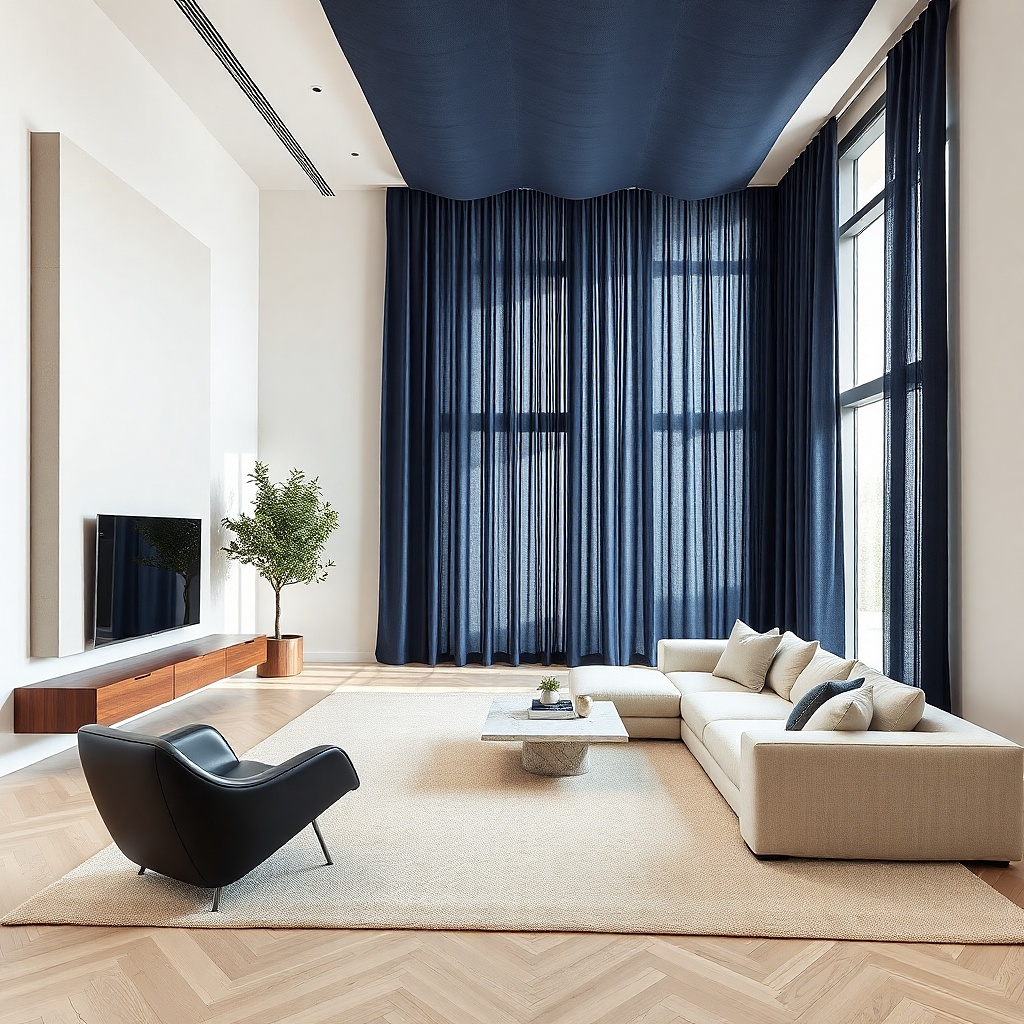
For a modern living room, a ceiling track changes the whole mood. Navy panels dropping from the ceiling in long clean lines make the room feel taller, but the trick is keeping the fullness restrained so the fabric does not pile up dark mass. Aim for 1.6 to 1.8 times fullness instead of the standard 2 to 2.5. That slimmer drape reads architectural and keeps more wall visible. It is excellent for apartments, sliding doors, and living rooms with minimal furniture and strong straight lines.
Start by mounting a white ceiling track 2 to 4 inches from the wall or just in front of any molding. Then order wave-fold or ripple-fold navy panels with a light-filtering lining and exact floor-length measurement from track to floor. Finally, keep the stack one-sided or split center depending on furniture placement, and leave at least 8 inches of clear wall beyond the opening if possible. Expect $200 to $500 per wide opening with decent track hardware and made-to-measure panels.
A wave-fold heading keeps the folds shallow and even. It looks lighter than heavy traditional pleats in dark fabric.
Avoid puddling on the floor with this style. Extra fabric ruins the clean vertical line.
7. Navy floral on an off-white ground
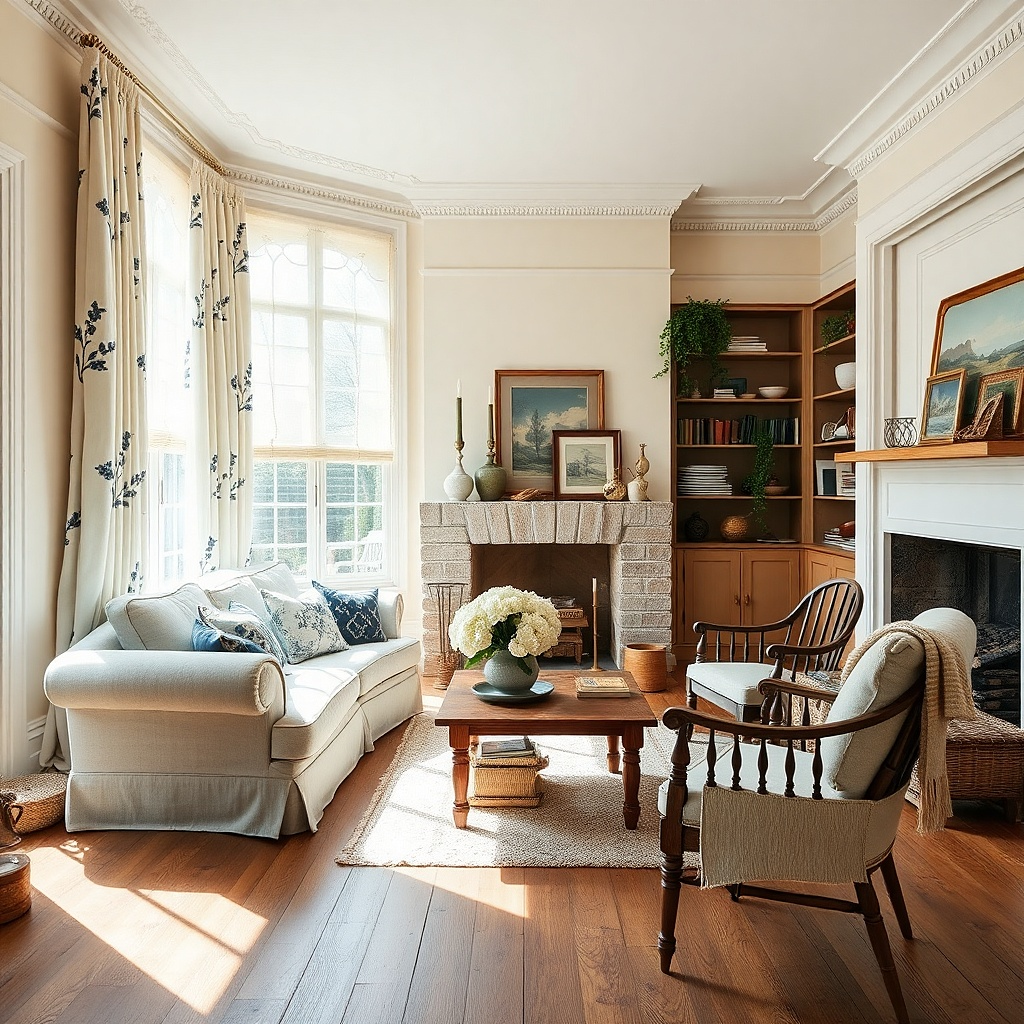
If solid navy feels too severe, use a print where navy sits on an off-white base. A botanical or block-print floral with plenty of pale background gives you navy depth in smaller doses, and the pattern breaks up the darkness across the panel. This works especially well in traditional, cottage, or collected living rooms that already have layered textiles and softer shapes. The room stays bright because the eye catches more pale ground than dark field. It also ties together blue accents in pillows, books, or art without adding another big solid block.
Start with a medium-scale print. Blossoms or vines around 4 to 8 inches wide read clearly from across the room without turning fussy. Then pair the curtains with one solid element nearby — a plain rug, a simple sofa, or a painted side table — so the print has breathing room. Finally, line the panels in white cotton sateen to keep the off-white ground from looking dull in backlight. Good printed panels run about $90 to $240 per window.
Try thisRepeat the same navy in two small places elsewhere, like a lamp base and one pillow. That keeps the curtain from feeling random.
Common mistakeSkip tiny ditsy prints. They blur into visual noise and read darker from a distance.
8. Navy faux silk with champagne walls
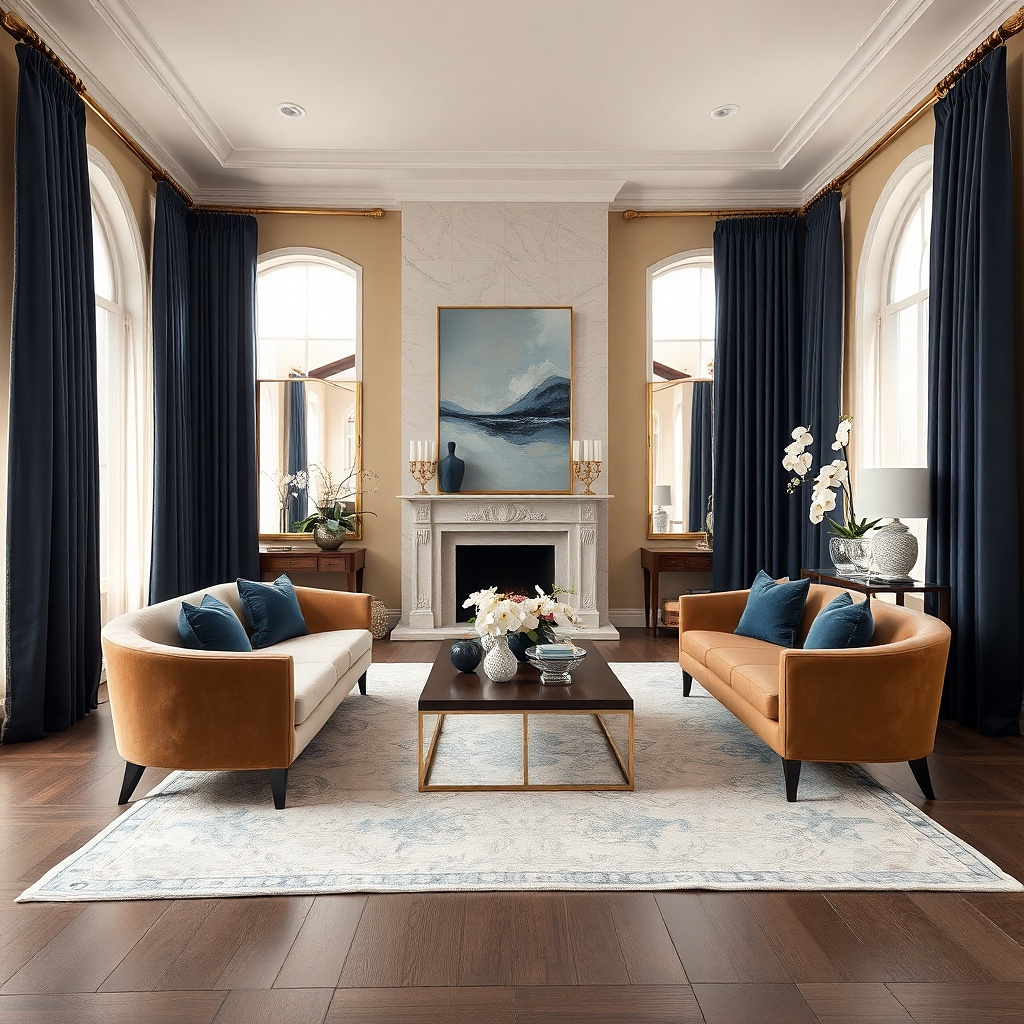
A slight sheen changes navy completely. Faux silk or silk-look polyester in a deep navy catches light across the folds, so the color shifts from midnight to slate-blue instead of sitting flat. Against champagne, putty, or warm greige walls, that sheen feels polished and bright enough for a formal living room. This is a strong fit for rooms with crown molding, taller windows, and evening lamp light where texture matters. It gives depth, but the reflected light keeps the window wall from going dull.
Start by choosing panels with a soft luster, not mirror shine. Then use French return rods or classic rings in antique brass to match the dressier fabric. Finally, add a privacy lining rather than blackout so the front still catches daylight and the folds stay supple. Plan on $100 to $260 per window for decent faux silk and hardware.
Try thisSteam faux silk from the back side first. Front-side water spots and pressure marks are hard to hide on shiny fabric.
Common mistakeAvoid pairing faux silk navy with cool gray walls. The combination looks flat and chilly.
9. Navy café-style side panels over woven shades
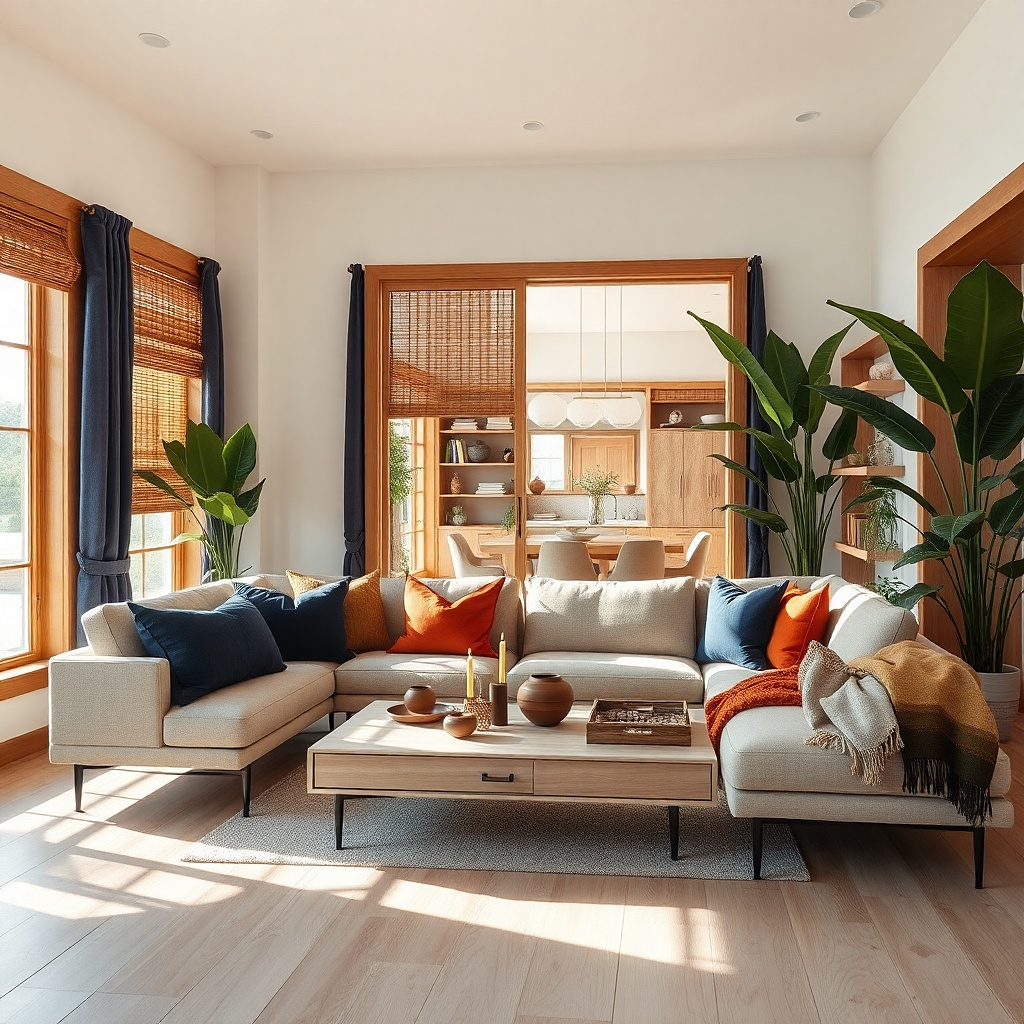
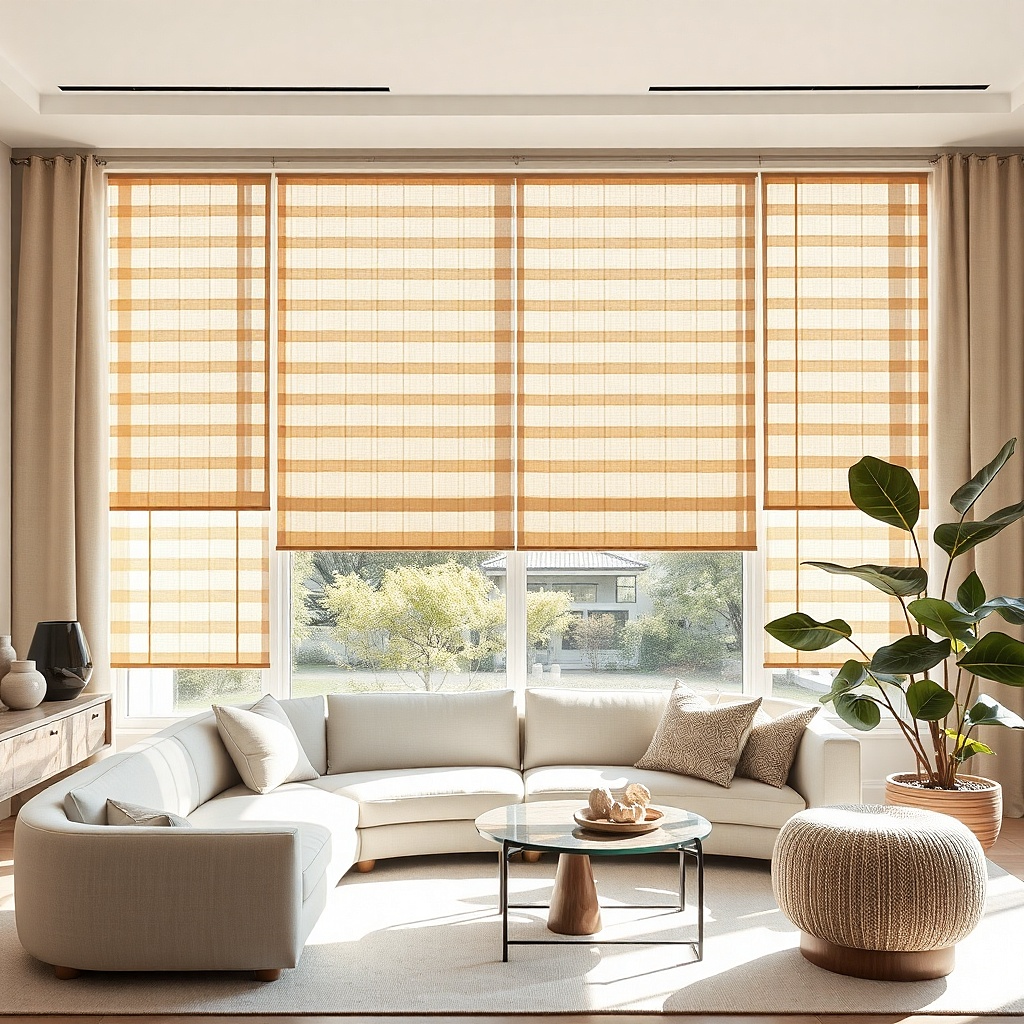
This setup is ideal if you want navy in the room but do not want full dark panels covering a lot of wall. Use slim navy side panels as decorative frame pieces and put the actual privacy job on natural woven shades or light Roman shades. The navy still adds contrast and depth near the window edges, while the center stays sandy, pale, and sun-friendly. It looks especially good in casual living rooms with jute, cane, oak, or slipcovered furniture. The whole window reads layered and finished without becoming the darkest thing in the room.
Start with woven shades mounted inside the frame or just above it, then add navy side panels on a rod mounted high and wide. Keep each side panel narrow — around 18 to 24 inches finished width for standard windows — since they are framing pieces, not full closers. Then use tiebacks only if the room is traditional; in most spaces, letting the panels hang straight looks cleaner. Expect $150 to $350 per window once you include both the shades and the panels.
Try thisPick woven shades in a medium straw tone, not espresso brown. Medium straw keeps the center bright.
Common mistakeDo not use heavy blackout navy panels as fake side panels. They look stiff and overly bulky.
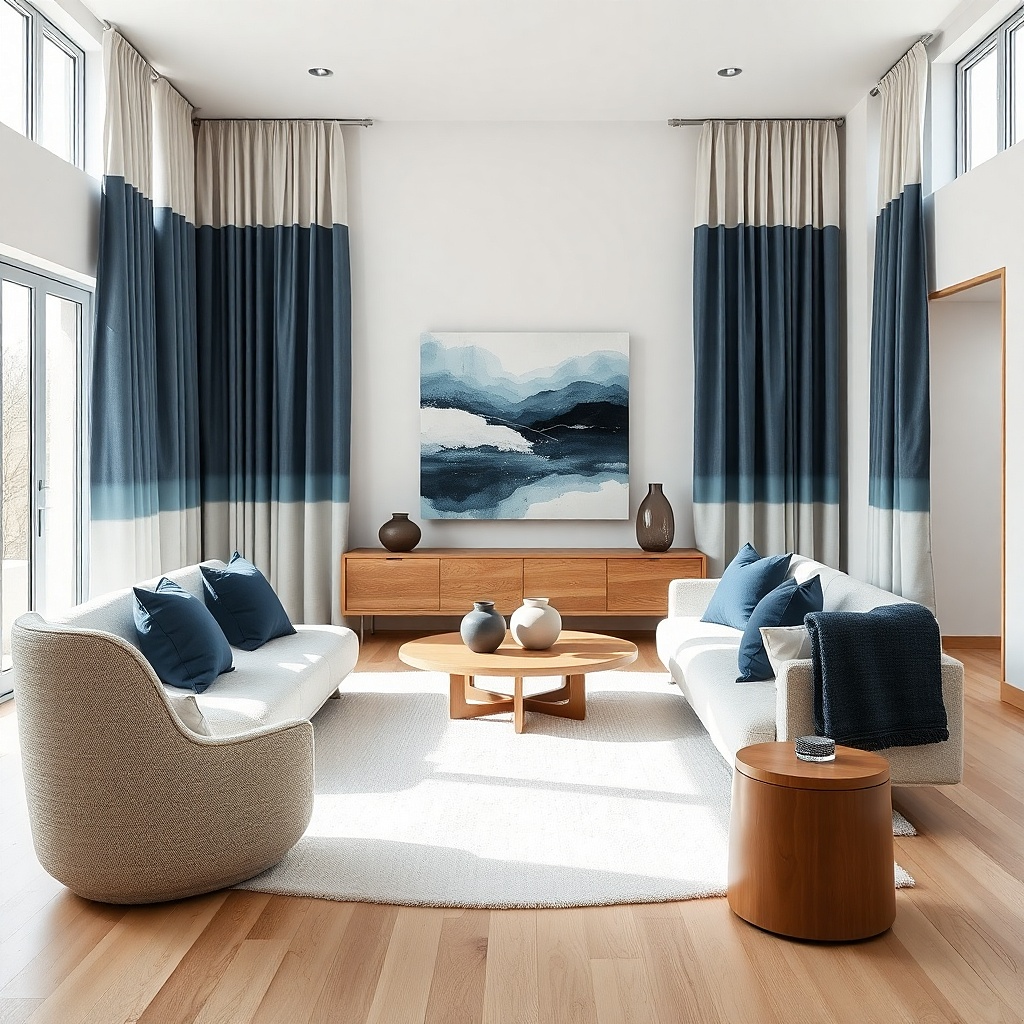
10. Color-block navy bottoms with cream tops
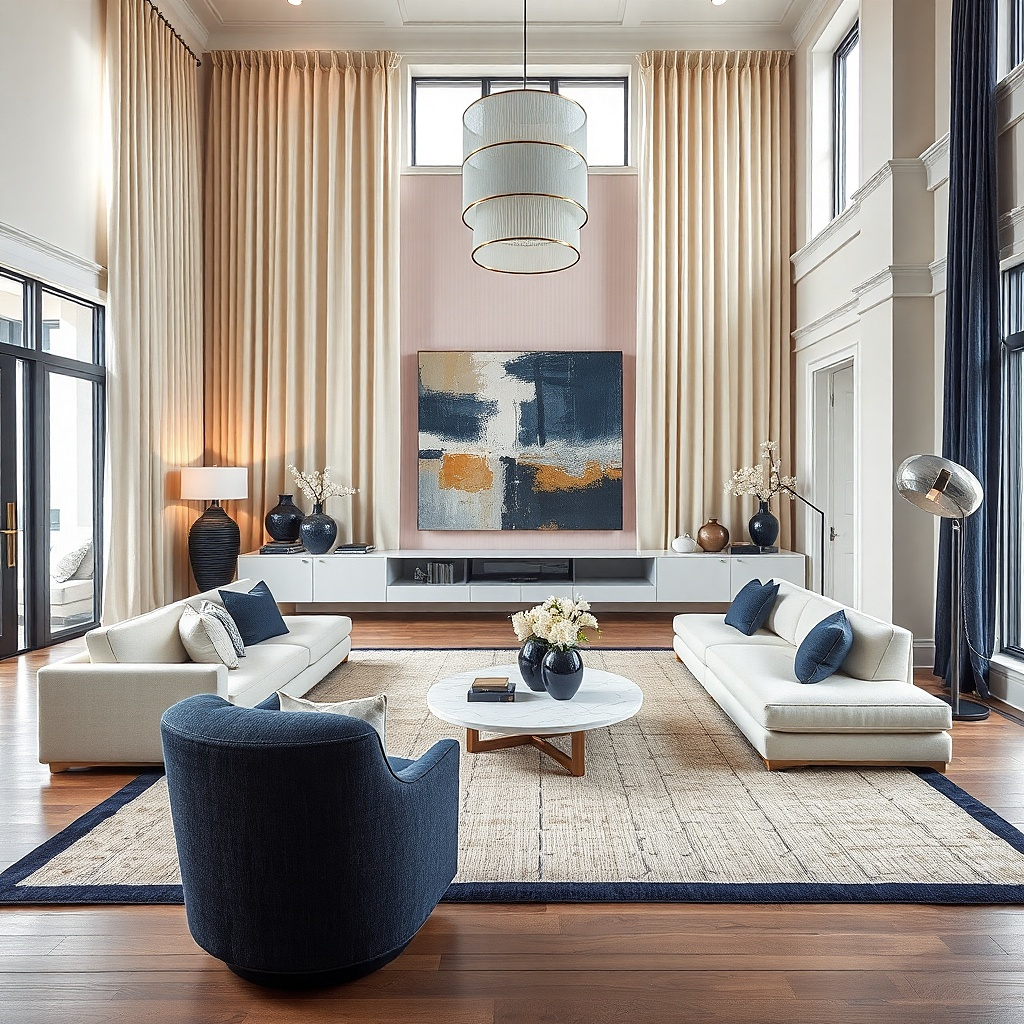
Color-blocking puts the dark color where it grounds the room instead of where it kills light. Curtains with cream on the top two-thirds and navy on the bottom third keep the area near the window head light, which matters because that is where daylight enters strongest. The navy lower section adds depth near the floor and ties into dark coffee tables, blue rugs, or painted built-ins. This look feels graphic, current, and very clean in living rooms with simple furniture. It is one of the easiest ways to get navy drama without a dark window wall.
Start by choosing a panel where the navy block begins 28 to 36 inches from the floor, depending on ceiling height and sofa height nearby. Then hang the panels high so the cream section stretches upward and keeps the room open. Finally, keep the rod and rings simple — white, black, or brass all work, but avoid ornate finials that distract from the block layout. Ready-made color-block panels usually fall around $70 to $180 per window.
Match the navy block to something low in the room, like a rug border or an ottoman. The eye will read the whole room as connected.
Avoid top-heavy color blocking with navy at the upper half. It drags the whole room downward.
11. Soft navy Roman shades with full side drapes
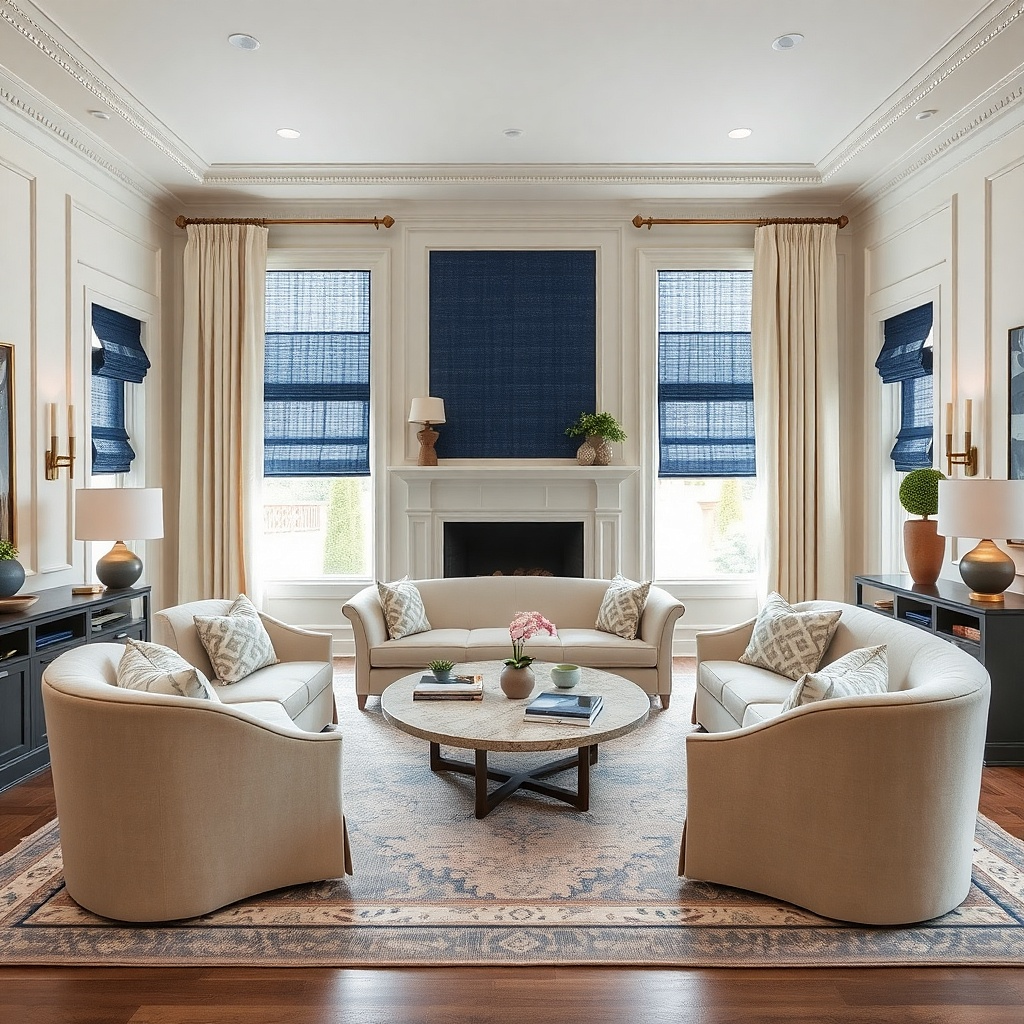
If you want navy at eye level without covering the full wall in dark fabric, put the navy on the Roman shade and keep the side drapes cream or off-white. The folded shade gives you a compact shot of navy right on the glass, while the side drapes keep the outer wall bright and soft. This layout looks especially good on windows flanking a fireplace or in formal sitting areas where symmetry matters. The shade adds structure. The drapes add height and softness. Together they keep the room balanced instead of heavy.
Start with a flat or soft-fold Roman shade in navy cotton-linen, mounted just above the frame. Then add full-length cream drapes on a rod set 8 inches higher and 10 inches wider than the window. Finally, choose a white or ivory lining for the shade so the room-facing navy stays true and does not go muddy in daylight. Budget around $220 to $600 per window if the Roman shade is custom and the drapes are ready-made.
Try thisKeep the side drapes one shade lighter than the wall if your room is small. That trick stretches the wall visually.
Common mistakeDo not combine a busy navy print shade with patterned drapes. One patterned layer is enough.
12. Navy plaid in a room with pale wood and stone
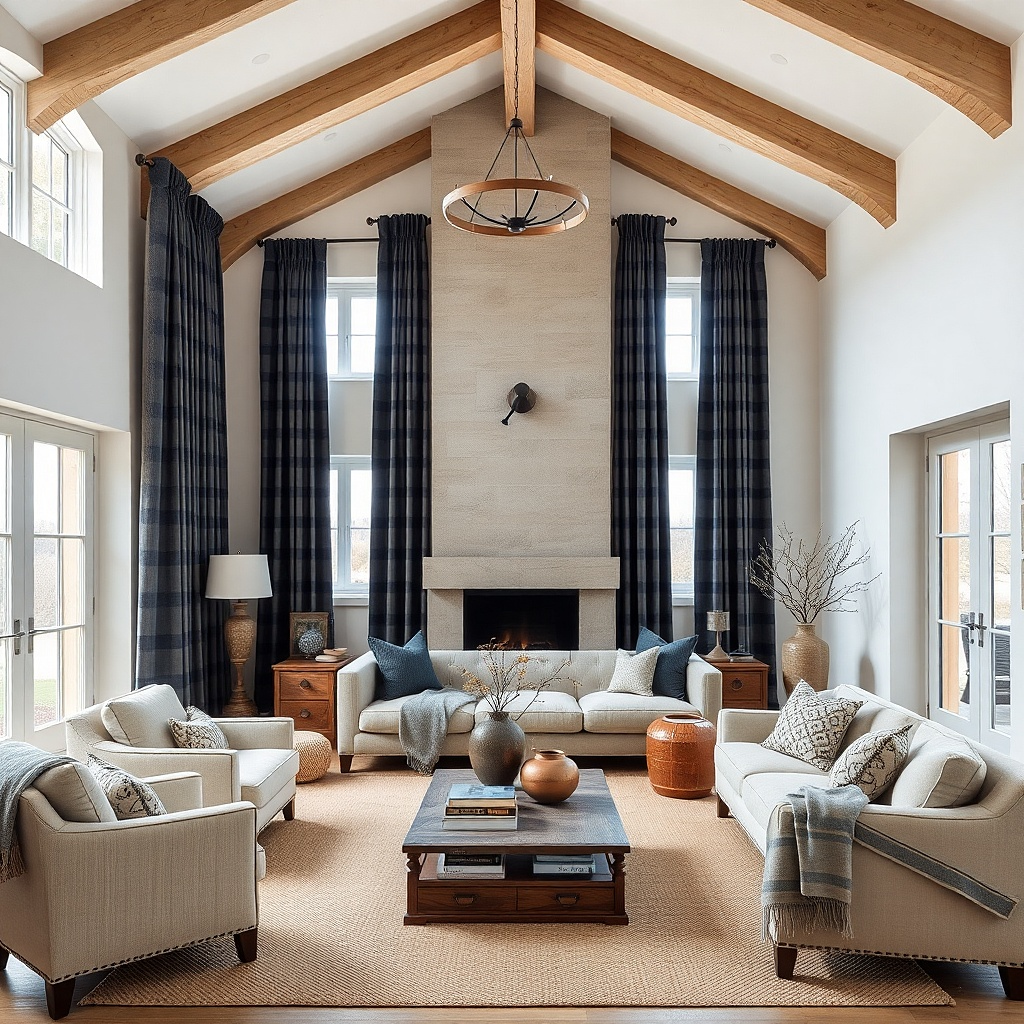
Plaid adds texture and shape that a solid panel cannot. A navy plaid with cream or taupe lines breaks the dark field into smaller parts, which keeps the fabric from reading as one heavy slab. In a living room with pale wood tables, limestone tones, or a light brick fireplace, the pattern feels grounded and warm instead of preppy. This is a strong choice for transitional rooms and houses that need a little structure. It also hides lint and pet hair better than smooth velvet or flat cotton.
Start with a large-windowpane or tartan-inspired plaid where the pale lines are visible from 6 feet away. Then use simple hardware and keep nearby upholstery mostly solid so the plaid gets space. Finally, line the curtains lightly and let them just touch the floor for a cleaner, more tailored finish. Expect about $90 to $220 per window depending on the fabric quality.
Try thisPull one pale line from the plaid into the room on a throw or lampshade. That makes the pattern feel planned.
Common mistakeSkip plaid if your rug already has a loud grid or check. Competing geometry gets messy fast.
13. Matte navy blackout only on the sunniest wall

Blackout is not the enemy if the room has enough natural light to spare. On a west-facing or oversized window wall that gets blasted with afternoon sun, matte navy blackout curtains can add depth and solve glare without making the room feel dark the rest of the day. The key is using them only where they earn their keep and keeping the rest of the room pale — light rug, warm white walls, reflective lamp shades, glass table surfaces. Matte fabric is better than shiny blackout because it looks calmer and more architectural. This choice suits TV rooms and living rooms with artwork or screens that suffer from glare.
Start by checking where the glare problem actually is and treat only that window or door wall. Then choose blackout panels with a soft brushed face in navy and hang them extra wide so they clear the glass fully when open. Finally, add tiebacks or holdbacks if needed to force more daylight into the room during daytime use. Good blackout panels with proper width usually cost $100 to $250 per opening.
Pair blackout navy with a light-filtering shade underneath so you still have a daytime privacy layer without closing the dark panels.
Do not put navy blackout on every window in a dim room. That solves one problem by creating a bigger one.
14. Navy drapes with brass rings and a marble sill
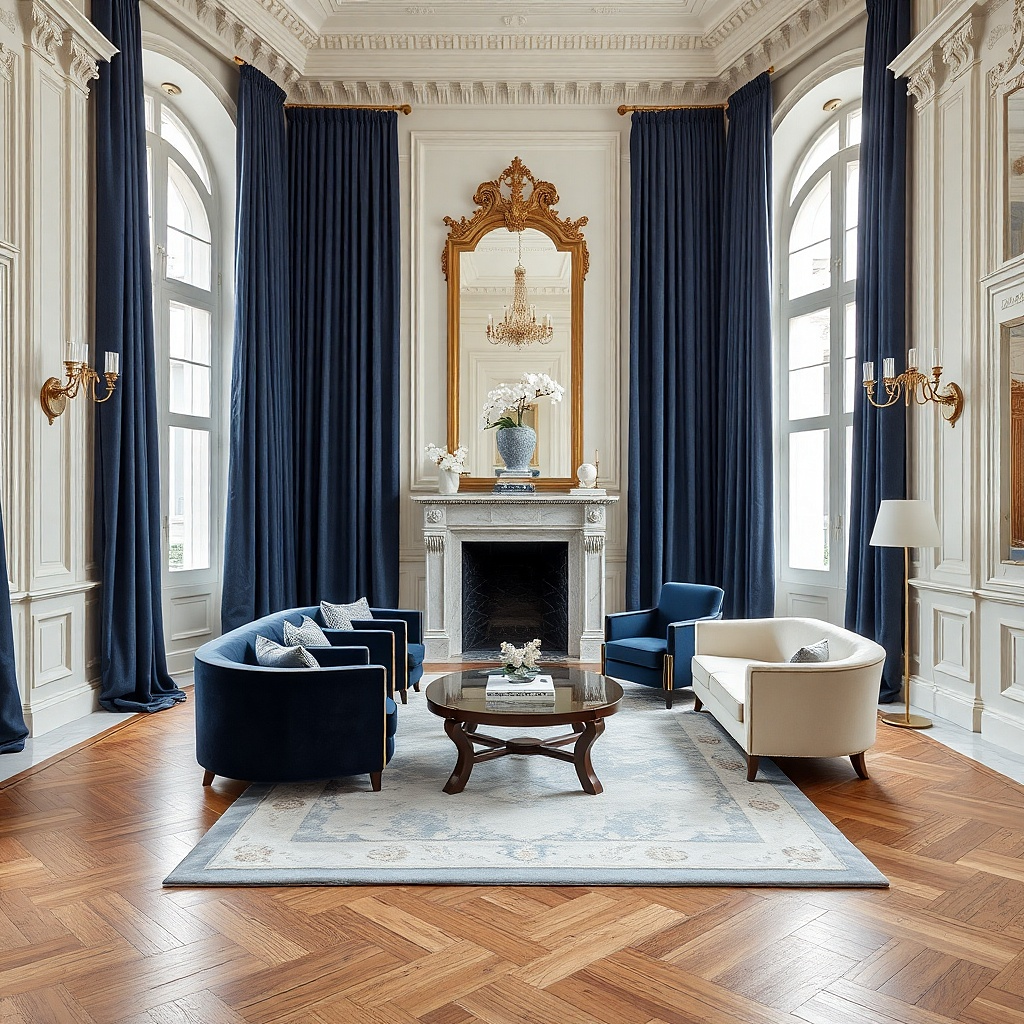
Sometimes the room needs less pattern and more finish. Navy drapes with visible brass rings look especially good near white marble, painted trim, or a pale stone sill because the small metallic notes brighten the top edge of the window. The brass catches light. The navy grounds it. That contrast keeps the treatment from feeling flat or dark. This is a polished option for city living rooms, older homes with trim detail, or any space where you want the curtain hardware to read as part of the design.
Start with lined navy drapes in cotton sateen, linen blend, or a low-sheen weave. Then use warm brass rings and a rod around 1 inch thick, mounted high enough that the ring line sits close to the ceiling. Finally, keep the folds even by using enough rings — one every 4 to 5 inches across the panel width. This setup usually costs $120 to $280 per window depending on the hardware finish.
Use unlacquered or brushed brass if the room has warm wood. Cool polished chrome fights the softness of navy.
Avoid tiny under-scaled hardware. Thin cheap rods make dark curtains look heavier and droopier.
15. Inky navy against pale greige paneling
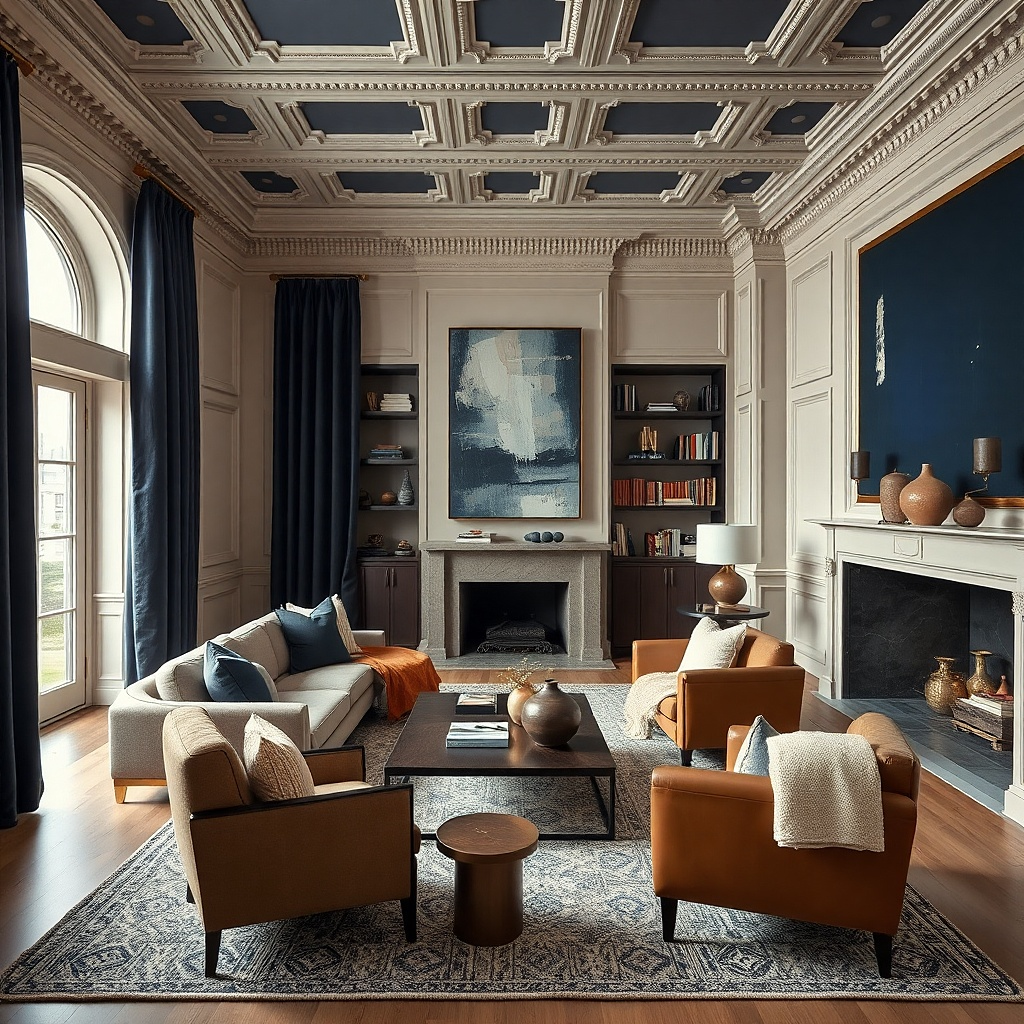
Navy works beautifully with wall paneling if the paneling stays pale and warm. Inky navy curtains against light greige millwork create strong contrast, but the grooves and shadows in the paneling stop the wall from feeling blank and dark. The result is moody in a controlled way. You get depth at the window and texture on the wall, so the room still feels lit and dimensional. This combination suits classic living rooms, library-style spaces, and rooms with built-ins or a coffered ceiling.
Start by painting the paneling a pale greige with a warm base, then choose navy curtains one or two steps darker than your deepest accent pillow. Then mount the rod just below crown molding or as high as the trim allows so the curtains look integrated with the architecture. Finally, add one reflective surface nearby — mirror, glass lamp, or framed art with a pale mat — to bounce light back toward the window wall. Costs vary by paint and trim work, but the curtain portion alone is around $100 to $240 per window.
Try thisUse the same greige on trim and wall paneling. Contrast belongs between wall and curtain, not between five paint colors.
Common mistakeDo not pair inky navy with dark taupe paneling. The whole wall will sink visually.