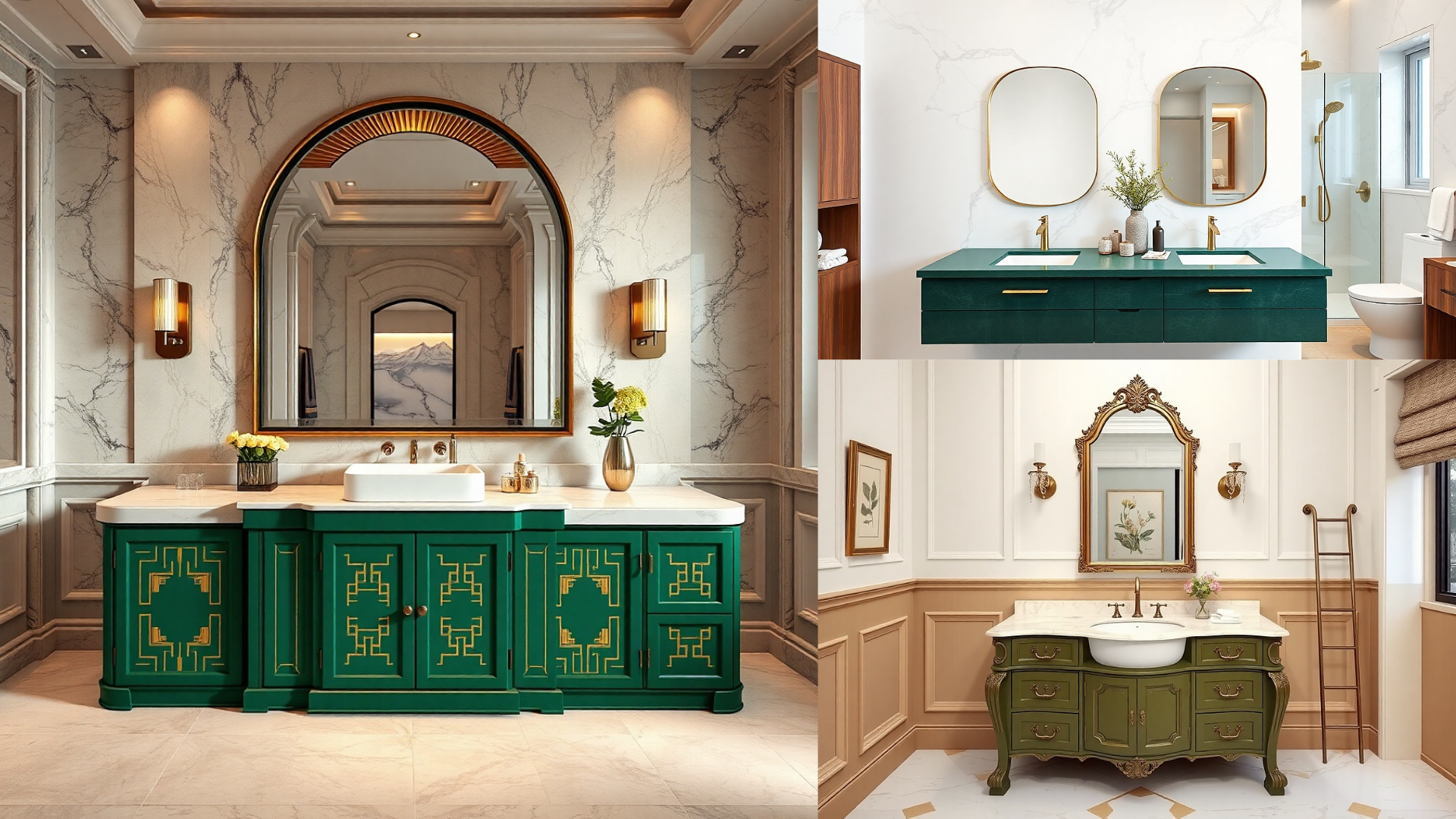
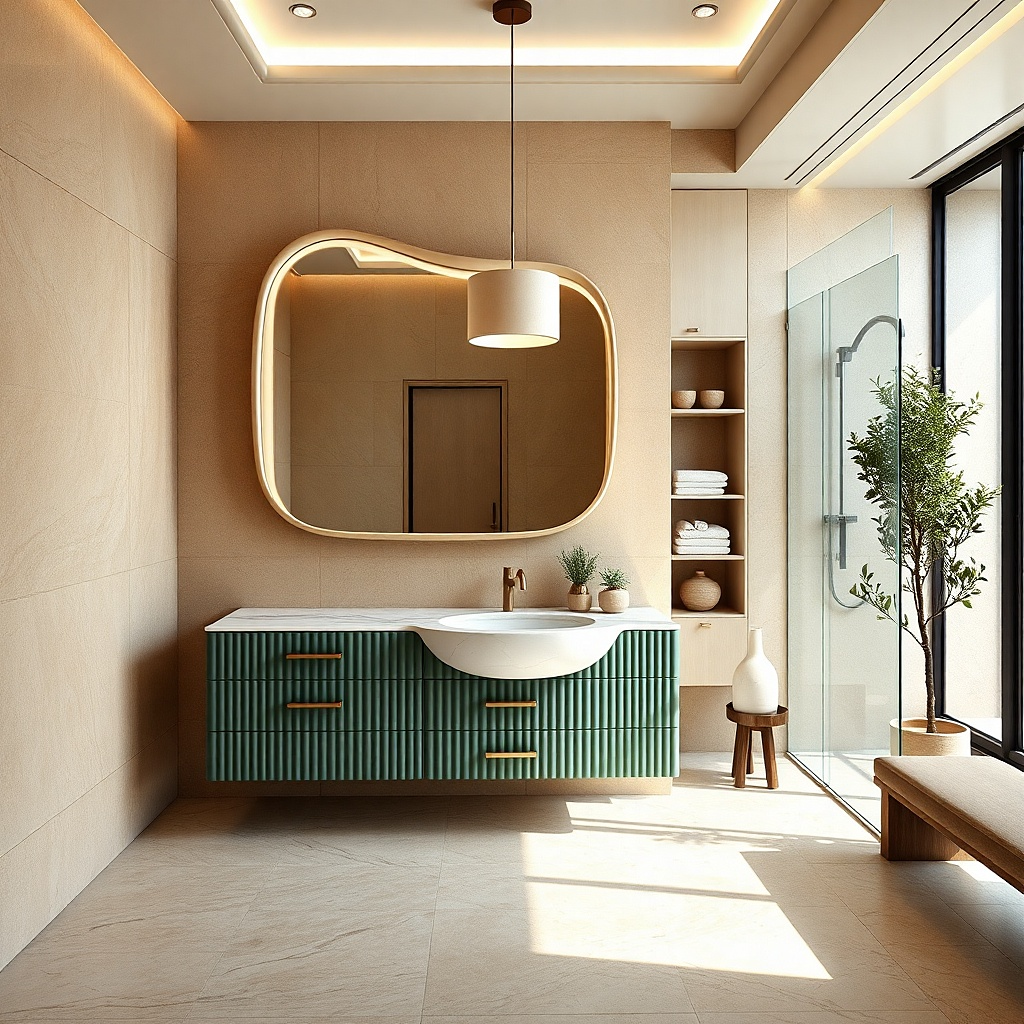
1. Forest green lacquer vanity with brass pulls
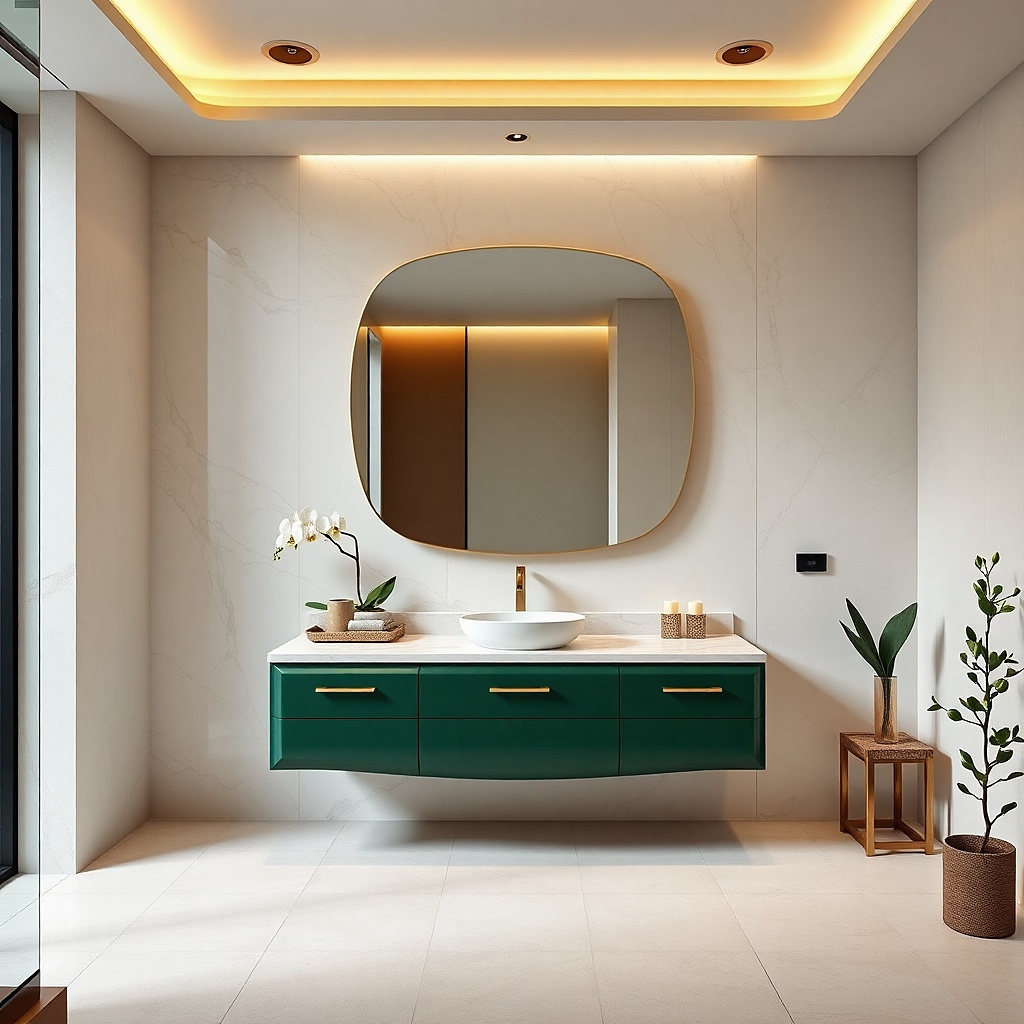
This look is the fastest route to a high-end bathroom without turning the room dark. Forest green lacquer has that deep, reflective color that makes the mirror and lighting feel sharper. Pair it with warm brass bar pulls so the hardware doesn’t fight the undertone. Choose a white or off-white quartz top with subtle veining so the vanity doesn’t feel like a block of color. It’s best in bathrooms with at least one bright light source or a window, because the lacquer loves light.
Measure your vanity footprint first, then buy a matching-width mirror that sits within 2 inches of the vanity edges. Install the hardware before mounting if the vanity has predrilled holes — align pulls so the bar centers are level with the drawer faces. Finish the look by setting a white quartz top and sealing any exposed edges; then mount the faucet and check that the brass doesn’t sit too high against the backsplash. Budget-wise, lacquer paint and brass hardware usually cost more than standard matte, but the look is worth it for a single statement piece.
Use warm 2700K bulbs so the brass reads golden instead of yellow-green.
Don’t pair forest lacquer with cool silver hardware — the undertones clash and the vanity looks off.
2. Sage green shaker vanity with matte black hardware
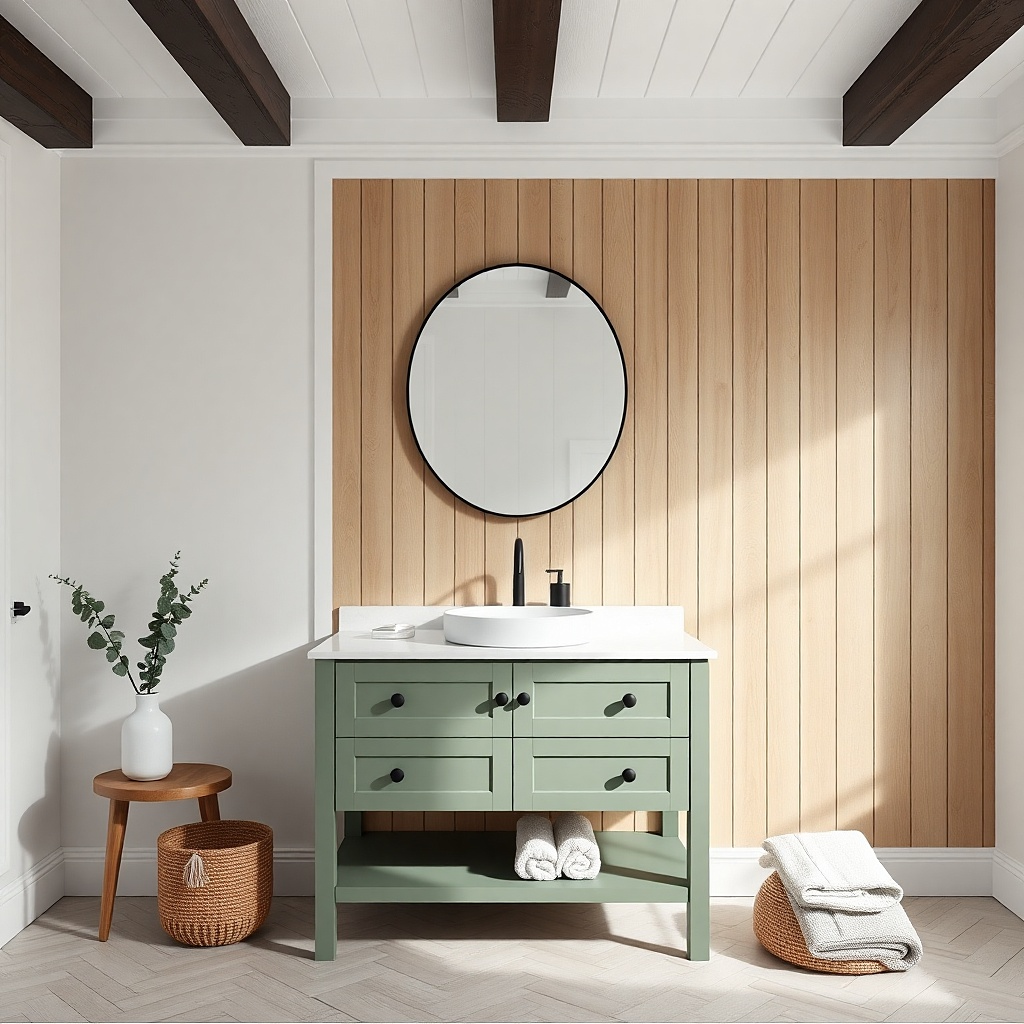
Sage green shaker cabinets feel calm and still look styled, which is why they photograph well in everyday bathrooms. The shaker door lines give structure, so the soft green doesn’t look flat. Matte black pulls and a black faucet make the color feel intentional, not pastel. Keep the top bright — a light marble-look or quartz with fine gray veining — so the room stays crisp. This works especially well in bathrooms that have white walls and mid-tone floors.
Pick a sage shade with gray undertones, not yellow. Install the vanity so the top sits around 34 to 35 inches from the floor, then set the backsplash to match the top’s height. Use matte black hardware that matches your faucet finish exactly; drill and mount the pulls so they sit centered on the shaker rails. Finally, mount a simple rectangular mirror with a thin frame and keep the shelf or decor minimal to let the green doors do the talking.
Add a black framed mirror only if your faucet is black too; mixing black with other metals ruins the clean look.
Don’t choose a sage that’s too minty — it reads cheap under cool bathroom lighting.
3. Olive green single-sink vanity on slim legs
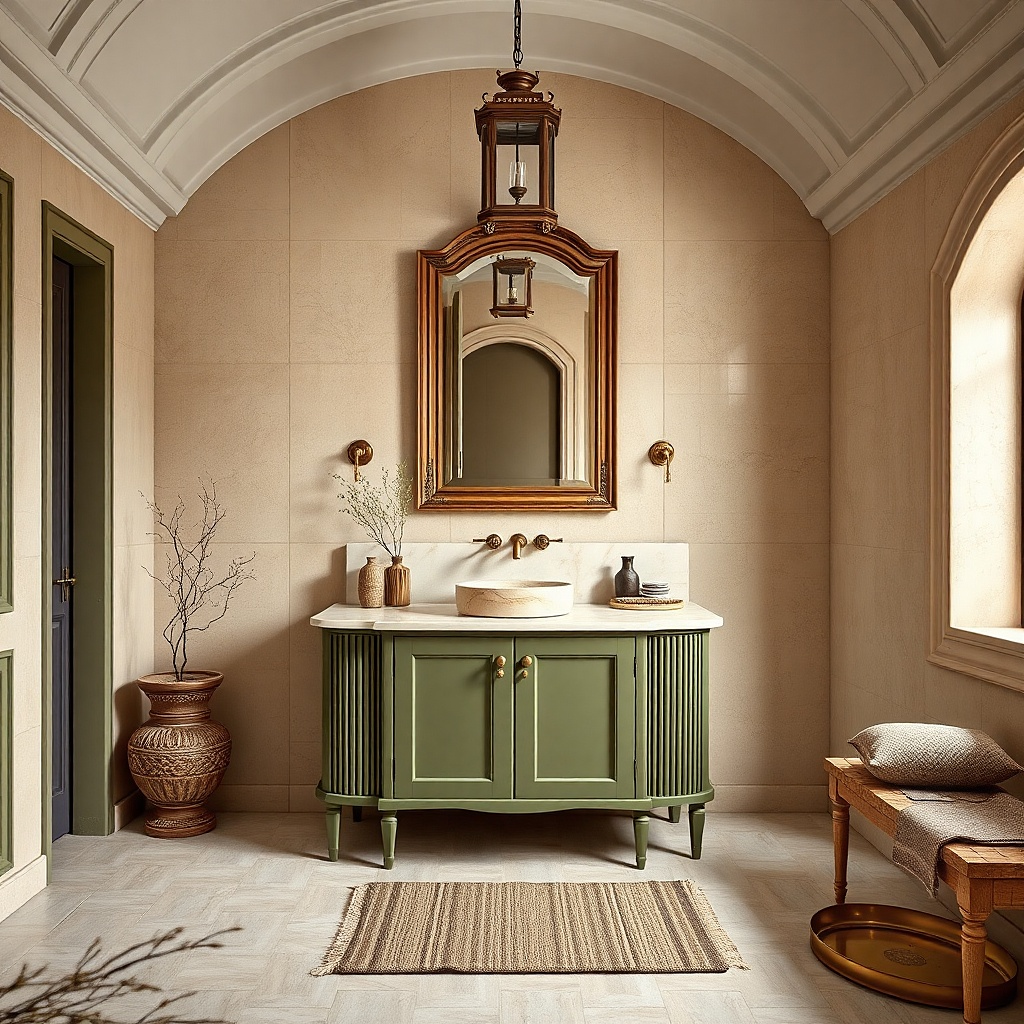
Choose a vanity width that fits your wall — for tight spaces, 24 to 30 inches is usually the sweet spot. Level the vanity legs carefully and confirm the sink plumbing lines up with the wall shutoff valves before you tighten everything. Select a countertop that overhangs slightly if your design allows, then install the sink and faucet last to avoid scratching. Finish by hanging a vertical mirror that’s about the same height as the vanity top plus 6 to 8 inches.
Olive green with slim legs makes a small bathroom feel taller because it leaves visible floor space. The single-sink layout keeps lines clean and gives the vanity a gallery-like presence. Olive is deeper than sage, so it adds mood without going fully dark. Pair it with a light countertop like white quartz or a pale stone with soft gray speckles to balance the earthy tone. This is a smart pick for narrow bathrooms where you still want a modern, styled look.
Common mistakeAvoid thick, bulky legs — they make olive feel heavy instead of airy.
Try thisUse a frameless or thin-edge mirror so the legs stay visually light.
4. Emerald green floating vanity with hidden channels
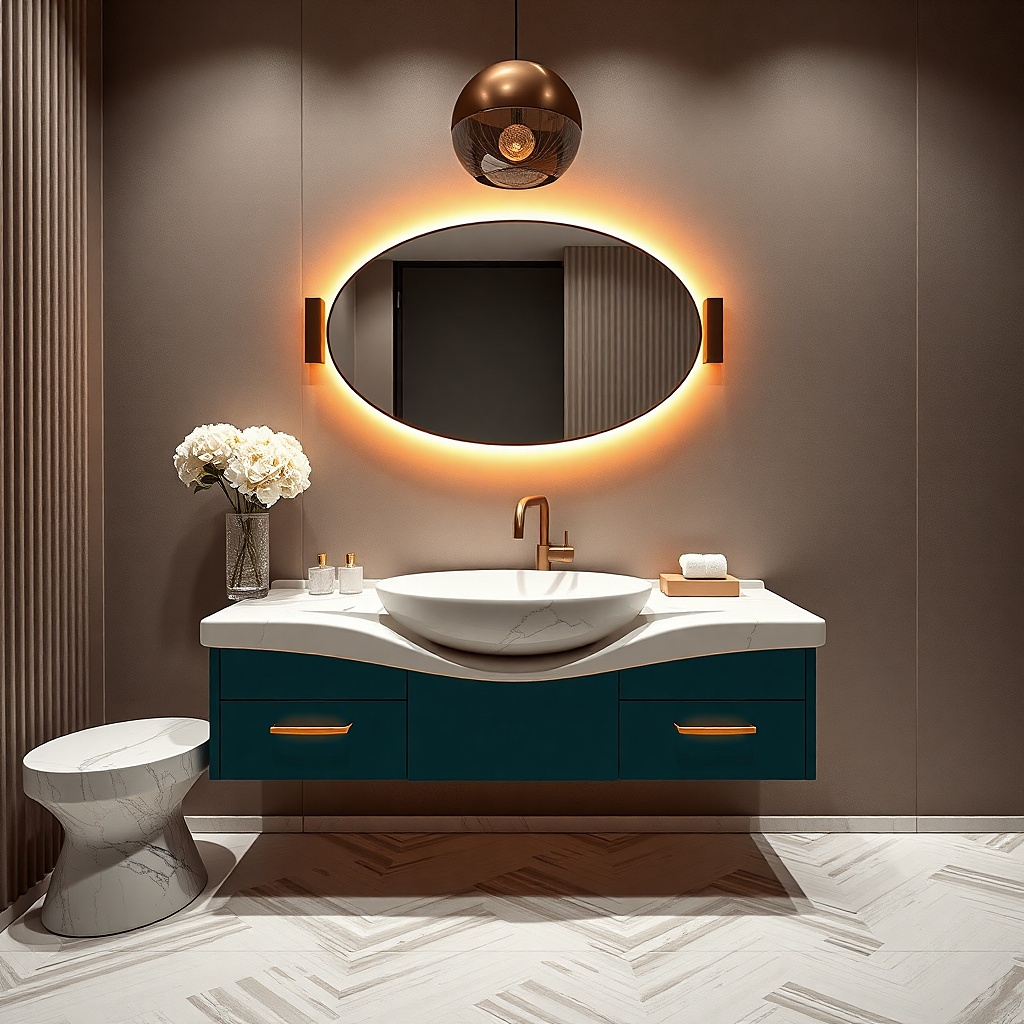
Find the wall studs first and plan the mount points so the vanity loads safely; floating vanities need real anchoring. Set the vanity height around 33 to 35 inches to keep the sink comfortable, then confirm the faucet reach clears the mirror line. Install the vanity bracket system, hang the cabinet, then attach the countertop and sink. Finish by sealing the gap between cabinet and wall with a thin, paintable caulk line for a clean edge.
Floating vanities make bathrooms look modern because the wall reads uninterrupted. Emerald green is bold, but when it’s mounted flush and paired with a simple stone top, the result stays sleek rather than loud. Hidden channels or concealed toe-kick lines keep the front uninterrupted, which is what makes it feel “designer.” Go for a matte or satin emerald so the color looks rich without glare. This is ideal for bathrooms with large-format tiles or minimal wall patterns.
Common mistakeDon’t use a super-gloss emerald if your lights are harsh — reflections can wash out the color.
Try thisMatch the mirror frame finish to the faucet, not to the vanity — keep the vanity as the only big color block.
5. Deep teal green vanity with waterfall-edge quartz top
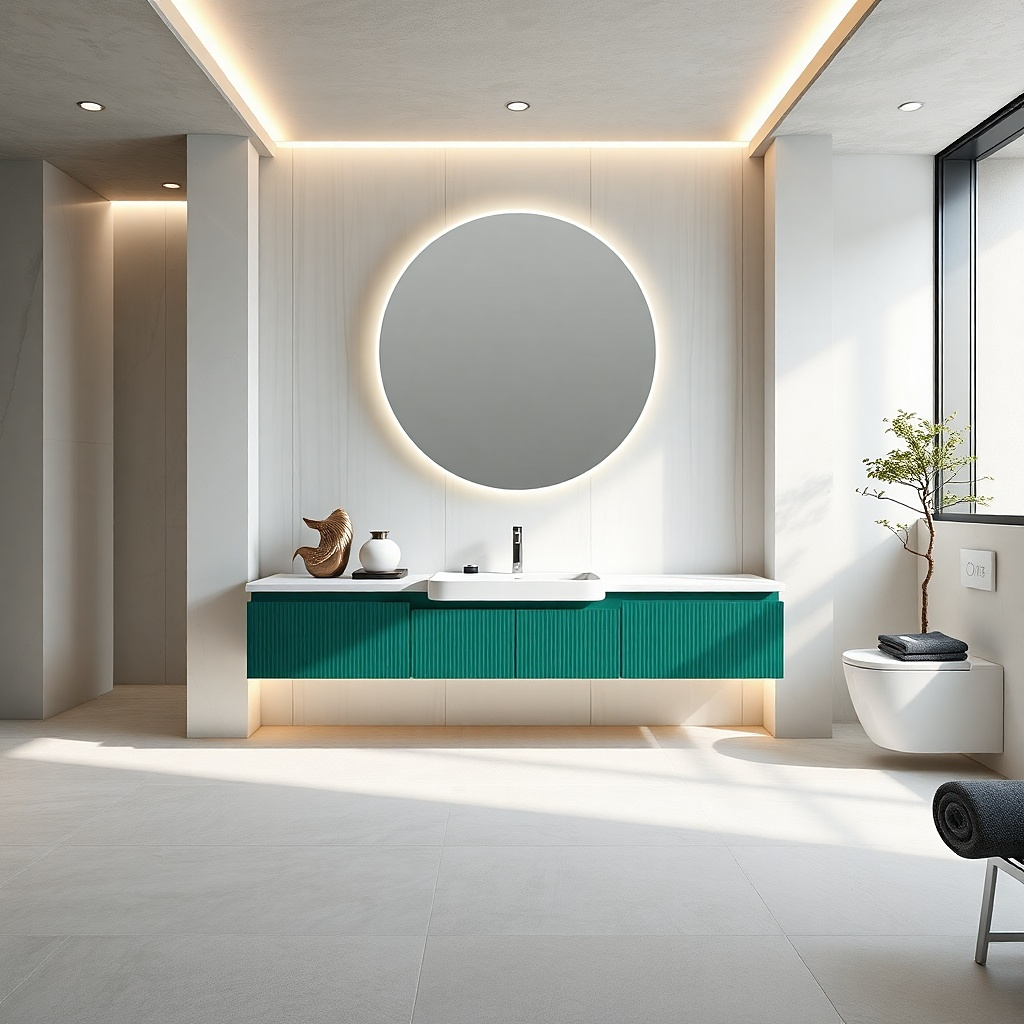
Deep teal green is where green stops being “farmhouse” and starts reading modern. A waterfall-edge quartz top looks sharp because the material wraps down the sides, creating a continuous line that makes the vanity feel custom. Keep the teal in a satin paint so it looks smooth and not plasticky. The top should be bright — white or soft ivory — so the waterfall edge catches light and makes the room feel open. This look is made for bathrooms with bold lighting or a feature wall.
Order a quartz top with a waterfall edge and confirm thickness (commonly 1.25 to 2 inches) so it scales to your vanity depth. Choose a vanity depth around 19 to 21 inches so the top doesn’t feel bulky. Install the cabinet level, then mount the top and sink; waterfall edges hide small installation gaps, but you still want a tight fit. Use a single-handle faucet with a clean spout line to match the modern geometry.
Pick a mirror with a thick edge or a slight bevel so it echoes the top’s wrapped look.
Avoid ornate faucet styles — the waterfall edge will make anything decorative feel mismatched.
6. Pistachio green wood vanity with natural grain stain
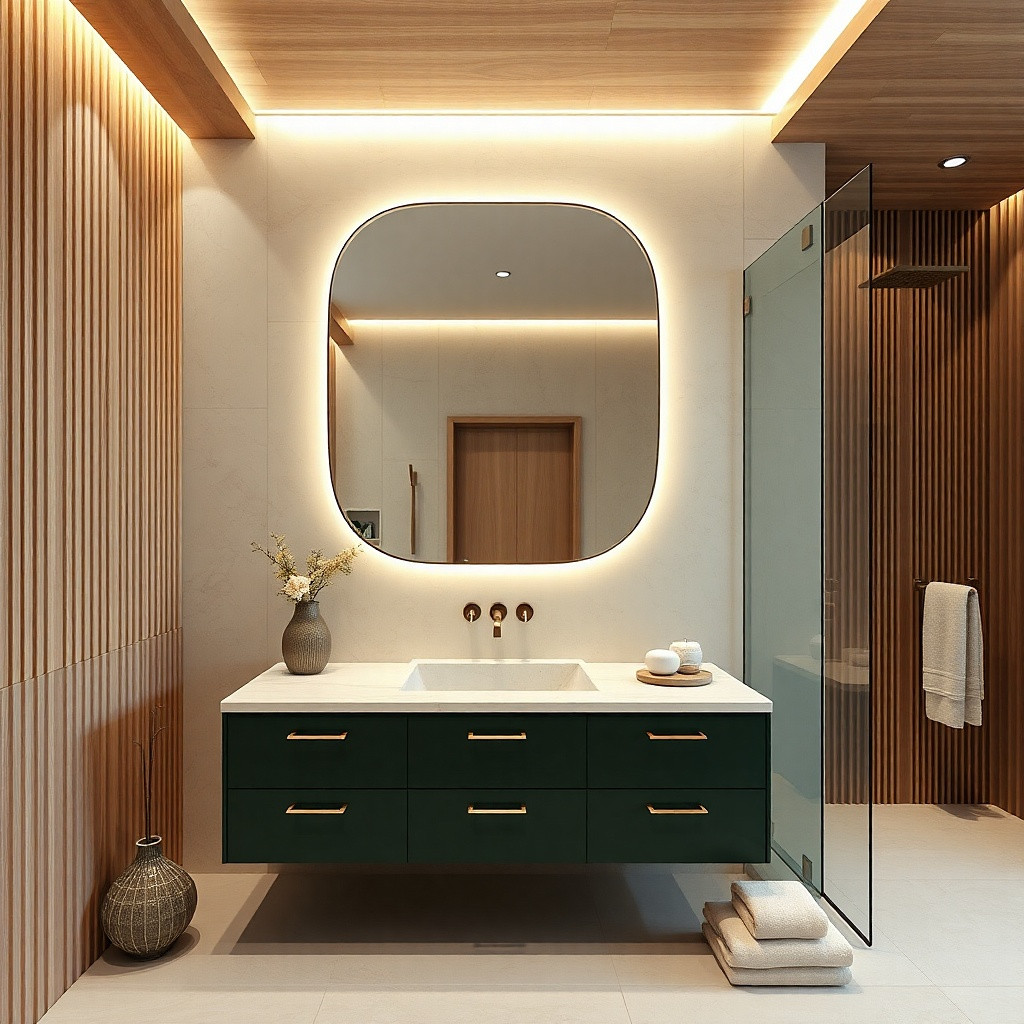
Look for a stain that still shows grain, not a full opaque paint. Choose a vanity with a clear or satin topcoat so water doesn’t dull the finish. Install the vanity, then mount the sink and faucet; keep the backsplash simple because the wood grain already provides texture. Finish by adding a mirror with a warm frame tone so the wood stain looks cohesive.
If you want green that feels warm and not overly painted, go with a wood vanity stained in pistachio tones. The grain keeps the surface interesting, so the room doesn’t look flat, even with a simple mirror. Brushed nickel or chrome hardware works well because it doesn’t overpower the earthy undertone. For the top, choose a light solid surface or a stone with tiny specks so the grain and speckle don’t fight. This look is perfect when your bathroom has wood accents like shelves or a vanity bench.
Common mistakeSkip glossy varnish — it shows water spots and smears faster in bathrooms.
Try thisUse a matte or satin faucet finish; polished chrome next to stained wood can look too cold.
7. Mint green two-drawer vanity with glass-front cabinet side
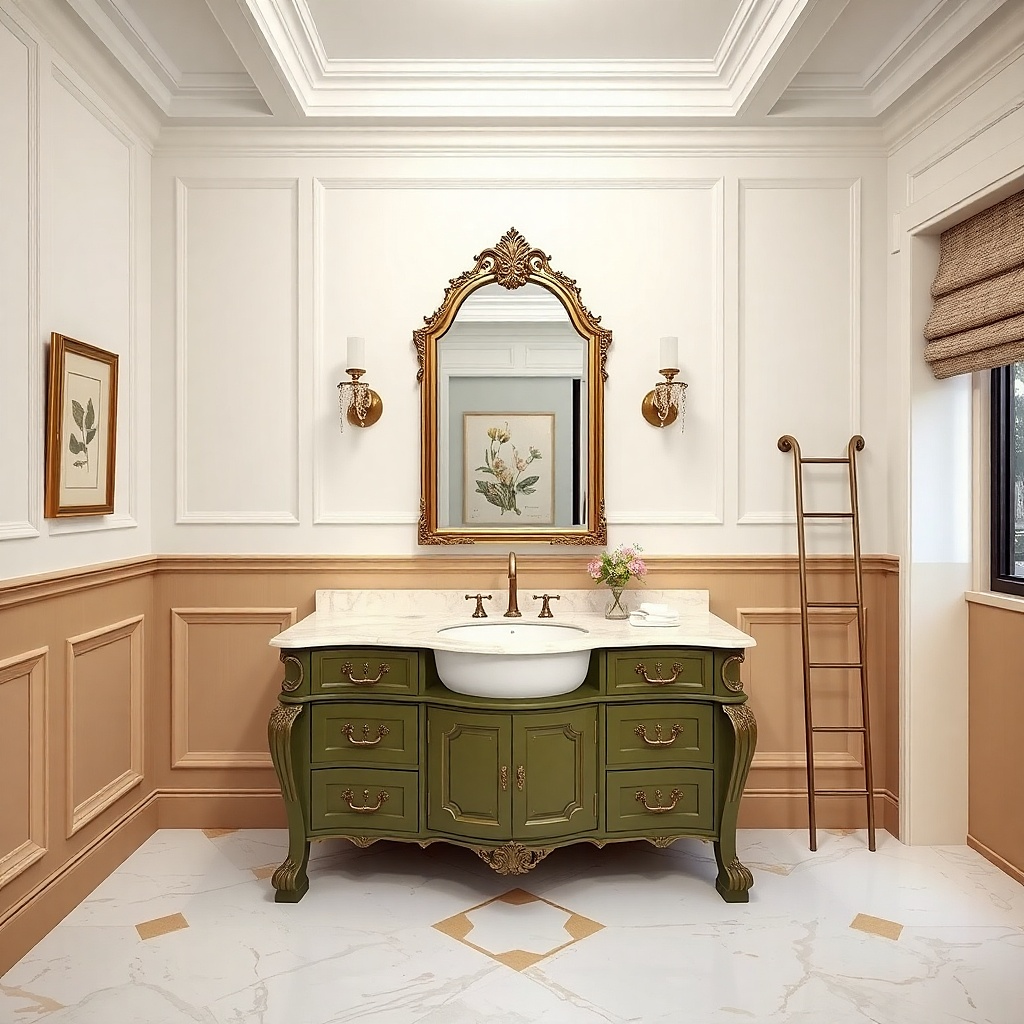
Choose a vanity with two drawers for easy organization, then add a glass-front cabinet section on one side if your space allows. Install the base at standard vanity height (about 34 to 35 inches to the top) and make sure the glass section aligns with the mirror center. Mount the top and sink, then install glass doors after plumbing so you can adjust hinges without interfering. Use a bright white backsplash or a simple tile to keep the mint from looking yellow.
Mint green looks playful, but you can keep it modern by combining it with clean drawer lines and a small glass-front side. The glass cabinet adds depth and lets you display matching bottles, which makes the vanity area feel curated on camera. Use a white top and keep the hardware minimal — small bar pulls or a single vertical pull. This idea works best in bathrooms where you want light color without going boring, especially with white walls and light floors. It’s also a good choice if you need extra storage for everyday items.
Common mistakeDon’t fill the glass cabinet with mixed finishes; it turns the vanity into visual clutter.
Try thisKeep the items behind glass in a tight color palette — white bottles and clear jars look best with mint.
8. Blackened green vanity with brushed gold accents
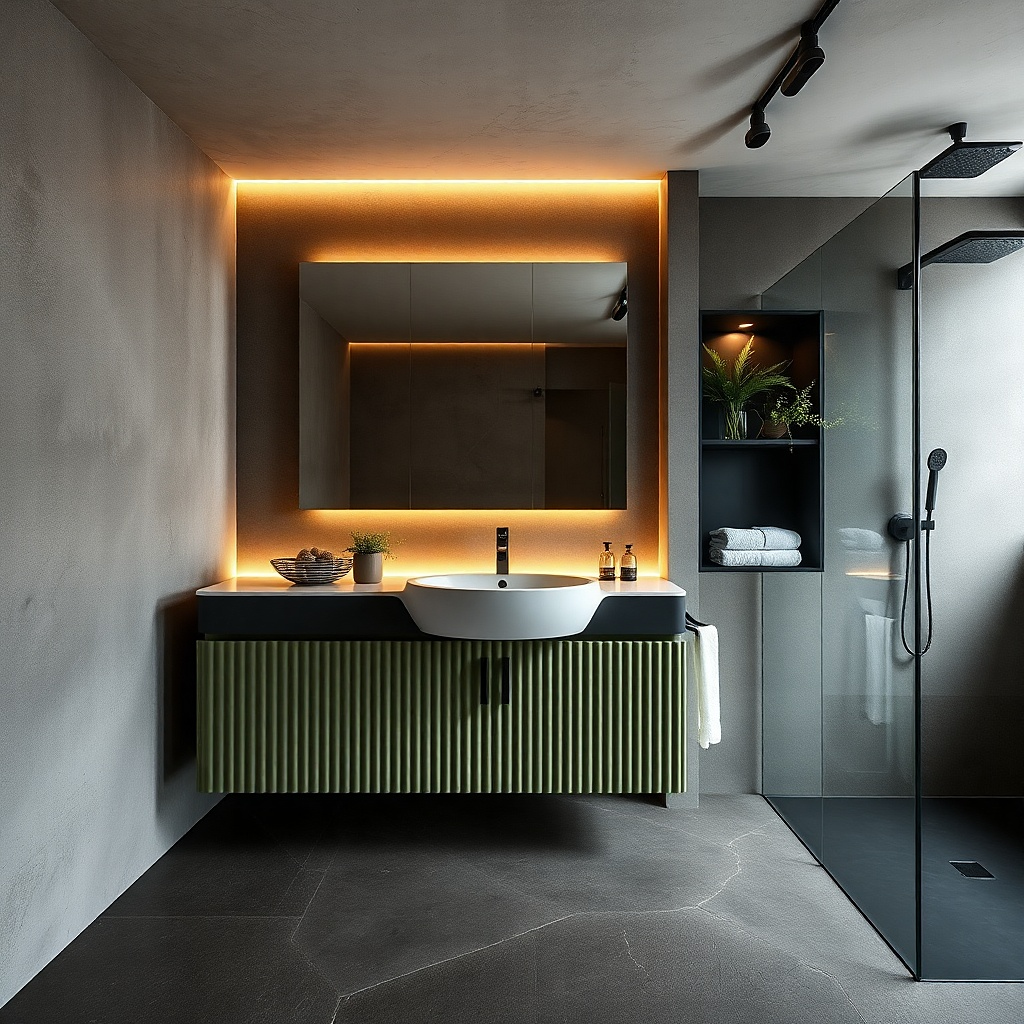
Blackened green sits between black and green, so it reads moody but still clearly green in the right light. It looks especially good with brushed gold because the gold adds warmth without being flashy. Choose a vanity finish that’s satin or semi-matte so it looks velvety. The top should be light with soft gray movement to keep the room from feeling heavy. This is a strong option for bathrooms with black fixtures elsewhere, like a black shower frame or towel bar.
Pick a blackened green shade that has a slight green cast, not pure charcoal. Install the vanity and mount the faucet so the spout line matches the gold hardware height on the drawer fronts. Use brushed gold pulls with a similar tone to your faucet; mismatch creates a “random hardware” look. Finish with a mirror that has a thin gold frame and keep wall color neutral so the green reads intentional.
Use a slightly larger mirror than you think — 1 to 2 inches wider than the vanity — so the blackened color doesn’t swallow the wall.
Avoid high-contrast white grout lines near the vanity if you’re going dark — it makes the whole section feel busy.
9. Chartreuse-leaning green vanity with chrome faucet
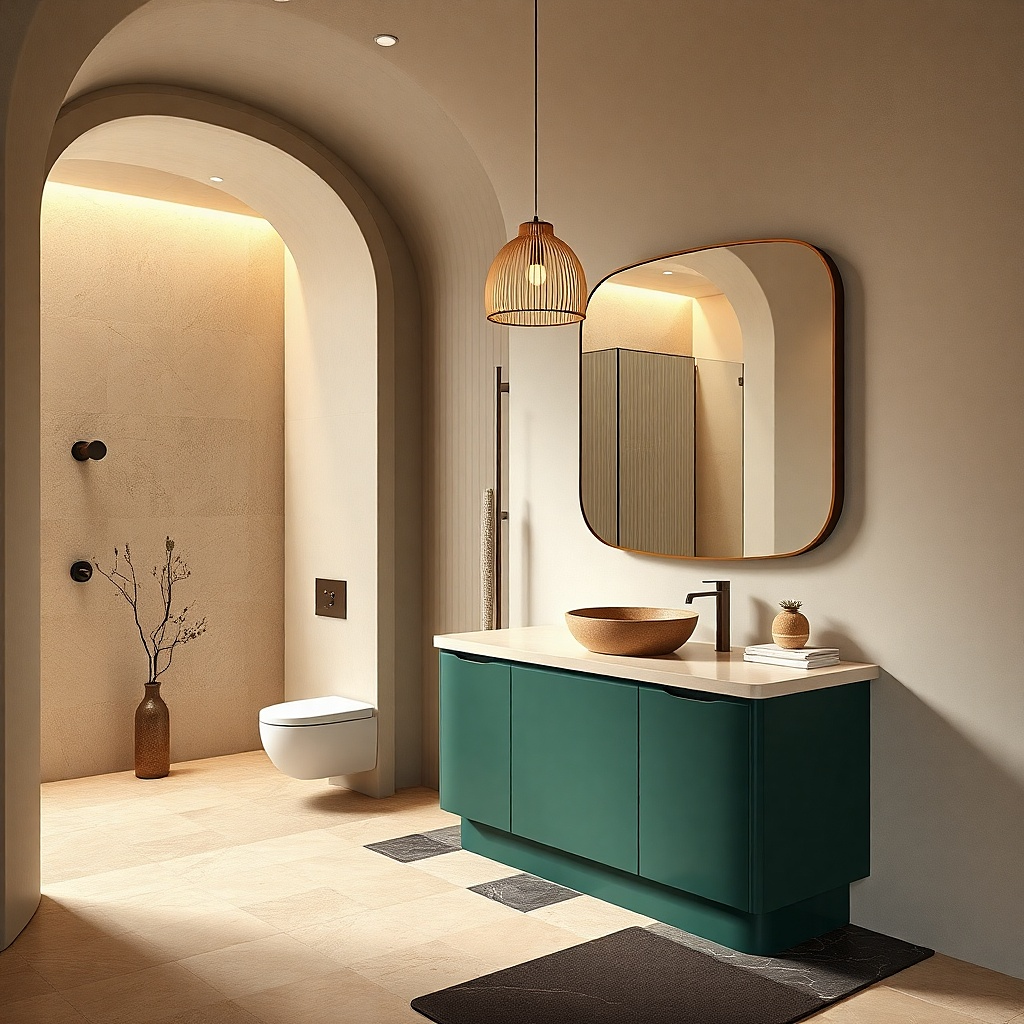
Choose a slab-door vanity in a true chartreuse-leaning green, then keep the top bright white. Install the vanity centered on the wall, then set the mirror so its bottom edge sits around eye level (roughly 60 to 66 inches from the floor depending on your height). Mount chrome faucet and check the clearance with the backsplash tile. Add one neutral accessory on the counter and one towel color in a matching tone to prevent the green from feeling chaotic.
This is the green that reads bold and modern, but it works only if you keep the styling clean. A chartreuse-leaning green vanity looks best with a bright white top and a chrome faucet so the hardware stays crisp. Use a flat-front or slab-door style to avoid busy detailing. Keep the mirror simple and let the green color do the work. If your bathroom lighting is cool, this shade stays lively instead of turning muddy.
Common mistakeDon’t pair chartreuse green with warm brass — it can look yellowed and harsh.
Try thisUse white towels with a subtle texture so the vanity stays the only loud color.
10. Sage green vanity with arched apron and antique brass
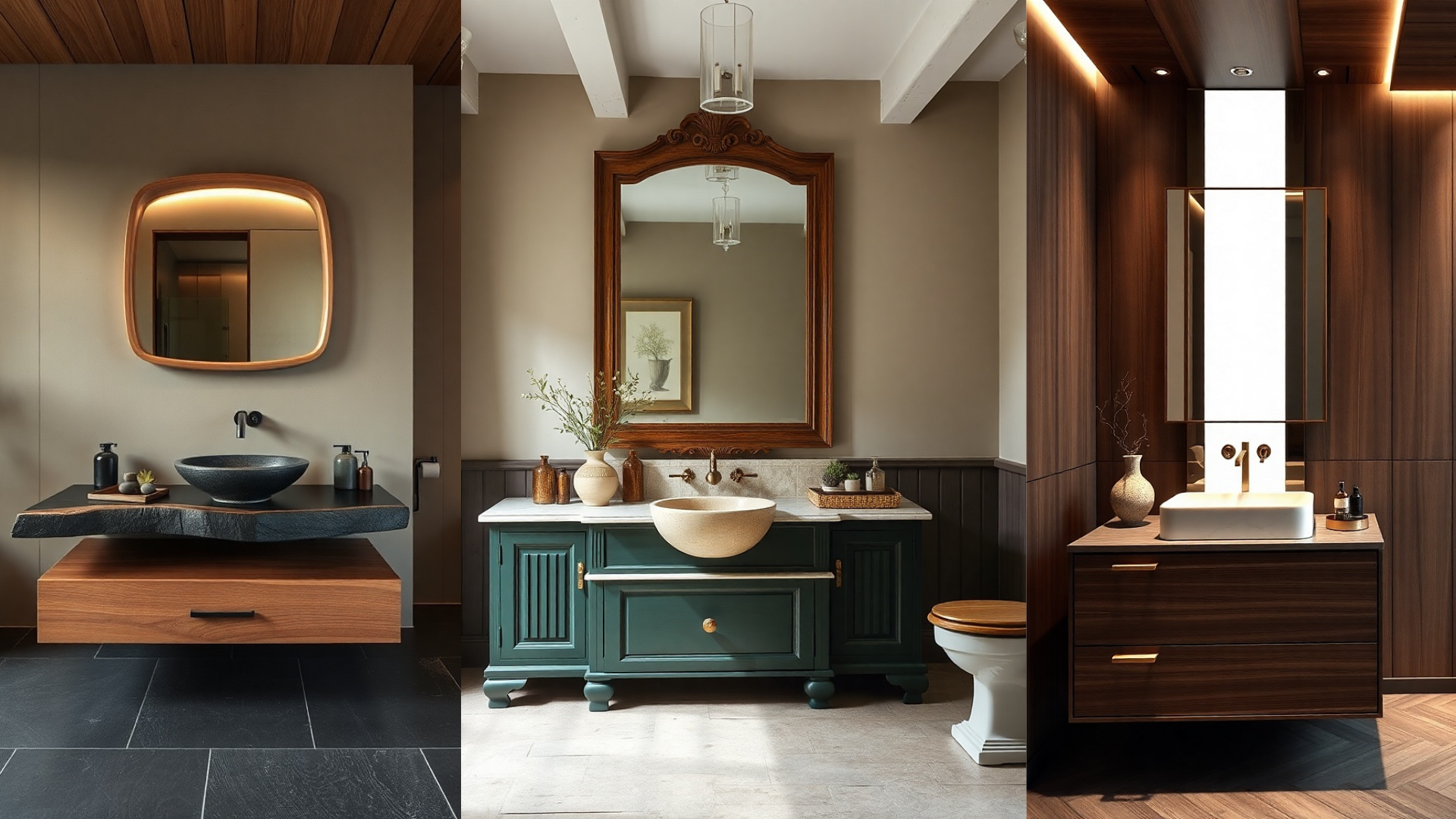
Look for a vanity style with an arched apron panel and a flat, modern sink cutout. Install the vanity so it sits level and centered, then mount the faucet after the top is in place. Use antique brass pulls sized to the cabinet width so they don’t look tiny; bar pulls around 6 to 10 inches wide are common on these doors. Finish with a mirror that has a gentle arch or a thin frame that echoes the apron curves.
This idea takes a traditional shape and makes it modern through the green color and clean countertop. The arched apron panel adds softness, while sage keeps it calm and fresh. Antique brass hardware adds warmth and depth, especially against a satin green finish. Use a smooth white countertop with minimal veining so the arch detail stays the focus. It’s a great fit for bathrooms with classic molding, older homes, or anyone who wants “pretty” without going full farmhouse.
Common mistakeDon’t add multiple decorative brass elements elsewhere; one hardware finish is enough.
Try thisKeep the backsplash plain — subway tile in soft white — so the arched detail stays crisp.
11. Forest green vanity with sculpted edge drawers
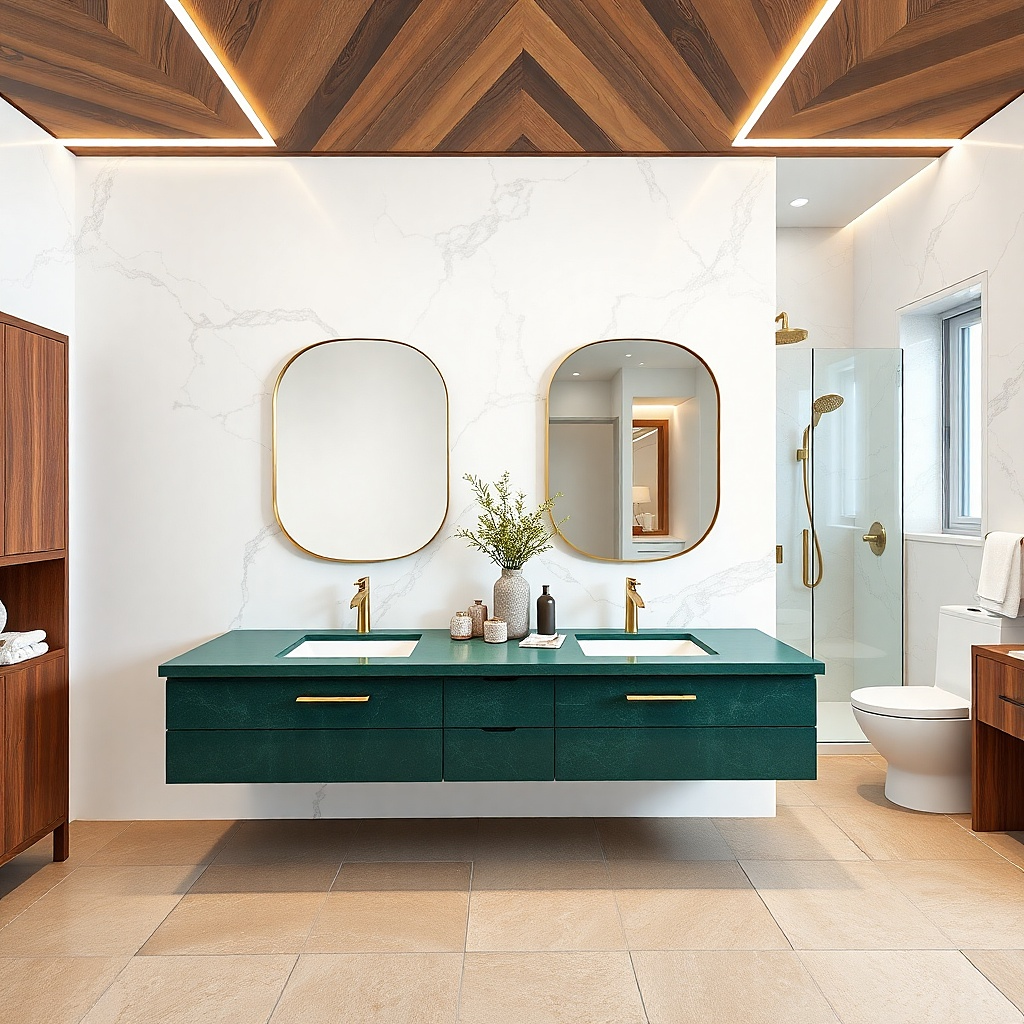
Measure your drawer widths and pick hardware that doesn’t crowd the sculpted edges; aim for pulls that sit at least 1 inch from each vertical edge. Install the vanity, then mount the top and sink, checking that the countertop overhang doesn’t block the drawer pull movement. Use a mirror frame that’s simple and straight so it doesn’t fight the sculpted forms. Seal around the sink and caulk the perimeter for a tight, clean look.
Sculpted drawer fronts make a green vanity look custom even when the design is straightforward. Forest green deepens the shadows in the sculpting, which makes the front feel dimensional instead of flat. Use a light marble-look top so the countertop doesn’t compete with the drawer detail. Choose hardware that matches the sculpting scale — small knobs or elongated pulls that sit cleanly in the negative space. This is ideal for a bathroom that has plain tile and needs texture without adding patterns.
Common mistakeAvoid busy countertop patterns with sculpted drawers; it turns the front into a visual mess.
Try thisAdd backlighting behind the mirror so the sculpted edges cast gentle shadows.
12. Olive green vanity with fluted drawer fronts
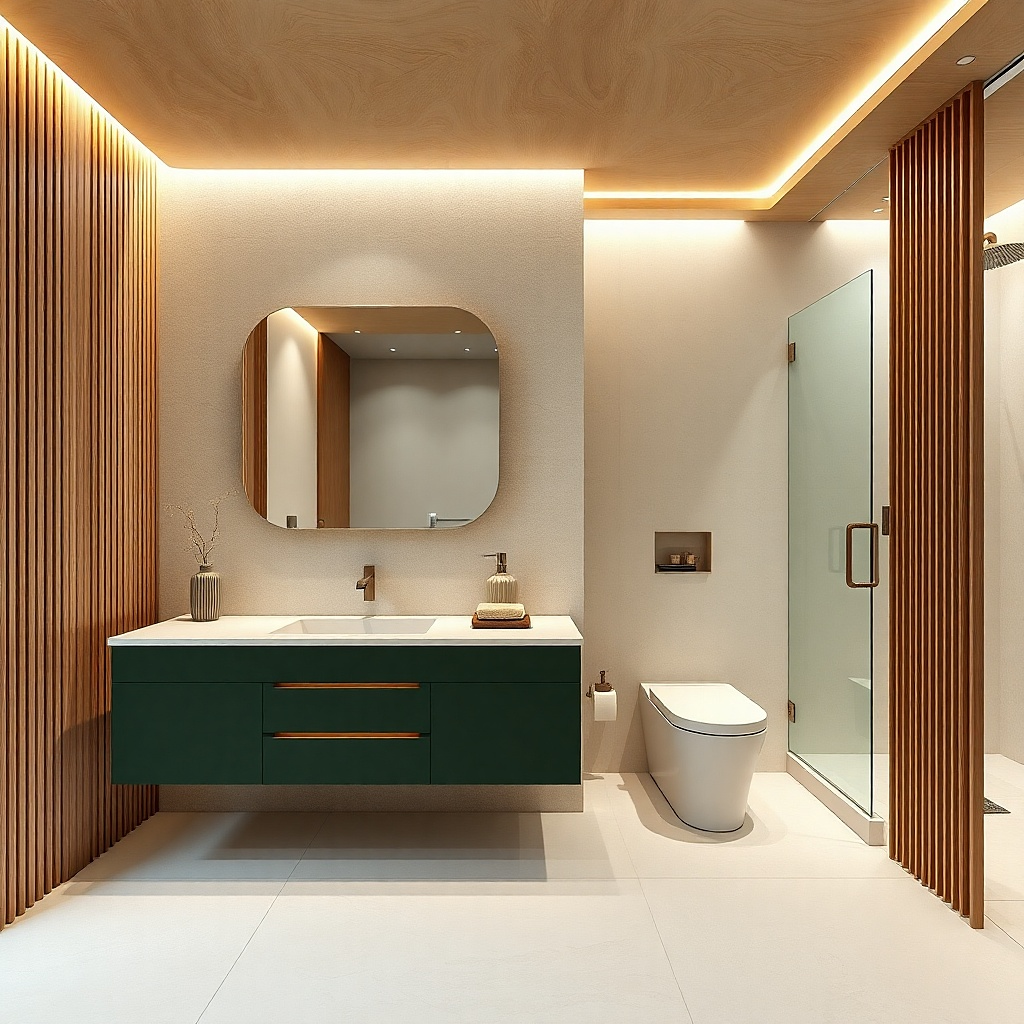
Select a vanity with fluted drawer fronts (or add fluted inserts) and keep the cabinet color a muted olive, not neon. Install the vanity and confirm the top height sits around 34 to 35 inches. Mount the mirror so the bottom edge aligns with the top of the cabinet or slightly above, creating a balanced vertical block. Finish by installing a clean, single-handle faucet and a small matte soap dish so the grooves stay the main texture.
Fluted drawer fronts add vertical rhythm, and olive green makes that rhythm feel earthy and modern. The grooves catch light and make the vanity look expensive without needing extra color. Pair it with a simple white or cream quartz top and minimal hardware. Choose a mirror with vertical lines or a thin frame to echo the fluting. This works best in bathrooms with neutral walls and a little natural light, because the flutes need light to show their shape.
Common mistakeDon’t pair fluted olive with patterned wallpaper or heavy tile — it competes for attention.
Try thisUse warm white bulbs (around 3000K) so the fluting looks dimensional, not harsh.
13. Green marble-look vanity with matching backsplash stripe
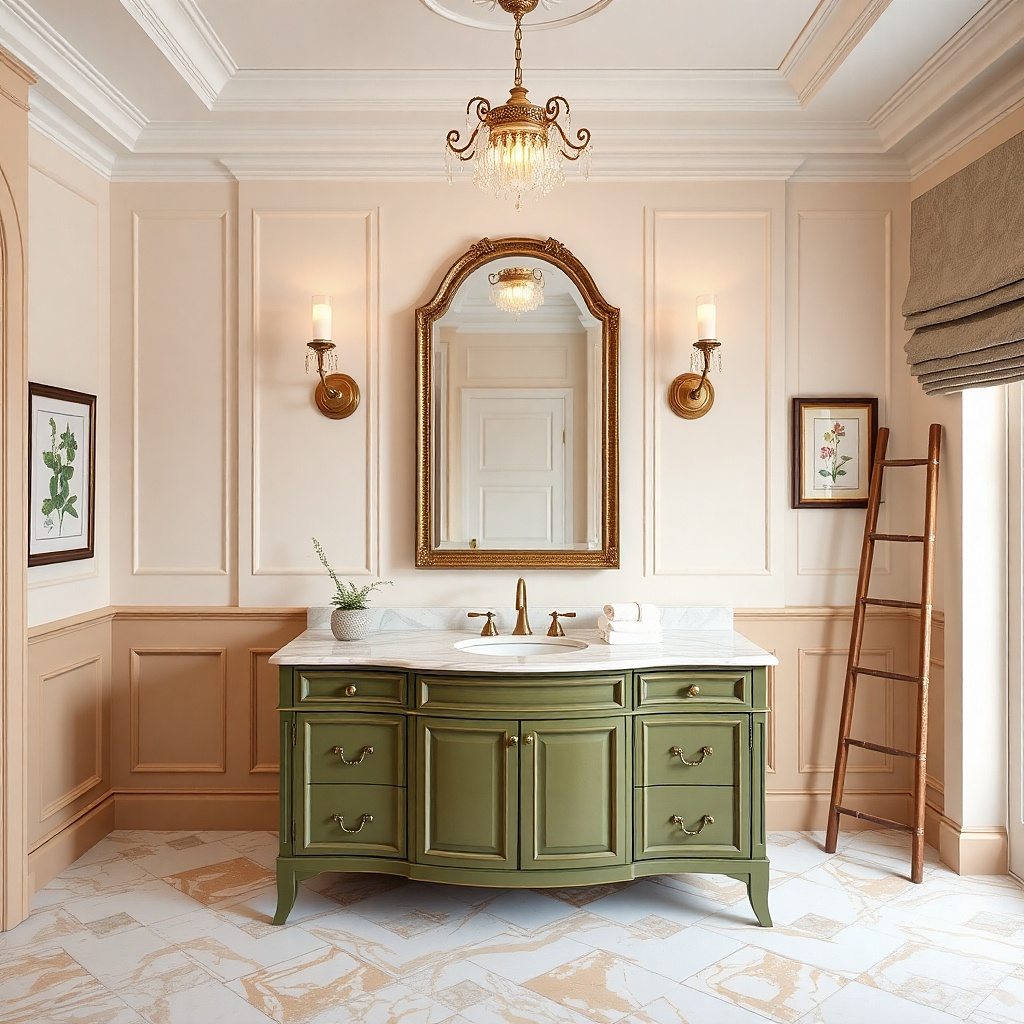
Choose a vanity with a true green marble-look pattern and pick a backsplash tile or thin strip that matches the dominant green undertone. Install the vanity first, then mark the backsplash stripe height so it aligns with the vanity center and the mirror center. Set the countertop and sink, then mount the faucet and check the backsplash alignment with the faucet spout. Keep grout color neutral to avoid muddying the green.
If you want green that reads luxurious without painting, a green marble-look finish on the vanity front can look striking. The key is matching the backsplash stripe to the vanity tone so the bathroom feels pulled together. Keep the countertop light and plain so the marble-look doesn’t become too busy. This idea is great for bathrooms that already have simple wall tile and need one “wow” moment. It also works well in rentals because the look is the product, not a DIY paint job.
Common mistakeAvoid mixing two different green patterns; it makes the bathroom look assembled from random pieces.
Try thisUse a mirror with a thin frame and let the marble-look pattern stay crisp — avoid thick ornate frames.
14. Emerald green double-sink vanity with slim profiles
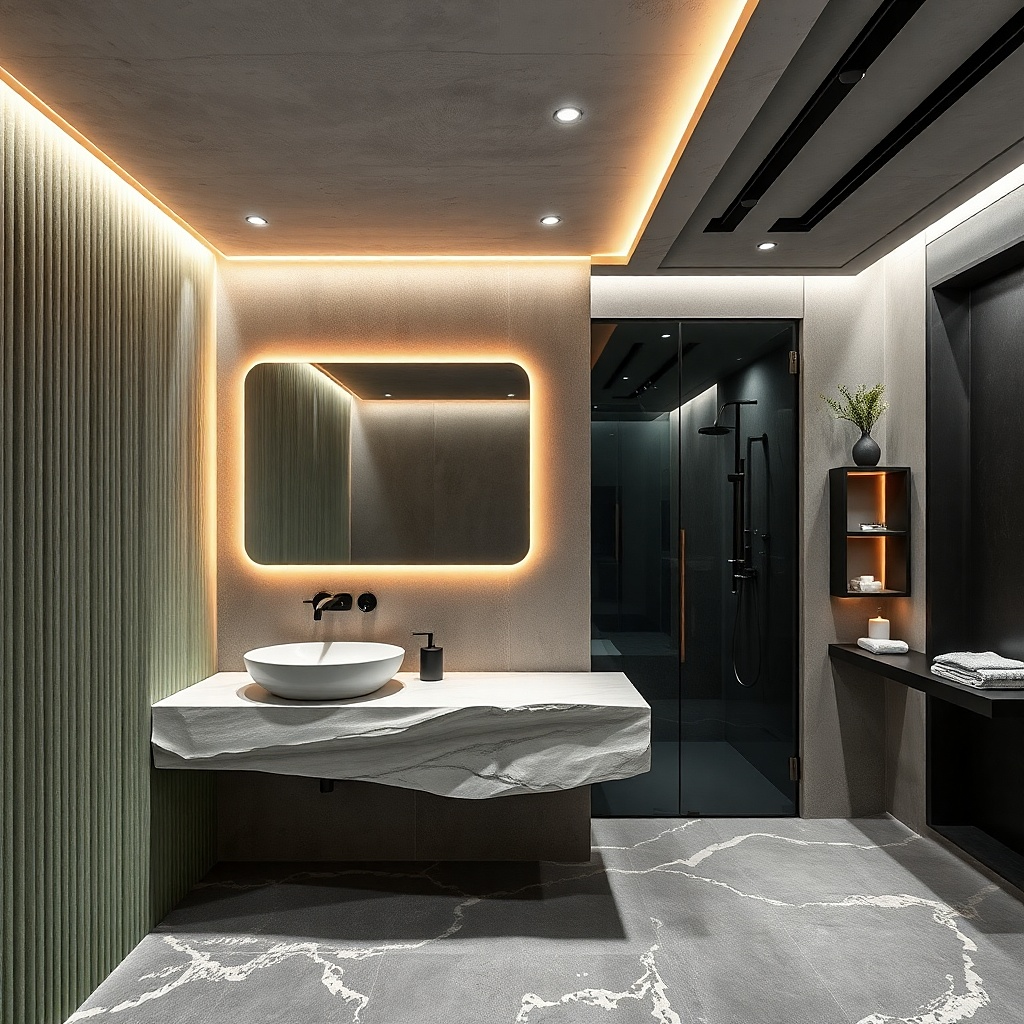
Double-sink vanities can look bulky, but emerald green helps them feel intentional and upscale when the profiles are slim. Keep the cabinet face clean and use narrow drawer and door framing so the space doesn’t look crowded. A bright white or light stone top gives you contrast and keeps the green from feeling heavy. This look is ideal for shared bathrooms where you want symmetry and storage without visual chaos. It also photographs well because the two sink cutouts create a strong grid.
Plan your width around your mirror and lighting — a 60 to 72 inch vanity is common for double sinks. Install the vanity so the countertop top lands around 34 to 35 inches high, then mount the mirror centered and wide enough to cover the full vanity width. Choose slim hardware pulls and keep the faucet finishes consistent across both sinks. Seal the countertop-to-cabinet seam and caulk around each sink for a clean line.
Use identical accessories on both sides of the sinks to keep the symmetry sharp in photos.
Don’t mix drawer pulls and knobs; one hardware style makes the double-sink look cohesive.
15. Kelley green vanity with rounded countertop corners
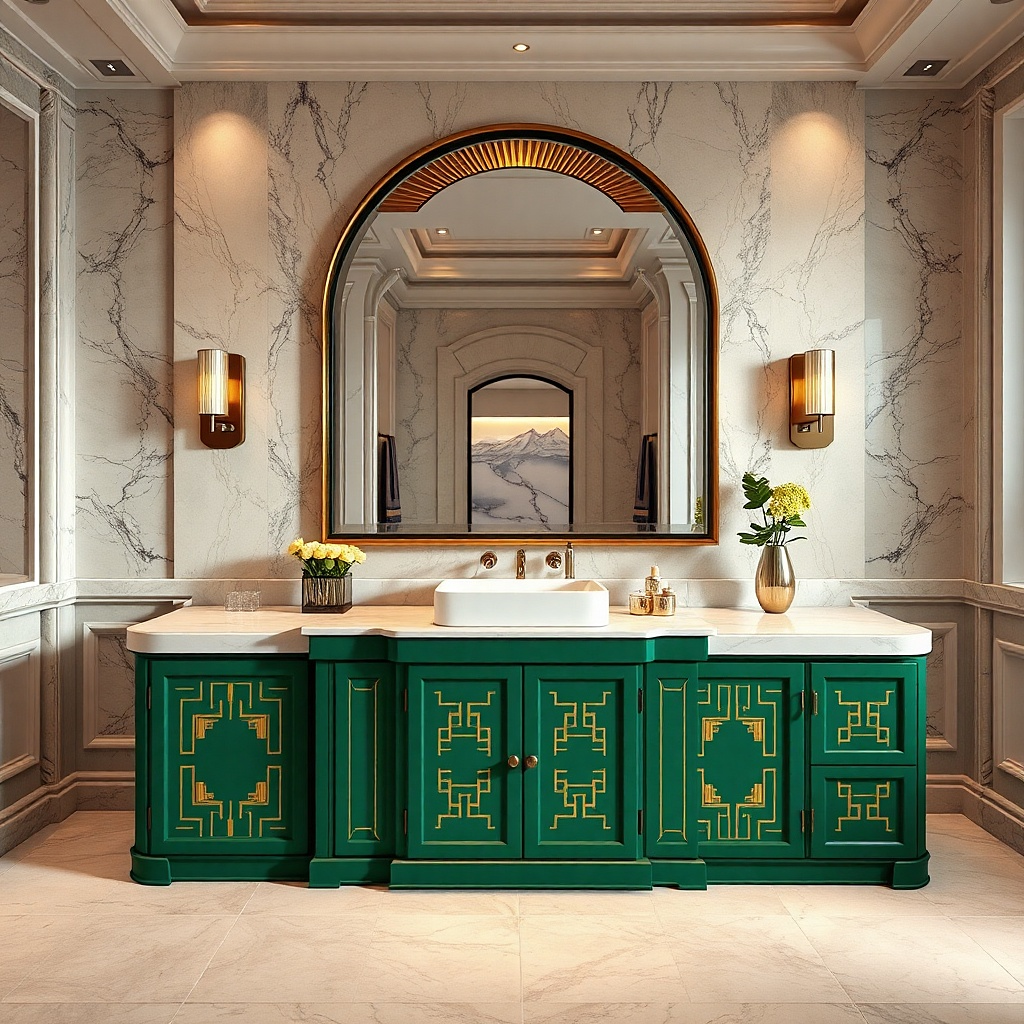
Rounded countertop corners soften the look of a bold green vanity and keep it modern. Kelley green is saturated without being too dark, and the rounded edge makes the whole piece feel less boxy. Pair it with warm brass pulls for a clean contrast and a countertop that is bright and smooth. This idea works beautifully in bathrooms with modern lighting fixtures and minimal wall decor. It’s especially good if you want green to feel friendly instead of dramatic.
Pick a vanity with a saturated green tone and a clean face — slab or shaker. Order a countertop with a rounded bullnose or eased edge so the corners don’t look sharp in a tight bathroom. Install the vanity level, then mount the countertop and sink; verify the faucet clearance with the backsplash before tightening everything. Finish by placing a rounded mirror or a mirror with rounded corners so the shapes repeat.
Choose a mirror shape that echoes the countertop edge; repetition makes it look designed.
Avoid sharp, angular mirrors with rounded counters — the mismatch looks accidental.
16. Teal-green vanity with ribbed glass pendant lighting look
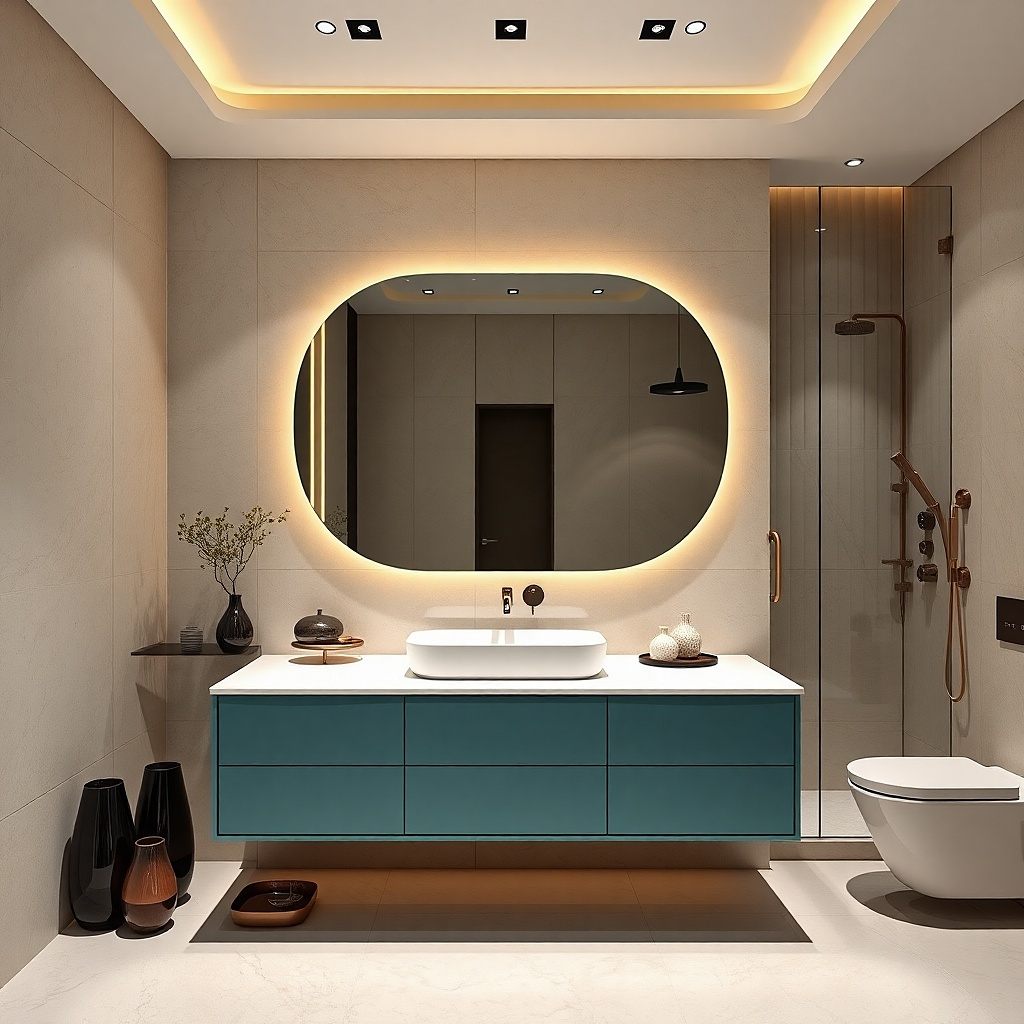
Teal-green vanities look stunning when the bathroom lighting has texture. The ribbed glass style of many sconces creates little highlights that bounce off the glossy or satin cabinet finish. This makes the vanity look richer without adding more color. Choose a teal that leans slightly blue, then keep the top bright and smooth. The hardware should be simple — black or brushed nickel — so the lighting reflections do the work. This is best in bathrooms that already use wall sconces or can support them.
Select a teal-green vanity in satin or low-gloss so it catches highlights without showing every fingerprint. Install the vanity and top, then place sconces so the light hits the cabinet face at a slight angle. Mount the mirror centered above the vanity, keeping the sconce height consistent on both sides. Use a bright quartz top and choose a faucet finish that matches the hardware on the vanity for a cohesive palette.
Aim sconces so light grazes the cabinet, not straight on — side lighting makes green look deeper.
Don’t install overhead-only lighting; teal can look flat without angled reflections.
17. Sage green vanity with integrated open shelf
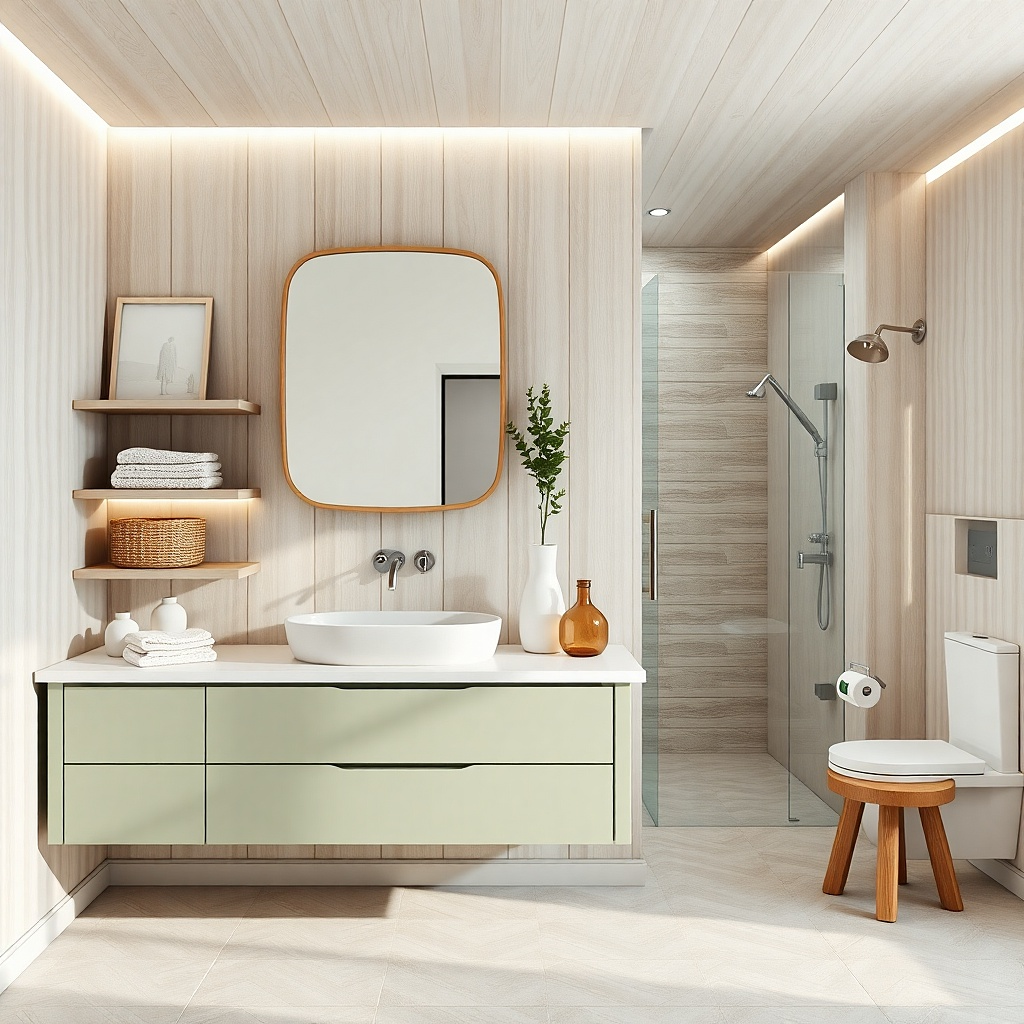
Choose a vanity design that includes an open shelf panel and confirm it won’t interfere with plumbing clearance. Install the vanity so the shelf height leaves room for cleaning and access — typically around 8 to 10 inches above the floor. Mount the countertop and sink, then paint or seal any exposed shelf surfaces if the finish is unfinished. Style the shelf after everything is installed so you can adjust placement based on the mirror and towel bar locations.
An integrated open shelf under the vanity keeps the sage green airy and gives you practical styling space. It also visually reduces the weight of the cabinetry, which matters in smaller bathrooms. Sage green paired with a white top and a simple mirror creates a clean, modern look that still feels warm. Use the shelf for a curated set: one ceramic tray, one stack of towels, and one plant or jar. This look is best when you want storage but don’t want bulky drawers everywhere.
Common mistakeAvoid overcrowding the shelf; too many items makes sage look messy.
Try thisUse one tray and keep accessories the same height so the shelf reads intentional.
18. Bottle green vanity with brass waterfall faucet and vessel sink
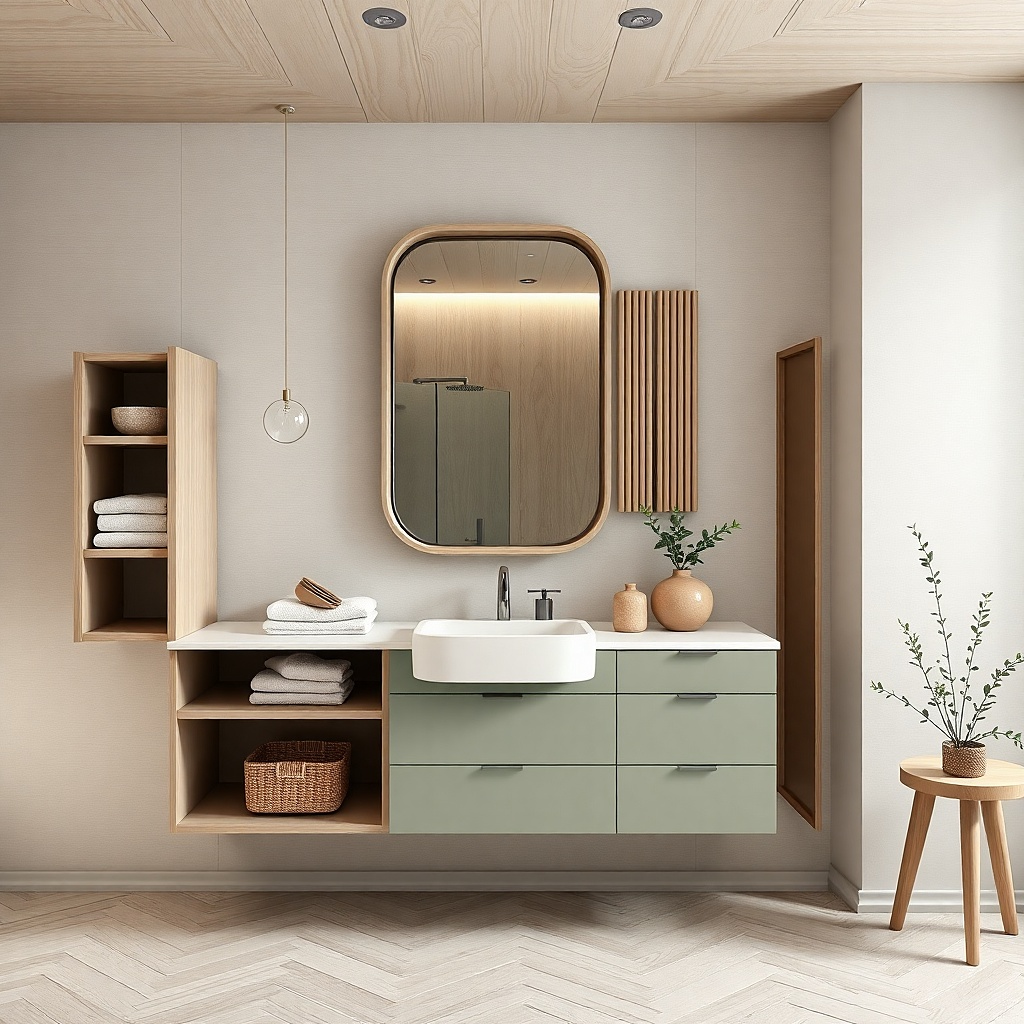
Pick a vessel sink and confirm it fits your vanity top opening or ledge cutout. Install the bottle green vanity and countertop, then mount the faucet and check reach and splash zone. Use a brass faucet with a clean, straight silhouette to match the bottle green’s boldness. Seal the sink perimeter and caulk around the countertop edge so the ledge looks tight and finished.
Bottle green plus a vessel sink is a clean way to make green feel high-design. The bottle tone is deep enough to feel luxurious, and the vessel sink creates a sculptural moment above the cabinet. A brass waterfall faucet line keeps the look modern and smooth. Choose a light countertop or a simple ledge so the vessel doesn’t sink into the green. This is a strong pick for powder rooms or larger bathrooms where you want a statement sink area.
Common mistakeAvoid a patterned countertop with a vessel sink; it competes with the sculptural shape.
Try thisKeep the drain hardware finish the same as the faucet so the sink looks cohesive.
19. Sage green vanity with vertical slab doors and concealed pulls
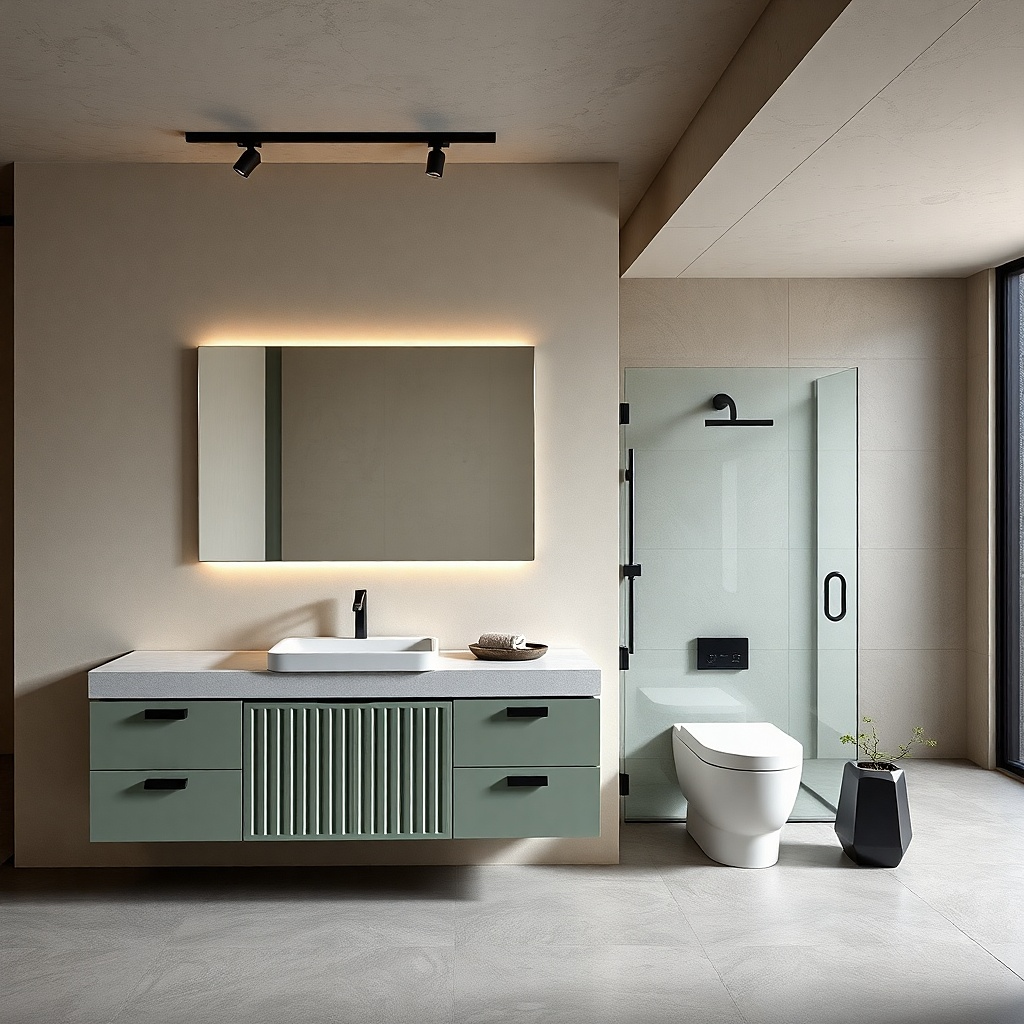
Choose a vanity with slab doors and confirm the concealed pull mechanism so you don’t end up with awkward finger gaps. Install the vanity level and align it with the mirror centerline. Mount the countertop and sink, then test drawer and door opening clearance before final caulking. Finish by installing a faucet with a minimalist silhouette and matching the drain hardware finish to it.
Vertical slab doors make a vanity look architectural, and concealed pulls keep the front clean. Sage green keeps the look fresh and not too severe, especially when the countertop is white and the walls are light. This combination is perfect if you want modern green bathroom vanity ideas that look sleek, not decorative. The concealed hardware also makes the vanity feel easier to keep clean since there are fewer knobs and crevices. Pair it with a frameless mirror to keep the lines uninterrupted.
Common mistakeDon’t add decorative knobs on top of concealed pulls — it ruins the clean modern face.
Try thisUse a mirror with a thin edge and no thick bevel so the slab doors stay the main visual line.
20. Olive green vanity with matte ceramic sink and dark grout line
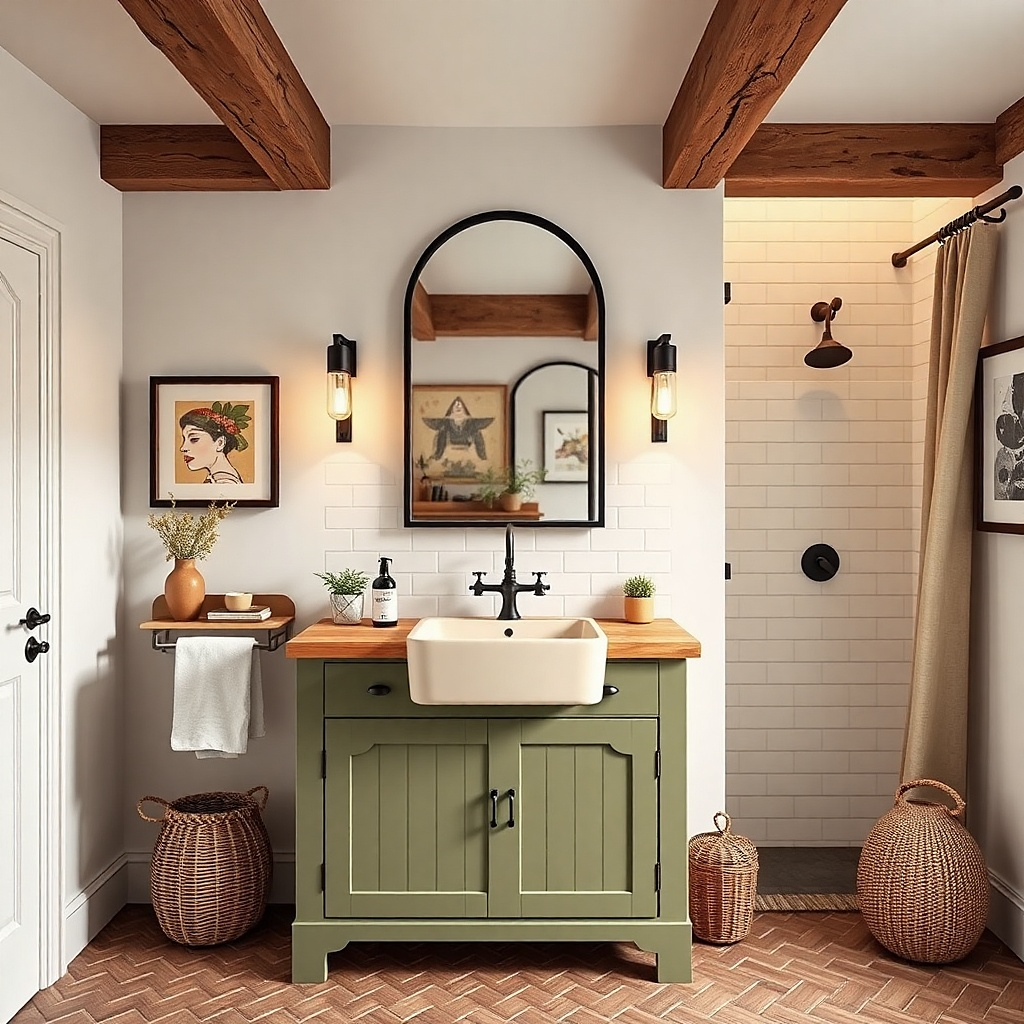
Pick a matte ceramic sink and confirm the faucet hole spacing matches your faucet choice. Install the olive green vanity and set the countertop, then mount the sink and faucet. Plan your backsplash tile layout so you can keep a consistent grout line width; dark grout typically reads cleaner when the tile lines are straight. Seal grout and caulk edges for a crisp boundary around the vanity.
Matte ceramic sinks soften the look of a green vanity and make it feel grounded. Olive green works especially well with a matte white or warm ivory ceramic sink because it reduces shine. Use a dark grout line in the backsplash to create a crisp frame around the vanity area. The top should be light and simple so the sink texture and grout line provide the visual interest. This look is ideal when your bathroom has mostly neutral surfaces and you want a subtle styling “frame.”
Common mistakeAvoid high-contrast backsplashes with glossy tile; it can make the olive look dusty.
Try thisChoose a grout color that matches your faucet finish — it makes the vanity area feel planned.