1. Charcoal floating vanity with white quartz and brass pulls
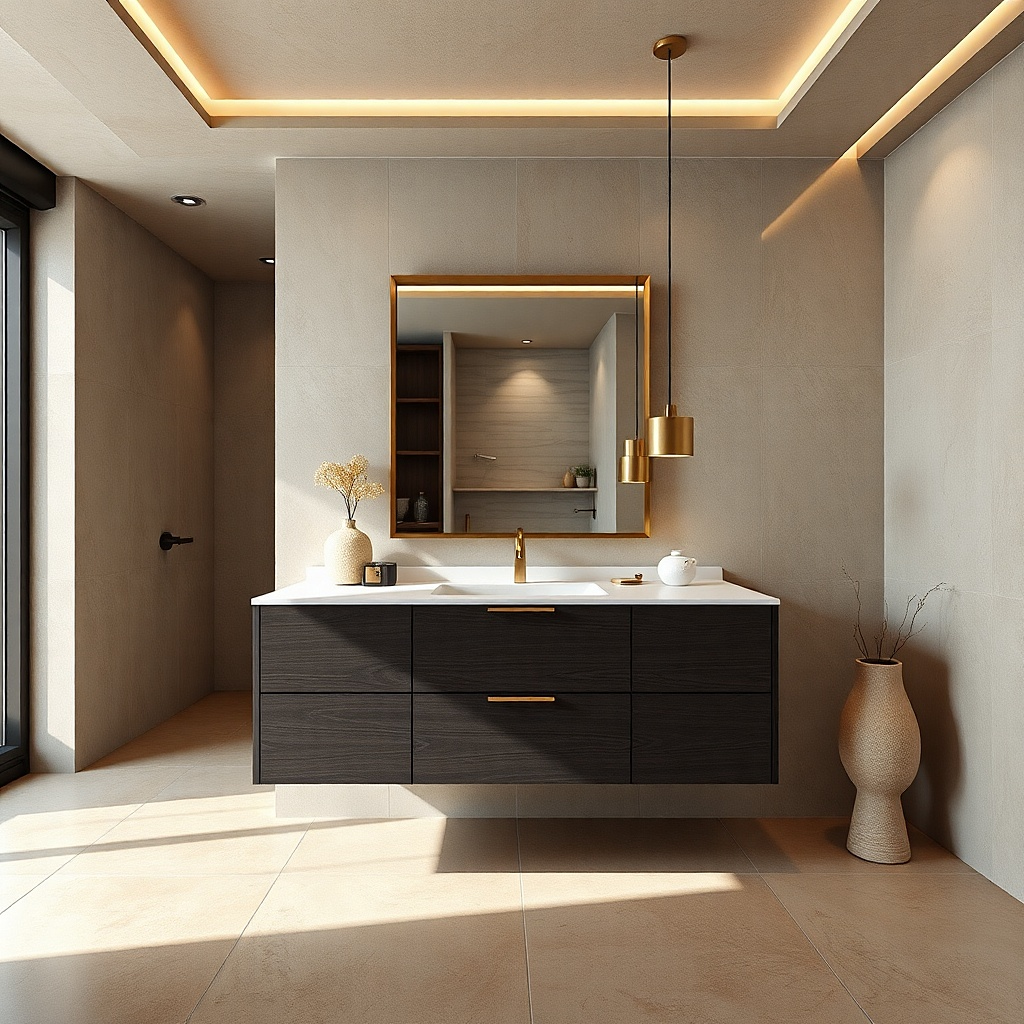
Start by choosing a vanity depth around 18-21 inches so it doesn’t look bulky against the wall. Install the vanity at a comfortable height for your use — a common range is 32-34 inches from floor to top of the countertop. Use a bright white quartz slab or quartz-look top that reads crisp in daylight, then mount brass bar pulls centered on the drawer fronts. Finally, add a tall mirror that reaches at least eye level and ideally touches the top third of the vanity to pull the eye upward.
A charcoal floating vanity keeps the dark look while removing the visual weight of a full base. The floating design creates a clean gap beneath the drawers, which reads lighter and makes the room feel larger. Pair it with a white quartz top that has soft gray veining — it gives contrast without looking harsh. Brass pulls add warmth and a small amount of sparkle near the mirror, which helps the dark cabinet feel intentional instead of oppressive. This setup is especially good in smaller bathrooms where you need dark drama but cannot lose floor space visually.
Common mistakeAvoid flat black hardware that kills the light near the mirror.
Try thisUse a mirror with a thin frame and bright edges; thick frames make charcoal look heavier.
2. Deep espresso vanity with a warm greige stone top
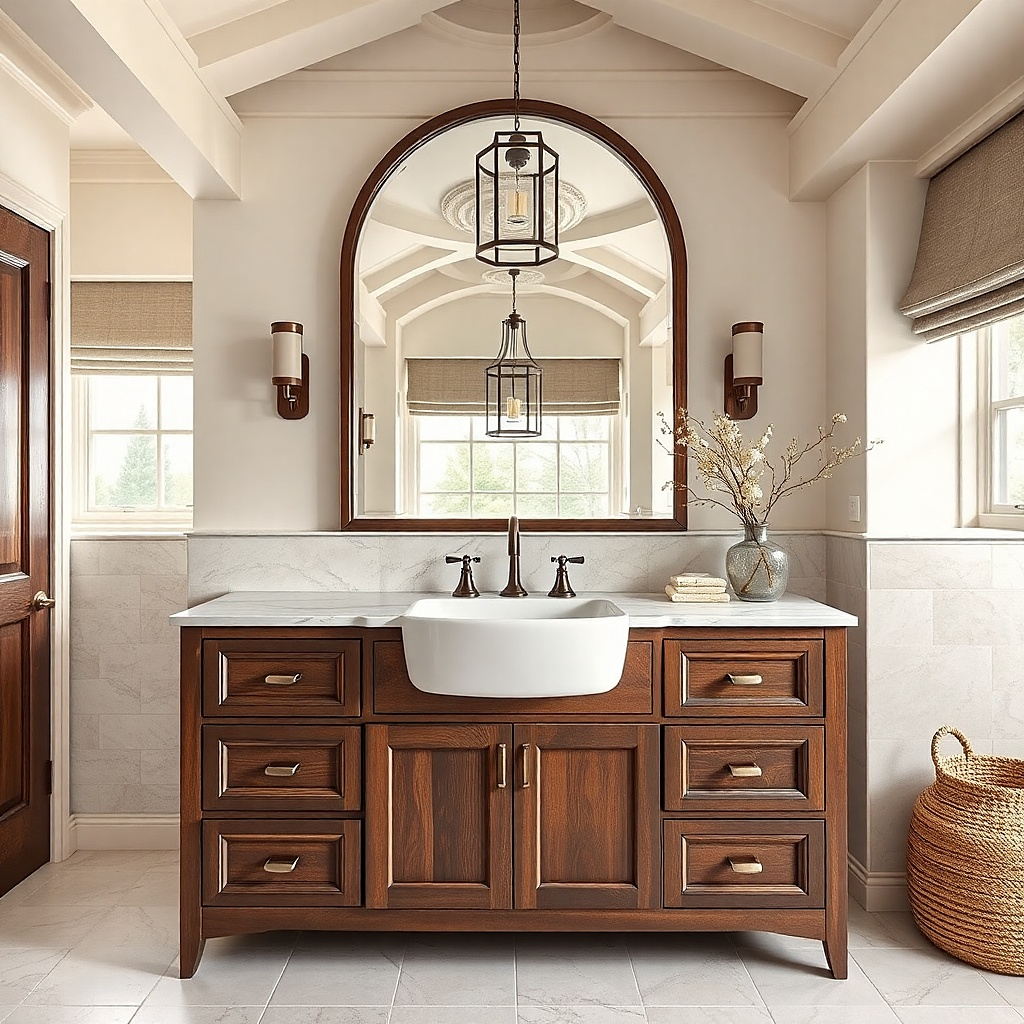
Deep espresso is dark but warm, so it reads sophisticated rather than claustrophobic. The key is pairing it with a warm greige stone top that has creamy movement, not a cold gray slab. Dark bronze or matte black hardware works here because the wood already brings warmth; the hardware stays subtle instead of stark. If your bathroom has beige or taupe tones in the floor or shower, this combination looks cohesive and expensive. It’s a smart choice when you want dark bathroom vanity ideas that still feel cozy.
Pick a stain that looks like medium-to-dark coffee with visible wood grain, not a uniform painted black. Choose a countertop in greige with beige or light brown undertones; aim for a top that is 1-2 shades lighter than the vanity. Install drawers with a consistent spacing — even gaps make espresso look tailored. Finish the look with dark bronze pulls and a matching faucet in the same tone so the hardware doesn’t float visually.
Add one light-texture accessory near the vanity, like a woven bath mat, to keep the dark cabinet from looking too formal.
Don’t pair espresso with icy white countertops and chrome; it can turn the whole room cold.
3. Matte black vanity with a waterfall-edge light marble top
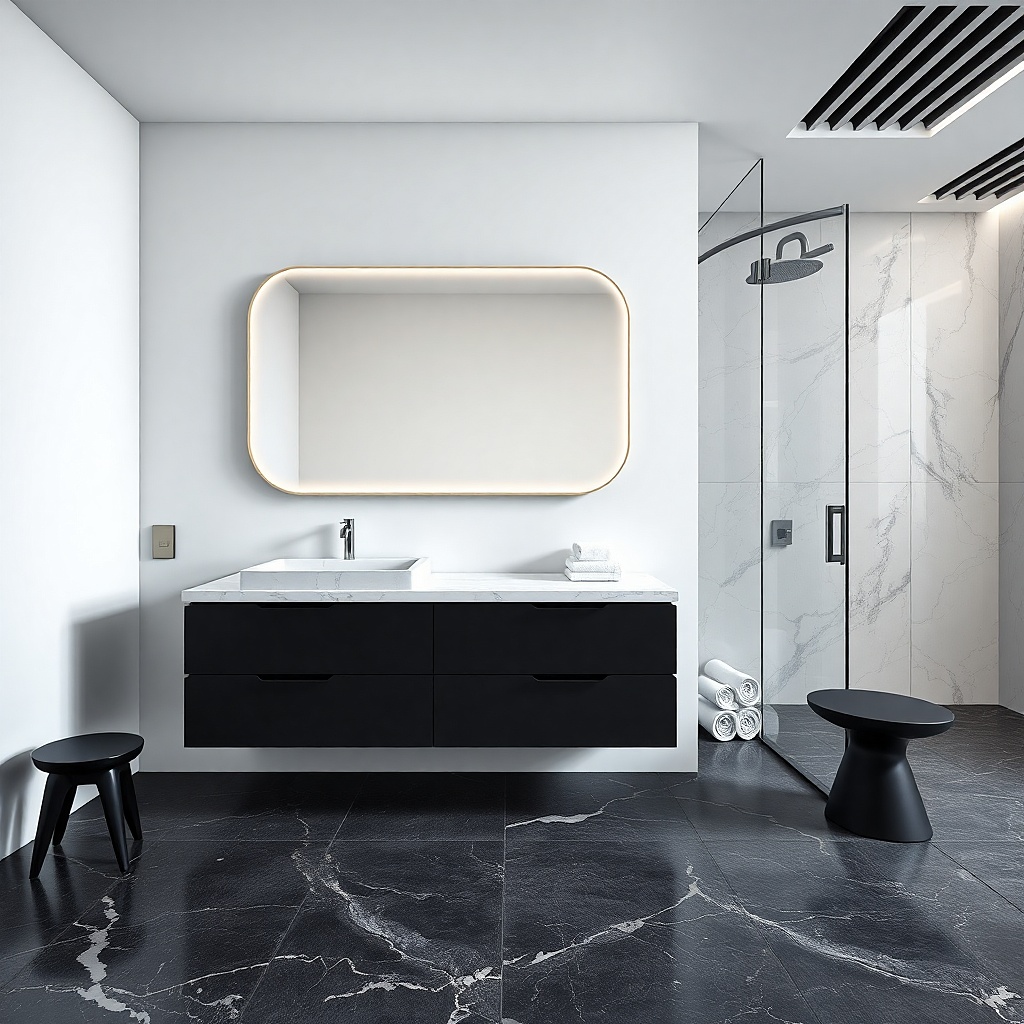
Choose a matte black vanity with a flat front panel or shaker doors, but keep the overall frame slim. Select a marble top that is at least a few shades lighter than the vanity, with a bright white base. Have the fabricator create a waterfall edge on the front for a clean, continuous look. Install a single-handle faucet and matching drain hardware in polished nickel or chrome so you get a controlled shine against the matte surface.
Matte black is the most likely dark tone to feel heavy, so you need a top that’s bright and architectural. A light marble top with a waterfall edge creates a strong, clean visual line that makes the vanity feel designed rather than just dark. Keep the marble in a white base with soft gray or taupe veining so it doesn’t compete with the black. Minimal chrome or polished nickel fixtures add a reflective highlight that cuts through the matte finish. This look works well in bathrooms with large-format tiles and sleek fixtures where you want a crisp, modern vibe.
Common mistakeAvoid pairing matte black with a busy, high-contrast countertop pattern.
Try thisLet the mirror be simple — a thin arched or rectangular frame keeps the black feeling sharp instead of bulky.
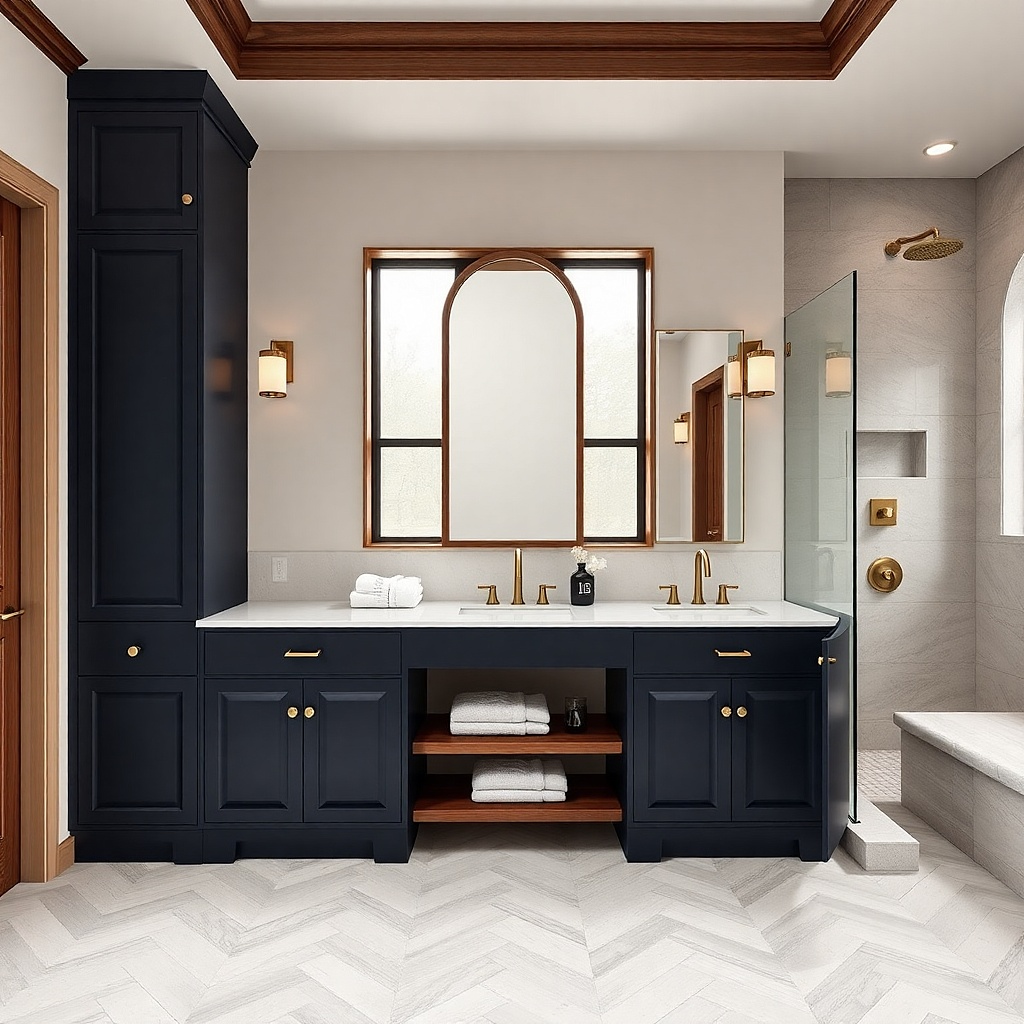
4. Navy shaker vanity with white oak shelves and black hardware
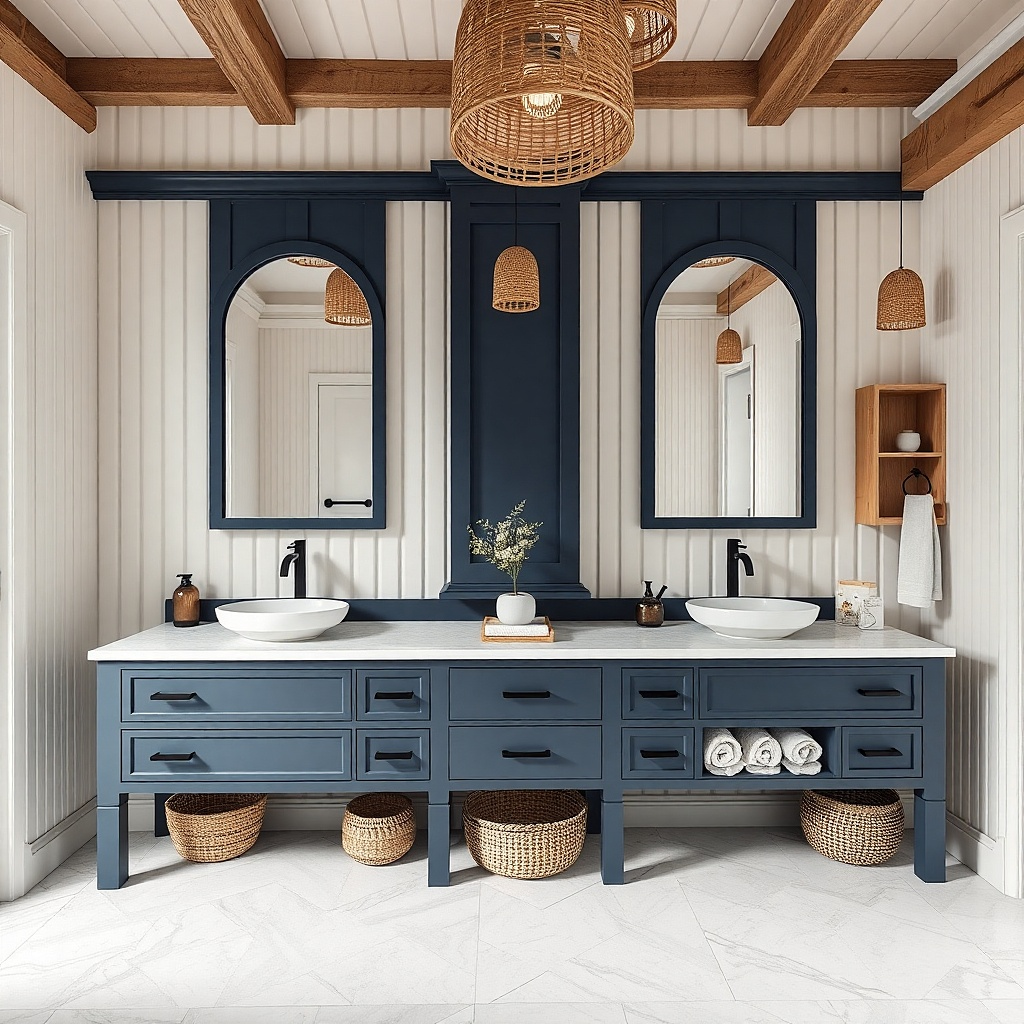
Pick a navy paint tone that leans slightly inky, not bright blue — something in the range of deep indigo. Use a vanity with shaker doors and a clean toe-kick so the silhouette stays crisp. Add open shelving above or beside the vanity in white oak, with a light finish that shows grain. Mount black bar pulls and a matching black faucet, then place a light countertop like white quartz or off-white stone to balance the color.
Deep navy gives you dark bathroom vanity ideas without the harshness of pure black. Shaker doors add structure, and a lighter wood accent like white oak shelves makes the whole setup feel lighter. Use black hardware if you want a crisp, graphic look, but keep the pulls slimmer so they read refined. If your bathroom has warm wall paint or wood accents elsewhere, navy ties it together better than charcoal. This is a great choice for homes that want dark and cozy, not stark and severe.
Common mistakeDon’t use navy with gray-only materials; it can look muddy under bathroom lighting.
Try thisUse a mirror with a warm metal frame or a wood-toned edge to avoid making navy feel too cold.
5. Dark walnut vanity with a light travertine top
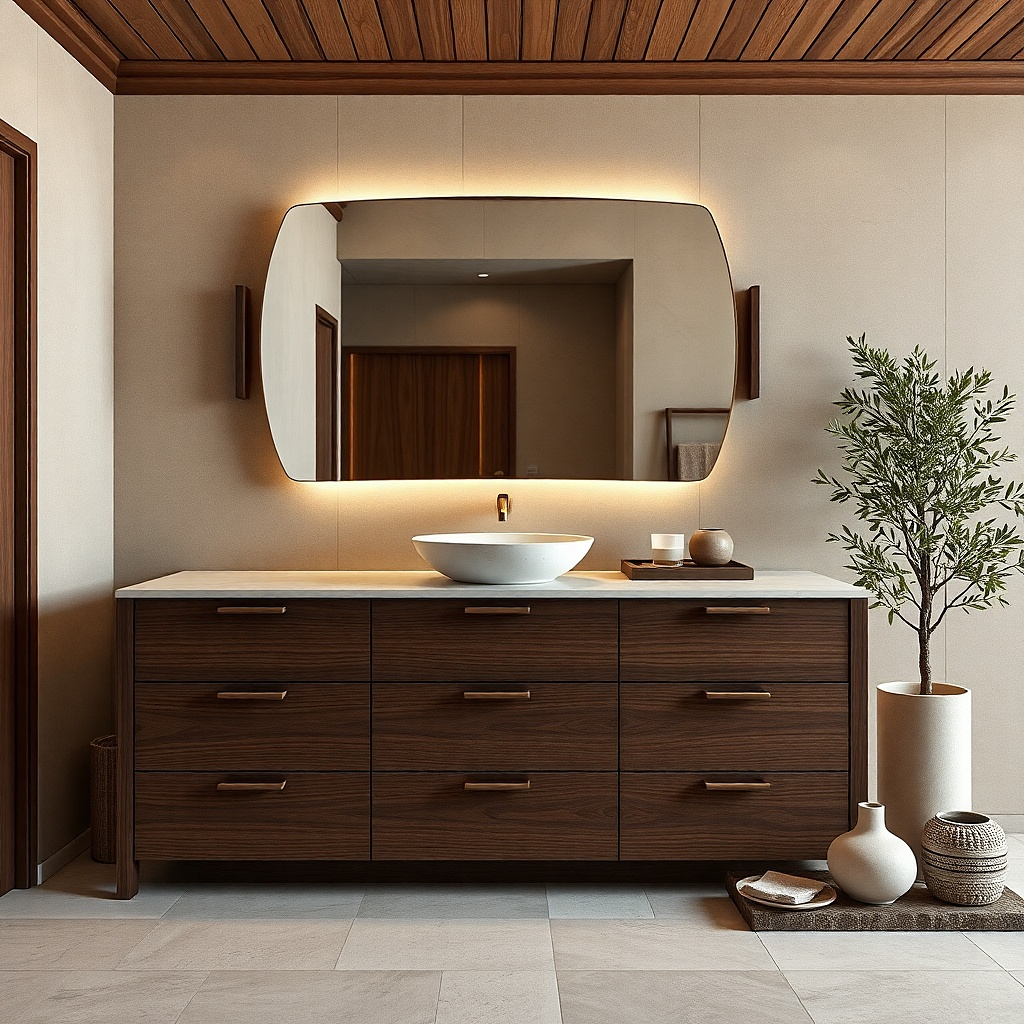
Dark walnut brings depth without looking like a painted block. When you pair it with light travertine, the bathroom gets texture and warmth instead of darkness and glare. Brushed brass fixtures soften the edge of dark wood and make the vanity feel more dimensional. The travertine top also hides small water spots visually, which matters in real bathrooms. This setup is ideal for spa-like bathrooms with warm tile, textured walls, or brushed metal accessories.
Choose a walnut veneer or solid wood vanity with a clear or satin stain that shows grain. Pick a travertine top in a light buff or cream tone, ideally honed for low shine. Use brushed brass pulls in a simple bar shape and match your faucet finish to the same metal. Install the vanity with a level line and keep the countertop overhang minimal so the front stays streamlined.
Seal the travertine with a bathroom-safe stone sealer so the top stays light and consistent.
Avoid high-gloss tops with dark walnut; the shine can make the vanity look heavier.
6. Black oak veneer vanity with a glossy top and chrome accents
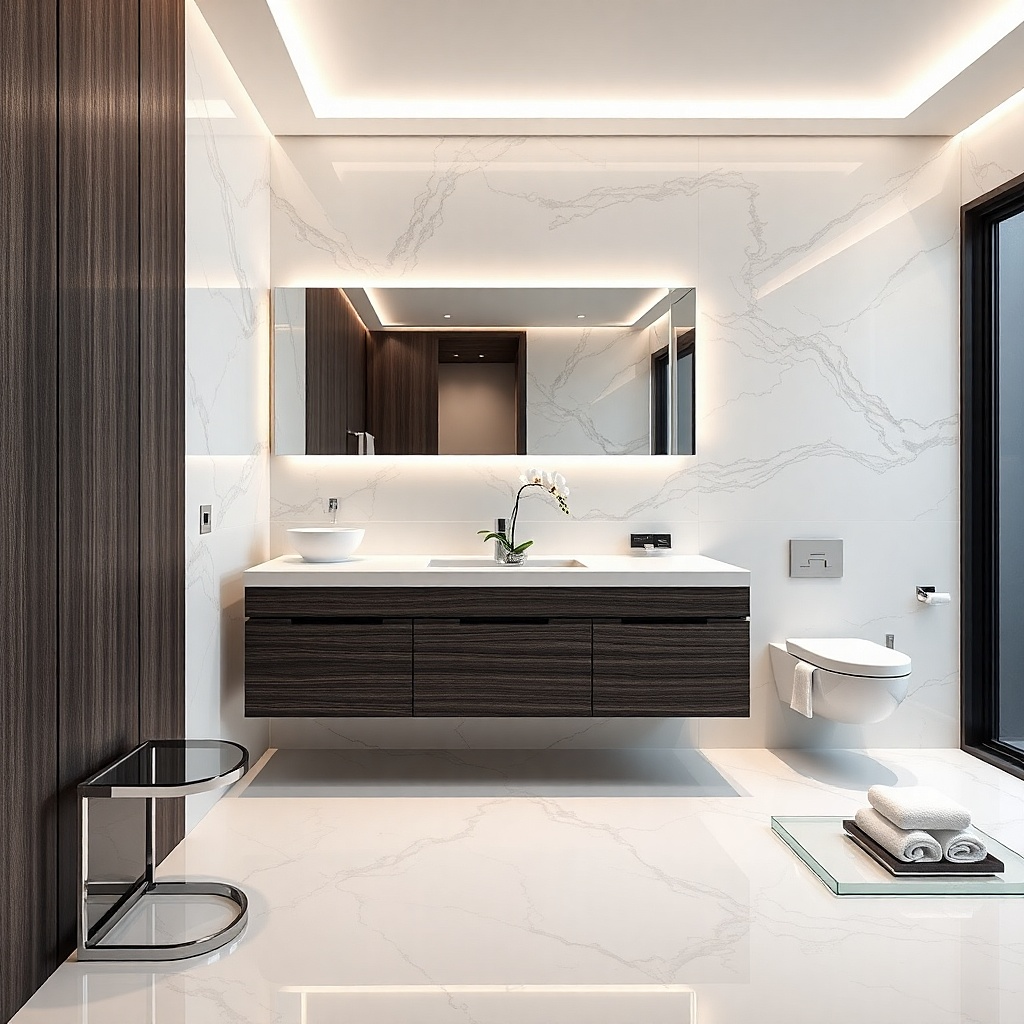
Select a black oak veneer vanity with a satin-to-semi-gloss cabinet finish, not dead flat. Choose a glossy countertop in a light white with minimal veining so the reflections stay clean. Use chrome bar pulls and a matching chrome faucet, then keep the mirror frame slim. Make sure your lighting is not hidden — install a bright vanity light or two sconces so the glossy surfaces get light from the front.
Black oak veneer gives you a dark look with visible movement, which makes the vanity feel less flat and less heavy. The glossy top (white or very light) adds reflectivity, acting like a bright surface that bounces light back into the room. Chrome pulls and a chrome faucet make the reflections crisp, which suits modern bathrooms with clean lines. This idea works best when your walls are bright and your lighting is strong, because the shine needs illumination to look intentional. If you want dark bathroom vanity ideas that look sleek and airy at the same time, this is the combination.
Common mistakeAvoid dim ceiling lighting; glossy black surfaces look dull and heavy in low light.
Try thisUse warm-white bulbs around 2700K so chrome reflections don’t look blue.
7. Dark gray vanity with a pale blue-gray countertop and brushed nickel
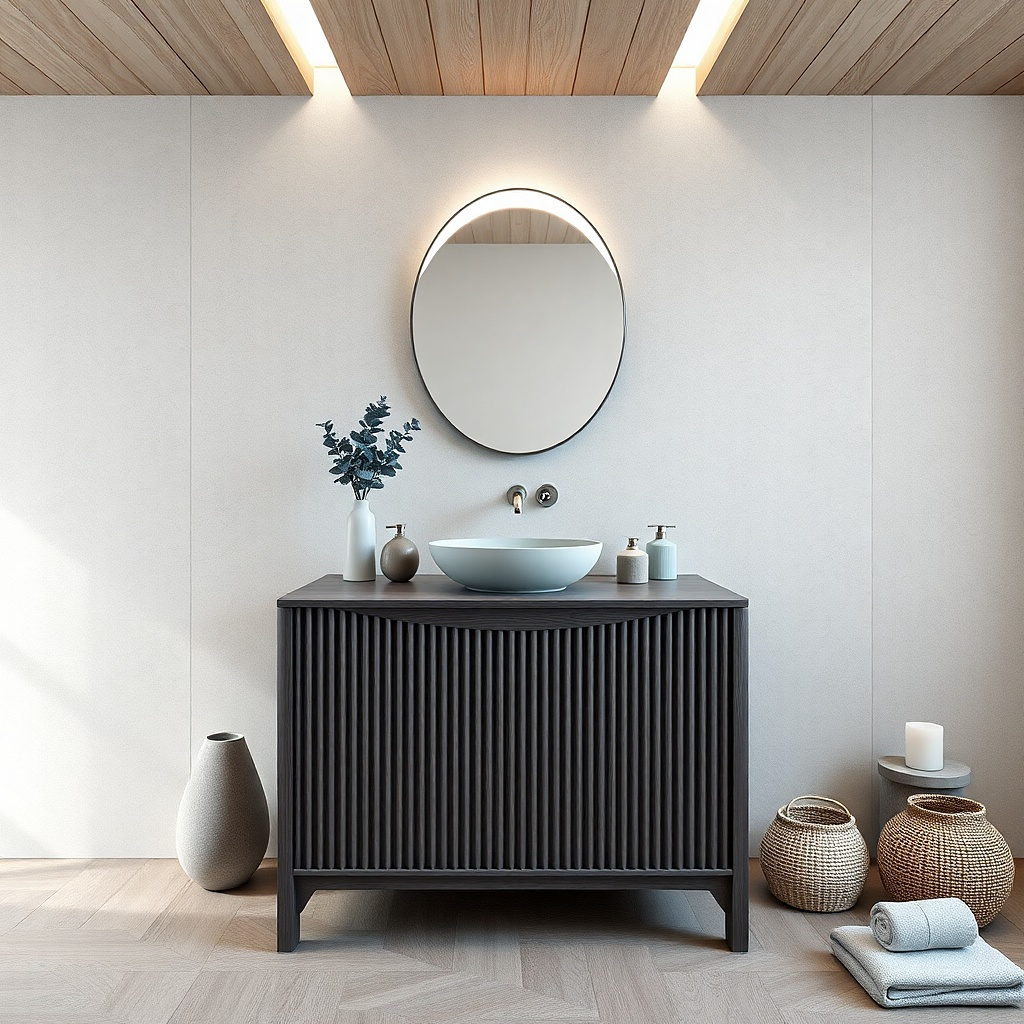
Dark gray sits between charcoal and black, and it often looks lighter because it has more softness. Pair it with a pale blue-gray or cool greige countertop that still reads light — the room stays bright while the vanity stays moody. Brushed nickel hardware is the sweet spot here: it reflects enough to lift the look without the mirror-like flash of polished chrome. This setup works well if your bathroom has cool-toned tile, gray floors, or stainless appliances in the adjacent space. It’s a sophisticated choice when you want dark bathroom vanity ideas that feel calm rather than dramatic.
Choose a dark gray vanity in a satin finish so it doesn’t look chalky or flat. Select a countertop that’s clearly lighter than the vanity, with a subtle pattern — keep the veining light and low contrast. Use brushed nickel pulls and a brushed nickel faucet with a matching drain. Mount the vanity light at eye level or slightly above the countertop so reflections land on the hardware and edges.
Pick mirror glass with low tint and a slim frame; tinted mirrors can make dark gray feel cloudy.
Don’t pair dark gray with a pure white countertop if your lighting is cool; it can feel too contrasty.
8. Wenge-style vanity with a bright white quartz backsplash strip
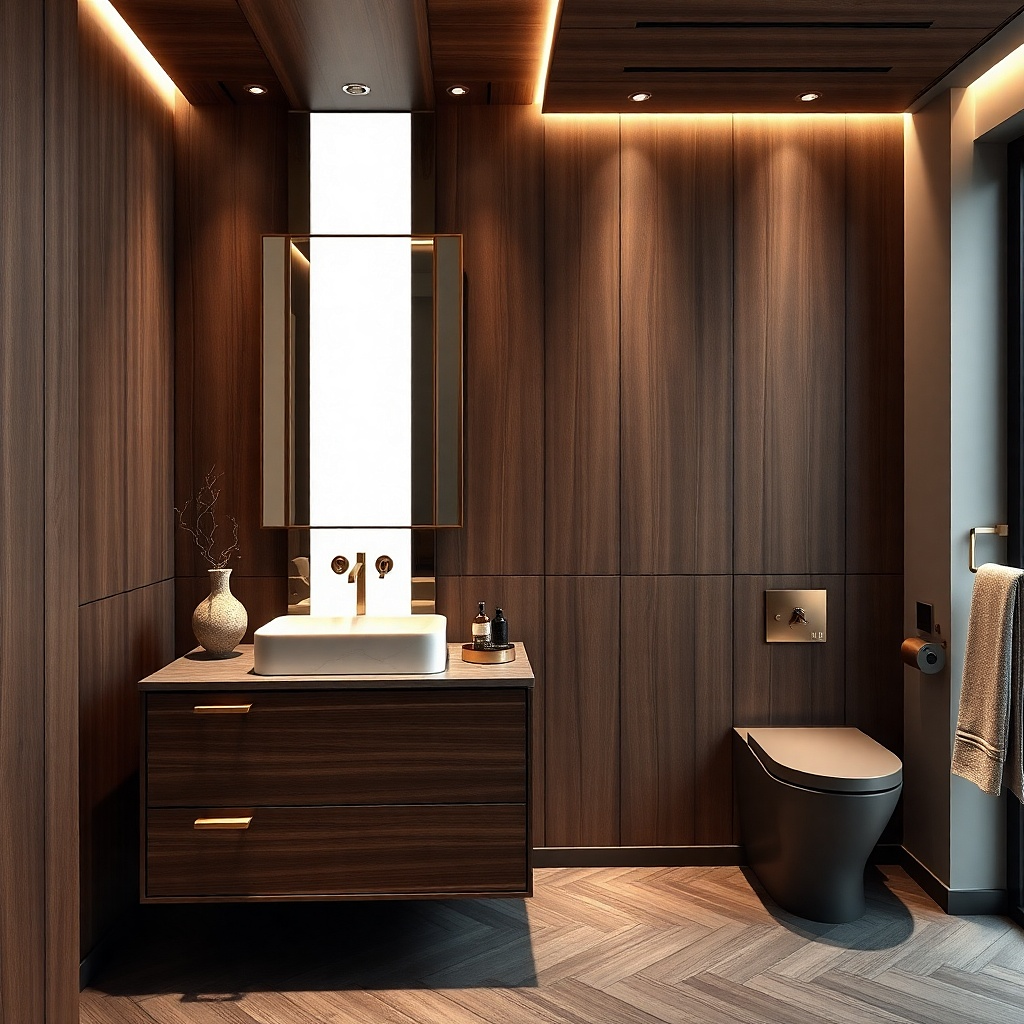
Pick a wenge-style vanity with a satin finish and visible grain if possible. Install a quartz backsplash strip that rises from the counter surface to about 4-6 inches behind the faucet area. Choose a bright white quartz top so the backsplash and top read like one clean block. Use dark bronze pulls and a matching faucet, then position a mirror wide enough to cover the top third of the vanity area.
Wenge-style finishes are deep, brown-black, and they can look stunning without feeling heavy when you add a bright vertical break. A bright white quartz backsplash strip behind the sink creates that break and stops the dark cabinetry from blending into the wall. Dark bronze pulls keep the tone consistent, while a white quartz top keeps the sink area crisp. This is a smart move when your wall tile is neutral and you want the vanity to look designed instead of just stained. It’s especially effective in bathrooms with a lot of dark elements like a dark mirror frame or dark flooring.
Common mistakeAvoid leaving a large unlit gap behind the mirror — it makes the dark tone feel heavier.
Try thisKeep the backsplash pattern minimal; busy stone behind a dark vanity makes the sink wall look cluttered.
9. Floating double-sink vanity in black with thin drawer lines
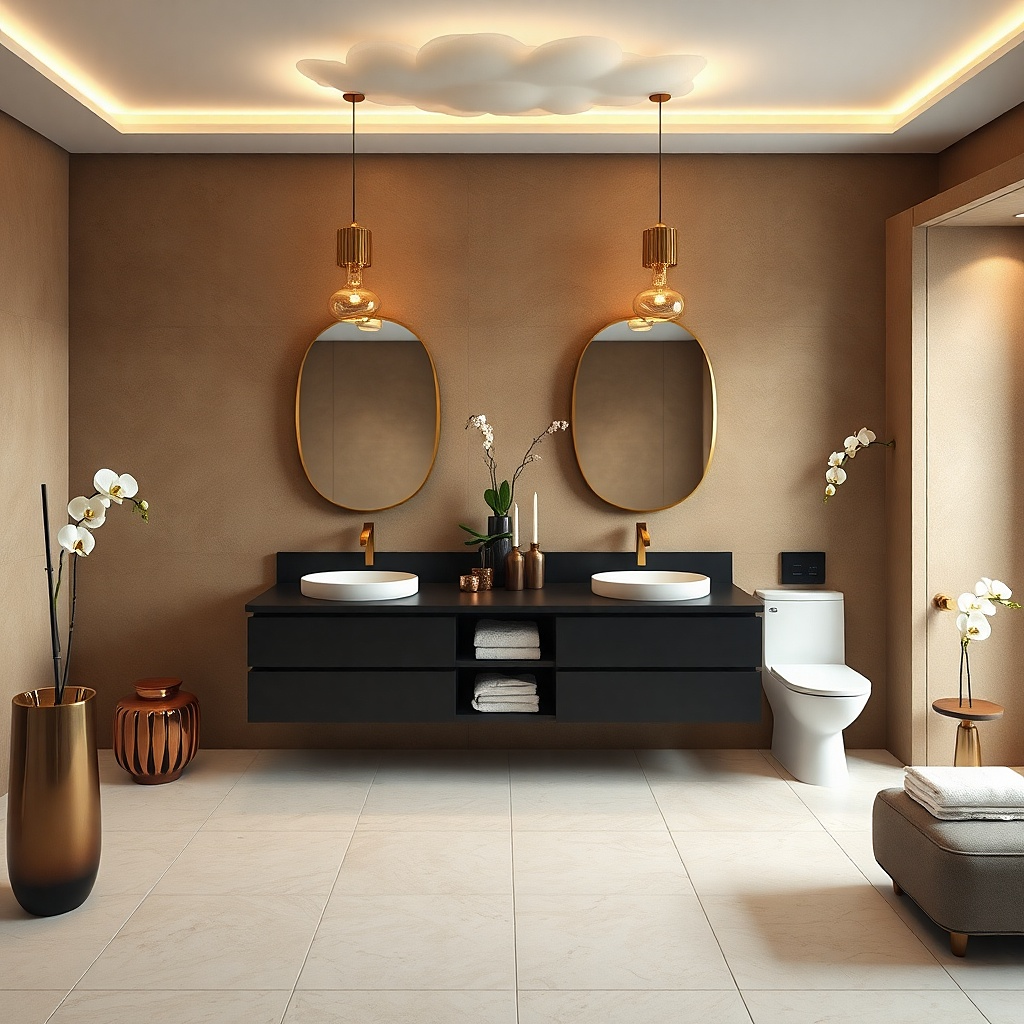
Double-sink vanities can look massive, but floating and thin drawer lines keep them from feeling heavy. Use a deep black cabinet with crisp, narrow drawer margins so the design reads tailored. Brass hardware on two sides adds small bright points that visually break up the dark span. A light countertop across both sinks keeps the surface bright and reduces the “two big blocks” look. This setup works for shared bathrooms where you need storage and symmetry, and you want dark bathroom vanity ideas that still feel clean and light.
Choose a floating double-sink vanity with a slim frame and open space underneath — aim for 3-4 inches of visible gap. Use a light countertop material like white quartz with subtle veining and a single continuous slab. Install two matching undermount sinks to keep the front smooth and reduce visual clutter. Use bar pulls sized so they align across both drawer banks, then mount a large mirror that spans the width of the vanity.
Use matching plumbing finishes on both sinks so the symmetry reads intentional.
Avoid thick, chunky drawer fronts on a double-sink — they make the whole piece look bulky.
10. Deep charcoal vanity with a mirror-front cabinet panel
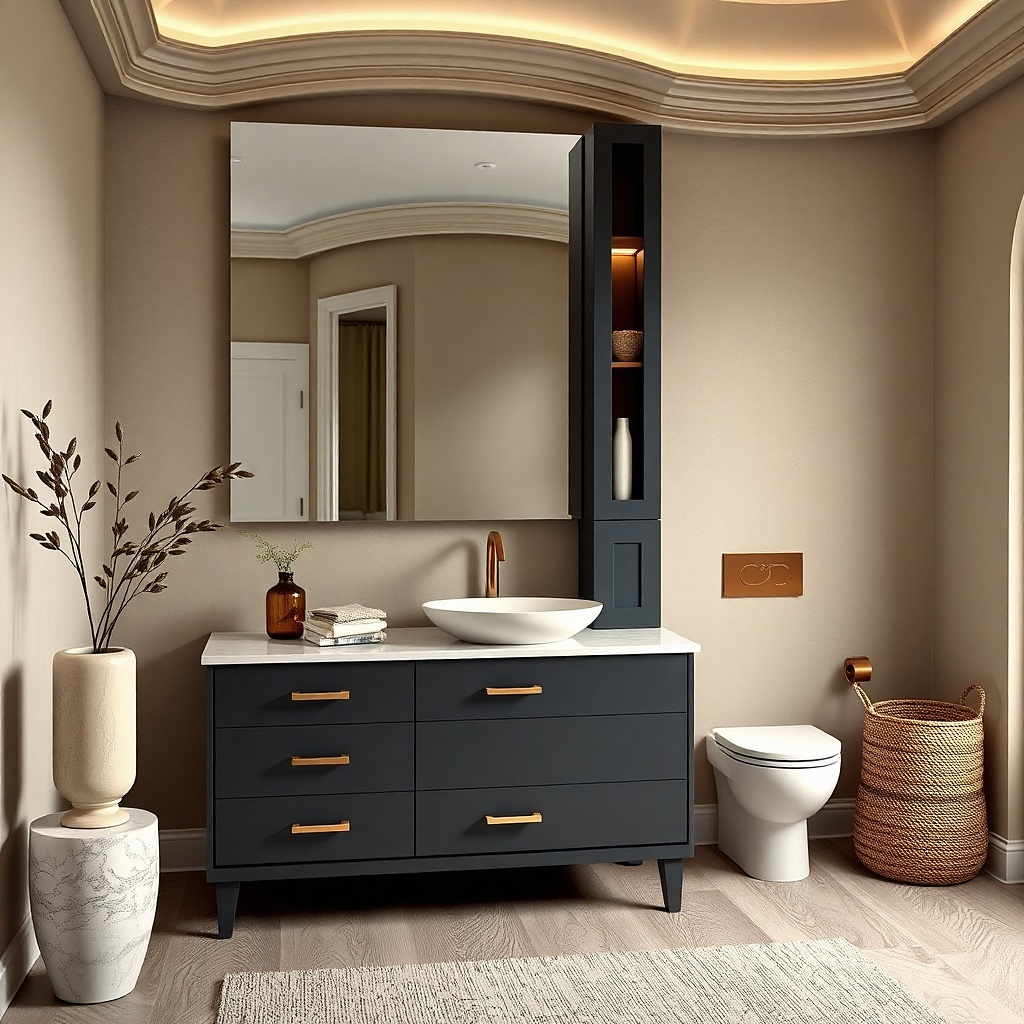
A mirror-front cabinet panel is one of the cleanest ways to keep dark cabinetry from absorbing too much light. Instead of adding more dark surfaces, you add a controlled reflective plane right where the eye lands. Pair a deep charcoal vanity with a mirrored panel above the drawers or behind a medicine cabinet section, then keep the rest simple. Warm brass pulls and a light countertop keep the reflection flattering rather than cold. This is ideal when you want dark bathroom vanity ideas but your bathroom has limited natural light.
Pick a deep charcoal vanity in satin or semi-gloss so it reflects softly around edges. Add a mirrored panel above the main drawer area — keep the panel height around 12-18 inches for a balanced look. Choose a bright countertop like white quartz and use warm brass bar pulls. Install a mirror cabinet with proper ventilation and ensure the reflective surfaces are not directly splashed by the sink.
Use soft, diffuse lighting from sconces or a vanity bar so the mirror reads smooth, not harsh.
Avoid a fully mirrored cabinet if your bathroom lighting is dim; it can look patchy.
11. Black vanity with white subway tile backsplash and matte brass faucet
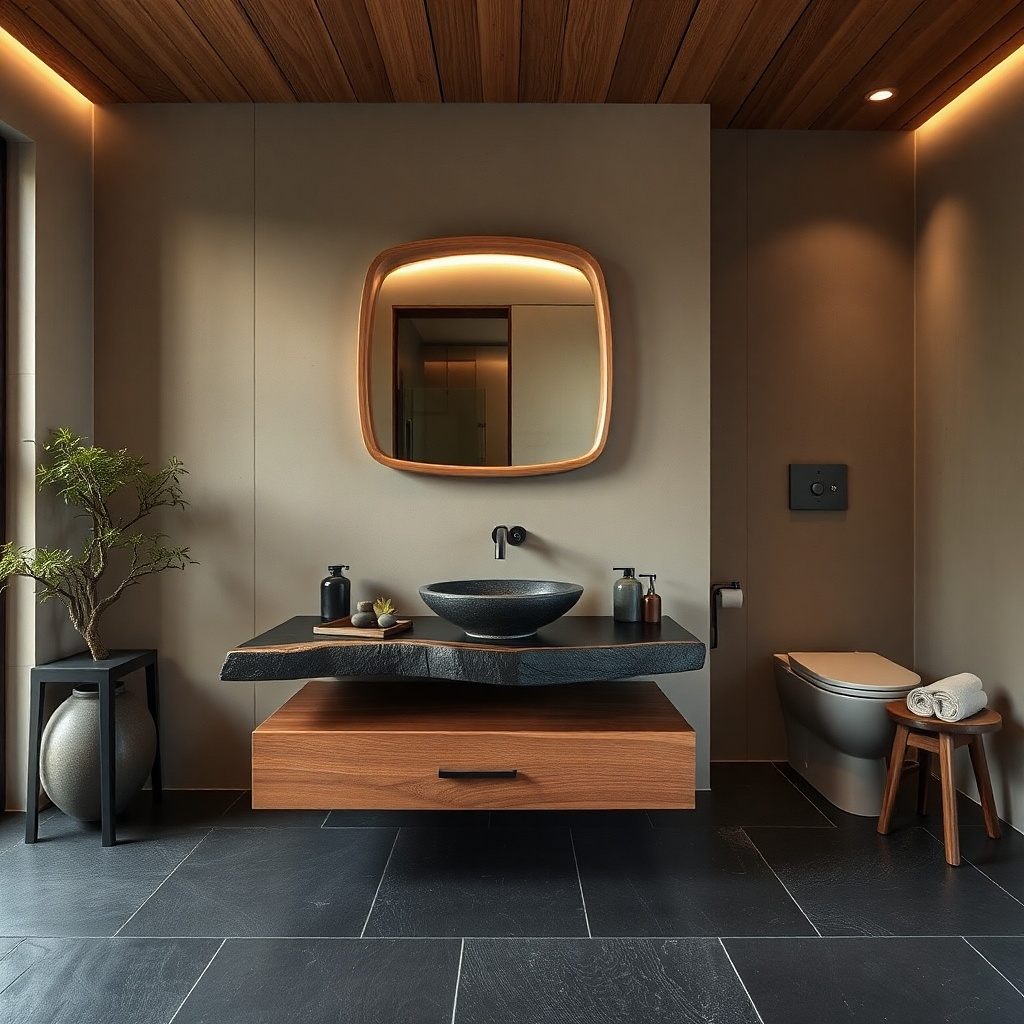
A classic white subway tile backsplash is a cheat code for dark bathroom vanity ideas because it adds bright texture behind the sink. The black vanity anchors the room, while the tile keeps the wall from feeling flat or shadowy. Use matte brass for the faucet and pulls to warm up the black and avoid a stark, high-contrast look. This combination photographs well because the tile grout lines give crisp structure. It’s a strong choice for bathrooms that already have white tile somewhere else and need the vanity to match the clean, bright palette.
Choose a black vanity in satin or semi-gloss to prevent chalky light absorption. Install white subway tile behind the vanity, with full-height coverage behind the countertop area and up to the mirror line. Use a matte brass faucet and matching hardware, then keep the countertop bright with a light quartz or white marble-look slab. Mount the mirror so it overlaps the tile area by a few inches, which makes the whole zone feel intentional.
Use straight subway tile layout with consistent grout lines; uneven grout makes dark vanities look sloppy.
Avoid black-on-black backsplash tile; it makes the vanity feel swallowed by the wall.
12. Dark green vanity with pale limestone top and antique brass knobs
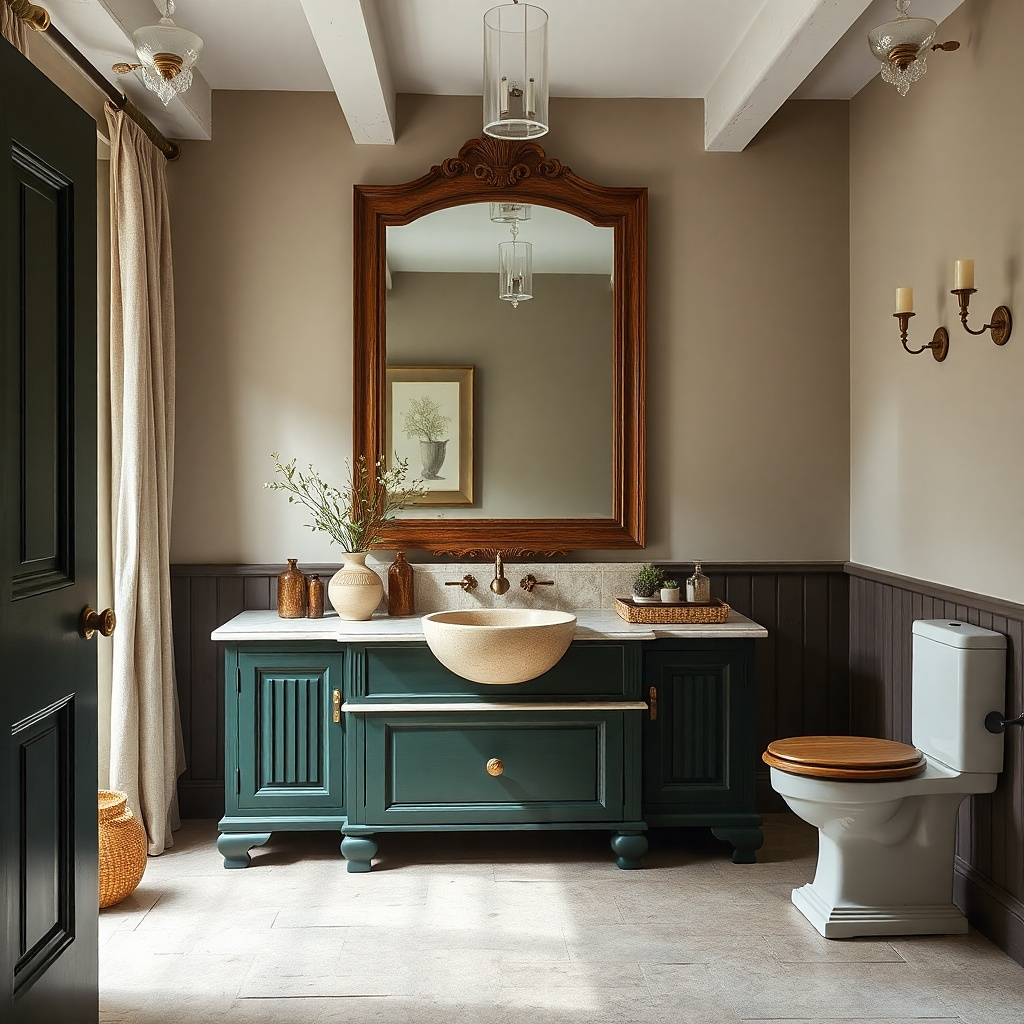
Select a dark green vanity in a deep forest tone with a satin finish so it reads refined. Choose a pale limestone top with a honed surface and subtle speckling, ideally one that’s 2-3 shades lighter than the cabinetry. Use antique brass knobs sized proportionally to the drawer fronts — small knobs keep the look delicate. Keep the mirror frame warm or wood-toned, then add warm-white lighting to avoid green turning gray.
Dark green is often overlooked, but it delivers the same sophisticated mood as dark neutrals while feeling more organic. Pair it with a pale limestone or limestone-look top to keep the bathroom grounded and airy. Antique brass knobs add warmth and a softer shine than polished metal, which helps the vanity feel lighter. This works beautifully when your bathroom has warm whites, cream tile, or natural wood elements. If you want dark bathroom vanity ideas that feel unique but still sophisticated, this color pairing is a strong bet.
Common mistakeAvoid cool gray countertops with dark green; the combo can look tired.
Try thisAdd a light stone soap dispenser or tray in the same tone as the countertop to tie everything together.
13. Textured matte black vanity with a light oak framed mirror
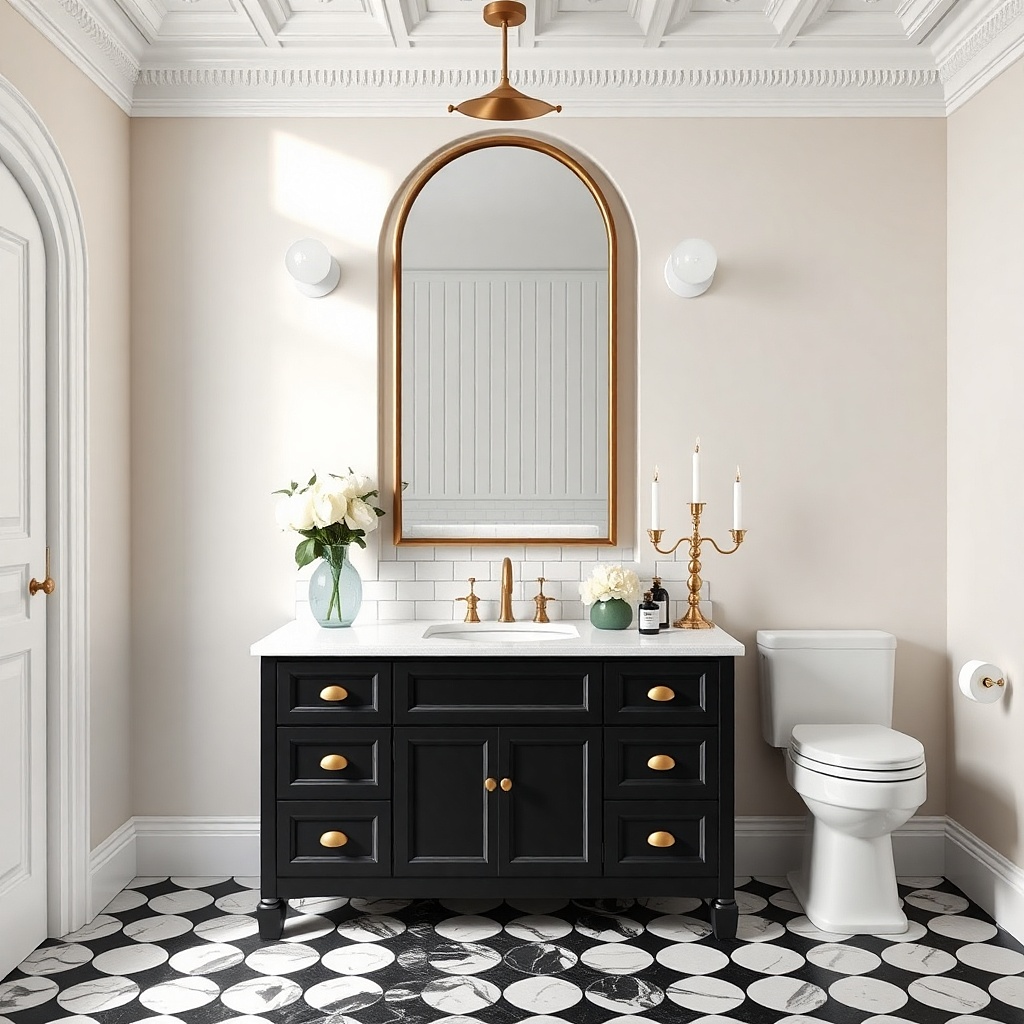
Choose a matte black finish that has a subtle texture — look for a cabinet door that doesn’t reflect like lacquer. Pick a light oak framed mirror with a thin frame and warm undertone. Use a light countertop such as white quartz or pale marble-look and keep the faucet finish in brushed brass. Install the vanity light so it hits the cabinet face at an angle; that’s what makes the texture show up nicely.
A textured matte black vanity adds depth through surface, not through extra darkness. The texture catches light in tiny ways, which makes it feel less flat and less heavy than smooth matte black. Balance that surface texture with a light oak framed mirror so the room gets warmth and a lighter visual border. Brushed brass accents keep the black from turning severe and help the hardware look like it belongs. This setup works in bathrooms with warm flooring or beige walls and is great when you want dark bathroom vanity ideas that look designer without feeling cold.
Common mistakeAvoid pairing textured black with heavy black tile floors; the texture plus darkness can feel too dense.
Try thisKeep your accessories in light tones — think cream towels and a light tray — so the texture looks intentional.
14. Dark walnut vanity with a slim waterfall-edge white countertop
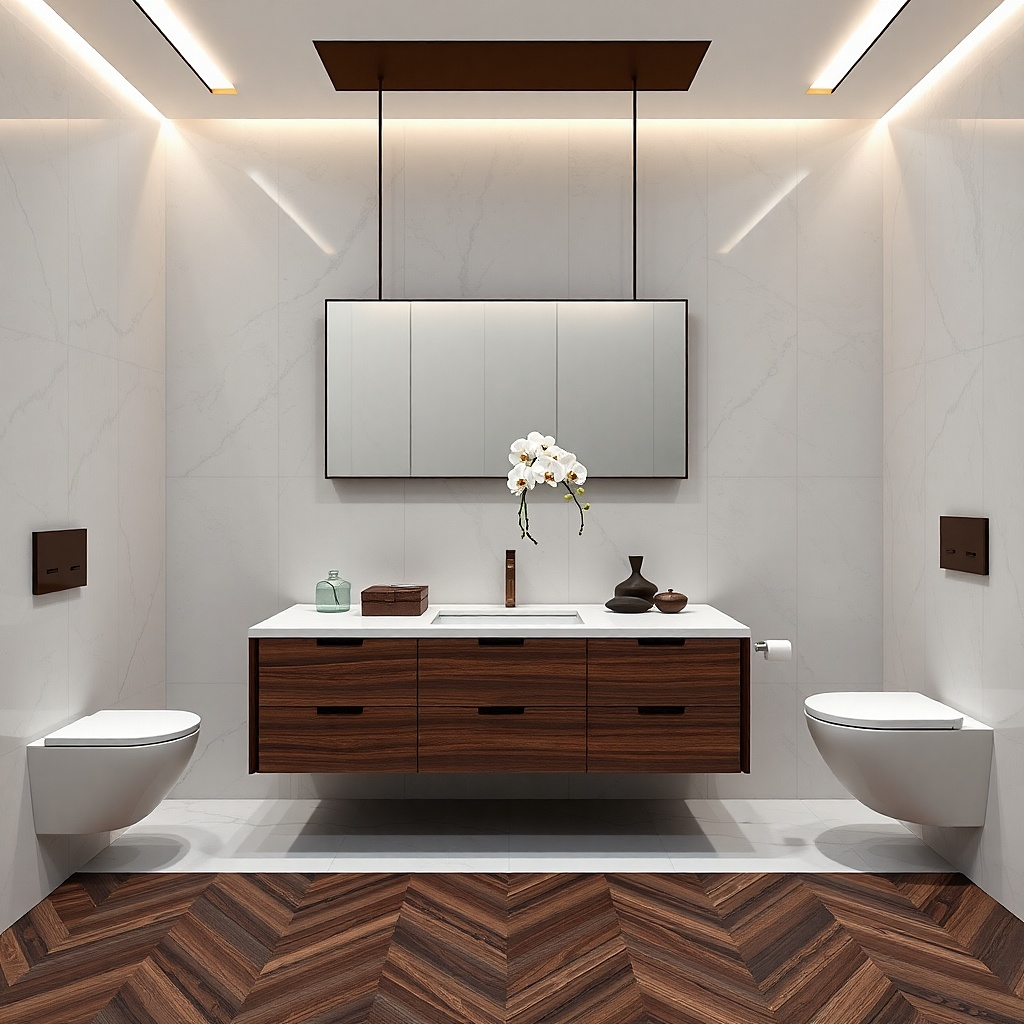
Pick a dark walnut vanity with straight lines and minimal panel clutter; slim shaker rails work well. Choose a countertop in white quartz with a subtle pattern and ask for a slim waterfall edge on the front. Install the vanity so the top aligns with your mirror height — aim for the countertop to sit around 34 inches from the floor. Use black bar pulls and a black faucet to keep the hardware crisp, then mount a mirror that is tall enough to show the waterfall edge visually.
This is how you get sophistication from dark bathroom vanity ideas without losing light — you combine warm walnut with a bright, architectural top. A slim waterfall edge makes the countertop look like it wraps the front, which visually reduces the “box” feeling of the vanity. Go for a white countertop with soft veining so the look stays clean. Black hardware adds contrast and keeps the walnut from feeling too casual. This setup is excellent for bathrooms where you want a modern furniture feel and you have a clean wall background.
Common mistakeAvoid thick, chunky countertop profiles with dark walnut; they add bulk.
Try thisKeep the countertop overhang tight — too much overhang makes walnut look heavier.
15. Black vanity with a light glass tile backsplash behind the mirror
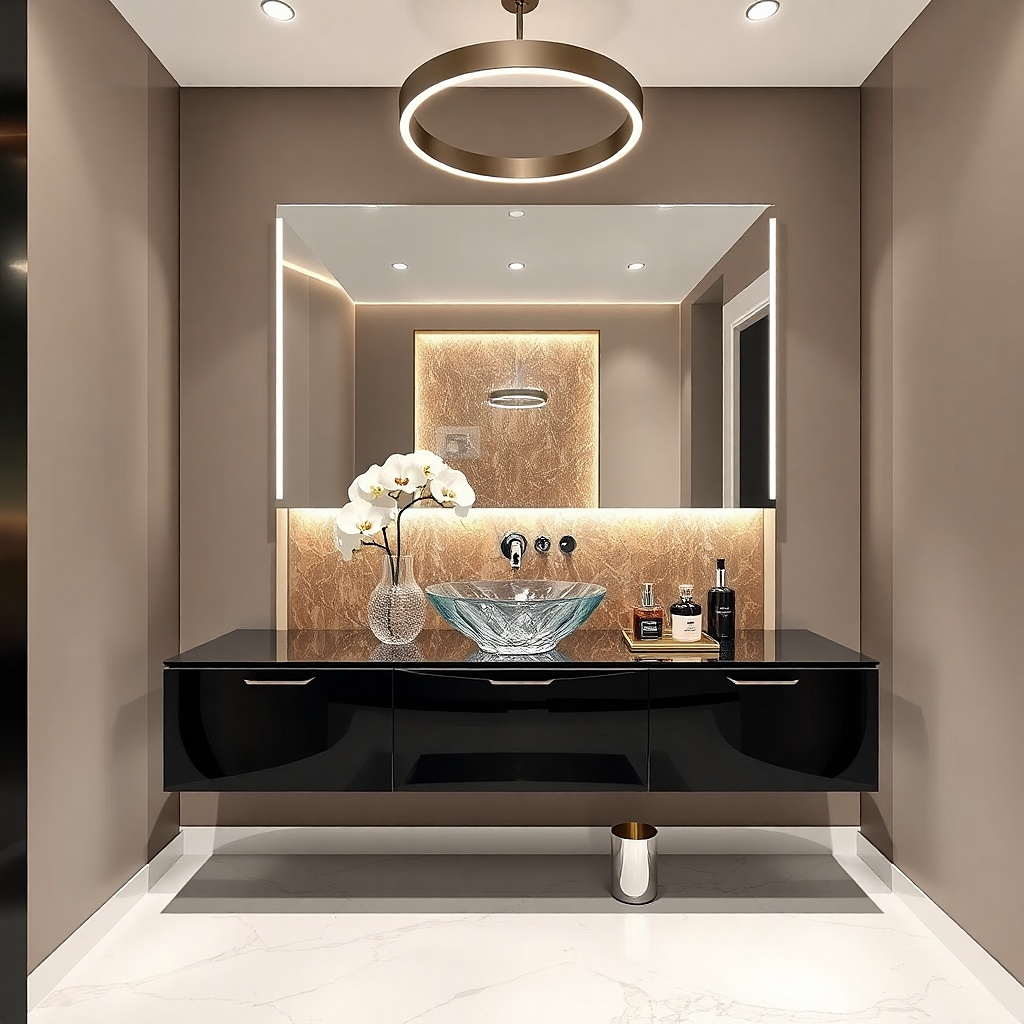
If your bathroom lighting is good but your room still feels dark, a glass tile backsplash can solve it. Use black cabinetry, then place a band of light glass tile behind the mirror area so it catches light and throws it back. The vanity stays dark, but the wall zone becomes luminous, which keeps the overall look sophisticated instead of heavy. Choose light glass in a soft white or champagne tone, not icy clear. This idea is especially photogenic because glass tile adds sparkle without looking busy next to dark wood or black paint.
Select a black vanity with satin finish and simple drawer fronts. Install a light glass tile backsplash strip behind the mirror — keep it around 12-20 inches tall so it frames the vanity without covering everything. Use a bright white quartz countertop and keep the hardware in polished nickel or brushed brass. Mount the mirror so it overlaps the tile band slightly, then use a vanity light or sconces that aim toward the wall, not just downward.
Use warm-white bulbs so glass tile reflects gold-tinted light instead of blue.
Avoid large, high-contrast mosaic patterns; they fight with the dark vanity.
16. Smoked oak vanity with smoked-glass front and champagne bronze hardware
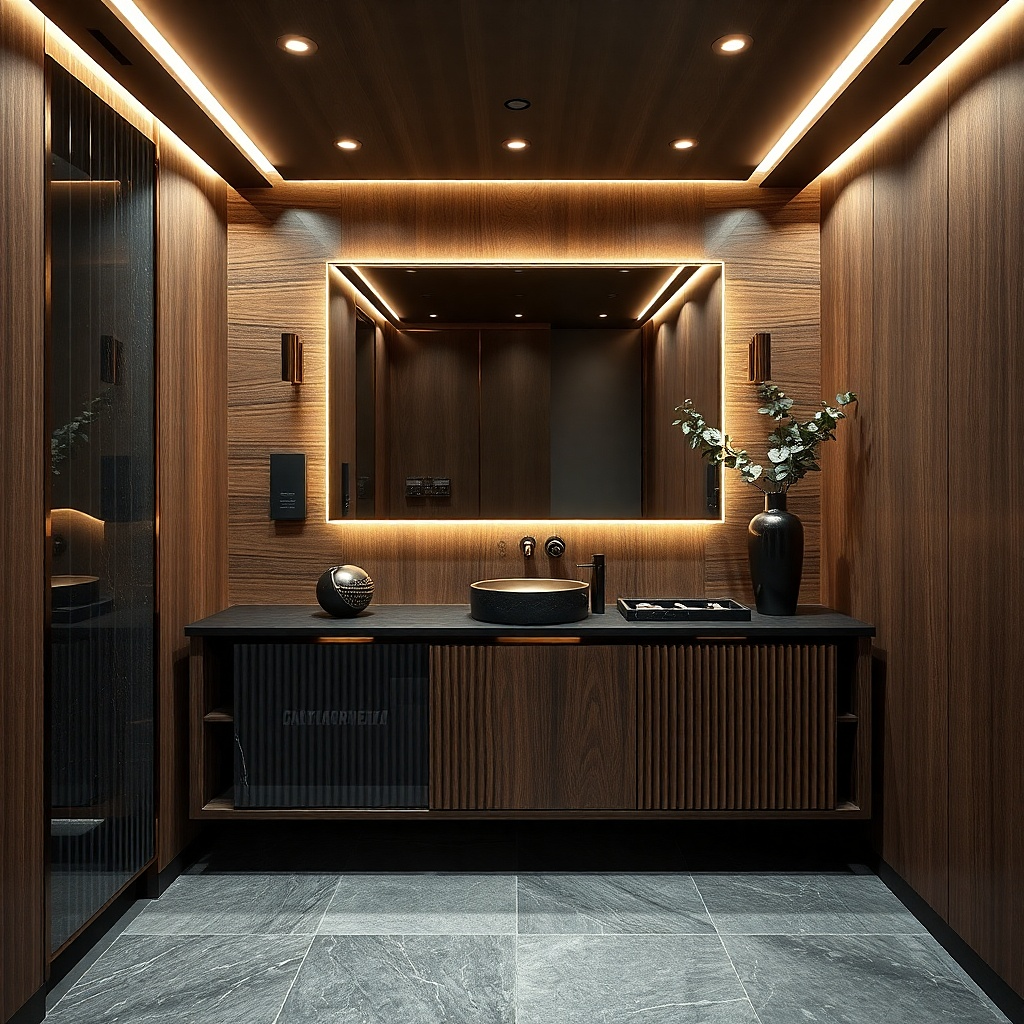
This setup gives you the dark-bathroom-vanity look without the visual bulk. Smoked oak keeps the wood grain visible, but the finish reads deep and moody instead of heavy. The smoked-glass cabinet fronts break up the mass under the countertop so the room feels lighter, even with a dark base. Champagne bronze hardware adds a warm glint that keeps the palette sophisticated rather than flat. I’d use this in a powder room, a narrow primary bath, or anywhere the bathroom feels tight and you don’t want a blocky focal point.
Start with a vanity base in smoked oak stain (or a smoked oak veneer) with a slim profile: aim for about 18-20 inches deep and 30-36 inches tall depending on your plumbing. Choose smoked-glass panels for the lower doors or side cabinets, with a matte or lightly reflective finish so it doesn’t look like a fish tank. Install a light countertop above it — either honed white quartz or a pale limestone look — and keep the overhang tight so the top doesn’t visually expand. Fit champagne bronze pulls and hinges, then finish with a wall mirror that’s at least as wide as the vanity, not smaller, to prevent the dark base from feeling anchored. Expect a moderate DIY effort if you’re swapping a vanity — plan on 1 weekend, and budget more for the smoked-glass fronts and bronze hardware than for the stain itself.
Use smoked-glass panels only on doors or cabinet fronts, not the drawers. It makes the hardware line up cleaner and keeps the symmetry sharp.
Don’t pair smoked glass with a glossy, high-contrast black countertop; the reflections stack and make the vanity feel heavier.