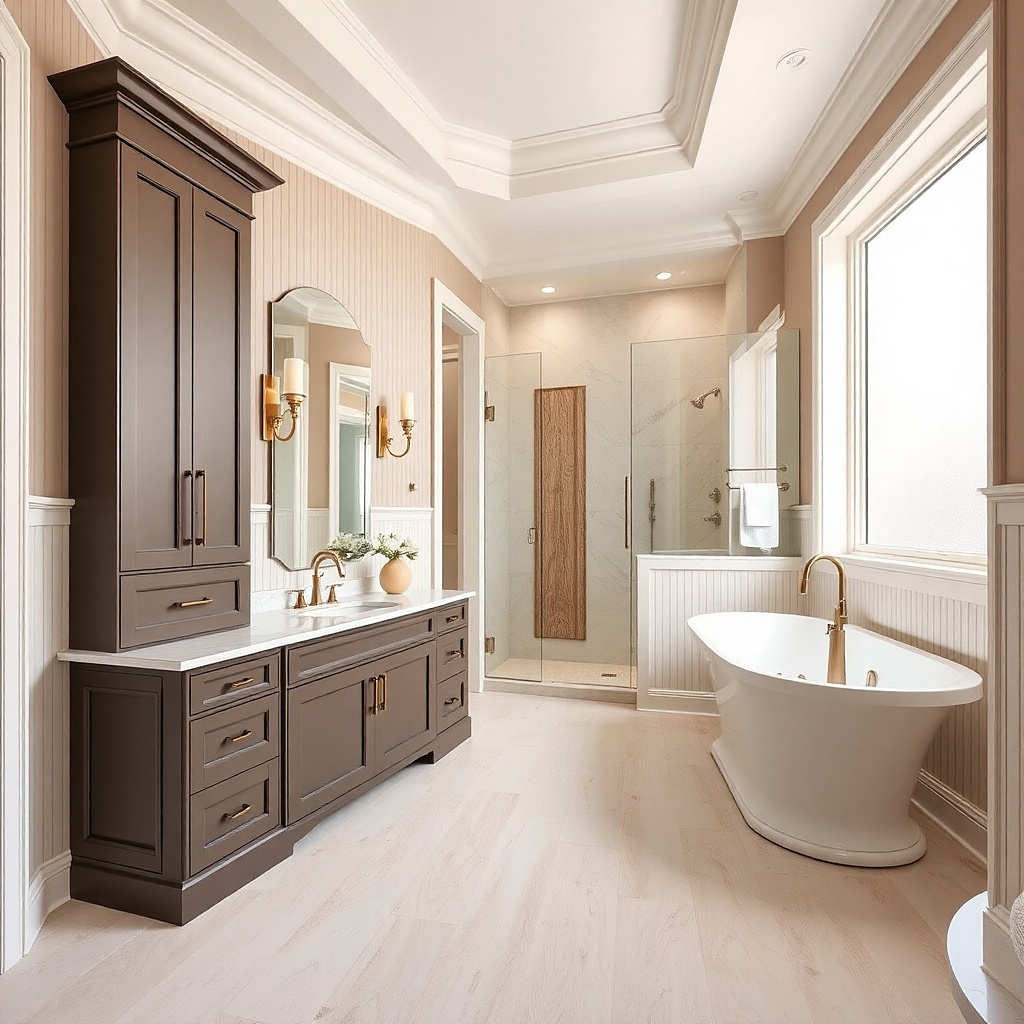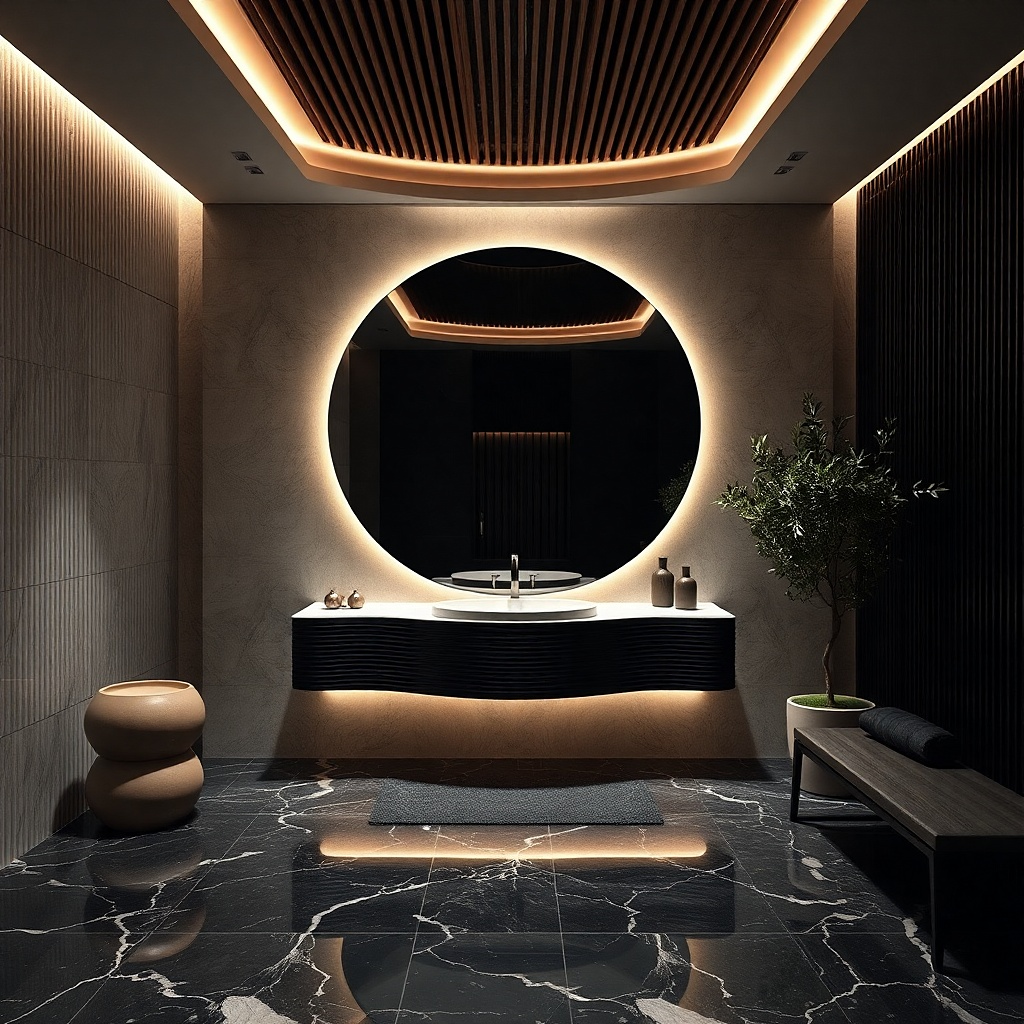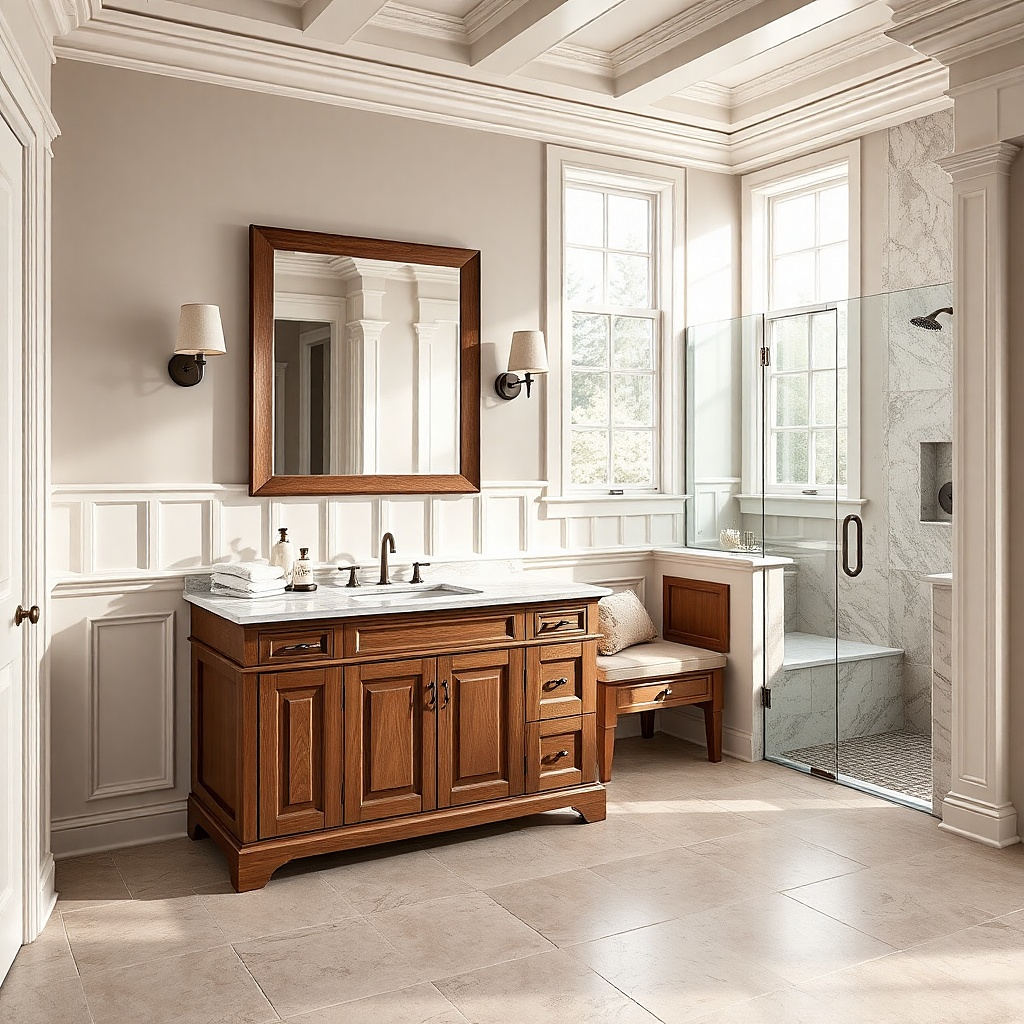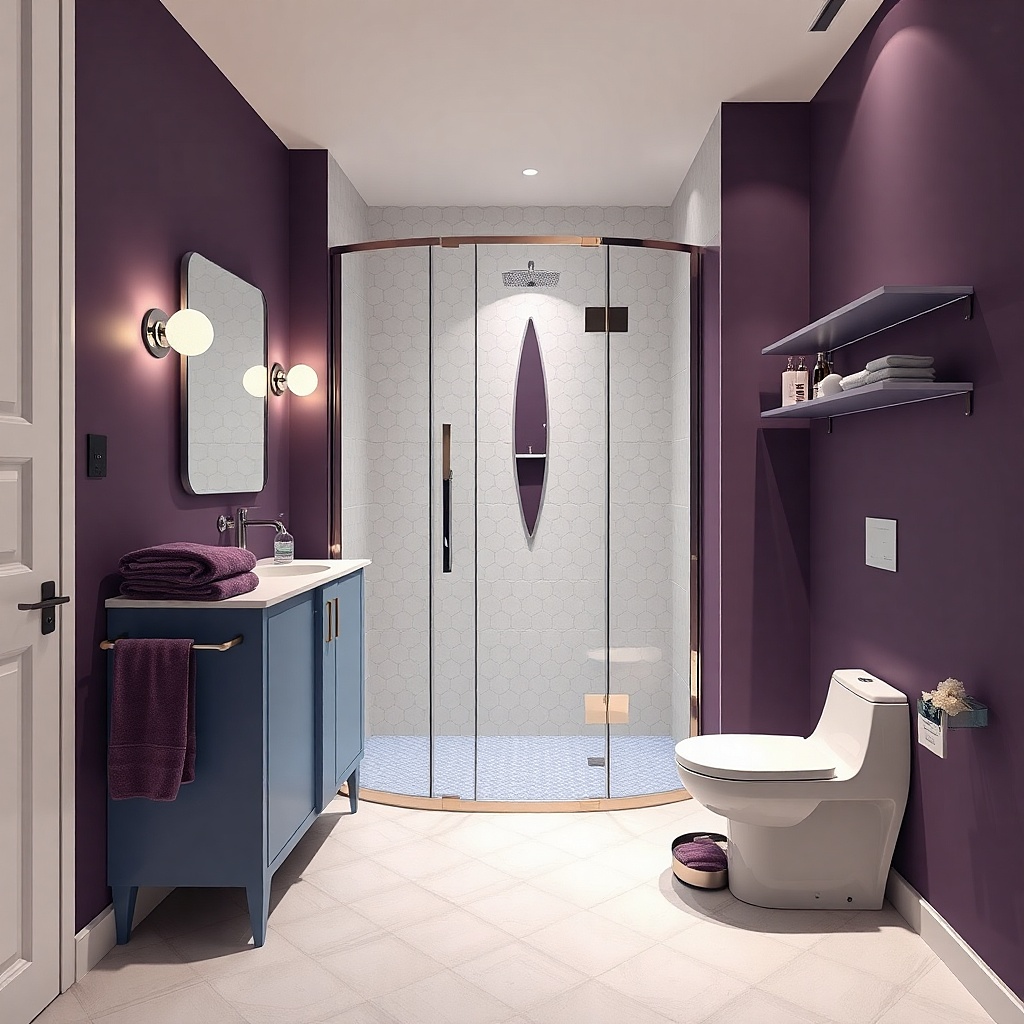
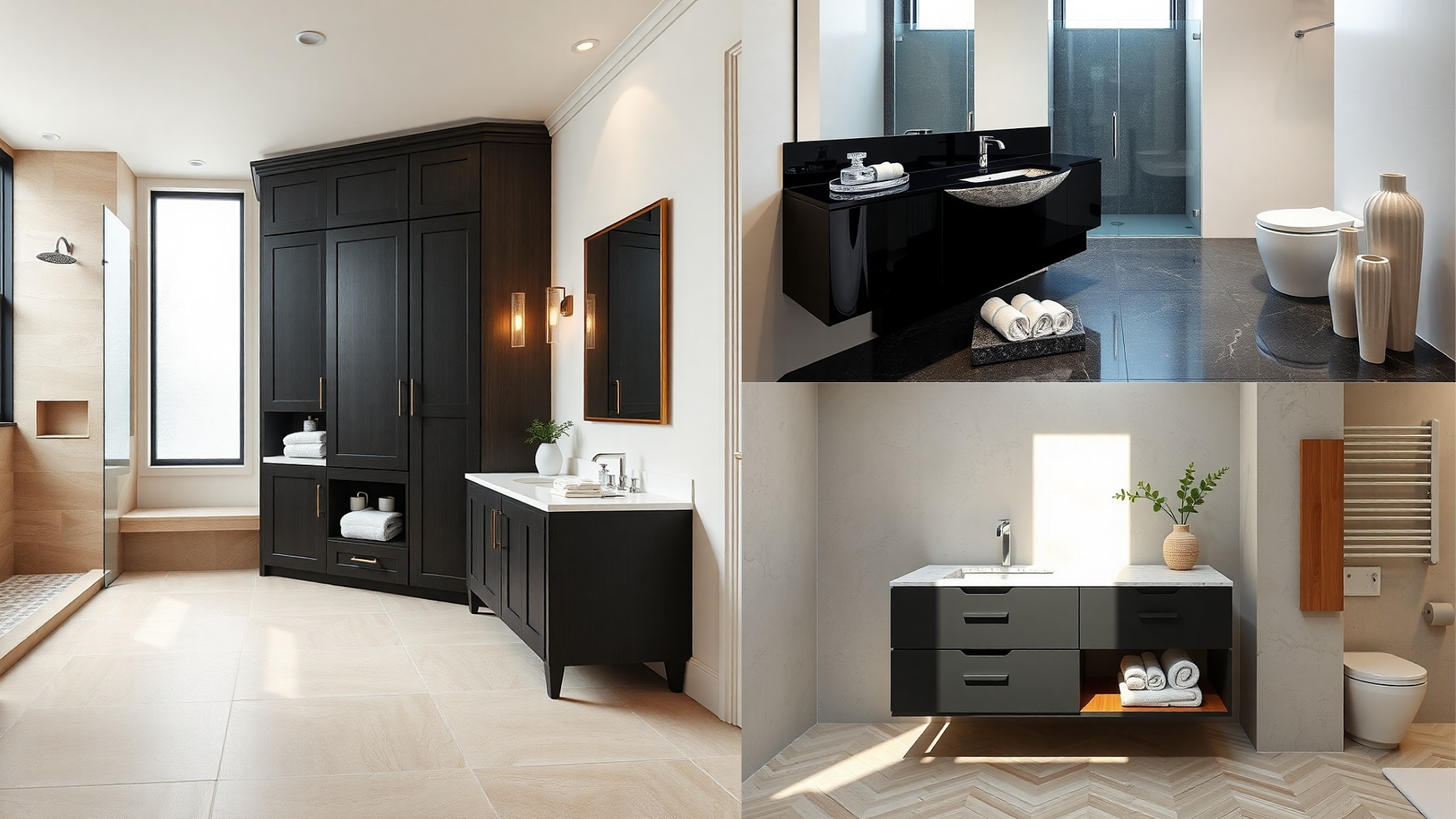
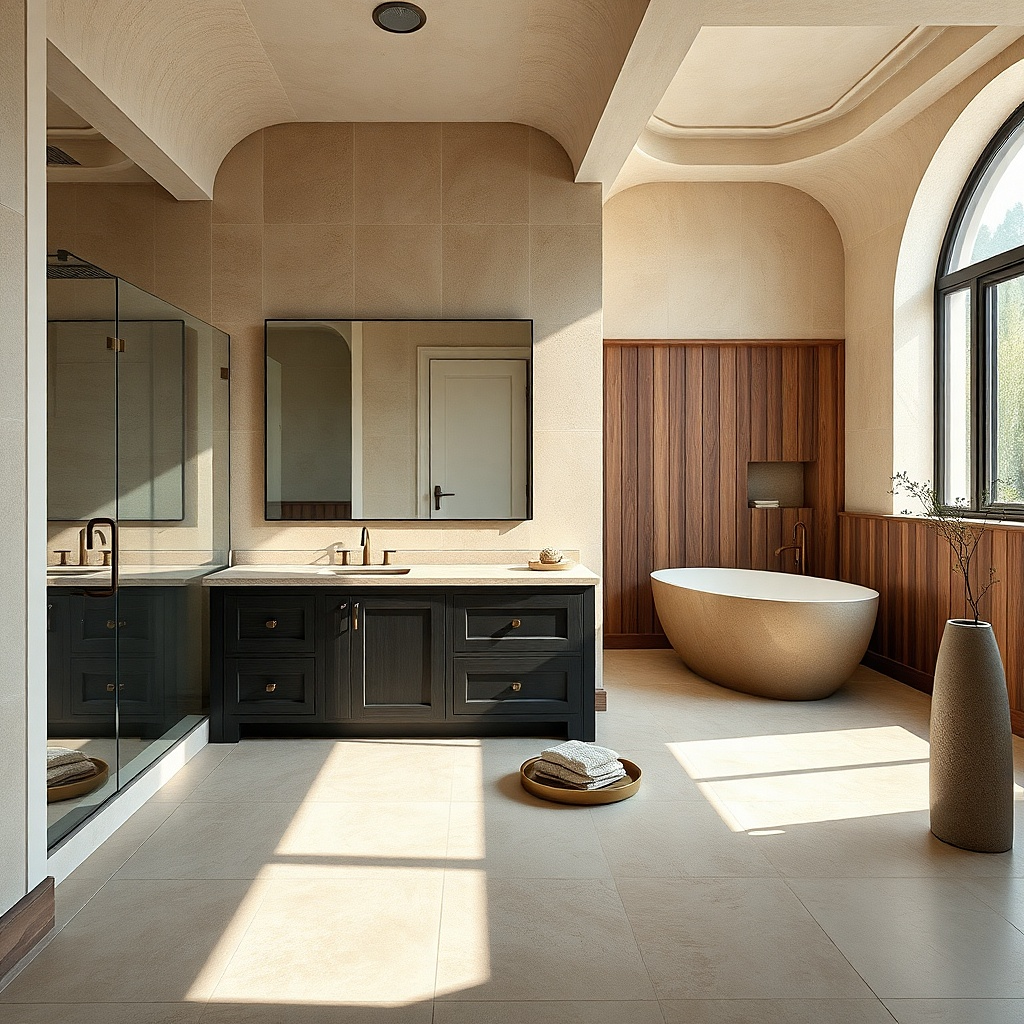
1. Matte Black Vanity with Warm White Quartz Counter
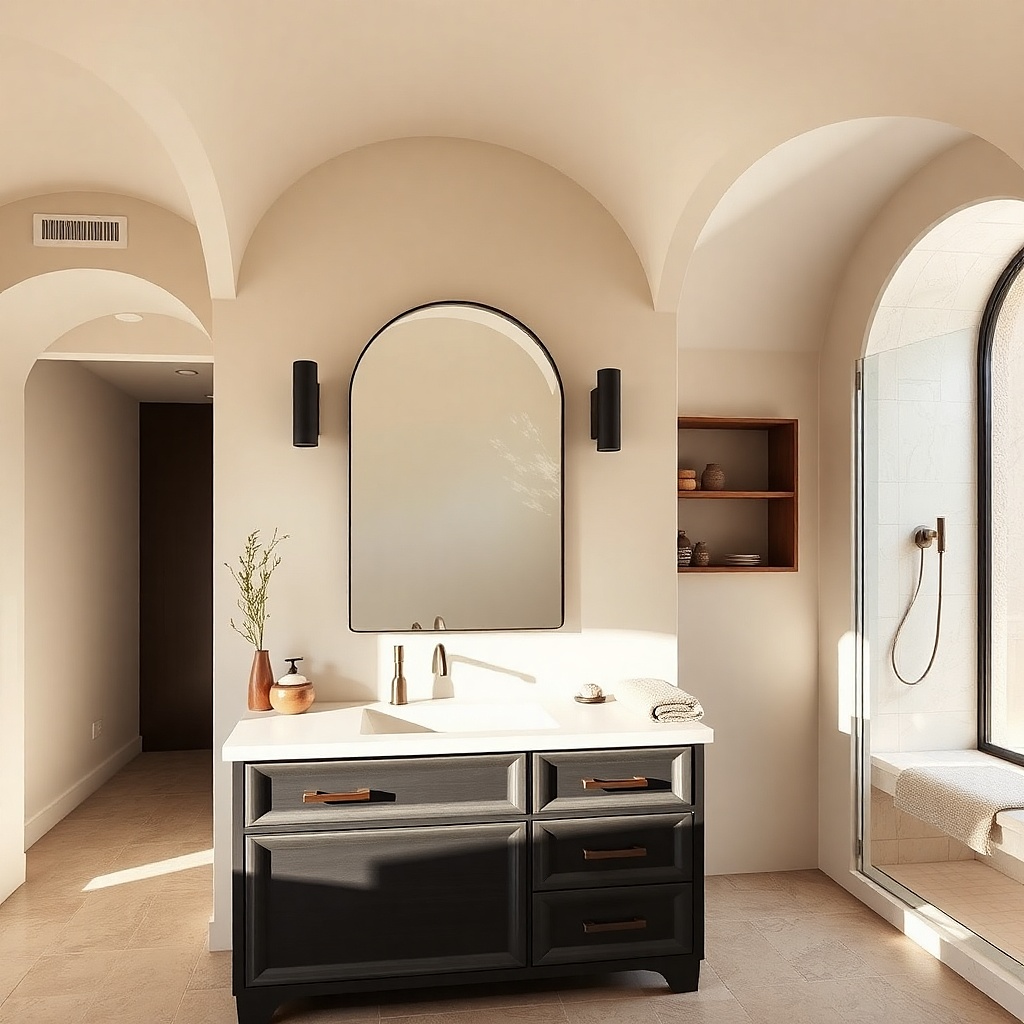
Matte black is the cleanest way to go bold without looking glossy or flashy. Pair it with warm white quartz so the countertop reflects light softly instead of absorbing it, which keeps the vanity from dominating the room. A countertop with subtle gray veining gives movement, so the black doesn’t feel flat. This combination works best in bathrooms with light walls and either white or light gray tile, where the contrast sharpens the edges. It’s also forgiving if you have limited natural light because quartz bounces back more brightness than most stones.
Try thisUse soft white bulbs (2700K) in the vanity light so the quartz reads warm, not bluish.
Measure the vanity wall first. Aim for a countertop depth around 22 inches and keep at least 1 inch of overhang each side only if it won’t hit the sink plumbing lines. Then pick a warm white quartz slab with faint gray movement and a polished or honed finish — honed looks calmer, polished looks brighter. Install the vanity, set the countertop last, and mount a framed mirror that matches your metal tone to avoid a mismatched “floating” effect.
Common mistakeAvoid pairing matte black with a pure bright-white countertop that looks icy; it can make the room feel colder.
2. Black Shaker Vanity with Light Oak Shelving Detail
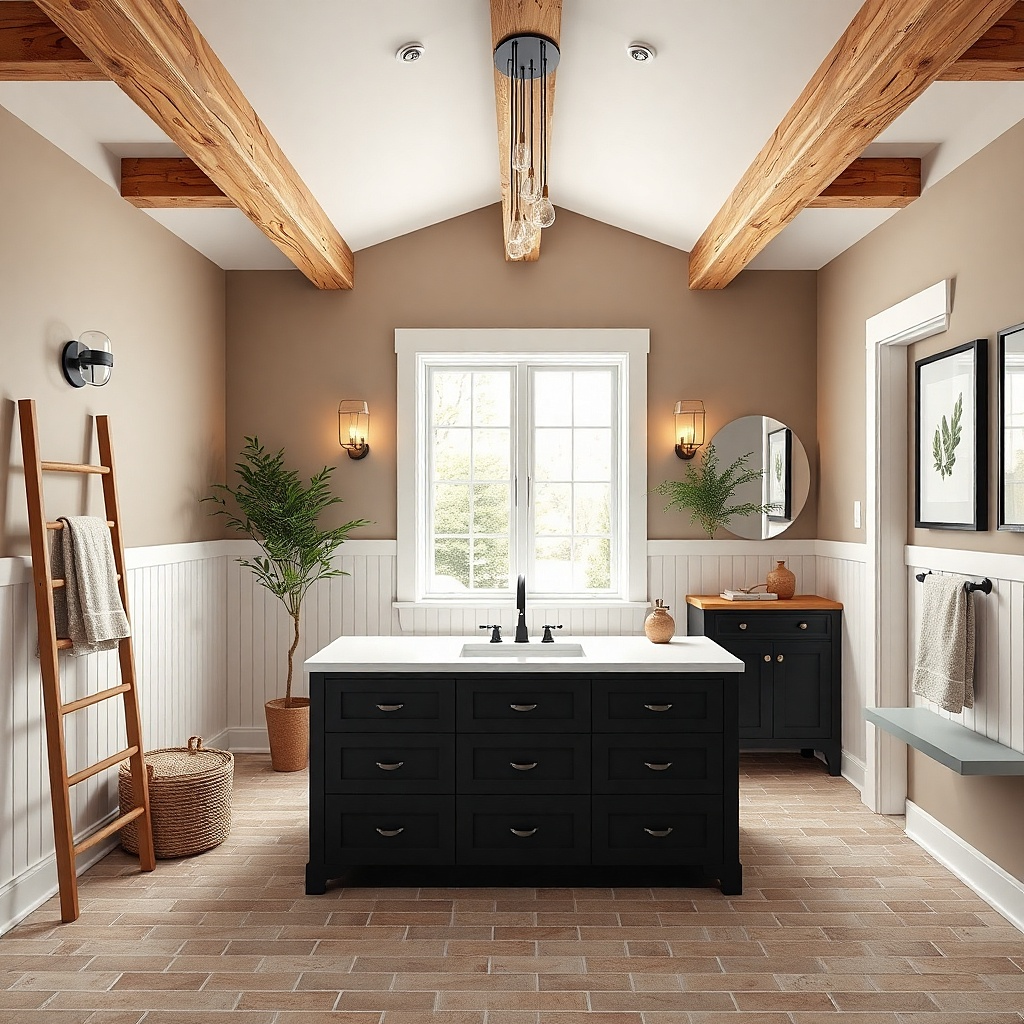
Black shaker doors give structure, and the raised panel look makes the vanity feel tailored rather than bulky. Add light oak shelving or an open niche detail in the same zone to bring warmth into a black-heavy palette. Oak also adds texture that matte black can’t provide on its own, so the vanity feels balanced instead of stark. This works especially well in bathrooms with white walls and simple tile, where you can use wood to make the space feel lived-in. The key is keeping the wood tone light (honey or pale oak), so it brightens rather than competes.
Choose a shaker vanity in matte or satin black. Select oak shelving accents that are 3/4-inch thick and keep them visually narrow, roughly 6 to 10 inches wide so they don’t turn into a second focal point. Install the vanity and anchor the shelving using the stud locations or proper wall anchors. Finish by adding a tall mirror that reaches at least to the top of the cabinet doors, then coordinate the faucet hardware to match the mirror frame metal.
Match the oak tone to the bathroom floor or trim so the wood reads intentional, not random.
Don’t add dark walnut wood accents next to black unless your walls are very bright; it makes the whole wall feel heavy.
3. High-Gloss Black Vanity with Mirrored Backsplash Panel
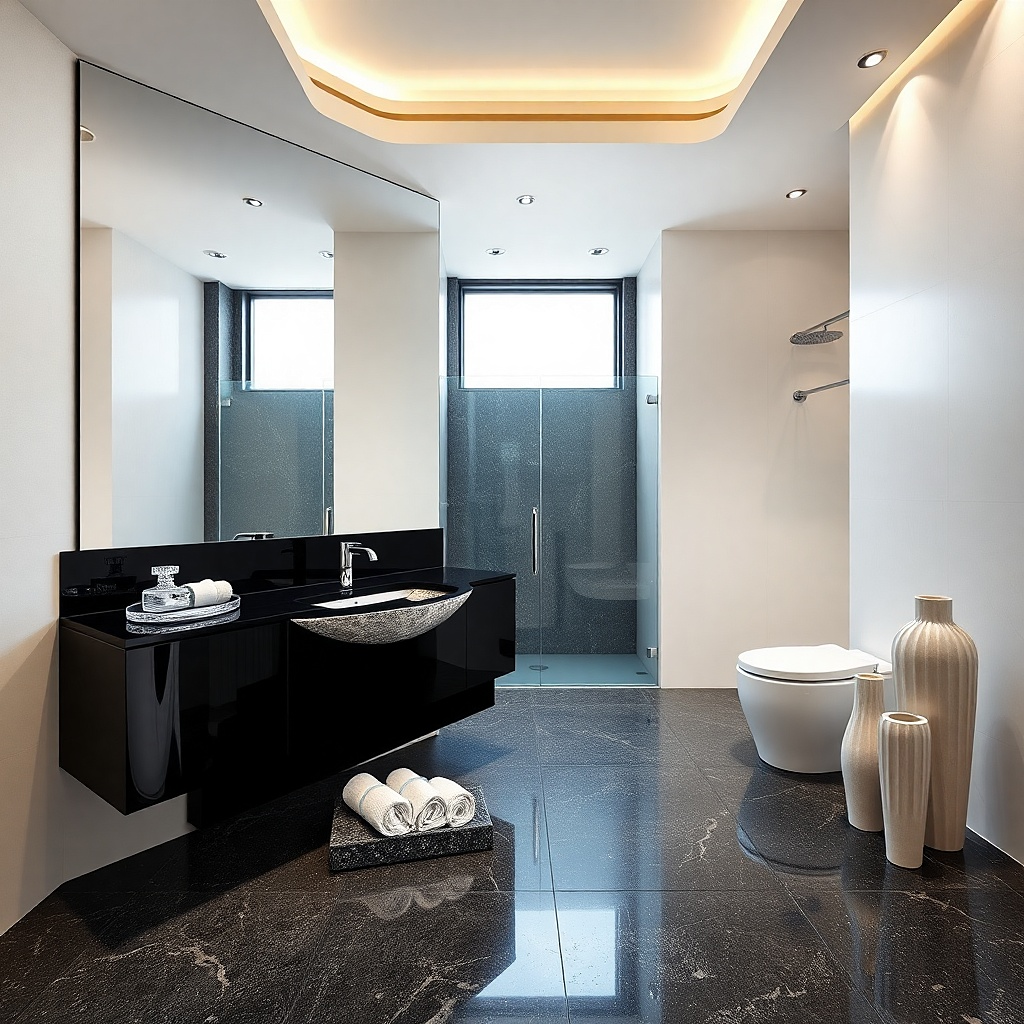
Glossy black reflects light and makes the vanity feel sleek, which is why it can still look balanced when paired with reflective surfaces. Put a mirrored backsplash panel behind the sink area so the light bounces upward and the black doesn’t sink visually into the floor. The mirror panel should be framed or edged so it doesn’t look like a random sheet of glass. This setup looks great in modern bathrooms with simple wall tile and clean lines. It also helps in small bathrooms where you need every bit of brightness.
Pick a high-gloss black vanity or cabinet paint finish. Choose a backsplash mirror panel sized to the sink width plus about 2 to 4 inches on each side, usually around 30 to 36 inches wide for a 36-inch vanity. Install the vanity first, then mount the mirror panel using glass-safe adhesive and secure framing if needed. Finish with a vanity light that sits above the mirror, centered, and choose warm bulbs to keep the mirror glow flattering.
Use a countertop with a light edge detail (like a thin polished bevel) so the sink area catches light twice.
Avoid using a black vanity with glossy finish and a matte black faucet; the mismatch can look dull instead of deliberate.
4. Black Vanity with Marble-Patterned Counter and Brushed Brass Hardware
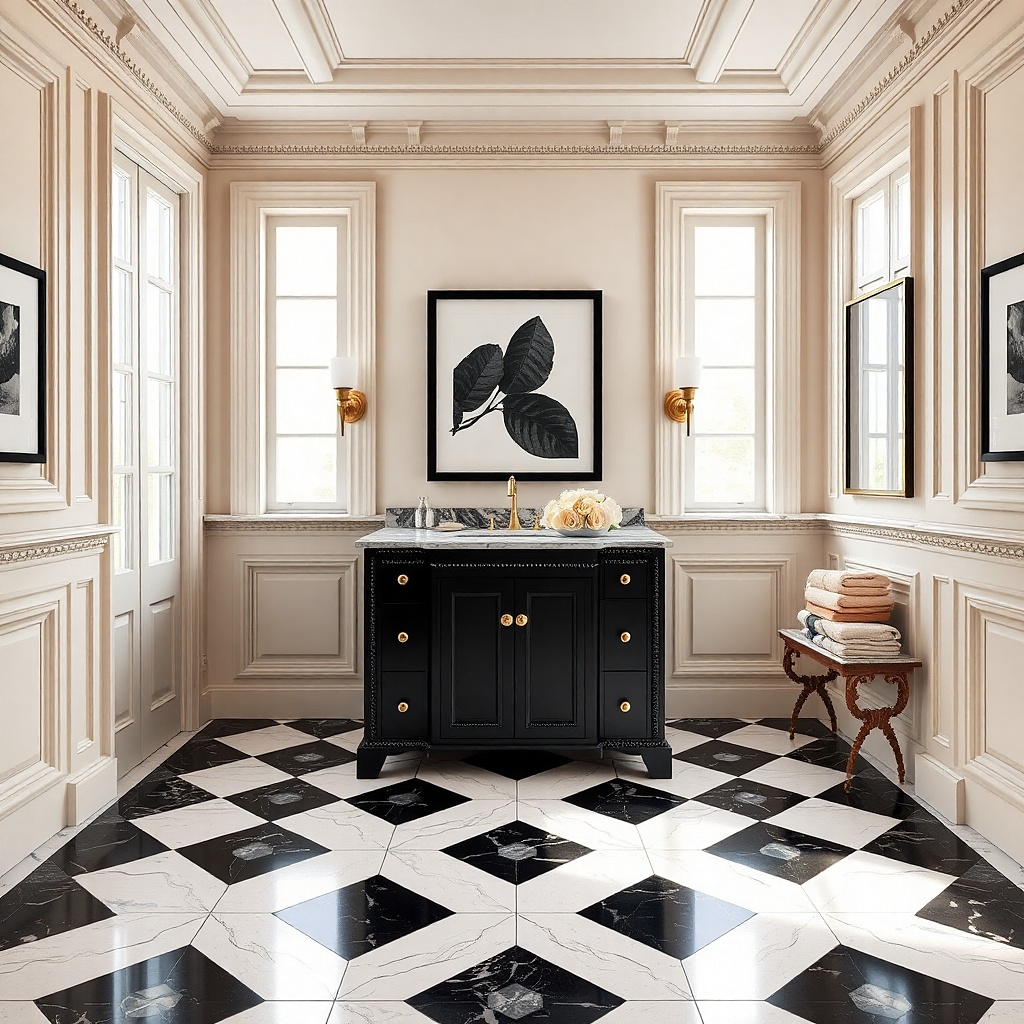
If you want bold but controlled, go black plus a marble-pattern counter. The key is the pattern scale: choose veining that’s fine to medium, not giant dramatic swirls that compete with the vanity doors. Brushed brass hardware adds warmth and makes the black feel less severe, especially against light stone tones. This pairing looks best in bathrooms with white walls and large-format tile, because the countertop pattern becomes the second focal point. It also photographs well because the brass reflects softly, not harshly.
Select a black vanity with clean door lines (slab or shaker). Choose a marble-pattern countertop in white or creamy base with gray veining, and pick a honed finish if you want a calmer look. Install the vanity, then mount the faucet and handles before setting the countertop so you can verify clearances around the backsplash. Finish by matching the mirror frame and lighting hardware to brushed brass and keeping the mirror width about the same as the vanity width.
Keep the brass in one direction: either all pulls and faucet are brushed brass, or none are.
Avoid pairing black with brass plus a countertop that’s heavy on gold flecks; it can tip into busy.
5. Black Floating Vanity with Terrazzo-Style Counter
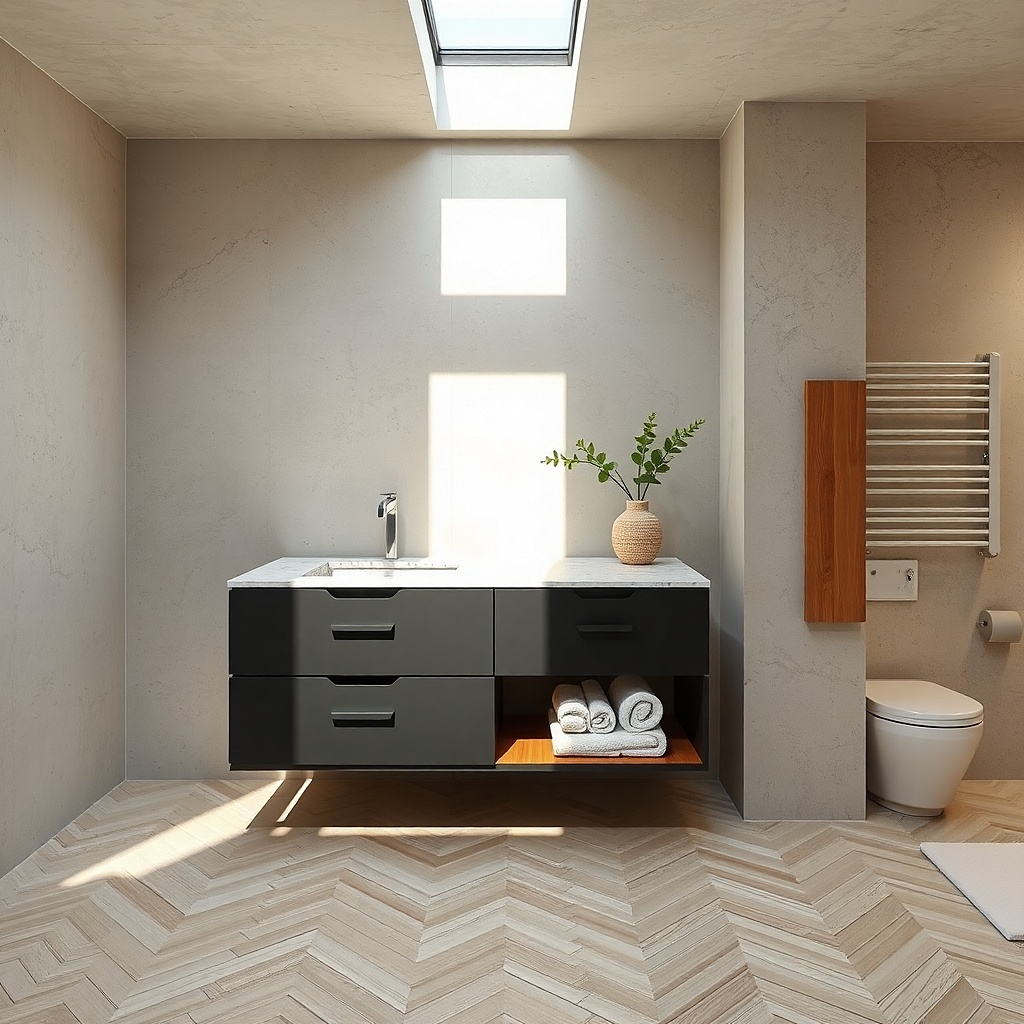
A floating vanity makes black feel lighter because it visually opens the wall. When you add a terrazzo-style countertop, you get speckled movement that keeps the eye moving instead of pooling on dark surfaces. The countertop can be white-based terrazzo with gray and a touch of warm beige, which plays nicely with black cabinetry. This works in modern or transitional bathrooms, especially where you can see floor tile lines clearly. It also helps the room feel taller because the cabinet doesn’t sit on the floor.
Try thisAdd a small rug or runner under the sink area if you have tile, since floating vanities expose more floor.
Choose a floating vanity with a back rail and proper mounting hardware. Confirm you have wall studs spaced correctly for the vanity brackets, or plan for reinforced anchors rated for cabinet loads. Install the vanity at about 32 to 34 inches to the countertop surface for comfortable height, then mount a wall-mounted faucet if your plumbing allows. Select a terrazzo-style countertop sized so it overhangs minimally, usually 1 inch max, then seal and caulk the edges.
Common mistakeAvoid floating black without strong lighting; the exposed wall can make the vanity look unfinished in dim rooms.
6. Tall Black Vanity with Integrated Storage and a Wide Mirror
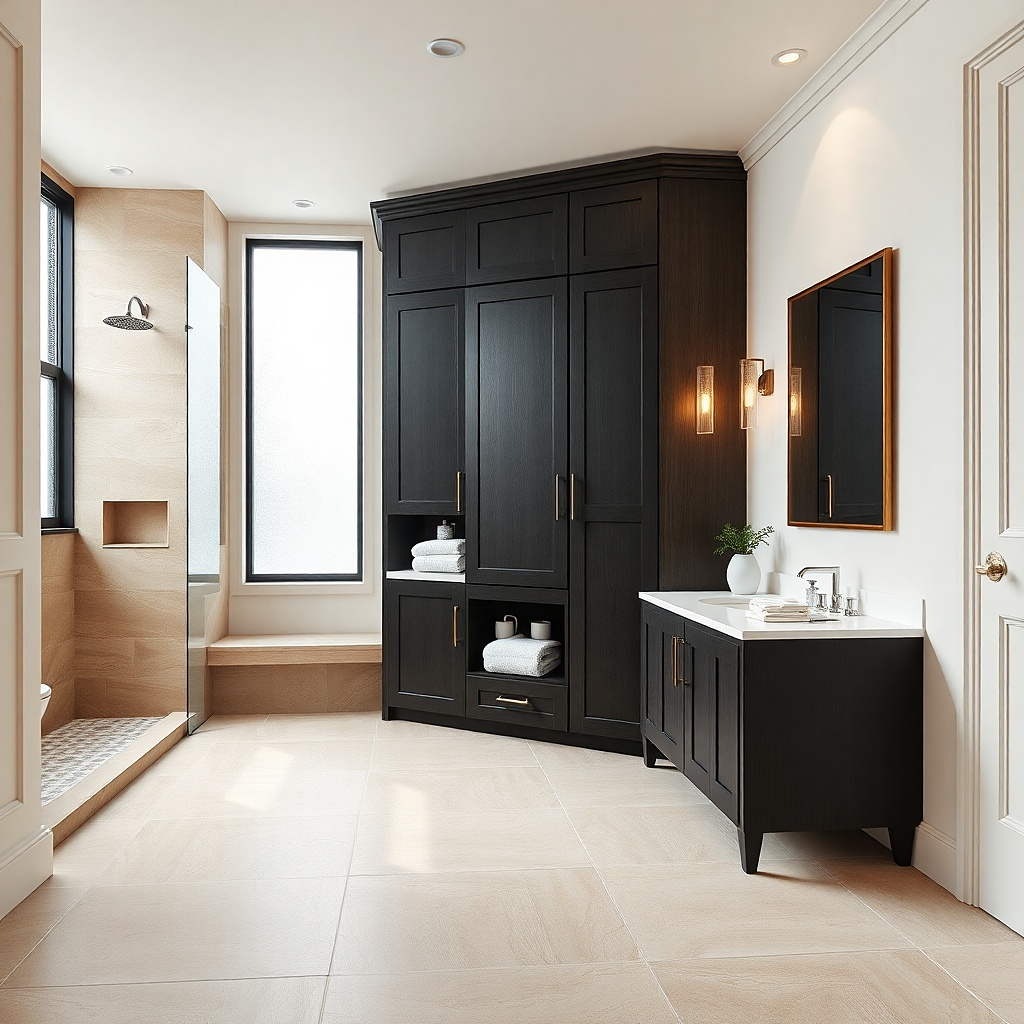
Tall vanities reduce clutter because you can hide toiletries and keep the sink zone clean. A black tall cabinet also creates a vertical rhythm that feels bold, but the trick is pairing it with a wide mirror to spread brightness across the wall. Choose a mirror that spans at least the width of the vanity and has a thin frame, so it doesn’t add extra bulk. This idea is best when your bathroom lacks storage and your counters always look busy. Black draws attention to the cabinet, so keeping the top surface clear makes the look feel balanced.
Try thisKeep the sink centered under the mirror; off-center placement makes black look unplanned.
Pick a tall vanity unit with doors and drawers, not just cabinet space. Measure the wall and choose a mirror width that matches the vanity width, typically within 2 inches. Install the vanity first, then place the mirror so the bottom edge sits around 5 to 7 inches above the countertop. Use two lighting fixtures or a single long light bar sized to the mirror width, and finish by adding matching hardware so the drawers look consistent.
Common mistakeAvoid narrow mirrors on wide black tall cabinets; they make the cabinet look top-heavy.
7. Black Vanity with White Ceramic Tile Backsplash to Lighten the Sink Zone
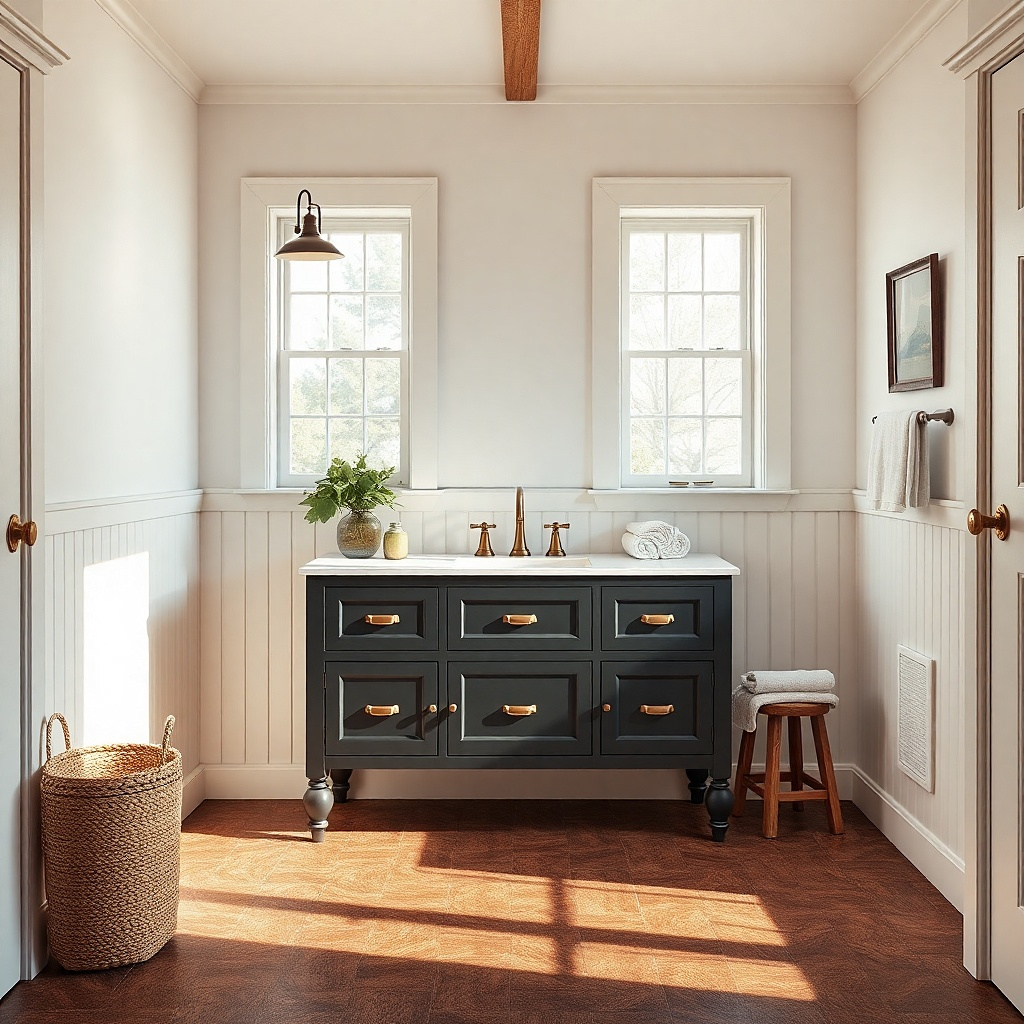
You don’t have to choose a dark backsplash to make black feel designer. A crisp white ceramic tile backsplash gives a bright buffer behind the sink, so the black vanity feels like a strong anchor instead of a heavy block. This is especially effective if your walls are a mid-tone gray or warm neutral, because the white tile reflects light where it matters most. Choose a tile with a subtle sheen, like satin-finish subway tile, so it catches the light without looking glossy. The result feels clean, not overpowering.
Install the vanity and verify the backsplash area is square to the tile layout. Choose white ceramic tile and a grout color that stays light, like bright white or warm off-white. Apply thinset, set the tile to cover the sink area and extend 1 to 2 inches beyond each side of the countertop. Finish with caulk where the tile meets the countertop, then mount the mirror and light so they sit above the brightest tiled area.
Use a grout that matches your mirror frame metal warmth, not a cool gray grout.
Avoid dark grout with a black vanity and white tile; it makes the backsplash look dirty and visually heavy.
8. Black Vanity with Brushed Nickel Faucet and Dark Bronze Lighting
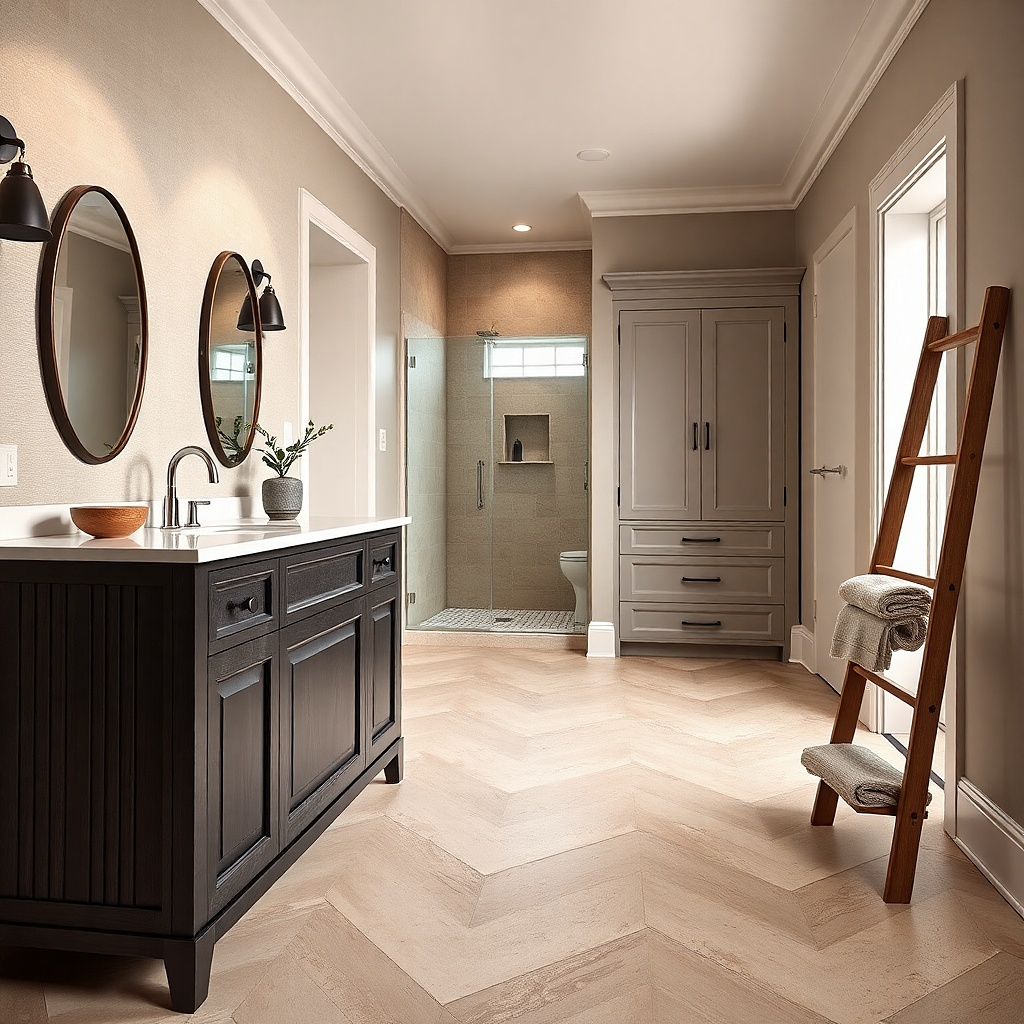
This is for people who want black to feel upscale without going full brass. Brushed nickel on the faucet and matte dark bronze on the lighting creates a layered metal story that still reads cohesive. The black cabinetry ties it together, while the two metal tones keep the room from looking flat. Choose a light countertop (white or pale gray) so the metals don’t look dull. This works well in bathrooms with gray floors or cool-toned tile, because nickel matches the undertones and avoids color conflict.
Try thisKeep the metal tones separated by function: faucet and mirror frame in nickel, lighting in bronze.
Pick a black vanity finish in matte or satin. Choose a countertop in white or pale gray with a low-contrast pattern so metals stay the focus. Install the vanity, then select a faucet with brushed nickel finish and handles that match. Mount a vanity light in dark bronze with glass shades that diffuse light, then select a mirror frame in either brushed nickel or a neutral metal that matches one of the fixtures.
Common mistakeAvoid mixing polished chrome with matte black hardware; it looks accidental fast.
9. Black Vanity with Slab-Style Doors and a Thin-Lined Mirror
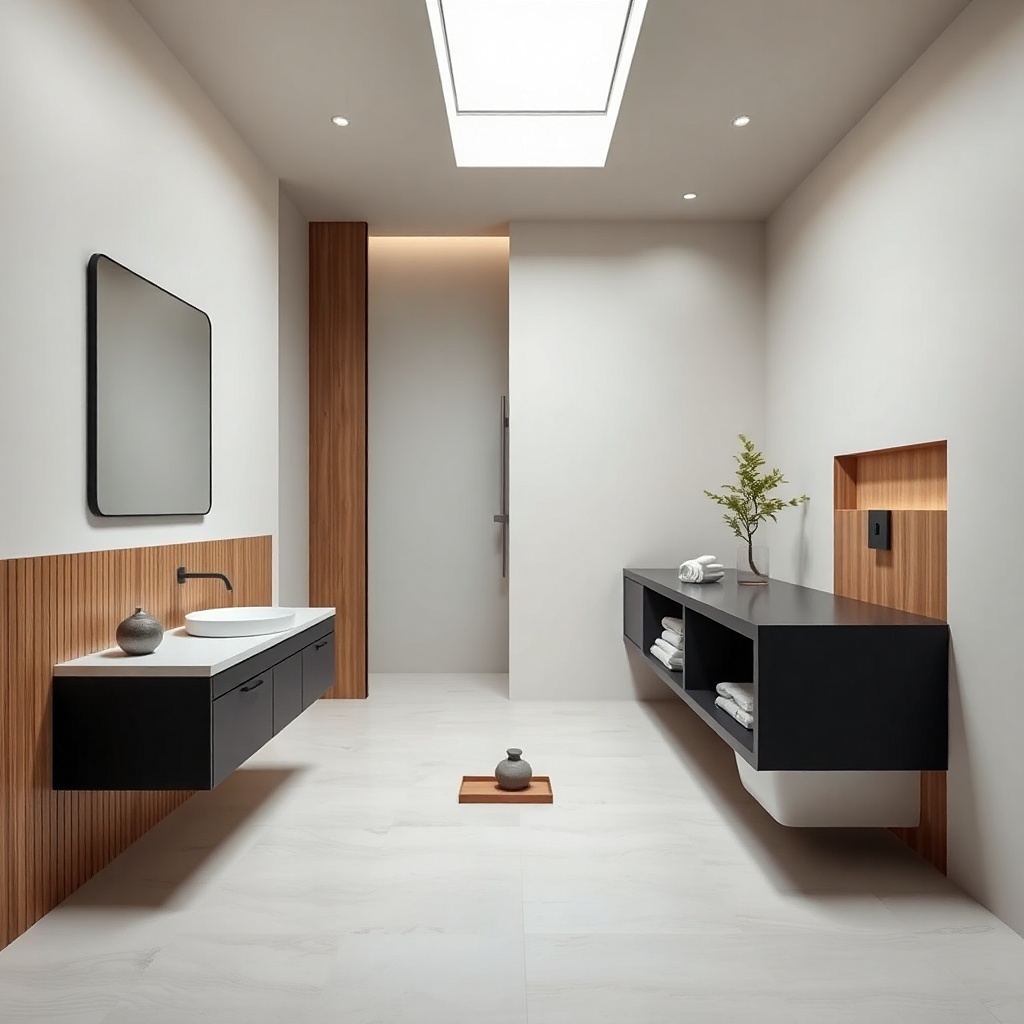
Slab-style black vanity doors look crisp and modern, but they can feel severe if you pair them with a bulky mirror. A thin-lined mirror frame — think narrow metal edge — keeps the visual weight from stacking. Add a light countertop and keep the sink hardware minimal so the door face stays the hero. This combination creates a balanced look because the black is structured and the mirror keeps the wall open. It’s a strong choice for bathrooms with minimal decor and clean tile patterns.
Try thisUse a narrow backsplash or none at all if your tile is already bright; the thin mirror will do the lifting.
Choose a black vanity with flat slab doors and minimal grooves. Pick a countertop in white quartz or light stone with a smooth edge profile. Install the vanity and keep the mirror centered; choose mirror width equal to the vanity width and frame thickness under about 1 inch visually. Mount the mirror using a level and anchors so it sits perfectly straight above the sink, then install a single light fixture or sconces that cast light across the mirror surface.
Common mistakeAvoid a thick, ornate mirror frame with slab doors; it fights the clean lines.
10. Black Vanity with Light Countertop Edge and Under-Mount Sink
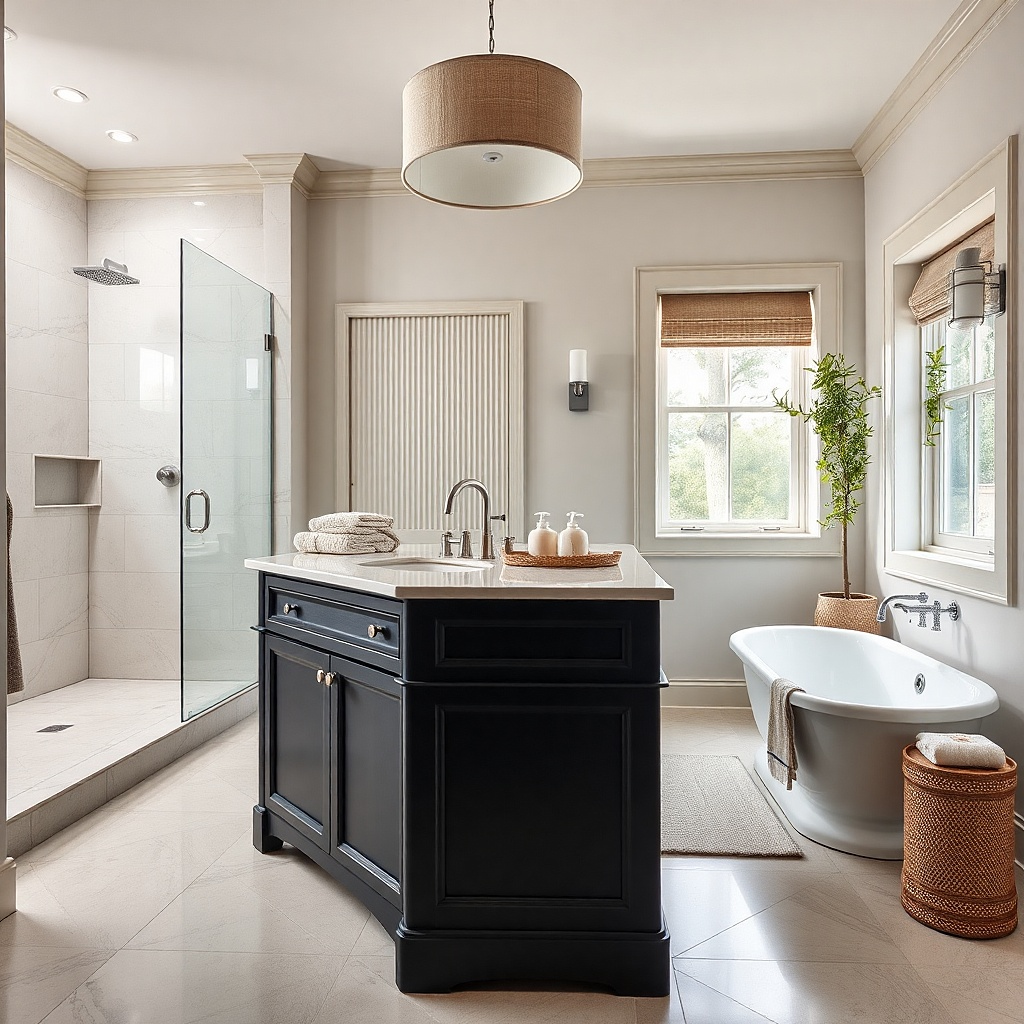
The under-mount sink makes the countertop look continuous, which helps black feel more refined and less blocky. A light countertop edge — even a subtle bevel or polished lip — creates a bright “halo” line that separates black from the wall and floor. Choose a countertop in white or pale cream with a smooth, low-variation pattern. This works best when you have neutral walls and want the vanity to look architectural. It also helps small bathrooms because the clean sink line visually reduces clutter.
Select a black vanity with a flat top panel and enough clearance for an under-mount sink. Choose a countertop with a standard overhang and a finish edge detail like a thin bevel. Cut the countertop for the under-mount sink opening, then set the sink and secure it with the manufacturer clips. Install the countertop, then caulk the seam and polish the edge so the light-catching line looks crisp. Mount the mirror and light so the bright countertop edge reflects toward the mirror.
Use a countertop with a polished edge even if the slab is honed; the edge is what reads in photos.
Avoid a top-mount sink with black if you’re chasing “balanced bold”; it adds extra visual breaks.
11. Black Vanity with Patterned Tile Floor for a Controlled Contrast
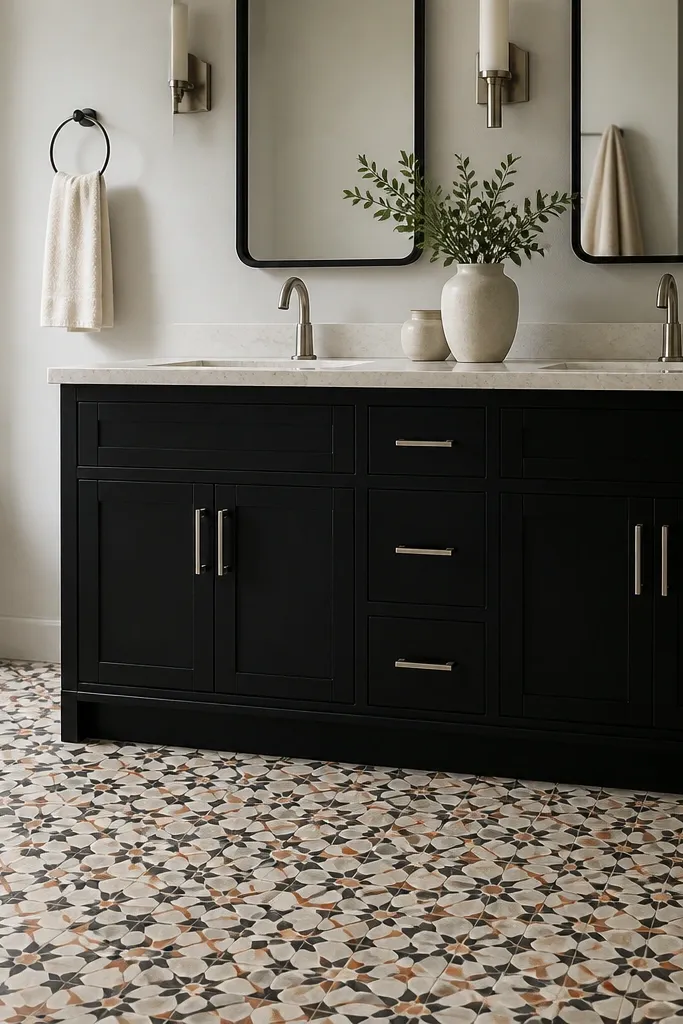
When your floor has pattern, the vanity needs to ground it without adding more chaos. A black vanity does that well, especially when the countertop is light and the hardware is simple. Keep the vanity finish consistent and choose matte black so it doesn’t compete with glossy floor tile. This setup works in bathrooms with geometric or small-scale patterned floors, because the black reduces visual noise. The goal is balance: pattern on the floor, clean black on the vanity, and a bright mirror to pull the eye upward.
Pick a black vanity in matte or satin and keep the door style simple (shaker or slab). Choose a light countertop with minimal veining so it doesn’t fight the floor pattern. Install the vanity first so you can align it with the tile layout lines, then set the countertop and sink. Add a framed mirror that’s plain in shape and metal tone, sized about equal to the vanity width, and mount lighting that highlights the mirror rather than the floor.
Choose cabinet hardware that matches the bathroom floor metal accents if you have any — even subtle ones.
Avoid patterned stone countertops in a bathroom where the floor already has strong pattern.
12. Black Vanity with Warm White Shiplap or Panel Accent Behind
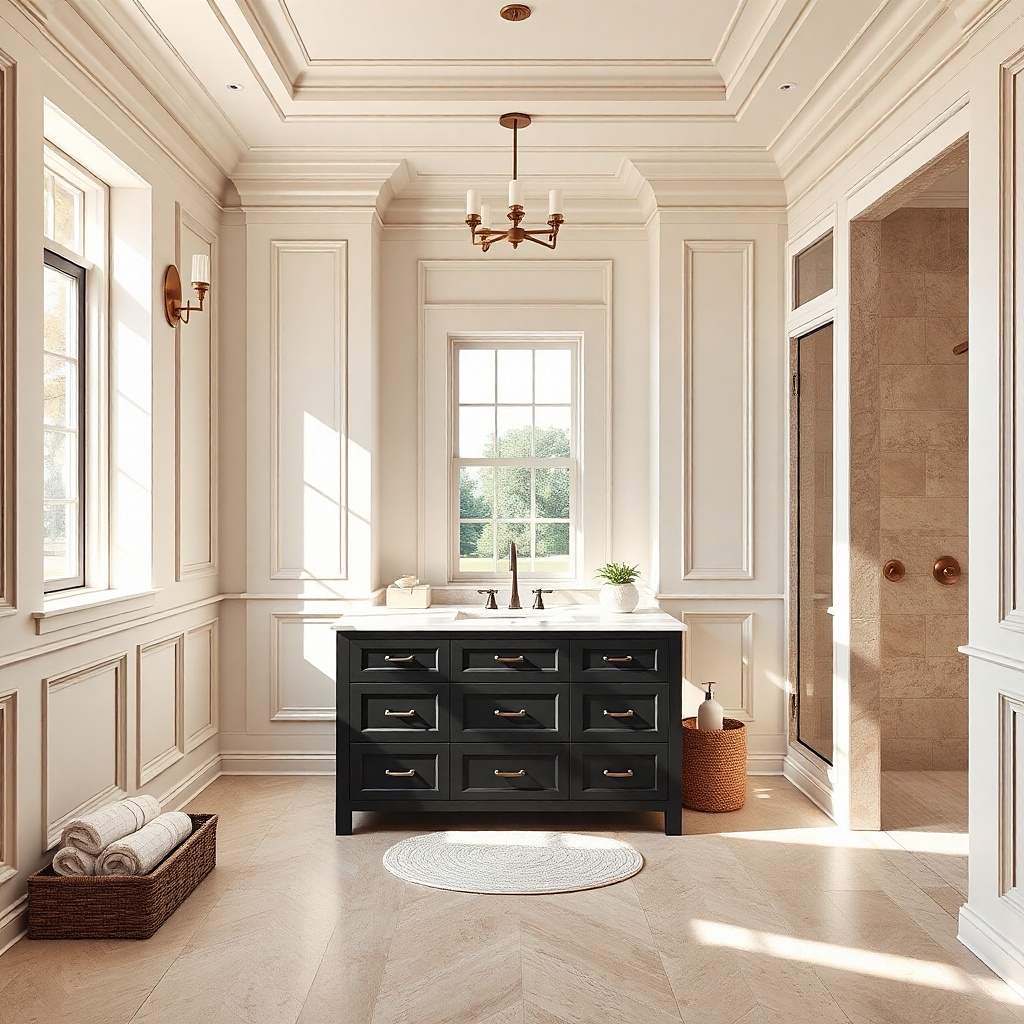
Black looks best when the wall behind it has texture and warmth. Warm white paneling or shiplap gives depth without darkening the room, so the black vanity reads intentional. This setup is great for bathrooms that feel flat because the wall is all smooth paint. The panel lines also help the room feel designed, and they frame the vanity visually. Use a countertop in white or creamy stone and keep the mirror frame thin so the wall texture does the “interest” work. It feels bold, but not overpowering, because the wall stays light.
Try thisRun the paneling to the side edges of the vanity zone so black has a complete light frame.
Cover the wall behind the vanity area with warm white paneling, usually 1/4-inch to 1/2-inch thick boards. Paint the panels with a warm white that doesn’t go gray, then install the vanity centered on the wall. Keep the mirror width equal to the vanity width and mount it with consistent spacing from the countertop. Add a vanity light that casts light upward and across the panel grooves, which makes the texture pop without darkening the room.
Common mistakeAvoid cool gray panel paint with black — it can make the vanity look harsh.
13. Black Vanity with a Light Gray Counter and Clear Glass Sconce Shades
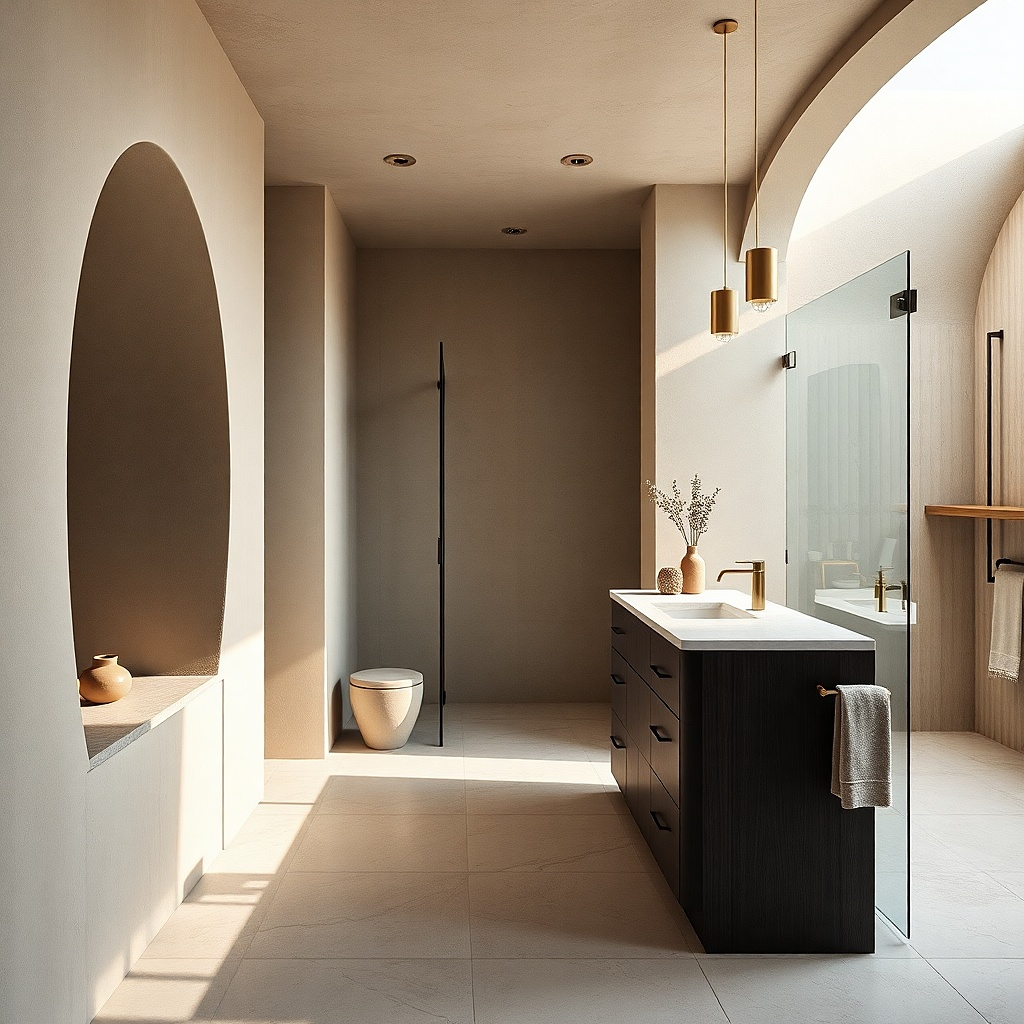
Clear glass sconce shades keep the light airy, which matters when the vanity is dark. Pair matte black cabinetry with a light gray countertop that has gentle veining, and the combination reads modern and balanced. Glass shades also prevent the lighting fixture from adding another dark mass above the vanity. This works in bathrooms with neutral walls and chrome or brushed nickel accents, where you want the black to be the main contrast. If you have low natural light, this is a smarter choice than heavy lantern-style fixtures.
Try thisKeep the sconce height so the bulb center sits roughly at eye level when standing at the sink.
Choose a vanity finish in matte black and a countertop in light gray. Install the vanity and then mount sconces on either side of the mirror, spaced so the light hits the mirror surface. Use clear glass shades and bulbs with 2700K warmth so the black doesn’t look blue. Mount the mirror centered and choose a frame that matches your faucet finish, then seal the countertop edges and set the sink.
Common mistakeAvoid frosted, dark glass shades; they make black look heavier than it needs to.
14. Black Vanity with White Terrazzo Counter and Subtle Gold Veining
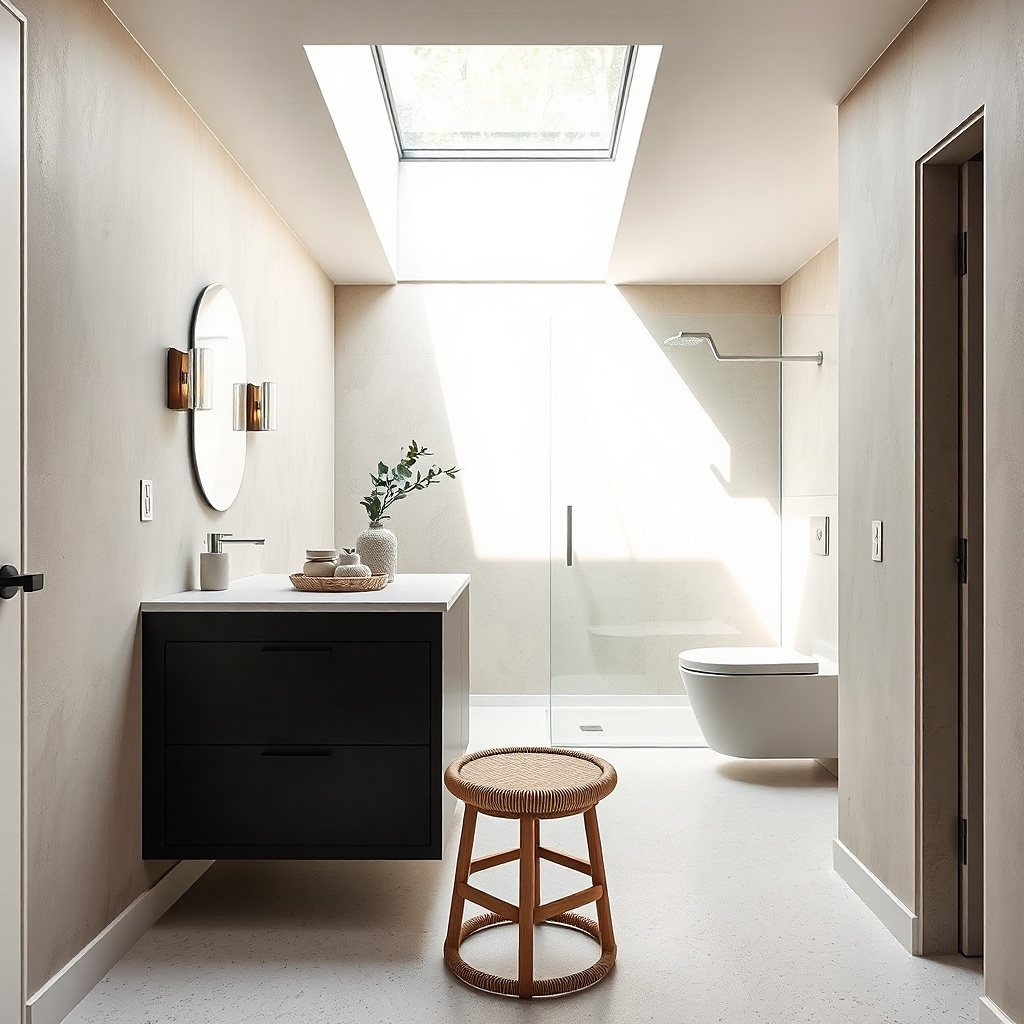
This is a controlled way to add warmth without turning the room into pure gold. White terrazzo with subtle gold flecks creates a speckled highlight that plays nicely with black cabinetry. The specks catch light and create micro-contrast across the sink zone, so the black feels less like a single solid slab. Use matte black doors to avoid shine overload. This idea looks best in bathrooms with white walls and simple, light tile — the terrazzo adds personality and the black keeps it grounded.
Try thisChoose towel hardware in the same warm metal tone as the mirror frame, not a different one.
Select a matte black vanity with clean hardware. Choose a white terrazzo-style countertop with small, subtle gold undertones and a honed or satin finish. Install the vanity and set the countertop, then check the sink alignment under the mirror before sealing everything. Mount a mirror with a thin gold-toned frame or warm brass hardware so the gold flecks echo without becoming too loud.
Common mistakeAvoid oversized gold accents elsewhere; let the countertop do the talking.
15. Black Vanity with White Oak Veneer Panels on the Sides
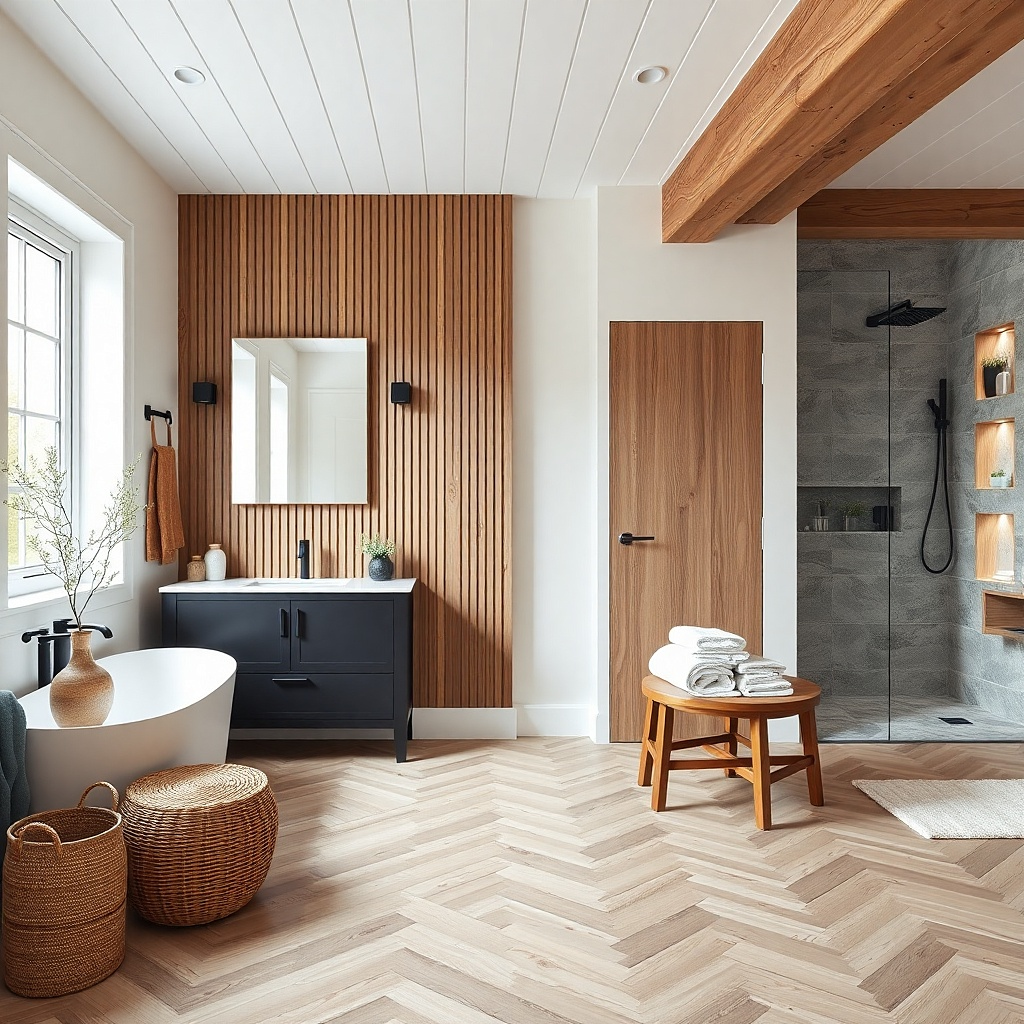
Black on the front looks bold, but black on the sides can feel too heavy. Adding white oak veneer panels on the sides brings warmth and softens the edges of the vanity visually. A round mirror also helps because it breaks up the strong rectangle shape of the cabinet. This combination is great for bathrooms that need a modern look but still want warmth. Keep the countertop light and smooth so the wood and mirror become the secondary focal points rather than the cabinet fighting the room.
Choose a black vanity with side panels or plan a custom finish so the sides match the front. Use white oak veneer with a light, natural tone and a clear matte topcoat to avoid too much shine. Install the vanity and center it under the mirror, leaving about 2 inches clearance from edges to wall trim if you have it. Mount a round mirror with a thin frame and install a vanity light that’s wide enough to cover the mirror diameter.
If your floor has warm undertones, match the oak tone to it to keep the room cohesive.
Avoid pairing oak veneer with a cool gray countertop; the undertones will clash.
16. Black Vanity with a Carved Stone Look Counter and White Wall Tiles
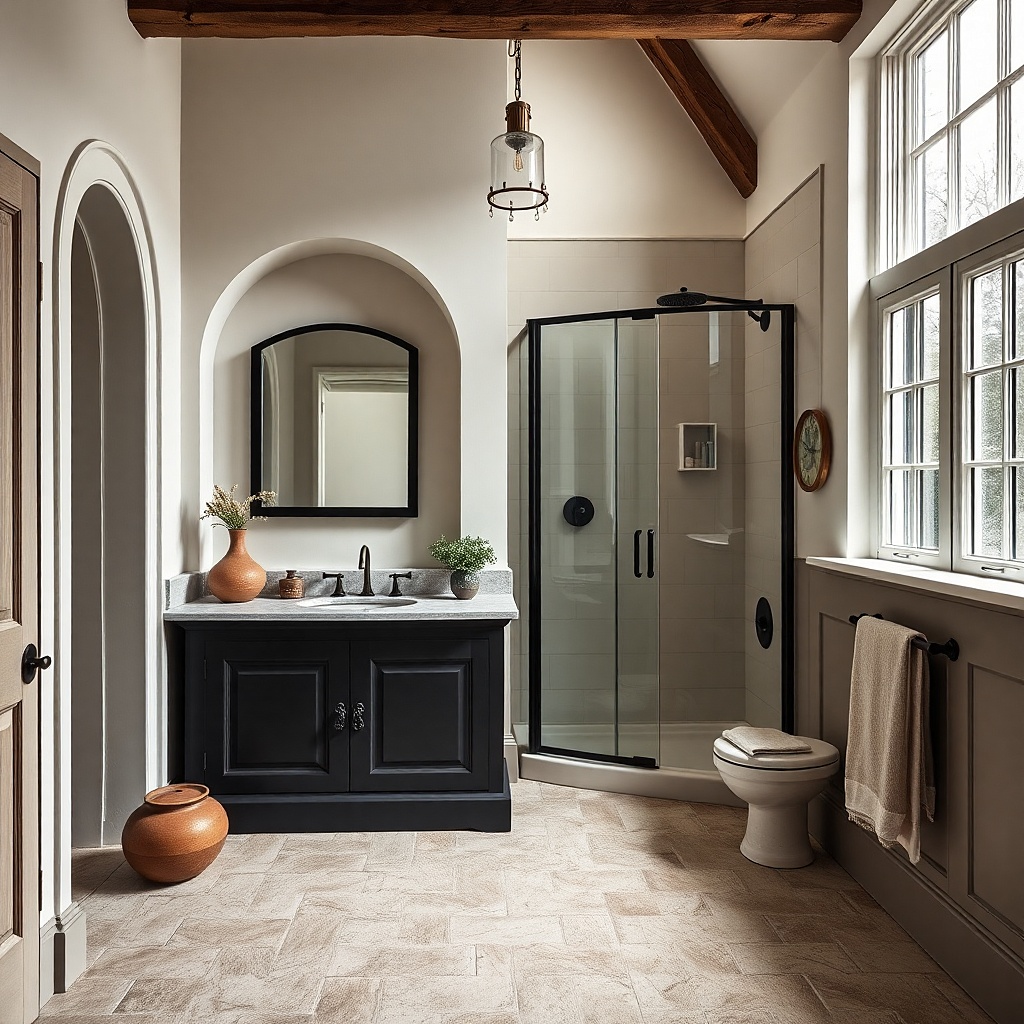
A carved stone-look countertop adds dimension without needing a dark color. When you pair it with black vanity cabinetry, the countertop becomes the visual texture that keeps the look from feeling flat. Choose a countertop that reads light with carved-like depth or sculpted veining, then keep the wall tiles bright and simple. This is an excellent choice when your bathroom has white tile already but your vanity feels too plain; black gives contrast, and the countertop gives interest. The whole setup reads bold because of the black, but balanced because the countertop stays bright and textured.
Pick a black vanity with a matte finish and straightforward hardware. Choose a light countertop with sculpted veining or stone-look pattern that stays mostly white or cream. Install the vanity, then set the countertop so the sink sits centered and the backsplash height reaches the tile line cleanly. Mount a rectangular mirror with a thin frame and add a light fixture that spreads illumination across the countertop surface to make the carved detail visible.
Use a slightly larger mirror than you think — about 2 to 4 inches wider than the vanity — so the bright countertop is framed well.
Avoid pairing a textured countertop with a busy mosaic backsplash; pick one texture source.
17. Black Vanity with a Two-Tone Counter Split for Visual Balance
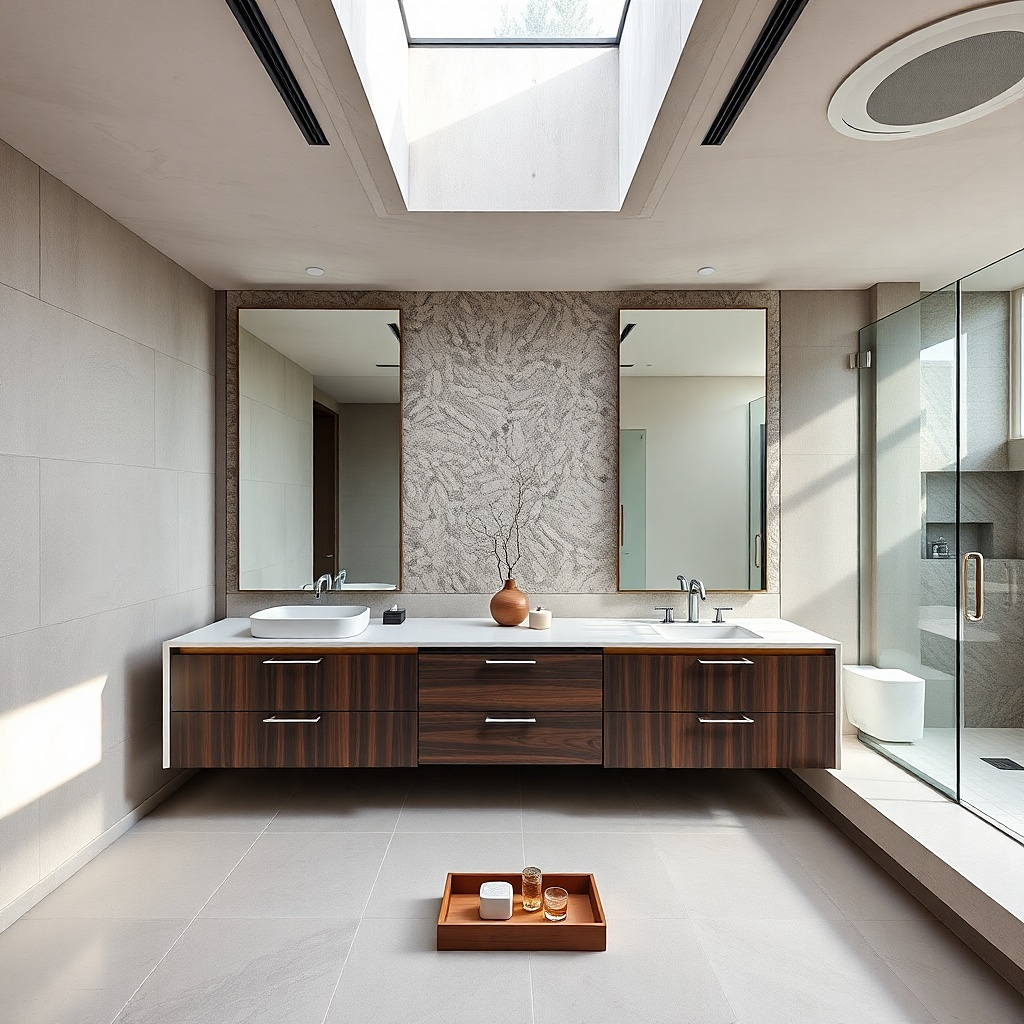
Two-tone counters create balance by visually “breaking up” the sink zone. With black vanity ideas, the problem is that black makes everything feel like one big block. A split countertop — like white on the main slab with a light gray section near the backsplash or around the sink — creates separation and keeps the eye moving. Finish the rest of the room in light neutrals so the countertop split reads crisp. This idea looks sharp in bathrooms with clean tile and modern fixtures, and it photographs well because the counter has clear edges and contrast.
Choose a black vanity width first, then order a countertop with a designed split zone from the fabricator. Typical split lines can run horizontally behind the sink or around the perimeter, usually 3 to 5 inches tall for the accent band. Install the vanity, then set the countertop and seal the seam carefully so the split line looks factory-made. Mount the mirror centered above, and keep the faucet style minimal to avoid competing with the counter design.
Match the accent tone to your towel bar or mirror frame so the split doesn’t feel random.
Avoid two-tone counters if your bathroom already has strong pattern tile; you’ll add too many visual breaks.
18. Black Vanity with a Light Marble Splash Skirt Under the Counter
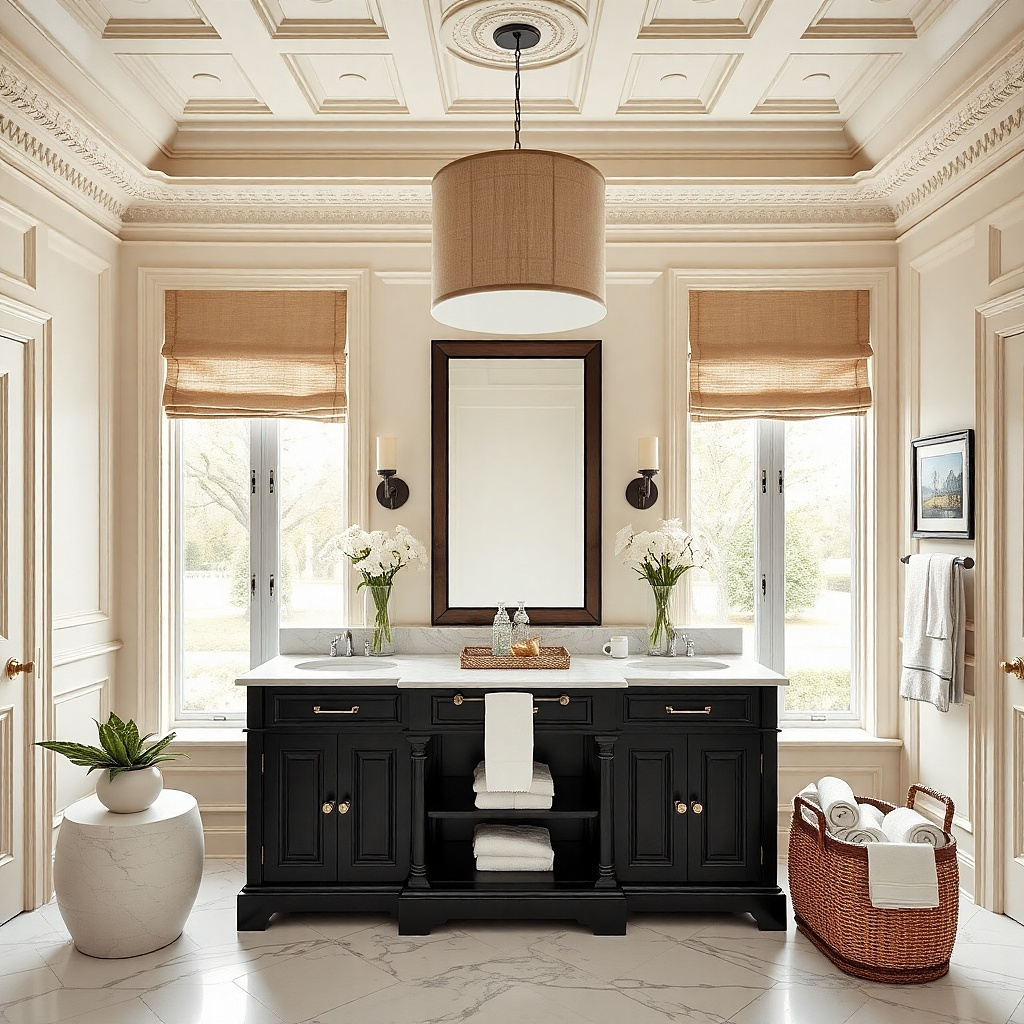
A splash skirt under the counter is one of the fastest ways to make a black vanity look custom. It adds a bright band between the countertop and the floor, so black doesn’t visually cling to the bottom of the room. Use a light marble-pattern slab for the skirt, ideally with gray veining that echoes your faucet finish. This works best when your floor tile is medium to dark and you need a light interruption. The skirt also looks polished in photos because it creates a clean horizontal line right at mirror height.
Pick a vanity with a top that can accommodate a skirt panel installation. Choose a light marble-pattern material for the skirt, usually matching the countertop base tone. Install the vanity, then cut and fit the skirt panel to the full vanity width, leaving small gaps for caulk. Seal the edges and caulk where the skirt meets the countertop and the back wall, then mount the mirror and light so illumination hits the skirt line.
Keep the skirt height consistent, around 3 to 5 inches, so it reads like a design detail instead of a random panel.
Avoid a skirt in a stark bright white if your countertop is warm; it can look like two different rooms.
19. Black Vanity with a Slim Black Frame Mirror and Light Surround Lighting
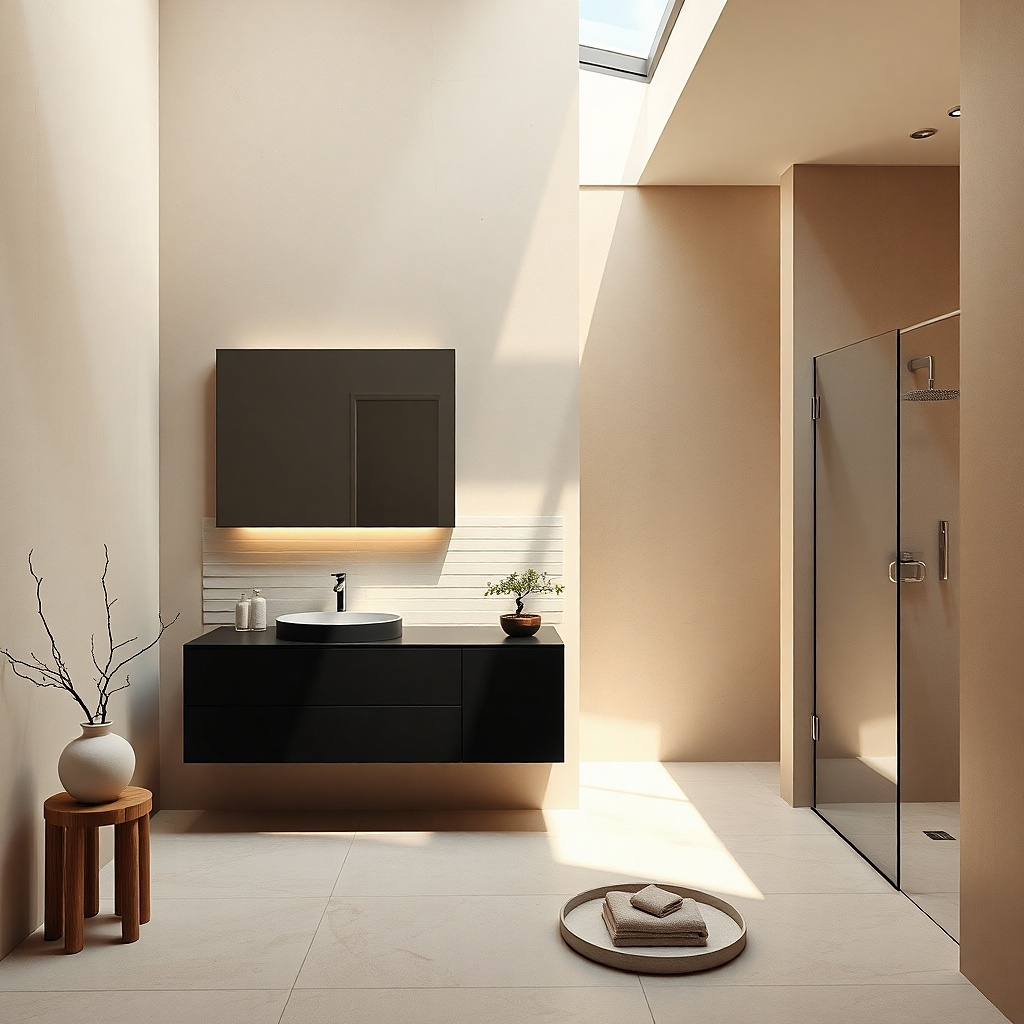
Black-on-black can overpower, but framing it correctly makes it feel intentional. A slim black framed mirror repeats the vanity color without adding bulk, and the real trick is lighting that wraps the mirror area. Use a wall-mounted vanity light or backlit mirror strip that creates soft glow around the mirror edges. Pair with a light countertop and white or light gray walls so the black frame doesn’t disappear. This is a strong option for modern bathrooms that need a dramatic focal point but don’t want a heavy countertop or dark walls.
Try thisAim for lighting that reduces shadows under the mirror; it makes the whole vanity look more balanced.
Choose a black framed mirror with a frame thickness under about 1 inch visually. Select a countertop in white or pale gray and install the vanity first. Mount the mirror so it’s centered and level, then install lighting that provides even illumination across the mirror face — either a long bar above or a backlit edge on the mirror. Finish by keeping hardware in the same black tone or a neutral metal so you don’t create a three-tone mess.
Common mistakeAvoid choosing a heavy, thick mirror frame with black vanity if your room is already small.
20. Black Vanity with a Light Linen Cabinet Door Accent Panel
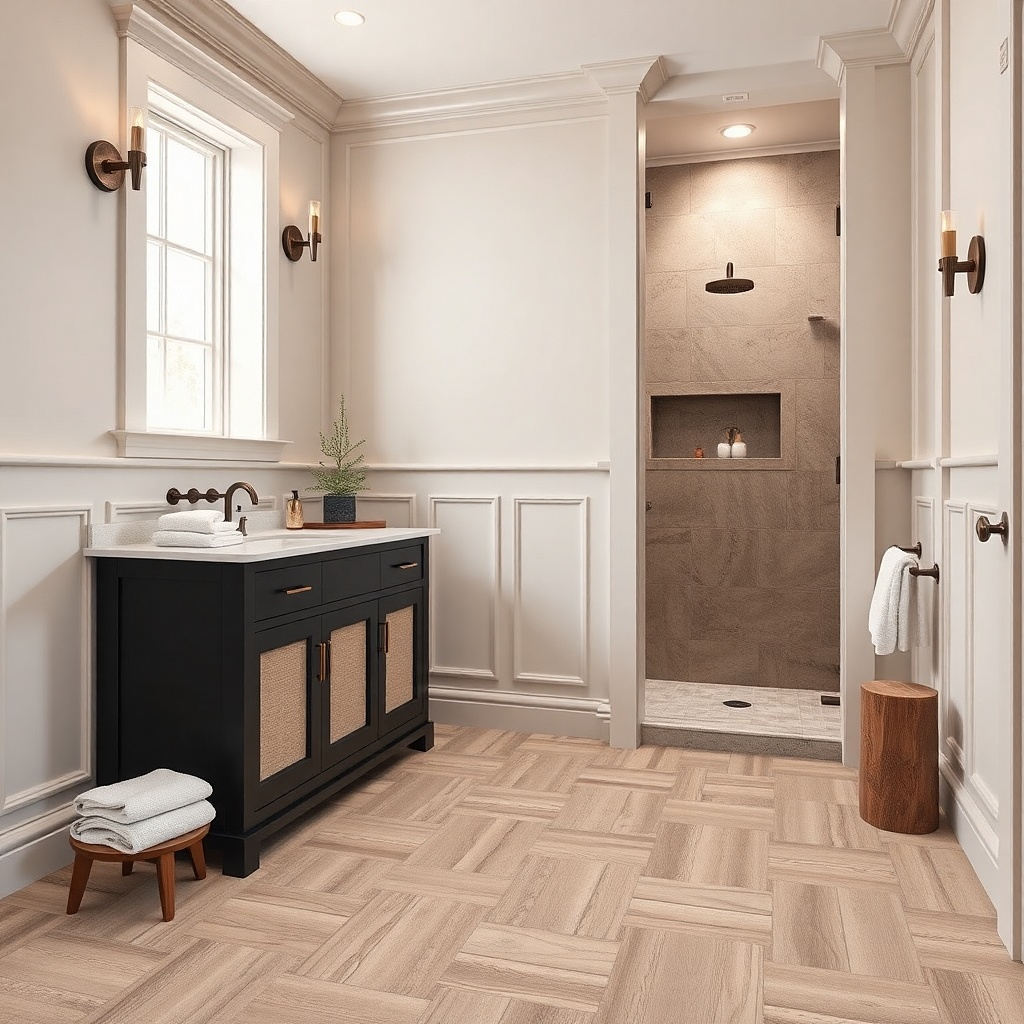
If you want black bathroom vanity ideas that feel bold but soft, add a fabric-like accent panel. A light linen-colored insert on one section of the vanity (or a small framed panel) breaks up the black without turning the room into a neutral-only space. The linen tone adds a matte, warm texture that complements matte black cabinetry. Keep the rest of the hardware minimal and choose a light countertop so the linen accent doesn’t look dingy. This works best in bathrooms with warm whites, beige walls, or natural wood elements where you want black to feel grounded rather than harsh.
Choose a black vanity that allows panel inserts or custom doors. Select a light linen color that reads warm, not gray, and keep the insert area small — roughly 10 to 25 percent of the door surface. Install the vanity and add a light countertop in white or cream. Mount a bright mirror and a light fixture with diffused glass so the linen texture stays flattering in bathroom lighting.
Use a matching linen or fabric-tone accessory within 6 feet of the vanity, like a small tray or waste bin, to tie the palette.
Avoid going too large with the linen panels; if half the vanity is light fabric color, black stops feeling like an accent.
21. Black Vanity with White Countertop and a Black Faucet for a Clean Monochrome
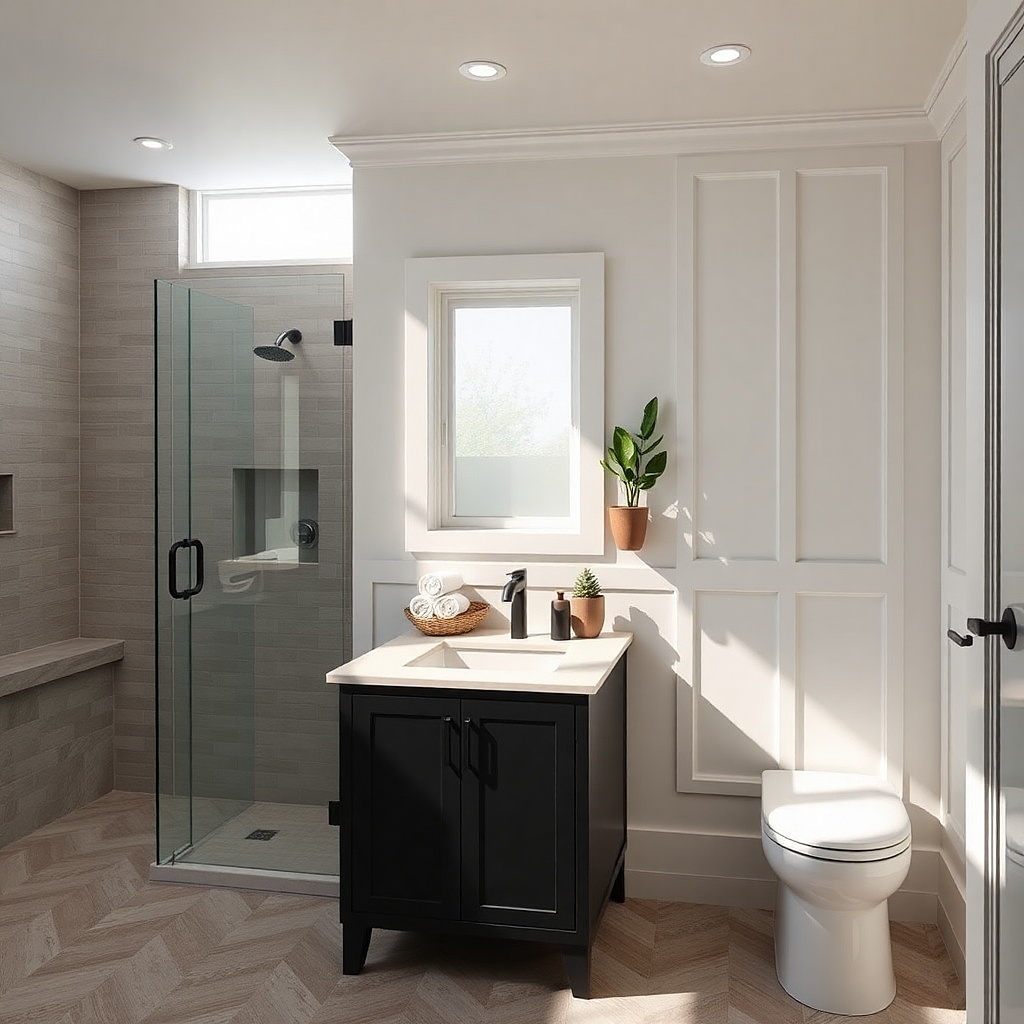
Monochrome can feel balanced when the countertop is bright and the hardware matches the vanity. Choose a black faucet finish that’s the same family as the vanity — matte black or satin black — and keep the countertop white for contrast. This makes the vanity read intentional because the eye sees one continuous “black language” across cabinet and faucet, while the bright counter prevents heaviness. It’s a great choice for bathrooms with simple decor and clean tile. The look is also easy to maintain because fewer competing finishes means fewer visual distractions.
Try thisChoose a mirror with an anti-fog feature or a well-placed light so the monochrome stays crisp in daily use.
Pick a black vanity with a matte or satin finish and a white countertop with a smooth edge. Install the vanity and set the faucet before the mirror goes up so you can align the faucet height with the mirror and lighting. Mount a large mirror that spans the vanity width and place the light fixture centered above it. Use a single drain and keep the sink clear, then add a minimal soap dish in a light material like ceramic or stone.
Common mistakeAvoid pairing monochrome black faucet with a countertop that has heavy dark veining; it makes the sink zone too busy.
22. Black Vanity with Linen-Texture Panels and a Stacked Stone Wall Shelf
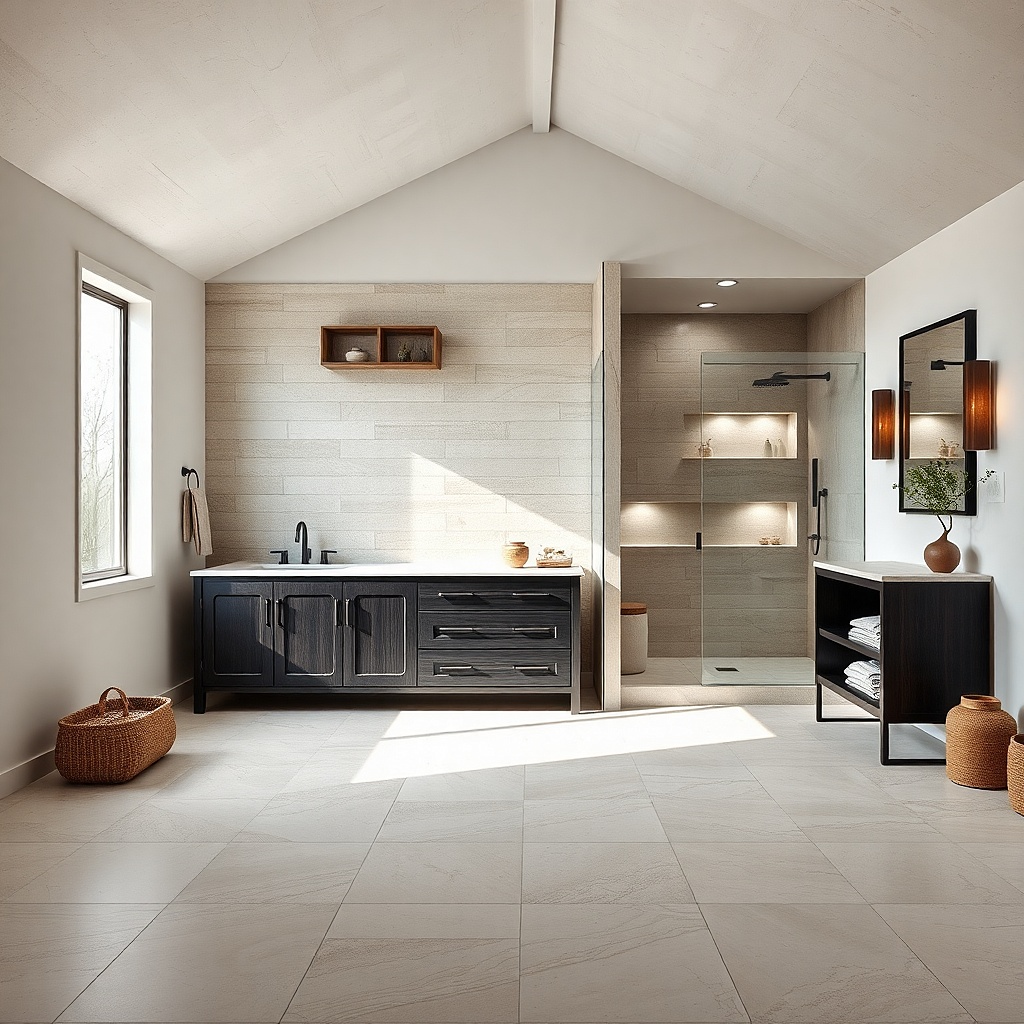
This setup keeps the room bold without making it feel heavy because the vanity’s black is broken up by soft, light texture. Use a matte black vanity with simple doors, then add linen-texture panels on the visible sides or end panels in a warm off-white (think unbleached linen, not stark white). Above the mirror, install a narrow stacked-stone wall shelf in light travertine or honed limestone so the eye has a warm focal point instead of a flat black block. The shelf also gives you a place for a tray, a small plant, or a pair of matching apothecary jars, so the black vanity reads styled, not stark. It works best in powder rooms, primary baths with limited natural light, and any space where you want drama at the sink but not a dark cave.
Step 1: Choose a vanity that is 60 in. Wide for a standard bath, or 48 in. If the wall is tight. Order or build linen-texture panels sized to cover only the side reveals and any exposed vertical ends — aim for 10-14 in. Of panel height above the toe kick, and keep the panel color in the warm off-white family. Step 2: Install a mirror centered over the vanity, then mount a stacked-stone shelf 2-3 in. Above the mirror bottom with the shelf depth around 5-6 in.; use a level and mark studs first. Use thinset and a stone backer board for the shelf surface, then grout and seal the stone after curing; finish with a clear matte sealer so it doesn’t look glossy.
Keep the hardware in brushed brass or warm champagne bronze and use a black faucet with a slightly curved spout to soften the geometry against the linen texture.
Avoid pairing linen texture with a glossy black vanity and high-contrast white tile — the whole zone can start looking harsh and flat.