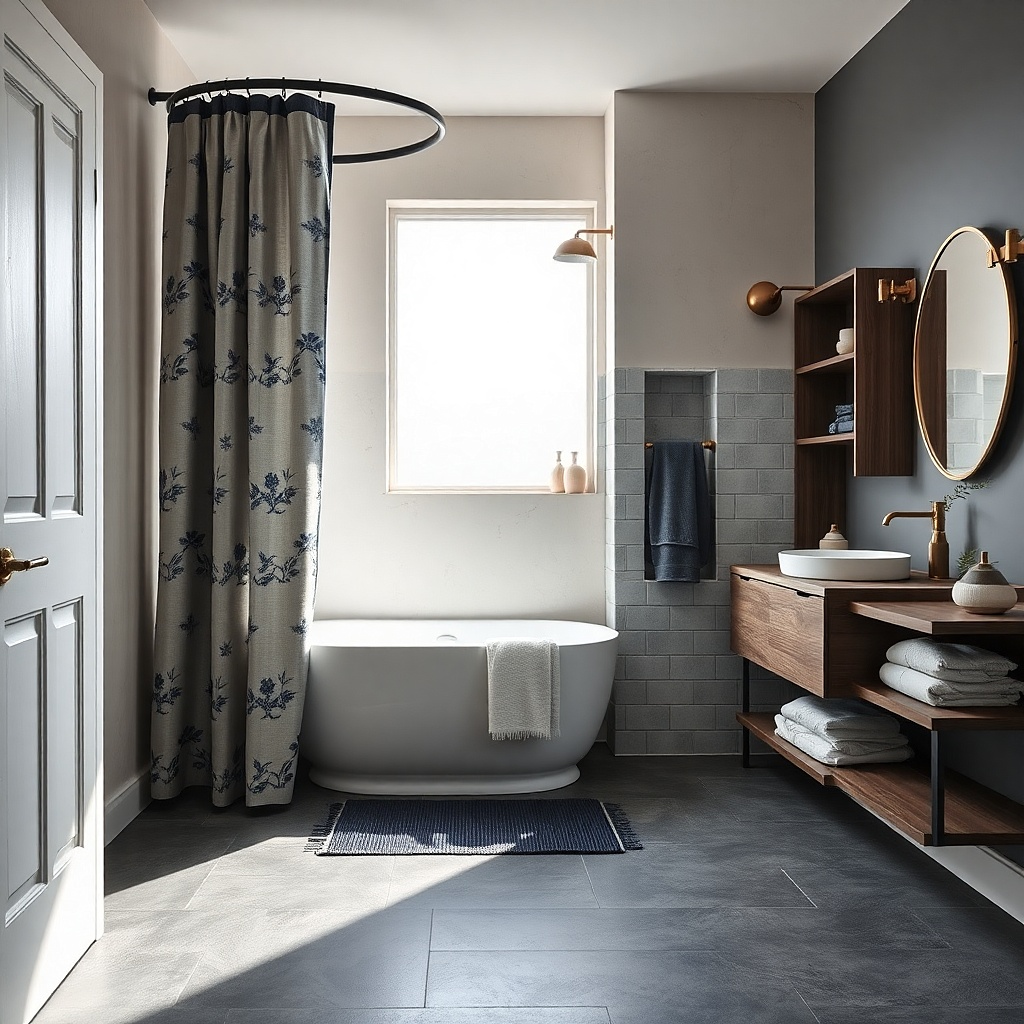
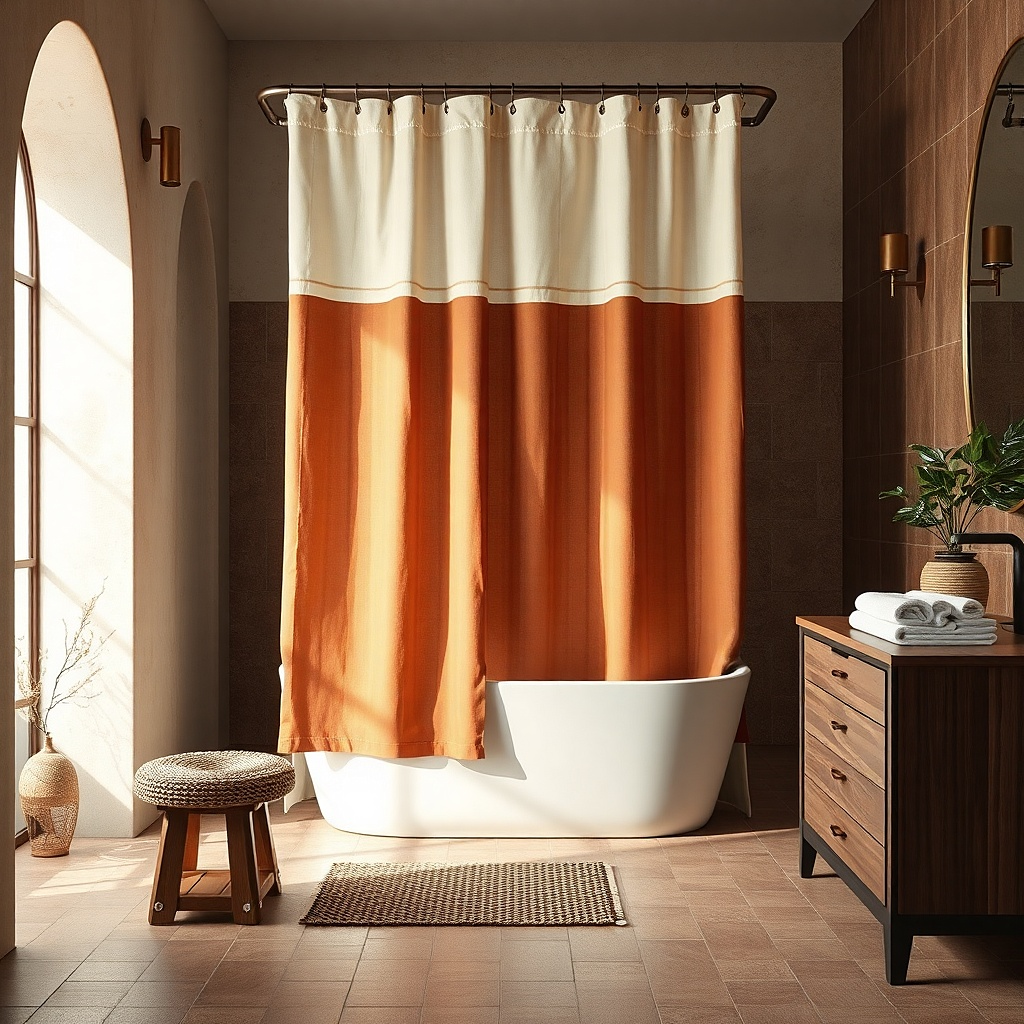
1. Warm White Linen-Blend Curtain with Matte Liner
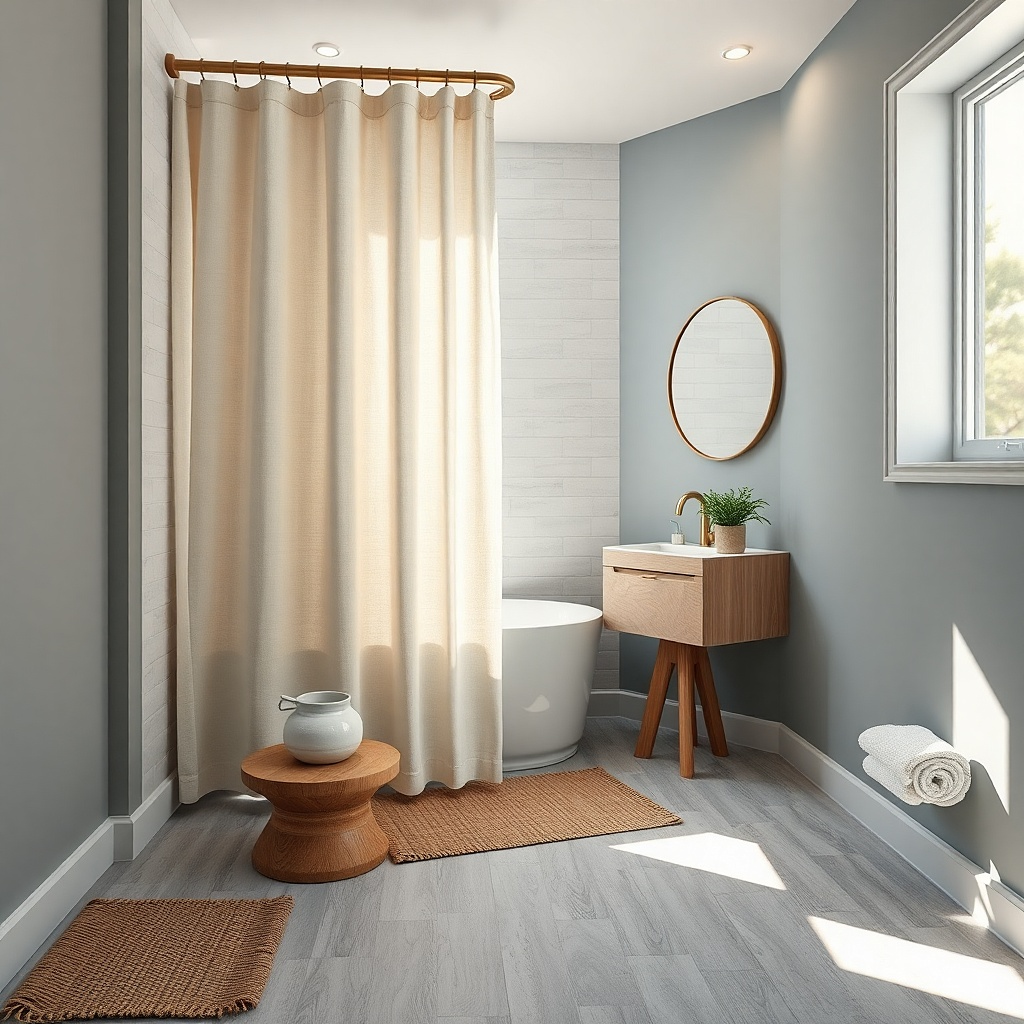
A warm white linen-blend curtain makes a small bathroom feel like steam. The key is the finish: matte fabric absorbs light instead of bouncing it back, so the room looks less sharp and more spa-like. Keep the color slightly creamy, not icy — it flatters skin tones and hides the gray cast that sometimes shows up on bright white tile. Pair it with a matte liner so you get water protection without the shiny plastic glare that cheap liners create. In tight bathrooms, the curtain’s natural drape matters more than the pattern, so prioritize straight, heavy-looking folds.
Measure your tub width and add 6-12 inches total for overlap left and right. Install the rod 2-4 inches higher than your current curtain rod, then hang the curtain so it falls 1-2 inches above the floor. If you need a liner, clip the liner to the inside eyelets and keep it slightly shorter than the decorative curtain to prevent a double-bottom look. Use curtain hooks that slide quietly and create even spacing; uneven spacing makes the folds look accidental. Budget-wise, expect roughly $40-120 for the curtain, plus $15-35 for a liner.
Press the curtain lightly with steam on low, then hang it for an hour so it settles into clean vertical folds.
Avoid bright icy white or high-gloss liners — they make small bathrooms look harsher.
2. Greige Micro-Texture Curtain for Quiet Spa Calm
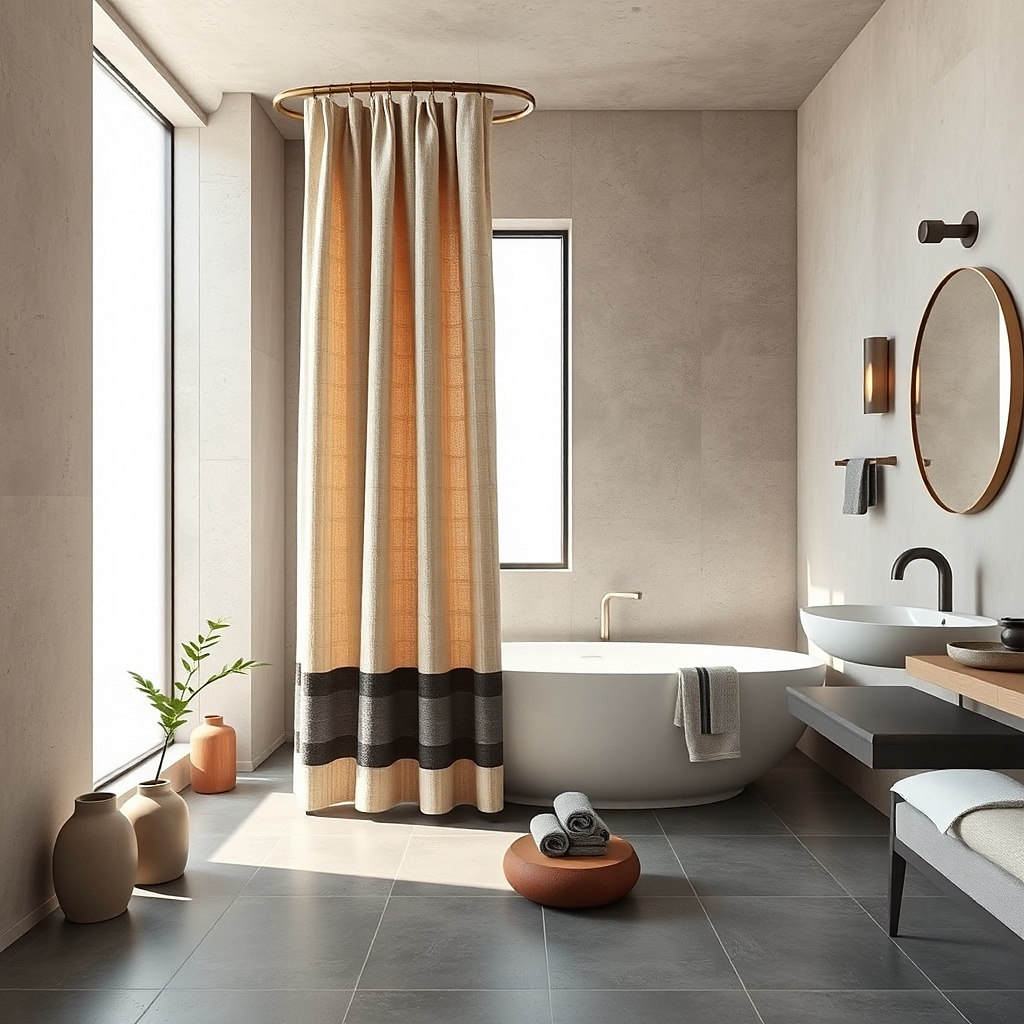
Greige with a micro-texture reads calm from across the room. The texture adds depth without introducing a strong pattern, which is what you want when your tile, vanity, or hardware already has visual noise. Micro-texture also hides the tiny water specks that show up after showers better than smooth, glossy fabrics. This is a smart choice for small bathrooms because it doesn’t compete with grout lines; it just softens the space. If you want that “spa towel” feeling, this one is closer than most linen looks because it has a dry, matte hand.
Choose a greige tone that matches your vanity finish — if you have warm wood, go warmer; if you have brushed nickel, go slightly cooler. Hang the curtain so the bottom edge sits 1-2 inches above the floor, then make sure it extends 6 inches past each side of the tub. If you’re using a liner, select a matte or fabric-like liner so the texture stays visible. Install a rod with enough projection from the wall so the curtain doesn’t cling to the tub rim; 2-3 inches of clearance is a good target. Expect $35-110 depending on fabric weight.
Try thisAdd matching bath mats in the same greige family so the curtain doesn’t feel like a lone piece of fabric.
Common mistakeAvoid bold patterns in greys — they can look like bathroom wallpaper in a small room.
3. Matte Stone Ombre Curtain (Light at the Top, Softly Darker at Bottom)
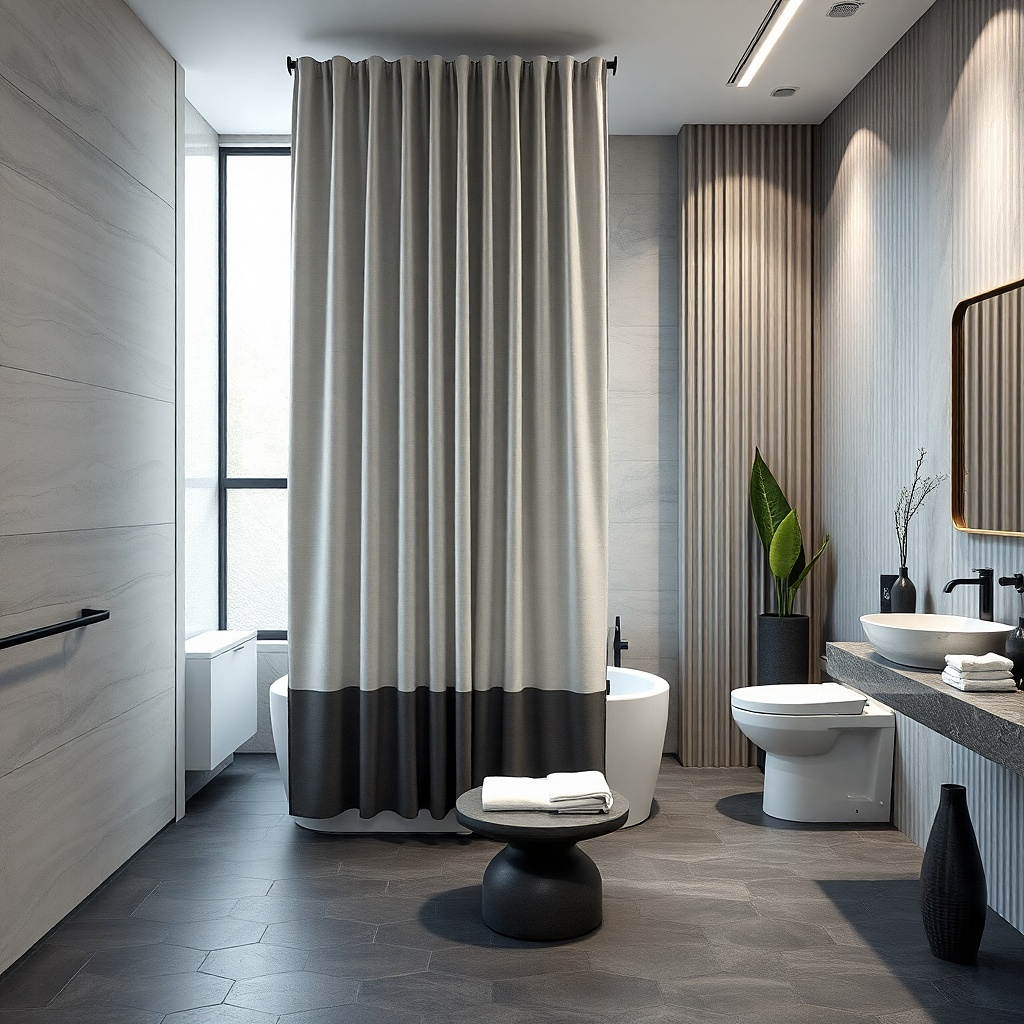
An ombre curtain creates a gentle vertical flow that makes a small bathroom feel taller. The trick is choosing a matte ombre that stays low-contrast, like stone or sand fading into taupe, not dramatic black-to-white. Light at the top reflects more light onto the wall and makes the ceiling feel higher. Darker at the bottom hides water spotting and keeps the lower edge from looking dirty. This look is especially effective when your walls are neutral and you want something that feels designed without turning the bathroom into a color theme.
Pick an ombre that shifts gradually over the full length, ideally with the strongest contrast starting below the halfway mark. Mount the rod 2-4 inches higher, then hang the curtain so it reaches near the floor with a clean break. Extend the curtain 6-12 inches past the tub sides so the ombre reads as one continuous panel, not a narrow strip. If you see cling, add a tension rod inside the shower for the liner only, keeping the decorative curtain free. Costs run around $45-140 for ombre curtains depending on fabric thickness.
Match your towel color to the light end of the ombre so the top edge looks intentional when the curtain moves.
Avoid high-contrast ombre with glossy fabric — it looks harsh and can shorten the room.
4. Tone-on-Tone Micro Stripe Curtain in Warm White
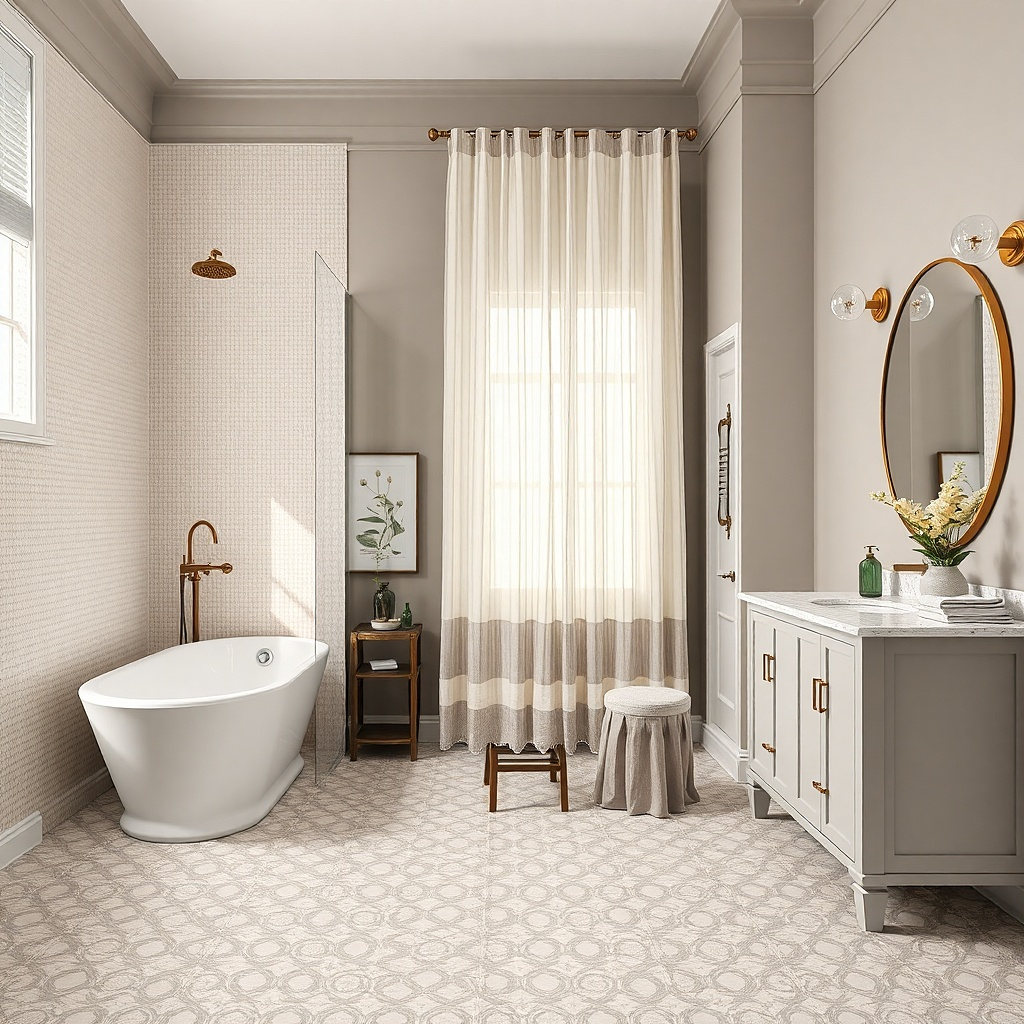
Micro stripes are a small bathroom cheat code because they add direction without screaming pattern. Tone-on-tone stripes in warm white add texture and vertical lift while staying neutral enough for almost any tile color. The stripes should be thin and low contrast; thick stripes or high contrast can make the room feel busier. This is a great option for bathrooms with patterned tile or busy wallpaper because it doesn’t compete. It also hides minor wrinkles better than flat solids, so your spa look stays tidy day to day.
Choose stripe width around 1-2 inches or thinner, with the stripe color just a shade darker than the base. Mount the rod higher (2-4 inches) and hang the curtain so it reaches 1-2 inches above the floor. Make sure the curtain width covers the tub opening plus 6-12 inches for overlap so stripes don’t stop mid-view. If you’re layering a liner, keep it clear or matte and avoid shiny plastic that turns the stripes into a glare line. Plan on about $35-100 for the curtain.
Try thisUse rings or hooks that create evenly spaced pleats; uneven pleats warp the stripe rhythm and make it look messy.
Common mistakeAvoid bold wide stripes — they can make a narrow room feel even narrower.
5. Sheer Mist Layer + Solid Bottom Curtain
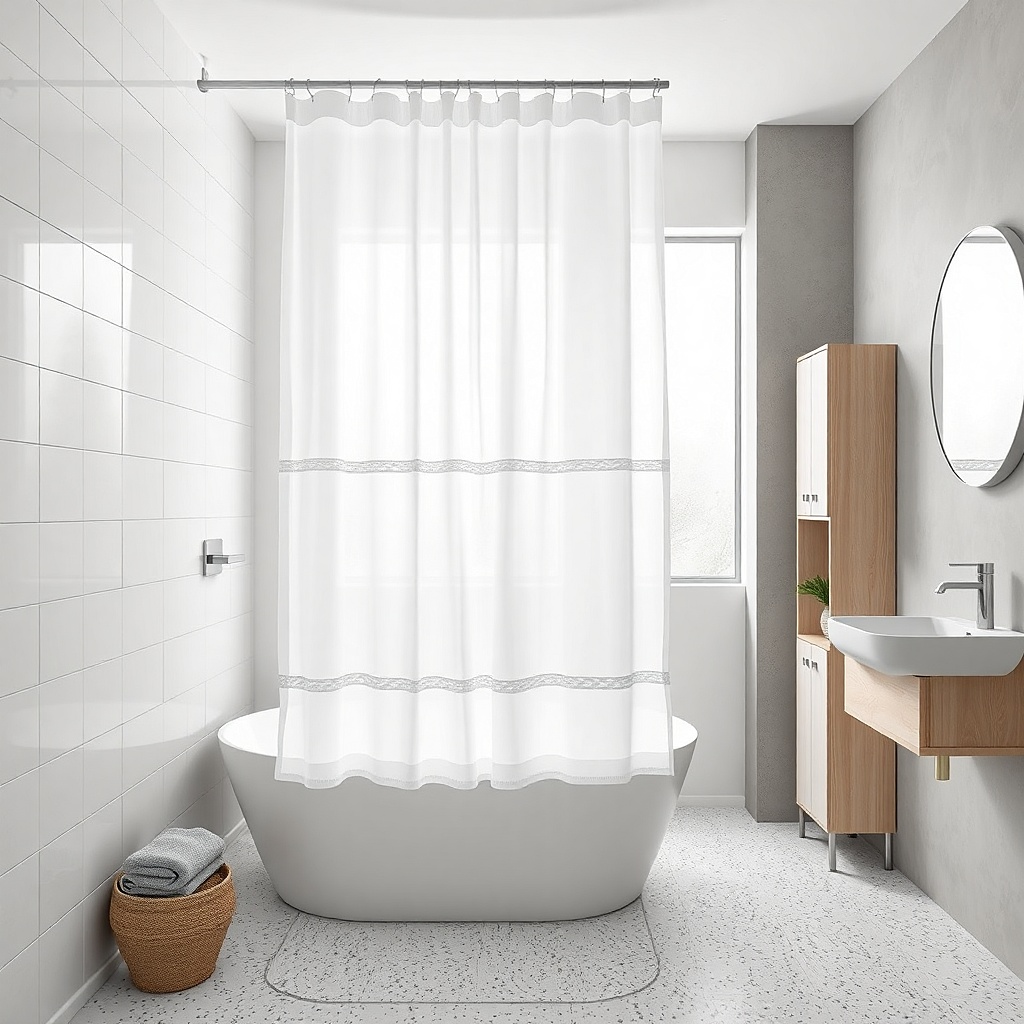
Two layers look expensive because they create depth. A sheer mist layer over a solid bottom panel softens the bathroom’s edges and makes the shower feel more like a spa enclosure. The sheer should be light and airy, while the solid bottom anchors the look so the curtain doesn’t look floaty or unfinished. This works best when your bathroom lighting is warm or neutral, because sheer fabric catches light gently instead of looking flat. In small spaces, the layered look also helps hide uneven tile lines or slightly off-center shower openings.
Use a decorative sheer panel hung from the rod with clip rings, then add a solid curtain liner or separate solid layer that covers the lower half. Mount the rod 2-4 inches higher, then set the sheer so it hangs down to about the mid-height of the curtain. The solid bottom layer should reach near the floor with a clean break. Keep the overlap tight so you don’t get a bulky seam in the middle. This setup costs about $50-160 depending on whether you buy a matched two-piece set.
Choose a sheer that is slightly textured (woven or micro-mesh) so it doesn’t look like plain plastic.
Avoid very see-through sheers without a proper liner — you’ll get an exposed, messy look.
6. Matte Sage Curtain with Soft Watercolor Print
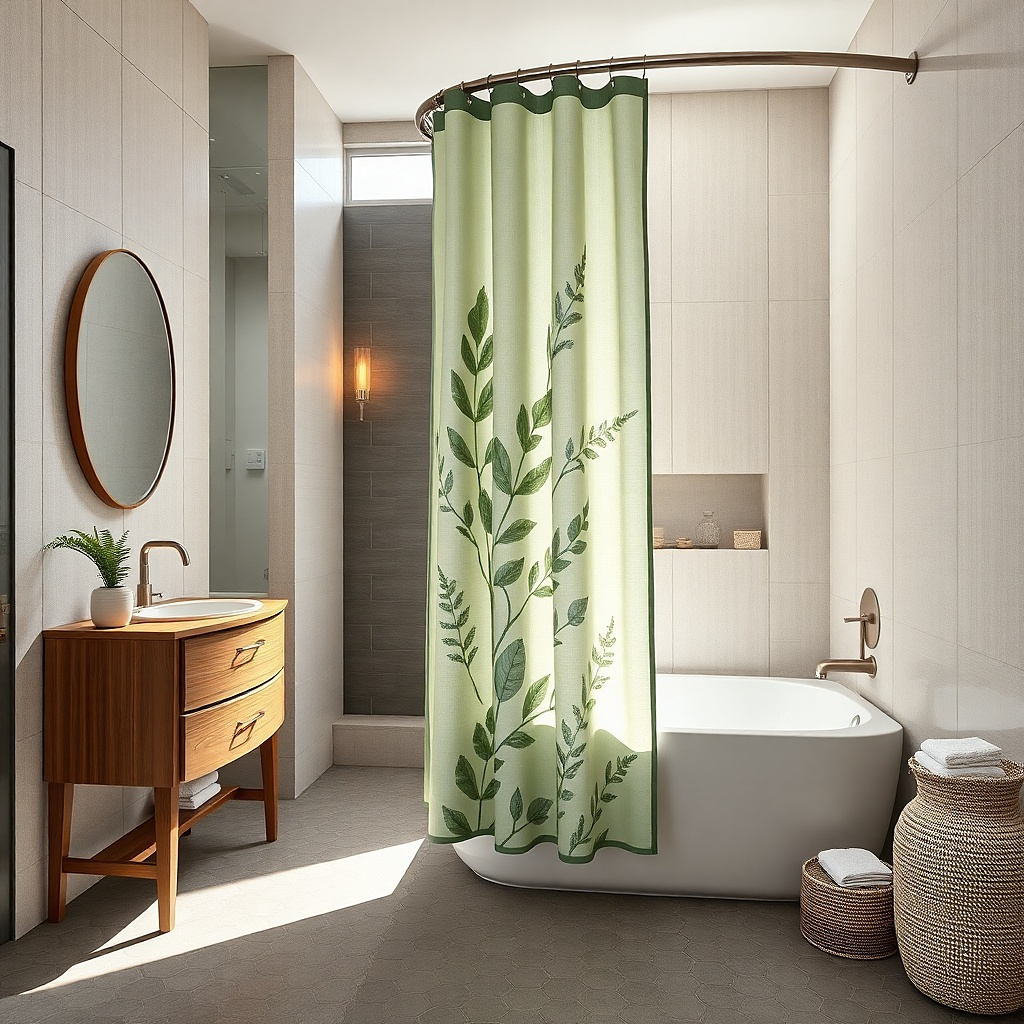
A sage curtain with a watercolor-style print adds calm without feeling themed. The watercolor effect should be low-contrast and airy, with leaves or botanicals that fade at the edges. Sage looks spa-like because it’s a muted green that doesn’t fight with beige tile or warm wood vanities. Keep the print scale small; big botanical prints can overwhelm a compact bathroom and make it look like a wallpaper accent. This is a good choice for people who want something more interesting than solid but still want the room to feel soothing.
Pick a sage base that matches your other green tones, or choose one that sits between sage and eucalyptus. Hang the curtain so the print’s densest area sits around eye level; that usually means the curtain is fully visible from the bathroom doorway. Mount the rod 2-4 inches higher and extend 6-12 inches past the tub edges so the watercolor reads as a whole. Use a liner that is matte or fabric-like to prevent the print from flattening under glare. Budget $45-140 depending on print quality.
Try thisRepeat one color from the print in a towel (sage or a muted tan) so the bathroom looks styled, not random.
Common mistakeAvoid high-contrast botanical prints — they look busy in small bathrooms.
7. Sandstone Textured Curtain with Chunky Weave Look
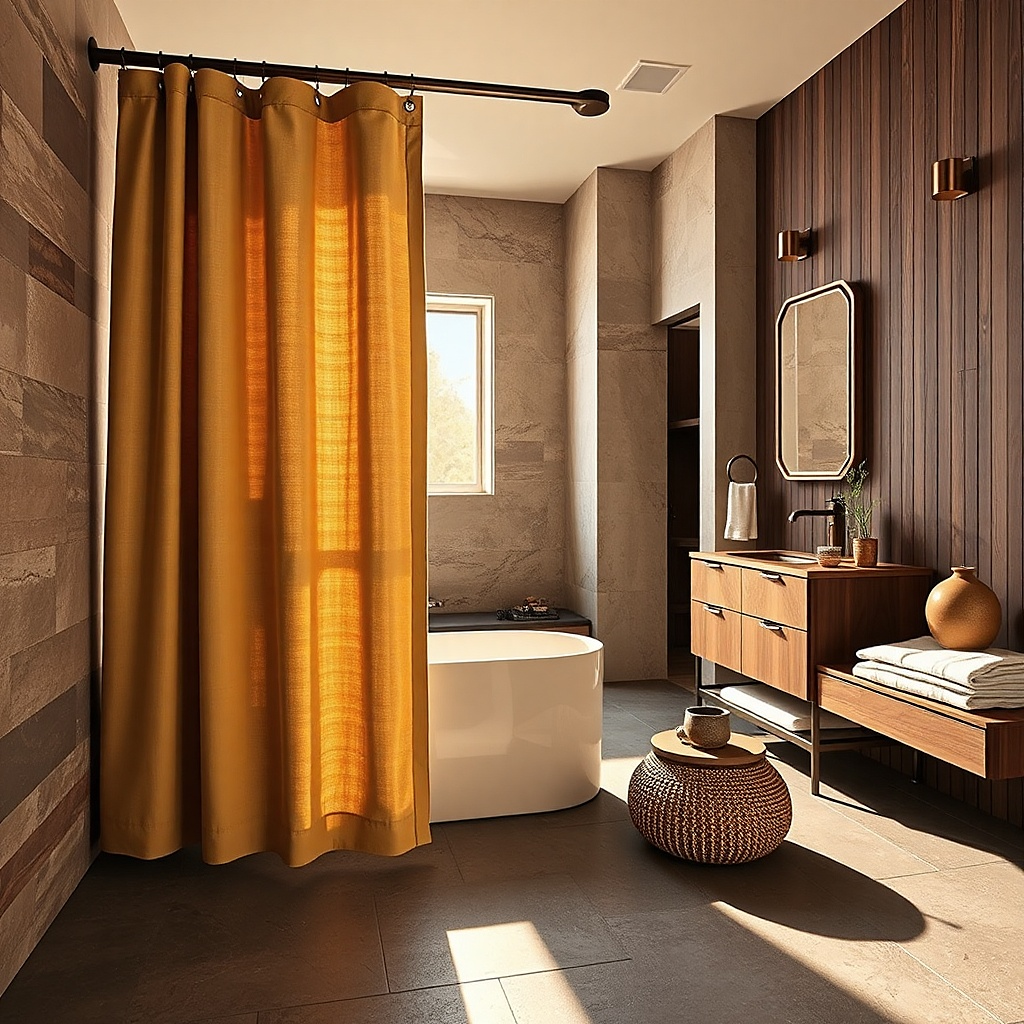
A chunky weave curtain brings the spa vibe of heavy towels and woven bath accessories. In a small bathroom, the weave pattern should be subtle and tonal, like sandstone, not high-contrast yarn stripes. The texture creates visual warmth and reduces the sterile feel that plain plastic curtains can cause. This works especially well with white or cream walls, light wood vanities, and brushed metal hardware. It also hides wrinkles better than smooth fabrics, so your curtain stays photogenic even after a busy week.
Choose a curtain with a visible weave depth, but avoid thick yarns that snag easily. Hang it 2-4 inches higher than your old rod and let it fall 1-2 inches above the floor. Extend it past the tub edges by 6-12 inches so the woven texture is visible across the whole opening. If you use a liner, pick one that is matte and keep it slightly shorter so it doesn’t show as a second seam. Expect $40-120 for a good textured curtain.
If your bathroom has hard shadows, swap to warm bulbs so the weave texture shows without looking flat.
Avoid glossy textured curtains — they reflect light in a way that looks cheap.
8. Soft Taupe Curtain with Vertical Fringe Only at Bottom
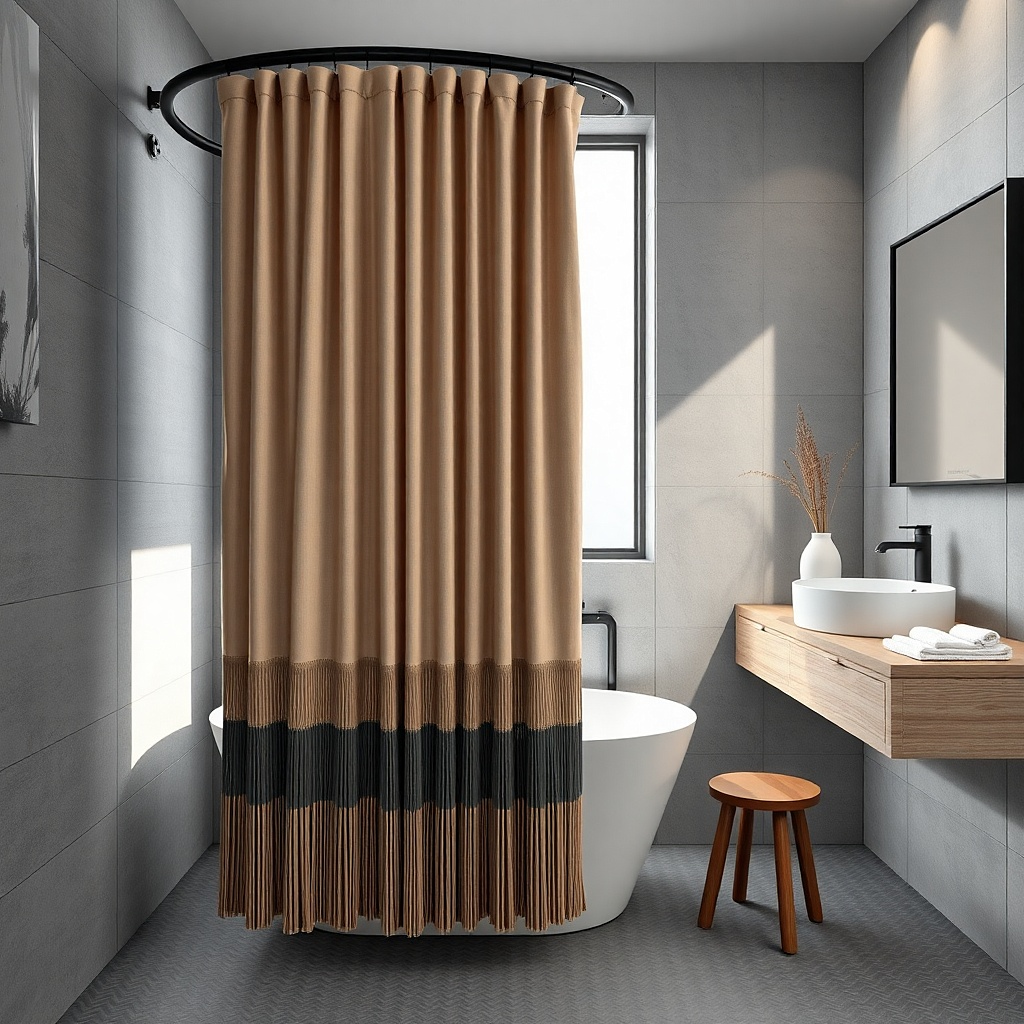
Fringe can look luxe in a small bathroom when it’s controlled. Keep fringe only at the bottom hem, in a soft taupe that matches your walls or vanity, so it reads like a towel edge instead of decor. Fringe adds movement and softness, which helps a small bathroom feel less boxy. The fringe length should be short enough to avoid tangling — think trim that sits just above the floor line rather than hanging deep into it. This style works well if you want a spa vibe but your tiles are plain and you need a focal point that doesn’t add busy patterning.
Select a curtain where fringe is stitched into the hem, not loose tassels. Mount the rod 2-4 inches higher and hang the curtain so the fringe stops about 1 inch above the floor, giving a clean break. Extend the curtain 6-12 inches past the tub sides so the fringe line stays continuous across the opening. Use a standard liner inside the shower and clip it so it doesn’t slip and poke out behind the fringe. Budget $35-110 depending on fringe density.
Steam the hem after hanging so the fringe falls straight instead of curling.
Avoid long tassels that reach the floor — they look messy and collect grime.
9. Cloud White Curtain with Subtle Ripple Texture
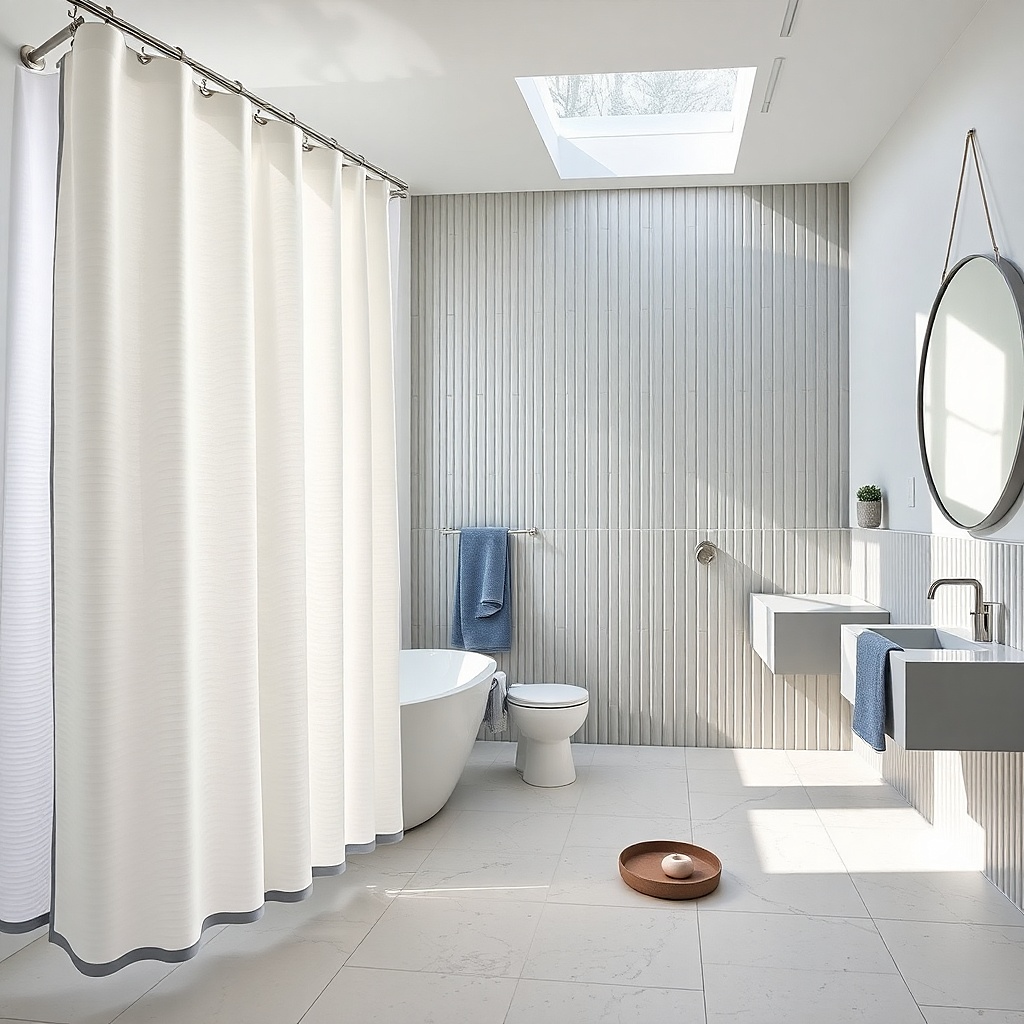
Ripple texture reads like water without turning your bathroom into a theme. A cloud white curtain with subtle ripples adds dimension that looks good in photos because light catches the high points. In a small bathroom, this texture helps the curtain feel like part of the design instead of a flat barrier. It also works with both modern and classic tile because the ripple is neutral and tonal. Choose a matte finish so the ripples don’t glare. This is a strong option for people who want “spa shower” vibes but hate visible prints.
Pick a ripple texture that is raised but not glossy. Hang the curtain so it reaches near the floor with a consistent gap of 1-2 inches. Mount the rod 2-4 inches higher, then ensure the curtain extends 6-12 inches past the tub edges. Use a liner that is matte or lightly textured so the ripples remain visible from the doorway. Plan for $40-130 for a good ripple curtain.
Try thisIf you have a window near the bathroom, let natural light hit the curtain — ripples look better with soft daylight.
Common mistakeAvoid glossy ripple fabric — it looks like cheap shower plastic under bathroom lighting.
10. Bamboo-Color Curtain with Vertical Paneling Look
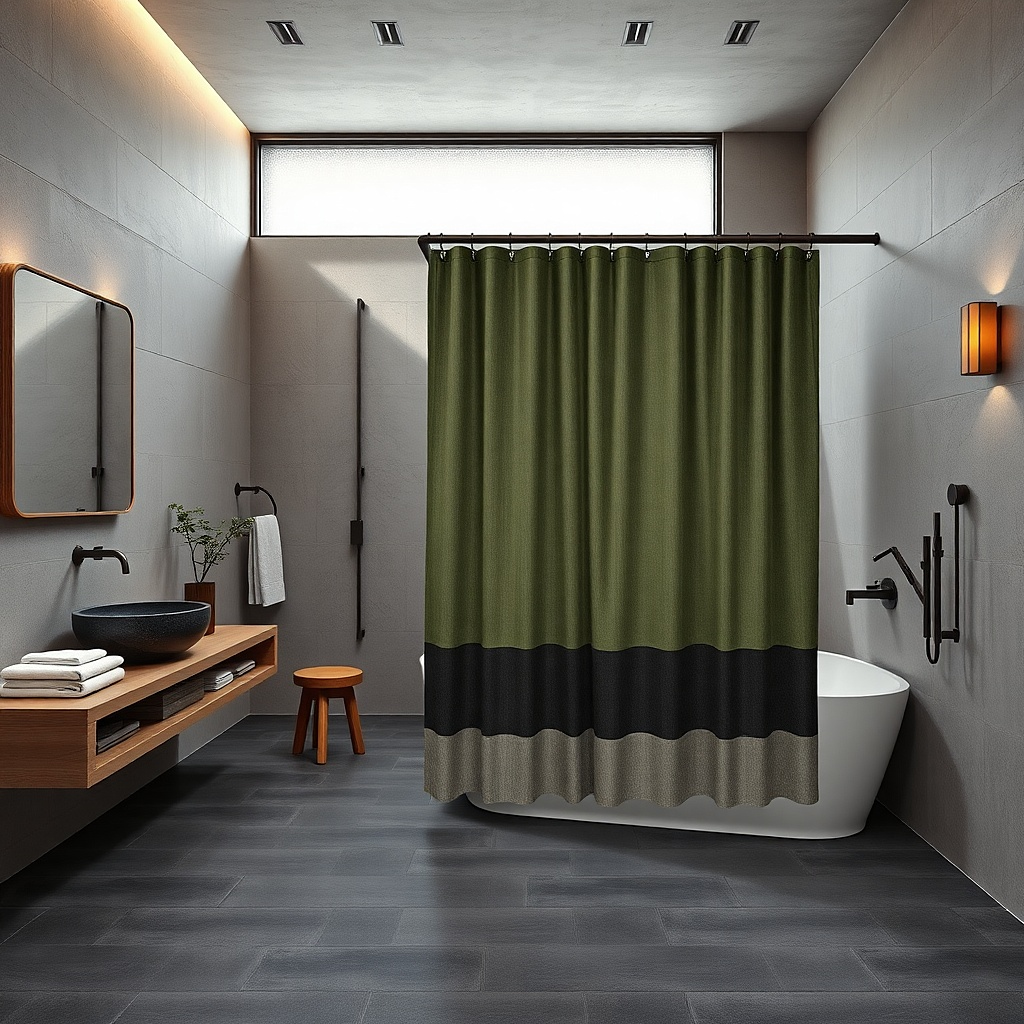
Vertical paneling makes a small bathroom feel taller because it gives the eye a straight line. A bamboo-color curtain in warm beige adds warmth without looking yellow. The panel lines should be tonal and slim, like pressed fabric seams, not bold stripes. This style is great when your bathroom has horizontal elements like a long vanity mirror or a wide tile border — vertical panels balance the composition. It also photographs well because the paneling creates soft highlights even in dim lighting.
Choose a curtain with panel widths around 1-3 inches and a base color that matches your grout or vanity tone. Install the rod 2-4 inches higher than your current height and hang the curtain so it falls 1-2 inches above the floor. Extend the width 6-12 inches past the tub edges so the panel lines don’t stop early. If you use a liner, keep it smooth and matte to avoid creating a second texture layer that fights the panels. Expect $35-100 for the curtain.
Try thisMatch your curtain hooks to the hardware finish (brushed nickel or matte black) so the top edge looks intentional.
Common mistakeAvoid dark brown panels in a tiny bath — they can make the room feel bottom-heavy.
11. Stone Gray Curtain with Soft Geometric Tile-Scale Pattern
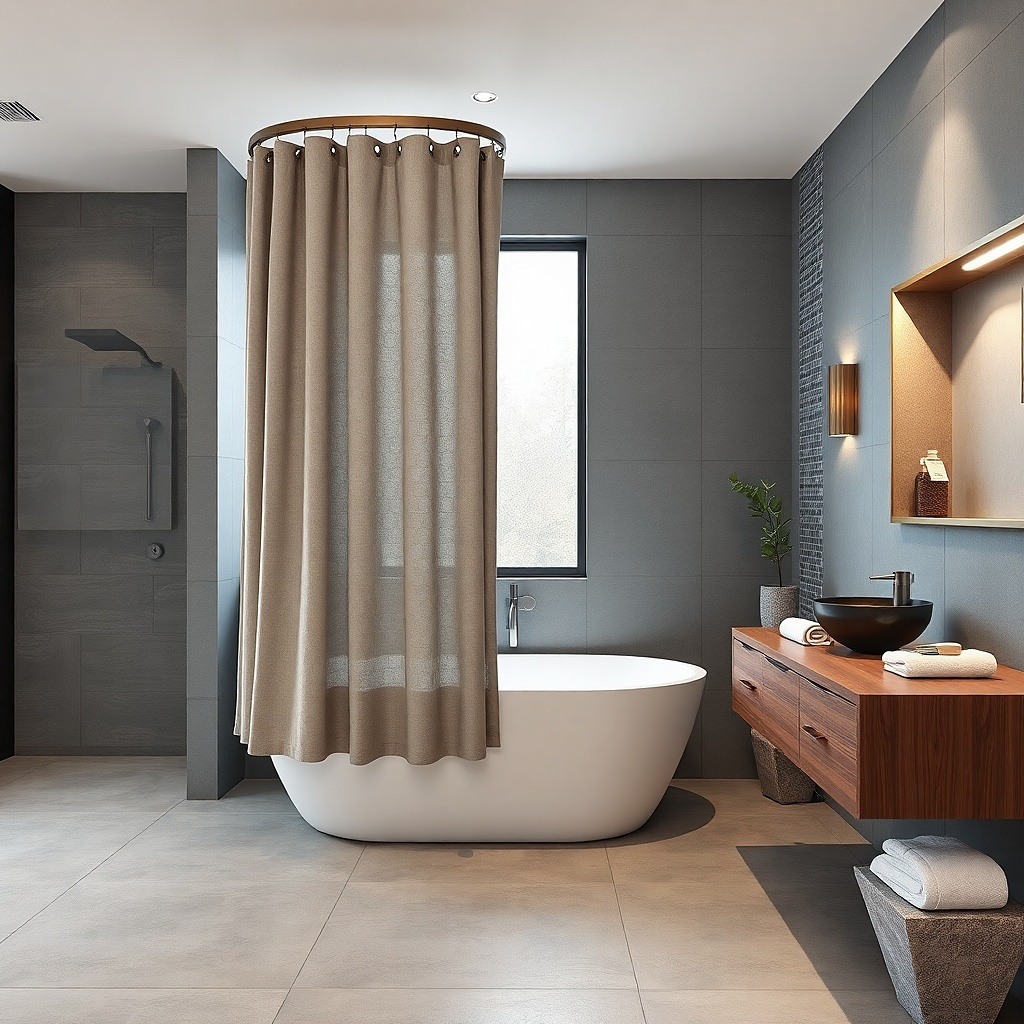
A low-contrast geometric pattern can look like a spa tile mural without overwhelming a small bathroom. Choose stone gray with a pattern that matches your tile scale — small shapes, not large blocks. The goal is subtle structure, so the curtain looks designed even when it’s still. This works well if your walls are plain and your tile is simple, because the curtain becomes the soft visual interest. Keep the pattern’s edges blurred or watercolor-like rather than crisp and high-contrast; crisp patterns can feel busy in tight rooms.
Select a pattern where the darkest part stays one or two shades deeper than the base. Mount the rod 2-4 inches higher and hang the curtain so the pattern centers around eye level when you stand in the doorway. Extend 6-12 inches past the tub sides so the geometry reads as one composition. Use a liner that is clear-matte or lightly tinted to avoid washing out the pattern. Budget $45-140 depending on fabric thickness.
Repeat one color from the curtain in the bath mat or soap dispenser to make the pattern feel cohesive.
Avoid loud black-and-white geometry — it can make small bathrooms feel like a storefront.
12. White-on-White Embossed Curtain with Raised Dots
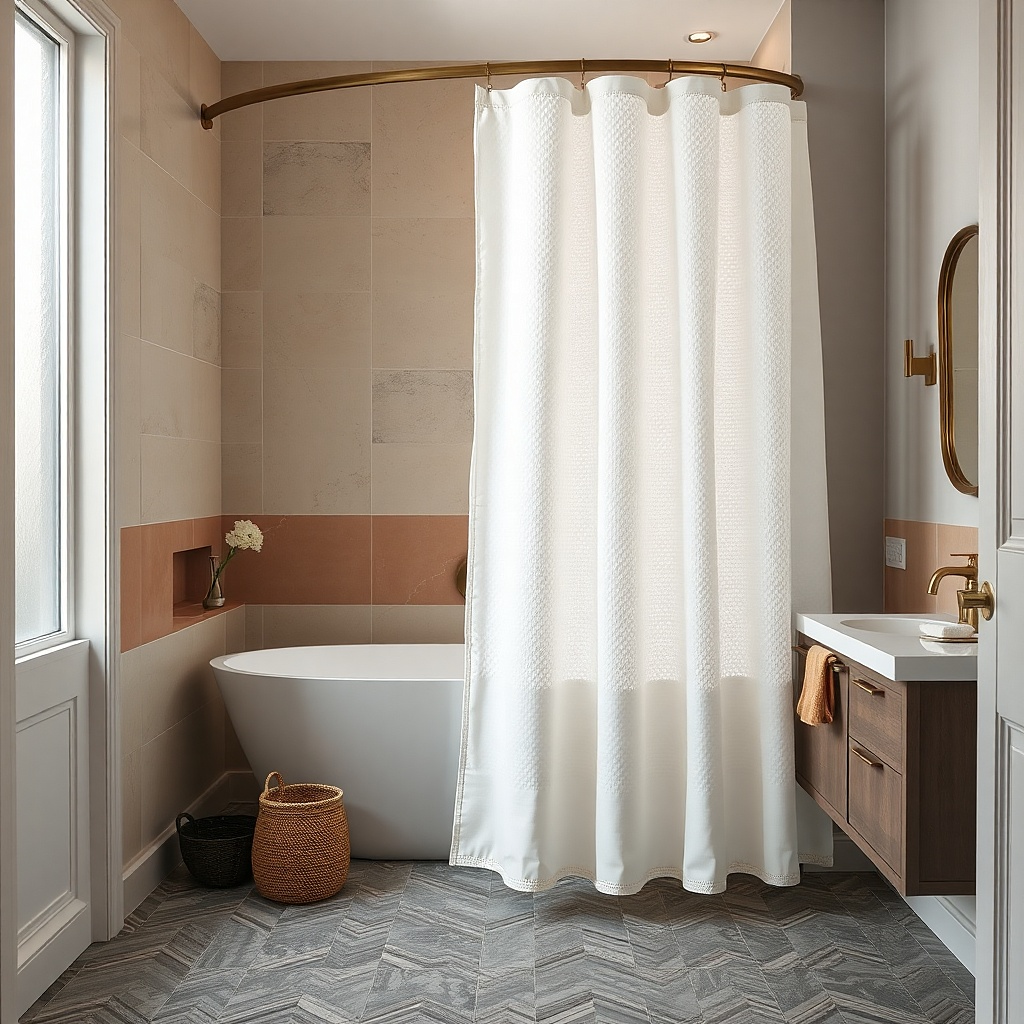
White-on-white embossed curtains look spa-clean because they add texture without adding color. Raised dots or micro embossing catch light in a gentle way, so the curtain looks luxurious even when it’s just hanging still. This is a good option when you have colorful tile and you want the shower curtain to soften edges, not add competing color. The embossing also hides minor wrinkles and makes the fabric look heavier. Choose a matte embossed surface, not shiny vinyl, or the dots will look plastic.
Pick a curtain with a true fabric embossing, then check that it has a visible weight (it should hang without clinging). Mount the rod 2-4 inches higher and hang it so the bottom sits 1-2 inches above the floor. Extend 6-12 inches past the tub edges so it frames the opening. Use a liner if the embossed surface is decorative, but keep the liner matte so it doesn’t flatten the texture. Expect $35-120 for a quality embossed curtain.
If you’re worried about water spots, choose a warm white embossed fabric it shows less gray residue than pure white.
Avoid plain glossy white — it shows every drip and looks harsh.
13. Eucalyptus Green Curtain with Soft Watercolor Border
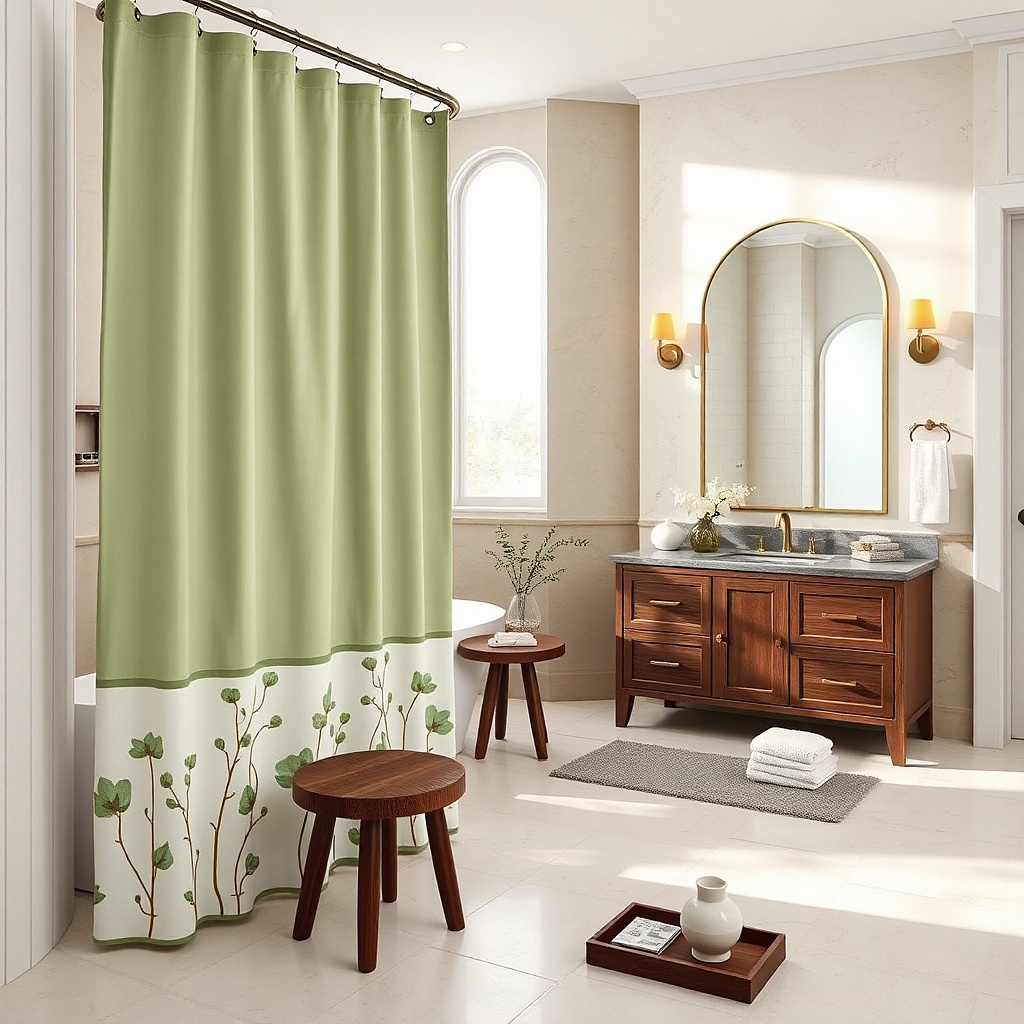
A watercolor border focuses the design where your eye naturally rests, near the bottom edge. In a small bathroom, that means you get interest without covering the entire curtain with busy pattern. Eucalyptus green looks like spa plants, but keep the border low-contrast and airy so it doesn’t feel like “holiday decor.” The rest of the curtain should be plain and matte for calm. This is a strong pick if your bathroom has a patterned wall or a bold vanity and you need the shower curtain to act like a gentle frame.
Choose a curtain where the border sits in the bottom third, with the color fading outward rather than forming a thick stripe. Hang the curtain so the border aligns with the height of your towels and bath accessories — usually 18-28 inches from the floor depending on your setup. Mount the rod 2-4 inches higher and extend 6-12 inches past the tub edges. Use a liner that doesn’t add shine; matte liners keep the watercolor looking soft. Budget $45-130 depending on fabric.
Try thisPick towels in a neutral that matches the curtain base, not the green border, so the border stays the accent.
Common mistakeAvoid thick solid borders — they look heavy and shrink a small room visually.
14. Matte Black Curtain with Foggy White Gradient for Contrast
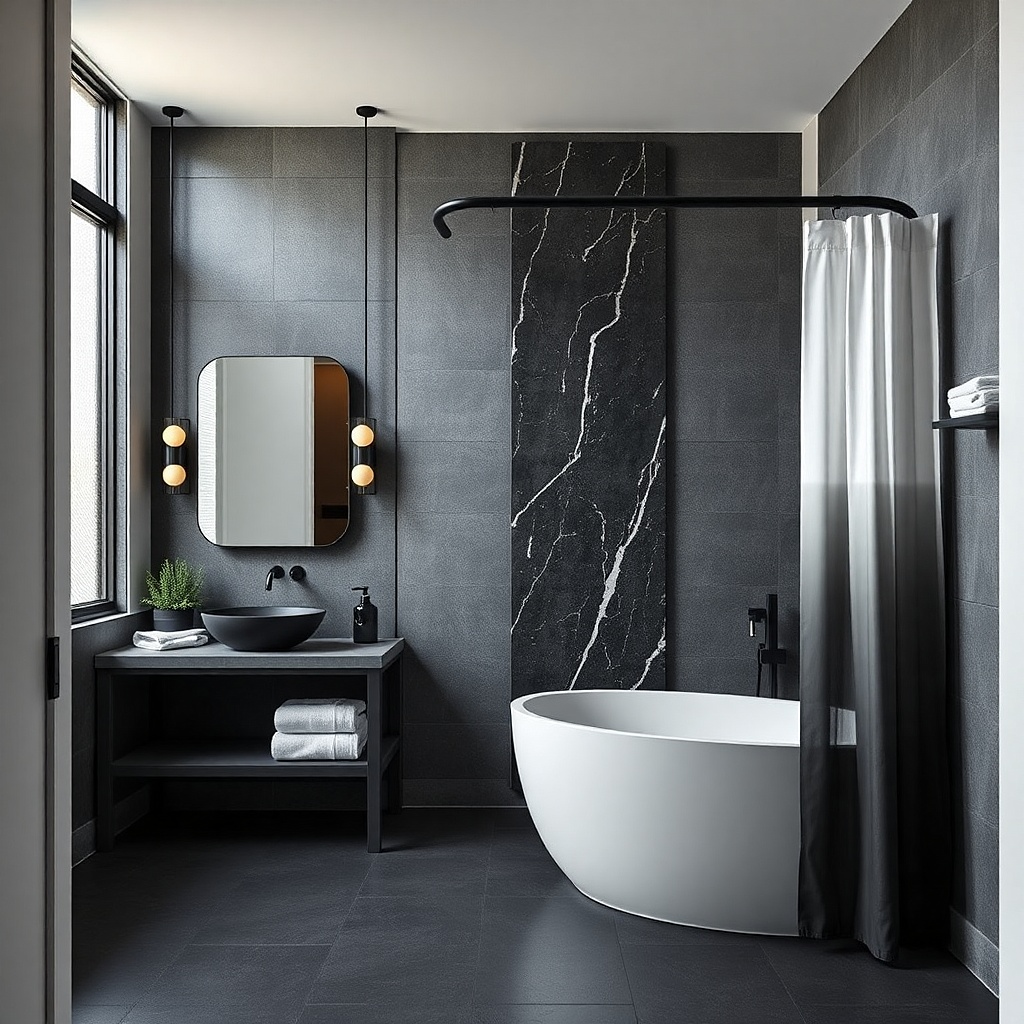
Matte black can work in a small bathroom when it’s paired with a foggy gradient that lightens near the top. The black anchors the look and makes the room feel designed, while the lighter top keeps it from feeling cramped. The gradient should be soft and smoky, not a hard block of color. This style looks especially good with white tile and brushed gold or chrome hardware because the contrast reads intentional. If you’re trying to avoid the “small bathroom is just beige and white” problem, this is a controlled way to add drama.
Pick a curtain with the darkest tone starting below the halfway point, and confirm the fabric is matte to avoid glare. Mount the rod 2-4 inches higher and hang the curtain so it reaches 1-2 inches above the floor. Extend 6-12 inches past the tub edges so the black doesn’t look like a narrow strip. Use a clear or matte liner; avoid shiny plastic because it will reflect the black and look streaky. Expect $50-160 depending on brand and fabric weight.
Try thisAdd a black or dark-toned bath mat and matching hooks so the curtain doesn’t feel like the only dark element.
Common mistakeAvoid solid black curtains with no gradient — they make small bathrooms feel boxy.
15. Soft White Curtain with Rounded Rod and Slightly Wider Hang
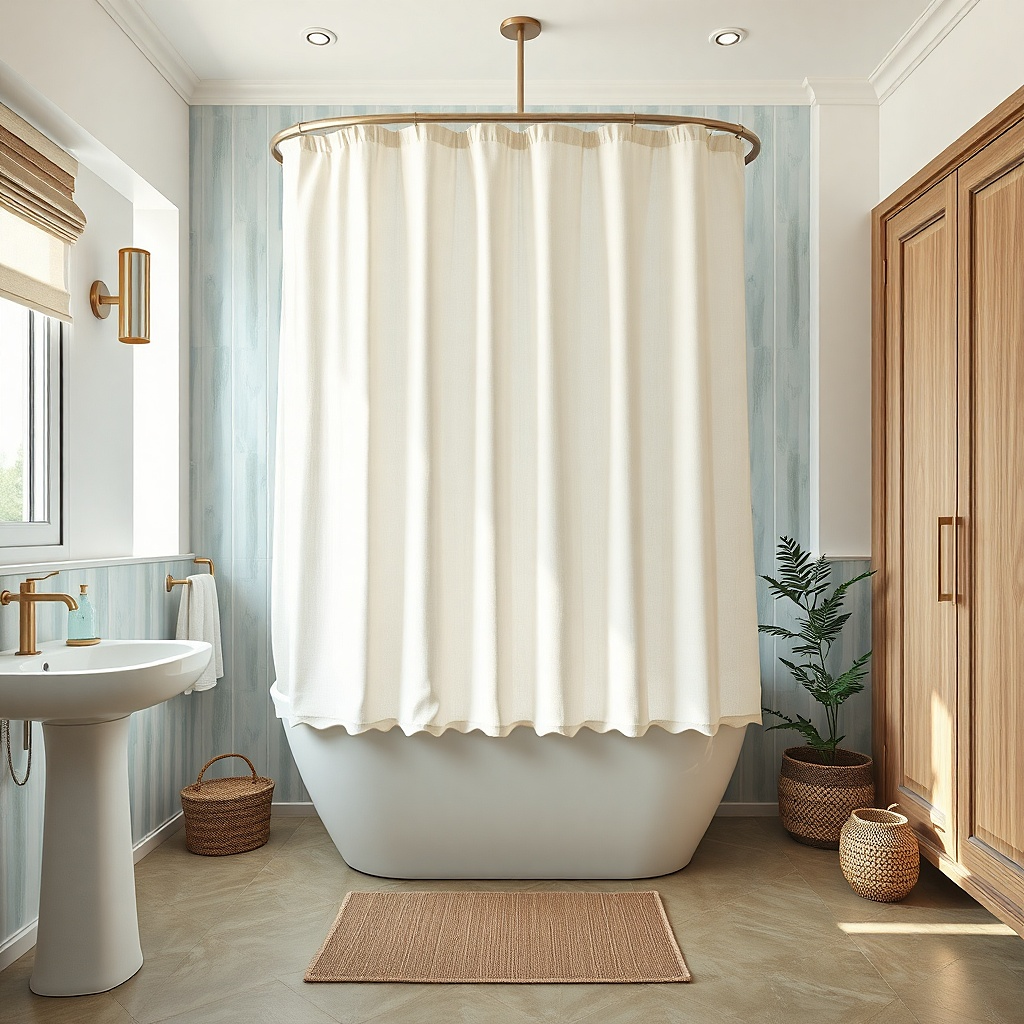
Sometimes the curtain doesn’t look spa-like because it clings to the tub. A rounded rod gives the fabric room to billow slightly, which makes the shower opening feel softer and larger. Use a soft white curtain in linen-blend or micro-texture, and the rounded hang creates that “spa enclosure” look without needing a dramatic pattern. This is one of the most effective fixes for small bathrooms because it changes how the curtain sits, not just what it looks like. It also reduces the stuck-to-you plastic feel, which helps the bathroom look more relaxing.
Install a rounded shower rod that gives extra projection from the wall, targeting 2-3 inches of clearance. Mount the rod 2-4 inches higher than the old setup, then hang the curtain so it falls 1-2 inches above the floor. Extend width 6-12 inches past the tub edges so the rounded drape reads as a full frame. If you need a liner, use a standard liner inside and keep it from peeking out by clipping it slightly higher. This is a moderate upgrade: $50-200 for the rod and $35-120 for the curtain.
Use evenly spaced rings so the fabric drapes in consistent waves instead of random folds.
Avoid a flat rod that forces the curtain to stick to the tub rim.