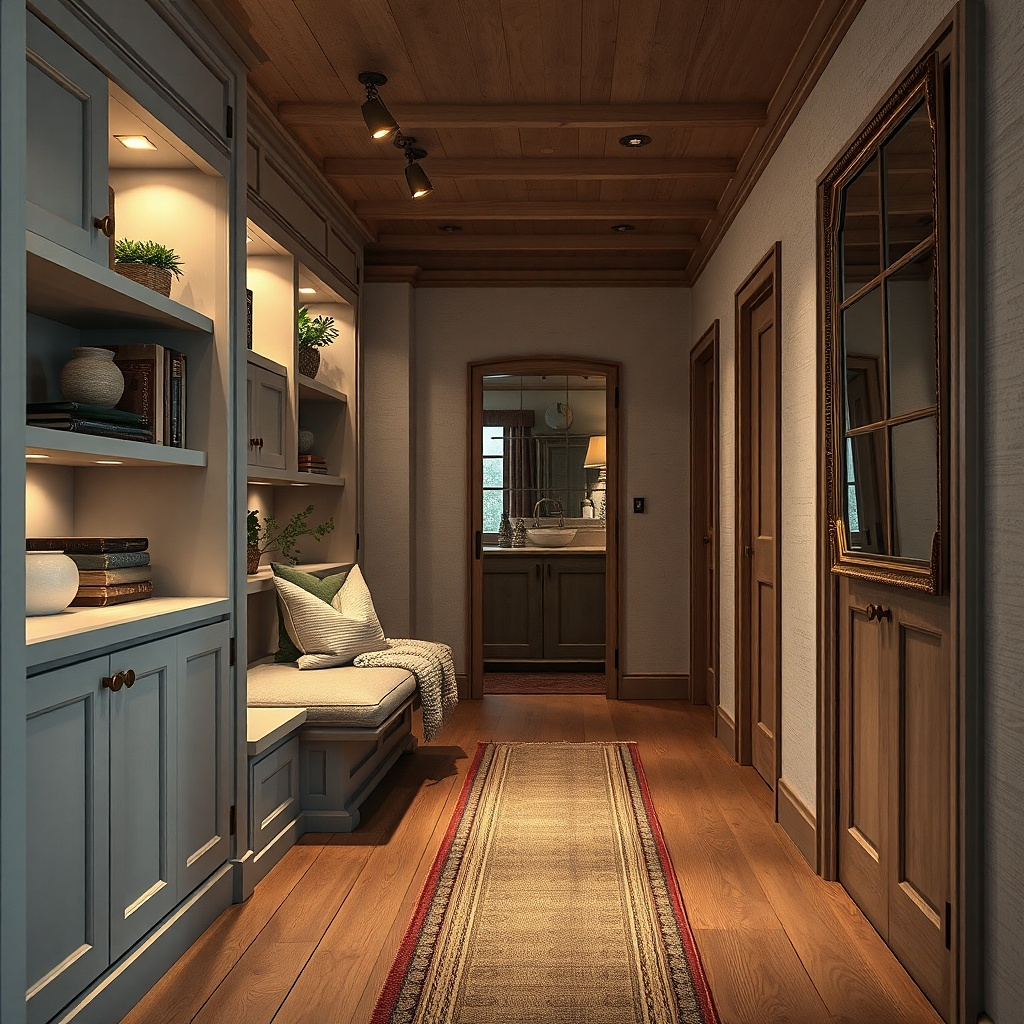
1. Floor-to-ceiling picture ledges in a pinched hallway
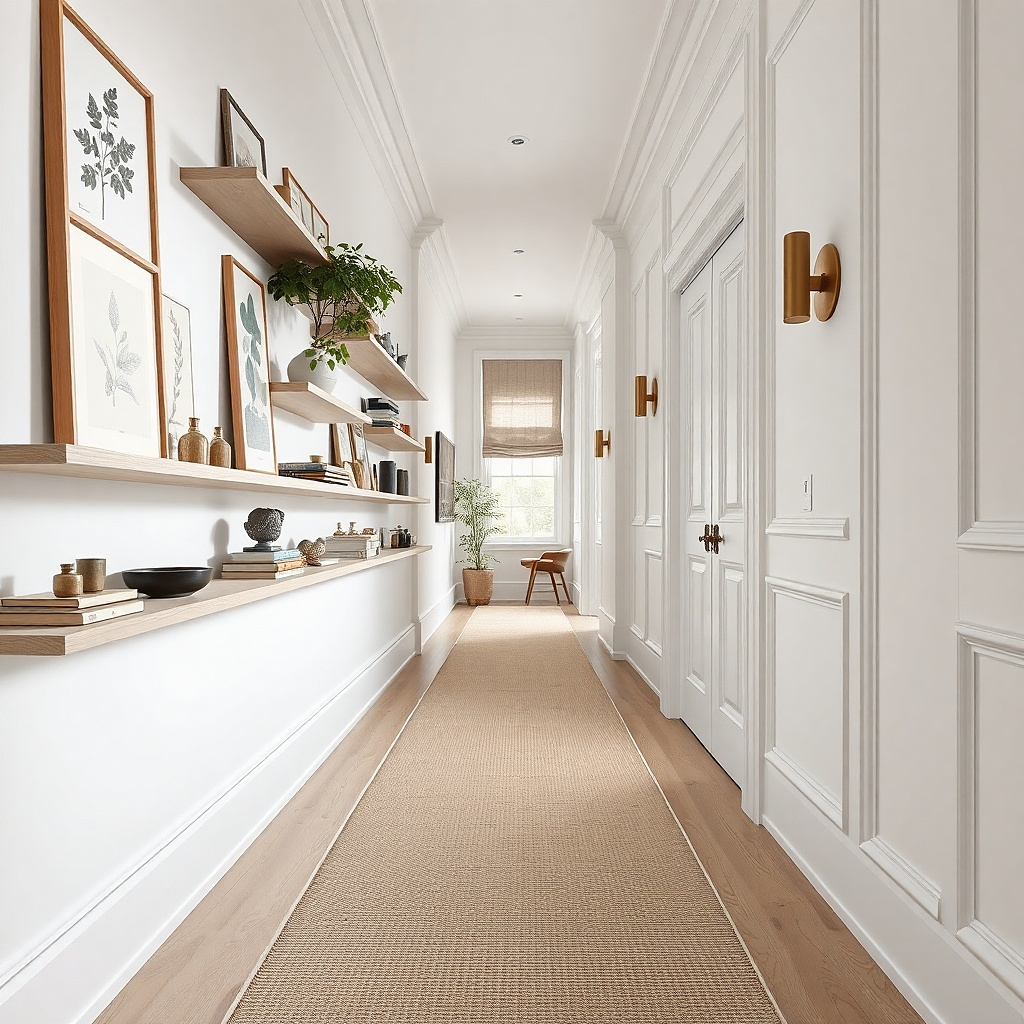
This is one of the smartest fixes for a hallway that feels too narrow for normal furniture but too blank to ignore. Slim picture ledges project only a few inches, so they give the wall texture and personality without stealing walking space. Stacking them from about 18 inches above the floor to near the ceiling pulls the eye upward, which makes the hall feel taller and less cramped. Use ledges in painted wood or oak veneer, then layer black-and-white prints, sepia sketches, and one or two small brass objects for shine. The final look feels collected, but the footprint stays lean.
Try thisKeep the bottom ledge sparse. Too many objects near shin height make the hallway feel cluttered even if the depth is small.
Start by buying ledges that are 3.5 to 4.5 inches deep and at least 24 inches long. Mark a vertical stack on one wall only, with 10 to 14 inches between each ledge, and screw them into studs or anchors so they do not shift when bumped. Then add art in overlapping layers, keeping the frame palette tight — black, oak, or brass works best. A full stack in a standard hallway costs about $80 to $250 depending on the number of ledges and frame quality.
Common mistakeSkip deep shelves meant for books — anything over 5 inches projects too far in a busy pass-through.
2. One dramatic runner that stretches the full line
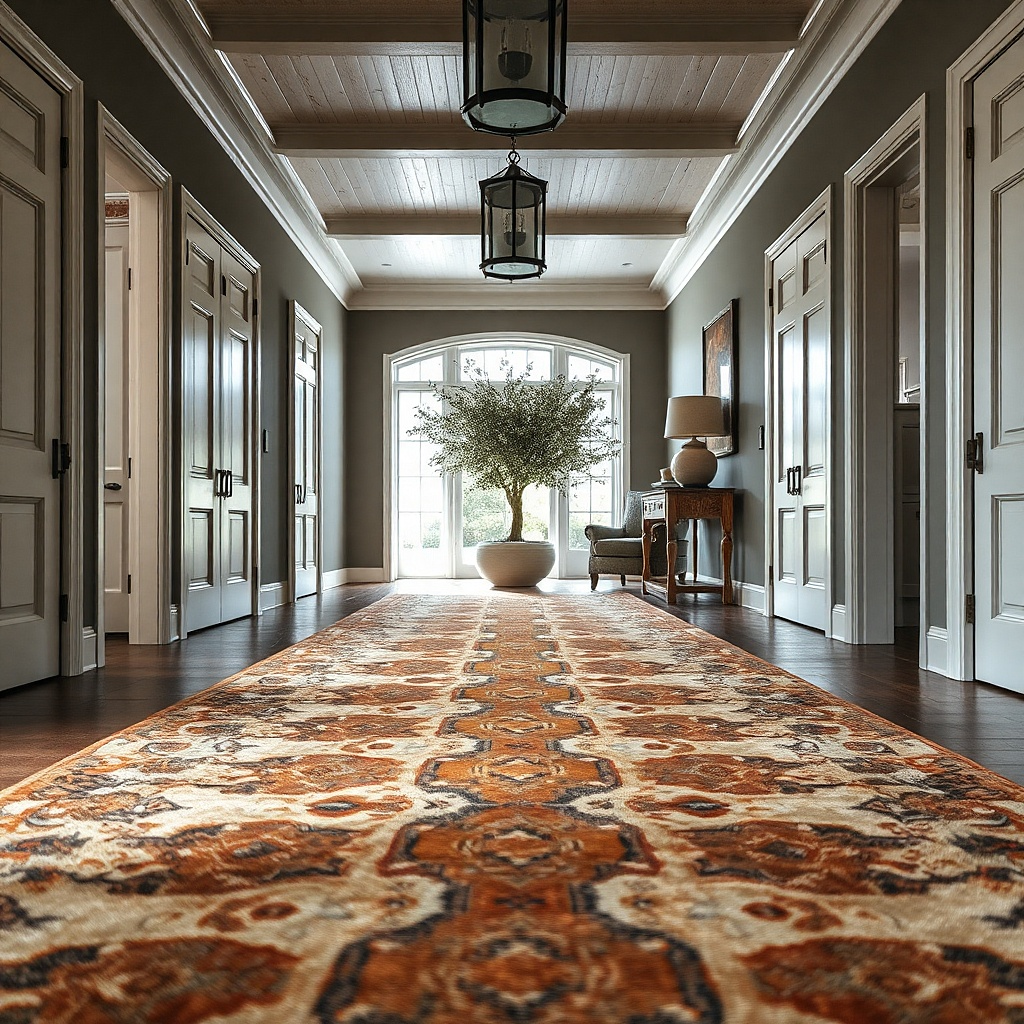
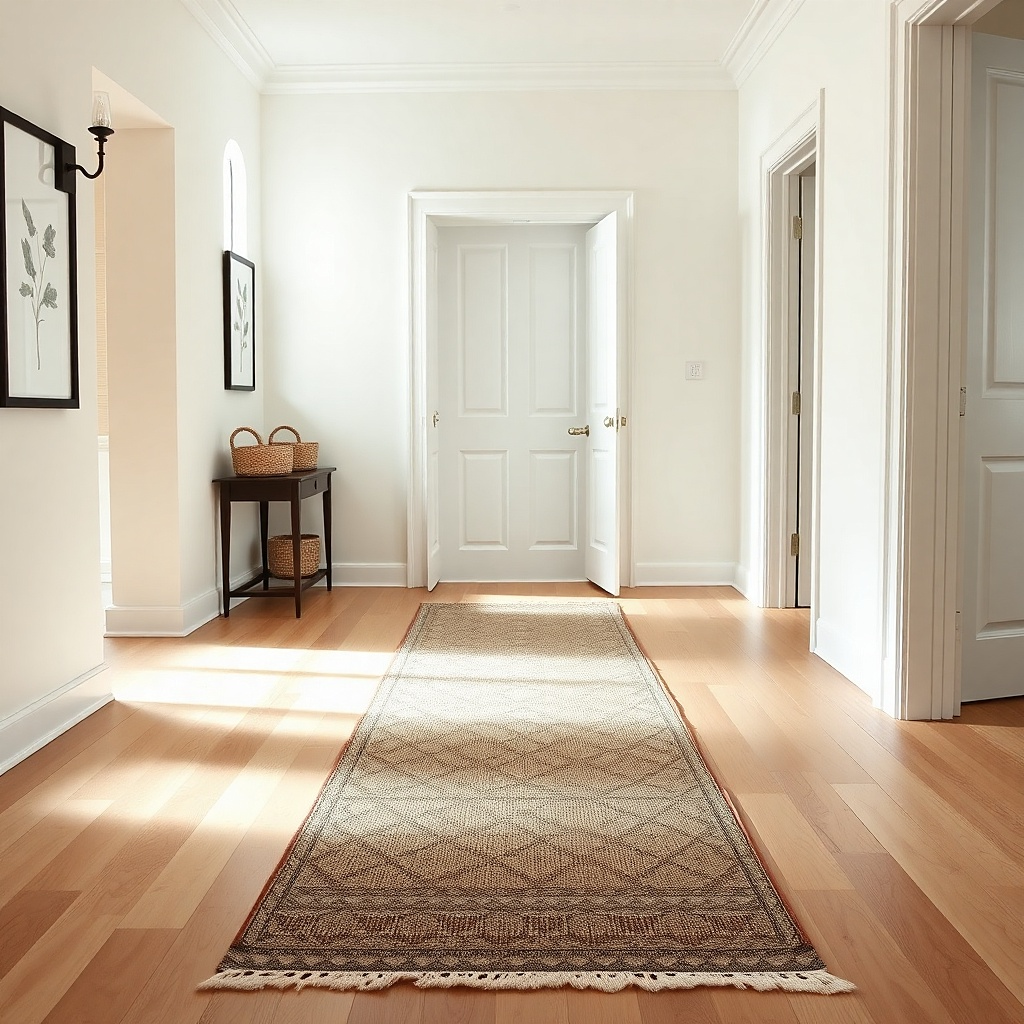
A hallway with awkward length needs one strong line on the floor or it reads choppy and unfinished. A proper runner visually stitches the whole corridor together, especially if there are several door openings interrupting the walls. Go bigger than you think. A faded Persian-style pattern in rust, ink blue, olive, or sand hides traffic marks and adds depth without shouting. Flatweave and low-pile wool are the best choices because doors clear them easily and the texture still feels substantial underfoot.
Start by measuring the full hall length and subtract 8 to 18 inches from each end so the rug does not crash into baseboards or thresholds. Choose a width that leaves 3 to 5 inches of visible floor on each side; in many homes that means a 2’6" or 3' wide runner. Then anchor it with a felt-and-rubber rug pad cut one inch smaller on all sides. Expect to spend about $60 for a washable synthetic runner and $180 to $500 for a wool one that looks better and lies flatter.
If the hallway turns a corner, use two runners from the same collection rather than forcing one awkward bend.
Do not use a tiny runner floating in the middle with a foot of bare floor on each side.
3. A color-drenched hall that turns odd angles into architecture
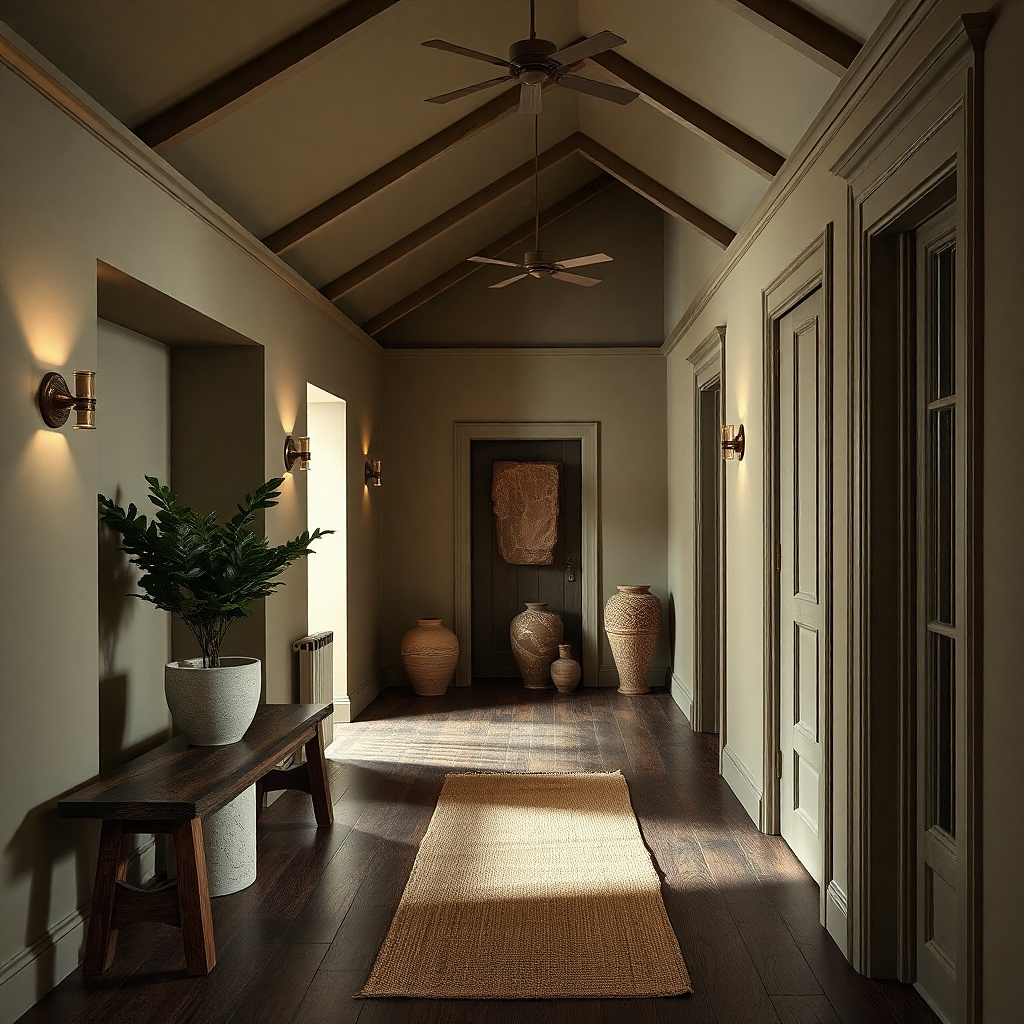
A hallway with slants, jogs, alcoves, or too many door frames gets calmer when everything is painted one color. This removes the stop-start effect created by bright white trim around every opening. The best shades here are moody but not muddy — olive green, warm charcoal, clay brown, or blue-gray with a little softness in it. Paint walls, trim, doors, and even the ceiling in the same finish family so the shape reads as one envelope. Instead of apologizing for awkward architecture, this approach makes it feel deliberate and cocooning.
Start by patching dents and sanding trim because one-color paint makes surface flaws easier to spot. Use eggshell on walls and satin on trim and doors in the same shade so light still catches edges slightly. Then swap in warm bulbs and one or two light-reflective accents like a brass mirror or pale runner so the space does not go flat. Paint is one of the cheaper fixes here — roughly $80 to $180 in materials for a standard hallway if you already have basic tools.
Test the paint at both ends of the hall. A color that looks soft near a window can turn heavy in the darkest section.
Do not leave the ceiling bright white if you want the color-drenched effect to work.
4. A dead-end hallway with one oversized art piece
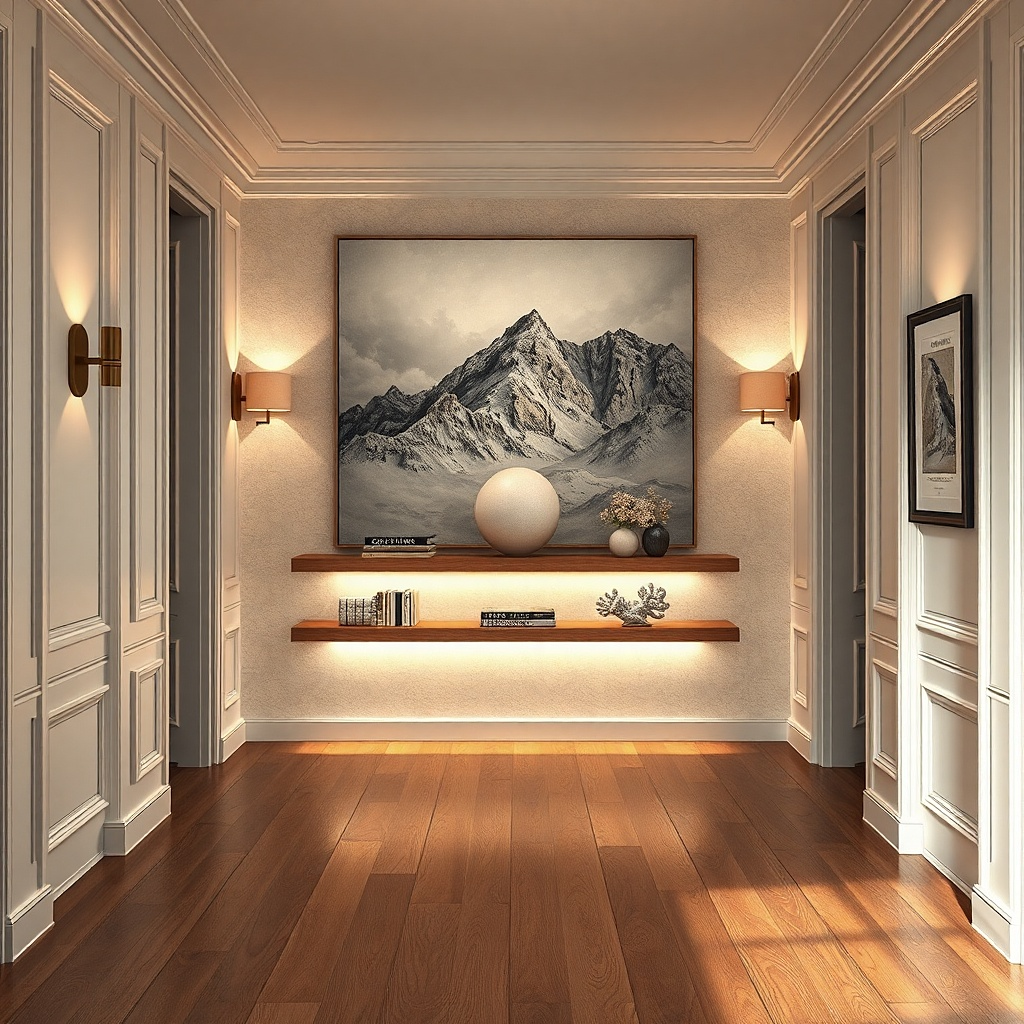
The wall at the end of a hallway decides whether the whole space feels abrupt or finished. One oversized piece of art is the cleanest answer. It gives the eye a destination, which instantly improves a long or awkward corridor. Pick a piece at least 30 by 40 inches for a standard end wall, or larger if the wall can take it. Abstract landscapes, charcoal figure drawings, or high-contrast photography work well because they hold attention from a distance.
Try thisUse anti-glare acrylic instead of cheap shiny plastic if the hallway has a ceiling light directly opposite the art.
Start by measuring the end wall and choose art that fills about two-thirds of the width. Hang it so the center lands around 57 to 60 inches from the floor, then add a slim picture light above if the hall lacks natural light. Finally, clear the rest of that wall and resist the urge to flank it with extra decor. This fix can cost as little as $40 with a large print and simple frame, or several hundred if you buy a statement piece with custom framing.
Common mistakeSkip a gallery cluster on the end wall — small pieces make the hallway look fussier and shorter.
5. Shallow cane-front shoe cabinets that look like paneling
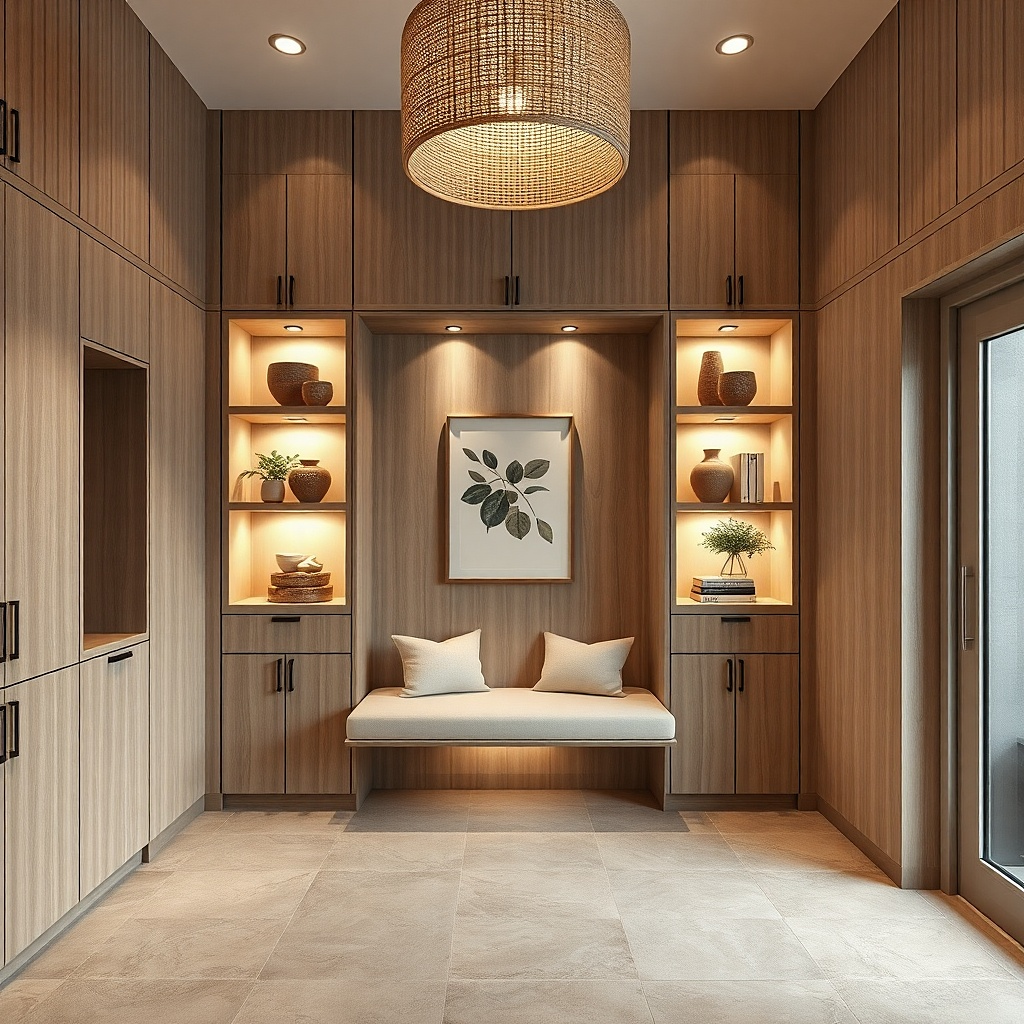
If the hallway is awkward because it doubles as a drop zone, hidden storage solves the mess and improves the look at the same time. The smart move is a shallow cabinet wall, especially the 6 to 8 inch deep style made for shoes and paper goods. Cane fronts, fluted doors, or flat panels painted the wall color keep the storage from looking bulky. In a long hall, lining up two or three matching units reads almost like built-in paneling. You get order, texture, and a cleaner sightline in one move.
Try thisPaint the cabinets the same color as the wall if the hallway already feels crowded. Matching color hides the bulk.
Start by choosing cabinets no deeper than 8 inches if the walkway is tight. Mount them along one uninterrupted wall, leaving at least 30 inches of clear walking width after installation. Then top them with one narrow tray, a low bowl for keys, and a mirror or art above to break up the run. Budget about $120 to $250 per cabinet for ready-made options, plus anchors and basic hardware if you install them yourself.
Common mistakeDo not mix three different cabinet styles in one hallway — it reads as leftover furniture, not a plan.
6. Half-wall paneling with wallpaper above for broken-up corridors
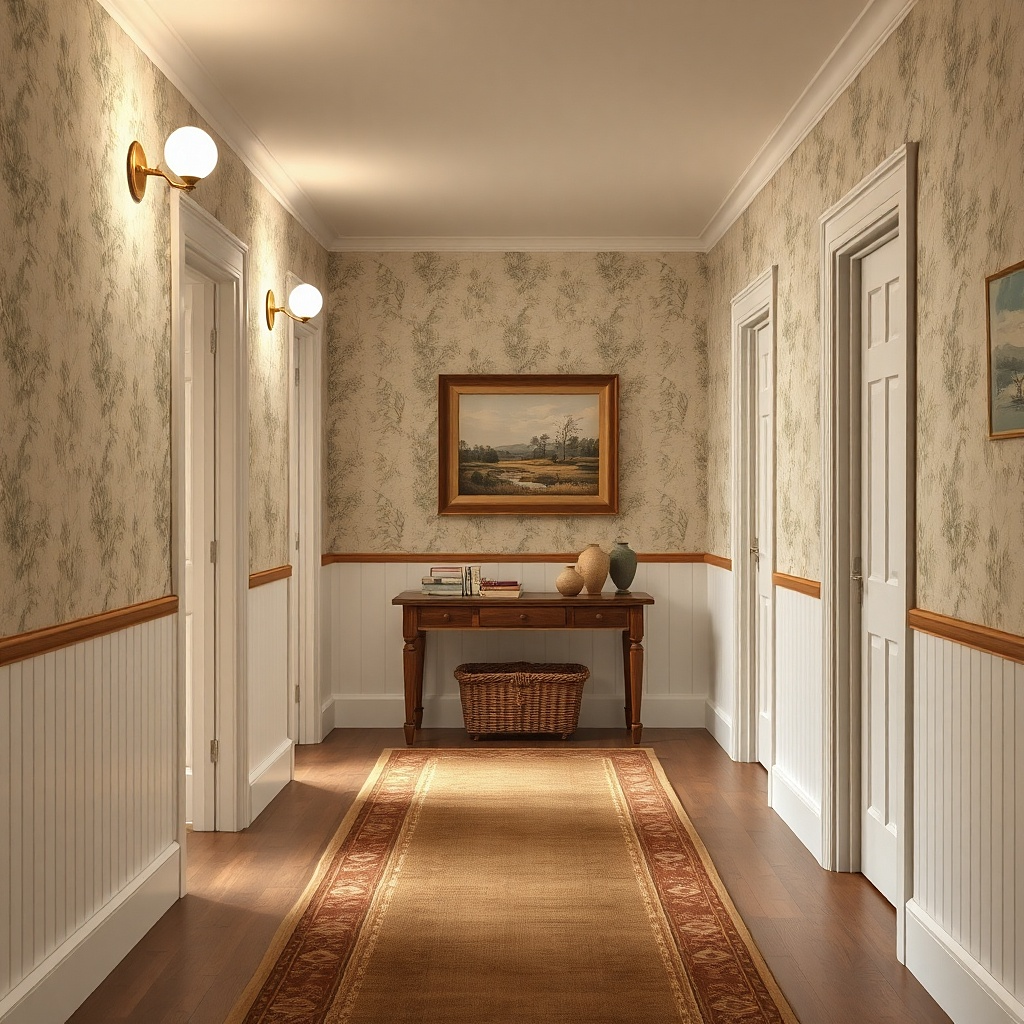
A hallway interrupted by several doors can look fractured because the eye keeps hitting trim, hinges, and empty wall scraps. Half-wall paneling gives the lower half a continuous line, while wallpaper above adds personality without overwhelming the space. This works best with simple square or rectangular molding below and a small-scale pattern above — pinstripes, tiny botanicals, block print florals, or dotted geometrics. Keep the wallpaper light enough to bounce light but visible enough to read from the far end. The result feels finished in a way plain painted drywall rarely does.
Start by installing paneling or box trim to 36 to 42 inches high, then paint it in satin for durability. Above that, hang wallpaper with a repeat small enough to survive chopped-up wall sections around doors. Then cap the paneling with a slim rail or ledge so the transition looks crisp. Materials range from about $150 to $500 depending on whether you use MDF trim and peel-and-stick wallpaper or go for pasted paper and a more custom finish.
Match the wallpaper background color closely to the paneling color for a calmer, more expensive look.
Skip giant mural wallpaper in a hallway full of doors — the image gets sliced apart and looks messy.
7. A mirror-and-sconce rhythm for a dark hallway
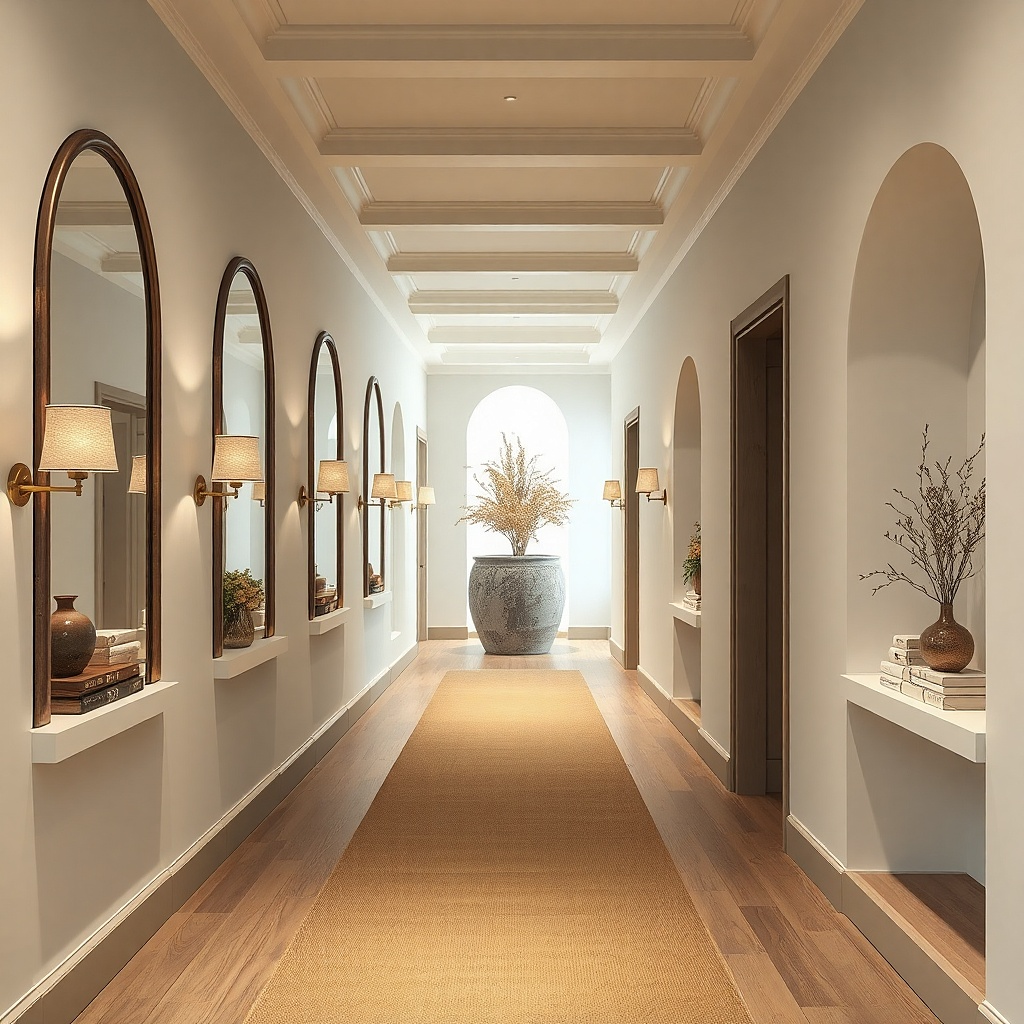
Dark hallways need reflected light placed with intention, not one lonely ceiling fixture. A mirror paired with wall sconces creates a repeated rhythm that brightens the corridor and gives it shape. This works especially well in halls with no window or just one weak light source at one end. Pick mirrors with thin metal frames and sconces with fabric or frosted glass shades so the light stays warm and soft. Brass, bronze, or matte black all work, but stick to one finish the whole way through.
Try thisChoose sconces that project no more than 6 inches in a narrow hall so shoulders do not clip them.
Start by placing one mirror where it can catch the strongest available light, then add a sconce on each side if the wall width allows. In a longer hallway, repeat the setup once more or alternate mirror and sconce in evenly spaced intervals. Use 2700K bulbs and put them on a dimmer if possible because harsh bright white light makes hallways feel clinical. A plug-in sconce setup keeps labor simpler, while hardwired fixtures look cleaner if you are already doing electrical work.
Common mistakeDo not hang a mirror opposite a cluttered area or open storage because it doubles the mess.
8. A painted arch or block color that corrects a weird doorway
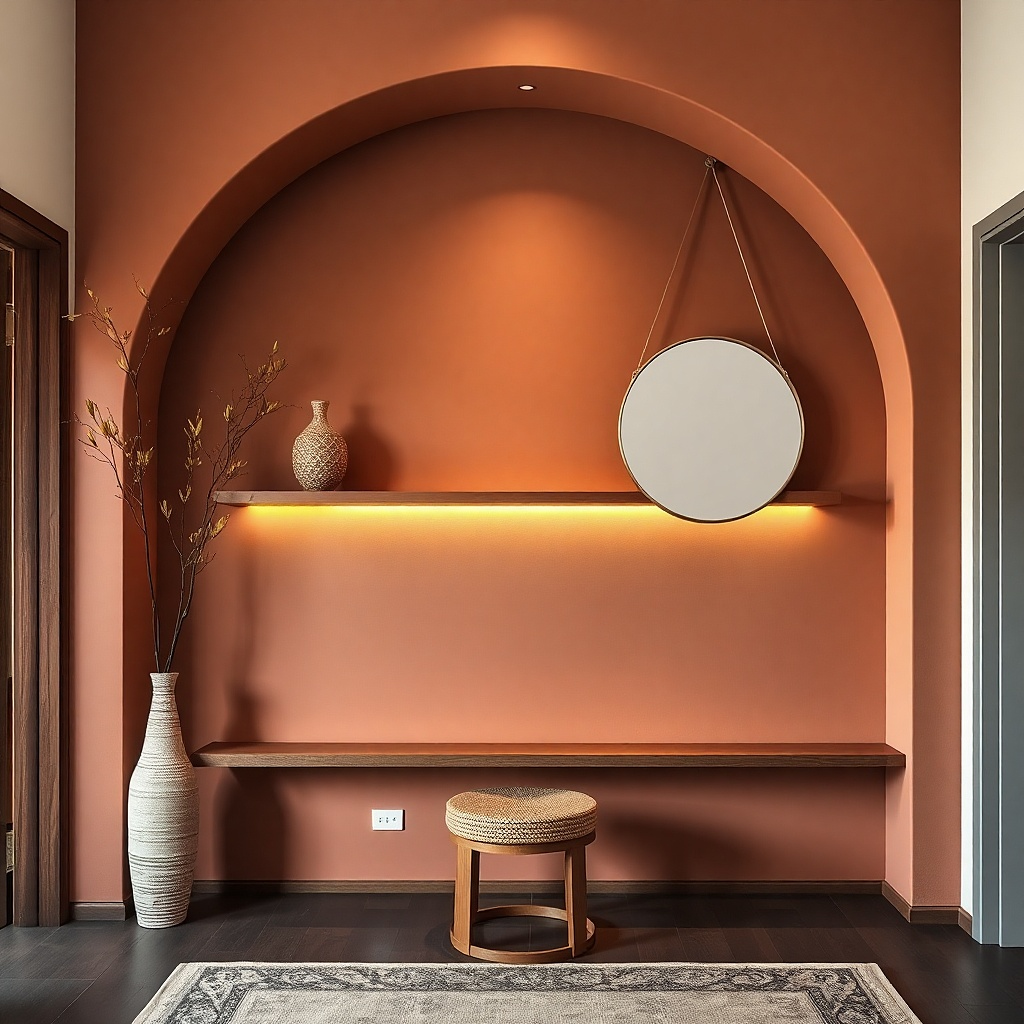
Some hallways feel awkward because one doorway sits off-center or an opening looks too plain compared with the rest of the house. A painted arch or rectangular color block reframes that opening without construction. It gives the eye a cleaner shape to read, which makes the architecture feel more intentional. Soft terracotta, dusty blue, muted sage, and warm beige work well because they add contrast without looking juvenile. This idea is especially good in rentals or older homes where you want visual correction without changing trim.
Try thisRepeat the same accent color somewhere else nearby, like in a runner or art frame, so the painted shape feels connected to the house.
Start by marking the arch or block with painter’s tape, string, and a pencil, then step back from both ends of the hallway before painting. Keep the shape wider than the doorway by 4 to 10 inches on each side so it looks deliberate rather than accidental. Then use a small roller and angled brush for clean edges, and stop the color high enough to frame the opening fully. This is a low-cost fix — usually under $50 if you already own tape, a brush, and a roller.
Common mistakeSkip bright primary colors unless the whole home already leans playful and graphic.
9. A slim bench vignette for the one useful nook
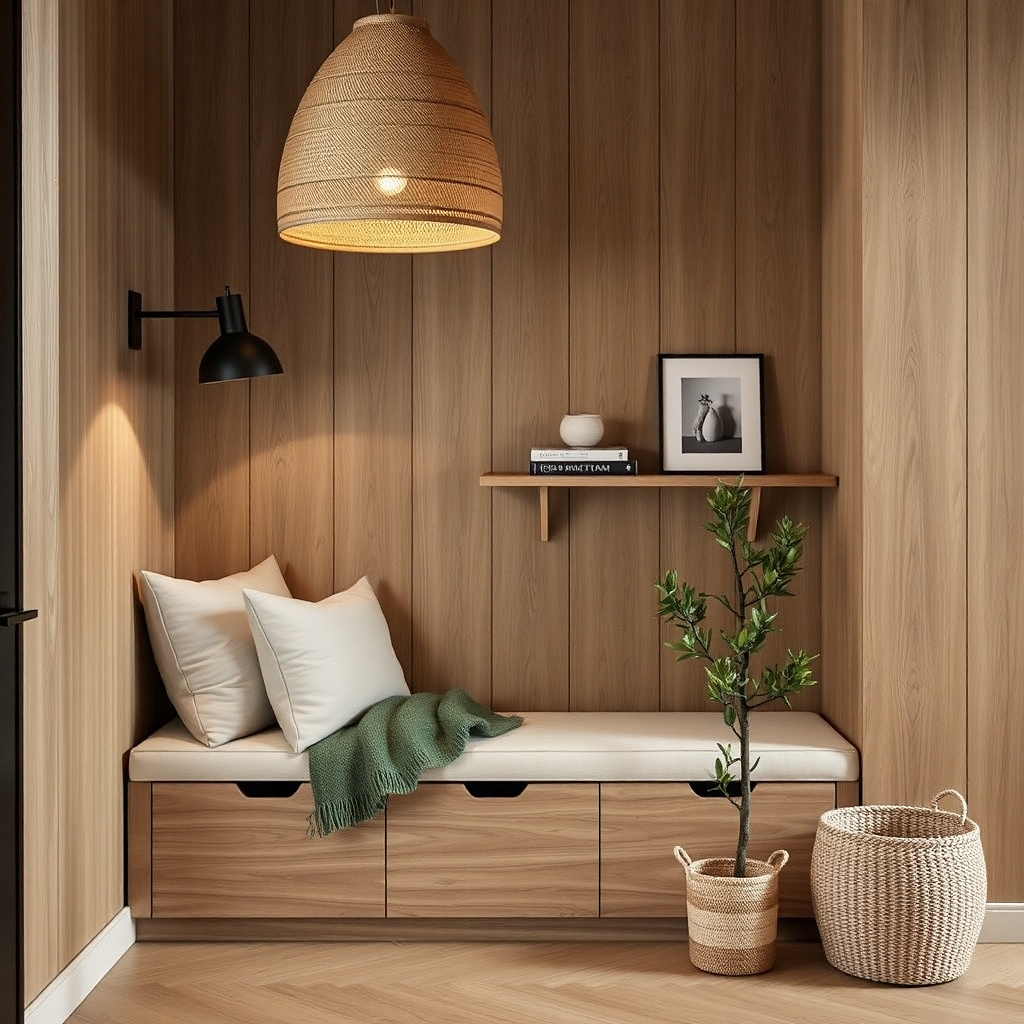
An awkward hallway sometimes has one recess or widened section that looks random and unfinished. Use that spot fully. A slim bench with one piece of art above and a small pillow or folded throw turns the odd notch into a proper pause point. The bench should look light on its feet — open legs, narrow seat, no bulky arms. Wood in oak or walnut with a linen cushion gives warmth without visual heaviness.
Try thisUse one lumbar pillow instead of two square pillows. One long shape looks neater in a narrow zone.
Start by measuring the nook and leave at least 30 inches of clear walking path beyond the bench edge. Choose a bench around 12 to 15 inches deep and center it under one medium-to-large artwork or a mirror. Then place a basket underneath only if it tucks fully under the seat; anything jutting out defeats the point. A solid setup like this runs from about $150 to $400 with ready-made furniture and framed art.
Common mistakeDo not force a bench into a hallway that has no widened section — even a pretty bench looks wrong if people have to sidestep it.
10. Vertical beadboard that makes a low hallway feel taller
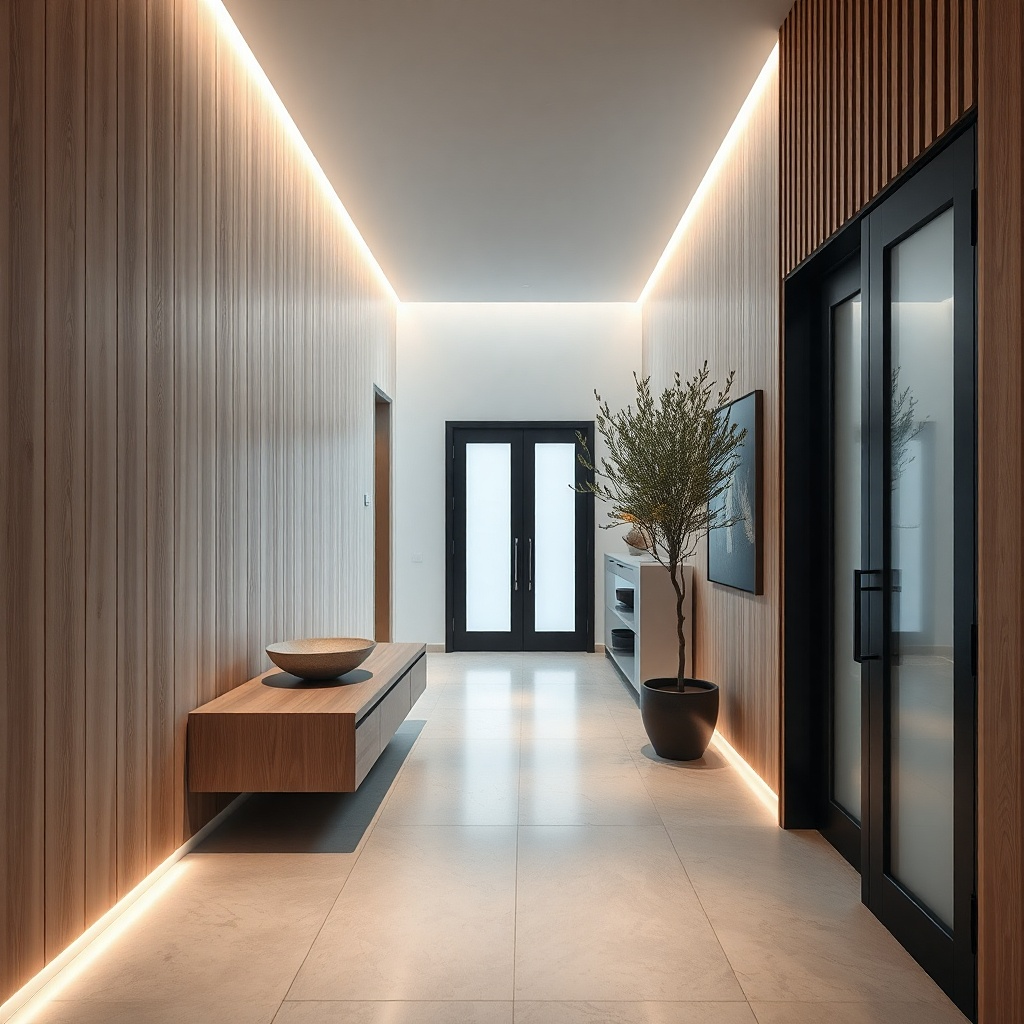
Low ceilings make hallways feel compressed fast. Vertical beadboard or narrow slat paneling corrects that by sending the eye upward in a clean, repetitive line. Paint it one soft color — warm white, mushroom, pale gray-green — so the texture stays subtle and the wall does not turn busy. This is better than horizontal shiplap in a hallway because horizontal lines exaggerate the tunnel effect. The finished look feels tailored and architectural without needing much decor on top.
Try thisUse narrower spacing between slats in a tight hallway. Wide gaps look chunky and heavy.
Start by running beadboard or slats from baseboard to either chair-rail height or all the way to the ceiling, depending on budget and commitment. Full height has more impact in a short hallway with low ceilings. Then caulk the seams, paint the whole surface one color, and keep wall art minimal so the vertical pattern stays clear. Material cost ranges from about $100 for basic MDF beadboard sheets to several hundred for solid wood slats.
Common mistakeSkip glossy paint on textured paneling because every seam and patch will catch the light.
11. A ceiling statement that pulls attention upward
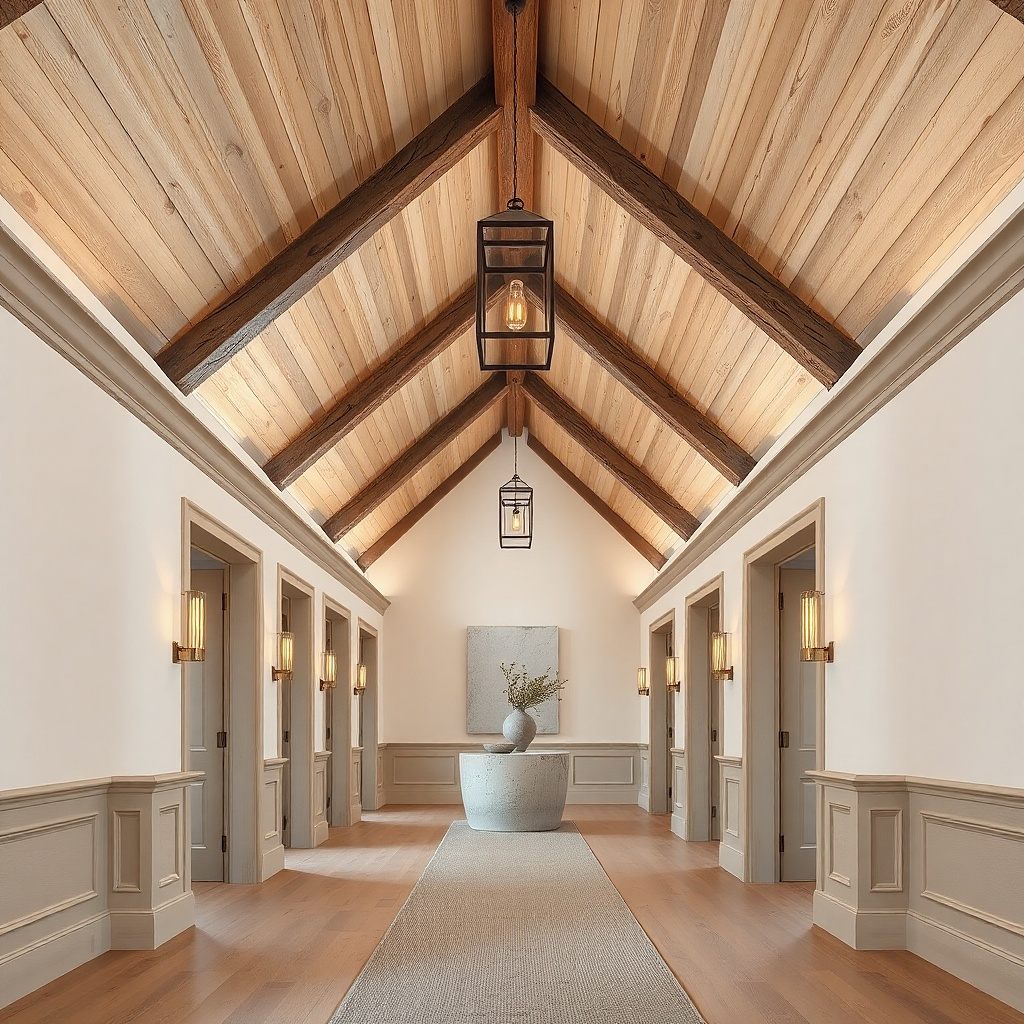
If the walls are chopped up by doors, the ceiling becomes the cleanest uninterrupted surface in the hallway. That is where a statement belongs. Ceiling wallpaper, painted stripes, or a soft contrasting color shifts attention upward and makes the layout feel less awkward. The best ceiling treatments in hallways stay controlled — tiny repeating prints, narrow stripes, or one shade two steps darker than the wall. This works especially well in short hallways that need one memorable design move.
Start by deciding whether your hallway has enough natural or artificial light to carry a ceiling treatment; if it is very dark, choose a lighter pattern or satin paint instead of something heavy. Prep the ceiling carefully because flaws show more overhead than people expect. Then keep the walls quieter so the top of the room gets the attention. A painted ceiling is inexpensive, while wallpaper costs more in both material and effort, especially overhead.
Repeat the ceiling tone in a runner or artwork mat so the design does not feel disconnected.
Do not pair a loud ceiling with busy wallpapered walls in the same narrow hallway.
12. Built-in-looking hooks on a painted rail for family hallways
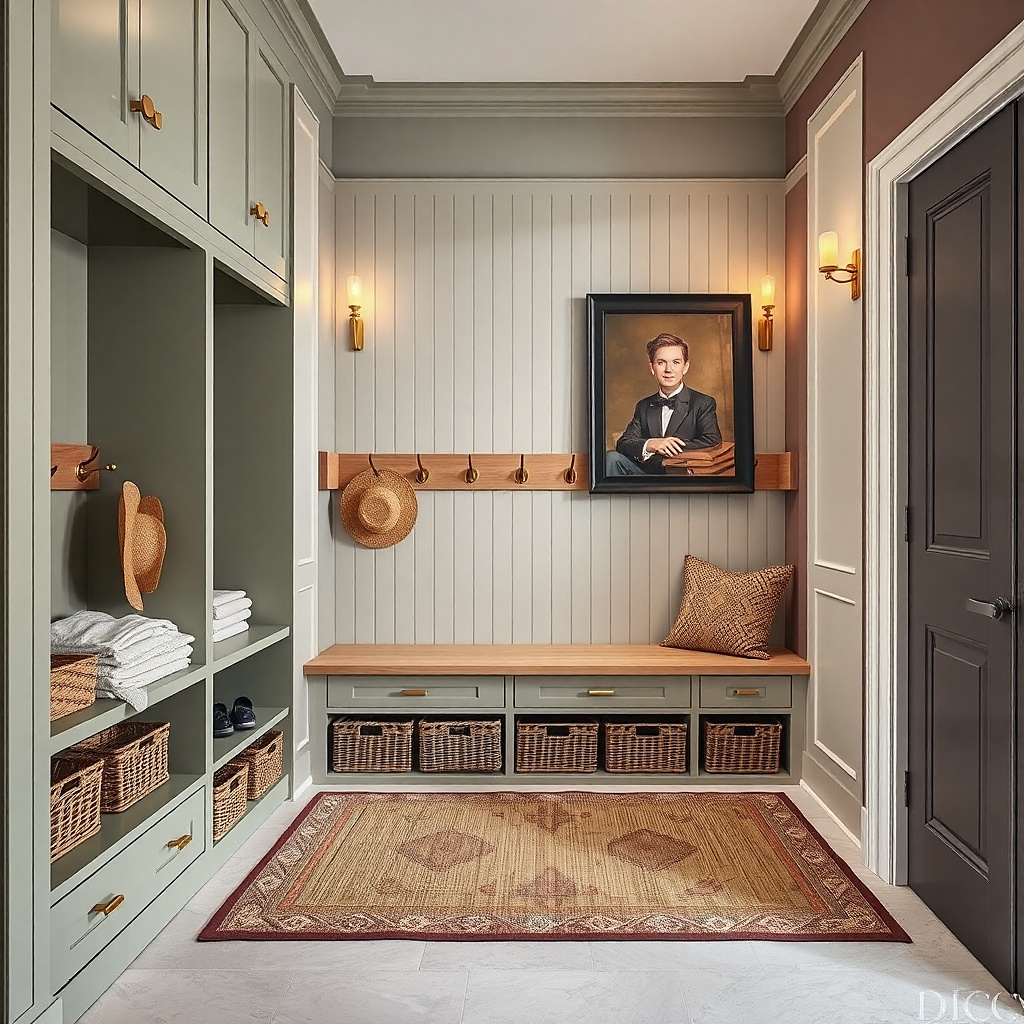
Some awkward hallways are simply working too hard. Coats, bags, dog leads, and hats pile up because there is nowhere proper to put them. A painted rail with evenly spaced hooks solves the mess while still looking polished if you treat it like trim, not hardware. Paint the rail to match the wall or paneling, then use identical hooks in brass, matte black, or bronze. The repeated spacing creates order, which is exactly what a chaotic hallway lacks.
Start by mounting a wood rail about 60 to 66 inches from the floor so longer coats still clear the ground. Space hooks 8 to 10 inches apart, then assign fewer hooks than you think you need so the wall does not become a storage explosion. Add one boot tray or lidded basket below if the hallway also handles outdoor gear. This is a moderate weekend project with a cost around $50 to $180 depending on hook quality and whether you paint the rail.
Use double-prong hooks for family hallways. One hook holds a coat, the second catches a bag strap or scarf.
Skip random hook heights — staggered hooks look playful in a mudroom but messy in a narrow hall.
13. A monochrome frame wall that fixes a too-long corridor
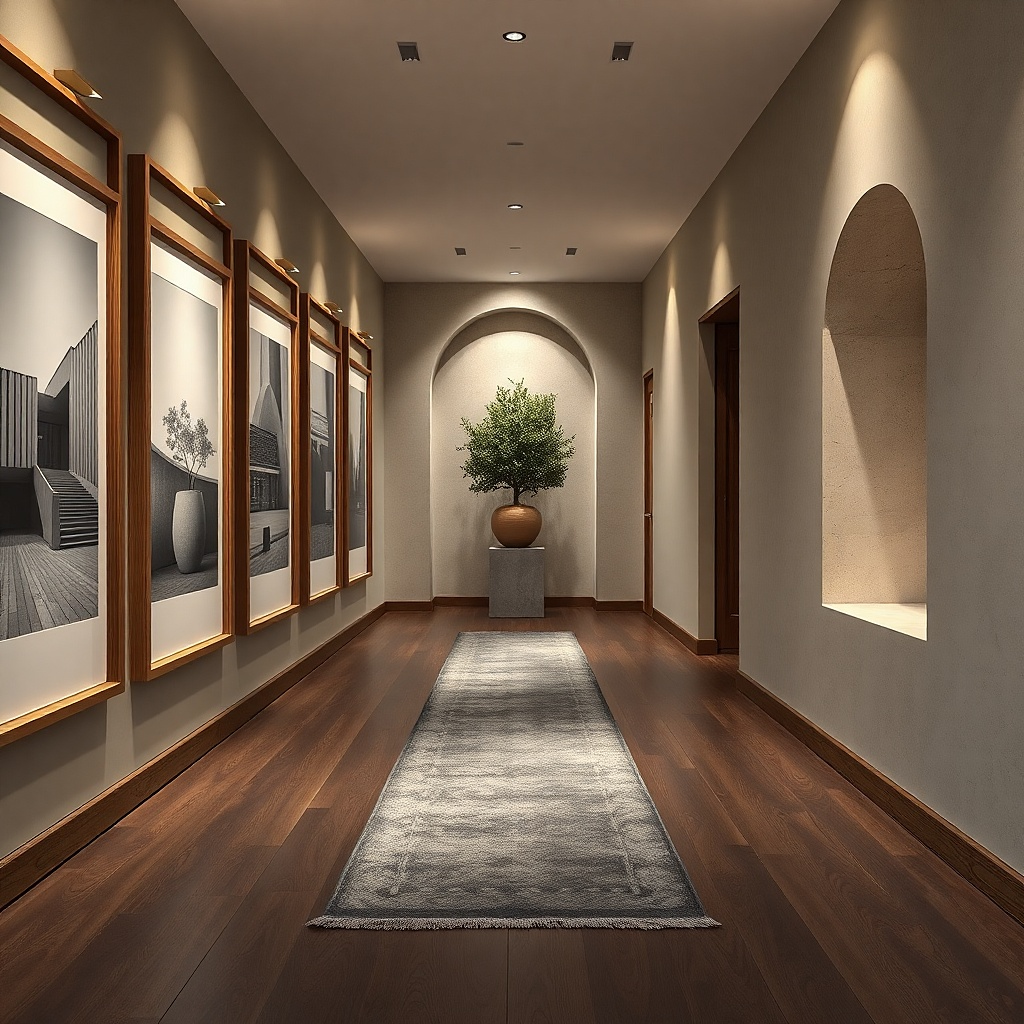
A very long hallway can feel like pure transit space, which is why it needs a repeated visual beat along one side. A monochrome gallery wall does that better than mixed decor because the repetition is what calms the length. Use matching black, white, or oak frames only, and keep the art in one tonal family such as black-and-white photography, charcoal sketches, or sepia botanicals. The point is not variety. The point is rhythm. That rhythm makes the corridor feel intentional and less endless.
Try thisUse oversized mats inside smaller frames. The extra white space gives the wall a more polished, gallery-like look.
Start by laying the frames on the floor first and choose either a strict grid or a clean salon arrangement with even 2 to 3 inch gaps. Transfer the layout to paper templates and tape them to the wall before hammering anything. Then hang every frame with the center line staying consistent across the run, even if the frame sizes vary. This can be done cheaply with downloadable prints and budget frames, or more expensively with custom mats and larger pieces.
Common mistakeDo not mix family snapshots, typography prints, abstract art, and kids' drawings all in the same hallway display.
14. A slim console replaced by a wall-mounted shelf and skirted stool
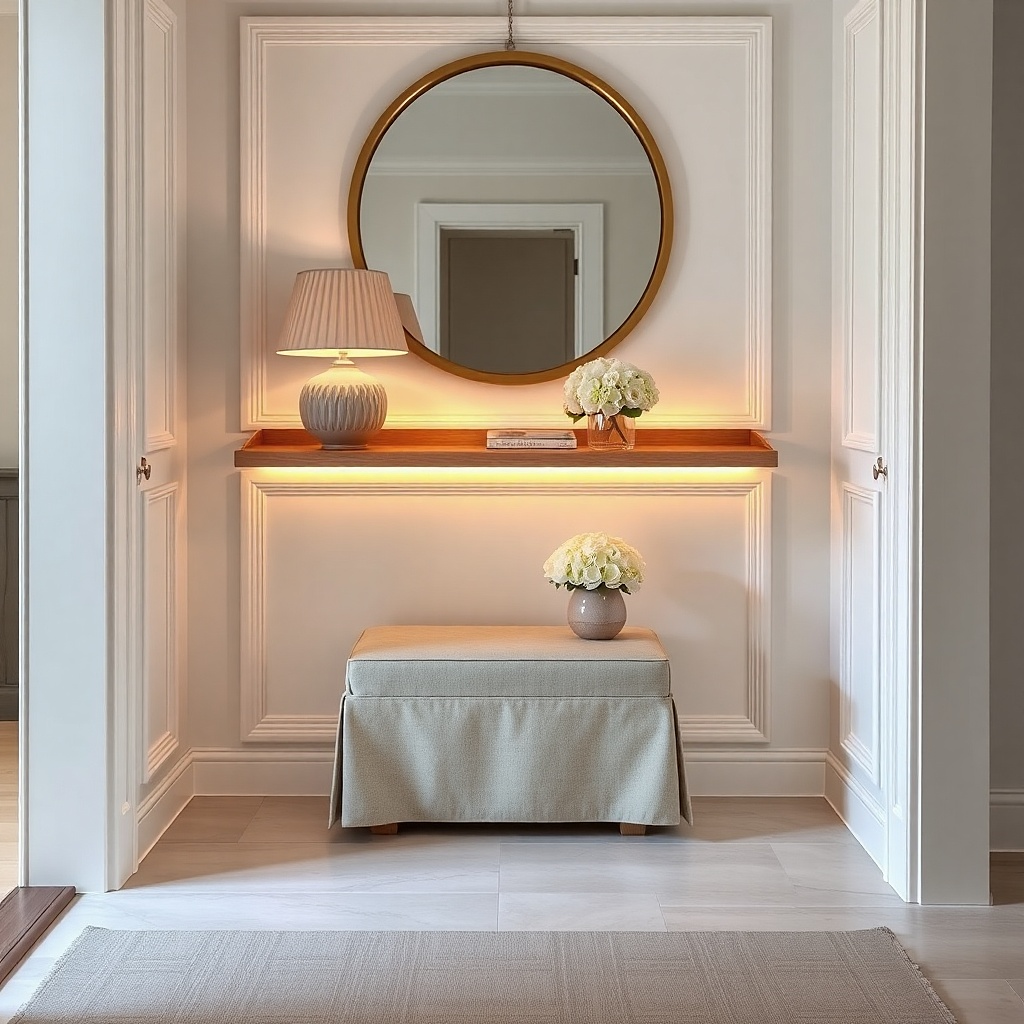
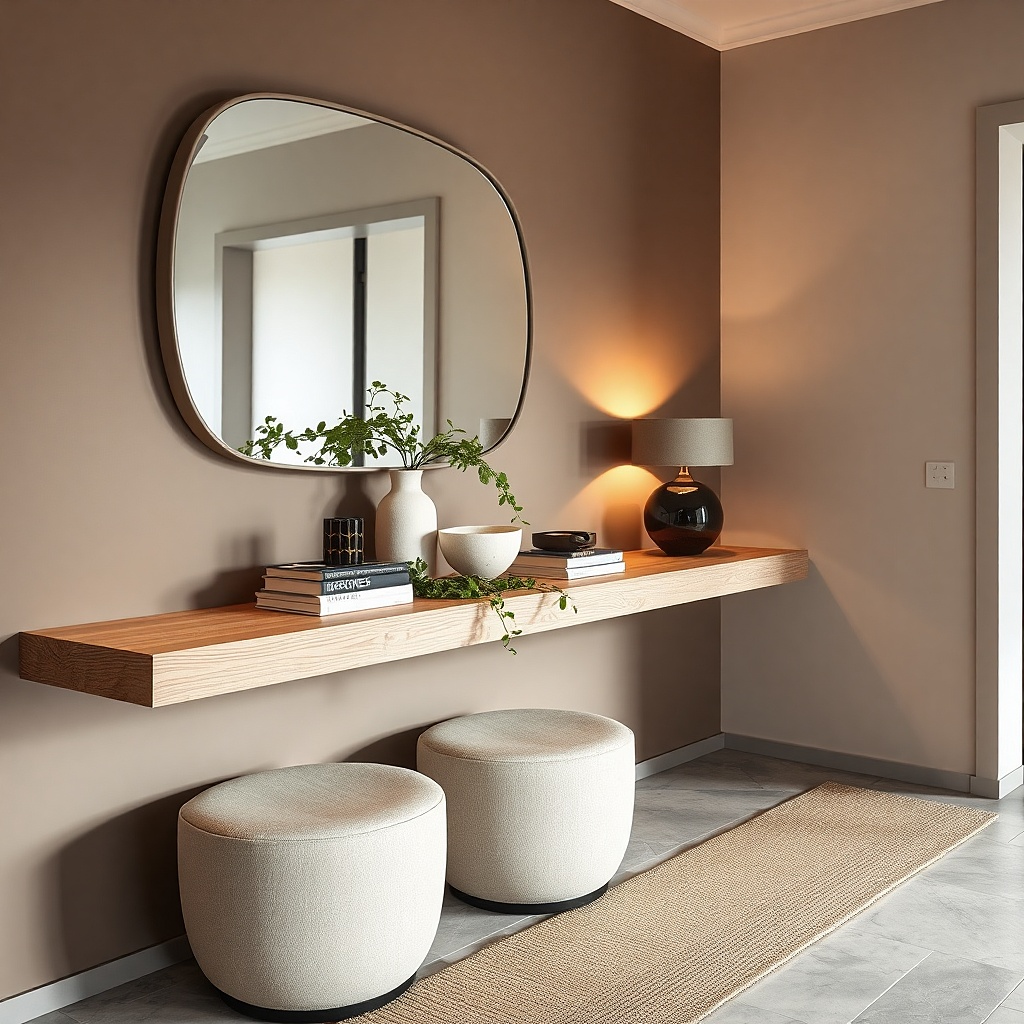
People force consoles into hallways that are too tight for them all the time. A wall-mounted shelf does the same job with half the depth. Add a tucked stool or ottoman underneath, and the setup looks softer and more finished than a bare floating shelf. This is especially good near an entry-side hallway where you want a landing spot for keys, mail, or a lamp but still need clear passage. The stool adds shape at floor level without the heavy look of a full table.
Try thisA pleated or skirted stool softens all the hard lines in a narrow hallway and makes the setup look more considered.
Start by mounting a shelf 8 to 10 inches deep and 30 to 48 inches wide, depending on the stretch of wall available. Install it at roughly console height, around 30 to 32 inches from the floor. Then place a small lamp, a tray, and one framed piece above, and tuck in a stool no wider than the shelf. Budget around $100 to $300 for a good shelf, hardware, lamp, and compact stool.
Common mistakeSkip a shelf cluttered with mail stacks and decor objects — this idea only works if the surface stays edited.
15. Tone-on-tone stripes that widen a skinny hall without paint tricks looking obvious
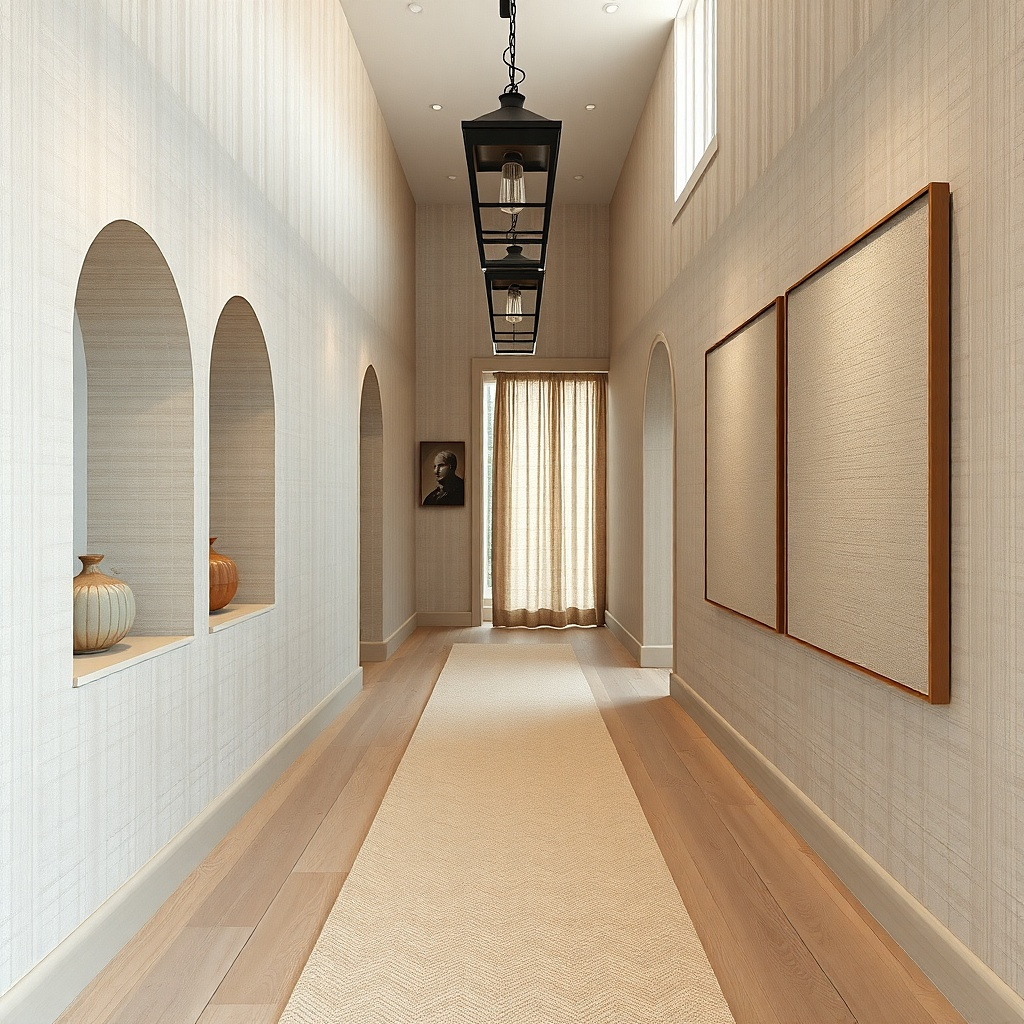
Subtle stripes are one of the few paint treatments that can visually correct a hallway without screaming for attention. In a very skinny hall, broad vertical stripes in two close shades add movement and depth while keeping the space calm. The effect is best when the contrast is low — think warm white and pale greige, or soft taupe and bone. You notice the shape first, not the pattern itself. This gives the hallway a quiet designer look rather than a novelty paint job.
Try thisPull the stripe color from your runner or nearby room palette so the hallway feels connected to the rest of the house.
Start by painting the whole wall the lighter shade, then mark stripes 8 to 12 inches wide with painter’s tape once the base coat cures fully. Paint every other stripe in the second shade using the same finish so the wall catches light evenly. Then keep decor minimal — one runner and one mirror are enough. Material cost stays low, but the taping takes patience and a careful hand.
Common mistakeDo not use high-contrast stripes in a narrow hall unless you want a bold graphic look on purpose.
16. A tiny hallway turned into a jewel box with one antique-style fixture
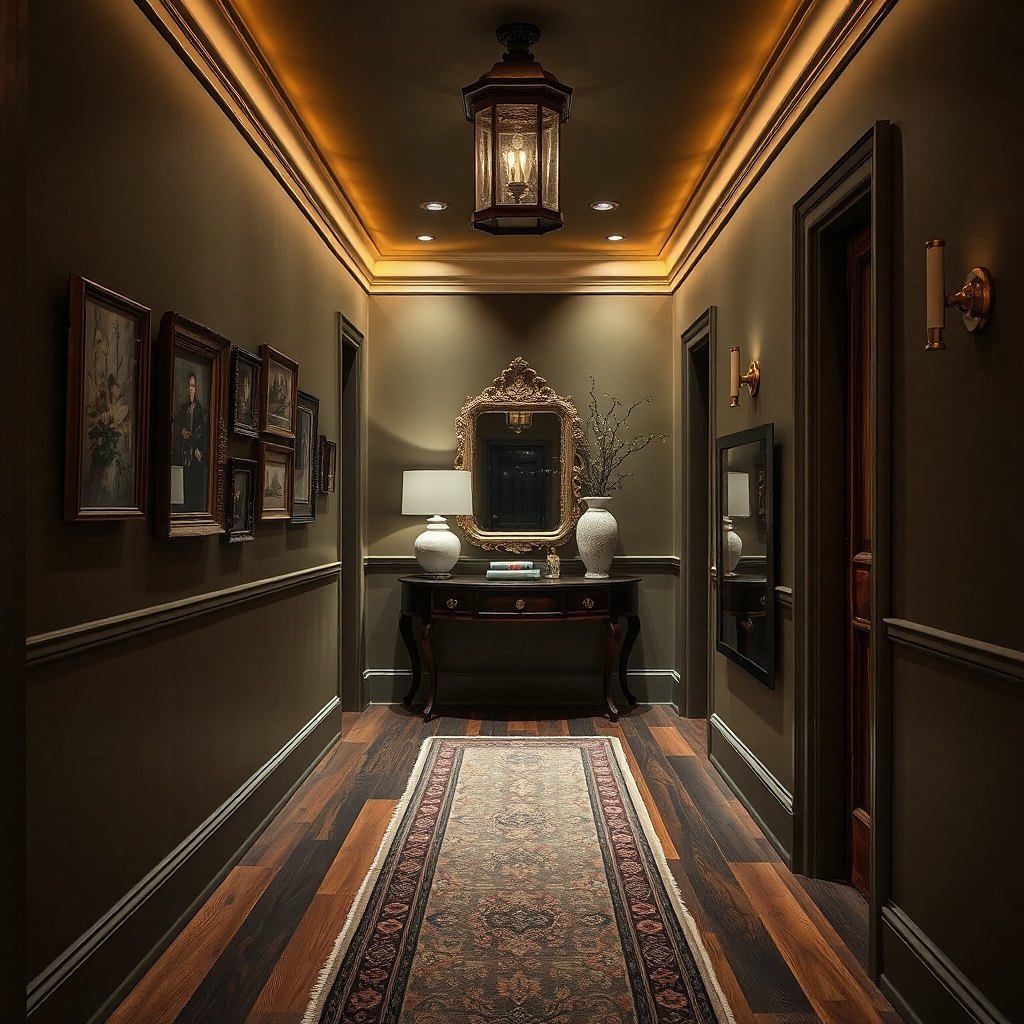
Short awkward hallways near powder rooms or back entries are perfect for a jewel-box treatment. Instead of trying to make the space disappear, lean into its small size with one strong ceiling fixture and saturated walls. A brass lantern, milk-glass schoolhouse light, or pleated-shade flush mount gives the hallway identity in seconds. Pair it with dark blue, oxblood brown, or smoky green walls and simple trim. Small spaces can carry drama better than long main corridors, and that is exactly why this works.
Try thisAged brass looks better than bright yellow brass in small hallways with dark paint. It feels quieter and less flashy.
Start by choosing a flush mount or semi-flush fixture scaled to the ceiling height; in an 8-foot hall, keep the drop tight so nobody feels crowded. Paint first, then install the fixture and use a warm bulb around 2700K. Finish with one simple runner or one framed print so the light remains the star. Expect around $90 to $350 for a fixture that actually looks good and does not read builder-basic.
Common mistakeSkip oversized hanging pendants in standard-height hallways — they make the ceiling feel lower.